

August 09, 2021

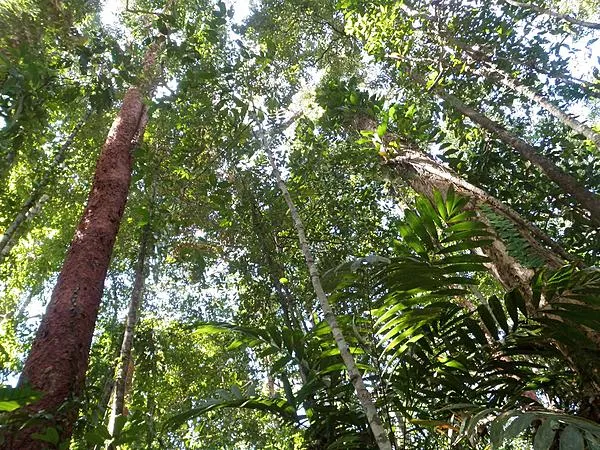
The PNG Forest Authority (PNGFA) has announced plans to move the industry ahead and has asked the government for greater funds to put them into action.

They include the following:

  • NATIONAL strategies for downstream processing of forest produce 2020-2024;
  • PNGFA corporate plan for 2021-2030;
  • SITUATION of the forestry sector;
  • NATIONAL strategies for afforestation reforestation in PNG 2020-2024;
  • REVISED PNG logging code of practice – second edition 2020.

Walter Schnaubelt, the Minister of Forests, has asked the government to increase money for the authority to carry out the plan.

He stated that the authority has faced challenges in bringing economic, social, and environmental benefits to resource owners during the past 21 years.

“But (the authority) continues to be insufficiently funded,” he added.

“For this plan to be effectively implemented, there needs to be a collaborative, holistic and inclusive approach and this must be support by sufficient and prudent management.

“I seek sufficient funding support to be invested in the implementation of these plans and its supporting strategies to improve monitoring and control of the development and use of PNG forest.”

PNGFA board chairman Keith Iduhu said companies had gained much from the sector.

“Over the years, we have seen the lucrative returns logging companies gained,” he said.

“Earlier this year, Schnaubelt warned companies and operators about their obligations in the various agreements.

“Many companies and operations extract from our natural resources yet do not pay up their dues as stipulated by law.


Reference:

Mauludu, Shirley. The National (4 August 2021). “Forest authority releases plans, requests funding”.

August 09, 2021

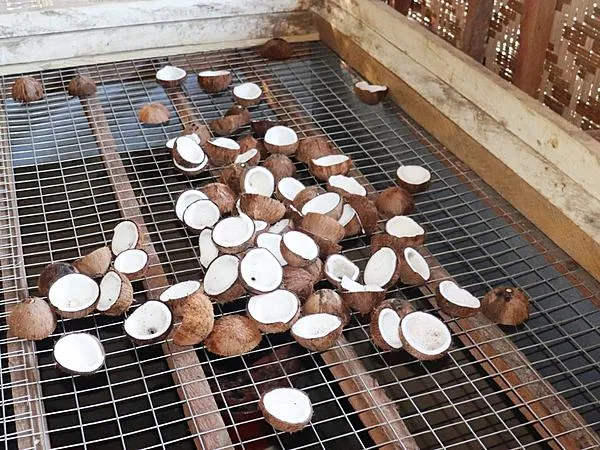
More than K1 million has returned to East New Britain following the province's sixth shipment of edible white copra at the end of last month.

Kevin Kasap, the NGI Supply Co-ordinator for Coconut Resource Limited (CRL), has confirmed this.

He said the province has sent its sixth shipment to Dubai, consisting of 10 containers weighing 108 metric tonnes and contained 4500 bags of edible white copra –– the province's first of its type.

“With the shipment, the estimation on the revenue, new money coming in is more than K1 million because for each container, we export we get more than K40,000 so we multiply that by the number of containers we are selling,” said Kasap.

He said that CRL is ready and has signed a deal for another 20 containers to be shipped in 60 days, claiming that all districts are ramping up their pace and that the firm is getting more from the districts.

The K400,000 Gazelle district price assistance scheme, which was announced last month, has been in effect since the beginning of this month, with district producers receiving K4 per kilogram, comparable to the Kokopo district.

According to Kasap, the flow of white copra is increasing in the four districts, where they buy 2.5 metric tonnes each month. The Kokonas Indastri Koporesen (KIK) extension team is continuing with training programs in the districts and throughout New Guinea.

According to him, the revenue is returned to the producers because CRL is simply facilitating the shipping and whatever money is collected is returned to the farmers via the price paid out by KIK as a corporate social obligation to the growers.

Farmers have been encouraged to follow the correct method for producing edible white copra, he added, since CRL conducts quality inspections before picking up the goods from the farmers.

“By the end of the year, we should be producing almost 1000 metric tonnes, that is if all the districts come in including the NGI provinces of Bougainville, New Ireland and West New Britain,” he said.

The coordinating office is in Kokopo, and training is still taking on in the NGI provinces, with all containers being sent to Kokopo once they start buying.

According to Kasap, it will be massive, and they are looking forward to growing resources and buy property to establish industries in the future.

He claims the province is currently producing 240 metric tonnes and will increase to 400 metric tonnes by the end of the year.


Reference:

Lima, Grace. Post-Courier (4 August 2021). “White Copra Brings In Over K1 Million”.

August 02, 2021

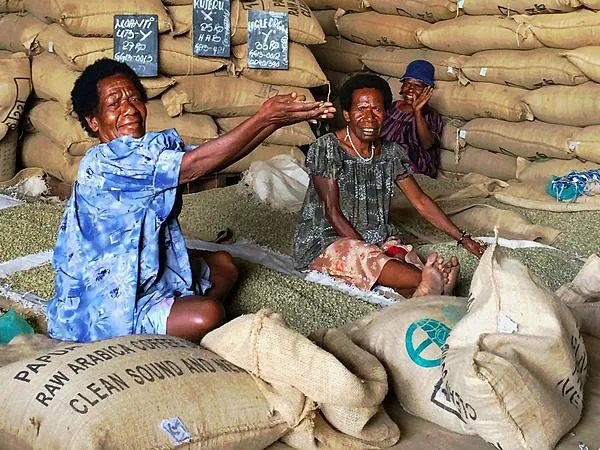
According to the Coffee Industry Corporation Ltd, a decrease in coffee production of more than 200,000 bags yearly has resulted in a loss of K88 million to coffee growers (CICL).

Jerry Kapka, the board chairman, stated that the people were "losing out" and "not getting what is anticipated."

“I want to bring the industry to the management and work together to deliver to the industry stakeholders,” he said.

Many things, according to Kapka, need to be examined, reformed, and implemented in order to assist coffee producers.

“I think they want to see some changes,” he said. “The board cannot do it all alone. Let us connect the industry with our management team and move forward with better plans for the industry.”

He stated that raising the amount would not be an issue.

“But the company and board directors should review what they had been doing, why people were not responding and move forward from there,” he said.

On July 9, Kapka was elected chairman of the board of directors during a special general meeting.

On the board, he represents the exporters' council. Patrick Komba was replaced by him.

Kapka has more than 20 years of expertise in coffee growing, trade, and export, according to CICL acting chief executive officer Charles Dambui.

“CICL looks forward to working with the new board to deliver the National Coffee Road Map (2020-2030) and the CICL Business Strategic Plan (2020-2024),” he said.


Reference:

The National (28 July 2021). ‘Decline in production costs industry K88 million’

July 21, 2021

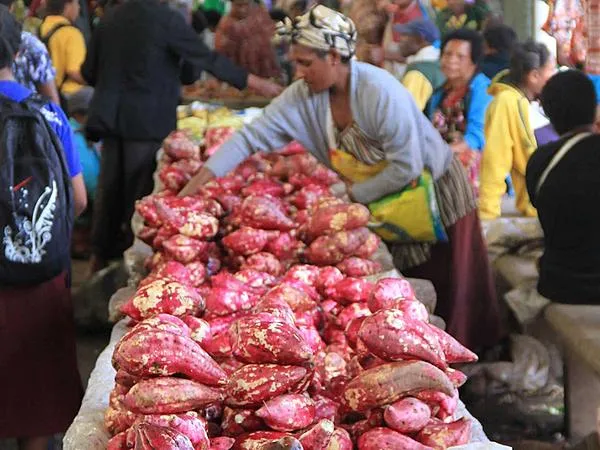
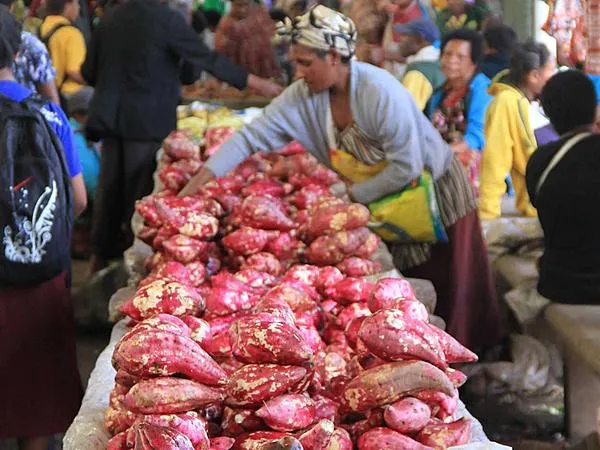
In Papua New Guinea (PNG), sweet potato (kaukau) growers have received significant insight into customer buying habits, which is assisting them in identifying new market possibilities.

The recent market analysis, which was supported by the Papua New Guinea-Australia Partnership and conducted by the Australian Centre for International Agricultural Research, revealed that an increasing number of consumers in Port Moresby prefer to buy fresh produce from supermarkets, citing convenience and safety as reasons.

While this trend may result in fewer consumers at conventional farmer markets, PNG and Australian experts believe it may open up new marketplaces for rural people.

“Farmers are looking for stable markets where they can receive more consistent prices for better-quality produce,” said Professor Philip Brown from Central Queensland University (CQU), who is leading the research project. 

“The research shows that consumer behaviour is likely to support an expansion in the supermarket sector in large urban centres and this is positive news for the farmers. This could allow commercial focused farmers to secure more stable market access.”

The study of 353 customers was conducted as part of ACIAR-funded sweet potato research sponsored by CQU and the PNG National Agriculture Research Institute (NARI), which aims to improve sweet potato value chains by increasing the quality of harvested roots.

Sweet potato quality and production are improving, resulting in increasing supplies to retailers eager to provide better fresh produce.

“The project, with support from the Fresh Produce Development Agency and NARI, is helping farmers to build their business skills and connect with emerging supermarket opportunities,” said Professor Brown.

Kirt Hainzer, a CQU researcher who collaborated on the survey alongside NARI researchers, said it was the first study to look at customer behaviour and see what role stores may play in the development of PNG's commercial sweet potato sector.

“The research sought to better understand and compare how consumers buy staples from open markets and supermarkets and to explore the preferences for purchasing staple foods as supermarkets increase the availability of convenience staples like rice,” said Hainzer.

“Although expanding formal sales represents a huge step forward in developing a commercial sweet potato industry, continued research on consumer preferences and the market for fresh produce will help better understand trends in staple food purchasing and what market opportunities exist for growers.”

With over a hundred kinds of sweet potato in the nation, NARI economist Raywin Ovah said the study sought to find out which of these customers preferred.

“Not all the varieties are preferred from a consumer point of view. There are only a few that consumers want to be based on the taste or health properties and that is what we want to also find out. Farmers can be provided with that information, so they produce those varieties that the market wants.”

One of five initiatives under the Transformative Agriculture and Enterprise Development Program is a project to increase commercial sweet potato production and commercialization in the PNG highlands.

The ACIAR program, which is funded by Australia in collaboration with the government of Papua New Guinea, aims to improve the livelihoods of rural men and women through private sector-led development, increased agricultural productivity and quality, and the development of individual and institutional capacity.


Reference:

Loop (20 July 2021). “Study looks into sweet potato industry”.

July 15, 2021

The cost of doing agriculture in the country is far too expensive, said Minister for Agriculture and Livestock John Simon.

He said there are challenges in the sector that are far more expensive.

“As soon as I became the minister, I did research and found out that the cost of doing agriculture in Papua New Guinea is high.

“For instance, coffee at that time was paying K2-K3 so we wanted to lift the price up to K5 through the price support and interventions.

“Infrastructure development is far beyond comparison, farmers are stationed in the rural areas and that makes it more expensive, thus, it is better the price is increased so that the farmers get the fair price and boost production,” Simon said.

Meanwhile, the Farmers and Settlers Association has urged the appropriate authorities to evaluate the issue in light of the legal and policy consequences for the country's industry.

The announcement comes after most, if not all, government departments and organizations raised non-tax fees and levies.

As a result of the chain reaction, many firms would pass the cost on to the people of PNG.

Agriculture, food processing, exporting, and rural businesses are all affected, according to Wilson Thompson, President of the Farmers and Settlers Association. PNG is dealing with COVID-19 issues and a struggling economy, and agriculture, food processing, exporting, and rural businesses are all affected.

“We know that the government agencies will not review their own decisions, but our concern is the collective impact on the producers and the micro and SME business and the consumers,” he said.

Increases in wharfage fees and fuel prices will lower the price that growers or farmers receive for coffee, cocoa, coconut, rubber, and tea, while customers will pay higher prices for sugar, rice, wheat, and fresh foods and vegetables that rely on fertilizers and fuel, among other things.

“We request the Independent Consumer and Competition Commission (ICCC) to deliberate independently on the issues,” added Thomson.


Reference: 

Tom, Patrick. Post-Courier (13 July 2021). “Cost Of Agriculture In PNG Too Expensive, Says Simon”.

July 02, 2021

Photo Credit: Paga Hill Estate

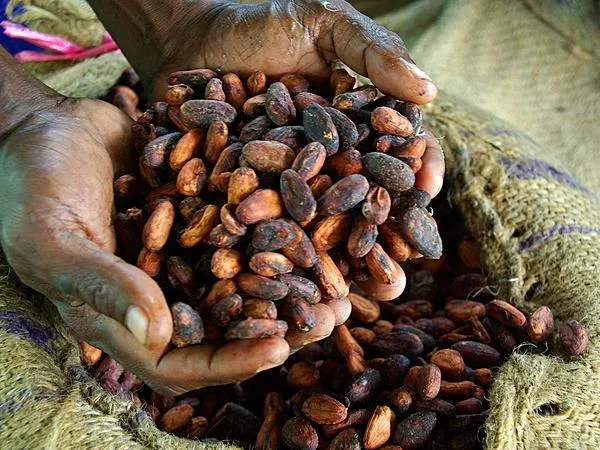
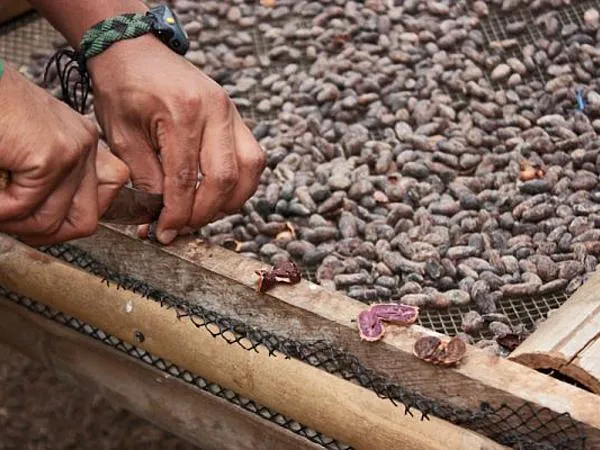
According to the Pacific Horticultural and Agricultural Market Access Plus Programme, the country's cocoa sector is poised to enhance its standing in international markets, due to recent investment aimed at decreasing smoke taint and increasing cocoa quality (Phama Plus).

The PNG Cocoa Board is collaborating with Phama Plus to improve possibilities for PNG's cocoa-growing communities.

“Through the support of Australia and New Zealand, Phama Plus has been in collaboration with the PNG Cocoa Board since 2015, providing training in innovative farming practices that maximise profitability and income and maintain a sustainable value chain to improve international competitiveness for PNG sourced cocoa,” Phama Plus said in a statement.

“PNG is a longstanding producer of high-quality cocoa on the global market; however, due to smoke taint affecting the flavour of cocoa, PNG’s fine flavour status was recently reduced (from 90 percent to 75 per cent) by the International Cocoa Organisation.

“This impacted the premiums paid for cocoa and influences the value of trade from international niche and speciality cocoa buyers.

“Recently, 57 local farmers and their team leaders in Lower Watut, Morobe and Aitape, West Sepik attended training sessions delivered by Cocoa Board officers on the correct post-harvest practices to better understand key stages of primary processing of cocoa, including harvesting, transportation, fermentation, drying and storage.”


Reference:

The National (30 June 2021). “New initiative to improve cocoa quality”.

June 28, 2021

Inadequate extension services have been identified as a cause of low coffee output in the country, according to a study.

Prof Eugene Ezebilo, the National Research Institute's deputy director for research, authored a paper titled Strategic initiatives to boost the competitiveness of coffee production in Papua New Guinea” It gives you some ideas for how to improve the production of coffee in PNG.

Inadequate facilities for processing coffee are also mentioned as a significant issue.

The conclusions have been pressed upon agricultural managers, planners, and policymakers.

“Coffee is one of the most important agricultural commodities for the government and farmers,” Prof Ezebilo states.

“Though PNG has a suitable environment and climatic conditions for growing high-quality coffee, there are challenges that need to be addressed.

“The findings will assist agriculture managers, planners and policymakers in making decisions on how to improve coffee production in an effective and efficient manner.”

Inadequate facilities for processing coffee, insufficient extension services, and limited access to funding were among the problems.

Coffee output in PNG may be enhanced, according to the research, by encouraging efficient extension services for coffee producers and removing coffee plants that had outlived their economic usefulness.

Providing low-interest loans to farmers who wish to grow output and promoting contemporary production and processing techniques were also suggested as ways to boost productivity.


References:

The National (21 June 2021). “Lack of extensive services behind drop in coffee production: Study”.

The National Research Institute. “Research findings important to improving coffee industry”.
June 28, 2021

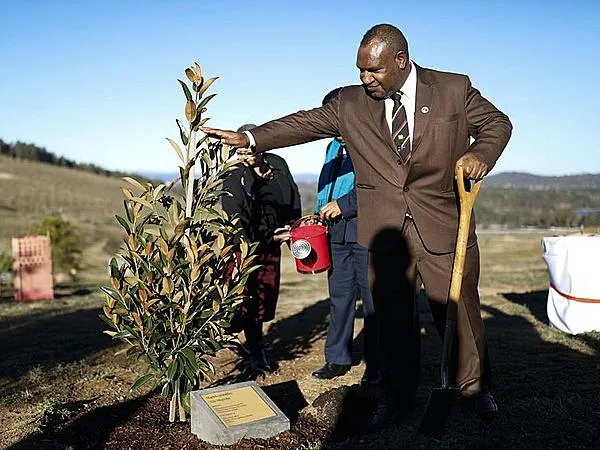
Prime Minister Hon. James Marape has pointed Papua New Guinea small to medium enterprises (SMEs) to agriculture as a space that they can move into.

He said this when addressing the 3rd SME Business Breakfast at APEC Haus in Port Moresby on Friday (June 5th 2021) which also marked the end of SME Week.

PM Marape said agriculture could supply domestic needs as well as export to other countries.

He said PNG was the closest Pacific country to Asia, including Indonesia right next door, which had a population of 260 million.

PM Marape said the majority of Indonesians were Muslims who ate beef.

“I wonder why the grasslands of Sepik and Fly are doing nothing,” he said.

“Those are places where we can raise beef (cattle) and supply to the 260 million Muslims next door.”

PM Marape said the next 100 years would be the “Asian century” as the increasing population there needed more food, water and energy.

He said PNG could follow the track of New Zealand in becoming a specialist food producer to supply the population of Asia.

PM Marape pointed out the case of Fiji water, which was now sold around the world, and added PNG could do similar through organic food.

“Organic food supply to niche markets in Asia can be a forte, can be a specialist area, going into the future,” he said. 

“Government will look at those concepts and work with the SME Corporation, for those who want to be innovative in the space of SMEs, whether in export-based businesses or domestic supply.”

June 17, 2021

Photo Credit: PNGI Central 


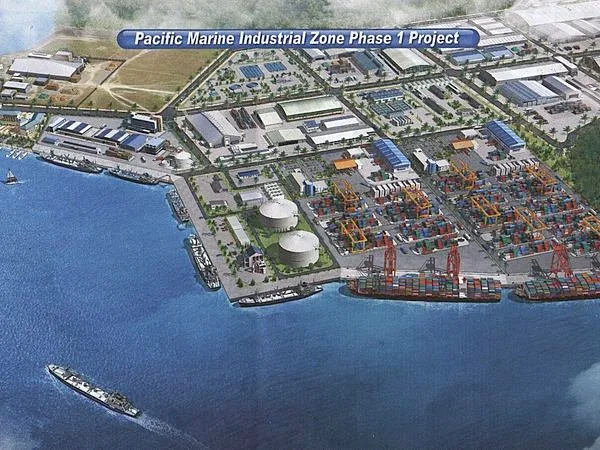
The National Government is poised to launch the massive Pacific Marine Industrial Zone (PMIZ) Project, which would change Papua New Guinea from a coastline to a full-fledged fishing nation.

Dr Lino Tom, Minister of Fisheries and Marine Resources, organized a meeting in Madang recently to demonstrate the Pacific Marine Industrial Zone (PMIZ) Project's fisheries potential to the Treasury Department and the Madang Provincial Government.

Tom stated that the Fisheries Ministry and the NFA will work closely with Treasury on financing options in order to fully capitalize on the opportunity for the people and country to reassert the government's emphasis on 'Taking Back Fisheries,' as well as contribute to a collective action from across all sectors to 'Take Back PNG,' in collaboration with all stakeholders involved.

“PMIZ will contribute to developing a vibrant, broad base, and value-adding fisheries sector that will be globally competitive and domestically inclusive, providing revenue for the Government, wealth creation and food security for the people.

“This is a national project of paramount importance that will create jobs and growing our economy, this is a regional project that positions us as a competitive regional hub and global leader in the tuna economy,” said Tom.

“The project has been challenged, delayed and unresolved for over 15 years.

“The recent NEC decision to have the PMIZ sit under the ambit of NFA so it can be brought back on track is well overdue but timely.

“The project requires a whole of government approach through collective political bureaucratic will, harmonised legislative frame and policy support, effective cooperation and operational efficiency.

It now gives the Marape-Basil government the ability to move on with the vital project that was initially mandated by the government in 2008.

“Work with us to get the PMIZ back on track and finally bring this momentous vision to life,” said Tom.


Reference:

Post-Courier (15 June 2021). “NFA Ready To Implement PMIZ”

June 14, 2021

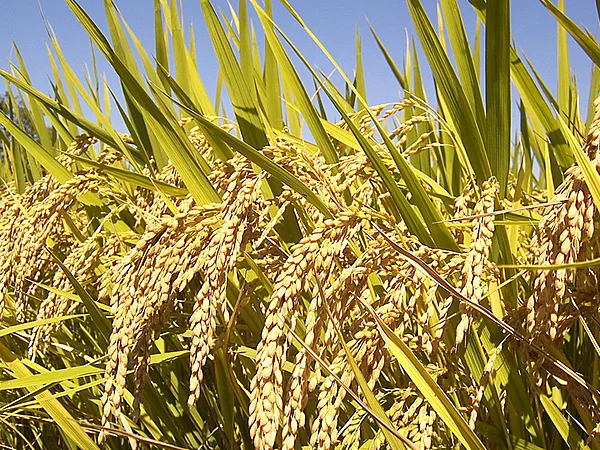
According to an agriculture official, the nation spends K1 billion on rice imports each year.

Stephen Mombi, DAL deputy secretary technological development division, warned that as the world's population grows, rice consumption would skyrocket, necessitating more imports.

He stated that rice has a tiny market of approximately 10%, but as the world's population grows, that market area will decrease, demand will rise on both a domestic and international basis.

“So, we as a developing nation also importing competing with other countries to import from that small market space hence we must grow rice domestically because the population is increasing,” he said.

“So just estimate that by the year 2050, the population might go up to 10 million.”

“We are consuming about 400,000 metric tonnes of rice every year and per capita consumption is about 35-40 kilos per person annually.”

According to Mombi, the government has developed a national rice policy for the period 2015-2030, which focuses on recruiting large-scale private sector investment into rice production.

“When that player comes in and then you mobilise all smallholders to participate in rice farming by supporting them with technical advice and machinery,” he said.

“We need to cut down on that and encourage domestic production by involving the smallholder farmers so that we increase domestic production,” he said.


Reference:

Tom, Patrick. Post-Courier (8 June 2021). “Rice Imports Costly”.

June 07, 2021

In Bogia, Madang Province, K1.2 million has been set aside for cocoa development.

This money came from the PNG Cocoa Board, which contributed K600,000, and the Bogia District Development Authority, which contributed another K600,000.

Boto Gaupu, the chief executive officer of the Cocoa Board, stated that they are willing to collaborate with the Bogia district to grow coconut and cocoa.

“PNG Cocoa Board is serving the same clients and as to the district by working with the farmers at the village level and revive cocoa which was one of the commodities grown in the area for many years,” he said.

“We are committing K600,000 to the district of which K100,000 will be initially presented for the purpose of reviving cocoa and other cash crops in Bogia, Madang Province.”

The district is also dedicated to working with any government and non-government organizations, according to Bogia MP Robert Naguri, and the cocoa board's involvement will go a long way.

He claims that this will assist more than 100,000 people in the provinces of Bogia and Madang.

“We are also committing K100,000 through the district development authority and that will help support the initial work to be carried out in the district.”

He stated that this is the start of a new path for Bogia, and that the resuscitation of cash crops such as coconut and cocoa in the area will pave the way for socio-economic growth.


Reference:

Tom, Patrick. Post-Courier (2 June 2021). “K1.2 Million For Bogia Cocoa Development.”

June 07, 2021

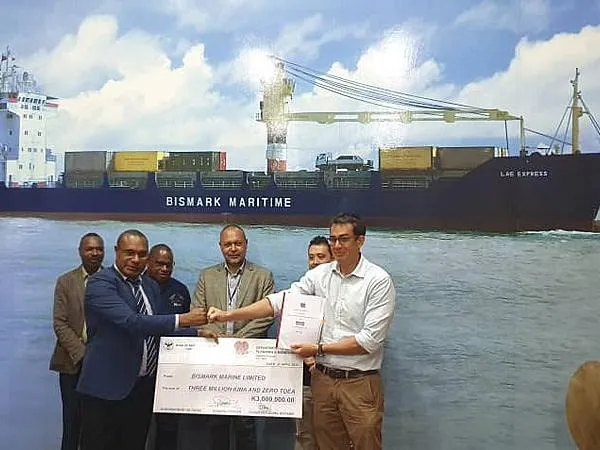
The government has agreed to continue delivering fresh food and vegetables from Lae to Port Moresby under a memorandum of understanding with Bismarck Maritime Ltd. Commerce and Industry Minister Sam Basil and Bismarck Maritime managing director Hamish Sharp signed the agreement. It comprises a subsidy for fresh food and vegetables to be transported by sea to Oro Bay, Alotau ports, and Port Moresby. During the early days of the Covid-19, the Department of National Planning and Monitoring established a transportation freight subsidy to maintain food security. It was a success thanks to the help of people in the Highlands and Morobe who grew the veggies, as well as purchasers, land transport providers, vegetable wholesalers and shops, and customers in the National Capital District.

“I am advised that the K6 million expended resulted in an economic impact in excess of K50 million,” Basil said.

He told the department's interim secretary, Joseph Vutliu, to find money to keep the freight subsidy program going. The possibility to provide maritime transportation "on subjects connected to food security and nutrition" was welcomed by Bismarck Maritime Ltd managing director Hamish Sharp. 

“The fact that this is resulting in cash in the pockets for many players along the supply chain is very welcome,” he said. “We naturally think this is a very good initiative and would be glad to continue the fresh produce and vegetables sea transportation. “We will be pleased to include and involve Northern and Alotau in this new arrangement as both are natural ports to stop en route from Lae to Port Moresby and back.”


Reference:

The National (1 June 2021). “Govt, firm seal deal to transport goods”.

May 03, 2021

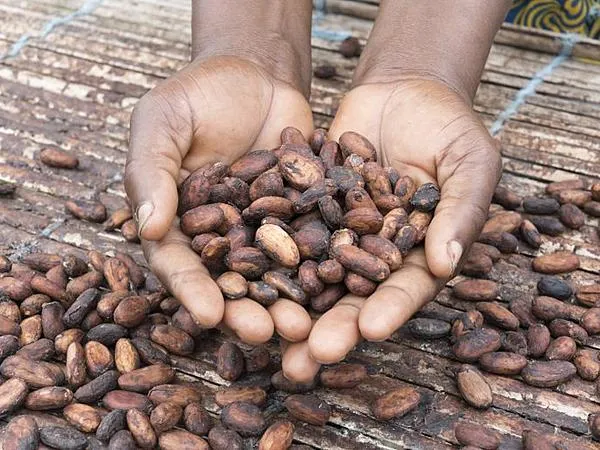
According to PNG Cocoa Board chief executive officer Boto Gaupu, the government's cocoa price support program will boost cocoa production in Morobe.

On behalf of Agriculture and Livestock Minister John Simon, he said this while launching the program in Munum village, Wampar local level government, Huon Gulf, Morobe.

With the exception of Menyamya, Gaupu said K200,000 had been extended on cocoa price support in eight districts of Morobe.

According to him, Morobe's total cocoa output is 4,500 tonnes, worth K30 million.

He said that K19 million (K30 million) went directly into the pockets of farmers.

“Over the last 10 to 15 years, it (cocoa production in Morobe) averaged 800 tonnes to 1,000 tonnes (annually),” he said. “I can tell you now that it has increased to 4,400 tonnes, which is equivalent to K30 million in export revenue.

“Of this K30 million, K18 – K19 million goes into farmers in the districts.

“Cocoa also generates other economic activities such as stores, PMVs and others, and also contributes goods and services tax to the Government.”

Markham, according to Gaupu, is currently leading cocoa production in Morobe, accounting for half of the total production.

“We (Morobe) are a new frontier (for cocoa) after East New Britain, Bougainville and East Sepik – which are currently leading production in the country,” he said.

“I am confident that Morobe, with the support of all farmers, can go up to 10,000 tonnes – which will bring in more than K100 million into the province.”

According to Gaupu, the Minister directed that price support recipients must be farmers in the villages.

“We will not involve exporters (in price support),” he said.

“Exporters are there to get the volume that we create and make their sales.

“Benefits will go down directly to the villagers.

“This is one thing that this Government has brought about.”

Prime Minister James Marape was praised by Gaupu for establishing the price support scheme.

“He (Marape) has said that he wanted to see results before he pumps in more money,” he said. “Sustainability or continuation of this programme depends on all of us. If we do not perform, we spoil our chance of more support for the price we receive.”

He said that nothing stood in the way of Morobe growing its cocoa supply.

“We, in Morobe, have a large landmass, all the accessibility and everything in the world,” Gaupu said. “Let us take this time and opportunity to go into agriculture, especially cocoa, to better our standard of living in the villages.”

April 21, 2021

Farming as a business is making a huge transformation in the Gumine district of Chimbu province, located in the lush and fertile PNG Highlands.  

Local farmers are eagerly participating in a potato and bulb onion project that has picked up interest seeing more than ten model farms and three bulb onion nurseries established in the Gumine Local level government (LLG) area of the district, as part of the projects trial stages.

In March local farmers delivered 7.7 tonnes (7, 700 kg) of fresh potatoes graded and and bagged for selling, both as seeds and for consumption.

The harvest was delivered to the capital of Kundiawa, as residents looked on in awe at the truck loads of bagged potatoes, to the joy of Gumine MP Nick Kuman who had helped initiate the project.

An initial agreement was signed between Gumine district and the Fresh Produce Development Agency (FPDA) with a focus to farm potato and bulb onion as commercially significant crops for the district. FPDA wasted no time setting up an office and work progressed eagerly for all parties.

By June 2021, Gumine is expected to provide its first full harvest of an estimated ten tonnes of potato and bulb onions to Kundiawa town. A consistently supply to Kundiawa and other areas will provide a steady source of income for farming families involved in the project.

Project Technical Team Leader David Kaupa said the first model farms were established only in Gumine LLG with selection of 10 model sites for seed potato production and distribution and three model nurseries for bulb onion.

He said a total of three tones (300kgs) of seed potato were distributed to the selected 10 model sites.

“As per FPDA technical officers, production (of 7, 700 kg) was quite impressive at initial phase. The farmers have really seen and felt the positive impact potato has created in a very short period. All the people of Dirima-Yani want to engage in potato farming,” a delighted Kaupa said.

He said for the very first time loads of potato left for Kundiawa on March 5, 2021, signifying a huge transformation in Gumine taking on farming as a business.

Kaupa also revealed that bulb onion seedlings had been transplanted to the trial model sites and were growing with impressive results.

Meanwhile, he said the other two LLGs of Digine and Kumai-Bomai will soon see roll out of a trial phase of the project.

Kaupa also said FPDA’s presence in Gumine district has positively impacted the mindsets of many young men and women, who now see farming as the way forward for Gumine.

April 21, 2021

LACK of immediate government intervention to address a dramatic drop in coffee exports will have serious consequences for producers and the PNG economy that is very much dependent on it.

This is according to the release of a discussion paper by the Papua New Guinea National Research Institute (PNGNRI) that uses data based on various factors affecting coffee production in the five leading coffee producers of the world compared to PNG. The study draws lessons and makes recommendations to guide policy makers, government and Industry on strategies to improve production, quality and revenue for farmers, government, producers and stakeholders.

Titled ‘Strategies For Improving Coffee Production and Processing in Papua New Guinea: Lessons from the Top Five Coffee Producing Countries], it was researched and published by Carolyn A. Afolami and Eugene E. Ezebilo and released in March 2021.

The data (used in the discussion) were analysed using descriptive statistics and a log-log Ordinary Least Squares (OLS) regression model. Of the top five (05) Coffee-producing countries, Brazil had the largest area of coffee field harvested and the highest quantity of coffee produced. This is larger than the area harvested in PNG by 54 times and quantity produced by 36 times.

From 1998 to 2018, the coffee harvest area and quantity of coffee produced in PNG decreased by 33 percent and 28 percent respectively. Most of the coffee trees in PNG have passed their economic productive age. Coffee growers, especially smallholders, lacked access to extension services, and they find it difficult to access coffee processing facilities. OLS results revealed that an annual increase in the coffee harvest area increases the quantity of coffee produced. Coffee production in Vietnam and PNG are the most sensitive to changes in Arabica and Robusta coffee prices.

Extension services provided by the Coffee Industry Corporation (CIC) to PNG coffee farmers have not increased coffee production per hectare (yield). If the intention is to make PNG one of the top coffee-producing countries, strong ‘political will’ is needed to invest in research, effective extension services, and upskilling of coffee growers in modern coffee production and processing techniques.

In Papua New Guinea (PNG), coffee has been the second leading agricultural commodity, after oil palm (Department of Agriculture and Livestock [DAL], 2020). Coffee production provides opportunities for employment and foreign exchange earnings. Coffee contributed 27 percent of the total agricultural export from 2012 to 2017 and accounted for six (06) percent of the Gross Domestic Product (GDP) within the same period. It contributes to multiple sectors of PNG’s economy including transport, construction, manufacturing, retail and wholesale, insurance, and banking.

The PNGNRI Discussion Paper (No. 184) cites a report by AECOM (2018) on the PNG coffee market study, that reported that exports had dropped to 934 60kg bags between 1998 and 2018 while coffee price on the international market has also been declining over time. It (PNGNRI discussion paper) implies that, given that the two components of coffee revenue (output and price) to the producers is declining, revenue would decline over time and have serious consequences for everyone that depends on it.

If the intention is to make PNG one of the top coffee-producing countries, strong ‘political will’ is needed to invest in research, effective extension services, and upskilling of coffee growers in modern coffee production and processing techniques.

This is apart from other factors like access to markets, which is now the focus of the new World Bank funded program PNG Agriculture Commercialization and Diversification (PACD) program that continues on from the recently exited and successfully completed Public Private Agriculture Partnerships (PPAP) program.

In collaboration with the World Bank, the Government of PNG (GoPNG) implemented the PPAP as an initiative to make growing cash crops, like coffee, more attractive to farmers.

The Project focuses on improving performance in coffee production (DAL, 2020). This contributes to the GoPNG’s commitment to increase the contribution of cash crops — including coffee — to the country’s economy as highlighted in the Medium-Term Development Plan III (Department of National Planning and Monitoring, 2018).  PNG’s coffee industry provides one of the highest potentials for growth and gains within the agricultural sector and has the potential to support the growth of the economy.

However, the quantity and quality of coffee produced in PNG continue to decline, which threatens many households who depend on coffee for their livelihoods. The decline also adversely impacts government revenue from the agricultural sector. Because coffee contributes immensely to PNG’s economy and the livelihoods of many households, it is pertinent we find strategies to address the problems associated with the production and processing of coffee in the country.