Category:

PNG Launches 2nd SEZ Summit with Anchor Sponsors
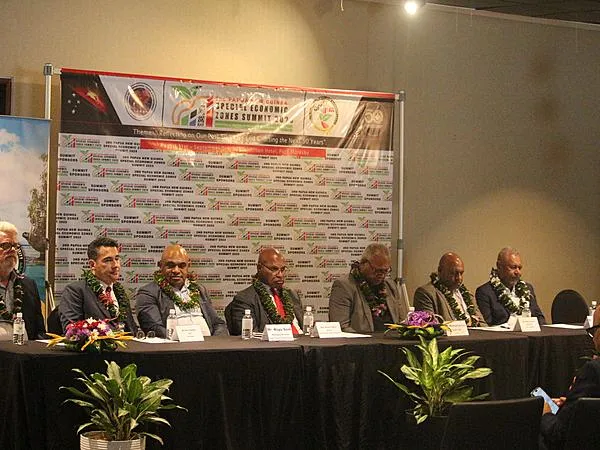
The government has officially launched the 2nd Papua New Guinea Special Economic Zones Summit that will be hosted at the Hilton Hotel in Port Moresby from 31 August to 3 September 2025.
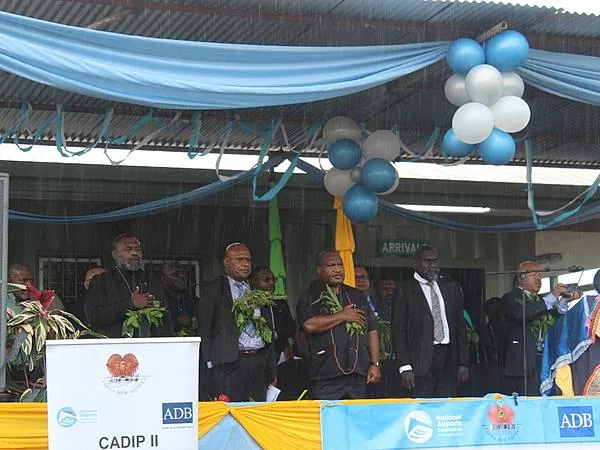
“This summit will be like no other. It will be the most useful and productive in our nation’s history. It will redirect the course of our nation,” Hon. Richard Maru, the Minister for International Trade and Investment, said during the launch of the Summit at Apec Haus on 2 June in Port Moresby.
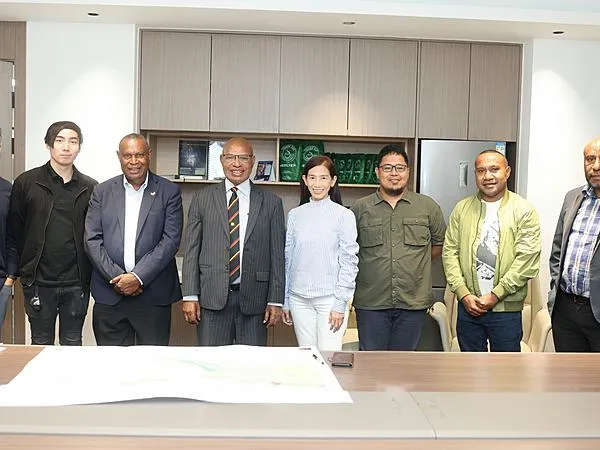
During the launch, the seven anchor sponsors pledged their support for the 2nd PNG SEZ Summit --Teachers Savings and Loan Society (TISA), Kumul Petroleum Holdings Limited, Kumul Minerals Holdings Limited, Paga Hill Estate, Air Niugini, Special Economic Zone Authority, and the Department of National Planning and Monitoring.
Minister Maru thanked the foundation sponsors for coming on board to support the Summit as Gold Sponsors at the cost of K200,000 each.
The 2nd PNG SEZ Summit will be hosted by the Movement as part of the Celebrations, under the theme "Reflecting on Our Past 50 Years and Charting the Next 50 Years.” This will be preceded by the launch of the PNG SEZ Foundation Policy on Sunday, 15 June 2025.
Hon. Maru said the Summit will let PNG “take stock of our journey in the last 50 years in terms of economic development to know, why we are where we are now.”
“Why do we have problems like THE highest unemployment, highest law-and-order problems, serious foreign currency issues, national debt of over K60 billion, and depreciating Kina value? The biggest single issue is that we have failed to grow our economy over the last 50 years,” he said.
“This is glaringly obvious when you compare us to other countries like Japan, New Zealand and the Philippines, who are smaller than us in terms of land size and have no resource endowments like us yet on average their economies are ten times bigger than ours.”
“Singapore went from a mangrove fishing nation to now a first world economy in 30 years with a GDP of over US$501 billion, and Japan went from a war-ravaged nation to now a robust economy with its GDP sitting at over US$4 trillion.”
“We must learn from them and deploy the right strategies and policies. We will do an honest comprehensive review of our economic performance over last 50 years during this Summit so we can re-strategize in terms of our core economic policies to take PNG out of the situation that we are now in and to secure economic independence. This is in line with the 20-year roadmap that is being put together as announced by the Prime Minister,” he added.
Minister Maru said that since the first SEZ Summit in May 2023, the government has engaged with regional and global stakeholders -- SEZ developers, operators, and users -- to refine the policy framework.
"We are now ready to launch the SEZ Foundation Policy and to have SEZ Summit 2. The long-standing support of the anchor sponsors assisted us to get this agenda of the current Marape-Rosso Government being promoted throughout Papua New Guinea and particularly in the Asia and Pacific region,” he said.
While acknowledging that the population has grown fivefold, from 2 million to 10 million, Maru said the economy has not kept pace.
“Symptoms like unemployment, law and order issues, and foreign exchange shortages are the result of our failure to build a robust economy. We can’t keep doing things the same way and expect different results,” he said.
The summit will bring together global and local experts to analyze PNG’s economic trajectory and compare it with better-performing nations, including Singapore, Indonesia, and post-genocide African economies.
The summit will also serve as a forum to develop the nation’s next 20-year economic development plan, a process currently chaired by former Deputy Prime Minister and Treasurer Charles Abel.
Key Themes and Aspirations
Speakers from various countries, including Indonesia, Malaysia, Thailand, Australia, New Zealand, Singapore, United Arab Emirates, the Philippines, Rwanda, and others will also be invited to talk about their economic success and the key strategies they deployed like using SEZs as the main driver for massive economic growth.
Representatives from some world-class SEZs like Java Integrated Industrial and Port Estate in Indonesia and financiers like the International Finance Corporation, Japan Bank for International Cooperation, and local banks like the TISA Group are also invited to speak.
"We will also speak on our six SEZs which will be licensed this year, including Sepik Plains SEZ, Madang Integrated SEZ, Finschhafen Integrated SEZ, Used Lead-Acid Battery recycling plant SEZ in Central Province, Sea Park SEZ, and the Central Province Industrial Park, apart from Paga Hill SEZ, which is already licensed," said Minister Maru
"We will also market investment opportunities in sectors like fisheries, forestry, manufacturing, hydro and solar energy, mining and petroleum projects, and more to the investors from around the world who will be invited to attend the Summit," added the minister.
Maru also mentioned the introduction of a new investment fund, the marketing of high-impact investment opportunities in energy, mining, and infrastructure, and the promotion of downstream processing and industrialization to create thousands of jobs as topics for the Summit, which is now being finalized.
"Meanwhile, we are seeking sponsors to sponsor this very important Summit. We will only have one level of sponsorship and that is Gold Sponsorship at the cost of K200,000,” he said.
“Every sponsor will be given an opportunity to speak at the Summit, they will be recognized in all our promotional materials, they will be given priority to set up their booths to promote their goods and services, and five of their representatives will have unlimited access to the Summit as delegates."
Sponsors Assure Support
The summit’s anchor sponsors echoed the urgency and potential highlighted by Minister Maru.
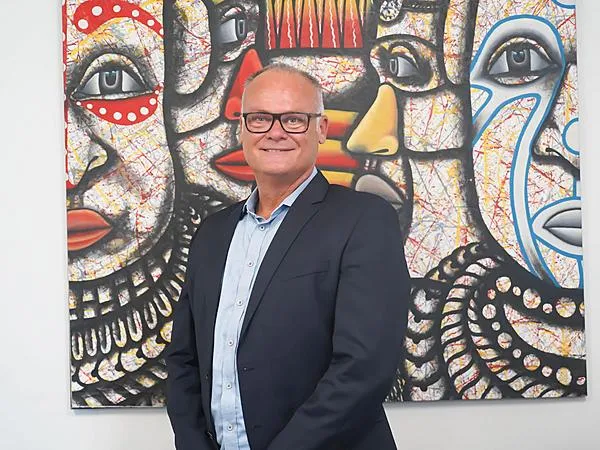
Paga Hill Development Estate CEO, Gudmundur Fridriksson, spoke of the importance of providing incentives to attract global investors.
“We are competing in a global environment. We have shortcomings, but we also have a beautiful country with more potential than any country on the planet,” he said.
He praised the 2023 summit for fostering relationships and learning, and expressed confidence in the added structure and readiness of the upcoming summit.
Fridriksson acknowledged the importance of transparency, diligence, and adherence to customs and SEZ regulations, saying this summit would be a once-in-a-lifetime opportunity to showcase PNG to the world.
Air Niugini CEO, Mr. Garry Seddon, thanked the Ministry for International Trade and Investment for driving forward the SEZ agenda
“This is a terrific initiative to promote this beautiful country of ours – our resources, our people, and our culture,” he said, assuring full support from Air Niugini across its international and domestic network to bring speakers and participants to the summit.
He also announced the arrival of new aircraft that will significantly boost PNG’s air transport capacity.
“Our new narrow-body Airbus A220s arrive in September this year, and our wide-body Boeing 787s in late 2027. These aircraft will revolutionize service delivery and raise PNG’s global profile.”
He closed his remarks by reaffirming Air Niugini’s support and celebrating the collaborative spirit behind the summit.
“On behalf of the 2,000 men and women at Air Niugini, congratulations Minister, and we look forward to a fantastic summit later this year.”
Managing Director of Kumul Petroleum Holdings Limited (KPHL), Mr. Wapu Sonk, congratulated the Ministry for the progress made since its inception and the first summit in 2023.
“It takes a lot of time to start from scratch… and all the consultations that went through were challenging, so congratulations,” he said, noting that his company had been a major sponsor since the ministry’s establishment and had backed both the first and second summits.
“We intend to be a major sponsor to help launch this very important policy and also advertise Papua New Guinea's potential to the rest of the world through the Approved Economic Zones (ACZ),” he added.
Sonk explained KPHL’s involvement by highlighting the country’s resource potential and the need for external investment and expertise.
“We have the resources and the people to train and skill, but we don’t have the money and the skilled people. National Executive Council is one of the key areas and, as a national oil company, we are at the forefront of providing NEC solutions,” he said.
Sonk announced cabinet approval of KPHL’s Konebada Industrial Park SEZ as the third officially approved site, which will house a training and prefabrication facility.
“We are working with all our SOEs to bring in power, sewage, and water. It will basically demonstrate, at a smaller scale, what the country can provide if we put our heads together and attract investors. The goal is to create jobs and grow the middle class so our economy can sustain and grow.”
Meanwhile, CEO of TISAS Bank, Michael Koisen, reaffirmed the bank’s commitment to nation-building and economic development.
“We are a 100% locally owned bank. It’s owned by ordinary people. That’s why it’s in our interest to contribute to national development through all the opportunities given to us,” the CEO said.
He described the SEZ Summit as a critical platform for stakeholders and businesses to engage in development discussions, while thanking Minister Richard Maru and other co-sponsors for their efforts.
“We are happy to be a co-sponsor. Thank you also to the other co-sponsors for supporting this event.”
Mr Kikila Yavase, CEO of the Special Economic Zone Authority, offered his appreciation as both a representative of the ministry and a co-sponsor.
“Thank you to the Minister, Secretary, and my colleagues. For the last 50 years, we were convinced our raw materials wouldn’t be processed in PNG. For example, we were convinced rice wouldn’t grow in PNG.”
“After the 16th of September, we must have a story. That story must come through a specific regional process or concept, and everyone, including government and private sector, must work together for the next 50 years,” he said.
Yavase affirmed the SEZ Authority’s commitment to the government’s SEZ strategy and its role in supporting the summit and associated policy initiatives.
“We will go all out to support the Ministry and Department. We must leave a story for the next three to four generations through this concept.”
The Department of National Planning and Monitoring Secretary, Mr. Koney Samual, and Kumul Minerals Holdings Ltd Managing Director, Sarimu Kanu, also reaffirmed their support and applauded the initiative.
The launch of the SEZ Foundation Policy and the announcement of SEZ Summit 2 signify a critical turning point for PNG aimed at realigning the country’s economic direction for the next 50 years, Minister Maru said.
“It’s time to take that honest stock-take. Let’s be brutally blunt with ourselves. Let’s help ourselves and learn from the rest of the world and take the appropriate actions to build a stronger and bigger economy for our people,” he said.
"We look forward to hosting a successful Summit with the backing of our sponsors, starting with our seven foundation sponsors.”
The official website for the Summit (https://pngsezsummit2025) was also launched on 2 June, with Minister Maru calling on those who wish to attend to register through the site to secure their spaces at the earliest, with only 350 spaces available. Registration is on a first-come, first-serve basis.







Westpac Update: PNG Economic Outlook Holds Firm Despite Global Turbulence
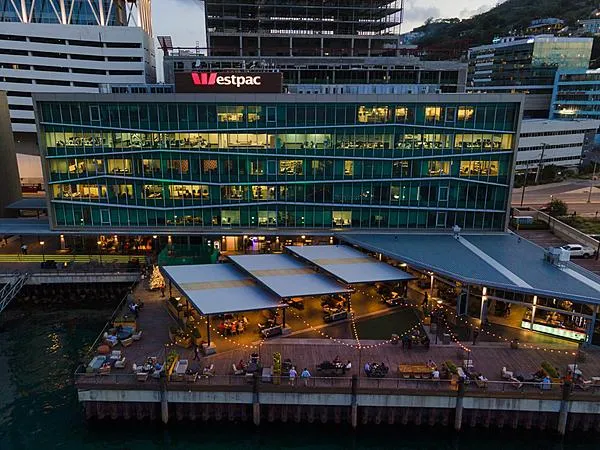
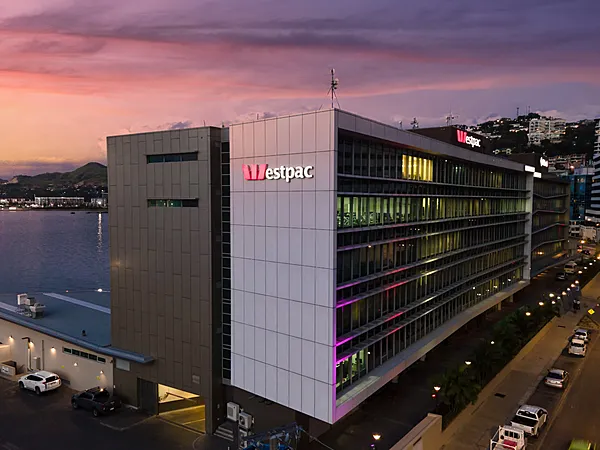
Papua New Guinea’s economic prospects remain positive in 2025 despite rising global uncertainties, according to the latest PNG Economic Update released on 30 April by Justin Smirk, Director and Senior Economist at Westpac.
The report shows strong domestic fundamentals, firm growth forecasts, and increased investor confidence, even amid volatile global trade policies and fluctuating commodity markets.
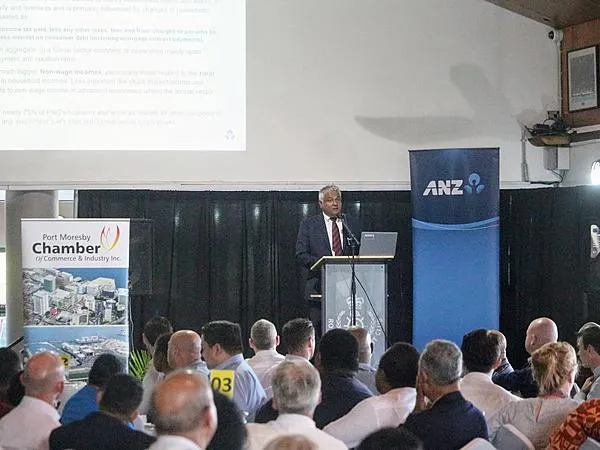
It also showed results from the 2025 PNG 100 CEO Survey presented to the Port Moresby Chamber of Commerce, which revealed business confidence was “above average.” Firms reported higher-than-expected profits in 2024 and projected continued growth in investments and recruitment this year.
A significant improvement in foreign exchange (FX) clearing times, from over a month to under a week in some cases, further bolstered optimism, as acknowledged by the Bank of Papua New Guinea (BPNG) in its latest Monetary Policy Committee minutes.
Growth Forecasts Remain Robust
Westpac forecasts a 4.7% real Gross Domestic Product (GDP) growth for PNG in 2025, aligning closely with projections from other institutions:
- International Monetary Fund (IMF) at 4.6%,
- Asian Development Bank (ADB) at 4.2%
- BPNG at 4.0%.
These figures are underpinned by growth in both the mineral and non-mineral sectors, the report said. Porgera gold mine's improved output, increased LNG production, and strong agricultural performance from commodities such as coffee, palm oil, and cocoa are driving this momentum.
Moreover, higher government spending and robust activity in finance, insurance, and construction sectors are expected to sustain non-primary sector growth.
The medium-term outlook anticipates 5.0% to 6.0% annual GDP growth, buoyed by full production at Porgera and the Papua LNG (liquefied natural gas) project set to launch in 2026.
Commodity Prices and a Brief on Global Trade Tensions
According to the report, the escalating global tariff conflict, intensified by United States President Donald Trump’s declaration of 2 April as “Liberation Day” has disrupted trade norms.
While the imposition of a 10% US tariff on PNG exports appears daunting, its immediate impact is minimal; the US accounted for just 1% of PNG exports in 2023.
Prime Minister James Marape reaffirmed PNG’s commitment to non-retaliatory, free, and fair trade, emphasizing stronger ties with Asia-Pacific markets.
The report said that ironically, these geopolitical tensions have propelled gold and copper prices to unexpectedly high levels, supporting PNG’s export earnings.
Mineral Resources Authority Managing Director Jerry Garry projected mineral export revenue to soar from K19 billion in 2024 to K30 billion in 2025, contingent on global prices and Porgera’s performance.
Inflation and the PNG Kina
On inflation in PNG, economist Smirk elaborated that despite a brief inflationary reprieve in 2024, the depreciation of the kina is expected to drive inflation higher in 2025. Forecasts vary: BPNG predicts 3.0%, IMF 5.0%, and Westpac 4.7%. Foreign investment inflows could stabilize the kina and curb inflation over the medium term.
The kina has gradually depreciated, falling 1% against the USD and 4% against the AUD year-to-date, the report noted. From March to April, the PGK/USD exchange rate slid from 0.2487 to 0.2452. Against the AUD, it averaged 0.3924. Nonetheless, the increase in market turnover (K5.898 billion in March, up from K5.405 billion in February) suggests heightened FX activity.
In the report, Smirk goes ahead to give detailed updates of the interest rates and domestic debt market. The Kina Facility Rate (KFR) held steady at 4% through March, reflecting balanced inflation expectations. Treasury Bills (T-Bills) auctions showed increasing investor appetite, with all tenors oversubscribed. Notably, the 364-day tenor saw a K93.95 million oversubscription.
Weighted Average Rates (WARs) rose slightly for 91-, 182-, and 273-day bills, indicating mild shifts in investor sentiment. In contrast, the Government Inscribed Stock (GIS) auction faced an undersubscription of K40 million, the fifth such occurrence in 2025.
Only the 4-year tenor received full bids with a WAR of 9.03%, up by 3 basis points. This contrasts starkly with tenors such as 2-, 5-, and 10-year bonds which received no bids at all, suggesting caution in long-term market sentiment.
For external sector stability and international reserves, the current account remains in surplus, forecasted at K13.6 billion in 2025. Gross international reserves are projected at K14.6 billion, though import cover is expected to decline to 4.3 months, down from 6.3 in 2024.
This narrowing buffer highlights the importance of sustaining export revenues and managing external borrowing, the report said.
Public Sector Investment and Bilateral Engagements
Significant foreign investment announcements marked the first quarter of 2025. The US committed K1.6 billion to develop a 1.6-million-barrel fuel storage facility in Port Moresby through DGCI Corporation, commemorating PNG’s 50th anniversary of independence and diplomatic ties with the United States
Additionally, Mobil Oil New Guinea completed a K40 million upgrade of its Lae terminal to enhance fuel-loading efficiency. Meanwhile, Prime Minister Marape secured a bilateral agreement with New Zealand to boost technical collaboration in state-owned enterprises and agriculture, underscoring growing regional engagement.
Petroleum and Mining Sector Developments
The report noted that Petroleum Minister Jimmy Maladina invited the China State Construction Engineering Corporation to explore investments in PNG’s petroleum infrastructure. This reflects PNG’s active push to attract global partners for long-term sector growth.
MRA’s Jerry Garry emphasized the critical need for mineral exploration as current reserves are forecasted to deplete by 2060. The MRA is deploying seismic and magnetotelluric technologies to identify deep mineral deposits, ensuring the sector’s sustainability.
(All the updates reported for petroleum and mining sectors can be accessed on the PNG Business News website www.pngbusinessnews.com – Editor).
Risks on the Horizon
Regardless of the strong outlook, the report noted that risks persist, which is also highlighted in the PNG Economic Update.
BPNG identified a global slowdown, commodity price drops, natural disasters, and geopolitical tensions as potential threats. Westpac added that the US tariff war may provoke further instability, with a looming US recession limiting the US Federal Reserve’s ability to respond via interest rate cuts.
Still, the report notes that PNG’s 2025 economic trajectory appears resilient, driven by resource revenues, sound fiscal management, and strategic foreign partnerships. It advised stakeholders to remain vigilant and adaptive to the fluid external environment, ensuring that momentum is maintained through diversification, investment, and structural reform.