September 08, 2025

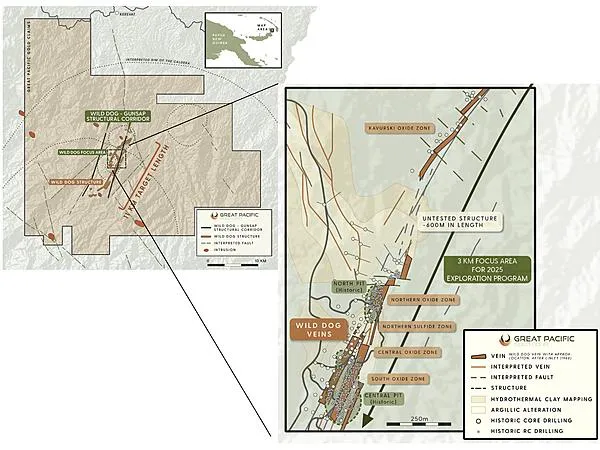
Great Pacific Gold Corp. (GPAC) has announced a breakthrough at its Wild Dog Project in Papua New Guinea (PNG), reporting what it describes as one of the country’s best gold exploration results in recent years.

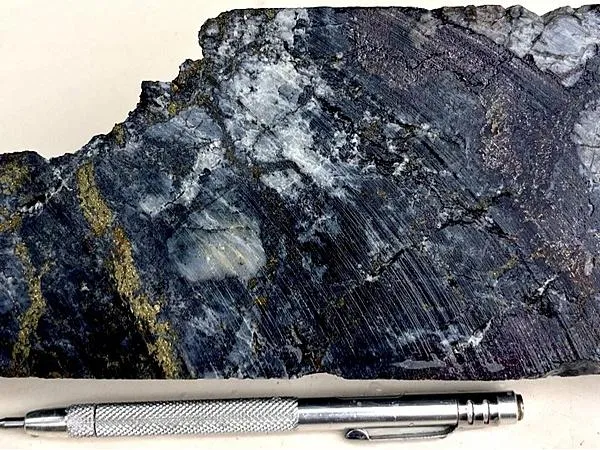
The highlight came from hole WDG-08, which intercepted 8.4 metres at 49.9 grams per tonne gold equivalent, including 3.8 metres at an exceptional 105 grams per tonne. The results also contained strong copper and silver credits.

“Hole WDG-08 has delivered one of the best exploration hits in PNG in recent years, 8.4 metres at nearly 50 grams gold equivalent, including a bonanza zone grading over 300 g/t Au,” said Callum Spink, Vice President Exploration.

“These results highlight the exceptional tenor of this epithermal system. The combination of multi-ounce gold with significant copper and silver credits confirms the presence of a robust polymetallic vein structure,” he said.

Importantly, Spink said that the semi-massive sulphide textures and associated copper mineralization in this interval demonstrate that the company is drilling directly into the heart of the system.

“With mineralization open along strike and at depth, we see clear potential for continuity of these high-grade zones and for scale across the broader 15 km structural corridor,” he said.

The company launched its Phase 1 diamond drill programme in May at Sinivit, a 1.5 km target zone within the Wild Dog structural corridor. The campaign has since been expanded to 28 holes totalling 5,000 metres, with nine completed so far and assays pending for WDG-09.

“The Sinivit target continues to generate high-grade near-surface mineralized intercepts,” said Greg McCunn, CEO. “With the drilling program at Sinivit expanded to 5,000 meters, we are looking forward to continued drilling success for the balance of 2025 from Phase 1.”

Mineralization is open at depth, and North-South along strike over the 15 km corridor. With both high-grade and district-scale, the Wild Dog epithermal target has the potential to host a major gold-copper deposit.

In parallel to the continued drilling, company said it is starting to increase field activity on the adjacent Magiabe porphyry in preparation for a potential maiden drilling program in 2026.

The company is also advancing projects in PNG’s Eastern Highlands, including Kesar and Arau, located near K92 Mining’s operations. Both have shown encouraging signs of gold and copper mineralisation.

McCunn said GPAC’s vision is to become a leading gold-copper developer in PNG by combining near-term high-grade discoveries with district-scale potential.

September 05, 2025

Nambawan Super Ltd. (NSL) has expanded its Member Discount Partnership programme with the addition of two new partners, Hongland Hardware & Homecentre and Hilton Port Moresby Hotel & Residences. The fund also renewed its partnerships with Sanctuary Hotel Resort and Spa and BNBM Mt Hagen.

NSL Chief Executive Officer Paul Sayer thanked the business partners for their support in delivering tangible value and practical benefits to members, noting that these partnerships also contribute to the national and provincial economies.

“The Member Discount Program is part of NSL’s ongoing commitment to supporting Members both during their working lives and into retirement. We know that many families are feeling the impact of higher prices and the pressures of today’s economy. By growing our Discount Program, we are giving our Members meaningful ways to save. This is one of the ways we demonstrate that we care, not just for their future retirement savings, but also about the challenges they face every day,” Sayer said.

“It also reflects NSL’s commitment to adding value beyond retirement savings, ensuring that Members benefit in tangible ways today and in the future. By partnering with reputable businesses nationwide, NSL is helping Members stretch their Kina further, whether it’s saving on essential items, enjoying family experiences or accessing services that improve quality of life.”

The new and renewed discount partnerships include:

  • Hongland Hardware & Homecentre — 10% discount on all non-discounted items storewide. The business operates in East New Britain and New Ireland provinces.

  • Hilton Port Moresby Hotel & Residences — 15% discount on standard room rates, available exclusively on Fridays, Saturdays and Sundays.

  • Sanctuary Hotel Resort and Spa — 20% discount on normal room rates and 20% discount on restaurant food plans.

  • BNBM Mt Hagen — 10% to 20% discount on all hardware products.

These partnerships form part of NSL’s growing Member Discount Programme, which already includes more than 160 businesses nationwide. NSL is working to expand the initiative further into regional and provincial centres so that more members can access savings wherever they live and work.

NSL encouraged businesses across the country to consider partnering with the fund, while also reminding members to take advantage of existing discounts by presenting their valid membership cards at participating outlets.

For the full list of NSL discount partners, members can visit the NSL website. More information is available by calling 180 1599 or emailing CallCentre@nambawansuper.com.pg.
September 05, 2025

Ok Tedi Mining Ltd. (Ok Tedi) has reaffirmed its commitment to supporting Papua New Guinea’s future workforce, announcing it will remain the platinum sponsor of the University of Technology (Unitech) Career Fair for the next two years.

The announcement was made on 31 August, during the closing dinner of this year’s fair, where Ok Tedi also served as platinum sponsor.

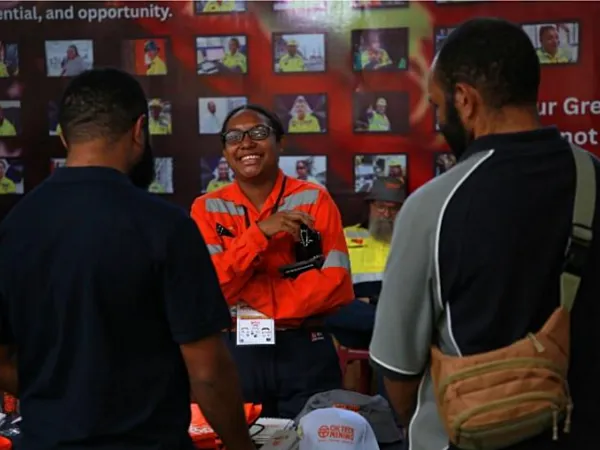
Over three days at Unitech, Ok Tedi drew strong interest from tertiary students, showcasing its operations from the pit to the port and highlighting positive contributions to communities, the workforce, stakeholders and the nation. Since its first gold pour in 1984, the company has played a central role in Papua New Guinea’s nation-building and socio-economic development.

Representatives engaged directly with students, sharing insights into the skills and qualifications needed for careers at Ok Tedi. They also discussed the advantages of working for a company that is 100% nationally owned.

The initiative, led by Ok Tedi’s Training Capability and Development Department, aims to inspire the country’s future workforce to excel in their studies and prepare for meaningful careers after graduation. The company also highlighted the wide range of training opportunities and career paths available within its operations.

“Our goal is to connect with the next generation of leaders and innovators. By participating in these career fairs, we are not only promoting the values and opportunities at Ok Tedi but also encouraging young Papua New Guineans to aspire to careers that contribute to the nation’s growth and development,” said Ian Strachan, manager of Training Capability and Development at Ok Tedi.

This engagement forms part of Ok Tedi’s broader strategy to invest in human capital development and aligns with its vision of contributing to Papua New Guinea’s socio-economic prosperity and sustainable future.

September 01, 2025

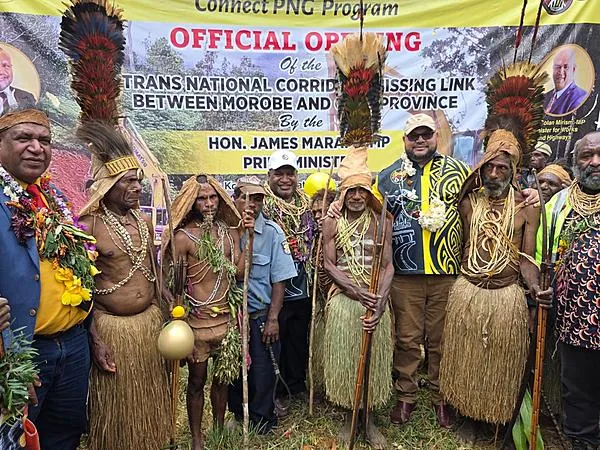
Prime Minister James Marape has assured the people of Kotidanga, one of the country’s most isolated regions bordering Gulf and Morobe provinces, that his government is committed to bringing roads, schools and essential services to their doorstep.

Speaking to a large gathering at the rugged frontier during the opening of the Trans National Corridor Missing Link, Marape said the new road marked a historic step in connecting communities long cut off from the rest of the nation.

“Although this is not yet a highway, one day it will be,” he said. “Step by step, kilometre by kilometre, we are opening up roads so that our people are no longer cut off. This road will one day unite the Papuan side with the Highlands, running as a true national highway.”

Marape noted that earlier leaders, including Sir Michael Somare, Sir Julius Chan, Paias Wingti, Sir Rabbie Namaliu, Bill Skate, Sir Mekere Morauta and Peter O’Neill, had all dreamt of linking remote areas but were constrained by cost.

“Each kilometre of road costs between seven to eight million kina. That is why previous governments struggled. As the economy grows, more money will come for roads like this,” he said.

The prime minister also appealed to local communities not to focus on compensation demands but to seize new opportunities the road would bring.

“Do not lose hope. When the road is here, plant more coffee. When you sell, you will make more money than compensation could ever give. Every kilometre we open will save you in transport costs and bring development closer,” he said.

He emphasised that the road was not only for farmers and traders but also for teachers, health workers and missionaries serving in remote corners of the country.

“This road is for you – our teachers, our rural health workers and our missionaries who serve tirelessly in remote communities. My government commits that no teacher, health worker or policeman in remote places like Kotidanga will be forgotten,” Marape said.

He announced that hardship allowances would be introduced for teachers and public servants serving in difficult and hard-to-reach areas. He also pledged K1 million for the Kerema District Development Authority to build school infrastructure, including dormitories, so children could remain in school safely.

“My children, remain in school. Education is your future. Stay in school. That is the greatest gift you can give yourselves and your country,” he urged.

Marape described the Kotidanga road as a symbol of the government’s determination to deliver on promises long made to neglected communities.

“We will not leave the last places behind. Step by step, we are moving forward together,” he said.

September 01, 2025

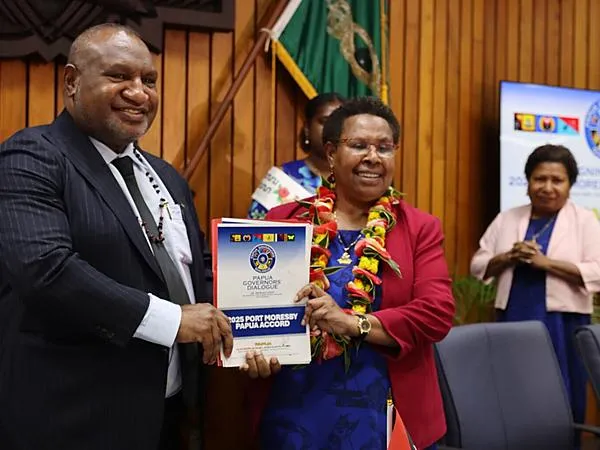
Prime Minister James Marape has reaffirmed his government’s commitment to national unity, regional empowerment and inclusive development at the signing of the Port Moresby Papua Accord, a milestone agreement that followed the Papua Governors’ Dialogue.

The accord brought together key national and regional leaders from the Southern, or Papuan, region, underscoring what Marape described as the country’s strength in diversity.

“Fifty years on, our nation calls for greater unity than division,” Marape said. “Diversity builds and not destroys. Diversity harnesses talents and mobilises resources and human ingenuity for our country to prosper.”

He expressed gratitude to Central Governor Rufina Peter, chairlady of the Parliamentary Governors’ Council, and to all Papuan governors for their leadership in advancing regional dialogue.

“To all Parliament Governors, to all Members of Parliament from the Papuan region of our country, I thank you for embracing this conversation of progress and unity,” he said.

Drawing parallels with the United States, Marape pointed to diversity as a foundation for progress. “The greatest democracy and economy today was built not by language or tribe, but on the principle of human equality embedded in Christian values,” he said.

The prime minister also highlighted Papua’s contribution to Papua New Guinea’s independence journey.

“Right from day one, the Papuan side has contributed to the country as much as the New Guinea side,” Marape said. “If you count the divide of Papuan territory and New Guinea territory, Papua has had four prime ministers — Bill Skate, Mekere Morauta, Peter O’Neill and myself.”

He urged the nation to rise above regional divides, reminding leaders of long-standing ancestral and trade ties across the country.

“We were a people before there was a Papua. We were a people before there was a New Guinea. Let us step away from the notion of a Papua–New Guinea divide,” he said.

Marape called on provincial governments to fully use the legal powers granted under the Organic Law on Provincial Governments and Local-level Governments.

“Since 1995, when has one Provincial Government utilised its powers? If it hasn’t happened, where is the problem? Pangu Party borne Provincial Governments after Independence to unite the country, not divide our country,” he said.

He committed his government to further decentralisation, pointing to wide-ranging powers under the law for governors and local-level governments in education, health, land, tourism, agriculture and resource management.

On development, Marape highlighted more than K1 billion worth of infrastructure and connectivity projects across the Southern region, including road links from Port Moresby to Alotau, Kikori and Kerema, aimed at unlocking tourism, agriculture and trade.

He also pointed to fresh export opportunities. “For the first time, Total is doing deep sea exploration at Mailu (Abau district). China has approved our coffee and seafood exports. Abau district in Central Province is now sending crabs directly to Singapore,” he said.

Closing his remarks, Marape urged leaders and public servants to turn words into action.

“Let us not be talkers — let us be workers. The power lies in our hands. If we unlock these structural impediments together, we can grow the economy and better serve our people,” he said.

The prime minister ended with a message of gratitude to the Papuan people: “Thank you, thank you, thank you. You have played your fair share and carried us. Let us continue to work together in unity. God bless.”

September 01, 2025

Prime Minister James Marape has welcomed the growth of Papua New Guinea’s overseas STEM (science, technology, engineering and mathematics) scholarship programme, calling it a transformative investment in the nation’s future workforce and leadership.

He said the initiative reflected his government’s vision of equipping young Papua New Guineans with world-class education, global exposure and practical skills that would drive development for decades to come.

“Our children are the true wealth of this nation. By investing in STEM education overseas, we are giving them the tools and experiences to compete with the best in the world and return to build Papua New Guinea,” Marape said.

“The future of our economy, our diplomacy, our trade and our development depends on young Papua New Guineans who are not only highly skilled, but who also understand the languages, cultures and technologies of our global partners. This programme is about positioning our nation for the next 50 years and beyond," he added.

The prime minister thanked international governments, universities and private sector partners that have supported the programme, noting contributions from the Australian Government and Kumul Petroleum Holdings Limited, which has sponsored cohorts of students studying in the United States.

He also acknowledged Education Secretary Uke Kombra and his team for their leadership in setting a long-term goal of expanding the annual intake to 1,000 students.

“It is regrettable that such a programme was not launched decades ago, but as the saying goes, it is better late than never,” Marape said. “We are now making up for lost time, ensuring that Papua New Guinea will have the global talent pool it needs to prosper in science, technology, engineering and mathematics, while also strengthening our links with nations around the world.”

The prime minister said the programme was part of a broader commitment to invest in young people, describing it as a legacy for the nation’s next half-century.

“This scholarship programme is one of the most important investments we can make for our young people and for the nation,” he said.

Alongside the scholarship drive, Marape also praised Edevu Hydro Power for giving 20 Papua New Guinean students studying in China the chance to gain hands-on work experience at its hydro project in Central Province. Under the guidance of managing director Allan Guo, the students spent several weeks in the rugged Koiari mountains, learning about engineering, energy production and project management before returning overseas.

Marape said such opportunities complemented the government’s efforts by ensuring students returned with not only academic qualifications but also practical understanding of the country’s needs.

“I thank Mr Allan Guo and the Edevu Hydro Power Company for going beyond words and investing directly in our young people,” Marape said. “These 20 students represent the very best of Papua New Guinea’s future. They are among the top one per cent of our school leavers, and by giving them practical training at home, we are grounding their education in the real challenges and opportunities of nation-building. This is the kind of partnership we need between government, private sector and education to raise our standards.”

He said the government’s long-term vision was to build a workforce of highly skilled professionals who would not only meet domestic needs but also innovate and lead.

“When these students graduate, we expect them to come back and contribute at the highest level, raising standards across our professions and industries,” Marape said. “They will not just be engineers or scientists like the ones we already have — they must be leaders who add value, bring innovation and change the way we build our country.”

Marape also acknowledged Education Minister Lucas Dekena, STEM advocate Clement Waine and Chinese academic partners who have worked alongside the programme. He said their support demonstrated the importance of aligning government policy, international partnerships and private sector investment.

“This is a model of partnership that I want to see replicated across other sectors — where government, private companies and our international friends come together to build a stronger future for Papua New Guinea,” he said.

September 01, 2025

A new customs detector dog facility has been launched in Port Moresby, marking a significant step in strengthening border protection and deepening the partnership between Australia and Papua New Guinea.

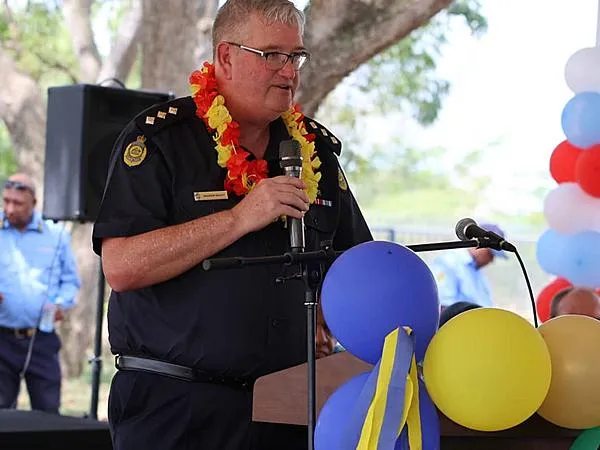
“From narcotics and firearms to illicit tobacco and explosives, detector dogs are a powerful non-intrusive screening tool that can complement and, in some cases, replace technological solutions,” said Andrew Bailey, who represented the Australian High Commission at the groundbreaking ceremony on 22 August.

Bailey said the initiative will not only safeguard communities but also help deter transnational crime, disrupt criminal syndicates and protect PNG’s economy.

“As PNG approaches its 50th anniversary of independence, this program is another example of how our two nations stand together, yumi stap wantaim, to build a safer and more secure region,” he added.

The program is also expected to boost revenue collection by tightening border enforcement and reducing the flow of illicit goods, contributing to greater economic stability.

The Australian Border Force Detector Dog Program, recognised globally as a World Customs Organisation Regional Dog Training Centre, has been working closely with PNG Customs to establish professional capability. This has included recruiting and training local handlers, providing mentoring through regional forums such as the Pacific Detector Dog Program in Fiji, supporting the development of operational procedures and animal welfare standards, and contributing to the design of the new facility.

Australia’s support will continue as the program becomes fully operational, with ABF-bred detector dogs to be deployed in PNG, more training for handlers, the supply of essential equipment and ongoing mentoring.

September 01, 2025

Nambawan Super Ltd (NSL) has announced the relocation of its Madang branch to the ground floor of the Fenske Aben Building along Modilon Road.

The branch is now open for business, offering members and employers more space, modern facilities and a comfortable environment.

NSL Chief Executive Officer Paul Sayer said the move formed part of the company’s wider Branch Relocation and Expansion Project, which aims to bring services closer to members while improving the quality of facilities and customer experience.

“This relocation is part of NSL’s larger project that aims to bring services closer to members’ doorsteps while also improving the quality of services and facilities provided,” Sayer said.

“All our new and relocated branches have been upgraded to enhance members’ experience and ensure our staff have everything they need to deliver the same high-quality services.

“Through this exercise, we want to ensure that we can provide a standard welcoming look and feel across all our 22 branches nationwide so that our members receive the same level of service wherever they are.”

While the Madang branch is already serving members, the official opening ceremony will be held in September as part of NSL’s celebrations for Papua New Guinea’s 50th Independence Anniversary.

NSL is Papua New Guinea’s largest superannuation fund, with more than 230,000 members and over K9 billion in funds under management. The fund provides retirement savings and financial services to employees across the public and private sectors, and has a nationwide branch network aimed at improving accessibility for members in urban and regional centres.

September 01, 2025

Credit Corporation (PNG) Limited has outlined its transformation into a commercial bank and reported a solid financial performance for 2024, with Chief Executive Officer Danny Robinson reaffirming confidence in the Group’s future.

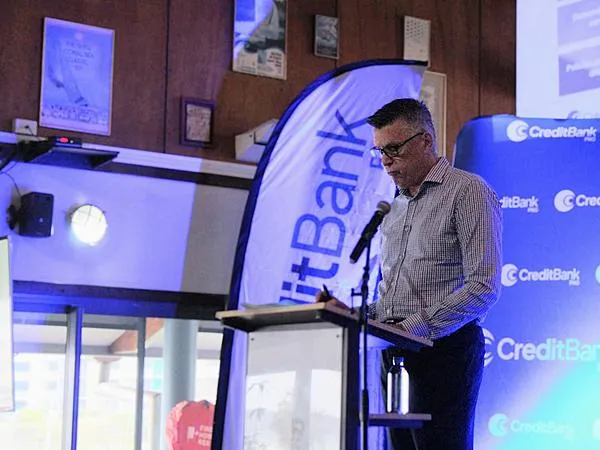
Robinson shared the company’s progress at a Port Moresby Chamber of Commerce and Industry breakfast on 27 August 2025, where he spoke about Credit Corporation’s evolution into CreditBank PNG and its digital-first strategy.

He said the Group’s five-year strategy is focused on streamlining services, expanding financial offerings and strengthening risk management.

“The region’s economic expansion is expected to continue, which supports a positive outlook for our operations,” Robinson said, noting favourable conditions across Papua New Guinea, Fiji, the Solomon Islands and Vanuatu.

Robinson acknowledged the work underpinning the transition. “I am especially grateful to everyone who has been involved in the work that has underpinned our new services – the new core banking system, a new digital banking application, enhancement of our internal processes and the upskilling of our people,” he said.

“This strong foundation will position us well for the future and we look forward to capitalising on emerging opportunities in 2025 and beyond.”

Strong 2024 Results

The updates followed the company’s Annual General Meeting in Port Moresby on 20 June 2025, where Robinson described 2024 as a turning point for the Group.

“We reported a strong financial performance which reflects our prudent investment approach and disciplined credit risk management. Combined, this ensures we maintain a strong foundation for future growth,” he said.

The launch of CreditBank PNG in August 2024 marked what Robinson called “a historic milestone in our 46-year history.” Since then, the bank has opened more than 8,000 accounts, attracting customers from all 22 provinces.

Digital services have been particularly popular. “For every new customer who opened an account in one of our branches, seven to eight new customers opened accounts online,” Robinson noted.

Small to medium enterprises, commercial clients and the emerging middle market have also embraced the new bank’s services, strengthening both new and long-standing relationships.

Financially, the Group recorded strong growth across its core businesses. Net loans increased by 20.6% year on year, while deposits rose 24.7% to K637.3 million (US$166 million). These results supported loan growth at lower lending rates.

Despite the expense-to-income ratio rising to 60.7% due to investments in infrastructure and the banking transition, shareholder returns remained strong.

“Return on equity increased to 24.4% from 14.1% in 2023. Total shareholder return for the period was 47.6%, reflecting strong investor support,” Robinson said.

People and Leadership

Robinson emphasised that employees remain central to the Group’s success. “The way our people work together and prioritise our customers distinguishes us from others in the financial services sector,” he said.

Leadership development continued through the Accelerate Performance Program, with 37 participants completing the initiative since its launch in 2021. For the first time in 2024, the programme was extended to staff in Fiji.

The Group also maintained gender balance, with women holding 56% of executive positions and 58% of senior manager and manager roles.

“We celebrate a work environment that values all of our people for their unique contributions,” Robinson said.

A major focus of 2024 was strengthening risk management, including the rollout of a new credit scoring tool to support the transition into a regulated bank.

“This strong framework will ensure that we are well-prepared for the complexities and regulations of banking,” Robinson said.

September 01, 2025

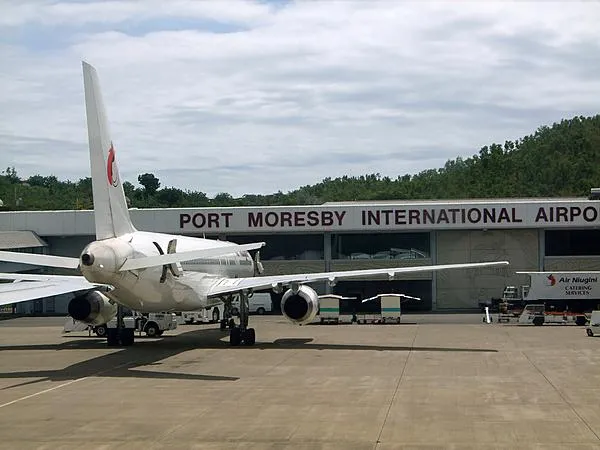
Papua New Guinea’s aviation sector is set for a sweeping transformation, with Aviation Minister Wake Goi announcing multi-billion Kina investments to modernise airports and expand their role as economic drivers.

Goi said the redevelopment programme will focus on five priorities: runway expansions, aircraft parking bays, infrastructure upgrades, terminal modernisation and the creation of a commercial “Airport City” precinct.

Runway Expansions

A central priority is the expansion of Jacksons International Airport’s runways. Goi confirmed that two additional runways will be built alongside the existing one to ensure uninterrupted flight operations.

“The need for additional runways was highlighted by a recent incident involving a Boeing 737 that experienced a tyre issue upon landing,” he explained.

The runway project, valued at 200 to 300 million Kina (USD 48–72 million), will be open to bidders. Similar upgrades are also planned for airports including Mount Hagen to accommodate larger aircraft.

Aircraft Parking Bays, Terminal Redevelopment

The extension of aircraft parking bays represents one of the largest investments, with bidding estimated at 1 to 1.5 billion Kina (USD 240–360 million). The expansion will extend the parking area toward the Helifix site and require significant earthworks, including levelling part of a mountain.

Jacksons International Airport’s infrastructure is also slated for full-scale redevelopment. Plans include a new two-storey building linking the international and domestic terminals, a 20–30 metre extension of the VIP lounge and a similar extension of the economy lounge.

“The terminals will be redesigned with check-in counters downstairs and departure gates upstairs, while the number of departure gates will increase to between 8 and 10,” Goi said.

Several outdated buildings will be relocated or rebuilt to create a more professional appearance, with facilities such as the maintenance hangar identified for relocation.

Airport City Vision

The centrepiece of the long-term vision is the development of an “Airport City,” a commercial hub expected to attract hotels, shops and services extending as far as the Gateway Hotel. Goi said the project will require 3 to 4 billion Kina (USD 720–960 million) in investment.

“The National Airports Corporation will manage this development by collecting taxes and leasing land, while land titleholders will receive a percentage return on their investment,” he explained. “As revenues grow, NAC will be able to repay investors over time.”

Investor confidence has already been signalled, with one company offering to transfer 4 billion Kina (USD 960 million) to support the Airport City development.

Economic Impact

Goi stressed that the airport upgrade programme is not only about infrastructure renewal but also about economic growth. By opening the projects to private capital, he said, the initiative is designed to strengthen PNG’s wider economy.

“These upgrades will not only increase passenger and cargo capacity but also open up opportunities in tourism, trade and property development,” Goi said.

“The Airport City concept, in particular, will attract commercial activity, create jobs and position Port Moresby as a regional hub for business and travel.”

According to Goi, the investment will modernise the country’s main gateways while creating sustainable returns for investors and long-term benefits for the national economy.

September 01, 2025

Papua New Guinea marked its 50th Anniversary of Independence and the 50th Anniversary of the Kina and Toea with the launch of a commemorative K50 banknote and 50 toea coin, while also announcing plans for a new K100 note honouring the late Sir Julius Chan to be released in 2026.

The commemorative currency was unveiled on 28 and 29 August in a series of events led by Prime Minister James Marape and Bank of Papua New Guinea (BPNG) Governor Elizabeth Genia.

Commemorative K50 Note and 50 Toea Coin

The K50 note retains the image of Parliament House and the portrait of the late Grand Chief Sir Michael Somare, with the addition of a golden 50th Anniversary emblem featuring the Raggiana bird of paradise in flight. The 50 toea coin maintains its seven-sided shape and national crest, now with a coloured inlay of the national flag.

The launch ceremony at the Stanley Hotel in Port Moresby on 29 August brought together Prime Minister Marape, Governor Genia, Foreign Affairs Minister Justin Tkatchenko, members of government, diplomats, business leaders, international partners and the families of Papua New Guinea’s founding statesmen.

In his keynote address, Prime Minister Marape said the release was a moment of national pride. “Currency is more than money, it is a symbol of identity, culture, and nationhood. For fifty years, the kina and toea have told our national story. This commemorative issue honours our journey as a sovereign nation and the resilience of our people,” Marape said.

He acknowledged the leadership of the nation’s founding fathers, particularly Sir Michael Somare and Sir Julius Chan, noting their central role in establishing the financial foundations of the new nation in 1975.

“Sir Julius embodied discipline, hard work, and humility in service to our nation. His contribution to the foundations of our economy will never be forgotten. It is fitting that his image will appear on our K100 note as a permanent reminder to future generations,” Marape added.

Sir Julius Chan Commemorative K100 Note for 2026

Governor Genia confirmed that the K100 commemorative banknote featuring Sir Julius Chan, PNG’s first Finance Minister and later Prime Minister, will be released in 2026.

“The new design celebrates our currency history and trading spirit, a fitting recognition of Sir Julius as our first Finance Minister and as a nation-builder who placed Papua New Guinea in the world,” she said.

Genia also paid tribute to the nation’s other founding leaders, including Grand Chief Sir Michael Somare and Sir Henry ToRobert, PNG’s first Central Bank Governor. “Fifty years ago, the notes and coins represented the first heartbeats of our nation. Today they are the backbone of our economy,” she said.

She reminded the public that when the kina was first introduced it was pegged at equal value to the Australian dollar and circulated alongside it until the end of 1975, with confidence in the new currency quickly growing among farmers, smallholders and businesses.

“The names themselves, kina (pearl shell) and toea (small trade shell), reflected ancient systems of value and exchange. By choosing these names, our leaders embedded culture into the heart of our economy. Every kina and toea carries our heritage into the modern economy,” Genia added.

Looking ahead

The BPNG said the commemorative K50 note and 50 toea coin officially entered circulation on 29 August 2025, while full details of the Sir Julius Chan K100 note will be released closer to its 2026 launch.

Genia reaffirmed the Central Bank’s priorities during the commemorative events.

“We will sustain price stability, manage exchange rates responsibly, and expand access to financial services to all Papua New Guineans. This is not just economic housekeeping. It is the unfinished business of independence. From now on, may every kina and toea carry our pride and our promise,” she said.

As the country prepares to celebrate its 50th Independence Anniversary in September, the commemorative notes and coins are expected to serve both as a means of exchange and as symbols of national pride.

Prime Minister Marape urged citizens to embrace them as reminders of unity and vision.

“May this currency inspire us to work harder for the prosperity of our country, as our founding fathers did fifty years ago. May God bless Papua New Guinea,” Marape said.

August 29, 2025

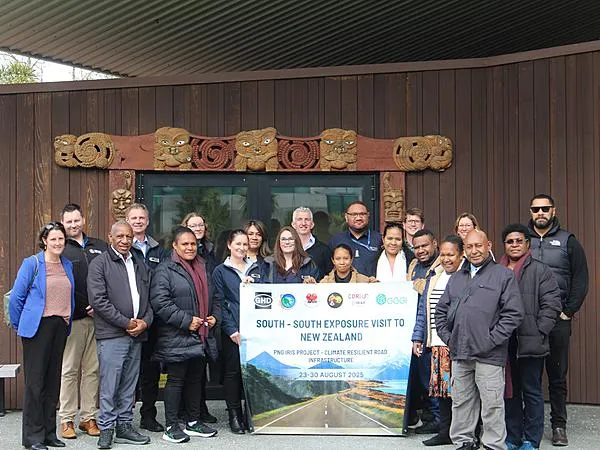
A delegation from Papua New Guinea’s Global Green Growth Institute (GGGI), Department of Works and Highways (DoWH) and Climate Change and Development Authority (CCDA) visited Aotearoa New Zealand from Saturday 23 to Saturday 30 August 2025 to learn more about climate-resilient infrastructure.

The learning exchange programme comes as Papua New Guinea (PNG) prepares to mark 50 years of independence on 16 September 2025.

Improving road transport is a priority for Papua New Guinea’s economic growth and development, with limited road connections outside the main cities of Port Moresby and Lae. Many of the country’s roads are exposed to climate-related hazards such as flooding, landslides, and sea-level rise. Overall, PNG is ranked 89th out of 139 for infrastructure in the World Bank’s Logistics Performance Index.

This visit is part of the Infrastructure for Resilient Island States programme, a global initiative funded by the Coalition for Disaster Resilient Infrastructure. The IRIS PNG programme is implemented by GGGI and DoWH with support from GHD, a global professional services company. 

During their visit to New Zealand, PNG officials learned from NZ Transport Agency Waka Kotahi, councils, the National Emergency Management Agency and mana whenua about how climate risk and resilience are embedded in infrastructure planning and investment.

The delegation visited Waikato region, including learning about the recovery from Cyclone Gabrielle to gather practical insights to help them implement PNG’s recently developed Climate Change Risk and Vulnerability Assessment Framework.

Kenneth Yamu, DoWH ESG Assistant Secretary says, “Our team comprised of DoWH, CCDA, TSSP and GGGI travelled to New Zealand for the South-South Exchange and Knowledge Exchange with town councils to visit climate resilient project sites to learn and integrate climate resilience into road infrastructure development in PNG. We want to see the DoWH construct climate resilient infrastructure by 2030 that can withstand the extreme weather patterns. This will require teamwork by improving knowledge and skills for our technical staff in DoWH to make collective and inclusive decisions that will benefit our people. 

Muhammad Ali Shaikh, Country Representative of GGGI PNG says “This exchange offers Papua New Guinea a valuable opportunity to learn directly from New Zealand’s experience in embedding climate resilience into infrastructure systems. As we prepare to mark 50 years of independence, strengthening our road networks and transport systems against climate risks is not just a technical necessity but a foundation for sustainable economic growth and community well-being. The lessons from New Zealand will help us apply our Climate Change Risk and Vulnerability Assessment Framework in a way that is practical, inclusive, and scalable across Papua New Guinea

Stephen Douglass, GHD Market Lead Environment and Communities for NZ Pacific says, “The learning exchange presented how New Zealand manages interconnected climate risks — a direct analogue for the challenges facing Papua New Guinea. It focused on community development and sits within a wider programme to build capacity for climate-resilient, context-appropriate infrastructure prioritisation, delivering lasting community benefits directly transferable to Papua New Guinea.

About GHD: 

GHD is a leading professional services company operating in the global markets of water, energy and resources, environment, property and buildings, and transportation. Committed to a vision to make water, energy, and communities sustainable for generations to come, GHD delivers advisory, digital, engineering, architecture, environmental and construction solutions to public and private sector clients. Established in 1928 and privately owned by its people, GHD’s network of 12,000+ professionals is connected across 160 offices located on five continents. www.ghd.com

About the Global Green Growth Institute (GGGI)

The Global Green Growth Institute (GGGI) was founded as a treaty-based international, inter-governmental organisation in 2012 at the United Nations Conference on Sustainable Development. GGGI supports its Member States in transitioning their economies toward a green growth model that simultaneously achieves poverty reduction, social inclusion, environmental sustainability, and economic growth. With 49 Member States and 29 Partner countries and regional integration organisations in the process of accession, GGGI delivers programs and projects in over 51 countries. These initiatives encompass developing innovative green growth solutions, technical support, capacity building, policy planning & implementation, and assistance in building a pipeline of bankable green investment projects, project financing, investments, and knowledge sharing. GGGI's work contributes to its Member States’ efforts to fulfill the Sustainable Development Goals and the Nationally Determined Contributions to the Paris Agreement.  
August 28, 2025

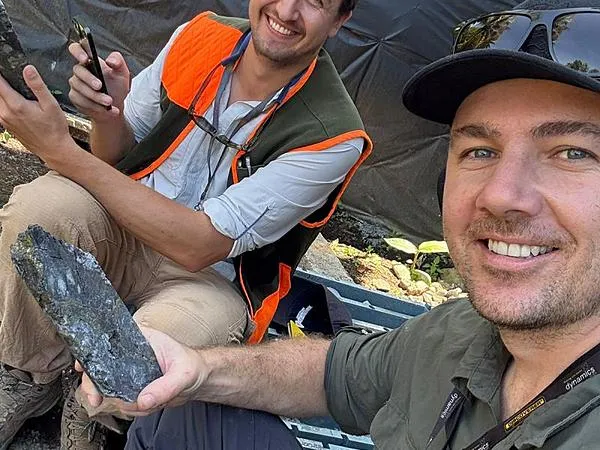
Great Pacific Gold Corp. has expanded its drilling programme in Papua New Guinea, doubling its efforts at the Wild Dog Project in East New Britain from 2,500 metres to 5,000 metres, and is introducing advanced LiDAR technology to map the remote, jungle-covered terrain.

The Phase 1 campaign, which began in May this year, is focused on a 1.5-kilometre strike length within the Wild Dog structural corridor. Early drilling has confirmed the high-grade nature of the system, with results such as 7.0 metres at 11.2 g/t gold equivalent from 65 metres and 3.5 metres at 13.1 g/t from just 12 metres below surface.

In total, the programme now includes 28 diamond drill holes and is expected to run into early 2026. To date, only a fraction of the mineralised corridor has been tested.

Chief executive Greg McCunn said the decision to scale up was driven by promising results at the Sinivit Target.

“The success of the Phase 1 diamond drilling at the Sinivit Target to-date has led us to expand our program and we expect to continue drilling at Sinivit into early 2026,” he said.

The final hole at Sinivit will be a bold step-out to the north, aimed at testing a gap area where no historical drilling exists but where geophysics suggests a connection to the Sinivit system.

“This step out will be a precursor to moving the diamond drill to Kavasuki for Phase 2 drilling in 2026,” McCunn added.

Technology Takes Flight

To complement the drilling, GPAC is mobilising an airborne LiDAR and high-resolution imagery survey across 200 square kilometres of the Wild Dog district. Mounted on a fixed-wing aircraft, the system can pierce dense jungle canopy and deliver a digital terrain model accurate to within 10 centimetres.

The company expects this data to sharpen geological maps and, when combined with MobileMT geophysical results, help define high-priority drill targets with greater precision.

Next Steps

Since May, nine drill holes have been completed, with assays for holes WDG-08 and WDG-09 due in September. The next results are eagerly awaited, as they will shape plans for the transition into Phase 2 drilling.

The results signal growing confidence in the Wild Dog Project, one of Papua New Guinea’s most promising exploration frontiers. By marrying boots-on-the-ground drilling with eyes-in-the-sky technology, the company is betting that this mix of tradition and innovation will unlock the district’s true potential.

August 28, 2025

For the first time since the Tolukuma Gold Mine was commissioned in 1995, vehicles have successfully reached the remote site by road, marking a breakthrough moment for both the mine’s future and surrounding communities.

Tolu Minerals Ltd. announced that its new access road, connecting the mine to Port Moresby, has officially opened to traffic. The development is expected to cut operating costs dramatically by reducing reliance on helicopters, long seen as the only viable means of transporting fuel, equipment and supplies across the treacherous Central Highlands terrain.

Managing Director and CEO Iain Macpherson described the milestone as a “game changer” for the mine and a “truly historic moment” for Goilala District.

“The significance of the new roadway cannot be underestimated,” Macpherson said. “It delivers enhanced and efficient access to mining and exploration infrastructure and opens up nearly 1,300 square kilometres of mineral exploration licences across the broader Tolukuma structure.

For the local communities, it brings access to health care, education, employment and markets for locally grown produce. This is a great engineering achievement given the mountainous terrain and heavy rainfall that made road-building so challenging.”

Cutting Costs, Boosting Potential

The road is expected to reduce the mine’s reliance on helicopter transport for fuel and consumables by more than 75 percent. Bulk fuel, capital equipment and everyday supplies will now be delivered by truck directly from Port Moresby — a shift that promises long-term savings and operational efficiency.

Company officials said additional service and exploration roads are already under construction across the mine lease and adjoining exploration licences, further improving logistics and reducing costs.

Benefits for Goilala

The project is more than an industrial milestone — it’s a lifeline for the remote communities of Goilala, which despite being just 100 kilometres from the capital, have long struggled with isolation due to rugged terrain and limited infrastructure.

With the road now open, residents are expected to gain greater access to health and education services, while farmers will be able to transport fresh produce to markets in Port Moresby and beyond. Local employment opportunities are also set to expand as mine operations become more sustainable and exploration activities increase.

An Engineering Feat

Engineers faced steep challenges constructing the road, which winds through some of the most difficult terrain in Papua New Guinea. Heavy rainfall, unstable slopes and rugged mountain ranges required extensive cutbacks, culverts and diversions to stabilise the route.

Despite the difficulties, the road now connects seamlessly with the mine’s internal road network, built over the past 18 months. Deliveries of fuel and machinery have already begun.

Macpherson said the company will continue to refine and upgrade the road to meet contractual standards, ensuring safe and reliable access year-round. “The benefits of this road are enormous and already being realised,” he said.

August 28, 2025

The Special Economic Zone Authority (SEZA) has granted Kumul Petroleum Holdings Ltd (KPHL) a 12-month provisional developer licence to progress the Central Province Industrial Park in the Caution Bay area.

SEZA Chairman Dr Lawrence Sause confirmed the board’s decision in a small ceremony on Wednesday, where he formally presented the licence to KPHL managing director Wapu Sonk.

“We welcome this milestone for Central Province and commend KPHL for taking the lead,” Dr Sause said, noting that the provisional licence will be converted into a full developer licence once the authority receives the required financial documentation.

Sonk said KPHL was committed to operating the industrial park as a dedicated precinct close to the ExxonMobil-operated LNG Plant.

“We are currently constructing a training academy and steel fabrication facility in the area, an investment of US$145 million under Phase 1 of the development,” he said. “This will be the foundation for industrial growth in the SEZ.”

He added that the Caution Bay site was well positioned for large-scale industry. “The area has all the necessary elements for a successful SEZ – road access, reliable power, proximity to the sea and an international wharf – all suitable for industrial development. The fabrication facility will be completed in 2026 and will provide training and employment for an estimated 3,000 local people.”

Dr Sause stressed the importance of ensuring that special economic zones already approved by government are successfully implemented to build investor confidence.

“It is vital that SEZs attract both national and international investors,” he said. “By demonstrating their viability, we can show how this strategy will enable Papua New Guinea to leapfrog into value-adding industries that create jobs and unlock the potential of our natural resources.”

Sonk said the initiative was aligned with Kumul Petroleum’s broader vision of strengthening national content in major projects.

“At Kumul Petroleum, we are planning for the future – preparing for greater participation of qualified Papua New Guineans, as well as developing local steel fabrication capabilities. We can best achieve this in an SEZ,” he said.

He also thanked the Marape–Rosso government for supporting KPHL’s role in driving industrial development.

“We thank the government for their faith in Kumul Petroleum and their willingness to consider awarding us operatorship of the next SEZ,” Sonk said.

August 28, 2025

Papua New Guinea Minister for International Trade and Investment Richard Maru has announced that the National Executive Council has approved a decision to support small and medium enterprises with grant funding of K100,000 (US$ 24,530) per company.

He said the grant was designed to help SMEs export products to overseas markets and would be delivered through a competitive bidding process.

“More details will be announced soon. Our Government is ready to drive the growth of the SME sector,” Maru said.

The announcement was made during the New Zealand Economic Support Morning Tea on August 6, where Maru also acknowledged New Zealand for its long-standing support to Papua New Guinea.

New Zealand Prime Minister Christopher Luxon attended the event and met local entrepreneurs supported under the Business Link Pacific Program. The program provides access to business advisory services, concessional lending and grants, with a particular focus on women-owned enterprises and rural businesses.

Maru highlighted New Zealand’s broader contributions to PNG, including financial assistance to upgrade the Gordons, Kimbe and Lae markets.

“Markets are where most of our SMEs and mothers from the informal sector sell their products and we want this to be replicated in the rest of the provinces and districts in the country to support our mothers and sisters,” he said.

He said the PNG Government has consistently provided over K100 million (US$24.53 million) annually for the past seven years to support SME loans, alongside new grant funding assistance for the Women’s Microbank (Mama Bank).

“At the moment we have about 50,000 registered formal SMEs. There is scope for more. We need to identify them, train them, encourage them, create business opportunities for them, and create an environment where they can operate and thrive in,” Maru said.

He also called for PNG and New Zealand to elevate ties by pursuing a Comprehensive Economic Partnership Agreement. He said one of the key areas should be how New Zealand can help PNG expand its SME sector and connect entrepreneurs to markets abroad.

At the same time, Maru reaffirmed PNG’s position on PACER Plus, stating: “We are a big island nation. We have the resources, we have the population, we have our own issues and our own national interest that must be catered for.”

Reflecting on the 50-year relationship between PNG and New Zealand, Maru said both countries must now anchor the partnership in practical outcomes.

“As we take a stock take our last 50 years, there is so much to be done and we need partners like New Zealand to help us unleash the potential that we have always had as a country. We need genuine partners like New Zealand who will help us to build industries, grow our businesses and create employment,” he said

August 27, 2025

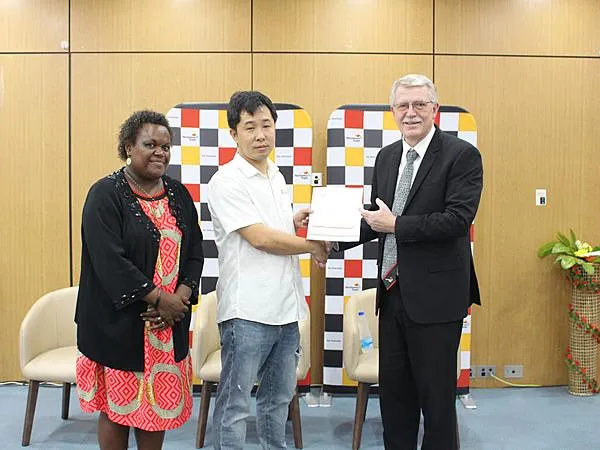
Students attending the Morehead Vocational Centre in the South Fly District of Western Province can now undergo hands-on training with Ok Tedi Mining Ltd.

This follows the signing of a memorandum of agreement between Ok Tedi and the Morehead Vocational Centre on 14 August 2025, marking a significant milestone aimed at providing on-the-job training for students enrolled at the institution.

The collaboration addresses the pressing challenge of securing practical placements for students, a vital component of their educational development.

Morehead Vocational Manager Ken Ware Potang expressed his gratitude, saying, “This collaboration marks a pivotal moment for Morehead Vocational Centre and a tremendous blessing to our 229 students and the broader South Fly community.”

Potang emphasised the transformative impact of Ok Tedi’s support: “Ok Tedi is not just rescuing Morehead Vocational; they are also securing the future of our students. Despite pursuing various courses, many of our students had previously struggled to find hands-on training opportunities.”

He further commended Ok Tedi and its training department for their unwavering commitment to expanding opportunities to mine-associated communities within the region.

Ok Tedi Manager for Training, Ian Strachan, said, “Through this agreement, Ok Tedi is dedicated to facilitating vocational training for our students, ensuring they acquire practical experience that equips them for their future careers.

“Ok Tedi is committed to building Papua New Guinea’s workforce. Our ongoing training initiatives—including Preferred Area Development training, apprenticeship training, the Graduate Development Scheme, and industrial training—demonstrate our commitment. Morehead is now the second school, apart from Kiunga Vocational School, we are onboarding in this commitment to develop the youth of Western Province.”

Ok Tedi’s dedication to supporting Morehead Vocational Centre represents a sustainable initiative, fostering growth and innovation within the community for years to come.

August 26, 2025

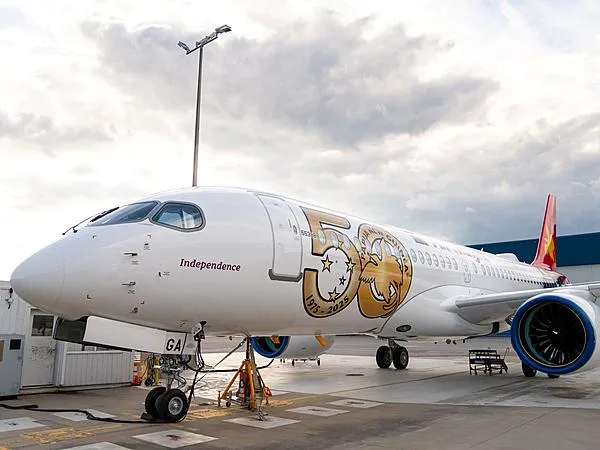
Air Niugini has unveiled a special commemorative livery on its first Airbus A220, marking a significant milestone in both the airline’s history and Papua New Guinea’s 50th independence anniversary.

The brand-new aircraft, affectionately dubbed the People’s Balus, features a vibrant design incorporating Papua New Guinea’s national flag and the official 50th anniversary logo. The livery serves as a flying tribute to the nation’s rich heritage and bright future, proudly showcasing the colours of Papua New Guinea both domestically and across the region.

The intricate painting process was carried out at the Airbus facility in Mirabel, Canada. A dedicated team of 120 painters worked around the clock in three shifts to bring the design to life, using 11 distinct colours and employing special airbrushing and advanced stencil overlay techniques to achieve the complex layering effect. This marks only the second time Airbus has applied such a technique on an A220, setting a new benchmark for aircraft livery design.

Air Niugini acting CEO Capt. Samiu Taufa, MBE, said: “This aircraft is more than just a new addition to our fleet. It is our first brand-new, next-generation jet and captures the spirit of our nation and our aspirations for the future. As we celebrate 50 years of independence, the People’s Balus stands as a testament to our journey and our commitment to progress.”

The Airbus A220 comes in two variants — the A220-100 (seating 113 passengers) and the larger A220-300 (seating 138). Powered by new-generation Pratt & Whitney GTF engines and featuring advanced aerodynamics, the A220 delivers about 25% lower fuel burn per seat and a 50% smaller noise footprint compared with the older aircraft it will replace. Its cabin offers an exceptional and comfortable in-flight experience, with wider seats, extra-large windows, spacious overhead bins, free Wi-Fi and a quieter, well-lit environment.

The aircraft currently carries the Canadian test registration C-FOWU. Once PNG Civil Aviation Safety Authority requirements are completed, the People’s Balus will be registered as P2-PGA, followed by the issue of a PNG certificate of airworthiness, before its delivery flight from Mirabel to Port Moresby.

With this aircraft, Air Niugini begins a new era of modernisation, focused on gradually phasing out its Fokker fleet and eventually its Boeing 737s, while improving connectivity and reliability across the country and the region.

Air Niugini has ordered 11 A220s as part of its fleet renewal programme. Three will be delivered by the end of this year, with the remaining aircraft arriving over the next three years.

The first People’s Balus is scheduled to arrive in Port Moresby in September, perfectly timed to coincide with the nation’s 50th independence anniversary. Air Niugini is inviting all Papua New Guineans to share in this historic moment as the aircraft takes to the skies, embodying the pride and unity of the nation.

August 26, 2025

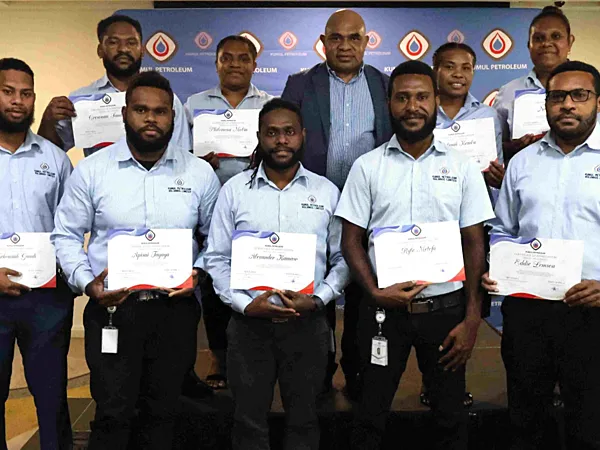
Kumul Petroleum Holdings Limited (KPHL) has marked a significant milestone in its efforts to nurture Papua New Guinean talent, celebrating nine graduates who successfully completed the company’s two-year Graduate Development Programme.

At a ceremony in Port Moresby, KPHL Managing Director Wapu Sonk presented certificates of appreciation to the young professionals and officially welcomed them into full-time roles. He commended their commitment and potential, noting: “This is the beginning of your journey with Kumul Petroleum. It is you young people who will carry the company forward in the future.”

Sonk underscored the company’s wider mission to build national capability in the petroleum and energy sector. “As the national petroleum and energy company, we need people of your calibre to push the company forward, through your work ethic and respective skill sets,” he said.

He further pointed to the strategic importance of upcoming KPHL projects and the graduates’ role in ensuring Papua New Guinea secures maximum benefits from its resources. “Our mandate is to the citizens of this country. We work and do what we do so our people benefit from our projects. Other organisations operate for profit – we have a different calling, a responsibility to our people," he added.

The graduates, who began their journey in 2023, have now taken up positions within the company’s divisions. Two have joined Finance, while seven have entered Operations, specialising in sub-surface and special projects.

Throughout the programme, mentors and supervisors guided their professional growth. Sonk extended his thanks to them, saying: “Your guidance has been instrumental in shaping the future of these young professionals.”

By investing in the next generation, KPHL has reaffirmed its long-term commitment to developing Papua New Guinea’s human capital and securing a sustainable future for the country’s petroleum and energy sector.

August 26, 2025

For more than a century, the Steamships Group of businesses has underpinned Papua New Guinea’s maritime and logistics sector. Today, its Logistics Division is one of the country’s most complete logistics services providers – spanning sea, land and portside solutions – geared to support the oil, gas and resources sectors.

Nick Fisher, CEO of Steamships Logistics, highlights the company’s advantage: “Our century-long presence in Papua New Guinea means we understand the terrain, the waterways, and the challenges of moving critical cargo across the country better than anyone.”

Shipping & Towage

Steamships Logistics operates a comprehensive coastal and project shipping network through its business, Consort Express Lines. Another of its businesses, Pacific Towing – a full member of the International Salvage Union (ISU) and International Spill Control Organization (ISCO) – provides complementary harbour towage, emergency response (e.g., salvage, oil spill response), commercial diving, and marine support. Critically, Steamships Logistics can tranship international cargo to remote areas of PNG – from river landings to remote coastal communities – so equipment and supplies reach projects on time.

Alistair Skingley, GM of Consort Express Lines, explains: “We connect international cargoes to even the most remote inland and coastal destinations, while linking export communities through one accountable logistics chain for oil, gas, and resources clients.”

These capabilities have supported LNG-linked supply chains and contractors serving the country’s first major LNG project (i.e., PNG LNG), and they are configured to support the upcoming execution of its second (i.e., Papua LNG), as well as offshore developments like Pasca A.

Land Freight, Cartage & Heavy Equipment Hire

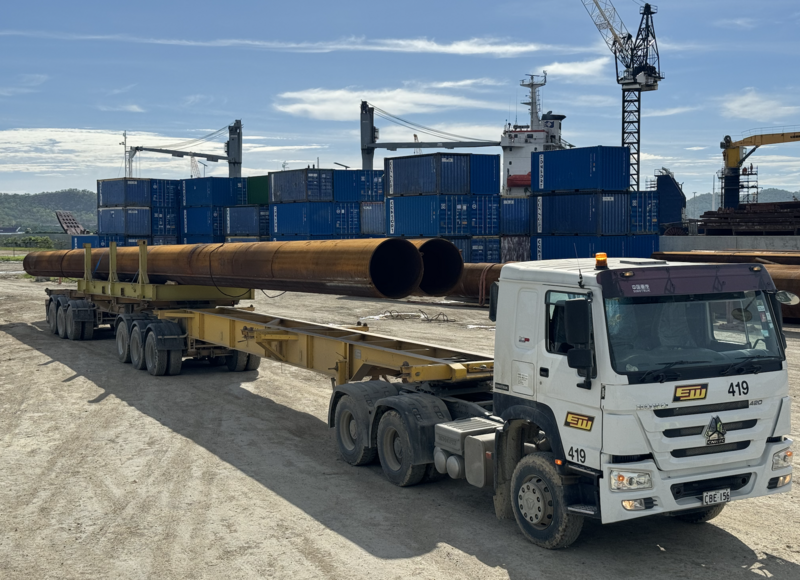
Beyond the shoreline, Steamships Logistics’ ISO-accredited land operations – East West Transport and JV Port Services – combine to provide last-mile delivery. The division has a versatile and modern fleet of vehicles as well as a diverse array of mobile plant and heavy equipment for hire (e.g., cranes, reach stackers, forklifts, prime movers, side loaders). It also manages bulk fuel logistics for aviation and marine customers, supporting continuous operations at energy sites. This integrated land capability is ready to scale for Papua LNG construction logistics and to safely mobilise oversized and hazardous cargo to site.

Steamships Logistics operates Papua New Guinea’s most versatile and well-maintained fleets – spanning road transport assets, maritime vessels, and heavy equipment hire – ensuring reliable, integrated logistics solutions for the nation’s energy, mining, and resource sectors.

Project Staging

Steamships Logistics is located at multiple sites throughout PNG – including within and alongside the Portside Business Park development.  The park is an emerging logistics precinct adjacent to Port Moresby’s international and domestic wharves. It provides expansive depot and laydown areas – a midstream node for staging, storage, assembly and dispatch of mining and petroleum equipment. The park streamlines import handoffs, integrates customs brokerage and heavy-lift handling, and links with Steamships’ coastal shipping, river routes and cartage for onward movement – including transhipment to remote sites. A staged development, Portside Business Park is purpose built to support Papua LNG, the expansion of PNG LNG, and future major resource developments, including offshore projects.

Joint Ventures for Long-Term Partnerships

Steamships has long partnered with local landowner groups in numerous joint venture (JV) partnerships around the country. This JV model is central to how its Logistics Division builds durable, community-aligned logistics solutions. JVs operate across key ports and deliver employment, skills transfer and earnings that flow back into host communities. Notably, Gulf Maritime Services and Hebamo Transport were both formed to provide marine and land logistics support for projects including Papua LNG – a demonstration of Steamships’ commitment to partnership, local content and long-term capacity building that the oil and gas sector values.


Boilerplate

Steamships Logistics, a division of the Steamships Group, is one of Papua New Guinea’s largest full-service logistics providers. With over 2,000 employees – 98% Papua New Guinean nationals – it delivers integrated shipping, transport, and project solutions nationwide. A proud PNG company, Steamships Logistics plays a vital role in driving the nation’s development and connecting PNG to the Pacific and beyond.  To learn more about Steamships Logistics: www.steamships.com.pg.

August 22, 2025

Australian-listed gold producer St Barbara Ltd has become a substantial shareholder in Geopacific Resources Ltd after acquiring a 14.4% strategic interest, strengthening ties between two companies with deep connections to Papua New Guinea’s mining sector.

The deal, completed through a transaction with Patronus Resources Ltd, saw St Barbara acquire 458.6 million Geopacific shares in exchange for returning 158.1 million Patronus shares. As a result, St Barbara now holds a 14.4% stake in Geopacific, while Patronus retains an interest of around 41 million shares.

The move aligns St Barbara, operator of the Simberi Gold Mine in PNG’s New Ireland Province, with Geopacific’s 100% owned 1.67 million-ounce Woodlark Gold Project in Milne Bay Province. Industry analysts say the partnership adds credibility and technical depth to Geopacific’s plans as it pushes forward with development of the Woodlark project.

“This transaction brings onto Geopacific’s register an established Papua New Guinea gold producer with deep operational expertise in the region,” the company said in its announcement.

Geopacific Chief Executive James Fox welcomed the deal, noting the value of St Barbara’s regional experience. “We are delighted to welcome St Barbara onto our register as a substantial and strategic shareholder. Their proven operating experience in PNG through the Simberi Gold Mine brings valuable local knowledge and technical expertise as we continue to advance the 1.67 Moz Woodlark Gold Project. Importantly, this transaction also delivers a strategically aligned shareholder base for Geopacific,” Fox said.

The deal also reflects a broader trend of consolidation and collaboration in Papua New Guinea’s resource sector, where established operators and junior explorers are working together to manage risks, leverage local knowledge and ensure projects move forward despite market volatility.

For Geopacific, the addition of St Barbara as a shareholder marks a significant step as it seeks to build momentum behind Woodlark, a project seen as both technically promising and socially significant for Milne Bay communities.

Woodlark is an advanced gold project with significant exploration upside.

Geopacific Resources is focused on the development of the Woodlark Gold Project in PNG and unlocking the significant exploration potential of the project.

According to Geopacific Resources’ ASX announcement of 13 August 2024, titled “Mineral Resource increased to 1.67 Moz”, the Woodlark Gold Project hosts a total Mineral Resource of 48.3 million tonnes at 1.07 grams per tonne gold, for 1.67 million ounces of contained gold.

The estimate, reported under the JORC Code, was calculated using a cut-off grade of 0.4 g/t gold, consistent with the assumed open-pit mining method.

August 22, 2025

Papua New Guinea took centre stage at the NATAS Holidays Travel Fair 2025 as a proud Partner Destination, captivating audiences with a vibrant showcase that interwove cultural richness with boundless adventure.

Held from 15–17 August at Singapore EXPO Halls 5 and 6, the event was a golden opportunity for PNG to shine on the international tourism stage. Under the banner PNG: Adventure Meets Culture, the PNG Tourism Promotion Authority, in partnership with Air Niugini and Changi International Airport and backed by the National Association of Travel Agents Singapore (NATAS), presented the nation’s unique offerings to a discerning audience of travellers and trade professionals.

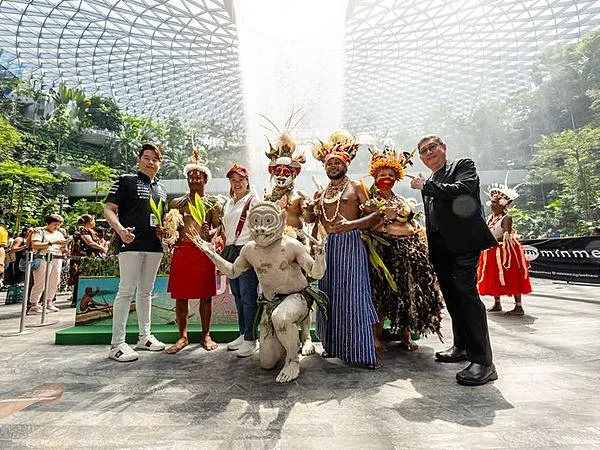
A striking highlight unfolded on 17 August at Singapore’s scenic Jewel Changi Airport, where cultural performers from Papua New Guinea mesmerised visitors with a free public performance set against the serene Forest Valley and the world’s tallest indoor waterfall.

Complementing the live spectacle, a photo booth and display wall commemorating Papua New Guinea’s 50th Independence Anniversary were installed at Changi Airport, inviting travellers to capture a moment of celebration and reflection. The installation, adorned with vivid PNG imagery, will remain on display for a month.

Reflecting on the participation, Joel Keimelo, Executive Manager – Marketing & Promotions at PNGTPA, said:
“Our presence at NATAS Holidays 2025 was a strong opportunity to share Papua New Guinea’s story with Singapore — a city that is itself a hub for international travellers. Through culture, adventure, and collaboration with valued partners like Air Niugini and Changi Airport, we invited travellers to discover the million different journeys Papua New Guinea has to offer.”

As Singapore’s largest consumer travel fair, NATAS Holidays draws thousands each year, making it an ideal platform for PNG to reinforce its appeal as an authentic cultural and adventure destination in the Asia-Pacific region.

August 22, 2025

The Papua New Guinea Extractive Industries Transparency Initiative (PNGEITI) has launched a series of engagements aimed at deepening transparency, accountability and good governance in the country’s resource sector, beginning with a subnational roadshow in the Eastern Highlands Province and extending to a partnership with the University of Technology’s School of Engineering.

The first leg of the Subnational Roadshow and Awareness Program opened in Goroka on July 14 with a courtesy call to the Eastern Highlands Provincial Administration at Yanepa Haus. This was followed by a two-day workshop with government authorities and civil society organisations (CSOs), where PNGEITI, working alongside the PNG Resource Governance Coalition, delivered awareness sessions tailored for local communities.

The programme seeks to raise awareness of the Extractive Industries Transparency Initiative (EITI), enhance understanding of revenue flows, strengthen monitoring capacity and identify local focal points to support ongoing reforms.

“The roadshow is focused on conducting EITI awareness programmes and capacity building training for subnational stakeholders,” PNGEITI said, adding that participants include provincial and district officials, local-level governments, CSOs, landowner associations, youth and women’s groups.

On July 17, the team travelled to Kainantu for further engagements, culminating in a site visit to the K92 Mine to better understand operational practices and stakeholder concerns.

The roadshow then moved to Madang Province on July 21, drawing together provincial administrators, landowners, women and youth groups. A site visit to the Kurumbukari project was scheduled for July 22 to encourage company participation in transparency goals.

The third leg heads to Morobe Province, beginning with high-level talks on July 24, before moving to Bulolo for a district-focused workshop on July 25. The programme concludes in Lae with two days of workshops from July 28 to 29, bringing together government officials, landowners and civil society actors.

This Subnational Awareness and Capacity Building Program marks a milestone for PNGEITI as it works to fulfil the EITI Standard’s reporting requirements at the provincial level. It also underscores a broader mission to ensure natural resource benefits are managed openly and shared equitably.

At the same time, PNGEITI is reaching out to the next generation of leaders. On July 17, in collaboration with the University of Technology’s School of Engineering, the Secretariat conducted a series of guest lectures on the extractive industries, EITI processes and the importance of transparency in resource management.

Speakers included PNGEITI’s Director of Communication and Stakeholder Engagement Dickson Sorariba, Media and Communication Officer Gideon Timothy and Policy and Programmes Officer Junior Kari Ora. Their presentations sparked lively discussions with students and staff, highlighting the role of academia in shaping accountable governance.

Executive Director George Kauli stressed that the initiative was not only about awareness but also about equipping future engineers and professionals with knowledge to make informed decisions. “Our mission is to promote understanding of natural resource management, strengthen public and corporate governance and accountability, and provide the data to inform policymaking and multi-stakeholder dialogue in the extractive sector,” Kauli said.

By combining grassroots workshops in rural provinces with academic partnerships in urban centres, PNGEITI is bridging gaps between policy, practice and education – a step it hopes will anchor long-term transparency and accountability across Papua New Guinea’s extractive industries.

August 20, 2025

Great Pacific Gold Corp. has uncovered signs of a large-scale epithermal system and possible porphyry deposit at its Wild Dog project in Papua New Guinea, raising hopes of a significant discovery in one of the world’s most mineral-rich regions.

The Canadian miner said a diamond drilling programme is under way at the site on the island of New Britain. Early results have already shown high-grade mineralisation, including one hole that cut seven metres grading 11.2 grams per tonne gold equivalent  (5.5 g/t Au, 68.8 g/t Ag, 3.1% Cu) from a depth of 65 metres.

Ahead of drilling, the company conducted an airborne MobileMT geophysical survey, which revealed the scale of the underground system. The data suggests the epithermal vein structure extends more than 15 kilometres along strike and at least 1,000 metres deep.

Greg McCunn, chief executive of Great Pacific Gold, described the findings as a major step forward. “The Wild Dog structure is massive…Our current drilling programme is only testing about 10 percent of the overall system,” he said.

What excites the team most is the nearby Magiabe prospect, about 1.5 kilometres west of the Wild Dog veins. Geophysical models point to a potential porphyry copper-gold system nearly one kilometre wide and extending over two kilometres in depth, a scale likened to Papua New Guinea’s world-class Wafi-Golpu deposit.

Surface sampling has added weight to the porphyry model. One rock specimen from Magiabe returned 2.5 grams per tonne gold, 124 parts per million copper and 9.1 grams per tonne silver. Another carried copper grades of 0.25 percent along with gold, silver and molybdenum values.

McCunn said the company plans to keep drilling through the rest of 2025 to firm up the grade and scale of the Wild Dog system, while pushing Magiabe towards drill-ready status in 2026.

Magiabe adds a new dimension to the project as it complements the high-grade near-surface gold with the possibility of a large porphyry system beneath.

The Wild Dog area lies within Papua New Guinea’s “Ring of Fire,” a geologic arc that has produced some of the world’s largest copper and gold deposits. Historic explorers had suspected a porphyry system at Magiabe but drilling was never done. The latest survey, however, has “unmasked” the deeper anomaly, giving the company what it calls a high-priority target.

For now, the executive said that the focus remains on the drill rigs steadily working through the rugged terrain of East New Britain.

With more assays expected in the coming months, the company hopes to prove that Wild Dog is not only high-grade but also vast in scale — a combination that could transform the project into one of PNG’s next big mines.