September 22, 2025

Nambawan Super Limited (NSL) proudly congratulates the Government and people of Papua New Guinea on 50 years of Independence. This Golden Jubilee is a milestone in the nation’s shared journey of growth, resilience and development.

For more than five decades, hardworking Papua New Guineans — the Members of Nambawan Super — have been the backbone of the country’s progress. Through their service in classrooms, hospitals, public offices, security services and across the private sector, they have helped lay the foundation for a stronger and growing nation. NSL said it was honoured to have stood alongside them, safeguarding their retirement savings while investing in projects that create jobs, build infrastructure and contribute to economic growth.

Over the years, Members’ contributions have been transformed into investments that support Papua New Guinea’s development. Landmark projects such as Revenue Haus, Treasury Haus, Vulupindi Haus, Nambawan Super Plaza in downtown Port Moresby, the Rangeview Precinct in Waigani, the newly opened Moki Business Park, Morobe Haus and NSL Haus in Lae have created thousands of jobs, supported local businesses and delivered world-class commercial spaces for the country’s growing cities. NSL said these investments were more than buildings and figures, representing livelihoods, opportunities and a stronger economy for all Papua New Guineans.

As part of its Independence message, NSL stressed that Members’ dedication must also be recognised and rewarded. This includes the timely settlement of unfunded State share contributions owed to Members and the clearance of outstanding State rental obligations. The Fund said meeting these commitments would not only honour Members’ service but also reinforce the Government’s partnership with NSL as its biggest employer group, strengthening the Fund’s ability to secure Members’ future.

“Nambawan Super is here for the long term,” NSL said. “We will continue to operate with the highest ethical standards and integrity, protecting our Members’ interests first and foremost. In the face of challenges, we will remain resilient and steadfast, staying the course for our Members. Together with the State, we will keep building a more hopeful, prosperous and better future for Papua New Guinea and its people.”

Happy 50th Independence Anniversary, Papua New Guinea!

September 22, 2025

Papua New Guinea’s 50th Independence Anniversary saw an unprecedented gathering of regional and international leaders, underscoring the country’s growing diplomatic and economic significance on the global stage.

Prime Minister James Marape hosted bilateral and multilateral partners, dignitaries, investors and business leaders across a week of events in Port Moresby, describing their participation as “a testimony that Papua New Guinea does not stand alone, but as part of a strong family of nations.”

Global dignitaries join PNG’s Golden Jubilee

Among the distinguished guests were the Duke of Edinburgh, Prince Edward; Australian Prime Minister Anthony Albanese and Deputy Prime Minister Richard Marles; Indonesian Vice President Gibran Rakabuming Raka; New Zealand Deputy Prime Minister David Seymour; the prime ministers of Niue, Tuvalu, Cook Islands and Solomon Islands; United States Deputy Secretary of State Christopher Landau; Chinese Special Envoy Huang Runqiu; Japanese Foreign Minister Takuma Miyaji; French Representative Veronique Roger-Lacan; and Asian Development Bank President Masato Kanda.

The scale of participation, described as the largest gathering of leaders in PNG outside of a formal summit, highlighted the strategic value placed on the country’s political stability, natural resources and regional role in the Pacific.

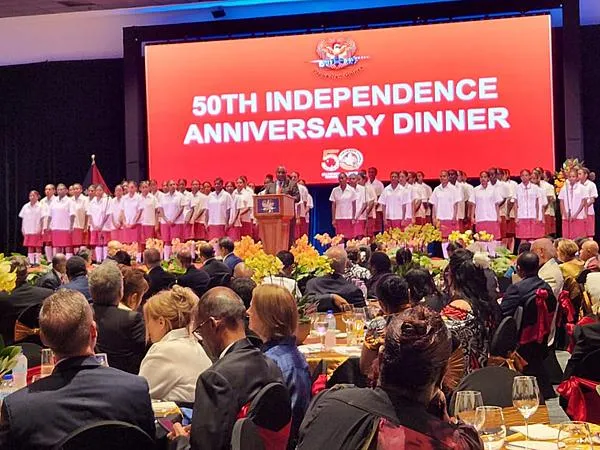
Speaking at the Independence Dinner at APEC Haus on 15 September, Marape expressed gratitude to bilateral and multilateral partners for supporting PNG since independence in 1975. He emphasised that despite doubts at the country’s founding, PNG has sustained 50 years of democracy, with 17 governments formed through parliamentary process, not conflict.

“Fifty years on, we have survived under one democracy, one national anthem, one pledge and one Constitution,” he said, crediting partners, churches, investors and communities for contributing to PNG’s growth.

Marape also appealed for ongoing support, reminding leaders of the challenges and opportunities ahead.

“Do not give up on Papua New Guinea. We ask that you continue to assist us build a country that is truly prosperous; that preserves the sanctity of our God-given land … Your help to PNG is a help to Planet Earth,” he said, noting PNG’s vast biodiversity and role as a global carbon sink.

Back-to-back bilateral meetings cement cooperation

Between 14 and 17 September, Marape held intensive rounds of bilateral discussions with global leaders, strengthening economic and strategic partnerships.

  • India reaffirmed support for PNG’s electoral systems, broadcasting, energy transition, small business development and pharmaceuticals.

  • China delivered a personal letter from President Xi Jinping, confirming commitments in trade, climate change, sustainable forestry and environmental conservation.

  • United States signed a framework for strategic cooperation covering defence, maritime security, law enforcement, critical minerals, trade and investment, and digital infrastructure.

  • Japan reaffirmed trade and technology ties through a congratulatory message from its prime minister.

  • Indonesia advanced cross-border cooperation, finalised arrangements for bus and coach travel, and discussed visa-on-arrival for ordinary passport holders.

  • France pledged support in forestry, environmental management and climate risk mitigation.

These agreements underscored PNG’s position as an increasingly attractive partner for investment and cooperation in areas ranging from energy transition to digital infrastructure.

Messages of goodwill from world leaders

PNG also received congratulatory messages from around the world. His Majesty King Charles III delivered a four-minute speech in Tok Pisin via video, recalling his role in PNG’s independence in 1975 and praising the nation’s resilience, diversity and development over five decades. UN Secretary-General Antonio Guterres, Israeli President Isaac Herzog and other global leaders also conveyed goodwill messages.

Pacific Islands Forum leaders, who had just concluded their 54th Leaders’ Meeting in Solomon Islands, joined PNG’s celebrations, further underlining regional solidarity.

For businesses and investors, PNG’s Golden Jubilee celebrated national resilience and also served as a platform for deepening economic partnerships. The strong presence of global leaders, combined with reaffirmed commitments in trade, climate resilience, technology and infrastructure, positioned PNG as a vital player in the Pacific and an emerging market of interest.

Marape assured partners that PNG would continue to safeguard democracy and its natural wealth while pursuing prosperity.

"Your presence in our country at this milestone gives significance to our journey, and your continued partnership will help shape our next 50 years,” he said.

September 19, 2025

Prime Minister of the Cook Islands Mark Brown met with Papua New Guinea’s Prime Minister James Marape on the margins of PNG’s 50th Independence celebrations on 16 September, reaffirming the strong friendship between the two nations.

Prime Minister Brown congratulated Marape and the people of Papua New Guinea on their golden jubilee, recognising PNG’s achievements in nation-building, economic growth and regional leadership.

“Our two countries are bound by more than 30 years of diplomatic relations, but also by the legacy of Cook Islands missionaries who first came to villages such as Hanuabada in the 1870s,” Brown said. “That spiritual and cultural connection continues to live on today, and it gives our modern partnership special meaning as we chart the next 50 years together.”

Marape thanked Brown for accepting the invitation to celebrate the milestone. “We in Papua New Guinea don’t easily forget – we treasure our relationships, and just like we remember the Cook Islands missionaries who came here, we will also remember your visit here today,” he said.

During the meeting, the leaders discussed opportunities to deepen cooperation, including advancing a high-level memorandum of understanding first proposed by Papua New Guinea’s High Commissioner to the Cook Islands last year. Other areas of collaboration highlighted were education, sport, health, tourism and cultural exchange. A Sister City relationship between Rarotonga and Central Province was also discussed following earlier talks with Governor Hon. Rufina Peter.

Brown acknowledged PNG’s growing regional leadership, congratulating Marape on the country’s confirmed entry into the National Rugby League in 2028 and automatic qualification for the 2026 Rugby League World Cup.

The Cook Islands delegation has taken part in a number of commemorative events for PNG’s 50th anniversary, including a combined church service where the Motu Koitabu sang hymns inspired by Imene Tuki, a tree planting ceremony at Independence Park and fellowship with the people of Hanuabada.

“From faith to sport, from government to community, our partnership is strong and enduring,” Brown said. “We look forward to continuing to walk alongside Papua New Guinea as brothers and sisters of the Pacific.”

September 19, 2025

Papua New Guinea’s Minister for Commerce and Industry, Win Bakri Daki, announced two major policies during the Department of Commerce and Industry’s Independence celebration on 1 September. The event, part of the ministry’s month-long programme marking PNG’s 50th Independence anniversary from 1 to 30 September, provided a platform for the minister to outline plans for economic growth and national empowerment.

The first policy is a Reserve Activities (RAL) initiative aimed at ensuring business opportunities suited to Papua New Guineans are reserved for them. While stressing the importance of foreign investment, he said it must be managed in a way that prioritises national interests. The second policy focuses on establishing national standards for infrastructure, including buildings, roads and car parks, to ensure safety and proper planning.

Daki outlined his commitment to empowering local communities and driving economic growth through decisive action and policy implementation. His speech emphasised gratitude, acknowledged the contributions of past leaders and set a clear direction for the future of commerce and industry.

A key focus of his address was the importance of tangible outcomes over rhetoric. He challenged public servants to be dedicated and effective, urging them to deliver results that bring visible benefits to citizens. The recently launched “Working Content Policy” was highlighted as a milestone achievement, providing a framework to promote downstream processing and manufacturing, which he described as key drivers in the government’s vision for a more self-reliant economy.

In addition to policy initiatives, Daki announced a historic move to support public servants through land ownership. He revealed that 320 land titles were being issued to staff within the Department of Commerce and its related agencies, framing it as both recognition of their service and a step towards long-term security.

Throughout his address, the minister expressed gratitude to current leaders, departmental staff and predecessors who contributed to shaping the sector. He pledged to build upon their legacy while steering new initiatives that strengthen national pride and economic growth.

Daki’s message was ultimately one of action, urging all stakeholders to work together in transforming policies into practical outcomes that safeguard opportunities for Papua New Guineans and lay the foundation for national development.

September 19, 2025

The Treasurer of the Central Bougainville Tourism Association (CBTA), Delwin Ketsian, said the 2025 Tama Festival has the potential to become a major economic driver for Bougainville.

“We see the Tama Festival not only as a cultural celebration but as an economic driver for Bougainville tourism. With more partnerships and planning, this festival will grow even stronger in the years to come,” Ketsian said.

Held over two days from 21–22 August at Independence Oval in Arawa, the festival drew more than 3,000 attendees, including visitors from South and Central Bougainville as well as a small number of international tourists. This level of participation reflected the festival’s growing role in boosting the local economy, with cultural tourism, small business activities, and market sales contributing directly to community livelihoods.

Festival highlights included the famous Singsing Kaur competition, panpipe ensembles, the showcasing of the traditional delicacy Tama, and displays of arts and crafts. Youth groups brought innovation to the program by blending panpipe harmonies with modern instruments, while women’s groups led chant performances, bilum weaving, and food stalls, which showed how cultural activities are also tied to enterprise and income generation.

The presence of the Police Minister and Regional Member for Bougainville, Peter Tsiamalili Jnr, who is also Patron of CBTA, underscored the festival’s national significance. In closing the event, he emphasized culture as a foundation for unity and future growth.

“The Tama Festival reminds us that our strength as one people lies in our culture and unity. This event shows the world that our traditions remain the foundation of our identity and our journey together as one people,” Tsiamalili said.

The festival’s success was further attributed to strong corporate and institutional support. Sponsors included Vodafone PNG, Fincorp, Melanesian Luxury Yacht Services, Nikana Finance Limited, SP Brewery, Silent World Bulk Fuel, Bougainville Arts Culture Tourism Authority (BACTA), and the Office of the Regional Member. Their contributions highlighted the role of private sector partnerships in enabling large-scale events that stimulate tourism and commerce.

Interim CEO of BACTA, Lorena Ritsi, described the festival as a vital cultural and economic platform. “The Tama Festival is a celebration of talent, creativity, and community. It creates a space where our artistic skills, especially in culinary arts, are showcased and tested, reminding us of the richness of our culture,” she said.

Ritsi added that BACTA’s mission is to promote, preserve, and regulate cultural and tourism products in the region, putting events like the Tama Festival as key drivers of the tourism economy while keeping traditions alive.

Organizers also identified areas to strengthen the festival’s business and tourism value in the future, including earlier planning, wider youth and schools engagement, and stronger sponsor partnerships. The committee plans to expand the program to involve more regional groups and step up international promotion, with the goal of positioning the Tama Festival as a premier cultural tourism attraction for Bougainville.

By merging cultural preservation with tourism development, the Tama Festival demonstrates how heritage can drive business, create opportunities for small enterprises, and contribute to the region’s long-term economic development.

September 17, 2025

Geopacific Resources Ltd. (ASX: GPR) has reported encouraging new drilling results from its 100 percent-owned Woodlark Gold Project in Papua New Guinea, including a potential new discovery adjacent to one of the site’s key deposits.

The company is midway through a 30,000-metre drilling campaign designed to expand known gold resources and test multiple new targets across the project area. The program, which combines reverse circulation (RC) and diamond drilling, is central to Geopacific’s aim of increasing Mineral Resources beyond the current 1.67 million ounces.

New find at Kamwak

Among the latest results, Geopacific highlighted a near-surface gold intercept at the Kamwak target, where drilling returned 7 metres at 2.48 grams per tonne (g/t) gold from 21 metres in hole KURC25005.

The company said seven RC drill collars completed across a 600-metre strike length at Kamwak had intersected previously unrecognised mineralisation. The target lies immediately adjacent to the 711,000-ounce Kulumadau gold deposit and shares geological characteristics commonly linked to mineralisation on Woodlark Island.

According to Geopacific, the RC hole was stopped short of its planned depth due to groundwater, but additional drilling is being planned to test the potential of the zone. “Diamond tails and further collar designs (RC & diamond) are being prepared to follow-up on this encouraging intercept, which highlights the potential for a significant new zone of gold mineralisation adjacent to the Kulumadau deposit,” the company said.

Geopacific CEO James Fox described the Kamwak results as a strong sign of the project’s growth potential. “These initial results from Kamwak are highly encouraging and demonstrate the significant growth potential that remains at Woodlark. With our 30,000 metre drill campaign underway, we are confident of delivering further resource growth beyond the current 1.67 Moz base.”

Wider drilling results

The company also reported additional promising intercepts from other targets within the project area. At Busai, drilling returned 2 metres at 11.4 g/t from 9 metres in hole BSRD25002. At Boscalo North, assays showed 4 metres at 2.92 g/t gold from 145 metres in hole KURD25015.

Exploration continues at the Great Northern deposit, where diamond drilling is currently focused on extending RC pre-collars. Once geotechnical drilling is completed, the program will also test broader regional targets.

Geopacific has mobilised an RC rig to the Woodlark King mining area to begin drilling at the Little MacKenzie and Wayai Creek prospects. These follow earlier surface auger and trench sampling that returned positive results, giving the company further confidence in the potential for new discoveries.

Expanding Kulumadau

In addition to exploration drilling, Geopacific is also considering opportunities to expand existing deposits. The company noted that geotechnical drilling at Kulumadau presents an opportunity to extend mineralisation by about 50 metres beyond the current pit design, potentially enlarging the planned mining area.

Progress to date

By the end of August 2025, Geopacific had completed 54 drill collars across five main prospects, totalling 4,567 metres. This included 3,411 metres of RC drilling and 1,156 metres of diamond core drilling.

A second diamond drill rig was mobilised to site in August and is now working on diamond tails to RC pre-collars at the Great Northern deposit.

The overall drill program has been divided into three categories: exploration targets, prospects with potential for new Mineral Resources, and Resource Development drilling. In total, 192 drill collars covering approximately 31,300 metres are planned under the current staged approach.

Looking ahead

With multiple exploration targets now underway and further results pending, Geopacific is positioning the Woodlark Gold Project for potential growth in its resource base. The company emphasised that several of the latest holes remain incomplete, with diamond tails still to be drilled or assays yet to be received.

The identification of mineralisation at Kamwak, alongside strong results from Busai, Boscalo North, and Great Northern, underscores the possibility of extending both the scale and scope of the project.

Geopacific said the combination of new discoveries and extensions to existing deposits supports its strategy of building on the 1.67 million-ounce resource base and advancing Woodlark as a key gold project in Papua New Guinea.

September 17, 2025

Papua New Guinea’s government has thrown its weight behind Geopacific Resources Ltd., granting the company more time to develop its flagship Woodlark Gold Project in Milne Bay Province.

Mining Minister Rainbo Paita has approved an extension to Condition 7 (ii) of Mining Lease 508, which hosts the project, pushing the deadline to complete construction and commissioning of the mine to 5 October 2027. The lease itself runs until July 2034.

For Geopacific, the decision offers breathing space and certainty as it works through financing, environmental approvals, and a major drilling campaign ahead of delivering a definitive feasibility study later this year.

“As PNG celebrates 50 years of independence, we acknowledge this significant national milestone and commend the Government and people of PNG,” said Geopacific Chief Executive James Fox.

“We also recognise the leadership of the Minister for Mining and the team at the Mineral Resources Authority in approving our application to extend ML508 C7(ii),” he added.

The company recently submitted an environmental permit amendment request and supporting assessment report to the Conservation and Environment Protection Authority, aimed at reflecting project improvements in the updated feasibility study.

Fox said the extension provides “the flexibility and certainty needed to align the timing of project construction with the DFS and our exploration success,” describing it as both an endorsement of Woodlark’s potential and a sign of government support for responsible mine development.

The Woodlark project, which contains an estimated 1.67 million ounces of gold, is seen as a potential new engine of economic activity for Papua New Guinea. With drilling delivering encouraging results and government backing firming up, Geopacific hopes the project can soon shift from planning into reality.

Earlier, Australian-listed gold producer St Barbara Ltd has become a substantial shareholder in Geopacific Resources Ltd after acquiring a 14.4% strategic interest, strengthening ties between two companies with deep connections to Papua New Guinea’s mining sector.

The deal, completed through a transaction with Patronus Resources Ltd, saw St Barbara acquire 458.6 million Geopacific shares in exchange for returning 158.1 million Patronus shares. As a result, St Barbara now holds a 14.4% stake in Geopacific, while Patronus retains an interest of around 41 million shares.
September 17, 2025

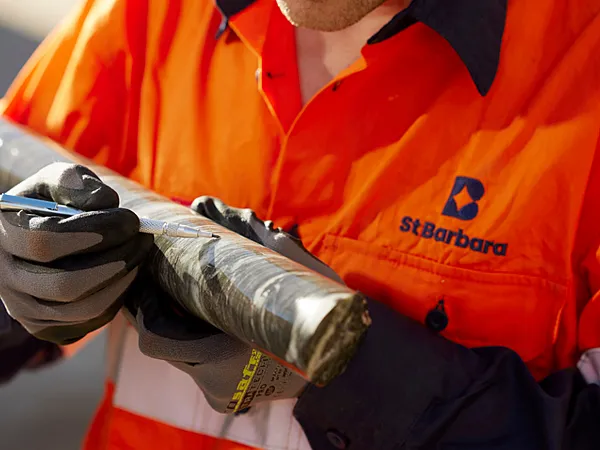
St Barbara Ltd. is working to steady its footing in Papua New Guinea as the gold miner juggles a long-awaited mining lease renewal and a complex tax reassessment — two issues with big implications for the future of its Simberi operations.

The Australian-listed company confirmed that Papua New Guinea’s Mining Minister Rainbo Paita has received formal documentation recommending an extension of the Simberi Mining Lease 136 through to 2038. The advice came from the Mineral Resources Authority following a decision by the Mining Advisory Committee in August.

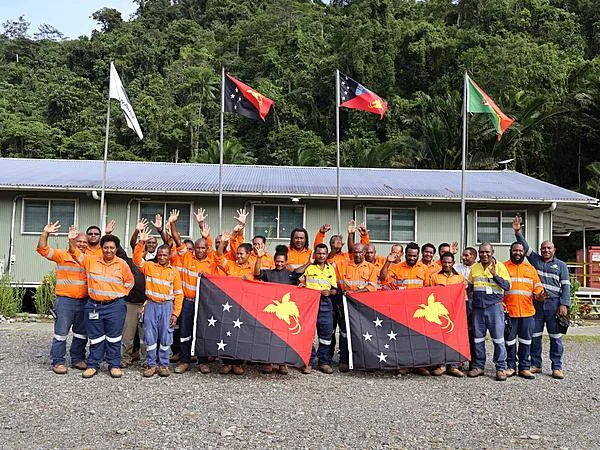
For the more than 1,000 employees on Simberi Island — most of them Papua New Guineans — the lease extension would secure jobs and community programmes tied to the mine for another decade. The mine has been operating since 2012 and has become a major employer in New Ireland Province, where economic opportunities are limited.

But first, St Barbara must resolve a lingering tax issue with the Internal Revenue Commission. The company has been disputing reassessments issued in December 2024, which it says it met with a formal objection earlier this year.

The IRC has since indicated that the original assessments will be revoked, with revised figures expected as soon as 19 September. With the nation in the midst of its 50th independence celebrations, St Barbara has signalled patience but is eager for clarity.

“The Minister has been clear that once the reassessments are clarified and the tax matters are regularised, the mining lease extension can proceed,” St Barbara Managing Director and CEO Andrew Strelein said after speaking directly with Paita.

The stakes are high. The uncertainty has already weighed on financing preparations for the Simberi Expansion Project, which would increase production and extend the life of the mine. Without resolution, the timeline for a final investment decision remains under pressure.

Still, the company stresses it is operating in good faith. Simberi Gold Company Ltd., St Barbara’s local subsidiary, has contributed royalties and community benefits for more than a decade, with strict governance and more than 90 percent of its workforce drawn from PNG.

“We remain in full compliance with all tax obligations and are committed to working constructively with the IRC to finalise the matter,” the company said.

For many in New Ireland Province, the mine is more than a workplace — it has funded schools, health facilities, and basic infrastructure in one of PNG’s more remote regions. With independence week festivities fresh in people’s minds, the prospect of a long-term future for Simberi is both a corporate and a community concern.

September 17, 2025

 Frieda River Ltd. (FRL) is celebrating Papua New Guinea’s 50th year of independence, congratulating the people and government on this historic milestone.

FRL reaffirmed its commitment to work with communities, stakeholders, and the government to advance the nation-building Sepik Development Project (SDP). The company is awaiting environmental permits and preparing for the special mining lease process to develop the Horse-Ivaal-Trukai-Ekwai-Koki porphyry copper-gold deposit, which holds an estimated 12 million tonnes of copper and 19 million ounces of gold.

“The copper-gold deposit at the centre of the Sepik Development Project was discovered before Independence. Frieda River can be a nation-building project, delivering sustainable development for generations,” said Phil McCormack, FRL’s project director.

As FRL staff observed the public holiday, PanAust’s Brisbane office prepared to host a lunch on Thursday, 18 September, to celebrate the occasion. The event will be catered by Lambinades, a Brisbane-based, Papua New Guinean–owned company.

“I consider PNG a second home and am looking forward to continuing to celebrate the 50th anniversary of Independence alongside my colleagues and friends,” McCormack said.

The SDP is expected to deliver both local and nationwide benefits, with direct and indirect contributions anticipated to be significant and far-reaching. Since 2014, PanAust’s investment in the project has exceeded $290 million, supporting education, healthcare, and community infrastructure in addition to project development.

At its peak, the Frieda River Copper-Gold Project and Frieda River Hydroelectric Project are expected to generate more than 5,000 full-time jobs, with 90% targeted for local employment. That figure has already been exceeded and sustained by PanAust’s Phu Bia Mining operation in Laos throughout the life of its mines.

The SDP will also create indirect benefits by unlocking business opportunities and stimulating investment in social assets by project partners.

September 17, 2025

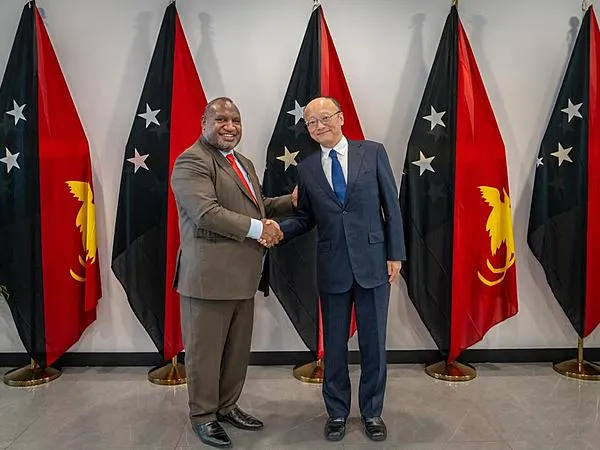
Asian Development Bank (ADB) President Masato Kanda met with Papua New Guinea (PNG) Prime Minister James Marape to mark the country’s 50th anniversary of independence and reaffirm ADB’s role in driving connectivity and inclusive growth. He will also meet with Treasurer Ian Ling-Stuckey and other senior officials.

During the meeting, Kanda highlighted ADB’s $2.14 billion investment pipeline for 2025–2028, focused on improving transport links, expanding skills training, and fostering private sector growth.

“ADB’s partnership with Papua New Guinea demonstrates how strategic investments transform lives,” said Kanda. “Our active sovereign portfolio has grown over three-fold since 2010, and we will continue to expand opportunities for a brighter future in Papua New Guinea.”

ADB is PNG’s largest multilateral development partner, supporting projects that deliver measurable results. Its investments in PNG’s road network and civil aviation have lowered transport costs, reduced travel times, improved safe movement, and increased connectivity, thereby giving people better access to markets and services.

Recent projects include the upgrading of 430 kilometres of roads and the reconstruction and rehabilitation of 71 ageing bridges along the Highlands Highway to enable year-round trade. In addition, ADB has upgraded 18 national airports to ensure compliance with international safety and operational standards.

ADB’s investments in PNG complement its broader Pacific strategy, where improved transportation and skills development strengthen economic ties and resilience across island nations facing similar development challenges.

Following the meetings, Kanda will tour Port Moresby Technical College to observe firsthand how ADB’s education investments, which can produce 7,000 graduates annually, are equipping skilled workers for PNG’s growing economy. He will then visit the Laloki Bridge, a flood-resilient structure that improves access to markets and social services.

Kanda commended PNG’s progress on economic reforms, highlighting the reduction of the fiscal deficit from 8.9% in 2020 to 3.9% in 2024. ADB is preparing its 2026–2030 country partnership strategy to strengthen connectivity and expand into new sectors such as agriculture and urban water supply.

ADB is a leading multilateral development bank supporting inclusive, resilient, and sustainable growth across Asia and the Pacific. Working with its members and partners to address complex challenges, ADB harnesses innovative financial tools and strategic partnerships to transform lives, build quality infrastructure, and safeguard the environment. Founded in 1966, ADB is owned by 69 members, including 50 from the region.

September 16, 2025

 Prime Minister James Marape has recently inaugurated the Tabubil–Telefomin Highway, the first road to ever reach Telefomin District, long regarded as one of the country’s most isolated areas.

The highway, built under the Connect PNG programme and funded through the Ok Tedi Mining Ltd. (OTML) Tax Credit Scheme, was opened to scenes of celebration as thousands gathered to witness what many described as a dream come true.

In his address, Marape said the road represented more than physical infrastructure as Papua New Guinea prepares to mark 50 years of independence.

“This road is not only gravel and bitumen. It is the road to schools, hospitals, markets, electricity, internet, and business. It is about making sure that no child, no village, no district, and no province is left behind as we move into the next fifty years,” he told the cheering crowd.

He said the struggle for independence had been driven by hopes of a better future for ordinary Papua New Guineans, and that Telefomin’s long wait for road access symbolised that dream becoming reality.

Marape explained that the highway formed part of the government’s ambition to connect the entire nation by road by 2040. He urged locals to seize new opportunities in guesthouses, service stations, agriculture, and tourism, while announcing a rural credit policy to begin in 2026 to help families register land and access loans.

“We want our rural people to borrow money, build decent houses, put solar on their roofs, and start businesses. You should not have to leave your villages and become beggars in towns,” he said.

The Prime Minister commended Western Governor Taboi Awi Yoto and West Sepik Governor Tony Wouwou for their leadership, urging other leaders to prioritise projects that “change people’s lives.” He also made a heartfelt appeal to young people to avoid alcohol and drugs, reminding them the new opportunities being created were for their benefit.

“Telefomin has always been close to my heart. Each time I have come here, I have seen your struggles. Today, we open this road to tell you that you are not forgotten. Even the last places in Papua New Guinea matter to this government,” Mr. Marape said.

He added that the road would unlock prospects in agriculture, forestry, and tourism, while strengthening national unity. Concluding his speech, he called the Tabubil–Telefomin Highway a “road of hope.”

“This is not just a road. It is a message to our people that government will reach you, no matter how far you live. It is a promise that Papua New Guinea’s future will include every one of its citizens,” he said, before offering a prayer for the people and the nation.

September 16, 2025

Fifty years after Papua New Guinea’s flag first rose on Independence Hill, thousands of citizens, leaders and international partners gathered at the same site on 16 September to commemorate the country’s Golden Jubilee.

At the heart of the ceremony was Prime Minister James Marape’s call for unity, honesty and renewed service as PNG enters its next half-century.

“This is a time to reset our minds, our purposes, and our zeal,” Marape said.

A ceremony rich in symbolism

Independence Hill once again became the stage for the red, black and gold flag, bearing the bird of paradise and Southern Cross, which was hoisted as the national anthem played.

The Duke of Edinburgh joined Pacific leaders, ambassadors, church dignitaries and representatives of development partners. Families of past prime ministers and members of the founding generation also attended, visibly moved as the flag was raised where they had first seen it in 1975.

Honoring the Somare generation

Marape began his speech with tributes to the “Somare generation” led by Grand Chief Sir Michael Somare. He acknowledged Dr. John Momis, Sir John Kaputin, Lady Veronica Somare, Lady Stella Chan and families of other founding leaders.

“They were the greatest generation Papua New Guinea ever produced,” Marape said. “They dared to believe that a thousand tribes, speaking over 800 languages, could unite as one people, one nation, one country. Their achievement will never be repeated.”

Marape also underscored PNG’s deep roots, citing the UNESCO-listed Kuk Early Agricultural Site, with evidence of farming 10,000 years ago, and Lapita pottery in New Ireland that links PNG to Pacific seafaring traditions.

“We are an ancient people,” he said. “Long before roads, planes, or medicines, we traded, coexisted, and thrived.”

Recognizing partners and citizens

The prime minister praised the role of missionaries, churches and educators. “Papua New Guinea can claim its place as the last country on Earth to have received the Gospel of Jesus Christ. Since then, the church has been our moral anchor, shaping our education, health, and leadership systems,” he said.

He also thanked Australia, describing independence as grounded in respect and goodwill. He cited Sir John Guise’s words from 1975: “We are lowering the Australian flag, not tearing it.”

Marape saluted “unsung heroes” — teachers, health workers, public servants, police, defense personnel and farmers. “You have served your flag well. You have honoured your Constitution. The last fifty years belong to you as much as to our leaders.”

Achievements and challenges

Marape called PNG’s journey since 1975 one of resilience. Despite early political instability, he said the country had maintained democracy, built infrastructure and expanded education while producing professionals who excel internationally.

“Fifty years ago, we could not have imagined our daughters flying Airbus aircraft across the Pacific,” he said.

But he admitted that challenges persist. “We still have poverty, isolation, unemployment, and corruption robbing us of resources. Our economy has yet to fully sustain a nation of over 10 million people,” Marape said. “Yet history shows Papua New Guineans never give up.”

Bougainville and reconciliation

Turning to Bougainville, Marape expressed regret for the conflict but praised the island’s people for choosing peace.

“In 1975 we were one, and today we are still one,” he said. “Bougainville’s story is also Papua New Guinea’s story — a story of resilience, reconciliation, and hope. The peace we share today was won not by war, but by the courage of people to embrace peace.”

More than 100 Bougainville children joined the Port Moresby celebrations as a symbol of unity.

A vision for the future

Marape set out a national agenda with agriculture, infrastructure, renewable energy, governance reform and judicial independence as its pillars. He pledged to transition one million families into commercial farming, modernise public service with artificial intelligence, and grow the economy to 500 billion kina by 2045.

“The next 50 years must be about nation building, renewal, and transformation,” he said. “Let us preserve our democracy at all costs, for it is democracy that has carried us this far.”

A personal journey

Marape recalled growing up barefoot in Nomad River, Western Province, when he first saw the flag raised in 1975.

“Fifty years later, that same boy stands here as your Prime Minister,” he said. “This is the story of Papua New Guinea. If a child from the remotest of the remote can rise to this office, then every boy and girl in this country has the same potential.”

Quoting John F. Kennedy, he appealed to older citizens: “Do not ask what others are doing for the country. Ask yourself: what are you doing for Papua New Guinea?”

A call to action

Closing his address, Marape urged citizens to see the flag as a symbol of collective purpose.

“Our diversity is not our weakness but our greatest strength. The bird of paradise on our flag soars today — let our spirits soar with it. The next 50 years belong to our children. Let us serve them by building a nation that is united, prosperous, and just.”

September 15, 2025

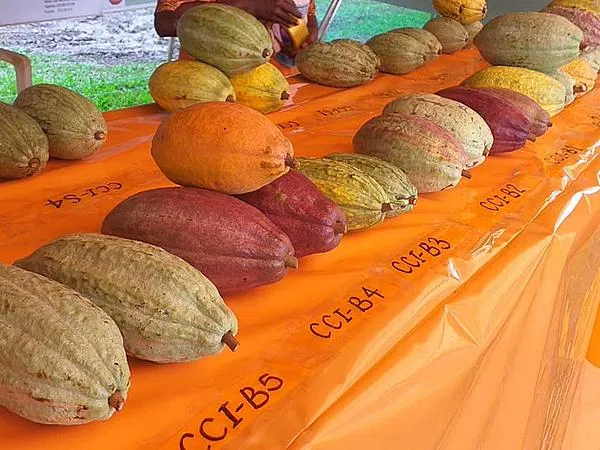
The aroma of fine cocoa will once again fill the air in Buka as the annual Bougainville Chocolate Festival returns from 28 to 30 October 2025, bringing together farmers, chocolatiers, industry leaders, and the public to celebrate the island’s world-class cocoa.

This year’s festival carries the theme: “Bougainville Island of Cocoa: Through Creative Opportunities, Innovation, and Information Sharing for Sustainable Socio-Economic Empowerment.” It reflects the organisers’ ambition to showcase Bougainville’s premium cocoa while promoting knowledge-sharing, innovation, and market connections that can strengthen livelihoods across the region.

Announcing the dates, Kenneth Dovaro, Secretary for the Autonomous Bougainville Government’s (ABG) Department of Primary Industry, said the event was far more than a celebration of chocolate.
“The Bougainville Chocolate Festival is more than just a celebration of cocoa — it is an investment in our farmers, our communities, and our economy,” Mr Dovaro said. “It provides a platform for knowledge sharing, networking, and creating market linkages that directly benefit over 50,000 cocoa farmers across Bougainville.”

Driving Bougainville onto the Global Stage

Bougainville has steadily built a reputation in the global premium cocoa market, with beans that have earned recognition for their quality and unique flavour profiles. The festival has been central to this progress, serving as both a showcase for excellence and a driver of new opportunities.

“Every award our cocoa earns overseas, and every new business born from this festival, proves Bougainville can compete at an international level,” Mr Dovaro said. “By lifting cocoa quality and expanding value-adding, we are helping households boost their incomes while strengthening Bougainville cocoa as a key pillar of our economy.”

What to Expect at the 2025 Festival

Over three days, festival-goers can look forward to a rich programme, including:

  • Cocoa bean competitions judged by experts who will provide valuable feedback on quality and flavour.

  • Seminars and workshops covering farming techniques, value-adding, and business opportunities.

  • Exhibitions featuring cocoa products, farming tools, agri-technologies, and innovative small business solutions.

  • Awareness sessions on cocoa quality standards and compliance with the Bougainville Agriculture Commodities Regulatory Authority (BACRA) regulations.

  • Tastings and demonstrations of chocolates and downstream cocoa products, along with displays of complementary commodities such as rice, coconut, spices, and livestock.

The festival has been a launchpad for award-winning brands like Bougainville Nunu’s Black Opal and Twilight chocolates. This year, organisers are eager to see even more creativity, from cocoa-based drinks and cakes to boutique, artisan chocolates.

“Our vision is to make Bougainville synonymous with premium cocoa, innovation, and sustainable livelihoods,” Mr Dovaro added.

A Partnership for Growth

Launched in 2016, the Bougainville Chocolate Festival is an initiative of the Autonomous Bougainville Government, implemented in partnership with the Governments of Papua New Guinea, Australia, and New Zealand. Over the years, it has grown into a major platform for strengthening the cocoa value chain — from the farm gate to international markets.

For Bougainville’s thousands of cocoa farmers, the festival is not only a celebration of their hard work but also a gateway to opportunity, linking local communities with global buyers and setting the stage for long-term socio-economic empowerment.

September 15, 2025

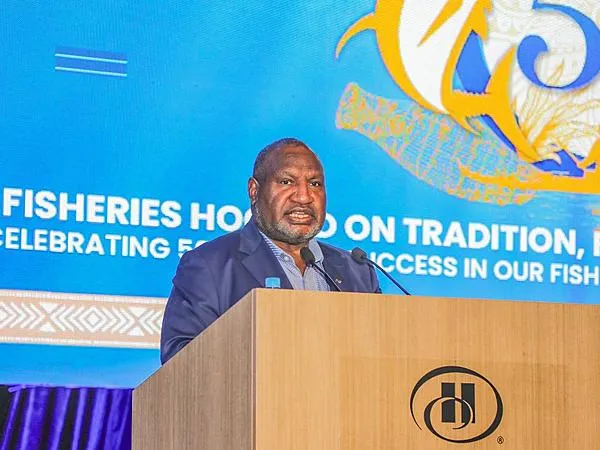
Prime Minister James Marape has urged Papua New Guinea and its Pacific neighbours to take full control of their ocean resources, declaring that the region must no longer remain a “beggar” while foreign powers exploit its fisheries wealth.

He was speaking in Port Moresby at the National Fisheries Authority’s (NFA) 25th anniversary celebrations, where he launched two landmark policies: the National Tuna Domestication Strategy (NTDS) and the National Aquaculture Development Strategy 2025–2035.

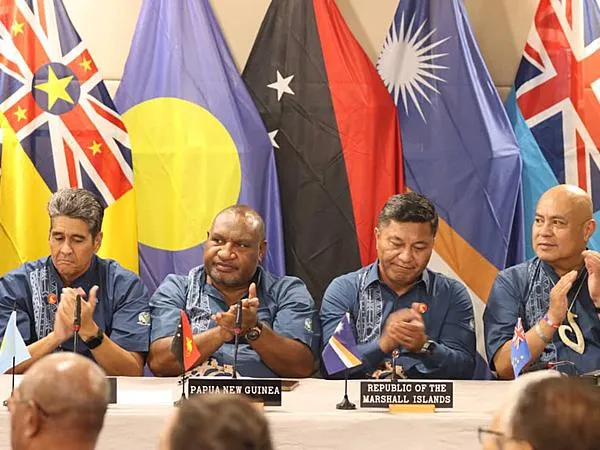
The event brought together a distinguished gathering of Pacific leaders, including Wesley W. Simina, President of the Federated States of Micronesia; Prime Minister Mark Brown of the Cook Islands; Prime Minister Feleti Teo of Tuvalu; Prime Minister Dalton Tagelagi of Niue; and the Secretary-General of the Pacific Islands Forum, Baron Waqa of Nauru, alongside his PNG predecessor Dame Meg Taylor. Ambassadors, high commissioners, Members of Parliament, and industry stakeholders were also in attendance.

Standing With the Pacific

PM Marape warmly welcomed his Pacific counterparts, praising their leadership and reaffirming PNG’s solidarity with nations confronting the existential threat of climate change. He singled out Tuvalu’s Prime Minister Teo, whose nation faces the daily reality of rising seas.

“In 2019 at the Pacific Islands Forum, I argued that our focus must not be on relocation but on reclamation,” PM Marape said.
“Our people must remain on their land, and the Pacific family will stand with Tuvalu and every island nation facing this crisis. You are not alone in this fight.”

He emphasised that solidarity must be practical rather than symbolic: “We must act together, not only on climate change but also on ensuring our ocean resources deliver prosperity to our people.”

The “Blue Continent”

Rejecting the common label of “small island states”, PM Marape urged the world to reconsider how it views Pacific nations. “Our countries are not small islands — we are big ocean states,” he declared.

“Together, our Exclusive Economic Zones stretch across more than 3 million square kilometres, the largest ocean territory on Earth. We are the Blue Continent. Just as the Middle East commands oil wealth, tuna and marine resources must define the Pacific," he added.

He noted that tuna harvested annually from Pacific waters is worth more than USD 3 billion, yet the benefits rarely reach local communities. “Enough is enough,” PM Marape said.
“No more should our fish be taken, processed elsewhere, and sold back to us at high prices. From now on, tuna caught in Papua New Guinea must be processed here, creating jobs and value for our people.”

Building on NFA’s 25-Year Legacy

Reflecting on the NFA’s journey since its establishment in 1998, PM Marape praised the authority as one of PNG’s most successful state institutions. He observed that it already contributes between K1.5 billion and K2.3 billion annually to the national economy.

“I am now challenging NFA to lift its contribution to K3 billion by 2027,” he announced. “This is ambitious, but achievable. With the National Tuna Domestication Strategy and the Aquaculture Development Strategy in place, we have the framework to make it happen.”

He added that the aquaculture plan aims to triple national aquaculture production by 2035, while the tuna strategy will ensure greater value-adding through domestic processing, downstream investment, and job creation.

“Fishing has been our people’s way of life for centuries. Now, we must modernise it into a corporate, sustainable industry that secures food, jobs, and growth for our nation.”

Call to Regional Neighbours and Global Partners

The Prime Minister extended an invitation to Pacific neighbours such as Solomon Islands, Nauru, and Micronesia to collaborate with PNG in building processing hubs and aquaculture ventures.

“If you don’t have land, come to PNG,” he said. “We have land, we have labour, and we are ready to share. Together, we can ensure that Pacific fisheries sustain Pacific people, not just foreign markets.”

He also appealed directly to global partners, urging G20 nations such as Australia, Japan, China, Indonesia, and the United States to move beyond geopolitical competition and instead invest meaningfully in Pacific industries.

“If you are true friends of the Pacific, don’t just bring your geopolitics to our doorsteps,” he said. “Assist us in building industries, in developing infrastructure, and in ensuring our resources sustain our people. We don’t want perpetual aid. We want partnerships that bring dignity and prosperity.

The Pacific can feed the world, and in doing so, help maintain the balance of the global environment.”

A Vision Linked to PNG@50

The timing of the launches carried symbolic weight, with Papua New Guinea just days away from marking its 50th Independence Anniversary. PM Marape linked the new strategies to his government’s broader vision of economic independence.

“September 16 will come and go, but the work of building our nation never stops,” he said. “Tonight we have launched two strategies that represent our determination to shape the next 50 years. Our goal is to build a K200 billion economy where no child is left behind.”

He paid tribute to Fisheries Minister Jelta Wong, NFA Managing Director Justin Ilakini, industry partners, and the foresight of the late Sir Mekere Morauta, who spearheaded the creation of the NFA in the late 1990s.

“Fishing is in our DNA. Our ancestors crossed the Pacific with courage and skill, guided only by stars, currents, and knowledge passed down through generations,” PM Marape reflected. “Now it is our duty to modernise that heritage. With the National Tuna Domestication Strategy and the Aquaculture Development Strategy, we will transform our oceans into engines of prosperity for Papua New Guinea and for our Blue Continent.”

September 12, 2025

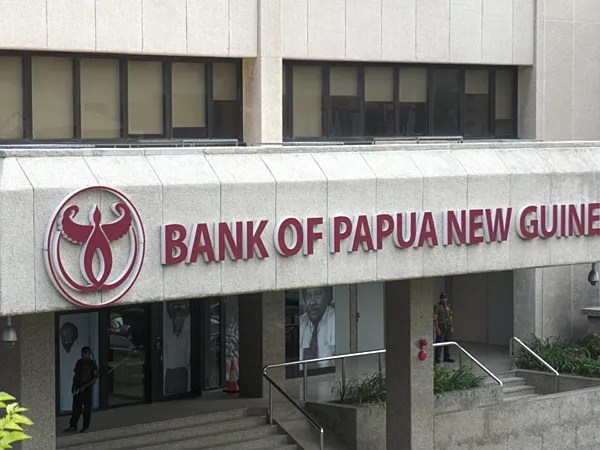
The Bank of Papua New Guinea’s Monetary Policy Committee (MPC) has announced key policy adjustments aimed at reinforcing price stability and strengthening the role of the exchange rate as the nominal anchor for monetary policy.

In its 2 September meeting, the Committee increased the Kina Facility Rate (KFR) from 4.0% to 5.0% and lowered the Cash Reserve Requirement (CRR) from 10.0% to 9.0%. It also agreed to maintain the crawl-like arrangement of the Kina while widening the margin between the KFR and the Bank’s overnight repo and reverse repo facilities to 2.0%. These measures are expected to improve liquidity management in the banking system, with the MPC signalling that further CRR adjustments may follow.

Inflationary pressures have eased in recent months. Headline inflation fell to 3.6% in June 2025, down from 5.3% in March. Core inflation remained steady, with the trimmed mean at 3.1% and the exclusion-based measure at 3.3%. The MPC highlighted the continued depreciation of the Kina and its influence on prices, stressing that the KFR increase is intended to support the currency and maintain price stability.

Globally, growth is projected at 3.0% in 2025, supported by stronger activity in both advanced and emerging markets. However, risks remain, including geopolitical tensions and uncertainty linked to US tariffs. Domestically, Papua New Guinea’s economy is expected to grow by about 4.3% this year, driven by both the mineral and non-mineral sectors. Strong production of coffee, cocoa and palm oil is forecast to support growth, alongside the anticipated launch of major resource projects.

Business confidence has shown signs of recovery, largely reflecting improvements in the foreign exchange market. Nonetheless, firms continue to face rising input costs and structural challenges. The MPC noted that international reserves remain above the Net International Reserves (NIR) floor under the IMF programme. Improved foreign exchange inflows, a more stable FX market and the start of interbank FX trading have all contributed to better liquidity conditions, though continued progress will depend on steady inflows and careful management of interventions.

The Committee emphasised the importance of a more effective monetary policy transmission mechanism in achieving the Bank’s price stability objective. While CRR adjustments have influenced liquidity and government securities yields, the KFR has had limited impact on lending and deposit rates. Strengthening the interbank market and encouraging greater competition from new entrants, the MPC said, will be essential to ensure policy signals reach the broader financial system and the wider economy.

September 12, 2025

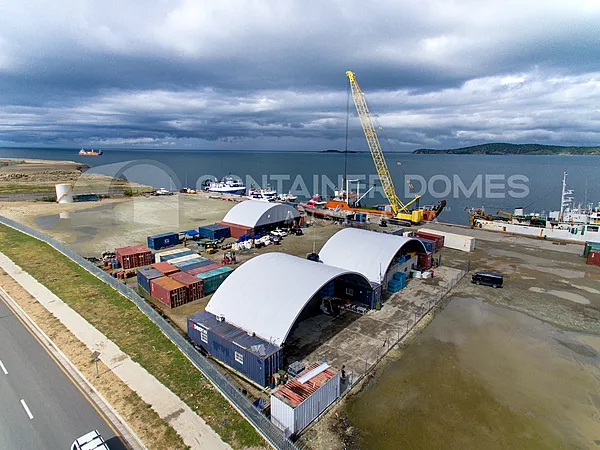
A local project services company is partnering with a leading Australian manufacturer to introduce innovative dome shelter solutions across Papua New Guinea.

PNG CR Services Company announced its strategic collaboration with Container Domes Australia, a move that promises to deliver durable, cost-effective infrastructure tailored to the country’s varied environments and sectoral needs. The partnership merges PNG CR’s on-the-ground project delivery expertise with Container Domes Australia’s reputation for quality, innovation, and robust engineering in dome shelter systems.

"This partnership is about more than just supplying infrastructure—it’s about providing solutions that meet the needs of Papua New Guinea’s industries and communities," said Allen Tyson, managing director of PNG CR Services Company.

"By combining international expertise with local presence, we are ensuring that our clients receive quality products backed by reliable, on-the-ground service," Tyson added.

The two companies said the partnership will focus on serving key sectors such as mining, construction, agriculture, and logistics, with plans to expand into areas like rural development, education infrastructure, and disaster relief.

Prior to the partnership, Container Domes Australia supplied and installed four 18-metre-wide cyclone-rated domes at Port Moresby Wharf, demonstrating the suitability of their shelters for PNG’s challenging conditions.

Paul Whitla, director of Container Domes Australia, said the collaboration aligns with the company’s broader vision of making its products more accessible in emerging markets.

"Container Domes Australia is excited to work alongside PNG CR Services to expand our reach into Papua New Guinea," Whitla said.

"With PNG CR’s deep market knowledge and service capability, customers can be confident that our domes will not only be delivered to international standards but also supported locally through installation, maintenance, and warranty services," he added.

The companies said they are committed to enhancing local capacity by providing training, employment, and ongoing support—an approach that could generate broader economic benefits beyond the construction and industrial sectors.

The collaboration is a distribution agreement that grants PNG CR Services exclusive rights to represent and supply Container Domes Australia products throughout Papua New Guinea. The domes will continue to be manufactured in Australia and imported into PNG, ensuring consistent quality and compliance with international engineering standards.

Emphasis on long-term presence

Central to the partnership is the establishment of a strong local presence to ensure proper installation and reliable after-sales service.

According to PNG CR, the dome structures offer a scalable and flexible alternative to conventional buildings, allowing faster and more efficient project delivery—particularly in remote or resource-constrained locations.

The premium quality shelters are engineered to withstand some of the harshest conditions, making them ideal for Papua New Guinea’s challenging environments.

Manufactured in Australia to meet the country’s highest engineering standards, each structure is cyclone-rated and built with a galvanized RHS steel framework and a heavy-duty polyethylene (P.E.) fabric cover designed for high UV resistance.

The shelters come with a 10-year structural warranty and a 20-year UV warranty, offering long-term durability and reliable performance across industrial, remote, and coastal applications.

Beyond industrial use, both companies expressed interest in deploying the dome technology for humanitarian and community applications. This includes temporary classrooms, mobile clinics, and emergency shelters—particularly relevant in PNG’s disaster-prone regions.

The collaboration, they said, is designed to create "long-term value for clients while contributing to Papua New Guinea’s industrial and community growth." 

September 12, 2025

Papua New Guinea Prime Minister James Marape, MP, has called for stronger civil society engagement to ensure the Pacific’s regional architecture delivers stability, good governance and sustainable economic growth.

In his intervention statement at the 54th Pacific Islands Forum (PIF) Leaders’ Dialogue with Civil Society on 9 September in Honiara, Solomon Islands — delivered by Fisheries Minister Jelta Wong — Prime Minister Marape emphasised that the 2050 Strategy for the Blue Pacific Continent provides a roadmap for prosperity but depends on effective institutions and inclusive partnerships to succeed.

He stressed that the current review of the Pacific’s regional systems is not just an “institutional exercise” but a necessary step to make them resilient, agile and responsive to the region’s economic and social needs.

“A strategy is only as effective as the institutions and mechanisms we have to implement it,” Marape stated.

For the business community, he highlighted that a stronger regional framework would underpin investor confidence by supporting stability, strengthening governance and promoting sustainable resource management. These conditions, he noted, are important for creating an enabling environment for growth and private-sector participation.

Marape placed civil society at the centre of this effort, describing organisations as “the eyes and ears on the ground” that connect high-level policies with community realities. Their role in identifying gaps in governance, resource use and service delivery, he said, is critical to building accountability and efficiency.

He urged that civil society must go beyond feedback to become co-creators of the Pacific’s future. Deeper engagement in policy design and project implementation, Marape explained, would ensure development efforts remain culturally sensitive, community-driven and reflective of Pacific aspirations.

By working hand in hand with governments, Marape argued, civil society can help transform the Pacific’s regional architecture into a “strong and effective engine for a secure, prosperous and thriving Blue Pacific” — a foundation that businesses, investors and communities alike can rely on.

September 10, 2025

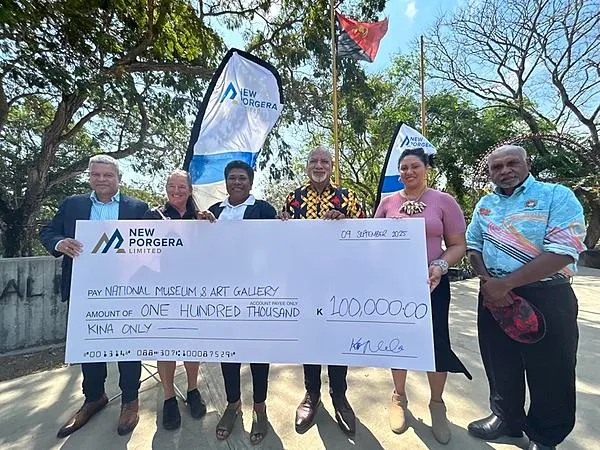
In celebration of Papua New Guinea’s 50th Independence Anniversary, New Porgera Ltd. (NPL) has pledged K100,000 (about USD 23,500–24,000) to the National Museum and Art Gallery (NMAG).

The contribution was formally handed over by NPL Country Manager Karo Maha after discussions with NMAG executives and Friends of the Museum (FoM), a non-profit group dedicated to supporting the enhancement of the museum’s Port Moresby facilities.

“As the operator of the Porgera mine, NPL values and pays tribute to the diverse cultures, traditions and history that shape our country,” Maha said. “We are proud to play a role in strengthening the National Museum’s mission of safeguarding and showcasing Papua New Guinea’s rich heritage.

“During this milestone independence celebration, when our culture is being highlighted across the nation, we felt it was the right time to give back by helping an institution that embodies our identity,” Mah said, adding that they are hopeful that the donation will meaningfully contribute to ongoing preservation efforts for the benefit of generations to come.

“Our cultural identity binds Papua New Guinea together and sets us apart globally,” he said.

The company also take this chance to extend warmest wishes for a happy Independence Anniversary, adding that 50 years of self-rule stands as a powerful testament to the endurance and spirit of the people.

“Congratulations, PNG, on reaching this golden milestone,” he said.

Accepting the donation, NMAG Board of Trustees President Terence Moka said the support will directly strengthen the museum’s conservation, education, exhibitions and cultural programming.

“This comes at a time when the eyes of the world are on Papua New Guinea as we mark our 50 years of independence,” he said.

FoM Chair Sylvia Pascoe noted that the contribution establishes NPL as the very first Champion Sponsor under the group’s “Legacy Legends” initiative.

“This distinction is reserved for those whose support lays the foundation for lasting cultural sustainability,” Pascoe said. “As our inaugural Champion, New Porgera will be permanently acknowledged across our major public campaigns, fundraising galas, publications and digital platforms.”

September 10, 2025

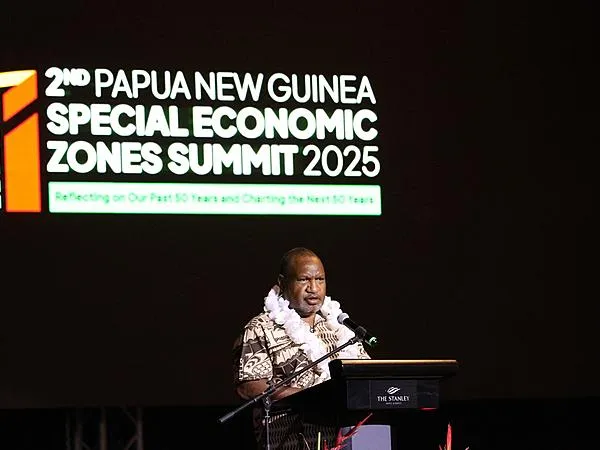
Prime Minister James Marape has reaffirmed Papua New Guinea’s commitment to investor confidence and economic diversification, telling international and local business leaders that Special Economic Zones (SEZs) will drive growth while upholding the rule of law and ensuring strong returns.

Speaking at the Second PNG SEZ Summit in Port Moresby, Marape highlighted his government’s vision to open opportunities beyond mining and petroleum. He arrived late to the event after making a symbolic road trip from remote Kotidanga in Gulf Province to Alotau and on to the capital — a journey meant to showcase new road links connecting Port Moresby to the wider country.

“For the first time in 50 years, road connections are reaching Port Moresby and linking it to Alotau and Lae,” he said. “These connections symbolise our bigger vision — connecting our economy, opening opportunities, and ensuring development reaches every part of our country.”

Growth and diversification

Since taking office in 2019, Marape said the economy has grown from K79 billion to K132 billion, with a target of K200 billion by 2035. He stressed that for the first time in decades, non-resource sectors have been growing steadily, citing SEZs as the backbone of the government’s push to encourage manufacturing, value-adding, and import replacement.

“To date, four SEZs have been licensed — Paga Hill, Pacific Cement Lime, Sea Park and Caution Bay — with more in the pipeline,” he said. “Investors who help us replace imports and save foreign exchange will always be our priority.”

Investor confidence and stability

Marape reassured investors that PNG honours agreements and maintains a safe, democratic environment for business. “We may not like every agreement signed in the past, but we do not tear up contracts. We honour them until they expire. That is the confidence investors need,” he said.

He pointed to long-term investors such as ExxonMobil and Steamships and noted that property investors in Port Moresby recover their investments in just 12 years — far quicker than in Sydney or Beijing. Judicial reforms, including an independent appeals court and international arbitration mechanisms, are also underway to further protect investors.

Green edge and future vision

Calling PNG one of the world’s largest carbon-negative countries, Marape said its 100 million metric tonnes of carbon sink capacity gives investors a “green label” advantage in environmentally conscious markets.

He outlined an ambitious vision to grow the economy to K500 billion by 2045, supported by new petroleum and mineral projects alongside agriculture, fisheries, and forestry.

“You will make more profit here than anywhere else if you work with local contractors and partners,” Marape told delegates. “Our free market economy, independent judiciary, and growing Asian markets make Papua New Guinea one of the most attractive destinations for investment.”

Marape also emphasised PNG’s growing international role, noting its participation in APEC, the Pacific Islands Forum, and its progress toward ASEAN membership. “With the United Nations Secretary-General arriving on Tuesday, it shows Papua New Guinea is not just open for business — it is a nation that matters globally,” he said.

September 09, 2025

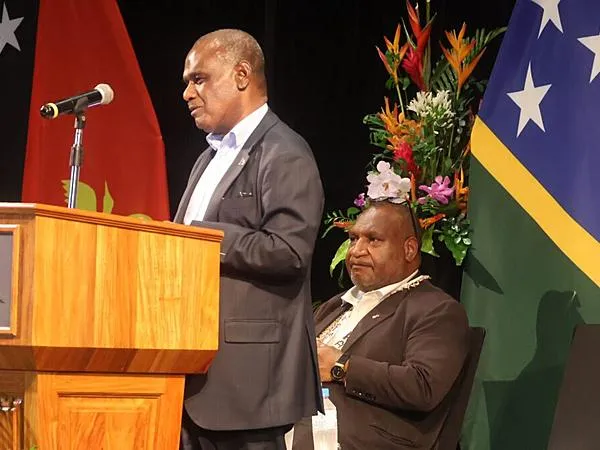
The Governments of Papua New Guinea and Solomon Islands have taken a decisive step to strengthen their economic and cultural bonds with the soft launch of the Papua New Guinea–Solomon Islands Business Council.

Held in Port Moresby, the event brought together leaders from government and business, with both Prime Ministers hailing the initiative as a milestone in Melanesian cooperation.

Solomon Islands Prime Minister Jeremiah Manele, MP, extended his warm congratulations to the council’s founders, describing the launch as a timely platform for deeper private-sector collaboration.

“The establishment of this Council represents a new chapter in our economic partnership. I am confident that it will grow from strength to strength and evolve into a vital mechanism for advancing mutual prosperity,” he said.

Manele underlined the council’s role as a forum for dialogue, networking and innovation, opening avenues for trade and investment. He also met with PNG business leaders during the launch, listening to their aspirations and reaffirming his government’s readiness to pursue stronger partnerships.

“As close neighbours and enduring partners, our futures are closely linked. Enhanced private sector collaboration will not only stimulate economic growth but will also reinforce the bonds of friendship and understanding that unite our peoples,” Manele said.

Courtesy call on PNG Governor-General

Prime Minister Manele paid a courtesy call on the Governor-General of Papua New Guinea, Grand Chief Sir Bob Dadae, at Government House.

During their brief meeting, he conveyed gratitude on behalf of the government and people of Solomon Islands for the long-standing relationship between the two Melanesian nations. He acknowledged the enduring diplomatic ties established 47 years ago on 7 July 1978, when Solomon Islands gained independence from Britain.

“On behalf of the government and people of Solomon Islands, I thank Papua New Guinea for its continued friendship and assistance, which have significantly contributed to our national development,” Manele said.

The Prime Minister noted PNG’s support in critical sectors such as business investment, education, border surveillance, police, security, and sports. Both leaders reaffirmed their commitment to enhancing “brotherly ties” rooted in shared culture, geography and history, which also laid the foundation for the Melanesian Spearhead Group (MSG) in 1988.

Manele was accompanied on the visit by former Solomon Islands Governor-General Sir Frank Kabui and Rick Hou, for Small Malaita.

‘Brothers and sisters’

Prime Minister James Marape, welcomed Manele to Papua New Guinea, calling the visit a reaffirmation of “deep historical, cultural, and economic ties” between the two Melanesian nations.

“Sometimes, friends you can choose, but brothers and sisters you are born into. Papua New Guinea and Solomon Islands are family, and we will continue to coexist into the future,” Marape said, drawing warm applause from guests.

Marape reflected on the shared seafaring and trading traditions of both countries, saying independence in 1975 for PNG and 1978 for Solomon Islands had merely formalised an age-old connection.

He also congratulated Solomon Islands on its preparations to host the Pacific Islands Forum in Honiara this month, pledging PNG’s full support. “When Solomon Islands celebrates its 50th anniversary in 2028, Papua New Guinea will be there in full force,” he said.

From aid to trade

Looking to the future, Marape stressed the importance of shifting from aid dependency to deeper trade and economic engagement. He pointed out that more than 60 PNG businesses are already operating in Solomon Islands, spanning telecommunications, banking, oil palm and tourism.

“Papua New Guinea remains the largest foreign investor in Solomon Islands, a sign of the growing partnership,” he said.

Marape further endorsed Manele’s “Melanesian Oceans” initiative, a regional vision for sustainable use of fisheries and marine resources. “Our oceans hold some of the world’s richest tuna stocks. Together, Melanesia must shape our own destiny and ensure resources benefit our people,” he said.

Tourism and people-to-people links

Marape encouraged greater tourism exchanges, saying Solomon Islands offered experiences that complemented PNG’s own emerging industry. “Papua New Guinea is still growing in tourism, but our cousins in Solomon Islands will look after you well. They are not an extension of PNG — they are a proud nation of their own,” he said.

The Prime Minister also confirmed that Manele will return to Port Moresby next week to join PNG’s 50th Independence Anniversary celebrations, alongside more than 15 Pacific leaders travelling from Honiara after the Forum.

Closing his address, Marape cited a Melanesian proverb on fire and family unity: “We are placed at the heart of Melanesia. As leaders, we must be friends to all, enemies to none.”

Manele, before flying on to Australia, joined Marape in a charity golf event on Friday morning, rounding out a visit that was as much about personal connection as political and economic partnership.

September 08, 2025

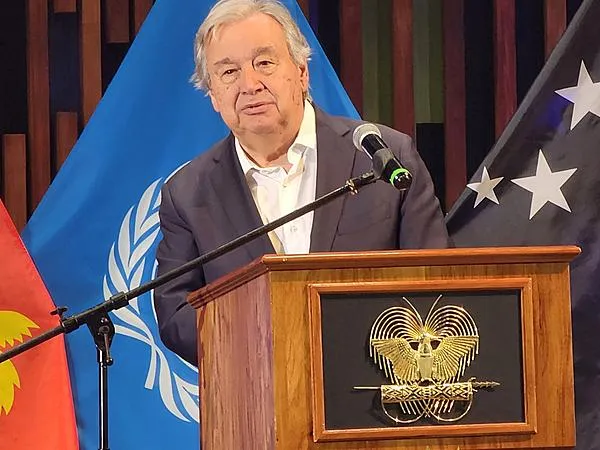
Prime Minister James Marape on 5 September farewelled United Nations Secretary-General António Guterres after a four-day visit that placed Papua New Guinea at the heart of global discussions on climate change and sustainable development.

Guterres departed from Jacksons International Airport aboard a UN flight, concluding what Marape described as a “productive and meaningful” visit. A military guard of honour lined the tarmac, while Foreign Minister Justin Tkatchenko, Chief Secretary Ivan Pomaleu and Foreign Affairs Secretary Elias Wohengu joined the Prime Minister in extending a formal send-off.

“Papua New Guinea deeply appreciates the Secretary-General’s passion and commitment in promoting the United Nations Sustainable Development Goals, including Climate Action, during his time with us,” Marape said at a joint press conference with Guterres before departure.

The UN chief’s programme was wide-ranging. He addressed PNG’s National Parliament, a rare honour for an international leader, before travelling to East Sepik Province to pay tribute to the late Grand Chief Sir Michael Somare at his memorial in Wewak.

Guterres described Somare as an “extraordinary statesman” whose advocacy on forest conservation helped shape Articles 5 and 6 of the Paris Agreement on climate change.

He then took an aerial tour of the Torricelli mountains rainforest and visited Nuku District in West Sepik, where he met communities living on the frontlines of climate change. In Mt Hagen, he engaged late into the night with UN representatives and civil society leaders overseeing development projects in the Highlands.

For Marape, the visit was not just ceremonial but a chance to align PNG firmly with the UN’s climate agenda. At a state dinner on 3 September, he assured Guterres of PNG’s unwavering support.

“Mr. Secretary-General, you have come home to a forest nation, you have come home to a marine nation,” he said. “Your address today in Parliament on Climate Resilience and Climate Justice is the correct advocacy. We stand behind you. We stand in total solidarity with you as you advocate to the Global North and G20 nations… Keep the earth’s temperature below 1.5-degree Celsius.”

Marape has emerged as one of the Pacific’s strongest voices on climate justice since taking office in 2019. He has demanded that developed countries not only cut emissions but also compensate small island states for damages caused by rising seas and extreme weather. He has also insisted that forest nations like PNG be recognised and rewarded for preserving ecosystems of immense global value.

By hosting the UN chief during its 50th independence anniversary year, PNG signalled that it sees climate diplomacy and sustainable development as defining priorities for the decades ahead.

UN chief joins Marape, Toroama for Bougainville peace talks


Guterres added his weight to Papua New Guinea’s delicate peace process with Bougainville this week, joining Marape and Autonomous Bougainville Government (ABG) President Ishmael Toroama for a trilateral meeting in Port Moresby.

The talks, held during Guterres’ four-day state visit, were described as “honest” by PNG officials and centred on the next steps of the Bougainville Peace Agreement, which guides the political future of the autonomous region. Bougainville voted overwhelmingly for independence in a 2019 referendum, but both sides agreed that the result would be subject to further consultations before a final outcome is reached by 2027.

Marape said the UN’s continued involvement was crucial. “The United Nation’s close guidance and consult going forward, as PNG and Bougainville work towards lasting solution is crucial at this stage leading to 2027,” his office said in a statement following the meeting.

The trilateral dialogue underscored the growing importance of international oversight as Bougainville’s demands for independence gather momentum. For many observers, Guterres’ presence was a reminder of the UN’s longstanding role in the peace process, dating back to its monitoring mission during the early 2000s.

Beyond symbolism, the meeting gave Toroama and Marape an opportunity to present their positions before the world’s top diplomat. While details of the talks remain confidential, both leaders are under pressure to balance Bougainville’s referendum mandate with PNG’s broader national interests.

The session came against the backdrop of Guterres’ wider tour of PNG, which was dominated by climate change advocacy and tributes to the late Grand Chief Sir Michael Somare. Yet the Bougainville dialogue added a distinctly political dimension, signalling that peace and governance remain high on the UN’s agenda in the Pacific.

For Bougainvilleans, the Secretary-General’s involvement brought international visibility to their cause. For PNG, it was a chance to demonstrate transparency in handling one of the most sensitive national issues of the post-independence era.

The meeting was also significant for its timing, coinciding with PNG’s 50th independence anniversary year. Leaders on both sides have framed the coming years as a period to settle Bougainville’s status in a way that ensures peace, stability and development for all communities.

By standing alongside Marape and Toroama, Guterres signalled the UN’s readiness to remain a trusted partner in guiding the process to its conclusion.

September 08, 2025

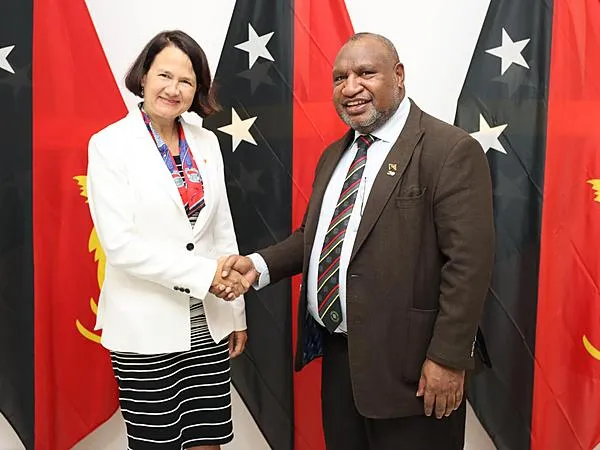
Prime Minister James Marape received a courtesy call from the United Kingdom’s Minister for the Indo-Pacific Catherine West at Melanesian House in Waigani, in a meeting that underscored both countries’ determination to strengthen ties as Papua New Guinea marks 50 years of independence.

The talks came ahead of the upcoming state visit of the Duke of Edinburgh, Prince Edward, who will officiate the formal handover of the King’s Colours and regimental colours to the Papua New Guinea Defence Force. He will also preside over the opening of the new Court complex — a highlight of PNG’s golden jubilee celebrations.

Minister West’s trip also carries a practical agenda, with the signing of two Memoranda of Understanding (MOUs) — one on Development Cooperation and another on a Shiprider Agreement. The agreements add to a growing body of cooperation, including the recently concluded Status of Force Agreement.

“Papua New Guinea always values its relations with the United Kingdom, and we thank the UK government for elevating this relationship through these latest MOUs, as well as the recently-signed Status of Force Agreement (SOFA),” Prime Minister Marape said.

He welcomed Britain’s visible role in this anniversary year, noting the participation of UK Defence personnel in Military Week events. “Our ties keep on getting stronger as seen in the participation of the UK Defence personnel in the Military Week, the program that is part of our 50th Independence anniversary celebration. This also signifies a stronger working relationship between our two defence forces which paves the way for future cooperation in the security space.”

Marape also highlighted West’s involvement with UK-backed programmes on climate change, renewable energy, nature, and forest conservation during her Port Moresby stay.

“Papua New Guinea is similarly focused on Climate Change, Climate Action and Mitigation, as we host the third largest tropical rainforest in the world and up to 7 percent of the world’s biodiversity. PNG remains steadfast and is committed to fight for Climate Justice and financing as mitigation strategy for building resilience among our local communities,” he said.

The Prime Minister appealed to the minister to carry PNG’s message further. He asked that Britain amplify the Pacific’s voice in international forums, particularly on climate finance and justice, where small island states seek stronger partnerships.

Closing the meeting, Marape said PNG’s relationship with the UK was not just about the present but about future generations: “PNG’s commitment is to embrace and continue fostering good bilateral relations with the United Kingdom going into the next 50 years of PNG’s life as a sovereign nation.”

September 08, 2025

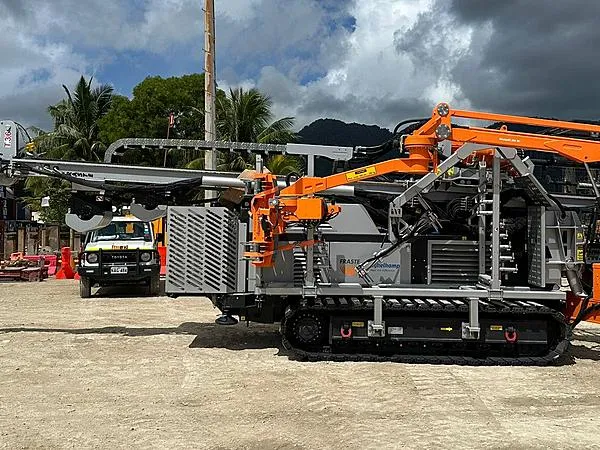
As Papua New Guinea marks 50 years of independence, Zenex Drilling is celebrating the national milestone with a step that blends technical innovation with local ambition: the arrival of the LRS275 Duo Sonic Drill Rig from Dutch manufacturer Eijkelkamp. For Zenex, this is more than a fleet upgrade — it’s a statement about where PNG’s homegrown drilling capability is heading next.

“The LRS275 Duo is a real investment in PNG’s future capacity, not just a headline,” said Emmanuel Bonte, General Manager of Zenex Drilling. A first of its kind in the region, the LRS275 Duo brings a leap forward in capability, versatility, and reliability. Its high-performance sonic head delivers superior core sample quality in complex geology, including stockpiles, tailings, and unconsolidated formations where conventional methods struggle. Sonic vibration reduces friction, improving penetration while preserving sample integrity.

True to its name, the Duo is engineered for flexibility. The integrated dual-head system enables seamless changeover to diamond coring, allowing crews to shift methods without demobilising or bringing in a secondary rig. That translates to fewer mobilisations, a smaller footprint, and tighter project schedules — benefits that matter in PNG’s rugged conditions and on international programmes with demanding timelines.

“One rig, two disciplines, no compromise,” says Bonte. “It’s the kind of adaptability our clients increasingly expect.”

Under the hood, the LRS275 Duo is as digital as it is mechanical. A state-of-the-art remote maintenance platform streams live telemetry to Zenex’s maintenance team, enabling data-driven diagnostics, predictive component changes, and faster fault resolution. Real-time operational data supports better planning, fewer interruptions, and more consistent utilisation.

“Downtime is the silent cost in any drilling campaign,” Bonte notes. “With live data and remote support, we can prevent problems before they appear on site.”

As with every major asset, Zenex is pairing the investment with a people-first rollout. Site-based training will ensure operators and offsiders gain confidence on the new platform, while select maintenance specialists will travel to the Netherlands for factory training with Eijkelkamp’s engineering team. The focus is on long-term capability and knowledge transfer, not just commissioning.

“We don’t just buy technology, we internalise it,” Bonte says. “By sending our people to the source, we bring world-class expertise back to PNG.”

That approach aligns with Zenex’s broader workforce philosophy: build locally, grow from within, and create meaningful progression pathways. The company’s “Way We Work” programme — an open coaching model that blends safety, leadership, and technical proficiency — is being extended to incorporate sonic-specific modules and data-driven maintenance practices.

The deployment of the new sonic rig will help geologists make faster, higher-confidence decisions. Combined with Zenex’s expanding logistics capability and disciplined maintenance systems, the new rig strengthens the company’s position as a partner for complex exploration across PNG and abroad.

Strategically, the investment signals how Zenex intends to scale: sustainably and selectively. Rather than chasing volume, the focus remains on capability — integrated services, reliable delivery, and a safety record that clients can trust.

“We’re not trying to be everywhere,” says Bonte. “We’re choosing the right work, with the right partners, where our technology and our people can create outsized value.”

As the nation celebrates half a century of independence, Zenex’s move captures a broader story about PNG’s technical maturity and international relevance. Advanced equipment, rigorous systems, and local leadership are no longer aspirations — they’re daily practice.

“Innovation is not a destination for us,” Bonte reflects. “It’s a discipline. When we invest in people and the right tools, we lift the standard for our whole industry.”

With the LRS275 Duo joining the fleet, Zenex Drilling is marking the country’s golden jubilee with a clear view of the next 50 years — where independence is measured not only in history, but in the confidence to lead.

September 08, 2025

The Bank of Papua New Guinea (BPNG) has raised its benchmark interest rate to 5.0 percent while easing banking reserve requirements, in a move designed to strengthen the kina, manage inflation, and keep credit flowing across the economy.

At its September meeting, the Monetary Policy Committee (MPC) lifted the Kina Facility Rate (KFR) from 4.0 percent to 5.0 percent, while reducing the Cash Reserve Requirement (CRR) for commercial banks from 10.0 percent to 9.0 percent. The MPC also widened the margin on the central bank’s repo and reverse repo facilities to 2.0 percent.

The bank said the combined measures were intended to reinforce the kina’s role as the anchor for price stability, while addressing uneven liquidity distribution in the financial system.

Inflation moderates

Headline inflation eased to 3.6 percent in June, down from 5.3 percent in March, with core inflation stable at 3.1 to 3.3 percent. The MPC said the decision to raise the KFR would help curb further inflationary pressure caused by the kina’s gradual depreciation under the crawl-like exchange rate arrangement.

The central bank expects inflation to remain contained within the 3.0 to 4.0 percent range over the medium term, although risks remain from global trade tensions, volatile commodity prices, and structural constraints at home.

Growth outlook

Domestic growth for 2025 is projected at 4.3 percent, driven by mining and agriculture. High output of coffee, cocoa, and palm oil is expected to support foreign exchange inflows, while major resource projects, including Papua LNG, are set to further lift growth in the near term.

Treasury officials told the committee that non-resource GDP growth would reach 4.7 percent in 2025, slightly lower than earlier estimates. Business confidence has improved thanks to greater access to foreign exchange, although firms continue to face higher input costs and logistical challenges.

Exchange rate stability

The MPC reaffirmed its commitment to the kina’s crawl-like arrangement, noting that the currency had depreciated by 3.4 percent against the US dollar and 6.7 percent against the trade-weighted index since March. While this has reduced the kina’s overvaluation, it has also contributed to price pressures.

Foreign reserves remain above the International Monetary Fund’s adequacy benchmark, supported by strong export inflows, LNG tax receipts, and reduced central bank interventions. As at June, reserves stood at US$3.35 billion, enough to cover nearly seven months of imports.

The committee noted improvements in the foreign exchange market, with interbank trading resuming for the first time since 2013 and outstanding FX orders falling by half to K308 million by August.

Transmission challenges

The MPC acknowledged that while adjustments to the CRR have effectively influenced liquidity and government bond yields, the KFR has shown limited impact on commercial lending and deposit rates. Strengthening transmission through deeper interbank activity and increased competition in banking remains a priority.

To address imbalances, the CRR framework will continue under a monthly averaging system, aimed at improving transparency and implementation.

Global and domestic risks

The MPC noted that global growth is expected at 3.0 percent this year, supported by stronger demand in advanced and emerging markets. However, geopolitical tensions and uncertainty around US tariffs remain risks, particularly through PNG’s key trading partners in Asia and Australia.

Simulation exercises presented to the committee showed PNG is more vulnerable to export volume shocks than to commodity price movements.

Domestically, risks to the outlook include weaker commodity prices, natural disasters, and delays to major projects, although upside potential exists if Papua LNG activity accelerates earlier than planned.

Policy focus

The central bank stressed its focus on maintaining price stability while supporting conditions for growth. The committee said its latest measures were designed to align interest rates with the exchange rate anchor, ease liquidity distribution issues, and strengthen the operational framework for monetary policy.

The meeting also finalised and approved the MPC’s charter, underlining its independence in pursuing monetary stability.