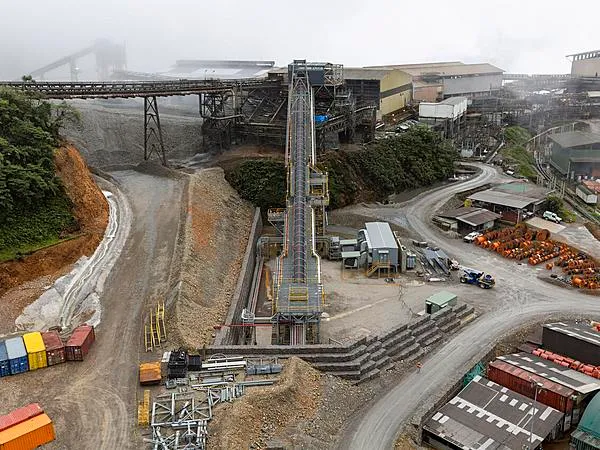
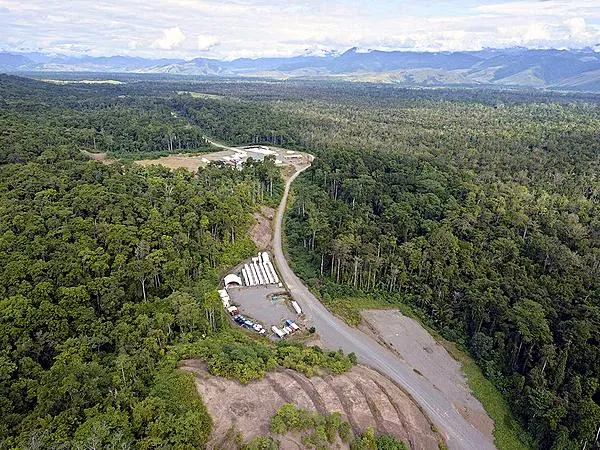
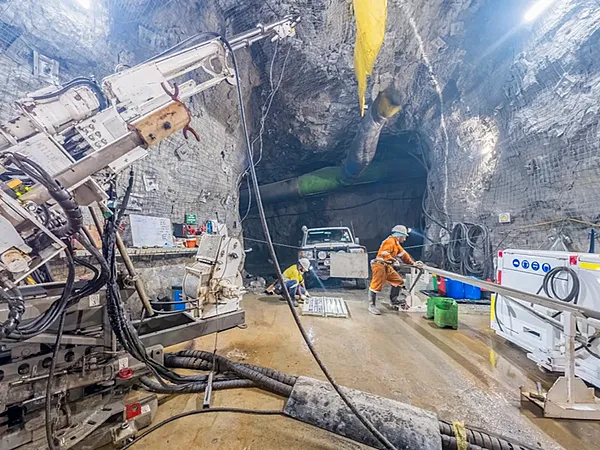
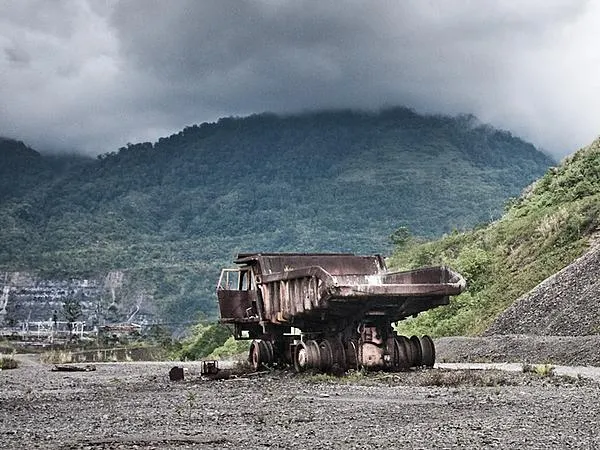
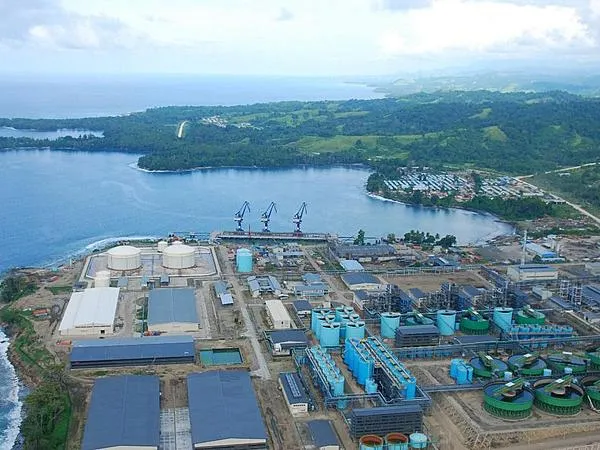
In spite of the current pandemic, the financial and production forecast for Ok Tedi Mining Ltd (OTML) continues to be strong.
According to managing director and chief executive Musje Werror, they are managing the operations of the company well this year despite the ill effects of COVID-19. “Our production and financial forecast for 2020 remains strong and we expect to achieve budget profits on the back of the current metal prices and high-grade ore material,” he said. “We expect to perform better than last year despite the impacts.”
He said that he remains positive about the financial forecast of the company for the rest of the year, noting that the gold-copper mine in Western “successfully resumed safe operations on Sept 14 after a six-week suspension due to a spike in positive Covid-19 cases detected in the workforce”.
He added that when the first case of the coronavirus happened on Aug 4, the company was able to stop the virus from spreading into the community.
“During the six weeks outage, the company developed a restart plan incorporating a major quarantine and Covid-19 testing programme for 6,000 OTML and contractor employees,” he said. “To accommodate the quarantine requirements, the company had to amend the rosters by adding a fourth panel, rearranged the onsite accommodation and established entry point centres in Port Moresby, Tabubil, Kiunga and Bige to test all personnel before they start work.”
In talks over a waste disposal system, Environment, Conservation and Climate Change Minister Wera Mori stated that the Papua New Guinea government desires to stop this stalemate for the K18 billion (US$5.4 billion) Wafi-Golpu gold-copper project.
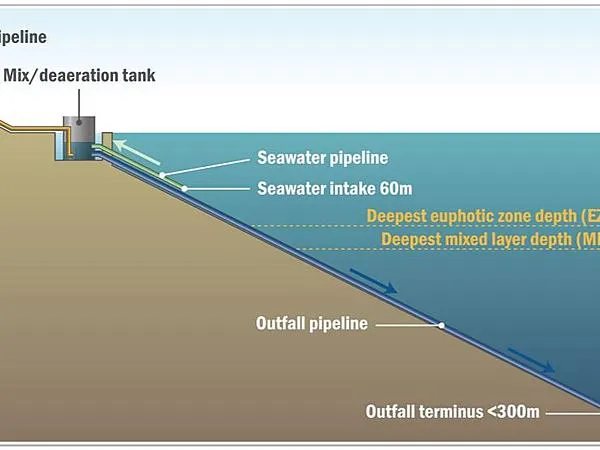
He added that he was going to sign an “approval in principle” to use the deep sea tailing placement (DSTP) “without any further delay”. Note that the Morobe government and landowners were against the DSTP method and opted to use an on-land system to store mine waste.
Mori said he is already tired of waiting and that they are ready to sign.
Last week, the Morobe government and the landowners met in Lae and decided to not approve the DSTP method. Governor Ginson Saonu said that the government should look into an alternative.
“The people of Morobe have spoken saying yes to Wafi-Golpu and no to DSTP,” he said. “To propose a submarine deep sea tailing in Huon Gulf Sea must be prohibited (as) it is unethical and improper.”
Saonu also added that submarine tailing was not allowed in international gold mining principles and standards which project developers must abide by. “Wafi-Golpu mine must be subject to international best practice and principles of which Newcrest and Harmony Gold Mining Company Ltd are members,” Saonu said.
Mori said the provincial government was to make a submission but only wrote a letter to Marape. “They did not make a submission. They only wrote a letter to the Prime Minister. Their approach is wrong,” he said. “All statutory requirements have been complied with or met. We can’t make exceptions. We’ve asked them for a submission but they (instead) wrote a letter.”
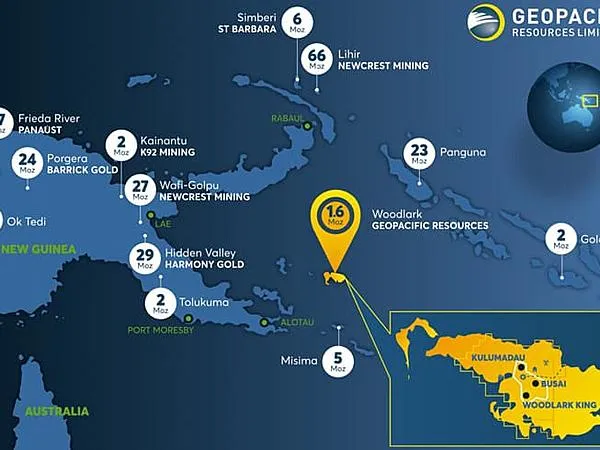
As a result of several requirements and processes fulfilled by the joint venture of the Wafi-Golpu copper and gold project in Morobe, Mori said the Environment Council has accepted the environmental impact statement and recommended to him the approval of the project. Some gold mines such as the Simberi gold mine (New Ireland), the Lihir gold mine (New Ireland), the Misima gold mine (Milne Bay), and Ramu nickel mine use the DSTP method and no negative impacts were reported.
Over the next three years, K92 Mining Inc will invest US$250 million (K855.55mil) to hit a production level of more than 300,000 ounces per annum. According to chief executive officer John Lewins, the company will still continue to provide beneficial outcomes to the communities.
“We are excited about the coming year as it will be a major transformative year for our company,” he said. “We believe we will provide many positive outcomes for all of our stakeholders, including our communities. We are forecasting a new record production for the year, committing to a major expansion which will see K92 Mining spend US$250 million (K855.55mil) in capital over the next three years and move to a production of over 300,000 ounces per annum.”
He said that in early 2021, the operations of the company is to increase to more than 1,000 employees and at the end of 2022, to more than 1,500. The number of employees is currently at 730 - with 130 casuals and 200 contractors.
Lewins added that the mine has finished an expansion of mine production capacity to double throughout- from 200,000 tonnes per annum to 400,000 tonnes per annum.
“As a result, production this year will increase from 82,000 ozs gold in 2019 to 100,000 ozs gold in 2020 and 140,000 ozs gold in 2021,” he said. “We have had significant exploration success in 2020 and will be spending even more on exploration in 2021 – over K30 million to build on that success.”
In a presentation on the Wafi-Golpu deep sea tailings placement, Minister for Environment, Conservation and Climate Change Wera Mori said that Papua New Guinea’s Wafi-Golpu mining project starts production soon - five years after its construction phase. He added that block caving is the method to use for this copper/gold project.
“Upon granting of the special mining lease, it will take at least five years to construct all necessary infrastructures at a cost of approximately US$5 billion (K17.48bil) before the first ounce of gold and pound of copper are produced,” he said.
Following the recommendation of the Environment Council (EC) after the developer had met necessary environmental requirements and processes, Mori said he is set to grant Wafi-Golpu joint venture (WGJV) an environmental permit.
“The granting of the approval in principle will now pave way for the State negotiating team including representatives of the Morobe government to start discussions with the developer, WGJV, on a mine development contract,” Mori said. “The minister for Environment, Conservation and Climate Change has 28 days from Sept 10, the date of the environment council decision to grant the approval in principle The 28 days lapsed on Wednesday, Oct 7.”
Because no one had contested the decision of the EC during the 28-day period, Mori said that he is required to grant the approval.
Meanwhile, Prime Minister James Maraque urged the stakeholders to establish a waste disposal project for the Wafi-Golpu, adding that the development of this project is essential for the economy.
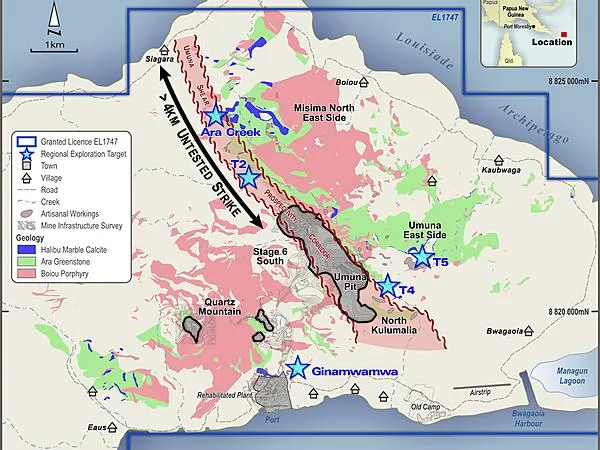
Following COVID travel restrictions, Kingston Resources (KSN) has restarted drilling at its Misima Gold Project in Papua New Guinea. The project includes extensional drilling and infill at the southeast end of the proposed Umuna pit and follow-up drilling at the Abi Discovery.
The 8,000 metre diamond drilling program, which is focusing on the Kulumalia area, was reported to have had two diamond rigs arrive.
In addition, the pre-feasibility study (PFS) of Misima has already entered into the final stages and is set to be finished in this quarter.
Managing Director, Andrew Corbett is confident that the team works well now toward bringing back gold in its production. "The Kulumalia area is a compelling target that represents the south-eastern extension of our main Umuna deposit and offers strong potential for Resource upgrade and expansion, and we are also looking forward to further testing the exciting emerging discovery at Abi-Kila," he said.
Even if the company has halted drilling since the pandemic, the firm has continued working on the updated Mineral Resource Estimate, the current Misima PFS, and the construction of a purpose-built sample preparation laboratory on-site, expected to improve assay turnaround times and reduce costs.
"I would like to thank our Misima team for sticking with us during what has been a challenging time in PNG - we are grateful to have everyone back in action, and we look forward to further advancing the Misima Gold Project, with the next major milestone being the completion of the PFS, which is anticipated this quarter," Corbett said.
Stakeholders such as the state, project developer Geopacific Resources Ltd, Dal Wanuwan Woodlark Lease Association Inc (landowners), Murua LLG and the Milne Bay government arrived in Alotau to discuss the K420 million Woodlark mining project and the memorandum of the agreement negotiated in 2015. The project has a 13-year mine-life with one million ounces of gold reserves, three defined gold deposits, and 1.6 million ounces in gold resources.
Part of the discussions included a tax credit scheme, infrastructure, land issues and royalties, business development plan, training and employment, and mine closure.
According to Mineral Resources Authority (MRA) managing director Jerry Garry, the State team zeroed in achieving a win-win situation for all stakeholders, especially the landowners. He added that this was in line with the agenda of the government to empower resources owners and others by guaranteeing that they get maximum rewards from their resources.
Garry added that the government - led by the Commerce and Industry Department - had come up with concrete plans to make sure that developers engage businesses and landowners in business pin offs, starting with the construction of projects. The plan gets underway when the National Executive Council approves it.
According to Garry, the developer opens up business opportunities when the project starts - which was five to six years of missed business opportunities and million of Kina for landowners.
Chief Executive Tim Richards represented Geopacific Resources Ltd in the meeting who said that the firm was looking forward to many opportunities but at the same time the challenge lies with the stakeholders who are set to implement the agreement.
In an independent peer review, the East Sepik provincial government has concluded that the Frieda River will be further delayed. According to East Sepik administration mines coordinator Martin Torovi, there are still a lot of questions that have to be answered. He added that their review has shown that there is still a lot of weakness to the dam.
He said, “Frieda is located on one of the faults in the family of fault structures. The question is if the dam is built there will it stand or not? We do not know where the fault is and there will be many catastrophic effects. There is no proper site investigation done to clearly tell us how short waves will travel apart from the environmental impacts.”
Based on their review, Mr Torovi recommended that instead of granting an environmental permit, he has asked the developer to fund research and development studies first. Other recommendations included the government setting up bodies to regulate dams and a thorough investigation that details structural analysis and mapping for satisfactory standards.
Mr Torovi added that there should also be the putting up of long-term funds in mind closure and environmental bonds which the state and developer must publish.
After months of refusing to extend its lease, Papua New Guinea Prime Minister James Marape has finally approved the continuation of the operation of the Porgera gold mine between Barrick Gold Corporation and its Chinese joint venture partner Zijin Mining.
According to reports, this news coincides with the release of Barrick’s third-quarter 2020 production results which were in line with expectations. This news, however, didn’t change Barrick shares, easing 0.86% or $0.32 to $36.89 on the volume of 2.25 million. The shares are presently trading in a 52-week range of $41.09 and $17.52.
A gold mine located at an altitude of 2,200-2,600 metres in the Enga Province of Papua New Guinea, the Porgera Joint Venture has reserves at 2.3 million ounces with additional 3.6 million ounces and 1.2 million ounces listed in the measured and indicated, and inferred categories, respectively. Last year, Porgera came up with 284,000 ounces of gold at US1,003 an ounce. But because of this problem, there have been no production forecasts for this year. Both the Chinese firm and Barrick own 47.5% of Porgera mine and the rest is owned by Mineral Resources Enga(jointly owned by the Enga Provincial Government and Porgera Special Mining Lease landowners).
When Marape refused to grant its lease last April, Barrick had promised to challenge the grant of a special mining lease for the Porgera gold mine to a government-owned company. This was in contrast when Marape granted a lease to Kumul Minerals Holdings Ltd., a wholly state-owned enterprise.
Barrick placed the mine in maintenance and care.
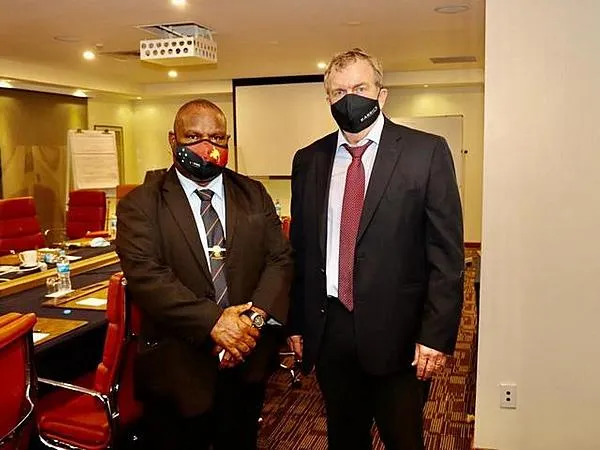
Marape said after talks with Barrick Gold CEO Mark Bristow, “We have agreed in principle that Papua New Guinea will take a major share of equity under the new arrangements and BNL will retain operatorship and there will be a fair sharing of the economic benefits.” For his part, Bristow said, “I am certain that my team will be able to work with the PNG state negotiating team…in finalising full commercial details.”
Meanwhile, Marape and Barrick will meet again in the coming week to discuss other matters. Barrick will also meet its 2020 production targets after a third-quarter gold production of 1.15 million ounces at US$969 an ounce. In the third quarter, the firm also came out with 119 million copper.
Barrick also said that in 2020, it will produce 4.6 to 5.0 million ounces of gold at USUS$920-US$970 an ounce. For copper, 440-500 million pounds.
Papua New Guinea Prime Minister said that he would like all stakeholders in the Wafi-Golpu project to work together to bring the project forward. This came after the developer of the project made baseline studies to the PM, supporting Deep Sea Tailings Placement (DSTP), at a workshop in Port Moresby.
The Prime Minister mentioned that he has heard the concerns and the call of the landowners in the impacted areas, as well as Governor for Morobe Ginson Saonu, to make sure that all processes are strictly followed. He added that he understood the concerns of the Governor for the people of Morobe and that moving forward, he wanted to make sure that the people had their share of benefits - with no to little visible impacts on the surrounding environment.
He said, “However, in the course of discussions of the best tailings disposal method for the project, time is running ahead and time lost can never be gained again. Time lost is an opportunity wasted, and so it is important that we make a decision as soon as possible. Conversation on issues surrounding the waste disposal options has been going on in the public space for so long, (more than four years) and the people and country are missing out on gains that could have been had.”
The Prime Minister added that when the method for disposal must be set to cover for any environmental issues that may arise. He added that every stakeholder - which included the government - must be prepared to take care of the cost.
Mr. Marape said he is ready to make tough decisions just in case the negotiations fall through.
Mining has never been this lucrative, as proven in a report by K92 Mining which said that in the third quarter of the year, has harvested at least 22,261 oz AuEq (gold equivalent) at its Kainantu Gold Mine in Papua New Guinea.
To be more specific in Q3, K92 has come out with 21,298 ounces of gold, 488,020 pounds of copper and 7,127 ounces of silver, or 22,261 AuEq oz. Following the triumphant commissioning of the Stage 2 process plant expansions to work from 200,000 tpa to 400,000 tpa - which also includes five consecutive days above design - the quarter also achieved a record mill throughput of 64,702 tonnes.
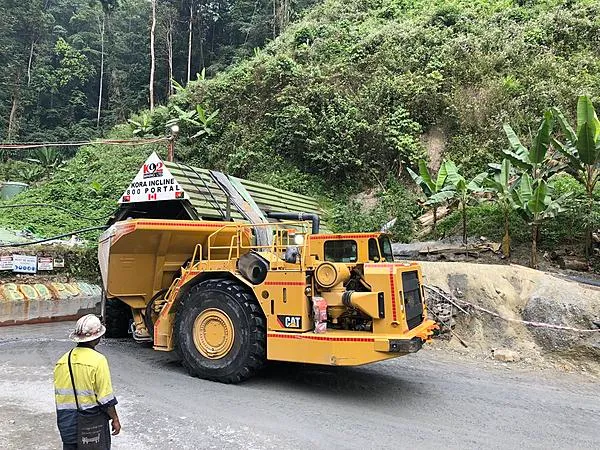
Interestingly, mining operations in Q3 zeroed in on the K1 and K2 veins of Kora and are composed of development tonnes on the K1 vein on all five levels, K1 vein long hole stopping on the 1225 and 1205 MRL level, K2 vein development tonnes from the 1170 MRL and K2 vein long hole stoping on the 1185 MRL level.
It is important to note that Q3 meant the second full quarter of long hole stoping which began last March on the K1 vein. Presently, long hole stoping has brought a positive impact on operational flexibility - which also includes multiple consecutive days that go beyond 1,100 tpd of plant feed from the underground in Q3. Long stoping is planned throughout the rest of 2020 and K2 is still in line to obtain 1,100 tpd of plant feed by the end of the year.
The mixture of the materials of K1 and K2 give an average head grade to the process plant for Q3 of 11.29 g/t gold and 0.38% copper. During the commissioning period to limit the potential for losses of gold, plant feed grades were lowered. Because gold head grades continue to bring positive feedback, the grades are expected to rise in Q4 in high-grade mining areas.
In Q3, the development of underground infrastructure came across mineralization in the Judd 1 and 2 - which resulted in modifying along the J1 vein, giving a bulk sample to treat during Q4. In addition, Judd has started a drilling program - two drill rigs that target Judd from underground which continues to advance to the South. It is essential to note that a portion of the Judd has been processed already. Among the finished works include completing two portals and portal ground support and surface ground support.
To grow its economy, the new Autonomous Bougainville Government has looked at the Panguna mine as a key target. According to Bougainville President Ishmael Toroama, aside from Panguna, the government is also looking at other factors such as projects in agriculture, mining, fisheries, and tourism - that generates revenues and increases employment in Bougainville.
Toroama also said that the government has welcomed foreign investment for the reasons that outside funding and technology can help in furthering the advancement of Bougainville’s natural resources. Of course, as the President has said, this comes with fair share and participation through equity and shareholding in large scale projects.
This also means that people control the medium to small enterprise sector.
The new government is also looking at other policies in fulfilling these programs under an Economic Development Plan.
Because of the pressing issues surrounding four mines in the country - Ramu Nico mine in Madang, Ok Tedi in Western, Porgera in Enga and Sinivit in East New Britain - Environment and Conservation Minister Wera Mori said an assessment will be done to determine their environmental and socio-economic impacts.
Mori said that officials from the Conservation and Environment Protection Authority (Cepa) are scheduled to visit these mine sites to check out their impacts.
“There have been pressing issues that have been raised regarding the Ramu Nico project in Madang, the Porgera gold mine in the Enga and the contamination of the Fly River system from tailings and other mine wastes in Ok Tedi,” Mori said. “We will undertake the second phase of investigations into the spillage of Basamuk (Madang). Work will soon go into the second phase that will also extend to the Ramu river catchment basin.”
Mori said that a team was already in place and an independent one will also be sent to the Ramu River to check out its operations and see its impacts on the communities. According to Mori, an initial investigation showed that the recent slurry spill in Madang didn’t go over the required threshold.
He added that the Ok Tedj and Porgera mines also share the same descriptions in terms of its effects on the river systems because of wastes from the mines.
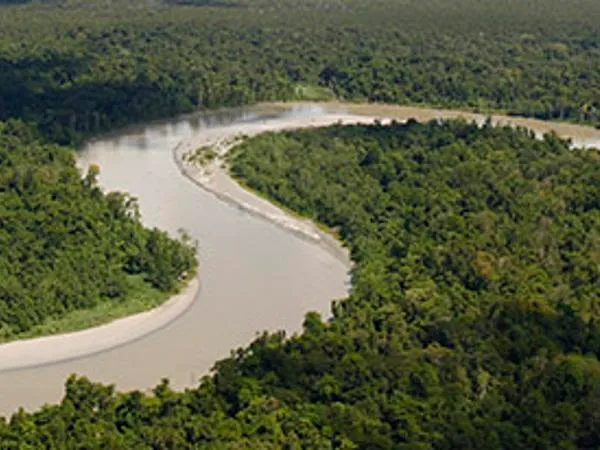
“We are going to secure money and conduct studies on the environmental and socio-economic impacts that the Porgera mine has had on the people of Porgera which is important for Porgera to move forward,” he said. “Cepa has also already written to Ok Tedi so that we could investigate the possibility of dredging the Fly River below the confluence of the Strickland as it comes out of Lake Murray and Ok Tedi River.
He added, “We will engage people who would go and start undertaking dredging. We have today serious exposures of cyanide tailings in East New Britain in Sinivit of the Wild Dog mine. Unfortunately, when the developer of the mine left the country, they did not address the tailings issue. We have got to bring in people who are capable of cleaning industrial waste that are highly toxic. Therefore the staff from Cepa together with MRA (Mineral Resources Authority) will make a trip to Wild Dog and make an assessment.”
Production sharing contracts have always been specific to oil and gas and therefore never works in the mining sector. This, according to the CEO of Global Miner, Barrick Gold, who added that the highest risk in gas and oil is exploration and once you put it in infrastructure, you just pump forever.
“This is where production sharing is a classic example, whereas mining, mines don’t have the lives of gas fields and the real risk is the construction risk where all the money goes. “You spend 100 million dollars developing feasibility in a mine and spend billions of dollars in building it".
The more than 30-year old in the mining industry said the viability in the sectors in gas and oil where these work have also taken a hit, especially during this health crisis.
Mr. Bristow added that some countries also introduced product sharing contracts - but to liabilities. This was also relayed by John Chambers General Manager of Santos PNG during a webinar when looking at the proposed scheme to this sector.
“It is not that production sharing contracts won’t work - it is just that sometimes it gets complicated. It works on oil and gas because they have a huge capital on a big upstream income while in a mining project, it has an ongoing rolling capital,” he said. “When you work in the mining industry, you keep putting money so the huge share goes to the contractors and investors.”
The government stressed how important this really is for all to benefit, but has given a new direction to veer away from the operated system of concessional licensing. This is where 100 per cent of the government’s natural resources are transferred to developers where they grant the government a 22.5 per cent for the petroleum space and a 30 per cent option in mining.
Follow on LinkedIn:
PNG Business News
Be the "First" to get our exclusive Digital Magazine & Weekly Newsletter.