K92 Mining has revealed that its shares have gone up.
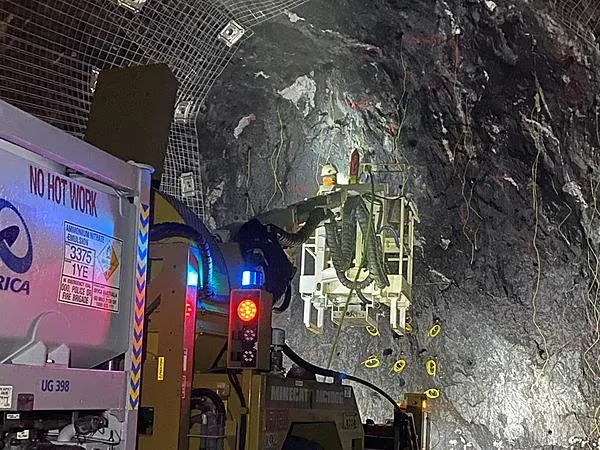
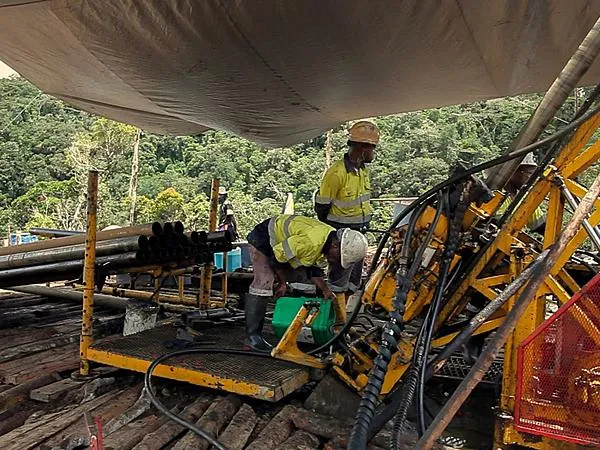
With results from the continuing diamond drilling of the Kora deposit at the Kainantu gold, the drilling results are highlighted by hole KMDD0261, which documented several high-grade intersections including 9.80 m at 83.27 g/t Au, 10 g/t Ag and 1.03% Cu (84.92 g/t AuEq, 6.63 m true width) at the K1 Vein.
As for drilling to the south, the firm said in a statement that it has continued to intersect important mineralisation, highlighted by KMDD0229 which is recording several intersections that include 1.67 m at 29.76 g/t Au, 8 g/t Ag and 0.87% Cu (31.15 g/t AuEq, 1.11 m true width) at the K1 Vein.
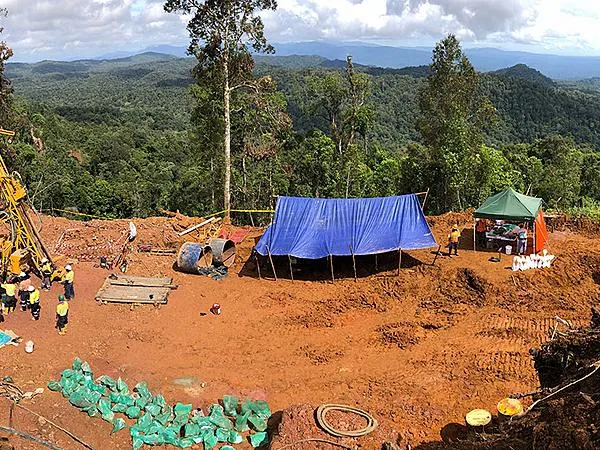
K92 CEO John Lewins in a media release said, “All twenty-eight holes intersected mineralization, with 18 intersections exceeding +10 g/t AuEq and 29 intersections exceeding +5g/t AuEq. We are pleased to announce the arrival of our tenth drill rig on site. Over the last twelve months, our drill rig fleet has doubled. We intend to continue to add drill rigs through 2021, with our eleventh drill rig scheduled to arrive in Q1. Drilling is underway at Kora, Karempe and Judd epithermal vein systems and the Blue Lake porphyry.”
The Kora Deposit is composed of two parallel, steeply west-dipping, north-south striking quartz-sulphide vein systems, K1 and K2 - within an encompassing distant structural zone hosted by phyllite. The Kora Link, an additional structure, has also been defined between K1 and K2.
The estimate of the present resource has an area of approximately 1,250 metres along strike by 1,050 to 1,150 metres vertically, representing ~75% of the drill target area.
Investments on exploration in the extractive sector, especially the mining industry, have decreased in the past decade.
According to Chamber of Mines and Petroleum president Gerea Aopi during the outlining the significance of having policy statements in the budget at the Deloitte and Port Moresby Chamber of Commerce and Industry business budget breakfast, investments were reduced from a billion kina to just K200 million in 2020.
He added that without such policies, the government will find it difficult to drive growth, especially at a time when investors are looking for assurance and confidence.
“Without sensible policies on the resource sector, I think it’s going to be extremely difficult for the government to drive economic growth,” he said. “There has to be certainty also stability in terms of policies whether its fiscal policies, legal and what the investors really look at is certainty and we don’t want investors coming in not knowing what the rules are going to be.”
Mr Aopi said that the policy statements offer no word on matters such as changes to legislation - whether that be the GasAct, the Mining Act, or in the Organic Law on resource ownership.
“That creates a lot of uncertainty in terms of whether they are going to see capital developed into the economy,” he said. Exploration is the future for the industry resource sector because we need to replace our existing assets. Without having explorations this will not happen. Exploration can take up to 30 years before we see anything coming up. These are the investments we need to make. Because of the uncertainties makes it difficult.”
Furthermore, Mr Aopi said that the fiscal stability agreement expected to be finished by the end of the year will offer some clarity to the fiscal terms agreed and signed last April 2019. He added that hopefully, this will help move Papua LNG forward towards progress.
He said, “Industry does not object to the changes in policies as long as there is a dialogue and there is more consultation in terms of trying to point out what are the challenges and what can we do, we want growth and make a return for shareholders.”
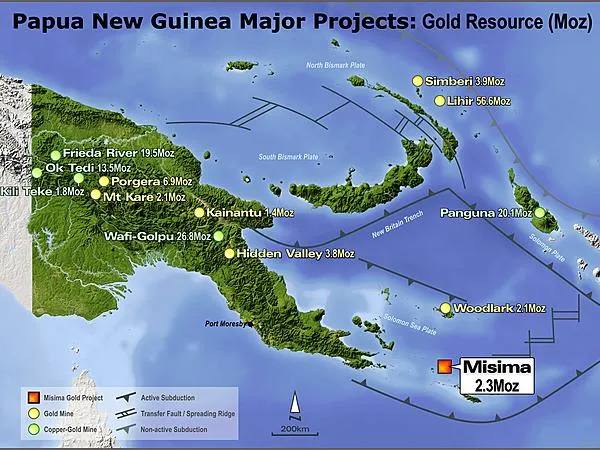
Kingston managing director Andrew Corbett has been extremely excited with the results of the pre-feasibility study (PFS) which shows that Kingston Resources can revive the Misima gold mine back to life.
Misima can come out with 130,000 ounces per year over a 17-year mine life.
“This is a significant milestone for all stakeholders in the Misima gold project and represents a meaningful step towards our goal of becoming a substantial new mid-tier Asia Pacific gold producer,” he said.
The company described the PSF as a project with “compelling” economics, “outstanding” growth potential and low capital intensity. The study also predicts gold can be produced at a cost of A$1,159 per ounce over the life of a mine as compared with its present Australian gold cost of around $2,560/oz.
Misima now has a reserve of ore at 1.35 million ounces for a 10-year life on reserve ounces alone. In addition, there has also been a 12.5% increase in the global mineral resource from 3.2Moz to 3.6Moz.
Capital costs are at $283 million - which involves the $37 million provision for contingencies, reflecting the advantages of operating on a brownfields site with important structures in place.
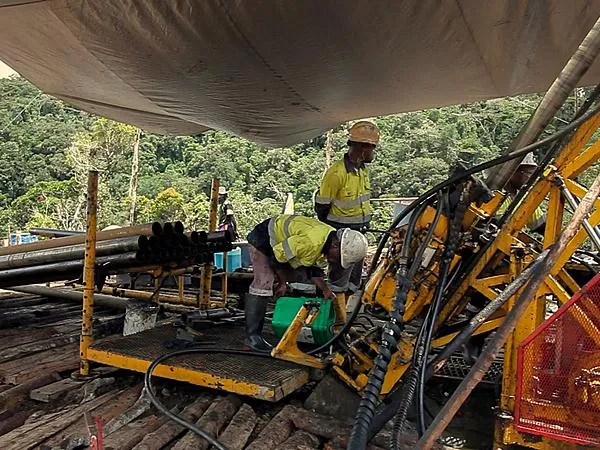
With the lifting of the COVID restrictions, Kingston resumed drilling at Misima with two diamond rigs. The 8,000m project includes extensional and infill drilling at the southeast end of the proposed Umuna pit, and the company’s 2019 Abi discovery.
Kingston also plans to leverage off a “strong production history” with modern infrastructure on the footprint of the historic mine and carbon in-leach treatment plant.
Meanwhile, Mick Wilkes is poised to take over the role of the chairman at Kingston Resources. He has more than 35 years of experience in this industry and he has been successful in developing copper mines and major gold in the country globally.
The government recently signed an environmental impact statement approval with regards to the K18 billion Wafi-Golpu project.
This came after an agreement with the Morobe government to start moving forward.
Prime Minister James Marape said the signing would grant the Special Mining Lease (SML) and negotiations for a mining development contract among the developer, state, and stakeholders.
“We are moving this project and heeding the call of Morobe Governor Ginson Saonu and the people on the possibility of a tailings storage facility,” he said. “It is time for us to sit with every party and open dialogue again.”
Marape said both governments would think of options which were economically viable and the best mine waste disposal measures. The Marape government will also have a 50-50 arrangement to sponsor feasibility studies on the issues from the Morobe government - which involves the bulk sampling of mine waste tailings.
To figure out the presence of copper and gold minerals, mine waste testing will also be enacted.
“The testing would be to see if there are any opportunity to make a business out of them and determine the type of terrestrial waste facility that is suitable,” he said. “Gold bullion discussions will grow bigger and the provincial government has put a proposal for a business opportunity in that space.”
According to the Mineral Resources Authority (MRA), the revised Ramu NiCo project memorandum of agreement (MOA) is still awaiting resolution of issues and challenges affecting landowners.
Managing director Jerry Garry said that the MOA was signed in 2013 for a five-year period, which was due for review last 2019. He added that the review began in 2018 by sending notices to stakeholders, but no response was received.
Garry remarked that the election of the landowner association executives was done in 2019. The decision of the court was in favour of the MRA and the election was finished last December 2019.
“However, landowner association Basamuk, Inland and Kurumbukari (KBK), took the MRA to court and the proceedings took almost the entire year,” he said. “In 2020, the Basamuk and Inland Pipeline (landowner association) matters went before courts again, this time, on leadership. Given these challenges and issues affecting our landowners, the revised MoA review is still pending.”
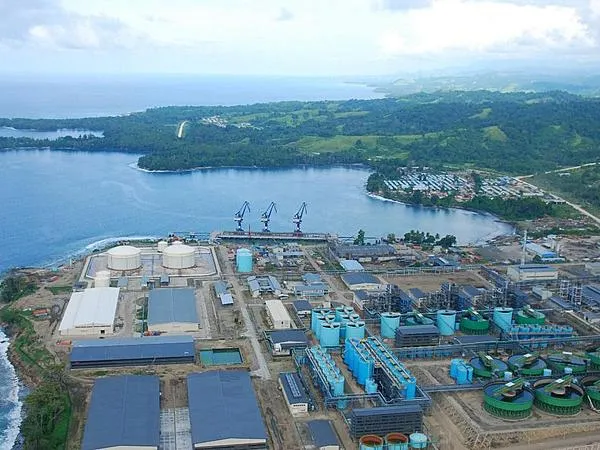
One of the biggest and most ambitious mining projects in the past decade, the Ramu nickel project cost US$2.1 billion (K4.08bil). Its construction was finished in 2021 and the plant had been brought into production. The Kurumbukari nickel and cobalt laterite mine are linked by a 135km pipeline in the Kurumbukari plateau to the Basamuk processing plant east of Madang town, along the Rai Coast of the Vitiaz Basin.
The Basamuk processing plant and Ramu mine are a joint endeavour between the Highlands (8.56 per cent), landowners and the government and Metallurgical Corporation of China (MCC) Ramu NiCo Ltd (85 per cent).
Entities linked with company advisor Matt Liddy have given Gold Mountain (GMN) $2 million for its flagship Wabag project in Papua New Guinea.
Overall, the stakeholders have bought over 36 million Gold Mountain shares at 5.5 cents per share. Gold Mountain, on the other hand, is set to issue over 2.5 million shares to satisfy placement fees payable to the investors.
When it comes to their agreement, if the share price of Gold Mountain falls below a 10-day volume-weighted average price (VWAP) of 5.5 cents per share in 6 and 24 months, investors can request for additional shares to adjust for the lower cost.
Gold Mountain has porphyry copper-gold-molybdenum deposits in Papua New Guinea along the Papuan Mobile Belt. Its flagship Wabag Project includes the Sak Creek, Monoyal, and Mt. Wipi.
Recently, the firm has begun its next phase drilling at the Monoyal copper-gold porphyry target within the Wabag project. Due to the pandemic, Wabag was on hold for 6 months and drilling continued earlier this month.
Gold Mountain last traded for 4.4 cents per share.
To discuss the reopening of the Porgera Mine, the Porgera Landowners Association (PLOA) Negotiating Committee met with Barrick Chief Executive Officer Mark Bristow and Senior Vice President and Head of Corporate Affairs of Asia Pacific, Woo Lee in Port Moresby.
While the Barrick team has been in Port Moresby for a month already, the PLOA Negotiating Committee is on the ground to discuss with Special Mining Lease (SML) clan leaders and their alternates, the significance of having direct control over royalties and benefits generated by the mine in the last 20 years.
According to Landowner chairman Maso Mangape, mechanisms such as the Minerals Resources Development Corporation ( MRDC) and its subsidiaries, including Mineral Resources Enga (MRE) have long failed the resource landowners of PNG.
"These organizations have been mismanaged by a few and benefits intended for landowners, including the people of Porgera have failed to trickle down to the people,” he said. "In the interest of transparency and a more direct flow of benefits to households, we are proposing a different model, with a professionally managed entity established to transparently manage our benefits and royalties. Our people want the immediate and transparent flow of dividends into their bank accounts, not trapped by intermediaries and third parties. So far billions of Kina in gold sales revenue has been received by MRE and only a fraction has reached our people at the household level with no reports and transparency provided to landowners.”
Mangape added, “We now have the opportunity to make things right for our people over the next twenty years, and these signatures show that 7200 SML landowners want a change so that benefits flow directly to households. There is overwhelming support amongst genuine SML landowners for our proposal for a new vehicle. We have come to Port Moresby to meet with Mr Bristow, but many more are still gathering back in Porgera to put their support behind our proposal.”
Earlier this year, the negotiating committee coordinated with Barrick for landowner deals, a partnership based on certainty and trust.
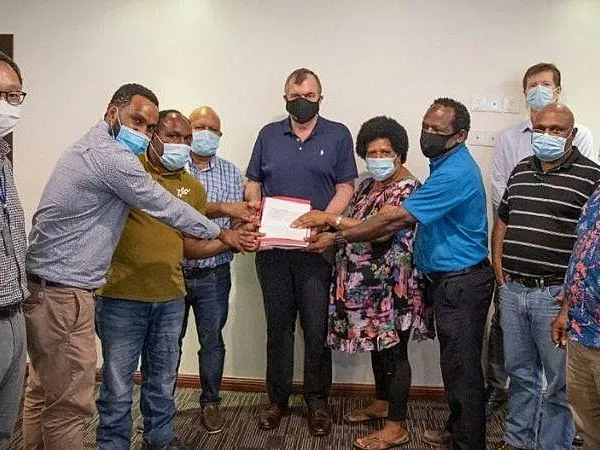
Mangape and Deputy chairman Dickson Pundi gave Mr Bristow a copy of the individually signed mandate of over 7200 Special Mining Lease ( SML) Landowners, which will be presented to the provincial government and the state.
"Every mine operator requires a social license to operate. Over seventy per cent of SML landowners have already put their names to paper to resoundingly say they want a different deal,” he said. "Many more are gathering to sign in Porgera because they want a better deal that benefits them directly, cutting out the proverbial “middle-men”.
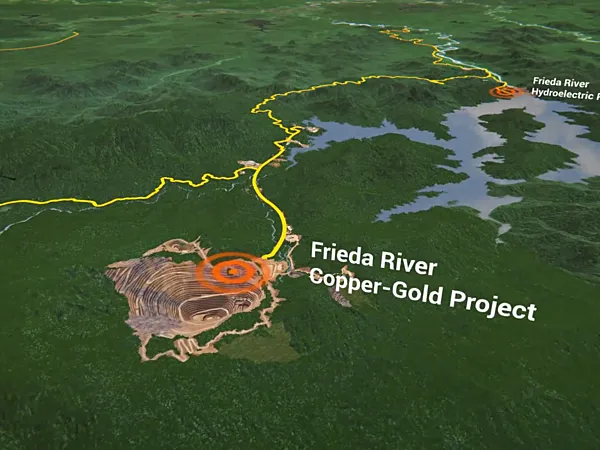
The government of West Sepik has rejected the proposal of PanAust, the developer of the US$7 billion (K24.4bil) Frieda River project, to construct a tailings dam at the headwaters of the Sepik River, administrator Conrad Tilau says. This, in spite of the fact that the project is expected to create many jobs.
Mineral Resources Authority (MRA) managing director Jerry Garry said that the government was still waiting for the proposal of PanAust for this project. He also remarked that a dam was not an option.
“We have rejected the developer’s environment plan and so they have to opt for another tailings disposal proposal such as deep-sea tailings placement (DSTP),” Tilau said. “We discovered that the developer’s environment report is not environment-friendly and the mine when in operation, will greatly affect the people and the environment.”
Tilau said that the developer gave them their environmental report actively seeking their support to push through with the construction of the mine.
“We engaged an environmental and mining consultant to review the developer’s report and our consultant discovered that there was no proper report about the geophysical layout of the area to determine if it was an earthquake zone,” he said. “There is no relocation plan and who would fund the relocation of villages to be affected by the mine? There was no proper data collection as some data was not accurate so there were no substances to convince us in the report that the environment will not be affected. The developer’s report was more like a cut and paste research.”
Tilau also added that the provincial government would not give their report for declining the environment plan of the developer to the Conservation and Environment Protection Authority.
“The developer wants their wharf to be at Vanimo but we want their wharf to be at Sera in Aitape because Vanimo will be an industrial and tourism park,” he said. “But the developer refused to listen to us because they still want to put their export facilities in Vanimo town.”
St. Barbara's Simberi gold mine in New Ireland are going back to mine material that was previously not economically feasible due to the current price of gold
This was revealed by general manager Jason Robertson, who added that the mine was presently investigating a transition from the processing of oxide ore to sulphide ore, where sulphide ore previously encountered problems which would require a new mining process and plant.
Robertson added that the concern lied with the changes to the Mining Act that might introduce additional expenses and costs, such as an increase in cost in the process of sulphide ore. He said that in the case of St. Barbara, the concern was the suggested introduction of a mine waste levy.
“We have worked to make our current waste disposal process completely environmentally friendly,” he said. “But if too many additional costs are introduced then we would have to finish mining the remaining oxide ore and then shut the mine down. St Barbara is currently investing US$150 million (K511mil) in PNG and they need to have some assurance their project will be able to survive.”
Meanwhile, New Ireland Governor Sir Julius Chan had a strong view of the changes in the Mining Act, adding that all he wanted was for the community to have a better life after the mine.
“Now is the time to have this discussion because we do not want to experience another Porgera situation in New Ireland,” Sir Julius said, adding the conversation between the New Ireland government and St. Barbara should begin now.
“The New Ireland government has repeatedly proposed that ownership be returned to the people,” he said. “Mining companies must make a reasonable return comparable to international profit margins.”
Kingston Resources just passed to the Conservation and Environment Protection Authority an environment inception report (EIR) in connection with the Misma gold project in Milne Bay, marking the beginning of the environment permitting process of the project.
“We are very excited to be taking the first steps down the environment approvals pathway for our Misima gold project,” Kingston managing director Andrew Corbett said. “Our initial engagement with the PNG’s Conservation and Protection Authority has been very constructive, with the quality of the work we have presented benefitting from the operating history of the site and extensive data available to the company.”
With the PNG Environment Act 2000, developers should submit an EIR for the project, outlining the scope of investigations. Kingston will formally present the EIR to the Conservation and Protection Authority of PNG for feedback and finalise the scope of the EIS.
Last month, Kingston continued drilling in Misima after the lifting of the COVID restrictions. The company is also finishing a pre-feasibility study.
Corbett said: “We are delighted to have our team at Misima back on the ground with the drill rigs turning again, working towards our goal of bringing the Misima gold project back into production.”
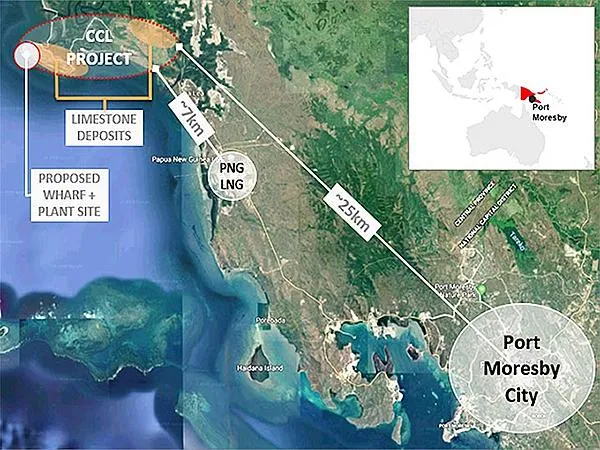
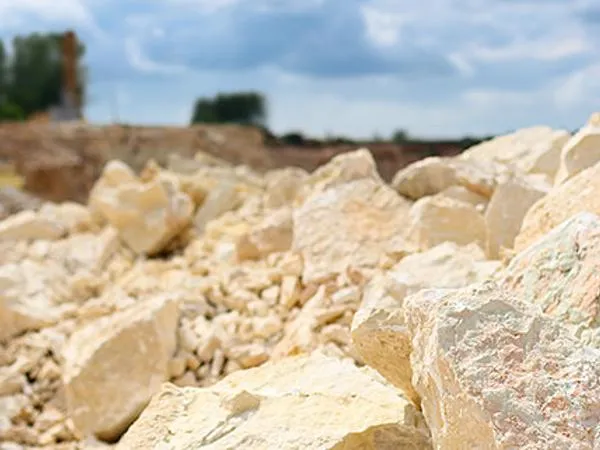
Mayur Resources Limited has finished independent test work, confirming the production of quality quicklime at it's Central Cement and Lime (CCL) project.
Managing director Paul Mulder said that the ability of Mayur to come out with low impurity and high-grade quicklime supported the market appeal of the project.
“The Central Cement and Lime Project not only has the potential to meet 100 per cent of PNG’s quicklime requirements but also provides direct access to Australian and other South Pacific export markets for use in various applications and sectors including the key end-user markets of gold, nickel and alumina processing,” Mulder said.
A couple of months ago, the government awarded Mayur a 20-year mining lease for the project.
In its annual report, the company said that it is raising US$350 million (K1.23 billion) to finance its projects and that the structural shifts in the lime industry of Australia give an important export market opportunity. The grant served as the final statutory approval required to start the construction of the facility.
Mayur chairman Rob Neale said that the mining lease grant was one of the milestones of the company since 2017.
Because local landowners are claiming billions of kina in compensation amidst talks with Kumul Mineral Holdings Limited (KMHL), Barrick Niugini Limited (BNL), and the state, the world-class Porgera mine in Enga Province may not reopen yet.
According to Prime Minister James Marape and Minister for Mining Johnson Tuke, the mine may reopen in due time.
Earlier this year, the Tuanda Incorporated Land Group (ILG) filed a K8 billion lawsuit against BNL and the State on claims of human rights violation, environmental damages, and legacy issues at the Waigani Human Rights Courts. Tuanda ILG chairman Sol Taro is set to fight for the compensation.
Some of the occurrence regarding this matter that happened recently included the claim of the Justice Foundation for Porgera Limited against BNL for US$13.28 billion, and the Lower Porgera Landowners demanding the settlement of K3.8 billion on environment legacy issues from BNL before the re-opening of the mine. In addition, the Porgera River Alluvial Miners Association also lodged a claim against BNL for K3,813,173,889 for the environmental damage and the Pogera River socio-economic impact for the past 30-years.
“The fact that our people have no compensation agreement with BNL to confirm our case, this is the time we make our stand to inform the State and the Porgera mine developer to compensate the people before the mine re-opens,” Mr Papo said.
He said that if the developer and the state don’t meet the demands, the construction of a tailings dam should be implemented, as well as ensuring the safety of the people and the environment.
In spite of all of these claims, the BNL and the State through the Conservation Environment Protection Authority and Mineral Resource Authority state that there were no legacy issues.
Minister for Environment, Conservation and Climate Change Wera Mori recently said that both past and previous mine developers operated under the environmental permit. He said that the socio-economic and massive environmental impacts had legal issues but they were operating under the law and that there was nothing to comply with.
Ok Tedi Mining Limited (OTML) Managing director and chief executive officer Musje Werror has revealed that this month, it will commission its new K800 million crusher.
“The old crusher will be decommissioned and removed by the end of the year to allow access to high-grade ore on the East Wall, which will come into production in 2023,” Werror said.
Werror said that this was identified as a strategic imperative by OTML’s strategic planning committee in 2016, and led to the net value of the mines - which are increasing from US$1.9 billion (K6.72bil) in 2015 to US$3.3 billion (K11.66bil) in 2020.
This also involved a mine life extension from 2026 to 2029.
Major projects general manager Mark Thomson said that the commissioning of the crusher is within budget and its safe construction showed an important milestone for the mine. “The safe construction and commissioning of the CRP within the approved budget represents a significant milestone for OTML and demonstrates what can be achieved by working as One Team Wan Pasin. This is illustrated by the fact that the CRP team recently celebrated two years lost time injury-free and 3 million hours worked.”
The OTML board and management targets to prolong the mine life “for as long as sustainably possible” and aims to generate benefits to stakeholders via compensation, dividends, services, training and business opportunities, royalties, employment, and infrastructure.
The Mineral Resources Authority has said that it hasn’t decided yet who will operate the Tolukuma gold mine in Central and the new deal on ownership. According to Managing Director Jerry Garry, the government was still waiting for updates from Pini Accountants and Advisor, the mine’s liquidator, which was anticipated to sell the property and pay the credits K15 million.
“We have no updates from the liquidator,” Garry said. “Pini Accountants and Advisors was supposed to sell the property.”
Last July, the liquidator proposed for sale by public tender Mining Lease 104 and other assets, and also said that the sale was on a strictly “as is where is basis”. The liquidator said that the sale is composed of existing and pending tenements and assets such as plant and equipment, machines, buildings and motor vehicles at a mine site in Central.
Garry said that he knew that the National Court had placed the mine into liquidation on Feb 7, 2018. He added that the same court ordered the mine to pay IPI Catering and Hevi Lift Ltd costs and incidentals of the proceedings, due to money that the mine owed them.
“Andrew Pini of Pini Accountants and Advisors was appointed by the same court as the liquidator,” he said. “From the date of the court order to the date of sales, Tolukuma Gold Mine shall continue to be fully subjected to the Companies Act.”
As part of developing the economy, Bougainville President Ishmael Toroama hopes to re-ignite limestone mining. This, as he embraced the reconciliation in the Eivo-Torau Constituency which he desired, would ignite the redevelopment of the defunct Manetai Limestone Project.
The president congratulated the leaders, the landowners, and the people for working on the next steps towards economic recovery. He added that the people as the resource owners must be in control of the political destiny of Bougainville through participation in the economic sector.
Toroama added that the needs and the rights of the people must be first. He also said that the new land legislation would show the desires of the people of Bougainville as owners of their land.
The first 100-day plan of President Toroama regarding the economic recovery of Bouganville includes other projects such as the Tonolei Project in Buin and the Special Economic Zone in Bana district.
The planned exploration activities of Coppermoly Limited has been deferred indefinitely because of the restrictions of travel between Papua New Guinea and Australia.
One of these activities is the proposed drilling programme at the Mt Nakru prospect in West New Britain.
According to Coppermoly which has a cash reserve of A$4.3 million (K10.5m) as of Sept 30, the company remains well-funded to continue its exploration when time permits. It said, “Mt Nakru (EL 1043): The Mt Nakru Cu-Au project (EL 1043) comprises two known deposits, Nakru 1 and Nakru 2, which are 1.5km apart.”
Classified in accordance with JORC (2012), estimated by mining associates in February 2019, the Mt Nakru project has many mineral resources.
Simuku (EL 2379): The Simuku project, meanwhile, has exploration licence 2379 on the island of New Britain in Papua New Guinea.
At Simuku, mineralisation is copper-molybdenum-gold porphyry style linked with the Simuku-Kulu Intrusive Complex, an Upper Oligocene in age. Spaced along a 3km to 4km, north to northeast trending zone, three and potentially four porphyry copper-molybdenum-gold prospects, have been recognised on the Simuku project.
The exploration strategy of Coppermoly is to check out areas adjacent to the Simuku mineral resource for the same styles of mineralisation in order to widen the mineral resource. The company has recently outlined some geographical studies related to areas near the site. One of these is Mak Mak, a greenfields exploration tenement lying almost to the Nakru tenement.
For this quarter, no exploration has been done.
Follow on LinkedIn:
PNG Business News
Be the "First" to get our exclusive Digital Magazine & Weekly Newsletter.