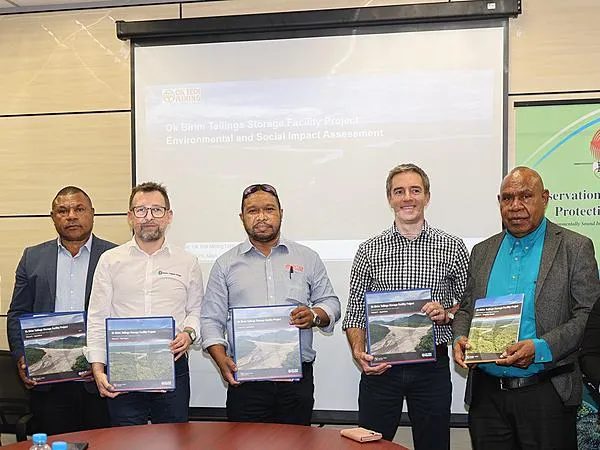
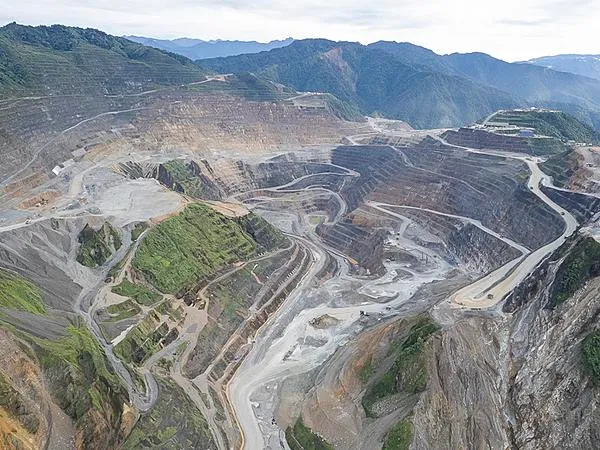
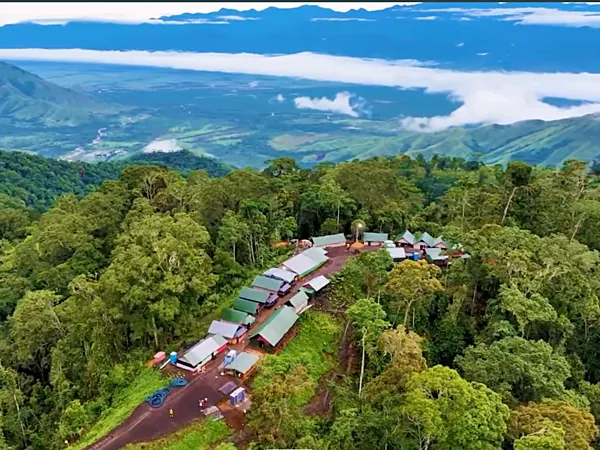
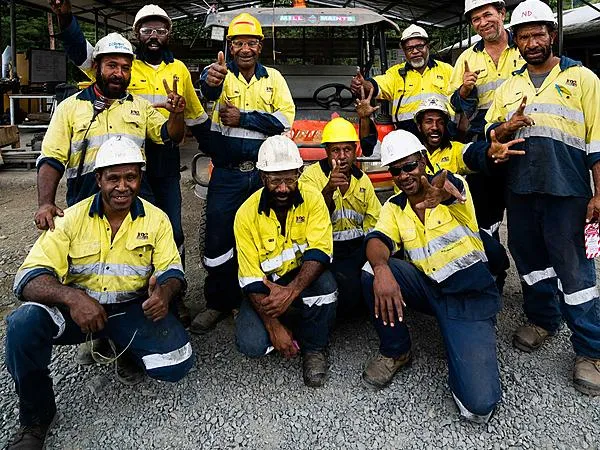
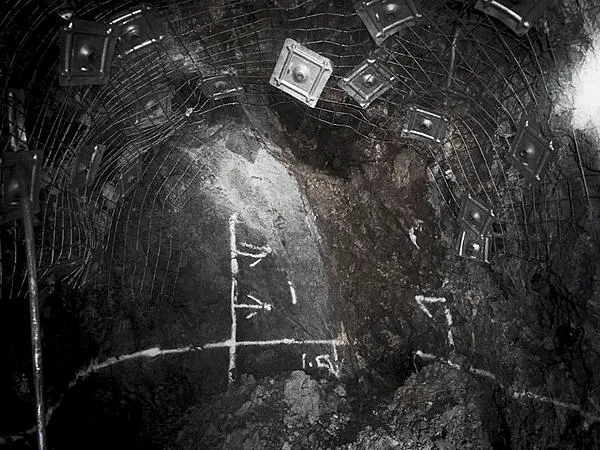
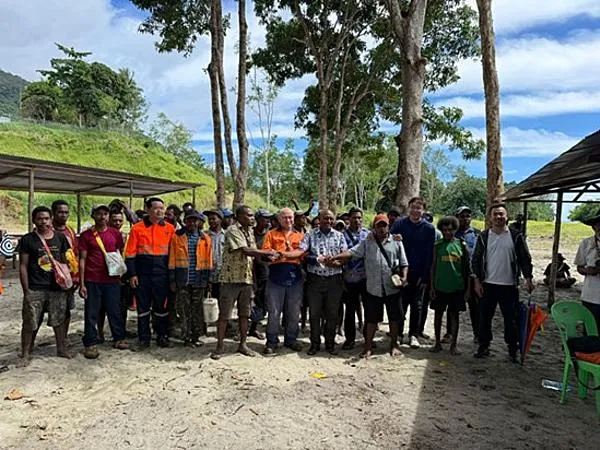
Ok Tedi Mining Limited (Ok Tedi) has reached a major milestone in its Growth 2050 Strategy with the submission of the Environmental and Social Impact Assessment (ESIA) report for the proposed Tailings Storage Facility (TSF) at Ok Birim to the Papua New Guinea government — a transformational project designed to significantly reduce downstream impacts associated with riverine tailings disposal and secure the long-term future of the Ok Tedi mine.
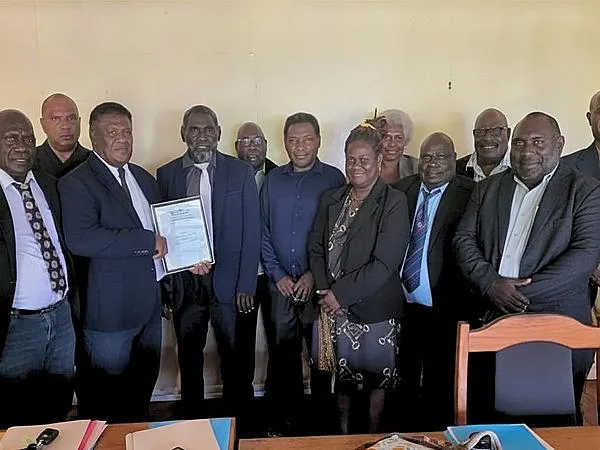
The documents were presented to Conservation and Environment Protection Agency Director of the Non-Renewable Resources Division Michael Wau and his team, in the presence of Mineral Resources Authority Deputy Managing Director and Chief Inspector of Mines Michael Lave, in Port Moresby this week.
The ESIA submission forms a key part of Ok Tedi's application for a major amendment to its existing Level 3 Environment Permit conditions issued under the Ok Tedi Environment Management Act (OTEMA) in 2020.
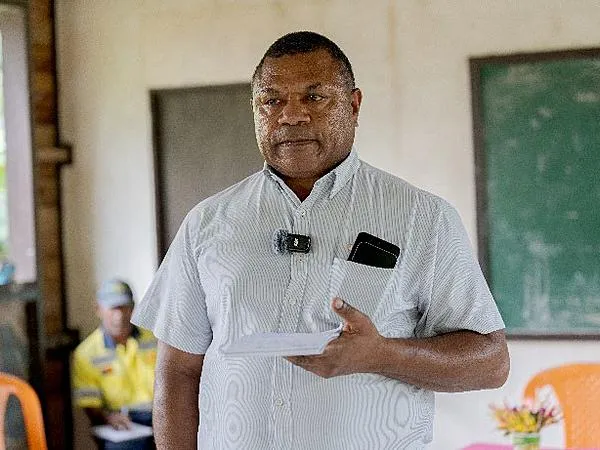
OTML Managing Director and Chief Executive Officer Kedi Ilimbit said the TSF is one of the most important projects in the company's history.
“The Tailings Storage Facility is critical to the future of Ok Tedi and represents the single largest environmental mitigation initiative ever undertaken by the company,” Ilimbit said. “It is a cornerstone of our Growth 2050 Strategy that will support the continued operation of the Ok Tedi mine while fundamentally changing the way we manage process tailings."
Ilimbit added that the primary objective of the TSF is to significantly reduce downstream impacts associated with riverine tailings disposal by retaining both coarse and fine tailings on land. This will allow us to largely eliminate the currently approved practice of riverine tailings disposal and transition to a modern engineered storage system that meets international expectations for responsible tailings management.
“Importantly, this project will deliver lasting environmental benefits for the Ok Tedi and Fly River systems while ensuring the economic and social benefits generated by the mine continue to support PNG, Western Province, our communities, employees, business partners and shareholders well into the future," he said.
He said the proposed TSF had been designed by an internationally recognised engineering company in accordance with international standards to provide a technically proven, environmentally sound and economically viable alternative to riverine tailings disposal.
Key environmental benefits of the project include:
Significant reduction in the volume of tailings entering the downstream river system.
Reduced future sediment accumulation in the Ok Tedi and Fly River corridors.
Lower pressure on river morphology and sediment transport processes downstream of the mine.
Reduced long-term environmental footprint associated with tailings disposal, including dieback.
Improved protection of aquatic habitats and the ecological health of the river systems.
Reduced potential impacts on communities that rely on the river system for transport, fishing and traditional livelihoods.
Alignment with contemporary international tailings management standards and responsible mining practices.
Creation of a long-term environmental legacy through the transition away from riverine tailings disposal.
Ok Tedi acknowledged the valuable contributions of government agencies, regulators, landowners, local communities and other stakeholders who participated throughout the assessment process.
Ilimbit said stakeholder engagement had been a key component of the project's development.
“The development of the TSF has been supported by extensive technical studies and a comprehensive Free, Prior and Informed Consultation process with affected communities and stakeholders,” Ilimbit said. “Their input has been critical in shaping the project and ensuring we develop a solution that delivers long-term environmental and social benefits.
“As a nationally significant operation, Ok Tedi has a responsibility to ensure its future growth is supported by sustainable and responsible environmental management. The TSF represents one of the company's largest environmental mitigation initiatives and will provide lasting benefits well beyond the life of the mine," he added.
The ESIA Executive Summary will be made available through the appropriate channels once final reviews and disclosure requirements have been completed. This will include publication on the Ok Tedi website, supported by clear information to help stakeholders understand the project, the assessment process and how questions or concerns can be raised.
Ok Tedi will continue to engage with stakeholders before and after publication of the document to ensure information is shared in a clear, accessible and responsible manner.
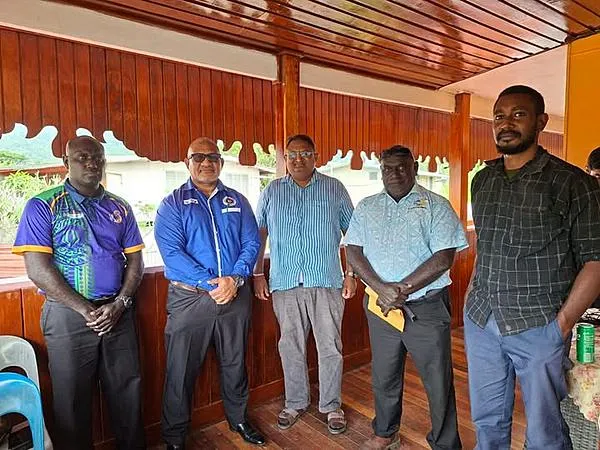
The Autonomous Bougainville Government has welcomed Lloyds Metals and Energy Ltd's commitment to meeting its tax obligations while urging the company to update its taxpayer registration to ensure revenue generated from its Bougainville operations is correctly attributed to the autonomous region.
The issue was discussed during a stakeholder meeting in Arawa on June 26 involving the Bougainville Tax Office, the Internal Revenue Commission's Bougainville provincial office and representatives of Lloyds Metals and Energy Ltd.
Chief Bougainville Collector of Taxes Petereric Andrew and Internal Revenue Commission Provincial Manager for the Autonomous Region of Bougainville Robert Perekai attended the meeting.
Lloyds Metals and Energy confirmed that it has registered as a taxpayer with the Internal Revenue Commission and has begun meeting its tax compliance obligations under Papua New Guinea's tax laws.
During the meeting, the Bougainville Tax Office and the Internal Revenue Commission advised the company to update its taxpayer registration by changing its registered postal address from Port Moresby to Arawa to reflect its operational presence in Bougainville.
Andrew said the change would formally recognise the company as a Bougainville-based taxpayer within the Internal Revenue Commission's records.
He said maintaining accurate taxpayer registration details is important because the commission relies on those records when attributing and apportioning tax revenue.
According to Andrew, updating the company's registration would help ensure tax revenue generated from its economic activities in Bougainville is recognised as revenue attributable to the autonomous region.
The meeting also reaffirmed cooperation between the Bougainville Tax Office and the Internal Revenue Commission in administering national taxes in the region, including corporate income tax, goods and services tax, salary and wages tax, and personal income tax.
Under the 2001 Bougainville Peace Agreement, the Internal Revenue Commission collects these taxes on behalf of the Autonomous Bougainville Government, with revenue remitted to support the government's development priorities. The Bougainville Tax Office provides administrative support to strengthen tax compliance and revenue administration within the region.
Officials said the engagement reflects the Autonomous Bougainville Government's efforts to strengthen revenue governance and ensure economic activity in Bougainville delivers greater benefits to local communities.
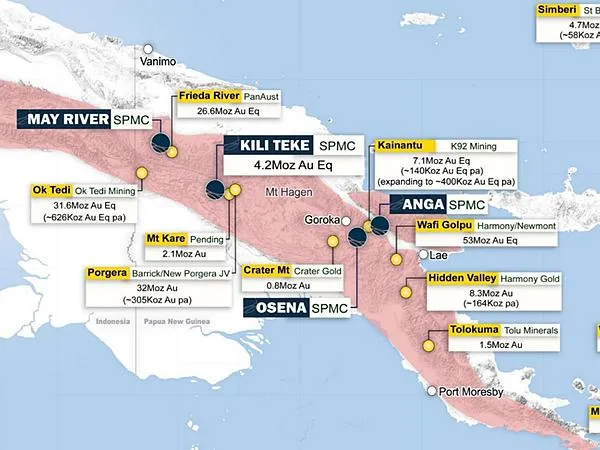
South Pacific Metals has begun a new exploration campaign at its wholly owned Kili Teke copper-gold project in Papua New Guinea's Hela Province after securing support from landowners and provincial and local government authorities.
The company said the programme follows community awareness meetings held in April and May and marks its return to Exploration Licence 2310 through its Papua New Guinea subsidiary, Kainantu Resources Ltd. The project is located about 40 kilometres from the Porgera gold mine within one of the country's most prospective gold-copper belts.
Kili Teke hosts an NI 43-101 inferred mineral resource of 237 million tonnes grading 0.24 grams of gold per tonne and 0.34% copper, containing an estimated 1.81 million ounces of gold, 802,000 tonnes of copper and 40,000 tonnes of molybdenum, equivalent to 4.2 million ounces of gold. The existing resource is confined to the Central Main Porphyry, representing only a portion of the broader intrusive complex.
South Pacific Metals said it has identified more than 10 exploration targets across three mineralisation styles, including the Ridge Gold Area, Ieru Porphyry and a corridor of copper-gold skarn targets. A machine-learning study completed with ALS GeoAnalytics ranked 14 drill targets, including six priority targets that will be evaluated during the exploration programme.
The company said more than 95% of historical drilling has been concentrated on the Central Main Porphyry, leaving the Ieru Porphyry, Ridge Gold Area and Skarn Corridor largely untested. Historical drilling returned intercepts including 7.8 metres grading 12.98% copper and 11.75 grams of gold per tonne, while surface rock-chip samples assayed up to 38.7% copper and 40 grams of gold per tonne. The company believes these areas offer significant potential for additional discoveries beyond the current resource.
The exploration programme will begin with camp establishment, community engagement, geological mapping, soil sampling, ground magnetic surveys and trenching before progressing to drill testing of the highest-ranked targets. The staged approach is intended to refine targets using geological, geochemical and geophysical data before drilling commences.
Executive Chairman Michael Murphy said Kili Teke represented a rare opportunity for a junior explorer because of its sizeable existing resource and exploration upside.
"Kili Teke is rare for an explorer of our size. A district-scale system with a 4.2-million-ounce resource and more than US$20 million of past work behind it, yet with three of its four prospect areas barely drilled," Murphy said.
"Our job is to follow the data, stage by stage, back to the productive heart of this system, and we are doing so with the full support of the landowners and the Hela Provincial Government."
Kili Teke has been explored for more than a decade, with previous operator Harmony Gold investing more than US$20 million between 2014 and 2017. The work included nearly 37,000 metres of diamond drilling, geophysical surveys, geochemical sampling and geological mapping that led to the definition of the current inferred resource. South Pacific Metals has since incorporated machine-learning analysis and updated geological modelling to identify new exploration targets across the 253-square-kilometre licence area.
The company said the current exploration campaign is aimed at expanding the known mineralised system and advancing one of Papua New Guinea's most advanced undeveloped copper-gold projects.
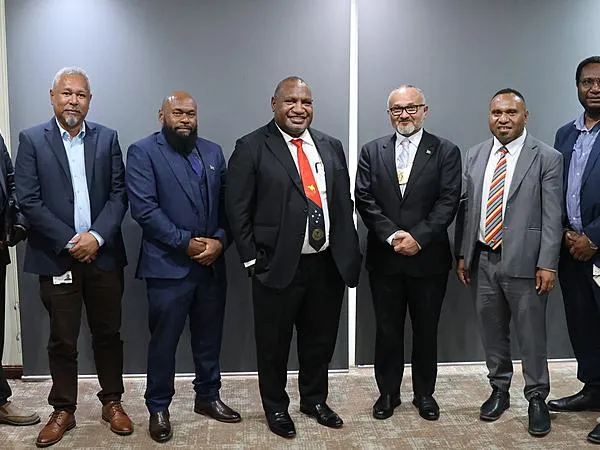
Solomon Islands and Papua New Guinea have agreed to strengthen cooperation on mining sector governance, with officials from Papua New Guinea expected to visit Solomon Islands as the two countries pursue reforms aimed at maximising the benefits of their mineral resources.
The agreement followed a roundtable in Port Moresby between Solomon Islands Prime Minister Matthew Wale, Papua New Guinea Prime Minister James Marape, Kumul Minerals Holdings Ltd. and the Mineral Resources Authority.
Wale said the meeting provided an opportunity for Solomon Islands to learn from Papua New Guinea's experience in managing its mining industry, as his government advances reforms to improve governance of the country's mineral resources.
He said reforming the mining sector, particularly the alluvial gold industry, remains a priority for his administration.
According to Wale, the government is pursuing reforms to bring greater structure, transparency and national benefit to the sector, including plans to establish a dedicated gold export unit and, over the longer term, a national gold refinery.
"This will allow us to refine our own gold, control pricing and retain more value within our economy," Wale said.
He also stressed the importance of building trusted partnerships across the mining value chain, from extraction and processing to export.
"We want a model where all parties benefit fairly and value is retained within our economy to support national development," he said.
Marape said Papua New Guinea has faced significant challenges in developing its mining sector but remains committed to ensuring greater benefits flow to its people.
He said landowners should remain at the centre of resource policy and that fiscal arrangements governing mining projects must be transparent and clearly defined.
"There is often confusion between taxes, royalties and equity. Investors must know upfront what they will pay and what benefits will flow to landowners and the State," Marape said.
Both leaders agreed that strong governance, clear legislation and effective regulatory oversight are essential to ensure the fair and sustainable management of mineral resources.
The meeting concluded with an agreement for Papua New Guinea's mining authorities to visit Solomon Islands in the near future to support the country's ongoing mining sector reforms.
Ok Tedi Mining Limited (Ok Tedi) and its wholly owned subsidiary, Misima Minerals Limited (MML), have completed the second round of community engagement meetings for the proposed Misima Gold Project.
The meetings form part of Ok Tedi’s commitment to keeping landowners, the district government and other stakeholders on the island informed about the project’s progress and future work plans.
The engagement sessions provided communities with updates on progress made since the initial consultations in December 2025 and reaffirmed key aspects of the project’s five-year development plan.
Ok Tedi commenced early works under Phase 1 in February 2026 to establish the infrastructure required to support feasibility studies and mine development activities. Environmental and social impact studies, along with mine development plans, are progressing to secure an environmental permit and mining licence by mid-2027.
Infrastructure initiatives currently under assessment or development include:
• Establishing accommodation facilities for more than 150 people, including a health clinic, catering facilities and basic amenities to support the project.
• Upgrading the Misima airstrip in consultation with the Provincial Transport Authority and in line with National Airports Corporation requirements to accommodate Dash 8 and ATR aircraft.
• Repairing access roads to the mine site to support mine development activities and improve access for local communities.
• Upgrading and resourcing Misima District Hospital to serve local residents as well as Ok Tedi and MML employees. The hospital will also be supported in conducting pre-employment medical assessments for local Misimans seeking employment opportunities.
“Open and transparent dialogue with Misima communities is essential as we progress this project,” said Jesse Pile, General Manager for Social Performance and Sustainability.
“These engagements allow us to openly share information, listen to community perspectives and set realistic expectations as we move towards mine redevelopment.”
The company will continue to conduct regular community and stakeholder engagement sessions to ensure that stakeholders have the information they need to make informed decisions. These engagements also help strengthen relationships built on trust and mutual respect.
Managing Director and Chief Executive Officer Kedi Ilimbit said Ok Tedi’s five-year development plan for the Misima Gold Project is structured around three key phases: detailed feasibility and permitting, construction, and production.
“We are currently progressing these phases to ensure the Misima Gold Project becomes operational,” Ilimbit said.
Ok Tedi Mining Limited (OTML) says its mining operations in Western Province continue to run normally despite ongoing dry weather conditions and low water levels along the Fly River.
The company said there has been no disruption to production activities and that operations remain stable as it monitors the impact of reduced river levels on logistics and supply chains.
OTML said it has sufficient food stocks and essential supplies on site to support both its operations and workforce requirements.
The company is also assessing and implementing alternative supply routes to ensure the continued delivery of fuel, food and other critical materials should river conditions worsen.
Managing Director and Chief Executive Officer Kedi Ilimbit said contingency plans are already being reviewed to maintain uninterrupted operations during the current dry season.
"Alternate routes are currently being reviewed for exporting copper concentrate and bringing in fuel and other supplies in the event of an El Niño," Ilimbit said.
"Unlike in the previous dry seasons, we didn't have those routes."
The Fly River serves as a critical transport corridor for the movement of supplies to the mine and for the export of copper concentrate. Low river levels associated with prolonged dry weather and potential El Niño conditions can affect barge movements and logistics operations across the region.
Despite these challenges, OTML said it remains committed to maintaining safe, reliable and continuous operations while ensuring the wellbeing of its employees and host communities.
The company added that it will continue to closely monitor weather and river conditions and provide updates as necessary.
OTML operates an open-pit copper, gold and silver mine in the Star Mountains of Western Province and is one of Papua New Guinea's largest resource companies. The majority state-owned miner exports copper concentrate to smelters and refineries in Japan, the Philippines, Indonesia, South Korea, India and Germany.
The company has operated in the region for more than 40 years and remains a major contributor to employment, royalties, compensation payments and business development opportunities in Western Province.
OTML is also expanding its presence in Papua New Guinea through the acquisition of Gallipoli Exploration Limited, a wholly owned subsidiary of Kingston Resources Limited, which owns the Misima gold project in Milne Bay Province.
Nickel 28 Capital Corp. reported higher nickel and cobalt production, stronger sales volumes and lower operating costs from the Ramu Nickel-Cobalt operation in Papua New Guinea during the first quarter of 2026, with the project operating at 108% of its design capacity.
The company, which holds an 8.56% joint-venture interest in the Ramu operation, said production of contained nickel in mixed hydroxide precipitate (MHP) increased to 8,785 tonnes during the three months ended March 31, compared with 6,970 tonnes in the same period last year.
Contained cobalt production rose to 855 tonnes from 648 tonnes a year earlier.
Nickel sales totalled 8,632 tonnes during the quarter, up from 6,133 tonnes in the corresponding period of 2025, while cobalt sales increased to 838 tonnes from 569 tonnes.
Ore processed rose to 985,000 dry tonnes from 724,000 dry tonnes in the prior-year period, while MHP production increased to 21,697 dry tonnes from 16,902 dry tonnes. Nickel capacity utilisation reached 108% of design capacity, compared with 86% in the first quarter of 2025. Nickel 28 noted that quarterly utilisation can exceed 100% in periods without maintenance shutdowns or when operations benefit from process improvements.
Nickel inventory at the end of the quarter stood at 1,828 tonnes of nickel in MHP, compared with 1,674 tonnes at December 31, 2025.
The operation's production cost, net of by-product credits, declined to US$2.81 per pound of nickel produced in MHP from US$3.61 per pound in the same period last year, representing a 24% decrease.
Nickel 28 Chief Executive Officer Craig Lennon said the operation delivered a strong operational performance during the quarter and remained on track to achieve its full-year production targets.
He noted that no planned maintenance shutdowns occurred during the first quarter, with scheduled maintenance activities expected to take place in the second and third quarters.
The company said market conditions for both nickel and cobalt remained favourable during the period. The average London Metal Exchange nickel price was US$7.88 per pound, up 11% from the same quarter last year, while the average cobalt price increased 130% year-on-year to US$25.47 per pound.
Lennon said Indonesian government policy initiatives appeared to be targeting a nickel price environment of at least US$18,000 per tonne, equivalent to about US$8.17 per pound, while the broader industry continued to monitor the allocation of Indonesian production quotas and their potential impact on supply and pricing.
He added that payability levels for both nickel and cobalt remained above 90% and management expects those favourable terms to continue through the second and third quarters.
The company identified sulphur costs as the principal uncertainty facing the Ramu operation, citing reduced global supply linked to ongoing conflicts in the Middle East.
According to Nickel 28, higher-cost sulphur inventories are expected to be procured and consumed during the remainder of the year, which could place pressure on operating margins if nickel prices remain unchanged. The company said the impact of sulphur availability and pricing is being felt across the global nickel industry.
Nickel 28 also said the MHP market remains relatively tight, supported by strong payability levels. The company noted that any constraints on Indonesian nickel production resulting from quota allocations, together with continued sulphur supply disruptions, could further tighten the market and potentially support pricing.
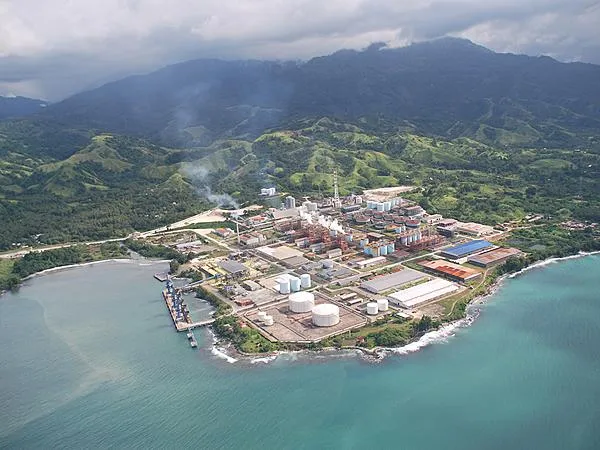
The Ramu Nickel-Cobalt operation, operated by the Metallurgical Corporation of China, is one of Papua New Guinea's largest nickel projects. Nickel 28's 8.56% interest provides the company with direct exposure to nickel and cobalt, two metals widely viewed as critical to the global transition towards electric vehicles and battery technologies.
The company noted that the operating and financial figures released for the quarter are preliminary and remain subject to audit and final adjustment.
Great Pacific Gold Corp. has outlined an expanded exploration programme for the second half of 2026 at its flagship Wild Dog Project in Papua New Guinea, targeting a total of 13,000 metres of drilling as two diamond drill rigs continue to operate across key prospects within the project's 15-kilometre structural corridor.
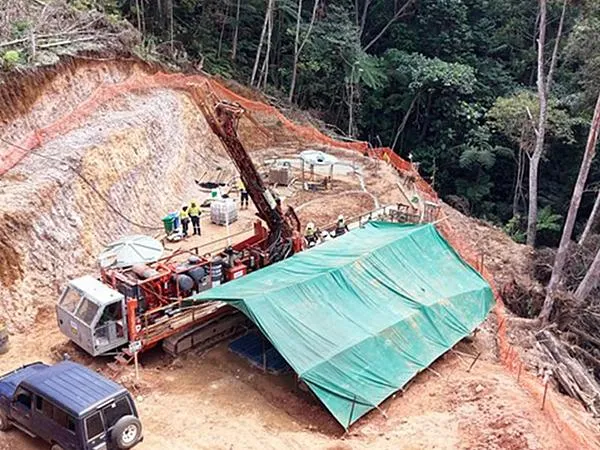
The company said one rig is currently drilling at the Kavasuki prospect in the Main Zone, while a second rig is operating at Kasie Ridge in the North Zone. Exploration during the remainder of the year will focus on advancing priority targets across the project and developing additional prospects for future drilling.
At Kavasuki, drilling is aimed at testing the continuity and extension of known high-grade epithermal gold mineralisation. Holes KVH-01 to KVH-07 were completed along an east-west cross-section of a north-south trending epithermal vein, with assay results still pending for holes KVH-06 and KVH-07.
The company said holes KVH-08 and KVH-09 are step-out holes located approximately 250 to 300 metres north of the original drill section and are designed to test down-dip and horizontal continuity of mineralisation near a historic trench reported to have returned 28 metres grading 4.48 grams of gold per tonne.
Approximately 1,200 metres of a planned 1,950-metre drilling programme at Kavasuki has been completed. Assays for KVH-08 remain pending, while KVH-09 is currently being drilled.
Previously reported results from the current programme include 58.9 metres grading 2.43 g/t gold in hole KVH-01, including 4.6 metres grading 8.24 g/t gold, and 38.4 metres grading 2.17 g/t gold in hole KVH-03, including intervals grading 10.26 g/t gold and 15.78 g/t gold. Hole KVH-04 returned 59.9 metres grading 1.33 g/t gold, including 14 metres grading 2.61 g/t gold.
Meanwhile, the first drill hole ever completed at the Kasie Ridge prospect has confirmed the presence of a large sulphide-bearing hydrothermal system beneath the lithocap, according to the company.
Drill hole KAS-01 reached a depth of 593.5 metres and intersected increasing alteration intensity, sulphide abundance and structural complexity with depth. Great Pacific Gold reported crackle breccia, vuggy silica, anhydrite veining and sulphide flooding from 336 metres, while semi-massive pyrite was encountered from approximately 460 metres to the end of the hole.
The company said the hole ended in strongly altered sulphide-bearing ground and did not reach the base of the sulphide system, indicating the hydrothermal system remains open at depth. Assays are pending from KAS-01, while samples have also been submitted for mineralogical studies, including X-ray diffraction analysis, to further characterise alteration mineral assemblages and assist in vectoring towards potential fluid pathways and the core of the system.
Vice President Exploration Callum Spink said the first Kasie Ridge drill hole had confirmed the presence of a large sulphide-bearing hydrothermal system beneath the lithocap, with alteration and sulphide intensity increasing with depth and remaining open at the end of the hole.
Following completion of the second drill hole at Kasie Ridge, the company's second-half 2026 drilling programme will focus on the 4.5-kilometre Main Zone, where approximately 8,000 metres of drilling are planned across the Kavasuki, Magiabe, Mengmut, Morgan and EK targets.
Beyond the current drilling campaign, Great Pacific Gold is advancing exploration in the South Zone, which the company describes as the next growth front for the project. The area hosts high-grade gold occurrences along five kilometres of largely unexplored epithermal vein structures that represent an extension of the Sinivit-Kavasuki Main Zone corridor.
Recent exploration results from the South Zone include a rock-chip sample from Steel Creek that returned 150 grams of silver per tonne and 0.13% copper, while a follow-up trench returned five metres grading 24 g/t gold. At the Lost Dog prospect, a rock-chip sample returned 74.6 g/t gold, while sampling at Quartz Ridge returned 3.46 g/t gold.
The company said its field exploration team will focus on prioritising and advancing eight South Zone prospects for potential drilling in 2027.
Spink said the company sees significant potential across the Wild Dog structural corridor as drilling continues at Kavasuki and multiple exploration targets advance through the project pipeline.
The Wild Dog Project is located on the island of New Britain and comprises a 15-kilometre structural corridor hosting multiple epithermal gold targets at various stages of exploration.
South Pacific Metals Corp. has reported new gold results from the Megabe target at its Ontenu NE prospect in Papua New Guinea, while outlining progress across its broader gold-copper exploration portfolio in the country.
The company said drill hole ONED26-007, the first hole drilled at the newly identified Megabe target within the Osena Project, intersected 12 metres grading 3.1 grams of gold per tonne from 185 metres downhole, including one metre grading 18.1 g/t gold and 84 g/t silver. The hole also returned silver and copper mineralisation, with copper values reaching 1,462 parts per million within the intercept.
Megabe is located between the Jorkol and Onki prospects at Ontenu NE and is transected by Otitapa Creek, an area known for alluvial gold mining by local artisanal miners. According to the company, the mineralisation is hosted within a north-west to south-east striking fault breccia zone in metasedimentary rocks. South Pacific Metals said the structural corridor shares characteristics with the geological setting of K92 Mining's nearby Kora-Judd gold-copper system.
The Ontenu NE prospect forms part of the Osena Project, situated on the Kainantu Transfer Zone near K92 Mining's producing Kainantu operation. South Pacific Metals currently has two diamond drill rigs operating at the prospect.
Executive Chairman Michael Murphy said the company had entered an important phase of exploration activity, with drilling continuing at Ontenu NE, preparations advancing for a porphyry drill test at Ontenu Central and field activities resuming at May River following the securing of community consent and site access. He said the company was beginning to see the results of years of groundwork reflected in current drilling programmes.
The company said gold mineralisation has now been confirmed in seven of eight drill holes completed at Ontenu NE. Recent drilling at the Onki target returned 92 metres grading 0.34 g/t gold from 67 metres, including a two-metre interval grading 5.74 g/t gold, 1.49% copper and 35 g/t silver. Previous drilling at Jorkol returned mineralised intervals containing gold, copper and silver.
Chief Executive Officer Timo Jauristo said the Megabe result demonstrated the presence of gold mineralisation in another north-west trending structure within the Ontenu area. He said drilling and geochemical results were helping the company target potentially higher-grade sections of the system and expressed optimism about the planned drilling programme at Ontenu Central, which contains both shallow epithermal targets and a potential porphyry target at depth.
At Ontenu Central, detailed geological mapping has identified three north-west trending mineralised zones overlying and extending along the northern margin of a two-kilometre zoned porphyry alteration footprint. The company is planning an initial programme of at least three drill holes and is preparing a deeper hole of approximately 600 metres to test a porphyry target interpreted to begin at a depth of around 400 metres.
Beyond the Ontenu area, South Pacific Metals said surface exploration and drill-target generation are continuing at its Anga Project, which borders K92 Mining's tenure to the north-east. The company is conducting mapping and rock-chip sampling at the Golkona prospect to identify the source of previously reported gold and copper soil anomalies and define future drill targets.
At the May River Project in East Sepik Province, the company's technical team recently completed a reconnaissance visit aimed at securing community consent, locating historical drill collars and confirming site access. South Pacific Metals said all three objectives were achieved, with local communities welcoming the proposed exploration programme.
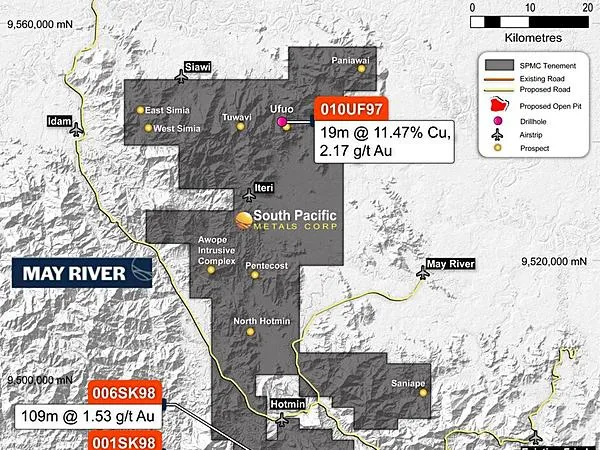
The company said field teams relocated historical drill sites and trenches at the Skirasia prospect and confirmed access arrangements with local authorities and stakeholders. Planning is now under way for the first phase of renewed exploration activities at the project, which is located adjacent to PanAust's Frieda River deposit and hosts several historical copper-gold drill intersections, including 19 metres grading 11.47% copper and 2.17 g/t gold.
South Pacific Metals also highlighted its wholly owned Kili Teke Project in Hela Province, which hosts a National Instrument 43-101 inferred mineral resource of 4.2 million ounces of gold equivalent, comprising 1.81 million ounces of gold, 802,000 tonnes of copper and 40,000 tonnes of molybdenum.
The company said further results from ongoing drilling and exploration programmes across its Papua New Guinea projects will be released as assays are received and reviewed.
The Autonomous Bougainville Government (ABG) has approved the grant of Large-Scale Mining Lease No. 01 (LSML-01) to Bougainville Minerals Limited, marking the first major mining tenure issued under the newly enacted Bougainville Mining (Amendment) Act 2026.
The approval was granted by the Bougainville Executive Council and provides Bougainville Minerals Limited with a 25-year lease over the designated mining area.
According to the ABG, LSML-01 will ultimately be held by Bougainville Minerals Limited together with approved landowners and landowner organisations in accordance with the provisions of the amended legislation.
The government said the decision represents a significant milestone in implementing Bougainville's new legislative framework for the redevelopment of previously operating large-scale mines.
Under the law, LSML-01 becomes the primary mining tenure over the lease area, with any existing tenements and associated rights within the lease area suspended and subordinated to the Large-Scale Mining Lease for the duration of the licence.
The licence was formally presented by the Bougainville Executive Council to Bougainville Minerals Limited on June 11.
The grant follows the passage of the Bougainville Mining (Amendment) Act 2026 by the Bougainville House of Representatives earlier this week.
The legislation establishes a special framework for the orderly and accelerated redevelopment of previously operating large-scale mines where such developments are determined by the Bougainville Executive Council to be in the public interest.
The Act also provides for the granting of Large-Scale Mining Leases to eligible holders under specific conditions set out in the law.
Bougainville President and Minister for Mining and Petroleum Ishmael Toroama described the legislation as the culmination of four years of consultation involving landowners, community leaders and other stakeholders through processes including the Panguna Mine Dialogue.
"This legislation has not emerged overnight. It is the result of years of consultation, discussion and reflection involving landowners, communities, leaders and stakeholders across Bougainville," Toroama said.
He said the reforms reflect aspirations for greater participation in resource development, stronger Bougainville ownership and improved economic opportunities.
According to the ABG, the amended law retains key safeguards contained in the Bougainville Mining Act 2015, including requirements relating to landowner participation, environmental approvals, compensation arrangements and consultation processes.
The legislation also introduces provisions aimed at strengthening landowner participation through equity ownership while ensuring responsibility for historical liabilities remains with those responsible for those obligations.
The grant of LSML-01 is expected to play a key role in the government's plans to advance large-scale mining development as Bougainville seeks to strengthen its economic base and generate future revenue from its natural resources sector.
Six trainees from Pagini Kainantu Limited and Jerilai Pujari Transport Limited have completed an intensive eight-week industry skills programme in Napa Napa, strengthening workforce readiness among landowner communities linked to Papua New Guinea's resource sector.
The trainees were selected from communities associated with major resource developments across the country, with the programme designed to increase local participation in skilled roles within the mining, oil and gas industries.
Four participants — one woman and three men — came from communities within the Papua LNG Upstream Project Area in Gulf Province, while the remaining two were from landowner communities connected to the Kainantu Gold Mine.
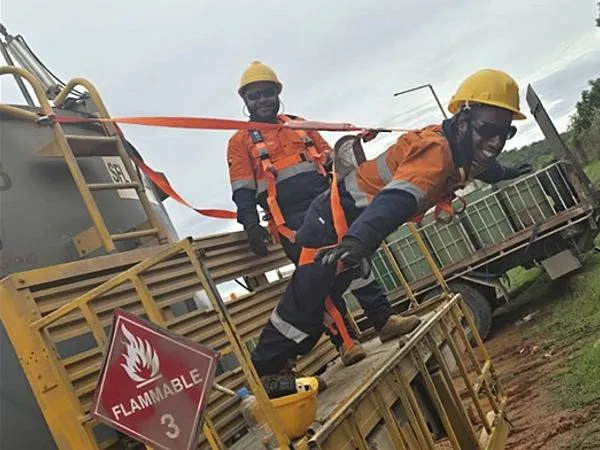
During the programme, participants completed a range of practical and safety-focused modules, including camp living, occupational health and safety awareness, fire training, basic first aid and CPR/AED, lashing and securing loads, working at heights, excavator operations and roller operations.
According to the organisers, none of the trainees had previously undertaken the training modules offered during the programme, making the course a significant milestone in their professional development.
All participants received Class 7 learner permits and training logs from the Central Province Traffic Authority and were awarded Australian-standard Verification of Competency certificates upon successful completion of the course.
The training was delivered by certified instructors and combined classroom learning with practical field exercises aimed at reinforcing workplace safety, operational competency and industry readiness.
Steve Drennan, executive at Native Industries, said the initiative represented an investment in both people and communities.
“This programme is more than just skills training — it is an investment in our people and in the future of our landowner communities. For many of these young men and women, this is their first step into a professional pathway, and seeing their confidence grow has been incredibly rewarding. Pagini Group is proud to support initiatives that lift capability, create opportunity, and ensure our communities are active participants in the nation’s major resource projects.”
The programme forms part of Pagini Group's broader localisation strategy, which aims to develop a skilled and safety-competent national workforce drawn from landowner communities connected to major resource projects.
While the company has conducted more than 400 Verification of Competency assessments across its operations, organisers said the initiative marked the first fully integrated end-to-end training programme delivered under the group's own framework. Unlike stand-alone competency assessments, the course provides a structured development pathway, beginning with foundational safety training and progressing through practical equipment operation and nationally recognised certifications.
The initiative is intended to create job-ready candidates from communities that have historically had limited access to formal industry training, while also helping to standardise workforce competencies in line with Papua New Guinea and Australian industry standards. It also supports the company's goal of strengthening community partnerships by creating greater opportunities for landowners to participate directly in operational roles.
Training supervisors commended participants for their commitment, discipline and progress throughout the eight-week programme.
In addition to technical training, the course emphasised teamwork, communication and professional conduct, skills considered essential for careers in operations, logistics, construction and resource-sector support services.
A key objective of the programme is to ensure communities hosting major resource projects benefit directly from employment and skills-development opportunities. The initiative also supports broader efforts to increase national workforce participation and reduce reliance on expatriate labour in technical and operational roles.
Two of the graduates have already commenced operational work on site.
With the programme now complete, the graduates are expected to be better positioned to enter the workforce and contribute to both their communities and Papua New Guinea's resource sector.
Pagini Group plans to deliver a second course in the third quarter of 2026.
The Autonomous Bougainville Government has introduced legislation aimed at creating a special legal framework for the redevelopment of a previously operating large-scale mine, describing the move as critical to the region's long-term economic future and fiscal self-reliance.
The Bougainville Mining (Amendment) Bill 2026 was introduced in Parliament this week by Ishmael Toroama, who also serves as minister responsible for mining and petroleum.
According to Toroama, the proposed amendments to the Bougainville Mining Act 2015 would establish a statutory pathway for the orderly and accelerated redevelopment of a former large-scale mining operation where the Bougainville Executive Council determines that such redevelopment is in the national and public interest.
"The existing Mining Act was primarily designed for new mining projects progressing through the conventional exploration-to-development pathway and did not adequately address the unique circumstances of redeveloping a previously operating large-scale mine," Toroama said.
He said the current legislation contemplates a sequential process beginning with greenfield exploration, followed by resource definition, feasibility assessment, mine development, commercial production, closure and eventual redevelopment.
The president stressed that the bill would not remove or weaken the core principles of the existing mining regime, including landowner rights, compensation arrangements, benefit-sharing mechanisms and environmental protections.
Under the proposed amendments, customary landowners would receive a prescribed percentage of free, non-dilutable equity in an eligible mining lease holder, giving them direct ownership participation in redevelopment projects.
"Landowner rights, compensation rights, local content participation and benefit sharing rights and royalties are preserved. Landowner equity participation is preserved and strengthened," Toroama said.
He added that environmental approvals, mineral resource forum requirements, community consultation processes and development agreement obligations would remain mandatory.
The bill proposes that the special redevelopment framework apply only in exceptional circumstances where a previously operating large-scale mine exists, an established mineral deposit has been identified, legacy issues remain unresolved, redevelopment is considered necessary for Bougainville's economic future and fiscal self-reliance, and the Bougainville Executive Council is satisfied that redevelopment serves the national and public interest.
"This Bill is about economic self-reliance. It is about responsible resource development, strengthening Bougainville ownership of strategic mineral assets and ensuring that landowners participate as true partners in development," Toroama said.
The Bougainville Mining (Amendment) Bill 2026 has completed its first reading in Parliament and will proceed through the remaining stages of the legislative process before being considered for passage and enactment.
K92 Mining has reported further high-grade drilling results from its Arakompa discovery near the Kainantu Gold Mine in Papua New Guinea, expanding the AR1 high-grade zone and delineating what the company described as a substantial near-surface high-grade bulk tonnage zone ahead of a maiden resource estimate planned for mid-2026.
The company announced results from 33 additional surface diamond drill holes, bringing the total number of holes released to date from its maiden drill programme at Arakompa to 100. The prospect is located approximately 4.5 kilometres from the Kainantu Gold Mine process plant.
According to K92, all drill holes intersected mineralisation, with 40 intersections exceeding 5 grams per tonne gold equivalent, or AuEq, and 20 intersections exceeding 10 g/t AuEq.
The latest drilling expanded the AR1 high-grade vein zone, which is now defined over up to 300 metres of vertical extent and up to 400 metres of strike length, starting at a depth of about 100 metres. Within the zone, the weighted average grade is 9.47 g/t AuEq across an average true width of 4.32 metres.
Among the reported highlights, hole KARDD0076 intersected 11.90 metres grading 14.30 g/t AuEq, including 1.70 metres at 92.43 g/t AuEq, while hole KARDD0106 returned 10.00 metres grading 15.21 g/t AuEq, including 4.00 metres at 36.65 g/t AuEq. Hole KARDD0100 intersected 16.50 metres grading 8.06 g/t AuEq, including 3.00 metres at 18.03 g/t AuEq.
The company also reported multiple high-grade intercepts from the AR2 vein, including 4.70 metres grading 41.90 g/t AuEq in hole KARDD0084G and 6.80 metres grading 15.21 g/t AuEq in hole KARDD0104, including 2.00 metres at 49.00 g/t AuEq.
K92 said drilling has also confirmed and expanded a near-surface high-grade bulk zone. Notable intersections included 49.30 metres grading 1.95 g/t AuEq in hole KARDD0091 and 140.10 metres grading 1.27 g/t AuEq in hole KARDD0106. Both holes are located about 60 metres from previously reported hole 005AD92, which returned 41.9 metres at 2.21 g/t AuEq.
The company said increased drill density has improved confidence in geological continuity while highlighting the potential for grade profile upgrades through both infill and step-out drilling. Surface sampling has also indicated that mineralisation extends to surface along Arakompa's known strike length of more than two kilometres.
Additional broad mineralised intersections reported from the bulk-tonnage zone included 99.00 metres grading 2.90 g/t AuEq in hole KARDD0076, 105.40 metres grading 2.26 g/t AuEq in hole KARDD0084G, 106.50 metres grading 2.22 g/t AuEq in hole KARDD0090 and 163.50 metres grading 1.02 g/t AuEq in hole KARDD0104.
The company also reported progress from porphyry vector drilling following the previously announced discovery hole KARDD0065. The latest results intersected intervals of outer potassic alteration, which K92 said provide an important vector towards a potential high-grade potassic core.
Hole KARDD0077 returned 1,151.20 metres grading 0.30% copper equivalent, while hole KARDD0093G returned 800.70 metres grading 0.33% copper equivalent and hole KARDD0074 intersected 494.00 metres grading 0.35% copper equivalent.
K92 said a second drill rig is being allocated to the porphyry target and is expected to commence drilling shortly.
Chief Executive Officer John Lewins said the latest results represented another step towards the planned maiden resource estimate.
“The latest results from Arakompa represent another important step in advancing the discovery towards a maiden resource estimate planned for mid-2026,” Lewins said.
“Drilling continues to demonstrate a large, near-surface mineralized system, highlighted by the significant expansion and improved continuity of the AR1 high-grade zone and the delineation of a substantial high-grade bulk tonnage zone. Increased drill density is enhancing our geological confidence while also highlighting the potential for grade profile upgrades through ongoing infill and step-out drilling.”
Lewins said surface sampling indicated that mineralisation extends to surface along Arakompa's known strike length, reinforcing what he described as significant exploration upside.
“Arakompa is increasingly emerging as one of the most significant exploration successes in the Kainantu district in recent years, and we look forward to providing further updates as drilling continues,” he said.
Vice President of Exploration Robert Smillie said drilling continued to demonstrate both the scale of the system and exploration upside across the broader corridor.
“Additionally, an exciting aspect of the latest results is the growing evidence for a potential porphyry system to the south, which could represent a significant new exploration opportunity within the district,” Smillie said.
“We are excited by the latest drill results that provide valuable vectoring towards a potential high-grade porphyry core.”
K92 advances drilling at Wera gold prospect as exploration investment ramps up in PNG
K92 Mining has reported encouraging results from its maiden greenfields exploration program at the Wera prospect in Papua New Guinea, where work has defined a large low-sulphidation epithermal gold system approximately 10 kilometres southwest of the company's Kora and Judd deposits.
The company said the Wera system, first announced in September 2025, extends over an area measuring approximately 3.5 kilometres by 3.5 kilometres and lies within the same major north-north-east regional mineralised structural corridor that hosts the Kora, Judd and Arakompa deposits.
According to K92, the system remains open along strike in both directions, highlighting its potential for further expansion through ongoing exploration.
The prospect was identified through a combination of MobileMT airborne geophysical survey data and a review of historical exploration information.
Exploration activities at Wera commenced in July 2024, initially focusing on rock chip sampling and trenching programs. The company has since advanced the project to the drilling stage, with drilling currently underway.
Rock chip sampling has returned a number of high-grade gold results, including assays of 26.30 grams per tonne (g/t) gold, 25.06 g/t gold, 23.97 g/t gold, 22.06 g/t gold, 19.69 g/t gold, 19.23 g/t gold, 18.40 g/t gold, 18.03 g/t gold, 16.05 g/t gold and 13.83 g/t gold.
The Wera prospect forms part of K92's broader exploration strategy within the Kainantu district, one of Papua New Guinea's most prospective gold-copper regions.
The update comes as K92 continues to expand its operations at the Kainantu Gold Mine in Eastern Highlands Province. In its recently released 2025 Sustainability Report, the company highlighted the successful commissioning of its new 1.2-million-tonnes-per-annum Stage 3 expansion processing plant during what it described as a landmark year for the business.
K92 said it invested US$18 million in exploration activities in Papua New Guinea during 2025 and plans to increase exploration spending to between US$31 million and US$35 million in 2026. The company said the planned investment is intended to support continued growth across its exploration portfolio.
The miner also reported employing approximately 2,150 employees and permanent contractors in Papua New Guinea at the end of 2025, with total workforce numbers, including temporary contractors and casual workers, reaching about 3,100. Papua New Guinean nationals accounted for approximately 91% of the operational workforce.
K92 said it spent US$161.8 million on procurement from Papua New Guinea companies during 2025, representing 52% of its total annual procurement expenditure, while taxes and royalties paid or accrued in the country reached US$139.2 million.
The company also invested US$33.1 million in local joint ventures and reported ongoing progress on its first Infrastructure Tax Credit Scheme project, with the Konkua-Bilimoia road upgrade reaching 35% physical completion by the end of the year.
At its Kainantu operations, K92 reported zero reportable environmental incidents during 2025 and said it continued work on hydropower improvements and solar farm engineering studies aimed at reducing greenhouse gas emissions.
The company said exploration drilling at Wera will continue as it seeks to further define the scale and continuity of mineralisation within the newly identified gold system.
K92 operates the Kainantu Gold Mine and is engaged in the production of gold, copper and silver, as well as the exploration and development of mineral deposits in the immediate vicinity of the mine, including the Blue Lake copper-gold porphyry project.
Tolu Minerals Ltd. says it has identified two new high-grade gold-bearing vein systems near the Tolukuma Gold Mine, a development the company believes could support future resource growth close to existing mining infrastructure.
The discoveries, named the Fundoot Splay and Gulbadi Splay, were announced as part of the company's ongoing near-mine drilling programme at Tolukuma in Central Province. The findings form part of the opening phase of Tolu's planned 75,000-metre-plus drilling campaign aimed at expanding mine inventory and improving resource confidence at the operation.
The most significant drilling result came from the newly identified Fundoot Splay, where drilling intersected 4.67 metres grading 42.76 grams of gold per tonne, including 1.3 metres grading 82.8 grams of gold per tonne. The company said the result confirmed the presence of a previously unrecognised high-grade hanging-wall structure adjacent to the established Fundoot vein system.
At the newly recognised Gulbadi Splay, Tolu reported an intercept of 2 metres grading 16.94 grams of gold per tonne, including 1 metre grading 26.49 grams of gold per tonne. The company said the structure was identified through a reinterpretation of existing geological, drilling and mining data.
Managing Director and Chief Executive Officer Chris Muller said the results strengthened the company's understanding of Tolukuma's growth potential.
"These results represent a pivotal moment in our understanding of Tolukuma's near-term growth potential and reinforce our conviction that substantial additional value remains to be unlocked within the immediate mine environment and across the broader goldfield," Muller said.
He said the discoveries demonstrated that significant high-grade mineralisation remained to be delineated close to existing mine infrastructure, potentially providing a shorter pathway from exploration success to future mine inventory growth.
According to the company, the Fundoot Splay lies about 50 metres into the hanging wall of the main Fundoot vein and remains open along strike and at depth. Tolu estimates the structure has more than 250 metres of untested strike extent and over 150 metres of down-dip potential. Four additional drill holes have intersected the structure, with assay results still pending.
The Gulbadi Splay is interpreted to run sub-parallel to the existing Gulbadi trend and is located near a historically mined open pit. Tolu said the structure has more than 240 metres of untested strike potential and over 180 metres of down-dip extension potential.
The company also reported encouraging results from face sampling associated with the recommencement of underground development on the Tolukuma lode. Initial sampling from the 1560 Ore Drive returned several high-grade gold intervals, including samples grading 176.88 grams of gold per tonne, 122.22 grams of gold per tonne and 71.44 grams of gold per tonne. Additional fire assay results remain pending.
Muller said the face sampling results provided early operational validation as the company works to rebuild mining activity at Tolukuma.
The company noted that numerous assay results remain pending from drilling programmes at Fundoot, Gulbadi, Gufinis and Zine, which are expected to provide additional exploration updates in the coming months.
Tolu said discoveries located close to existing underground infrastructure could potentially accelerate the conversion of exploration success into future resources and reserves, although further drilling and evaluation will be required to determine the full extent and economic significance of the mineralisation.
Adyton Resources Corp. has achieved a significant milestone in its efforts to restart mining operations at the historic Wapolu Gold Mine on Fergusson Island after successfully completing a mandatory Mining Lease Warden's Hearing, a key step in Papua New Guinea's mining approval process.
The hearing, held on May 21 at the Wapolu exploration camp, forms part of the company's application for a mining lease over the project and is designed to assess community support before a mining lease can be granted.
The process was conducted by senior Mineral Resources Authority mining warden Kopi Wapa and attended by principal landowners, representatives of Adyton, its joint venture partner East Vision Investment Holdings, or EVIH, and provincial government officials.
Following the hearing, the mining warden will submit a report to the Mineral Resources Authority's Mining Advisory Council, which will complete its assessment of the mining lease application.
The Wapolu project is located within Exploration Licence EL 2549 and is the subject of Mining Lease application ML 1390 and Lease for Mining Purposes application LMP 152. The mining lease covers proposed mining and processing activities, while the lease for mining purposes relates to supporting infrastructure such as airstrips.
Adyton Chief Executive Officer Tim Crossley said the successful completion of the hearing represented another major step toward the potential redevelopment of the project.
"In Papua New Guinea, the Warden's Hearing is a critical and mandatory component of the regulatory process, providing local stakeholders and landowners with the opportunity to formally participate in the transition from exploration to mining," Crossley said.
He said the company was encouraged by the support demonstrated by landowners, community representatives and other stakeholders during the hearing process.
"Their support reflects the collaborative relationships Adyton and EVIH have built on Fergusson Island and reinforces the significant opportunity we see in advancing Wapolu and the broader Fergusson Island projects toward development," Crossley said.
The Wapolu project and the neighbouring Gameta licence area are among the most advanced mineral development assets on Fergusson Island and are being progressed through the permitting and development process by Adyton and EVIH.
Louis Wang, project director of EVIH, said the company was pleased with the support shown by the local community.
"We now look forward to working with the community as we transition the project back into a full-scale mining, processing and concentrate export operation," Wang said.
Adyton is focused on advancing gold and copper projects in Papua New Guinea and is working to expand mineral resources at its wholly owned Feni Island project, located within the Pacific Ring of Fire, a region known for hosting major gold and copper deposits.
The company said the completion of the Warden's Hearing moves the Wapolu project closer to a potential restart of mining activities, subject to regulatory approvals and the granting of the mining lease.
Follow on LinkedIn:
PNG Business News
Be the "First" to get our exclusive Digital Magazine & Weekly Newsletter.