

September 25, 2026

Chinese mining company Lingbao Gold Group has agreed to acquire St Barbara Ltd.'s remaining interest in Tabar Islands Holdings Pty Ltd., paving the way for Lingbao to take full ownership of the New Simberi operation and exploration interests across Papua New Guinea's Tabar Islands.

The agreement, announced Sept. 10, is valued at A$410 million in cash, with a further A$43 million repayment to St Barbara for its construction capital contribution between April 2026 and the signing of the deal.

Completion is targeted for March 2027, subject to conditions and required regulatory and shareholder approvals.

The deal follows Lingbao's acquisition of a 50% interest in the company holding the Simberi business, completed April 1. The latest transaction would give Lingbao full ownership of Tabar Islands Holdings, which holds the New Simberi operation and exploration interests across the Tabar Islands.

Lingbao will also fund St Barbara's share of capital requirements between signing and completion, according to the announcement.

The transaction comes as New Simberi moves towards a major expansion phase. Its initial life-of-mine plan forecasts about 2.2 million ounces of gold production, including about 2 million ounces payable, over an initial 13-year mine life.

Huan Cai, managing director and chief executive officer of the Simberi companies, said the investment was an important step in Lingbao's strategy to build an international mining business.

The company said it intends to build on existing relationships with employees, communities, government, landowners and other stakeholders while maintaining safety, environmental and operational standards.

The proposed ownership change follows a separate agreement under which Kumul Minerals Holdings Ltd., through subsidiary Eda Minerals Ltd., would acquire a 20% interest in New Simberi for A$100 million, subject to approvals.

Tabar Islands Holdings was established as the corporate structure holding the New Simberi operation and the Tabar Islands exploration interests, with St Barbara and Lingbao represented in the entity.

Lingbao said continuity of operations, safety, compliance and workforce capability would remain priorities during the ownership transition. The company will continue to operate under Papua New Guinean laws and regulatory requirements.

The transaction comes amid growing interest in Papua New Guinea's mining and exploration sector, with Mining Minister Solen extending an invitation for greater Chinese investment and participation in the industry following a recent mining investment conference in China.

For Simberi, New Ireland province and the wider Tabar Islands, the proposed transaction marks another change in ownership as the New Simberi operation moves towards its next phase of development.

September 24, 2026

Great Pacific Gold has confirmed continuity of a large magmatic-hydrothermal system at its Kasie Ridge target in East New Britain Province, Papua New Guinea, with maiden drilling identifying gold-bearing structures and mineralisation that remains open at depth.

The company said two diamond drill holes, drilled about 315 metres apart, intersected correlated silica-rich and advanced argillic alteration within the Wild Dog Project's largest preserved alteration system.

The programme comprised KAS-01A, drilled to 595.7 metres, and KAS-02, drilled to 346.6 metres, delivering 942.3 metres of core. KAS-01A ended in the strongest sulphide-rich alteration encountered during the programme, leaving the system open below the hole.

Gold-bearing structures

Gold was identified in both holes, with the strongest results from KAS-02.

Eight individual samples from two structurally controlled zones returned grades of 0.20 grams per tonne gold or higher. The first zone, between 141 and 166 metres, returned five samples ranging from 0.20 g/t to 1.55 g/t gold, including the 1.55 g/t result at 151.7 metres.

A second zone between 231 and 256 metres returned individual samples of 0.47 g/t, 0.31 g/t and 1.25 g/t gold.

Great Pacific Gold cautioned that the reported values are individual point samples rather than composite intervals, and true widths have not been established. The company said the results are being used to characterise metal distribution and guide further exploration.

KAS-01A returned a maximum individual gold value of 0.11 g/t at 572.3 metres, while silver values reached 22.4 g/t within a broad silver halo extending from about 263 to 402 metres. Copper was uniformly low, with a maximum of 0.09%.

Deepening mineralisation system

The drilling also identified a vertically zoned alteration sequence, moving from propylitic rocks through a pyrite-rich phyllic transition into massive chalcedonic silica and deeper advanced argillic and phyllic alteration.

In KAS-01A, pyrite intensified through the deepest 130 metres, while hypogene anhydrite and visible chalcopyrite appeared below about 480 metres. The hole ended at 595.7 metres in sulphide-bearing alteration.

The company said quantitative X-ray diffraction analysis of 105 samples identified minerals including alunite, pyrophyllite, zunyite, diaspore, topaz and andalusite, which it interprets as consistent with highly acidic, high-temperature magmatic fluids.

Geochemical indicators also strengthened with depth. Selenium, tellurium and bismuth increased downhole, while molybdenum reached 53.6 parts per million at 421 metres and rhenium reached 2.84 ppm at 572.3 metres.

Great Pacific Gold's current geological model is that the drilling has tested a preserved lithocap above or beside an untested magmatic source. The company said the increasing pathfinder elements, high-temperature minerals, pyrite, anhydrite and deeper chalcopyrite are consistent with a source below or lateral to the drilling.

Follow-up exploration

Kasie Ridge is at the northern end of the Wild Dog structural corridor, about 5 kilometres north-east of the historic Sinivit open pit within Exploration Licence 2761. Its advanced argillic alteration footprint extends about 1.5 to 2 kilometres along strike and several hundred metres across.

The company is now undertaking geological, structural and alteration mapping, drainage sampling and specialist mineralogical and geochemical studies to refine its exploration model and rank potential drill targets.

A 6.47-kilometre Minju Creek traverse has already mapped and sampled drainages south and east of the drilled target, including areas containing porphyry-style quartz-chlorite-chalcopyrite-magnetite float and silicified boulders.

Great Pacific Gold chief operating officer and vice-president exploration Callum Spink said the first two holes had provided a clearer understanding of Kasie Ridge and established a vector towards the potential magmatic source.

The company said any follow-up drilling would target the interpreted source of the lithocap as well as structures associated with the later gold-bearing event, subject to the results of ongoing surface work and specialist studies.

Meanwhile, both of Great Pacific Gold's diamond drill rigs remain active at the Magiabe and Mengmut targets within the Wild Dog Project. As of 15 September, 1,639.4 metres had been drilled across nine holes, with assays pending for completed holes.

The Wild Dog Project covers a 15-kilometre structural corridor in East New Britain and hosts an epithermal system alongside several district-scale porphyry targets, including Magiabe and Kasie Ridge.

September 24, 2026

Tolu Minerals has more than doubled its reported gold resources in Papua New Guinea to 1.33 million ounces, following a maiden 293,000-ounce resource estimate for its Mt Penck Gold-Copper Project in West New Britain.

The company said its reported resources increased 111% from 631,000 ounces at the start of September, with the portfolio now comprising Tolukuma with 909,000 ounces, Saki with 128,000 ounces and Mt Penck with 293,000 ounces.

The increase follows a resource upgrade at the Tolukuma project announced on Sept. 16 and the maiden Mt Penck estimate announced on Sept. 21. Tolukuma remains Tolu's immediate priority, with a 75,000-metre near-mine drilling campaign under way and a return to gold production planned for early 2027 using existing permitted infrastructure.

Mt Penck resource

The maiden Mt Penck Mineral Resource Estimate comprises 293,000 ounces of gold from 7.3 million tonnes grading 1.2 grams per tonne, reported at a 0.5 g/t gold cut-off and classified entirely as Inferred under the JORC Code 2012.

The estimate was independently prepared by Rose Mining Geology Consultants and is based entirely on historical drilling carried out between 1989 and 2011 by BHP, Indo Pacific Resources and Kanon Resources.

Tolu said it has not undertaken drilling at Mt Penck. The historical database comprises 115 drill holes covering 12,267 metres, while the resource has been classified as Inferred because of drill spacing and limitations in the historical data, including the absence of collated quality assurance and quality control data and density measurements.

Mt Penck is located on Exploration Licence 2662, about 55 kilometres west of Kimbe in West New Britain. The project has access to the existing wharf at Silavuti, about 4.5 kilometres from the licence, while Kimbe has a deep-water port and Hoskins has a sealed airport with daily jet services to Port Moresby.

Copper-gold potential

The company is also targeting a larger copper-gold porphyry system beneath and adjacent to the shallow gold resource.

Tolu said its interpretation of airborne MobileMT data collected in 2024, together with historical 3D-IP data, has identified the Kavola Porphyry, an interpreted system covering about 1.6 kilometres by 900 metres.

Only two historical holes on its western margin extended beyond 300 metres. One of them intersected disseminated and fracture-controlled pyrite and arsenopyrite over its full 400-metre length, with minor copper sulphides in several intervals.

Three deep drill targets have been identified within the interpreted porphyry system, with Kavola East and Kavola Northeast considered ready for the first phase of drilling. Kavola South is planned for a second phase, subject to the results of initial drilling.

The company's proposed two-year exploration programme includes about 40,000 metres of drilling using three company-operated rigs, alongside mapping, sampling, LiDAR and ground geophysics. The programme has an estimated budget of about A$30 million.

Tolu is assessing options to fund Mt Penck separately from the treasury committed to the Tolukuma restart, potentially through a dedicated vehicle with its own funding and technical team. The company said no decision has been made and any transaction would be subject to board, regulatory and shareholder requirements where applicable.

Tolu managing director and chief executive Chris Muller said Mt Penck would be developed as a separate growth project while the company maintains its focus on restarting Tolukuma.

The company said the Mt Penck resource does not constitute an Ore Reserve and that no Ore Reserves have been estimated for any of its projects. It also noted that no metallurgical testwork, pit optimisation or mining studies have been completed at Mt Penck.

Tolu owns 100% of the Mt Penck project and the fully permitted Tolukuma gold-silver mine, about 100 kilometres north of Port Moresby. Tolukuma produced about one million ounces of gold between 1995 and 2015, according to the company.

September 22, 2026

Central Province Kido landowner Morea H. Onno has independently invested in Pacific Lime & Cement Ltd. (PLC), becoming a shareholder in the listed company behind the Central Lime and Cement Project.

The project is being developed as Papua New Guinea’s first integrated lime and cement manufacturing development of its kind.

Onno said he bought PLC shares through the public market based on his confidence in the company and the project's long-term potential, having followed its development for more than a decade as a landowner from Kido.

“I wanted to invest my own money and gain exposure directly to the listed parent company, Pacific Lime & Cement Limited,” he said.

The investment gives Onno a direct financial interest in the company developing the project on land where Kido and Rea Rea communities are positioned to participate through project-level equity arrangements.

Landowners from Kido and Rea Rea have the opportunity to participate through free-carried equity provided by the developer. The PNG Government is also taking an ownership stake and has indicated it may eventually make part of its project equity available to landowners.

Onno said his investment was a personal decision and should not be taken as representing the views or investment decisions of other Kido or Rea Rea landowners.

The Central Lime and Cement Project has been under development for more than a decade, involving investment, regulatory approvals, engineering, infrastructure planning and engagement with landowners and communities.

For Onno, watching the project progress over that period has allowed him to assess it from both a landowner and investor perspective.

He said PNG's need for roads, bridges, housing, schools, hospitals, mines and other infrastructure would support demand for basic construction materials, much of which the country currently imports.

“Papua New Guinea needs to be built. We need roads, bridges, houses, schools, hospitals, mines and industries, and all of these require the basic building materials that our country currently imports in very large quantities,” he said.

Onno also cited Kido and Rea Rea's location, access to resources and proximity to the coast as factors behind his decision to invest.

“Our location, resources and access to the coast place our communities in a strategically important position for this development,” he said. “These are advantages that cannot simply be recreated somewhere else overnight.”

He said the project's more than 10 years of development had also demonstrated the capital, approvals, infrastructure and technical work required to establish a major industrial operation in PNG.

“Projects like this do not simply appear like corner stores once somebody sees an opportunity,” he said. “They require enormous capital, years of approvals and development, the right raw materials, infrastructure and logistics, and, importantly, a strategic location capable of supporting a major industrial operation for generations.”

Onno said observing the project's development had increased his confidence in making his own investment decision.

His investment marks a shift from being solely a landowner connected to the project area to also becoming a shareholder in the company developing it.

“My investment should not be taken as me speaking on behalf of every Kido or Rea Rea landowner,” Onno said. “It represents my own decision, made independently, and my own confidence in the future of PLC and the development taking place on our land.”

Onno said he was proud to see the industry being established at Kido and to participate in its future both as a landowner and shareholder of Pacific Lime & Cement Ltd.

September 22, 2026

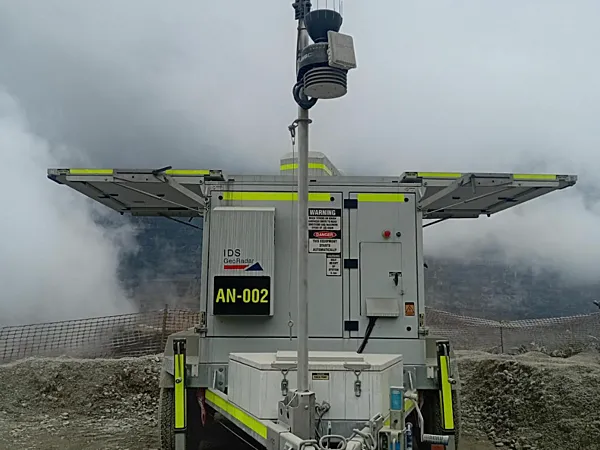
Ok Tedi Mining Limited (Ok Tedi) is pleased to announce the successful deployment and commissioning of the ArcSAR Neo slope stability monitoring radar system, marking an important advance in how mine slopes are monitored and managed. Ok Tedi is the first company in the world to acquire and deploy two units of this next-generation radar technology.

Developed by IDS GeoRadar, a Hexagon company, the ArcSAR Neo is one of the most advanced slope monitoring systems available today. Its introduction demonstrates Ok Tedi's ongoing commitment to improving safety, embracing innovative technology and promoting continuous improvement in geotechnical risk management.

The new system provides a clearer view of ground conditions, allows monitoring to continue during network interruptions and can automatically adjust its position after being moved for blasting activities. These features are particularly valuable in Ok Tedi's complex mining environment, where pit operations are becoming narrower and deeper, presenting ongoing challenges.

Since commissioning, the system has demonstrated significant improvements in data quality, reliability and confidence in decision-making. Equipped with advanced processing technology and sophisticated monitoring software, the ArcSAR Neo substantially reduces common sources of interference, including atmospheric conditions and signal distortions. This has resulted in fewer false alarms and more reliable slope stability assessments.

The radar's enhanced resolution enables the detection of very small ground movements at an earlier stage, allowing potential risks to be identified early and managed proactively. This capability strengthens Ok Tedi's ability to maintain safe, productive and efficient mining operations while effectively managing geotechnical hazards.

Designed to perform in challenging environments, the ArcSAR Neo incorporates durability improvements that address historical issues such as water ingress, ensuring reliable operations in Ok Tedi's high-rainfall conditions.

The system is supported by trained and certified Ok Tedi technicians responsible for ongoing maintenance and operation in accordance with industry best practice, with additional technical support from IDS GeoRadar specialists.

The deployment of the ArcSAR Neo represents a significant advancement in Ok Tedi's slope monitoring programme. While previous ArcSAR systems have delivered dependable service for many years, the ArcSAR Neo introduces a new level of precision, reliability and operational value.

Ok Tedi will continue to assess the long-term performance of the technology under site-specific conditions and progressively integrate its outputs into the company's broader strategy. Combined training and development of technical personnel will also help maximise the benefits of this strategic investment.

The successful acquisition and deployment of the ArcSAR Neo radar system reinforces Ok Tedi's commitment to leveraging innovative technology to improve safety outcomes, enhance operational performance and support sustainable mining practices for the future.

September 22, 2026

Adyton Resources Corporation began trading on the Papua New Guinea stock exchange, giving local investors access to the Canadian-listed company developing gold and copper prospects in the country.  Trading began at 10 a.m. September 23 under the code ADY.

Adyton was admitted to the PNGX official list on September 17 as an exempt issuer. Trading is being conducted through PNGX Depository Interests, or PDIs, with each PDI representing one underlying Adyton share, PNGX Markets Ltd. said.

PNG CSD Nominees Ltd. holds the underlying Adyton shares on behalf of PDI holders. Adyton is also listed on the TSX Venture Exchange in Canada.

The company operates the Feni Island gold-copper project in New Ireland province and, through a joint venture with East Vision Investment Holdings, the Wapolu and Gameta prospects on Fergusson Island in Milne Bay province.

Feni has an inferred mineral resource of 60.4 million metric tons grading 0.75 grams of gold per ton, containing an estimated 1.46 million ounces of gold, based on a 0.5 g/t cut-off grade, according to an October 2021 NI 43-101 technical report cited by PNGX.

The Fergusson Island Gold Project has an indicated resource of 10.19 million metric tons grading 1.35 g/t gold, containing 441,000 ounces, and an inferred resource of 21.2 million metric tons grading 0.92 g/t gold, containing 626,000 ounces. The resources use a 0.4 g/t cut-off grade, according to technical reports cited by PNGX.

Adyton Chairman Sinton Spence said the secondary listing would provide PNG retail and institutional investors with a simpler way to invest in a company whose assets are wholly located in the country.

PNGX Chairman David Lawrence said the listing would give local investors access to the development of Papua New Guinea’s natural resources industry while broadening the domestic capital market.

PNGX Markets, a wholly owned subsidiary of PNGX Group Ltd., operates Papua New Guinea’s national stock exchange and is regulated and licensed by the Securities Commission of Papua New Guinea.

The mineral resources cited for Feni and Fergusson Island are not mineral reserves and have not demonstrated economic viability, according to the technical reports referenced by PNGX.

September 17, 2026

Papua New Guinea has a substantial body of extractive-sector governance data that could help shape the country's emerging environmental, social and governance (ESG) reporting framework, according to the Papua New Guinea Extractive Industries Transparency Initiative (PNGEITI).

PNGEITI Executive Director George Kauli said the information collected, reconciled and publicly disclosed through the EITI process could provide a credible foundation for stronger ESG reporting, assurance and investor confidence.

Kauli made the remarks during the 2026 Certified Practising Accountant Papua New Guinea (CPA PNG) conference in Lae on Aug. 28, where he delivered a presentation titled "Bridging Transparency and Transformation: Integrating PNGEITI Data into National ESG Reporting Frameworks."

It was PNGEITI's first presentation at a CPA PNG conference and opened a new avenue for engagement with the accounting and finance profession.

Kauli said the engagement was important because accountants and finance professionals play a central role in how information is collected, verified, reported and ultimately used for decision-making.

He said PNG did not necessarily need to start from scratch in developing the information base required for ESG reporting.

Instead, the country could make better use of governance data already collected and reconciled through PNGEITI.

Under the EITI Standard, government agencies and companies involved in PNG's mining and oil and gas sectors disclose information across the extractive industry value chain.

This includes contracts and licences, production and exports, government revenues, company payments, beneficial ownership, state participation, subnational payments and transfers, as well as social and environmental expenditures.

Kauli said the data provided an opportunity to connect transparency with ESG reporting while potentially reducing duplication between reporting systems.

The EITI value chain generates information from licensing and production through to revenue collection, allocation and benefits received by communities.

"When these datasets are connected, they provide a more complete picture of how Papua New Guinea's natural resources contribute to the economy and society," he said.

Kauli, however, stressed that data was valuable only when it was reliable, comparable, transparent and capable of supporting sound decisions.

He said this was where the relationship between EITI and ESG became particularly important.

Kauli also clarified that PNGEITI was primarily a governance initiative rather than an environmental reporting framework.

"As Papua New Guinea's national implementation of the Extractive Industries Transparency Initiative, PNGEITI collects information from reporting government agencies and extractive companies, reconciles payments and receipts, produces independently verified reports and publicly discloses the results," he said.

"Its broader purpose is to improve transparency, strengthen accountability and support evidence-based policy-making."

Looking at the EITI value chain through an ESG lens, Kauli identified significant areas of overlap.

PNGEITI provides governance information on revenues, tax payments, beneficial ownership, contracts, state participation and subnational transfers, while also capturing social information related to community investments, local content and benefit sharing.

Kauli said ESG was increasingly influencing how investors assess companies, projects and jurisdictions.

For PNG, he said the discussion should therefore go beyond whether companies were producing ESG reports and consider whether investors could trust the information provided, whether resource revenues were managed transparently, whether communities were benefiting and whether institutions had the capacity to produce reliable information.

"Investment follows confidence and confidence requires credible information," Kauli said.

He said one of the key messages for the accounting profession was that the focus should not simply be on what data was available, but on the reliability of that data.

Kauli highlighted independent reconciliation, multi-stakeholder oversight, public disclosure and reporting against an internationally recognised standard as key characteristics of PNGEITI data.

He said these principles were closely aligned with the work of accountants and assurance professionals, where the quality of a final report depended on the quality of underlying information, controls, verification processes and supporting evidence.

Revenue verification

The presentation prompted a question from an accountant about whether revenue data collected by PNGEITI was credible and could be relied upon for reporting.

Kauli said PNGEITI did not simply accept information provided by extractive companies at face value.

Instead, the EITI reporting process applies several layers of verification to establish the reliability of the information.

"Extractive companies provide financial and other relevant information for the specific financial year being reported and that information is subject to their own internal processes and controls, including internal audit processes," he said.

PNGEITI then verifies company-reported information against records held by relevant government reporting agencies.

"For example, if a company reports a particular amount of Corporate Income Tax for a financial year, we verify that information with the Internal Revenue Commission," Kauli said.

PNGEITI reporting also covers production, exports and sales, subnational payments and transfers and other information across the extractive industry value chain.

Information submitted by reporting entities is ultimately reconciled by an independent administrator, providing another layer of independent verification.

Kauli also highlighted efforts to strengthen assurance around government-reported data through the JICA-funded Revenue Management Project, implemented in partnership with the Office of the PNG Auditor-General.

Through agreed-upon procedures, or AUP, PNGEITI is supporting additional verification of selected extractive revenue streams and government reporting processes.

"Unlike a financial audit, AUP involves specific procedures agreed between the relevant parties, with the practitioner reporting factual findings rather than providing an audit opinion," he said.

The initiative complements PNGEITI's existing reconciliation process and is intended to strengthen government assurance systems and confidence in the accuracy and reliability of extractive revenue reporting.

Subnational transparency

Kauli also highlighted PNGEITI's expanding work to improve transparency at the subnational level through its Subnational Awareness Roadshow, supported by the World Bank.

The initiative engages provincial governments, local-level governments and landowner associations to improve understanding of extractive revenue flows and strengthen stakeholders' ability to access, understand and use the information.

Kauli said an important question for many Papua New Guineans was not simply how much extractive revenue had been collected nationally, but what happened to revenue intended to benefit their province, district, local-level government or community.

Strengthening transparency at the subnational level was also important from an ESG perspective, he said, because the social impacts and benefits of extractive projects were ultimately experienced at community and subnational levels.

ESG opportunities

Looking ahead, Kauli identified three opportunities for PNG: recognising PNGEITI as a governance data source for national ESG reporting; strengthening collaboration between PNGEITI and the accounting profession; and developing national ESG assurance capability in areas such as data controls, verification and assurance methodologies.

He said the accounting profession, including CPA PNG, had an important role to play as ESG reporting developed, particularly through its expertise in controls, materiality, reporting systems, assurance and data quality.

Kauli summed up his presentation in five words: transparency, trust, investment, opportunity and transformation.

"Transparency provides reliable and accessible information. Reliable information builds trust. Trust creates confidence, and confidence supports investment," he said.

"Investment, in turn, creates opportunities for jobs, infrastructure and inclusive development. Ultimately, these contribute to transformation."

Kauli said PNGEITI already had a trusted foundation of governance data, but integrating that information into PNG's broader ESG reporting landscape would require collaboration among government, industry, civil society and the accounting and finance profession.

September 17, 2026

Tolu Minerals Ltd. has increased the mineral resource estimate at its Tolukuma gold mine in Papua New Guinea by 81% to 909,000 ounces, as the company advances plans to restart production in early 2027.

The updated resource comprises 4.31 million tonnes grading 6.57 grams per tonne (g/t) of gold and 28.2 g/t of silver, containing 909,000 ounces of gold and 3.9 million ounces of silver at a 3 g/t gold cut-off.

The estimate includes a maiden 199,000-ounce Indicated Resource, comprising 850,000 tonnes at 7.33 g/t gold. Tolu said this provides a basis for mine planning and future Ore Reserve estimation.

The resource was independently prepared by H&S Consultants Pty Ltd under the 2012 JORC Code, using data available up to June 30, 2026.

Compared with the previous 2023 estimate at the same cut-off grade, contained gold increased 81%, tonnes rose 169% and contained silver increased 104%.

The average gold grade, however, declined from about 9.6 g/t in the 2023 estimate to 6.57 g/t, which Tolu attributed to the inclusion of a broader volume of mineralised material within the interpreted structural corridor.

Tolu said the increase was driven by 143 drill holes covering 22,975 metres completed between February and June, together with a rebuilt geological model.

The revised model identifies 44 mineralised veins and splays, compared with 15 in the previous interpretation. Only 10 of the 44 are included in the current resource estimate.

The company said the Tolukuma vein system extends for at least 8 kilometres, although only about 1.2 kilometres has been accessed by underground mining. The current resource has an interpreted strike length of about 2.33 kilometres and an average depth of approximately 550 metres below surface.

"Tolu has grown the Tolukuma resource by 81% to 909,000 ounces of gold at 6.6 grams per tonne," Managing Director and Chief Executive Officer Chris Muller said.

He said the company had identified 44 mineralised veins and splays within the mining lease, with only 10 incorporated into the current resource.

Drilling has continued since the June 30 resource cut-off, with seven rigs operating across surface and underground operations. Tolu expects to release a detailed exploration update in October, with results from the post-cut-off drilling expected to contribute to another resource update in 2027.

The company is undertaking a 75,000-metre-plus near-mine drilling campaign focused on the Central Mine Zone and Northern and Southern Expansion Zones.

The campaign is intended to systematically test the Tolukuma system along its known strike and support the planned restart of the mine using existing infrastructure.

Tolu's reported gold resources have now reached 1.037 million ounces, comprising the updated Tolukuma resource and the previously reported 128,000-ounce Inferred Resource at the nearby Saki prospect.

The combined figure represents an increase of 406,000 ounces, or 64%, from the 631,000 ounces previously reported across the two deposits. The two estimates have different effective dates and cut-off grades and have not been aggregated for grade purposes.

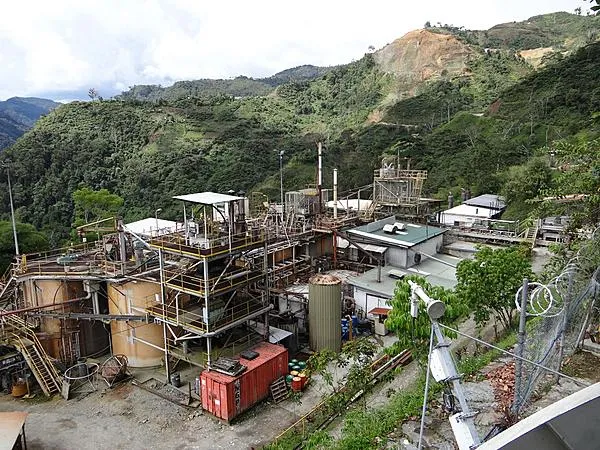
Tolu is targeting a return to production at Tolukuma in the first quarter of 2027 using the existing processing plant, hydroelectric station, road access and underground infrastructure.

The company cautioned, however, that it has not yet completed a feasibility study or established an Ore Reserve for Tolukuma.

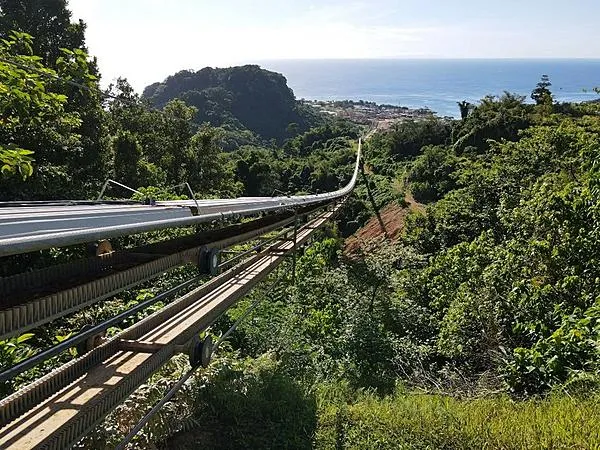
The proposed restart remains subject to several works, including completion of the Major Infrastructure Project access road and incline, dewatering and exploration drives, underground tailings facilities, mill refurbishment and power upgrades, including the hydroelectric plant and camp expansion.

The Tolukuma mine, located about 100 kilometres north of Port Moresby in Central Province, previously produced about 1 million ounces of gold between 1995 and 2015, at an average recovered grade of about 14 g/t.

Tolu owns the fully permitted mine and about 2,200 square kilometres of surrounding exploration licences.

The company said the updated resource provides a foundation for its proposed production restart, while further drilling is expected to test additional mineralised veins and extensions of the Tolukuma system.

Note: The company's JORC documentation says its recent quality-control programme identified poor-to-medium accuracy and precision in some certified reference materials, including negative bias in a low-grade gold standard and positive bias in a medium-grade standard. No batches were re-assayed based on that performance, and the document says the issue needs to be resolved.

September 17, 2026

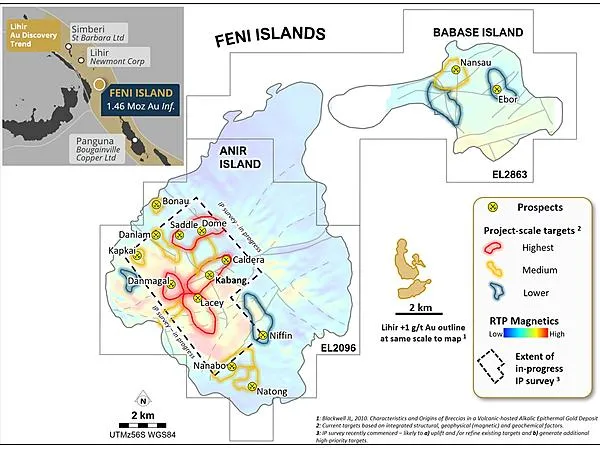
Adyton Resources Corp. has reported a 167-metre gold-copper intercept from surface at its Feni Island project in Papua New Guinea, as drilling continues to expand the Kabang mineralised system.

The company said drill hole FDD026 intersected 167 metres grading 1.03 grams per tonne (g/t) of gold and 0.12 percent copper, equivalent to 1.14 g/t gold equivalent (AuEq), from surface.

The intercept included 57 metres grading 1.91 g/t gold and 0.17 percent copper, or 2.03 g/t AuEq.

Adyton said the result validated historical drilling and provided further evidence of continuity, grade and scale at the Kabang gold-copper system.

The company, which owns 100 percent of the 1.46-million-ounce inferred-resource Feni gold-copper project, said the mineralised system remains open to the northeast and southwest.

Other results from the latest drilling included hole FDD018, which returned 92 metres at 0.61 g/t gold and 0.07 percent copper from 98 metres, and FDD027, which intersected 162 metres at 0.43 g/t gold and 0.06 percent copper from 94 metres.

Hole FDD029 returned 34 metres at 0.82 g/t gold and 0.04 percent copper from 24 metres.

Adyton said the northeast and southwest extensions now form a prospective mineralised structural corridor of about 2 kilometres in strike length.

"The Kabang system now spans more than 2km of strike length and remains open in both directions," Chief Executive Officer Tim Crossley said.

The company is continuing step-out drilling along the northeast zone, with six follow-up holes under way. It said successful drilling could add more than 500 metres to the strike length and mineralised footprint of the zone.

In the southwest, recent earthworks and geological mapping have identified a structural corridor with multiple parallel mineralised zones. Six follow-up holes are also planned to test and expand the corridor.

Adyton said historic drilling in the southwest had returned high-grade results, including hole MAD006, which intersected 2 metres at 16.3 g/t gold from 42 metres.

Drilling is also continuing around the central Kabang mineral resource estimate to test peripheral zones and support the potential conversion and expansion of the resource.

The company said it had drilled more than 18,000 metres at Feni year-to-date, with about 7,500 metres of assays still outstanding.

Adyton is targeting an upgrade of its mineral resource estimate to the indicated category while testing extensions to the existing resource, including higher-grade targets to the northeast and southwest.

The company also reported evidence of deeper porphyry-style mineralisation, citing elevated molybdenum levels in drilling on the southern flank of Kabang. Holes 19 and 21 recorded molybdenum levels of up to 1,205 parts per million.

Adyton said the molybdenum results were being used as a vector towards a potential deeper porphyry system.

A 5-kilometre by 5-kilometre induced polarisation (IP) geophysical survey is also under way across Feni Island. The survey is designed to identify blind gold-copper mineralisation, Kabang-style repeats and other potential porphyry systems.

The company said the survey was the first widespread systematic IP programme undertaken on Feni Island and would help guide future drilling.

Adyton also announced that the neighbouring Babase Exploration Licence (EL2863) had been granted, expanding its Feni Islands district position by almost 40 percent. The Kabang deposit is located on Anir Island under EL2096.

Separately, the company said work was progressing on its gold projects on Fergusson Island, including the Gameta and Wapolu projects.

At Gameta, locations for the process plant and tailings dam have been confirmed, while land mapping and baseline environmental and social work have begun.

At Wapolu, work is progressing on a processing plant to support bulk sampling and flowsheet testing, as well as production of concentrate samples for customer testing and final offtake pricing.

Adyton said the granting of a mining licence remained the final statutory hurdle for commercial operations at Wapolu. It expects the licence to be granted in October 2026 and is targeting commercial production in the fourth quarter of 2027.

The company also noted recent merger and acquisition activity in Papua New Guinea's gold sector, including St Barbara's sale of its remaining interest in the Simberi mine to Lingbao.

The Feni project is located along the Lihir Trend, which hosts major gold-copper deposits including the Lihir mine operated by Newmont.

Adyton said its Feni project has an inferred resource of 1.46 million ounces of gold and is focused on expanding the resource base and identifying additional high-grade targets.

September 14, 2026

Papua New Guinea is open to Chinese mining and exploration investment, but projects must deliver fair benefits for landowners and the country while protecting the environment, Mining Minister Solen Loifa says.

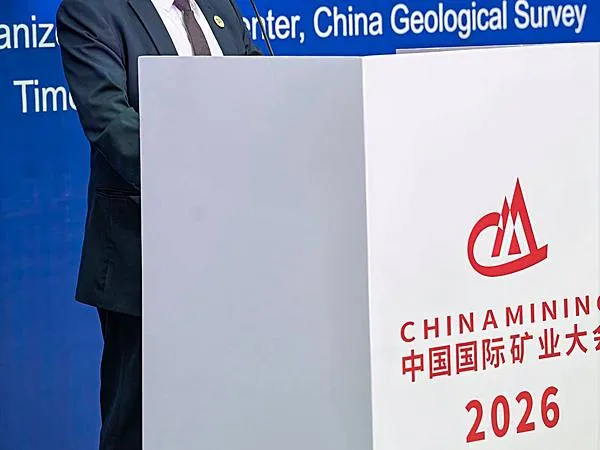
Loifa made the remarks during an address to potential investors at the China Mining Conference and Exhibition 2026 in Tianjin, China, on Sept. 11.

He said the government welcomed investment that created returns for investors while also supporting the welfare of communities, the country’s economic interests and sustainable environmental outcomes.

“Mining should be done with win-win co-operation for the government, the people and investors,” Loifa said.

His message reflects Prime Minister James Marape’s position that Papua New Guinea welcomes investment when it delivers a fair share of benefits to the country and its people.

Loifa said the government was preparing for the next generation of mines by strengthening systems, improving regulatory processes and pursuing legislative reforms to address challenges in the sector and support economic growth.

The reforms include the establishment of a one-stop shop for mining and minerals investment. The government plans to realign policies and institutions to create an integrated service centre that centralises licensing, permitting and compliance processes.

The initiative is intended to reduce the fragmented departmental processes currently faced by explorers and miners.

The government also plans to extend the tenure of exploration licences from two years to five years. Loifa said the change would provide greater stability for high-risk, technology-driven exploration programmes.

A new retention licence category is also proposed. The licence would allow companies to retain discovered mineral deposits during periods of unfavourable market conditions or when further technical work is required to establish viability.

For projects of national significance, the government is moving towards a merit-based and strategic allocation of mineral tenements rather than relying solely on the first-in-time application process.

Loifa said the proposed approach would prioritise genuine operators in highly prospective areas. Existing licence holders and applicants seeking to explore areas not reserved for strategic purposes would not be affected, with first-in-time and merit-based applications to be considered on a case-by-case basis.

The government also plans to reduce administrative delays by increasing staff capacity and moving towards an electronically automated system. Proposed regulations would introduce stricter timelines for licence renewals to prevent projects from being delayed by administrative processes.

The Mineral Resources Authority, the government agency responsible for regulating Papua New Guinea’s mining sector, is undergoing a strategic realignment as part of the reforms. The authority is expected to serve as the main gateway for the proposed one-stop shop mining and minerals investment initiative.

“Our message to the global mining community is clear,” Loifa said. “We have heard your concerns regarding regulatory uncertainty and administrative delays. We are removing the hurdles that have historically slowed discovery while ensuring that the people of Papua New Guinea benefit equitably from our resource wealth.”

September 11, 2026

Australian gold miner St Barbara has agreed to sell its remaining interest in Papua New Guinea’s New Simberi Gold Project to Lingbao Gold Group for A$410 million in cash, plus a further A$43 million repayment of construction capital.

St Barbara said on 10 September it had signed a binding agreement with Lingbao under which the Chinese gold company will acquire St Barbara’s remaining ownership in Tabar Islands Holdings, which currently owns New Simberi and the Tabar Islands exploration licences.

The transaction is expected to deliver A$453 million in cash to St Barbara, comprising the A$410 million purchase consideration and approximately A$43 million representing St Barbara’s funding of construction capital for New Simberi between April 2026 and the signing of the agreement. Lingbao will also fund St Barbara’s share of capital requirements through to completion.

St Barbara will retain exposure to the project through a 2.75% net smelter return (NSR) royalty on 100% of future gold and silver production from New Simberi, as well as a 1.5% NSR royalty on 100% of future minerals production from the Tabar Islands exploration licences. The royalties are due to commence on 1 July 2027, with Lingbao providing a parent company guarantee for its royalty payment obligations.

Simberi ownership transition

The sale follows St Barbara’s agreement announced in December 2025 to sell a 20% interest in New Simberi to Eda Minerals, a wholly owned subsidiary of Kumul Mineral Holdings, for A$100 million.

That transaction is intended to establish the New Simberi Gold Joint Venture. Once completed, St Barbara’s attributable interest in New Simberi would fall from its current 50% to 40%, while the A$100 million purchase price and Kumul’s share of capital expenditure would be repaid from future sales by the joint venture.

The latest agreement would see Lingbao acquire St Barbara’s remaining ownership in Tabar Islands Holdings, consolidating Lingbao’s position in the project alongside Kumul’s 20% interest once the earlier transaction is completed.

Completion of the Lingbao transaction is targeted for the March quarter of 2027 and remains subject to conditions including regulatory approvals in Papua New Guinea and China, as well as shareholder approvals by St Barbara and Lingbao where required.

New Simberi royalty valued at A$212m

St Barbara said the retained royalty provides continuing exposure to what it considers a significant development project.

Under the New Simberi Initial Life of Mine Plan, the project is forecast to produce 2.2 million ounces of gold, including 2.0Moz payable, over an initial 13-year mine life.

Using a gold price assumption of US$4,000 an ounce and a 5% discount rate, St Barbara estimates the New Simberi NSR royalty has a net present value of A$212 million. The company's sensitivity analysis puts the royalty's NPV at between A$156 million and A$267 million at a 5% discount rate, depending on a gold price ranging from US$3,000/oz to US$5,000/oz.

The royalty cash-flow table on page 4 of St Barbara's announcement estimates annual royalty receipts beginning at A$11.1 million in 2027, rising to A$34.1 million in 2032 under the company's assumptions. The forecast assumes a gold price of US$4,000/oz and silver at US$35/oz.

St Barbara to focus on other projects

St Barbara managing director and chief executive Andrew Strelein said the transaction would crystallise value for shareholders while allowing the company to concentrate on its other assets.

“This transaction will crystallise substantial value for St Barbara shareholders and allows the Company to focus on the development of the Nova Scotia gold projects and the attractive exploration portfolio surrounding the 15-Mile Processing Hub,” Strelein said.

He said St Barbara recognised New Simberi as “an outstanding development project” and would continue to participate in its future through the royalties and exploration interests in the Tabar Islands.

The company said the divestment would simplify its portfolio, with the Touquoy Restart planned to commence by December 2026, while allowing St Barbara to focus on its Nova Scotia Gold Projects.

Subject to completion, St Barbara's pro-forma assets are expected to include approximately A$880 million in cash, the 15-Mile Processing Hub Project and exploration portfolio, the Touquoy Restart Project and its royalty portfolio, with no debt or hedging.

The company is also considering an additional fully franked special dividend of approximately A$0.13 per share following completion of the transaction. This would be in addition to the A$0.05 per share fully franked dividend declared on 28 August.

St Barbara has separately reaffirmed that it is considering an on-market share buy-back of up to 100 million shares, with a decision expected after the updated Pre-Feasibility Study for the 15-Mile Processing Hub Project, due at the end of September.

The proposed dividend and buy-back remain subject to future decisions by the board, market conditions, St Barbara's share price and capital requirements, and are not guaranteed.

The transaction is subject to satisfaction or waiver of the agreed conditions precedent, with completion targeted for the March quarter of 2027.

September 08, 2026

Tolu Minerals Ltd. has secured a K95 million (about A$30 million) debt facility from Papua New Guinean bank National Banking Corporation Ltd. (NBC), providing funding for the remaining capital works required to restart the Tolukuma Gold Mine in Central Province.

Tolu said the facility, combined with approximately A$50 million in existing cash as of June 30, 2026, leaves the company fully funded to restart the mine, with production targeted for the first quarter of 2027.

The five-year facility carries an interest rate of 9.60% a year and is secured against the company's assets. Drawdown is expected in September, subject to customary conditions precedent, including registration of security.

The funding will support completion of major infrastructure and mine restart works, including the Major Infrastructure Project access road and incline, dewatering exploration drives, underground tailings facilities, processing plant refurbishment, power upgrades, the hydro plant and camp expansion.

Tolu Managing Director and Chief Executive Officer Chris Muller described the financing as a defining moment for the company, saying the focus is now on completing the capital works, delivering an updated Mineral Resource Estimate and returning Tolukuma to production.

“With the balance sheet now in place, with the existing cash balance plus the additional A$30m to complete the restart of Tolukuma, our focus is squarely on execution,” Muller said.

Restart works advance

Tolu said underground development at Tolukuma recommenced on the 1560 Level during the June quarter, with early face sampling returning multiple intervals exceeding 30 grams per tonne of gold.

Refurbishment of the processing plant is substantially complete, while supporting infrastructure works are continuing. The staged restart is expected to build processing capacity to approximately 500 tonnes per day by the end of 2027.

The company said the debt facility will fund completion of the incline access road and tunnels, processing plant and power infrastructure refurbishment, camp upgrades and construction of the tailings facility.

Resource estimate due

Tolu also expects to release an updated Mineral Resource Estimate within the next 14 days, describing it as the most comprehensive review of the Tolukuma resource undertaken to date.

The estimate is being prepared by independent consultants H&S Consultants and incorporates an updated three-dimensional geological model, together with historical and recent drilling data. Tolu said the database includes results from its most intensive drilling program at Tolukuma to date.

The updated resource is expected to underpin a new mine plan covering the Southern Expansion, Northern Expansion and Central Mine Zones.

Tolu said it is continuing a 75,000-plus-metre drilling campaign while advancing the capital works program and preparing for production in the first quarter of 2027.

The company said the development puts it on track to transition from an explorer to a producer over the coming months.

Editorial note: The source announcement contains forward-looking statements regarding the facility drawdown, Mineral Resource Estimate, funding position and first-gold timing, and notes that these are subject to risks and uncertainties, including satisfaction of the facility's conditions precedent.

September 08, 2026

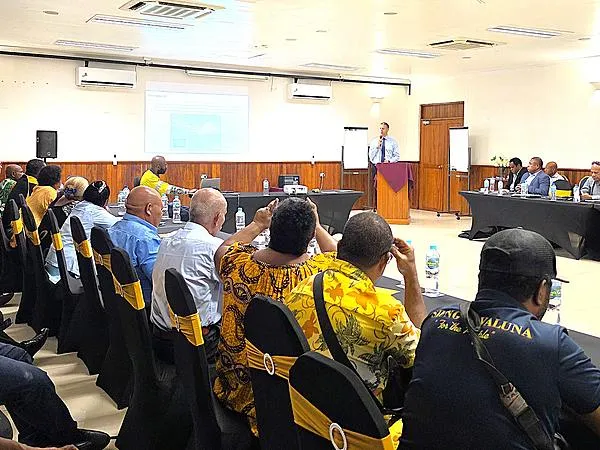
Ok Tedi Mining Limited (Ok Tedi), through its wholly owned subsidiary Misima Minerals Limited (MML), has reaffirmed its commitment to working closely with government at all levels, landowners and local communities as planning and early works for the proposed Misima Project continue.

Representatives from Ok Tedi, Misima Minerals Limited, the Milne Bay Provincial Government, relevant state agencies, landowner groups and other key stakeholders met in Alotau this week to discuss project progress, address stakeholder concerns and identify priorities that will help guide the parties' focus on project development.

The meeting provided an opportunity for open dialogue on project activities, including feasibility studies and environmental and social impact assessments, both of which are required for mining and environmental permits, infrastructure planning and future opportunities for local participation.

Ok Tedi General Manager, Social Performance and Sustainability, Jesse Pile, said the company remains committed to ensuring stakeholders are actively engaged throughout the development process.

"The Misima Project can only succeed through genuine partnership between government at all levels, landowners, mine-associated communities and the developer. Meetings such as this are critical to ensuring we are listening to key stakeholders while sharing information openly to assist them in understanding the project's status as it evolves from exploration to mining."

"Meaningful partnerships are built through regular engagement and open communication. We are committed to working alongside the Provincial Government, landowners, communities and local businesses to ensure stakeholders' perspectives continue to inform project planning and help maximise long-term benefits for Misima, Milne Bay Province and Papua New Guinea."

General Manager of Misima Minerals Limited, Ben Burger, said stakeholder engagement continues to play a vital role in shaping project planning and decision-making.

"Stakeholder feedback remains critical as we progress feasibility studies, environmental assessments and project planning activities. The insights shared during this meeting will help inform our work as we continue to evaluate the project's technical, environmental and social aspects."

Burger also provided an update on the project's development stages, including:

  • Early works, including camp and access road development;
  • Exploration and resource drilling activities;
  • Feasibility study and permitting processes;
  • Environmental and Social Impact Assessment (ESIA) activities and environmental permitting requirements with the Conservation and Environment Protection Authority (CEPA); and
  • Preparation of the Mining Lease application and approval process.

Speaking on behalf of the Milne Bay Provincial Administration, Deputy Provincial Administrator, Technical and Advisory Services, Michael Viula, welcomed Ok Tedi and MML to Alotau and expressed appreciation for the continued collaboration between the Provincial Government, the project developer and landowners.

"We support the company's commitment to constructive engagement, transparency and collaboration. Working together is essential to achieving sustainable development outcomes that deliver lasting benefits for the people of Milne Bay Province."

A leader from Narian village, Elijah Gwama, said the ongoing consultation process is important in ensuring community voices remain central to project planning, execution and decision-making.

Gwama said: "We appreciate the opportunity to engage directly with the company and government representatives. Open dialogue allows our concerns, aspirations and expectations to be heard and considered as the project moves forward. We look forward to continuing to work together to ensure positive outcomes are achieved for our communities and future generations."

The participants discussed a range of issues and opportunities associated with the project and agreed on the importance of maintaining open communication and regular engagement as studies and project work continue.

The meeting forms part of Ok Tedi's broader commitment to responsible project development and ensuring stakeholders remain informed and involved as the Misima Project advances through feasibility, permitting and development planning stages.

Ok Tedi Mining Limited (OTML) is a majority state-owned entity that operates an open-pit copper, gold and silver mine located in the Star Mountains of Western Province, Papua New Guinea. We ship copper concentrate to smelters and ore refineries in Japan, the Philippines, Indonesia, South Korea, India and Germany.

The company has been operating in the region for more than 40 years and has made a significant contribution to development in Western Province through direct and indirect employment, royalties, compensation payments and business opportunities.

Ok Tedi is expanding its operations to Milne Bay Province through the acquisition of Gallipoli Exploration Limited, a wholly owned subsidiary of Australian mining company Kingston Resources Limited, for the Misima mine.

The company's registered office and senior operational management team are located in Tabubil, Western Province, PNG. It also has a representative office in Port Moresby and a marketing and logistics facility in Brisbane, Australia.

To learn more about Ok Tedi Mining Limited, visit our website at www.oktedi.com.
September 07, 2026

Ok Tedi Mining Limited has declared a K450 million interim dividend for the first half of 2026, while the company says its mining and processing operations remain uninterrupted despite prolonged dry weather affecting water levels on the Fly River.

Ok Tedi Mining Limited (OTML) has declared a K450 million interim dividend for the first half of 2026, with the payment distributed between the State and Western Province landowner interests according to their respective shareholdings.

Managing Director and Chief Executive Officer Kedi Ilimbit said K300 million would be paid to Kumul Minerals Holdings Limited on behalf of the State, representing its 60% shareholding, while K150 million would be paid to the Mineral Resources Development Company (MRDC), which manages the interests of Ok Tedi's landowners.

“The K450 million interim dividend benefits all Ok Tedi shareholders,” Ilimbit said. “While K300 million is payable to the State, K150 million is equally payable through MRDC on behalf of the people of Western Province.”

He said the full dividend distribution should be accurately reflected, noting that the payment demonstrates Ok Tedi's continuing contribution to the PNG economy and provides direct benefits to both the State and Western Province through their respective shareholdings.

Operations remain uninterrupted

The dividend announcement comes as Ok Tedi manages logistical challenges caused by prolonged dry weather in Western Province.

Ilimbit said water levels on the Fly River are lower than normal, but mining and processing operations remain uninterrupted.

The company has implemented contingency measures to maintain supplies of fuel, consumables, equipment and other critical operational requirements. It has also introduced alternative logistics arrangements to maintain continuity and minimise potential disruption to its operations.

Ok Tedi is continuing to monitor river conditions and adjust its logistics planning as required.

“While the dry weather is presenting logistical challenges, our teams have implemented contingency measures to ensure operational continuity,” Ilimbit said. “Mining and processing operations continue, and our focus remains on maintaining safe and reliable operations while delivering value to our shareholders, communities and the country.”

The company said it remains focused on maintaining safe, responsible and sustainable operations while managing the logistical impacts of the dry conditions.

Ok Tedi will continue to provide updates on operational matters as required and said it remains committed to transparent engagement with shareholders, stakeholders and communities.

State-owned copper and gold producer

Ok Tedi operates an open-pit copper, gold and silver mine in the Star Mountains of Western Province and is majority state-owned. The company has operated in the region for more than 40 years and exports copper concentrate to smelters and ore refineries in Japan, the Philippines, Indonesia, South Korea, India and Germany.

The company said its operations have contributed to development in Western Province through direct and indirect employment, royalties, compensation payments and business opportunities.

Ok Tedi is also expanding its footprint into Milne Bay Province through its acquisition of Gallipoli Exploration Limited, a wholly owned subsidiary of Australian mining company Kingston Resources Limited, for the Misima mine.

September 03, 2026

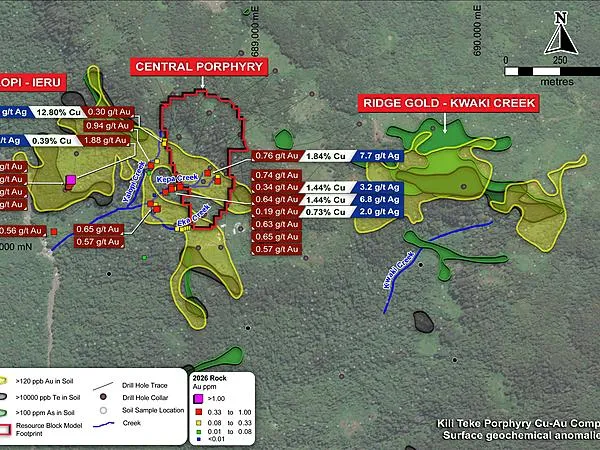
South Pacific Metals Corp has identified new copper-gold targets outside the existing mineral resource at its Kili Teke project in Hela province, Papua New Guinea, after surface sampling returned up to 12.8 percent copper, 0.30 grams of gold per tonne and 104 grams of silver per tonne.

The company said the results from its first-phase exploration programme strengthened evidence of mineralisation west and east of the Central Main Porphyry, which hosts a 237-million-tonne inferred resource. The resource contains 0.34 percent copper and 0.24g/t gold, equivalent to about 4.2 million ounces of gold equivalent.

The highest-grade surface result came from an outcrop sample collected from a massive sulphide unit along a north-south fault contact on the western margin of the Central Porphyry. The unit has been mapped for more than 200 metres and remains open.

South Pacific Metals said eight samples collected across part of a historic trench also confirmed mineralisation, averaging 0.36 percent copper and 0.72g/t gold.

The company is focusing its exploration on two areas outside the current resource: the Ieru-Yalopi zone west of the Central Main Porphyry and the Ridge Gold-Kwaki Creek area to the east.

At Ieru-Yalopi, the company is investigating a large gold-in-soil anomaly, the historic Ieru trench and the newly mapped massive sulphide unit. The historic trench returned 132 metres at 0.55 percent copper and 0.6g/t gold, including 27 metres at 0.97 percent copper and 1.25g/t gold.

At Ridge Gold, historic soil sampling returned gold values of up to 9,390 parts per billion, or 9.39g/t, within a strong gold-in-soil anomaly. The company said elevated tellurium could indicate an alkalic, Porgera-style target.

A 205-sample soil grid has been completed at Kwaki Creek, while mapping has identified additional altered and mineralised outcrops, including monzonite. The company said the target area is larger than previously understood.

South Pacific Metals exploration manager Octavio Garcia said the western and eastern targets were developing differently but were both providing useful information for exploration.

“On the western side we have strong outcrop exposure in the creek beds, including sulphide mineralisation we can trace along strike for a couple of hundred metres,” Garcia said.

He said Ridge Gold would be defined more by soil geochemistry than surface exposure, with the company now working to develop a properly ranked, structurally informed drill-target inventory.

South Pacific Metals is also assessing mineralisation at depth beneath the existing Central Main Porphyry resource.

Historical drilling by former operator Harmony Gold covered about 37,500 metres, with the existing resource defined within the upper portion of the porphyry centre. The company said several long and high-grade historical intersections extend below the current resource model, with some holes ending in mineralisation.

One historical hole, KTDD022, returned 187 metres at 1.10 percent copper equivalent, including 0.62 percent copper and 0.44g/t gold, from 501 metres.

Another hole, KTD025, intersected a high-grade skarn zone running 8 metres at 13.31 percent copper and 11.75g/t gold from 920 metres.

The company said these historical results point to potential mineralisation beyond the boundaries of the current resource model and will form part of its deeper targeting work.

South Pacific Metals has a further 205 soil samples and 60 rock samples awaiting assay. It is also undertaking geochemical analysis, structural work, mapping and interpretation, alongside planned LiDAR and airborne magnetic surveys to support drill planning.

The company expects to define drill-ready targets in the two priority areas by the end of October 2026, ahead of a planned maiden diamond drilling programme.

South Pacific Metals chief executive Timo Jauristo said the company's first exploration programme in almost a decade was providing evidence that Kili Teke could extend beyond the historically drilled Central Porphyry.

The company said the current programme represents the first systematic exploration at Kili Teke in about 10 years.

September 03, 2026

Great Pacific Gold Corp has confirmed broad, shallow gold mineralisation at the Kavasuki target in Papua New Guinea's East New Britain province, identifying a priority near-surface exploration window across its Wild Dog Project.

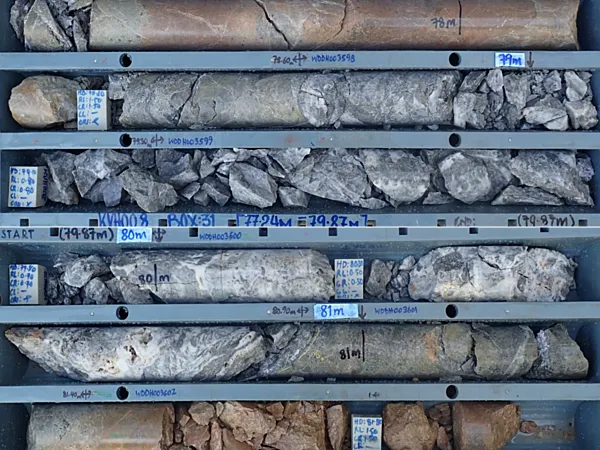
The company said its maiden diamond drilling programme at Kavasuki returned multiple broad gold intersections, including 58.90 metres grading 2.43 grams of gold per tonne (g/t) in hole KVH-01. The programme comprised 12 diamond holes totalling 1,844.8 metres and was designed to confirm historical mineralisation, test the continuity of the Kavasuki vein system and investigate historical geophysical anomalies.

Other significant results included 18.10 metres at 2.08g/t gold in KVH-01, 38.40 metres at 2.07g/t in KVH-03 and 59.90 metres at 1.38g/t in KVH-04. Higher-grade intervals included 1.20 metres at 17.93g/t and 2.20 metres at 15.78g/t.

The company said the strongest gold mineralisation identified to date is concentrated from surface to about 70 metres vertical depth, while the principal Kavasuki vein structure continues below the mineralised horizon.

Great Pacific Gold said drilling had refined its understanding of the Kavasuki system and established an elevation-controlled window for prospective mineralisation.

The Kavasuki target is a structurally controlled epithermal quartz-vein system within the 15-kilometre Wild Dog structural corridor. Drilling confirmed the historically reported mineralised intervals and demonstrated continuity of the main vein structure at depth. Better grades, generally between 1g/t and 2.5g/t gold, were concentrated within the shallow window, with narrow higher-grade zones reaching about 18g/t.

Great Pacific Gold said the deeper holes tested levels below the more favourable mineralised window and returned low concentrations of gold and associated pathfinder elements.

The company also revised its interpretation of historical three-dimensional induced polarisation, or 3DIP, data. It now believes the principal chargeability response at Kavasuki is associated with disseminated pyrite in an interbedded volcanic-siltstone sequence rather than directly with gold mineralisation.

The reinterpretation is expected to provide a new filter for ranking geophysical targets elsewhere along the Wild Dog corridor.

Great Pacific Gold chief operating officer and vice-president exploration Callum Spink said the maiden Kavasuki programme had achieved its core technical objectives.

“Our maiden programme at Kavasuki delivered broad zones of shallow gold mineralisation, including 58.9 metres at 2.43 g/t gold, and achieved its core technical objectives by confirming historical mineralisation, demonstrating continuity of the vein system at depth and resolving the principal source of the historical chargeability response,” Spink said.

He said the results provided the company with a clearer understanding of where higher grades occur and how to target the system, which would also help rank targets across the broader Wild Dog corridor.

Great Pacific Gold plans to undertake further surface work at Kavasuki, including priority trenching south of the drilled area where higher elevation could preserve the prospective mineralisation window.

The company will also conduct trenching and detailed mapping north towards Kavasuki Creek, including follow-up work on a known 3-4-metre-wide vein about 600 metres north-north-east of the drilled area that returned 4.4g/t gold. A future drill test is also planned for the ridge between Sinivit and Kavasuki, combining the revised 3DIP interpretation with the newly defined elevation window.

With Kavasuki drilling complete, Great Pacific Gold said its two diamond drill rigs had moved to Magiabe and Mengmut, ahead of work on the Morgan and EK targets.

The company also disclosed corrections to previously reported Kavasuki results following final database validation. The revised results supersede earlier releases, although Great Pacific Gold said no change was material to its interpretation of the results.

Great Pacific Gold cautioned that the reported drill intercepts represent core lengths and that true widths are not yet known. It also said some final multi-element assay results remain pending and that geological interpretations may be revised as additional data become available.

See Our Latest Issue