
May 26, 2026

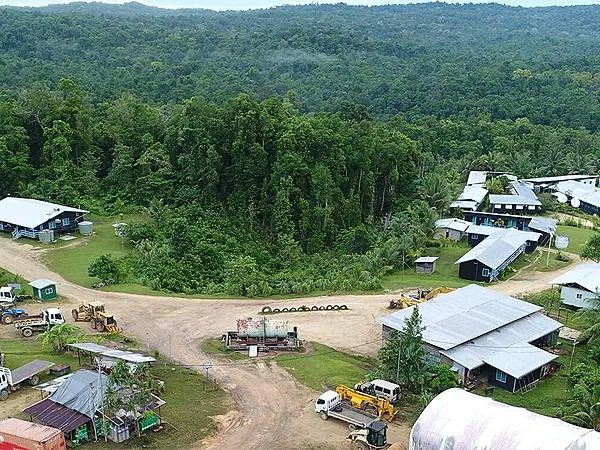
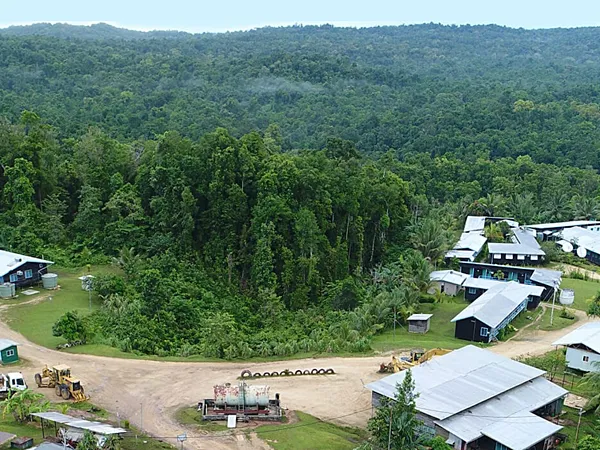
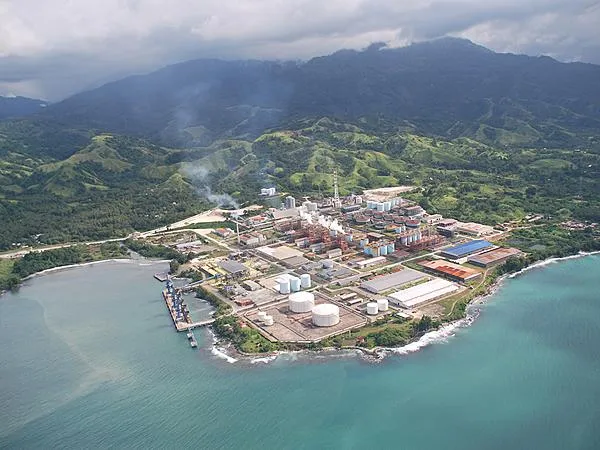
The Autonomous Bougainville Government (ABG) has marked a major milestone in the Panguna redevelopment process with a customary ceremony symbolising the unification of Panguna landowners and the official launch of a new drilling program at the historic mine site.

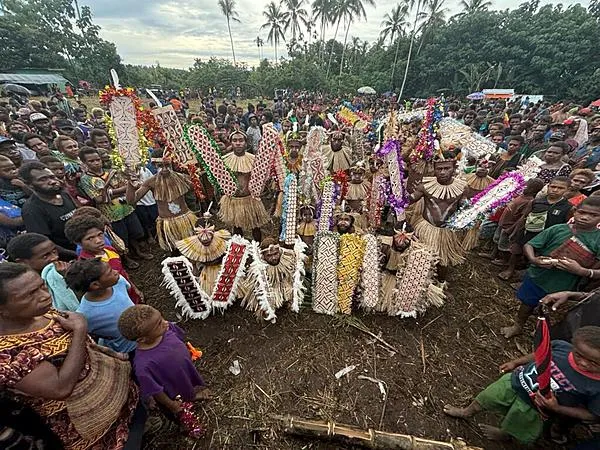
The “Tampa Ungko” ceremony was held in Panguna and publicly affirmed the support of the five major Panguna landowner clans for the ongoing redevelopment process.

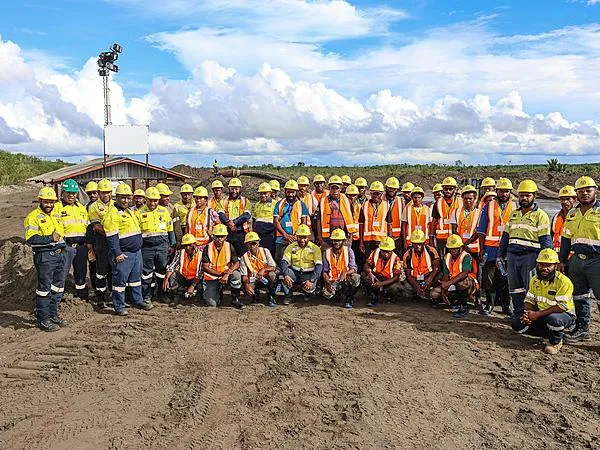
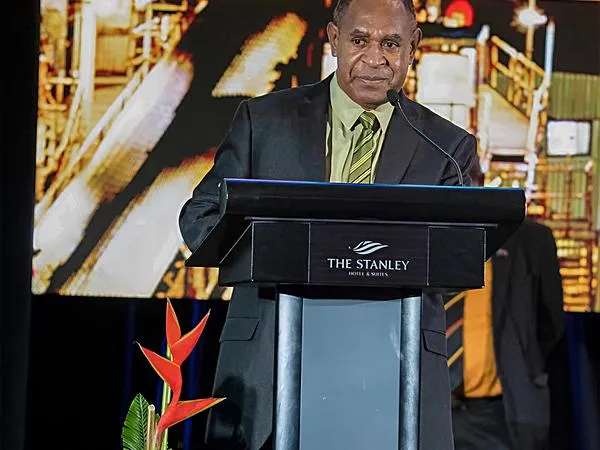
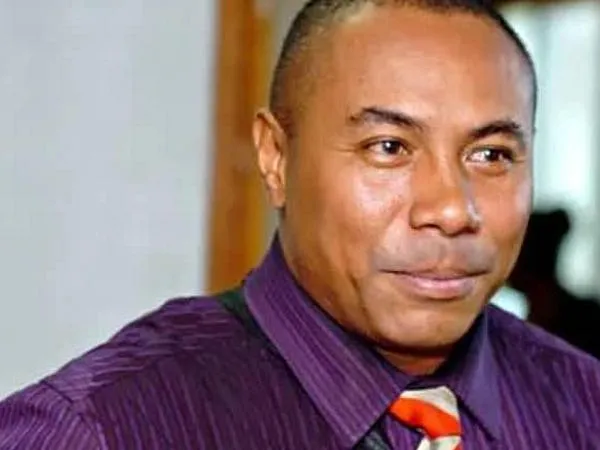
The ceremony was led by ABG President and Mining Minister Ishmael Toroama and attended by senior Central Bougainville leaders, including Central Parliamentary Committee Chairman Justin Borgia, Bougainville Veterans Minister Junior Dake and Ioro Constituency Member David Miringtoro. Representatives from Bougainville Copper Ltd (BCL), Lloyds Metals & Energy Ltd (LMEL), the ABG Department of Mining and Central Bougainville veterans also attended.

As part of the customary proceedings, the ABG presented live pigs to each of the five clans as a gesture of goodwill, unity and recognition of customary landowner authority over Panguna land.

The event also honoured those who lost their lives during the Bougainville conflict and recognised the sacrifices made by communities in Panguna and across Bougainville.

During the ceremony, Central Bougainville veterans pledged continued support for the ABG and Panguna landowners in advancing redevelopment efforts peacefully and respectfully.

The Panguna Landowner Interim Council reaffirmed its commitment to work with the ABG, BCL and LMEL to progress redevelopment while continuing consultations on landowner concerns and outstanding issues.

Landowner representatives also urged individuals and splinter groups to stop politicising the Panguna issue on social media and instead engage through recognised landowner structures and dialogue processes.

Representatives of the five clans publicly declared their united support for the ABG and the redevelopment of Panguna, describing the “Tampa Ungko” ceremony as a symbolic reopening of Panguna under unity and reconciliation.

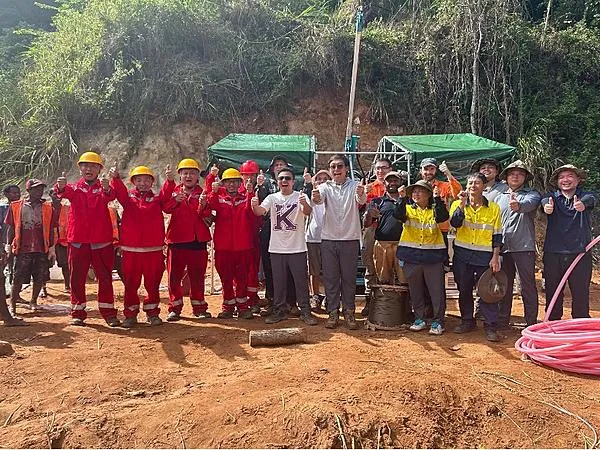
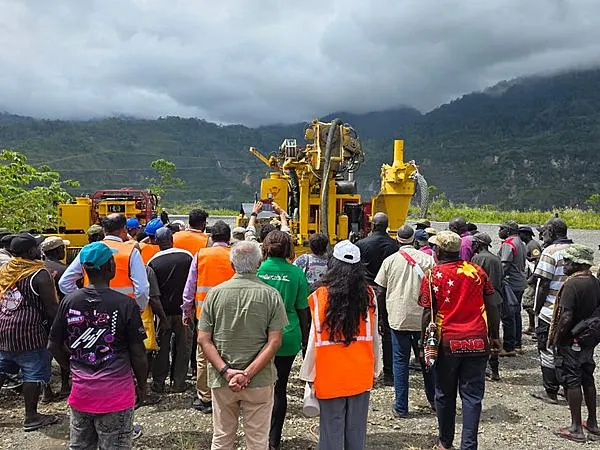
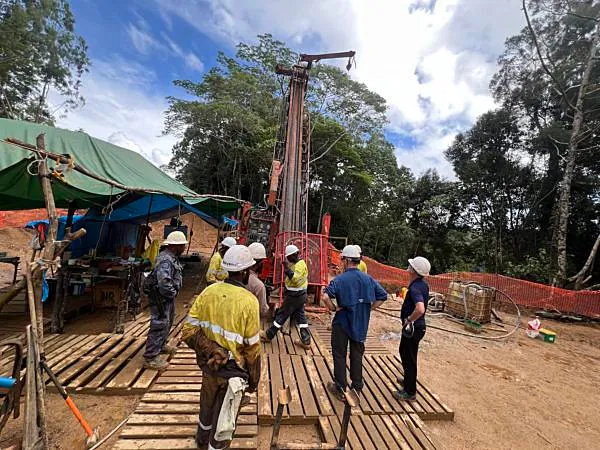
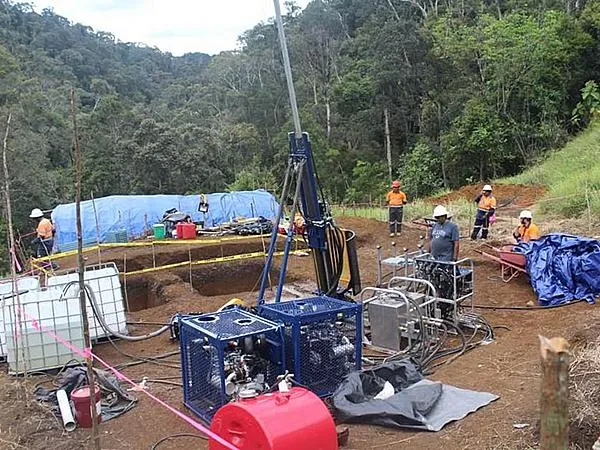
The ceremony also coincided with the official launch of the Panguna EL01 drilling program by President Toroama, marking the return of drilling operations to Panguna for the first time in 37 years since the Bougainville conflict began in 1989.

Drilling activities under the EL01 work program are expected to commence following completion of operational preparations.

Leaders and landowners described the presence of an operating drill rig at Panguna during the ceremony as historic and symbolic of a new chapter for Bougainville.

The ABG said the redevelopment process would continue in accordance with the Bougainville Mining Act 2015, stakeholder consultations and respect for customary authority, peace and inclusive dialogue.

May 26, 2026

Sandvik on 26 May launched AutoMine® Aura, a first-of-its-kind underground mining automation platform fully engineered for the future. The release represents the most significant evolution of AutoMine® since its introduction more than 20 years ago.

AutoMine® Aura transforms every layer of the AutoMine® platform, delivering full situational awareness with zero blind spots, enabling higher utilisation and consistent productivity in complex underground environments. The platform introduces a new navigation system with 3D perception — the most advanced and productive in the industry — which has been proven to move more than 15% additional material in one of the world’s harshest underground mines.

The platform integrates with existing networks and access control systems, eliminating the need for infrastructure changes. This evolution of the underlying platform enables mines to fully leverage future technologies while continuing to support current operations.

AutoMine® has achieved almost nine million hours without a lost time injury (LTI) since its launch, and safety remains foundational to its next generation. AutoMine® Aura builds on the proven safety principles and access control systems already in use today, while 3D perception and adaptive intelligence further enhance these capabilities. This strengthens safety in increasingly dynamic environments.

Operators also benefit from a wider, more intuitive interface that delivers full awareness of the mine environment. This enables the remote supervision and control of multiple machines, reducing exposure to dust, noise, vibration and other on-site hazards. The enhanced operator experience supports both safety and productivity, while also contributing to workforce development by transitioning operators into more technology-focused roles.

AutoMine® Aura will initially launch on underground loaders, with the platform set to expand across additional Sandvik product lines over time.

“AutoMine® is already a world-leading solution, proven across more than 140 mines globally,” said David Hallett, Vice President – Automation at Sandvik. “It has defined automation in mining for more than two decades across both surface and underground operations. With AutoMine® Aura, we have not built the next version; we have built an entirely new platform. The navigation system with 3D perception is the first of its kind in the industry, and the productivity gains — including moving more than 15% additional material — have been proven and validated at customer sites. This demonstrates what this technology means for our customers and for the future of mining.”

AutoMine® Aura will be presented to the global mining industry at Sandvik’s upcoming Future of Mining event in Tampere, Finland, from September 1–3, 2026.

Sandvik Group
Sandvik is a global, high-tech engineering group providing solutions that enhance productivity, profitability and sustainability for the manufacturing, mining and infrastructure industries. The company is at the forefront of digitalisation and focuses on optimising customers’ processes. Its world-leading offering includes equipment, tools, services and digital solutions for machining, mining, rock excavation and rock processing. In 2025, the Group had approximately 42,000 employees and revenues of about SEK121 billion across more than 150 countries.

Business Area Mining
Mining is a business area within the Sandvik Group and a leading global supplier of equipment, tools, parts, services, digital solutions and sustainability-driven technologies for the mining and construction industries. Application areas include rock drilling, rock cutting, loading and hauling, tunnelling, ground support and quarrying. In 2025, sales were approximately SEK69 billion, with about 18,000 employees. For further information, visit mining.sandvik.

May 25, 2026

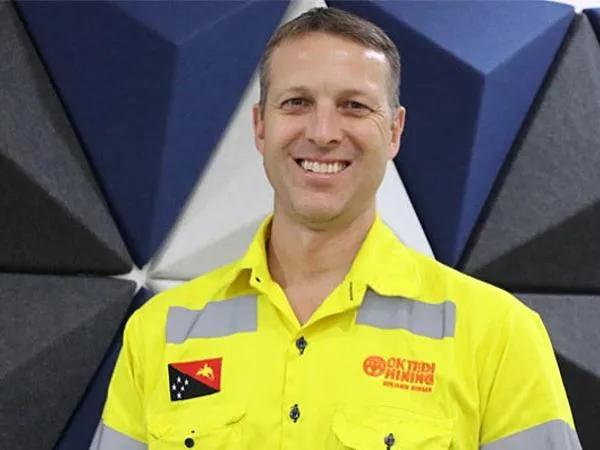
Ok Tedi Mining Limited (Ok Tedi) has appointed Ben Burger as General Manager of Misima Minerals Limited (Misima Minerals).

Burger was previously the General Manager Operations at Ok Tedi. He joined the company in 2024 during a period of significant organisational change. During his tenure, he successfully established the new Operations Business Unit, provided strong leadership and strategic direction, and played a key role as a member of the Ok Tedi Executive Leadership Team (ELT).

Under Burger’s leadership, Ok Tedi Operations delivered strong performance outcomes from 2023 to 2025.

Managing Director and Chief Executive Officer Kedi Ilimbit said the appointment marks a significant leadership milestone in advancing the operations of Ok Tedi subsidiary Misima Minerals Limited.

“The results Burger and his team delivered in Operations clearly demonstrate his leadership capability. I am confident that his experience will be instrumental in leading Misima Minerals, a 100 percent Ok Tedi subsidiary, to become an operating mine within the next two years,” Ilimbit said.

Burger said he was honoured by the appointment and committed to delivering the Misima Project for the benefit of the Ok Tedi Group and Papua New Guinea.

“Misima Minerals represents a significant opportunity for Ok Tedi’s future, and I am proud to lead this next phase on behalf of the company,” Burger said.

“I look forward to working closely with our teams, stakeholders and partners to safely and responsibly progress Misima towards operations, aligned with Ok Tedi’s Vision and Growth 2050 Strategy.”

Ilimbit thanked Burger for his significant contribution to Ok Tedi Operations and wished him every success in leading Misima Minerals as part of the wider Ok Tedi Group.

In the interim, Alan Bong will assume the role of Acting General Manager Operations, in addition to his current responsibilities at Ok Tedi as General Manager Strategic Business Development and Optimisation.

The appointment of Burger reflects Ok Tedi’s strong commitment to disciplined leadership, strategic growth and responsible stewardship of its subsidiary assets.

As Misima Minerals progresses towards operational delivery, this leadership transition signals a decisive step forward in implementing the Ok Tedi Group’s long-term growth strategy.

With experienced executives in place and a clear pathway aligned with the Vision and Growth 2050 Strategy, Ok Tedi continues to strengthen its position as a resilient, future-focused organisation.

“Together, as One Team, Wan Pasin, we are building the leadership, capability and alignment required to secure Ok Tedi’s future and deliver sustainable value for Papua New Guinea,” Ilimbit said.

May 25, 2026

The New Ireland Province in Papua New Guinea is pushing for increased equity participation, higher royalties and expanded development funding as negotiations continue over future benefits arrangements for the Simberi and Lihir mining projects.

New Ireland Governor Byron Chan said on 22 May that the province is seeking stronger long-term economic returns from the two major mining operations to ensure greater benefits flow back to local communities and the provincial economy.

Negotiations are currently underway between the New Ireland Provincial Government, representatives of Lihir Gold Limited and St Barbara Limited, and the Mineral Resources Authority regarding the renewal and future benefits agreements for the Simberi and Lihir mines.

Governor Chan said the provincial government is pursuing greater participation in the projects and a fairer share of mining-generated revenue for the people of New Ireland.

As part of discussions relating to the Simberi Mine agreement, the provincial government is seeking 10% of the existing 20% state equity currently allocated to Kumul Mineral Holdings Limited under the Simberi Gold Project arrangements.

“For too long, our people have watched resources leave our province without seeing sufficient long-term returns. We are now negotiating for a fairer level of participation that reflects the aspirations and interests of the people of New Ireland,” Governor Chan stated.

Meanwhile, discussions concerning the Lihir Mine agreement are focused on increasing mining royalty benefits to 3%, while also pursuing what the governor described as an equitable level of equity participation for the people and government of New Ireland Province.

Beyond equity and royalty negotiations, the provincial government is also seeking increases in Special Support Grants and Infrastructure Development Grants as part of broader efforts to strengthen economic and social development outcomes linked to the mining sector.

Governor Chan said the province wants to ensure mining companies continue to meet their social responsibilities by contributing to infrastructure development, healthcare, education, economic opportunities and essential services throughout New Ireland.

“These projects operate within our province and on our people’s land. It is only fair that the benefits flowing back to our communities are strengthened to support infrastructure, health, education, economic opportunities and essential services,” he said.

The negotiations come amid ongoing national discussions surrounding resource ownership, provincial participation and the distribution of benefits from Papua New Guinea’s extractive industries.

Governor Chan has also called on ward members, presidents of the Nimamar and Sentral Niu Ailan local-level governments, landowners and community leaders to unite in support of the proposed agreements.

“This is a defining moment for New Ireland. Unity and cooperation among leaders and landowners will be critical in ensuring we secure agreements that benefit not only the present generation, but future generations of our province as well,” Governor Chan added.

Negotiations remain ongoing, with further updates expected as discussions progress.

May 21, 2026

Geopacific Resources Ltd. has released the definitive feasibility study, or DFS, for its Woodlark Gold Project in Papua New Guinea, outlining a long-life open-pit gold development with projected post-tax net present value of A$1.3 billion at a gold price of A$5,500 per ounce.

The Australia-listed company said the DFS confirmed Woodlark as a technically and economically viable project capable of generating strong cash flow and rapid capital payback.

The Woodlark project, located on Woodlark Island in Milne Bay Province, is wholly owned by Geopacific subsidiary Woodlark Mining Ltd. and is covered by Mining Lease 508.

According to the DFS, the project is forecast to produce an average of 100,200 ounces of gold annually over an 11-year processing life, with peak annual production of 116,900 ounces in year four.

The study outlines a production target of 35.6 million tonnes grading 1.07 grams per tonne gold for 1.23 million ounces of contained gold, underpinned by a JORC-compliant ore reserve of 34.3 million tonnes at 1.09 g/t gold for 1.2 million ounces.

Geopacific said the project would use conventional open-pit mining methods across the Busai, Kulumadau and Woodlark King deposits, with ore processed through a 3.5 million tonnes-per-annum conventional carbon-in-leach processing plant.

The DFS estimated pre-production capital expenditure at A$534.6 million, including contingency allowances and mining pre-strip costs, while total project funding requirements were estimated at around A$650 million.

The company said the project was expected to generate post-tax net cash flow of A$2.52 billion and achieve payback approximately 18 months after first production.

Managing director Hamish Bohannan said the DFS marked a major milestone for the company.

“The completion of the DFS marks a major milestone for the Company and confirms Woodlark as a technically robust, long-life project capable of delivering strong margins and significant free cash flow,” Bohannan said.

The company said measured and indicated mineral resources account for 96 percent of material planned to be mined over the life of the operation, with the first three years of production almost entirely supported by measured and indicated resources.

Geopacific also said the project already held key approvals and permits, including an approved environmental permit valid until March 2034 and executed landowner agreements.

However, the company noted further amendments would still be required to extend mine construction timelines beyond October 2027 and to extend Mining Lease 508 beyond its current expiry date in July 2034.

The DFS assumes those approvals and extensions will be obtained.

Geopacific said it would now advance discussions with financing partners and continue front-end engineering and permitting activities ahead of a targeted final investment decision by late 2026. Construction is targeted to begin in late 2026, with first gold targeted for November 2028.

May 21, 2026

Canada-listed Great Pacific Gold Corp. has provided an exploration update on drilling and fieldwork at its flagship Wild Dog Project in Papua New Guinea, outlining plans for expanded drilling across multiple epithermal gold-copper target areas in 2026.

The Wild Dog Project, located in East New Britain Province, hosts a series of interpreted epithermal vein structures extending across the broader Wild Dog structural corridor.

The company said six main target areas distributed across approximately 4.5 kilometres of interpreted epithermal vein structures were planned for drill testing this year.

At the Sinivit target, Great Pacific Gold completed approximately 3,000 metres of drilling across 18 diamond drill holes in 2025 and identified two high-grade ore shoots.

Results included hole WDG-08 from the Northern Sulphide zone, which intersected 8.4 metres grading 50.1 grams per tonne gold equivalent, including 59.6 g/t gold, 1.9 percent copper and 59.6 g/t silver.

At the Southern Oxide zone, hole WDG-02 returned 7 metres grading 10.9 g/t gold equivalent, including 5.5 g/t gold, 3 percent copper and 68.8 g/t silver.

The company also reported drilling results from the Kavasuki target, where approximately 1,000 metres of drilling across seven diamond drill holes identified a broad mineralised zone from surface. Hole KVH-03 returned 38.4 metres grading 2.23 g/t gold equivalent, including 2.4 g/t gold.

Great Pacific Gold said six additional drill holes totalling approximately 900 metres were planned at Kavasuki to test strike continuity to the north and south.

Elsewhere at the project, the company outlined ongoing exploration work at Magiabe, Mengmut, Morgan and the EK target area, which includes Elamaraka and Kargalio.

At Magiabe Main, historical drilling returned 4.4 metres grading 9.2 g/t gold and 37.9 g/t silver, while a 2026 channel sample at the newly identified Magiabe West vein returned 8 metres grading 18.1 g/t gold equivalent.

At the Morgan target, 2026 mapping expanded the interpreted strike length to 850 metres, while a recent channel sample returned 19.3 metres grading 4.13 g/t gold equivalent.

The company said trench sampling completed in 2026 at the Mengmut target returned 4 metres grading 2.5 g/t gold, with further exploration focused on refining drill targets along the broader trend.

Chief executive Greg McCunn said the project continued to demonstrate district-scale exploration potential.

“The main epithermal target zone at Wild Dog continues to show district-scale potential with six main target areas distributed across approximately 4.5 km of interpreted epithermal vein structure planned for drill testing in 2026,” McCunn said.

The company said it planned to undertake a further 10,000 metres of diamond drilling between May and December this year to test priority targets across the main epithermal target area.

Vice-president for exploration Callum Spink said recent work at Elamaraka and Kargalio supported the company’s interpretation that Wild Dog represented an underexplored district-scale epithermal mineralised system.

Great Pacific Gold said it remained well financed through 2026 and beyond, with a cash position of approximately C$26.3 million at the end of the first quarter.

The company noted that reported drill intercepts represent core lengths and that true widths are not yet known.

May 21, 2026

Canada-listed South Pacific Metals Corp., or SPMC, has reported results from its maiden drilling programme at the Ontenu NE prospect in Papua New Guinea, with mineralisation intersected in five of seven holes completed to date.

The drilling programme, comprising seven holes for 2,266 metres within the wider Osena Project area, targeted the Ontenu NE prospect along the Kainantu Transfer Zone — the same regional structural corridor hosting K92 Mining’s producing Kainantu gold-copper mine.

SPMC said drilling identified mineralisation across two zones — Onki and Jorkol — and two distinct mineralisation styles.

At the Onki Zone, hole ONED26-006 intersected 92 metres grading 0.34 grams per tonne gold from 67 metres, including 2 metres grading 5.74 g/t gold, 1.49 percent copper and 35 g/t silver from 119 metres. The company said the interval included a peak re-assay of 9.92 g/t gold and 2.35 percent copper.

At the Jorkol Zone, hole ONED25-001 returned 4.5 metres grading 0.77 g/t gold, 0.14 percent copper and 19 g/t silver from 203.5 metres, including a 0.5 metre sample grading 3.16 g/t gold, 0.62 percent copper and 96 g/t silver with 602 parts per million bismuth.

The company said geological logging and geochemical data indicated the drilling had intersected an intermediate- to high-sulfidation epithermal system, with alteration and mineralisation signatures suggesting the productive parts of the system may remain untested at depth or along strike.

Chief executive Timo Jauristo said the programme had achieved several milestones for the company.

“We targeted and have been drilling Ontenu NE to confirm our concept that we have signatures of Kora-Judd style mineralisation on our ground — and the answer is yes,” Jauristo said.

“We have intersected mineralisation in 5 of 7 holes; hit two high-grade Au-Cu intercepts within wider lower-grade halos; are developing a better understanding of the geology, structure and mineralisation in the area; and are compiling a geological model that will help guide future drilling towards more productive parts of the veins.”

SPMC said drilling would continue at Ontenu NE, targeting newly identified north-west trending structures at Onki, deeper levels beneath the interpreted silica cap and strike extensions at Jorkol.

The company also said drilling at Ontenu Central was expected to commence shortly following detailed mapping work. SPMC said Ontenu Central hosts a two-kilometre zoned alteration footprint with a porphyry-style signature and a relatively shallow porphyry target interpreted beneath surface gold-copper anomalies.

Separately, the company announced the appointment of Octavio Garcia as exploration manager. Garcia has more than 30 years of international mineral exploration experience, including previous roles with Mt Isa Mines, Barrick and Xstrata, and prior exploration work in Papua New Guinea.

May 18, 2026

Nickel 28 Capital Corp. says updated estimates for the Ramu Nickel-Cobalt operation in Papua New Guinea show higher mineral resources and continued reserve replacement following exploration activities completed in 2025.

In a statement, Nickel 28 said updated mineral resource and reserve estimates provided by project operator China Metallurgical Group Corporation (MCC) reflected successful drilling and resource conversion work undertaken during the year.

Nickel 28 currently holds an 8.56 percent joint-venture interest in the Ramu Nickel-Cobalt operation, while MCC and its partners own an 85 percent interest in the project.

The company said its ownership interest in Ramu will automatically increase to 11.3 percent at no cost following repayment of construction debt owed to MCC. Nickel 28 also retains the option to acquire an additional 9.25 percent interest at market value, which would increase its stake to 20.55 percent.

According to the company, total mineral reserve tonnage remained effectively unchanged year over year, while average nickel grades increased from 0.81 percent to 0.87 percent despite ongoing mining depletion, reflecting continued drilling success and resource conversion.

Measured and indicated mineral resource tonnage increased by approximately 16 percent year over year, while average nickel grades declined modestly from 0.88 percent to 0.81 percent, resulting in an approximate 13 percent increase in contained nickel.

Nickel 28 said the increases in mineral resources and continued reserve replacement were driven by exploration work completed in 2025, including 1,026 boreholes totaling 10,397 meters, primarily in Areas 4 West and 6 of the Ramu project.

“The updated mineral resource and reserve estimates reflect continued exploration success and ongoing conversion of mineral resources into mineral reserves at Ramu,” Nickel 28 Chief Executive Officer and President Craig Lennon said.

“At current production rates, the reserve base supports an estimated mine life of approximately 20 years, while the broader mineral resource inventory continues to provide additional long-term upside potential,” Lennon added.

Separately, Nickel 28 announced that it expects to receive its tenth cash distribution from the Ramu joint venture, amounting to approximately US$2.1 million for second-half 2025 operating performance tied to its 8.56 percent stake in the project.

The company also confirmed repayment of US$4 million of Nickel 28’s portion of remaining Ramu joint-venture partner construction debt, reducing its attributable balance to approximately US$31.9 million. Receipt of the distribution is anticipated during May 2026.

Lennon said the Ramu operation delivered a strong operational performance in 2025, producing 33,007 tonnes of nickel and 3,099 tonnes of cobalt contained in mixed hydroxide precipitate, while sales totaled 32,627 tonnes of nickel and 3,061 tonnes of cobalt.

According to the company, average realized nickel prices during the year reached US$6.88 per pound, while cobalt prices averaged US$16.07 per pound.

Nickel 28 said operations in 2026 have started positively, with production tracking in line with targets and nickel and cobalt prices trending above 2025 averages. However, the company noted that rising sulphur prices continue to place pressure on operating margins for high-pressure acid leach operations globally, including in Indonesia.

The updated mineral resource and reserve estimates were prepared by the Nanjing Center of the China Geological Survey according to the Australasian Code for Reporting of Exploration Results, Mineral Resources and Ore Reserves, with an effective date of Dec. 31, 2025.

Nickel 28 cautioned investors that the updated estimates were not prepared in accordance with Canada’s National Instrument 43-101 standards for disclosure of mineral projects.

The company added that independent consulting firm RedDot3D Inc. conducted a site visit to the Ramu operation in 2022 to review drilling procedures, quality assurance practices, and mining activities, with Nickel 28 stating that the updated report appeared consistent with those observations.

The Ramu Nickel-Cobalt operation is one of Papua New Guinea’s major nickel and cobalt projects and is operated by MCC through Ramu NiCo Management.

May 18, 2026

Misima Minerals Limited (Misima Minerals) is committed to working closely with communities on the island.

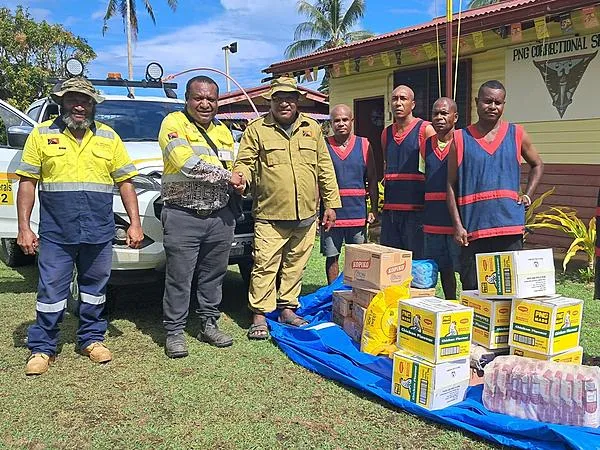
The company, a wholly owned subsidiary of Ok Tedi Mining Limited (Ok Tedi), recently demonstrated this commitment through the delivery of food supplies to the Misima Papua New Guinea Correctional Services (PNGCS) facility.

The donation strengthens the partnership the company is building with its stakeholders on the island.

Ok Tedi Community Relations and Sustainability Superintendent Joshua Dimel acknowledged the professionalism and cooperation demonstrated by the Misima PNGCS team and emphasized the importance of collaboration between industry and government agencies in achieving shared outcomes.

“The assistance provided by CS officers and inmates was prompt and invaluable,” Dimel said.

“This contribution is a small but sincere gesture of appreciation, and it reflects our commitment to maintaining respectful and mutually beneficial partnerships wherever we operate.”

Dimel also highlighted Ok Tedi’s long-established working relationship with Ningerum Correctional Services in Western Province, noting that similar partnerships founded on trust, respect, and collaboration would be fostered on Misima Island as Misima Minerals advances its operations.

The company donated rice, noodles, coffee, sugar, and tinned goods to support the day-to-day needs of the Misima PNGCS facility and its inmates.

Misima Jail Commander Barry Kakeni welcomed the donation and expressed appreciation on behalf of Misima Correctional Services.

“We are grateful for this support from Misima Minerals and Ok Tedi,” Kakeni said.

“This gesture strengthens our relationship and demonstrates the value of cooperation between the private sector and government institutions. We look forward to continued collaboration.”

The donation reflects the shared responsibility of corporate organisations and public institutions in supporting operational effectiveness, community development, and social stability.

Misima Minerals and Ok Tedi reaffirmed that such engagements form part of Ok Tedi’s broader commitment to sustainability, social responsibility, and building long-term partnerships with local stakeholders across Papua New Guinea.

Ok Tedi Mining Limited (OTML) is a majority state-owned entity that operates an open-pit copper, gold, and silver mine located in the Star Mountains of Western Province, Papua New Guinea. The company ships copper concentrate to smelters and ore refineries in Japan, the Philippines, Indonesia, South Korea, India, and Germany.

The company has been operating in the region for more than 40 years and has made a significant contribution to development in Western Province through direct and indirect employment, royalties, compensation payments, and business opportunities.

Ok Tedi is expanding its operations into Milne Bay Province through the acquisition of Gallipoli Exploration Limited, a wholly owned subsidiary of Australian mining company Kingston Resources Limited, for the Misima mine.

The company’s registered office and senior operational management team are located in Tabubil, Western Province, PNG. It also has a representative office in Port Moresby and a marketing and logistics facility in Brisbane, Australia.

To learn more about Ok Tedi Mining Limited, visit: www.oktedi.com.
May 14, 2026

K92 Mining has reported record financial results for the first quarter of 2026, supported by strong operational performance and continued expansion activities at its Kainantu gold mine in Papua New Guinea’s Eastern Highlands Province.

The company reported quarterly revenue of US$236.3 million for the three months ended March 31, 2026, up 63% from the corresponding period last year. Net income rose 66% year-on-year to a record US$116.6 million, or US$0.48 per share, while EBITDA increased 68% to US$179.9 million, or US$0.74 per share. Operating cash flow before working capital adjustments climbed 64% to a record US$132.9 million, or US$0.54 per share.

K92 ended the quarter with record cash and cash equivalents totaling US$287 million, including a record net cash position of US$242.6 million.

Quarterly production totaled 46,743 ounces of gold equivalent, comprising 44,022 ounces of gold, 1.7 million pounds of copper and 38,845 ounces of silver, which the company said was in line with budget expectations.

Ore processed during the quarter rose 37% year-on-year to 142,017 tonnes, with a head grade of 10.9 grams per tonne gold equivalent. Metallurgical recoveries reached 95.1% for gold and 94% for copper, exceeding or matching updated definitive feasibility study parameters. K92 said the new 1.2 million tonnes-per-annum Stage 3 Expansion Process Plant continued to perform well following commissioning completed in December 2025.

The company also achieved record quarterly mine development of 3,007 metres, a 21% increase from the same quarter in 2025, including a new monthly development record of 1,067 metres in March. Subsequent to quarter-end, K92 reported another monthly record of 1,109 metres in April.

Quarterly total material mined, including ore and waste, reached 378,430 tonnes, while ore mined totaled 154,104 tonnes. Record quarterly tonnes hauled to surface reached 410,356 tonnes, supported by the completion of the Decline-Incline Convergence Project and the commencement of surface truck operations in the Twin Incline.

Gold sales during the quarter totaled 44,854 ounces, alongside sales of 1.87 million pounds of copper and 41,467 ounces of silver. Gold concentrate and doré inventory stood at 12,318 ounces as of March 31, 2026.

K92 reiterated its 2026 annual production guidance of between 190,000 and 225,000 ounces of gold equivalent.

The company said 96% of Stage 3 expansion growth capital had either been spent or committed as of March 31, with the project remaining on budget.

During the quarter, significant progress was made on key expansion infrastructure projects, including the Underground Pastefill Plant, Surface Tailings Filtration Plant, Binder Blending Plant and Filter Cake Storage Facility. K92 said first tailings filter cake production from the Surface Tailings Filtration Plant was delivered in late April, while commissioning activities continued.

The miner also reported progress across several underground construction and operational improvement projects, including the completion of the Decline-Incline Convergence Project in January and the Phase 3 Ventilation Upgrade in February, which increased primary mine airflow capacity by 75% to 350 cubic metres per second.

K92 chief executive officer and director John Lewins said the company was pleased to deliver record financial results while continuing to advance key expansion milestones at Kainantu.

“We are well positioned to continue executing on our growth strategy, advance the Stage 3 and Stage 4 expansions, and unlock the broader potential of Kainantu through exploration,” Lewins said.

May 13, 2026

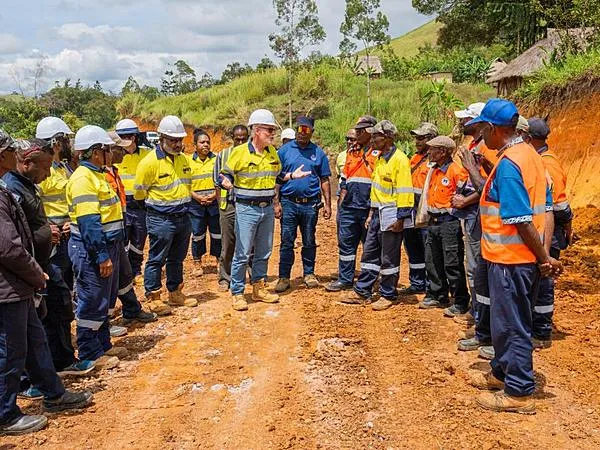
Ok Tedi Mining Limited (Ok Tedi) recently hosted 30 landowners from Ok Birim villages in the North Fly District on an awareness visit to its Bige Operations as part of the company’s commitment to transparency, early engagement and informed decision-making.

The visit provided landowners with firsthand insight into the Bige Operations, which include river dredging, landform rehabilitation and the secure subaqueous storage of pyrite concentrate. The activities form part of Ok Tedi’s long-term environmental management efforts aimed at addressing challenges associated with historical riverine tailings disposal.

Ok Tedi said a similar and enhanced operating concept is being considered for the proposed Tailings Storage Facility (TSF) Project at Ok Birim, which has been identified as the preferred site and is currently undergoing feasibility studies.

The proposed TSF is a key component of the company’s Growth 2050 Strategy and is intended to provide a long-term tailings management solution while progressively reducing reliance on river-based disposal and dredging activities at Bige.

The awareness visit was organised by Ok Tedi’s Community Relations Department to allow landowners to observe operations firsthand, ask questions and gain a clearer understanding of how mine waste is managed in a controlled and environmentally monitored manner.

Ok Tedi emphasised that the TSF project will only proceed following extensive consultation, community understanding and agreement with potentially affected landowners.

The company said engagement activities are guided by the principles of Free, Prior and Informed Consent (FPIC), ensuring communities receive accurate information, adequate time for consideration and the freedom to make decisions without pressure.

Manager Community Relations Jeffery Tom said early awareness initiatives are critical in helping communities make informed decisions.

“It is important that communities understand what a project involves before any discussions about agreements take place,” Mr Tom said.

“Bringing Ok Birim landowners to Bige allows them to see for themselves how similar operations work and the safeguards that are in place.”

Ok Tedi said it remains committed to responsible resource development, environmental stewardship and respectful partnerships with landowners throughout the project lifecycle.

May 11, 2026

The Mineral Resources Authority (MRA) has clarified that no alluvial mining lease has been granted in connection with the recent incident at Sambio Village in Morobe Province, describing reports circulating in mainstream and social media as “factually incorrect.”

In a media statement issued on April 30, 2026, Acting Managing Director Harry Kore confirmed that Mining Lease 687 (ML 687) remains under the statutory application process required under the Mining Act 1992 and has not been approved by the State.

“MRA confirms that Mining Lease 687 has not been granted,” the statement said.

The Authority explained that the registration of a mining tenement application does not equate to the approval or issuance of a mining lease, but merely indicates that an application has been formally lodged and recorded for administrative purposes.

The clarification comes amid public concern and online commentary linking the Sambio Village incident to claims that an alluvial mining lease had already been approved.

According to MRA, all mining lease applications are subject to a comprehensive legal and technical assessment process before any final decision is made. This process includes preliminary compliance checks, public notification, a Warden’s Hearing to consider objections, technical assessments, review by the Mining Advisory Council (MAC), and ultimately a decision by the Minister for Mining.

Under the Mining Act 1992, the Minister for Mining has the authority to either grant or refuse a mining tenement based on recommendations from the MAC.

MRA also noted that mining lease applications likely to affect public infrastructure, existing developments, or public safety may be refused.

The Authority urged landowners, stakeholders, and the public to rely on official information released by MRA regarding mining tenements and regulatory matters.

“MRA remains committed to transparency and compliance with the law in administering mining applications,” the statement said.

The Authority also extended its condolences to the families affected by the recent incident at Sambio Village.

“MRA wishes to convey our sincere condolences to the families and relatives of those who lost their lives in the recent incident,” Mr Kore stated.

May 08, 2026

Adyton Resources Corporation has signed an amended investment and development agreement with East Vision International Holdings Pte. Ltd. and East Vision Group Ltd. for the development of the Wapolu and Gameta gold projects on Fergusson Island in Papua New Guinea’s Milne Bay province.

The revised agreement replaces the original joint venture earn-in arrangement signed in May 2024 and restructures the pathway for East Vision International Holdings, or EVIH, to acquire up to a 50 percent interest in Fergusson Mining Pte. Ltd., formerly MR Exploration PNG Pte. Ltd., which holds the Fergusson Island projects.

Under the agreement, EVIH may invest up to US$9.5 million in the projects. Of this amount, US$8.5 million, referred to as the initial investment amount, will be used to fund project expenditures, while US$1 million will be paid directly to Adyton. The company said US$500,000 of that amount was paid when the original agreement was executed in May 2024.

The amended agreement restructures EVIH’s investment into a two-stage funding arrangement centred on the development of the Wapolu project.

The initial US$8.5 million investment will fund the acquisition of mining and processing equipment, completion of a feasibility study, permitting and licensing requirements, maintenance of tenements and the commencement of operations at Wapolu.

Adyton said the project is targeted to commence operations with a nameplate annual capacity of 300,000 run-of-mine tonnes of gold concentrate by Jan. 31, 2027.

Under the revised structure, EVIH’s non-voting Class B shares in Fergusson Mining will convert into voting Class A shares once the initial funding obligations are completed and the Wapolu project commences operations and reaches nameplate capacity. At that stage, Adyton and EVIH are expected to each hold a 50 percent interest in Fergusson Mining.

The agreement also requires an additional US$500,000 payment to Adyton within 90 days of the commencement of Wapolu operations.

If the required milestones are not achieved by May 2, 2027, any unconverted Class B shares may be cancelled without consideration.

Should the initial investment amount prove insufficient, EVIH may, at its discretion, provide Fergusson Mining with a shareholder loan of up to US$2 million carrying interest at 10 percent per annum.

The amended agreement also outlines a second-stage financing arrangement for the Gameta project. The proposed development includes a definitive feasibility study and construction of a mining and processing operation with a capacity of at least 2 million run-of-mine tonnes annually.

Adyton said the second-stage development is expected to be financed through a loan facility from East Vision Group, EVIH’s parent company, with interest set at 8 percent per annum. Interest and principal repayments would be prioritised from project cash flows before shareholder distributions.

As part of the transaction, Adyton has agreed to grant EVIH up to 4.5 million restricted share units under the company’s amended omnibus incentive plan.

The restricted share units will vest in three tranches tied to performance milestones at the Gameta project.

The first 1.5 million units will vest upon completion of the Gameta feasibility study to the satisfaction of Papua New Guinea’s Mineral Resources Authority by Dec. 31, 2026.

A second tranche of 1.5 million units will vest upon the granting of the Gameta mining lease, the CEPA environment permit and completion of all required landholder approvals.

The remaining 1.5 million units will vest upon the commencement of operations of the first of two 1 million run-of-mine tonne-per-year processing modules before May 1, 2028.

Adyton said the transaction is an arm’s-length deal and qualifies as an exempt transaction under TSX Venture Exchange policies. The company said no finder’s fees would be paid in connection with the agreement.

Adyton Managing Director and Chief Executive Officer Tim Crossley said the amended agreement provided a simplified structure for advancing the Fergusson Island projects toward production.

“This amended agreement simplifies the path to a 50/50 partnership with EVIH while preserving core funding elements to advance the Fergusson Island projects toward production,” Crossley said.

May 05, 2026

Tolu Minerals Limited reported continued operational progress at its Tolukuma Gold Mine (TGM) during the March 2026 quarter, as the company moves toward a staged restart targeting first production in 2027.

According to its quarterly report for the period ending March 31, 2026, the company maintained momentum across underground development, plant refurbishment, exploration and infrastructure, positioning the project for a controlled return to production.

The restart strategy is underpinned by a phased ramp-up targeting approximately 500 tonnes per day, with production expected to commence from the first quarter of 2027.

High-grade drilling reinforces near-mine potential

Exploration results from the Zine North prospect highlighted the strength of near-mine resource potential, with multiple high-grade gold intercepts reported during the quarter.

Key results included 4.10 metres at 11.2 grams per tonne (g/t) gold, including 1.1 metres at 21.6 g/t, alongside additional intercepts reaching up to 26.6 g/t gold. These results confirm mineralisation at relatively shallow depths, supporting both open-pit and underground development scenarios.

As shown in the drilling tables and maps in the report, including the plan view on page 5, the Zine vein system extends across a structurally controlled corridor with multiple high-grade shoots, reinforcing its potential to support early-stage production and longer-term resource expansion.

The company is scaling up its drilling capacity to accelerate resource delineation, with seven rigs currently in operation and an eighth expected to be deployed in June 2026.

Underground development and plant readiness progress

Underground operations continued to improve access and establish critical services, with dewatering and rehabilitation progressing in line with expectations. These activities are considered essential to enabling sustained mining operations once production resumes.

At the processing plant, refurbishment of key components — including the SAG mill, Knelson concentrator and Acacia reactor — is nearing completion, while elution and carbon systems are already operational. The company is assessing opportunities for early gold recovery ahead of full commissioning.

Supporting infrastructure is also advancing, including development of a hydroelectric power solution and construction of an on-site assay laboratory, which is expected to be commissioned in the third quarter of 2026.

Structured pathway toward production

Managing director and CEO Dr Chris Muller said the March quarter demonstrated disciplined execution across all operational fronts.

"The March quarter reflects disciplined execution across all workstreams at Tolukuma, with measurable gains in underground access, plant readiness and overall site capability,” Muller said.

He added that exploration results validate the company’s near-mine strategy and support early production plans. “High-grade drilling results at Zine highlights the effectiveness of our near-mine exploration strategy and reinforces the potential to support early production,” he said.

Muller noted that assay results from additional drilling campaigns are pending, with further updates expected in the June quarter. “We anticipate a significant suite of new drilling results to be announced this June quarter,” he said.

The company is also progressing its Mine-Defining Project, which is designed to unlock deeper high-grade zones and support long-term mine planning and resource growth.

“Our focus is on a safe, controlled transition to production. The team continues to execute with consistency, and we are well positioned to build further momentum through 2026,” Muller said.

Funding and corporate position

During the quarter, Tolu secured A$23.75 million through the issuance of convertible notes to Petrosea Services Solutions Pte Ltd, strengthening its balance sheet ahead of development.

Exploration and evaluation expenditure for the period totaled $7.8 million, reflecting ongoing investment in drilling, underground works and project development.

The company holds a 100% interest in Mining Lease ML104 and surrounding exploration licences in Papua New Guinea, with tenure governed under the country’s Mining Act.

With drilling accelerating, infrastructure advancing and plant refurbishment nearing completion, Tolu said it enters the June 2026 quarter with strong operational momentum as it progresses toward restarting gold production at Tolukuma.

May 05, 2026

Geopacific Resources Limited has announced changes to its senior leadership and board as it moves toward completion of the definitive feasibility study (DFS) for its Woodlark Gold Project in Papua New Guinea.

The company said the leadership transition is aimed at aligning its management structure with the next phase of development, including project financing, construction and operations.

Hamish Bohannan has been appointed managing director, effective May 1, 2026, bringing more than four decades of mining industry experience, including delivering projects from study through to production.

James Fox has stepped down as chief executive officer, effective April 30, 2026, with the board acknowledging his role in advancing the Woodlark project to what it described as a development-ready stage.

Rowan Johnston has been appointed non-executive chairman, replacing Graham Ascough, who will transition to a non-executive director role.

Geopacific said the DFS is expected to confirm the technical and economic viability of the 1.67 million-ounce Woodlark Gold Project, supporting the company’s progression toward development.

The company said the leadership changes come as it enters the final stages of the DFS and prepares to transition into execution and construction phases.

Following the restructuring, the board will comprise Rowan Johnston as non-executive chairman, Hamish Bohannan as managing director, and non-executive directors Michael Brook, Graham Ascough and Hansjoerg Plaggemars.

Geopacific said the Woodlark project is positioned within a broader context of growing international interest in resource development and infrastructure investment in Papua New Guinea.

May 05, 2026

Great Pacific Gold Corp. has reported initial drilling results from the Kavasuki prospect at its Wild Dog Project in Papua New Guinea, alongside an updated diamond drilling program for 2026.

The company said drilling at Kavasuki began in February 2026, with five diamond drill holes completed to date totalling 688 metres. Results from holes KVH-01, KVH-03 and KVH-04 had been previously released, while results from hole KVH-05 have now been received, with a sixth hole currently underway.

Among reported intercepts, KVH-01 returned 58.9 metres at 2.50 grams per tonne gold equivalent (g/t AuEq) from 38.6 metres, including 4.6 metres at 8.56 g/t AuEq. KVH-03 returned 38.4 metres at 2.23 g/t AuEq, including higher-grade intervals of 10.31 g/t and 16.24 g/t AuEq, while KVH-04 intersected 59.9 metres at 1.43 g/t AuEq. KVH-05 returned 29.5 metres at 0.45 g/t AuEq.

The company said results from KVH-05 confirm the continuation of quartz–carbonate veining, silicification, hydrothermal brecciation and gold mineralisation, although grades were lower than those returned in earlier holes.

According to the company, the results support the interpretation of a broad, structurally controlled hydrothermal system, with higher-grade mineralisation likely concentrated within discrete structural positions.

Drilling is continuing with hole KVH-06, which has reached approximately 90 metres downhole and is aimed at refining the geological and structural interpretation of the system, including assessing lateral continuity and grade variability.

The company said drilling progress has recently been affected by adverse weather conditions associated with Tropical Cyclone Maila, which brought elevated rainfall and reduced drilling efficiency in parts of Papua New Guinea during April.

Great Pacific Gold plans to drill an additional six holes totalling about 900 metres to test approximately 500 metres of strike length at Kavasuki, with drilling expected to be completed by the end of June 2026.

The Kavasuki prospect is located within the company’s Wild Dog Project in East New Britain, which hosts a 15-kilometre structurally controlled mineral corridor containing multiple epithermal gold targets and porphyry copper-gold potential identified through geophysical surveys.

Great Pacific Gold said the 2026 exploration program is focused on systematically testing targets along the Sinivit–Kavasuki system and the broader Wild Dog structural corridor.