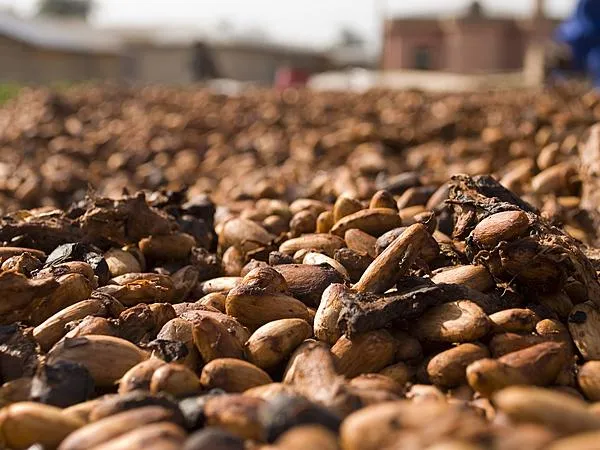
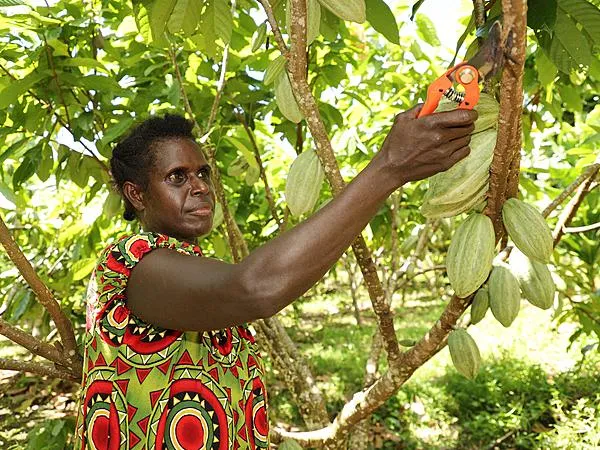
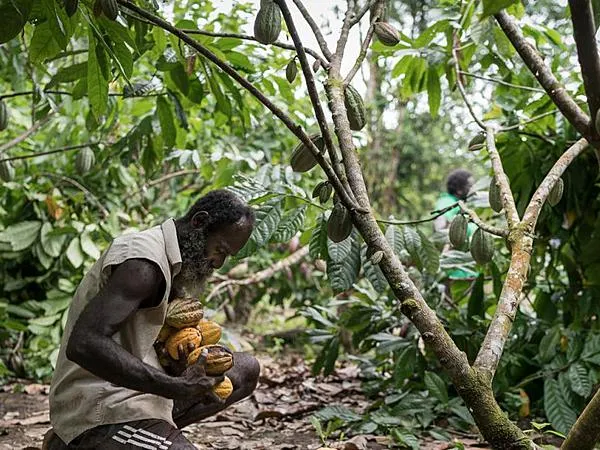
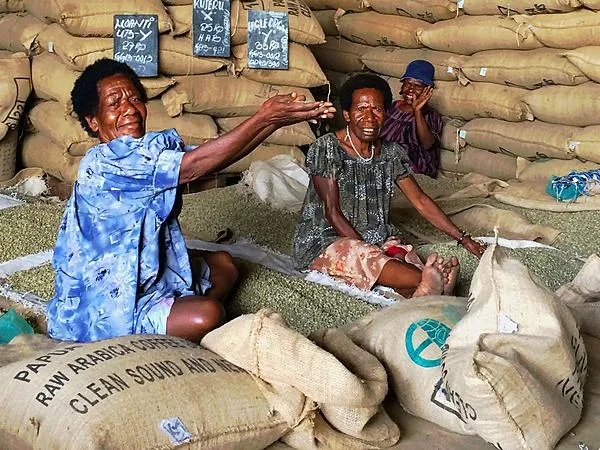
If production increases from 4,500 tonnes to 10,000 tonnes a year, Morobe may likely net K100 million a year.
According to the Cocoa Board of Papua New Guinea (CBPNG) chief executive officer Boto Gaupu, the profit of the province may increase if the tonnage is increased too.
“Morobe used to produce about 800 tonnes of cocoa in a year but over the last five years, that has gone up to 4,500 tonnes,” Gaupu said, adding that public-private partnership support is needed. “That is why CBPNG, in its remote cocoa freight subsidy programme initiative, is looking at partnering with stakeholders to help rural farmers in the cocoa producing provinces to transport their produce to established markets.”
Gaupu said CBPNG was bent on helping farmers get their produce to the market. “For Morobe in 2017, CBPNG paid some money for freight costs to NCA and today, is the replenishment of the funds depleted over the years in freighting services rendered by NCA in Morobe.”
The challenge, he said, was that farmers need to produce quality cocoa.
“With the government intervention to increase the cocoa price through its prize support programme, farmers will now receive farm gate price higher than the market price,” Gaupu said.
Prime Minister Hon James Marape has urged the nation to venture into the small- agricultural business.
“We will partner districts and provinces who want to help the National Government empower our people with increased revenue from their investments in agriculture,” he said. “There is a global demand for coffee, vanilla, cocoa, copra, oil palm, rubber, etc. The Government’s investment to give good prices to the growers will mean increased production and increased export, which is beneficial to the country and our people. Every citizen of our country has land, which can produce one or two cash crops, for which our citizens can get good prices for their produce. The Government, through each district and province, will buy at points where growers are. This will cut away middlemen and it will be a win-win for everyone.”
He added, “My Government is focused on empowering the majority 80 per cent of our people who are presently living a subsistence life. This is a deliberate policy to bring this majority of Papua New Guineans into the cash economy. We are not just talking but implementing our policies like agriculture price support, and SME loan scheme, with Budget support. I encourage Papua New Guineans not to laze around but pick up an agriculture SME – which is now profitable with better prices through the Government’s price support policy.”
He made the call at East Sepik in front of cocoa and vanilla growers. Also in attendance were East Sepik Governor Hon. Allan Bird, Agriculture and Livestock Minister Hon. John Simon, State Enterprises Minister Hon. William Duma, Education Minister Hon. Jimmy Uguro and Defence Minister Hon. Solan Mirism.
According to Department of Agriculture and Livestock (DAL) Highlands region provincial and industry support services director John Jave, the spice industry needs growth and development - with farming, processing, and supporting household farming tagged as vital to the economy of the country.
“Spice in PNG has a huge potential in generating foreign exchange income if given the support for development and establishment of value chain mechanisms,” he said. “With the current trend of increase in the spices at the international arena, PNG has the potential in benefiting from such opportunities for economic growth,” Jave said government funding was crucial. I see the spice sector is dead and only few active farmers dedicate their time, effort and resources to strive against the tide of imports. This is a very unfair state for this alternative cash crop that has the potential to perform like coffee.”
Jave has expressed his appreciation for the government for touching on rural through its intervention programme and agricultural price support.
“It is a big move in the right direction that should trigger the transformation of rural communities and economic recovery,” he said. “Agriculture is the life-stream that clothes and feeds 85 per cent of the Papua New Guineans.”
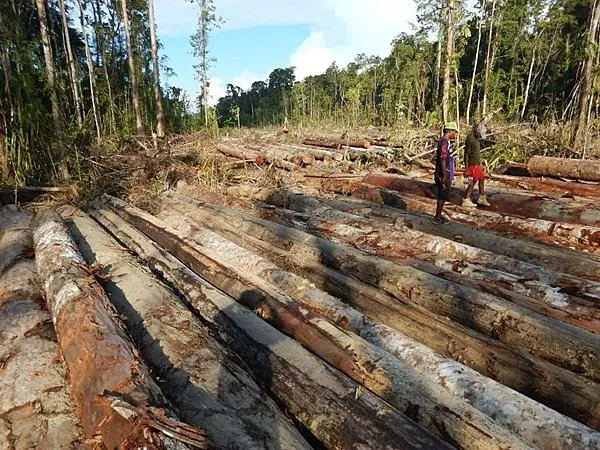
The Tonolei logging project in South Bougainville is set to start next month.
This was disclosed by local MP Timothy Masiu, the Communication and Information Technology Minister, who said that resource developer KKCL based in East New Briain would land its equipment and machinery next month.
He also thanked the Tonolei Development Corporation (TDC) landowner company for getting the project going, since this has been delayed for two years to give time for the landowners to work on social mapping exercises and register incorporated land groups. He also asked for support from the Autonomous Bougainville Government.
Masiu also expressed his appreciation to TDC Chairman John Kebau for showing accountability and transparency by giving an acquittal report. He said that his DDA would resume to support and work with the TDC.
In order to have a better society, start with the lives of each family first. To do this, empower them with programmes that can boost their economic independence.
Thus, said Kokopo MP Emil Tammur, who added that coconut and cocoa development programmes would grow the local economy so that families can earn. He added that the priority of the Kokopo development authority (DDA) board was to support the agricultural development programmes in the vicinity.
“Agriculture and farming is where the bulk of the population back in the ward levels are heavily involved in, therefore, our focus is to support the programmes that can help change our people’s livelihoods,” he said.
Tammur noted that it was the cocoa nursery farmers who implemented the agriculture programmes which the board had planned for. The relationship between these two sectors began in 2015 but stopped last year when the pandemic happened. The funds for the farmers were then redirected to the covid pandemic.
“We took the funds from these programmes to support our family members from the six wards in the Raluana LLG who were hit by the Covid-19 pandemic early last year, that is why most of the payments were delayed,” he said.
Tammur expressed his gratitude to Joan Magaga, officer-in-charge of the Kokopo rural development office, and her team for giving support to farmers. “We wouldn’t have come this far if not for the partnerships between all stakeholders,” he said.
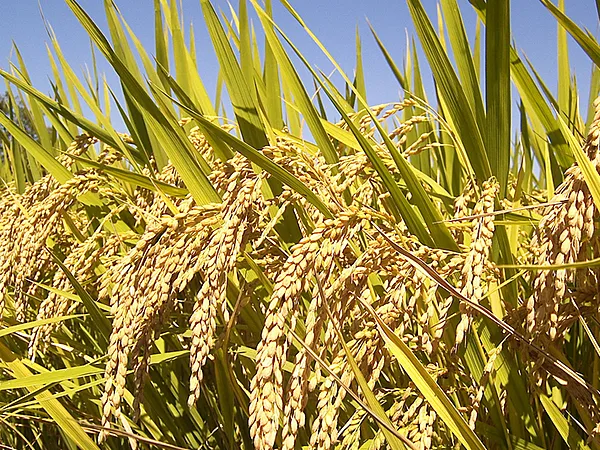
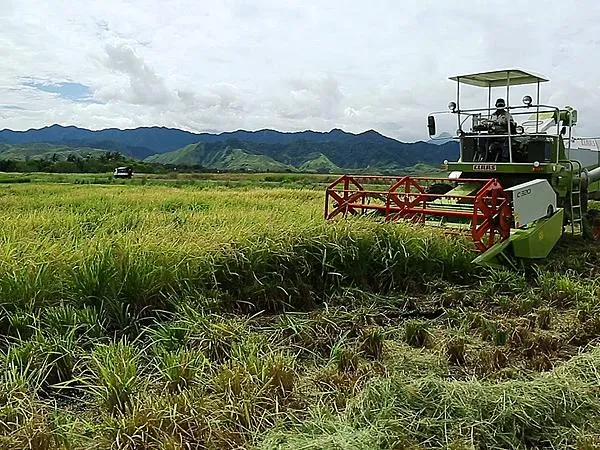
In sync with the goal of the government to limit rice imports, Agriculture and Livestock Minister John Simon said that it is perhaps best that rice importers invest in the local rice economy.
“We’d like to see companies investing in the country,” he said. “On rice, what we are going to do is to see us growing the industry. We must not always continue to import. We must look at ways to grow the industry here. We would like to go into partnership with rice importers and start growing rice in the country.
He added, “One of the problems that everyone’s been telling me about is the issue with the land because 97 per cent of land in the country is customary-land owned by our people.
“But we would like companies to partner landowners and make arrangements to grow rice in the country. This is a challenge to all the rice importers, if you are bringing so much, you’ve got to start producing so much in the country at a certain level, and the other certain level you import. If we don’t start now, when are we going to start?” Simon said. “We are going to start now and start advising our partners and friends that we are doing this. We want people involved in the industry to invest in the country.”
Simon added that the Department of Agriculture would like to partner with the Livestock Development Corporation as the government can use the land to plant more rice. “We would like to bring partners in so we develop some of that land,” he said.
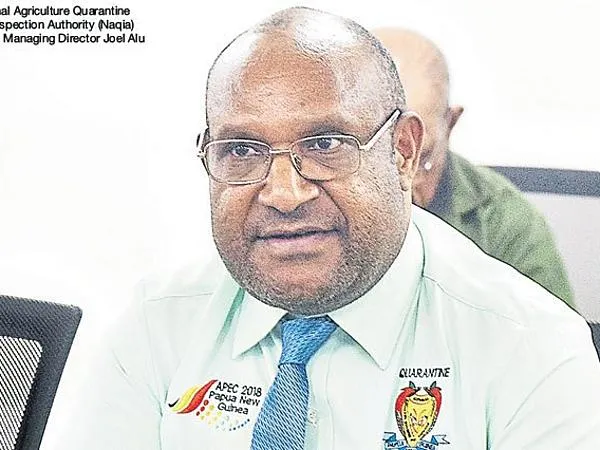
Cabinet has approved the K20 million submission to establish the facilities of the National Agriculture Quarantine and Inspection Authority (Naqia) across the country.
According to Agriculture and Livestock Minister John Simon, “The managing director Joel Alu and I took the submission to the Cabinet in which we got an approval of roughly K20 million to set up Naqia quarantine facilities throughout the country,” he said. “The country is growing and Naqia is understaffed.”
The plan shows the particular strategies and achievable milestones over a duration of five years.
“Agriculture is viewed as the industry with the broader potential to raise the highest number of small and medium enterprises and entrepreneurs in the country,” Simon said. “Accordingly, it is anticipated that the number of businesses associated with agriculture will rise to levels where Naqia will be scrambling for capacity and resources to facilitate unprecedented growth in trade in the immediate future. PNG is part of the global village and Naqia is required to foster partnerships with the international community to enhance our socio-economic development aspirations in a safe and secure environment. Our global integration, collaboration and partnership come with challenges and risks to the foundation of our livelihood from regulated pests and disease on animals and plants through the movement of goods, people and transportation.”
He continues, “Naqia’s vision, mission and strategic objectives align itself to the national policies and strategies. It clearly demonstrates the authority’s commitment to supporting the implementation of these policies. The plan provides the strategic direction and leadership in fostering collaboration and cohesive partnerships with core stakeholders, regional and international network partners in addressing biosecurity legislation and relevant policies affecting compliance with international sanitary and phyto-sanitary standards."
In the next four years (2021 to 2024), the export and production value of spices is expected to rise from K200 million to K500 million.
According to the chief executive officer for PNG Spice Industry Board Michael Waisime, plans are to promote and develop a spice industry towards a sustainable economy. He said that to increase the production, training of farmers and industry participants, as well as crop yielding and quality at the farm level, are needed.
For the last five years from 2014 to 2018, the production volume totals 202,223kg (202.2 tonnes) and the export value amounts to K202.2 million. The current projects for the next five years, meanwhile, is expected to rise to 1,450,000kg (1450 tonnes) and that in kina value is expected to grow to K500 million.
He also added that the development of all activities should be catered for with the goal of increasing production, quality and crop yield at the farm and industry level.
“These include rehabilitation, extension and new development, nursery establishment and seed or planting materials distribution, facilitating market and credit access, support to downstream processing operations and extension staff and farmer training in major spice growing provinces,” he said. “Apart from vanilla, marketing of other spice crops continues to be a constraint to increase productivity. Thus, the output will identify and provide market access to spice producers both locally and internationally and the dissemination of market information.”
Mr Waisime added that this output focuses on developing monitoring systems at the farmers and exporters level and setting a standard grading classification policy for spice crops.
Spice licensing and registration for traders and exporters have already been drawn and awaiting the board to approve and review its implementation in 2021.
However, Mr Waisime said that efforts for the distribution of cuttings or seedlings are needed in all locations to increase the production of spice crops.
Meanwhile, the spice industry praised the government, Department of National Planning and other stakeholders in improving this industry. It is only right that the government through the Department of National Planning and Monitoring funds the spice programs for some diversification in the crops of PNG that has challenges in keeping up with the prices of the world.
With the resealing and the road maintenance project to start next year on the New Britain Highway from Kokopo to Bitagunan, Cocoa farmers in East New Britain (ENB) will have better access to markets.
This follows after the PNG-Australia partnership has awarded a K9.3 million contract.
According to the Australian High Commission, connecting farmers has been the prime focus in the partnership road maintenance programme, delivered through the Department of Works.
Communities in Gazelle have reported an annual increase in cocoa production, delivering exciting opportunities for farmers in the region and putting attention to the significance of road repair in the area.
Moveh Apelis, who had farmed cocoa in East New Britain for the last 45 years, said that there had been a rise in the last five years. He is now supporting 1,000 local cocoa growers as the lead farmer with productive partnerships in agriculture.
“At Kerevat alone, in 2016, Agmark recorded 6,000 bags of cocoa. In 2017, it jumped to 9,000 bags and from 2018 it jumped up to 20,000 bags,” Moveh said, estimating that for the past two years in 2019 and 2020, the production of cocoa in Kerevat had increased from 20,000 to 30,000 or 40,000 bags, which translates to 2,500 tonnes.
“With increasing production, improving access to markets is essential, ” he said. “If farmers are travelling on good roads, it should reduce the cost of transportation and support us to get a cleaner product to the market.”
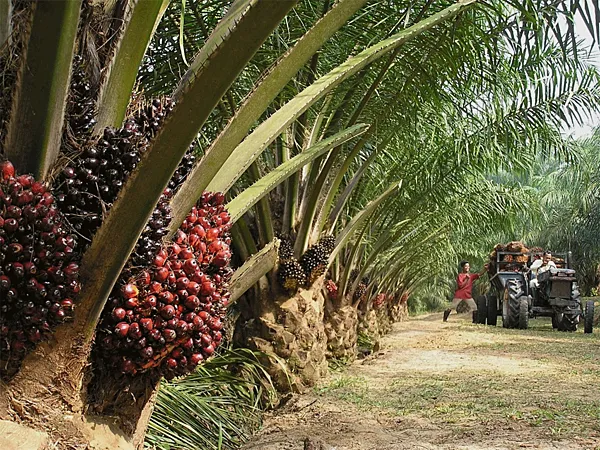
Palm oil prices have returned to normal.
According to New Britain Palm Oil Ltd (NBPOL), the cost is presently at US$880 (K3,019.95) per metric tonne cost, insurance, and freight Rotterdam mark.
Country manager Robert Nilkare said that this important achievement was a source of income for employees and smallholders and of foreign currency for the country. He added that this was a 60 per cent increase from the bottom of the market and above the cost of production, making oil palm a lucrative business for smallholders.
“The palm oil sector is currently very strong with demand for our products as food ingredients only slightly reduced in the face of significant reductions in supply,” he said. “As such prices have recovered to pre-pandemic levels and are a significant source of foreign currency for the country and a critical source of income for our smallholders and employees.”
Nilkare added that their firm has been working extra hard to protect their workers against the coronavirus and has put in place safety and health measures and protocols around the area.
“There have been a number of additional protocols that had to be implemented to ensure that the business has been able to continue as it is critical to the livelihoods of so many Papua New Guineans,” Nilkare said.“2020 has been a good year for the business due to recovering prices and the strong management that believes in the future of agriculture in PNG.”
On NBPOL topping global ranking in transparent and sustainable oil palm production, Nilkare said, “It is very important to our customers in particular that they are using sustainably sourced palm oil that is supporting the development of Papua New Guinea.”
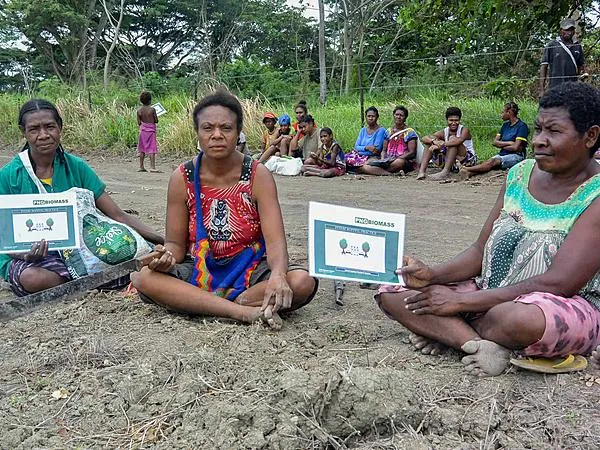
To help landowners maximise the productivity and benefits of their land, PNG Biomass is promoting and encouraging the practice of intercropping - where individuals can plant cash crops in between rows.
An example is the communities in Markham Valley where new landowner groups are now expecting to open up their land to small-scale agroforestry production. With landowners running their own intercropping businesses, PNG Biomass has set a few simple guidelines.
A team from PNG Biomass regularly conducts intercropping training and field demonstration - with the most recent held at Mempem-ampes with over 30 local farmers present. Two of these farmers provide continuous monitoring and instruction to additional farmers in the area, reporting back to the PNG Biomass team.
At the start of 2019, a baseline assessment was conducted on intercropping practices across the Markham Valley. The results included the best incomes and harvests generated from melons, pumpkins, and cucumbers. The single harvest income of women was around K3,000 from intercropping. As a household, families generated at around K2.4 million a year, to which some communities claim to be a conservative figure.
With more and more lands opening up, more local farmers are going this route.
Oil Search’s PNG Country Manager, Leon Buskens, said that the PNG Biomass is one instance where the firm engages with communities. “First we go out and speak directly to the landowners. We listen to what they need, want, hope, and expect to see in the future. It is a long process of engagement, patience, mutual understanding and managing expectations, but above all, we focus on building trust – and trust is something that takes time and flows from your actions. PNG Biomass has been working with the people in the Markham Valley for 10 years, they know each other very well, and together they have found a way to maximise the benefits of the land. Agroforestry is such a great example of collaboration, of landowners leveraging the investment and capacity of the private sector.”
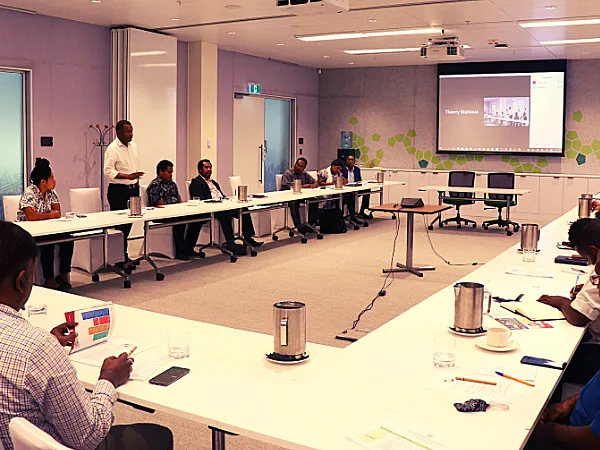
As a measure to partner with financial institutions, the Centre for Excellence in Financial Inclusion (CEFI) recently conducted a workshop in agriculture lending and implementing the Market For Village Farmers Project.
In his opening remarks, CEFI Executive Director Saliya Ranasinghe said, “One of the differences with this particular project is that we would like the banks to be equal partners in project implementation from the beginning, so you all will know what is happening and what each partner is doing and embrace the process of the project,” he said.
Ranasignhe highlighted other components such as technical service providers, digital financial services with addition to risk mitigation and product design, and encouraged financial institutions to share the view on agricultural lending.
“We would also like to introduce some risk mitigation so one option is that we have Bank of Papua New Guinea (BPNG) to design a credit guarantee cooperation so we would have a special dedicated window for agriculture lending,” he continued. “If we all are to change agriculture in Papua New Guinea, you all should play a pivotal role and take the unwanted risk, but we will revise better means of mitigating the risk and take it forward and we are positive that this project will be a landmark from which we can definitely show to other agriculture projects how to work with banks.”
For his part, Manager-Banking Supervision-BPNG Sabina Deklin thanked the financial institutions for their commitment in bringing financial services to Papua New Guineans.
“The focus for financial inclusion has been the focus of the Central Bank for a number of years and this is ensuring in partnering with the financial institution that we take these financial services to the rural areas and CEFI is a creation of this and its one of its core mandates,” Deklin stated.
The workshop also featured presentations from the Department of Agriculture and Livestock, Deputy Acting Secretary Regina Nukudj and Market For Village Farmers Project Manager Robert Lutulete; and Thierry Mahieux, an international consultant with International Fund for Agriculture Development (IFAD), who talked about Digital Financial Services For Agriculture-Innovation in Agriculture Lending and Risk Mitigation via zoom.
The workshop was attended by financial institutions such as Bank South Pacific, People’s Microbank, Nasfund Contributors Savings and Loans and East New Britain Savings and Loans, and also representatives from the Productive Partnership in Agriculture Project (PPAP) and World Bank.
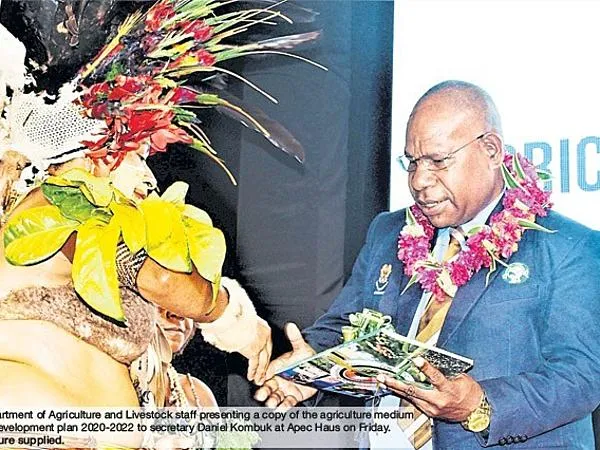
As part of the government’s medium-term plan to reach its vision of going rural, Prime Minister James Marape has recently launched the K2.3 billion agriculture medium-term development plan 2020-2022 which took a year to plan and design.
The Agriculture Department and the Department of National Planning and Monitoring worked on this development plan.
According to the Department of Agriculture and Livestock (DAL) secretary Daniel Kombuk, this is already an achievement after years of chaos. “The launching of this sector plan sends out signals that the agriculture sector is transforming,” he said.
He added that the plan was to bring back rural areas which were forgotten and neglected over the years. This was also to take minds off Port Moresby.
“We are on a mission to clean up the rooted corruption in the agriculture sector to restore its pride,” he said. “Under our leadership, the Agriculture Department is the first sector to have the plans align with the government’s plan and many more good things are in the pipeline.”
Kombuk added that there were many challenges to providing new developments in agriculture. Among them included sector coordination, management and unavailability of agricultural statistics and information.
But now, the sector and department agencies are now ready to provide these services. With the encouragement of Agriculture and Livestock Minister John Simon, they would continue to work towards rescuing the sector for the benefit of the people.
Kombuk added that in spite of the many outstanding matters to attend to, the stakeholders, farmers, and other people concerned may well rest assured that agriculture is well on its way to development and change.
“We took over a department that was scandal-ridden and listed as most corrupt sector of the government,” he said.“This department will no longer be on that list but will be transformed to its old glory days.”
In a visit to the Erap Department of Agriculture and Livestock (DAL) station in Huon Gulf, Morobe, Agriculture and Livestock Minister John Simon said that agriculture can boost and contribute to the economy of the country.
He added that through this industry, the country can increase foreign exchange (forex) by increasing export in commodities and the import replacement, which is done through food security, livestock development, and other agricultural commodities produced locally.
“When we develop all these areas in our system, we will see that we don’t send forex out rather we save a lot in that,” he said. “Currently, we are sending a lot of forex out because we are relying on importing these things.”
Simon said that the government was eyeing cutting down imports with the sector achieving a reduction of 30 per cent by 2022.
Simon added that with the country not relying on the importation, the economy would get a big boost. “That is why Erap station is now being upgraded to be one of the main stations and a few years from now it will be one of the institutions of the sector that supports import replacement,” he said.
Simon added that Erap is a venue for agriculture development and programmes where stakeholders and the government can unite and work together.
Starting October 2020 all coffee exports will only be facilitated through the use of the Coffee Industry Corporations (CICs) new online export management system.
This is in line with the CIC’s strategic focus on moving towards digitalization by processing and documenting coffee exports from Lae and other authorized ports using the new online Coffee Export Management and Facilitation System (CEMFS).
Uptake in ICT, mobile technology and digitalization has increased, very much evident globally and even in PNG with increased uptake by many SMEs, business and some government departments since the lock downs and restrictions brought on by the advent of the global Coronavirus pandemic.
Digitalization is the preferred solution for many entities and individuals, including the Coffee Industry Corporation.
CEMFS was financed by the Productive Partnerships in Agriculture Project (coffee component) at a cost of K200, 000 and developed by SATEC, a Brisbane-based internet technology (IT) firm owned by Papua New Guineans.
The new online system will fast track processing of coffee exports including common shipping documents efficiently with less fuss and delay compared to the traditional manual and paper documentation process.
According to a press release, Chief Executive Officer of CIC Charles Dambui said: ‘The new service will improve coffee export operations and enable PNG to be on par with international partners’.
Project Manager for PPAP coffee Potaisa Hombunaka said IT is the way forward in today’s digital world to bring efficiency and remain competitive in coffee business.
STRINGENT PROCUREMENT PROCESS
The coffee manager added a normal stringent procurement process was involved to engage a qualified national firm to develop and set up the online export system.
“I believe in promoting Papua New Guineans. We have more than enough capabilities in the country and we can always seek their expertise from time to time.”
Simon Areke of SATEC said CIC as the coffee industry regulator will be the administrator of the online service and assured coffee exporters that security of their offshore coffee contracts and other company information is guaranteed.
“We have installed block chain with excellent security systems where export contract details cannot be accessed by others,” he assured.
BENEFITS OF CEMFS
Benefits of the online Coffee Export Management and Facilitation System include;
Exporters can monitor status of their application online.
It is user friendly and simple to use where exporters can quickly edit information on automated forms using mobile phones and tablets from any location with less hassles and greater convenience
24-hour threshold for responses to applications with a reminder to avoid delays
Less number of forms to fill in with all forms automated
Convenience of online payment options
“As time goes by CIC will integrate other features to make the online export Management system to be dynamic and robust.
Our aim is to reduce turnaround time and also continue to improve and promote performances of all coffee export business,” Mr Dambui said.
On behalf of PNG coffee industry, he acknowledged the World Bank and the International Fund for Agricultural Development (IFAD) via PPAP (coffee) for its continued financial assistance to improve CIC’s capacity including installation of the CEMFS.
Sam Menanga, Manager of Industry Regulations and Compliance (IRC) division of CIC described the new system as ‘a big improvement’ and challenged all coffee exporting firms, freight forwarders and others “to work as partners to improve it”.
SATEC consulted with all stakeholders including CIC’s Lae export office, exporters, Customs, NAQIA and freight forwarders to put together a system that everyone would appreciate.
The user friendly system uses automated forms that the CIC has been using with exporting firms, freight forwarders, National Agriculture and Quarantine Inspection Authority and others to process and certify export of coffee.
STAKEHOLDERS THAT ATTENDED AND WHAT THEY THOUGHT
Coffee processing and exporting firms from all Arabica coffee provinces in the Highlands attended the online introductory session held at the Goroka Phoenix Hotel/Steakhouse. Some firms that attended were Colbran CoffeeLands Ltd, New Guinea Highlands Coffee Export, Coffee Connections, WR Carpenters, Rilke Coffee, Kongo Coffee, Kosem Coffee Ltd and Wapenamanda Coffee Factory.
Exporters were impressed and very positive of this milestone achievement for the industry with remarks or phrases like “highly commented” and “long overdue”.
David Rumbarumba of Kongo Coffee Ltd, a participant said “it makes our job easier for export processes but it is up to all of us to make it work”.
Mark Munnul of Kosem Coffee Ltd in Jiwaka Province asked if CIC can forge an understanding with national carrier Air Niugini to support the online system to include freighting of coffee for micro lots or speciality markets.
Otherwise, he was impressed with this new service saying the online system will help speed up the process of filling so many shipping documents.
Jemmima Colbran and Esther Vialeahy of Colbran CoffeeLands in the beautiful Aiyura Valley of Eastern Highlands commended CIC and PPAP coffee for introducing what they described as a ‘long overdue service’.
EXPECTED WIN FOR FARMERS
Overall the new system will make it more efficient for exporters with benefits like lesser time and cost savings expected to be passed back to hundreds of thousands of small holder farmers across PNG.
When we focus on growing or developing an industry, we must also ensure that the same attention is given to investing in research says Minister for Agriculture and Livestock and Member for Maprik John Simon.
Minister Simon spoke these words in the presence of heads of the Kokonas Indasri Koporesian while paying an official visit to the organization’s Stuart Research Station located in Murunas, Madang province.
The research station was established under the PNG Cocoa and Coconut Research Institute to conduct breeding and evaluation studies as well as agronomy and entomology research.
According to studies, Copra is the fourth most significant agriculture cash crop of PNG. An estimated 2.6 million people are engaged in coconut activities in PNG to either generate income and / or as food to supplement their livelihoods.
The Minister for Agriculture arrived in Madang last week as part of his office’s focus on visiting all major projects and programs under DAL to see for himself the status of the programs and projects.
Minister Simon said research institutes are very important as they will ensure the smooth operation in terms of development and growth of an industry.
He said I decided to carry out these sort of visits to get straight to the core of many issues being faced in this great industry; There are many issues such as why are plantation’s being run down, why are there no growth and development in crops when PNG is rich and surrounded by them.
He noted that in 2011 it was established that Copra and coconut prices were going downhill; what are we doing about that, something is missing along the line there is continuity in the industry, crop production needs to be increasing and this is where research and science comes in.
The Minister noted that he appreciated what KIK is doing and one of the pathways is to go downstream that will add value to the industry, one pathway is also to go into cottage industry.
He said he is happy with how the station at Murunas is being run and it is much better looked after than other station he has visited in the country.
“These are the institutions that are run by the state adding the at the Prime minister says there is money in the industry, we need to be able to raise money for ourselves; and one way of doing this is through researching the best pathways to commercialize each commodity” he said.
He said my office is ready to support any development in the industry as long as each industry is willing to develop and grow the crops under their responsibilities.
The research center has also gone into integrated crop farming where various different crops are now being observed and tested to integrate with coconut trees; this also includes pineapples and vanilla plants.
In terms of commercialization – there are currently 16 Small to Medium Enterprises engaging in the Coconut Industry with the aid of KIK.
Meantime, copra farmers in Mirap in Sumgibar LLG, Sumkar district who are currently experiencing support from the local Member’s office with a K200 000.00 subsidization of cash crop prices.
Minister Simon said DAL will wholly support this move by the local MP and Minister for Sumkar and will ensure that the people are a major beneficiary in this initiative.
Follow on LinkedIn:
PNG Business News
Be the "First" to get our exclusive Digital Magazine & Weekly Newsletter.