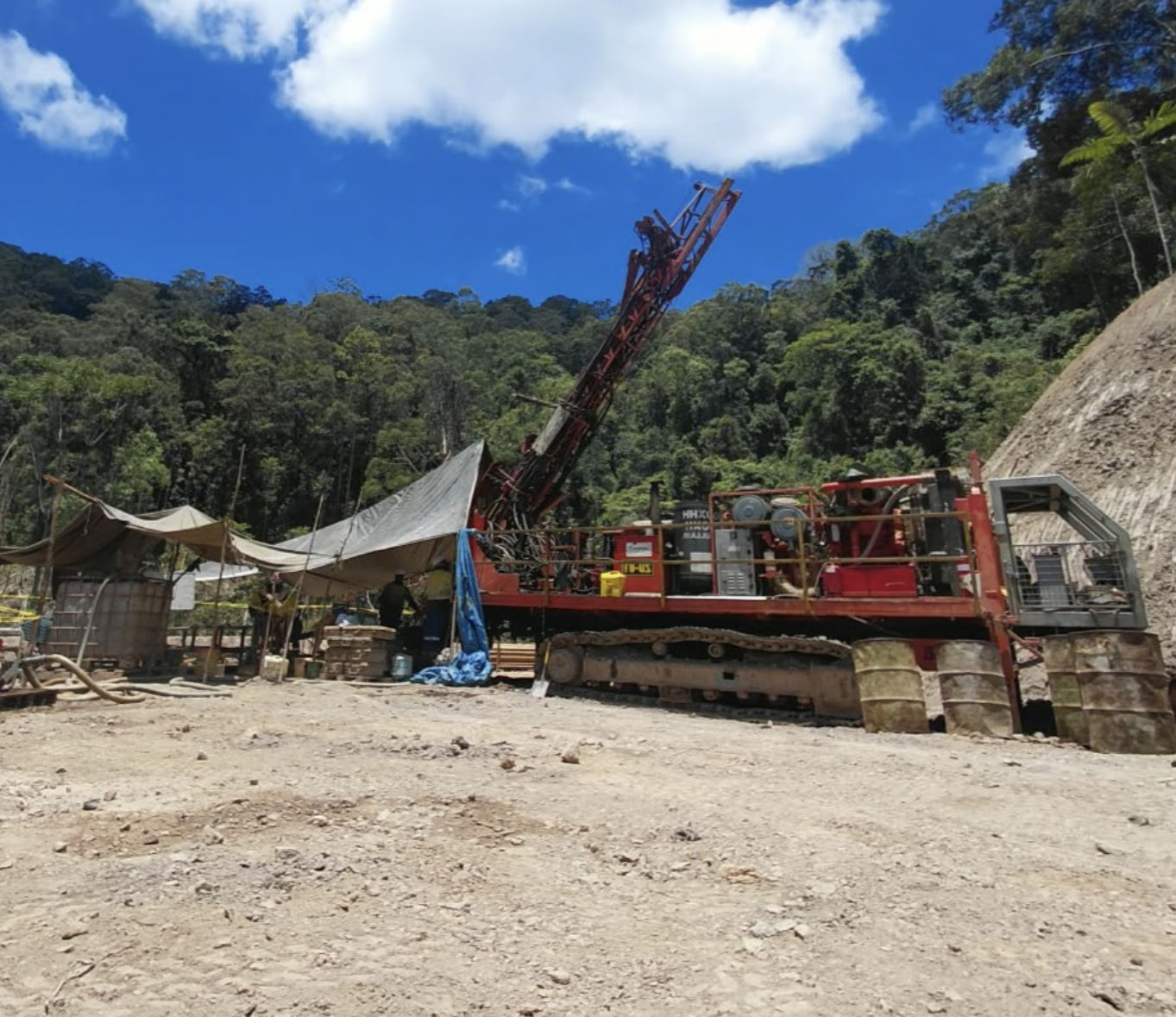
Great Pacific Gold Corp. has completed 16 diamond drill holes totalling about 3,600 metres at its Wild Dog gold-copper project in East New Britain, as the company advances exploration to a new target near the historic Sinivit mine.
The Vancouver-based company said in a Nov. 4 update that drilling at the Magiabe and Mengmut targets was nearing completion, with one final hole planned at Mengmut. The work brings total drilling at Wild Dog this year to more than 7,200 metres.
Assay results from the two targets remain pending. Great Pacific Gold said it would release complete results for each prospect after receiving the remaining laboratory certificates and completing quality-control reviews.
The company has meanwhile started maiden drilling at the Elamaraka-Kargalio target area, about two kilometres southwest of Sinivit. The first hole, ELM001, began on Oct. 30 and had reached approximately 50 metres at the time of the update.
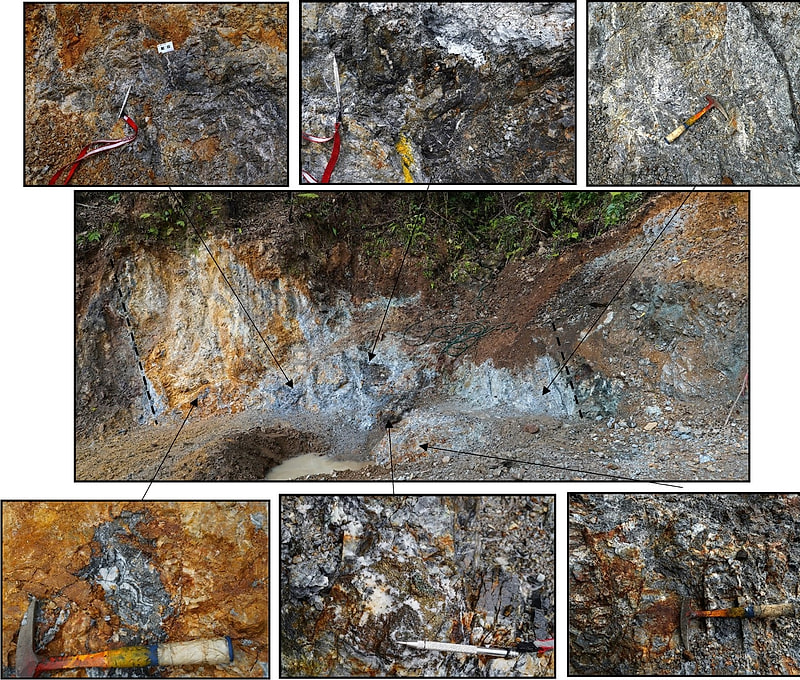
The drilling is designed to test the depth extension of previously identified gold mineralisation. Surface channel sampling at Elamaraka returned 9 metres grading 4.81 grams of gold per tonne, including a 1-metre section grading 26.86 grams per tonne.
At Kargalio, sampling returned 6 metres grading 7.29 grams of gold per tonne, alongside silver and copper. The company said mapped mineralised structures at the target reach approximately 11 metres in apparent width, although their true width remains unknown.
The current Elamaraka-Kargalio programme is planned to comprise 10 to 12 holes totalling about 2,400 metres. Geophysical surveys have identified resistive anomalies associated with surface mineralisation, but their geological significance has yet to be established through drilling.
At Magiabe, the company has completed five holes totalling 1,248 metres. The target is a structurally controlled epithermal gold-silver-copper system about 700 metres southwest of Sinivit.
At Mengmut, 11 holes totalling 2,345 metres have been completed. Ten intersected silicified, pyrite-rich structures, quartz-carbonate-sulphide veining or hydrothermal breccias within or near their predicted target zones.
Great Pacific Gold said the drilling had tested a structural corridor across approximately 850 metres. However, the grade and continuity of potentially economic mineralisation remain unconfirmed pending assay results.
The company is also conducting regional mapping and sampling in the South Zone, an approximately five-kilometre extension of the Wild Dog structural corridor south of the Elamaraka-Kargalio area. Field teams identified 38 quartz-sulphide vein occurrences at Lelangbrait Creek, while additional structures were mapped at Langeo, Langeo South and Kasapmatki Creek.
More than 300 regional rock-chip and channel samples have been dispatched for analysis since August, with results being received and validated.
Great Pacific Gold Chief Operating Officer and Vice President Exploration Callum Spink said drilling at Magiabe and Mengmut had improved the geological understanding of the corridor, while the company had moved directly into testing Elamaraka.
The company said no new assay results were included in the update. It cautioned that visual observations of alteration, veining and sulphide minerals in drill core are not substitutes for laboratory assays and should not be interpreted as evidence of gold or copper grades.
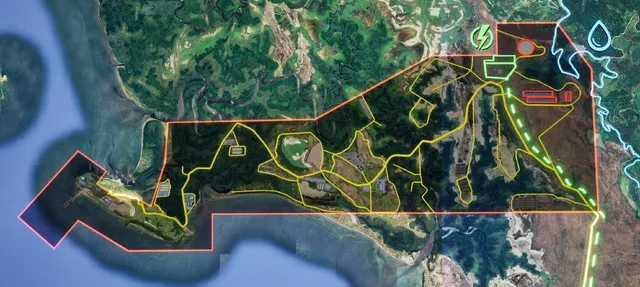
Great Pacific Gold's Wild Dog project covers an approximately 15-kilometre structural corridor in East New Britain, hosting epithermal gold-silver-copper targets and potential porphyry-related systems. The company said two diamond drill rigs were active at the property.