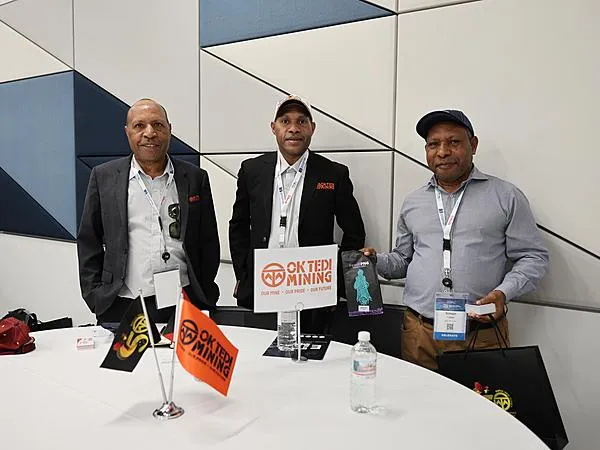
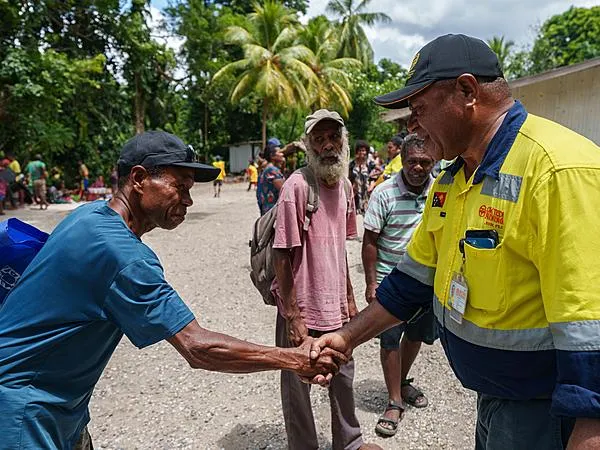
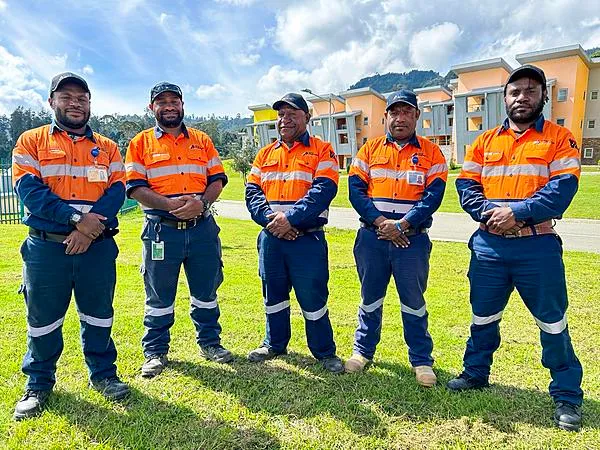
Ok Tedi Mining Limited has strengthened its commitment to addressing domestic and family violence in Papua New Guinea by supporting Femili PNG, a leading non-government organisation providing assistance to survivors of violence nationwide.
As part of the partnership, Ok Tedi purchased Femili PNG’s locally produced coffee, sourced from the Western Highlands, and distributed the packs as complimentary gifts to delegates at the recent PNG Investment Week conference hosted by the PNG Chamber of Resources and Energy in Sydney, Australia.
The initiative highlighted both the quality of Papua New Guinea coffee and the critical work undertaken by Femili PNG to support survivors of domestic and family violence. Proceeds from the coffee sales contribute directly to Femili PNG’s case management services, safe accommodation support, outreach programmes and advocacy efforts across the country.
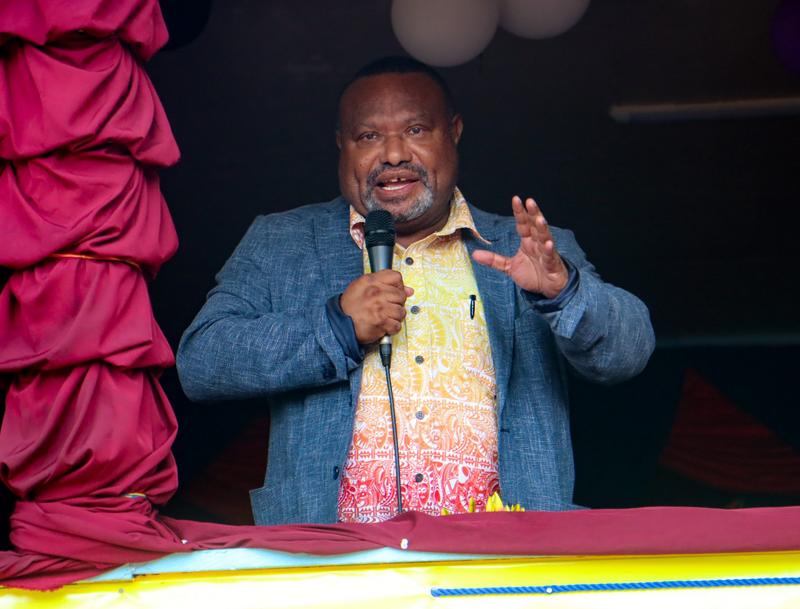
“Domestic violence continues to affect far too many families in Papua New Guinea, and we all have a responsibility to be part of the solution,” said Ruth Waram, manager for media and public relations at Ok Tedi.
“By supporting Femili PNG through this initiative, Ok Tedi is helping to shine a light on the vital services that Femili PNG provide to survivors. Our purchase of these coffee packs is more than a gesture — it is a statement of solidarity and a commitment towards promoting safer, stronger communities across PNG,” she said.
Femili PNG welcomed the support, noting the broader impact of partnerships with the private sector.
“We are grateful for Ok Tedi’s support in showcasing our award-winning Femili PNG coffee via this initiative. The support we receive contributes to Femili PNG’s work to end family and sexual violence in PNG,” said Jocelyn Condon, executive director of Femili PNG Australia.
“Funds raised from every purchase of coffee directly supports the services Femili PNG provide to survivors who need safety, care, and a pathway to rebuild their lives. Ok Tedi’s support in this initiative, and hopefully into the future, give us all great hope for the potential of business to step forward and resource the movement for positive change for survivors of family and sexual violence in Papua New Guinea,” she said.
Ok Tedi said the initiative reflects its broader commitment to social responsibility and supporting programmes that contribute to the wellbeing and safety of communities across Papua New Guinea.
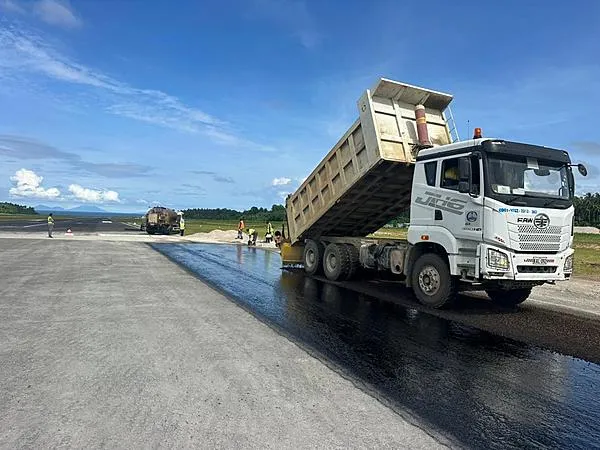
The National Airports Corporation (NAC) has advised the travelling public and stakeholders that the runway at Hoskins Airport in West New Britain will be further shortened to allow for essential upgrade works, with Stage 4 of the Method of Works Plan (MOWP) expected to commence by the end of the week, subject to the issuance of a Notice to Airmen (NOTAM).
In a public advisory, NAC said the contractor began the first stage of the runway upgrade in October 2025 and has since completed Stages 2 and 3. Works continued through the festive season to ensure uninterrupted operations for Fokker and similar or smaller aircraft during the peak travel period.
“With operations now normalised outside the peak season, preparations are under way to commence Stage Four,” NAC said.
The existing runway, which measures 1,900 metres, will be shortened by 490 metres once Stage 4 begins, leaving an available operational length of 1,410 metres. NAC said this will continue to accommodate Q400, ATR, Dash 8 and similar or smaller aircraft types.
The corporation noted that the timing of the works will depend on prevailing weather conditions and that any changes to the schedule will be communicated in due course.
NAC said the upgrade is critical and will significantly enhance safety, security standards and overall operational performance at Hoskins Airport. The corporation added it is working closely with the contractor to ensure the project progresses smoothly, with minimal disruption, and is completed within the planned timeframe.
“We sincerely apologise for any inconvenience these temporary restrictions may cause,” NAC said. “We thank the travelling public, airline operators, the business community, the people of West New Britain and Papua New Guinea for their understanding and cooperation as we progress with these important upgrade works.”
The advisory was approved for release by Dominic Kaumu, ML OBE, Acting Managing Director and Chief Executive Officer of the National Airports Corporation Ltd.
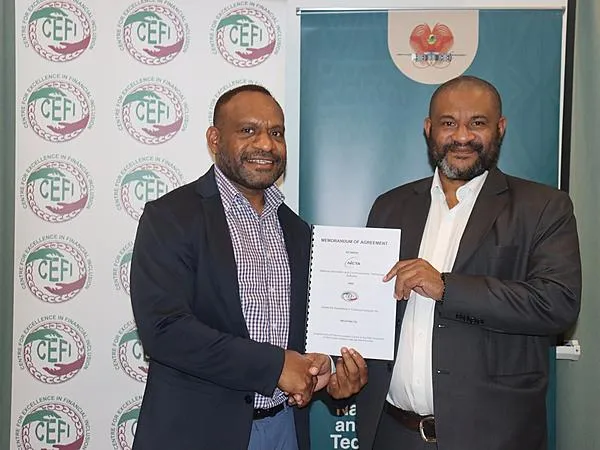
The National Information and Communications Technology Authority (NICTA) and the Centre for Excellence in Financial Inclusion Inc. (CEFI) have entered into a two-year Memorandum of Agreement (MoA) to establish a dedicated FinTech Incubation Centre at the Papua New Guinea University of Technology (Unitech) Taraka Campus in Morobe Province.
The initiative aims to support the development of home-grown digital financial solutions by providing infrastructure, mentorship and technical support to fintech entrepreneurs and start-ups across the country.
Under the agreement, NICTA’s Universal Access and Service (UAS) Scheme will provide funding of up to K374,000 through the UAS Trust Fund. The funding will support the procurement of fixed broadband connectivity and modern ICT equipment to create a state-of-the-art fintech incubation facility at the university.
Once operational, the centre will serve as a nurturing hub for Papua New Guinean fintech innovators, offering access to high-speed internet, a fully equipped resource centre, business development support and financial expertise delivered by CEFI. The facility is expected to play a critical role in accelerating innovation in digital payments, mobile banking, financial literacy tools and inclusive financial services tailored to the local context.
The centre will place particular emphasis on empowering women and youth, recognising their growing role in the digital economy and the need to expand participation in technology-driven financial services.
NICTA Acting Chief Executive Officer Polume Lume, speaking at the MoA signing, highlighted the importance of collaboration in advancing the Government’s digital and economic development agenda.
“This collaboration exemplifies strong partnerships: NICTA, as a government authority, teams up with CEFI—a key player in financial inclusion—to deliver expertise and resources, while leveraging Unitech’s academic environment for talent development,” Lume said.
“We extend this to the private sector by creating a hub where start-ups can access tools, investors and markets, fostering public-private synergies that ensure long-term sustainability beyond the two-year term. Targeting local communities, the centre prioritises PNG-specific solutions, offers controlled public access, and builds capacity in Morobe Province, ensuring benefits reach grassroots levels and contribute to inclusive growth,” he added.
The initiative aligns with key Government policy priorities, including improving access to broadband connectivity, promoting digital innovation and supporting economic growth through technology and entrepreneurship. It also complements national efforts to strengthen financial inclusion by expanding access to affordable, secure and digital financial services, particularly for underserved and rural communities.
CEFI said the partnership reflects a shared commitment to building a robust fintech ecosystem that supports innovation while addressing real-world financial challenges faced by Papua New Guineans.
The FinTech Incubation Centre is expected to position Morobe Province as an emerging hub for digital innovation, while strengthening linkages between academia, government and the private sector to support sustainable development in Papua New Guinea.
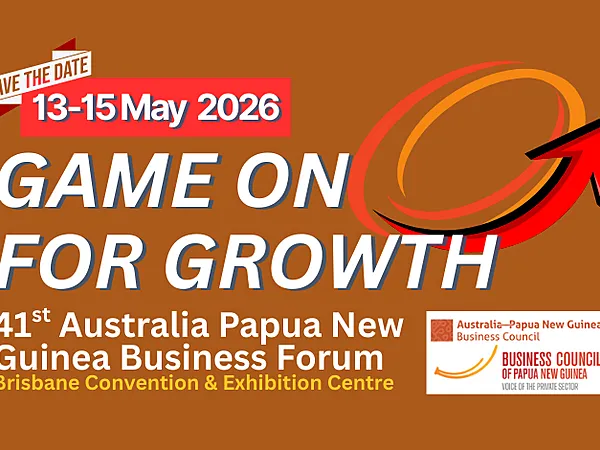
The Australia Papua New Guinea Business Council (APNGBC) has announced that its 41st Australia Papua New Guinea Business Forum (#41APNGBF) will be held in Brisbane in 2026, coinciding with the city’s highly anticipated Magic Round weekend.
Under the theme Game On for Growth, the forum will bring together business leaders, policymakers, and long-standing partners from both Australia and Papua New Guinea. The timing is designed to leverage the energy and networking opportunities generated by one of Australia’s largest sporting events, while providing a flagship platform for discussions on trade, investment, and bilateral partnerships.
Magic Round, an annual National Rugby League (NRL) showcase, draws tens of thousands of fans from across Australia and the Pacific. By aligning the Forum with this event, APNGBC aims to combine commercial engagement with a unique cultural and networking experience, creating opportunities for informal dialogue alongside formal sessions.
The council has urged members and prospective delegates to plan ahead, noting that hotel availability in Brisbane is already tightening due to the influx of visitors for Magic Round. Formal registrations and the detailed programme will be released in due course, but early accommodation booking is strongly recommended to ensure full participation.
The 41st Forum will build on a year of APNGBC initiatives aimed at strengthening Australia-Papua New Guinea business links. This includes sectoral briefings, policy roundtables, trade missions, and engagement across key industries such as resources, infrastructure, agriculture, energy, and tourism. The Forum will offer attendees the chance to reconnect in person, review recent developments, and explore the next phase of commercial and institutional cooperation between the two countries.
APNGBC has emphasised that the Forum is not only a platform for policy and business discussion but also an opportunity to celebrate the enduring Australia-PNG relationship, foster partnerships, and identify practical opportunities for collaboration in trade and investment.
Further updates on the forum’s programme and registration process will be shared by APNGBC in the coming months.
The Asian Development Bank (ADB) has appointed Takafumi Kadono as its new country director for Papua New Guinea, with responsibility for leading the bank’s resident mission in Port Moresby and overseeing its development engagement in the country.
Kadono assumed office on January 13 and will lead the formulation and implementation of ADB’s next country partnership strategy for Papua New Guinea, guiding support across infrastructure, social services and private sector development.
In a statement, Kadono said ADB would continue to work with the Papua New Guinea government to strengthen economic growth and social development through investments in transport and energy, expanded access to health and education services, and measures to improve private sector competitiveness. He also said the bank would work closely with development partners to enhance the inclusivity and resilience of the country’s financial and health systems.
ADB is one of Papua New Guinea’s largest financing partners for infrastructure, particularly in the transport and energy sectors.
The bank also supports technical and vocational education and training programmes, co-financed by the Australian government, aimed at improving workforce skills and alignment with industry needs. In the health sector, ADB assistance includes policy reforms, investments in health systems and measures to strengthen public financial management.
A Japanese national, Kadono brings more than 26 years of international development experience with ADB and the World Bank Group. Prior to his appointment in Papua New Guinea, he served as ADB’s country director for Sri Lanka.
Founded in 1966, ADB is a multilateral development bank owned by 69 members, including 50 from Asia and the Pacific. It focuses on promoting inclusive, resilient and sustainable growth through financing, technical assistance and partnerships across the region.
K92 Mining Inc. has reported strong fourth-quarter production from its Kainantu Gold Mine in Papua New Guinea, capping a record year in which the company achieved the upper end of its production guidance and completed commissioning of its Stage 3 process plant expansion.
In a statement released on January 12, the TSX-listed miner said fourth-quarter 2025 production reached 47,178 ounces of gold equivalent (AuEq), comprising 44,129 ounces of gold, 1.94 million pounds of copper and 47,427 ounces of silver. Quarterly sales totalled 41,344 ounces of gold, 1.73 million pounds of copper and 44,317 ounces of silver.
For the full year, K92 recorded its highest annual production to date at 174,134 ounces AuEq, or 176,995 ounces AuEq when calculated using 2025 guidance commodity prices. This included 164,484 ounces of gold, 5.94 million pounds of copper and 159,309 ounces of silver, representing a 16 per cent increase from 2024. The result fell within the company’s guidance range of 160,000 to 185,000 ounces AuEq. Annual sales also reached record levels.
Operationally, the company processed a record 186,198 tonnes of ore in the December quarter, almost double the volume treated in the same period a year earlier. Average head grade was 8.0 grams per tonne AuEq, with metallurgical recoveries of 94.3 per cent for gold and 93.9 per cent for copper, exceeding or matching parameters set out in the updated definitive feasibility study.
Mining activity intensified during the quarter, with total material mined reaching a quarterly record of more than 404,000 tonnes. Ore production was drawn from multiple levels across the Kora and Judd deposits, supported by expanded underground development and improved haulage and ventilation infrastructure.
K92 confirmed that commissioning and performance testing of the new 1.2-million-tonnes-per-annum Stage 3 Expansion Process Plant was completed in December, with operations formally handed over from the projects team. The plant achieved daily throughput records of more than 3,800 tonnes during the month and has processed all material exclusively since late October. As at December 31, about 95 per cent of Stage 3 growth capital had been spent or committed, with the project remaining on budget.
Progress was also reported across a suite of supporting infrastructure projects, including pastefill facilities, ventilation upgrades, power generation expansion and the decline–incline convergence linking the main mine with the Twin Incline. Several of these projects are due for completion in the first half of 2026 and are expected to lift productivity and material handling capacity.
Chief executive officer John Lewins said the December quarter marked a strong finish to a year of significant milestones for the company, highlighting record production, successful plant commissioning and multiple operational records achieved during the period.
K92 said it entered 2026 with a strong balance sheet, an expanded processing and mining platform, and ongoing exploration programmes, positioning the company for further growth at the Kainantu operation in the year ahead.
Minister for International Trade and Investment Richard Maru will travel to Malaysia to meet the board and management of SD Guthrie to advance discussions on the state’s proposed acquisition of shares in Ramu Agri Industries (RAI).
SD Guthrie currently owns New Britain Palm Oil Ltd., which holds interests linked to RAI. The talks are part of the government’s broader strategy to expand RAI’s operations beyond the Ramu Valley, where available land for further development is fully utilised.
“The strategic reason behind this acquisition is to expand RAI’s business to other areas in the country because land in Ramu is fully utilised with no room for expansion,” Maru said. “We need to stop the importation of cattle and grow more sugar to replace over US$29 million worth of sugar that we import annually from mainly Thailand and Malaysia. We have the potential as a country to replace sugar imports, create thousands of new jobs in the sugar industry, and be a net exporter.”
While in Malaysia, Maru is scheduled to visit SD Guthrie Berhad’s operations. The company is among the world’s largest producers of certified sustainable palm oil. The visit will include briefings on SD Guthrie’s integrated plantation model, research and development capabilities, mechanisation programmes, smallholder support systems, biogas and sustainability initiatives, as well as its downstream refining and processing operations.
Maru will also meet with the Malaysian Palm Oil Board to discuss regulatory frameworks, research platforms and technology development initiatives that could inform Papua New Guinea’s own agricultural and agro-industrial development plans.
Meanwhile, New Britain Palm Oil Ltd. has formally confirmed it will provide an offer letter and a copy of its valuation report by Jan. 21, 2026, in relation to the state’s proposed acquisition in RAI. Maru said the government will conduct its own valuation and complete all due diligence before making a final decision on the purchase of shares.
The Government’s initiative to establish a coconut processing plant in Madang, in partnership with Sri Lankan firm Jaindi Exports, is progressing as planned, according to the Minister for International Trade and Investment Richard Maru.
Minister Maru made the announcement following the weekend visit of Jaindi Exports’ Founder and Managing Director, Mr K.M. Sampath Anuruddha, and his team to the proposed site along North Coast Road in Madang.
Anuruddha said the company was satisfied with the 20-hectare site at Siar, owned by the Madang Provincial Government and located adjacent to RD Tuna Canners. He also highlighted the strong support from both the Provincial and National Governments. The company has committed to finalising the project design and plan by March 2026. A technical team from Jaindi Exports is expected to arrive in two weeks to collaborate with local technical experts to complete all technical aspects of the project.
Minister Maru explained that the joint venture aims to establish a fully integrated processing plant, where all parts of the coconut – including the fibrous husk, hard shell, white edible flesh, and coconut water – will be processed into finished products for domestic use and export.
During the visit, Anuruddha and his team met with local farmers, who expressed enthusiasm about the project.
“Labouring to make copra and selling it to copra mills for crude coconut oil will soon be a thing of the past. Farmers will have less labour-intensive work, earn higher incomes, and we will stop sending semi-processed exports abroad,” Maru said.
He added, “In future, only final products will leave our shores through this proposed processing plant. This is part of the Marape-Rosso Government’s deliberate plan to end the export of raw and semi-processed materials. This project will transform PNG’s entire coconut industry.”
Madang Governor Ramsey Pariwa expressed full support for the project, adding that “We are excited to see this initiative take off. Processing our coconuts into finished products will maximise value, create more jobs, and encourage the industry to grow."
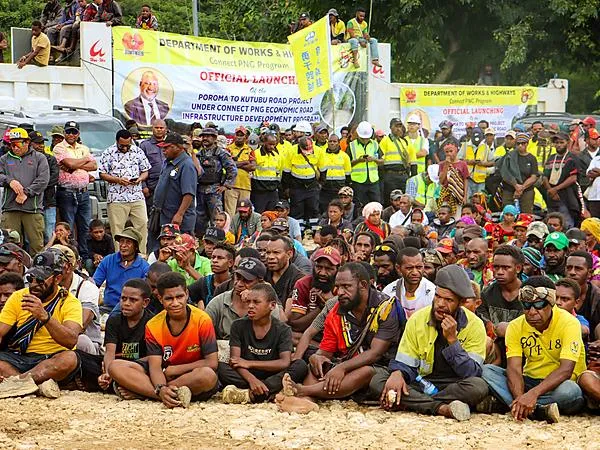
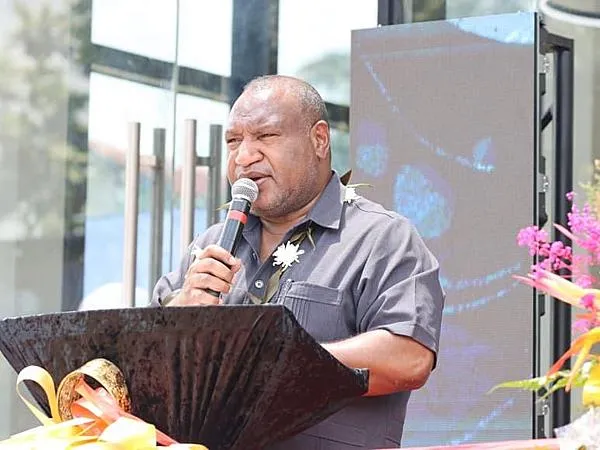
Communities in Kutubu and Bosavi have marked a major infrastructure milestone with the official launch of the Poroma–Kutubu Road Sealing Project on Wednesday, January 7, 2026, signalling a new phase of connectivity and development for the Kutubu district.
The 106-kilometre road project, valued at K370 million, is expected to significantly improve access, transport efficiency and economic activity in one of Papua New Guinea’s historically important resource regions.
The launch was officiated by Prime Minister James Marape, Southern Highlands Governor William Powi, Defence Minister Dr Billy Joseph, Works Secretary Gibson Holemba, and Mineral Resources Development Company (MRDC) Managing Director Augustine Sanga Mano. They were joined by landowners, local leaders and community members from across Kutubu and Bosavi.
Addressing the gathering, MRDC Managing Director Augustine Mano described the project as long overdue recognition for a region that has played a critical role in supporting the national economy.
“On behalf of the landowners of Kutubu, I thank the Defence Minister Dr Billy Joseph for prioritising this project and the Marape–Rosso Government for this development,” Mr Mano said.
He highlighted Kutubu’s historic contribution to Papua New Guinea, noting that between 1992 and 2014, the Kutubu Oil Project produced up to 150,000 barrels of oil per day and paid 50 percent tax to the State.
“When the Panguna Mine was no longer operating, it was Kutubu oil that helped carry the nation. This was made possible through the sacrifices of the people of Kutubu and Bosavi,” he said.
Beyond the road, MRDC and its subsidiary Petroleum Resources Kutubu (PRK) are rolling out a suite of long-term social and economic investments aimed at sustaining development in the district.
Among these is the recently commissioned K14 million Waro High School, which is now providing improved access to quality education for more than 20 communities in Kutubu and Mt Bosavi.
PRK has also announced plans to upgrade Pimaga Hospital to a Level Four facility, mirroring the recent PRK-funded upgrade of Ialibu Hospital, to enhance healthcare services for remote and rural populations.
To improve connectivity, MRDC is working with Santos and PNG Air to introduce two flights per week from Moro Airport, providing more reliable air transport for the district.
The company is also investing in tourism as an alternative economic driver. A new hotel in Moro is scheduled to open in April, while the Heritage Hotel in Kikori is expected to open in March this year.
“These investments will support SMEs, create jobs, and grow tourism in Kutubu,” Mr Mano said.
The Poroma–Kutubu Road Sealing Project, together with these complementary developments, is expected to strengthen service delivery, stimulate local enterprise and improve the quality of life for communities that have long underpinned the nation’s resource economy.
The Bank of Papua New Guinea’s Monetary Policy Committee (MPC) has maintained the Kina Facility Rate (KFR) at 5.0 percent following its final meeting for 2025, signalling continuity in monetary policy settings amid moderating global growth and evolving domestic economic conditions.
The decision was announced on 2 December 2025 after the Committee met to assess current and projected economic and financial conditions. According to the MPC, the existing policy stance remains appropriate to support an orderly adjustment of the exchange rate, contain inflationary pressures and sustain economic growth.
Global conditions present a mixed outlook
The MPC noted that global economic activity continues to moderate as major central banks persist with tight monetary policy to manage inflation. While commodity prices remain broadly stable, energy and food markets continue to experience volatility due to ongoing geopolitical tensions.
These developments have had mixed implications for Papua New Guinea, with stronger export receipts from key commodities partly offset by higher import costs, particularly for fuel and food items.
Despite global uncertainties, economic activity in Papua New Guinea has remained resilient, underpinned by strong performance in the agriculture, manufacturing and mineral sectors. Employment conditions have continued to improve, especially in transport, wholesale and mining-related industries, while private sector confidence has shown gradual strengthening.
However, the MPC highlighted ongoing structural challenges within the financial system, noting that access to credit remains uneven. Liquidity imbalances across the banking system continue to constrain broader economic activity, limiting the effectiveness of monetary policy transmission to the private sector.
Headline inflation is projected to remain moderately elevated, driven primarily by higher prices in alcoholic beverages, tobacco and betelnut (ABTB), as well as increases in transport and communication costs. In contrast, core inflation remains contained, supported by Goods and Services Tax (GST) exemptions on essential goods.
The MPC reaffirmed that the crawl-like exchange rate arrangement continues to facilitate a gradual and orderly depreciation of the kina. This mechanism is aimed at correcting the currency’s overvaluation while improving external competitiveness and supporting balance-of-payments stability.
Monetary policy actions in 2025
During 2025, monetary policy adjustments were targeted at addressing system liquidity constraints and improving policy transmission. The MPC increased the KFR from 4.0 percent to 5.0 percent in September, a move aimed at stabilising inflation expectations and reinforcing the exchange rate as the nominal anchor for monetary policy.
In parallel, the Cash Reserve Requirement (CRR) was reduced from 12.0 percent to 9.0 percent, implemented through one-percentage-point reductions in March, June and September.
Despite these measures, the Committee observed limited responsiveness in private sector lending and deposit rates, underscoring the need for further review of the monetary policy framework.
Ongoing monitoring and policy commitment
The MPC said it will continue to closely monitor both domestic and global developments, with particular attention to inflation trends, exchange rate movements and liquidity conditions within the banking system.
The Committee reaffirmed its commitment to ensuring that monetary policy decisions are effectively transmitted through the financial system to support price stability, sustainable economic growth and external balance.
The Monetary Policy Statement was issued on behalf of the Committee by Ms Elizabeth Genia, Governor of the Bank of Papua New Guinea, following MPC Meeting 4/2025.
Prime Minister James Marape has launched Papua New Guinea’s National Fisheries Authority (NFA) Monitoring, Control and Surveillance (MCS) Command Centre in Daru, describing the facility as a critical step in protecting national sovereignty, securing marine wealth and strengthening the fisheries sector as a major pillar of the country’s future economic independence.
Commissioning the Command Centre in a single official address in Daru on 6 January, the Prime Minister said the facility marks a shift from policy intent to practical delivery, particularly in safeguarding PNG’s vast and resource-rich Exclusive Economic Zone.
“Today it is a proud milestone moment for our nation. Though seemingly small, it is a big step in the right direction in the protection of our resources, our sovereignty and our future,” Prime Minister Marape said.
He commended NFA Managing Director Justin Ilakini and his team for advancing the Fisheries Strategic Plan 2021–2030 and the Government’s Medium Term Development Plan IV, noting that decisive action had been taken without delay.
“You did not wait for a second or third round of instruction. You took heed of Government policy and got to work,” he said.
Safeguarding marine wealth and national sovereignty
The Prime Minister highlighted Papua New Guinea’s strategic maritime advantage, describing its waters as among the most productive in the Pacific, nourished by extensive river systems flowing into both northern and southern seas.
“Our waters are amongst the most fertile and richest in the Pacific. These resources must not only benefit us today, but must be preserved and harvested sustainably for our children and generations to come,” he said.
He stressed that illegal fishing would no longer be tolerated, citing recent enforcement actions as evidence of the Government’s resolve.
“Papua New Guinea is not a place for illegal fishing. Enough is enough. Take Back PNG is about stopping the theft of our resources,” Prime Minister Marape declared.
Technology, surveillance and strategic partnerships
The Daru-based Command Centre, supported by advanced satellite surveillance technology, will enable real-time monitoring of maritime activity across PNG waters and allow rapid response through patrol vessels and coordinated security operations.
“Through technology and partnerships with Australia, the United States and our regional neighbours, we can now see what is happening in our waters and act decisively,” he said.
While delivering a strong enforcement message, the Prime Minister reassured legitimate investors that Papua New Guinea remains open for business, provided investments comply with national laws and sustainability requirements.
“Come through the front door. Fish properly, invest properly, give back to landowners and the nation, and we will all prosper together,” he said.
Fisheries positioned as an economic anchor
Positioning fisheries as a long-term economic driver, Prime Minister Marape said the sector has the potential to underpin a substantial share of the national economy if properly regulated and protected.
“Fisheries is a sector that could anchor, in my view, 40 to 50 percent of our economy going forward,” he said.
He emphasised that strong monitoring and enforcement are essential to unlocking this potential, noting that resource protection is a fundamental responsibility of any sovereign state.
“The number one responsibility of any sovereign nation is to ensure its resources and its people are safe,” he said.
Strengthening maritime presence and security
The Prime Minister said the Daru Command Centre strengthens PNG’s presence in strategically sensitive maritime areas, particularly in provinces bordering international waters.
“We are stepping up with technology, stepping up with partnerships, and stepping up with actual patrols on the sea,” he said.
He praised cooperation between the NFA, the PNG Defence Force, border and immigration agencies, and international partners including Australia and Indonesia, highlighting their collective role in addressing illegal fishing, drug smuggling and transnational crime.
“This is not a rundown democracy. Our institutions are functional, our security forces are operational, and our partners stand ready to work with us,” Prime Minister Marape said.
Turning to Western Province, the Prime Minister acknowledged its long-standing contribution to the national economy and reiterated the Government’s commitment to ensuring resource-producing regions benefit directly from development.
“Western Province has sustained this country for decades. Your contribution to the economic viability of Papua New Guinea is recognised and appreciated,” he said.
He urged fisheries investors to prioritise local participation and downstream value-adding.
“Incubate local SMEs, buy from local people, involve landowners and work side by side with communities,” he said.
Commitment to Daru infrastructure renewal
Beyond fisheries, the Prime Minister used the visit to outline a broader national focus on revitalising Daru town, describing it as strategically vital due to its history, geography and international significance.
“Daru must return to the space it once occupied — as one of the leading towns in our country,” he said.
He noted that Western Province is PNG’s largest province by landmass, rich in natural resources and river systems, and uniquely positioned with direct borders with Australia and Indonesia.
“No other province carries this level of strategic importance,” he said. “What happens in Daru matters not only to Western Province, but to Papua New Guinea as a whole.”
Addressing long-standing infrastructure challenges, the Prime Minister confirmed that water supply, electricity reliability and road conditions in Daru are firmly on the national agenda, with discussions already held with provincial leaders.
“I take your concerns with me,” he said. “Before September 16 this year, I intend to return and account to the people of Daru on what the national government is doing on water, power and essential services.”
Prime Minister Marape confirmed that the National Government has approved 40 per cent equity ownership in the Ok Tedi mine for Western Province, describing it as a milestone in securing long-term provincial prosperity.
“This is about securing prosperity for your children and grandchildren,” he said, adding that Ok Tedi is now expected to operate until 2084–2085, with structured reviews to ensure benefits remain fair and sustainable.
Daru as a gateway for trade and growth
The Prime Minister said Daru’s future development must align with its role as a gateway town linking inland communities, coastal regions and international neighbours, with opportunities for trade expansion, port development, aviation infrastructure and regional services.
“With the right infrastructure and governance, Daru can once again become a hub — not only for Western Province, but for cross-border cooperation and economic activity,” he said.
Prime Minister Marape praised Daru residents for maintaining peace and order during the recent festive period, describing the town’s transition into 2026 as one of the most orderly reported nationwide.
“You showed discipline, responsibility and pride in your town,” he said. “That tells me Daru is ready to move forward.”
Concluding his address, the Prime Minister called for shared responsibility between government, communities and investors in rebuilding Daru and strengthening Western Province’s contribution to national development.
“Government will do its part,” he said. “But development also requires ownership, responsibility and pride from the people.”
Reaffirming his commitment to the province, he said Daru’s progress would remain a national priority as Papua New Guinea moves beyond its 50th anniversary.
“Daru’s best days are not behind it,” he said. “They are ahead.”
The Prime Minister was joined at the Daru event by Fisheries Minister Jelta Wong, Western Province Governor Taboi Awi Yoto, South Fly MP Sekie Agisa, NFA Managing Director Justin Ilakini, security agencies, development partners and members of the local community.
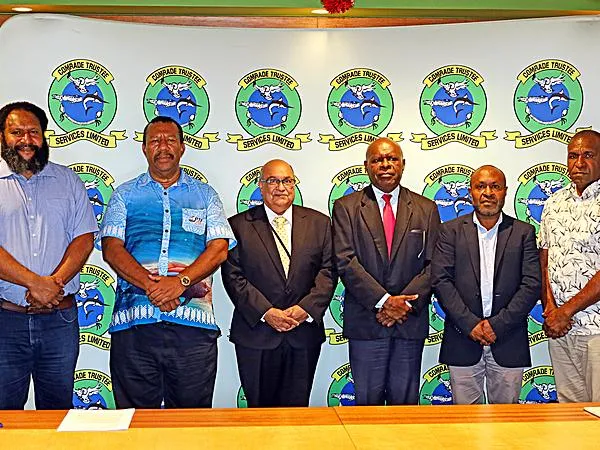
Comrade Trustee Services Limited (CTSL), the superannuation fund serving members of the Papua New Guinea Defence Force (PNGDF), has strengthened its governance framework and long-term strategic positioning with the appointment of Mr Chetan Chopra as Chairman of the Board.
The appointment of Chopra was formally announced during a CTSL press conference held on Thursday, 18 December 2025, at the CTSL Boardroom in Comrade Haus, Port Moresby. The briefing provided an opportunity for CTSL to outline the Board’s leadership transition, reaffirm its governance priorities, and explain how the appointment aligns with the Fund’s long-term strategic and performance objectives.
Effective 27 November 2025, Chopra’s appointment reflects a deliberate focus on continuity, institutional stability, and experienced leadership as CTSL builds on a period of significant reform and improved financial performance. His elevation to Chairman follows nearly three years of Board service, including tenure on both the Interim and Permanent Boards, providing him with deep familiarity with the Fund’s governance reset and strategic priorities.
Chopra brings more than 30 years of executive and board-level experience across Papua New Guinea’s banking, finance, and superannuation sectors, complemented by international exposure. A chartered accountant with extensive C-suite and company director credentials, he is widely recognised for his expertise in financial management, risk, banking, strategy, and ethical governance — capabilities viewed as critical for funds operating in increasingly complex regulatory and investment environments.
Upon accepting the role, Chopra emphasised governance discipline, stakeholder engagement, and long-term value creation as central to his chairmanship.
“I am honoured to assume the role of Chairman at such a pivotal time in CTSL’s journey. I look forward to working closely with the Board, management, our regulator, and all stakeholders to ensure CTSL continues to build on the strong foundations that have been established. Our focus will remain firmly on delivering value, transparency, and long-term stability for our members.”
Speaking during the press conference, Chopra also acknowledged Chief of Defence Force Rear Admiral Philip Polewara, CBE, and highlighted the strength of the Board, noting its collective professionalism, complementary expertise, and shared commitment to disciplined governance and member outcomes.
The CTSL Board comprises:
Governance Reform and Financial Turnaround Under Outgoing Chair
The appointment of a new Chairman follows the conclusion of the tenure of Her Excellency Michelle Hau’ofa, whose leadership is widely credited with restoring confidence in the Fund and repositioning CTSL on a stronger financial and governance footing.
Appointed to lead the Interim Board in February 2023, Hau’ofa oversaw a period of stabilisation and institutional strengthening in close engagement with the Bank of Papua New Guinea and other key stakeholders. During her tenure, CTSL recorded 35 per cent growth in net assets, reflecting improved investment governance, enhanced oversight, and stronger balance sheet management.
Member outcomes also improved materially, with crediting rates rising from 2.3 per cent in 2022, to 7.3 per cent in 2023, and 10.5 per cent in 2024. Governance reforms implemented during this period addressed legacy issues, strengthened compliance and accountability frameworks, and enhanced benefits associated with the defined benefit surplus.
Structural and operational reforms extended to the modernisation of the CTSL Constitution, strengthened relationships with the PNG Defence Force and sector partners, and enhanced oversight of subsidiary Toea Homes Limited, resulting in improved governance discipline and commercial performance. Notably, a three-year strategic plan was completed in under two years, underscoring the pace of reform achieved.
In recognising her contribution, the CTSL Board stated: “Ms Hau’ofa’s leadership has been instrumental in restoring confidence, strengthening governance, and setting CTSL on a path of sustainable growth. Her dedication to the Fund, its members, and the nation has left an enduring legacy, and the Board expresses its deepest appreciation for her commitment and integrity.”
Board Renewal and Capability Building
As part of its broader governance strengthening agenda, CTSL has also refreshed its Board composition to ensure the right mix of financial, operational, and sector expertise to support the Fund’s next phase.
The Board acknowledged Colonel Fred Aile following his retirement from the PNG Defence Force, recognising his three years of service as a Director during a period of transition and reform. His contribution supported governance continuity and reinforced the Fund’s focus on member-centric outcomes.
Two new Directors have since been appointed, further strengthening Board capability. Judy Nete Kuk, appointed as an Independent Director, brings extensive experience in governance, finance and accounting, and corporate strategy. Colonel Rodney Yahamani, appointed as a Shareholder Director, contributes deep Defence Force operational knowledge and organisational leadership, strengthening alignment between the Fund and its membership base.
These appointments reflect CTSL’s commitment to maintaining a high-performing Board with expertise spanning finance, law, operations, military leadership, and superannuation — a governance profile increasingly expected of large institutional investors.
The CTSL Board has outlined a clear set of priorities aimed at sustaining financial performance, strengthening oversight, and enhancing long-term member value. Key focus areas include expanding Fund accessibility to broaden membership and improve sustainability; enhancing asset governance and performance to deliver consistent long-term returns; strengthening oversight and governance of Toea Homes Limited; developing a capable and high-performing management team; and reinforcing Board accountability and effectiveness.
These priorities will inform CTSL’s next strategic planning cycle as the Fund positions itself for continued growth while managing investment, regulatory, and operational risks.
With renewed leadership, strengthened governance, and a disciplined strategic focus, CTSL is positioning itself as a more resilient and performance-driven superannuation fund, reinforcing its role in safeguarding the long-term financial wellbeing of PNG Defence Force members and contributing to the maturity of Papua New Guinea’s superannuation and financial services sector.
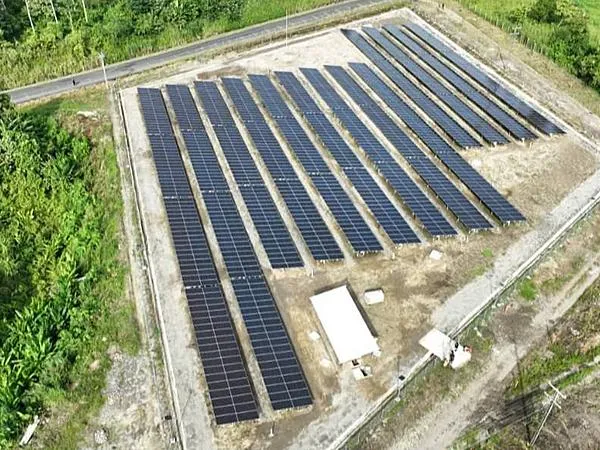
The Bougainville Power and Water Corporation Limited (BPWCL) has become one of the first State-Owned Enterprises (SOEs) under the Autonomous Bougainville Government (ABG) to generate revenue from its own commercial operations following the commissioning of the 1-megawatt Buin Solar Power Plant in South Bougainville.
Chief Secretary to the ABG and BPWCL Board Chair, Kearnneth Nanei, described the achievement as a significant step in strengthening Bougainville’s SOE sector, which now falls under his leadership following a departmental restructure that placed SOE functions within the Office of the Chief Secretary.
“BPWCL is now one of the first SOEs under the ABG to successfully generate revenue directly from its operations. This demonstrates that Bougainville is building the institutional and technical capability to run commercially viable public utilities that support service delivery and economic growth,” Nanei said.
The solar facility, officially commissioned on 16 December 2025, now provides clean and reliable electricity to approximately 250 households, schools, businesses, health facilities, and government services in Buin town and surrounding communities.
Nanei highlighted the successful transition of electricity services from the former supplier, Buin Power, to BPWCL, with the latter now fully responsible for operational management and billing.
“Through this transition, BPWCL is generating a sustainable revenue stream as an SOE. This marks a major milestone in Bougainville’s economic and institutional development,” he said, acknowledging the cooperation of Buin Power leadership in ensuring continuity of service during the handover.
“The Buin solar project is not only about providing reliable electricity. It is about strengthening SOEs to operate responsibly, professionally, and sustainably so they can contribute to Bougainville’s development,” Nanei added.
The Buin Solar Plant was funded by the Government of Japan and built by the United Nations Development Programme (UNDP). It integrates solar panels with modern battery storage and backup generation to provide uninterrupted electricity, reduce reliance on fossil fuels, and support global renewable energy goals.
BPWCL is planning to expand power connections in Buin, including to the Buin District Hospital, Buin Teachers College, and Buin Town Market. Workforce development is also a key priority, with training programs to equip Bougainvilleans with the skills to operate and maintain modern renewable energy systems.
Further plans include the development of renewable-powered mini-grids for remote communities across Bougainville to increase household electricity access. Mr. Nanei emphasized that reliable energy supply will boost business confidence, improve public services, and attract new investment in South Bougainville.
Employment opportunities are expected to grow. “BPWCL currently has ten employees, but this will increase to about twenty this year. Additional opportunities are expected for local businesses in fuel supply, security, and general maintenance,” Mr. Nanei said.
Similar renewable energy projects are being considered for Arawa and Buka, pending formal arrangements with PNG Power Limited through a Memorandum of Understanding expected later this year.
Communities in Buin have already reported improvements in daily living conditions and economic activity, highlighting the impact of reliable electricity. The ABG commended BPWCL for this milestone, marking a new phase in the development and sustainability of Bougainville’s public utilities.
New PNG Defence Force facilities strengthen capability, drive workforce development
By Roselyn Erehe
The completion of the refurbished Garrison Engineer Compound at Murray Barracks in Port Moresby marks a strategic infrastructure investment that strengthens the operational capability of the Papua New Guinea Defence Force while delivering broader economic and workforce benefits.
Delivered jointly by the PNG Defence Force and the Australian Defence Force over three years, the project highlights the depth of the PNG–Australia defence partnership and its growing focus on sustainable infrastructure development and skills transfer.
The upgraded compound provides a secure, purpose-built facility for Murray Barracks Garrison Engineers to store critical infrastructure equipment, tools and materials, improving efficiency and asset management across defence operations. The engineers play a central role in building and maintaining facilities that support PNGDF Headquarters, the Joint Operations Branch and the Force Support Battalion — all essential to the effective functioning of the national defence force.
Beyond core military infrastructure, the Garrison Engineers are responsible for maintaining housing for PNGDF personnel and their families across Port Moresby. This includes support for the Air Transport Wing, the 1st Battalion of the Royal Pacific Islands Regiment, the Force Support Battalion, PNGDF Headquarters staff and maritime personnel based at HMPNGS Basilisk.
The project included the refurbishment of office spaces, the removal of more than 80 cubic metres of waste, and the construction of secure fencing and dedicated compounds for engineering teams. The upgrades are expected to extend asset life cycles, reduce operational downtime and lower long-term maintenance costs, aligning with best-practice infrastructure management.
PNGDF Support Commander Col. John Giregire said the Murray Barracks project demonstrates a scalable model for future defence infrastructure development.
“I would like to see this model of infrastructure and ‘self-help’ that has been completed in Murray Barracks duplicated to other PNGDF Barracks,” Giregire said.
A key economic and social outcome of the project is its contribution to skills development and employment pathways for young Papua New Guineans. The new facilities enable expanded collaboration between PNGDF Garrison Engineers and local vocational and apprenticeship programmes, including the Badili Vocational Training Centre and the Urban Youth Employment Project.
These partnerships provide hands-on trade experience while delivering practical infrastructure outcomes, supporting workforce readiness in construction, engineering and maintenance — sectors critical to PNG’s broader economic development.
Garrison Engineer Sgt. Martin Nelson said the impact of the upgraded facilities has been felt across both the workforce and training programmes.
“This project has boosted morale and means everyone wants to come to work and has the tools to do the job,” Nelson said. “For the youth, we need to build their skills, and this place means we can do that.”
As Papua New Guinea continues to invest in infrastructure that supports national security, workforce development and employment creation, the Murray Barracks upgrade also reflects the broader PNG–Australia investment and development partnership. By aligning defence cooperation with skills training, local employment and long-term asset sustainability, the project shows how targeted aid and bilateral investment can deliver measurable economic returns while supporting nation-building priorities and shared regional stability.
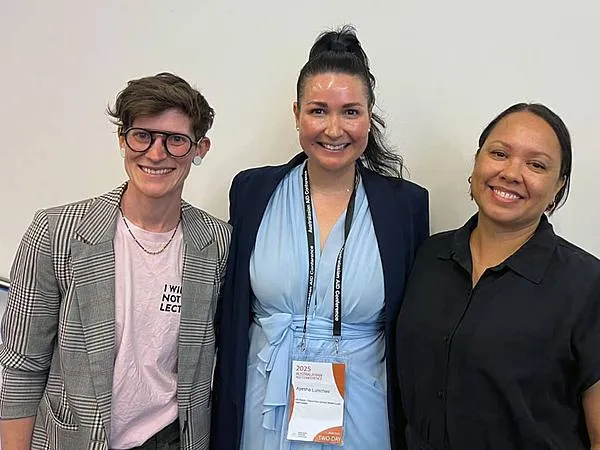
The Business Coalition for Women (BCFW) has positioned Papua New Guinea’s private sector at the centre of regional discussions on workplace safety and gender equality, following the presentation of its Poroman Walkabout Wantaim (Men as Allies) programme at the Australasian Aid Conference in Canberra.
The programme was featured during a panel discussion at the December 2025 conference, where BCFW shared early insights from an innovative approach to addressing harassment and bullying in Papua New Guinea workplaces. The annual conference brings together academics, policymakers and development practitioners to help shape the future of international development across the region.
Poroman Walkabout Wantaim is a social norms change initiative designed to address the root causes of workplace harassment and bullying by actively engaging men as allies. Piloted in 2023, the programme is the first of its kind in Papua New Guinea’s private sector, offering allyship training and mentoring designed by and for men.
The initiative focuses on creating safer, more respectful workplaces by challenging harmful behaviours and attitudes that undermine employee wellbeing and productivity. By embedding gender equality and violence prevention into workplace culture, the programme aligns social impact with business performance and long-term organisational sustainability.
During the panel discussion, BCFW Executive Director Evonne Kennedy highlighted the programme’s early impact on workplace culture and business resilience.
“Our program is showing promising signs of transforming workplace culture by addressing harassment and bullying head-on. These changes not only protect employees but also strengthen businesses,” Ms Kennedy said.
She said sustainable change requires confronting deeply rooted social norms while respecting cultural values that promote dignity and respect.
“True progress towards gender equality in Papua New Guinea lies in courageously challenging harmful social norms while honouring and amplifying the protective and traditional practices that uphold dignity and respect between women and men,” she said.
BCFW is a private sector-led organisation committed to advancing women’s participation in leadership, decision-making and nation-building in Papua New Guinea. Through partnerships with member organisations, BCFW works to embed inclusive practices across workplaces and industries.
The organisation’s work is supported by the PNG–Australia Partnership’s PNG Women Lead initiative, which promotes gender equality and women’s leadership as drivers of inclusive economic growth.
By showcasing Poroman Walkabout Wantaim on an international platform, BCFW highlighted how Papua New Guinea businesses can help lead the creation of safer workplaces while contributing to broader national development goals, reinforcing the link between gender equality, workforce wellbeing and sustainable business success.
Pacific Towing (PacTow) has successfully refloated the grounded Coral Expeditions cruise vessel Coral Adventurer (IMO 9838644).
The refloating operation was completed on the afternoon of December 30, 2025, near Dregerhafen, approximately 65 miles north-east of Lae, Papua New Guinea.
Following the vessel’s grounding, Pacific Towing was engaged to lead the salvage and recovery operation. The successful outcome was achieved through prompt and professional coordination between the crew onboard Coral Adventurer and shore-based support teams from Coral Expeditions, the National Maritime Safety Authority (NMSA), and Pacific Towing.
Pacific Towing’s diving and salvage specialists coordinated the refloating operation, with support from the PacTow tug Langila (IMO 9018933).
“We are very pleased with the result of this operation,” said Gerard Kasnari, General Manager of Pacific Towing.
“Our rapid response and the strong teamwork demonstrated by all parties ensured a safe and efficient refloat, while maintaining safety, the integrity of the vessel and protection of the marine environment as our top priorities," he added.
Pacific Towing is Papua New Guinea’s and Melanesia’s market leader in marine services and salvage, with operations extending across the broader region. The company has been operating for nearly 50 years and is a full member of the International Salvage Union (ISU) and the International Spill Control Organisation (ISCO).
Pacific Towing provides marine services to both upstream and downstream oil and gas clients, as well as a wide range of other industry sectors. The company owns and operates a fleet of 21 vessels and maintains its own Australian-trained and certified commercial dive team.
Employing more than 200 people, of whom 97 per cent are national employees, Pacific Towing is committed to workforce development and diversity. The company partners with the Australian Government on female cadetship training programmes.
With operations across Papua New Guinea’s major ports and in the Solomon Islands, Pacific Towing is headquartered in Port Moresby at its dedicated tug base and HACCP-certified camp. The company is ISO certified to international standards ISO 9001, ISO 14001 and ISO 45001.
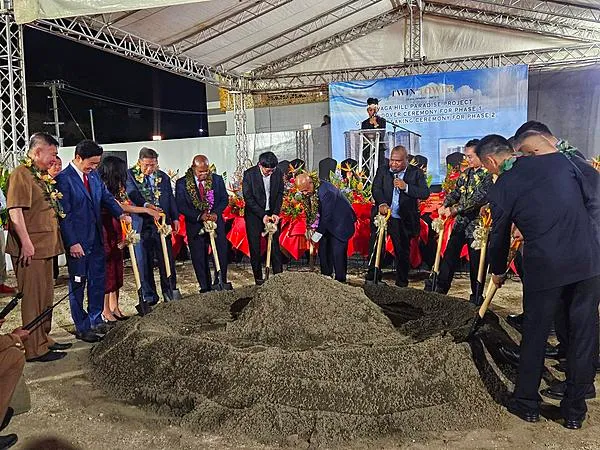
The Paga Hill Paradise Apartments, located within the Paga Hill Special Economic Zone (SEZ), was officially opened by Prime Minister James Marape on 5 January 2026.
The K130 million (USD 30.5 million), 22-storey luxury residential development sits on the Port Moresby beachfront, overlooking the historic Fairfax Harbour. It features 83 units, ranging from one-bedroom apartments to penthouses.
In addition to the opening, a groundbreaking ceremony marked the start of phase two of the project: a K350 million (approximately USD 82.3 million) development comprising a new apartment tower and an office tower. Construction is scheduled to begin in March, with completion expected within two years.
Minister for International Trade and Investment Richard Maru, who also oversees SEZs, described the opening as “the first of many exciting launchings and openings” within the Paga Hill SEZ.
“Six years after granting Paga Hill its first SEZ licence, we now celebrate the completion of the first world-class building we can truly be proud of. This is a remarkable achievement for the Marape-Rosso Government,” Minister Maru said.
He added: “In March, we will also witness the opening of the first casino within the Paga Hill SEZ. This project alone will create over 600 full-time jobs. Phase two of the Paga Hill Paradise Project, alongside other hotels and developments in the adjoining Sea Park SEZ, will further transform Port Moresby. In the next three years, these two SEZs, together with the recently approved Portside Gardens SEZ at the old wharf, will reshape the city’s skyline.”
Minister Maru extended his gratitude to Asian businessman Jimmy Po and other investors for their confidence in reinvesting in Papua New Guinea.
“We are deeply grateful for your trust. Your investment will help transform Port Moresby’s skyline, reflecting the vision and drive of NCD Governor Hon. Powes Parkop. Thank you for believing in our country and for committing your resources to strengthen PNG’s economy,” he said.
All 83 units of Paga Hill Paradise Apartments have now been sold. For the second apartment tower, more than 30 of the 98 units have already been purchased by interested buyers.
Minister Maru emphasised the strong investment potential in Port Moresby: “This is the right time to invest in PNG. Where else in the world would you sell world-class apartments two years before completion?”
Papua New Guinea has achieved a landmark financial milestone with the PNG LNG Project fully retiring its bank-financed debt six months ahead of schedule, Prime Minister James Marape announced during a site visit to the LNG facilities on 28 December 2025. The repayment marks a major achievement in the country’s economic history and reinforces PNG’s credibility as a destination for large-scale international investment.
The project’s total bank obligations of around US$16 billion — comprising US$14 billion in construction costs and US$2 billion in interest — have now been fully repaid.
“This complex project, which involved five provinces and more than 60,000 landowners, delivered first gas on time, operated consistently for more than a decade, and has now officially retired its total bank-financed debt earlier than scheduled,” Prime Minister Marape said. “That is a world-class achievement by any measure, particularly for a developing economy.”
Marape paid tribute to the late Grand Chief Michael Somare, under whose leadership the project was conceived, negotiated, and advanced to Final Investment Decision in December 2009. He highlighted the political will, policy certainty, and national consensus established during that period, which enabled project agreements — including critical landowner agreements in PDL1, PDL7, and PDL8 — to be executed, allowing construction to begin in 2010.
“From concept to construction, to first gas in 2014, and then consistent production through to 2025, PNG LNG has delivered reliably for the country,” Marape said. He emphasised the project’s resilience, noting that it has continued to operate successfully despite natural challenges and human pressures in and around the project areas.
The Prime Minister noted that the project was financed during the 2008 global financial crisis, with a consortium of 19 international banks from Europe, Asia, North America, and Australasia raising US$14 billion at a time when global capital was scarce. He underscored the unprecedented scale of the financing relative to PNG’s economy at the time, estimated at K26–K30 billion.
“With all bank debt now retired, PNG LNG today stands as a fully unencumbered national asset,” Marape said. “It is a free-standing, world-class asset for the country. This fundamentally strengthens Papua New Guinea’s economic position and our standing with international investors.”
The project has already generated more than K33 billion in economic benefits, including revenues, royalties, equity returns, employment, business opportunities, and foreign exchange inflows. Prime Minister Marape acknowledged the leadership of former officials, including Michael Somare, the late Governor Anderson Agiru, and ministers Arthur Somare, William Duma, and Patrick Pruaitch, noting that collective commitment was key to delivering the project.
“PNG LNG remains a monumental and economically transformational project for Papua New Guinea,” he said. “It shows the world that PNG can deliver projects of global scale, withstand challenges, honour its commitments, and succeed.”
The Prime Minister also reaffirmed the Government’s commitment to retire all remaining State obligations under the PNG LNG Agreement by the first half of 2026, ensuring the project continues to provide lasting benefits to the nation and its landowners.
Papua New Guinea is set to take a major step in turning resource wealth into community development with the installation of a new gas-fired power plant at the LNG facilities in Hela Province. Prime Minister James Marape said the project represents a shift from resource extraction to direct, long-term benefits for local communities.
During a site visit last year, the Prime Minister inspected the 2-megawatt gas-fired power plant, which is nearing completion and expected to be operational by the first quarter of 2026. Plans are already underway to expand capacity to 5 megawatts by the end of next year, providing more extensive electricity coverage to surrounding towns and villages.
“This is where the true value of our gas resources is realised — electricity for our people, improved services, and real development in host communities,” Prime Minister Marape said. He emphasised that reliable power will support health facilities, businesses, public services, and future economic activity in Hela, helping convert resource wealth into tangible social benefits.
The new plant is designed to supply Komo, Koroba, and Tari towns, including nearby communities. Once expanded, power will reach Margarima, Nipa, Lake Kopiago, and further west to Kandep and Mendi — areas that have remained without reliable electricity since PNG’s independence in 1975.
Prime Minister Marape highlighted that improved electricity access would deliver direct social benefits, particularly for women and girls, by improving lighting for safer communities, enhancing maternal and child health services, and creating better learning environments in schools.
The project aligns with government policy to ensure that PNG’s gas resources contribute not only to export earnings but also to domestic energy security and regional development. He encouraged landowner companies, including Trans Wonderland, to use the new power supply to expand into agriculture, storage, processing, and light manufacturing, with a focus on boosting women’s participation in the economy.
“This is how we turn resources into opportunity — empowering our people, supporting women’s participation, and creating long-term livelihoods beyond the life of the gas project,” the Prime Minister said.
The 2-megawatt facility marks the first phase of domestic electricity generation at Hela LNG, with the 5-megawatt expansion expected to progressively extend electricity to additional towns and rural communities. The project will also provide reliable, low-cost energy for schools, health centres, and local businesses, supporting inclusive economic growth and sustainable community development.
Prime Minister Marape said the initiative demonstrates a new model for resource development, where extractive industries directly contribute to social infrastructure, energy access, and long-term livelihoods for host communities.
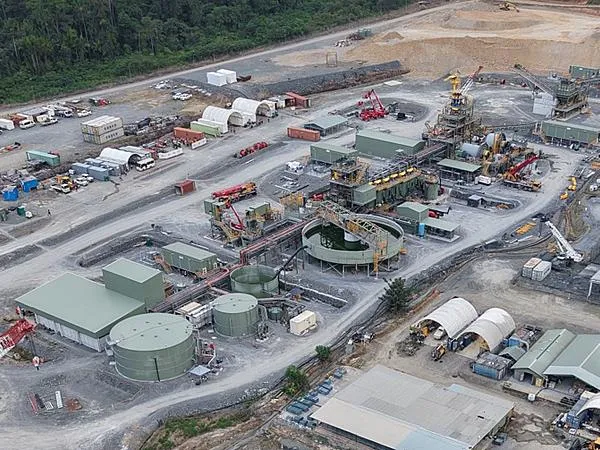
Ok Tedi Mining Limited has unveiled a five-year plan to redevelop the Misima Gold Project following its acquisition from Kingston Resources in May 2025. The company aims to start construction within the two-year term of the exploration lease.
The plan includes early investment in community infrastructure to benefit local residents before production begins. Ok Tedi General Manager for Social Performance and Sustainability, Jesse Pile, said: “We’re not waiting until production to make a difference. Roads, power, water, and support for schools and the hospital will start early. These improvements will benefit communities long before the mine is operational.”
Pile spoke during the company’s first community engagement on Misima from 1–4 December 2025. The engagement marks the beginning of ongoing consultations with stakeholders through the three phases of the project: Detailed Feasibility & Permitting, Construction, and Production.
Ok Tedi will conduct detailed exploration at the Umuna, Ewatinona, and Kulumalia pits to optimise mine plans and plant designs. Baseline environmental and social studies will also be carried out. The company expects to secure necessary approvals from the Conservation and Environment Protection Authority (CEPA) and the Mineral Resources Authority (MRA) by mid-2027.
Following permitting, major infrastructure works will start from mid-2027 to mid-2029 to prepare the site for full-scale operations.
Commercial production is scheduled to begin after plant commissioning, bringing significant economic benefits to the region.
Pile added: “The above early phases are critical. It’s where we lay the groundwork for everything that follows, detailed exploration, environmental and social studies, and permitting. This is about doing things right from the start leveraging from Ok Tedi’s 40 years of operational experience.”
He said that once permits are granted, construction will turn Misima into a hub of activity, creating jobs, spin-off business, and long-term benefits for the island.
Ok Tedi will also continue investing in critical infrastructure during the first phase to support both the community and the project. “Community support is the foundation of this project. We’ve seen incredible positivity from Misima people, and we will continue to engage openly, transparently, and honestly,” Pile said.
Geopacific Resources Ltd. said ongoing drilling at its 1.67 million-ounce Woodlark Gold Project in Papua New Guinea continues to support potential resource growth, with high-grade gold intercepts confirmed at Little MacKenzie and encouraging geology identified at Kamwak.
The company said about 13,000 metres of drilling has been completed so far, as it focuses on near-mine resource extensions, emerging discovery targets and improving geological understanding to support mine planning.
Recent results at Little MacKenzie confirmed gold mineralisation beneath surface trenching, including intercepts of 7 metres at 5.50 grams per tonne gold from 112 metres and 10 metres at 1.39 grams per tonne gold from 86 metres. The results support an updated geological model for the prospect.
At Kamwak, located next to the 711,000-ounce Kulumadau gold deposit, recent diamond drilling intersected zones of strong sulphide mineralisation and breccia. Assay results are pending, but the company said the geology is consistent with gold mineralisation elsewhere at Woodlark.
Geopacific said RC pre-collars have also been completed at Wayai Creek ahead of planned diamond drilling in the first quarter of 2026. Planning is underway for additional drilling and trenching in 2026 at several prospects, including Great Northern, Kamwak, Ivanhoe East and Kulumadau South.
Of the 55 drill holes reported in the current update, 23 have been completed, with the remainder in progress or awaiting assay results. About 2,300 samples are still in laboratories, and further results are expected in early 2026.
Geopacific CEO James Fox said the program is building confidence across the project.
“This drilling program is continuing to build a strong picture of the Woodlark system. At Little MacKenzie we are confirming mineralisation beneath surface trenching, while at Kamwak the geology intersected to date is highly encouraging and consistent with mineralisation seen elsewhere on the Project,” Fox said.
“With around half of the drilling program now complete, we have established solid momentum and a clear pipeline of follow-up work into 2026, much of it focused close to existing resources and planned infrastructure," he added.
The company said remaining drilling at Little MacKenzie will be completed before rigs move to Wayai Creek, with further drilling planned across the Woodlark project area in 2026.
Adyton Resources Corporation has engaged Global Ore Discovery to advance an integrated exploration programme at its 100% owned Feni gold-copper project in Papua New Guinea.
The appointment brings Global Ore’s epithermal and porphyry expertise to support targeting and technical oversight as Adyton seeks to expand resources at the Kabang prospect and assess district-scale potential across Feni Island. The work will be undertaken alongside Adyton’s in-house technical team, including expert consultant Dr. Erin Johns.
Global Ore consultants have already completed a site visit, relogging drill core to assess alteration, lithology and structural controls on gold mineralisation at Kabang. Adyton said preliminary observations indicate similarities between the geological and structural setting at Feni and those at the Lihir gold mine, owned and operated by Newmont, supporting the project’s large-scale potential.
The engagement follows a technical workshop held in late October 2025 at Global Ore Discovery’s headquarters, where historical and current datasets were reviewed alongside comparable alkalic-style gold-copper systems globally. The review culminated in a technical action plan to guide next steps.
Global Ore has initiated an integrated reinterpretation of geological, structural, geophysical and hyperspectral data, with the aim of delivering a high-resolution three-dimensional geological model to optimise drill targeting for ongoing resource expansion at Kabang.
The consultants have also identified priority areas for follow-up sampling of outcropping gold mineralisation and visually confirmed higher-grade copper mineralisation in drill core beneath and lateral to the existing resource.
“Engaging Global Ore Discovery marks the next significant expansion of our discovery efforts at Feni Island,” said Tim Crossley, Adyton’s chief executive officer.
Crossley said that this is a deliberate shift from Adyton’s initial focus on near resource drilling to a more aggressive program; exploring for resource expansion at Kabang while we also accelerate an exciting strategic approach to evaluation of multiple compelling epithermal gold prospects and targeting of large-scale concealed copper-gold porphyry mineralization within a ‘Whole of Island’ district scale thinking.
Global Ore will assist Adyton’s team in accelerating this expanded exploration strategy, he added.
The consulting programme is designed to support drill targeting for resource expansion, advance drill testing of known epithermal prospects and assess the potential for concealed porphyry-related copper-gold mineralisation across the island, including areas such as Danmagal.
Global Ore Discovery has worked across major porphyry and epithermal belts in the Americas, Australasia and Central Asia, and has contributed to discoveries and expansions including Batu Hijau and Toka Tindung in Indonesia and the Wafi-Golpu resource in Papua New Guinea.
Adyton said the engagement will focus on near-term deliverables expected in the first quarter of 2026, including detailed core documentation, spectral mineral mapping, prioritisation of targets beyond the current Kabang resource footprint and completion of an integrated 3D geological model to define new high-priority drill targets.
The Feni gold-copper project is located on the Lihir Island chain, a region known for world-class gold-copper deposits, and remains a core asset in Adyton’s portfolio.
The Bougainville House of Representatives has passed the 2026 ABG Budget, a K844,090,000 (US$198.4 million) financial plan aimed at strengthening Bougainville’s institutional readiness, economic transformation, and service delivery as the region progresses towards political independence.
The Budget was tabled by the ABG Minister for Treasury and Finance, Hon. Albert Punghau, in Parliament this week and was passed unanimously by the House yesterday in its final sitting for the year.
Minister Punghau outlined that the 2026 Budget comprises K520.36 million (US$122.3 million) in National Government grants, K46.74 million (US$11.0 million) in internal revenue, and K276.9 million (US$65.1 million) in re-appropriated development funds.
Of the total K844 million (US$198.4 million) budget, the recurrent component totals K240.98 million (US$56.7 million), representing 28.55 per cent, while the development component totals K603.11 million (US$141.7 million), or 71.45 per cent.
“This structure protects core recurrent services, yet it places the main delivery burden on the development programme, so results in 2026 will be judged by completed projects and visible service improvements rather than approvals on paper,” Minister Punghau said.
Minister Punghau explained that the Budget retains the 2024 structure, which separates funding streams under the two Organic Laws – the Organic Law on Peace-Building in Bougainville 2002 and the Organic Law on Provincial and Local-Level Governments 1995.
“This clarifies which funds sit under ABG control and which funds sit under national administration, and it sets out the conditions, approval processes, and reporting and acquittal requirements for each stream,” he said.
“This strengthens compliance, improves transparency, reduces fiscal risk, and supports clear debate in this Honourable House.”
Minister Punghau said the 2026 ABG Budget is set around three fiscal priorities:
To protect frontline services and core functions, including health, education, and police services;
To deliver constituency-led development through equal K1 million (US$235,000) allocations under the Constituency Independence-Readiness Program (CIRP) guidelines endorsed by BEC, with strict controls and verified outputs; and
To strengthen fiscal self-reliance by expanding internal revenue, tightening expenditure control, and investing in infrastructure and other economic enablers to reduce reliance on delayed grant releases.
Recurrent Budget 2026
The National Government recurrent grants component for 2026 totals K205,364,500 (US$48.3 million), representing 24.33 per cent of total ABG expenditure. The allocations are distributed as follows:
Health and Education – K112,165,400 (US$26.4 million), inclusive of a new allocation of K2,039,000 (US$479,000) for the Buka General Hospital Health Function Grant
Governance and Administration – K62,784,000 (US$14.7 million)
Law and Justice – K11,292,600 (US$2.7 million)
Legislative Government – K10,637,800 (US$2.5 million)
Judicial Government – K2,629,700 (US$618,000)
Economic – K3,720,000 (US$873,000)
Social – K1,190,000 (US$280,000)
Infrastructure – K945,000 (US$222,000)
“These grants keep government operating by funding salaries, essential operating costs, and routine service delivery, and they also sustain the Legislature and the Judiciary through direct recurrent appropriations,” Minister Punghau clarified.
Development Budget 2026
The total development budget for 2026 totals K603.11 million (US$141.7 million) and includes Restoration Development Grant (RDG) arrears, RDG annual allocations, the Public Investment Program (PIP), and donor funding.
An allocation of K100 million (US$23.5 million) has been set aside for RDG arrears, directed primarily towards capital recovery and productivity through infrastructure development, economic programmes, and government and institutional strengthening.
Sectoral allocations under this component include:
Legislature – K1,600,000 (US$376,000)
Government, Public Service and Independence – K26,850,000 (US$6.3 million)
Law and Justice – K3,700,000 (US$870,000)
Health and Education – K10,800,000 (US$2.5 million)
Research, Science, Technology and Innovation – K1,500,000 (US$353,000)
Infrastructure – K34,250,000 (US$8.0 million)
Economic – K18,600,000 (US$4.4 million)
Social – K2,700,000 (US$635,000)
Under the RDG annual appropriation of K50 million (US$11.8 million), funding is distributed on a regional basis to support balanced development across Bougainville.
“This allocation is distributed across Bougainville to support balanced regional development, with the Northern Region receiving K15.4 million (US$3.6 million); the Southern Region receiving K15 million (US$3.5 million); the Central Region receiving K12 million (US$2.8 million); districts receiving K4.1 million (US$964,000); Nissan and Atolls receiving K2 million (US$470,000); and headquarters receiving K1.5 million (US$353,000) to support coordination and delivery across the regions,” Minister Punghau explained.
The passage of the 2026 ABG Budget concluded the Bougainville House of Representatives’ sitting for 2025 and sets the fiscal framework for delivery, accountability, and development priorities in the year ahead.
New Porgera Limited has launched its inaugural National Content Plan, setting out measures to expand national participation, develop the local workforce and deliver long-term benefits to communities linked to the Porgera Project.
The company said the plan aligns with the New Porgera Mining Development Contract and the Porgera Project Commencement Agreement and is intended to embed national content commitments into the mine’s operations.
New Porgera said early progress has already been made in workforce and community development, including the rehiring of qualified former employees and the rollout of targeted skills development programmes.
Porgerans currently make up 33% of the workforce, with Engans accounting for 55%. The company said it aims to increase Porgeran representation over time while supporting progression into higher-skilled and supervisory roles. Women represent about 10% of the workforce, with initiatives in place to lift participation to 20%.
Community programmes are also under way in education, health care and local infrastructure. New Porgera cited the recent establishment of a Youth Community Development Committee as a key milestone, describing it as a first-of-its-kind initiative that gives young people from all local-level governments in the district a formal role in dialogue and decision-making.
“The launch of our National Content Plan marks an important milestone in our commitment to empowering local communities and building a skilled national workforce,” Country Manager Karo Maha said. “In a short time, we have seen strong engagement and early results that are already making a meaningful difference.”
General Manager James McTiernan said the plan supports the delivery of a large-scale mining project while broadening its benefits. “Through the MDC and PPCA, we are advancing a world-class mining project while ensuring its benefits are broadly shared. The progress we have made in workforce development and community engagement reflects our commitment to sustainable and inclusive growth,” he said.
The National Content Plan focuses on local employment, supplier development and long-term community partnerships. To oversee implementation, New Porgera has established a dedicated national content team working with its sustainability, human resources and supply chain functions. These units report to an internal committee chaired by the general manager and supported by the country manager.
The plan was formally submitted on 19 December 2025, to the Department of Commerce and Industry, the Mineral Resources Authority, the Department of Labour and Industrial Relations, and the Department of Prime Minister and National Executive Council. The company said copies will also be made available on its website, which is under construction, along with guidance for local and national suppliers seeking to participate in its supplier development programmes.
Follow on LinkedIn:
PNG Business News
Be the "First" to get our exclusive Digital Magazine & Weekly Newsletter.