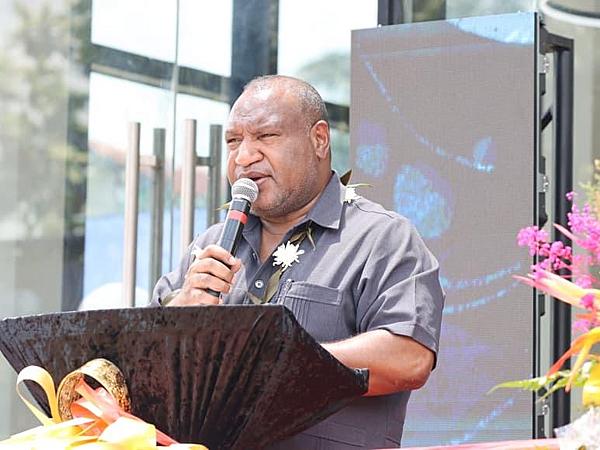
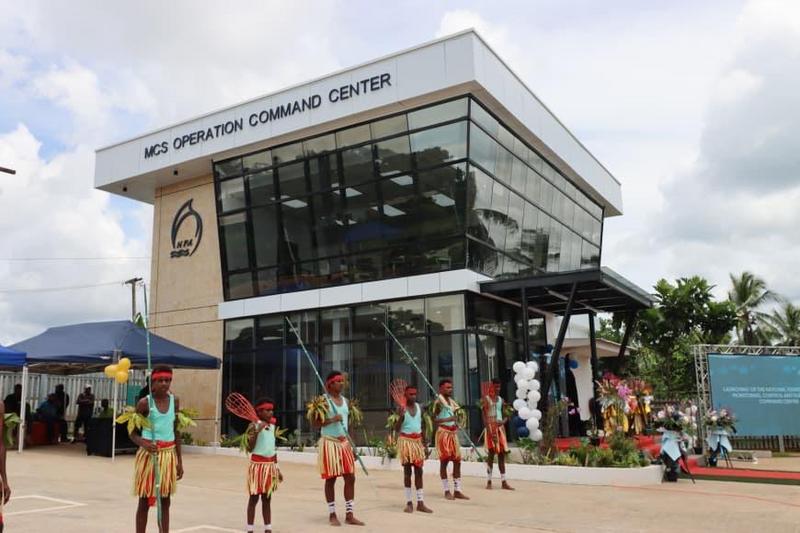
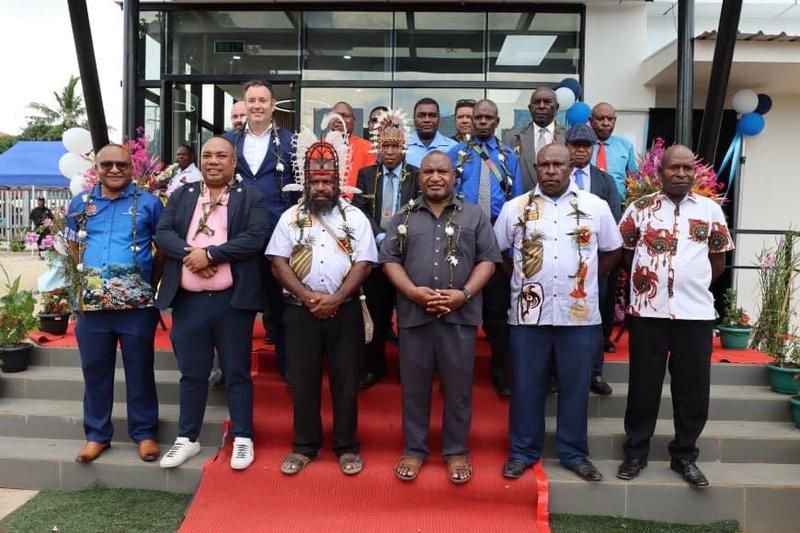
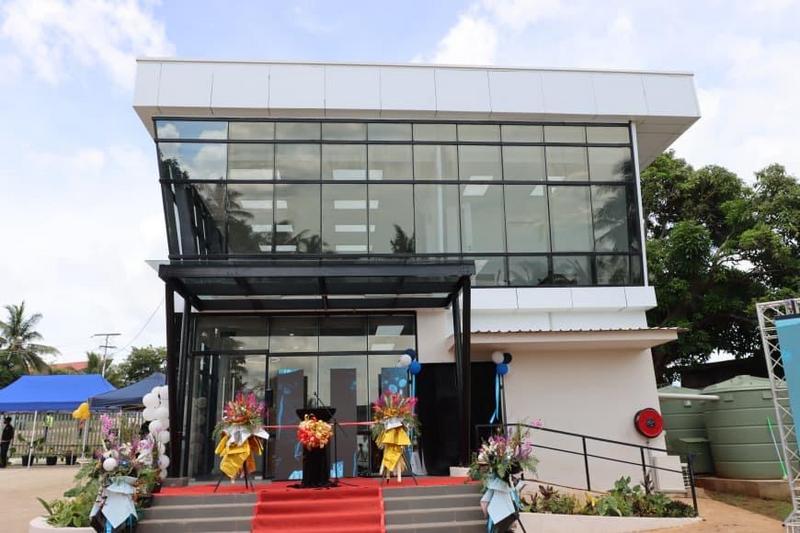
Prime Minister James Marape has launched Papua New Guinea’s National Fisheries Authority (NFA) Monitoring, Control and Surveillance (MCS) Command Centre in Daru, describing the facility as a critical step in protecting national sovereignty, securing marine wealth and strengthening the fisheries sector as a major pillar of the country’s future economic independence.
Commissioning the Command Centre in a single official address in Daru on 6 January, the Prime Minister said the facility marks a shift from policy intent to practical delivery, particularly in safeguarding PNG’s vast and resource-rich Exclusive Economic Zone.
“Today it is a proud milestone moment for our nation. Though seemingly small, it is a big step in the right direction in the protection of our resources, our sovereignty and our future,” Prime Minister Marape said.
He commended NFA Managing Director Justin Ilakini and his team for advancing the Fisheries Strategic Plan 2021–2030 and the Government’s Medium Term Development Plan IV, noting that decisive action had been taken without delay.
“You did not wait for a second or third round of instruction. You took heed of Government policy and got to work,” he said.
Safeguarding marine wealth and national sovereignty
The Prime Minister highlighted Papua New Guinea’s strategic maritime advantage, describing its waters as among the most productive in the Pacific, nourished by extensive river systems flowing into both northern and southern seas.
“Our waters are amongst the most fertile and richest in the Pacific. These resources must not only benefit us today, but must be preserved and harvested sustainably for our children and generations to come,” he said.
He stressed that illegal fishing would no longer be tolerated, citing recent enforcement actions as evidence of the Government’s resolve.
“Papua New Guinea is not a place for illegal fishing. Enough is enough. Take Back PNG is about stopping the theft of our resources,” Prime Minister Marape declared.
Technology, surveillance and strategic partnerships
The Daru-based Command Centre, supported by advanced satellite surveillance technology, will enable real-time monitoring of maritime activity across PNG waters and allow rapid response through patrol vessels and coordinated security operations.
“Through technology and partnerships with Australia, the United States and our regional neighbours, we can now see what is happening in our waters and act decisively,” he said.
While delivering a strong enforcement message, the Prime Minister reassured legitimate investors that Papua New Guinea remains open for business, provided investments comply with national laws and sustainability requirements.
“Come through the front door. Fish properly, invest properly, give back to landowners and the nation, and we will all prosper together,” he said.
Fisheries positioned as an economic anchor
Positioning fisheries as a long-term economic driver, Prime Minister Marape said the sector has the potential to underpin a substantial share of the national economy if properly regulated and protected.
“Fisheries is a sector that could anchor, in my view, 40 to 50 percent of our economy going forward,” he said.
He emphasised that strong monitoring and enforcement are essential to unlocking this potential, noting that resource protection is a fundamental responsibility of any sovereign state.
“The number one responsibility of any sovereign nation is to ensure its resources and its people are safe,” he said.
Strengthening maritime presence and security
The Prime Minister said the Daru Command Centre strengthens PNG’s presence in strategically sensitive maritime areas, particularly in provinces bordering international waters.
“We are stepping up with technology, stepping up with partnerships, and stepping up with actual patrols on the sea,” he said.
He praised cooperation between the NFA, the PNG Defence Force, border and immigration agencies, and international partners including Australia and Indonesia, highlighting their collective role in addressing illegal fishing, drug smuggling and transnational crime.
“This is not a rundown democracy. Our institutions are functional, our security forces are operational, and our partners stand ready to work with us,” Prime Minister Marape said.
Turning to Western Province, the Prime Minister acknowledged its long-standing contribution to the national economy and reiterated the Government’s commitment to ensuring resource-producing regions benefit directly from development.
“Western Province has sustained this country for decades. Your contribution to the economic viability of Papua New Guinea is recognised and appreciated,” he said.
He urged fisheries investors to prioritise local participation and downstream value-adding.
“Incubate local SMEs, buy from local people, involve landowners and work side by side with communities,” he said.
Commitment to Daru infrastructure renewal
Beyond fisheries, the Prime Minister used the visit to outline a broader national focus on revitalising Daru town, describing it as strategically vital due to its history, geography and international significance.
“Daru must return to the space it once occupied — as one of the leading towns in our country,” he said.
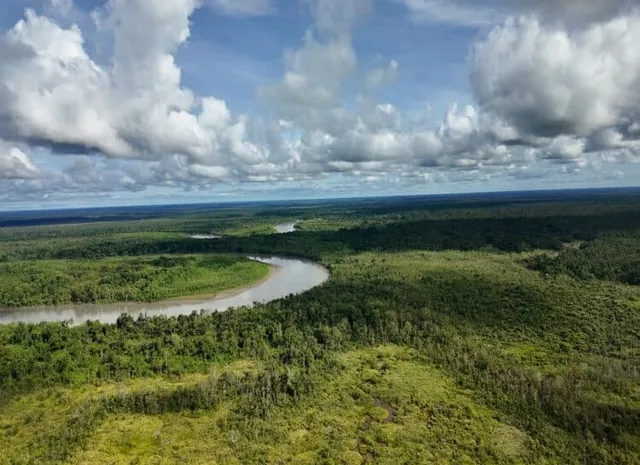
He noted that Western Province is PNG’s largest province by landmass, rich in natural resources and river systems, and uniquely positioned with direct borders with Australia and Indonesia.
“No other province carries this level of strategic importance,” he said. “What happens in Daru matters not only to Western Province, but to Papua New Guinea as a whole.”
Addressing long-standing infrastructure challenges, the Prime Minister confirmed that water supply, electricity reliability and road conditions in Daru are firmly on the national agenda, with discussions already held with provincial leaders.
“I take your concerns with me,” he said. “Before September 16 this year, I intend to return and account to the people of Daru on what the national government is doing on water, power and essential services.”
Prime Minister Marape confirmed that the National Government has approved 40 per cent equity ownership in the Ok Tedi mine for Western Province, describing it as a milestone in securing long-term provincial prosperity.
“This is about securing prosperity for your children and grandchildren,” he said, adding that Ok Tedi is now expected to operate until 2084–2085, with structured reviews to ensure benefits remain fair and sustainable.
Daru as a gateway for trade and growth
The Prime Minister said Daru’s future development must align with its role as a gateway town linking inland communities, coastal regions and international neighbours, with opportunities for trade expansion, port development, aviation infrastructure and regional services.
“With the right infrastructure and governance, Daru can once again become a hub — not only for Western Province, but for cross-border cooperation and economic activity,” he said.
Prime Minister Marape praised Daru residents for maintaining peace and order during the recent festive period, describing the town’s transition into 2026 as one of the most orderly reported nationwide.
“You showed discipline, responsibility and pride in your town,” he said. “That tells me Daru is ready to move forward.”
Concluding his address, the Prime Minister called for shared responsibility between government, communities and investors in rebuilding Daru and strengthening Western Province’s contribution to national development.
“Government will do its part,” he said. “But development also requires ownership, responsibility and pride from the people.”
Reaffirming his commitment to the province, he said Daru’s progress would remain a national priority as Papua New Guinea moves beyond its 50th anniversary.
“Daru’s best days are not behind it,” he said. “They are ahead.”
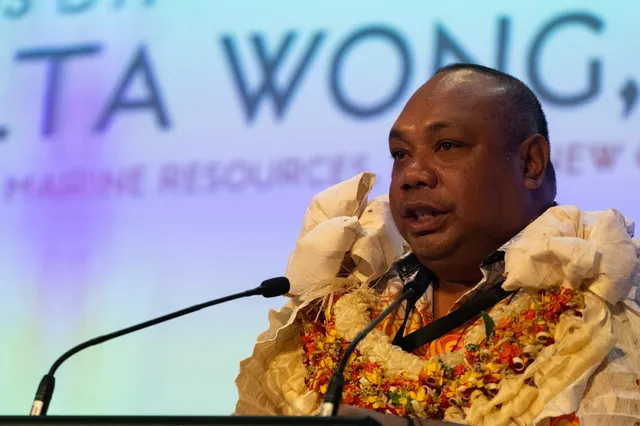
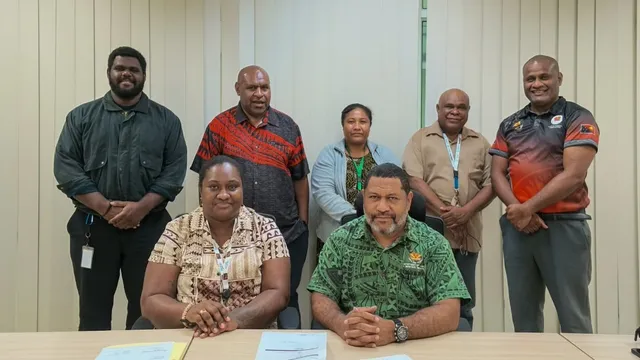
The Prime Minister was joined at the Daru event by Fisheries Minister Jelta Wong, Western Province Governor Taboi Awi Yoto, South Fly MP Sekie Agisa, NFA Managing Director Justin Ilakini, security agencies, development partners and members of the local community.