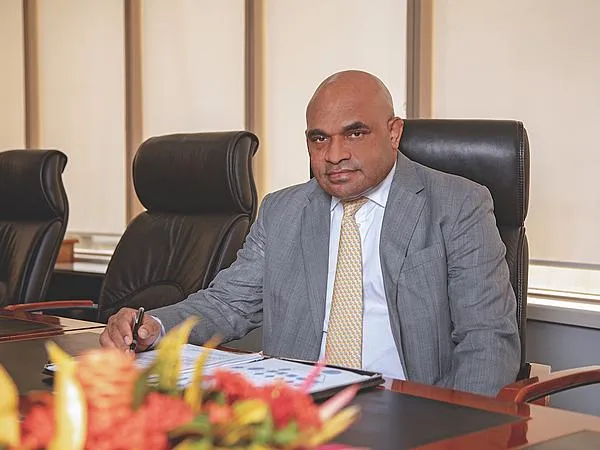
Petroleum Minister Kerenga Kua sees a bright future for the Oil and Gas industry.
According to Kua, the price of a barrel is currently over US$60 (K207.63).
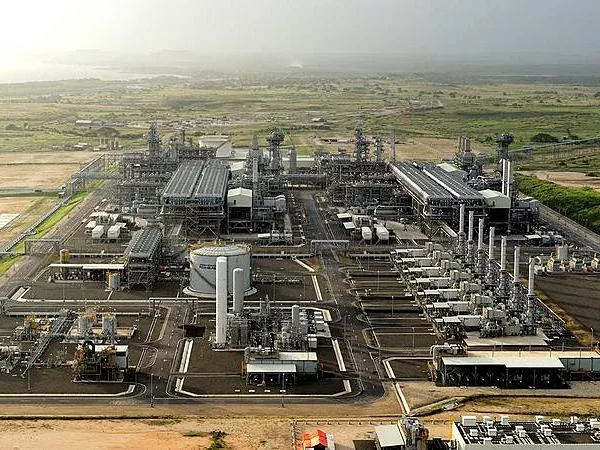
“The outlook for the industry is still good and positive and the industry is still in very strong shape,” he said.
The Covid-19 pandemic, he said, remained a challenge to the industry.
However, the operator of the PNG LNG project, ExxonMobil PNG Ltd, took a professional approach to deal with the issue.
Globally, US oil prices are down 42 cents (K1.47), or 0.7 per cent, to US$62.71 (K219.89) a barrel, after rising 6.4 per cent last week as a result of the revival of Covid-19 cases around the world and countries imposing tougher sanctions that would hurt economic growth.
Oil Search Ltd, a partner in the PNG LNG project, recently said that the increase in Covid-19 cases in PNG has had no impact on its operations and production.
“To date, there has been no impact to production in our Oil Search operations in PNG as a result of the recent surge in the Covid-19 cases,” Kua said.
“The increase in confirmed Covid-19 cases in PNG has prompted Oil Search to enact its crisis and emergency management plans.
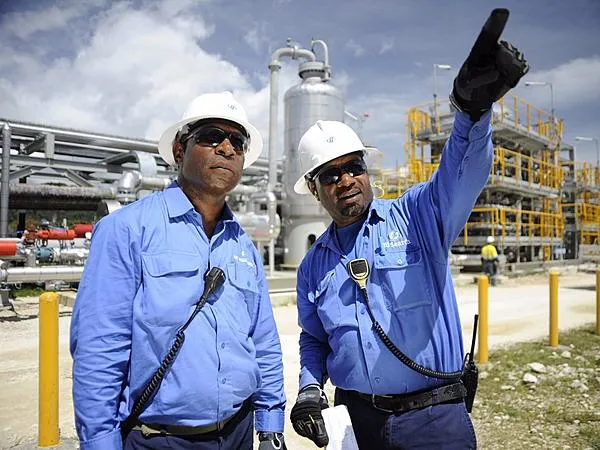
“The health and safety of our employees remain the highest priority and teams have been assembled in PNG and Sydney to deploy additional support to protect our people and to ensure the safety and reliability of our operations.
“At our PNG field locations, we continue to operate under precautionary protocols established in 2020, which includes redeployment of non-essential personnel, restriction of access and travel to field locations and implementation of strict preventative measures and quarantine zones.”
According to Petroleum Minister Kerenga Kua, the window for talks on the Twinza's Pasca A gas project is still open.
Mr Kua was referring to Twinza Oil Limited, saying that the current terms of the arrangement are not suitable for any investor and that the firm has asked its Pasca A project team to stand down.
Although he acknowledges Twinza's reservations about the Pasca A agreement being signed, he believes it is the government's prerogative to negotiate better terms.
In a letter to Twinza in February, the Minister said that “the Prime Minister’s policy directives come amid an impasse between the State Negotiating Team (SNT) and Twniza Oil Limited (TOL) in reaching a closure on the Gas Agreement”.
“He has further instructed me to direct the SNT to re-negotiate certain fiscal terms with TOL to achieve his policy directives and conclude a Gas Agreement signing on or before the 21st February 2021.”
According to the corporation, the state has requested a 6% Production Levy in order to sign the deal, which is 4% higher than the Production Levy that was agreed to as part of the substantive terms ('Agreed Terms') for Pasca A, signed by the State Negotiating Team and confirmed by Prime Minister James Marape on September 24, 2020.
The additional levy demanded, according to Twinza, would make the Pasca A Project unfinanceable for any investor.
Mr Kua, in response, said: “Until the signing takes place, the window for negotiation is still open. As Minister for Petroleum, it is imperative for me to seek the best outcome for PNG.
“I understand that Twinza negotiations have taken several months to reach this point and the company has invested heavily in time and resources. But given the uniqueness of the project related to other existing oil and gas projects in the country it would be negligent for the State not to demand more benefits from this deal.”
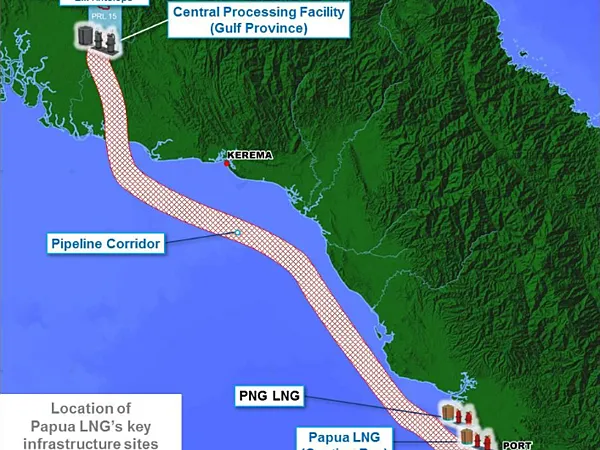
Kumul Petroleum Holdings Ltd (KPHL) is well-positioned financially and technically to manage the new gas fields in Kikori, Gulf, and is prepared to participate in other resource ventures such as Papua LNG.
Wapu Sonk, the company's managing director, said this in response to the government's decision to grant the national oil and gas company wholly owned and operated petroleum retention licences 48, 49, and 50, which cover the gas fields of Kimu, Barikewa, and Uramu.
Kimu and Barikewa areas are onshore, while Uramu is offshore in Kikori's deeper waters.
“Kumul Petroleum is almost debt-free,” he said. “Our balances are very strong. We have a very strong cash flow that comes from the PNG LNG project and other projects including the power projects in Hides and the Port Moresby power station (NiuPower Ltd) as well. So we are stronger to operate the licences.”
The Petroleum Advisory Board (PAB) had examined the company's financial situation and decided to issue them certain licenses, according to Sonk.
He said that KPHL had released its financial accounts and analyses over the previous three years and that the board of directors had concluded that the firm was in good shape.
“This is not a free gift from the Government,” he said. “It has gone through the proper assessment process by the PAB which is an independent body.”
Sonk said PAB had also assessed the technical capabilities of KPHL
“We have been here for 10 years building capacities and we got this on merit,” he said. “But it also fits into the Government’s overall policies.”
Sonk also mentioned that KPHL will look at less expensive and more efficient ways to commercialize the fields, including downstream manufacturing, power generation, quicklime, and cement production, among other things.
He said that KPHL will welcome potential parties to evaluate the gas fields and bring them into the drilling and production phase.
According to project operator Twinza Oil Ltd, the government has raised its demand for the Pasca A Gas agreement once again, ahead of the scheduled signing.
According to a statement from Twinza, the government told the firm last Friday that signing the agreement now demanded a 6% production levy.
It read: “This is 4 per cent higher than the production levy that was agreed as part of the comprehensive terms (agreed terms) for Pasca A, negotiated by the state negotiating team and announced by the Prime Minister James Marape last Sept 24.
“The additional levy requested would make the Pasca A project un-financeable for any investor.
“The agreed terms would have delivered the highest State take from any resource development in PNG and were widely regarded as meeting all of the demands of the State, including early revenues, full royalty and development levy entitlement and a domestic market obligation of 5 to 10 per cent while satisfying the requirements of project financiers.”
it said that the State had also attempted to amend the negotiated terms through a letter from Petroleum Minister Kerenga Kua on February 4.
“The Government’s demand to raise the fiscal take to (between) 55 and 60 per cent nominal share, which is 75 to 85 per cent of the actual project value, would make Pasca A unviable for investors and financiers alike,” it said.
“Notwithstanding the changing State positions, Twinza remains committed to PNG and progressing the Pasca A Project on the agreed terms.”
Twinza gave an extra concession to the negotiated terms, raising the production levy to 4%, with a further rise to 6% at higher oil prices, in an attempt to close the deal.
“This will provide 65 to 70 per cent of project value to the State or 52 to 54 per cent of nominal take,” it said.
“The State take has been independently verified by Deloitte in a comprehensive report commissioned by the Department of Petroleum and delivered to the minister this month.”
Twinza has kept its project team for Feed (front-end engineering and design) – readiness in the hope that the gas deal will be concluded by the end of 2020 after the negotiated terms were confirmed by Marape in September.
The Pasca A gas agreement reached this month would have required the project to enter the Feed process right away, with a final investment decision expected in 2022 and first production in 2025.
“Given the continued delays, Twinza will now stand down the Pasca Project team until there is clarity on terms and execution of the gas agreement.”
Chairman and chief executive Ian Munro said: “Twinza was awarded the Pasca license nearly 10 years ago as a foreign direct investor.
Since then, the firm has invested over K350 million in cultivating a field that was discovered more than 50 years ago but overlooked by other industry players.
“It is disappointing that at the closing stages of a drawn-out 10-month gas agreement process, the State is now seeking to again revise terms to ones that are demonstrably unacceptable to any investor.
“Consequently, while Twinza remains committed to progressing the Pasca A project on a fair and equitable basis, the company will streamline its costs while awaiting a gas agreement signing on acceptable terms.
“We remain focused on developing PNG’s first offshore oil and gas field and opening up the Gulf of Papua to much-needed investment as soon as circumstances allow.”
Kumul Petroleum Holdings Limited has been granted 100 per cent control of three Petroleum Retention Licenses (PRL) by the PNG government (KPHL).
PRL 48, 49, and 50 of the Kimu, Barikewa, and Uramu gas fields have already been discovered.
The three fields have the best estimation of contingent capacity (2C) of slightly more than 2 trillion cubic feet (tcf) of crude, with 50–60 million barrels condensate.
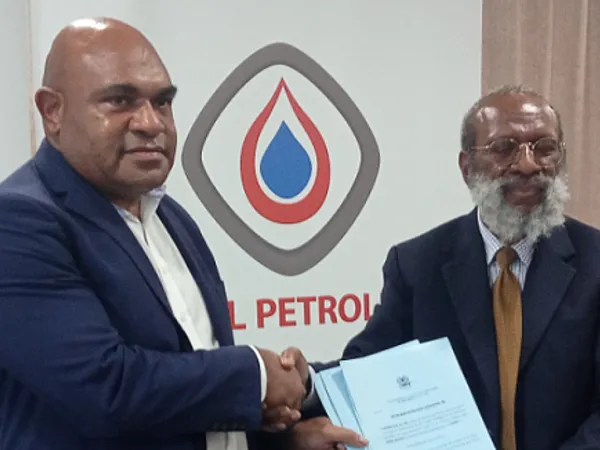
Kerenga Kua, the Minister for Petroleum, delivered the licenses to Wapu Sonk, the Managing Director of KPHL, today.
PRL 48, 49, and 50 refer to the Kimu, Barikewa, and Uramu gas fields, which KPHL plans to expand.
Kimu and Barikewa are both onshore fields, while Uramu is located offshore in Gulf Province's Kikori waters.
Minister Kua described the event as historic since KPHL was given sole ownership of the licenses after the previous licensee's contract expired.
“This is an important step forward as we realise the potential of our world-class natural resources. It shows that our policies are working and allows the Government through the guidance of the Department of Petroleum to allocate assets and licenses to the right developers and in particular looking for a greater share of the benefits from our resources when the licenses expire and the rights return to the State.”
After the original authorization for the fields expired, KPHL thanked the government for granting them the license.
He said that KPHL has the financial and technological resources to grow the fields.
“I thank the Petroleum Advisory Board (PAB) and Minister for coming to this decision, which demonstrates their confidence in the country’s National Oil and Gas Company, which is ready now to lead in the development of our resources after last Ten Years of being a passive investor in PNGLNG Project and other developments.
“At Kumul Petroleum, we take seriously our responsibility to move forward quickly so the assets can begin generating returns for the nation. We are looking forward to getting them started but will only do so on good commercial terms, which deliver substantial benefits to Papua New Guinea and its people.
“Our focus now is on developing commercial strategies for the PRLs, so we can work towards bringing them to market.
“This is another milestone for our company and the country, as we continue to work to develop our excellent resources and support the world’s transition away from coal. Papua New Guinea has some of the world’s best natural gas assets, which KPHL is committed to developing with local people and businesses, the Government and global partners.”
Wapu Sonk says KPHL will find cost-effective ways to commercialise the fields.
“We will explore cheaper and more cost-effective ways to commercialise these fields not only in Production of LNG and coal, as well as downstream refining, power generation, quicklime and cement production, and so on.
He added, “At Kumul Petroleum, we take seriously our responsibility to move forward quickly so the assets can begin generating returns for the nation. We are looking forward to getting them started but will only do so on good commercial terms, which deliver substantial benefits to Papua New Guinea and its people.
A PRL is valid for five years, with the option to extend for another five years.
Central Governor Robert Agarobe of Papua New Guinea said the (Central) government will support the Gulf in all aspects of the US$12 billion (K41.38 billion) Papua LNG initiative, especially in terms of community benefits.
He said this at the unveiling of many impact projects in Ihu, Kikori, including the Ihu Special Economic Zone (Isez).
According to Agarobe, the locals from the four impacted villages – Papa, Lea Lea, Boera, and Poerabada – earned royalties as a result of the PNG LNG initiative, but their standard of living remained poor.
“It is good to know that this part of the country is full of resources,” he said.
“But these resources will only benefit the people if it’s managed well.
“I can only speak from experience and with the experience I have with the PNG LNG project is that when we are trying to measure the benefits or the success of any project, I can only measure it by going back to the affected villages to see how my people are actually living with the development going on.
“If we go back to Central, where we have the four affected villages, we do get royalties as benefits and infrastructure development grants but in terms of standard of living of our people, it is still very poor.”
According to Oil Search, oil prices have risen steadily in recent months from the initial effect of the Covid-19 last year, when prices ranged about US$43 (K150) per barrel of oil (bbl), to levels above US$60/bbl (K210) since February this year.
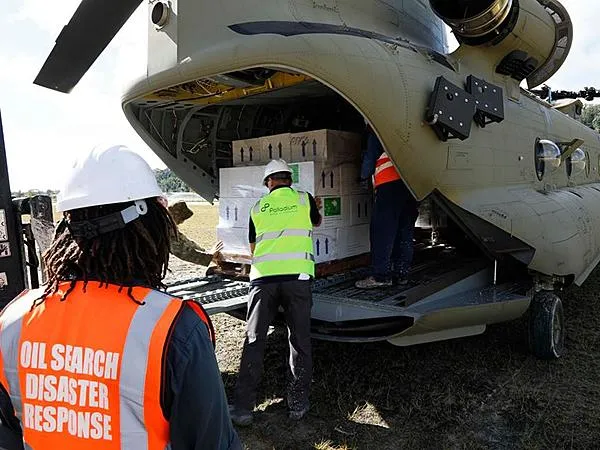
In response to questions, a group spokesperson said,“ To date, there has been no impact to production in our Oil Search operations in PNG as a result of the recent surge in the Covid-19 cases. The increase in confirmed Covid-19 cases in PNG has prompted Oil Search to enact its crisis and emergency management plans. The health and safety of our employees remain the company’s highest priority and teams have been assembled in PNG and Sydney to deploy additional support to protect our people and to ensure the safety and reliability of our operations. At our PNG field locations, we continue to operate under precautionary protocols established in 2020, which includes redeployment of non-essential personnel, restriction of access and travel to field locations and implementation of strict preventative measures and quarantine zones.”
He added, “We have enacted additional risk mitigation measures include establishing ‘cocoons’ for our field teams and extending the quarantine period for employees and contractors. To date, there has not been a single positive case recorded in our operating sites outside of quarantine. We have also conducted more than 7,500 Covid-19 tests at our medical clinics and quarantine facilities in PNG. Beyond the safety of our own people and assets, Oil Search stands ready to work with relevant Government and health authorities to assist in PNG’s overall response to the Covid-19. This includes the dissemination of accurate information around the Covid-19 and vaccinations, supporting provincial health authorities to implement an effective vaccination programme, and providing logistics and cold chain support where required and as directed by the Government.”
Oil Search claims that stringent quarantine procedures, behaviour restrictions, and personnel roster guidelines put in place last year have secured the company's activities in the region.
In a statement, Oil Search said that no cases of Covid-19 had been identified in their field operations.
In addition to the number of Covid-19 cases around the world, the organization has increased its efforts to protect its employees and ensure secure and efficient operations.
The instituted ways include:
Oil Search managing director Dr Keiran Wulff said, “The Covid-19 is a growing threat to the people of Papua New Guinea.
“We are doing everything to ensure that our employees can continue to work safely, and to support their families as they do so.”
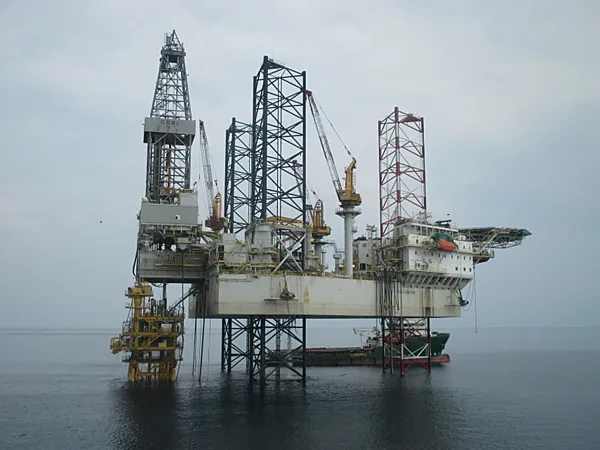
Twinza's Pasca is the topic of negotiations. According to Petroleum Minister Kerenga Kua, a plant in the Gulf is currently underway.
Kua predicted that reaching an agreement on the country's first offshore oil project would take some time.
“(Project) still under negotiations,” he said. “Generally, it could take a few years to negotiate an agreed position. Once in a while, it takes less time. Patience is important to all sides.”
Twinza has previously stated that the talks were over the fiscal terms for the construction of the gas-condensate field in the Gulf of Papua.
“The company is committed to working collaboratively with the Government to deliver an agreement that allows the project to move forward toward development, while providing a higher state take than previous projects,” country manager Roppe Uyassi said. “Once the Pasca A gas agreement and the petroleum development license are in place, the project is well-positioned to enter the front-end engineering and design phase later this year.”
Twinza was also excited to discuss significant non-financial prospects with the SNT, such as domestic business commitment, third-party access to infrastructure, and national material.
“These matters were differentiated from land-based projects as Pasca A field is planned to be the first offshore development in PNG.”
Meanwhile, according to company records, Twinza's main asset is the offshore Pasca A liquids-rich gas field. The Pasca A field development plan had been completed, the petroleum inventory had been approved, and the program to receive full-field development licenses had been completed.
The Pasca A development will become the country's first offshore field development after all requisite government approvals are issued.
To set out how benefits from the PNG LNG project will be divided between two provincial governments, Papua New Guinea's Governors Hon. Philip Undialu (Hela province) and Hon. William Powi (Southern Highlands province) have recently signed a Memorandum of Agreement.
In 2009, benefits from the PNG LNG Project to the provincial government and landowners were agreed during the UBBSA when the Hela region was still part of the Southern Highlands province, but three years later in 2012, the Hela region became a province.
With oil and gas and wells supplying gas to the PNG LNG Project located in both provinces, leaders decided on a split of the benefits agreed in 2009, and instructed the Mineral Resources Development Company (MRDC) to work out the formula.
“First and foremost, we want to thank and pay homage to Grand Chief Sir Michael Somare for delivering the PNG LNG Project, the single biggest investment ever undertaken in our nation’s history. The project remains a milestone achievement for the nation by the founding father, whose passing we are mourning at this moment.
“We also thank and remember late Anderson Agiru, former governor of Southern Highlands and foundation governor of Hela, for his role in delivering the project, and negotiating the benefits for the landowners and the provincial government.
“At that time, the Hela region was part of Southern Highlands province. Work had begun for the establishment of a new province, and it was agreed that the benefits to the southern Highlands province agreed under the UBBSA would be reviewed once Hela province was established.
“MRDC undertook that exercise and worked out a formula for the split of the benefits between the Southern Highlands and Hela provinces, and we want to thank MRDC for almost their years of hard work put into this document we signed today.
“Essentially, this Agreement allows benefits from oil and gas fields in Southern Highlands to be split 60% (Southern Highlands) and 40% (Hela). Likewise, benefits for oil and gas fields in Hela province will be split 60% (Hela) and 40% (Southern Highlands).
“To illustrate, SHP will retain 60% of the benefits from PDL2 (Kutubu and Moran), which includes royalties, SSG funds, and development levies.
“Hela will retain 60% of benefits from all gas fields, which includes royalties, development levies, and the Kroton Equity as well.
“The Southern Highlands Provincial Government equity in Bank South Pacific (BSP) and Petroleum Resources Kutubu (PRK) will also be split, with 40% going to Hela province.”
“We are proud and honoured to sign this agreement on behalf of our people.
“This split ensures equitable distribution of benefits from this project to the two provinces so that vital social development projects that uplift the lives of our people can continue to be delivered.”
The increase of oil prices above US$60 (K207.90) has made Papua New Guinea’s Mineral Resources Development Company satisfied.
According to the company's managing director Augustine Mano, the average oil price last year was at “historical lows”.
“This year is better than last year given the oil price is above US$60,” he said. “Last year, the oil price average was at a historically low and on average for the year around US$32 (K110.88). With the Covid-19 pandemic, companies around the world struggled. PNG was no different. If the price holds at US$60 for this year, it will be a strong recovery for the MRDC group.”
Mano added that the revenues for Kumul Petroleum Holdings Ltd, MRDC and the petroleum sector would be important.
Oil Search has brought a strong financial year in 2020 with a core net profit after tax of US$22.0million (K77m), also reported to a full-year production of 29.0 mmboe and the strongest safety performance since assuming operatorship in 2003.
The financial results were significantly lower realised hydrocarbon prices in 2020 as compared to 2019, which resulted in a full-year net loss of US$320.7 million (K1.1bn). This includes a post-tax impairment charge of US$260.2 million (K908.7m) that had been recognised in the interim financial results.
For managing director Dr Keiran Wulff, “Oil Search emerged from 2020 stronger and more resilient as a result of its response to the Covid-19 pandemic, demand collapse and oil price downturn. Despite the material challenges, Oil Search achieved three important records for the year. The first is the strongest safety performance in PNG since becoming the operator of the PNG oil fields in 2003, with a total recordable incident rate of 0.78 per million hours worked, and no Tier 1 process safety events.”
According to Wulff, the second is the strongest production reliability from its operations in PNG since the 2018 earthquake and, the delivery of record annual production from the PNG LNG project.
He said that the company brought down some decisive actions.
“We also undertook a major strategic review to prioritise activities and capital spend for a low carbon future,” he said. “This resulted in streamlining our portfolio and incurring a non-recurring, post-tax impairment charge of US$260.2 million (K908.7m). We are a more focused, leaner and lower cost resilient business in a strong position to commercialise our world-class resource base and leverage the oil price. We will continue to focus on maximising operating cash flow and delivering material growth projects which will be underpinned by resilient operations and disciplined capital management. We have set up a dedicated transformation team to embed a high-performance culture across the business.”
After the signing of the fiscal stability agreement, Prime Minister James Marap said that the Papua LNG project is going in the right direction.
He gave confidence to the investors that PNG has an active democracy.
“We appreciate very much that this project has now been moved,” he said. “The Government will ensure that all necessary support is procured for this project to be moved as our project developer moves into the FEED phase. Our country is moving into exciting years ahead. Let me sound this out to our investors: Today is a testament to what democracy in PNG is all about, irrespective of the politics that is at play. Our economy is in a very vibrant democracy. Our rule of law prevails, our judiciary always presides over matters that are in conflict. Our country has not terminated any project agreement during the life of the contract.”
Apologising to investors that the government had caused them too much stress, he said, “The Government provides the social licensing, provides the security also. It needs to ensure that all ticks that need to be ticked are ticked, with respect to the laws that we have.”
Oil Search Ltd is happy to see the progress of the US$12 billion (K41.38 billion) Papua LNG project.
According to Oil Search managing director Dr Keiran Wulff, “We are pleased to see further progress achieved on the Papua LNG. This milestone highlights the commitment from the Government towards Papua LNG and is a significant step in de-risking the project. It also demonstrates increasing alignment between the Government and the joint venture partners. We look forward to progressing the Papua LNG and announcing further milestones consistent with our strategic review announced last November.”
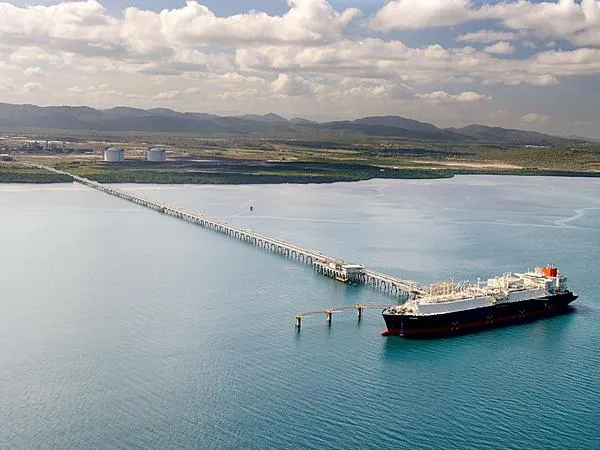
Total, the operator of the project signed the agreement - together with ExxonMobil and Oil Search - signed an agreement with the government early this week. This is seen as a final step under the Papua LNG gas agreement to proceed with the project fiscal stability.
Total managing director, meanwhile, Jean-Marc Noiray said that they welcome the “whole stabilisation of the project”.
“The Feed (front end engineering design) itself will last between 15 and 18 months, from the moment we reach the final investment decision,” he said. “And from final investment decision to first gas, we have about four years of construction. It’s a long journey before we get to the first gas, and the first revenues for the developers and the country.”
Following the signing of the Fiscal Stability Agreement (FSA) for the Papua LNG Project between the Papua New Guinea government and with French company Total and partners ExxonMobil and Oil Search, Prime Minister James Marape has announced that the Papua LNG project will proceed as a two-train project, independently of the P’nyang project.
This came after a twenty-two months delay after landowner issues and a change in government leadership. The initial Memorandum of Understanding was signed in early 2019.
“This demonstrates that the government can still honour legally-signed agreements which in the long run provides comfort for long-term investors,” he said. “It demonstrates Papua New Guinea’s commitment to this Papua LNG Project and gives comfort and encouragement to the developers to progress the project.”
According to Petroleum Minister Kerenga Kua, the long incubation period was because of exploring whether this project will connect with the fledgeling P’nyang project in Western Province.
"After 22 months it was felt that we should de-link the two projects," he said. "Papua LNG, because it's a fully executed agreement, is capable of proceeding as a stand-alone project. And P'nyang can follow its own pace after this event."
He assured landowners that they would get a fair share from the project.
“I want to assure everybody that this process is at an advanced stage,” he said. “Landowner identification has been substantially completed. However, the project developer cannot bring it to my level at the department for the final vetting partly because there is an injunction sitting there somewhere, stopping the company Total from presenting their studies to me. Now that we have achieved this, we will now put our focus back to the National Court proceedings. I want to assure the landowners in the Gulf and Central that we will do everything possible to hear them out and make sure that the processes are fast-tracked.”
Kua added that this agreement would enable the Front End Engineering & Design (FEED) to proceed, with the Construction phase to follow in time.
For Managing director Jean-Marc Noiray, the economic benefits of the projects would come to fruition after the construction phase.
“We need to embark on the whole stabilisation of the project which we call the pre-FEED. We are working hard on that,” he said. “The FEED itself will last between 15 and 18 months, from the moment we reach the final investment decision. And from final investment decision to first gas, we have about four years of construction. It’s a long journey before we get to the first gas and the first revenues for the developers and the country.”
He added that the project is a long journey.
“It was a milestone as we achieved solid steps along the way,” he said. “By signing the stability agreement today (yesterday), we are building a solid foundation and also a confirmation that we can now go ahead.”
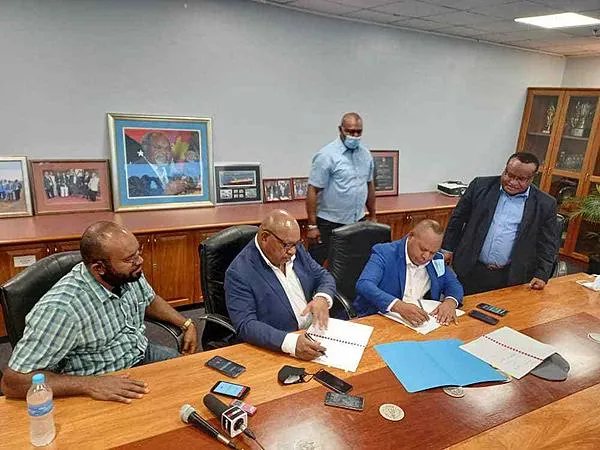
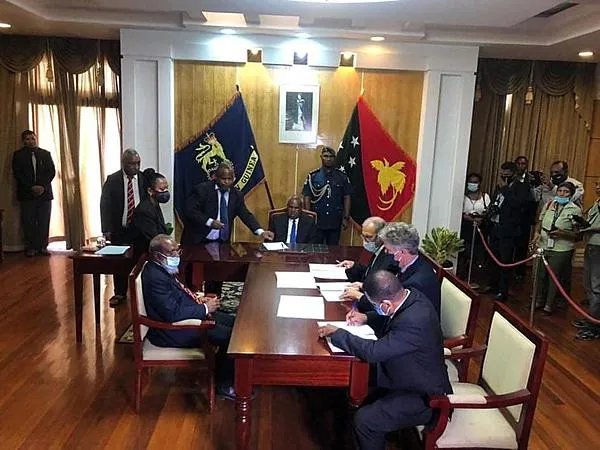
The new project was recently signed at the Government House in Port Moresby. In attendance were Kua, Prime Minister James Marape, and representatives from Exxon Mobil, Total, and Oil Search.
Because of its focus on performance, capital and cost allocation, Oil Search has resulted in a firm production.
Managing director Keiran Wulff said the developments of Oil Search had regained momentum with the passing of the government in Parliament the remaining amendments to Acts for Papua LNG fiscal stability.
He said that assurance reviews for the Pikka Unit Development were already finished and that the project is ready for design and front-end engineering in early 2021.
“Despite the material challenges of 2020, PNG LNG continued to outperform in the fourth quarter, ending the year with its highest ever annual production of 8.8 MT,” he said. “The North West Moran oil field was also brought back online during the quarter following a shut-in due to the 2018 earthquake.”
Wulff said that the continuation of production was a collective effort by everyone and brought about by a gross contribution of around 2500 bopd.
“At our investor briefing in November, we shared our renewed purpose and ambition and laid out our new strategy to focus on delivering full value and enhancing our appeal to stakeholders through building resilience to lower and uncertain commodity prices,” he said.
“We expect that 2021 will continue to be another challenging year and the company is focused on maintaining the operational discipline that resulted in excellent results in 2020, despite the difficult conditions. Oil Search is increasingly well-positioned to manage through uncertainty and deliver our projects in 2021 and beyond.”
Follow on LinkedIn:
PNG Business News
Be the "First" to get our exclusive Digital Magazine & Weekly Newsletter.