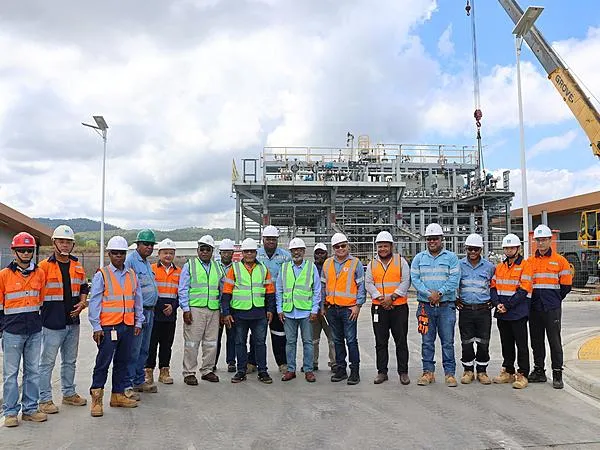
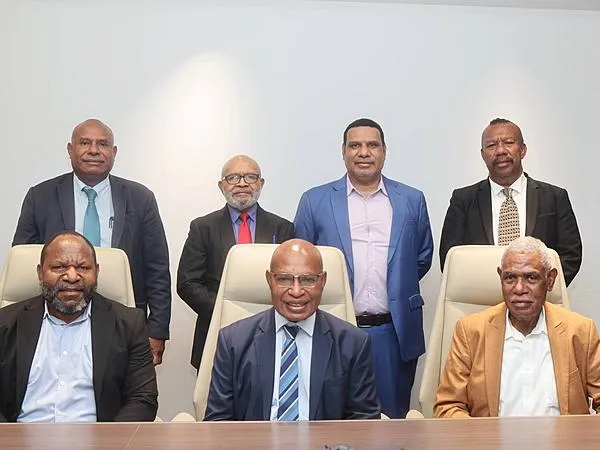
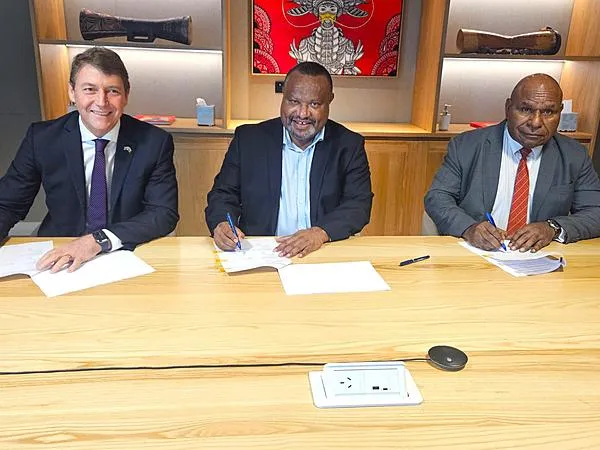
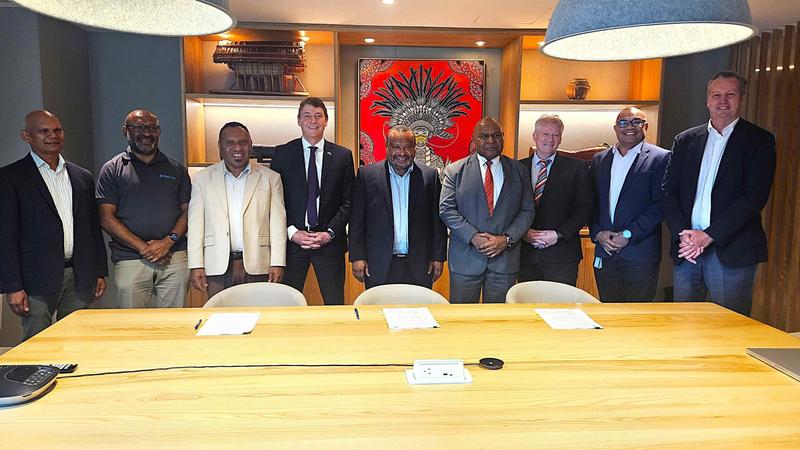
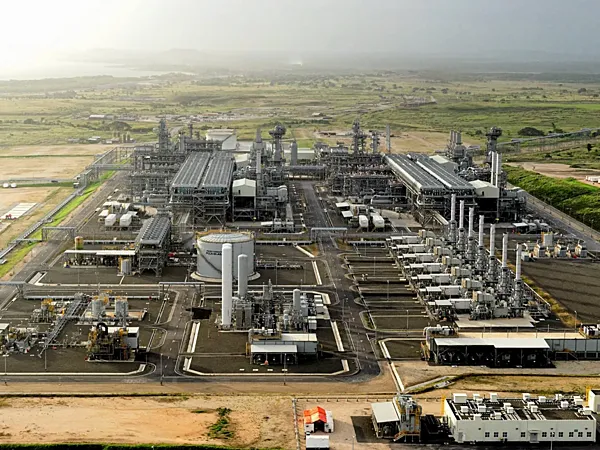
Santos has announced a final investment decision (FID) to proceed with the Agogo Production Facility (APF) Tie-In Project in Papua New Guinea following approval by the PNG LNG joint venture, with first gas targeted in the second quarter of 2028.
The brownfield development will involve the installation of a new 19-kilometre pipeline linking the Santos-operated Agogo Production Facility to the existing PNG LNG gas pipeline system, together with the drilling of two new wells and associated modifications to production facilities.
Santos said the project is expected to deliver incremental production capacity of about 135 million standard cubic feet of gas per day gross, with Santos’ net share estimated at about 54 million standard cubic feet per day.
According to the company, Santos’ share of capital expenditure is estimated at about US$160 million, with gross capital expenditure projected at approximately US$400 million over three years. The project will utilise existing PNG LNG processing and export infrastructure as part of Santos’ strategy to maximise value from established assets and infrastructure in Papua New Guinea.
Santos Chief Executive Officer and Managing Director Kevin Gallagher described the APF Tie-In Project as a “highly value-accretive investment” that aligns with the company’s disciplined capital allocation framework and supports Santos’ long-term production outlook.
“The APF Tie-In Project is a high-quality development with strong economics and a clear role in our strategy to build and grow portfolio production,” Gallagher said.
He said the project is expected to convert Santos’ 66 million barrels of oil equivalent of 2P undeveloped reserves into developed reserves while supporting a production plateau of about 12 years, with potential for production to continue beyond 2050 depending on reservoir performance.
Gallagher added that the project is expected to generate an internal rate of return greater than 50 per cent, with a payback period of less than four years from FID and approximately two years from first gas.
Santos Australia and PNG Chief Operating Officer Brett Darley said key regulatory approvals had been secured, required land access arrangements completed and all material joint venture approvals obtained.
Darley said the company would now focus on progressing detailed engineering design, awarding the two main construction contracts and developing a temporary construction camp ahead of targeted first gas in 2028.
He added that Santos would continue investing in community partnerships and resilience initiatives in the Highlands through the Santos Foundation and broader stakeholder engagement programmes.
Santos holds a 39.9 per cent interest in the PNG LNG joint venture. Other joint venture participants include ExxonMobil PNG Ltd, ENEOS Xplora, Kumul Petroleum and Mineral Resources Development Company.
ExxonMobil PNG is proud to celebrate the incredible achievements of women thriving in the field of information and communications technology (ICT) across its PNG LNG Project operations. Their success is a testament to their strength and resilience despite the challenges faced by women and girls in accessing ICT education and opportunities in Papua New Guinea.
As part of International Girls in ICT Day, ExxonMobil PNG is shining a spotlight on one of its female ICT stars, Niateng Pokanau. She is a Business IT specialist responsible for navigating an ever-evolving digital landscape and its growing demands.
At ExxonMobil PNG, Niateng — known as Nia — serves as Customer Experience Supervisor within the IT Department. In collaboration with the wider IT team, she plays a critical role in ensuring that PNG LNG’s IT systems are protected through a robust and resilient cybersecurity framework.
Nia, who hails from Manus and Madang provinces, is one of sixteen Papua New Guinean women in leadership roles at the PNG LNG Project.
With a staff of 10 reporting to her, Nia said: “Collaboration and teamwork are essential. They not only inspire learning and growth but also guide a team towards success.”
Nia recently led a team that rolled out EMPNG’s Cloud Managed Environment (CME) laptops as part of ExxonMobil’s corporate strategy to strengthen cybersecurity by providing a safer and more resilient digital environment.
“A resilient enterprise cybersecurity system is important in this evolving digital world to protect corporate data and digital assets against cybersecurity threats,” she said.
“Cybersecurity is not just about adopting new tools, but also about changing the way we work, think and interact, as well as how we equip our colleagues and the next generation of leaders to embrace, adapt, strive and lead in a tech-driven environment.”
Nia believes women in technology can inspire the next generation by breaking down stereotypes and helping to create a more inclusive and equitable industry.
“It’s about raising awareness, offering mentorship and empowering other women to succeed in tech because diversity brings different perspectives and ideas that drive innovation,” she said.
Nia studied Business Information Technology at the University of Technology in Lae, Morobe Province, following her father’s advice and foresight regarding the growing importance of technology.
Her career with EMPNG began more than a decade ago. She started as an IT Analyst before becoming Site Lead at two PNG LNG project sites. She has also held two business roles outside the ICT field — as Digital Transformation Lead with the Operations Technicians Department and as Risk and Controls Advisor with EMPNG’s Risk and Controls team — before assuming her current role.
Nia said her eagerness to be part of a dynamic team that leverages innovative technologies to create sustainable, reliable and affordable energy solutions continues to motivate her every day.
For girls aspiring to pursue careers in ICT, Nia’s advice is to embrace confidence and never stop learning.
“Seek out inspiring mentors, build your professional network and take on challenging projects with enthusiasm,” she said.
“Everyone’s unique perspective is not just valuable; it is essential. Each of us has the power to drive innovation and make a significant impact in the tech industry while helping to shape the future.”
Outside work, Nia is a proud mother of two boys and an avid softball player, a sport she has enjoyed since the age of 15.
An active member of the United Sisters Softball Club in Port Moresby, she was also part of the Port Moresby Women’s Softball Association team that represented the capital in the PNG National Softball Championships and the Brisbane International Friendship Series Tournament in 2018.
ExxonMobil PNG said it remains proud to support Nia and other women as they thrive in the ICT sector, drive digital innovation and contribute to the success of the PNG LNG Project.
Newly appointed Kumul Petroleum Holdings Limited director Isaac Lupari has inspected two major company projects, citing strong progress as the state-owned firm advances infrastructure tied to the country’s energy security and petroleum sector development.
Lupari on 2 May visited the Motukea Fuel Facility and the Caution Bay Training and Fabrication Facility, accompanied by acting managing director Luke Liria and acting chief operating officer Roge Kila.
“It is pleasing to see that these facilities are at an advanced stage of completion,” Lupari said, noting that the Motukea Fuel Facility is expected to reach mechanical completion within a week.
He said services have been connected and staffing completed, with commissioning scheduled for June and commercial operations targeted for August.
The Motukea facility has a storage capacity of 12 million liters of Jet A-1 fuel and was developed in response to concerns over fuel security after supply disruptions when Puma Energy halted imports.
At the Caution Bay site, Lupari said the training academy is structurally complete, while a Safe Live Processing Plant — previously located at the Kumul Petroleum Academy in Idubada — has been transferred to the site ahead of the next round of technical training.
A nearby 294-man accommodation camp has also been completed and is ready to support contractors involved in petroleum developments in the area.
Lupari said the Kumul Petroleum board is reviewing major project activities, including evaluating the most effective management structure for the facilities.
“These initiatives are aimed at supporting the development of the petroleum and broader resource industries in Papua New Guinea, while maximizing national content,” he said.
He added that the company is positioning itself for participation in the proposed Papua LNG Project, with a focus on securing equity and contributing across multiple aspects of the development.
Lupari said Kumul Petroleum will continue to work with the government, industry partners and financiers to advance the project and drive long-term economic growth.
“Kumul Petroleum remains a cornerstone in the development and safeguarding of PNG’s natural resources sector, while contributing to national development goals,” he said.
Papua New Guinea has reaffirmed the strength and consistency of the Papua LNG project framework, underscoring the role of established joint marketing arrangements in supporting long-term revenue stability and investor confidence.
The Ministry of Petroleum in April reiterated a press statement issued on March 13, 2026. Minister for Petroleum Hon. Jimmy Maladina said the government is maintaining the marketing structure agreed under the 2019 Papua LNG Gas Agreement, describing it as a critical component of the project’s commercial and financing architecture.
The agreement, signed during the administration of former prime minister Peter O’Neill, provides for joint marketing between TotalEnergies and state nominee Kumul Petroleum Holdings Limited. Maladina said the arrangement is not a new policy direction but a contractual obligation embedded in the project framework.
“We are not changing anything. We are executing what the State already agreed to in 2019,” he said.
From a commercial standpoint, joint marketing is widely recognised across global LNG developments as a mechanism that improves market access, strengthens bankability and enhances revenue predictability. The structure also aligns with financing requirements, including TotalEnergies’ role in supporting the State’s equity participation.
The government reiterated that the State retains full equity entitlement under the agreement, with revenues earned in proportion to its shareholding. Kumul Petroleum will also maintain board representation within the joint marketing structure, ensuring visibility and participation in decision-making.
Maladina emphasised that joint marketing does not transfer ownership of resources or diminish the State’s revenue rights, but forms part of a broader framework designed to support project delivery and long-term returns.
The statement also reaffirmed the government’s commitment to strengthening Kumul Petroleum as the national petroleum company, within the bounds of existing contractual obligations. Maintaining consistency in agreements, he said, is critical to safeguarding Papua New Guinea’s credibility with investors and international partners.
“The Government is implementing the terms of an agreement entered into by the State. Any departure would expose Papua New Guinea to legal, financial and reputational risks,” he said.
As Papua LNG advances, the government urged stakeholders to rely on verified information and established agreements when engaging in discussions on the project, signalling a continued focus on stability and disciplined execution in the country’s resource sector.
Prime Minister James Marape said the government will review the unresolved 4.27% equity in the PNG LNG project, signalling a broader reset of benefit-sharing arrangements to improve returns for landowners and provincial governments.
Responding in parliament to Komo-Hulia MP Daniel Tindipu, Marape said the equity component—linked to agreements struck before the project’s 2014 first gas—remains unsettled more than a decade later.
“This equity component was intended as a meaningful participation mechanism … it is clear that this matter has not been fully resolved,” he said.
Legacy of UBSA under scrutiny
Marape traced the issue to the 2008–2009 Umbrella Benefit Sharing Agreement (UBSA), which underpinned the project’s final investment decision and included the 4.27% equity as an additional, non-statutory benefit.
He said the allocation was designed to supplement mandated entitlements under the Oil and Gas Act, including the 2% royalty and equity provisions, but acknowledged that intended beneficiaries have yet to fully realise its value.
Despite the PNG LNG project generating substantial revenues since 2014, the equity’s structure and utilisation remain unclear.
Kumul Petroleum tasked with full audit
Marape said the government has directed Kumul Petroleum Holdings Limited to conduct a comprehensive review of the equity, including its historical treatment and current valuation.
“This is a holistic review … we are examining the full structure of our national equity interests,” he said, adding that the exercise will also cover the state’s broader stake in the project.
The findings will be submitted to cabinet to inform policy decisions on allocation and governance.
Distribution model under consideration
Marape outlined a three-part framework under consideration for the equity:
He said the government would prioritise a structured and sustainable approach rather than a rapid disbursement.
“We will not rush this decision. It must be structured carefully to ensure fairness and long-term impact,” he said.
Legal distinction shapes approach
Marape emphasised that the 4.27% equity is not a statutory entitlement, unlike royalty and equity provisions already distributed under existing law.
“This component was a negotiated benefit … that is why we must handle it carefully,” he said, suggesting existing distribution systems could be adapted for future allocations.
Agreements open to review
The government is also assessing whether existing agreements, including the UBSA, can be revisited.
Marape said officials will examine review clauses to determine whether provisions allow updates to reflect current economic and policy conditions.
“If provisions exist, we will activate them to ensure agreements remain fair and relevant,” he said.
Domestic gas utilisation in focus
Separately, Marape said the government is in talks with operators including ExxonMobil and Santos Limited to expand domestic use of Papua New Guinea’s gas resources.
The discussions include potential in-country processing and utilisation within petroleum development licence areas to reduce reliance on fuel imports.
“Our goal is greater energy security, more affordable fuel, and increased downstream activity,” he said.
Broader policy signal
Marape framed the review as part of a wider effort to ensure resource projects deliver tangible and equitable benefits.
“This is about fairness, accountability, and nation-building,” he said, adding that decisions will be guided by legal frameworks and national interest.
The Government has secured significant structural and financial gains for Papua New Guinea following its review of the 2019 Papua LNG Agreement, Petroleum Minister Jimmy Maladina said, asserting that the outcomes firmly favour the State despite ongoing political criticism.
Speaking on 19 March, Maladina said the review delivered “tangible outcomes in favour of the State”, a position he noted had been conceded by the project operator, directly countering claims that no progress had been made.
Central to the review are several provisions aimed at strengthening long-term national value. These include the formalisation of a National Content Plan to increase the participation of Papua New Guinean businesses and the local workforce in the project.
In addition, the project developer has agreed to maintain a minimum of US$250 million in a Bank of Papua New Guinea account to help buffer foreign exchange pressures.
The State has also secured the right to acquire the project’s pipeline infrastructure, subject to the repayment of loans and sunk costs, alongside guaranteed third-party access provisions. Furthermore, ownership of an LNG tanker to transport the State’s share of cargo will be held by Kumul Petroleum Holdings Limited.
“These are structural gains that improve long-term national value and were not in the original agreement,” Maladina said, referring to the deal negotiated in 2019.
The minister also addressed ongoing public debate surrounding project costs and alleged concessions. He rejected claims by Opposition Leader and Member for Ialibu-Pangia, Peter O’Neill, that the Government is providing a US$3 billion giveaway to developers, describing the assertion as “absolutely false”.
According to Maladina, the project’s capital cost has increased from US$12 billion to approximately US$14.5 billion — a difference of US$2.5 billion — largely due to global factors. However, through negotiations, the Government has reduced its exposure, with any support capped at less than US$2 billion and structured to be fully repaid over the life of the project.
“This is a give-and-take mechanism designed so that no party is better off than the other,” he said, reiterating that there would be “no permanent loss” to the people of Papua New Guinea.
Maladina further clarified that there will be no sovereign borrowing to finance the capital increase, and no plans to raise US$3 billion through public debt. He added that the arrangement would not place pressure on the national budget in the short to medium term, as any support would be contained within the project framework and agreed with developers.
While specific details remain subject to ongoing negotiations and pending National Executive Council approval, the minister stressed that the Government is negotiating from a “position of strength and discipline”.
He also placed the project’s delays and cost escalation in a global context, noting that the COVID-19 pandemic disrupted supply chains, financing and development timelines across the energy sector. At one stage, costs had risen to US$18 billion due to inflation and contractor pricing pressures, but the Government worked with the project operator to reduce this to approximately US$14.5 billion.
“That is a significant achievement,” he said.
Maladina underscored that the Government’s approach is balanced — aimed at protecting State value, ensuring investor returns remain viable, and advancing the project.
“If the project does not proceed, there is no revenue, no jobs and no economic benefit,” he said.
He also dismissed claims that Cabinet decisions were being rushed or influenced, stating that all processes are subject to proper scrutiny. Additionally, he cautioned against criticism of key project partners, including TotalEnergies and ExxonMobil, describing such actions as irresponsible.
The minister reaffirmed that the Government’s priority remains securing long-term benefits for Papua New Guinea through the project.
“We are ensuring that any support provided is capped at below US$2 billion and fully repaid,” he said. “We are delivering a project that will generate long-term revenue, employment and economic growth.”
“The people of Papua New Guinea should be assured that their interests remain our priority.”
A new board of directors for Petroleum Park Holdings Limited (PPHL), a subsidiary of the Konebada Petroleum Park Authority (KPPA), was sworn in on Monday.
The ceremony was officiated by Magistrate Billy Pidu and witnessed by International Trade and Investment Minister Richard Maru, who is also responsible for KPPA.
Sworn in as board members were Ambassador Joshua Kalinoe as chairman, along with David Manau, Martin Kombri, Vera Raga and Johnson Pundari.
PPHL was established to oversee downstream petroleum and gas industry development and was registered in June 2016 under the Companies Act 1997.
Maru said the KPPA and its subsidiary were created at a time when there was no domestic market obligation (DMO) requiring gas to be reserved for local use, leaving the authority and its land largely idle for years.
He said the new board’s first task would be to determine the future direction of KPPA and the land under its control.
“If we are to establish a petroleum park then where are we going to set it up? The Papua LNG project will have a 5 percent DMO, however the processing plant must be located in Gulf Province because the gas belongs to them,” Maru said.
He noted that KPPA sits on prime land near a new wharf that could support manufacturing and export-processing industries, as well as import-substitution activities.
Such developments, he said, could generate employment and tax revenue to support economic growth.
Maru said the board is expected to submit a proposal to Cabinet within two weeks outlining its plans for the future of KPPA.
“Either you go to sleep like everybody else or make a difference,” he told the board.
Kumul Petroleum Holdings Limited, Hevehe Petroleum Limited and Twinza Oil (PNG) Limited have signed a Memorandum of Understanding (MoU) to jointly investigate gas aggregation opportunities in the Gulf of Papua.
The agreement provides a framework for the parties to undertake joint studies and evaluate the technical and commercial feasibility of aggregating gas from discovered or prospective assets within the broader Gulf of Papua area for domestic use and/or export through shared infrastructure.
Luke Liria, acting managing director of Kumul Petroleum, said the company welcomed the partnership as part of its mandate as the national petroleum and energy company.
“KPHL, as the national petroleum and energy company, looks forward to partnering with MRDC and Twinza to explore pathways that could accelerate the development of Papua New Guinea’s offshore gas resources and contribute to the national economy,” Liria said.
Augustine S. Mano, managing director and chief executive officer of Mineral Resources Development Company (MRDC), described the MoU as an important step for MRDC and Hevehe Petroleum.
“Landowners and provincial governments hold 50 per cent of the Pasca A Project through Hevehe, and this gives real value to their participation. By working with Kumul Petroleum and Twinza, we can look at ways to develop gas in the Gulf of Papua more efficiently and at lower cost. This will lead to better returns for our landowners and communities. We are committed to using our experience to support this partnership and deliver long-term benefits for our people,” Mano said.
Stephen Quantrill, executive chairman of Twinza, said the MoU marked a significant step towards unlocking offshore oil and gas potential in the Gulf of Papua.
“By assessing the aggregation of resources from multiple discovered and prospective fields, we will evaluate shared infrastructure to enhance commercial viability for both domestic use and export. This collaboration enables us to jointly pursue strategic growth, ensuring we create a scalable, efficient energy platform for the benefit of partners and for the people of PNG,” Quantrill said.
Twinza is the operator of the Pasca Project, PNG’s first offshore oil and gas development, and is partnering with MRDC and Kumul Petroleum under the new agreement to examine options for coordinated development in the Gulf.
Petroleum projects in Papua New Guinea have recorded encouraging progress, with Petroleum Minister Jimmy Maladina welcoming significant advances on the APF Tie-In Project, citing major regulatory approvals and community agreements as critical milestones toward full project sanction.
Speaking from Singapore on behalf of the national government, Maladina confirmed that project operator Santos, together with its PNG LNG joint venture partners, has secured essential regulatory approvals from the National Petroleum Authority and the Conservation and Environmental Protection Authority. The approvals represent a key step toward a final investment decision and project sanction for the APF Tie-In development.
A further milestone was achieved on Feb. 5, 2026, when senior officials from the National Petroleum Authority, led by Petroleum Division Director Jimmy Haumu, visited the project area to witness the signing of the In-Principle Clan Agreement. The delegation attended on behalf of the Ministry of Petroleum and NPA Managing Director David Manau.
The agreement was signed between Santos and key landowning clans directly affected by the project, following an extensive period of consultation and engagement. It reflects landowner understanding and acceptance of the development and underscores the importance of structured community participation in major resource projects.
The In-Principle Clan Agreement aligns with arrangements already embedded within the broader PNG LNG project framework. It sets out clear processes for land access, community development initiatives, local business participation opportunities and ongoing stakeholder engagement.
The agreement also addresses the management of above-ground risks, including law and order considerations, which remain a critical factor in ensuring project sustainability and maintaining investor confidence in the sector.
“The national government, through the NPA and my ministry, is very pleased with the progress achieved so far, and I express my sincere appreciation to Santos and its joint venture partners, the key community leaders of Kutubu, the NPA and all stakeholders who have contributed to meeting these important project development objectives,” Maladina said.
“These milestones demonstrate the government’s commitment to encouraging further investment in the country and, importantly, Santos’ commitment to working collaboratively with local communities and regulatory authorities in a meaningful way to achieve project objectives,” he added.
Industry analysts say securing regulatory approvals alongside landowner agreements significantly reduces project risk and strengthens the investment case for the APF Tie-In Project. The progress signals continued momentum in PNG’s gas sector amid increasingly competitive global energy markets.
With regulatory clearances and community agreements now in place, the project is moving closer to full sanction, reinforcing Papua New Guinea’s position as a key LNG producer in the Asia-Pacific region and highlighting the government’s focus on attracting responsible, long-term investment in the petroleum industry.
The Government has appointed Johnson Pundari as the new acting chief executive officer of the Konebada Petroleum Park Authority (KPPA), tasking him with reviewing the future use of key State-owned land earmarked for industrial development.
The Minister for International Trade and Investment, Richard Maru, who is also the minister responsible for KPPA, welcomed the appointment and described Mr Pundari as a competent and seasoned executive capable of leading the authority through a critical transition period.
Maru said the immediate priority for the acting CEO was to establish the exact extent of land held by KPPA and to present strategic options to the Government on its future use.
“We cannot continue to sit on this land,” the minister said, adding that Pundari had been directed to provide clear recommendations on the way forward.
The Konebada Petroleum Park was originally designated for downstream processing associated with liquefied natural gas projects. However, Maru said the Project Development Agreement for the PNG LNG project did not allow for a domestic market obligation, limiting the feasibility of such plans.
He noted that while the Papua LNG project would include a five per cent domestic market obligation, its processing facilities would need to be located in Gulf Province, where the gas resources are situated. He also pointed to other gas developments in the province, including the Pasca A gas project, the Wildebeest development project and stranded field developments.
“With all the gas reserves in the province into the future, Gulf rightly should have the processing plant. This will be a very important impact project for them,” Maru said.
As a result, he said the Government was considering alternative uses for the KPPA land, including the development of a major industrial park for Port Moresby as a special economic zone, particularly targeting the manufacturing sector.
Such a development could support export processing and import replacement industries, supported by the site’s close proximity to the new wharf, the minister said.
“These are some of the strategic options that the new acting CEO will look into,” Mr Maru added. “He has been tasked to submit his plans to the Government within three months.”
Pundari’s appointment comes as the Government seeks to accelerate industrial development and maximise the economic value of State assets amid growing regional competition for manufacturing and logistics investment.
Papua New Guinea has achieved a landmark financial milestone with the PNG LNG Project fully retiring its bank-financed debt six months ahead of schedule, Prime Minister James Marape announced during a site visit to the LNG facilities on 28 December 2025. The repayment marks a major achievement in the country’s economic history and reinforces PNG’s credibility as a destination for large-scale international investment.
The project’s total bank obligations of around US$16 billion — comprising US$14 billion in construction costs and US$2 billion in interest — have now been fully repaid.
“This complex project, which involved five provinces and more than 60,000 landowners, delivered first gas on time, operated consistently for more than a decade, and has now officially retired its total bank-financed debt earlier than scheduled,” Prime Minister Marape said. “That is a world-class achievement by any measure, particularly for a developing economy.”
Marape paid tribute to the late Grand Chief Michael Somare, under whose leadership the project was conceived, negotiated, and advanced to Final Investment Decision in December 2009. He highlighted the political will, policy certainty, and national consensus established during that period, which enabled project agreements — including critical landowner agreements in PDL1, PDL7, and PDL8 — to be executed, allowing construction to begin in 2010.
“From concept to construction, to first gas in 2014, and then consistent production through to 2025, PNG LNG has delivered reliably for the country,” Marape said. He emphasised the project’s resilience, noting that it has continued to operate successfully despite natural challenges and human pressures in and around the project areas.
The Prime Minister noted that the project was financed during the 2008 global financial crisis, with a consortium of 19 international banks from Europe, Asia, North America, and Australasia raising US$14 billion at a time when global capital was scarce. He underscored the unprecedented scale of the financing relative to PNG’s economy at the time, estimated at K26–K30 billion.
“With all bank debt now retired, PNG LNG today stands as a fully unencumbered national asset,” Marape said. “It is a free-standing, world-class asset for the country. This fundamentally strengthens Papua New Guinea’s economic position and our standing with international investors.”
The project has already generated more than K33 billion in economic benefits, including revenues, royalties, equity returns, employment, business opportunities, and foreign exchange inflows. Prime Minister Marape acknowledged the leadership of former officials, including Michael Somare, the late Governor Anderson Agiru, and ministers Arthur Somare, William Duma, and Patrick Pruaitch, noting that collective commitment was key to delivering the project.
“PNG LNG remains a monumental and economically transformational project for Papua New Guinea,” he said. “It shows the world that PNG can deliver projects of global scale, withstand challenges, honour its commitments, and succeed.”
The Prime Minister also reaffirmed the Government’s commitment to retire all remaining State obligations under the PNG LNG Agreement by the first half of 2026, ensuring the project continues to provide lasting benefits to the nation and its landowners.
Papua New Guinea’s Minister for Petroleum Jimmy Maladina has formally addressed the newly sworn-in Board of the National Petroleum Authority (NPA) under the National Petroleum Authority Act 2025. The ceremony was held 24 November in Port Moresby.
The inaugural NPA Board comprises:
Chairman Hubert Hanjause Namani
Mr. Dairi Vele (Deputy Chairman), chairman of the State Negotiating Team (SNT)
Managing Director of Ok Tedi
State Solicitor Mr. Daniel Rolpagarea
Secretary for Treasury Mr. Andrew Oaeke
Acting Managing Director and Secretary for Petroleum Dr. David Manau
Mr. Robert Nilkare, a prominent business leader
Speaking during the swearing-in ceremony, Minister Maladina said the event represented more than the installation of a new board, describing it as a critical milestone in one of the most significant reforms in PNG’s petroleum governance landscape. He said the reform directly supports the transformation of the former Department of Petroleum into an independent, modern, and professional statutory regulator—the National Petroleum Authority.
The Minister welcomed the Board and commended its members for accepting the responsibility to serve at what he described as a pivotal moment in the history of the petroleum sector and the country’s broader economic development.
Speaking on behalf of the Board, Namani said the composition brings together a strong balance of commercial negotiation experience, legal and financial expertise, and regulatory continuity, positioning the NPA to deliver credible and effective petroleum governance.
“A credible regulator must first must first be an accountable regulator.”
The Board outlined its immediate priorities, including:
Strengthening governance frameworks
Organisational and people transformation
Establishing effective operational systems and regulatory processes
Long-term strategic development to ensure PNG remains globally competitive
Major Exploration Activities
Key upcoming and ongoing exploration activities include:
Mailu-1 wildcat well (TotalEnergies and PETRONAS) – Q1 2026
Nanamarope-1 well in PPL 579 (Larus Energy) – 2027
Ongoing preparations for the petroleum licensing bid round, with technical support from the Australian Government
Namani said the Board is encouraged by progress made by Peak Oil in advancing frontier exploration potential in the New Ireland Basin, noting the opportunities the emerging province may unlock for PNG’s future petroleum development.
The Board reaffirmed its commitment to ensuring all projects are sustainably developed, responsibly regulated, transparent in approvals, and aligned with the long-term national interest.
He also called on NPA staff to demonstrate professionalism, unity, and dedication, stating, “You are the engine room of this institution. Your work will define the credibility of the NPA.”
“We look forward to building a modern, credible and high-performing petroleum regulator, one that protects the State’s interests, supports national development, and ensures the wealth beneath our land and seas benefits Papua New Guineans.”
Minister Maladina said the NPA will be central to shaping PNG’s petroleum future and will serve as the key enabler for effective and efficient promotion, monitoring, and regulation of both upstream and downstream petroleum activities.
He said the Authority will be responsible for safeguarding national interests, ensuring fair returns from resources, and protecting landowner rights, adding that its work will directly influence investor confidence and future industry partnerships.
“Your leadership and stewardship will shape how this Authority delivers on its mandate and how confidently our industry, investors, landowners, and international partners engage with Papua New Guinea,” he told the Board.
Ten Priority Areas for PNG’s Petroleum Sector
Minister Maladina outlined 10 key priorities requiring the Board’s full oversight:
Papua LNG Project He reaffirmed the national importance of progressing the Papua LNG Project toward Final Investment Decision (FID), stating the NPA must ensure regulatory clarity and timely approvals.
Pasca A Gas Project Reiterating its significance as PNG’s first offshore gas-condensate development, he said Pasca A must proceed with discipline, transparency, and strong regulatory oversight.
Stanley Gas Project He highlighted the project’s potential for early gas utilisation and domestic market growth, calling for strict adherence to regulatory and fiscal expectations.
Production Sharing Contract (PSC) Fiscal and Regulatory Reform The Minister said PNG is transitioning to a PSC-based regime and urged the Board to help establish world-class regulatory systems, fiscal frameworks, and operational standards.
Block Bid Rounds, New Exploration, and Future Developments He emphasised the revival of exploration through a transparent and competitive licensing framework.
Downstream Petroleum Regulation and Processing Minister Maladina underscored the importance of downstream development for energy security and industrialisation, tasking the NPA with enforcing compliance and supporting investments in refining and petrochemical initiatives.
Landowner Benefits and Affairs Management Describing landowner matters as central to sector stability, he said the Authority must ensure accuracy, transparency, and fairness in benefit distribution, clan vetting, project agreements, and community engagement.
National Gas Master Plan He stressed the need for a long-term national strategy to guide gas utilisation across domestic and export markets.
Environmental, Climate Change, and ESG Frameworks The Minister reminded the Board that PNG must strengthen environmental compliance and emissions monitoring as the global energy transition accelerates.
Full Establishment of the NPA under MTDP IV He said full operationalisation of the Authority is essential to achieving petroleum targets under the Medium-Term Development Plan IV.
“The Board’s leadership will determine how quickly and effectively the Authority reaches full functionality,” he added.
Minister Maladina reminded Board members that their decisions will shape billions of kina in investment and directly affect the livelihoods of landowners.
“I have full confidence in your expertise, your integrity, and your collective wisdom. Together, let us build an NPA that Papua New Guinea can trust, that investors can respect, and that future generations can be proud of.”
He congratulated the Board on their appointment and reaffirmed his commitment to work closely with them to deliver a shared vision for a strong, transparent, and competitive petroleum sector.
Kumul Petroleum Holdings Limited responded to the announcement that the PNG LNG Project Joint Venture, in which KPHL holds a 19.4% interest, has accelerated the final repayment of the PNG LNG project finance facility, bringing it to a close earlier than expected. The project has delivered strong and sustained performance and benefits to Papua New Guinea since LNG exports commenced in 2014.
The accelerated repayment means the debt facility will be fully repaid by the end of 2025, increasing future income for all project stakeholders.
“This is a great achievement for the PNG LNG Project, and good news for us at Kumul Petroleum,” Chairman Gerea Aopi said. “Our increased income will strategically flow into and assist us to put together the necessary finance for PNG to take up its mandated 22.5% equity in the forthcoming Papua LNG Project, especially during its four- to five-year construction period.”
“Of course, our future income will still be dependent on world petroleum prices, and in reality this timely announcement actually means no windfall cash, given KPHL’s commitment to the Papua LNG Project, whose FID date is eagerly awaited,” he said.
Aopi noted that KPHL continues to support the government, having recently paid K400 million in dividends to Treasury, as well as supporting impacted landowners and provincial governments through its ongoing vendor financing of Kumul Electorate Office beneficiaries. He said the Papua LNG Project is a once-in-a-generation, transformational development whose economic, fiscal and social benefits can only be fully realized if PNG maintains a significant equity position.
“The KPHL Board is mindful of and supportive of the government’s development priorities and seeks to pay dividends without jeopardizing KPHL’s forthcoming financial commitments, such as those associated with the Papua LNG Project, and our requirement to maintain sufficient liquidity for ongoing activities and contractual obligations,” Aopi said.
“The KPHL Board is heartened by recent statements from the prime minister confirming the country’s equity participation in the high-priority Papua LNG Project. Kumul Petroleum remains a cornerstone in the development and safeguarding of PNG’s natural resources sector, while simultaneously contributing to the achievement of national socio-economic goals through our nation-building projects," he added.
Papua New Guinea’s Minister for Petroleum, Jimmy Maladina, has reaffirmed major reforms and significant project progress in the country’s petroleum sector, announcing that 2026 will be a pivotal year for exploration, licensing and LNG project development.
Speaking at the PNG Investment Summit in Sydney, Maladina said the Marape–Rosso government’s commitments to institutional reform and fiscal policy changes, first announced during the 2024 conference, are now taking shape and positioning PNG as a competitive petroleum investment destination.
Maladina confirmed that the National Petroleum Authority (NPA) has been formally established under the National Petroleum Authority Act 2025, passed by Parliament on 12 March 2025.
The NPA replaces the former Department of Petroleum and Energy and now operates as PNG’s regulator and administrator for the petroleum industry. Its inaugural board was recently appointed by Cabinet and sworn in last month.
Full administrative establishment of the NPA, including an internationally benchmarked organisational structure and systems, is expected to be delivered in the first and second quarters of 2026.
Production Sharing Contract Reforms Progressing
A core element of the government’s petroleum reform agenda is the move to Petroleum Production Sharing Contracts (PSC).
Maladina said the Production Sharing Contract Fiscal Policy White Paper has already been approved by the National Executive Council, and the legislative process will begin in the first quarter of 2026 following consultations now under way with industry. He emphasised that the PSC model offers contractual clarity for investors on cost recovery, profit sharing and government take, and aligns PNG with regional practice. Prime Minister Marape’s position that the state take will be around 55 per cent remains central to the reform.
Maladina assured industry that existing projects with Gas Agreements and fiscal stability provisions will be “grandfathered” under the Oil and Gas Act, and that the NPA will implement PSC arrangements with consistency and discipline.
“The NPA will implement it with consistency and discipline,” he said.
Tackling Licence Warehousing and Introducing Competitive Bid Rounds
Maladina said that when he assumed the role nearly two years ago, licence warehousing was a major issue, restricting entry by credible investors.
To address this, he has moved to a closed and well-managed licensing system through auctions or bid rounds, supported by moratoriums over selected basins to increase acreage value.
The first major initiative is under way in the offshore Gulf of Papua, which is under ministerial reservation. The NPA is now in discussions with vendors and strategic partners to prepare for PNG’s first block bid round in 2026.
Maladina also announced a significant step to advance long-stalled prospects in the Western and Gulf Provinces. On 27 November 2025, he issued a Ministerial Policy Direction under the NPA Act to address fragmented development of marginal and stranded gas fields in the region. He instructed the NPA, Kumul Petroleum Holdings Ltd and all PRL licensees to collaborate in preparing a coordinated development framework.
The NPA will lead this process and report back within six months. This work will produce an Aggregation and Development Plan, which will evolve into a comprehensive Gas Master Plan for PNG, aimed at improving infrastructure efficiency and unlocking value for the state and local communities.
PNG Downstream Processing for Future Developments
Downstream processing is also being positioned as an important component of future development. Maladina said opportunities for marketing, commercialisation and downstream value creation will be captured through the Gas Master Plan. He confirmed that under the Petroleum Sector National Content Policy, the NPA will now take a more active role in institutional, regulatory and legislative processes to support national participation.
Papua LNG Project Update
Providing a detailed update on major petroleum projects, Maladina said the Papua LNG Project is progressing strongly. Joint Marketing has been signed by Kumul Petroleum Holdings, MRDC and TotalEnergies, and the Sales and Marketing Agreement is on track for completion in February 2026.
The Papua LNG Development Forum has commenced and will continue in January and February 2026, while TotalEnergies is advancing financing with significant momentum.
The Conservation and Environment Protection Authority has issued all required environmental permits. On 4 December 2025, TotalEnergies and its joint venture partners submitted full revised licence applications to the NPA, signalling substantial progress in field development planning, costing and implementation. The NPA will now conduct due diligence ahead of licence issuance.
Maladina said the government remains committed to maintaining momentum for a Final Investment Decision (FID) in 2026.
Development Forum preparations for Papua LNG have begun, with the NPA consulting provincial governments, local-level governments and District Development Authorities. High-level consultations will be held in Kerema, capital of Gulf Province, in late January 2026, followed by licence-based landowner meetings along the project footprint.
The process will culminate in a Papua LNG Project Development Agreement between the state, affected provincial and local governments and landowners. Maladina emphasised that under PNG’s laws, no petroleum licence will be granted without both a Development Agreement and environmental permits, and that once licences are issued, developers may proceed to FID.
The Minister also reported steady progress on the P’nyang LNG Project, noting that Papua LNG will anchor the next phase of development, with P’nyang to follow using shared infrastructure and benefiting from stable policy settings that enable scale and cost reductions. In addition, the Pasca A Project is advancing through FEED and is preparing for a possible FID in the third quarter of 2026, marking what would be PNG’s first offshore production and a benchmark for future offshore developments.
Maladina said 2026 will be an important year for PNG’s petroleum sector, with several major exploration wells and investment decisions expected. A deep-water exploration well, Mailu-1, will be drilled in the first quarter of 2026 by TotalEnergies and Petronas. The Papua LNG FID remains targeted for 2026. The Pasca Gas Project’s FEED is expected to conclude next year, with FID anticipated in the third quarter. Progress towards commercialisation of the Stanley Gas Field is also expected in 2026.
Larus Energy and its partners plan to drill the Nanamarope offshore well by the fourth quarter of 2026, while ExxonMobil’s promising Wildebeest Prospect in the onshore Gulf Province is expected to see drilling commitments progress next year.
Maladina said he intends to announce block releases for new bid rounds by the fourth quarter of 2026, following the full establishment of the NPA and enactment of the Production Sharing Contract reform legislation.
In closing, Maladina assured investors that PNG’s fiscal terms will remain attractive and that production sharing reforms will deliver returns comparable with other jurisdictions. He reaffirmed that existing partners remain fully protected under their current fiscal terms and encouraged prospective licence holders to commit to seismic programmes and drilling.
“Our direction is steady. Our reforms are progressing. Our projects are strong. We offer a clear pathway for long-term investment. We welcome partners who value stability, clear regulation and dependable delivery,” he said.
Twinza Oil Limited has secured a clear path forward for the Pasca A gas project after its major shareholders and senior lenders agreed to a consensual restructuring, providing certainty for ongoing funding and future development.
The company confirmed that its Senior Lenders, Convertible Redeemable Preference Shareholders (CRPS), and major shareholders have signed a restructuring framework that will recapitalise the business and strengthen the company’s balance sheet.
Under the agreement, existing ordinary shareholders will see their post-restructure stake increase to 7 percent — an improvement from the 5 percent previously proposed. CRPS holders will retain a 10 percent interest.
A key element of the restructuring will see Senior Lenders, led by Tor Investment Management, convert most of their debt into equity, becoming the company’s majority shareholder. They will also provide additional funding to support Twinza’s Front-End Engineering and Design (FEED) work for the Pasca A development.
Pasca A, located in shallow water offshore Papua New Guinea, is a liquids-rich gas project that Twinza aims to advance to a Final Investment Decision by mid-2026. The company said FEED activities are already well underway.
Chairman Stephen Quantrill said the agreement marked a defining moment for the business. “We are incredibly pleased that our stakeholders have come together to agree this historic milestone for the Company. This restructuring will pave the way for Twinza to right-size its balance sheet and allow for future fundraising as we move into project development. This is a great outcome for the company and we’re grateful that our stakeholders were able to come together and work out a collaborative solution.”
With the framework now signed, Twinza plans to complete the restructuring before the end of 2025. The company said further details will be released once the process moves into its implementation stage.
The Mineral Resources Development Company (MRDC) has completed the distribution of royalty and equity payments worth K74,147,996 (approximately USD 20.8 million) to landowners from the PNG LNG Plant Site in Central Province, Papua New Guinea, marking a significant step in delivering long-awaited project benefits.
The payments were confirmed by MRDC on 17 November 2025. Representing 40% of total benefits, the funds were transferred directly into the bank accounts of 83 beneficiary clans from the villages of Papa, Rearea, Porebada, and Boera, where the PNG LNG Project’s processing and export facilities are located.
According to MRDC, the disbursements include:
Under the benefit-sharing structure established by the Oil and Gas Act, only 40% of total royalty and equity entitlements are paid as direct cash benefits. The remaining 60% is allocated equally into two long-term development and savings mechanisms:
These trust funds are designed to support community projects and ensure long-term financial stability for landowners.
Ahead of the payments, MRDC’s External Affairs team, including petroleum coordinators, conducted awareness sessions in all four plant site villages.
The sessions explained total royalty declarations for each year and how PNG LNG royalty breakdowns are distributed. The payment schedule was also discussed, with confirmation that all future royalty payments will go directly into landowners’ bank accounts.
The National Petroleum Authority (NPA), as the industry regulator, also took part and addressed community questions, ensuring clarity and transparency throughout the process.
MRDC CEO Commends Smooth Process and Community Cooperation
MRDC Managing Director and CEO Augustine Mano praised both MRDC and NPA teams for delivering the programme efficiently over the past two weeks.
He also expressed appreciation to the plant site villagers for their patience and urged recipients to use their funds wisely.
Mano further acknowledged the leadership of Gas Resources Plant Ltd Chairlady Ulato Avei and the Plant Site Directors, noting that their guidance over the past seven years has been crucial in maintaining unity among clans and supporting MRDC’s efforts to deliver benefits fairly and effectively.
Next Phase: Pipeline and Hides Beneficiaries
With the plant site payments now completed, MRDC is preparing the next phase of disbursements to other PNG LNG Project–impacted groups. These include:
The upcoming payments are expected to follow a similar awareness and direct-payment process.
Follow on LinkedIn:
PNG Business News
Be the "First" to get our exclusive Digital Magazine & Weekly Newsletter.