Photo Credit: JASON REED/REUTERS
Santos and Oil Search have reached an agreement on the merger ratio under the proposed merger and the additional terms set out in this release (“Revised Merger Proposal”).
Under the Revised Merger Proposal, Oil Search shareholders will receive 0.6275 new Santos shares for each Oil Search share held via a Scheme of Arrangement. Following approval of the Scheme, Oil Search shareholders will own approximately 38.5 per cent of the merged group and Santos shareholders will own approximately 61.5 per cent.
The Board of Oil Search has confirmed that, subject to the completion of confirmatory due diligence and the agreement of a binding Merger Implementation Agreement, their intention is to unanimously recommend the Revised Merger Proposal, in the absence of a superior proposal and subject to an independent expert concluding that the scheme of arrangement is in the best interests of Oil Search shareholders.
The Revised Merger Proposal implies a transaction price of A$4.29 per Oil Search share, based on the closing price of Santos and Oil Search shares on 19 July 2021 (being the day prior to disclosure of the first proposal). This represents a 16.8 per cent premium to the Oil Search closing price on 19 July and a 16.4 per cent premium to the one-month VWAP on that day. In addition, the proposal represents the opportunity to deliver compelling value accretion to both sets of shareholders.
The merger of Santos and Oil Search would create a regional champion of size and scale with the following features:
The combination would also create greater alignment in Papua New Guinea supporting the development of key projects including Papua LNG, deliver new jobs and help support the local economy.
Oil Search shareholders would continue to participate in the merged entity and retain the opportunity to realise a premium for control as part of the merged entity.
Santos Managing Director and Chief Executive Officer Kevin Gallagher said the potential merger of Santos and Oil Search is consistent with Santos’ disciplined strategy to grow around our core assets.
“It represents a compelling combination of two industry leaders to create an unrivalled regional champion of size and scale with a unique diversified portfolio of long-life, low-cost oil and gas assets.
“The merged company would have strong cash generation from a diverse range of assets which provides a strong platform for sustainable growth and continued shareholder returns.
“The merger also builds on our industry-leading approach to ESG through the combination of Santos’ net-zero 2040 pathway, including its sector-leading CCS projects, and Oil Search’s unique social programs in PNG, underpinned by a strong balance sheet to fund the transition to a lower carbon future.
“The Revised Merger Proposal represents an extremely attractive opportunity to deliver compelling value accretion to both Santos and Oil Search shareholders.”
Santos and Oil Search have committed to conduct best endeavours due diligence subject to appropriate confidentiality arrangements over a period of approximately four weeks with the aim of entering into a Merger Implementation Agreement, which would contain conditions to completion of the merger such as regulatory approvals.
Each party will be free to declare ordinary dividends in accordance with existing dividend policy through to signing of the Merger Implementation Agreement. Should a party declare a dividend outside its existing dividend policy before the signing of the Merger Implementation Agreement, there would be an appropriate adjustment to the merger ratio.
Citigroup and JB North & Co are acting as financial advisers and Herbert Smith Freehills and Dentons are acting as legal advisers to Santos.
Santos, an Australian oil firm, announced its plan to combine with Oil Search Limited.
Santos proposed a non-binding indicative merger last month with the goal of making the two companies the regional energy champions. The proposed merged entity has a market capitalization of A$22 billion (K56 billion), putting it among the top 20 ASX-listed companies and the top 20 global oil and gas companies.
This means, among other things, that the merger will have a diverse portfolio of high-quality, long-life assets spanning Australia and Papua New Guinea, a solid balance sheet with ample cash to support expansion choices, and an investment-grade credit rating.
The merger plan, if approved, would be conducted through a Scheme of Arrangement in which Oil Search shareholders would receive 0.589 new Santos shares for each Oil Search share held, according to Santos in a market disclosure to the Australian Stock Exchange.
Following the scheme's acceptance, Oil Search shareholders would control 37% of the combined company, while Santos shareholders would own 63%.
Based on Santos' closing price on June 24, 2021, the ownership ratio suggested a transaction price of A$4.25 (10.92) per Oil Search share.
This was a 12.3% premium to the Oil Search closing price of A$3.78 (K9.72) on June 24, 2021, and a 9.8% premium to the Mubadala block trade selling price of A$3865. (K9.92).
Kevin Gallagher, managing director and chief executive officer of Santos, said the merger will bring more alignment to PNG, allowing for the development of important projects such as Papua LNG, as well as the creation of new employment and support for the local economy.
Santos, according to Gallagher, has proposed a true merger in which ownership of the combined firm is based on proportionate contribution and value.
“The strategic rationale for a merger is clear and offers superior value to Oil Search shareholders rather than continuing on a standalone basis.
“Santos continues to believe that the Merger Proposal represents an extremely attractive opportunity to deliver compelling value accretion to both Santos and Oil Search shareholders.”
Oil Search stated in its ASX market update that it is open to receiving and engaging with any proposal that is in the best interests of its shareholders. While the company's board of directors agrees with Santos that combining the two firms makes strategic sense, the conditions must be fair to the company's shareholders, which the terms proposed by Santos are not.
Despite Santos shareholders holding 70% more shares than Oil Search shareholders, Oil Search maintains that the proposed conditions provide just a 6.8% premium based on Friday's closing share prices for Oil Search and Santos. According to the firm, no such proposal has been made at this time.
Reference: Post-Courier (21 July 2021). "Oil Search Open To Merger with Santos".
Photo Credit: Twinza Oil Ltd
The landmark Pasca A Project agreement, in which the National Government will walk away with a 55 per cent interest in the first offshore gas project in the Gulf of Papua New Guinea, will see Gulf Province demand a considerably larger share of the profits.
Twinza Oil and the National Government revealed the results of the talks, which include a 2% royalty to landowners through the provincial government (due to the project's off-shore location), a 2% development tax, 2% from net gross production, and a 2% development levy.
“Our position is simple – and that is to take back a greater share of our resources for the province,” Gulf Governor Chris Haiveta said.
He made the statement after the State Negotiating Team, chaired by Petroleum Secretary David Manau, and Twinza Oil reached an agreement.
According to Haiveta, the National Government will gain greatly from the finished negotiations.
“How we share the benefits will be discussed at the development forum but for headline items, this (deal) ensures the State a bigger stake of 55 per cent, which is more than the 51 per cent stake in the Papua LNG project,” he said.
According to Haiveta, the previous administration set the production levy at 2%, but Prime Minister James Marape increased it to 5%.
In terms of royalties, he added that under the new rate, the provincial government will receive greater advantages — unlike previous agreements for other project regions.
The province administration, according to Haiveta, supports the Prime Minister and Twinza's national content strategy, in which landowners will be awarded food supply, security, and transportation contracts.
These topics would be considered in the development forum, he added.
“We will also talk about benefit-sharing on the development levy and equity,” Mr Haiveta said.
Reference:
Nicholas, Issac. Post-Courier (14 July 2021). “Gulf To Push For More From Pasca Deal”.
Prime Minister James Marape said that the Papua LNG project in the Gulf will enter pre-Feed (front end engineering and design) in September.
“Papua LNG will move into pre-Feed in September after the financial stability agreement was signed in February,” he said.
“It is my expectation that as the country celebrates its 46th Independence anniversary on Sept 16, we will observe much progress in the Porgera mine, Papua LNG and Pasca A P’nyang and Wafi-Golpu projects.”
The administration, according to Marape, is focused on improving the country's position in the P'nyang and Wafi-Golpu projects.
“My Government has established the SNT (State negotiating team) for P’nyang and will be commencing talks with ExxonMobil and its partners later this month both here and in Houston (Texas) to progress this project,” he said.
“For Wafi-Golpu, the Government has cleared the term sheets, and it is expected that parties will convene this month to establish negotiation pathways for formal negotiations with all stakeholders.
“Without changing the laws or using proposed new laws we are getting far superior deals based on government policy-based negotiations with our investors.
“For Porgera, we are getting 65 and to 35 per cent in favour of the State in the first five years, we are getting an average 55 per cent to 45 per cent in favour of the State upfront. The last agreement any government has secured stopped at 51 per cent project economic, gains to PNG for the Papua LNG project by the O’Neill government.”
Marape said that the new government had gotten a better bargain for the Pasca A project in Twinza.
“The production levy was negotiated up to a new level at five per cent for the petroleum sector, royalty and development levy calculations have now shifted positively for PNG to two per cent straight on the gross revenue with no deductions, five per cent of liquid petroleum gas (LPG) is secured – which is sufficient to replace the current volume of LPG imported for the domestic market – and the project’s National Content Plan will be tied into the Pasca A project gas agreement.”
The National (14 July 2021). “Marape gives update on progress of Papua LNG project”.
Following negotiations last week between the State and developer Twinza Oil Ltd, Pasca Ain the Gulf is likely to get underway shortly.
Petrol Minister Kerenga Kua characterized the agreement between the State Negotiating Team (SNT) and Twinza as "by far the greatest" in terms of developing the country's petroleum resources.
“We delivered an agreement within the petroleum space, which is a new precedent from the existing projects,” he said.
The project is located 95 kilometres south of Gulf and is 100 meters below ground.
The reserves totalled 0.4 billion cubic feet, according to Kua.
“This project throughout its life will give us a total benefits package of 55 per cent, calculated on what financial modellers and economists called as nominal cash flow basis,” he said.
“The project’s lifespan will be about 12 years.”
The 55 per cent was calculated using a US$50 (K171.47) per barrel oil price, according to Kua.
According to the Oil and Gas Act, 55 per cent is made up of a 2% royalty (1998).
Because the resource is offshore, there is no identifiable landowner.
The Gulf provincial government will get the benefits.
“One thing about the 2 per cent royalty is that, unlike existing projects, it’s the net after other deductions, that landowners are given the remaining or nothing at all in a year,” Kua said.
“This won’t happen in this project.
“This 2 per cent will be from the gross production, not net of deductions.”
Other benefits include:
The project's front end engineering design (Feed) should commence in the third quarter of this year, according to Twinza national manager Roppe Uyassi.
“Final investment decision (FID) should be made in the fourth quarter of 2022 with the first production planned for the third quarter of 2025,” he said.
Mauludu, Shirley. The National (14 July 2021). “Pasca A starting soon after talks”.
Photo Credit: Oil Search Limited
Despite obstacles posed by the Covid-19 epidemic, the Papua New Guinea Liquefied Natural Gas (PNG LNG) project had its greatest production and best safety performance since its inception, according to departing ExxonMobil PNG managing director Andrew Barry.
Barry said that the team achieved record LNG production levels, delivering the company’s best safety performance since production commenced while continuing to meet environmental and social commitments.
“EMPNG has completed over 70 million hours of work since production began and had no lost time incidents for more than three years, with no significant process safety events for almost seven years,” he said.
“A significant milestone was achieved on Sept 1 with EMPNG’s first shift fully managed and operated by qualified Papua New Guineans workers.
“This included the Hides Gas Conditioning Plant and Pipeline operations supervisors, and control room, field and pipeline technicians.”
By the end of 2020, the PNG LNG workforce would have grown to 2,784 workers and contractors, according to the annual PNG LNG environmental and social report issued last month.
Due to the suspension of several upstream region projects as a consequence of travel and limitations caused by the pandemic, this number was decreased from 3,964 employees at the end of 2019.
The overall workforce of the PNG LNG project is made up of 91% Papua New Guineans.
In 2020, EMPNG contributed K8.4 million to local communities in the form of contributions, sponsorships, in-kind assistance, and community-based initiatives.
The PNG LNG project's contract with ANU Enterprise Proprietary Ltd was renewed, allowing the community lifestyle improvement project (Clip), which began in 2015, to continue.
Clip is assisting communities in Hides, Juni, Nogoli, Angore, and Komo in gaining financial independence and improving their living conditions by providing training and assistance in areas such as nutrition, financial literacy, and agricultural practices.
The five-year head starts conservation initiative, financed by EMPNG and administered by the Port Moresby Nature Park, was also completed last year.
Last year, 36,650 stakeholders participated in over 5,400 community interactions, including over 2,000 official and roughly 3,400 informal encounters.
Community interactions were conducted in line with Covid-19 safe practices, with the majority of the engagements focusing on boosting Covid-19 awareness.
Through the infrastructure tax credit projects, an additional K57.4 million was spent on local infrastructure.
Since construction began, more than K10 billion has been invested in community projects and local infrastructure.
Peter Larden, EMPNG's new managing director, congratulated Barry for his six years of leadership, which had left a legacy.
“I look forward to building upon the standards he and EMPNG have set to further cement PNG’s reputation as a world class LNG producer and to be able to contribute in a sustainable and meaningful way to enhancing the communities in which we operate and the nation of PNG,” he said.
The National (6 July 2021). “Project records highest output”.
Photo Credit: Twinza Oil Limited
Twinza Oil is optimistic about the planned Pasca project's conditions.
Roppe Uyassi, the country manager, stated that the terms had satisfied the required Government take, which was validated by Deloitte.
Prime Minister James Marape wants the project deal finalized this month as well.
Twinza is optimistic about the country's project
“Unfortunately, for all stakeholders, we have not made much progress,” Uyassi said. “We are still waiting for the Minister of Petroleum to communicate to us whether the terms agreed with the State negotiation team have been accepted.
“The terms outlined recently are acceptable especially given we have achieved the State take outcomes desired by the State as confirmed by the Deloitte report commissioned by the minister himself.
“Hopefully, the terms Twinza has on the table (are) acknowledged so that we can sign the gas agreement and get on with developing Papua New Guinea’s first offshore oil and gas development.”
The conclusion of the Pasca A gas deal, according to an earlier corporate statement, would allow the project to continue into the front-end engineering and design (Feed) phase, with a final investment decision in late 2022 and first production in 2025.
The company stated that the delay in finalizing the gas deal would have an impact on the project timetable, defer investment, and cause production to be pushed back to 2026.
The National (18 June 2021). “Twinza hopeful about project”.
Twinza notes the comments regarding the Pasca A Gas Agreement made by the Petroleum Minister, the Hon. Kerenga Kua, in a media release of 25th May 2021.
Twinza is currently awaiting a response from the Petroleum Minister as to whether the terms offered to the State, and outlined most recently in the Twinza media release of 19th April 2021 are acceptable or, if not, on which terms the Minister is prepared to support the signing of the Gas Agreement. An execution version of the agreement, incorporating these terms and using the State’s own template, is with the Minister for his consideration.
Twinza will provide a media update once we have received correspondence from the Petroleum Minister which either confirms that the agreement is accepted for execution, or provides clarity on the terms by which the State would sign the Gas Agreement.
Twinza Chairman and CEO, Ian Munro, commented that,
"The Company remains committed to delivering Pasca A, PNG's first offshore oil and gas project. However, it appears the 12-month long process may be stalled yet again because the State has not communicated to Twinza the agreement terms which would be acceptable. It is time to bring this matter to a conclusion such that the Project can move forward and Twinza is on standby to execute the agreement on the Petroleum Minister’s desk”.
The completion of the Pasca A Gas Agreement this month would allow the Project to move into the Front-End Engineering and Design phase, with a final investment decision in late 2022 and first production in 2025.
A continued delay in concluding the Gas Agreement will impact the planned Project schedule, defer investment and see production move out to 2026.
According to Petroleum Minister Kerenga Kua, the first cargo of the liquefied petroleum gas (LPG) from the US$1.6 billion (K5.5 billion) Pasca A project in the Gulf is expected to start in 2025.
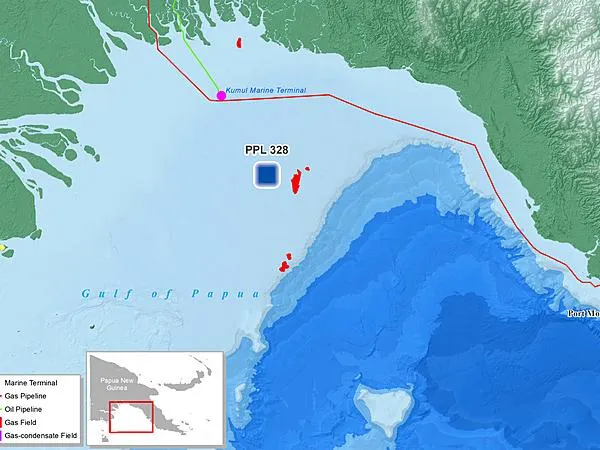
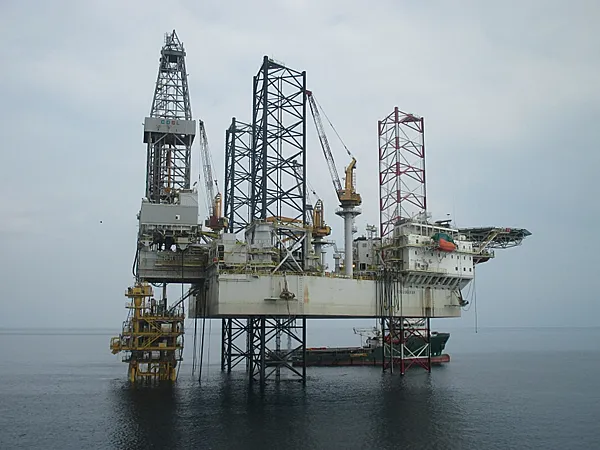
It will be the country's first offshore extractive resource project with infrastructure, located 95 kilometres offshore in seas 93 meters deep in the Gulf of Papua.
Pasca A, according to Kua, is a modest gas condensate project in terms of reserves.
The offshore production facilities, on the other hand, have the ability to combine tiny pockets of stranded gas deposits in the Gulf of Papua.
“The project will evolve in a two-phased development plan.
“In Phase One, rich liquids will be stripped and produced, namely liquid petroleum gas (LPG) and condensate while gas is re-injected.
“In Phase Two, gas will be produced.”
Phase One is estimated to take two years to complete and generate between 32 and 38 million barrels of LPG and condensates.
In the third year of the project's manufacturing life, Phase Two will commence.
During the project's ten-year lifespan, an estimated 330 to 400 billion cubic feet of gas (BCF) would be generated.
Twinza Oil (PNG) Ltd, the operator, is concentrating on commercializing its "found but underdeveloped assets." Twinza Oil Ltd has a business relationship with Baker Hughes General Electric (BIIGE), which offers vendor finance for the company's drilling projects.
Kua said in a statement that negotiations on the project began during the application stage for a petroleum development license in 2018.
In 2020, the Cabinet established the State Negotiating Team (SNT) for the Pasca A project to negotiate a fair agreement for the state.
“Last September, the Pasca A SNT and Twinza Oil Ltd initiated the term sheet for a Gas Agreement,” Kua said.
“However, there were some misunderstandings on the financial analysis method used and the domicile status of the company.
“These have been resolved through the SNT negotiations and offline discussions with Twinza.
“In negotiating resource projects deals for the country, the State has taken an approach to tax from production rather than profits.
“The Pasca A SNT has so far negotiated the production levy from the base case of 2 per cent (equal to Papua LNG Gas Agreement) from the Loloata initialled term sheet of last September, up to 4 per cent in April.
“At a 5 per cent production levy that State would have reached 55 per cent state take on nominal cash flow analysis, which is what we want to achieve.”
Photo credit: Santos
The National Government is set to concluding all project discussions for the $US11 billion P'nyang gas project by the third quarter of 2021.
This, according to Petroleum Minister Kerenga Kua, will provide project partners enough time to obtain Sales and Purchase Agreements (SPA) and achieve a Final Investment Decision (FID) by 2023, when the new LNG project opportunity window to absorb a large amount of LNG from within the area is still available.
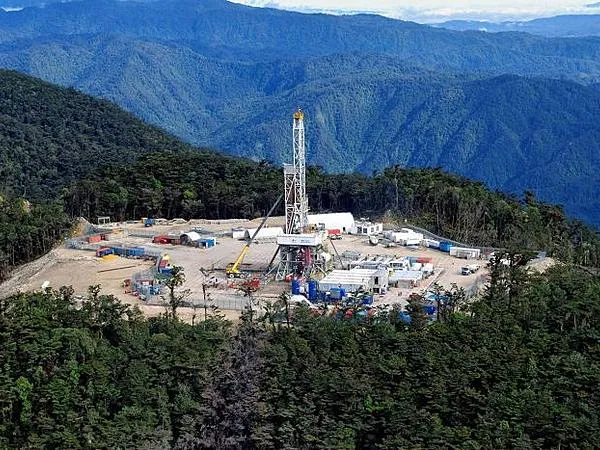
According to Kua, the project's development may serve as a catalyst for the development of marginal and stranded gas resources and prospects in the Western Papua Basin, which is located in the Western and Gulf provinces. He claimed that the P'nyang deposit, when coupled with the remainder of the stranded gas in the Western Papuan Basin, could provide up to 16 TCF of gas and 200 million barrels of condensate.
“Since we have a good traction on Papua LNG project with Total E&P fully committing to it, the Government will now re-appoint a new State Negotiating Team to start reengaging with ExxonMobil,” Kua said.
According to him, the initial intention is to build a third LNG train alongside the two Papua LNG trains, each having a capacity and specification of 2.7 MTA of LNG production.
“However, the P’nyang gas development will have a huge impact on the monetization of other smaller stranded gas fields in the Western and Gulf provinces and can be aggregated as a stand-alone, used as a backfill for the PNG LNG project together with Juha and Muruk in the Northwest fold-belt as a utilised project, or deliver alongside Papua LNG as initially planned with reference to the set re-negotiation closing date,” Kua said.
“The benefits of spreading the construction period for both Papua and P’nyang projects over an 8 years’ period shall be massive for the country.”
According to the Field Development Plan and the Open Book Economic Model provided by ExxonMobil, the spread will be over a decade of continuous intense industrial activity before to and after construction, with total Capital Expenditure Investment for P'nyang alone estimated at $US11 billion.
“P’nyang Gas Agreement is one of my KPIs as the responsible Minister, and once the new SNT and ExxonMobil agrees on the key fiscal and non-fiscal term sheets, then the Petroleum Advisory Board will be able to convene and make the final recommendation to the Minister off Petroleum either to grant or refuse the application for the Grant of Petroleum Development Licence,” Kua said.
Post-Courier (21 May 2021). “Government To Advance P’Nyang Gas Project.”
Photo credit: Total (2019)
By 2027, the first gas from the Papua LNG Project is planned to be sold.
As a result, the government will receive an additional 7% free carry in equity from the project.
The pre-FEED phase of the Total E&P (PNG) Limited-led joint venture project in Caution Bay will be completed by the end of this year, followed by FEED in 2022, FID in 2023, and first gas in 2027.
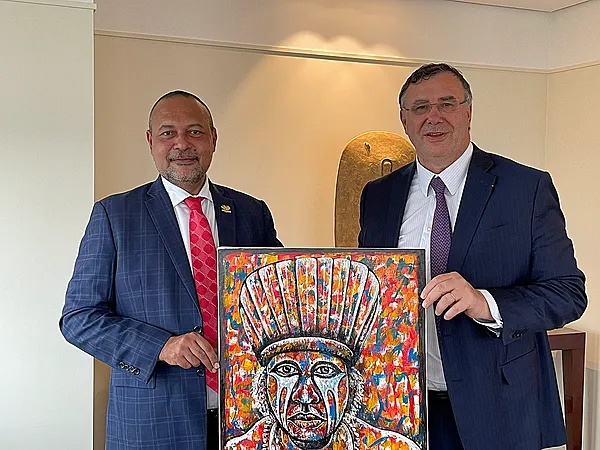
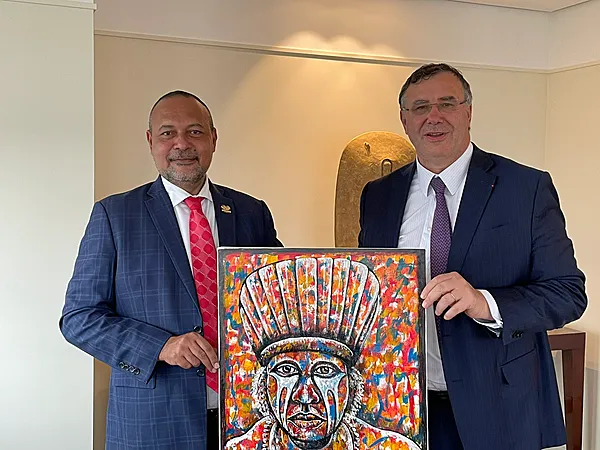
According to Petroleum Minister Kerenga Kua, the government dispatched a delegation to Paris recently to meet with Patrick Pouyanne, Chairman and CEO of TOTAL ES, after completing the Fiscal Stability Agreement, which is a condition for completing the subsequent obligations under the main Gas Agreement.
According to the conventional gas project management timeline, the EPC callout will occur following the completion of FEED, which will take roughly four years, followed by construction and commissioning.
Kumul Petroleum Holdings Limited said the methodology for the Papua LNG project will be a milestone for a project of this size.
For some of the main Engineering Procurement Construction ticket items, particularly fabrications, more emphasis will be placed on National Content, establishing in-country competence, training, and capacity.
This will provide jobs and economic opportunities for Papua New Guineans that will be sustainable in the future. For Papua LNG, the order of magnitude cost estimate is US$13 billion in CAPEX and US$12 billion in OPEX.
Meanwhile, the regulator has yet to file an application for the awarding of a Petroleum Development Licence (PDL) over the Elk and Antelope finds, which only cover four of the nine blocks covered by PRL 15.
The Gas Agreement and the succeeding Fiscal Stability Agreement pledged a total of 10.3 tcf of foundation volume.
“Indeed, it is a very exciting era for PNG as the country fully commits to the second-largest LNG project thus bringing the total LNG production capacity up from 8.1 MTA to 13.5 MTA.
“Currently PNG is ranked out of 20 LNG Exporting Countries with Qatar at the top, having 77.8 MTA of LNG production.
“Once, Papua LNG comes online, PNG will displace Oman (10.3MTA), Algeria (12.2 MTA), Trinidad & Tobago (12.5 MTA) and move up closer to Indonesia (15.5 MTA). Australia sits in second place with LNG Production of 75.4 MTA.
“PNG still has the potential to displace Indonesia if P’nyang LNG Project (2.7 MTA) negotiations can be included sooner and be integrated with Papua LNG and PNG LNG,” Kua said.
Post-Courier (21 May 2021). “First Sale from Papua LNG Expected In 2027”.
Kumul Petroleum Holdings Limited (KPHL) has secured a contract for an additional 7 per cent free carried equity in a historic deal with TOTAL SE.
Papua New Guinea's national oil and gas corporation, reported an increase in its aggregate equity in potential joint exploration ventures with Total SE following talks in Paris last week to remobilize the Papua LNG Project.
Wapu Sonk, KPHL's Managing Director, was delighted to confirm a promising agreement with TOTAL SE for an extra free carried 7% equity in any potential joint exploration ventures, on top of KPHL's 22.5 per cent back-in rights.
This ultimately raises the company's total equity to almost 30%.
Prospects such as the Deep and Ultra Deep Offshore Exploration Blocks in the newly awarded PPL 576 and PPL 589 Licenses, as well as future joint exploration ventures, will be affected by this agreement.
Kumul Petroleum will be able to engage as a JV partner and gain access to vital technical details without having to vote on financial matters, thanks to the 7% free carried equity.
The increase was discussed and agreed upon during the latest Papua LNG Remobilization discussions in Paris on May 3, 2021, between the PNG Government Delegation led by Deputy Prime Minister Sam Basil and the TOTAL SE Delegation led by Patrick Pouyanne, Executive Chairman and CEO.
Pouyanne praised the efforts of the Marape-led government to increase local involvement in their region.
TOTAL SE and the PNG Authorities decided to collaborate to build substantial in-country value and execute the Papua LNG Project in an outstanding manner as part of Total's strategic endeavour to continue cementing relationships with national stakeholders.
TOTAL and its joint venture (JV) partners describe the project as a much-needed and timely US$13 billion (PGK 48 billion) capital expenditure (CAPEX) project that will turbo-charge and fuel the PNG economy during this covid-19 pandemic-induced economic recession and add much more in the future.
Kumul Petroleum is looking forward to the secondment of its technical personnel to the pre-FEED, FEED, and Detailed Engineering Design phases of the plant, according to Sonk, as part of the increased collaboration between the two organizations.
Kumul Petroleum also expects to resume joint marketing activities for LNG entitlements from the Papua LNG Project, and intends to complete effective Sales and Purchasing Agreements (SPAs) in the LNG Industry, he said.
By the end of the third quarter of 2022, the parties hope to have completed these SPAs.
Another significant benefit of this collaboration with TOTAL, according to Kumul Petroleum, is that the company will be able to exploit their respective strengths for their joint-equity funding option.
“We recognise the financial stress and challenges induced by the COVID-19 pandemic and other intervening circumstances in the major markets and will endeavour to leverage our combined synergies to attract major global financial institutions to finance our equity shares.
“On this occasion, Kumul Petroleum acknowledges the visionary leadership and foresight of both Delegations, led by the Deputy Prime Minister of Papua New Guinea and Executive Chairman & CEO of Total SE respectively, in pushing the boundaries beyond the current Oil & Gas Act provisions, and securing the PNG government's wishes for greater national participation in resource development projects,” Sonk said.
TOTAL's determination and revised contribution to speeding up the Papua LNG remobilization works is also acknowledged by Kumul Petroleum, with the aim of committing the remainder of 2021 to Pre-Front End Engineering Design (Pre-FEED) work and launching FEED in early 2022 in preparation for a Final Investment Decision (FID) in 2023.
Deputy Prime Minister Sam Basil met with Total Chairman and CEO Patrick Pouyanné and discussed the Papua LNG project timetable as well as a potential investment in new petroleum prospecting licenses in Papua New Guinea.
In a statement, Basil said, “Mr Pouyanné expressed his appreciation for the ongoing efforts by the Marape-Basil Government and confirmed Total is committed to completing Pre FEED and the national content plan in 2021, launching FEED in early 2022 and the Final Investment Decision by 2023”.
“To secure commitments it is of the utmost importance for our Government delegation to meet with the Total Chairman and CEO face to face, as well as the French Government to stress the importance of the Papua LNG project to the nation of.”
Basil said that the government has promised complete support for the project and that he is satisfied with the results of the talks, which culminated in consistent development plans and timelines.
Pouyanné reiterated Total's contribution to delivering this critical resource project in Papua New Guinea following the conference.
Pouyanné understood the Marape-Basil government's worries about ensuring greater local engagement, habitat restoration, and environmental protection.
“It was agreed that Total and PNG Authorities will cooperate to create significant in-country value and to implement the Papua LNG project in an exemplary manner.
It will also take into the highest consideration crucial biodiversity concerns, carbon dioxide emissions and environmental matters at hand, as well as the rights of local communities,” according to Mr Basil.
“The Marape-Basil Government has made our National position clear throughout negotiations, and through the frankness of our discussions we will see stronger economic growth for our country through this USD$ 13 Billion dollar (KINA 46 Billion) CAPEX investment by TOTAL SE and Joint Venture partners.”
After a one-year delay due to COVID-19, Total aims to make a final investment decision on the proposed two-train 5.6 million mt/year volume Papua LNG project in Papua New Guinea in 2023.
Papua LNG, which will use gas from the Elk and Antelope gas fields, will begin front-end engineering and design (FEED) in early 2022, according to Total.
"I confirm that this project is ranking very high in Total's portfolio given its proximity to growing Asian LNG markets and we will dedicate all necessary resources," Total CEO Patrick Pouyanne said in a statement.
The announcement was made following a meeting in Paris with a delegation from Papua New Guinea headed by Deputy Prime Minister Samuel Basil.
"After a year of delay because of COVID-19, the government of Papua New Guinea and Total are pleased to announce the remobilization of the project teams and of other required resources," Total said. "The objective is to launch the FEED early 2022 and to prepare for final investment decision in 2023.”
The statement comes after the Papua LNG gas agreement was signed and reconfirmed in 2019, as well as the signing of a fiscal stabilization agreement and the award of a license extension in February of this year.
Basil said that the government has pledged "absolute support" for the initiative. "I am pleased with the outcome of this meeting with clear implementation plans," he said.
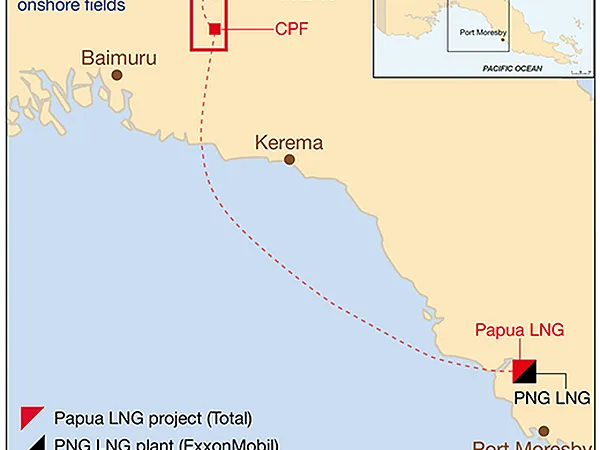
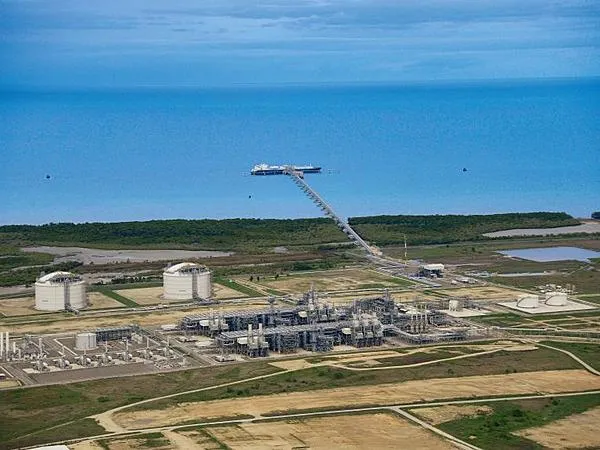
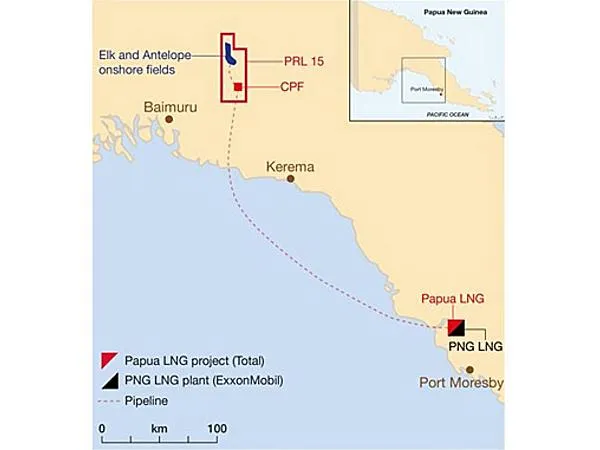
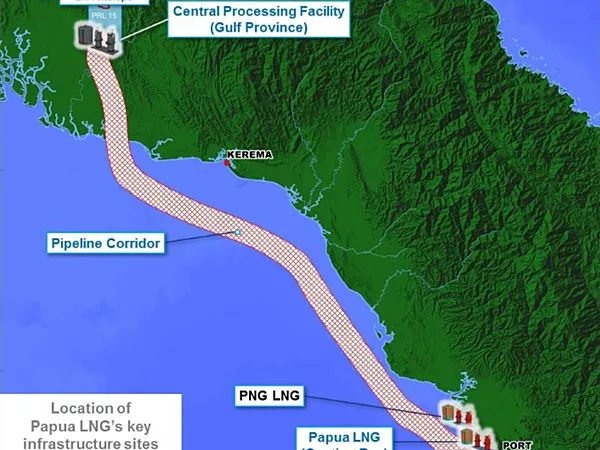
The Total-operated Elk and Antelope fields have been thoroughly appraised, and gas will be delivered via a 320-kilometre pipeline to the Caution Bay site, which is currently home to an ExxonMobil-operated PNG LNG facility with a capacity of 8.3 million mt/year.
The Papua LNG plant, according to Total, will be combined with the current PNG LNG facilities in Caution Bay.
Total controls the Elk and Antelope fields and, with a 31.1 per cent stake in the PRL-15 permit, is the biggest shareholder, alongside partners ExxonMobil (28.7%) and Oil Search (17.7 per cent). The government of Papua New Guinea has a 22.5 per cent back-in right.
To further save billions of dollars, Total and its partners ExxonMobil Corp and Oil Search Ltd agreed to expand Papua LNG in combination with an extension of Exxon's PNG LNG plant in a $13 billion project adding three additional development units at the PNG LNG plant.
However, Exxon has refused to agree to terms sought by the Papua New Guinea government for the P'nyang gas production, which was supposed to help fuel the expansion, as Prime Minister James Marape pressed for greater benefits for the region.
Instead, Total's Papua LNG project will proceed with the construction of two new processing units at the PNG LNG site, which will be fed by the Elk Antelope gas fields, said Marape in February.
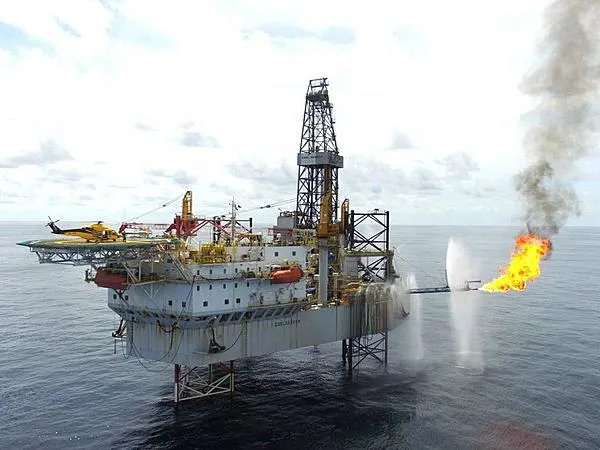
The Pasca A offshore oil and gas project in Gulf faces further delay to its start-up which is now expected in 2025, says developer Twinza Oil Ltd.
The project will continue to be postponed until a deal is signed, according to Roppe Uyassi, who added that the project's delay would likely be compounded by the project team's departure.
“This is really unfortunate for PNG, following the lengthy delays we have already seen from resource projects in PNG such as Papua LNG and Wafi-Golpu,” Uyassi said.
Only prior to signing the deal last month, the government made it clear that it wanted a 6% export tax before it could sign it.
According to the developer, it was 4% more than what had been settled upon previously.
While the window for negotiations was still open, Petroleum Minister Kerenga Kua said it was critical to secure the best offer for the region.
Oil and gas discovery and production, according to Uyassi, is a "highly dangerous but potentially lucrative market."
“There needs to be a balance that recognises the risk taken by private investors and the development goals and aspirations of PNG, and the best deal would be one that maximises revenues to PNG,” he said.
“This could be in the form of payments to local businesses and employees, or taxes and royalties to the Government to fund the country’s development priorities in health, education, security, infrastructure etc.
“Importantly, it must also provide an incentive for private investors from all over the world to provide their money to develop the Pasca A Project on the promise of profits that will reward them for taking the risk to invest in Papua New Guinea.
“We firmly believe that the deal agreed to between the State and Twinza strikes the right balance and provides a win-win outcome for both parties, delivering the highest State take of any resource development in PNG, be it on a discounted or nominal project value going to the State.
“We understand that the outcomes of over 65 per cent discounted and 52 per cent nominal State take were even verified and benchmarked independently by Deloitte after being consulted by the State.
“The agreed terms also included domestic market obligation (DMO) for the supply of gas being provided from the first year of production for the first time in PNG’s history, plus an increased percentage of domestic market gas supply to 10 per cent of production.”
According to Uyassi, the Pasca Project would need at least K5 billion in additional funding in the coming years.
“Even the State nominee carrying the State’s 22.5 per cent equity on the project going forward would require project financing to move this project forward into production, meaning that whatever terms we agree with the State must also be viable for the State nominee to raise financing.
“The worst-case scenario would see Twinza sign an unviable gas agreement deal, only for the project to fail as it can’t attract investment from financiers who are more conservative than oil and gas project proponents such as Twinza.”
Twinza had already started standing down the Pasca Project team due to the continuing delays in signing the deal, according to Uyassi, as the timetable of the gas agreement's implementation remained unclear.
“This will continue, however, I will point out that as a foreign investor, Twinza has invested more than K350 million in the Pasca field over the past 11 years and will remain committed to PNG long-term,” he said.
“The Pasca Project is ready to move into the Feed phase of project development soon after a successful gas agreement signing.”
According to Uyassi, the project has been on hold since 2020, pending the start of the Feed process.
“We remain hopeful that the development of PNG’s first offshore oil and gas field will commence soon,” he said.
“We are committed to Papua New Guinea and remain hopeful this is something PNG will have to address for the long-term good of the industry and the many local businesses that depend on the industry.”
According to managing director Wapu Sonk, Kumul Petroleum Holdings Ltd (KPHL) will seek funding from abroad to build gas fields in the Kimu, Barikewa, and Uramu in Kikori, Gulf.
He stated that funding would be determined by the form of construction chosen by the group.
Sonk was answering questions two weeks after KPHL received the petroleum retention licenses (PRL) 48, 49, and 50, which included the gas fields of Kimu, Barikewa, and Uramu.
“As a good business practice, KPHL will look to invite potential investment partners into the licences to share the risk and then develop the fields together,” he said.
“Again, the economics of the type of development option drives who join as partners to KPHL.
“There are no other State-owned enterprises (SOEs) in oil and gas business except Kumul Petroleum so we will source funding from overseas mostly from different sources depending on size and type of development.
“The potential partners that join KPHL will also bring the capital, which is a pre-requisite to the partnership for development.”
Those licenses, previously 8, 9, and 10, were owned by Oil Search Ltd, Santos, and other operators, according to Sonk during the handover of the license earlier this month.
“They held the licences for 15 years which is the maximum amount of time you can hold on to a licence under the ‘retention licence’ provisions in the Oil and Gas Act,” he said.
“Once it expired, the licence goes back to the Department of Petroleum.
“The department put out a Gazette notice which is like advertising that the licences had become available, that’s when other interested parties apply.
“We don’t know who applied at that stage, but we applied at that time and was awarded the licences.”
KPHL was among those who asked for the licenses before they expired, according to Petroleum Minister Kerenga Kua.
He explained that the petroleum advisory board made suggestions to the government, which approved and signed off on the licenses to KPHL after thorough deliberation and consideration.
Kimu and Barikewa areas are onshore, while Uramu is offshore in Kikori's deeper waters.
The three fields are expected to have a 2C reserve of slightly more than 2TCF (trillion cubic feet) of gas and 50-60 million barrels of condensate.
Follow on LinkedIn:
PNG Business News
Be the "First" to get our exclusive Digital Magazine & Weekly Newsletter.