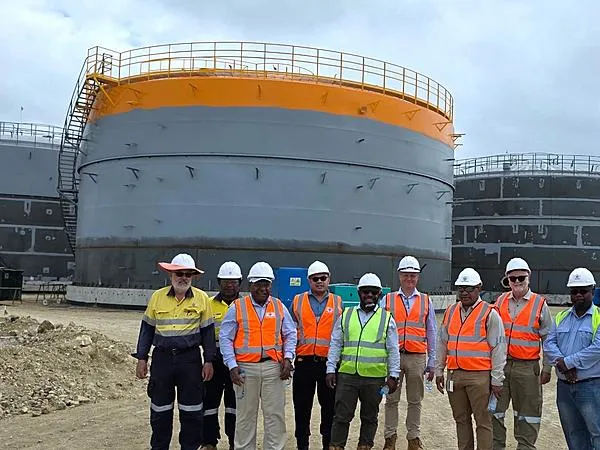
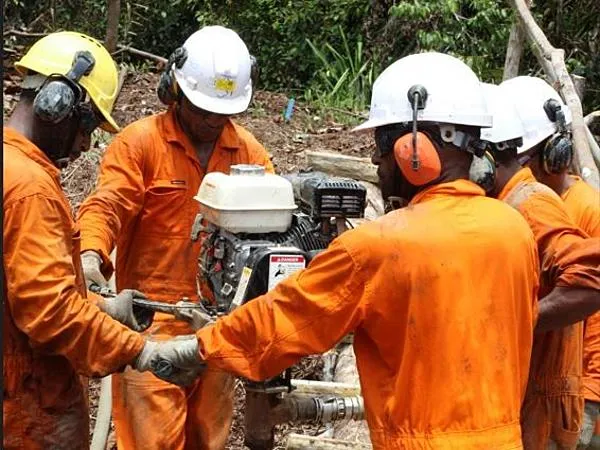
The executive management team of Kumul Petroleum Holdings in early July visited two construction sites where the company is building important infrastructure to support the long-term provision of increased national content and essential services in the country.
Currently under construction are the Motukea Fuel Facility, adjacent to the Motukea International Wharf, and the Training and Fabrication Facility in the Caution Bay area, close to the LNG plant site.
“These strategic construction projects demonstrate Kumul Petroleum’s commitment to national development. The Training and Fabrication Facility fulfils all the necessary elements for increased national content — workforce development through enhanced training and supplier development through new local manufacturing capability,” of Kumul Petroleum Managing Director Wapu Sonk stated.
Sonk noted that with the development of significant gas fields and mining projects planned over the next few years, upwards of 300,000 tonnes of structural, mechanical and piping modules, tanks and other steel fabrication will be required.
The fabrication facility, on the other hand, will have the capacity to produce up to 20,000 tonnes of steel components per year, directly employ 1,000 people and indirectly support another 2,000 through service contractors.
At the Motukea Fuel Facility, Sonk said that “This Jet A1 import and storage facility is a long-term initiative to ensure that a fuel supply crisis cannot occur again. It is a continuation of Kumul Petroleum’s commitment to the Government when it stepped up to facilitate fuel imports and address the fuel supply crisis in early 2024.”
The Motukea facility consists of four 3,000-cubic metre Jet A1 fuel tanks, along with associated ship offloading and truck loading equipment, and safety and environmental control facilities. It is expected to be completed by the end of the year and become operational in early 2026.
“The construction of this infrastructure reflects our long-term commitment to national content development in Papua New Guinea,” Sonk said. “By investing in training and fabrication facilities, we are investing in the future of our country."
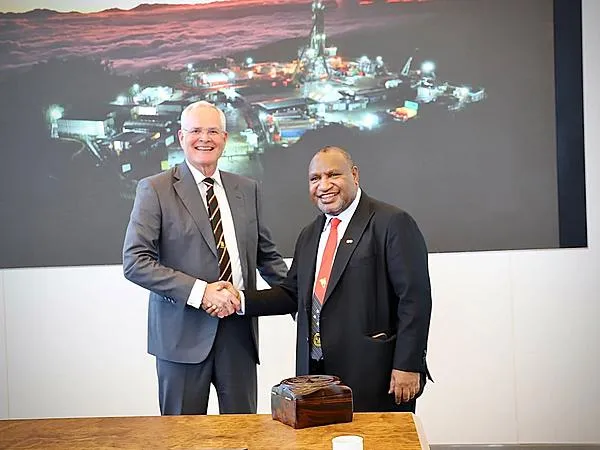
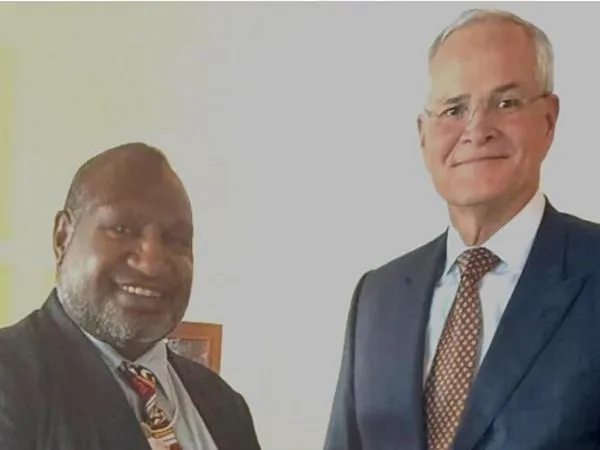
Houston, Texas, USA, 9 July 2025 – Papua New Guinea Prime Minister James Marape has met with senior executives of ExxonMobil Corporation at the company’s global headquarters in Houston, Texas to progress strategic discussions on Papua New Guinea’s next generation of LNG developments — including the Papua LNG, P’nyang LNG and Wildebeest gas projects.
The high-level meeting was attended by several ExxonMobil executives, including Darren W. Woods, chairman and chief executive officer; Dan L. Ammann, president of Upstream Oil and Gas; Peter Clarke, senior vice president of Global LNG; and Dinesh Sivasamboo, chairman and managing director of ExxonMobil PNG Limited.
Representing the Government of Papua New Guinea were Jimmy Maladina, minister for Petroleum; Rainbo Paita, minister for Mining; Dairi Vele, chairman of the State Negotiating Team (SNT); Daniel Rolpagarea, state solicitor; and Augustine Mano, managing director of the Mineral Resources Development Company (MRDC).
PM Marape described the meeting as “substantive, productive and forward-looking,” noting ExxonMobil’s full and unequivocal commitment to Papua New Guinea’s resource sector.
“I am pleased to report that ExxonMobil reaffirmed its commitment to the sequencing and development of Papua LNG, P’nyang LNG and Wildebeest,” said Prime Minister Marape. “All three projects remain within the company’s strategic investment portfolio with sequencing essential to ensure long-term construction momentum, investment flow and employment generation for our country.”
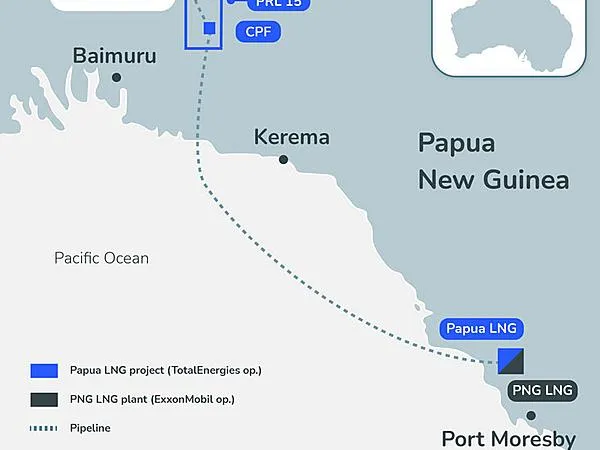
ExxonMobil also provided an update on the status of the Papua LNG project, for which TotalEnergies is the lead operator. While acknowledging current cost pressures, the company reaffirmed that all joint venture partners — including ExxonMobil, TotalEnergies and Kumul Petroleum Holdings Limited — remain committed to resolving outstanding issues collaboratively.
A joint meeting involving the Government of Papua New Guinea, TotalEnergies, ExxonMobil and other stakeholders is being planned to address recent cost escalations and chart a pathway towards Final Investment Decision (FID).
Regarding the Wildebeest prospect — a promising gas field still in its exploration phase — ExxonMobil executives confirmed that deep-well exploratory activities are ongoing. The company expressed strong interest in partnering with the PNG Government to assess future development potential.
“Our government has expressed its clear preference that these projects be properly sequenced: Papua LNG first, followed by P’nyang LNG and then Wildebeest,” the Prime Minister stated. “This sequencing ensures continuity across the LNG sector — with investment decisions and construction timelines aligned over a 10- to 15-year horizon.”
“Papua LNG is expected to reach FID first and we are hopeful this will be followed by P’nyang and subsequently Wildebeest, creating a decade-long pipeline of economic activity, job creation and revenue generation for Papua New Guinea.”
Prime Minister Marape also expressed pride upon learning that over six Papua New Guineans are currently employed at ExxonMobil’s global headquarters in Houston — a reflection of earlier government investment in human capital development.
“As Education Minister in 2008–2009, I initiated efforts to train Papua New Guineans to manage and operate LNG projects,” he said. “Today, I am proud to see our nationals not only leading major projects at home but also serving at ExxonMobil’s global headquarters. It’s a powerful reminder of what’s possible when we invest in our people.”
“I thanked ExxonMobil for its confidence in Papua New Guinean professionals and encouraged continued global opportunities for our capable and hardworking citizens.”
Following the Houston leg of his U.S. mission, Prime Minister Marape departed overnight for Washington, D.C. where he will hold a two-day programme of engagements with senior United States Government officials and Newmont Corporation executives. These meetings are part of his ongoing efforts to strengthen bilateral relations and attract responsible investment into Papua New Guinea’s resource sector.
The Prime Minister concluded his visit by thanking ExxonMobil for its continued partnership and reaffirming the Government’s support for responsible and sustainable resource development.
“The development of our gas resources must bring lasting benefit to our people. With trusted partners like ExxonMobil and TotalEnergies, we believe these projects will deliver the economic transformation our country needs as we enter our next 50 years.”
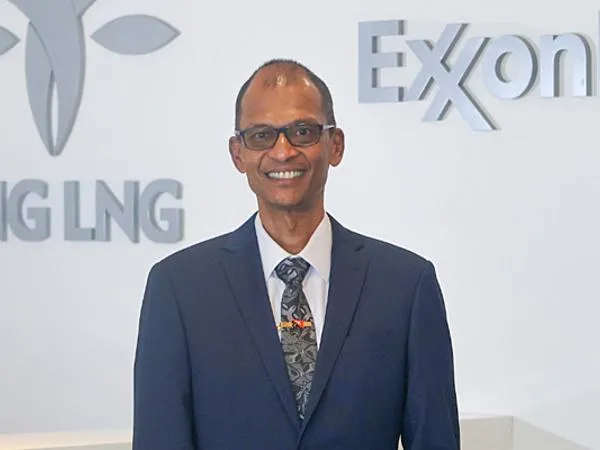
ExxonMobil recently appointed Dinesh Sivasamboo as its new Chairman and Managing Director of ExxonMobil PNG Limited.
This appointment will be Sivasamboo’s second leadership position with ExxonMobil PNG Limited, having previously served in PNG from 2016 to 2019 as its Vice President for Production.
Sivasamboo has held numerous, global senior leadership positions over the course of his 30-year career at ExxonMobil. Most recently, he held the position of Chairman and President of ExxonMobil Exploration and Production Malaysia Inc. Prior to that role, he was the President and Managing Director of ExxonMobil Kazakhstan Inc., and held positions in Qatar and the United States.
“I am honored to be returning to PNG as Chairman and Managing Director of ExxonMobil PNG Limited. The PNG LNG Project has – through the strength of its partnerships – achieved so much during its first decade,” said Sivasamboo. “I look forward to both leading it into its second decade, as well as building upon its success to help deliver the next phase of LNG projects for this country.”
Sivasamboo becomes the company’s fifth Chairman and Managing Director, joining an esteemed list that includes his immediate predecessor, Tera Shandro, as well as Peter Larden, Andrew Barry and Peter Graham.
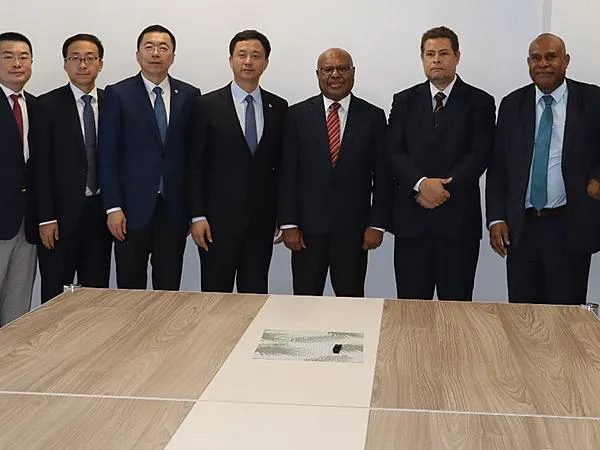
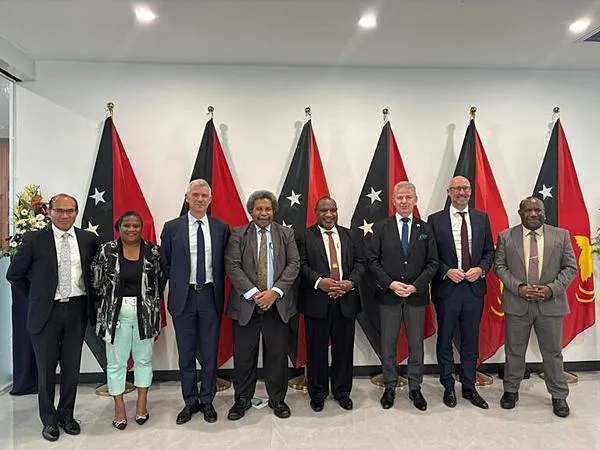
Petroleum Minister, Hon. Jimmy Maladina has invited China State Construction Engineering Corporation to look at the petroleum industry as a choice of investment saying Papua New Guinea has a lot of potential.
Minister Maladina told Mr. Wen Bing, the President of Chinese construction giant, the China State Construction Engineering Corporation (China State Construction), and his delegation when welcoming the executives to the Department of Petroleum (National Petroleum Authority) Headquarters in Port Moresby on Monday, March 31, 2025.
“As for the petroleum industry in Papua New Guinea, which is oil and gas mainly, Papua New Guinea has a lot of potential.”
“And as China State Construction is the biggest construction company in China and also around the world.”
“We want to invite you to also look at our petroleum industry in assisting us in the contract or civil works, petroleum engineering work,” Minister Maladina said.
Present also to meet Mr. Bing and his delegation were the Vice Minister for Petroleum, Hon. Alexander Orme, the Secretary for the Department of Petroleum, Mr. David Manau and Deputy Secretary, Mr. George Imanaui.
Mr. Manau said also that there was a lot of potential in petroleum exploration activities in Papua New Guinea when providing details of current and upcoming projects in PNG in the petroleum sector.
Mr. Bing thanked Minister Maladina and his delegation for the meeting and extended their appreciation to Prime Minister Hon. James Marape as well.
China State Construction was founded in 1982 and is now worth over US12 billion dollars and a global investment and construction group featuring professional development and market-oriented operations.
China State Construction carries out business management through its public company - China State Construction Engineering Corporation Ltd and has eight listed companies and more than 100 subsidiaries.
China State Construction's market competitiveness and brand influence have continued to improve, and its leading position in the industry has been further consolidated.
Kumul Petroleum Holdings Limited (KPHL), Papua New Guinea’s national petroleum and energy company, has successfully completed its seismic acquisition campaign across the Kimu and Barikewa petroleum retention licences, where it acts as operator.
KPHL Managing Director Wapu Sonk confirmed the milestone, stating:
“On Wednesday, 26th March, we completed the final shot point on a seismic line within the Kimu licence, and demobilisation of the seismic crew has commenced. This marks the successful conclusion of our seismic acquisition program across both PRLs.”
The objective of the seismic survey was twofold: firstly, to acquire additional geological data aimed at better defining the extent of known hydrocarbon accumulations, with the goal of increasing the certified volumes of recoverable oil and gas; and secondly, to identify optimal locations for potential delineation and exploration wells.
“This campaign represents the first upstream exploration work undertaken by Kumul Petroleum since our establishment in 2010,” Mr Sonk added. “It is a significant step forward for the company, and we are optimistic about the insights the data will provide as we move into the next phase of resource development.”
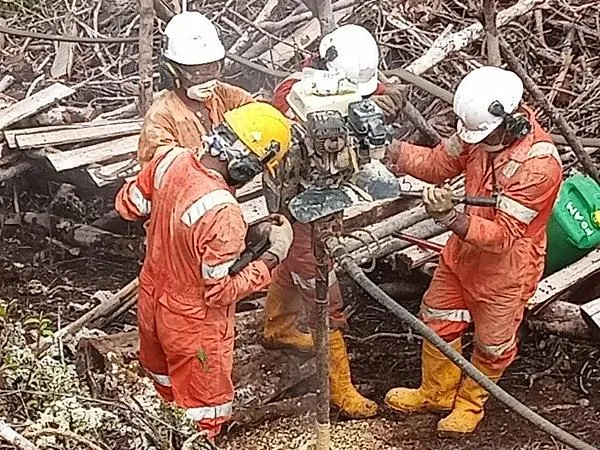
The six-month seismic campaign, carried out by contractor OilMin Holdings, involved the acquisition of six seismic lines and provided employment for 477 local workers from remote areas in the Gulf and Western Provinces. The nature of seismic line cutting — being highly labour-intensive — provided substantial short-term economic benefits to the local communities.
Mr Sonk emphasised that strong community engagement was a cornerstone of the program’s success.
“Kumul Petroleum and OilMin worked collaboratively with landowners and community leaders. Although our presence in each area was temporary, we made it a priority to contribute positively — including providing support to primary schools in Kaiam and Kumusi.”
He also praised the outstanding safety performance during operations, attributing it to the combined experience of OilMin and KPHL’s project teams.
“Kumul Petroleum is making significant investments in both offshore and onshore petroleum retention licences to delineate hydrocarbon resources and shape development concepts that are technically and economically viable,” Mr Sonk said.
The successful execution of this program reinforces KPHL’s growing role in upstream exploration and resource monetisation, particularly in licences previously deemed uneconomic or stranded.
Data from the seismic program is now being processed, with interpretation and integration into KPHL’s existing geological models expected to take approximately six months.
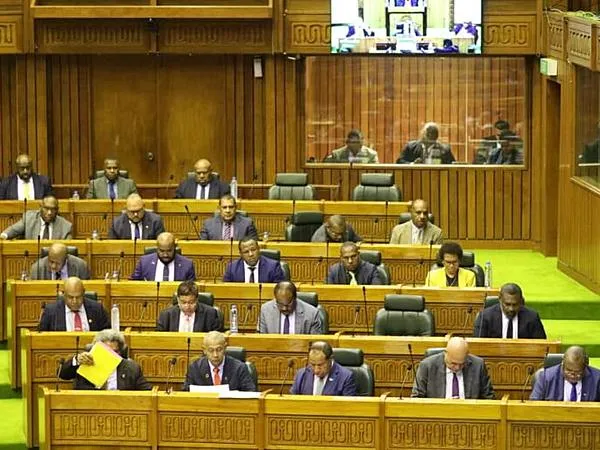
Parliament recently (12.03.25) passed two laws for the establishment and operation of the National Petroleum Authority (NPA), a new body that will take over as the regulator of the petroleum sector in the country.
The National Petroleum Bill 2025 was voted 84 to 0 into law, while the Oil and Gas Act Amendment Bill 2025 was passed on voices. Both bills were presented to Parliament by Minister for Petroleum, Hon. Jimmy Maladina.
These Acts of Parliament now pave the way for the set-up and operation of NPA, which will take over from the Department of Petroleum and Energy as the administering arm of the petroleum sector under the Oil and Gas Act 1998.
Prime Minister Hon. James Marape, in a press conference after Parliament ses-sion, highlighted the importance in the role NPA would play in underpinning the country’s petroleum sector.
“The National Petroleum Authority will be the regulator of this big sector that contributes over 50 percent of the country’s GDP and economy.
“Petroleum is an important sector, but the Oil and Gas Act has carried us for the last 20 years, and so it is timely that we change to keep up with a bigger economy and a more robust hydrocarbon industry, petroleum, and gas pro-jects.
“Under this new framework and structure, regulations, licensing, administration of our petroleum and gas sector will be governed. This will give us a platform for us to move into hybrid production-sharing regime that has Papua New Guinean characteristics,” said Prime Minister Marape.
The Prime Minister gave the assurance that investors have nothing to fear but to have the confidence that their investments would be better protected un-der the revised mechanism.
“This work will include protecting the return on investors so that they too are making money at the same time but that we are clear on PNG’s entitlements in taxes, royalty, equity, levies and so on.
“So I give assurance to our industry stakeholders out there. The restructure hap-pening is not to diminish their presence or their value, but to ensure that we operate in clarity of regulation and the environment, and that their interest – in as far as return on investment is concerned – is secured.
“This authority will make it easier for all of us,” said PM Marape.
The Prime Minister said this work to set up NPA will continue into the country’s 50th year which begins on 16 September until 15 September 2026.
The Hon. Jimmy Maladina, LLB, LLM, MP, Papua New Guinea’s Minister for Petroleum, has invited Italian energy giant Eni to explore investment opportunities in PNG’s petroleum sector, highlighting the country’s vast resource potential and upcoming licensing bid rounds for new exploration blocks.
As part of the ongoing Production Sharing Contract (PSC) feasibility consultations, Minister Maladina and his delegation engaged with a wide range of stakeholders, including existing contractors operating in the region. One such company was Eni Asia Pacific, a major player in deepwater exploration and development.
During discussions with Mr. Roberto Daniale, Head of Eni Asia Pacific, Minister Maladina emphasized PNG’s commitment to fostering a competitive and transparent investment environment. He noted that the government is working to unlock petroleum prospects along the Gulf of Papua and the Papua coastline, with several blocks soon to be tendered internationally through a bid process managed by the Department of Petroleum and Energy.
"PNG presents significant opportunities for responsible and well-capitalized investors. Given Eni’s expertise in deepwater exploration and development, we encourage them to consider expanding into PNG," Minister Maladina stated.
Mr. Daniale expressed interest on behalf of Eni, confirming that the company has been assessing potential opportunities in PNG. Eni has requested further details on the upcoming bid rounds once they are formally announced.
Minister Maladina reaffirmed that PNG is entering a new era of petroleum sector management, where license conditions will be strictly enforced and speculative warehousing of exploration rights will no longer be permitted. "We are committed to ensuring that only genuine investors with the financial and technical capability to develop our resources are awarded licenses," he added.
As PNG positions itself as a key player in the regional energy market, the government remains focused on attracting world-class investors to drive responsible resource development for long-term economic growth.
Petroleum Minister Hon. Jimmy Maladina led a delegation of senior officials from the Department of Petroleum and the State Negotiating Team to undertake feasibility assessments on production sharing agreement (PSA) arrangements in Malaysia and Indonesia.
The delegation met with senior officials from Petronas Malaysia on the 22nd of February 2025 to discuss the regulatory frameworks and fiscal regimes in their energy and hydrocarbon sectors.
“Our purpose is to gain insight into regulatory frameworks, fiscal regimes, and institutional arrangements within the energy and hydrocarbon sectors.”
“These learnings will help us shape significant reforms in Papua New Guinea,” Minister Maladina said.
The visit follows the National Executive Council’s (NEC) approval of drafting instructions for the National Petroleum Authority (NPA) Bill and amendments to the Oil and Gas Act 1998.
Minister Maladina emphasized that these engagements are crucial to ensuring PNG adopts best practices in managing its oil and gas resources.
“We want to assess various production sharing arrangements and fiscal regimes in these countries to determine what could work best for PNG,” he stated.
“The insights gained from these discussions will be invaluable as we enhance our regulatory and fiscal frameworks.”
The Petroleum Minister reaffirmed the government’s commitment to thorough consultations with stakeholders to deliver effective reforms, including the establishment of the NPA in 2025.
“We will continue engaging with industry stakeholders to ensure the reforms including the establishment of the NPA in 2025, serve the best interest of PNG.” The Minister concluded.
KPHL has just this month started gathering seismic data in its Barikewa petroleum retention licence in Gulf Province.
Kumul Petroleum Managing Director, Wapu Sonk explained, “Our contractor, OM Holdings Limited or OilMin, has for the last few months been engaged in landowner engagement, building camps, helipads and bridging, drilling holes for explosive charges, and laying out the recorders over approximately 80 kilometres in six seismic lines in our two licences, and this week we have started data collection.”
Mr Sonk explained that this was an historic moment – the first time a 100% national company had engaged in petroleum appraisal work in the country; and that the seismic work would gather additional information on gas already discovered in the two KPHL licences, to increase known volumes of oil and gas they contain, and improve targets for possible further drilling.
“From seismic results from the Barikewa field, and later in the Kimu field, we will have a better idea of the oil and gas volumes in these licences and be able to assess the economic feasibility of monetising the gas, and select a development path.”
Mr Sonk explained that the seismic work was in a remote area and helicopter-supported; that line cutting was a labour intensive activity and the OilMin managed operation employed more than 100 local casual employees. He noted that OilMin and Kumul Petroleum were also involved in small scale community development in communities close to the seismic work activities.
Mr Sonk explained further, “KPHL’s role is to maximise the financial returns that PNG receives from the natural resources it has been blessed with, supporting our economy and development as a country.”
“Now Kumul Petroleum Holdings is actively involved in upstream petroleum appraisal we can progress further commercialisation of PNG’s gas resources, in licences where these discoveries had previously been considered uneconomic and ‘stranded’ fields.”
The long-standing dispute over the Kutubu Petroleum Development License 2 (PDL 2) benefit-sharing structure has reached a critical point, with landowners issuing a 14-day ultimatum to the national government to reinstate the original benefit-sharing arrangement.
In response, the Minister for Petroleum, Hon. Jimmy Maladina, assured all parties that the government is actively working toward a lawful and peaceful resolution.
Government’s Position on Kutubu PDL 2 Dispute:
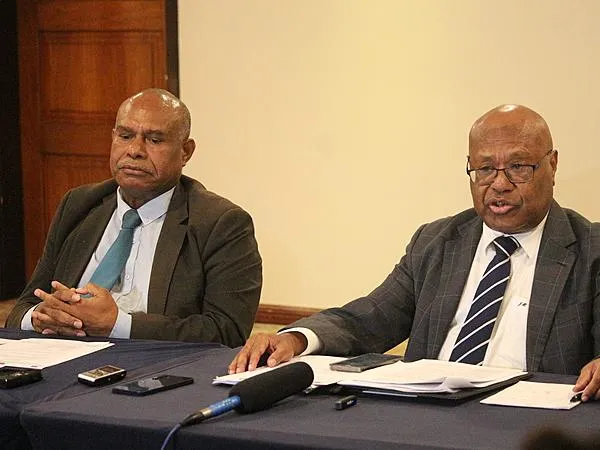
In a media conference held on February 11 in Port Moresby, Minister Maladina acknowledged the growing tensions surrounding the project, and reaffirmed the government’s commitment to addressing the concerns of all stakeholders.
“As you are aware, the issue of Kutubu PDL 2 has become quite significant, and we as a government are very concerned. We believe that we should try to resolve this issue. The government is not sitting back; we are on the forefront of this matter,” he said.
The dispute traces back to a Ministerial Determination issued in 2022 under former Petroleum Minister Hon. Kerenga Kua, which altered the distribution of royalties and benefits from the project.
The determination shifted the previous equal-sharing arrangement among all landowners to a more impact-based model—allocating 80% of benefits to the most impacted landowning groups and 20% to others. It led to multiple court proceedings between 2022 and 2024.
Minister Maladina clarified that while the Supreme Court upheld the 2022 determination, one faction of landowners remains opposed and has now given the government 14 days to reverse the decision.
“We as a government have to respect the Supreme Court’s decision and the ministerial determination, as it is a legal instrument,” Maladina explained.
“However, we also recognize that some landowners feel aggrieved. We will engage with them and explore lawful ways forward to resolve this matter peacefully.”
The Secretary for Petroleum, Mr. David Manau, provided background context to the Kutubu project, which began oil production in 1992, predating the Oil and Gas Act.
He outlined the previous benefit-sharing agreements, including the 1990 and 1996 Kutubu Memoranda of Agreement (MOAs), which governed benefit distribution before the 2022 determination. He explained that the new arrangement was based on landowner impact assessments and aimed to ensure a fairer distribution of benefits to the most affected landowners.
However, the changes sparked resistance from groups who argue that the original formula, which ensured equal distribution across all licensed blocks, should remain intact.
Landowners hold separate presser
At a separate media conference held at the Hilton Hotel in Port Moresby, Kutubu landowner leaders expressed frustration over the 2022 Ministerial Determination and demanded its immediate reversal.
The landowners delivered a petition to the current Marape-Rosso government, calling for the reinstatement of the original benefit-sharing structure.
Mr. Johnny Yawari, Chairman of the Foe Association Inc. and Director of Petroleum Resource Kutubu (PRK), strongly criticized the landowner benefit identification (LOB-ID) exercise introduced by the Department of Petroleum in 2013 and the subsequent 2022 determination.
“Our country faced an economic crisis in the late 1980s due to the Bougainville conflict, and the Kutubu project helped sustain the PNG economy,” Yawari stated.
“From 1992 to now, we have worked with successive governments, and all have respected the original Kutubu benefit-sharing structure. This government must do the same,” added that the determination was made without proper consultation with Kutubu landowners.
He called on Prime Minister James Marape and his government to immediately revoke the decision and uphold the original agreements.
“The Kutubu people were generous enough to give 70% of the benefits to the Southern Highlands Provincial Government while receiving only 30%,” Yawari said. “Instead of further dividing our entitlements, the government should be talking about increasing our benefits, not reducing them.”
Yawari warned that if the government fails to meet the landowners’ demands within 14 days, they will take action, including shutting down the Kutubu PDL 2 project.
‘Complex Situation’
Minister Maladina acknowledged the complexity of the situation, noting that the government faces a dilemma between upholding the Supreme Court’s decision and addressing landowner grievances.
“One faction wants the previous equal-sharing arrangement to continue, while another supports the new 80-20 and 70-30 distribution model,” Maladina explained. “Both sides have valid arguments, but the law as it stands upholds the new determination. We will carefully consider our next steps and announce a way forward by next week.”
He appealed to all parties to remain calm and refrain from disrupting operations at the Kutubu project.
“I ask all landowners to re-engage with the government and my office. We are committed to finding a peaceful resolution within the framework of the law,” the minister emphasized.
Prime Minister Hon. James Marape has reaffirmed his government’s commitment to advancing the Papua LNG project, confirming that Final Investment Decision (FID) is expected by the end of 2025, paving the way for a new wave of economic growth in Papua New Guinea’s oil and gas sector.
Speaking at the launch of the NASFUND FM100 Talkback Show on Monday, the Prime Minister addressed recent delays, explaining that cost escalations had necessitated a review of engineering, procurement, and construction (EPC) contracts to align with financial expectations.
“The initial construction cost estimate for Papua LNG was US$12 billion, but tenders came back at US$18 billion, which has prompted the project developers to re-evaluate and optimise costs before proceeding to FID,” Prime Minister Marape explained.
He noted that TotalEnergies and ExxonMobil remain committed to progressing the project, as reaffirmed during his recent discussions with company executives at the World Economic Forum in Davos.
Once FID is announced, Papua LNG is expected to generate significant construction activity over the next six to seven years, creating employment opportunities, supporting local businesses, and boosting government revenues. The Prime Minister also confirmed that the P’nyang gas project will follow Papua LNG in sequence, extending the economic benefits of the petroleum sector for the next decade.
“Papua LNG will create a multi-year economic stimulus, driving investment in infrastructure and services. We are ensuring that P’nyang and other gas projects are carefully sequenced to sustain economic growth, employment, and business opportunities over an extended period.”
He encouraged Papua New Guinean businesses, SMEs, and workers to prepare for the opportunities arising from these large-scale investments.
Prime Minister Marape also highlighted strong economic fundamentals, revealing that foreign exchange reserves have surpassed US$4 billion, marking the highest level in PNG’s history. Additionally, forex supply is sufficient for 18 months, indicating a stable financial outlook.
“The growth of non-extractive sectors—particularly in agriculture, fisheries, and manufacturing—is starting to bear fruit, with non-resource sector growth exceeding 4% for the first time in our nation’s history,” he added.
The government remains committed to structural economic reforms, ensuring that the benefits of resource projects flow into other industries to drive diversified and sustainable economic growth.
In addition to Papua LNG, several major resource projects are moving towards development, including:
With an estimated US$20-25 billion in construction activity over the next decade, the government is ensuring that PNG is positioned for long-term prosperity.
Prime Minister Marape called on PNG businesses, SMEs, and local entrepreneurs to position themselves strategically to benefit from the upcoming investment boom.
“We are in a strong position for economic growth, and I encourage our financial institutions, superannuation funds, and private sector players to align with these developments. We must ensure that Papua New Guineans are at the forefront of these opportunities.”
The government will continue engaging with investors, development partners, and the business community to maintain momentum towards sustainable economic expansion as Papua New Guinea moves toward its 50th anniversary of independence.
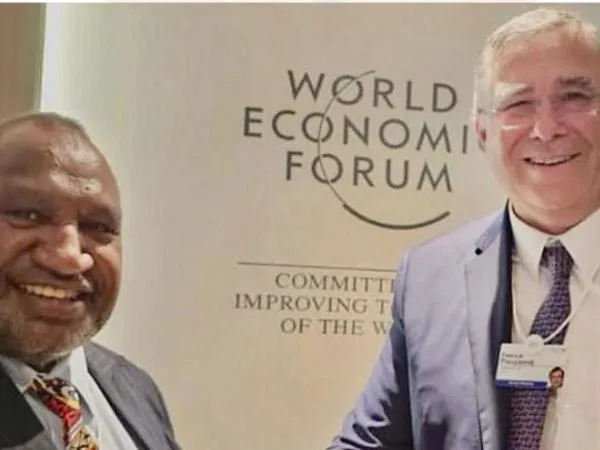
Prime Minister James Marape provided an update following his productive meeting with ExxonMobil CEO Darren Woods during the World Economic Forum in Davos, highlighting key discussions on the PNG LNG, Papua LNG, and P’nyang LNG projects.
During the meeting, Mr. Woods reiterated ExxonMobil’s strong commitment to progressing these critical energy projects. As the world’s leading oil company, ExxonMobil continues to play a pivotal role in developing Papua New Guinea’s energy resources. Prime Minister Marape shared that Mr. Woods assured him of ExxonMobil’s dedication to collaborating closely with TotalEnergies and other partners to ensure timely decisions and progress on Papua LNG.
“Mr. Woods assured me that he will also be meeting with TotalEnergies CEO Patrick Pouyanné , and I will similarly engage with Mr. Pouyanné to align commitments and expedite the Papua LNG project,” Prime Minister Marape stated.
The Prime Minister emphasised the government’s focus on synchronising Papua LNG and P’nyang LNG to maximise benefits for Papua New Guinea.
“When we combine the gas resources from Papua LNG and P’nyang LNG fields, we have 11 trillion cubic feet (TCF) of gas. This is a tremendous opportunity, and our government is committed to supporting ExxonMobil, TotalEnergies, and their joint venture partners to sequence the projects effectively,” he said.
The discussions centred on expediting final investment decisions (FID), construction, and the first production of gas for Papua LNG, followed by transitioning resources to advance the P’nyang LNG project.
“We aim to ensure that once Papua LNG is operational, efforts are swiftly mobilised to develop P’nyang LNG. Together, these projects, along with the existing PNG LNG operations, will secure Papua New Guinea’s status as a leading gas-producing nation through 2060 and beyond,” Prime Minister Marape added.
Prime Minister Marape highlighted that later, Mr. Woods and Mr. Pouyanné will be meeting to discuss their joint approach to advancing Papua LNG and P’nyang LNG. These discussions aim to ensure a collaborative path forward for the projects.
“The commitment of these global leaders to Papua LNG and P’nyang LNG is crucial for PNG’s economic future. Their shared focus on these projects gives us confidence in achieving our vision of sustainable resource development that benefits all Papua New Guineans,” he concluded.
Prime Minister Marape reaffirmed his government’s dedication to supporting the projects and ensuring their successful implementation, securing long-term economic growth and energy security for Papua New Guinea.
Prime Minister James Marape concluded a series of high- level meetings at the World Economic Forum with a productive discussion with Patrick Pouyanné, CEO of TotalEnergies, focusing on the Papua LNG project and its future progress.
Prime Minister Marape confirmed substantial progress on the re-engineering and re-scoping of Papua LNG, which is now moving toward the next phase of development.
“Mr. Pouyanné provided updates on Papua LNG’s progress, assuring us that the project remains on track despite earlier delays due to cost concerns. The initial tender of $18 billion for construction was deemed economically unfeasible, so the project partners went back to the drawing board. Now, the re-engineering work is in an advanced stage, and they are on schedule to move from the concept stage to final investment decisions and project development by the end of this year,” Prime Minister Marape said.
The Prime Minister highlighted the strong commitment from both TotalEnergies and ExxonMobil, the lead investors in Papua LNG.
“This meeting reaffirmed the earlier discussion I had with Mr. Darren Woods, CEO of ExxonMobil. Both companies are aligned in their commitment to ensuring Papua LNG progresses within a feasible economic framework, providing a solid return on investment for all stakeholders, including Kumul Petroleum, which holds a 22.5% stake in the project,” he noted.
Prime Minister Marape also emphasised that Papua New Guinea remains a robust and attractive destination for energy producers, given its proximity to key Asian markets.
“Mr. Pouyanné confirmed TotalEnergies’ long-term presence in PNG. Beyond Papua LNG, they are also pursuing new exploration opportunities, including the Mailu offshore drilling project in the eastern part of Central Province, along with additional exploration in fields near the Pasca gas condensate project,” he added.
The Prime Minister encouraged all current energy investors, including TotalEnergies, ExxonMobil, and Santos, to expand their exploration activities in Papua New Guinea.
“It is also exciting to see TotalEnergies investing substantial resources into new exploration. Offshore drilling in Central Province could yield promising results, and their commitment to exploration signals long-term confidence in PNG’s energy potential,” he said.
Prime Minister Marape also discussed Papua New Guinea’s environmental commitments and invited energy investors to partner with the government in conservation efforts.
“I have invited TotalEnergies and ExxonMobil to collaborate with the government in dedicating specific parcels of forests for carbon offsetting, ensuring their operations in PNG achieve carbon-neutral or even carbon-negative outcomes. This initiative aligns with our broader efforts to conserve forests and contribute to global climate solutions,” he said.
The timeline for Papua LNG remains on track, with a final investment decision expected later this year. Both TotalEnergies and ExxonMobil reiterated their commitment to progressing not only Papua LNG but also associated projects such as P’nyang LNG.
“The consistent commitment from these two global energy leaders, TotalEnergies and ExxonMobil, is encouraging. Their focus on advancing Papua LNG and exploring new opportunities positions Papua New Guinea as a key player in the energy sector for decades to come,” Prime Minister Marape concluded.
Prime Minister Hon. James Marape on Tuesday, January 28, 2025, welcomed a high-level delegation from TotalEnergies to discuss the progress of key LNG projects in Papua New Guinea, including the flagship Papua LNG project and new exploration opportunities at Mailu in Central Province. The delegation included Mr Mehmet Celepoglu – Vice President Oceania and Southeast Asia, Mr Daniel Domine – Managing Director of Marketing and Services PNG, and Mr Arnold Berthet – Managing Director of Exploration and Production for Papua LNG. The meeting centred on project timelines, workforce development, and the significant economic benefits these initiatives are expected to deliver for the country.
During the discussions, TotalEnergies provided an overview of their operations and outlined their strategic roadmap for advancing LNG production in PNG. Four key work streams were highlighted: securing competitive contractor offers, marketing LNG, finalising project financing, and obtaining regulatory approvals. Substantial progress has already been made, including optimising project designs, encouraging competition among contractors, and securing supply agreements with LNG buyers.
The delegation detailed specific design optimisations that have helped reduce project costs.
These included reducing the diameter of gas pipelines to attract more competitive bids, replacing condensate pipelines with an FSO (Floating Storage and Offloading) pipeline system, and implementing horizontal drilling to minimise environmental impacts. These measures have not only lowered costs but also ensured alignment with global sustainability standards.
Prime Minister Marape used the opportunity to underscore the importance of prioritising Papua New Guineans in the workforce. He stated, “I do not want 10,000 overseas workers to fill these roles. I want 10,000 Papua New Guineans—from Kikori, Gulf Province, and other communities across the country—trained and ready to contribute.”
Prime Minister Marape delivered a strong message to TotalEnergies and its contractors, emphasising that employing Papua New Guineans is non-negotiable. “We expect at least 5,000 Papua New Guineans to be employed in these projects. This is imperative, and we will work closely with all stakeholders to make it a reality,” he said.
The Prime Minister also reiterated his government’s commitment to creating a favourable investment environment. He offered access to land at reduced costs to facilitate operations, storage facilities, and long-term strategic developments. “Compared to Singapore or other regions, Papua New Guinea offers a more affordable and strategic location for investments. We are open to discussions about relocating parts of your operations to key project sites,” he said.
Additionally, Prime Minister Marape addressed the need to reduce fuel costs and improve supply chain efficiency. He encouraged TotalEnergies to explore partnerships with local companies to develop integrated supply chains that reduce reliance on costly imports.
The meeting underscored a shared vision for a sustainable and inclusive future for Papua New Guinea. Both Prime Minister Marape and the TotalEnergies delegation expressed optimism about the transformative potential of these LNG projects. The Prime Minister concluded, “Investing in Papua New Guinea is investing in a free market and a growing economy. Together, we can create opportunities that will benefit not only Papua New Guineans but the entire Pacific region.”
The TotalEnergies delegation reaffirmed their commitment to working closely with the PNG government to ensure the success of these projects, further strengthening PapuaNew Guinea’s position as a key player in the global energy market.
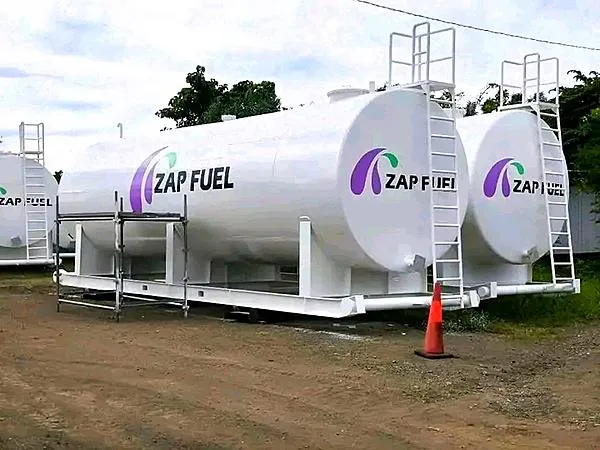
Residents of Sepik, Papua New Guinea can look forward to relief from prolonged fuel shortages as Zap Fuel, a private distributor, prepares to establish a temporary fuel storage facility in Wewak.
Governor for East Sepik Province Hon. Allan Bird announced this on January 19.
“I am pleased to advise our people that a fuel distributor is ready to locate 600,000 liters of temporary fuel storage to Wewak as soon as possible and supply fuel to the Sepik region,” Governor Bird stated.
After two years of chronic fuel shortages in Sepik, Zap Fuel, which already supplies fuel to Manus, Gulf, and the Autonomous Region of Bougainville (AROB), committed to addressing Sepik’s demand of over one million liters of petroleum products per month.
“This week, we will connect them with potential business partners in Wewak so they can start as soon as possible,” Bird revealed.
Over the coming year, the East Sepik Provincial Government (ESPG) will assist Zap Fuel in securing land for a permanent tank farm to ensure sustainable fuel supply options.
In addition to the fuel crisis, Governor Bird acknowledged another pressing issue affecting Sepik residents: unreliable power supply.
“Our next challenge is to solve our continuous power blackouts. We need reliable power supplies, and PPL [PNG Power Limited] sadly doesn’t have the solutions,” he said.
“This year, we will find solutions and seek out the partners who will help us with solutions.”
Bird emphasized that the Zap Fuel initiative is a fully private sector-driven solution, with the ESPG serving only as a facilitator.
“The fuel supply by Zap Fuels is a 100% private sector solution. ESPG will only help to facilitate. We will not be providing any funding for the business,” he clarified.
Governor Bird concluded by welcoming businesses like Zap Fuel that are committed to delivering practical solutions for the people of Sepik.
Prime Minister Hon. James Marape has extended his gratitude to senior leaders from ExxonMobil’s headquarters in Houston, Texas, who visited Papua New Guinea to reaffirm the company’s long-term commitment to the country’s energy sector.
Three senior ExxonMobil corporate executives, led by outgoing Upstream President Liam Mallon, traveled to PNG to personally bid farewell to Prime Minister Marape as he prepares to retire from his role. Mr. Mallon, a key figure in ExxonMobil’s operations in PNG, expressed his appreciation for the strong partnership between the company and the Government of Papua New Guinea.
“I want to thank the ExxonMobil leaders from their Houston head office, especially Liam Mallon, who flew all the way to PNG to say farewell,” Prime Minister Marape said.
“He has been a strong partner in ensuring the success of PNG LNG and has worked closely with us over the years. His commitment to our country will be remembered, and we wish him well in his retirement.”
During the meeting, Mr. Mallon introduced his successor, Dan Ammann, the incoming Upstream President, who will now take over ExxonMobil’s global upstream operations.
Prime Minister Marape also congratulated Ms. Tera Shandro, the outgoing Managing Director of ExxonMobil PNG, on her promotion to Vice President of Upstream Business, based at the company’s global headquarters in Houston.
“We are proud that Ms. Shandro, after her time in Papua New Guinea, has been elevated to a senior global role within ExxonMobil. This speaks volumes about the importance of PNG in the company’s operations,” PM Marape said.
“We wish her all the best in her new role and look forward to continuing a strong relationship with ExxonMobil under the leadership of Dinesh Siwasimboo, the incomingChairman and Managing Director of ExxonMobil PNG.”
The meeting also included Peter Clarke, Senior Vice President for Global LNG, who provided updates on ExxonMobil’s commitment to advancing key projects in PNG, including the ongoing developments at Angore, progress on P’nyang, and efforts to synchronise multiple LNG fields for greater efficiency.
Prime Minister Marape noted that ExxonMobil is also working closely with TotalEnergies to support the successful delivery of the Papua LNG project, which is expected to play a significant role in PNG’s energy future.
“This collaboration between ExxonMobil and TotalEnergies will ensure that Papua LNG is developed efficiently and contributes to the broader synchronisation of PNG’s LNG projects, maximising benefits for our country,” Prime Minister Marape said.
“They assured me that PNG LNG remains one of the best-performing fields globally and that the company remains committed to ensuring PNG continues to be a major energy producer for at least the next 30 years,” he added.
ExxonMobil’s leaders also discussed the importance of positioning Papua New Guinea as a producer of clean and green LNG. The company recognises PNG’s negative carbon footprint and the country’s potential to market its LNG as a cleaner, more sustainable energy source in the global market.
“We discussed the importance of aligning our LNG production with PNG’s green credentials,” PM Marape said.
“Our goal is to brand Papua New Guinea as a green energy nation, producing LNG from a country with a negative carbon footprint. This will make our LNG more attractive to buyers in both spot and long-term contracted markets.”
ExxonMobil further highlighted PNG’s strategic location and proximity to major markets, which places the country in a favorable position for energy exports.
Prime Minister Marape concluded by expressing his confidence in ExxonMobil’s continued leadership in PNG’s energy sector and the Government’s commitment to supporting further LNG developments.
“ExxonMobil’s senior leadership has assured me that PNG is a top priority in their global portfolio,” PM Marape said.
“We look forward to continuing our partnership to ensure the success of current and future LNG projects, which will play a significant role in the country’s economic growth for decades to come.”
Follow on LinkedIn:
PNG Business News
Be the "First" to get our exclusive Digital Magazine & Weekly Newsletter.