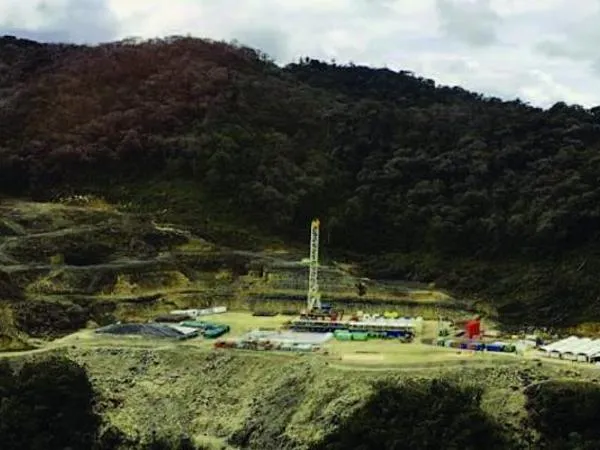
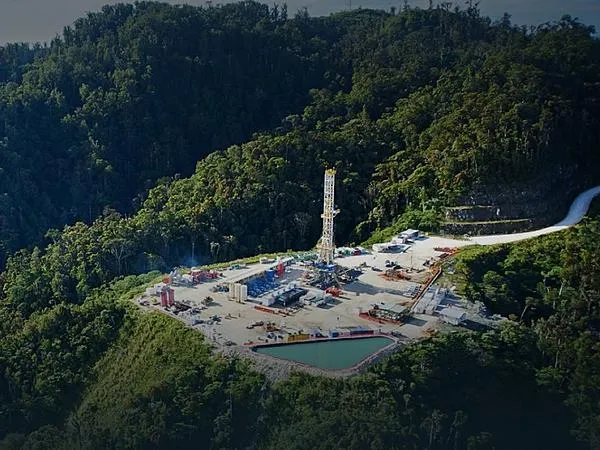
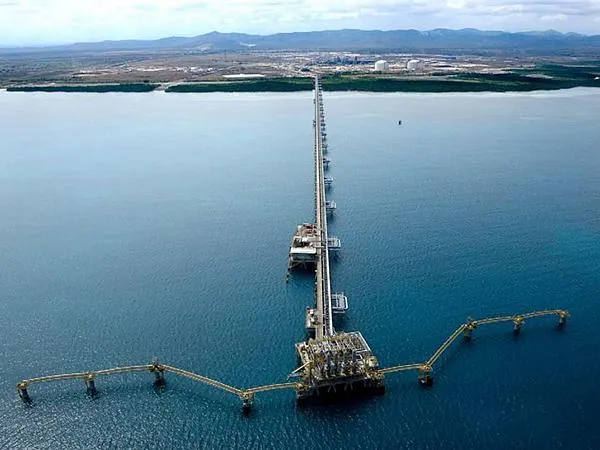
To recognise the efforts of the company to provide employment, workforce development, and business opportunities, the PNG LNG project’s best national content contribution of the Year award went to the Hides Gas Development Company Ltd energy services.
According to ExxonMobil PNG Ltd’s national content manager Sisa Kini, “We are proud of HGDC Energy Services’ achievement and success. Continued growth in the capacity and capability of local companies is central not only to ExxonMobilPNG’s success but also the national economic development.”
Since 2009, the energy services have made workforce development a priority. Among its projects include an apprentice programme for mechanical fitters, a Women in Workforce programme, and a mentoring programme.
The workforce is composed of ninety-nine per cent Papua New Guineans with 70 per cent coming from Hela.
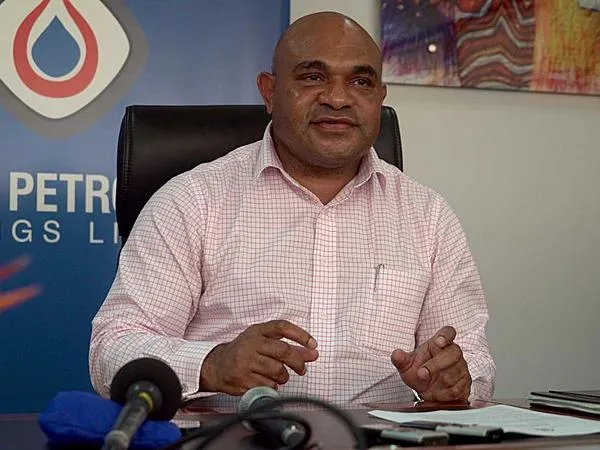
HGDC Energy Services chairman Libe Parindali said the award means delivering the highest standards. “We are proud of our work to invest in and develop local talent,” he said. “This enables them to compete and work anywhere in the world.”
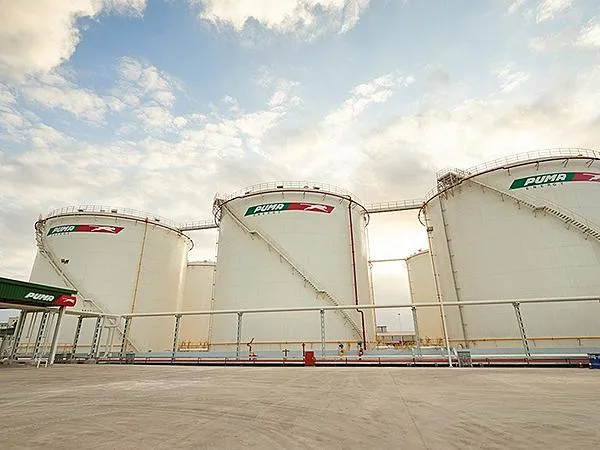
Puma Energy (PNG) Ltd expects that fuel prices will increase as demands for ground fuels also increase. This is in line with economic recovery.
According to the Country manager and director Hulala Tokome, this will have an effect locally compared to during the COVID pandemic.
“In general, prices are moving up and expected to continue to move up which will have an impact locally compared to the last few months and during the Covid-19 period,” he said. “With the gradual release of the Covid-19 vaccine globally, governments are rushing to get their population vaccinated to kick-start their economies. Brent prices are back in the mid US$50/bbl (K173.32/barrel of oil) range as positive sentiment is that the worst is over and the global economy is on track for a strong recovery. Biden winning the US presidency and aggressive monetary policy have pushed the US dollar (USD) lower which in turn makes crude more attractive on a USD basis helping push up Brent prices."
He continued, “The cold winter took North Asia by surprise and many end-users were caught short on fuels for heating demand causing a surge in prices in the short-term. We expect prices to continue their upward trajectory as demand for ground fuels increase in line with economic recovery.”
Meanwhile, the Independent Consumer and Competition Commission (ICCC) said that the cost of kerosene, petrol, and diesel will increase on average This is due to the increase of crude prices last month - which was caused by the easing of lockdowns after the second wave of the pandemic. , the indicative retail prices for petrol, diesel and kerosene will all increase on average, throughout the country.
According to the ICC, the prices this month “are inclusive of the import parity prices, domestic sea and road freight rates for the first quarter of 2021, the annual wholesale and retail margins for 2021, excise duty, and goods and services tax”.
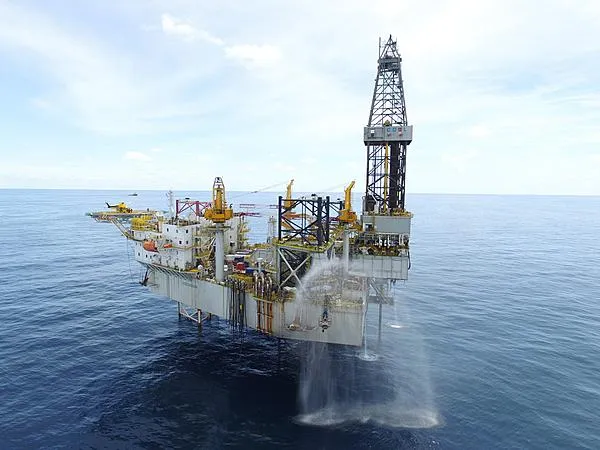
Before Twinza Oil Limited moves forward with the Front End Engineering and Design (FEED) stage, the firm is awaiting the formal approval of the Pasca A Gas Project Agreement by the National Executive Council.
The agreement was finalised last year and now awaits presentation by the Petroleum Minister, Kerenga Kua to the National Executive Council.
Once approved, Twinza Oil can now move with the FEED stage of the first offshore oil and gas production in PNG.
Meanwhile, effective February 1, 2021, Twinza has appointed Erick Kowa to the Board of Company from his role as Gas Project Development Manager where he co-led the Twiza all-Papua New Guinean negotiating team for this Agreement.
According to Twinza Chairman and CEO Ian Munro, the Board acknowledges his expertise in the oil and gas industry, and also his strong relationships with the stakeholders in PNG and in the region of Asia.
Munro adds that with the agreement is complete and awaiting approval before proceeding, the firm needs to strengthen the Board moving forward to the Final Investment Decision for the Project in 2022.
Twinza hopes that the Pasca A will be finished in 2025, leading to the further development of the Gulf of Papua.
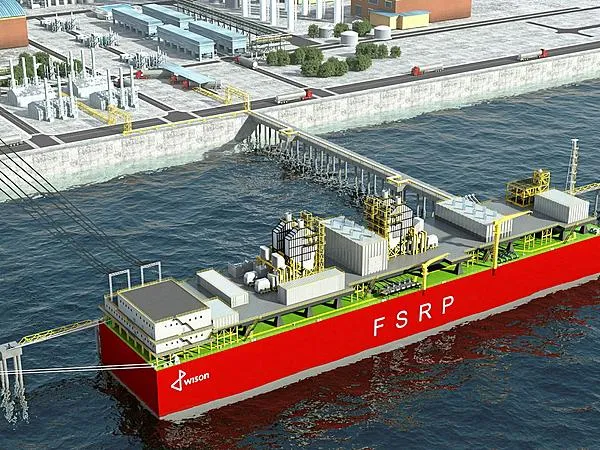
Kumul Petroleum Holdings Limited (KPHL) has awarded two contracts to Chiyoda Corporation of Japan in partnership with Moss Maritime of Norway, and Wison Offshore and Marine based in Shanghai, China for the design and the development of a floating, storage, re-gasification and power (FSRP) generation unit in Lae.
The state-owned firm said that the awarding of these contracts would facilitate extra electricity generation for the people.
KPHL said that it had worked on the robust facility development and design request for quotation and evaluation process. This has attracted some of the most experienced floating offshore facility construction and engineering firms of the world.
The mandate of Kumul is to distribute and aggregate both domestic and equity-invested gas allocations from present and future PNG development projects.
“Kumul Petroleum has awarded these contracts on the basis of holding a design competition between the two requests for quotation compliant engineering contractors (one Japanese and one Chinese) as each of their design options presented offered very different, and very interesting, value benefits to PNG, such as significant capital cost reductions and fast track schedules.”
“Kumul Petroleum has taken a leadership role by awarding these two design and engineering development contracts that will facilitate the additional electricity generation for the people of PNG and assist in fast-tracking development of the heavy industry.”
Kumul Petroleum Holdings Ltd (KPHL) hopes to work with the developer of the Papua LNG Project and its partners.
According to Managing director Wapu Sonk, KPHL hoped to work with Total and the Papua LNG joint venture partners to start the front-end engineering design work and begin the liquefied natural gas (LNG) financing and marketing work.
It can be recalled that Petroleum Minister Kerenga Kua has said that an announcement would be made where the Papua LNG Project would be a stand-alone project towards next year’s design phase.
He said that a meeting would be held between the government and the Total senior management this month.
“If the decision is made, it will be positive for PNG because we will begin to see some early work going on,” Kua said.
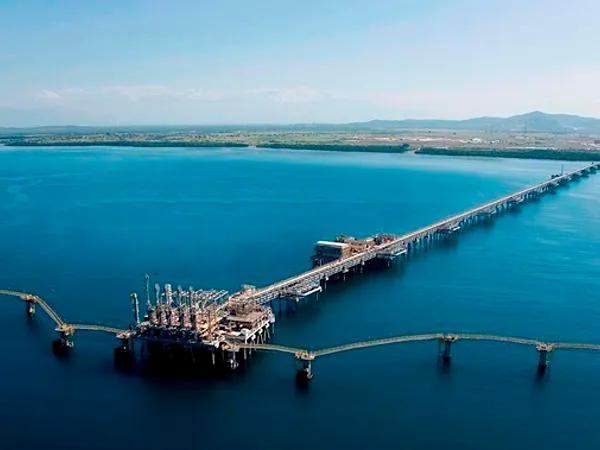
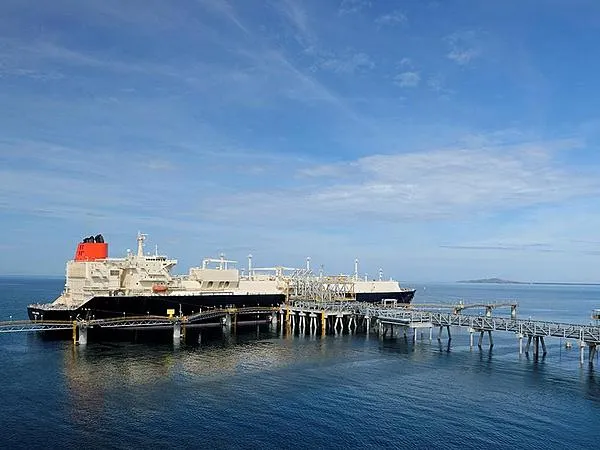
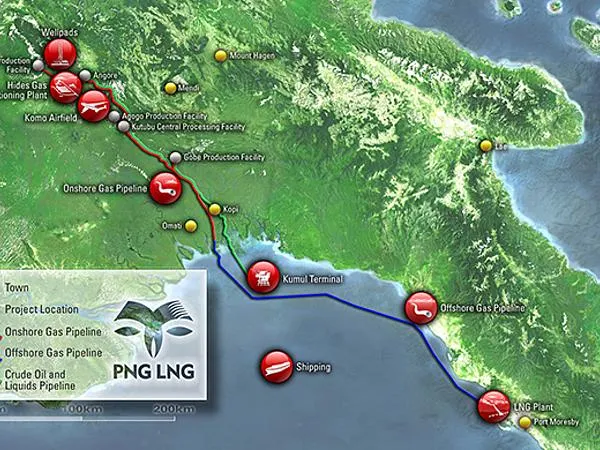
The country’s national gas and oil company, KPHL is in charge of managing the State’s 16.57 per cent equity in the ExxonMobil operated US$19 billion (K64.91 billion) PNG LNG project. This has allowed the firm to become the third-largest player in the largest single investment made by the country.
Sonk added that even with this pandemic, there had been no material impact on the project and its operations, besides a few delays in various areas.
“PNG LNG project performed very well in terms of LNG production,” he said. “The main challenge has been LNG prices, which has been very low in Q1 to Q2 and in the third and fourth quarter, the prices have improved to approximately US$6.40 to US$7.50/MMbtu (K21.98 to K25.76 million British thermal units) from as low as US$2.40/MMbtu (K8.24/MMbtu) early this year. LNG and oil price has impacted all the joint venture partners and us at Kumul Petroleum as well as with MRDC (Mineral Resources Development Company), no exception. PNG Government also is impacted as a result.
He said, “We hope that the oil and LNG prices will recover and be stabilised given there is now a vaccine for the Covid-19. ExxonMobil maintains the great job in optimising and improving production in a safe and environmentally friendly manner.”
Sonk added that KPHL paid K200 million as dividend due to better cost commodities last year.
“We have been able to continue to train Papua New Guineans at the Kumul Petroleum Academy, deliver cheap and reliable power into Port Moresby through NiuPower, delivered the rural electrification programme mostly in Hela and Southern Highlands connecting Nipa to Tari, Tari to Koroba and Tari to Hides (Juni) and Ialibu to Kagua,” he said.
Total senior management team will be in the country this week to talk about the next steps in the Papua LNG Project.
According to Petroleum Minister Kerenga Kua, the meeting between the government and the developer of this project had been planned last week but there were delays on clearances and protocols. They are to arrive this week.
The announcements for this project will be made on December 17.
Meanwhile, Prime Minister James Marape said that other groups such as the Oil Search Ltd and the ExxonMobil PNG would be attending the discussion to further the project into the next segment.
Marape said that the meeting between the government and Total was for the latter to “to tell us the exact timeline of the Papua LNG project”.
“The economy should be happy and excited that Papua LNG hasn’t been scraped off as far as direct foreign investment is concerned,” he said.
To start the project next year, Kumul Petroleum Holdings Ltd also hopes to work with the developer of the Papua LNG Project. According to managing director Wapu Sonk, they would like to start work on the front-end engineering design work and the financing and marketing work of the liquefied natural gas.
Kina Petroleum Corporation has submitted an application to delist from the Australian Securities Exchange (ASX).
This follows a delist from Papua New Guinea’s stock exchange (PNGX) and ASX, but subject to receiving approval from ASX to continue with the ASX delisting.
It added that the notice of meeting for the shareholders of the company would be convened to think about, and if thought fit, to work on the delisting with accompanying materials expected to be released to shareholders this Friday.
The firm said that the board of directors are leaning towards delisting because:
Small trading volumes having a disproportionate impact on the cost of shares – in the 18 months since relisting, the fully paid ordinary shares traded on only 36 days and the cost of the share decreased from US$1.80 (K6.22) to US$0.38 (K1.21) based on the trading of 232,710 shares. The low liquidity worked on the important volatility in the cost shares from limited trading with a disproportionate impact on the share price. The board believed that this occurrence came out with a share price not reflective of the true value of the company;
Inability to increase capital at costs reflective of underlying asset value. The board thought that with the shares listed on ASX and PNGX, the prospects of increasing funds on PNG and ASX foreign exchange at a cost commensurate with underlying value were poor and any future capital raising would have a very dilutionary impact on shareholders.
Investor interest and minimal liquidity is because of concentrated shareholdings.
Australian natural gas developer Santos Ltd has lowered its production cost guidance at US$8.00 (K28)-$8.50 (K29.80)/boe (barrels of oil equivalent) and has upgraded its 2020 production guidance to 87 and 89 million barrels.
According to the firm, the upgrade was due to a strong operating performance across its base businesses and represents more than 50 per cent growth since 2015 and 15-18 per cent production growth for the year. Its asset of PNG LNG has produced 30 per cent above nameplate capacity without extra capital.
In spite of the pandemic, the firm is still on track to deliver the cost reductions it has announced in March - which sees 2020 guidance decreased to US$8.00 to US$8.50/boe.
Other developments include capital expenditure expected to be approximately US$900 million (K3.15b), steady with the 38 per cent reduction for the year announced in March; the integration of the ConocoPhillips acquisition finished in May with guidance on acquisition synergies heightened from US$90 million (K315m) to US$105 (K368mil) million per annum.
Managing director and chief executive officer Kevin Gallagher said that with these developments right on track, the firm is positioned for sustainable shareholder returns and disciplined growth.
“Our strategy has been to establish a disciplined low-cost operating model that delivers strong free cash flows through the oil price cycle,” he said. “Our 2020 forecast free cash flow breakeven oil price is less than US$25 (K87.70) per barrel before hedging and around US$20 (K70) per barrel after hedging. Our base business is strong with production levels expected to remain relatively steady for the next decade and providing significant free cash flow.”
Australian natural gas developer Santos Ltd said that the PNG LNG is a world-class low-cost asset delivering above nameplate productivity.
According to chief operations officer David Banks, opportunities for expansion can come in the future.
“One core asset that is operated by others is the PNG LNG,” he said. “Exxon Mobil, the operator, does a very good job in terms of filling the plant. The plant has been tracking at 30 per cent better than nameplate capacity through very low-cost operational improvement and bottlenecking that has been completed. The production cost of US$4.85 (K17)/boe (per burial of oil equivalent) demonstrates that it is a world-class asset and within that US$4.85/boe is something approaching a dollar of earthquake impact which we are in the process to recover through insurance and the like.”
He added, “In terms of backfill options, we have a number, one of them P’Nyang which is subject to framing agreements and we are working with partners in the Government on that Muruk and Hides are also exciting backyard opportunities that will enjoy extreme capital-efficient development costs and make the most of very well run the infrastructure that we have in place there.”
Petroleum Minister Kerengua Kua said that there will be an announcement next month if the Papua LNG will be a stand-alone project towards the design phase next year.
He added that the Total senior management and the delegation of the government will be meeting on Thursday, December 10.
“If the decision is made, it will be positive for PNG because we will begin to see some early work going on,” Kua said. “There will be cash flow for the country and it could have an impact on the gross domestic product for us. It’s a positive thing to look forward to so we will wait for the decision on Dec 10 or 11. We will make the announcement on whether we will delink Papua and P’nyang and make them separate stand-alone projects.”
Kua noted that this was the status of P’nyang and that there was still time to negotiate.
“The fact that we delink the two projects, it will not disadvantage P’nyang because whether you link it or delink it, the construction phase of P’nyang is still four to five years away down the track,” he said. “We have all the lead time here to negotiate a good contract, no need to rush because we don’t need a gas agreement for P’nyang for another four to five years yet. The construction for Papua has to start and complete before P’nyang connects so we still have a lot of time.”
Kua said the dialogue with Exxon showed opportunities for negotiations and that there could be good deals. “There is still some promise there so we will continue to work on that,” he said.
Kua said that Pasca was the only small project with less volume of oil and gas. He said that the construction is estimated to cost around K6.9 billion (US$2 billion) on a scale of PNG LNG which is K65bil (US$19bil) and Papua LNG which is K34.5bil (US$10bil).
“In PNG US$2bil (K6.9bil) is a lot of money and negotiation is at a very advanced stage,” he said. “We will announce a gas agreement as soon as we can. Our concentration on the negotiations has been compromised by the disturbance of politics but we are monitoring it.”
Kua said that investors are not leaving, adding that the state has wanted to reform legislation.
Papua New Guinea Prime Minister James Marape has welcomed the passage of six significant legislation that guarantees the US$20 billion Papua LNG Project in the Gulf in months ahead.
In a press conference attended by Petroleum Minister Hon. Kerenga Kua and Gulf Governor Hon. Chris Haiveta, he said, “Today is good news for the country. The laws have finally been cleared and Papua LNG is set to move very soon when the (French oil-gas major) TOTAL executives come in and we jointly release a statement on what takes place from this stage onwards.”
These six bills are the following:
Income Tax (Papua LNG Project) (Amendment) Bill 2020
Stamp Duties (Papua LNG Project) (Amendment) Bill 2020
Insurance (Papua LNG Project) (Amendment) Bill 2020
Oil and Gas (Papua LNG Project Production Levy) (Amendment) Act 2020
Tax (Papua LNG Project) Production Levy) (Amendment) Act 2020
Income Tax (Papua LNG Project Thin Capitalisation) (Amendment) Act 2020
“At this juncture, let me also announce that a high-level delegation of TOTAL executives will be visiting the country in the next two weeks or so, if transition in Singapore gives clearance,” said Marape. “We will now start to engage and put a clear roadmap about Papua LNG going forward. Papua LNG is an important project for us. PNG LNG was able to grow our GDP and our economic base quite substantially.”
In 2007, the PNG economy was at K30-K40 billion but is now at K90 billion.
“Papua LNG is a US$20 billion project that has every opportunity to ensure that our economy is given the huge stimulus needed, during the construction phase as well as eventual production of the two trains that will be the Papua LNG,” he said.
PM Marape also added that he was a hard negotiator for all projects.
“That is not to say that we are disrespectful of our investors,” he said. “There’s a place for us to win, and there’s a place for investors to win, based on open-book modelling and based on returns to investment that is industry best-practice or global best-practice. So whilst I negotiate hard for the country, I also am a fair man, and I understand where investors will win and where the country must win in as far as winning for our people is concerned.”
Prime Minister Marape said that even if the government has secured these additional benefits, they have also maintained TOTAL, Exxon Mobil and Oil Search in the country.
Horizon Oil has decided to sell its assets worth US$3.5 million (nearly A$5 million) including its entire portfolio in PNG - to Arran Energy Investments.
CEO Chris Hodge says that this decision was difficult as they have been part of the company for many years already.
'While undoubtedly a substantial, good quality resource and our ability to realise the value in PNG was becoming increasingly long-dated and uncertain, as well highlighted by the impairment write-downs taken earlier this year," he said. "Divestment of our PNG interest was carefully considered in the context of our overall corporate strategy and we are pleased to have agreed on terms with Arran Energy. The transaction will provide Horizon with an opportunity to rest optimise its asset portfolio and focus its efforts on securing a significant growth asset.”
Horizon Oil has been operating in PNG since the 1990's.
With the PNG LNG project, the country has proven its accessibility to the East and South East Asian markets and capacity to supply competitively said institute of National Affairs director Paul Barker.
Barker, an economist, said that the P’nyang and Papua LNG projects could meet the LNG demand window in 2027.
“PNG has greater geopolitical stability than prevalent in much of the Middle-East, with the high cost incurred and significant lead in time, both to establish the extraction and processing capacity in PNG, but also the necessary depot and degasifying facilities to handle LNG in the recipient countries,” he said.
He added that a higher commitment for the market was needed, say for oil production “so the issue of the market slot remains important, even though the market is growing and new outlets materialising, as in India and Myanmar”. In addition, he said that PNG gas fields could meet the market demand for 2027, but only if agreements and financing were to progress immediately.
“In the case of Papua LNG, the agreement is already in place, albeit that the developers are reluctant to proceed without the associated P’nyang project also gaining the go-ahead,” he said.
“The companies are applying leverage on the Government, while Western province sees the P’nyang project as a vehicle to provide leverage to embrace the various stranded Western province fields. The early development of these fields would certainly provide a useful economic, employment even temporary fiscal kick-start for a rather moribund PNG economy.”
Various players must reach certain compromises, he said, “albeit that the government and companies each have some negotiating leverage, such as with other potential project opportunities that the major firms have elsewhere”, adding that all parties which included landowners must not overlook critical preparatory processes.
In its third quarterly report, Oil Search Ltd said that conversations between the P’nyang operator ExxonMobil and the PNG government are still continuing. This is to secure balanced and fair fiscal terms on the P’nyang Gas Agreement.
According to KUMUL Petroleum Holdings Ltd (KPHL) managing director Wapu Sonk, if discussions go well, they should be able to meet the LNG demand window from 2026 to 2028. He also said that the LNG spot prices had recovered a bit from US$2.4/MMbtu (million (106) British thermal units) a few months back to around US$4.50/MMbtu now.
The review conducted by Oil Search stated that because of the harmful effects of COVID-19, the supply gap for 2020 have been deferred by a few years,
“The LNG projects have been delayed already due to low demand caused by the Covid-19,” Sink said. “If the PNG projects (Papua LNG and P’nyang) enter front end engineering design (Feed) in 2021, final investment decision in 2022 and start constructions in 2023, we should be able to meet the demand gap or window from 2026 to 2028. The demand window could move forward as well if current projects in operations don’t do well or project under constructions now get delayed. Papua LNG Project, which has a signed gas agreement, needs to enter Feed early next year if we have to meet the LNG demand window. The P’nyang project can come behind that as it does not have a gas agreement yet, hence decoupling the Papua LNG from P’nyang or PNG LNG Project expansion train is key to getting Papua LNG going as soon as possible.”
The country’s national oil and gas company, the KPHL is responsible for managing the State’s 16.57 per cent equity in the ExxonMobil operated US$19 billion (K64.91 billion) PNG LNG project. This has become the third largest partner in the largest single investment made by the country as of today.
PNG LNG project has continued performing well. This, according to Oil Search’s third-quarter report, following the production at record levels of 8.8 MTPA on average for the first nine months of the year.
Oil Search managing director Keiran Wulff said this project included 6.55 mmboe from the PNG LNG Project, which came out with an annualised rate of 8.9 MTPA during the quarter, adding that the good performance can also be attributed to the cost reduction and operational excellence programs in PNG.
He added that the work is done on a third party spend to make sure that costs are sustainable with a direct focus on continuous performance and improvement.
“Despite improved oil prices during the quarter, the impact of the two-to-three month lag on LNG contract pricing and a higher portion of LNG spot sales has resulted in a 29 per cent fall in revenue. The company’s liquidity position remained robust, with $US1.65 billion of cash and undrawn bank credit lines available at 30 September,” he said. “Oil prices have since recovered from lows within the $US20/bbl range in the second quarter to above US$40 in the third quarter, which will rebase the LNG contract prices going forward. In addition, North Asian LNG spot prices have recovered materially from the lows of below $US2.00/mmBtu to above $US6.00/mmBtu currently, with demand improving as the northern hemisphere enters the winter period.”
He added that the progress has also continued on the value and capital optimisation studies for the Pikka Unit Development - redesigned as a phased development - with the help of the Alaska team and other key stakeholders.
“This will deliver increased capital efficiency, a materially lower upfront capital commitment and a significant reduction in the project breakeven cost of supply,” he said. “These changes will make the project resilient at lower oil prices and easier to finance while ensuring the project can be expanded efficiently without compromising full value. A primary focus during the third quarter has centred around finalising the longer-term strategy for our business, taking into consideration the global economic and investment conditions and trends, as well as ensuring the company is resilient to lower oil prices and well-positioned to optimally take advantage of its world-class assets and deliver full value when conditions allow.”
In spite of the pandemic, the petroleum industry continues to be a vital aspect in providing a sustainable future in the PNG. This, according to Petroleum and Energy Department Secretary David Manau, who said that since its first oil production in Kutubu in 1995, the industry continues to thrive. In fact, since 2015, the liquefied natural gas (LNG) has brought forth 20 per cent of the income of the country.
In a statement, Manau said, “Global LNG market has enjoyed the sixth year of consecutive growth in trading by 2019 and PNG contributes 2 per cent of the Global LNG Exports at 8.2 MTA (million tons per annum) from the PNG LNG. Countries like Bangladesh, Brazil, China, India and the Philippines are building new LNG import terminals after reaching Final Investments Decisions (FDI). Indonesia has been struggling to find natural gas to feed its LNG trains at the Bontang LNG Complex, with almost 50 per cent of its capacity sitting idle.”
He added, “PNG is on the spotlight as an LNG producing country with a lot of potential and huge frontier areas for exploration and production. The country has an oil and gas drilling success rate of one discovery out every five wells, unlike other countries. This all shows that the LNG market will continue to improve and grow post coronavirus pandemic.”
In the pipeline are several oil and gas projects, Manau said. P’nyang LNG Project (Gulf), Pasca A Gas Condensate Project (Gulf), Stanley Gas Condensate Project and Ketu/Elevala Gas Condensate Project (Western). Pandora Gas Field (Gulf) may likely be considered for aggregation with Pasca A, with accumulative resources rising to a volume of 1.2 trillion cubic feet of raw gas.
He said, “Papua LNG Project is operated by Total E&P and proposed to develop the Elk/Antelope Gas Discovery with best estimate resource size of 6.7 trillion cubic feet with additional prospects within the blocks to increase the overall resource size. The overall capital expenditure estimated for Papua LNG is at US$12.331 billion (K42.45bil), with the operational expenditure of US$10.324 billion (K35.54bil) for the life of the project.”
“P’nyang is operated by ExxonMobil and the total Capital Investment in the project is estimated at US$11.319 billion (K38.97bil) with Operational Expenditure of US$11.120 billion (K38.28bil) for the life of the project,” he added. “The P’nyang LNG Project is pending ongoing negotiation between the State and Operator to reach an agreement before the end of 2020 so that the project can reach Final Investment Decision. Papua LNG and P’nyang LNG Projects are both standalone projects with different operatorship, marketing arrangements and will have separate gas agreements. However, both are being considered for synergy at the downstream LNG Production Plant were they will be integrated into the existing PNG LNG project for cost-sharing and savings. Which is also beneficial to the State, given that the current regime allows the State to buy in equity at current market equitable rates. Cost Synergy and project integration preserve the State from additional borrowing to cover for the project investment cost differences in both Papua LNG and P’nyang LNG. The Expansion of the PNG LNG will double the LNG Production by 8.2 MTA bringing the total to 16.4 MTA.”
He said, “Pasca A is a niche project with more focus on Condensate and LPG production in the initial two years. This project is located offshore and roughly estimated to cost US$1.6 billion (K5.51bil) in both capital expenditure and operations for the well, production, processing, storage and offloading platforms in the Gulf of Papua for the life of the project. However, the project life can be extended by aggregation and integration of surrounding offshore gas fields including Pandora, Hagana, Flinders and Uramu, all tie-in to the Central Processing Facility. One of the key discovery in unlocking the stranded gas fields in the Western is the petroleum development license (PDL) 10 Stanley Gas Project which the new operator, Arran Energy is reviewing its Field Development Plan and shall be submitted to the Department of Petroleum and Energy for Review in October 2020. The review of the Stanley Gas Project field development plan has excited interest in the Ketu Elevala fields petroleum retention license (PRL) 21.”
Follow on LinkedIn:
PNG Business News
Be the "First" to get our exclusive Digital Magazine & Weekly Newsletter.