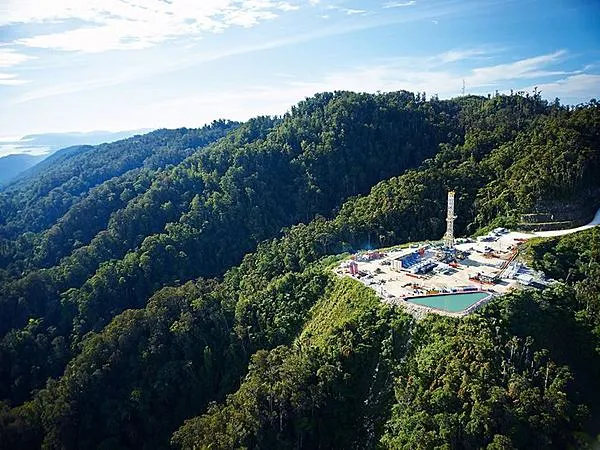
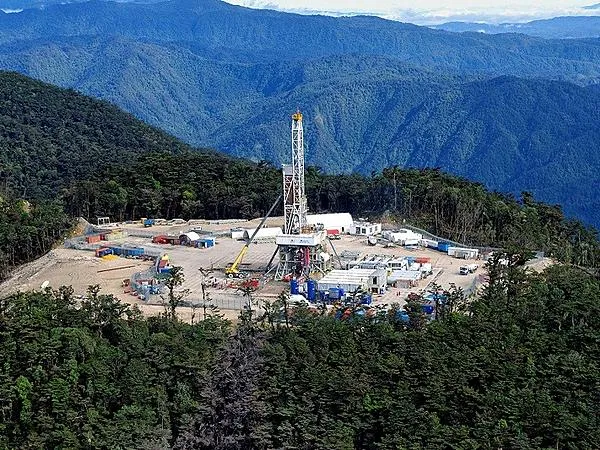
Papua New Guinea on Friday called off negotiations with Exxon Mobil regarding the P’nyang gas project, casting a shadow on a $13 billion plan to double the country’s gas exports by 2024.
The government said Exxon had refused to budge on the financial terms for developing the gas field and failed to come up with an offer it could accept.
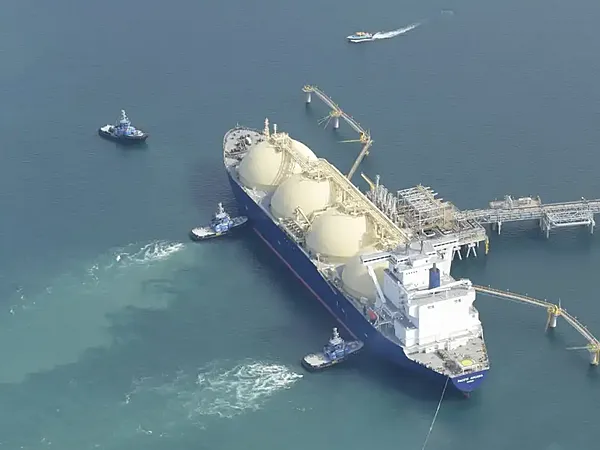
The P’nyang field was key to helping feed the expansion of Exxon’s PNG LNG plant, which it operates with partners Oil Search and Santos, among others.
The P’nyang agreement is one of two agreements needed for Exxon and its partners to go ahead with their $13 billion plan to expand LNG exports. The other agreement, the Papua LNG pact, was sealed with Total in September.
“Exxon Mobil’s offer had barely changed from its opening offer presented last November,” Prime Minister James Marape said in a statement, adding that it was not “substantially different” from a recent LNG agreement with Total.
The country is hoping Total will still go ahead with its Papua LNG project, a person close to the negotiations said.
A spokesman for Exxon Mobil told Reuters the company was disappointed an agreement could not be reached.
“We are hopeful that we can continue to work toward an outcome that benefits all stakeholders,” the spokesman said in an email.
The country’s petroleum minister had said last year that the government would press Exxon for “far better” terms on the P’nyang project than it had with the Total agreement.
The government was seeking terms that would give the state more than the 45-50% take that the country is set to reap on the value of Total’s Papua LNG project, the person said, adding that the share was much less than the 80% take that governments such as Malaysia and Indonesia have on gas projects in their countries.
Source: https://www.reuters.com/article/us-papua-exxon-mobil/papua-new-guinea-scraps-talks-with-exxon-on-pnyang-gas-project-idUSKBN1ZU1AQ
TEN legislative amendments to the Papua LNG project gas agreement were passed during the final quarter of 2019, according to Oil Search Ltd.
The company, a partner in the project, noted in its final quarter report that it was while detailed discussions took place between PRL 3 (P’nyang) joint venture and the Government on the terms for the P’nyang field development.
Managing director Peter Botten said: “In mid-October, 10 legislative amendments relating to the PRL 15 (Papua) gas agreement were passed by Parliament.
“In addition, discussions between the PRL 3 (P’nyang) joint venture and the PNG Government on the terms of the P’nyang gas agreement continued.
“The terms were not finalised by the end of 2019, which was the targeted timeframe. “However, negotiations recommenced early in 2020 and remain ongoing, with all parties striving to reach an equitable solution.”
Botten said key commercial agreements and pre-Feed (front-end engineering and design) activities for the three-train integrated development had been completed.
“And, subject to the completion of the P’nyang gas agreement, the joint venture participants are ready to progress the three-train LNG expansion into the Feed phase,” he said.
“Discussions with potential LNG customers in Asia continued during the quarter, with continued interest expressed by the market in contracting additional LNG volumes from PNG.
“However, we do not anticipate making any further tangible progress until the joint ventures enter Feed on the expansion project.”
Meanwhile, in mid-December, the Oil Search board approved entry into the Feed phase for the Pikka unit development on Alaska’s North Slope.
Source: https://www.thenational.com.pg/oil-search-talks-continuing/
The Papua New Guinea government has signalled that negotiations with ExxonMobil on the terms of a $20 billion LNG expansion are inching towards a resolution, but has made it clear it won't back down on a deadline for the development of a major gas field.
Talks between the government's negotiating team and Exxon are understood to be taking place in Sydney this week after discussions last week in Singapore appeared to have made little progress.
However, a spokesman for the negotiating team said on Thursday that talks "are ongoing and are moving towards a deal".
"What is essential to PNG is to develop the P’nyang field in a timely fashion, on terms similar to other developing nations," he said, referring to the gas field in the PNG Highlands that would supply an expansion of the Exxon-led PNG LNG venture in which Oil Search and Santos have stakes.
"We need a good deal, not a fast deal."
PNG's relatively new government led by James Marape has taken a much tougher line on the terms of resource development, promising his people that more benefits would flow to the economy and communities.
While the terms agreed in an earlier deal are said by Credit Suisse analyst Saul Kavonic to still be generous for Exxon and its partners, the US major has resisted changes to terms.
The stand-off has delayed progress at the whole $20 billion LNG expansion, which also involves the Papua LNG project led by Total.
The gas agreement for P'nyang had been targeted for earlier last year, then by the year-end, with January 31 the latest deadline set by Exxon.
The spokesman reiterated that the government is standing firm on key aspects it wants included. That includes a commitment on the timing for the development of P'nyang so the resource is not set aside by the oil majors for commercialisation at a later date.
"The Prime Minister has made it abundantly clear that every new development must have better terms for PNG than those struck for previous projects," he said.
"A timeline for development is also a fundamental condition for any agreement, so we can be certain the field will be developed as soon as possible and make sure the fields are not warehoused."
The spokesman said the deal also needed to ensure that the project maximises the potential in the Western Province, where P'nyang is located.
"We are pleased at the developer’s participation and commitment to resolve these issues, so we can achieve a mutually beneficial outcome," he added.
An Exxon spokesman said only that discussions with the government were "ongoing".
Santos chief executive Kevin Gallagher wouldn't estimate when a deal may be done but said that "everybody is working hard to bring it together in the first part of this year".
"I am still very confident that it will all come together in the end," he said. "I think there is a willingness to reach a workable conclusion."
Source: https://www.afr.com/companies/energy/png-moving-towards-a-deal-on-lng-20200123-p53u5p
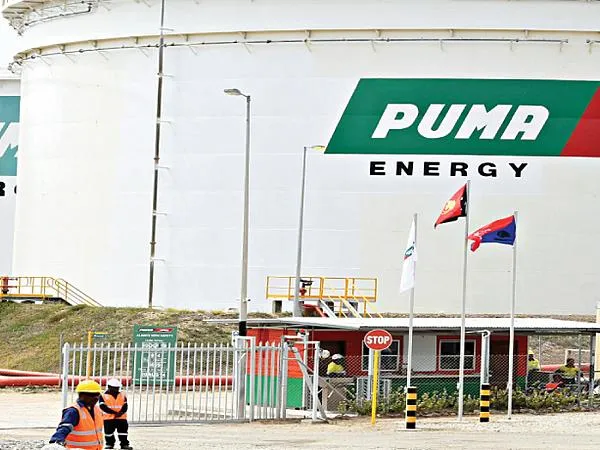
Papua New Guinea’s fuel and energy supplier Puma Energy said both its domestic and international fuel and energy supply lines will not be affected with the transition from diesel to liquefied natural gas (LNG) power generation when Niupower and Dirio projects come online.
In a response to queries from Post Courier about Niupower and Dirio fuel to gas transition power supply, new Puma Energy country manager Hulala Tokome stated that both of these projects coming on line will be great for both PNG and Puma Energy going forward.
Mr Tokome reaffirmed that the change from diesel to LNG for power generations will have minimal impact on Puma Energy as they can now use this capacity to service other markets.
When asked about the energy supply reserve for domestic use, he pointed out that their refinery facility including the terminal facilities throughout the country has close to hundred days of cover.
“In comparison to Australia and New Zealand and any other Pacific Island country, this is far better than any these countries,” he said.
“We continue to be positive about the future within Papua New Guinea and we remain committed to PNG,” said Mr Tokome.
“There are challenges ahead, and we will go through these economic challenges head-on which will only make us stronger for the better,” he added.
Mr Tokome said the team they have in Puma Energy have been through tough times in the past, and building on this resilience they will continue to keep on energizing communities within PNG.
“Be proud of our country and support PNG made, our crude, our refinery, our products, our people, right here in PNG.”
Continue reading at https://postcourier.com.pg/gas-fired-energy-transition-impact-minimal-puma/ | Post Courier
Western Province political leaders are considering a ‘no gas deal’ position for the soon to be concluded P’nyang LNG Gas Agreement if their provincial interests are not captured in the final negotiated terms.
The leaders have also declared a no deal position until proposed amendments to the Oil and Gas Act 1998 are made.
But these are contrary to the stated position of resource landowners, as represented by the P’nyang Resources Association Inc, the mouth piece of Petroleum Resources P’nyang Limited (PRPL), the equity management company for P’nyang gas field landowners and people of Olsobip rural LLG, part of Ningerum LLG and Kiunga rural LLG in Western Province.
It further covers people of Telefomin district of Sandaun Province. P’nyang Resources Association president Micheal Betkimsok said the resource owners want to see the State Negotiation Team continue and conclude the gas agreement with the project developers, denoting a potential collision course with the political leaders of the province.
Western province Governor Taboi Awi Yoto and Member for North Fly James Donald, on the other hand made their stances abundantly clear to the State in a media statement yesterday.
“We’d like to thank the PM for his wisdom in allowing the Western provincial government team to participate in the State Negotiating Team (SNT), a precedence that’s never being done in past LNG project negotiations.”
“We have made both written and verbal presentation to parties in the negotiating team by way of presenting our term sheet to the SNT, P’nyang Ministerial Committee and ExxonMobil since negotiations started in November 2019.”
“Unfortunately we see that the Western provincial government’s interest has not been captured, not even one single position in the negotiating terms of the State. Neither have we received any feedback from the SNT.” The two leaders stated in a joint statement.
Continue reading at https://postcourier.com.pg/leaders-not-happy-with-gas-deal/ | Post Courier
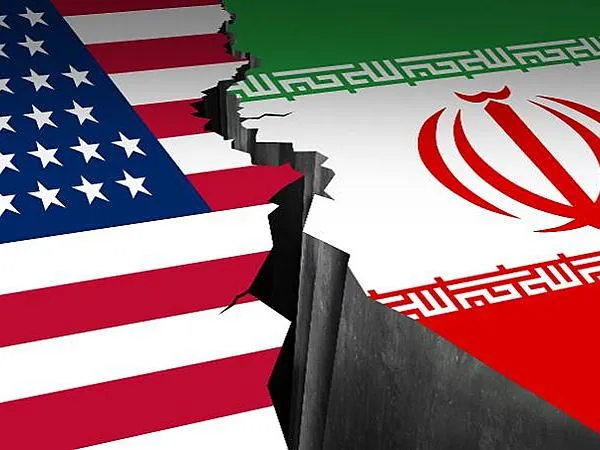
PAPUA New Guinea is not immune to the world market and will be impacted as a result of tensions between the United States (US) and Iran, which has caused a spike in oil prices, says an executive.
Puma Energy PNG Ltd country general manager and director Hulala Tokome said the company had seen an increase in crude oil prices as a direct result of the rift between the two countries (US and Iran).
Oil prices have jumped by more than US$2 (K6.80) per barrel and the price of Brent crude rose to more than US$63 (K213) as traders reacted following the death of an Iranian general Qassem Soleimani by a US airstrike.
“If the oil price continues to climb as a result of this, surely it will have an impact,”Tokome told The National."
“Crude becomes quite expensive in the market. We are not immune to the effects of world tensions. The price of crude has risen as a result of this."
“PNG has a one month lag in our prices to the market which is an average of the last month’s previous pricing."
“Any effects on the oil price gets put into the market based on an average of last month’s oil price. So yes, we will feel the effects of this. However, pricing is based on the previous month’s average oil price."
“It’s the challenges of business and PNG is not immune to the impacts on the world market and commodity trading.”
When commenting on the company’s own progress last year, Tokome said: “We had a good year in 2019 in continuing to upgrade our terminal and aviation facilities.
“We have been improving our supply chain to our commercial and retail customers, creating close to 500 MSMEs (Micro, Small and Medium Enterprises) through our Puma Gas market setup.”
Source: https://www.thenational.com.pg/tension-affects-oil-prices/
About 200 companies have shown interest in the Gulf of Papua Pasca A gas project. This was after developer Twinza put out an expression of interest for companies to provide services to the project.
Both local and foreign owned companies have shown interest to provide services during the construction and operation of the country’s first ever offshore gas project.
Twinza Oil and Gas project development manager Erik Kowa said they are now categorising these companies according to the types of services they will be rendering.
Mr Kowa said this is part of the company’s mission to support the government’s call on local content and is something they are striving to meet.
He said as a result they have gone out with an expression of interest and have already received an overwhelming response.
“From the PNG companies that have responded, we look at how qualified they are to participate in our tender process when we come to it.
We sort of look at their capabilities and strengths, accreditations, PNG employee content and also experience, track record and of course preferences.
“We just sort of done a desktop screening and while we get more certainty with approval from the project going forward, we’ll try and talk to some of you who have responded to find out what are the challenges and if you happen to be qualified according to our screening.
We will try and understand what the story is and see if our assessment is valid, or if not we will see what we can do to get it done going forward,” Kowa said.
“We are going through that to try and ensure that we give a fair go to companies who are here for the long term.
“This is to ensure that we are supporting PNG’s young population in employment and we want it to be established not only for the project but in the long term,” he added.
“We are working very hard to try and get the government’s approval’s out of the way so we can move forward.”
Continue reading at https://postcourier.com.pg/200-companies-show-interest-in-pasca-a-gas-project/ | Post Courier
There are some gaps in the Oil and Gas Act, says Twinza Oil and Gas project development manager Erik Kowa.
Mr Kowa said this at the recently held Mining and Petroleum conference in Port Moresby. He said the current Oil and Gas Act is great, however, there are some gaps in there that could be improved.
“Stakeholders of the chamber, we can raise this to work with the government to look at how we can cater for the future. “It’s been peaceful over the years, but as time goes on we need to be involved in some of those legislatives to facilitate change,” he said.
Mr Kowa said one of the challenges the gaps has created is time component. He said the time component from concept select to FID is not very prescriptive or guided in the Oil and Gas Act and when that does happen, it leaves out a lot of things to discretion.
“We are excited to be the pioneer in Pasca A but it will require government support, an active chamber to create space for interested players to come in and make that possible,” he said.
Mr Kowa said they are also ensuring that they are following the government’s call in ensuring that they serve the best interest of PNG by looking at domestic market obligation (DMO) for Liquefied Petroleum gas (LPG) for the domestic market, local content and third party access.
Continue reading at https://postcourier.com.pg/gaps-in-oil-and-gas-act/ | Post Courier
Prime Minister Hon. James Marape, MP recently welcomed representatives of the LNG Japan Corporation to Papua New Guinea.
During a recent meeting with this high-level delegation, PM Marape said PNG welcomes any investments in the Petroleum Sector and as Prime Minister; he was ready to give 100 per cent support if LNG Japan Corporation would create employment for Papua New Guineans.
“I will give 100 per cent support if you show me that you can create employment. I don’t mind giving you a tax-holiday; if you can create employment for our citizens,” PM Marape told the Japan Corporation delegation.
PM Marape stressed that his Government was determined to create cheap electricity for the whole country over the next 10 years adding that this was the whole reason why the National Government pushed for a minimum 10 per cent of any commercially viable gas found in the future.
“The Kumul Petroleum Holdings Ltd (KPHL) will pick up this 10 per cent and utilise it while the Government opted to create by-products from this gas through downstream processing. However; first and foremost, it is important to obtain cheaper electricity for all our citizens,” he said.
Also present at the meeting were the National Planning Minister Hon. Sam Basil, MP (who is responsible for Kumul Petroleum Holdings Ltd), Commerce and Industry Minister Hon. William Duma, MP and KPHL Managing-Director, Wapu Sonk.
Further, PM Marape encouraged KPHL Managing-Director, Mr Sonk to continue and enhance discussions with LNG Japan Corporation and also have constant dialogue with Ministers Basil and Duma in ensuring that both are fully aware on its progress.
Prime Minister Marape also thanked the LNG Japan Delegation President and CEO, Hiroshi Kawahara for leading a high level delegation to Papua New Guinea.
Brief facts:
LNG Japan Corporation plans to operate in Kikori, Gulf Province where a Special Economic Zone is planned to be built.
LNG Japan is studying feasibility of potential LNG-to-power projects in PNG, leveraging its long experiences in the LNG industry, including a small-scale domestic LNG sea transportation project in Indonesia.
It is also looking at producing methanol as a raw material for plywood manufacture, hence; contributing to downstream processing of logs.
LNG Japan Corporation, established in 2001, is a 50-50 Venture between two leading Japanese trading companies, Sojitz Corporation and Sumitomo Corporation.
LNG Japan, from the days of its predecessor, has over 40 years of experience in upstream development, financing, marketing, trading and shipping in the global LNG Industry.
LNG Japan and Kumul Petroleum entered into a joint venture agreement on June 7, 2017 (amended on August 2, 2018) to set up the unincorporated joint venture for marketing of spot and short-term cargoes from PNG LNG.
The company, together with JX Nippon Oil and Gas Exploration Corporation and Marubeni Corporation (Japanese consortium) and Kumul Petroleum Holdings Ltd entered into a Memorandum-of-Understanding on August 30, 2018, to jointly pursue any opportunities to participate in the Papua LNG Project, as equity participants and financiers.
Papua New Guinea’s plans to expand its liquefied natural gas (LNG) production to meet rising demand in the Asia-Pacific region was one of several topics explored by Wapu Sonk, Managing Director of Kumul Petroleum Holdings.
This was in a wide-ranging interview he gave recently to Oxford Business Group’s online broadcasting channel, Global Platform.
The full interview is available to watch at https://oxfordbusinessgroup.com/video/wapu-sonk-managing-director-kumul-petroleum-holdings
Sonk told viewers that PNG’s strategic location, together with broad public support for the extractive projects, and other advantages, meant the country was well placed to benefit from rising energy consumption in the region.
He said three new trains for LNG were expected to be added to the two currently in operation, while further expansion plans would see the P’nyang gas field developed within the next 10 years.
“We are looking at a $20bn investment in the country from a FEED start in 2020 and first gas from P’nyang in 2028,” he explained.
With lower LNG prices changing the global energy landscape, Sonk said he believed five trains were sufficient for PNG’s gas projects and that it was the right time to sharpen the focus on downstream activities.
“For balance of the gas, we should now look at the petrochemical and power industry and try and broaden the use of the gas,” he told OBG. “When the agreements were put together for the PNG LNG project, I think everybody was focusing on LNG export and we did not know what opportunities come with it. Now we are learning and learning fast as well, so it’s really an evolving story.”
Sonk also highlighted the steps taken to harness PNG’s gas for electricity generation, which he described as important for the country, saying: “We are putting cheaper and more efficient power into Port Moresby using gas.”
Marc-André de Blois, OBG’s Director of PR and Video Content, said the interview with Sonk provided valuable insight into PNG’s plans for expanding LNG production and giving gas a bigger role in driving new economic growth.
“PNG has already shifted the emphasis from oil to LNG, and future projects in the sector are expected to involve a greater spread of activities as the country looks to diversify its economy and strengthen its infrastructure,” he said.
“This approach will inevitably produce a more business friendly environment, encouraging investment opportunities in sectors such as tourism and agriculture, which I’m sure will be of considerable interest to our subscribers.”
Source: http://www.looppng.com/business/png-eyes-broader-use-gas-88736
Prime Minister James Marape has presented the amendment bill of the Oil and Gas Bill 2019 to amend the Oil and Gas Act 1998 relating to development levies.
In presenting the Bill, Mr Marape said the Oil and Gas Act 1998 section 160 subsection 6 provides the payment of development levies into trust accounts for those provincial and local level governments that are entitled to such levies.
“As the levies are at present, the provincial and local level governments that are entitled to such levies cannot access funds because of section 160 subsection 6 of the act which only allows expenditure out of the trust account if parliament approves an appropriation act in the national budget.
“The purpose of this amendment bill is to allow for provincial governments and LLG that are entitled to the development levies to access this funds that are held in trust accounts in accordance with the provincial appropriation law that is for the concern of all provinces.”
Southern Highlands Governor William Powi in response to the presentation of the Amendment Bill said that it was an important amendment for the Oil and Gas Act especially on development Levies.
“Bringing this amendment to Parliament is important and reads in practice section 160 subsection 6, that development levies should be paid to provincial governments who are recipients to development levies in accordance with the appropriation bill from Parliament.
“In practice those of us receiving development levies are not appropriated through parliament, (but) sits outside the Public Finance Management Act through a trust account in Waigani. “However, contrary to current practice, the law is not consistent, (and) this amendment is to correct the inconsistent law,” Mr Powi said.
“The trust account it will be paid into in accordance with the current amendment we are bringing into parliament, inconsistency is now being corrected. “And I commend the Government in the correction to the law in the Oil and Gas Act (1998),” Powi said.
Continue reading at https://postcourier.com.pg/pm-puts-forward-amended-oil-and-gas-bill-on-development-levies/ | Post Courier
OIL Search Ltd is positioned to double production in the next six years, chief operating officer John Kurz says.
Kurz attributed this to the company being the country’s largest single investor and the most active explorer which had also seen it expanding to purchasing asset in Pikku, Alaska.
“We have a bright future,” he said.
While providing the company’s update during the PNG Mining and Petroleum Conference in Port Moresby yesterday, Kurz said: “On the hills of the PNG LNG project, we have become a strong player in the oil and gas area.
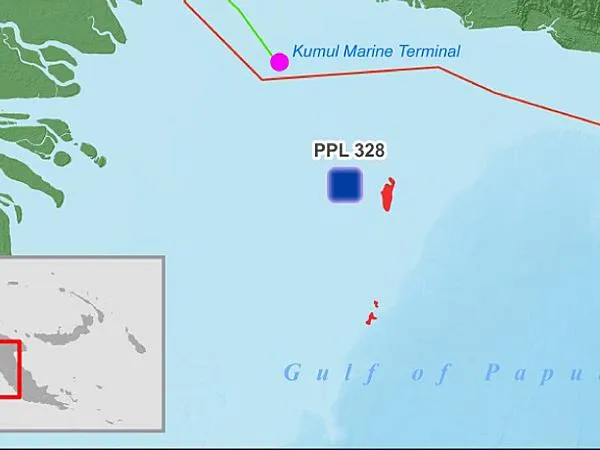
“We operate all the oil fields and the liquid exports down in the Kumul Marine Terminal, we have material interest in the PNG LNG and Papua LNG expansion projects along with our joint-venture partners.
“We also have a brand new business opportunity in Alaska, from a purchase that we made in February, 2018.”
Kurz said the Alaska operation was on schedule for early oil production in 2022 and the main production by 2024.
He said the operation was cost effective, engaging and they had a strong business team on the ground (in Alaska).
Meanwhile, Kurz said the liquids mooring system in Gulf of Papua that had appeared to be listing in August, had been completely and safely repaired and was well ahead of schedule.
He further said that by mid next year, there would be:
complete post-earthquake restoration activity;
increase oil production from mature oil fields and maximise recovery;
ready to enter front end engineering design (FEED) phase on LNG expansion once gas agreement for P’nyang is finalised;
associated gas project targeting final investment decision in 2021 and first gas deliveries in 2024;
and,targeting FEED entry for Pikka unit development by end of this year with resource additions expected.
Kurz concluded that their continued focus would be on safe, stable and reliable operations as well as continued commitment in socio-economic development.
Source: https://www.thenational.com.pg/oil-search-set-to-double-production-in-next-six-years/
Follow on LinkedIn:
PNG Business News
Be the "First" to get our exclusive Digital Magazine & Weekly Newsletter.