Digital trust must become a priority as Papua New Guinea advances its digital transformation agenda, with businesses and government institutions needing to ensure that the systems they develop are reliable, secure and capable of protecting people's information.
NuiPay Chief Technology Officer and Co-Founder Jason Kurdzinski said the success of digital transformation would ultimately depend on whether people could trust the systems they use.
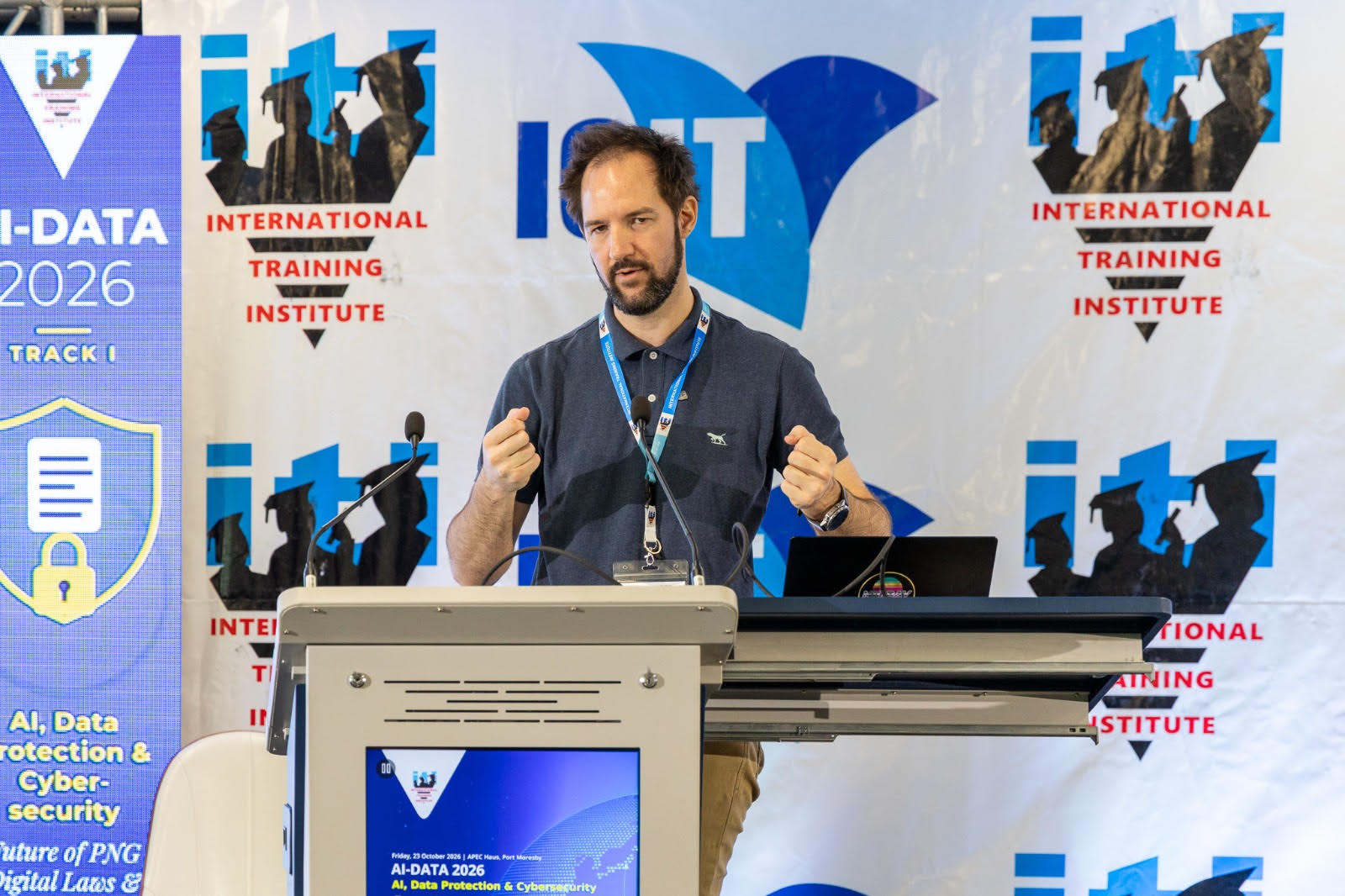
Speaking at the AI Data 2026 conference on October 23, where NuiPay was the title sponsor, Kurdzinski said digital systems would not earn public confidence through good design, policies or legislation alone, but through their ability to work reliably and protect users' information.
“People do not trust the system because of how it was designed. People trust a system because it works the last time they've used it. And it works very, very well,” he said.
He illustrated this with the example of a coffee exporter in Baroqa who relies on a government digital platform to upload export documents before a deadline. The user's main concern, he said, would be whether the system worked correctly, accepted the documents on time and kept the information private.
Kurdzinski said artificial intelligence (AI) was accelerating technological development globally, expanding capabilities and creating new opportunities for businesses and institutions.
He said NuiPay's overall engineering output had increased 17-fold within a year, during which the company recruited about 10 additional engineers.
He attributed the improvement to the growing capabilities of AI tools, particularly AI agents that can work towards specific objectives and identify solutions with less human direction.
These developments could help organisations accelerate digitalisation by addressing longstanding challenges, including fragmented data systems, incomplete records and duplicated information.
However, he stressed that organisations must first establish strong data foundations, with clear accountability for the accuracy and management of information.
On data protection, Kurdzinski said businesses and government agencies had a responsibility to safeguard information entrusted to them by customers and citizens.
Organisations must be transparent about what information they collect, why they collect it, who has access to it and how they respond to data security incidents.
“The Data Governance and Protection Bill, which are being merged, is our chance to make that the norm, and that's the whole purpose of these laws,” he said.
He welcomed the Department of Information and Communications Technology's (DICT) work to strengthen PNG's digital legal framework through draft legislation.
However, he emphasised that laws must be practical, proportionate and enforceable to provide meaningful protection.
“There is no point saying that companies have to disclose a data breach within three hours if that's not actually enforced and you don't have the data to back that up,” he said.
Kurdzinski also highlighted the importance of focusing on how information is protected rather than concentrating solely on where it is physically stored.
He said cybersecurity measures, proper data management and effective legal frameworks were essential components of a trusted digital environment.
He called for legislation to be developed through genuine consultation involving government, industry, civil society and regional partners, noting that policies adopted in countries such as Singapore and Australia might not necessarily work in the same way in Papua New Guinea.
“The work has to be done here and by the people who know the country,” he said.
Kurdzinski's presentation followed remarks by DICT Secretary Steven Matainaho, who outlined the department's work on digital transformation, data governance, cybersecurity and the development of a national AI policy.
Matainaho also highlighted the need for appropriate safeguards governing the use of AI in the public service, particularly in handling government information and using publicly available AI models.
Kurdzinski said responsible AI adoption, quality data, data protection, cybersecurity and sound legislation were interconnected and needed to be developed together.
He said public confidence would ultimately depend on whether digital services worked reliably for ordinary users, including those outside major urban centres.
“That's what trust looks like when we get it right. Nobody notices. It should just work,” he added.
NuiPay is a PNG-founded technology company that develops and operates cloud-native digital platforms for government agencies across the Pacific region.
Under Kurdzinski's technical leadership, the company developed the NYICSA Analysis Engine, a generative AI-powered system used to process visa applications and automate visa decisions for PNG's Immigration and Citizenship Service Authority.