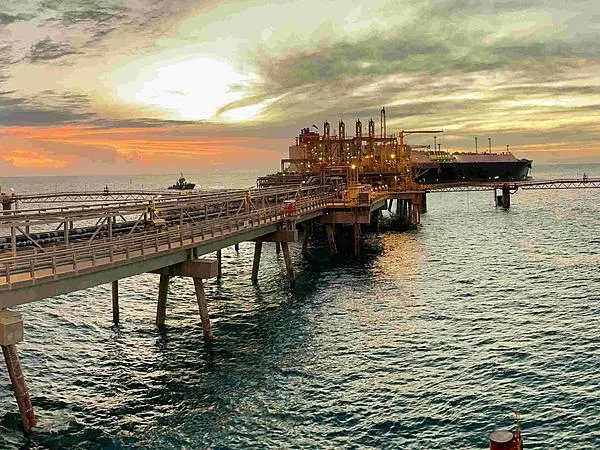
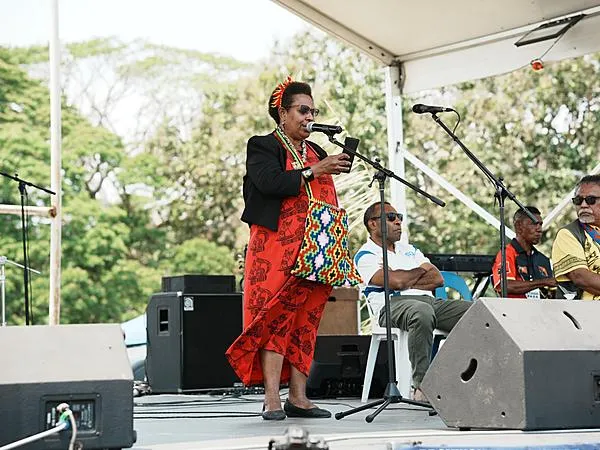
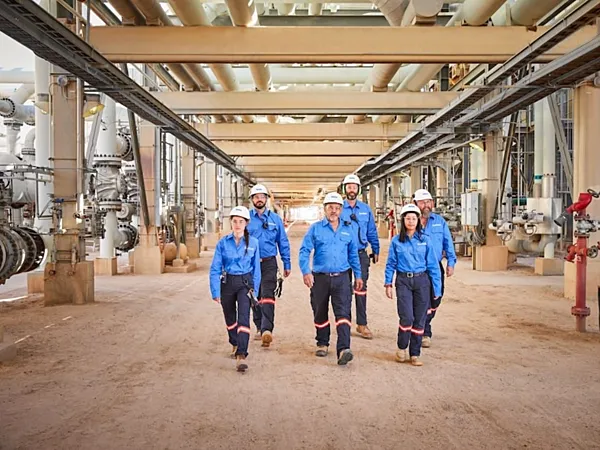
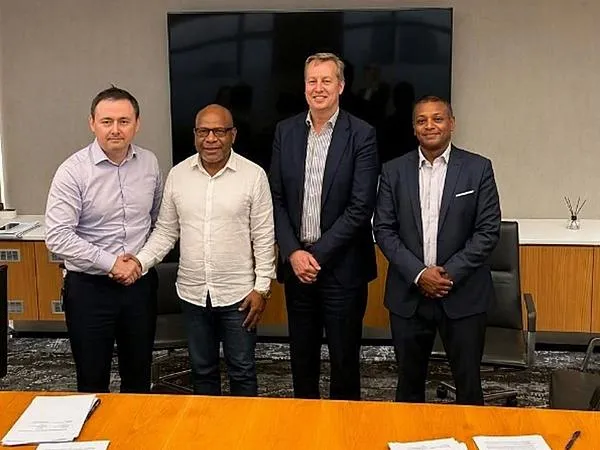
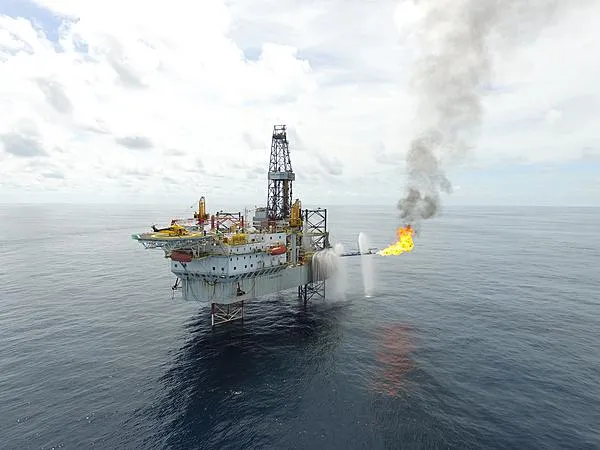
The PNG LNG Project has safely produced more than 100 million tonnes of liquefied natural gas since operations began in 2014, marking a major milestone for Papua New Guinea's petroleum industry.
The project, operated by ExxonMobil PNG Ltd., has connected Papua New Guinea's natural gas resources with global energy markets while supporting national development through employment, training, local business opportunities and community investment.
PNG LNG is an integrated gas development that produces natural gas from fields in Hela and Southern Highlands provinces. The gas is processed and transported through an approximately 700-kilometre pipeline network to a two-train liquefaction plant at Caution Bay in Central Province, where it is converted into LNG for export.
The project currently produces up to about 8 million tonnes of LNG a year, above its original nameplate capacity of 6.6 million tonnes. Since production began in 2014, it has supplied LNG primarily to customers in Asian markets.
The project's operations involve gas production and processing, pipeline transportation, liquefaction, storage and marine loading, forming an integrated value chain linking PNG's gas resources with international buyers.
ExxonMobil PNG Chairman and Managing Director Dinesh Sivasamboo credited employees, contractors and project partners for reaching the milestone.
“Reaching 100 million tons safely produced was only possible because of the unwavering commitment of generations of employees, contractors, and partners who embraced a shared purpose and maintained a relentless focus on doing the right things, the right way,” Sivasamboo said.
The milestone comes as Papua New Guinea continues to advance additional gas developments, including the proposed Papua LNG and P'nyang LNG projects, which are expected to build on the country's existing LNG industry.
ExxonMobil PNG said the achievement reflects the contribution of thousands of Papua New Guineans and project personnel who have supported PNG LNG's operations over more than a decade.
The company said it remains committed to creating long-term value for Papua New Guinea through the project's continued operations and its contribution to the country's energy and resources sector.
Central Province has rejected the proposed Papua LNG benefit-sharing arrangements, seeking a 55-45 split with Gulf Province and arguing that its role as a co-host warrants a greater share of the project’s economic benefits.
Central Gov. Rufina Peter presented the province’s Tier 1 position paper at the Papua LNG Forum in Port Moresby on Sept. 4, 2026. She later handed the document to Petroleum Minister Jimmy Maladina.
The Papua LNG benefit package under discussion is valued at K6.605 billion. It includes legislated benefits such as royalties, equity and development levies, as well as negotiated benefits including business development grants, infrastructure development grants and high-impact infrastructure projects.
The benefits would be shared among landowners, provincial governments, district development authorities and local-level governments in Gulf and Central provinces.
Central has rejected the director’s proposed allocation of 70% of legislated benefits to Gulf and 30% to Central, as well as an 80-20 split of negotiated benefits. Instead, it wants Gulf to receive 55% and Central 45% across all benefit streams.
Central challenges benefit calculations
The director’s proposal was based on project-impacted population, the number of affected clans, the physical area affected and capital expenditure. Central said those factors produced a 66-34 split, rather than the proposed 70-30 allocation for legislated benefits.
After reviewing the data, the province said it identified missing information and inaccuracies, including the population of Kairuku LLG, the number of clans in Central and the allocation of midstream capital expenditure.
Central said including Kairuku’s population of 29,485 increased its project-impacted population to 47,906, while the number of affected clans rose to 101.
It also disputed the allocation of midstream capital expenditure. The province said the component was recorded at US$2.465 billion but estimated that only US$783.4 million should be attributed to Central, based on 5% of the project’s total capital expenditure of US$15.6687 billion.
Central said its revised calculations produce a 58-42 split, which it considers a more equitable, data-based allocation.
Peter said Papua LNG should not be assessed solely by the location of gas resources and other physical impacts. She said the project extends from the wellheads to the export facilities, making Central a co-host rather than simply a project-impacted province.
Central’s case also rests on the use of existing PNG LNG facilities at Caution Bay, which will be integrated into Papua LNG. Peter said this integration has helped make the project economically viable and is expected to save developers about US$3.5 billion.
The project’s estimated cost was initially about US$18 billion before being reduced to approximately US$14.5 billion following the re-scoping and re-tendering of engineering, procurement and construction contracts, according to the position paper.
Central argues that the economic value of hosting processing, liquefaction, storage and export facilities should be reflected in the benefit-sharing arrangements.
The province is also seeking K2.2 billion for a 25-year infrastructure programme, citing population growth, migration and increased pressure on infrastructure and services. Peter said Central’s role as a gateway to the National Capital District means the investment would benefit residents as well as people who live, work and travel through the province.
Central proposes wider economic participation
Central wants the K1.228 billion reserve benefits package included in the current negotiations and divided equally between Gulf and Central. It is also seeking a 50-50 split of the 40% commercial equity associated with Papua LNG.
The province wants the commercial equity known as “Lakatoi Equity,” reflecting the historical relationship between Gulf and Central through the Hiri Trade.
Central is also seeking greater participation in opportunities arising from the project’s 5% domestic market obligation, or DMO. It proposes that Gulf and Central have the first opportunity to participate in DMO-related businesses through a joint-venture special purpose vehicle.
The province has further called on the state to share 20% of the 2% production levy with Central. Peter said the additional revenue would help fund infrastructure needed to serve the province’s growing population and the wider national community.
Another proposal is a dedicated Papua LNG-Central GST code through the Internal Revenue Commission. Central said the mechanism would allow it to capture GST generated by businesses operating in the province during the project’s construction and operational phases, including businesses based in the National Capital District that conduct substantial activity in Central.
Central also wants stronger governance and accountability measures in the Development Agreement. It has called for business development grants, infrastructure development grants and high-impact infrastructure projects to be clearly allocated according to the agreed Tier 1 arrangements.
The province also wants the Extractive Industries Transparency Initiative included in the agreement to strengthen transparency in the disbursement and management of project funds.
It has proposed an umbrella company for plant-site villages to participate in project contracts, along with a new trust entity under the Mineral Resources Development Company for those villages.
Peter said Central presented its position in good faith and wants negotiations with Gulf Province and the National Government to proceed amicably. She called for Tier 1 negotiations to conclude quickly so that Tier 2 and Tier 3 talks can begin before the Dec. 15, 2026, final investment decision deadline.
Central’s position seeks not only a larger share of Papua LNG benefits, but also longer-term participation through equity, domestic gas opportunities, GST revenue, infrastructure funding and stronger governance arrangements.
Santos Ltd. will increase its participating interest in the Papua LNG project to 21% after agreeing to acquire an additional 3.3% stake from TotalEnergies as part of a broader restructuring of the project's ownership and operatorship.
TotalEnergies has agreed with ExxonMobil to transfer operatorship of Papua LNG to ExxonMobil PNG Antelope Limited, while partially selling down its participating interest to the other Papua LNG joint venture partners in proportion to their existing interests.
Santos said it has executed a binding agreement to acquire the additional 3.3% participating interest, calculated after the Papua New Guinea state's back-in, in PRL 15 and the Papua LNG project for approximately US$189 million.
The transaction remains subject to regulatory approvals and the project reaching a Final Investment Decision (FID), currently planned for the fourth quarter of 2026. If completed, the acquisition will be effective from Jan. 1, 2026.
Santos expects the additional interest to increase its equity LNG production from Papua LNG by about 19% to approximately 1.2 million tonnes per annum (Mtpa).
The company said the acquisition is consistent with its strategy of disciplined, value-accretive growth around existing infrastructure and increasing exposure to Asian LNG demand.
ExxonMobil to operate Papua LNG
The proposed operatorship transfer would give ExxonMobil responsibility for Papua LNG while it continues to operate the existing PNG LNG project, a move Santos expects to generate operational synergies and strengthen project execution.
Santos Managing Director and CEO Kevin Gallagher said the transaction would better align the company's interests across PNG LNG and Papua LNG ahead of the planned FID.
“The Papua LNG project is a world-class development, strategically positioned to supply premium Asian markets and offering multiple value streams for Santos,” Gallagher said.
“ExxonMobil brings a proven track record of project delivery and reliable operations in Papua New Guinea, including PNG LNG, and is expected to realise significant synergies by operating both the upstream and midstream project scopes.”
Gallagher said Santos was prepared to increase its investment in Papua LNG because of the project's expected long-term production profile.
“Papua LNG is a world-class project and this is the right time to increase our position,” he said.
Santos said the proposed changes to equity interests and operatorship would improve alignment among the Papua LNG and PNG LNG joint venture participants.
FID remains key milestone
Completion of Santos' acquisition remains conditional on regulatory approvals and Papua LNG achieving FID.
Santos said it will provide the market with an update at FID on the project's cost, schedule and economics.
The transaction comes as Papua LNG moves toward its targeted FID in the fourth quarter of 2026, a key milestone for the proposed development and its future LNG production capacity in Papua New Guinea.
Santos also acknowledged TotalEnergies for its work advancing Papua LNG over the past decade and said the project remains on track for FID later this year.
Kumul Petroleum Holdings Ltd. has secured stronger governance and economic protections for Papua New Guinea under an amended agreement with TotalEnergies governing the joint marketing of LNG and gas volumes from the Papua LNG project.
KPHL said it has executed the amended Shareholders Agreement with TotalEnergies covering Lakatoi Marketing Pte Ltd., the Singapore-registered entity responsible for marketing equity LNG and gas volumes from the project.
The agreement strengthens governance arrangements in line with the combined 52.94% majority interest held by KPHL and Mineral Resources Development Co. in Lakatoi Marketing, according to KPHL.
Key reserved matters, including pricing, will require unanimous shareholder consent, while the agreement also introduces stronger protections against potential exposures.
KPHL said the governance structure supports Papua New Guinea's compliance with its World Bank/International Bank for Reconstruction and Development negative pledge obligations, while maintaining balanced commercial participation among the shareholders.
The amended agreement preserves KPHL's decision-making rights and safeguards the state's commercial interests in the LNG marketing arrangements.
It also provides for the rotation of Lakatoi Marketing's general manager every four years and the secondment of KPHL personnel into key positions within the marketing company.
KPHL said these measures are intended to accelerate the transfer of LNG marketing expertise and skills to Papua New Guinean personnel and strengthen the company's long-term institutional capability.
"This outcome protects the State's financial and contractual interests, strengthens Papua New Guinea's participation in LNG marketing, ensuring that governance arrangements properly reflect the State parties' majority interest," KPHL Chairman Ambassador Isaac B. Lupari CBE, GCL, said.
KPHL credited TotalEnergies, particularly Asia-Pacific Senior Vice President Mansur Zhakupov and the company's business teams, for their constructive engagement and commitment to reaching what it described as a balanced and mutually acceptable agreement.
The company also acknowledged Prime Minister James Marape GCL MP and Minister for State-Owned Enterprises William Duma LLM MP for their leadership and support in securing the outcome.
The execution of the amended agreement represents another step toward the Papua LNG project's Final Investment Decision, which is currently targeted for end-November 2026.
Papua LNG is being developed by TotalEnergies and its partners in Papua New Guinea, with the project expected to play a significant role in the country's future LNG production and export capacity.
Mineral Resources Development Company has appointed Howard Lole as a director of Gas Resources Gigira Limited, completing the Tuguba region’s required representation on the board responsible for PDL 1 interests in the PNG LNG Project.
The Board of Mineral Resources Development Company (MRDC) announced on September 7, 2026, that Lole had been appointed director-elect representing the Tuguba region of Petroleum Development License 1 (PDL 1) on the board of Gas Resources Gigira Limited (GRGL).
GRGL is the corporate trustee responsible for managing the equity and royalty benefits associated with PDL 1 in the PNG LNG Project.
Lole’s appointment follows an election held on August 21 at the Port Moresby Hilton Hotel, where he and fellow candidate Eric Kambe finished tied. MRDC said the appointment was made after the prescribed electoral process and a comprehensive review by its board.
The MRDC Board determined that the applicable legal, governance and procedural requirements had been met before making the appointment in its capacity as shareholder.
Completing Tuguba representation
MRDC said the appointment was made pursuant to Section 176 of the Oil and Gas Act, the MRDC Authorization Act, the GRGL Constitution, the relevant Trust Deed and the GRGL Directors Election Rules.
Lole becomes the second director representing the Tuguba region on the GRGL Board, joining Libe Parindali, Thompson Mugubigo, Philip Iruka, Thomas Dara Ola and Larry Andagali, who represent landowner interests on the board.
His appointment brings more than 25 years of experience across the public and private sectors, including the financial, industrial and mining industries.
Lole currently serves as a director of Tolu Minerals Ltd and the TWL Group. He holds a degree in Mining Engineering from the PNG University of Technology and a master's degree in Engineering from the University of New South Wales, specializing in Mining Industry Management.
MRDC managing director Augustine Mano congratulated Lole on his election, highlighting his experience across business, oil and gas and mining.
“Mr. Lole comes to the board with extensive experience in business, the oil and gas, and mining sector,” Mano said.
“He is a well-respected leader in the industry who joins a board blessed with a wealth of experience which will add value to the governance and direction of the company going forward.”
Election process and outstanding benefits
Mano also thanked Kambe and the PDL 1 Tuguba Clan Chairmen for their participation in the electoral process.
He acknowledged the Independent Observers, Chief Magistrate, Electoral Commission and National Petroleum Authority for their involvement in the process, which MRDC said helped ensure the clan chairman and director elections were conducted fairly and transparently.
The appointment also comes as MRDC works toward distributing outstanding PDL 1 royalty and equity benefits to beneficiaries.
Mano reiterated MRDC’s commitment to having the outstanding benefits paid during 2026. The company will now begin work to establish the sub-clan bank accounts, which MRDC described as the final stage before royalty and equity benefits can be distributed to beneficiaries.
The completion of the Tuguba directorship requirement therefore marks both a governance milestone for GRGL and another step in the process toward distributing outstanding benefits from PDL 1.
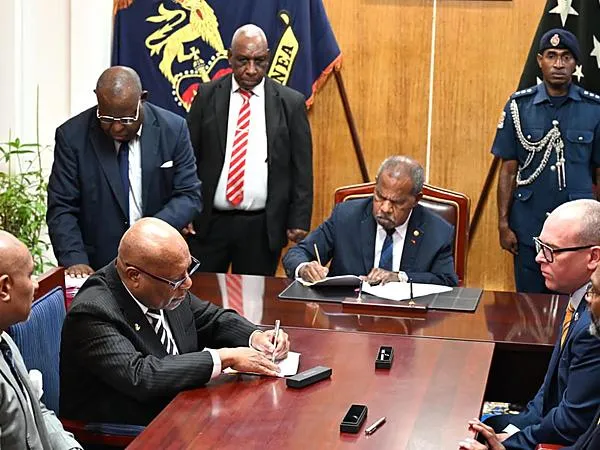
Papua New Guinea has signed a revised Papua LNG Project Agreement aimed at strengthening the project’s commercial viability while protecting the State’s long-term fiscal interests, with a firm deadline now set for a Final Investment Decision (FID) by 15 December 2026.
Petroleum Minister Jimmy Maladina said the revised agreement follows detailed negotiations between the Government and Papua LNG project participants and provides a targeted fiscal support mechanism designed to address weaker market conditions without permanently reducing the State’s overall fiscal take.
“This is a balanced transaction, not a giveaway,” Maladina said. “The arrangement recognises the commercial realities facing a project of this scale while ensuring Papua New Guinea retains appropriate protection and participates in the upside when market conditions are stronger.”
The fiscal mechanism is temporary, reciprocal and capped, with safeguards intended to protect government revenues over the longer term. Royalty and development levy payments to landowners, provincial governments and local-level governments will remain protected under the revised arrangements.
A key component of the negotiated package is an option for a State nominee to acquire an additional 2.5 per cent interest in Papua LNG, on top of the State’s existing entitlement under Section 165 of the Oil and Gas Act.
The associated PNG LNG arrangements will also provide an improved wellhead-value basis for calculating royalty and development levy payments, potentially strengthening the revenue base for government and project-area stakeholders.
The package further includes cheaper gas for domestic electricity generation and free gas to generate up to one megawatt of discounted electricity for landowner communities in and around Caution Bay.
The Government views Papua LNG as a major investment capable of generating construction and operational employment, contracts for local businesses, infrastructure development and substantial future government revenue.
For Papua New Guinea’s private sector, a move into development would create opportunities across construction, logistics, transport, accommodation, catering, engineering, security and other supporting services.
Maladina said the Government’s objective during negotiations was to establish a commercially viable pathway to development while maintaining safeguards for the State.
“Papua LNG represents a major investment in Papua New Guinea. It has the potential to generate employment, business opportunities, infrastructure investment and substantial future government revenue,” he said.
FID deadline
The revised arrangements are conditional on Papua LNG achieving an affirmative FID by 15 December 2026.
Maladina described the date as a “drop-dead deadline”, signalling that the negotiated fiscal arrangements are intended to secure a firm investment commitment rather than provide an open-ended concession.
“The State has provided this negotiated pathway for one clear purpose: to secure a firm investment commitment and move Papua LNG into development,” he said.
The signing now shifts attention to the project participants and the remaining work required to reach FID. If achieved, the decision would mark a significant step towards construction and development of another major gas investment in PNG, with potential flow-on impacts for government revenues, employment, local contracting and infrastructure spending.
For the Government, the immediate priority is therefore to convert the revised agreement into a firm investment decision by the December deadline while ensuring the State and affected communities retain an appropriate share of the project’s long-term economic benefits.
Papua New Guinea's petroleum sector has taken another step towards expanding local participation in the country's growing gas industry, with Petroleum Minister Jimmy Maladina approving the National Content Plan (NCP) for the Pasca A Gas Project.
Maladina approved the plan following a technical review and compliance assessment by the National Petroleum Authority (NPA).
The NCP was submitted by Twinza Oil (PNG) Ltd., operator of the Pasca A Gas Project, and approved under Section 129 of the Oil and Gas Act 1998.
The approval establishes a framework intended to increase opportunities for Papua New Guinean workers and locally owned companies to participate in the development and future operation of the project.
Maladina said the plan would support education, training, skills development and employment while increasing the participation of PNG-owned businesses and communities in the supply and procurement of goods and services.
“This approval gives effect to the objectives and principles of the Petroleum Sector National Content Policy 2023 and is intended to ensure that the development and implementation of the Pasca A Gas Project delivers meaningful and sustainable national benefits to Papua New Guinea,” he said.
Local business participation
The approved NCP provides opportunities for Papua New Guinean citizens and locally owned companies to participate in professional and technical services required by the project.
These include legal, accounting, financial, payroll and other professional services, creating potential opportunities beyond traditional construction and resource-sector contracting.
The plan also provides for targeted investment in areas with potential to deliver longer-term economic and social benefits, including health care, education, critical infrastructure, research and development, and technology.
For local businesses, implementation of the plan could create opportunities to build capacity, develop supply-chain relationships and position PNG-owned companies to compete for contracts across the project's different development phases.
The government expects communities in Gulf Province, as well as Papua New Guineans more broadly, to benefit from the project alongside other major gas developments, including Papua LNG.
Pasca A therefore adds to the potential pipeline of activity in PNG's petroleum sector and could generate demand for local labour, services, logistics, procurement and supporting businesses as the project progresses.
Maladina said implementation of the NCP would promote the progressive development of national content throughout the relevant licence and project phases.
The focus on national content is also intended to ensure that economic benefits from resource development extend beyond the project operator and into the wider domestic economy.
Quarterly monitoring during construction
The approval comes with regulatory conditions designed to ensure that commitments contained in the NCP are implemented and monitored.
Twinza will be required to submit quarterly status reports and implementation updates during the construction phase through the Petroleum Sector National Content Office to the NPA. During production, the company will be required to submit annual status reports.
The reports will allow the NPA to assess progress against the commitments, targets, programmes and outcomes contained in the approved plan.
Twinza must also maintain complete records of NCP implementation and facilitate monitoring, verification, audits and compliance reviews undertaken by the NPA.
The company is required to provide information and reasonable assistance necessary for regulators to verify compliance.
The approval remains subject to ongoing regulatory monitoring and compliance with the NCP, the Oil and Gas Act 1998 and applicable petroleum-sector policies.
For PNG's private sector, the effectiveness of the plan will ultimately depend on how successfully local companies can access procurement opportunities, develop the required capabilities and participate throughout the Pasca A project lifecycle.
The Mineral Resources Development Company (MRDC) will resume the second Tuguba Regional Director Election after long-running leadership disputes among the remaining Tuguba clans were resolved through a court-supervised mediation process.
MRDC said the resolution of disputes involving the Jugu, Tabu and Ware 2 clans marked the completion of its programme to establish clan bank accounts and elect directors to the Hides Petroleum Development Licence 1 (PDL1) Corporate Trustee.
The programme, launched in 2024, had reached 84% completion before being suspended in early 2025 following leadership disputes within the Tuguba clans and court injunctions.
A court-ordered mediation process began in April 2025, with MRDC working alongside the National Petroleum Authority, the Office of the Solicitor General and the PNG Electoral Commission under the independent chairmanship of Chief Magistrate Mark Pupaka. Independent observers Fabian Pok and Sandy Talita also participated in the process.
MRDC said all restraining orders had been lifted by October 2025, allowing mediation to continue.
The company said the successful resolution of leadership issues in the Jugu, Tabu and Ware 2 clans meant all eight Tuguba clans had now reached agreement, bringing the programme to 100% completion. This exceeded the required 75% participation threshold needed to proceed with the second regional director election.
The elected clan chairmen are Howard Lole for the Jugu clan, Walabe Mara for the Tabu clan and Agobe Potape for the Ware 2 clan.
Petroleum Minister Jimmy Maladina formally endorsed the mediation outcome on 29 June, clearing the way for MRDC to resume the election process.
MRDC said it would now restart the second Tuguba Regional Director Election, facilitate the appointment of a Tuguba representative to the Hides PDL1 Corporate Trustee Board and complete the opening of bank accounts for the remaining beneficiary clans.
The company also plans to begin preparations for benefit payments by opening sub-clan bank accounts for clans that are ready.
MRDC said the mediation framework successfully used during the Hiwa Regional Director Election would also guide the Tuguba process.
The company thanked stakeholders for their cooperation during the 24-month engagement and said ensuring the timely and transparent distribution of benefits to eligible Hides PDL1 beneficiaries remained its highest priority.
MRDC added that any leaders who continued to challenge the process and delay benefit payments would be accountable to their communities for those delays.
Prime Minister James Marape has assured landowners and provincial governments involved in the PNG LNG Project that their agreed equity interests will remain intact as the government finalizes a structure to manage long-term benefits from the country's flagship liquefied natural gas project.
Speaking during Question Time in Parliament, Marape said the government was continuing consultations with affected provinces and beneficiary groups and would not impose a final structure without their participation.
His remarks came in response to questions from Hiri-Koiari MP Keith Iduhu, who sought an update on outstanding landowner benefits under the PNG LNG Project, particularly for communities in Central Province.
Marape said the restructuring process remained ongoing and emphasized that the equity allocated to beneficiaries under the Kokopo Umbrella Benefits Sharing Agreement would not be reduced.
"There will be no dilution whatsoever of the total stake allocated to the beneficiaries," he told Parliament.
"The total stake was agreed under the Kokopo Umbrella Benefits Sharing Agreement, and it will not be diluted or transferred to other beneficiary groups."
The prime minister said the government had already begun discussions with governors from the affected provinces, recognizing their constitutional role in determining how provincial equity interests should be managed.
He said provincial executive councils and provincial assemblies would be responsible for deciding whether their equity should form part of a unified investment structure or be managed independently.
"The Provincial Executive Councils and Provincial Assemblies must decide what is best for their respective provinces and communicate their preferred option to the National Government," Marape said.
He encouraged Central Province leaders, including Iduhu as a member of the Provincial Assembly, to work with the provincial government to reach a collective decision.
Marape said the government's proposal aims to safeguard the long-term value of the 4.27% equity interest in the operational PNG LNG Project while generating sustainable wealth for landowners and provincial governments.
He described the stake as a premium asset that could continue producing income for future generations if professionally managed.
"To the people of the five beneficiary provinces, the 4.27 per cent ownership in a de-risked PNG LNG Project is a premium asset," he said.
"You can choose to distribute the proceeds each year, or you can place the interest in a properly managed structure that continues earning and creating wealth perpetually for the people."
Marape cited the Mineral Resources Development Company (MRDC) as an example of how consolidated landowner assets can generate stronger long-term returns through professional investment and management.
He said the objective was not to alter existing entitlements but to protect and grow the asset so benefits continue flowing to landowners, provincial governments and future generations.
The prime minister said provincial governments have now been asked to evaluate the available options and advise the national government of their preferred arrangements.
He reiterated that provinces wishing to manage their equity independently would be free to do so, provided the decision reflected the collective interests of landowners and local communities.
Marape said consultations with provincial leaders and recognized beneficiary groups would continue before any final structure is adopted, reaffirming the government's commitment to honoring legally agreed benefits and strengthening landowner participation in major resource projects.
Papua New Guinea expects the US$14.5 billion (approximately K58 billion) Papua LNG Project to reach a final investment decision (FID) before the end of 2026, as the government accelerates petroleum sector reforms aimed at attracting investment and expanding production.
Petroleum Minister Jimmy Maladina announced the update during the PNG CORE National Content Conference, held as part of PNG Resources Week 2026 at APEC Haus in Port Moresby on Thursday. Addressing industry leaders, investors, development partners, provincial governments and landowner representatives, he said PNG's petroleum industry is entering a critical phase as global demand for secure and reliable energy supplies continues to grow.
Maladina said geopolitical instability, particularly the conflict in the Middle East, has heightened global concerns over energy security, placing Papua New Guinea in a favourable position to supply international markets.
Despite global uncertainty, he said PNG remains an attractive destination for petroleum investment because of its proven resource base, competitive fiscal regime, experienced workforce and commitment to responsible resource development.
Major projects progressing
Reviewing progress over the past year, Maladina said the government is working with developers to advance the Papua LNG and Pasca Gas projects towards final investment decisions, while the proposed Western Energy Project is undergoing detailed due diligence.
He said the Papua LNG Project Development Forum, launched on 10 July, is progressing well, with negotiations expected to conclude through the signing of a Development Agreement within the next month.
The agreement is a key prerequisite before the government can issue a Petroleum Development Licence, enabling the project developer and its joint venture partners to proceed with a final investment decision.
Once approved, construction is expected to continue over the next five years.
Maladina said the Papua LNG project will inject substantial investment into Papua New Guinea's economy during construction while creating opportunities for local businesses and workers.
He said the government expects project developers, joint venture partners and contractors to prioritise local employment, skills development and business partnerships throughout the construction phase and during the project's operational life.
Exploration remains active
Maladina said exploration activity remains strong across Papua New Guinea, highlighting the ongoing drilling of the Mailu-1 deepwater exploration well through a partnership between TotalEnergies and PETRONAS.
He said drilling is progressing towards the targeted reservoir, with the government hopeful the coming weeks will deliver encouraging exploration results.
The minister also announced that offshore petroleum blocks in the Gulf of Papua have been reserved for future auction once the government completes its petroleum fiscal reforms, with the country's first offshore licensing round expected to be launched next year.
He also identified further exploration opportunities across existing Petroleum Prospecting Licences in the Papuan Basin, Gulf of Papua and New Ireland Basin.
Maladina urged Petroleum Prospecting Licence holders to fulfil their approved work programmes by undertaking genuine exploration activities while giving priority to Papua New Guinean workers, businesses and service providers before sourcing expertise overseas.
He warned that the government would strictly enforce National Content requirements across all petroleum exploration and development activities.
Production Sharing Contract reforms
Maladina said the government remains committed to modernising Papua New Guinea's petroleum governance framework while maintaining an attractive investment environment.
A key initiative is the proposed Production Sharing Contract (PSC) Framework, which aims to provide greater regulatory certainty, improve transparency and enhance the country's international competitiveness while ensuring the State receives an equitable share of value generated from its petroleum resources.
Consultations on the PSC Reform Policy began in October 2025 and concluded in March 2026, with submissions from PNG CORE and industry stakeholders in Papua New Guinea and overseas.
Maladina thanked PNG CORE for supporting the consultation process, saying the reforms are intended to deliver better outcomes for both the State and industry. Legislation to implement the new PSC framework is expected to be introduced before the end of the year.
Coordinated gas development
The government is also pursuing coordinated development of stranded and marginal gas resources in Western and Gulf provinces through shared infrastructure and integrated project planning.
Maladina said many gas discoveries have remained undeveloped for years and Petroleum Retention Licence holders are now expected to advance their projects toward commercial production.
He warned that licence warehousing would no longer be tolerated, confirming that his policy directive under the Oil and Gas Act requiring coordinated gas development is already in effect.
Failure to comply with lawful statutory directions, he said, could result in the forfeiture of petroleum licences.
Downstream petroleum opportunities
Maladina also announced that the National Petroleum Authority (NPA) is preparing a comprehensive Downstream Petroleum Policy and Regulatory Framework to support the expansion of the country's downstream petroleum industry.
Once endorsed by the National Executive Council, the policy will be released for public consultation.
He said downstream development offers significant opportunities to expand domestic processing, strengthen Papua New Guinea's energy security, stimulate industrial growth, create employment and business opportunities, and attract additional investment.
Strengthening landowner benefit sharing
The National Petroleum Authority is also developing a strengthened Beneficiary Management and Social Licensing Policy to address long-standing issues involving social mapping, landowner identification and benefit distribution.
Maladina said the reforms are intended to improve transparency and governance while ensuring legitimate resource owners receive their benefits without delaying project implementation.
He noted that although the State owns Papua New Guinea's petroleum resources, customary landowners retain ownership of the land where those resources are located.
The government and project developers, he said, must continue recognising customary land rights through proper consultation, land access agreements, compensation, local content participation and equitable benefit-sharing arrangements.
National Petroleum Authority takes shape
Maladina said 2026 will mark the full establishment of the National Petroleum Authority, with implementation scheduled during the third and fourth quarters of the year.
He described the authority as a major institutional reform that will strengthen petroleum regulation, technical expertise, policy development, petroleum data management and stewardship of the country's petroleum resources.
The NPA Board has approved the authority's organisational structure, which will be submitted to the Department of Personnel Management for review and endorsement. Recruitment for new positions is expected to begin after August, once statutory approvals have been secured.
Maladina said the authority has been designed to operate in line with international regulatory standards. Its expanded mandate will include a dedicated National Content Division to oversee implementation of the government's Petroleum Sector National Content Policy, support future legislation and strengthen compliance across the industry.
National Content remains a priority
Maladina reaffirmed the government's commitment to increasing Papua New Guinean participation across the petroleum value chain by creating more opportunities for local businesses, employment, training, skills development and technology transfer.
He urged licence holders, petroleum operators and contractors to fully comply with the government's local and national content requirements, warning that companies failing to support these objectives would not be regarded as operating in good standing in Papua New Guinea.
Maladina also encouraged operators to invest in local workforce development and supplier capability, saying a stronger national skills base and business sector would enhance the industry's long-term competitiveness and deliver broader economic benefits.
Promoting investment
Looking ahead, Maladina announced that the Ministry for Petroleum and the National Petroleum Authority, in partnership with PNG CORE, will host a dedicated petroleum investment session during the APEC Economic Leaders' Meeting 2026 in Shenzhen, Guangdong Province, China, in November.
The event will showcase investment opportunities across Papua New Guinea's upstream, midstream and downstream petroleum sectors, as well as specialist service industries, while providing a platform to engage directly with global energy companies and investors.
Maladina said the government intends to use the forum to reinforce Papua New Guinea's position as a competitive destination for petroleum investment amid growing global demand for secure and reliable energy supplies.
Building a competitive petroleum sector
Maladina acknowledged the leadership of Prime Minister James Marape and the Marape-Rosso Government in advancing major petroleum projects, implementing sector reforms and strengthening institutions responsible for regulating the industry.
He said the government remains committed to building a modern, competitive and sustainable petroleum sector capable of attracting long-term investment, increasing national participation and delivering lasting economic benefits for Papua New Guinea.
"Together, we have an opportunity to transform Papua New Guinea into a globally competitive petroleum producer that delivers sustainable growth, creates opportunities for our people and secures lasting prosperity for future generations," he said.
The National Government has strengthened representation for communities affected by the Papua LNG project, with Petroleum Minister Jimmy Maladina assuring landowners and local leaders that every impacted district and province will have a voice during the Papua LNG Development Forum.
Speaking at APEC Haus on Wednesday, 8 July, the Minister outlined the government's approach to the development forum, describing it as a key process required under the Oil and Gas Act before discussions on benefit-sharing arrangements can proceed.
The forum, hosted by the Office of the Minister for Petroleum, commenced this week in Port Moresby after plans to launch it in Kerema, Gulf Province, were changed due to infrastructure constraints and other logistical considerations. The decision to relocate the forum received Cabinet endorsement.
Minister Maladina said that while stakeholder consultations had already begun, the forum would be officially launched by Prime Minister James Marape later this month, when the Director's Proposal—a mandatory requirement under the Oil and Gas Act—would be presented to all stakeholders.
Following the presentation, participants will observe a seven-day consultation period before formal negotiations begin.
"We will adjourn and give time to all the stakeholders in this project to consult their advisers, consult their people and then return after seven days," Minister Maladina said.
"The facilitators will then begin discussions with the respective interest groups to consider any responses or issues they wish to raise regarding the Director's Proposal."
The Minister said the government had convened a meeting with political leaders from the affected provinces and districts the previous day to address concerns over representation within the forum.
The meeting involved leaders from Gulf and Central provinces, including representatives from Kikori, Kerema, Kairuku and Hiri-Koiari districts, which form part of the Papua LNG project footprint.
Mr Maladina said misinformation suggesting some communities would be excluded from the process needed to be addressed.
"I want to make it very clear that all your voices are represented in the development forum," he said.
"I don't want misleading information going out that people do not have a voice in this process."
While noting that legislation limits the number of individuals who can formally participate in the forum, the Minister said recent amendments to the Organic Law on Provincial Governments and Local-level Governments had broadened representation by allowing districts to participate directly.
He said the reform recognised that not every affected individual could be invited into the negotiations and instead empowered district leadership to represent wider community interests.
To further strengthen participation, Minister Maladina announced additional representation for districts.
Each affected District Development Authority (DDA) has now been authorised to nominate two additional representatives from within the district, including individuals outside the immediate project footprint, to ensure broader community concerns are heard.
"I have used my powers to increase that representation so people who feel they have been left out now have an opportunity to bring their concerns into the forum," he said.
The Minister also outlined the importance of the development forum in determining how project benefits will be distributed once the State's financial interest in the project is established.
Under existing legislation, 20% of the State's share of project benefits is allocated to impacted landowners, local-level governments, district administrations and provincial governments.
Minister Maladina acknowledged that while legislated benefits must remain within the legal framework, the government remained open to considering additional concerns raised through the consultation process.
"We will consider your proposals and your interests," he said.
"If you believe you have been left out, bring your concerns through the appropriate representatives, whether through your DDA, LLG, provincial government or directly through the forum."
The Minister also highlighted the calibre of the independent facilitation team overseeing the consultation process, stressing that its members had been appointed for their experience rather than as representatives of the government.
The panel is chaired by former Petroleum Minister Arthur Somare, who played a leading role during the PNG LNG development process. Other facilitators include former Chief Secretary and Ambassador Sir Isaac Lupari, alongside experienced legal and public sector representatives.
"They are not from government," Minister Maladina said.
"They have been appointed because of their knowledge and experience. Their role is to listen to stakeholders, provide guidance on legal and policy matters, and bring those issues back to government."
He added that communities in Gulf and Central provinces also benefit from strong political representation at the national level, with ministers and Members of Parliament representing the affected regions participating in government decision-making.
The Papua LNG Development Forum is a critical milestone in progressing one of PNG's largest proposed resource developments, providing the formal platform through which government, landowners and provincial stakeholders negotiate the distribution of project benefits before development advances.
Ok Tedi Mining Ltd (OTML) has committed K30 million under Papua New Guinea's Tax Credit Scheme to help fund the construction of the Sisimakam–P'nyang Road, a strategic infrastructure project that will provide road access to the proposed P'nyang LNG development.
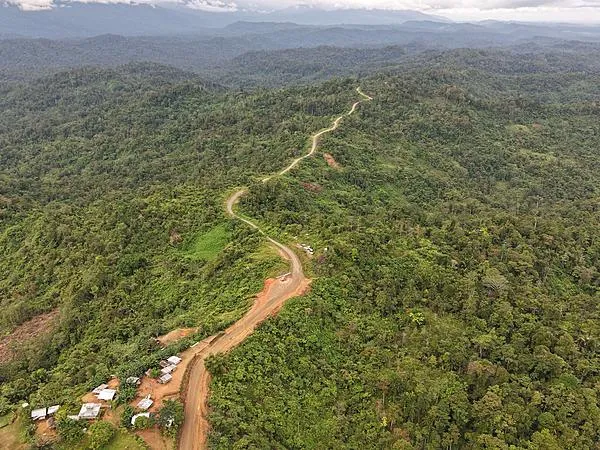
The 32-kilometre road carries an estimated cost of K150 million and is primarily financed through an Infrastructure Tax Credit Scheme arrangement between ExxonMobil PNG and the Papua New Guinea government.
Construction will be undertaken in three phases, beginning with 11 kilometres of early works, followed by a 23-kilometre extension to complete the missing link to the P'nyang project site. The final phase will involve sealing the entire road from Sisimakam to the gas project.
The road is expected to improve access to the P'nyang LNG Project, which contains about 4.6 trillion cubic feet of proven natural gas reserves and is regarded as Papua New Guinea's next major liquefied natural gas development alongside the existing PNG LNG project in Hela Province.
OTML Acting Chief Executive Officer Alan Bong said the investment reflected the company's commitment to ensuring resource development delivers lasting benefits for communities and the wider economy.
"What is the value of extracting copper and gold if it does not positively impact the lives of our people?" Bong said.
"Our focus is on ensuring that our operations contribute meaningfully to national development, empower local communities, and support the country's future growth under the Take Back PNG agenda."
The company said the Sisimakam–P'nyang Road forms part of its broader infrastructure programme under the Tax Credit Scheme, which supports the delivery of public infrastructure in mining-affected and remote areas.
As of the end of 2025, OTML said it had invested about K648.86 million across Tax Credit Scheme projects, including transport and other infrastructure aimed at improving connectivity and access to essential services.
OTML, a majority state-owned company, operates the Ok Tedi copper, gold and silver mine in Western Province and has been operating in Papua New Guinea for more than four decades. It is also expanding its mining portfolio through the acquisition of the Misima gold project in Milne Bay Province.
Papua New Guinea has welcomed the start of a major offshore oil and gas exploration campaign near Kupiano in Central Province, with Prime Minister James Marape saying the investment underscores international confidence in the country's energy sector.
The exploration programme, led by TotalEnergies and its partner Petronas, involves the drilling vessel Viking and is expected to attract between US$100 million and US$200 million in investment.
Petroleum Minister Jimmy Maladina represented the government aboard the Viking as project partners and stakeholders marked the commencement of drilling operations.
Marape said the campaign demonstrated Papua New Guinea's continued appeal as a destination for global energy investment and highlighted the importance of exploration in sustaining the country's petroleum industry.
"The presence of the Viking offshore near Kupiano is a strong signal of confidence in Papua New Guinea's resource potential," he said.
He said exploration remains the foundation of the country's resource sector, creating opportunities for future discoveries, new projects, employment and government revenue.
Marape added that while major developments such as Papua LNG and the P'nyang Gas Project remain priorities, continued exploration is necessary to support the long-term growth of the petroleum industry.
He said investment in offshore exploration also reflected the need for a stable and competitive investment environment capable of attracting capital for high-risk projects.
"Deep-water exploration requires substantial investment, advanced technology and confidence in the future of our country," Marape said.
The Prime Minister said the government would continue working with industry partners to promote responsible resource development while encouraging further exploration and investment across Papua New Guinea.
ExxonMobil PNG Limited (EMPNG) recently marked a decade of biodiversity partnership under the PNG LNG Project, bringing together government representatives, conservation partners and stakeholders to celebrate progress and reaffirm a shared commitment to protecting the country's rich natural heritage.
The mini-expo, held at Port Moresby Nature Park to coincide with the International Day for Biological Diversity on May 22, showcased the importance of strong partnerships in delivering sustainable conservation outcomes. This year's global theme, "Acting locally for global impact," underscored the role Papua New Guinea plays in safeguarding biodiversity globally.
Delivering the keynote address, ExxonMobil PNG Limited Chairman and Managing Director Dinesh Sivasamboo highlighted the deep connection between Papua New Guinea's biodiversity, its people and their livelihoods.
"Papua New Guinea's natural heritage is among the richest in the world, and it is closely tied to the culture, identity and future of its people," Sivasamboo said. "As we reflect on a decade of partnership, we recognize both the opportunity and responsibility we share in protecting this biodiversity while supporting sustainable development."
Sivasamboo reaffirmed EMPNG's commitment to balancing development with environmental stewardship, noting that collaboration has been central to the success of biodiversity programs delivered under the PNG LNG Project.
Over the past 10 years, these partnerships have supported protected areas, strengthened the capacity of local scientists and conservation rangers, contributed to global conservation data and led to the discovery of 22 new species.
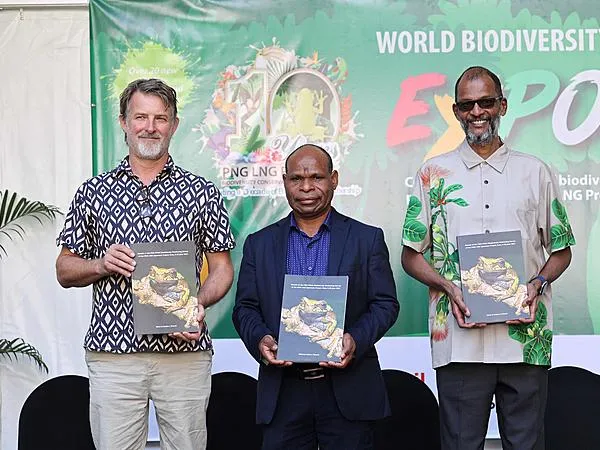
A key highlight of the event was the launch of the PNG LNG Project's 10-year biodiversity monitoring reports and new species publications. Following an overview by independent ornithologist and environmental consultant Dr. Iain Woxvold, the reports were formally presented to government representatives and partners.
The program also featured panel discussions on the establishment of a National Rangers Association and the development of a Papua New Guinea species Red List, alongside exhibitions and interactive engagements with conservation partners and local high school students.
The event concluded with a renewed commitment from all stakeholders to strengthen partnerships and continue efforts to conserve Papua New Guinea's extraordinary biodiversity for future generations.
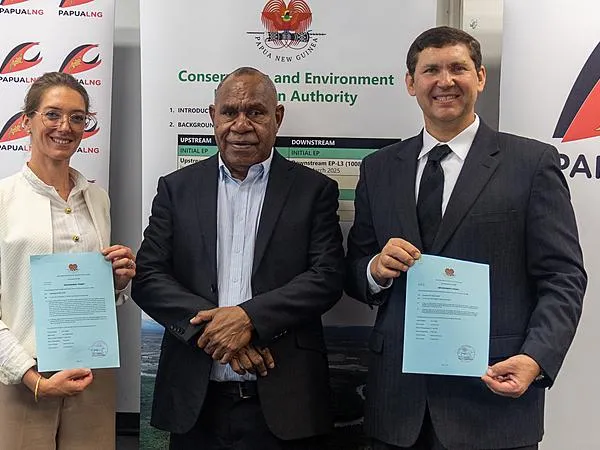
The upstream and downstream operators of the Papua LNG Project have been issued amended environmental permits by the Conservation and Environment Protection Authority (CEPA), following more than seven months of consultation between the regulator and project operators.
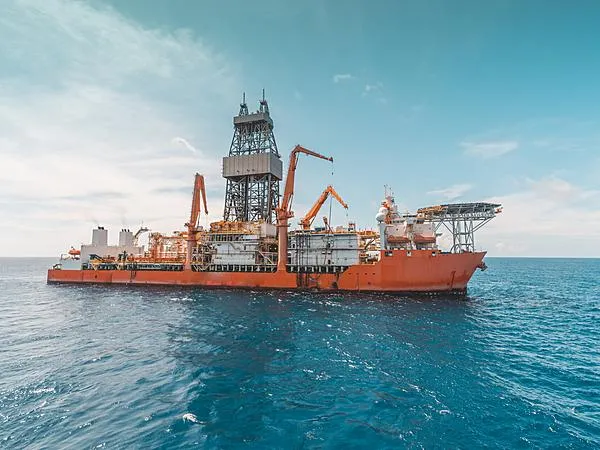
The amended permits were presented on May 29, 2026, following extensive discussions involving CEPA, upstream operator TotalEnergies EP PNG Limited and downstream operator ExxonMobil PNG Antelope Limited.
According to CEPA, the amendments reflect changes to both the upstream and downstream project designs and are expected to reduce potential environmental and community impacts associated with the development.
Michael Wau, executive director of CEPA's Non-Renewable Resources Environmental Protection Wing, said environmental permits are living documents that must be reviewed and updated to strengthen environmental protection, water resource management and biodiversity conservation.
"That is exactly what TotalEnergies EP PNG Limited and ExxonMobil PNG Antelope Limited have done by reviewing the project and requesting amendments to the environmental permits," Wau said.
The original environmental permits, EP-L3 (1008) and EP-L3 (1030), were issued in March and September 2025. They covered a range of planned activities, including the construction and operation of a Catenary Anchor Leg Mooring (CALM) buoy system and associated marine infrastructure.
Since the permits were issued, revisions to the project design have eliminated the need for several originally planned components, including the CALM buoy system, marine exclusion zones and related infrastructure.
Wau said the changes would significantly reduce environmental impacts, particularly in Caution Bay.
"There will be minimal environmental impact as the condensate pipeline, which was initially permitted to traverse Caution Bay, will instead connect with the Santos-owned Kumul Marine Terminal floating storage and offloading facility," he said.
According to CEPA, the amendments will deliver several environmental and community benefits, including:
• Avoiding extended travel times for local communities caused by marine exclusion zones;
• Preventing disruptions to artisanal and subsistence fishing activities; and
• Protecting sensitive marine and coastal habitats, including mangroves, intertidal zones and benthic environments.
"This is a great win for the environment and the people," Wau said.
TotalEnergies EP PNG Limited said it looks forward to continuing its collaboration with CEPA and other government agencies to ensure the Papua LNG Project is delivered in a sustainable, responsible and efficient manner.
"We are committed to delivering Papua LNG to the highest environmental standards in close partnership with CEPA," the company said.
ExxonMobil PNG Antelope Limited Chairman and Managing Director Dinesh Sivasamboo thanked CEPA for its review and approval of the amendments.
"We greatly value this collaboration and the constructive engagement throughout the process to ensure that the Papua LNG Downstream Project is delivered responsibly and in full compliance with the amended environmental permit," Sivasamboo said.
The amended permits are expected to support the continued development of the Papua LNG Project while reducing environmental impacts and preserving access to marine resources for surrounding communities.
Hiri-Koiari MP Keith Iduhu has called for changes to the governance structure of the PNG LNG project's Kroton Equity Option (KEO), arguing that landowners hosting the project's liquefaction plant have been excluded from decision-making despite their contribution to Papua New Guinea's largest resource development.
Speaking in Parliament on 3 June 2026, Keith Iduhu formally presented a petition on behalf of the PNG LNG Plant Site Landowners of Caution Bay and the people of Central Province, seeking what he described as the rightful recognition and control of benefits negotiated under the 2009 PNG LNG Project Umbrella Benefits Sharing Agreement (UBSA).
Addressing Parliament, Iduhu said the petition sought the implementation of commitments already agreed under the landmark benefits-sharing agreement signed in Kokopo.
"The liquefaction plant, the storage tanks, the marine export terminal — the entire commercial engine of the PNG LNG Project — sits on the customary land of our people in the Hiri-Koiari District," Iduhu said following the parliamentary sitting on 4 June.
"Without our land, there is no plant. Without our land, there is no LNG revenue for this nation. Not a single kina," he added.
The petition centres on the Kroton Equity Option, a key component of the Total Benefits Package negotiated under the Kokopo UBSA between the Independent State of Papua New Guinea, the Central Provincial Government, the Hiri Local-Level Government and project area landowners.
Under the agreement, beneficiaries were granted a commercial option over an undivided and fixed 25.75 per cent shareholding in Kroton Limited, which holds the State's equity interest in the PNG LNG Project.
Iduhu said Clause 6.1(a)(ii) of the UBSA entitled beneficiaries to an estimated 4.22 per cent share of the PNG LNG Project interest, later revised to 4.27 per cent.
He noted that under Clause 6.3.2 of the agreement, the 4.27 per cent Kroton Equity entitlement is divided in a 76:24 ratio between the upstream Petroleum Development Licence (PDL) areas and the downstream pipeline and LNG plant areas.
According to Iduhu, the downstream 24 per cent tranche is further allocated among beneficiaries identified under the agreement, with the allocation structure negotiated and signed by all parties in 2009.
"These numbers were not invented today," he said. "It does not belong to the State as a gift to dispense. They were negotiated, agreed and signed in 2009 in the spirit of the National Constitution. They are binding."
Iduhu's concerns stem from National Executive Council (NEC) Decision No. 64 of 2026, which established the governance framework and board composition for the Kroton Equity Option Special Purpose Vehicle (SPV).
He argued that the current arrangement does not provide direct representation for PNG LNG Plant Site Landowners, despite the project's key infrastructure being located on their customary land.
According to Iduhu, the structure provides a dedicated director for Hides PDL landowners and both a dedicated director and a permanent ex-officio seat for Southern Highlands Province, while Plant Site Landowners and Central Province receive no equivalent representation.
"Yet NEC Decision No. 64/2026 has established a KEO SPV Board that gives our Plant Site Landowners no dedicated director and gives the Governor of Central Province no permanent ex-officio seat," he told Parliament.
"The people on whose land the plant physically stands — the largest single downstream landowner group in the entire agreement — are left without a seat of their own," he added.
Describing the arrangement as unjust and unconstitutional, Iduhu said he would continue advocating for the affected landowners.
The petition calls on Parliament to direct the NEC to amend the governance arrangements by either creating a ring-fenced governance structure within Kumul Petroleum Holdings Limited (KPHL), allowing Plant Site beneficiaries full control of their dividends and equity interests, or establishing a separate Plant Site Kroton Equity Option SPV governed entirely by the beneficiaries.
It also proposes that KPHL be reimbursed only for independently audited costs incurred in managing the equity, without any profit margin.
"We are not asking for someone else's share," Iduhu said. "We are asking to govern and control what is already ours — what was negotiated and signed at Kokopo in 2009. The State does not gift us this equity. It owes it to us."
Iduhu thanked communities from Boera, Papa, Rearea and Porebada for their continued support.
The petition was formally lodged on 2 June and now awaits consideration by Parliament and the NEC.
The issue is expected to attract significant attention across the resource sector as discussions continue over the distribution and governance of benefits arising from the PNG LNG Project, one of Papua New Guinea's largest sources of export revenue and foreign investment.
Follow on LinkedIn:
PNG Business News
Be the "First" to get our exclusive Digital Magazine & Weekly Newsletter.