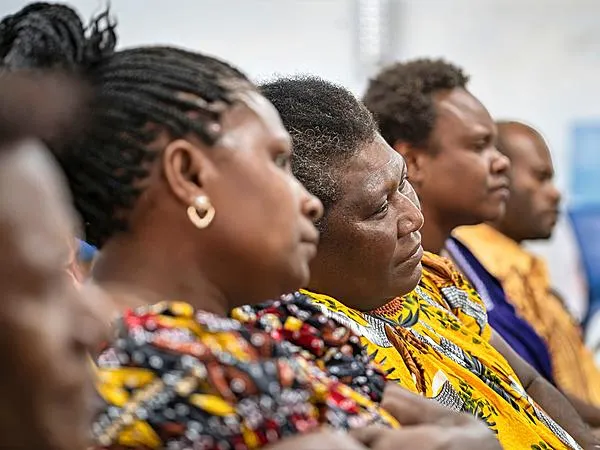
Thirty executives of the Ladolam Pit Association (LPA) linked to the Lihir Mining Project have completed a series of capacity-building courses aimed at strengthening governance, leadership and financial management among resource owners.
The participants received certificates of attainment on March 26 following a 10-day programme conducted from March 16 to 25, with training sponsored by the Mineral Resources Authority (MRA).
The courses covered good governance, transparency, leadership and financial literacy, reflecting efforts to address longstanding gaps in landowner capacity to manage business interests, royalties and other benefits derived from mining projects.
The MRA said similar programmes have been implemented for landowners involved in other projects, including Hidden Valley and Simberi, as part of a broader strategy to enable resource owners to make informed decisions and improve their livelihoods.
Training was delivered by several institutions, including the Centre for Excellence in Financial Inclusion for financial literacy, the PNG Institute of Directors for directorship training, the Institute of Banking and Business Management for leadership, and the Somare Institute of Leadership and Governance for governance and administration.
LPA chairlady Monica Kuten acknowledged the support of the MRA, noting that the programme had strengthened participants’ understanding of financial literacy and other key areas.
The MRA said it remains committed to rolling out similar initiatives across the country, in line with the government’s policy objective of ensuring resource owners receive a fair share of benefits from extractive projects while improving their standard of living.
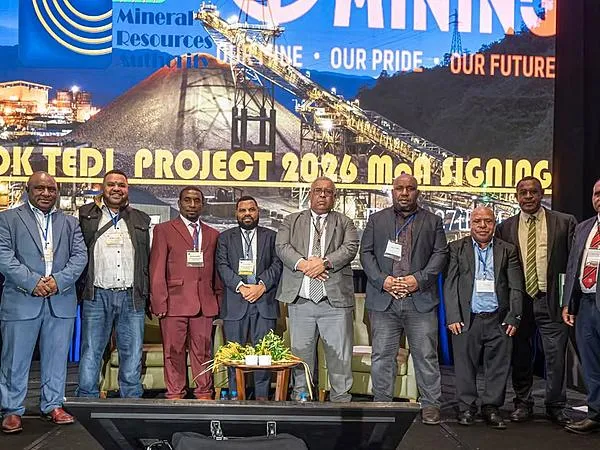
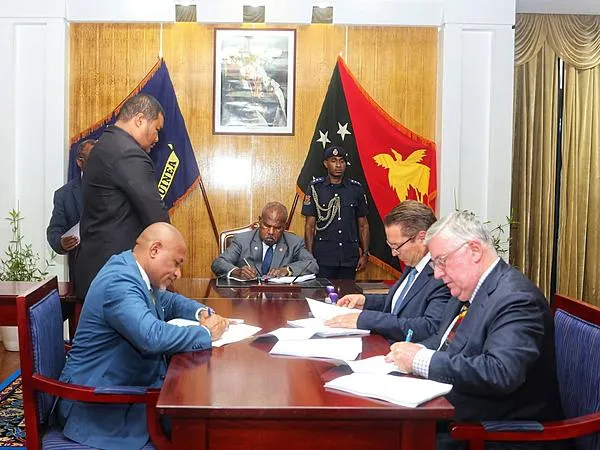
Three of the four parties to the Ok Tedi Mining Project Community Development Agreement (CDA) have signed the final agreement, marking a milestone after five years of negotiations, while the Fly River Provincial Government withheld its signature pending further discussions.
The signing ceremony, held at the Stanley Hotel in Port Moresby and attended by about 300 stakeholders, brought together representatives of the State, the Star Mountains Local Level Government (LLG) and the Mt Fubilan Resources Association, which represents landowners.
The Fly River Provincial Government did not sign, citing concerns with aspects of the agreement, but indicated its willingness to engage further with the State team.
Mining Minister Solen Loifa signed on behalf of the State, while Mt Fubilan Resources Association chairman Simon Umiakim and Star Mountains LLG president Samuel Mereng signed on behalf of landowners and local government respectively. Landowner leaders signed as witnesses.
Loifa said the agreement reflects the government’s policy direction that resource owners should receive greater benefits from the country’s natural resources. He noted that the National Executive Council had approved an additional seven per cent equity in the Ok Tedi mine for the Fly River Provincial Government, increasing its total stake to 40 per cent from 33 per cent.
He said the agreement was significant for communities in the Star Mountains who had long awaited tangible benefits from resource extraction.
Acting managing director of the Mineral Resources Authority, Harry Kore, described the signing as a defining moment for landowners and affected communities, who are expecting improved services and outcomes from the agreement.
Kore said the agreement carries expectations and obligations for all parties, noting that communities were focused on outcomes rather than the process itself.
He said the CDA process had been rigorous and, at times, difficult, with stakeholders navigating differences and challenges over the course of negotiations. However, he said sustained engagement and commitment had enabled parties to reach agreement.
Kore also acknowledged the contributions of stakeholders involved in the process, saying their efforts had made the milestone possible.
Members of Parliament from Western Province, including North Fly MP James Donald, Middle Fly MP Mai Maso Hewabi and Delta Fly MP Agena Gamai, attended the ceremony, along with other national and provincial leaders
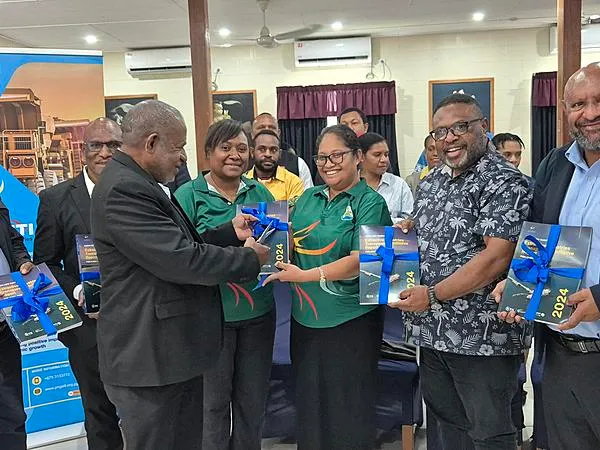
PNG CORE has commended the Papua New Guinea Extractive Industries Transparency Initiative (PNG EITI) on the official launch of its FY2024 Annual Report, marking an important milestone as Papua New Guinea prepares for its upcoming EITI Validation, scheduled to commence in April 2026.
The report was launched during the Multi-Stakeholder Group (MSG) first-quarter meeting held at Tuna Bay in Port Moresby on Thursday, March 26, with representatives from government, industry and civil society in attendance.
PNG CORE described the FY2024 Annual Report as a comprehensive and timely publication that provides critical insights into the performance of Papua New Guinea’s extractive sector.
The report outlines revenue contributions from the mining, oil and gas industries, as well as beneficial ownership disclosures and key initiatives aimed at strengthening transparency, accountability and equitable resource management.
Kassman, Senior Vice President of PNG CORE, said the organisation recognises the commitment demonstrated by the PNG EITI National Secretariat and the leadership of MSG members in advancing transparency and accountability in the management of the country’s oil, gas and mineral resources.
“The PNG EITI report clearly illustrates the continued importance of the mining and petroleum sector, highlighting its contribution to government revenue, exports, jobs and community benefits, while reinforcing the need for transparency and accountability. PNG CORE commends the work of all stakeholders in the EITI process,” Kassman said.
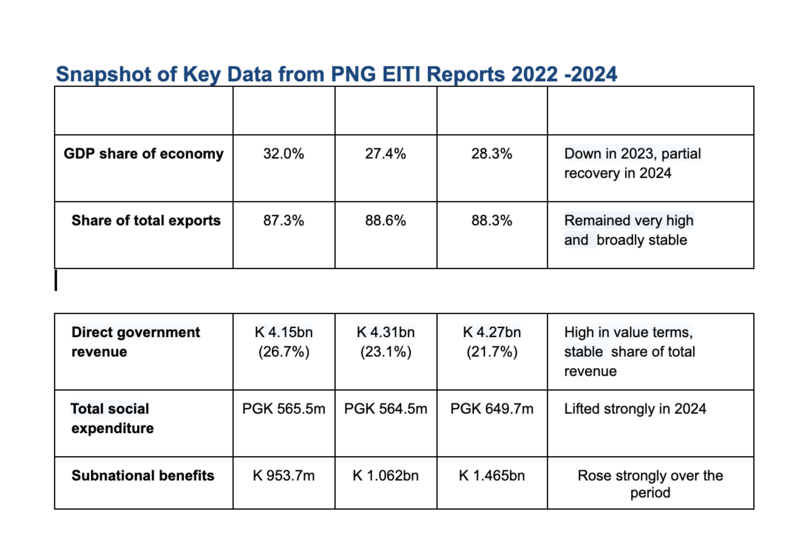
He added that PNG EITI reports from 2022 to 2024 reaffirm the sector’s central role in the economy. While there was a slight dip in 2023, the sector recovered in 2024, with export contributions remaining strong and government revenues consistently exceeding K4 billion. The rebound was supported by improved operations, including the reopening of Porgera.
PNG CORE also encouraged civil society organisations, government agencies, the private sector, resource owners and the general public to download and review the report from the PNG EITI website, noting that the PNG CORE website also provides a link.
The Papua New Guinea Chamber of Resources & Energy (PNG CORE) is the peak industry body representing the mineral resources and energy sectors in Papua New Guinea. Its mission is to foster understanding, generate knowledge and build relationships that enable the country to realise sustained nation-building benefits from its natural resources.
Autonomous Bougainville Government President Ishmael Toroama has proposed the creation of a mining reserve in the Eivo–Torau–Torokina region, aiming to control licence activity and prioritise development of the Panguna project.
The proposal, issued through the Bougainville Mining Advisory Council, covers about 465 square kilometres and is intended to guide a more coordinated approach to resource development.
Toroama said the reserve would restrict new exploration and mining applications, allowing the government to focus on existing priority projects.
“The purpose is to ensure orderly development of the sector while safeguarding national interests,” he said. Toroama flagged rising competition among companies seeking exploration licences in the area, warning that overlapping interests have begun to create divisions within local communities.
“This is a matter of serious concern … the government is taking a responsible approach to preserve unity, social stability and national interest,” he said.
The move signals a shift toward tighter state control over resource allocation in Bougainville as interest in the region’s mineral potential grows.
The proposed reserve is also intended to give the government policy space to advance amendments to the Bougainville Mining Act 2015. Toroama said the review aims to establish a “modern and fit-for-purpose” legal framework to govern future mining activity.
Public consultations are open until May 4, with the government required to consult parliament before a final decision is made.
Toroama said the process will follow legal requirements under existing mining legislation, with stakeholder input forming part of the final determination.
The proposal underscores the government’s focus on the Panguna project as the centrepiece of Bougainville’s economic strategy, while seeking to manage competing commercial interests and maintain social cohesion.
The government said it remains committed to ensuring transparency and inclusive decision-making in the management of natural resources.
Great Pacific Gold Corp. reported new drilling results from the Kavasuki target at its Wild Dog project in Papua New Guinea, including an intercept of 38.4 metres at 2.23 grams per tonne gold equivalent.
The results, from drill hole KVH-03 at the Sinivit–Kavasuki trend within the Wild Dog Project, include higher-grade zones of 2.23 metres at 10.31 g/t AuEq and 2.20 metres at 16.24 g/t AuEq.
The company said the results confirm a revised west to west-northwest dipping structural model and demonstrate continuity of near-surface mineralisation approximately 1 kilometre north of the Sinivit deposit.
System continuity and scale
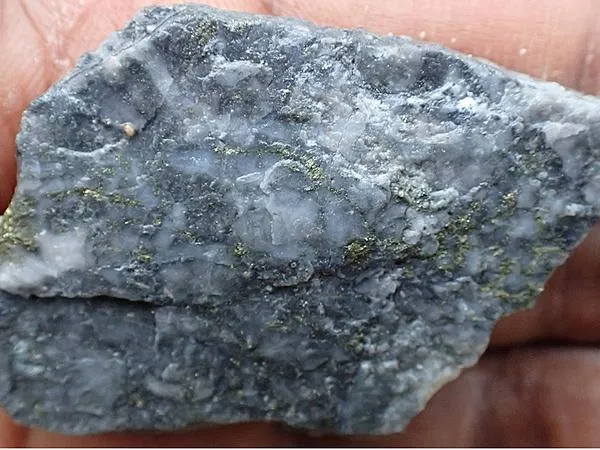
Great Pacific Gold said the results support a structurally controlled epithermal gold system characterised by quartz veining, silica flooding and hydrothermal brecciation, with sulphide mineralisation dominated by pyrite.
“The broad zone of mineralisation intersected, with higher-grade internal zones, is consistent with earlier drilling and confirms a coherent, structurally controlled system with strong continuity,” said Callum Spink., Vice President Exploration.
Follow-up drilling in hole KVH-04 intersected around 60 metres of similar alteration and mineralisation, although assay results are pending. The hole was drilled approximately 20 metres down-dip from KVH-03 to test vertical continuity.
Spink said the consistency between drill holes strengthens confidence in the scale of the system.
“The consistency and scale of mineralisation between holes provides additional confidence in the continuity of the system,” he said.
District-scale potential
Kavasuki lies along strike from the Sinivit deposit within a 15-kilometre structural corridor that hosts multiple epithermal gold targets and porphyry copper-gold potential.
Spink said geological similarities between Kavasuki and Sinivit suggest both may form part of a broader district-scale system.
“We are increasingly seeing strong geological similarities between the two areas, supporting the interpretation that they represent different expressions of the same mineralised system,” he said.
Drilling is continuing with hole KVH-05, with the focus shifting towards identifying controls on grade distribution and targeting higher-grade zones within the system.
The Wild Dog project forms part of Great Pacific Gold’s broader exploration portfolio in Papua New Guinea.
Great Pacific Gold Corp. said it plans to raise up to $15.04m through a public offering to support its gold-copper exploration projects in Papua New Guinea and for general corporate purposes.
The Vancouver-based company has entered into an agreement with Haywood Securities Inc., acting on behalf of a syndicate of agents, to offer up to 32 million units at $0.47 each.
Each unit will comprise one common share and one-half of a warrant, with each whole warrant exercisable at $0.70 per share for a period of 24 months following closing.
The offering will be conducted on a “commercially reasonable efforts” basis under a prospectus supplement to the company’s base shelf prospectus dated March 19, 2026. The supplement will be filed across Canadian jurisdictions, excluding Quebec, with additional placements permitted in the United States and offshore markets subject to applicable securities laws.
The agents have also been granted an over-allotment option to purchase up to an additional 15% of the units offered, exercisable up to 48 hours prior to closing.
Proceeds from the offering will be used primarily to advance the company’s exploration portfolio in Papua New Guinea, alongside working capital requirements.
The offering is expected to close on or about April 2, 2026, subject to customary conditions including approval from the TSX Venture Exchange.
PNG exploration focus
Great Pacific Gold is focused on developing a portfolio of gold-copper projects in Papua New Guinea, with several exploration-stage assets.
Its flagship Wild Dog project, located in East New Britain, hosts a large epithermal system extending approximately 15km, alongside a nearby porphyry target. Drilling has returned high-grade intercepts, with further drilling planned through 2026.
The company’s Kesar and Arau projects in the Eastern Highlands are located near existing mining tenements operated by K92 Mining Inc., with exploration indicating potential extensions of known mineralised systems.
Great Pacific Gold also holds the Tinga Valley project as part of its broader PNG exploration portfolio.
The company said the offering forms part of its strategy to advance exploration activity and position itself as a gold-copper developer in Papua New Guinea.
ABG President and Minister for Mining Ishmael Toroama provided an update to Parliament on the progress of the Panguna Project, outlining key developments in governance, stakeholder engagement and legislative reforms.
“The Panguna Project remains a priority for Bougainville’s economic independence and continues to be progressed in a careful, lawful and structured manner,” he said.
President Toroama clarified that the Panguna EL01 project remains in the exploration stage and still requires pre-feasibility and feasibility studies before any application for a mining development licence can be made.
He explained that the project is being driven through a coordinated whole-of-government approach to ensure effective oversight, accountability and implementation. This framework is overseen by a Core Ministerial Team, supported by a Technical Working Group (TWG) at the administrative level.
“The TWG is now operational and coordinating a whole-of-government implementation framework to provide the regulatory and enabling environment to support the progress of the Panguna Project,” he said.
The President reaffirmed that landowners remain central to the project.
“Landowners remain key partners, with the Government’s commitment to their participation, equity and benefit-sharing firmly upheld. The ABG will engage with landowners through their respective families and clans, recognising that land ownership in Bougainville is communal under the family and clan system.”
“At both the administrative and landowner levels, the ABG has commenced structured engagement involving a range of local stakeholders, including Panguna landowners, community governments and veterans, impacted communities, small-scale miners and other interest groups.”
Addressing shareholding arrangements, President Toroama confirmed that the ABG, together with Bougainville Minerals Limited, now holds a combined 72.9 percent stake in Bougainville Copper Limited.
“The ABG has reaffirmed its majority shareholding of 72.9% in BCL, ensuring full strategic control at the shareholder level. Under BEC direction and through formal shareholder processes, we have commenced restructuring the BCL Board to align with Bougainville’s strategic direction and majority ownership position,” he said.
As part of this restructuring, ABG Chief Secretary Kearnneth Nanei has been appointed Chairman, strengthening governance oversight and alignment with ABG policy.
The President also informed Parliament of recent Board changes, including the resignation of Peter Graham and Sir Moi Avei as directors.
“Both individuals were representing the national government on the Board, and with the transfer of shareholding from the national government to the ABG, they no longer serve a direct interest in the governance of the company,” he said.
Toroama stressed that all future mining activity in Bougainville will be undertaken in a safe, responsible and environmentally compliant manner, consistent with national laws and international standards.
The House subsequently debated the ministerial statement and expressed strong support for the President and his Executive Government regarding decisions on the Panguna redevelopment project.
ABG President and Minister for Mining Ishmael Toroama outlined key legislative reforms to strengthen governance of the mining sector during his address to Parliament.
The reforms form part of the ABG’s broader efforts to ensure that resource development in Bougainville is undertaken in a safe, responsible and internationally compliant manner, while supporting long-term economic development and independence aspirations.
In this context, the Bougainville Parliament recently passed the Bougainville Mining (Gold Production Levy Amendment) Act 2025, formalising the taxation of gold production and strengthening revenue mobilisation.
“The Government continues to strengthen the legislative framework governing the mining sector,” he said.
“Key developments include the passage of the Bougainville Mining (Gold Production Levy Amendment) Act 2025, which formalises taxation of gold production and strengthens revenue mobilisation.”
President Toroama said relevant agencies — including the Department of Mining and Petroleum, the Department of Law and Justice, the Bougainville Tax Office, and the Department of Commerce, Trade and Economic Development — are now working collaboratively to develop an implementation framework. This will enable the initial collection of the gold levy within the year.
In parallel, the President informed the House that a comprehensive review of the Bougainville Mining Act 2015 is under way to strengthen regulatory control and address implementation gaps.
“There is also an ongoing comprehensive review of the Bougainville Mining Act 2015, covering approximately 70 sections, including new provisions to address implementation gaps and strengthen regulatory control. Drafting instructions have been completed and endorsed by BEC for region-wide stakeholder consultations, expected in the third quarter of 2026 prior to finalisation of amendments.”
Further legislative work is progressing under the Panguna redevelopment framework to support the sector.
“In addition, under the Panguna redevelopment framework, work is progressing on priority legislation to support the sector, including mining safety and occupational health frameworks, environmental protection laws, and land and regulatory reforms.”
“These reforms will ensure that mining in Bougainville is undertaken in a safe, responsible and internationally compliant manner, consistent with our national development and independence objectives.”
Papua New Guinea has signed a Project Development Agreement (PDA) with Mayur Resources for the Central Lime and Cement Project in Central Province, a move the government says will reduce reliance on imported cement and expand the country’s manufacturing base.
Minister for International Trade and Investment Richard Maru said the agreement, signed at Government House on March 12, marked the culmination of a decade of negotiations for the project at Kido and Rea Rea.
“I am delighted that we have finally, after 10 years, reached an Agreement on the Central Lime and Cement Project at Kido and Rea Rea in Central Province,” Maru said during the signing ceremony.
The PDA establishes the framework for developing an integrated facility that will produce quicklime, clinker and cement for both domestic use and export markets — the first of its kind in Papua New Guinea.
According to the minister, construction of Stage 1 of the project — which includes quicklime kilns, a quarry, a wharf and supporting infrastructure — is already under way following the developer’s final investment decision in August 2025.
“These works are progressing strongly and will deliver PNG’s first major quicklime production capacity by 2027,” Maru said.
He added that the agreement clears the way for Stage 2 of the project — the clinker and cement manufacturing facility — to begin construction later this year.
“Once built, this will provide locally made high-quality cheap cement that will replace hundreds of millions of kina in imports, anchor new downstream industries like casting and brick facilities, and significantly expand PNG’s manufacturing base,” Maru said.
Papua New Guinea currently imports nearly all its quicklime and cement requirements, placing pressure on foreign exchange and construction costs.
Government figures show that in 2024 the country imported approximately US$14.3 million (more than K55 million) worth of cement, alongside US$7.88 million worth of cement clinker, mainly from Japan and Indonesia.
“The Central Lime and Cement Project aims to reduce this reliance by utilising domestic limestone for industrial production, supporting national infrastructure programmes, including the Connect PNG Programme,” Maru said.
“As a country, we should not be importing limestone and cement because we are endowed with limestone resources.”
Under the agreement, the government expects cement prices in Papua New Guinea to fall significantly. The project will also be designated a pioneer industry and protected for up to 15 years through a 30 percent tariff on imported cement, while a 10-year tax holiday will apply to the project’s second phase.
“Cement is essential in building our nation. We want to see all our roads built with cement from the limestone resources within PNG,” Maru said.
“We do not want to see any of our limestone by-products like clinker being sent overseas. All our limestone must be used for our nation-building projects in PNG. Our priority is to meet our domestic demand before exporting the surplus.”
The agreement also provides benefits for local landowners and provincial authorities.
Landowners will receive a 2 percent royalty, while the state will provide K20 million in Business Development Grants and K20 million in Infrastructure Development Grants over two years, to be included in the next national budget.
Maru said 30 percent of the shares in Pacific Lime and Cement would be acquired by Papua New Guinean investors, including the Central Provincial Government, landowners and the National Government through a state nominee.
Additional local investors will be able to participate through an Initial Public Offering (IPO) expected by September this year, aimed at raising up to K1 billion to finance construction of the cement factory.
The project is expected to generate more than 2,000 jobs.
Maru also confirmed that three additional limestone projects are in development.
“This project is one of the four Special Economic Zones the Marape-Rosso Government has licenced through the regulator, the Special Economic Zones Authority,” he said.
K92 Mining Inc., operator of the Kainantu Gold Mine in Papua New Guinea’s Eastern Highlands Province, reported record production and financial results for 2025, driven by strong fourth-quarter performance and the commissioning of its Stage 3 expansion plant.
In a statement released on March 2, the company said it produced 47,178 gold equivalent ounces (AuEq) in the fourth quarter of 2025, bringing total production for the year to a record 174,134 AuEq.
K92 said the results coincided with the completion of commissioning for the new 1.2 million tonnes-per-annum Stage 3 expansion process plant at Kainantu. The facility is now ramping up operations and is expected to support further production growth.
The company also reported significant economic contributions to Papua New Guinea during the year. These included PGK 423 million in corporate tax paid or accrued to the national government, PGK 50 million in royalties, and PGK 11 million in Mineral Resource Authority levies.
Capital investment reached PGK 862 million, mainly related to advancing the Stage 3 expansion. K92 also spent PGK 74 million on exploration activities targeting near-mine and regional opportunities.
The miner said it spent PGK 667 million with local suppliers and PGK 137 million on local joint venture contracts, aimed at increasing participation by domestic businesses and landowner groups. Community programmes received PGK 11 million in funding, supporting health, education and infrastructure projects.
K92 Mining chief executive officer John Lewins said the year marked a significant milestone for the company and the Kainantu operation.
“2025 was a transformational year for K92 and for the Kainantu Gold Mine. We delivered record annual production and financial results while successfully commissioning the new 1.2 million tonnes-per-annum Stage 3 Expansion Process Plant,” Lewins said.
He said the expansion would increase processing capacity and support long-term growth for the operation.
“The expansion represents a long-term investment in Papua New Guinea, supporting increased employment, stronger local business participation, and higher tax and royalty contributions,” Lewins added.
“As production grows, so too will the economic benefits for the Government of Papua New Guinea, our landowner partners, local communities and business stakeholders.”
K92 operates the Kainantu Gold Mine, one of Papua New Guinea’s producing underground gold mines, located in Eastern Highlands Province. The company has been expanding the operation in recent years as part of its strategy to increase output and extend the life of the mine.
Papua New Guinea showcased investment opportunities across its mining sector at the Prospectors & Developers Association of Canada (PDAC) Convention held from March 1 to 4 in Toronto, drawing strong interest from global investors while signalling support for reforms to modernise the country’s mining framework.
The PNG CORE Investor Briefing, a sideline event at the convention, attracted 167 pre-registered participants and a further 37 walk-in investors. Attendees represented markets including Canada, the United States, Japan and Europe, highlighting growing international interest in Papua New Guinea’s mining and resources sector.
Presentations were delivered by Mining Minister Solen Loifa and PNG Chamber of Resources and Energy (PNG CORE) Vice-President and K92 Mining Inc. chief executive and director John Lewins, reinforcing the country’s efforts to engage directly with the global investment community and promote responsible resource development.
Lewins said PNG CORE would continue working to translate investor interest into concrete outcomes.
“PNG CORE is committed to facilitating targeted introductions and follow-up meetings to help convert these interests into tangible outcomes,” said Lewins.
The chamber said it continues to play a key role in linking global capital with development opportunities across Papua New Guinea’s mining, gas and resource sectors, while promoting transparent engagement between government, developers and the international investment community.
The initiative will continue through upcoming industry gatherings including PNG Resources Week and PNG Investment Week, which bring together government leaders, investors, project developers and industry executives to advance partnerships and investment opportunities.
During the PDAC event, PNG CORE also welcomed the government’s commitment to modernising the country’s mining laws and regulatory framework under the Reset@50 agenda.
Speaking at the investor briefing, Lewins acknowledged the government’s reform agenda and expressed support for proposed amendments to the Mining Act aimed at strengthening investor confidence and improving regulatory clarity.
“as an organisation representing companies involved in mineral exploration, development, and production in Papua New Guinea, PNG CORE recognises the importance of maintaining a modern, transparent and competitive regulatory environment that supports responsible investment while ensuring long-term benefits for the nation and its people.”
He added: “the Chamber and its members remain committed to working with government and stakeholders to ensure these reforms contribute to increased investment and economic growth for the country.”
PNG CORE said it supports initiatives to streamline licensing and permitting through a “one-stop shop” approach, improve administrative timelines, enhance the mineral tenure system and modernise legislation that has remained largely unchanged since the early 1990s.
The chamber said efficient regulatory processes are essential for attracting exploration investment, which represents the earliest and most critical stage of the mining lifecycle.
Lewins noted that Papua New Guinea remains one of the world’s most prospective yet underexplored mineral regions.
“Papua New Guinea remains one of the world’s most prospective yet underexplored mineral regions, situated along the Pacific Ring of Fire and host to globally significant deposits of gold, copper, nickel and other strategic minerals.”
Ensuring exploration frameworks remain modern and internationally competitive will be key to unlocking this potential, PNG CORE said, adding that it will continue working closely with the Ministry of Mining, the Mineral Resources Authority and other agencies as the reform process advances.
Mining remains a major pillar of Papua New Guinea’s economy, accounting for 43% of export earnings in 2025 and about 10% of gross domestic product. The sector also supports thousands of jobs, infrastructure development, workforce training and community initiatives.
PNG CORE said responsible mining projects can deliver long-term benefits to landowners, communities, provinces and the wider economy.
The chamber added that the government’s announcement at the PDAC convention — widely regarded as the world’s leading mining investment conference — sends a positive signal to international investors that Papua New Guinea is committed to strengthening its regulatory environment and competitiveness as a destination for mining investment.
PNG CORE said continued cooperation between government, industry, landowners and communities will be essential to unlocking the country’s mineral potential and ensuring the resources sector continues to support sustainable economic growth and national development.
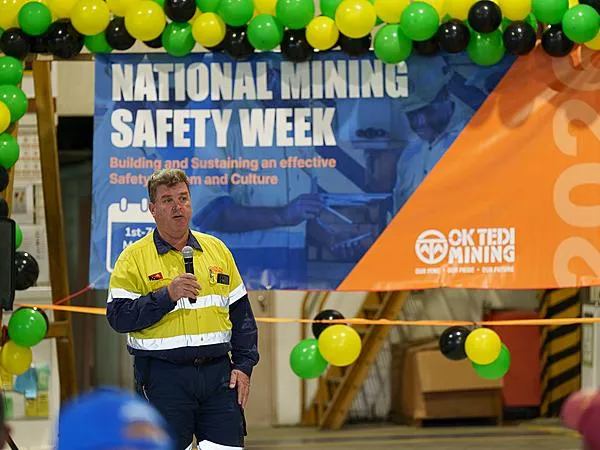
Ok Tedi Mining Limited (Ok Tedi) has reaffirmed its commitment to workplace safety as it observes National Mine Safety Week from March 1 to 7, emphasizing the importance of strong safety systems and a culture that prioritizes the protection of workers.
Under the theme “Building and Sustaining an Effective Safety System and Culture,” the company is encouraging employees and business partners to take shared responsibility for safety and move beyond basic compliance.
Ok Tedi said safety remains a core value guiding operational decisions and outcomes, supporting the company’s long-term strategy and operational performance.
Throughout the week, the company is conducting targeted activities aimed at strengthening frontline safety practices. These include toolbox talks, observation and interaction sessions, leadership walk-arounds and practical refresher activities designed to improve hazard awareness, decision-making and personal readiness.
Key focus areas include the use of risk management tools such as Take 5 and Job Safety Analysis, early intervention through observation and interaction, visible leadership in the field, the application of critical controls and life-saving rules, and managing risks linked to fatigue, distraction and routine tasks.
The company said safety is a key pillar of its Growth 2050 Strategy, which seeks to ensure operational stability, asset integrity and disciplined delivery across its operations.
Ok Tedi Manager for Safety Malcolm Maddison said effective and sustainable systems are essential in strengthening the company’s safety culture.
He emphasized that everyone within the organization, from senior leaders to new apprentices, plays a role in maintaining a safe working environment.
Ok Tedi said the week’s activities highlight its commitment to safer workplaces, stronger leadership visibility and improved confidence in risk management.
The company reiterated its safety pledge: “Nobody Gets Hurt, Zero Harm.”
Tags: Ok Tedi Mining Limited; Papua New Guinea; mining safety; National Mine Safety Week; workplace safety; mining industry; risk management; safety culture; Growth 2050 Strategy; Malcolm Maddison; occupational health and safety.
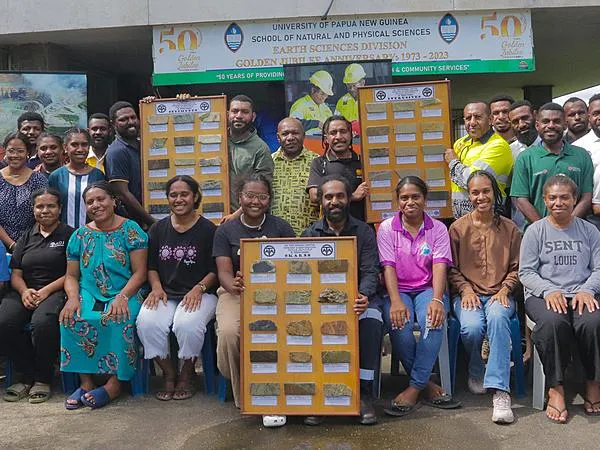
Ok Tedi Mining Limited (Ok Tedi) has reinforced its long-standing partnership with the University of Papua New Guinea by donating three geological specimen boards to the Earth Sciences Division of the School of Natural and Physical Sciences.
The boards, containing representative rock and mineralised samples from the Ok Tedi porphyry system and surrounding prospects, will support teaching, practical learning and research. The specimens provide students with direct exposure to the alteration and mineralisation styles that define one of Papua New Guinea’s most significant porphyry copper-gold deposits.
This latest contribution builds on Ok Tedi’s broader support for the department, including last year’s K550,000 investment in new computers, laptops and essential laboratory equipment.
“UPNG has produced many of our finest geologists and technical specialists,” said James Bu, Ok Tedi’s Manager, Mine Technical Services. Mr Bu is himself a former geology student.
“Supporting the Earth Sciences Division with real Ok Tedi geological specimens ensures students are exposed to the same materials and mineral systems they will encounter in the field. This helps them transition more confidently into the workforce and strengthens the talent pipeline we need to deliver the company’s Growth 2050 Strategy.”
Head of Division Professor Joseph Espi expressed his and the Division’s appreciation for the support.
“We are deeply grateful for Ok Tedi’s continued support of the Earth Sciences Division. These geological specimen boards are more than teaching materials — they allow our students to engage directly with the rock types and mineralised systems that define one of Papua New Guinea’s world-class deposits.
“This practical exposure strengthens their learning, builds confidence and prepares them to transition effectively into the mining workforce. We value Ok Tedi’s commitment to developing Papua New Guinean professionals who will contribute meaningfully to the nation’s mineral sector.”
Mr Bu said the initiative aligns with Ok Tedi’s Growth 2050 Strategy, which recognises the importance of investing in national skills development as an essential component of sustaining the company’s long-term operational success.
He said strengthening the capacity of local institutions such as UPNG is central to maintaining a strong pipeline of Papua New Guinean talent for the future.
On the sidelines of the 2026 Prospectors & Developers Association of Canada (PDAC) Investment Convention in Toronto, Canada, Papua New Guinea’s Minister for Mining Solen Loifa, MP, announced a sweeping suite of regulatory and institutional reforms designed to transform PNG into the Asia-Pacific region’s most conducive destination for mining investment.
Under the government’s “Reset@50” agenda, Minister Loifa committed to a six- to nine-month implementation window to finalize a new regulatory framework.
This “New Deal” for the sector prioritizes the removal of bureaucratic bottlenecks and the modernization of laws that have remained largely unchanged since 1992.
Key Pillars of the Reform Agenda
Establishment of a “One-Stop Shop”
The government is realigning policy and institutions to create a streamlined, integrated service center for investors. This reform will centralize licensing, permitting and compliance, ensuring that explorers and miners no longer face fragmented departmental processes.
Modernizing Exploration Rights
To support the high-risk pioneer stage of mining, the government will extend the tenure of exploration licenses (EL) from two years to five years. This provides the long-term stability required for modern, technology-driven exploration programs.
Introduction of Retention Licenses
For the first time, a formal retention license category will be introduced, allowing companies to hold and protect discovered deposits during periods of unfavorable market conditions or technical feasibility studies.
Bypassing the First-in-Time Requirement for Projects of Significance
The government is moving toward a more merit-based and strategic allocation of tenements to ensure genuine operators are prioritized for areas identified as highly prospective. This will not affect existing license areas or applicants seeking to conduct exploration in areas not reserved for the intended purpose. The government will use both first-in-time and merit-based approaches on a case-by-case basis.
Removing Red Tape
The minister specifically targeted the “lengthy and cumbersome” process through increased staff capacity and a drive toward an electronically automated system. New regulations will mandate strict timelines for renewals to ensure that projects do not stall due to administrative delays.
Inclusive Workforce
Reforms to mining safety laws will formally enable and encourage women to work in all aspects of mining, ensuring the industry reflects the talent and diversity of the entire population. This will enable women to work underground, unlike the current restriction in 1977 legislation.
Realignment of Policy and Regulatory Framework Under a Single Entity — Reforming the Mineral Resources Authority (MRA)
The Mineral Resources Authority (MRA) is the government agency responsible for regulating the mining industry in Papua New Guinea. It is currently undergoing a strategic realignment to serve as the primary gateway for the “One-Stop Shop” investment initiative.
Minister Loifa emphasized that these changes were not merely proposals but were a core mandate of his leadership.
“Our message to the global mining community is clear. We have heard your concerns regarding regulatory uncertainty and administrative delays,” said Minister Loifa.
“We are removing the hurdles that have historically slowed discovery, while ensuring that the people of Papua New Guinea benefit equitably from our resource wealth.”
The PDAC is the world’s premier mineral exploration and mining convention, which kicked off March 1 (Canada time) and will go on until March 4. This is an annual event that brings together more than 27,000 attendees from over 125 countries for educational programming, networking events and business opportunities.
Since it began in 1932, the convention has grown in size, stature and influence. The award-winning event is a gathering where familiar faces reunite, new connections are forged and the future of mineral exploration takes shape one conversation at a time. It is the event of choice for the industry, hosting more than 1,300 exhibitors and 700 presenters.
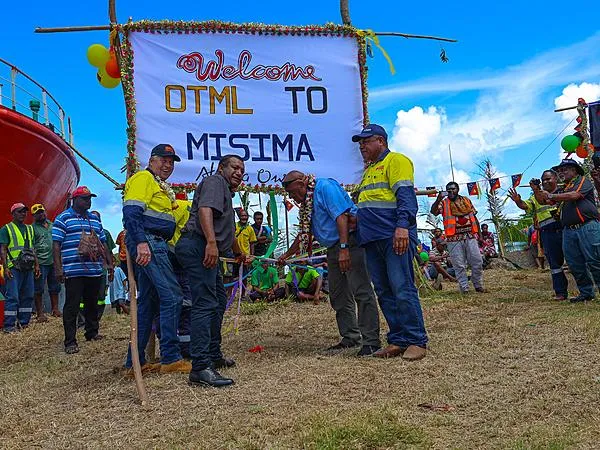
Misima Minerals Limited, a subsidiary of Ok Tedi Mining Limited, has taken a major step forward in the redevelopment of the Misima Project with the successful arrival of a vessel carrying the first machinery and equipment to commence work on Misima Island on 23 February 2026.
The arrival of the initial mobile equipment fleet — comprising earth-moving machinery, vehicles and essential supplies — signals the start of restoring critical infrastructure to support activities required to complete the feasibility and permitting stage of the project.
These works will be undertaken concurrently with ongoing exploration activities, including finalising the social and environmental impact assessment to meet environmental and mining permit application requirements. This demonstrates Ok Tedi’s commitment to progressing the project responsibly.
Local communities gathered in large numbers to witness the milestone, reflecting strong support, interest and optimism surrounding the project’s renewed momentum.
A welcoming ceremony was held at the landing site at Bwagaoia Station, attended by representatives of the Milne Bay provincial government, the Louisiade Rural LLG, Ok Tedi Mining Limited and community leaders from across Misima.
Speaking at the event, Ok Tedi Mining Limited General Manager for Social Performance and Sustainability Jesse Pile expressed gratitude to stakeholders who have supported the project’s progress from the outset. Consistent with OTML practice, stakeholder engagement from the provincial government level to the district, LLG and mine-associated communities — including local MP Isi Henry Leonard — has been completed and consent obtained.
“This milestone reflects the collective effort of government partners, landowners, community leaders and our parent company, Ok Tedi Mining Limited. Misima Minerals is committed to ensuring that this project becomes more than just a mine. Guided by Ok Tedi’s legacy, we aim to build a social mine — one that places people at the heart of its development,” Pile said.
He reaffirmed Ok Tedi and Misima Minerals’ commitment to fostering strong partnerships, supporting community aspirations and ensuring sustainable, long-term benefits are created for Misima’s stakeholders throughout the life of the project.
“Our goal is to help build positive and lasting legacies for Misima. As we progress through feasibility and beyond, we will continue to work closely with all partners to ensure development is inclusive, responsible and aligned with provincial, district and community needs through their LLG,” he added.
Samarai–Murua District acting administrator Ryan Seta, speaking on behalf of local MP Isi Henry Leonard, reaffirmed the district administration’s full support for the commencement of feasibility studies and initial project set-up.
He commended Ok Tedi Mining Limited for its proactive stakeholder engagement efforts, noting that such inclusive approaches reflect a genuine commitment to shared prosperity for all partners involved.
The arrival of the first equipment marks the beginning of a new chapter for Misima Island. It demonstrates tangible progress towards the redevelopment of the Misima Mine and reinforces Ok Tedi and MML’s commitment to responsible resource development.
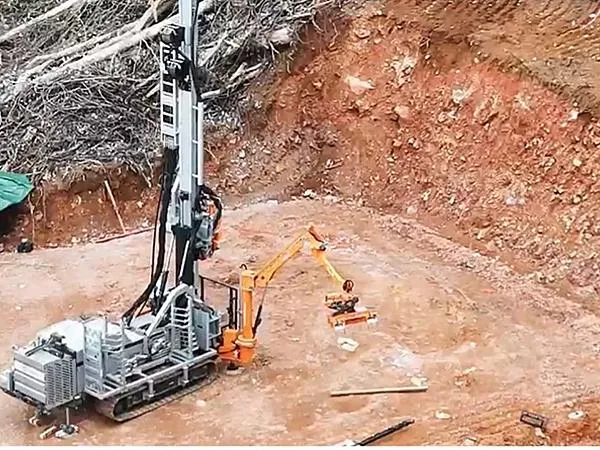
Great Pacific Gold Corp. has mobilised a second diamond drill rig to its flagship Wild Dog Project in Papua New Guinea, with drilling now under way at the Kasie Ridge epithermal gold-copper target.
The Canadian-listed company said the second rig has commenced drilling at Kasie Ridge, marking the first drill programme ever undertaken at the prospect, located on the island of New Britain in East New Britain Province.
Kasie Ridge is described as the largest preserved advanced argillic alteration system identified so far within the Wild Dog Project. The prospect forms part of the broader Nengmutka hydrothermal system and lies northeast of the central Wild Dog structural corridor.
The company said geological interpretation suggests Kasie Ridge represents a structurally controlled lithocap developed above, or adjacent to, a potential high-sulphidation epithermal or porphyry system at depth. The alteration footprint extends about 1.5 to 2 kilometres along strike and spans several hundred metres in width.
The alteration assemblage includes pyrophyllite, dickite, kaolinite, alunite, diaspore and zunyite — minerals typically associated with high-temperature, acidic hydrothermal conditions. The presence of zunyite and diaspore is considered significant, as both are commonly linked to higher-temperature environments proximal to a heat source.
“Kasie Ridge is a very technically compelling target on the Wild Dog project,” said Callum Spink, vice president for exploration.
“Drilling with Rig 1 is also progressing well with a second hole underway at the Kavasuki target. Having two rigs turning full time will allow us to increase the pace of our exploration in 2026, as planned,” Ridge added.
Structural analysis highlights multiple north-northwest to northwest trending lineaments converging beneath Kasie Ridge, a geometry consistent with focused hydrothermal fluid pathways in mineralised systems.
The first drill hole, designated KAS-01, has been collared within the highest-temperature portion of the advanced argillic assemblage. It is designed to test the interpreted intersection of two conductive lineaments, evaluate the margin of a moderately conductive upflow zone defined by resistivity inversion modelling, and assess vertical alteration zonation and sulphide development at depth.
Great Pacific Gold said results from KAS-01 will determine follow-up drilling and whether the prospect advances to more systematic testing.
Drilling continues simultaneously at the Kavasuki target within the Wild Dog corridor, where a second hole is under way using the first rig. The deployment of two rigs is expected to increase the pace of exploration in 2026.
The company noted that lithocap systems are inherently high-risk, as advanced argillic alteration may occur without associated economic mineralisation at depth. However, alteration systems of this scale require sustained hydrothermal fluid flow and structural permeability, features commonly associated with mineralised magmatic centres.
Comparable geological settings cited for context include Lepanto in the Philippines, Wafi-Golpu in Papua New Guinea and Onto in Indonesia, where lithocap alteration overlies deeper porphyry or high-sulphidation mineralisation.
Kasie Ridge lies at the northern end of the 15-kilometre Wild Dog structural corridor, about 4.5 kilometres north of the Sinivit target, where previous drilling delineated multiple high-grade shoots.
The company’s working interpretation considers Kasie Ridge to represent the preserved upper levels of a high-sulphidation epithermal system or lithocap developed above a potential porphyry source, with mineralisation possibly occurring beneath or laterally offset from the alteration cap.
Follow on LinkedIn:
PNG Business News
Be the "First" to get our exclusive Digital Magazine & Weekly Newsletter.