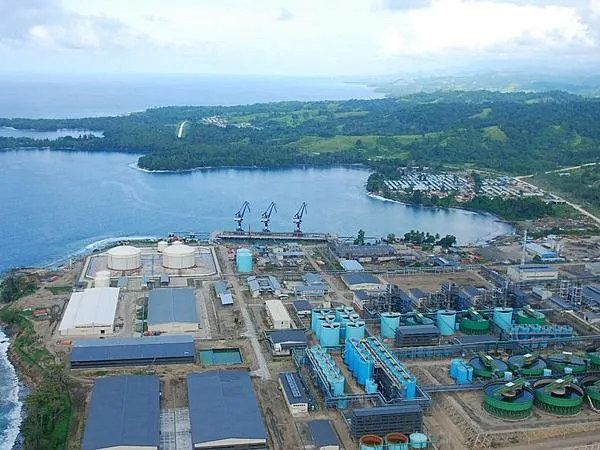
By the end of the month, a technical team from the Papua New Guinea technical (PNG) Mineral Resources Authority (MRA) will soon be tabling an assessment on the details regarding the construction of the Wafi-Golpu Mining project to the mining advisory council (MAC)
According to MRA managing director Jerry Garry, “Permitting of a special mining lease for large projects will require a different pathway than permitting a medium scale to small scale mine under the mining lease,” he said. “For a special mining lease, requires three distinct pathways for permitting. One, environmental permitting is a mandatory requirement and is done independently through the environment act under the custody of the Conservation and Environment Protection Authority (Cepa). That process has been done and Cepa has issued the environmental permit for the Wafi-Golpu project.
“The other is technical, from the mining perspective,” he said. “That includes looking at structures to be built on the ground, the roads the buildings, the processing plants. Because it will be an underground operation, we will also look at designs to critically ensure that the integrity of the structures and any development met the expected standards. Once that is done and we are satisfied, we will give the green light for them to go and construct. During construction, we also provide that oversight to ensure that it is done safely. We have looked at all the proposals. Our technical team is about to table the technical assessment to MAC for the council to deliberate on. We anticipate that process to conclude by at least the end of March.”
Garry added that if it goes to the MAC and the council was okay with it, then the council would deliberate on the application. The third stream was the mining development contract, he said.
“It’s between the State and developer to go by the books in terms of the benefits and any fiscal stability that they want,” he said. “When that is locked in, then we have a lower level called a development forum which will then involve MRA and State team to negotiate with the provincial government, LLGs and landowners in terms of benefits.”
The Singapore company exploring sand mining opportunities in Madang in Papua New Guinea has withdrawn its interests.
According to the Mineral Resources Authority (MRA) Jerry Garry, the company had told them of its intention to pull out.
“The (mining advisory) council has not deliberated on the withdrawal application,” he said. “As and when it’s received and tabled before the mining advisory council, we will then affect the withdrawal of the licence, what we technically call a ‘surrender’. They have written to our technical branch stating their intention to surrender the tenement. But it has not come to the attention of the mining advisory council. It is highly likely that it will come to the council in the next meeting which will be about three weeks from now. It is a voluntary withdrawal by the proponents and it has nothing to do with MRA. We didn’t force them to withdraw.”
He added, “Unless and when we see that the project proposal has detrimental consequences to people and the environment, the council has the power to force them to reconsider their application in terms of demarcating, realigning their boundaries. In the case of the sand, it’s really an exploration license that they applied for not a mining lease.”
Meanwhile, the Madang tourism industry association chairman Sir Peter Barter said the mining would affect the environment.
“These types of projects, especially to do with our marine ecosystems, will affect the leatherback turtle sanctuary in the Sumgilbar LLG,” he said.
The Wafi-Golpu landowners have finally voiced out their support to the National Government on the environmental permit given to mine developers.
The five associations chairmen - Victor Geactuluc (Yanta Development Association), John Nema (Hengambu Landowner Association), Jack Raban (Babuaf Development Corporation) of the Special Mining Lease (SML) area including Joseph Tetang (Wampar Pipeline Association) and Gae Galang (Wagan Outfall Association) - said they want the project to proceed and are asking Morobe Governor Ginson Saonu to desist from any purported court proceedings against the Sate about the deep-sea tailings placement (DSTP).
Saonu, however, said that Morobe’s position still stands. “I will do what is right, just and fair for everyone,” he said.
According to an independent body monitoring and evaluating process for the last four years, the landowners shouldn’t rush into things. The leaders argued that this process may cost Morobe and the provincial government millions of kina and added that the mining forum is the best place to discuss this problem.
Nema said that he has lost more than 20 of his community members to common natural calamities and lack of basic health services. “I am against the move by our governor to register another court proceeding against the National Government while my people are suffering and dying without seeing any real developments or benefiting from their land,” he said.
Geactuluc said that they don’t support the intention of the governor to take this to court. “We urge the good governor to refrain from wasting his time with his consultants and advisers but instead commit his time and resource to mobilise the SML, Pipeline and Outfall landowners through their associations in preparation for the upcoming Wafi Project MoA,” he said.
For his part, Tetang urged the governor to have a discussion on how he intends to recognise the Huon Gulf coastal communities benefit-sharing instead of fighting a losing arrangement to prevent DSTP. “That is why the developer has chosen DSTP because it is much safer and could not harm the marine resources or the coastal communities based on the research and studies conducted,” he said.
St Barbara Ltd’s Simberi operations in New Ireland is set to transition from mining oxide ore to sulphide.
The mine which has been producing gold since 2009 said that its social and environmental impact studies (SEIS) are presently being finished for submission to the Conservation and Environment Protection Authority (Cepa) and Mineral Resources Authority (MRA) in March.
Sulphide mining is predicted to extend its mine life for at least another 10 years and produce more benefits for stakeholders.
St Barabara managing director and chief executive Craig Jetson said, “We are at an important stage of operations at Simberi, as we continue to productively mine the oxide deposit and plan for a bright future via the Simberi sulphide project.”
He added, “Iso will capably lead us through this transition as we support our Simberi community, contribute to New Ireland and deliver on our commitments to PNG.”
Meanwhile, the firm said that since 2009, the mine has brought K84.3 million in royalties, paid an annual 0.5 per cent production levy and contributed over K97.4 million in contracts to landowner businesses.
“In 2020, the company paid over K28 million in income tax,” according to St Barbara. “Other community benefits delivered since 2012, when St Barbara acquired the mine, amount to over K119 million. They include health and education infrastructure development, roads and bridges maintenance, cocoa farming, mariculture projects, education scholarships and employment and training.”
St Barbara Limited’s Simberi operations in the New Ireland province has a new general manager in the person of Iso Ealedona.
Ealedona was previously the head of operations for the past seven months and is a mining engineer and pioneer of the PNG University of Technology mining degree program. With over 26 years of experience in the industry working in Australia for Rio Tinto Iron Ore and in PNG at Misima, Ok Tedi, Hidden Valley, Lihir and St Barbara’s Simberi Operations, his expertise includes operational leadership, technical services, maintenance, safety management and business transformation.
“As a recognised employer of choice, we are proud to be the first public company (ASX listed) operating in PNG to entrust this important role to a capable Papua New Guinean with the right skills and experience to lead our 1200 strong workforce at Simberi,” he said. “We are at an important stage of operations at Simberi, as we continue to mine the oxide deposit and plan for a bright future via the Simberi sulphide project. Iso will capably lead us through this transition as we support our Simberi community, contribute to NIP and deliver on our commitments to PNG,” said Craig Jetson, St Barbara’s managing director and CEO.”
He said, “It’s an honour to lead, on behalf of St Barbara, a mining operation in my home country. With the St Barbara executive, Simberi leadership team and the workforce behind me, I am determined to lead Simberi safely and successfully through this transition period of oxide to sulphide mining for the benefit of all stakeholders.”
Kingston Resources has appointed Geoff Callister to help lead the social responsibility programs and project approval at its 3.6-million-ounce Misima Gold Project in Milne Bay Province of Papua New Guinea.
This will further expand Kingston’s in-country management team as the project moves further through regulatory approvals and mining studies.
Among the responsibilities of Callister include steering the preparation of the environmental impact statement (EIS) and mining lease application for the project and managing the critically important engagement with the government, local communities and landowners. He will also work with the Misima exploration manager, Andrew Harwood, a geologist who has 30 years of vast experience.
According to Kingston’s managing director Andrew Corbett, “Following the completion of the highly successful Misima PFS in late 2020, we are absolutely delighted that Geoff has accepted this key position with Kingston to accelerate the next stage of project development. Geoff brings a set of vital skills around positive social and community engagement and environmental and mining approvals to the Kingston team. Besides, he has extensive professional experience working at Misima Island and more broadly within Papua New Guinea. Geoff’s experience includes five years working with Placer Dome as the sustainability planning and mine closure officer at the Misima Gold Mine.”
He added, “He has also worked at the Lihir Gold Project, the Porgera Gold Mine and on the Frieda River Project – all landmark PNG projects. We are very much looking forward to Geoff joining the Kingston team as we move to the next exciting stage at Misima.”
Meanwhile, Callister is a social performance manager with 20 years of experience and his expertise includes project implementation, stakeholder and government engagement, community development and natural resource management.
The closure of the Porgera gold mine has caused its people to feel the pinch.
“We are feeling a lot of effects such as power outages, deteriorating roads, businesses shutting down and many schools and aid posts closed,” said acting district administrator Jerry Mapu, who added that the Paiela-Hewa local level government had all but closed down with an aid post the only service still open.
“Public servants do not want to come and work here,” he said. “We are the only ones here working.”
Mapu said that all stakeholders needed to learn their lesson.
“The Government, company and landowners must come to a round table discussion to discuss some way forward for the future of Porgera,” he said. “Otherwise, we don’t have a future. We are suffering. The bulk of the population is suffering.”
According to the district administration, the district indirectly and directly benefits from the mine. The impact of the closure had doubled the effects that the people feel, he said.
“The bad road conditions from Wabag to Porgera has also made it difficult for businesses and trucks to bring in services such as fuel and others,” Mapu said. “It is also hard to travel, how can teachers, doctors and workers get here? It’s important that the Government gives priority to Porgera for the maintenance of the road.”
School fees was another challenge as landowners and beneficiaries of the mine’s SML trust fund had lost their means of paying for their children’s education, among other things. He added that the government should make a decision fast to solve these problems.
Following a public forum in Lae last week, regarding the Wafi-Golpu project, Morobe Governor Ginson Saonu said that there must be a mutual understanding between all stakeholders - which includes provincial and national governments, and landowners and mine developers.
He added that many people in Morobe allows the start of the multi-million Kina, except for the waste method proposed (DSTP) by the developer, and for other alternatives to be sourced.
“As a famous American quote, the government of the people, for the people and by the people…and this concept must be applied in every government (democratic). The rules and laws must be followed if rules are followed then for who. If the system is to help the people and if it does not work then the people will make noise and we have to fix it,” Saonu said. “The public has raised concerns, we have conducted several consultative meeting here and Port Moresby,” he said.
He said that all parties should come together for closure, but this has not been eventuated. “Since the issue of DSTP, the developer has not responded to the Morobe provincial government, they must sit and discuss their position,” he said.
He added that it is important for the people concerned to be respected.
The government hasn’t breached any laws in granting the environmental permit for the Wafi-Golpu project in Morobe.
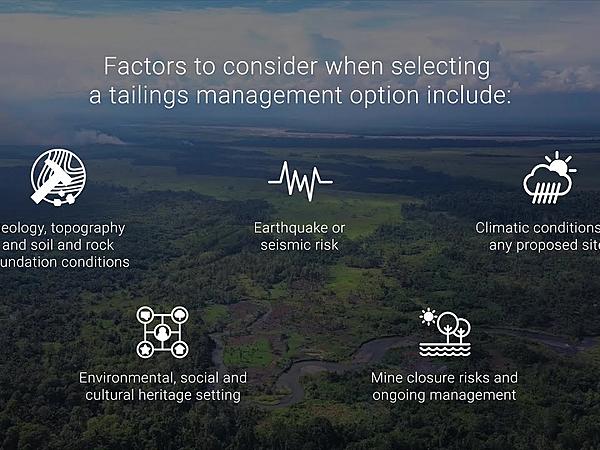
This was according to Environment, Conservation and Climate Change Minister Wera Mori, who added that the deep-sea tailings placement (DSTP) was the best way for tailings disposal for the project.
“We have not breached any laws in granting the permit,” he said. “Mining is all about science. There was a paramount mining safety practice considered before the permit was granted. A huge amount of mine waste can’t be stored in a tailings dam. It’s a time bomb itself. Basamuk, Simberi and Lihir all use DSTP. The incident at Basamuk was a result of a systems failure, it was not related to DSTP.”
This was in response to the Morobe government who wanted the government to withdraw the environment permit and wanted an alternative for the project.
Governor Ginson Saonu said that if all else fails, they will bring this issue to court. “The future of Morobe is in Wafi-Golpu so the State must do the right thing,” he said. “There must be proper people-leader interaction for meaningful participation between resource owners, the Government and all interested parties.”
The Mineral Resource Authority plans to decentralise as well as establish an office set up in Kainatu, as mentioned by Kainantu MP and Mining Minister Johnson Tuke during the visit of Prime Minister James Marape to Kainantu.
“In my capacity as the Mining Minister I have been working closely with the Prime Minister and we will see that some government offices are brought to the districts and provinces,” he said. “The Prime Minister has given his approval and the National Executive Council decision has been made already. What needs to be done is some final touches so that the MRA office will be set up in Kainantu so the work MRA does will be divided.”
Mineral Resources Authority managing director Jerry Garry confirmed that the plan is to decentralise specific functions to regional centres - such as small-scale mining, development coordination and safety branch, and geological survey.
Garry said subject to availability of funds, MRA may also build a small scale mining school and may hold stage outreach training programs.
“The geological survey branch will undertake geological mapping, assessment of minerals and underground water resources. The team will also assist DDAs and provincial government,” he said.“Development coordination branch will be responsible to attend to landowner issues, fulfilling MoA commitments and ensuring any issues relating to mining and exploration projects are dealt with. The plan is to build an office, classrooms and accommodation for about 15 employees. The ideal site would be at Yonki, by the dam.”
Meanwhile, apart from announcing the likely decentralisation of MRA to Kainantu, Tuke also appealed to the Prime Minister to make sure the Ramu 2 hydro project kicks off.
“Prime Minister, we have already given the country the Ramu 1 hydro project and we do not want any politics, please give us the Ramu 2 hydro project too,” Tuke added.
For its half-year financial results, Newcrest Mining has brought a profit of K1.8billion (US$533m).
In the company’s market report, managing director and chief executive officer Sandeep Biswas said that the company has delivered a record free cash flow, lifted its dividend and looks at opportunities to unlock significant value at Lihir.
“In 2018 we set ourselves some ambitious targets to Forge a Stronger Newcrest,” he said. “Our progress and achievements over the past three years have put us in a very strong position to not just weather the global uncertainty associated with Covid-19, but to keep our eyes firmly on our future growth agenda.”
With the plan forging an even stronger Newcrest, which details its aspirations and measures for the next five years in line with a new company purpose, the firm has created a brighter future for its stakeholders through responsible and safe mining.
“This year we lived that purpose through our success in managing the Covid-19 risk to our workforce and local communities through the compensation, relocation and benefits sharing agreements we signed with the landowners at Lihir, through our renewable energy agreement that will help significantly reduce our carbon footprint; and in our progress in developing new mines at Havieron and Red Chris,” he said. “The strong financial results for the half-year show how much the increase in the gold price has translated into improved profitability, record half-year free cash flow and an increase in returns to shareholders in the form of a fully franked interim dividend of US$ 15 cents per share, 100 per cent higher than last year. This year we have leveraged our technical capabilities to establish a pathway to unlock significant value from Lihir."
For the nickel-cobalt mining project in Madang Province, production efficiency is still the number one priority.
According to Ramu NiCo company president, Gao Yongxue, the employees of the mining project should take advantage of the scale-cost given that the world markets are going into recession. He has outlined the key project areas in 2021 - which includes improving productivity and stability, optimising team construction, reducing costs and increasing efficiency.
He said that the firm needs to cope up with these new challenges. “We need to re-study the epidemic situation of PNG, redeploy the mission of “zero import and zero infection”, reinforce the prevention measures, comfort the employee’s emotion and extend our regards and care to all employees’ families,” he said. “Let us make full effort to build on the momentum, adhere to the route of high-quality development, cope with the crisis in a concerted effort and endeavour to achieve better production and operational performance through our hard work, and strive for the all-round realisation of annual targets and tasks,” Mr Gao said.
Meanwhile, he announced that the firm has received “103.3 per cent above” the design capacity – for four straight years and in spite of the pandemic.
“In 2020, we prioritised a number of aspects of work while centering on the production operation plan set early in the year,” Gao said. “Over the year, the project’s rated indexes were well controlled and the various process indexes were favourable with regard to the requirements in the plan set early in the year.”
Although an economist has embraced the progress of the Wafi-Golpu project, Paul Barker said that they should focus more on the reopening of the Porgera mine quickly since the former takes time.
“With Wafi-Golpu, we still have much further to go,” he said. “(Reaching) an immediate and practical agreement between the Government, Barrick and partners over equity and recommencement will have a more immediate restorative effect. It will enable contractors and employees to be rehired and work, production, exports and revenue to start flowing again in the relatively short future.”
Barker said this in response to Environment, Conservation and Climate Change Minister Wera on the granting of the environmental permit for this project.
He said, “The environment plan, which clearly won’t please everyone, although the experts say that the deep-sea tailings) option would post the least impact and risks, in comparison with a tailings dam in a very technically unstable area. There is still a lot of work to be done leading to a special mining lease and subsequent requirements, apart from the financing of such a major venture in a difficult global capital market, especially for developing countries (especially those with some track record of uncertainty in the field of mining).”
Ok Tedi Mining Limited (OTML) has announced that it has returned to normal production after the second of the two processing circuits which were damaged in a fire incident on the 20th of December 2020 was restored recently.
OTML Managing Director and CEO, Musje Werror expressed his appreciation to the team who worked for almost 6 weeks. “The commitment shown by our workforce, particularly over the festive season, was a testament to the One Team Wan Pasin spirit at Ok Tedi,” he said.
He added, “Returning the first of the two circuits to the operation was a key milestone as it allowed the Company to recommence production and meet our January shipments. Damage sustained to the SAG-1 was however more severe and required two new switching equipment. The new equipment, which was flown to site on a specially chartered Hercules C130 aircraft last week, was successfully installed over the weekend.”
Werror added that the cost of the fire was US$100 million, that a strong balance sheet is needed for protection against these unfateful events. “We have demonstrated previously that the Company is able to remain profitable and healthy despite such challenges, and we expect to do so again in 2021,” he said,
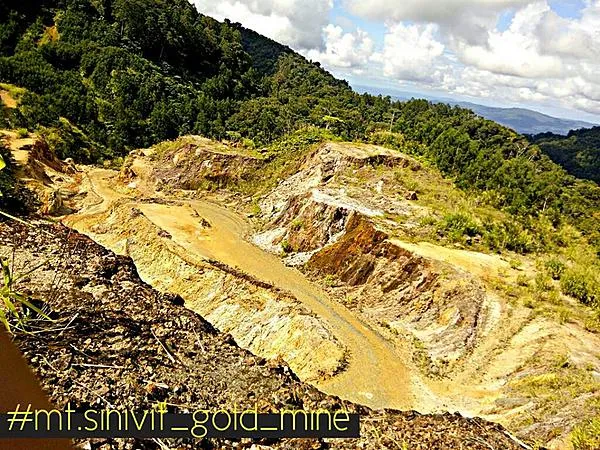
The government of Papua New Guinea will spend K9 million to clean the toxic remains left by developer Niugini Gold Ltd. at the Sinivit mine in East New Britain.
According to Environment, Conservation and Climate Change Minister Wera Mori, the firm left in 2014 without informing the government, claiming that the latter failed to renew its license.
Mori said he would be making a submission to Cabinet for funding to carry out the clean-up.
“The mine was closed in 2014,” he said. “They abruptly left the camp and all the infrastructure, leaching facilities, the cyanide, dynamites and explosives. These are very dangerous and must be disposed of. We need to clean the place up. When the company left, they did not lodge a plan with the Mineral Resources Authority to put the camp under care and maintenance. As a result, we now have serious environmental issues. We need a reputable company to detoxify the cyanide, including those kept in the vat ponds and remove them.”
Mori said that the clean-up might take less than three months.
There are around 50,000 people living close to the site.
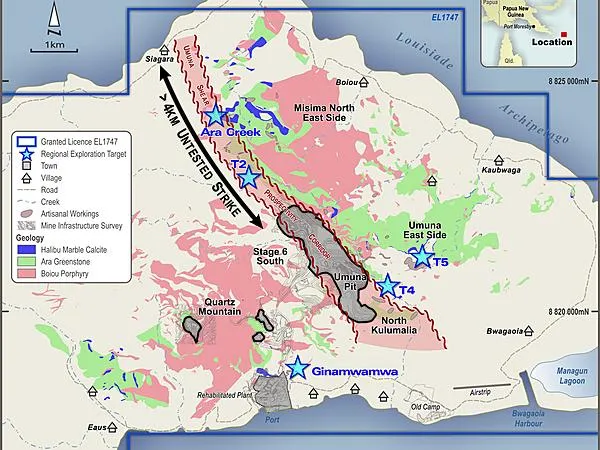
After a landowner group has said that the Autonomous Bougainville Government has partnered with Caballus Mining, a firm based in Perth, to re-open Panguna Mina, its president, Ishmael Toroama has announced that the government is not colluding with any landowner groups or mining firms.
“The idea of Caballus operating a mine on Bougainville has long been shelved after their failed attempt to co-sponsor the mining amendments with the former Momis-led ABG,” said Toroama. “Let me make it clear that the current ABG under my Presidency is not colluding with Caballus, RTZ, Bougainville Copper Limited or any landowner group. Statements by companies or landowner groups with a vested interest in Panguna, who claim to be working with the current ABG, are false. We are not backing any company or any landowner group to reopen the mine. My government is committed to protecting landowner rights from undue influence by persons wishing to solicit favours from the Autonomous Bougainville Government in an attempt to reopen the mine.”
He added, “Any company wishing to develop Bougainville’s mineral resources, be it Panguna or the exploration of a greenfield site, must come through the proper channels. Bougainville has a mining act that governs the exploitation of our mineral resources, any parties wishing to be involved in the mining industry on Bougainville must comply with the laws of the land. As it stands, there is a moratorium in place over Panguna as well as the surrounding areas around the proximity of the mine. The Panguna Mine remains a very sensitive issue on Bougainville and parties wishing to reopen it must maintain a sense of decorum that respects the land, the landowners and the ABG.”
“We cannot continue to make unfounded claims that are based on promises from the previous regime and its band of leaders and public servants who sought to manipulate the people of Bougainville and wantonly exploit its resources,” he said, “I urge leaders from the past government as well as the current ABG to refrain from making unsubstantiated claims over the future of the mine at this time. Let us be frank in our dealings and be considerate of the welfare of all our people on Bougainville. It is high time we stopped using our independence aspirations as a bargaining chip to further our personal agenda.”
Follow on LinkedIn:
PNG Business News
Be the "First" to get our exclusive Digital Magazine & Weekly Newsletter.