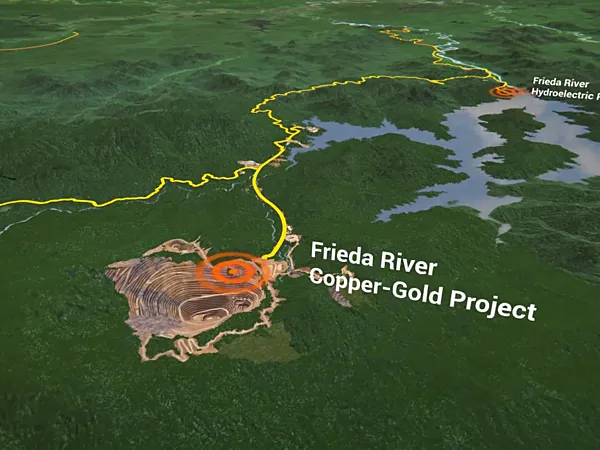
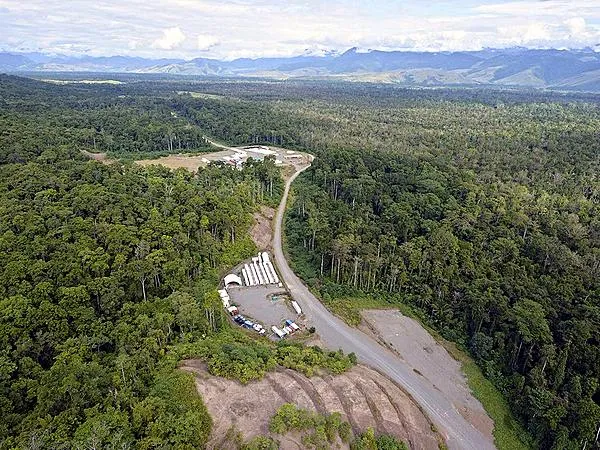
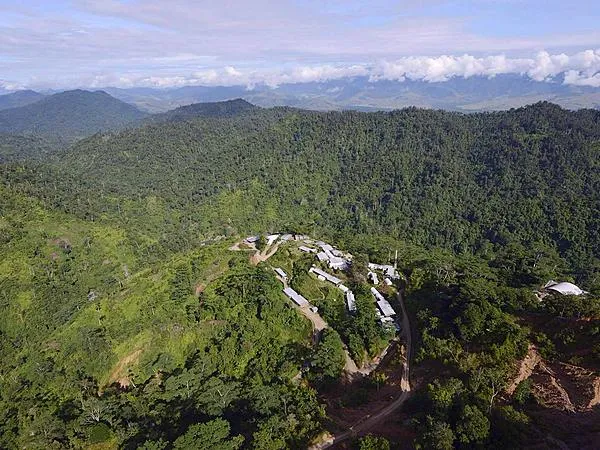
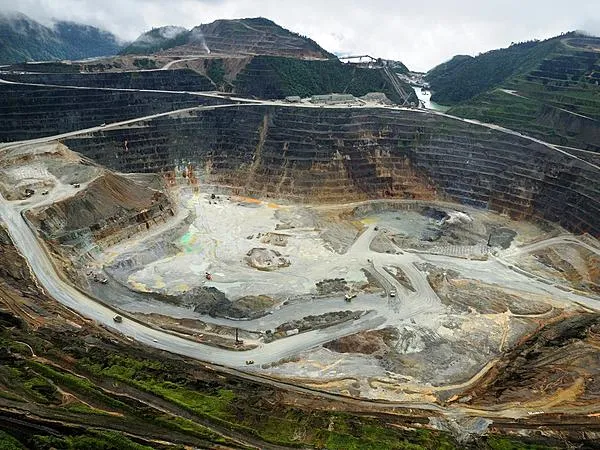
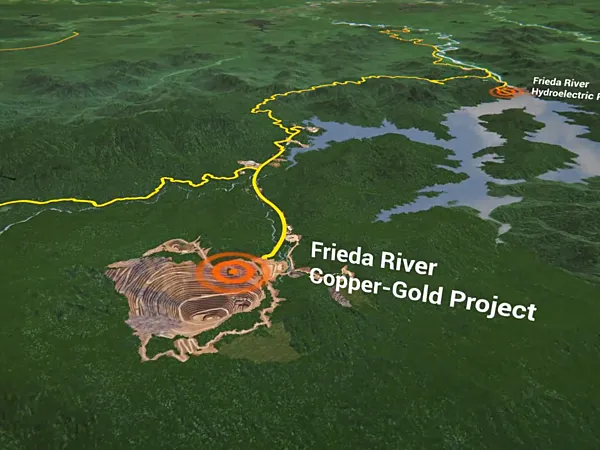
A decision on the environmental permit for the Frieda River copper and gold project in West Sepik is yet to be made.
Environment, Conservation and Climate Change Minister Wera Mori said that the granting of the permit is not yet finished.
“Frieda River is an ongoing project – meaning that PanAust, which has got the licence, is still conducting exploration,” he said.
He added that before submitting their plan and their proposal to the Conservation and Environment Protection Authority and Mineral Resources Authority, they still need to work on the ore body and the style and type of mineralisation.
“In the mining development plan they will submit, they will note the nature and style, the volume, and the mining rate (how much, in tonnes they are going to mine a year), together with the commercial mineral. From there, discussions will follow,” he said. “At the moment, I have not issued any permit to anyone yet.”
Mori added that they also need to consider inputs from the West and East Sepik governments.
“The people through their provincial governments will go through the process of discussions,” he said. “Meaningful discussions must take place between the people of East and West Sepik, whether they want the mine or not. That is something for them to decide with their provincial leaders. And then, we will talk to them. We can’t do anything now. All those processes are to be completed before an environment permit is granted. There are no submissions yet, not that I know of.”
With the construction of the Wafi-Golpu copper and gold project in Morobe about to start because of its environmental permit, Papua New Guinea hopes to see a windfall of over K18 billion investment in its economy.
Constructed by developers Harmony Gold Mining Company, this project is expected to cost at K17.26 million.
“At this time when our economy is contracting, it is important that we must bring in a major project to (be a catalyst to) reviving the economy,” said Environment, Conservation and Climate Change Minister Wera Mori. “And there is no better project than Wafi-Golpu which on record is one of the biggest undeveloped copper and gold deposits in the world.”
Mori announced that the project will use the deep-sea tailings placement (DSTP) as its waste disposal measure.
In order for the economy to recover, Mori said that this project should start.
“By law, the managing director of the Cepa (Gunther Joku), is required to grant the permit (after being satisfied that) all statutory processes involved in the granting of such permits are in place,” Mori said. “That includes the environmental impact studies to be conducted and specific environment statements to be made.”
Mori added, “It was as late as last year that as the minister responsible for Cepa, I gave approval in principal for the permit to be granted so that it will start the process of moving towards a mine development contract for the Wafi-Golpu joint ventures,” he said. “Upon the granting of a special mining lease, which forms part of the permitting processes of which we are now commencing with the environment permit, it will see an injection of close to US$5billion (K17.26bil) into the economy over five years for the construction of infrastructure.”
The next stage is to have discussions with the developers of the project and the granting of a mine development contract.
“The Morobe government and the people of Morobe will be represented through their elected leaders, to ensure that they gain maximum benefits from the spin-offs that are going to be generated,” he said. “The (granting of the permit) is a fulfilment of the requirements to take this project forward. The mining lease cannot be granted without the environmental permit. Having satisfied all the statutory requirements for the granting of such, the managing director of the Cepa Gunther Joku.”
However, Morobe Governor Ginson Saonu didn't receive the news too well.
According to Mining Minister Johnson Tuke, the Wafi-Golpu mining project is set to be licensed by end of July or August this year, adding that this project will take off by 2nd quarter of 2021.
He noted that there is already a framework agreement and there is no best time for the license to be granted than that of July or August of this year.
“I am very sure, adamant and optimistic that they will get the licence this year,” he said. “The environment permit has been granted and that supersedes all the agreements, but in the course of the activity, then we can be able to piggyback on what the government has issued and we can be able to mitigate through.”
Mr Tuke said that this project will still go on and that they have already been through all discussions with relevant parties.
“Now we are set to fast-track and move forward in the production of the license for Wafi,” he said. “All due diligence has been done, proponents are very happy and we are very happy, we are set to go…the environmental permit has been given so perhaps my sealing time is as I am not looking for more than August. At the end of July and August, I should grant the license and I am stubborn hearted to deliver that. I am perfectly sure that for Wafi I will deliver the license by the first week of August or last week of July.”
For Porgera, he said, that the issue is still before the courts but they are working on a clause in the development contract.
In spite of the challenges in 2020, OK Tedi Mining Ltd (OTML) said it predicts a profit of US$200 million (K700.40mil) for 2020. This is an unaudited number, and the firm hopes to release the full-year report for 2020 later this year.
“OTML expects a profit after tax of more than US$200 million (unaudited) for 2020 despite the challenges of the Covid-19 pandemic, and the impact of the fire late last December of 2020,” the company said. “As of last Wednesday, ore processing has commenced at one of the two processing circuits (SAG-1) which was impacted by the fire incident after significant remedial work was completed. The other processing circuit (SAG-1), which sustained severe damages as a result of the fire incident is expected to be operational by late January.”
The firm also added that a committed team worked during the holidays breaks last year for much-needed repairs to make the processing circuit operational. This was in total almost 10,000 man-hours.
“An investigation report into the cause of the fire incident and the recommended actions to prevent a recurrence was submitted to the chief inspector of mines who has given us the approval to re-commence operation after careful deliberation and assessment of the report,” it said.
K92 Mining expects another significant, year-over-year, increase in gold equivalent production of 16-36% to 115,000 to 135,000 ounces, while also delivering low-cost production, with an estimated cash cost of $515-$565 per ounce gold and all-in sustaining cost of $825-$875 per ounce gold. Additionally, the Company plans to ramp-up exploration activities and invest in future production growth.
On exploration, 2021 is forecasted to have a significant increase in both near-mine and regional activities with a forecasted expenditure of $14-17 million. Over the course of 2020, the drill fleet doubled to ten rigs and an eleventh drill rig is expected to arrive imminently. Exploration plans are to target the Judd, Karempe, Kora and Kora South vein systems, and the Blue Lake porphyry in addition to continuing generative surface exploration.
Growth capital is forecasted to be between $25-30 million, which includes the ongoing twin incline development. The twin incline is designed for a throughput capacity of up to 2 million tonnes per annum, or 3 million tonnes per annum with conveyors.
John Lewins, K92 Chief Executive Officer and Director, stated “2020 was certainly a very strong year for K92, with year-over-year production growth of 20%; significant exploration progress on multiple vein systems; increases of +180% and +50% in Kora’s M&I and inferred resource estimates, respectively, and; completion of our Stage 3 Expansion PEA outlining Tier 1 Asset potential of +318,000 oz AuEq run-rate. In addition, the quality and importance of Kora has been recognized, with K92 being awarded the prestigious Thayer Lindsley Award for Best Global Discovery from the Prospectors & Developers Association of Canada (PDAC) for Kora North. Importantly, all of these milestones were achieved during the COVID-19 pandemic and were made possible due to the extraordinary commitment of our workforce, exceptional resource at Kora and also the support of Government in Papua New Guinea on all levels."
"While we expect the COVID-19 environment to persist through the majority of 2021, we believe 2021 has the potential to continue the growth of our Company as we further expand production at Kainantu, significantly ramp-up exploration on multiple vein and porphyry targets, and complete our next resource update and Stage 3 Definitive Feasibility Study in the second half of 2020. We believe the future for Kainantu and K92 looks very exciting.”
The production of K92 Mining for the last quarter of 2020 at its Kainantu gold mine in Papua New Guinea were as follows: 29,820 oz AuEq or 28,809 ounces of gold, 493,584 pounds of copper and 10,395 ounces of silver.
The firm has also said that it represented a year-over-year production growth of 20% - with the record of 98,872 oz AuEq or 95,109 oz gold, 36,067 oz silver, 1,853,078 lbs copper.
“We are especially pleased with the performance of the Kainantu gold mine during the fourth quarter, achieving record production. Importantly, the quarter was underpinned by record mill throughput, mine material movements and mine development,” CEO and Director John Lewins said.
He added, “2020 represents our third consecutive year of production growth and 2021 promises to continue that record with our first full year of the Stage 2 Expansion. Exploration activities have ramped up considerably, ending 2020 with 10 drill rigs on-site and an eleventh rig expected to arrive shortly. The drill rigs are targeting the Judd, Karempe, Kora and Kora South vein systems, and the Blue Lake porphyry.”
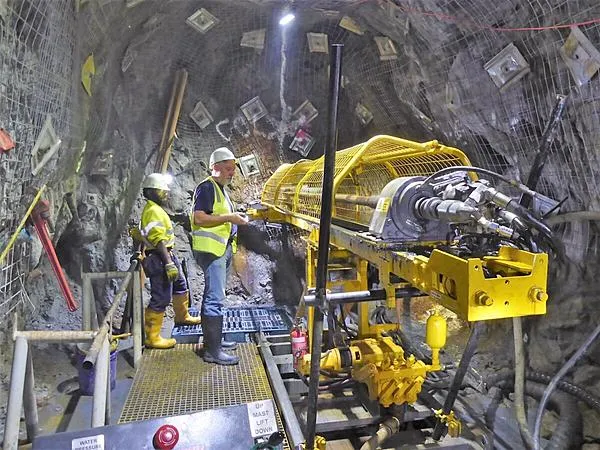
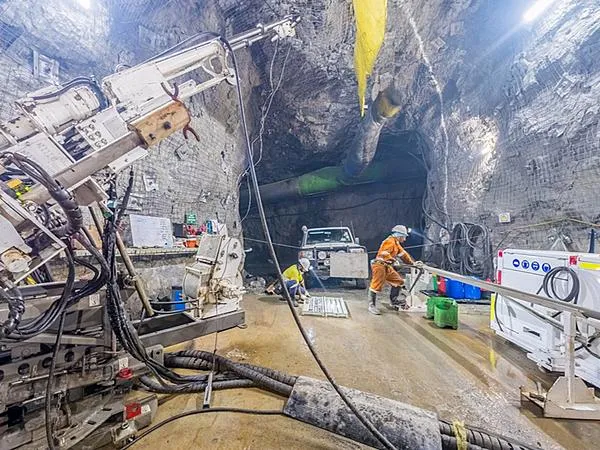
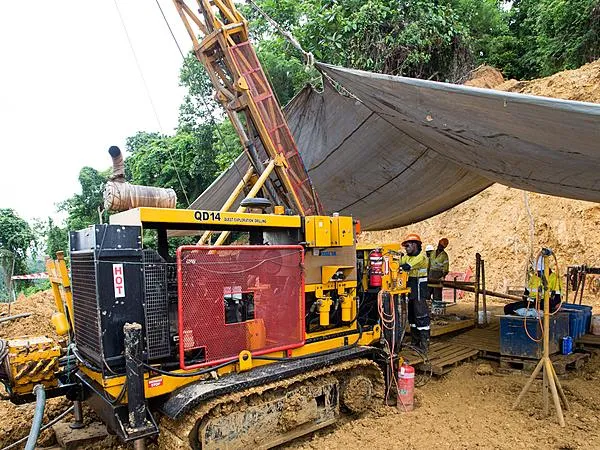
Geopacific Resources Ltd has said that it needs all the necessary permits and approvals before it can start its operations.
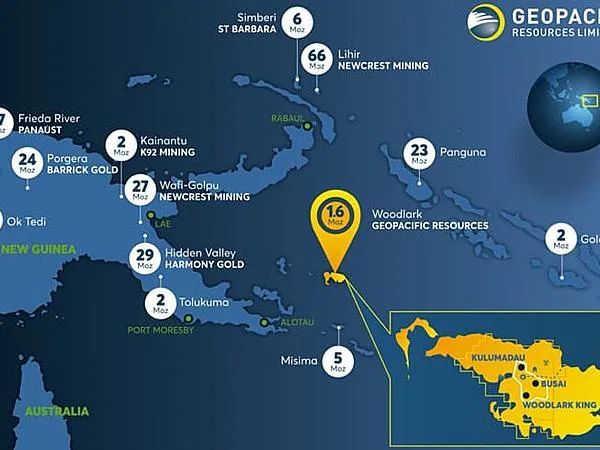
Geopacific Resources Ltd, the operator of the Woodlark gold project in Milne Bay, said that it has already obtained key approvals for the development, but it needed to secure all approvals, licences, or permits.
“Even if an apparently viable mineral deposit is identified, there is no guarantee that it can be profitably mined,” it said. “The estimated development costs for the Woodlark gold project are subject to a range of uncertainties and assumptions. And the actual development costs may differ from these estimates and assumptions. If the cost estimates and the underlying assumptions are not realised in practice, it may materially and adversely affect the development programme of the Woodlark gold project. The actual Woodlark gold project development timelines and expenditure together with planned exploration work to be undertaken will depend on many factors. As such, actual expenditure may differ from the budgeted expenditure presented.”
The mining firm said the project is also subjected to ordinary construction risks such as design and or quality issues, delays, pricing and cost overruns.
“Contractor performance may be constrained or hampered by labour disputes, plant, equipment and staff shortages, and default,” it said. “Contractors may not comply with provisions in respect of quality, safety, environmental compliance and timeliness, which may be difficult to control. In the event that a contractor underperforms or is terminated, the company may not be able to find a suitable replacement on satisfactory terms within time or at all.”
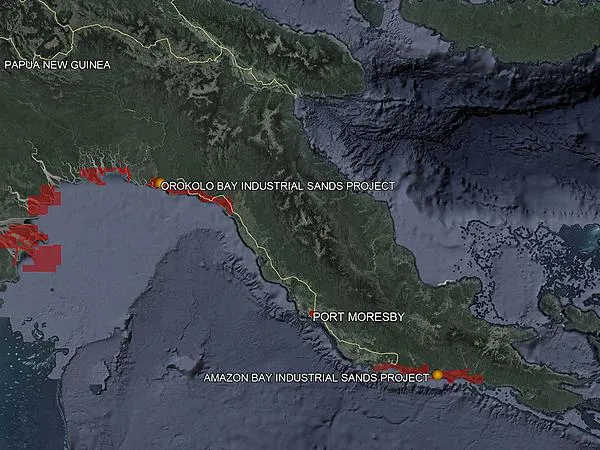
Following the lodgement of a mining lease (ML) application of its Orokolo Bay project in the Gulf, Mayur Resources Ltd says it is on its way to developing the first iron and industrial minerals project.
According to the firm, the application is about the full-scale development of the project with a planned saleable production rate of 0.5 million tonnes per annum (Mtpa) of vanadium titano-magnetite (VTM) and dense medium separation magnetite. This is also expected to produce 8,000 to 10,000tpa of a zircon rich heavy mineral concentrate and one Mtpa of high-grade silica construction material.
The Mineral Resources Authority (MRA) will now assess the application.
According to Mayur Resources Ltd managing director Paul Mulder, this was the final step of the project for it to be shovel ready.
“As Mayur’s second project to be advanced to final legislative approval in PNG, Orokolo is a simple, onshore, near-surface mining and processing operation with no requirement for grinding or chemical processing and a capital cost of only US$22 million (K77.19mil),” he said. “We, therefore, anticipate being able to work quickly with the MRA on this assessment. We’ve secured funding for the project which will not require further dilution and is exposed to an attractive forward-looking earning profile from next year.”
In the definitive feasibility study (DFS), the financial analyses used a pricing assumption for the VTM product founded on a cost of conservative long-term iron ore price of US$66.30/t (K231).
“This compares to a current iron ore price above US$150/t (K175), a major potential upside to the economics of the project,” he said. “In addition to the supportive iron pricing, and subsequent to the completion of the DFS, considerable work has also been undertaken and continues to be progressed to assess the suitability of the Orokolo Bay material to supply Singapore’s construction sector that imports huge amounts of this material. This potential opportunity is in addition to the supply of material to the Sydney market.”
He added that he was excited for the opportunity of establishing a mechanised sago harvesting operation post-mining.
“Our plan is to provide the community with sustainable employment and revenue opportunities that will continue well beyond the life of the mine, where sago production can serve both local demand and also be transported and sold in the larger Port Moresby market,” he said. “The MRA’s consideration of our application will occur in parallel with Orokolo’s pilot plant bulk sampling activities, for which the key plant and equipment is awaiting shipment into PNG. Construction of the pilot plant and the full-scale operation may overlap depending upon the timing of the mining lease approval process and the easing of the Covid-19 travel and transport restrictions into PNG.”
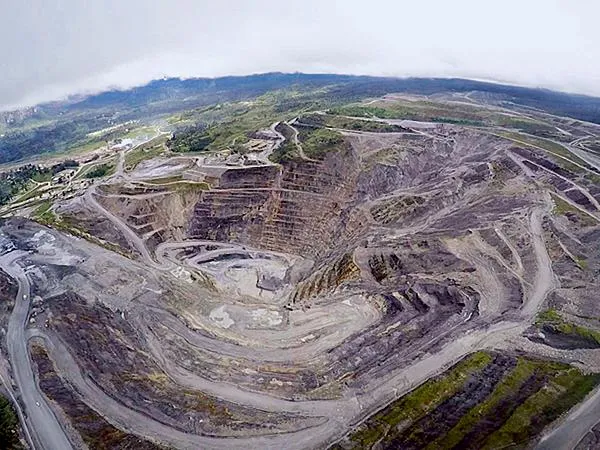
In its 2020 operational report, Harmony Gold said that in 2021, the target is to safely mine the present cutback to have a production between 172,300 and 177,700 ounces while at the same time, beginning the next planned pushback of the main Hidden Valley pit.
The report said, “Our aim is to obtain a renewal of the mining lease to support a proposed mine life extension beyond the current plan. In 2020, Hidden Valley’s safety and injury frequency rates are industry-leading and the operation achieved a fourth consecutive year of zero fatalities and recorded more than two million fatality-free shifts. This is testament to the culture of zero harm, safety coaching and leadership, as well as the use of critical control management that has been embedded operationally to drive safely.”
Its gold production, however, reduced by 22 per cent to 4,872kg and came out with an operating free cash flow of K871 million. This makes it the group’s second-largest contributor to operating free cash flow in 2020.
“Hidden Valley achieved an all-in sustaining unit cost of R562648kg (average gold price received), due to lower gold production in 2020 as a result of lower mined grade as the mine transitioned between various stages of the open pit,” it said. “Higher inventory adjustments and additional costs due to the Covid-19 controls, offset by reduced operating and sustaining capital expenditure year on year. Despite the challenges associated with the Covid-19 pandemic and the 14-day mill stoppage in January, caused by a fault in the mill’s electronic management system, Hidden Valley was able to increase the volume milled by 0.5 per cent to 3.9Mt (tonnes), although the recovered grade declined to 1.25g/t (grades), resulting in lower gold production.”
It added, “In addition to a planned mine life of four years, a pre-feasibility study for the life-of-mine extension has been completed which considers a two to three-year mine life extension and annual gold production of approximately 190,000oz. This study has now progressed to the feasibility stage, with study work expected to be completed during 2021.”
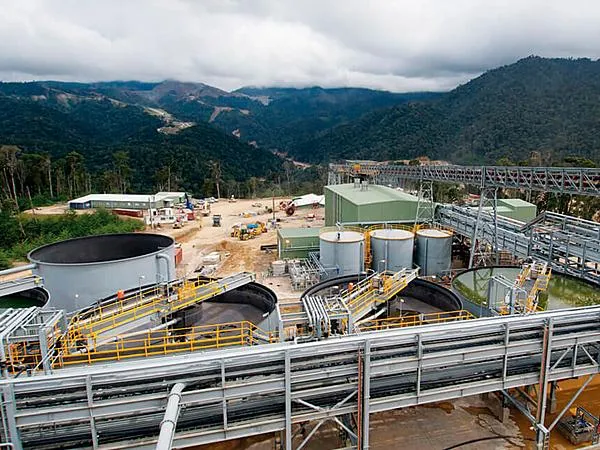
After receiving the Sandaun government environment impact statement, Environment and Conservation Minister Were Mori has approved the Frieda River mining project to move forward - with safety and health protocols in place.
This mining project has also the same characteristic and style to that of the Ok Tedi and the suggested Wafi-Golpu projects.
“They are related and because of that, the nature of mineralisation is refractory, meaning there is the presence of sulphur,” he said. “And for us to develop and exploit the resources at Frieda, we have to put in place measures that will mitigate the impacts on the environment. In the not so distant future, I would like to have an audience with governors of both East and West Sepik and their provincial governments as to how we could move forward the Frieda River development.”
He added, “Development can take place but it must be done with the understanding of both East and West Sepik. The potential impact on the Sepik River must be taken into account. The Sepik River has got a large catchment basin and all the creeks, tributaries that flow to the North of the Frieda River make their way down into the Sepik River. Currently, we have got ongoing issues pertaining to the environment. My department will ensure that in whatever we do to maximise the exploitation of our natural resources, we have to ensure that we do not destroy the environment.”
The current political environment in Papua New Guinea is creating investment uncertainties.
According to St Barbara Ltd, developer of the Simberi gold mine in New Ireland, proposed changes to the mining legislation would affect project economics in the future of the mine. General Manager of operations Jason Robinson said that the firm is working closely with the PNG Chamber of Mines and has been through engagements with key stakeholders.
“Production commenced in 2008 with the St Barbara acquisition in 2012,” he said. “Simberi underwent an operations transition in oxide expansion in 2014, with production ramping up to over a hundred thousand ounces which is where we sit today. All-in sustaining cost fits in a range of AU$16.65 (K44.24) to AU$18.40 (K48.89) an ounce. With our current oxide reserves, we see mining continue until 2024 when we transition to software production with a further 10 years of mine life.”
Robinson said the future of Simberi consists of two parts: uplift one ( maximise oxide resources), and uplift two (change to sulphide ore production).
“With uplift one, we will utilise the building brilliance platform to maximise the value from the remaining oxide resources,” he said. “We’ll be aiming for best practice at Simberi despite the investment uncertainty with the Mining Act. We will act with an owner’s mindset with a view we’ll be operating the asset for a further 10 years. In uplift two, the long-term future of Simberi is to transition to sulphide ore processing. This will lift gold production above our current rates.”
He added, “The production and cost profile remains relatively consistent over the coming years as we continue with oxide production. When we transition to sulphides, the production profile will increase as we target higher-grade sulphide ore, as our open pits increase with depth. It is time to build on that platform for the next phase of growth with sulphides. For the sulphide feasibility study, over the past six months, significant effort has been put in to understand and map out earning timeframes in detail with key milestone dates. It is worth noting that the sulphide expansion is a brownfield project extension of the existing operations.”
Kainantu Resources Limited (KRL) has started trading on the Toronto Stock Exchange in Canada.
Mining Minister Johnson Tuke extended his congratulations, adding that KRL is an emerging gold exploration company, proactively working with the people from PNG.
“KRL brings an experienced regional team to PNG at the junior exploration level, and their management has already teamed well with PNG nationals who have spent their careers working in our mining industry,” he said. “I trust this level of co-operation will set the groundwork for KRL’s future prospects in the country.”
The Mineral Resource Authority was glad to support KRL in its preparation for its public listing, saying that this is an example of a positive partnership that will benefit PNG and its people.
“I am also encouraged by the community stakeholder support in Kainantu for KRL as seen at recent Warden’s hearings in the district,” Mr Tuke said. “It gives me great pride as the local member to see the community working with KRL to support their efforts, which will generate further investment in the Kainantu region over time.”
He added, “I offer my congratulations to KRL as it continues its journey in PNG and joins the many existing miners already successfully operating in the country. The mining industry currently generates 26 per cent of PNG’s GDP and directly employs 20,000 people (and a further 30,000 people indirectly). As Minister, I stress the importance of mining to PNG’s economy and continue to encourage all levels of investment into the sector.”
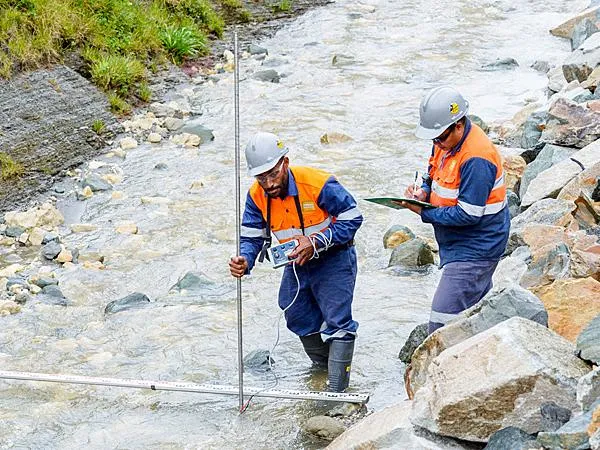
Researchers from Australia and the US have come to the conclusion that treating mine tailing with lime aided in stabilising arsenic in soil and sediments around the mine - which results in preventing toxic chemicals from remaining dissolved in water and impacting people and the environment.
This comes after researchers have conducted a study at the Porgera mine in Papua New Guinea - where they examined how climate and pH patterns work, specifically drying and wetting cycles, which impacts arsenic capture and storage. The tests have shown that the treated mine wastes rapidly released arsenic during rewetting, but the volume of arsenic released from the wastes decreased over time following repeated drying and wetting cycles.
The journal Applied Geochemistry published the results of this scientific work, adding that the Porgera Joint Venture should continue with treating tailings with lime to limit arsenic mobility in the watershed.
The lime at Porgera comes from a lime plant situated 7 kilometres away from the mine site. However, water comes from a reservoir at the Waile Creek which contains 7 million cubic metres of water.
Waile Creek
The findings are relevant as Porgera was permitted to open again after the Marape administration and the Barrick Gold came to an agreement, following months of legal feuds and negotiations.
Since April, Porgera operations had been suspended after its lease had expired and was not renewed.
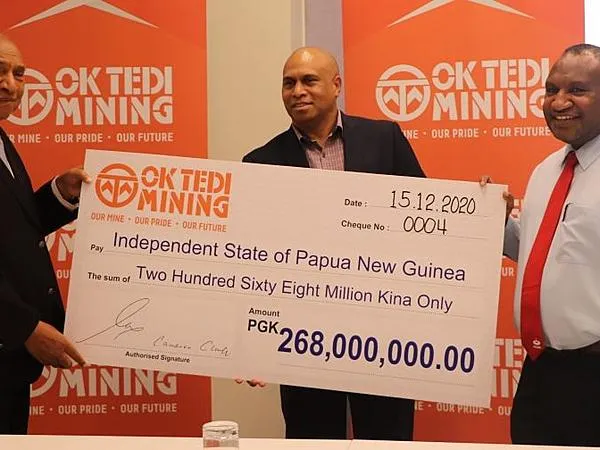
Following payment of an interim dividend of PGK150 million last September, Ok Tedi Mining Ltd (OTML) has said that the OTML Board has a final dividend of PGK400 million for 2020.
According to Chairman Sir Moi Avei, in spite of the health crisis, “OTML has had a strong and profitable year and this has enabled the Company to complete the PGK800 million self-funded investment in the Crusher Replacement Project, distribute PGK550 million to our shareholders and retain a strong and debt-free balance sheet”.
He added, “I’m grateful to the management and staff of OTML, as well our business and community partners for their efforts and resilience during a particularly difficult period.”
OTML Managing Director and CEO, Musje Werror, said: “I am proud of the way OTML had responded to the challenges we have faced this year. The Company suspended operations in August and September 2020 in response to reported cases of COVID19 on site. This was in addition to two periods of lockdown. A number of major changes to the business were necessary to resume operations without compromising the health and safety of our employees, business and community partners. This year’s performance would not have been possible if it wasn’t for their collective effort and support.”
Musje said that OTML was glad to have made a contribution to the economy this year - with more than $1bn of foreign currency earnings. This puts more than $550 million into the local currency market such as supporting the airline and the hotel industry.
Through a share placement, Gold developer Geopacific Resources has raised A$140 million to invest for the development of the Woodlark gold project in Papua New Guinea.
The placement will be finished in two tranches. The first tranche consists of 43.7-million shares with a cost of 42c each for an initial A$18.4-million under the existing placement company of the firm. The second tranche of 289.6-million shares, to raise A$121.6-million is subject for the approval of the shareholder.
Besides the capital raise, Geopacific also plans to have a share purchase plan (SPP) - also costing 42c each - which allows shareholders to subscribe for up to A$30,000 of new shares in the firm - to raise A$10-million.
A meeting is scheduled for February 3. The SPP closes on February 10.
“We are delighted with the strong support for the placement, welcoming a number of specialist Australian and international resource investment institutions to the register,” said chairperson Ian Clyne. “With the equity raising complete, the company intends to finalise the funding arrangement with Sprott Resource Lending, as a preferred project financier, with a view to commencing construction in the second quarter of 2021, and first gold expected in the fourth quarter of 2022.”
This project is anticipated to produce 980,000 oz over its 13-year mine life and to have an internal rate return of 34% and a net present value of $347-million.
Local contractors in Porgera have lost an estimated K111 million since the mine shut down.
This was disclosed by the Porgera Chamber of Commerce and Industry (PCCI) who according to its president, Nickson Pakea, said there were around 136 local contractors who provide servicing, support and heavy equipment parts.
He added that businesses in the area have felt the sting of the lockdown, saying that the government needs to look at other ways to open the mine.
“The mine shutdown has affected these businesses in a very big way and we are actually feeling the pinch,” he said. “We have 136 local contractors, that’s a composition of contractors supplying heavy equipment. We also have other micro-small to medium enterprises that benefit from the mine and local contractors apart from the national contractors. We have lost about K111 million over the last eight months. In Porgera, we only have mining which is our lifeline so when the mine shut down everything went down. We have been depending on the mine in terms of power, roads other basic services.”
Pakea welcomed the idea that the government will open the mine next year but urged to open them sooner. He also asked them to look and find ways to work out the landowner issues.
The chamber also acknowledged the assistance of the government of K10mil for the trucking industry.
Follow on LinkedIn:
PNG Business News
Be the "First" to get our exclusive Digital Magazine & Weekly Newsletter.