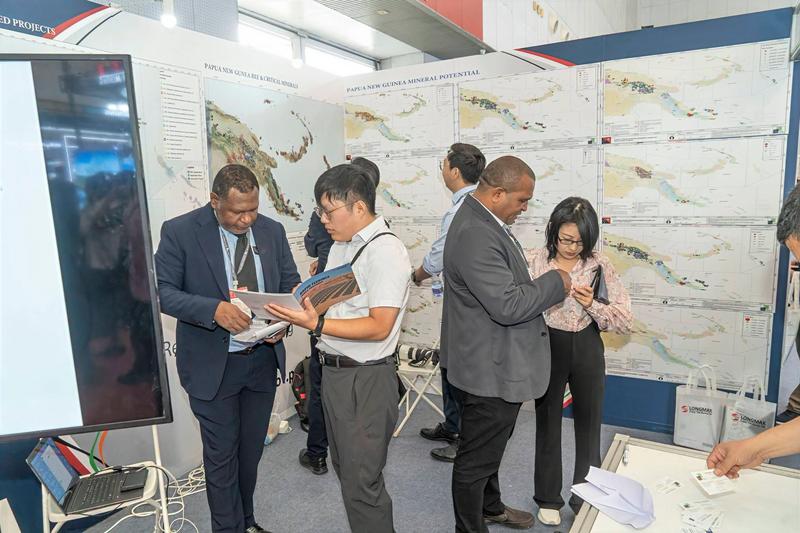
Papua New Guinea is open to Chinese mining and exploration investment, but projects must deliver fair benefits for landowners and the country while protecting the environment, Mining Minister Solen Loifa says.
Loifa made the remarks during an address to potential investors at the China Mining Conference and Exhibition 2026 in Tianjin, China, on Sept. 11.
He said the government welcomed investment that created returns for investors while also supporting the welfare of communities, the country’s economic interests and sustainable environmental outcomes.
“Mining should be done with win-win co-operation for the government, the people and investors,” Loifa said.
His message reflects Prime Minister James Marape’s position that Papua New Guinea welcomes investment when it delivers a fair share of benefits to the country and its people.
Loifa said the government was preparing for the next generation of mines by strengthening systems, improving regulatory processes and pursuing legislative reforms to address challenges in the sector and support economic growth.
The reforms include the establishment of a one-stop shop for mining and minerals investment. The government plans to realign policies and institutions to create an integrated service centre that centralises licensing, permitting and compliance processes.
The initiative is intended to reduce the fragmented departmental processes currently faced by explorers and miners.
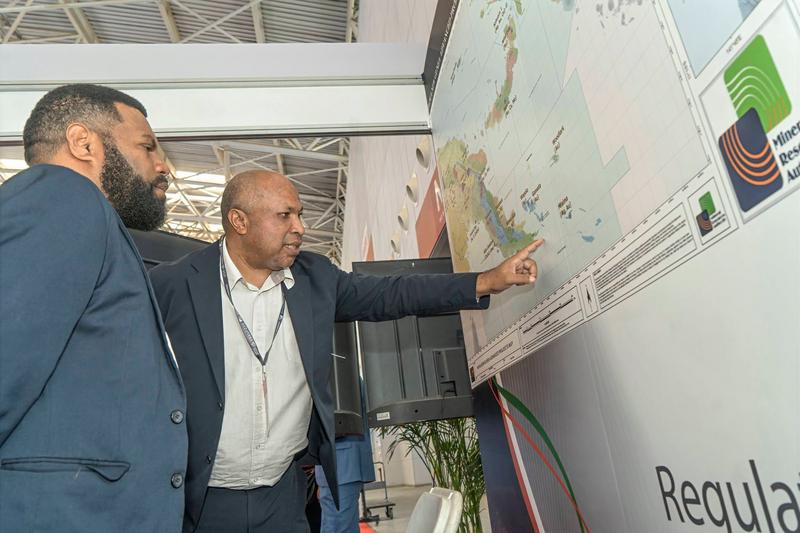
The government also plans to extend the tenure of exploration licences from two years to five years. Loifa said the change would provide greater stability for high-risk, technology-driven exploration programmes.
A new retention licence category is also proposed. The licence would allow companies to retain discovered mineral deposits during periods of unfavourable market conditions or when further technical work is required to establish viability.
For projects of national significance, the government is moving towards a merit-based and strategic allocation of mineral tenements rather than relying solely on the first-in-time application process.
Loifa said the proposed approach would prioritise genuine operators in highly prospective areas. Existing licence holders and applicants seeking to explore areas not reserved for strategic purposes would not be affected, with first-in-time and merit-based applications to be considered on a case-by-case basis.
The government also plans to reduce administrative delays by increasing staff capacity and moving towards an electronically automated system. Proposed regulations would introduce stricter timelines for licence renewals to prevent projects from being delayed by administrative processes.
The Mineral Resources Authority, the government agency responsible for regulating Papua New Guinea’s mining sector, is undergoing a strategic realignment as part of the reforms. The authority is expected to serve as the main gateway for the proposed one-stop shop mining and minerals investment initiative.
“Our message to the global mining community is clear,” Loifa said. “We have heard your concerns regarding regulatory uncertainty and administrative delays. We are removing the hurdles that have historically slowed discovery while ensuring that the people of Papua New Guinea benefit equitably from our resource wealth.”