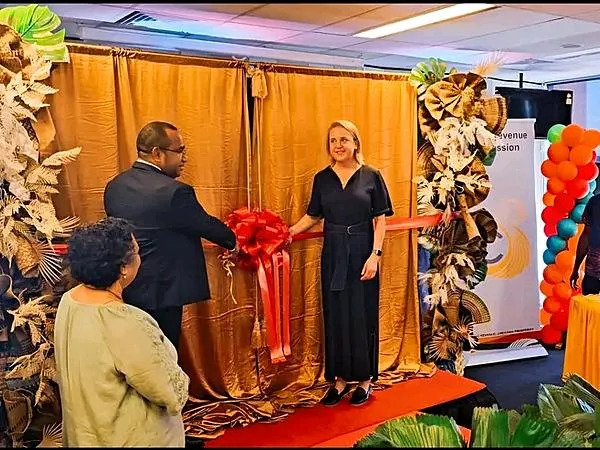
The Internal Revenue Commission (IRC) unveiled its revamped debt allotment letters, signaling a significant step towards clearer communication with taxpayers and tax agents.
This is in line with IRC’s desire to communicate with taxpayers and tax agents through one of their projects part of the broader Taxpayer Services Strategy to foster voluntary compliance.
IRC wants to make sure they are as clear as possible, with all their interactions, so that taxpayers and tax agents understand their obligations and the consequences of non-compliance. By delivering messages clearly, there is less room for misunderstanding.
The launch event, was held on May 15th, at the Revenue Haus - Downtown, Port Moresby, attended by prominent figures from both the IRC and Australian Taxation Office (ATO) coming together to celebrate the culmination of months of diligent work. ATO has supported IRC in this important work.
These new letters convey the same messages and have the same demands as the old letters – the content is not new, the look and feel is.
Commissioner of Taxation, Mr. Samuel Loi, said, “The launching of the Letters achieves the 2023 IRC corporate plan to make voluntary compliance easier for our taxpayers or foster voluntary compliance, which is one of the pillars in the IRC’s Corporate Plan.
“Under the Taxpayer Services Strategy, the New Improved Letters Project developed by the Debt Collection Operations Team with the assistance of our ATO partners has made it simple and easy for Taxpayers to understand.”
This batch of letters includes:
Despite their modern appearance, these letters retain the IRC logo. Recipients are advised to note that these letters are legitimate communications from the IRC, not scams. The importance to read and understand the requirements outlined in the letter and take necessary actions promptly is adviced.
IRC Commissioner General Mr Sam Koim OBE, in his address, underscored the importance of providing comprehensive information to taxpayers, emphasizing the need for clear reasoning behind adverse decisions.
“When I came to the IRC and I saw a couple of letters that were written, generic ones that were sent to text phase, text phase were constantly asking why am I sending this letter. Sometimes they told me and I tried to even make a sense out of it.”
“If you are taking an adverse decision against the text phase, you've got to give the reasons. And then also cite where they have defaulted and the law that was breached. So, insufficient information was provided and that's where this project is initiated to at least draft templates for clear information.”
Koim also highlighted the IRC's commitment to supporting taxpayers in financial distress, emphasizing the availability of structured payment plans tailored to individual cash flows. This proactive approach aims to alleviate the burden on taxpayers and encourage compliance.
He added, “We encourage tax agents to talk to your taxpayers about the new letters. They need to take notice of the requirements in the letters and take action accordingly.”
Commissioner General Sam Koim, underlined this commitment, highlighting the significant role of the new letters in facilitating easier understanding of tax obligations.
IRC DCOD Director, Mrs. Kaia Fabila, delivering the keynote speech, reiterated the overarching objective of the project to foster voluntary compliance through enhanced clarity and transparency.
She emphasized that while the content of the letters remains consistent with previous versions, the redesigned format aims to improve readability and comprehension.
The project's success owes much to the collaborative efforts of internal and external stakeholders, including feedback from tax agents.
“There has been a lot involved in this project to get to where we are today. The entire debt and lodgment suite of letters has been reviewed and rewritten. There has been internal and external stakeholder management, and thank you to the tax agents in the room who have provided feedback.” Ms. Fabila reiterated.
Moreover, the incorporation of plain English and an active voice, coupled with color-coded themes for different types of correspondence, further enhances the user experience and have a much better use of formatting and space, all leading to greater taxpayer and tax agent understanding of their obligation.
Colour coding themes corresponds as follows:
“I am excited to see the impact that these new, improved debt and lodgement letters will have on our organization and our wider community,” she added.
A significant aspect of the overhaul is the reduction in the number of templates, from 54 debts and lodgement templates to approximately 33 templates, achieved through the implementation of variable-based templates. This streamlining not only simplifies the process for taxpayers but also enhances efficiency for IRC staff.
The launch ceremony culminated in the unveiling of the new letters, symbolizing a significant milestone in the IRC's journey towards modernization and efficiency. With the renewed collaboration between IRC and ATO, as underscored by a recent memorandum of understanding, stakeholders can look forward to further advancements in taxpayer services.
As the IRC embraces its new look and branding, marked by user-centric communication and streamlined processes, it reaffirms its commitment to becoming a robust and efficient tax administration. The launch of the new debt allotment letters indicates a new era of clarity, transparency, and cooperation in tax compliance.
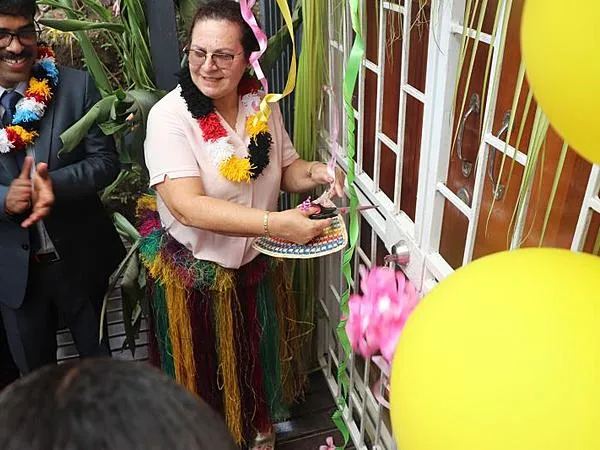
Governor of the Bank of Papua New Guinea Ms. Elizabeth Genia officially opened the Women’s Micro Bank (WMB) Branch in Kerema (Tuesday May 07), making it the fifth WMB branch to be operating in Papua New Guinea.
“Today’s official opening of its fifth branch celebrates another achievement in a long line of achievements we have seen for women’s microbank. I am sure your highly esteemed founder, the late Janet Sape, would have been extremely proud of the organization affectionately known as Mama Bank, now one of the top 50 companies for women in APEC countries and well regarded as a financial services innovator,” Ms. Genia told the people of Kerema town who turned up in hundreds to witness the important occasion.
Ms. Genia stated that WMB has become a key driver of financial inclusion and financial inclusion was originally a BPNG led innovation but is now a national strategic priority.
She applauded women’s micro bank services in addressing several financial inclusion objectives, particularly highlighting depositing taking and lending opportunities to the 85% of the population who are still unbanked.
“Opening of the Kerema branch is another way Women’s Microbank has made a commitment to encouraging people to access financial services.”
“I understand the Kerema branch will enable the people of the district, particularly the women, to take advantage of services such as the MSC credit scheme, financial literacy training, as well as basics, including deposit takings and loans. The branch will provide a practical and desirable alternative to the risks of holding cash, informal money lending and money scams, all of which stop people from building a comfortable standard of living.”
“Today’s official opening gives members of the community the opportunity to take significant steps forward towards building the financial security and financial independence,” the BPNG Governor said.
Coinciding with the opening, was also the launching of the Kerema District SME Policy which was officially launched by Papua New Guinea Prime Minister Honourable James Marape.
The Prime Minister committed three million kina towards the WMB Kerema branch as part of the Government’s partnership with KDDA in assisting to create a credit lending facility where Gulf women especially mothers in SME can benefit.
“Get into productive micro to small medium enterprises and do well for yourself. By doing well for yourself, you will be preparing your children well for the future,” the prime minister encouraged women from Gulf province.
Kerema Open MP Honourable Thomas Opa also committed two million kina towards the WMB Kerema branch and also became the first customer to open an account with the branch.
Mr. Opa emphasised that empowering women in Gulf province was a big challenge but was positive that with the setting up of a WNB (mama) branch in his province and assistance from the government with seed capital to fund lending credit facilities, he was confident mothers and young girls will take advantage of the opportunity and use the facilities wisely to venture in various business opportunities and empower themselves financially.
Other important delegates who witnessed the SME Policy Launching and WMB opening included, Kerema Open MP and Vice Minister for Petroleum and Energy Honourable Thomas Opa, Wapenamanda Open MP and Vice Minister for Works and Highways Honourable Mikki Kaeok, Moresby North West Open MP Lohia Boe Samuel, BPNG Assistant Governor George Awap, WMB CEO Gunanidhi Das, CEFI Executive Director Saliya Ranasinghe and members of the Kerema District Development Authority and the Gulf Provincial Executive Council.
With a focus on infrastructure development and a rising middle-class market, including Small and Medium Enterprises (SMEs), Papua New Guinea presents a promising landscape for investors.
PNG’s abundant natural resources in mining, oil and gas, forestry, fisheries, and agriculture further enhance its appeal. From coffee and cocoa to vanilla and local produce for imports, the country's diverse agricultural sector adds depth to its economic profile.
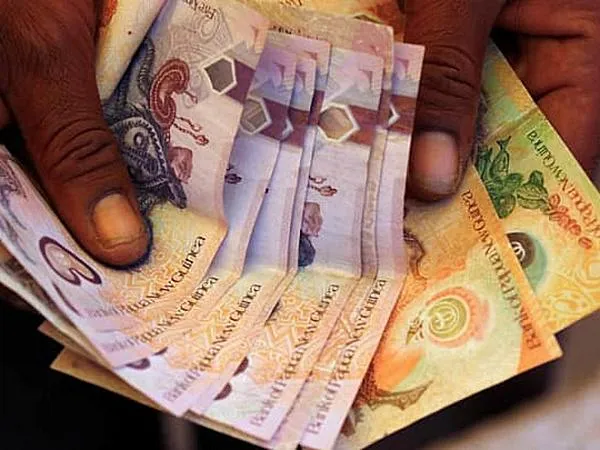
However, amidst this potential, discussions around the fluctuation of the PNG Kina have been prevalent. Prime Minister Hon. James Marape acknowledges this concern and assures that the Department of Treasury and Central Bank are diligently monitoring the situation to prevent any extraordinary inflation.
This was his response to a report by ANZ Bank foreign exchange insight researchers, economists Kishti Sen and Tom Kenny, published in the media on 7th May, on the depreciation of the Kina since May 2023.
He attributes the Kina's depreciation to its artificial pegging in 2014, a measure taken to maintain its value, which ultimately became unsustainable. With the peg now removed, the government is keen on ensuring a stable currency value aligned with market dynamics.
PM Marape said, “The Kina was artificially pegged in 2014, probably with good intentions to maintain its value. But, over time, it became a demotivation for importers to bring back their export earnings as the Kina became more expensive and not on its fair market value.
“We have now unpegged it, and Treasury and Central Bank are observing closely to ensure the depreciation of the Kina does not trigger extraordinary inflation over our 2024 inflation focus. If it does, we will intervene.”
Prime Minister Marape emphasizes the importance of encouraging exporters to repatriate their earnings, thereby supporting the Kina's value.
By collaborating with entities across agriculture, fisheries, forestry, mining, and petroleum sectors, the government aims to facilitate a conducive environment for economic growth and to streamline processes for investors, particularly in US Dollar accounts and funds.
“A lower Kina means more for these people when they bring in their dollars. This will assist push the Kina upwards purely on market value.”
“Last year, we made well over K60 billion in exports, but the return to our economy was much less. If all our exporters brought back to PNG a major portion of earnings, if not all, then the Kina will appreciate.”
“We are working on tidying this, and Central Bank has been asked to look at ease of investors holding US Dollar accounts and for ease of them accessing their own funds.”
The Marape government's agenda revolves around stimulating large-scale investments and trade, with a strategic focus on reducing dependency on imports through increased manufacturing and downstream processing.
Ongoing reforms target high debt levels, while Foreign Direct Investment (FDI) in natural resources promises to revive the economy for years to come.
Acknowledging the contributions of key partners such as Barrick Gold and ongoing projects by major players like ExxonMobil, TotalEnergies, and Santos, the government remains committed to fostering an environment conducive to investment.
“On that note, I want to appreciate Barrick Gold – our partners in New Porgera – for their commitment to remit a minimum of 51 percent of earnings from Porgera,” said PM Marape.
The Prime Minister said Government has been working with investors to bring in capital from Foreign Direct Investment in both exploration and construction, while work is continuing to get the next mining and gas projects up and running.
“ExxonMobil, TotalEnergies and Santos each have over $100 million exploration programs running this year; they will also maintain spending in pre-Papua LNG FID.”
Projects such as the Pasca condensate project and the Wafi-Golpu mine underscore PNG's potential as a significant player in the market.
“We progressing the small Pasca condensate project that would be 50 percent owned by MRDC for Gulf and 50 percent owned by investors. By this year SML for Wafi-Golpu should be issued to kick start construction.”
“All these FDI are for this year and next year, as we head to meet the big construction of Papua LNG, and later P’nyang LNG and Wafi Golpu mine,” he said, adding that PNG’s agriculture, forestry and fisheries exports have been steadily improving which would assist boost the Kina.
He said if any urgent needs arose out of this current situation, Government would make interventions to families, businesses and investors, as it has continuously done over the last couple of years.
“Our government is on record for giving the biggest relief assistance to support the economy and our people’s livelihoods in re-moving taxes for certain work bracket and paying more in school fees. We will continue to intervene.”
The Prime Minister said for the long-term address of foreign exchange and other structural issues in the PNG economy, allowing the Kina to float on its own strength was bound to happen.
“I want to assure everyone that we are conscious of the domestic impact of a depreciated Kina, especially its effects on our small, import dependent economy. I do not want the burden of this to be passed onto store shelves to affect our people further, so we are keeping a very close watch,” said Prime Minister Marape.
In addressing structural issues, PM Marape emphasizes the need for a long-term solution, allowing the Kina to float based on its inherent strength.
While mindful of the challenges posed by a depreciated currency, the government remains steadfast in its commitment to supporting businesses and safeguarding livelihoods.
The PNG government's focus on creating a conducive socio-economic environment highlights its dedication to fostering growth. By prioritizing infrastructure development, safety and security measures, regulatory practices, governance, and access to health and education, the Marape government aims to lay the foundation for a resilient and thriving economy.
Papua New Guinea took a significant stride towards sustainable economic development with the inauguration of the Green Finance Centre (GFC) in a collaborative effort spearheaded by the Bank of Papua New Guinea (BPNG) and the Global Green Growth Institute (GGGI).
The move aims to revolutionize PNG's financial sector by integrating green finance principles into its core operations.
Other key partners include the Centre for Excellence in Financial Inclusion (CEFI), the Department of Climate Change and Development Authority (CCDA), and the Alliance for Financial Inclusion (AFI).
The effort’s primary objective is to tackle environmental and climate change challenges in PNG through innovative and inclusive climate finance and green investment mechanisms within the financial and banking sector. This aligns with PNG’s commitment to achieving low-carbon, sustainable, and inclusive economic growth while addressing climate change risks across the country.
This landmark collaboration launched on 25th March at the prestigious Hilton Hotel, Port Moresby. Distinguished guests included Chief Secretary to the Government of PNG Mr. Ivan Pomaleu OBE, Conservation Environment & Climate Change Minister Hon Simo Kilepa MP, and the Governor of the Bank of Papua New Guinea Mrs. Elizabeth Genia, marked a pivotal moment in the nation's financial landscape.
The ceremony also witnessed the participation of key dignitaries, including the Minister for the Environment Hon. Simon Kilepa; Dr. Alfred Hannig, Executive Director for Alliance for Financial Inclusion (AFI); New Zealand High Commissioner, Peter Zwart; His Excellency Guillaume Lemoine, French Ambassador to PNG; and Mr. George Awap, Assistant Governor - BPNG.
At the heart of the initiative lies the Inclusive Green Finance Policy (IGFP), developed by GGGI and CEFI in 2021. With a generous funding of USD 670,000 from the New Zealand Ministry of Foreign Affairs and Trade (MFAT), under the Low Emission Climate Resilient Development Program (LECRD), the IGFP aims to integrate green finance practices into PNG’s financial landscape.
One of the highlights of the launch was the unveiling of the GFC's logo and website, symbolizing a new era of environmentally conscious and financial practices in PNG. The steering committee, chaired by BPNG, will guide the GFC in implementing the IGFP and leading future initiatives related to green finance flows in the country.
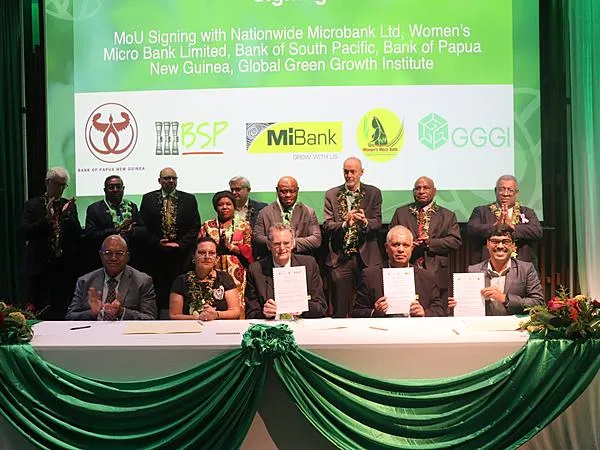
The signing of a Memorandum of Understanding (MoU) among BPNG, GGGI, and three financial institutions—Bank of South Pacific Group (BSP Group), Nationwide Micro Bank (MiBank), and Women’s Micro Bank (Mama Bank)—underlines the commitment to integrating the IGFP into their operations and development of green loan products.
The grant agreement signed between GGGI and Agence Française de Développement (AFD) further solidifies international support for PNG's green finance agenda. With a six million Euros grant, PNG through the GFC will receive one million Euros to support the ongoing work of IGFP implementation and an additional 1.8 million Euros for designing and capitalizing of a Green Refinancing Facility (GRF).
In his keynote remarks, Chief Secretary Mr. Ivan Pomaleu OBE hailed the establishment of the GFC as a bold step towards greening PNG's financial sector, emphasizing the importance of promoting low-emission options to combat climate change impacts.
“In line with the government’s mandate, the Green Finance Centre will strongly advocate for banks to channel loan investments in sectors such as agriculture, energy, SMEs and bioeconomy to promote low-emission options to reduce our carbon footprint and lead by example in the region and globally, demonstrating our commitment to addressing climate change impacts,” said Mr. Pomaleu.
Echoing similar sentiment, BPNG Governor Mrs. Elizabeth Genia reaffirmed the bank's commitment to promoting national financial inclusion and environmental sustainability, acknowledging the pivotal role of GGGI and CEFI in driving this initiative forward.
“The Bank of Papua New Guinea is committed to promoting national financial inclusion and the greening of the financial sector and the launch of the Green Finance Center underscores the commitment of all stakeholders involved to drive sustainable development and address climate change challenges through innovative financial mechanisms,” she added.
High Commissioner Zwart stressed the urgency of climate action and commended the collaboration between the New Zealand Government, BPNG and GGGI in establishing the Green Finance Center.
He said: “The New Zealand Ministry of Foreign Affairs and Trade is proud to provide funding for IGFP and collaborate with the Bank of Papua New Guinea and GGGI in establishing the Green Finance Centre which will play a crucial role in working with financial institutions to mobilize increased green lending and investments in Papua New Guinea.”
AFD Executive Director Mr. Philippe Orliange expressed support for the IGFP and the Green Finance Center, affirming AFD's commitment to replicating the success of greening PNG’s financial sector across the Pacific Region.
“Greening the financial system in PNG is crucial towards the fight against climate change and I am proud that France is happy to help PNG tackle this. PNG is a role model in the Pacific, and we wish all the best to the team involved,” he added.
The launch of the GFC aligns seamlessly with BPNG - CEFI’s Third National Financial Inclusion Strategy (NFIS 3) (2023-2027) and PNG’s climatic goals outlined in PNG Vision 2050 and Medium-Term Development Plan IV (2023-2027), highlighting the integrated approach towards sustainable development.
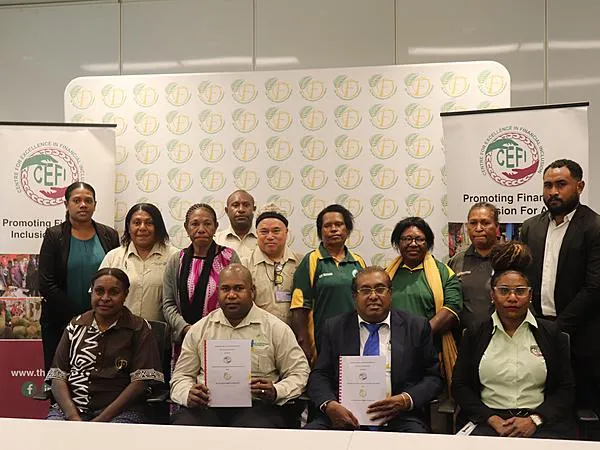
The Ok Tedi Development Foundation (OTDF) and the Centre for Excellence in Financial Inclusion (CEFI) today (Tuesday 12th March) officially entered into a Memorandum of Understanding (MoU). This agreement solidifies their collaboration to implement a Financial Literacy Program aimed at empowering small and medium enterprises (SMEs) and women-led SMEs in selected regions of the Western Province.
Under the MoU, CEFI will conduct Training of Trainers (ToT) sessions in designated areas, equipping 25 trainers with the necessary skills and knowledge in personal money management concepts. These trained individuals will then be responsible for imparting direct retail training to 1,000 SMEs and women-led SMEs within the Western Province.
The signing ceremony, held in Port Moresby, saw Mr. Andrew Mari, Acting Chief Executive Officer and Executive Manager Program Services of OTDF, and Mr. Saliya Ranasinghe, Executive Director of CEFI, formalize the partnership.
The primary objective of this collaboration is to provide comprehensive financial literacy training and facilitate financial inclusivity for SMEs and women-led SMEs in the Western Province, particularly in Community Mine Continuation Agreement (CMCA) regions.
Mr. Andrew Mari expressed his gratitude for the partnership, stating, "This marks the beginning of a crucial initiative for us at OTDF. This will be the first MoU that we (OTDF) will be signing with CEFI and we are privileged that CEFI will partner with OTDF to roll out the financial literacy training targeting respective women associations,” said Mr. Mari.
He further emphasized the significance of the MoU in empowering women associations financially and enabling them to meet the necessary requirements for advancing their SME businesses in Western Province.
In response, Mr. Saliya Ranasinghe affirmed CEFI's commitment to the partnership, stating, "Financial literacy is pivotal to the development process in the Western Province. We are eager to work with OTDF in rolling out the Financial Literacy program and empowering SMEs."
Mr. Ranasinghe encouraged women association leaders to utilize the training effectively, highlighting their role as community role models. He also outlined CEFI's plans to expand financial services in the Western Province, collaborating with local financial institutions to bring services closer to the people.
“We are looking forward to this partnership as financial literacy is going to be the corner stone in this whole development process that we would like to roll out in Western province,” he said.
He highlighted that Papua New Guinean has 16,500 access points that includes banks, sub-banks, agencies, eftpos machines and ATMS.
He explained that CEFI would like to expand this services in Western province by working with financial institutions in the province to bring the financial services closer to the people.
“Another important step that we would like to proceed in this particular agreement as we maintain a very good repo with the financial sectors in the country and we will be working with the banks to open up agencies in those respective areas and to bring the financial services to the door steps of this SME clients,” he said.
He concluded by affirming CEFI's commitment to monitoring the progress of the program, ensuring its impact on the lives of the people in the Western Province, with the intention of replicating the model in other provinces.
This partnership between OTDF and CEFI represents a significant step towards enhancing financial literacy and empowering SMEs in the Western Province, fostering sustainable economic growth and development.
PNGX Group, operator of Papua New Guinea’s national stock exchange, is pleased to announce that it has received advice from the Internal Revenue Commission (“IRC”) that, having looked into the taxation treatment of the various PNG residents impacted by the establishment of depository interests (“PDIs”), the IRC is satisfied that the existing tax treatment of dividend income will not be altered significantly. Similarly, the treatment of stamp duty will not be altered significantly.
The IRC has accepted that PDIs will be treated as a pass through arrangement for income tax purposes. This means that PDI holders will be taxed on any dividend distributions they receive on PDIs as though they were shareholders receiving the company dividends directly, subject to overseas withholding tax. PNG dividend withholding tax will not be applied.
PDIs will be subject to the same stamp duty arrangements as ordinary shares. That is, onmarket transfers of PDIs on PNGX will not be subject to stamp duty. Off-market transfers of PDIs not on PNGX may be subject to stamp duty as the transfer of a marketable security.
Newmont Corporation is the first company to be listed in PNG using PDIs. The IRC has acknowledged that the use of PDIs may be more common going forwards.
The IRC reserves the right to reconsider its position should new information come to light
“Without this positive advice from the IRC, PNG holders of PDIs would have faced complex taxation treatment of dividends from overseas companies listed on PNGX using PDIs. This complexity would have been to the disadvantage of both PNG investors and the PNG capital market” said PNGX General Manager, Ms Elizabeth Wamsa. “The advice from the IRC means that investors will receive dividends net of USA withholding taxes, and they will need to seek their own advice on the taxation of the dividends and their entitlement to a foreign tax credit”.
“We thank the IRC for its pragmatic considerations and its support for the development of the capital market,” she said.
Treasury has recently approved the Manus Provincial Government Budget of K180,594,462, presented last week to Prime Minister Hon. James Marape.
Prime Minister Marape said the Manus provincial budget, and the budgets of Enga, New Ireland Province and the Autonomous Region of Bougainville have been approved.
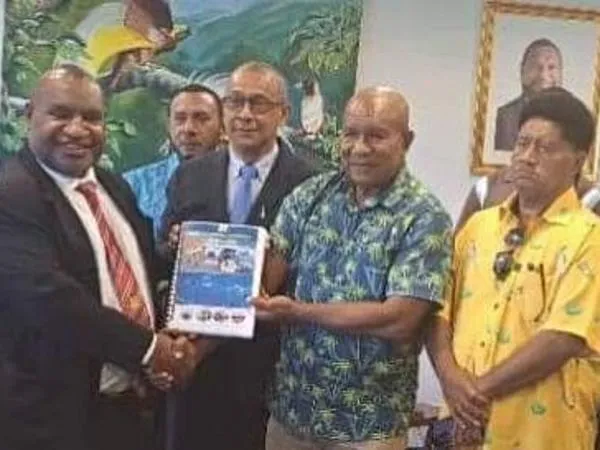
Governor Hon. Charlie Benjamin presented the K180,594,462 money plan, including the Manus District Development Authority Budget and budgets for his 12 local level governments to the Prime Minister to comply with Section 105A of the Organic Law on Provincial and Local Level Government.
Governor Benjamin said he was thankful to the Prime Minister and the National Government for the 2024
Budget allocation of Service Improvement Program grants and Functional grants to his province, including infrastructure funding under the Connect PNG Program for the Manus highway.
Forty (40) percent of the budget is earmarked for the development of infrastructure and related programs as stimulus for economic growth of the island province.
Key expenditure is as follows: – Infrastructure – K54.4 million (30%), Economic – K17.2 million (10%), Education – K35.4 million (20%), Health – K5.5 million (3%) while Personnel Emolument and Administration together totaled just over K52 million.
For the 2024 PSIP plan, Education takes the biggest slice of K3million at 30 percent, Economic programs next at K2.7million or 27 percent, Infrastructure at K2million (20%) and Administration at K1 million (10%).
For the 2024 DSIP, Education again holds the lead at K6 million (60%), and everything else – Administration, Health, Law & Order, Church Projects – at K1million each (10% each).
The 2024 Special Support Grant break up is as follows: Economic K4million at 40 percent; Education and Transport each at K2 million (20%); and Infrastructure (Buildings) and Law & Order each at K1 million (10%).
Manus is placing emphasis on the development of its revenue sources and the creation of a Special Economic Zone as the main strategy to generating more revenue between now and 2030.
Prime Minister Marape acknowledged Governor Benjamin and MPG for being among the first province to present their budget, while affirming National Government commitments to assist fund shared responsibilities such as infrastructure, the provincial hospital and technical colleges.
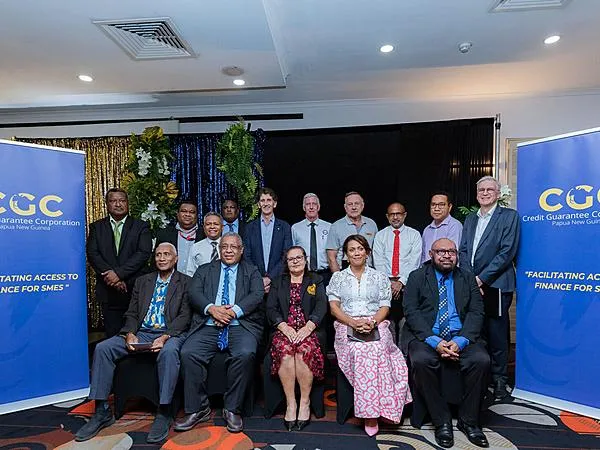
The Credit Guarantee Corporation Limited (CGC) is pleased to announce the signing of groundbreaking agreements with ten leading financial institutions in the country aimed at providing critical credit guarantees to support small and medium-sized enterprises (SMEs) in Papua New Guinea (PNG).
These landmark agreements reinforces CGC’s commitment to bolstering the growth and development of SMEs, which are the backbone of the PNG’s economy. By partnering with financial institutions, CGC aims to alleviate the obstacles faced by SMEs in accessing affordable credit to develop and grow their business and ultimately contributing to economic growth and job creation in the country.
Under the newly inked agreements with FinCorp, Financial & Private Sector Staff Savings & Loans Society Limited, Kina Bank, MiBank, Moni Plus, Nasfund Contributors Savings and Loan Society Limited, Nambawan Savings and Loan Society Limited, Peoples Microbank Limited, Resources & Investment Finance Limited and Womens Microbank, CGC will provide credit guarantees to the partnering financial institutions, enabling them to extend much-needed credit facilities to SMEs. Through this collaboration, SMEs will have improved access to financing, allowing them to expand their businesses, create employment opportunities, and contribute to the overall economic growth of PNG.
In a speech delivered for the Prime Minister by the Chief Secretary Mr. Ivan Pomeleu, he said, “Today marks a significant step forward in our collective and sustained efforts to foster economic growth, support small and medium-sized enterprises (SMEs), and create avenues for increased employment opportunities.”
Mrs. Elizabeth Genia, Governor of the Bank of PNG said, “CGC’s role is a strategic enabler and the signing of the agreements today is also the start of the long journey to achieving the various strategic objectives set by the Government, notably the SME Policy, the PNG Development Strategic Plan, Vision 2050, the Financial Inclusion Policy, the Green Finance Policy and the recently launched Medium Term development plan IV, amongst others.
Mr. Dominic Sikakau, CEO of CGC, expressed his enthusiasm about the agreements, stating, “These partnerships mark a significant milestone in our efforts to empower SMEs and drive economic growth in PNG. By providing credit guarantees to our partnering financial institutions, we are facilitating increased access to finance for SMEs, nurturing entrepreneurship, and encouraging growth across different sectors of our economy.”
Mr. John Cholai, Chairman of Nambawan Super Savings and Loans (NSLS) in his remarks said “CGC provide NSLS the confidence to enter the MSME space, a space that for a long time has been occupied by commercial banks. The support will allow us to grow our capacity and capability into expanding out more to the MSME space and off course the self-employed sector. 0ver 43% of our membership are females and the CGC offers us great opportunity to support women in business, while promoting ‘saving first culture’.”
The signing ceremony was attended by Chief Secretary on behalf of the Prime Minister, CEOs of various participating financial institutions, the Governor of Bank of PNG, representatives from various government departments and donor agencies, underscoring the collaborative and concerted effort to address the financing needs of SMEs in PNG.
The agreements signify a crucial step forward for CGC in supporting the growth and sustainability of SMEs, as well as the overall economic development of PNG. CGC remains dedicated to fostering an environment where SMEs can thrive, innovate, and contribute to the nation’s prosperity.
Prime Minister Hon. James Marape announced recently the historic appointment of Ms. Elizabeth Genia as the first woman Governor of the Bank of Papua New Guinea (BPNG). Ms. Genia, who has been serving as the Acting Governor of BPNG since January 2023, was officially appointed by the National Executive Council (NEC).
“I am pleased to announce the historical appointment of Ms. Elizabeth Genia as the first woman Governor of the Bank of Papua New Guinea,” said Prime Minister Marape.
“This signifies the confidence that my government places in the women of Papua New Guinea. Mrs Genia through her work has progressed up the rank of the bank the last 40 years for her to be picked as a qualified candidate”
Highlighting the government’s commitment to collaboration, Prime Minister Marape expressed anticipation for the cooperation between the government and the Bank of Papua New Guinea. He emphasised the focus on addressing persistent issues such as national fuel security, foreign exchange, and the proper organisation of the Credit Guarantee Corporation, launched in 2022, to sustain and boost the growth of the small to medium enterprise (SME) sector.
“The Government will respect the independence of Central Bank but use the monetary policy to support and grow the economy,” he said.
Prime Minister Marape also told Ms. Genia that BPNG must ensure a steady flow of funds from export revenue, especially from the PNG LNG Project and mines and other export items, to beef up the country’s foreign exchange which is now at K14 billion.
“This will ensure that importers have ready access to foreign exchange to import goods than wait for a long period of time,” he said.
“The bank should also be encouraging resource projects to keep their export earnings onshore.
“One of the country’s biggest problems over the last 10 years has been the foreign exchange issue.”
Prime Minister Marape also told Ms. Genia for BPNG to look at the possibility of using the Chinese ‘renminbi’ as an alternative to the US dollar, given China’s increasing trade with PNG.
“I want the bank to look at the possibility of using the Chinese currency, given our increasing trade with China,” he said.
Prime Minister Marape also wants BPNG to properly organise the Credit Guarantee Corporation, which was launched in 2022, to sustain and boost the growth of the SME sector.
“I want SMEs to be properly linked to the Credit Guarantee Corporation,” he said.
“The government will support with some funding for SMEs as our people want cheap, easy to obtain loans.
“This is also very much of the government’s Medium-Term Development Plan IV where we aim to have jobs created from SMEs.”
Prime Minister Marape also told Ms. Genia that the BPNG must operate Central Bank with a PNG character and understanding of PNG people and banking requirements.
Prime Minister Hon. James Marape expressed his wholehearted endorsement for the groundbreaking K27.377 billion 2024 Budget, presented in Parliament by Treasurer Hon. Ian Ling-Stuckey. The budget, anchored in the theme ‘Securing Our Future,’ reflects a commitment to propelling Papua New Guinea into economic prosperity with pro-development focus as well as continuing assistance to Papua New Guineans in these tough times.
He commended Internal Revenue Commission (IRC) and Customs for their hard work in record revenue collections during a very tough economic period, saying: “For IRC to collect the highest-ever revenue without raising new taxes is a testament to growth in the economy as evident in the steady results of the non-resource sector.”
Prime Minister Marape added: “The 2024 Budget signals a promising future for Papua New Guinea, underscoring the government’s commitment to securing the well-being and prosperity of its citizens."
“As the country embarks on a path of sustainable growth, the leadership remains dedicated to fostering economic stability and resilience.”
Compared to the 2023 Budget of K24.567 billion, the 2024 Budget sees a notable increase of K2.810 billion, with revenues reaching K23.394 billion—a substantial growth of K3.811 billion from the previous fiscal year’s K19.582 billion. The positive trajectory is evident in the reduction of the budget deficit by K1 billion, showcasing a fiscal strategy where revenues outpace expenditures.
Projections indicate a significant boost in the economy, with an expected growth from K111 billion in 2023 to K122 billion in 2024—surpassing the K79 billion benchmark set by the previous O’Neill government. This remarkable progress aligns with Prime Minister Marape’s vision for Papua New Guinea, aiming for a K200 billion economy by 2030.
The Marape Government, steadfast in its commitment to fiscal responsibility, continues its budget repair programme with the ambitious goal of achieving a surplus budget by 2027 and the potential to retire all debt by 2034.
Prime Minister Marape commended the dedication of Treasurer Hon. Ian Ling-Stuckey and his team, along with Finance and Planning Minister Hon. Rainbo Paita and his team, for their tireless efforts in crafting a budget that prioritises the welfare of the people of Papua New Guinea.
“When I came into office in May 2019, I boldly stated in my maiden speech that I wanted Papua New Guinea to be a K200 billion economy. The 2024 Budget is a testament to the progress we are making towards that goal,” Prime Minister Marape said.
“Treasurer Ling-Stuckey outlined the economic outlook, expressing confidence that the Papua New Guinea economy will grow to K300 billion by 2034 and K1 trillion by 2048. The budget’s key features include substantial economic growth, with non-resource growth reaching 4.7 per cent—a continuation of the positive momentum from 4.5 per cent in 2023 and 5.2 per cent in 2022. This marks the second time in Papua New Guinea’s post-independence history that three consecutive years of non-resource growth have been achieved, showcasing the nation’s resilience and economic strength.”
The Central Provincial Assembly sat for its third assembly meeting and presented its Ministerial Statements on Friday 16th of November on the floor of the Central Provincial Assembly chambers.
Two most notable statements presented were the Central Provincial Government’s (CPG) Revenue and Expenditure Performance against the 2023 Annual Budget with key initiatives undertaken to support Central Province’s socio-economic growth and progress along with the Works and Transport statement.
In her capacity as chairlady for Finance, the Governor for Central Province Hon. Rufina Peter presented a favourable report amid the backdrop of rising prices of fuel and basic goods and services attributed to both international and domestic factors including the shortage of foreign currency, rising inflation and Russia-Ukraine war.
“Central Province has remained resilient and focused in our efforts to diversify the revenue base and for our local economy. We in the Central Province have some major developments projects in PNG such as the PNG LNG Project and have benefited from the revenue from the PNG LNG,” Governor Peter said.
She also revealed that the CPG is now working on some major economic projects that will change the economic landscape of the province.
These projects include the Papua LNG Project, which is at the preparatory stages. By the first quarter of 2024 an invitation to the Development Forum for the Papua LNG Project is expected, to negotiate with other key stakeholders including Gulf Provincial Government and the National Government.
Central Province will maximise its benefits as host to these two LNG projects along with the Kido Limestone Project, Tolokuma Gold Mine, the Forest operations in the Abau District and the Connect PNG Project.
In her statement, Governor Peter admitted that her government has not fully tapped into the renewable resources of agriculture, tourism and fisheries to commercially develop these industries.
“We are working together with the National Government and its agencies, and other key partners on new initiatives to expand our economic base on agriculture, fisheries and tourism projects such as the expansion of Rigo rice business model, the Goilala Coffee and Cocoa Development Projects in the coastal regions, and the Special Economic Zones (SEZ) for a couple of potential sites in the province.”
While Governor Peter has been hard at work initiating these projects for the effective revenue generation for the province to sustain the provision of public goods and services, consistent maintenance of existing infrastructure and developments of new infrastructure, the Governor revealed that more needs to be done by the CPG.
“I must be honest to highlight that in the last couple of months, I have found out that our service delivery mechanisms, especially the bureaucracy of the Central Provincial Administration (CPA) is very slow in collecting and generating revenue. CPG is and will continue to do its part to improve our governance processes for and the revenue collection and generation.”
Highlighting CPG’s revenue and expenditure, the Central Governor presented the following figures.
“From the total approved budget of K191, 267, 173, and the revised budget of K210, 547, 230 the total actual received to date is K136, 940, 883. This comprises of (i) iInternal rRevenue, (ii) Recurrent (Functional Grant Transfers) and (iii) Development Grants.”
The Governor called on the Assembly to stand united and deal with corruption, incompetencies, inefficiencies, insubordination and lack of professionalism, for fear of failing to perform duties and responsibilities as public servants and political leaders of today.
“When we do fail to perform our duties and responsibilities, we do injustice to the people and businesses of Central Province, not just today but for generations to come,” she said.
Following the Governor’s presentation of the financial report, elder statesman and Abau MP Sir Puka Temu commended Governor Peter.
“In my 20 years here in this Assembly, this is the first time that a sitting Governor has presented a financial report to this Assembly. Governor, it’s comforting to know the status of the budget and I want to commend you on the excellent work you have done.”
Sir Temu called for tougher penalties when he drew reference to Governor’s concluding remarks on corruption and ineffeciencies with the CPA.
“Governor, I want to suggest that stronger penalties are due, I am tired of hearing that the Governor has allocated funds and directives for work to be carried out and nothing is done by the Provincial Administration.”
“This has to stop and we cannot allow this to continue, we need to find out where the problem is and get a surgical knife and cut it out, I suggest a one-to-three people ‘razor team’ to find out why this is happening, because I do not want to come back in 2024 and see that Governor has done her part but nothing has been done by the administration so all you heads of divisions, take note.”
Other statements presented were the Works and Transport Statement, including the Tourism Statement and the Commerce and Extractive Industry Statement.
The Central Provincial Assembly adjourned to the 19th of December for their final sitting for the passing of the 2024 Budget.
The global financial landscape has seen a rapid transformation in the last decade, driven by a growing emphasis on environmental sustainability. In this new era, institutions, businesses, and individuals are increasingly recognising the rewards from integrating environmental, social, and governance (ESG) factors into their investment decisions.
This commitment is clear even as external conditions weigh on broader market activity. Global green, social, sustainability and sustainability-linked (GSSS) loan and bond issuance totalled $US338.4 billion in the first quarter 2023. Issuance volume recorded only a small decline of 1 per cent quarter-on-quarter compared to the fourth quarter of 2022, driven by the bounce back in fixed income markets.
The total global GSSS market now exceeds $US6.15 trillion and is on track to be worth more than $US50 trillion by 2025, according to Bloomberg.
Sustainable finance is a key way companies can meet their net zero goals. As a result, what was once a question of ‘why should we engage in sustainable finance?’ has now transformed into ‘how can we implement a sustainable finance strategy?’.
When transition really happens
At ANZ, our conversations with customers now look to answer questions like ‘is our business ready for it?’, ‘is our sustainability strategy ambitious enough?’, or ‘what kind of investor diversification am I going to get?’.
Another increasingly common question is ‘will this improve our access to capital?’.
The answer to that is very clear. Access to capital has become a key driver in sustainable finance. Corporate treasurers in Australia, and indeed the AsiaPacific region, are beginning to understand the strong connection between a sustainability strategy and access to capital, as well as its role in helping them deal with risk mitigation, compliance with existing and future regulations.
This success of the transition to net zero relies on the crucial combination of willpower and access to the necessary means. That's where ANZ can support customers across the Asia-Pacific region. It is important we have targets to drive activity and impact, but also the financial means to support energy transition plans.
Where to from here?
The key drivers for sustainable finance issuance in the short to medium term are likely to be broad. How policy and regulatory initiatives develop will be critical, as will the development of updated market principles, guidance, and disclosure frameworks.
The latter, in particular, will provide important further clarity and broader scope for sustainable finance, for example in the areas of biodiversity and natural capital. In addition, continued innovation in sustainable-finance instruments will help borrowers achieve their sustainability goals.
Identifying opportunities
ANZ is playing a key role in the shift supporting its customers in their transition to a low-carbon and more sustainable economy by encouraging them to identify climate risks and opportunities, create or further strengthen existing transition plans and report publicly on their progress.
The bank has set a target to fund and facilitate at least $A100 billion by September 30, 2030 towards improving social and environmental outcomes for its customers and direct investments.
This includes initiatives to help lower carbon emissions, protect nature and biodiversity, increase access to affordable housing and promote financial wellbeing. If achieved, this would bring the bank’s total commitment to $A166 billion dollars since October 2015.
More broadly, ANZ is supporting an economy-wide transition to net zero because it's our opportunity to shape a sustainable future for generations to come.
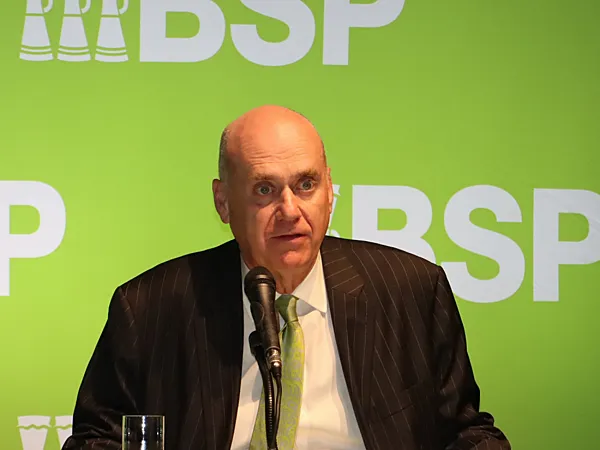
Business sentiment is apprehensive due to service disruptions, lower foreign exchange (FX) inflows, likely delays in project commencement and the kina depreciation, according to BSP’s Quarter 3 2023 Pacific Economic & Market Insights report.
BSP’s Group General Manager for Corporate Banking, Mr. Peter Beswick, says “recurring power and water supply cuts along with lack of FX, continues to impact business operations.”
Mr. Beswick adds, “that the kina’s gradual depreciation against the US dollar will disadvantage importers and may contribute towards inflation for consumers and the broader business sector.”
Despite this, Mr. Beswick expects that the recent granting of the Special Mining Lease to New Porgera Limited (NPL) is likely to boost economic activity in Q4-23 provided Barrick can fully resume Porgera gold mine operations before year-end.
The medium-term outlook remains optimistic with Mr. Beswick adding, “consumer spending remains robust in Q3, with our BSP PNG EFTPOS transaction volume increasing by 10.6% to K2.0b. The latter can be attributed to improved transaction numbers and higher prices, given current inflation levels.”
Continued business confidence is dependent on the timely commencement of the resource projects (Porgera, Papua LNG, Wafi-Golpu, P’nyang and Pasca A).
“Foreign exchange (FX) market inflows in Q3-23 fell 16% from Q2-23 to K6 billion, with almost 18% of FX inflows coming from BPNG FX intervention,” according to BSP’s Quarter 3 2023, Pacific Economic & Market Insights report.
“In 2023, FX inflows have risen 19% to K18.7b due to a 79% year-on-year increase (K1.7b) in BPNG FX intervention. BPNG has supplied 20% (K3.8b) of PNG’s FX inflows this year,” according to BSP’s Group General Manager Treasury, Mr. Rohan George.
Mr. George noted that despite increased BPNG intervention, the FX market continues to miss Porgera’s FX contribution.
During Q3, volumes from BSP’s Top 5 FX Inflow customers dropped by 30% in August and 45% in September, resulting in outstanding FX orders hitting a record high late in September (K1.18b), which lengthened FX order execution times. BSP prioritised “National Interest” orders over other orders and trade and service orders over capital orders, says Mr. George.
The Kina mid-rate continued its gradual, orderly, decline in Q3 falling by 2.5% to 0.2730 and is expected to decline further by approximately 0.9% per month or 10.8% per annum. Mr. George adds, “We expect continued flat trading conditions and potentially a larger than normal Central Bank FX intervention to reduce FX execution waiting times.”
FX customers are encouraged to place orders early, with correct documentation to avoid any unwanted delays.
Depreciation of the PGK/USD midrate will benefit exporters as they receive more PGK for their goods, whilst importers will see higher prices as their cost-per-kina increases when purchasing goods overseas to bring into PNG.
“A short-run risk of the PGK/USD depreciation is the potential impact on inflation levels for consumers, while the economy may benefit when the exchange rate system operates effectively without the need for interventions” said BSP’s Group CEO, Mr. Mark Robinson.
The reductions in the PGK/USD midrate on 12 separate occasions have been carefully sequenced from 0.2840 in May to 0.2730 in September (total reduction of 110 points or 3.9%).
The progressive PGK/USD depreciation is aimed at rectifying the structural imbalances in the local foreign exchange market. However, given PNG’s reliance on imports for consumer goods and production inputs, the higher import costs will place upward pressure on domestic prices.
“Nonetheless, the upside risks to PNG’s inflation remain very much alive and will continue to be a concern as price pressures on essential consumer items like food remain elevated with ADB inflation projections at 5.0% for 2023,” Mr. Robinson concluded.
In a further stride toward enhancing Papua New Guinea's capital market, PNGX Markets, the operator of the nation's stock exchange, has introduced further updated Listing Rules. The move is aimed at propelling the development of a more robust financial ecosystem within the country.
With a commitment to establishing a world-class capital market that garners international recognition and respect, PNGX has proactively revised its Listing Rules. The changes are designed to bolster the pathway for overseas companies to list as exempt entities within Papua New Guinea's market framework. The initiative seamlessly aligns with a recent pronouncement by the Minister for International Trade and Investment, the Honorable Richard Maru MP, who unveiled his vision to elevate the scale of the Papua New Guinean capital market in the next four years.
The integration with the recently introduced Takeovers and Mergers Code, supports the drive for international recognition and respect, presenting a unified regulatory framework. Beyond these substantive changes, the revised Listing Rules encompass a number of minor amendments, collectively working to refine and reinforce operational structure of the market.
Effective as of Monday, September 18, 2023, the amended Listing Rules propel Papua New Guinea into a new chapter in its financial narrative. As the nation positions itself on the cusp of an evolved capital market, the evolution led by PNGX Markets remains pivotal in shaping the growth trajectory of both the resource and non-resource sectors over the next 5 years.
The amended Listing Rules, Procedures and Appendices, together with an explanatory document, are available in both markup and clean format at https://www.pngx.com.pg/regulations/.
The amendments were approved by the Securities Commission on 30 August 2023. The Takeovers and Mergers Code is available from the Securities Commission of Papua New Guinea.
Follow on LinkedIn:
PNG Business News
Be the "First" to get our exclusive Digital Magazine & Weekly Newsletter.