Minister for International Trade and Investment, Hon. Richard Maru announced the launching of a new Capital Market product, a Debt Security or local bonds. This Capital Market product will be available on the Debt Market immediately. The companies who want to issue bonds must contact Papua New Guinea National Stock Exchange (PNGX).
“I have the powers under Section 153 of the Capital Market Act 2015 to approve the launching of the local bonds and I am satisfied that all the work has been done. It has taken us over 5 years (since 2017) to prepare PNGX and the Securities Commission of Papua New Guinea (SCPNG) for the issuance of the local bonds. The project was funded by the Australian Government, Marape-Rosso Government, the International Financial Corporation, the Asian Development Bank and all other stakeholders,” said Minister Maru.
“Only companies who have a net asset of K10 million and those who are rated by independent credit rating agencies will be considered by PNGX to issue bonds. In the coming weeks, we will announce the first company who will issue local bonds as we expand our capital market products to include debt security (like bonds). The target of the Marape-Rosso Government is to increase the size of our capital market in terms of equities from the current market capitalization of K135 billion to over K500 billion in the remaining four years of our term. This target will be reached if more companies are listed on PNGX. We want to introduce more capital raising platforms like Debt Securities, peer to peer, crowd funding, and small offers regime (SMEs) so we create more avenues for local investors to raise capital locally to fund the local capital needs,” said Minister Maru.
“We also want to support the development of a major real estate trust fund to mobilize funds for major real estate developments especially in Port Moresby and the Nadzab Airport City development,” added Minister Maru.
Pacific Capital Markets Development has announced that it has acquired a 12.5 percent interest in the South Pacific Stock Exchange (SPX).
SPX is the national stock exchange of Fiji, based in Suva.
PCMD is the majority shareholder in PNGX Group Limited, operator of PNGX Markets, Papua New Guinea’s national stock exchange.
SPX and PNGX have an existing Memorandum of Understanding to explore matters of mutual interest and benefit. PCMD will seek to build upon that MoU working with both exchanges to develop an integrated regional network of markets supporting access to capital for listed and unlisted companies (including the SME sector), to introduce new exchange-traded products into the region, and to expand PCMD’s role in financial education and capital markets training.
The shareholding in SPX adds to PCMD’s growing portfolio of investments in regional stock exchanges and related activities.
About Pacific Capital Markets Development
Pacific Capital Markets Development is an Australian company committed to the development of capital markets in the Pacific region. Pacific Capital Markets Development is the majority shareholder of PNGX Group Limited, operator of Papua New Guinea’s national stock exchange.
The Principals of Pacific Capital Markets Development are David Lawrence and Frank Dunphy. Each has over 35 years of experience in the operation of regional markets, stockbroking, funds management and financial services compliance.
PNGX, Papua New Guinea’s national stock exchange, has adopted a new Corporate Governance Code for Listed Issuers following public consultation.
PNGX, the national stock exchange of Papua New Guinea, is proud to announce the adoption of its new comprehensive Corporate Governance Code. This groundbreaking initiative aims to provide guidance to the Boards of listed issuers and elevate corporate governance standards in the country.
Effective from July 3, 2023, alongside the implementation of the new Listing Rules, the Code sets the stage for companies to report its corporate governance practices for the financial year ending December 31, 2023. Market stakeholders can expect to find these reports included in the annual reports released in the second quarter of 2024.
Following an extensive period of public consultation that began in March 2023, the adopted Code consists of 17 Standards, each containing a set of Recommendations. While compliance with the Code is not mandatory, PNGX listed companies are encouraged to establish appropriate corporate governance policies tailored to their operations. Moreover, companies are required under the Listing Rules to address each Recommendation outlined in the Standards and include a corporate governance statement or the URL of the page containing the statement in their annual reports.
Developed with the unique characteristics of the PNG market in mind, the Code draws upon global standards and practices employed in other markets. It has been meticulously tailored to meet the specific needs of the country while aligning with international best practices. The Code promotes flexibility, allowing companies to adopt or adapt the Standards and Recommendations as they see fit. However, it is expected that directors disclose the extent to which their company adheres to the Code in their annual reports. In cases where nonadoption or partial adoption occurs, directors should provide reasons for their decisions, following the globally recognized "if not, why not" approach.
While the Code's immediate scope is limited to listed companies, its governance standards are poised to become a benchmark for corporate governance across the private sector in Papua New Guinea. These standards may also hold relevance for the governance of StateOwned Enterprises (SOEs).
The development of the draft Code has been made possible through collaboration with our contributing partners, the International Finance Corporation (IFC), a member of the World Bank Group, and the UN Sustainable Stock Exchanges Initiative. As a partner exchange of the Sustainable Stock Exchanges Initiative since April 2022, PNGX showcases its commitment to transparency and sustainability. IFC has provided expert awareness or training programs focusing on environmental, social, and governance (ESG) standards, as well as board gender diversity, aligning with international good practices, including the new revised OECD Principles of Corporate Governance.
Contributions from the Pacific Private Sector Development Initiative (PSDI), in partnership with the Governments of Australia and New Zealand, have also been integral to the development of the corporate governance standards. PSDI, as an Asian Development Bank (ADB) technical assistance program, actively works towards enhancing private sector development in the Pacific region.
Mr. David Lawrence, Chairman of PNGX, stated, “Recognizing the sustainability challenges faced by emerging economies like Papua New Guinea, PNGX acknowledges the importance of addressing factors such as corporate governance and transparency, climate change and environmental sustainability. Today, addressing these sustainability factors is crucial to securing access to finance, and PNGX remains steadfast in its commitment to driving progress in these areas.”
"Enhancing corporate governance standards in PNG is one way PNGX can contribute to elevating the international reputation of PNG’s capital markets and attracting local and foreign investment. Establishing a vision and standards for the future becomes particularly crucial for the Papua New Guinea capital market," he said.
Ms. Elizabeth Wamsa, General Manager of PNGX, added, "The Code includes Recommendations aimed at fostering a broader pool of directors for PNG companies, especially female directors. It also emphasizes the importance of disclosures relating to gender pay equality policies, 'return to work' practices, and policies addressing genderbased violence. In these areas, the new Code sets the standard for the world."
"Good corporate governance practices enhance company performance, and are vital for sustainable private sector development,” Markus Scheuermaier, IFC’s Resident Representative in Papua New Guinea, said. “The inclusion of standards addressing workplace responses to gender-based violence and childcare demonstrates innovation, and aligns with international good practices. We are proud to support PNGX in this groundbreaking initiative."
The new Corporate Governance Code for Listed Issuers is available from the PNGX website.
PNGX, Papua New Guinea’s national stock exchange, welcomes the capital market reforms announced by Minister for International Trade and Investment, Hon. Richard Maru OBE, MP on Friday, 23 June 2023.
The Minister announced 3 significant reforms to grow the Papua New Guinean capital market and others to make the existing market more robust.
The new corporate debt market will promote the development and diversification of the market. It will allow eligible listed entities, large private companies and State-Owned Enterprises (SOEs) to more easily raise debt capital from institutional investors. The new debt market will provide competition to bank lending in this sector of the market. It will also provide opportunities for SOE’s to raise funds domestically rather than sourcing funding overseas or from government.
Raising debt on the new PNGX debt market can also be a first step towards the subsequent raising of equity capital and listing by large private companies and SOEs.
PNGX acknowledges the assistance of the International Finance Corporation (IFC) in the development of this market.
PNGX also is pleased to note Ministerial focus upon development of a listed market for Real Estate Investment Trusts. REITs have developed as a key sector in many markets globally. Listed REITs have the potential to unlock significant capital by providing liquidity to an illiquid asset class. They can also attract significant investment into the real estate development sector, which has an employment and economic activity multiplier effect throughout the economy.
The Minister also announced that amendments to the exiting securities laws will be introduced to parliament in August 2023 compelling companies which are listed abroad and doing business in Papua New Guinea to also list on PNG. This has the potential to significantly grow the PNG capital market.
It will provide opportunities for investors to directly invest in those companies which have significant activities in the country and increase the level of local ownership.
“Both increased foreign listings and REITs are important initiatives to expand the market. They will provide the growing number of retail investors with a broader range of investments to buy and trade and to grow their wealth” said PNGX Chairman, Mr David Lawrence
PNGX also welcomes the initiatives to make the market more robust.
The introduction of the long-awaited Takeovers Code will provide greater certainty to the market and assist PNGX to ensure that its market is fair and orderly.
PNGX acknowledges the work of the ADB Private Sector Development Initiative and the Securities Commission of Papua New Guinea to develop and adopt the new Takeovers Code.
PNGX acknowledges the appointment of Mr Robin Fleming and Dr Solomon Awili as public interest directors of PNGX Markets. We look forward to their contributions to the operation and supervision of PNGX’s regulated license obligations that underpin its market integrity.
Global warming is continuing to cause significant risks to countries around the world, and the impact of climate change is more widespread and severe than anticipated. This has become a constant reminder to economies throughout the globe of the urgency of addressing and disclosing climate risks.
In Papua New Guinea, there are so many vulnerable communities impacted by climate change and so many people in vulnerable communities find it hard to cope with financial losses resulting from the impact of climate change.
Climate change, deforestation, pollution, and other environmental issues pose significant economic threats to businesses. In turn, this jeopardises financial stability in the banking sector.
Rising sea levels, extreme weather events, and resource scarcity can also disrupt supply chains, increase production costs, and lead to financial losses. In doing so, these threats compromise price stability within the financial sector and the economy.
To counter the ongoing effects of this economic risk, the Bank of PNG have embraced green finance to address such risks, proactively, investing in projects that mitigate environmental challenges and foster long-term sustainability.
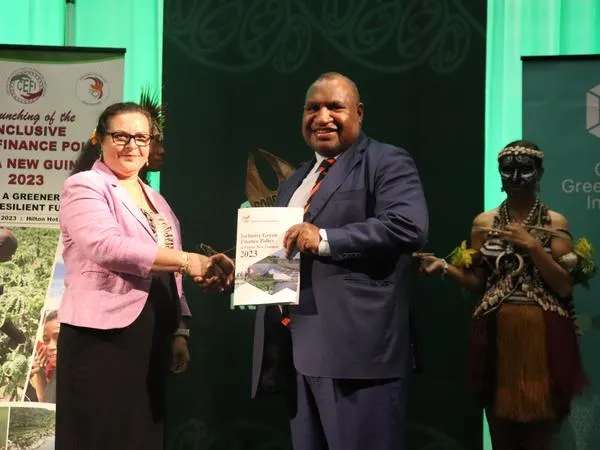
Launching of the Inclusive Green Finance Policy in PNG: The Bank of PNG in partnership with the Center for Excellence in Financial Inclusion (CEFI) and it's development partners recently launched the Inclusive Green Finance Policy with the theme: 'Pathway to a Greener Economy for a Resilient Future' on Thursday 08th June, 2023 at the Hilton Hotel in Port Moresby.
The ceremony was witnessed by Prime Minister James Marape, who expressed his honor in inaugurating this significant policy. He encouraged government departments, state-owned enterprises, financial institutions, and MSMEs to collaborate and utilize this policy as a foundation for building a green business economy.
The Prime Minister expressed gratitude to the Bank of Papua New Guinea, the Global Green Growth Institution (GGGI), the New Zealand Highland Commission, financial institutions, and other technical and development partners for their collaboration in designing and developing the Inclusive Green Finance Policy.
"I am delighted to announce that this policy is being unveiled alongside the Bank of PNG's own Financial Inclusion Strategy, introduced in April this year. This visionary product represents a long-term commitment to Papua New Guinea," he added.
The Prime Minister commended the Green Taxonomy, a unique feature of this policy, which is the first of its kind in the Pacific and Papua New Guinea. He congratulated the Acting Governor of the Bank of PNG and the development partners for their contribution in establishing this crucial tool and service for the benefit of the people.
"The Inclusive Green Finance Policy serves as a reminder for all of us to conduct our business in an environmentally conscious manner. By offsetting our global and PNG carbon footprints and participating in the conservation of PNG's tropical rainforest and mangroves, we can mitigate the impacts of climate change," the Prime Minister emphasized.
Policy's Development: When outlining the progressive steps taken into developing the policy, Mr George Awap, Assistant Governor of the Financial System Stability Group at the Bank of PNG and Chairman of the Inclusive Green Finance Steering Committee, highlighted the policy's development and the discussions surrounding the impact of climate change on economics.
Mr. Awap provided a brief overview of the journey toward implementing the Inclusive Green Finance Policy in Papua New Guinea. He mentioned that the Bank of PNG engaged the Global Green Growth Institution through a bidding process, and the Agriculture for Finance (AFC) was involved in developing the concept note, funded by the New Zealand Government.
He further explained that a steering committee, chaired by the Bank of PNG and consisting of representatives from the Office of Climate Change, Department of Treasury, Alliance for Financial Inclusion, NZHC, and GGGI as observers, worked to develop the Inclusive Green Finance Taxonomy Policy.
"Inclusive Green Finance is a new concept in the region, requiring extensive collaboration between the Bank of PNG, domestic financial institutions, various ministries, and stakeholders," concluded Mr Awap.
What role can the Inclusive Green Finance Policy play in PNG?: During the launching of the policy CEFI and its stakeholders explained and highlighted what it has been doing to ensure that the financial sector plays its part in greening the financial system and support sustainable growth.
Inclusive green finance is an evolving policy area that countries are beginning to implement to mitigate or build resilience to sweeping environmental, health, social and economic effects of climate change.
This comes as a convergence of financial inclusion and climate change policy outcomes in developing countries are increasingly evident, and affordable financial services play vital roles in enabling vulnerable people to cope with financial losses that result from the impact of climate change and build resilient sustainable livelihoods.
In September 2020, CEFI requested the GGGI to support in developing an inclusive Green Finance Policy for PNG’s financial sector. The Global Green Growth Institute serves as the Secretariat for the project with support from Agriculture and Finance Consultants.
The policy's goal is to increase and facilitate flow of national and international funds and investments in a systematic manner towards businesses, projects and initiatives that would further the PNG government’s goals in growth or green and sustainable industries, financial inclusion, and climate change adaption and mitigation.
The policy aims to deliver two main outputs. First is a green taxonomy based on PNG's goals and priorities, which defines the conditions under which an economic activity can be deemed environmentally sustainable. It defines the technical criteria on environmental performance levels and social minimum safeguards for a list of activities that must be fulfilled if they are to be legally classified as environmentally sustainable.
Second is a diagnostic report on the state of green finance in PNG, which refers to financial investments and initiatives that promote sustainable economic growth, while reducing environmental impact. The goal of green finance strategy is to mobilise capital towards projects that have a positive impact on the environment.
Both aspects of the policy are expected to steer financial flows towards technologies and services that contributes to the government's financial inclusion and green growth goals
PM Marape's highlights: In his address, the Prime Minister stated, "Today, we celebrate the establishment of the Green Finance Policy by the Bank of PNG, which I believe is the first of many steps toward transitioning Papua New Guinea from a high-carbon economy to a sustainable and blue economy."
Mr Marape emphasized the policy's importance in addressing climate change and how it will benefit the people of Papua New Guinea. He stressed the need to develop the country's economy in a smarter and climate-resilient manner, fostering low-carbon, inclusive green growth.
"While we are currently on a high-carbon development trajectory, which has proven beneficial for our economy and supporting our rapidly growing population, we must acknowledge that the detrimental effects of climate change are accelerating. This necessitates a shorter timeframe for us to enjoy the benefits of our current pathway," said the Prime Minister.
BPNG Acting Governor on embracing green finance: Green finance is defined as a loan or investment that supports an environmentally friendly or sustainability-aligned activity, such as purchasing environmentally friendly and energy efficient goods and services or building environmentally friendly infrastructure such as renewable energy power plants.
Green projects not only include solar or wind energy, however. Sustainable land use, water, and urban waste management, green buildings, clean transportation, pollution prevention and control systems, and energy efficiency projects are some of the areas that are globally eligible to receive green financing.
With a focus on the mechanisms of Green Finance highlighted during her speech, Ms. Elizabeth Genia, Acting Governor of the Bank of Papua New Guinea, underscored the significance of embracing green finance and adopting a proactive approach to address environmental risks and invest in projects that promote long-term sustainability.
The Acting Governor emphasized the responsibility of financial institutions to integrate environmental and social factors into their investment decision-making processes. She encouraged the development of innovative financial products, such as green bonds and sustainability-linked loans, to facilitate green investments.
"To support financial institutions in this important journey, the Bank of PNG, in collaboration with its partners, will establish a Green Finance Center at the CEFI office. The center will provide necessary support, including staff training, technical assistance, and the design of innovative green lending products," stated Mrs. Genia.
“We also need to acknowledge that governments simply do not have the resources to meet all the demands on the public purse. As a society we need to find other ways to address society’s challenges.”
Investment Pathway: Green growth means achieving economic growth while reducing pollution and greenhouse gas emissions, minimising waste and improving efficiency in the use of natural resources. This requires long-term investment and sustained financing. Public budgets have traditionally been an important source of green infrastructure financing.
But given the strains on public finances, large-scale private investment will be needed for the transition towards a green economy. However, the Government has a key role to play in strengthening domestic policy frameworks to catalyse and mobilise private finance and investment in support of green growth.
One of the most frequently used terms in climate change discussions is environmental sustainability, with economic growth and foreign direct investment as supporting factors. In context, the government plays a vital role in enhancing sustainable pathways and addressing this incentives.
It is recommended that policymakers must push the financial sector to adopt the green finance policy to further the goals of long-term sustainable development through sound investment.
The Inclusive Green Finance Policy takes environmental, social and governance considerations into account when making decisions to invest. Environmental considerations include whether the investments would preserve biodiversity, prevent pollution, boost the circular economy or help climate change mitigation and adaptation.
Other considerations include human rights issues, labour relations, and investment in communities. So, what the policy aims to do is encourage and facilitate investments that contribute substantially to environmental objectives and promote wider sustainability objectives.
The challenge is how to effectively influence market stakeholders’ decision to invest in sustainable projects, activities, sources and supply chains.
References:
1) LAUNCHING OF THE INCLUSIVE GREEN FINANCE POLICY, Thursday 08th June, 2023 : Hilton Hotel, Port Moresby [Paul Oeka/PNG Business News]
2) Website: www.thecefi.org Link to Photos, Videos, Audios, Speeches & Media Release - https://drive.google.com/drive/folders/1hJfJxZ2pgkgEEbP5lETwtv4jbCyuiIiS?usp=sharing
3) The Inclusive Green Finance Policy (IGFP) Project (Copy of Policy outline). Centre for Excellence in Financial Inclusion https://www.thecefi.org › green-fina...
4) Bank of Papua New Guinea https://www.bankpng.gov.pg › media Releases | Bank of Papua New Guinea (PNG) Port Moresby,
Prime Minister Hon. James Marape said recently (09.06.23) there was space for more commercial banks to operate in the country to tap into an increasing banking market in Papua New Guinea.
The Prime Minister said this as he was providing an update while answering questions raised by the Opposition on the banking situation in the country.
“There is a need for existing banks to come into our economy as it is getting bigger, meaning the volume of transactions are getting bigger,” said PM Marape.
“There are many of our people especially in the informal sector who are not yet linked to a commercial bank. We want to find commercial banks that are friendly to our little people.”
Prime Minister Marape said the Government was now working with Central Bank to look into the issues of commercial banks and their operations in the country, including the reformation of the National Development Bank.
“By the end of this year, there will be an announcement on where we are tracking. This is through the work we are doing with Central Bank.
“We are also asking Central Bank to open up the market and some of you would have noted the announcement by one of the oldest banks in China – the Bank of China which has been operating in China and the world for more than 100 years – opening an office here in PNG.
“Bank of China is now working to meet all the requirements to open a commercial bank in PNG.
“The Government has informed Central Bank that we need more commercial banks in the country to open up the market, instead of having just one or two dominant banks, as there is enough space for two or three more banks in the banking sector space.
“In its regulatory role, the Central Bank has also been informed to keep watch on the two major banks – BSP and Kina – to work with them so that the burden of customer service is not hugely passed onto the customers.
“One or two other PNG institutions, like Tisa Savings & Loan Society, that have indicated on moving into this space are encouraged to do so.”
On the issue of high bank fees being charged on the people, the Prime Minister said the Government was continually talking to the banks.
“I am aware of the fees being charged are extremely high but in the environment of their present operation, the banks have indicated high costs of doing business here. The Government has advised them to minimise their fees to make it conducive and comfortable for our everyday users,” PM Marape said.
“We have engaged with Central Bank to work with the commercial banks more closely and to ensure that the services are improved.
“In terms of the transactional issues that happened around the Easter Weekend, I want to inform Parliament that I was informed by BSP before the upgrade that it was making a systems changeover.
“We are yet to get a formal report from BSP on the magnitude of the ‘glitch’. BSP, being the responsible and dominant bank, wanted to update its financial system so it can have a system that carries both here and overseas in real time.”
The Prime Minister also indicated that reforms were taking place within the Central Bank to make it more receptive to the needs of the economy while it was operating under its fiscal and monetary policies.
The Inclusive Green Finance Policy was officially launched today at the Hilton Hotel in Port Moresby, Papua New Guinea. The ceremony was presided over by the Rt. Honorable Prime Minister of Papua New Guinea, James Marape, who expressed his honor in inaugurating this significant policy. The Prime Minister encouraged government departments, state-owned enterprises, financial institutions, and MSMEs to collaborate and utilize this policy as a foundation for building a green business economy.
In his address, the Prime Minister stated, “Today, we celebrate the establishment of the Green Finance Policy by the Bank of PNG, which I believe is the first of many steps toward transitioning Papua New Guinea from a high-carbon economy to a sustainable and blue economy.”
Mr. Marape emphasized the policy’s importance in addressing climate change and how it will benefit the people of Papua New Guinea. He stressed the need to develop the country’s economy in a smarter and climate-resilient manner, fostering low-carbon, inclusive green growth.
“While we are currently on a high-carbon development trajectory, which has proven beneficial for our economy and supporting our rapidly growing population, we must acknowledge that the detrimental effects of climate change are accelerating. This necessitates a shorter timeframe for us to enjoy the benefits of our current pathway,” said the Prime Minister.
“I am delighted to announce that this policy is being unveiled alongside the Bank of PNG’s own Financial Inclusion Strategy, introduced in April this year. This visionary product represents a long-term commitment to Papua New Guinea,” he added.
The Prime Minister commended the Green Taxonomy, a unique feature of this policy, which is the first of its kind in the Pacific and Papua New Guinea. He congratulated the Acting Governor of the Bank of PNG and the development partners for their contribution to establishing this crucial tool and service for the benefit of the people.
“The Inclusive Green Finance Policy serves as a reminder for all of us to conduct our business in an environmentally conscious manner. By offsetting our global and PNG carbon footprints and participating in the conservation of PNG’s tropical rainforest and mangroves, we can mitigate the impacts of climate change,” emphasized the Prime Minister.
Ms. Elizabeth Genia, Acting Governor of the Bank of Papua New Guinea, underscored the significance of embracing green finance and adopting a proactive approach to address environmental risks and invest in projects that promote long-term sustainability.
“To support financial institutions in this important journey, the Bank of PNG, in collaboration with its partners, will establish a Green Finance Center at the CEFI office. The center will provide necessary support, including staff training, technical assistance, and the design of innovative green lending products,” stated Mrs. Genia.
Mr. George Awap, Assistant Governor of the Financial System Stability Group at the Bank of PNG and Chairman of the Inclusive Green Finance Steering Committee highlighted the policy’s development and the discussions surrounding the impact of climate change on economics.
Mr. Awap provided a brief overview of the journey toward implementing the Inclusive Green Finance Policy in Papua New Guinea. He mentioned that the Bank of PNG engaged the Global Green Growth Institution (GGGI) through a bidding process, and the Agriculture for Finance (AFC) was involved in developing the concept note, funded by the New Zealand Government.
He further explained that a steering committee, chaired by the Bank of PNG and consisting of representatives from the Office of Climate Change, Department of Treasury, Alliance for Financial Inclusion, NZHC, and GGGI as observers, worked collaboratively to develop the Inclusive Green Finance Taxonomy Policy.
“Inclusive Green Finance is a new concept in the region, requiring extensive collaboration between the Bank of PNG, domestic financial institutions, various ministries, and stakeholders,” concluded Mr. Awap.
The launch of the Inclusive Green Finance Policy marks a significant milestone for Papua New Guinea, demonstrating its commitment to building a sustainable and environmentally friendly economy and fulfilling the international commitments to the Alliance for Financial Inclusion under El Sheikh Accord. Through collective efforts, the government and financial institutions aim to steer the country towards a low-carbon, inclusive green growth pathway and address the challenges posed by climate change.
Photo: Professor Stephen Howes. Credit: Australia National University
Papua New Guinea is grappling with a foreign exchange shortage, resulting in higher imports and lower exports, according to economist Professor Stephen Howes from the Australia National University (ANU) Development Policy Centre. Speaking at the 38th Australia-PNG Business Forum and Trade Expo in Port Moresby, Professor Howes highlighted the country's loss of competitive economic gains from the 1990s during the resource boom between 2000 and 2014 as a major contributing factor.
"The country is faced with a foreign exchange (forex) shortage largely because PNG lost its competitive and hardline economic gains from the 1990s during the resource boom between 2000 and 2014," Professor Howes explained.
While the growth of the economy and forex was observed following the boom, the real exchange rate remained persistently high over the past decade, exacerbating the shortage. This high exchange rate has both boosted the economy and contributed to the scarcity of forex.
"The PNG Kina has depreciated from 2013 to 2020 according to statistics from the Bank of Papua New Guinea (BPNG), however the real exchange rate has remained high," Professor Howes stated.
The depreciation of the Kina was primarily driven by an increase in imports and inflation, impacting the country's forex reserves over the last decade. The highest depreciation rate, amounting to 14 percent, was recorded at the end of 2015, coinciding with Papua New Guinea hosting the 2015 Pacific Games, where significant infrastructure spending occurred.
"In the last three years, the kina had hardly moved against the US dollar, however it did appreciate by 17 per cent over other currencies on a trade-weighted basis, which included a depreciation rate of zero per cent from the end of 2021 to September 2022," Professor Howes noted.
The resource boom generated increased revenue for Papua New Guinea; however, the real exchange rate offset the economic shortages that followed, significantly impacting forex availability.
"The Kina was floated in 1995 to make PNG exports competitive on the international market. The Kina value is now determined by demand and supply in the foreign exchange market," Professor Howes explained.
Regarding the exchange rate policy of the Bank of Papua New Guinea, Professor Howes clarified that the central bank was not obligated to meet all market demands and did not require buyers to bid for forex or set prices. This policy primarily aimed to control inflation, limiting the growth of the country's forex reserves in preparation for future resource booms.
PNGX, Papua New Guinea’s national stock exchange, will adopt new Listing Rules from 3 July 2023.
The new Listing Rules are a key step towards the development of a more effective secondary market in Papua New Guinea. They contribute to ensuring that PNG has a world class capital market that is internationally respected and recognized.
PNGX’s Listing Rules govern the listing of issuers and the quotation of securities, continuous disclosure obligations and some aspects of a listed entity’s conduct. All companies listed on PNGX are required to comply with the Listing Rules.
The existing PNGX Listing Rules were introduced in April 1999 and were closely based upon the Listing Rules of the Australian Stock Exchange. They were last amended in November 2012. The new Listing Rules provide a modern framework and market structure meeting the highest world standards.
The proposed Listing Rules were released for consultation in October 2022. The new Listing Rules are largely unchanged from the consultation version.
The new criteria for a company to qualify for listing are set out in the Rules. In brief, they are:
Full details are set out in the Rules available on the PNGX website.
Ms Elizabeth Wamsa, PNGX General Manager said “We welcome discussions with companies thinking of listing now or in the future. With the new extractive industries coming on line shortly and growing demand for new opportunities from investors, the market sentiment will be ideal for listing.”
“We would like to thank the market for their feedback during the process of developing the new Listing Rules” said PNGX Chairman, Mr David Lawrence. We also thank the Securities Commission of Papua New Guinea for their support and approval of the new Rules.”
PNGX and investors in the PNGX markets have an interest in high standards of corporate governance practices by the Boards of companies in which they invest. The proposed rules refer to reporting corporate governance matters as set out in the PNGX Corporate Governance Standards. These standards are presently released for consultation until 5 May 2023. Subject to the responses received, it is expected that they will also take effect on 3 July 2023.
PNGX, Papua New Guinea’s national stock exchange, will move to faster settlement of trading from 3 July 2023.
PNGX’s Business Rules, which govern the trading and settlement of all trades on the market by stockbrokers, will be amended to require settlement on the second day after a trade (T+2), which is faster than the current 3 days (T+3).
The proposal was released for consultation in October 2022 with the new Listing Rules.
The change from T+3 to T+2 brings the PNG market in line with markets around the world.
T+2 means quicker payment for investors when they sell shares. It also reduces the risks to investors, stockbrokers and PNGX.
Ms Elizabeth Wamsa, PNGX General Manager said “We would like to thank the current stockbrokers and the Securities Commission of Papua New Guinea for their support for this change. Making the market more efficient is one way we can try to attract more stockbrokers, more investors and more listed companies.”
The amendments to the current Business Rules are the precursor to a comprehensive rewrite of the Business Rules to be completed in the second half of 2023.
“This change improves the efficiency of the PNGX market. It is another step in ensuring that PNG has a world class capital market that is internationally respected and recognized” said PNGX Chairman, Mr. David Lawrence. “It is part of a larger, long-term PNGX program to further develop the market. But to be able to fund those future changes, PNGX needs to have confidence there will be structural change and increased activity in the market by way of initiatives such as privatisation of SOEs, greater on-market activity by superannuation funds, tax reform and incentives for listing, wholesale corporate debt market and more trading activity by retail investors. We can’t justify spending millions of kina based on current levels of activity without stakeholder commitment to growth” he said.
Photo: BSP Group General Manager Treasury Rohan George
“Lower commodity prices and the delay in Porgera’s resumption is expected to prolong distress in PNG’s foreign exchange market,” according to the BSP Quarter 1 2023 Economic Insight report.
BSP’s Group General Manager for Treasury, Mr. Rohan George said “FX market turnover in the March Quarter fell 2.4%, from the December Quarter 2022”. He noted, “a pullback in commodity prices, in particular oil, copper and palm oil, and the January holiday season reduced FX market turnover volumes”.
According to Mr. George, “FX turnover for 2023 increased by 8.9%, compared to prior year”. However, he also advised that outstanding FX orders with BSP increased seven fold (700%) in the past quarter, with post-Christmas import orders increasing rapidly, whilst FX inflows fell.
The kina mid-rate was stable against the U.S. dollar at 0.2840. The Australian dollar fell 1.5%, reflecting weaker commodity prices, concerns of an economic slowdown and a pause in interest rate increases.
Mr. George noted that BPNG FX intervention in the March Quarter remains unchanged, but rose 59% from one year ago. He further added, “despite increased BPNG intervention, the PNG FX market continues to miss the foreign currency contribution from Porgera.”
“After subdued FX inflows in the March quarter, we do not expect a pickup in FX inflows in the June quarter. BPNG will continue to support the market, however subdued commodity prices and the uncertain global environment will see outstanding FX orders remain at high levels and subsequent FX order execution times lengthy,” Mr. George concluded.
To manage volatility in foreign currency flows, businesses should place FX orders (with correct documentation), as soon as possible, ensure orders are cash backed whilst awaiting execution, tax clearance certificates are current and reflect the expected FX order execution time.
The Bank of Papua New Guinea (BPNG) has announced its monetary policy considerations for the next six months until September of this year. The central bank indicated that it will maintain a neutral stance in line with the country's economic developments and medium-term prospects.
As required by the country's central banking law, BPNG issued two monthly monetary policy statements, including the March 2023 statement presented to the Lae business community. The bank's decision to pursue a neutral stance was based on the projected fall in global growth and inflation this year.
BPNG explained that further tightening could lead to an increase in lending rates, which would negatively impact private sector services and economic activity since lending rates are already high. Therefore, the bank deemed it appropriate to aim for price stability while promoting economic growth.
"We will continue to monitor the ongoing concerns of high inflation and other macroeconomic indicators, and their impact on domestic prices, and growth and employment," BPNG said. "The bank may adjust its stance of policy if required to achieve its objectives and ensure macroeconomic stability."
The global economy is projected to slow down in 2023, with the ongoing Russia-Ukraine war and tighter financial conditions contributing to the decline. Additionally, international commodity prices are expected to fall due to the global slowdown in activity and growth. However, while global inflation is expected to slow, BPNG expects domestic price pressures to remain elevated in 2023 but moderate in the medium term.
PNGX, Papua New Guinea’s national stock exchange, has today released a proposed new Corporate Governance Code for Listed Issuers for public consultation.
PNGX is proposing to introduce a new Corporate Governance Code for the guidance of Boards of listed issuers.
The proposed Code contains 17 Standards. Within each of the 17 Standards are a number of Recommendations.
Each PNGX listed company is required under the Listing Rules to have corporate governance policies which are appropriate having regard to the nature and scale of its operations. Each company should address each Recommendation set out in the Standards. It is also required to include in its annual report a corporate governance statement or the URL of the page on its website where a corporate governance statement is located.
While the proposed Code has been developed by reference to global standards and practices adopted in other markets, it has been adapted to have regard to the characteristics of the PNG market and to be fit for purpose for the country.
The Standards and Recommendations are not prescriptive. Each company is at liberty to either adopt the Standards and Recommendations or not. However, as they are standards of expectations established through a mechanism of industry and stakeholder consultation, it is expected that directors should disclose in the company’s annual report the extent to which the company has adhered to the Standards and Recommendations, and where there has been no or partial adoption, to give reasons. This “if not, why not” approach is common in markets globally.
Whilst the scope of the Code is limited to listed companies, it is hoped that the governance standards become a benchmark for corporate governance by the private sector in PNG generally. They may also have relevance to governance of SOEs.
The draft Code has been developed based upon the existing PNGX corporate governance standards and with the assistance of the International Finance Corporation (IFC) and the UN Sustainable Stock Exchanges Initiative, which PNGX joined in April 2022.
IFC has provided an expert education program relating to the development of environmental, social and governance (ESG) rules to help create appropriate disclosure standards for PNGX and its companies. Expert training on board gender diversity was also provided. This laid the foundations for a new corporate governance code that, importantly, factors in gender and other elements specific to PNGX. The IFC input has been integral to aligning the proposed standards with international best practice for developing markets and the revised OECD Principles of Corporate Governance to be issued in 2023.
PNGX has solidified its commitment to transparency and sustainability by becoming a partner exchange of the Sustainable Stock Exchanges Initiative which brings together over 110 stock exchanges around the world that are committed to promoting sustainable development. This supports PNGX to help develop the Papua New Guinea capital markets and support the sustainability of the PNG economy.
The Pacific Private Sector Development Initiative (PSDI) also contributed to the development of the corporate governance standards. PSDI is an Asian Development Bank (ADB) technical assistance program in partnership with the Governments of Australia and New Zealand.
PNGX recognizes the number of sustainability challenges that an emerging economy like Papua New Guinea face, which include access to capital for SMEs, corporate governance and transparency, climate change, gender equality, gender-based violence, and environmental sustainability. Addressing sustainability factors is of increasing importance to obtaining access to finance in today’s world and PNGX is committed to it.
The majority of the Recommendations are directed towards matters specific to internal governance and controls of listed companies consistent with international practices. In addition, they include a number of recommendations relating to social challenges within Papua New Guinea including policies supporting equality of gender representation and remuneration, return to work practices and gender-based violence.
PNGX Chairman, Mr David Lawrence, said “Efforts to enhance the corporate governance standards in PNG are one contribution PNGX can make, in partnership with like-minded stakeholders, to lift the reputation of PNG, improve its ability to attract investment and lower the cost of capital for the country. In a time of considerable global disruption arising from pandemics, war and inflation, establishing a vision and standards for the future become particularly important.”
PNGX General Manager, Ms Elizabeth Wamsa, said “The Code includes Recommendations to encourage a broader pool of directors for PNG companies, especially female directors. The Recommendations also include expected disclosures regarding gender pay equality policies, ‘return to work’ policies (for example, women returning to work after childbirth) and gender-based violence policies”.
“Good corporate governance enhances the performance of companies and increases their access to outside capital. It is great to see PNGX proposing these new, world class standards, which have been adapted for the local market,” said IFC Resident Representative for Papua New Guinea, Markus Scheuermaier. “These new measures are also innovative as they include standards around workplace response to gender-based violence, and on childcare. We are proud to support PNGX in this groundbreaking initiative.”
Mr Jeremy Cleaver, Senior Finance Sector Specialist, Pacific Private Sector Development Initiative (PSDI), Asian Development Bank said “the Standards in the Code are very robust and detailed and we are supportive of them. The positive results of PNGX working with IFC and the Sustainable Stock Exchanges Initiative come through clearly, particularly in terms of gender and climate related issues. We are happy with the Standards and fully support them.”
PNGX is releasing the proposed Corporate Governance Code for Listed Issuers for consultation and feedback from interested parties. The proposed Corporate Governance Code for Listed Companies is available on the PNGX website. The consultation period will be open for 2 months.
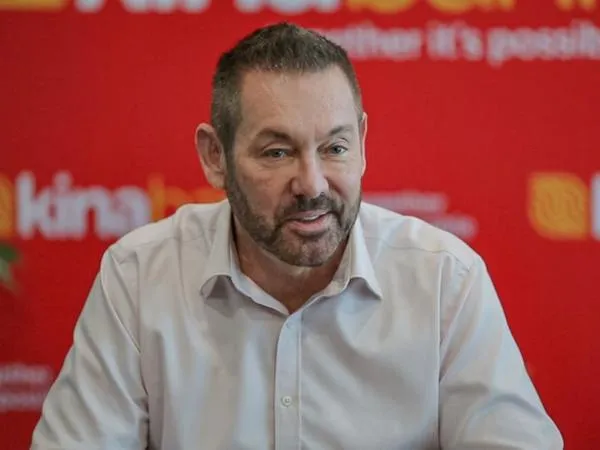
Photo: Greg Pawson. Credit: Kina Bank Facebook Page
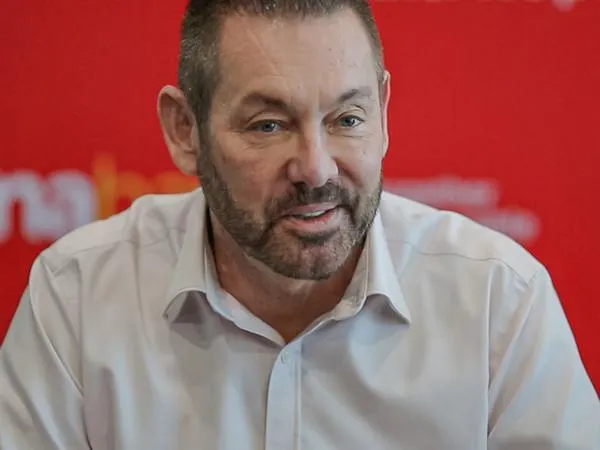
Kina Bank's CEO and Managing Director, Greg Pawson, has called for more competition in the banking sector in Papua New Guinea. According to Pawson, the recent 50% increase in corporate income tax to 45% will make it difficult for other banks to compete. He also stated that the decision to increase the tax was made without considering the true consequences of how it would impact the ability of a strong challenge brand to continue its growth agenda.
In a statement made while announcing Kina Bank's 2022 financial year results, Pawson expressed disappointment in the tax increase and described it as a hindrance to the remainder of the bank's 2025 strategic plan. He said:
“The announcement by the government in the December budget for a 50 per cent increase in Corporate Tax for Commercial Banks to 45 per cent is disappointing and a hindrance in the remainder of the 2025 strategic plan. Not only is this quite possibly one of the highest tax rates in the world, it targets a sector of the market that is critical for supporting PNG’s economic growth aspirations."
Pawson stressed that more banking competition was needed in the country, but the additional tax would make the one major bank stronger and weaken competition due to a lack of size and limited investment to expand and grow. He said:
“More banking competition is required in PNG, however, this additional tax impost will simply make the one major bank stronger and weaken competition due to a comparatively lack of size and therefore limited investment to expand and grow.”
Pawson further commented that many organizations in the country need to pay taxes, but they are not doing so. He urged the Internal Revenue Commission (IRC) to improve its underlying efficiency to ensure that those businesses pay taxes and bring more business from the informal sector into the formal sector. Currently, Kina Bank pays K32 million in taxes. He said:
“The IRC (Internal Revenue Commission) has the mandate to improve their underlying efficiency to ensure that those businesses are paying tax and bringing more business from the informal sector into the formal sector.”
Photo: BSP’s Acting Group CEO Ronesh Dayal
BSP delivers a record K1.136 billion underlying profit, with BSP’s statutory profit reducing to K1.081 billion once the impacts of the new PNG government taxes are applied. Consequently, BSP’s shareholders K1.74 full year dividend was only marginally higher (0.6%) than the prior year’s K1.73.
According to BSP’s Acting Group CEO Ronesh Dayal, the result was impacted by the K190 million Additional Company Tax (ACT) and a one-off tax credit of K135 million. The tax credit comes after PNG Bank’s closing deferred tax assets and liabilities for 2022 were re-measured at 45%, in accordance with international accounting standards, given the PNG commercial bank tax rate increase from 30% to 45% in 2023.
“Despite these challenges, BSP has posted a record K1.081 billion statutory net profit after tax (NPAT), up 0.5% from the prior year NPAT of K1.075 billion,” Mr. Dayal stated. He also noted that the Group’s underlying NPAT was K1.136 billion, excluding one-off tax impacts and represents a 5.7% increase on 2021 profits.
“Improved economic conditions in the Pacific with the reopening of borders and resumption of business activities were the key drivers of the underlying result. Consequently, net interest income increased by 8.8%, foreign exchange income increased by 11.2%, and total loans increased by 4.6% to K15 billion,” stated Mr. Dayal when commenting on the key Group highlights.
Maintaining a dividend payout ratio of 75%, BSP has declared K813.5 million in dividends to shareholders for FY2022. A final dividend of K1.40 per share, payable on 21 April 2023, combined with the K0.34 per share interim dividend paid on 14 October 2022, brings the dividend per share for FY2022 to K1.74.
Mr. Dayal added that BSP continues to be an attractive prospect for investment, “BSP’s dividend yield is 14.0% and 14.6% on the PNGX and ASX respectively, which is a high-yielding asset compared to other stocks on both markets.”
Mr. Dayal stated that a key focus in 2023 will be adapting to the tax rate increase to 45% on PNG commercial banks.
“The tax rate increase to 45% on PNG commercial banks from January 2023 has the potential to impede investment and growth in PNG’s financial sector. Further, the sector targeted tax is counterproductive for the long-term economic growth ambitions of PNG,” he added.
Mr. Dayal concluded by saying, “Despite the regulatory and operational challenges, BSP remains committed to the prosperity of PNG and countries in the Pacific. BSP currently has no plans to scale back its existing network or reduce its services in PNG as a result of the tax rate increase.”
“We understand that banking is a vital service for all communities where we operate, many of which have no other accessible banking alternatives. Providing services to our customers is a core philosophy and remains an essential part of what we do here at BSP,” he concluded.
Photo: Greg Pawson
Kina Securities Limited, has reported an underlying net profit after tax of K106.1 million for the financial year 2022, representing a 10.3% increase from the prior corresponding period (PCP). Kina’s CEO, Greg Pawson, said that the result was "pleasing" and demonstrated the company's commitment to its strategic plan. He also highlighted the diversified income streams, increased revenues in digital channels, and solid growth in Kina’s core business as contributing factors to the company's success.
In addition, Pawson noted that Kina's underlying return on equity remained above 15%, at 17.9%, and that the company maintained a robust balance sheet, with regulatory capital at 22.5%, well above the minimum requirement. He emphasized that the strong results demonstrated Kina’s ability to execute a revenue diversification strategy, with 50% of income derived from non-interest products.
Despite the challenging business environment in Papua New Guinea, Kina's overall lending increased by 11% against PCP, with the overall balance exceeding K2.1 billion. Commercial lending was up 9.6%, which included a strong year-on-year SME growth of 25% and home lending up 19%. However, in December 2022, the PNG government announced an increase in corporate income tax on commercial banks from 30% to 45% for the 2023 fiscal year. The increase in the rate took effect on January 1, 2023.
Kina’s deferred taxes at December 2022 were revalued at the new rate in line with IFRS, resulting in a tax credit of K10.4 million in 2022 statutory net profit after tax (NPAT). Kina’s FY2022 statutory NPAT was K116.5 million (including tax credit), while the underlying NPAT was K106.1 million. Pawson stated that Kina continues to engage with the government regarding possible alternative tax treatments that will support economic growth in PNG.
In summary, Kina Securities' FY22 financial results were strong, demonstrating the company's ability to execute its strategic plan, despite challenging business conditions. Pawson’s comments highlight Kina's commitment to revenue diversification, solid growth, and maintaining a robust balance sheet to navigate changing market conditions.
Follow on LinkedIn:
PNG Business News
Be the "First" to get our exclusive Digital Magazine & Weekly Newsletter.