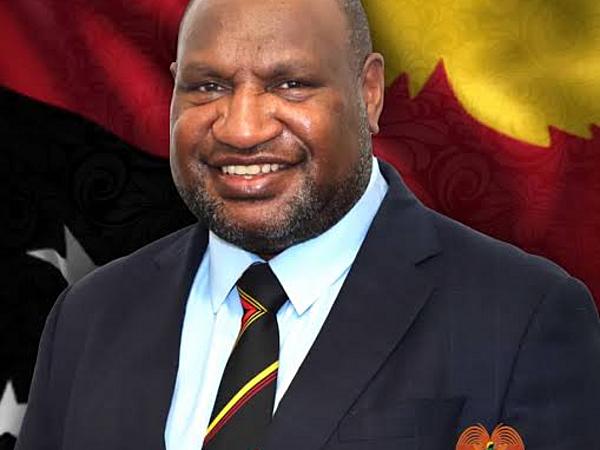
Prime Minister James Marape on 4 June led a high-level government delegation to Kikori in Gulf Province to inspect the proposed venue for the Papua LNG Development Forum and consult local leaders ahead of the anticipated gathering next month.
Joining Marape on the visit were Gulf Governor Chris Haiveta, Petroleum Minister Jimmy Maladina and Finance Minister Thomas Opa.
The prime minister said the visit would enable the national government to engage directly with provincial leaders, landowners and other stakeholders on preparations for the Development Forum, a key milestone in the progression of the Papua LNG project.
"We're heading out to Kikori to discuss the Development Forum with the Gulf leadership. We'll take advice from the Gulf leadership as to what to do as we begin discussions in Kikori," Marape said.
He said the visit was important given the national significance of the Papua LNG project and the need for all stakeholders to have a common understanding of the proposed forum venue and associated infrastructure requirements.
Marape described Papua LNG as one of Papua New Guinea's most important economic development opportunities and a cornerstone of the country's long-term growth strategy.
He said a final investment decision on the project would help underpin a sustained pipeline of petroleum developments over the coming decade, including Papua LNG, P'nyang, Pasca A and other future energy projects.
"These projects will provide long-term construction activity, production opportunities, employment and revenue for Papua New Guinea," he said.
"We're looking at the next 10 to 15 years as a period of sustained energy sector activity, not only in construction but also in long-term production and economic growth."
The prime minister said the country's economy continued to benefit from major resource developments, particularly in the oil and gas sector, while non-resource industries, led by agriculture, remained important contributors to economic growth.
He noted that the non-mining and petroleum sector had recorded growth of about 4%, driven largely by agriculture, which remains the primary source of livelihood for most Papua New Guineans.
Marape reiterated his government's commitment to increasing national participation in resource projects and securing a larger share of benefits for the state and citizens.
"Our government is predominantly known for the principle that we are fighting to take back more benefits for our country," he said.
"This Pangu Administration has made it absolutely clear that we will not compromise on ensuring the State secures around or above 55% of the total benefit from our major resource projects."
He pointed to the New Porgera agreement as an example of the government's approach and thanked resource developers and investors for supporting its objectives through negotiations conducted within existing legal frameworks.
Marape acknowledged that significant socio-economic challenges remained but said the government had maintained its focus on economic growth, greater local participation and improved returns from the country's natural resources.
He said major projects such as Papua LNG and the Wafi-Golpu copper-gold project would generate additional government revenue, strengthen foreign exchange reserves and create long-term opportunities for Papua New Guineans.
"We get Papua LNG and Wafi-Golpu online and get more revenue into the country and ensure our foreign reserves improve for the Government, landowners and developers," he said.
The prime minister also highlighted ongoing petroleum exploration activity, including plans for a deep-water drilling vessel to commence exploration between Central Province and the maritime area of Western Province.
Marape said Papua New Guinea had built a strong reputation as a reliable energy producer, noting that oil exports from the Kumul Marine Terminal had continued uninterrupted since 1990 and LNG exports since 2014.
"PNG has maintained a strong reputation as a dependable energy producer," he said.
"You have wars and conflicts in other parts of the world, but PNG's Kumul Marine Terminal in Gulf Province has not missed an export shipment since 1990, and the PNG LNG export facility has maintained uninterrupted exports since 2014."
Marape recently met TotalEnergies Chairman and Chief Executive Officer Patrick Pouyanné in Paris to discuss Papua LNG and future investment opportunities in the country.
According to the prime minister, Pouyanné reaffirmed the company's confidence in Papua New Guinea and its commitment to future oil and gas investment.
The Papua LNG project remains one of the government's highest development priorities and is being advanced by the state in partnership with project operator TotalEnergies and its joint venture partners.
The Development Forum, required under the Oil and Gas Act 1998, will bring together landowners, provincial governments and the state to negotiate benefit-sharing arrangements and discuss implementation issues ahead of future project milestones.
The upstream development is expected to include nine production wells, a gas processing facility, water injection infrastructure and carbon dioxide reinjection facilities.
Project partners have selected a development concept featuring three electric LNG liquefaction trains integrated with existing LNG infrastructure at Caution Bay, a design intended to reduce the project's carbon footprint while supporting long-term economic growth.
The project is expected to generate employment, business opportunities, government revenue and long-term benefits for landowners, Gulf Province, Central Province and the broader Papua New Guinea economy.