September 22, 2026

Editor’s Note: In this issue, Michael McWalter, former Director of the Petroleum Division and Adviser to the Government of Papua New Guinea, and erstwhile petroleum adviser to the Governments of Ghana, Liberia, Cambodia, Sao Tome, and South Sudan writes about Liquefied Natural Gas. He is a certified petroleum geologist, and technical specialist in upstream petroleum industry regulation, administration, and institutional development. 


Natural Gas 

Many people in Papua New Guinea will have heard of LNG, but how many of us know exactly what it is?  LNG is Liquefied Natural Gas.  That is natural gas that has come from within the Earth’s subterranean rock strata and then been chilled into a liquid, thus becoming Liquefied Natural Gas. It does not exist in the ground and there are no LNG wells, just gas wells from which to collect and aggregate large volumes of natural gas.     

Natural gas, as we know it, is a useful fuel which can be burnt and may make heat for all manner of domestic, commercial and industrial purposes.  It can also be used as a chemical feedstock to manufacture products like fertilisers and plastics.  Natural gas is thus a valuable natural resource, but it is quite tricky to produce, handle and supply to customers, unlike crude oil and its classic liquid petroleum products such as petrol, kerosene, and diesel.  

Turning natural gas into LNG can make natural gas even more accessible and useful. Unfortunately, many of the world’s gas fields are remote from the main consumers of natural gas. Natural gas is also bulky and thus quite expensive to transport. Methane, the primary constituent of natural gas, has a density of just 0.71616 kgs/cubic metre at normal temperature and pressure, which may be raised to 71.62 kgs/cubic metre at an applied pressure of 10,000 kilopascals (1,450 pounds per square inch (psi)), as may happen in a strong high-pressure pipeline.  Therefore, natural gas is often supplied to customers through long pipelines. 

If one liquefies natural gas to LNG, its density is raised to between 430 and 460 kgs/cubic metre (depending on its composition) making it much more compact and able to be shipped long distances on special insulated ocean-going tankers. We say that the energy density of natural gas at standard temperature and pressure as LNG is raised significantly, by more than 600 times for a given mass of gas. LNG ranges in density between 0.43 and 0.46 g/cm³ (depending on its exact ethane and propane content ratios), or slightly less than half the density of diesel. So, by liquefying natural gas, considerable energy is packed into a small volume as compared to natural gas in its gaseous state. 


LPG is not LNG 

We have to avoid the common confusion with LPG, which is Liquefied Petroleum Gas (sometimes referred to as Liquid Petroleum Gas). We know LPG otherwise as bottled gas, sold under local brand names: Puma Gas, Geogas PNG (Ggas), and Trugas. LPG is primarily propane and/or butane which liquefy under moderate pressure at room temperature. The heavy steel bottles with which we are familiar keep the petroleum gases at pressures of 7 to 20 bar or 100 to 300 psi depending on the temperature and gas mixture.   


Figure 1: Typical domestic use LPG bottles, after Puma, Ggas and Trugas. 

Propane has a boiling point of between minus 42.25 to minus 42.04 degrees Celsius, whilst butane has a boiling point of minus 0.5 degrees Celsius. Because of this low boiling point, both propane and butane are kept as a liquid under high pressure in such tanks. As long as the outside temperature is above the boiling point temperature, the liquid will naturally boil off into the vapour required to run appliances. Because it can get quite cold in the Highlands of Papua New Guinea, and butane stops turning into gas (vapourising) between minus 0.4 degrees and minus 2 degrees Celsius, a propane-based LPG is preferred for higher altitude locations to ensure a free flow of vapourised LPG. 


Liquefied Natural Gas  

The content of LNG is normally mainly methane with minor amounts of ethane, propane and butane. The boiling point of methane is minus 161.5 degrees Celsius, a temperature far removed from our terrestrial experience. This is the world of cryogenics, the branch of physics and engineering that studies materials and phenomena at extremely low temperatures and, specifically for LNG, how gases liquefy. It is a different and very expensive high-tech world when compared to crude oil, pipeline gas, or LPGs. LNG has been described as the "Frozen Flame" – a rather poetic term. It gets this name because natural gas must be chilled to extreme cryogenic temperatures to turn it into a liquid, yet it can form volatile, freezing, and highly flammable vapour clouds, if exposed to the air. 


Fig 2: The Frozen Flame, after Shell International Gas Ltd, 1988. 

We have heard of the oil and gas companies exporting LNG, and of the LNG Projects like the PNG LNG Project, operated by ExxonMobil for the last 12 years, the planned Papua LNG Project currently being prepared by TotalEnergies, and the future P’nyang LNG Project being prepared by ExxonMobil.  


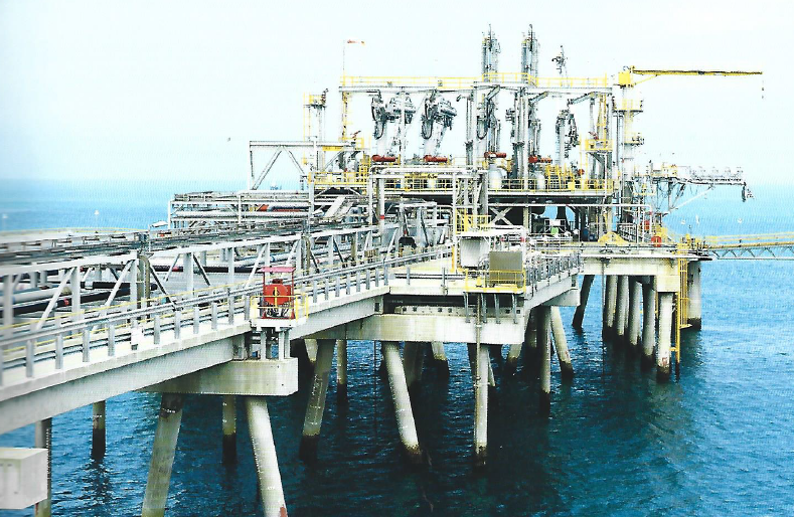
Figure 3: LNG vessel, Energy Fortitude berthed at the PNG LNG Project marine terminal jetty to receive the 116th cargo for 2025, after ExxonMobil.  

These projects are spread out across the country. They produce, and will produce, natural gas from wells drilled deep into the ground that tap into various large accumulations of natural gas trapped in ancient porous and permeable sediments that have been discovered and appraised for their quality and extent. That natural gas may flow to the surface through the wells drilled into those accumulations, and after being cleaned up of basic impurities, it may be transported in gas pipelines hundreds of kilometres long to a liquefaction plant.   


Cooling Natural Gas 

At a liquefaction plant the gas can be liquefied, or turned from its gaseous state into a liquid by intense chilling in what can only be called some of the largest refrigerators in the world.  Just as we commonly know of water in its three states of matter: solid ice, liquid water and gaseous steam, so we can also chill natural gas until it too becomes a liquid. These refrigerators or liquefaction plants are enormous, and they cool the gas to approximately minus 163 degrees Celsius at which point the natural gas becomes a liquid at normal atmospheric pressure. Of course, just as with any refrigerator, this takes energy.  

Turning a gas into a liquid, or condensing the gas, requires the extraction of the latent heat of vapourisation. The gas must release this exact same thermal energy to the environment in order to cool; that is 510 kilojoules per kilogram, for methane. Seeing as such processes are by no means 100% efficient, this means the power input for the liquefaction process is quite enormous. That energy is commonly provided by a portion of the gas feedstock, and is consumed on-site to operate massive refrigerant compressors and run the auxiliary equipment needed for the cooling process. The amount of natural gas typically consumed in this process ranges from approximately 7% to 15% of the total gas feedstock received at the plant.  Allegedly, the PNG LNG plant is so well-engineered and operated by ExxonMobil that it only consumes about 7.8% of the feedstock gas stream for liquefaction. It said that the Papua LNG Project, to be operated by TotalEnergies, might use solar-powered electric drivers for its compressors, further reducing feedstock gas utilisation in processing, and thus nicely mitigating carbon dioxide emissions from the use of gas. 


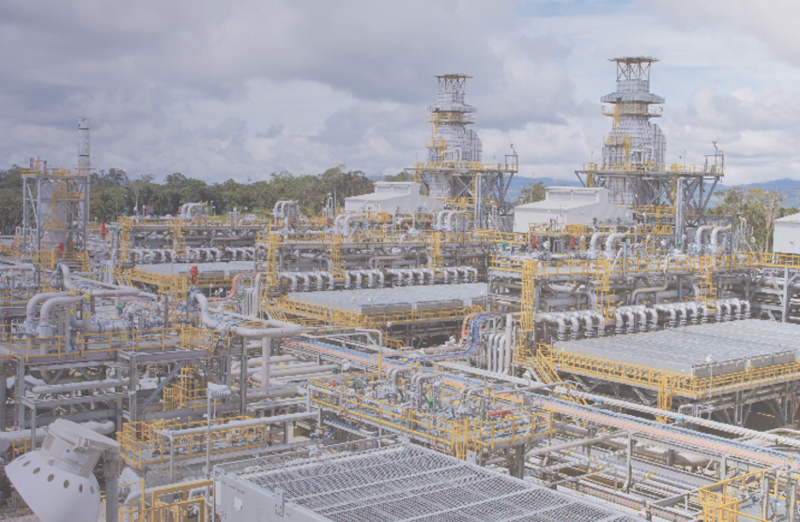
Figure 4: Part of a liquefaction plant – a massive refrigerator for natural gas, after Shell Qatar. 

The beauty of this is that the natural gas, once so liquefied, occupies only about one six-hundredth of the volume it would in its gaseous state.  Thus, the volume occupied by the natural gas in the form of LNG is vastly less, and the energy density of LNG is conversely massively heightened. By conversion of natural gas to its liquid form, it can be loaded onto ocean-going LNG tankers and can be delivered to any customer willing and able to pay for it, and receive it, anywhere in the world.    

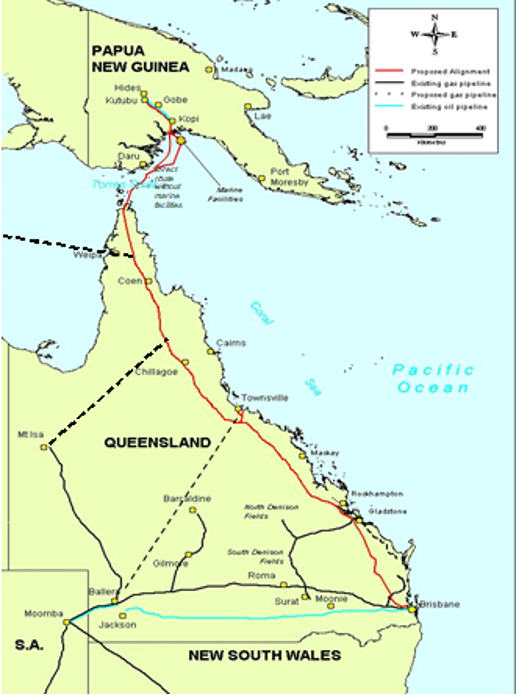
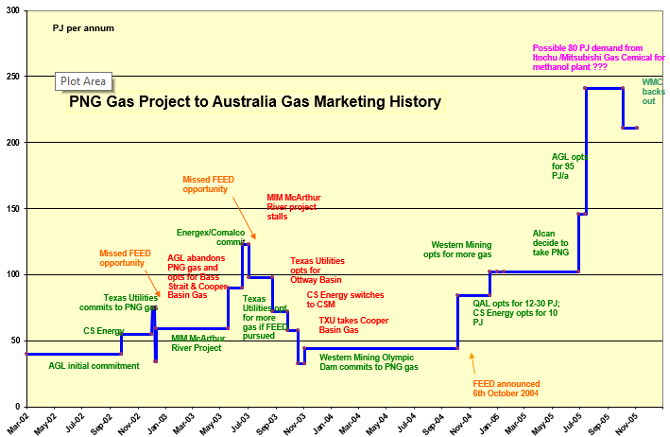
In many countries, natural gas is conveyed in large volumes by networks of pipelines taking it to diverse customers throughout the land. Also, in many parts of the world, natural gas that is excess to country needs and requirements may be exported by pipelines to countries nearby that need it, provided they can pay a handsome-enough price for the gas and its delivery. Examples of such are many. Some plans about twenty-five years ago for the development of Papua New Guinea’s discovered gas fields called for the pipeline transportation of Papua New Guinea’s natural gas to Australia, primarily to markets in Queensland. However, the proposed customers were not able to pay an adequate enough tariff for purchase of the natural gas and its long-distance transportation, as they then had ample supplies of locally-produced natural gas that were cheaper. If Papua New Guinea had pursued that project as a strategy for its natural gas development, it would have earned little from the development of those resources. Fortunately, common sense prevailed and the concept of developing the gas fields of Papua New Guinea for the supply of LNG to East Asian markets, where customers are prepared to pay a premium price for natural gas, sensibly prevailed. 

The cost of the conveyance of natural gas by pipeline naturally increases with the distance over which it is to be conveyed, such that for extremely long distances the transportation of natural gas as LNG on ocean-going tankers becomes cost effective. Necessarily, pipelines are still the preferred mode of conveyance of natural gas on land, but for maritime routes of supply, LNG is the best mode of conveyance, unless a maritime pipeline is short and cost effective, and cannot be avoided. 


Figure 5: Natural gas transportation costs show a typical breakeven between the use of pipelines and LNG at distances: between 1,500 and 3,000 kilometres, after UNECE. 


LNG – a Global Business 

In 2025, some 578.5 billion cubic metres of natural gas, equivalent to 387 million tonnes per annum (mta) was produced and moved around the world as LNG from around 20 exporting Nations to around 30 importing Nations. International trade in LNG grew by 6.5% in 2025, after two years of little or no growth. This was led by a large increase in LNG exports from the USA, with it producing 147 mta, or 25.4% of global LNG. This was followed by Qatar and Australia at 19.2 mta and 18.2 mta respectively.  Papua New Guinea produced a modest 7.9 mta, about 2.0% of global LNG supply. 


Figure 6: Trade in LNG in 2025, after the Statistical Review of World Energy, Energy Institute, 2026. 

The LNG business uses only about 15% of all the natural gas produced. The vast majority of natural gas, about 70%, is consumed domestically within the countries in which it is produced, while the remainder is used for international cross-border trade transported via pipelines in a compressed gaseous state.  LNG has the advantage that it can be transported anywhere to any port that can receive its liquefied cargo. LNG is not dependent on point-to-point pipelines, which are generally dedicated to the supply of natural gas from one nation to another, forever. LNG projects do nevertheless still have to arrange for customers willing to pay the premium price for natural gas delivery as LNG.  


The LNG Chain 

LNG projects tend to have dedicated customers with corresponding LNG sales and purchase agreements. These are binding contracts, for considerable periods of time to guarantee the financing of gas field development, and construction of gas gathering and transmission pipelines, gas liquefaction plants, and storage and loading facilities. The costs can be massive. Furthermore, LNG tankers are needed; these are generally owned by specialised maritime shipping companies and major energy corporations, and are normally chartered.  Importantly, the customers buying the LNG also have to have facilities to receive the LNG, store it, and re-gasify it back into the gaseous form for transmission and distribution to end-users.  These facilities are LNG receiving terminals, which are built at the expense of the LNG buyers, or other parties that may lease them to the buyers.  Altogether, for an LNG project to be successful, all aspects have to be developed simultaneously: the gas field, gas pipelines, liquefaction plant and LNG storage, loading terminals, LNG tankers, marine receiving terminals, regasification terminals, gas off-takers and customers. This is what we call the LNG Chain.         

Figure 7: The LNG Business Chain, after ResearchGate. 


Figure 8: An LNG tanker berthing at the Guangdong Dapeng LNG terminal in Shenzhen, Guangdong Province, China, after PetroChina.  

Aside from the contractual sales and purchase arrangements, LNG export is not necessarily limited in its destination, especially as we saw in times of global upsets, such as the Covid pandemic. Some cargoes are sold on the spot market outside the framework of long-term contracts; these sales are typically for single shipments for delivery within three months of the transaction date. Prices in the spot market can be fixed, or indexed directly to oil or gas prices. Such cargoes can go wheresoever the cargo obtains the best price.   

Thirty years ago, when the concept of LNG development was first examined by the Government of Papua New Guinea, there were just eight Nations exporting LNG and eight Nations importing LNG.  The LNG industry has grown significantly into a truly global industry providing a flexible form of energy, often as an alternative to fixed pipeline gas supply arrangements, or exhausted domestic natural gas supplies. LNG usage has grown by 363% since the year 2000.  According to many reports, that growth will continue with Shell, a major player in the LNG markets, saying that it expects it to grow to 65% from today’s level of 578 billion cubic metres (BCM) gas per year up to 955 BCM gas per year (equivalent to 700 mta LNG) by 2050 as countries continue to prioritise flexible and reliable energy security offered by gas and LNG. This would be just a 2.4% growth per annum in LNG production and demand. Papua New Guinea will likely contribute to that growth with the development and inception of LNG production by the planned Papua LNG and P’nyang LNG Projects. 


Figure 9: Total global LNG export by years in billion cubic meters of natural gas equivalent from 2000 to 2025, data after the Statistical review of World Energy, 2026.   


Gas Quality and Specifications 

When natural gas emerges from its subterranean reservoir, either dissolved in liquid oil or with natural gas liquids dissolved in a gaseous vapour, it is typically in a mixture of petroleum fluids. Whenever oil and gas are produced, it is a fundamental requirement to separate the liquids from the gaseous components, and the various petroleum fluids from any contained water and sediment. Most often this is performed near the location of the producing natural gas field and these are the first processing steps, which are known as gas conditioning.   

With separation, filtering and dehydration done, the gas may yet contain toxic and corrosive gases like hydrogen sulphide (H₂S) and carbon dioxide (CO₂). These components have to be removed to prevent damage to pipes and vessels, and to avoid their freezing and solidification in the cryogenic sections (typically at temperatures around minus 160°C) in a process known as acid-gas removal, or gas sweetening. Further dehydration of the natural gas has to be undertaken to almost completely remove (to less than 1 part per million) any vestigial water which might freeze and cause blockages in the liquefaction plant. Another troublesome impurity in natural gas is mercury which may cause severe corrosion and cracking in the aluminium cold boxes and heat exchangers used in liquefaction facilities.  

LNG feedstock with high nitrogen content causes operational issues by lowering the liquefaction temperature and generating excess boil-off gas. To utilise or fix it, operators use cryogenic distillation to separate the gas, blend it with leaner feedstocks, or route the vapourised nitrogen for use for facility safety and maintenance. 

Sometimes there may be some helium content in the natural gas.  Helium is a valuable commodity used in semiconductor manufacturing, aerospace, and MRI machines. Even if the natural gas feedstock has a low helium concentration (less than 0.1% to 0.3%), the massive scale of an LNG plant concentrates the helium significantly, making extraction highly profitable. As natural gas is liquefied, helium remains a gas. It builds up in various parts of the LNG plant. Plant operators then use specialised cryogenic extraction, membrane separation, and adsorption techniques to draw out crude helium (50-70% purity), and then refine it to grades >99.999% pure. 


Figure 10: A simplified process flow diagram of the PNG LNG Project liquefaction plant, after ExxonMobil’s PNG LNG Project Environmental Impact Statement.   

Heavier hydrocarbons, or natural gas liquids, typically pentane, hexane, and benzene have to be removed to avoid premature freezing and the fouling of the liquefaction processes. The inclusion of some ethane, propane and butane in the liquefaction feedstock gas changes the quality of the LNG and its heating value, or energy content. The inclusion of these components is a matter of LNG product design and specification to meet customer requirements. 

Japan's domestic gas pipeline network is strictly designed to handle "rich" gas (gas with more ethane, propane and butane). LNG imported into Japan typically has a higher heating value (HHV) of 39.7 to 43.3 megajoules per cubic metre (MJ/CM). Utilities consistently adjust the energy content to 45 MJ/CM (about 1,140 BTU/scf) before distributing it to homes and businesses. Because LNG imported from the U.S. and Canada is typically "lean" (dry, and thus lower in heating value), Japanese buyers blend it with rich LNG or enrich it with LPG to meet their domestic heating standards. LNG imported into Europe has a typical higher heating value (HHV) of roughly 50 MJ/CM (or about 1,267 BTU/scf). However, the exact heating value of LNG shipments into Europe fluctuates depending on the source region and liquefaction process, ranging roughly from ±10% to 15%.  

Gas Type 

Chemical Formula 

Molecular Weight 

HHV (MJ/CM) 

HHV (MJ/kg) 

Methane 

CH4 

16.042 

39.8 

55.5 

Ethane 

C2H6 

30.068 

70.4 

51.9 

Propane 

C3H8 

44.094 

93.5 

50.3 

Butane 

C4H10 

58.12 

121.8 

49.5 

Figure 11: Thermal properties of typical gases contained in LNG.  

LNG is paid for by customers on the basis of its heating value, so no value is lost if some ethane, propane and butane remain in the natural gas feedstock for liquefaction. Every component earns value according to its mass and contribution to the heating value.  

It has previously been argued that the PNG LNG Project should have stripped its ethane, propane and butane to serve as petrochemical feedstock. Whilst noble in notion, such stripping would have cost a lot of money, perhaps as much as US$ 400 million for the LPG stripping plant alone, and one wonders where the industries are that such stripped LPG could have supported. Studies found that below a crude oil price of US$ 60 per barrel, LPG stripping was not economically viable. 

The specification of LNG produced by the PNG LNG Project seeks to meet the Japanese specifications as two of the major long-term customers for the PNG LNG Project are Osaka Gas Company Ltd and Tokyo Electric Power Company. The delivered LNG thus has a higher heating value of between 41.0-42.5 MJ/CM (1100 to 1140 Btu/scf). LNG production aims to have at least 85% methane content, and strictly limits other components to try to remain within an acceptable range of gas specifications. 

Component of LNG 

Content Limitation 

Methane 

>85 % 

Ethane 

<9 % 

Propane  

<4 % 

Butanes 

<2 % 

Pentanes 

<0.25 % 

Nitrogen  

<1 % 

Hydrogen Sulphide 

<6mg/CM 

Total Sulphur 

<30 mg/CM 

Mercaptans 

<30 mg/CM 

Mercury 

<10 mg/CM 

Carbon Dioxide 

<100 ppm by vol 

Oxygen  

<10 ppm by vol 

Water 

<0.1 ppm by vol 


Figure 12: A typical LNG specification by mole percent. Note the tight limitations on impurities.  


Gas Quantities and Measurement 

Whilst the oil and gas exploration industry likes to measure gas flows in standard cubic feet per day (SCFD) (or standard cubic metres per day in the metric system [SCMD]), volume is not an appropriate measurement for what is sought by buyers: energy content.  As seen in Figure 11, the energy content (typically, the higher heating value) per cubic metre of natural gas rises in proportion to the carbon number of the particular type of gas, whilst the energy content per mass stays more or less similar, though there is a small systematic decline. Thus, measurement of the mass of the gas supplied as LNG is normally the critical quantity in gas sales agreements. Then, knowing the energy content per unit mass of the LNG, it is relatively easy to determine the amount of energy provided.  We commonly hear reports of the PNG LNG project shipping millions of tonnes (mta) of LNG to its customers. The heating value will still vary from time to time within agreed limits, depending on gas field operations for the production of natural gas and depending on which fields are contributing to the flow of natural gas feedstock to the LNG plant. 

The measure of energy content of natural gas or LNG is typically provided in terms of energy units per unit of mass, such as kilojoules per kilogram (or in imperial units as BTU per pound). It is sufficient for gas explorers to use volumetric measurements, such as million standard cubic feet per day (MMSCFD where M denotes 1000, or mille), or million standard cubic metres per day (MSCMD, where M stands for million). However, for LNG sales, the heating value of the gas is what the customers pay for. Yes, the units can be confusing, and one constantly has to check one’s units and abbreviations, especially the use of ‘M’. In the gas industry, one needs to be most conversant with all manner of units of measurement and their abbreviations, and be on constant guard against incorrect interpretation.  It is always good to give the numbers a sense check.  

So, in the case of the PNG LNG Project, it is reported that it produced 7.9 mta LNG in 2025 which had a higher heating value of less than or equal to 1,140 BTU per cubic foot, or 42.5721 MJ/CM. Such a gas would have a specific gravity with respect to air of 0.633798. If the density of air is 1.2250 kg/CM (as used in ISO conditions at 15 °C and 101.325 kPa), the density of the natural gas that has been liquefied is 0.7764 kg/CM. So, for 7.9 mta of LNG production, at 7.8% gas usage during liquefaction and 95% plant uptime, gives us an estimated natural gas feedstock rate of about 1,124 MMSCFD, or 1.124 billion SCF (BCFD). This is not a rigorous calculation, but only one to show the scale of the current PNG LNG Project development and how much natural gas it produces.  

By direct comparison, the Hides Gas to Electricity Project uses just 15 MMSCD to power the Porgera Mine electric power station, which produces 75 MW of electricity. It is simple arithmetic to show that the volume of gas used by the PNG LNG Project is an approximate equivalent to 5,620 MW or 5.62 gigawatts (GW).   This has to be compared to Papua New Guinea’s estimated total installed electricity generation capacity of just around 600 MW.  


LNG Sales 

Sales of LNG are typically made to distant customers beyond the reach of gas pipeline supply, and obviously to those countries that are energy deficient, either by having little or no endowment of oil and gas resources, or not having enough to satisfy their present-day needs.  Quite often countries take to importing LNG when their own gas resources have been depleted after the clamour to monetise them when first discovered by export and the earning of valuable foreign exchange.   

Most often LNG Sales and Purchase Agreements are negotiated and agreed prior to the development of a particular LNG export project for a substantial period of time, at least ten years, and often spanning as long as 15 up to 25 years. These agreements effectively provide financial guarantees for the financing of the development of that project. Though there are some spot trades of LNG cargoes on the open market, most LNG supply is governed by term agreements for the supply of a specified amount of LNG per year for a given period. Spot sales are for individual cargoes for immediate delivery without a long-term supply contract. 

The PNG LNG Project, which cost US$ 19 billion to develop, initially secured long-term binding agreements with four major Asian energy buyers: Tokyo Electric Power Company (TEPCO); Osaka Gas Company; China Petroleum and Chemical Corporation (Sinopec) and CPC Corporation of Taiwan. The PNG LNG Project routinely produces up to 8 mta LNG, significantly above its nameplate capacity of 6.6 mta. Amounts of LNG above and beyond the original contracted amounts have been the subject of some mid-term sales to the likes of PetroChina and BP Singapore, and some spot sales to CPC in Taiwan.  Typically, LNG Sale and Purchase Agreements are strictly held in commercial confidence and rarely ever see the light of day, but once done, the sellers and buyers usually announce their arrangement with enthusiasm.      


Figure 13: Media release by ExxonMobil 7 December 2009 announcing the LNG Sales and Purchase Agreement with Tokyo Electric Power Company Inc for 1.8 mta of LNG. 

Taiwan recently oddly halted approximately US$ 800 million in scheduled spot LNG purchases from the PNG LNG Project after Papua New Guinea ordered the closure of Taiwan’s Taipei Economic Office in Port Moresby. However, long term contracted LNG volumes are legally insulated and are much harder to unwind, so Taiwan’s response has specifically targeted uncommitted spot market cargoes only. In a reassuring statement PetroChina expressed interest in buying surplus LNG from the PNG LNG Project.   

The necessity for foundation buyers of LNG is very important for LNG projects, and recently there has been considerable speculation about the initial buyers for the LNG that will be produced from the forthcoming Papua LNG Project. No news has been announced about potential buyers, leading some observers to speculate that the Project might be having difficulties with identifying suitable buyers. However, it is more likely that the Papua LNG Project joint venture led by TotalEnergies is just being tight-lipped about its LNG marketing.  

With the events of the past few months in the Middle East, Pacific-based LNG sources ought to be prized, especially as they are not compromised by any strategic maritime straits. PNG has open-ocean access to East Asian LNG customers. The closure of the Strait of Hormuz removed a substantial amount of global LNG supply from the market.  This has demonstrated that the risk of physical disruption of LNG supply is now real, and that in turn damages the guarantees of supply that exist in LNG sales and purchase agreements. There is now a premium emerging for LNG supply from reliable producers through reliable routes of supply. The supply of LNG into the energy deficient markets of East Asian economies seeks more assurance of physical security of supply. This has caused customers to turn to US LNG exports as well as Australasian suppliers such as Papua New Guinea. This bodes well for the Papua LNG Project, its capture of foundational customers, and the continued sale of cargoes from the PNG LNG Project. 

As the Papua LNG Project is still finalising its commercial framework and working towards a final investment decision (FID), the Project will most likely be targeting major international buyers in key Asian markets, such as Japan, China, and South Korea due to the region's geographic proximity and carefully assessing the ability of those countries to afford to buy energy in the form of LNG at a premium price.  

Less buoyant economies within the region, although would-be buyers and wishing to import LNG as an energy-providing expedient, may have more difficulty demonstrating their financial capability to pay for cargoes and may have difficulty demonstrating that they have ready access to foreign exchange with which to pay for purchases. Again, the banks that are providing project financing would want to see not only binding Sales and Purchase Agreements, but such binding agreements would have to be with customers with good credit ratings and with guaranteed access to foreign exchange. 

LNG sales are made on the basis of energy content sold to the buyer, typically measured in Million British Thermal Units (MMBTU) globally, especially in international spot and long-term contracts tied to US and Asian markets. However, the metric energy unit GigaJoules (GJ) is also widely used, particularly in domestic Australian and some regional European frameworks. 

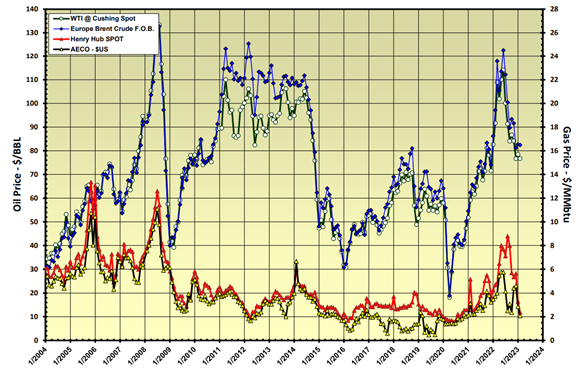
Oil referenced pricing has been a feature of LNG markets for a long time. The price paid for LNG is determined by reference to a formula linked to the crude oil price, typically the Japanese Customs Cleared Crude (JCC) index or Brent crude.  The former is the weighted-average price of crude oil imports into Japan based on official customs clearance statistics, and is widely used as a benchmark price in East Asian energy markets. Platts JKM is the LNG benchmark price assessment for spot sales of physical cargoes. It is referenced in spot deals, tenders and short-, medium- and long-term contracts both in Northeast Asia and globally. It reflects the spot market value of cargoes delivered ex-ship (DES) into Japan, South Korea, China and Taiwan. Deliveries into these locations equate to the majority of global LNG demand. In Europe the Dutch TTF natural gas benchmark trades in Euros per megawatt-hour (MWh). The TTF index refers to the Title Transfer Facility, a virtual trading hub in the Netherlands that serves as the primary price benchmark for natural gas in Europe. Prices fluctuate daily based on regional demand, geopolitical updates, and liquefied natural gas (LNG) cargo shipments. In the USA, the Henry Hub is a physical natural gas pipeline distribution point in Erath, Louisiana. It serves as the official delivery location and pricing benchmark for the New York Mercantile Exchange (NYMEX) natural gas futures contracts, setting the standard price for the North American natural gas market. 


Figure 14: Natural gas prices during the last year, showing JKM, TTF and Henry Hub prices, after JOGMEC.  

The historical reason for LNG pricing being linked to crude oil is that early LNG trades were primarily designed around substitution of oil for power generation and industrial supply of energy. Substitution values were essentially based on energy values equivalence. More than 50% of LNG cargoes are still priced using crude referencing, particularly in the Asia Pacific market. The crude oil price referencing provides a durable, stable and predictable pricing mechanism that is transparent and genuinely market responsive. To provide added stability, LNG sales and purchase agreements include cap-and-floor mechanisms that limit the indexing by reducing the reference to crude oil during abrupt spikes and troughs in crude oil price. This gives comfort to both the producers and the buyers, and enables them to continue production supply and cargo receipt during periods of crude oil volatility.  

Admittedly, crude oil and natural gas as LNG have different markets. Whilst crude oil has an integrated and global price reference system, LNG pricing can be affected by regional and seasonal factors, especially LNG spot sales prices.  During the massive economic disruption caused by the Covid-19 pandemic, LNG oversupply caused prices in Asia to fall to as low as US$ 3 per MMBTU, or about US$ 15 per barrel of oil equivalent (boe). Meantime, the European energy crisis of 2021-2022 caused Asian spot LNG prices to spike at US$ 60 per MMBTU, or about US$ 300 per boe.  More recent crises in the Middle East have again heightened crude oil prices, and hence LNG prices that are crude oil referenced, plus security of supply concerns have added a further premium. 

Global LNG storage hubs are evolving to buffer the supply of LNG. Within Asia, there are LNG storage hubs in the key importing nations such as China, Japan and Korea.  Singapore is trying to replicate its success as a crude oil hub by providing LNG commercial and bunkering hub facilities.  Thailand, Vietnam and the Philippines are also variously creating regional and domestic supply hubs. Some large integrated oil and gas companies are also intent on being global LNG suppliers gathering LNG from various LNG projects in which they are involved and selling equity LNG to customers.  


The Usefulness of LNG  

LNG is a cleaner burning fuel than coal or oil, in terms of its combustion and consequent air pollution and carbon dioxide output. Its total climate impact has been the subject of considerable debate due to LNG’s energy-intensive processing and leaks of natural gas from the system of gas supply.  However, the combustion of natural gas releases about 40% less carbon dioxide than burning coal, and fewer noxious substances are released. The combustion of LNG produces almost no sulphur dioxide or heavy particulates, or soot.  

However, there are some hidden emissions.  Natural gas can escape (so-called fugitive emissions) during its extraction, pipeline transportation, and liquefaction, and methane, its main component, is about 80 times more potent in trapping heat in the atmosphere than carbon dioxide. 

The process of cooling natural gas to liquefy it at -162°C and shipping it overseas on large tankers requires a considerable amount of energy, which adds to the overall greenhouse gas footprint. The PNG LNG Project is said to use about 7.8% of the feedstock gas stream for liquefaction. But that still represents the combustion of 88 MMSCFD, or about six times more than the Hides Gas to Electricity Project produces and consumes for electric power generation.  

The so-called fugitive emissions of natural gas are not normally entertained by respectable oil and gas companies which always try to keep petroleum of any kind, be it liquid or gas enclosed behind steel at all times. Much depends on the quality of the operating company and regulatory standards.  Moreover, it is not uncommon for some oil-rich nations to still persist in burning off or venting associated gas when producing crude; such is simply arrogantly profligate. 

Overall, the Intergovernmental Panel on Climate Change (IPCC), the United Nations body for assessing the science related to climate change, says that natural-gas power produces 50% fewer emissions than coal power — even when fugitive natural gas emissions are taken into account. The IPCC says, “Taking into account revised estimates for fugitive methane emissions, recent lifecycle assessments indicate that specific GHG emissions are reduced by one half (on a per-kWh basis) when shifting from the current world-average coal-fired power plant to a modern natural gas combined-cycle (NGCC) power plant.” 

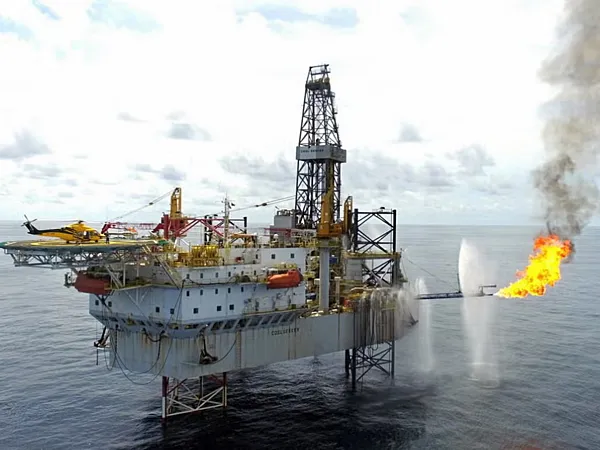
Coal currently accounts for about 45% of global carbon dioxide emissions from fuel combustion, and the world burns over one million tons of coal every hour. So, clearly a replacement of coal by LNG is a step in the right direction, but inevitably the burning of any hydrocarbons will result in carbon dioxide as a product of combustion. Both within the Middle East and the USA, this process continues unabated where natural gas is often flared and wasted as operators seek to produce and sell just the petroleum liquids. 


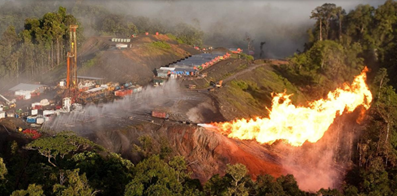
Figure 15: Gas flaring in the Middle East, after BBC and Google Earth, Google GB, Landsat, and Date SIO.    


Figure 16: Natural gas flaring in the USA, after phys.org and Skytruth.    

Throughout the energy industry there is a constant quest for lower emissions. Specifically, new LNG plants vie to become cleaner, either by reducing the amount of gas consumed in powering liquefaction processes or replacing the energy for such with alternative non-hydrocarbon supplies, such as solar or hydroelectric and/or wind power. The International Energy Agency has said that new technology can cut LNG emissions by up to 60%. 

In general, operators of LNG plants are also endeavouring to improve operations for heightened safety, resilience, and efficiency. The application of the latest automation, digitalisation, and cybersecurity strategies are helping facilities optimise performance across the LNG value chain. Such may also provide better uptime, cost efficiency, compliance, and asset performance. 


Papua New Guinea’s LNG Projects  

In the absence of a developed economy that might provide domestic, commercial and industrial markets for Papua New Guinea’s gas resources, successive Governments have elected to permit export-focused gas development projects to be pursued. This has been allowed on the basis of Papua New Guinea garnering a significant share of the net take of such projects, and gaining a boost to its overall economy. Whilst the pursuit of revenue-raising gas development projects may provide valuable financial inputs into the economy of the Nation today, they will ultimately exhaust the gas resources upon which they are based.  Most likely further gas resources will indeed be identified, but that requires exploration, which needs to be incentivised somehow.  In recent years, incremental progress has been made towards some domestic gas utilisation, but with such a dispersed and disparate demand for energy, LNG development still remains the main focus, one might say, somewhat akin to cash cropping rather than subsistence farming.  


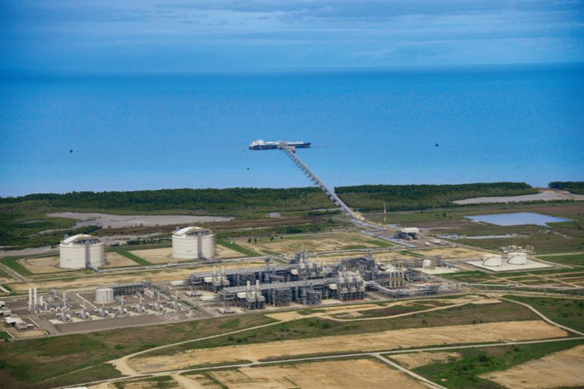
Figure 17: The PNG LNG Project terminal with the LNG plant in the background, after ExxonMobil.  

The PNG LNG Project is operated by ExxonMobil PNG Limited on behalf of its fellow venture partners which include Santos, Kumul Petroleum Holdings Limited, the Mineral Resources Development Company and Eneo. Natural gas is produced from the well sites of the Hides and Angore gas fields in Hela Province and then treated at the Hides Gas Conditioning Plant, and joined by gas from the Kutubu and Agogo fields in the Southern Highlands Province. The natural gas is transported through an onshore and offshore gas pipeline system of overall length of approximately 700 kilometres to a two-train liquefaction plant at Caution Bay in Central Province. The LNG is then stored and loaded onto oceangoing LNG tankers for transport. Natural gas condensates recovered during gas conditioning are blended with Kutubu crude oil and exported through the Kumul Marine Terminal as Kutubu Blend.  Naphtha is also produced from final processing at the LNG plant. The PNG LNG Project currently produces up to 8 mta LNG. Since LNG production commenced in 2014 to the end of 2025, the PNG LNG Project has loaded 1,259 cargoes of LNG plus some 123 cargoes of naphtha containing 94.5 mta LNG equivalent primarily for long-term customers across East Asia.  


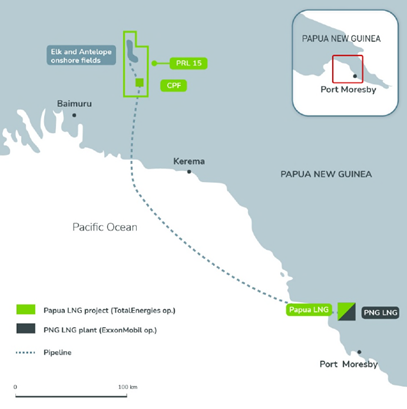
Figure 18: Papua LNG Project map, after TotalEnergies.    

The Papua LNG Project proposes a development of the Elk-Antelope gas field for the production of 6 mta LNG. TotalEnergies is the operator of this project on behalf of co-venturers ExxonMobil, Santos and Eneos. The Papua New Guinea government has a statutory right to take up to a 22.5% equity interest in the project. It seeks to become the country’s second LNG project by commercialising natural gas resources in the Gulf Province for export to the global market. Gas will be produced and conditioned in the field for pipeline transmission to four new electrically driven 1 mta liquefaction trains to be located adjacent to its existing PNG LNG Project liquefaction facilities. Ullage in the PNG LNG Project liquefaction plant is also expected to provide a further 2 mta processing capacity. ExxonMobil as a co-venturer has been delegated as the Papua LNG Project’s downstream operator. 


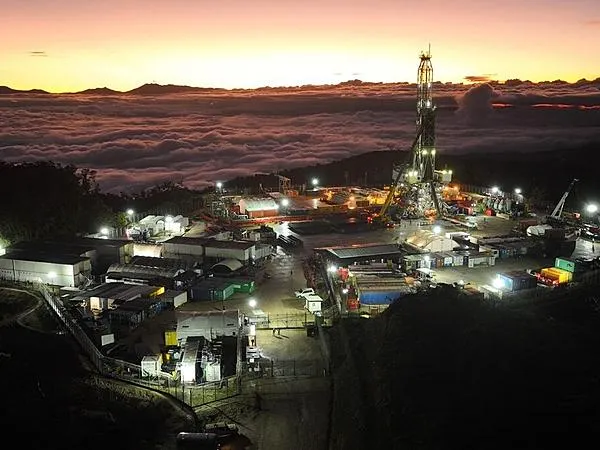
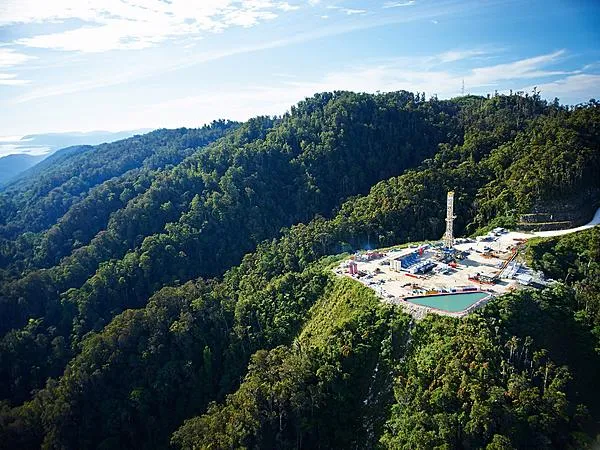
Figure 19: A well on the P’nyang gas field, after PNG Business News.  

The P’nyang LNG Project plans to develop the P’nyang gas field discovered in 1990 and located in the northern part of the Western Province in Petroleum Retention License 3. The field is estimated to have recoverable gas resources of about 4.6 TCF. In 2022, the P’nyang LNG Projects Gas Agreement was executed, followed by its Fiscal Stability Agreement in 2024. The field, which is located 130 km northeast of the Hides gas field will most likely be developed after the Papua LNG Project development, and will most likely link into existing gas pipeline infrastructure and the LNG plant. It is planned to produce 2.7 mta LNG. The project is led by ExxonMobil as operator on behalf of co-venturers Santos and Eneos. The Papua New Guinea government has a statutory right to take up to a 22.5% equity interest in the project. 


Words = 6,736 

June 19, 2026

Resources and/or Reserves

The words resources and reserves as applied to the presence of oil and gas deposits are often quite casually used without due regard for their actual meaning. This can clearly mislead people either by grossly exaggerating, or under-estimating the importance of an undrilled prospect, the potential oil and gas production of a field, or even the actual petroleum endowment of a nation. The latter can in turn lead to very serious economic policy errors by a government.

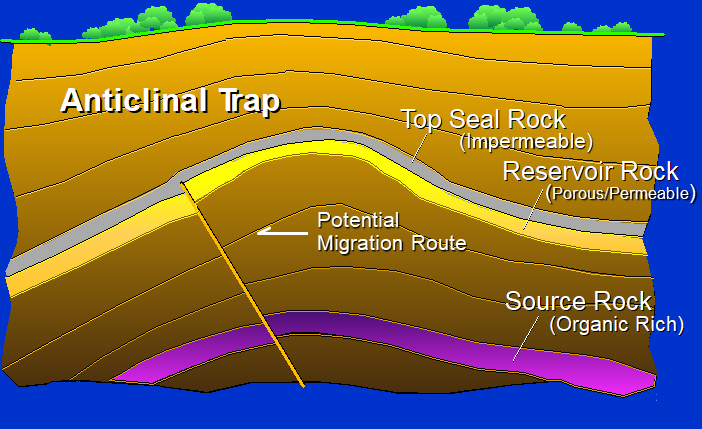
A country may be prospective for petroleum accumulations, but being prospective is only a statement of there being the potential for oil and gas to have accumulated into discrete subterranean pools, or accumulations, which may have the potential to be tapped by wells drilled into them. These accumulations have to be found first by field exploration and the drilling of wells, which are not easy tasks. Discovered accumulations then have to be evaluated for the quality of the petroleum that they bear and their extent, and only if they are large enough, might they be considered for commercial recovery of that discovered petroleum. In this discussion, I only discuss conventional oil and gas accumulated in porous and permeable reservoirs, not oil and gas unlocked from less permeable strata by fracturing or gas released from degasification of coal – coal bed methane.   


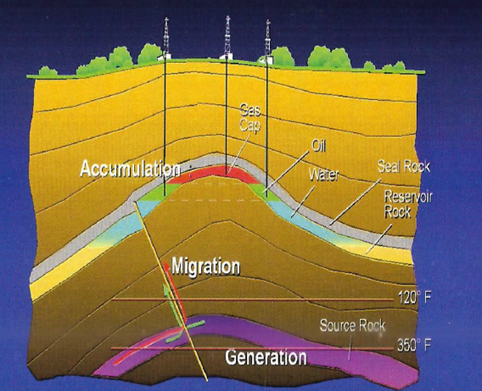
Figure 1: Section through rock strata illustrating subsurface sources of oil and gas, after U.S. Energy Information Administration.

Discovery

Exactly what constitutes a discovery can be debated for hours by petroleum technocrats.   The Society of Petroleum Engineers defines a discovery as being a “petroleum accumulation where one or several exploratory wells through testing, sampling, and/or logging have demonstrated the existence of a significant quantity of potentially recoverable hydrocarbons and thus have established a known accumulation.” In this context, recoverable means that the hydrocarbons have to demonstrate that they are indeed moveable and are not just immovable residues. 

A significant quantity implies that there is evidence of a sufficient quantity of petroleum to justify estimating the in-place volume of petroleum as demonstrated by the drilling of wells into the accumulation and for evaluating the potential for future commercial recovery of that petroleum.

One should be cautious in the use of the term discovery. Discovery should not be translated into undue expectations of oil and gas field development and petroleum incomes.  Development of any oil and/or gas accumulations only comes as and when there are proven to be adequate recoverable oil and/or gas reserves to warrant the expense and effort of development and production operations. Discovery is the first elemental step towards development, but it is only the initial identification of the accumulation of petroleum, the scope and dimensions of which has to be subsequently ascertained.

Interestingly enough, the Papua New Guinea Oil and Gas Act does not define discovery, though it does require the discovery of petroleum to be notified to the Government immediately and details of the same to be provided within three days. The licensee may then be directed to furnish “written particulars of the chemical composition and physical properties of the petroleum; and the subsoil in which the petroleum occurs; and any other pertinent matters.” Typically, the acid test of a discovery has been the testing of the discovery well to see if the petroleum will flow from the subsurface reservoir to the surface, though modern downhole tools can simulate such tests and provide a reasonable understanding of the petroleum content of the discovered accumulation and the ability of its reservoir to permit the flow of its contained fluids.  


Figure 2: Testing of the Pasca A-4 well in the Gulf of Papua in 2019, after Twinza Oil Ltd.

The evaluation of the results of an exploration well needs to be done most carefully. Full attention to the monitoring of the petroleum operations is essential to preserve the interests of the nation, not that the petroleum companies might mislead the government, but errors of interpretation and judgement do occur. 

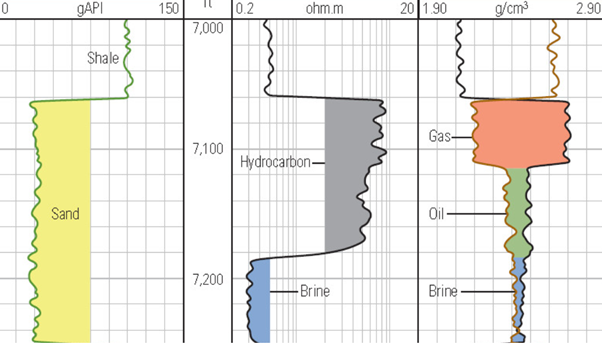
In one famous case in Papua New Guinea, a well-known operating petroleum company thought that it had made an oil and gas discovery. In an effort to keep up with its fiduciary duties to its shareholders and its Australian Stock Exchange listing requirements, it issued a press release announcing that it had made a significant oil and gas discovery of considerable thickness with well logs showing a gas cap overlying a respectable oil column. The company’s development geologist courteously delivered a copy of the press release to the author at the Government’s Petroleum Division at the Department of Petroleum and Energy together with a set of the well logs (which necessarily excited the author). After ten minutes of cursory review of the logs, the author announced to the company’s development geologist that the company had not discovered any oil or gas, but that the well had rather encountered reservoirs full of water. The press release was suitably endorsed and sent back to the company’s managing director, who was stunned in disbelief.  The company proceeded to evaluate the well the next morning with a full well test of the various supposed hydrocarbon-bearing reservoirs, but the well tests flowed only water. Such was not only a grave disappointment and embarrassment to the company, but also to the Government which naturally would have preferred a discovery.


A Field

In conventional petroleum reservoirs, a field is typically an area consisting of a single accumulation or multiple accumulations in a reservoir or reservoirs all grouped on, or related to, the same individual geological structural feature and/or stratigraphic condition. There may be two or more reservoirs in a field that are separated vertically by intervening impermeable rock, laterally by local geologic barriers, or both. Aside from accumulation and reservoir, some jurisdictions use the term pool. In Papua New Guinea, a petroleum pool is defined as a “naturally occurring discrete accumulation of petroleum.”


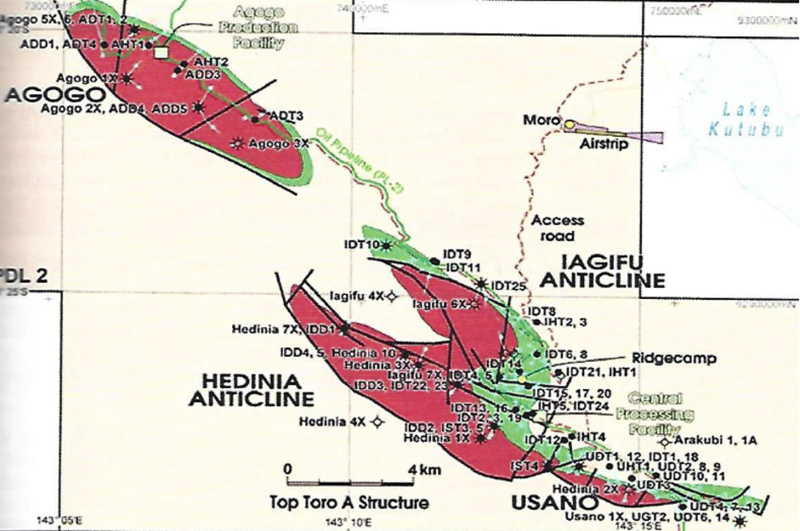
Figure 3: Map of the Kutubu oil and gas fields: Iagifu-Hedinia, Agogo and Usano, after Oil Search Ltd.


Poor Advice Can be Misleading

In one developing country, its foreign expert oil and gas advisers told the government that it had one billion barrels of crude oil. However, that estimate was only an assessment of the overall potential petroleum endowment of the country, if it might be realised through appropriate exploration and discovery. It was a probabilistic estimate based on an assessment of regional geological parameters that are conducive to the formation of petroleum accumulations. It was obviously dependent on the results of exploration which might, or might not take place. Moreover, the advice failed to define whether that was the amount of oil and gas that might be found in situ within the yet-to-be-discovered accumulations, or whether it would be the amount of oil and gas that might be recoverable, either technically or economically.

Alas oil, as we all know, is viscous and sticky, and does not flow easily. It also requires energy to flow to the surface, so only a proportion of all subterranean oil discovered is ever recovered. That estimate of the country’s oil endowment also only had a 50% probability. Subsequent exploration by oil and gas companies found just several accumulations of crude oil amounting to an aggregate 200 million barrels of oil-in-place. Oil-in-place is the petroleum that exists originally in naturally occurring accumulations, discovered and undiscovered, before production begins. However, the discovered oil was of high viscosity and density, and only 9% was found to be actually recoverable and potentially able to yield 18 million barrels of actual oil production for sale and use.

Politically, the President of the country had staked his national policies on the cited one billion barrels by multiplying that quantity by the then current price of crude oil of US$ 50 per barrel. Thus, he contemplated having a massive US$ 50 billion contribution to the nation’s economy, and maintaining his popularity and position based on such. He told the people that the country would become a member of OPEC and everyone would have cheap gasoline and diesel.

However, the reality was that the discovered recoverable 18 million barrels was quite difficult to win from the ground and the development and operating costs amounted to US$ 30 per barrel, leading to a net value of subsequent oil production being only US$ 20 per barrel for a total value of just US$ 360 million. The President then realised that the Government’s Production Sharing Contract more or less allowed the oil companies to keep 50% of the net value of the produced crude, so his government got just US$ 180 million. And this was spread out over twenty years providing an average income to the Government of just U$ 9 million per year, a far cry from the spectacular windfall of US$ 50 billion. The President was accused of misleading the people and was not re-elected in subsequent national elections.

There is no need for such grave errors. It is the duty of the petroleum technocrat, specialist or expert, be he or she: an adviser, a government official, or a company official to advise non-technical people appropriately, and with great caution. Politicians and others have their expertise, and we petroleum folks have ours; it is our job to communicate our findings to others with professional care and diligence.

In one West African nation, the author once had to tell the President’s Adviser that she was not qualified to talk about the potential oil reserves that some international company had been promoting to her boss, making the President overly exuberant and excited about future oil production. She was alarmed and annoyed when told that the country had no petroleum reserves, but only prospective petroleum resources that had yet to be discovered, may be. Some ten years later, those wells have yet to be drilled, and the country still has no proven oil reserves.

On another occasion in Papua New Guinea, when Chairing the Opening Ceremony of the Second PNG Petroleum Convention in May 1993, the author had to carefully and cautiously advise the then Prime Minister, the Rt. Hon. Paius Wingti, PC (next to whom, the author was sitting) that the enormous Indonesian gas reserve figures being talked about by our guest keynote speaker, Ir. Suyitno Patmosukismo, the then Director General of Indonesia’s Ditjen MIGAS, (an abbreviation for Minyak dan Gas Bumi, or Oil and Gas, and the State regulator of oil and gas) were not actual proven recoverable volumes of gas, but probabilistic estimates of potential undiscovered resources.  This put our modest, but conservatively estimated proven recoverable gas resource identified by that time in perspective, and we felt less humbled! The Prime Minister was grateful, and the author had done his duty.


Figure 4: Extract from the Programme of the Second PNG Petroleum Convention, May 1993

The mainstream media (newspapers, television and radio) often make mistakes in talking and writing about oil and gas resources and reserves, often needing specialist technical correction after promoting public misunderstanding. Sensational news sells better, one supposes.  I shall not dwell on the many inaccuracies of social media in these matters.

Within the petroleum industry, we may also sometimes find speculation, especially by smaller oil and gas exploration companies that wish to talk up the petroleum resource potential of their exploration areas. Often this is done to make investment in their company seem more attractive. Whilst the larger integrated international oil and gas companies do not need to play such games, there are times when they might exaggerate the potential of undrilled leads and prospects to the non-technical minds of political leaders in an attempt to persuade them to consider favourable treatment and regulatory actions.


Petroleum Resources Management System

The petroleum industry has rules about such matters. The systematic reporting of petroleum resources has been developed progressively over nearly one hundred years.  Today, the Petroleum Resources Management System (PRMS) is highly developed, and subject to regular revision and update. It is published by the Society of Petroleum Engineers, and its Oil and Gas Reserves Committee. It has wide industry input and sponsorship from other industry organisations, such as the World Petroleum Council (WPC), and the American Association of Petroleum Geologists (AAPG), among others.

The PRMS provides a consistent approach to estimating petroleum quantities, evaluating projects, and presenting results within a comprehensive classification framework.


Petroleum

First of all, we need to be sure of what we are talking about.  Petroleum is defined as a naturally occurring mixture consisting of hydrocarbons in the gaseous, liquid, and or solid state. Petroleum may also contain non-hydrocarbons, common examples of which are carbon dioxide, nitrogen, hydrogen sulphide, and sulphur, and in rare cases, non-hydrocarbon content can be greater than 50%. Interestingly enough, in Papua New Guinea, although the definition of petroleum is more or less the same, the Oil and Gas Act simultaneously refers to helium alongside petroleum.  Helium was found in both the Barikewa 1 and Iehi 1 wells drilled respectively in 1958 and 1960 by Island Exploration Company and the Australasian Petroleum Company. Albeit in relatively low concentration of only about 0.1% in the discovered natural gas stream, it may one day yet have commercial value if the gas from these fields is ever produced for LNG production.


Petroleum Resources

The term petroleum resources is used to encompass all quantities of petroleum both recoverable and unrecoverable naturally occurring in an accumulation on or within the Earth’s crust, discovered and undiscovered, plus those quantities already produced. Further, it includes all types of petroleum whether currently considered conventional or unconventional.


Petroleum Reserves

Petroleum reserves are those quantities of petroleum anticipated to be commercially recoverable by application of development projects to known accumulations from a given date forward under defined conditions. Reserves must satisfy four criteria. They must be discovered, recoverable, commercial, and remaining (as of the evaluation’s effective date) based on the development project(s) applied.

Reserves are recommended as sales quantities as metered at the reference point. Where the entity also recognises quantities consumed in operations as reserves these quantities must be recorded separately. Non-hydrocarbon quantities are recognized as reserves only when sold together with hydrocarbons or volume consumed in operations associated with petroleum production. If the non-hydrocarbon is separated before sales, it is excluded from reserves.

Reserves are further categorized in accordance with the range of uncertainty and should be sub-classified based on project maturity and/or characterised by development and production status. The PRMS summarises this in its Resource Classification Framework. The horizontal axis reflects the range of uncertainty of estimated quantities potentially recoverable from an accumulation by a project, while the vertical axis represents the chance of commerciality, which is the chance that a project will be committed for development and reach commercial producing status.


Figure 5: Resources Classification Framework, after the Petroleum Resources Management System (PRMS) of the Society of Petroleum Engineers.


Proved, Possible and Probable Reserves

In dealing with uncertainty of petroleum reserves, the PRMS classically uses the terms: proved, probable and possible.  

Proved reserves are those quantities of petroleum that, by analysis of geoscience and engineering data, can be estimated with reasonable certainty to be commercially recoverable from known reservoirs and under defined technical and commercial conditions. If deterministic methods are used, the term “reasonable certainty” is intended to express a high degree of confidence that the quantities will be recovered. If probabilistic methods are used, there should be at least a 90% probability that the quantities actually recovered will equal or exceed the estimate.

Probable reserves are those additional reserves which analysis of geoscience and engineering data indicate are less likely to be recovered than Proved Reserves, but more certain to be recovered than Possible Reserves. It is equally likely that actual remaining quantities recovered will be greater than or less than the sum of the estimated Proved plus Probable Reserves (2P). In this context, when probabilistic methods are used, there should be at least a 50% probability that the actual quantities recovered will equal or exceed the 2P estimate.

Possible reserves are those additional Reserves that analysis of geoscience and engineering data suggest are less likely to be recoverable than Probable Reserves. The total quantities ultimately recovered from the project have a low probability to exceed the sum of Proved plus Probable plus Possible (3P) Reserves, which is equivalent to the high-estimate scenario. When probabilistic methods are used, there should be at least a 10% probability that the actual quantities recovered will equal or exceed the 3P estimate.

Of course, to be presented as a reserve the petroleum in question has to be discovered, recoverable, commercial, and remaining to be recovered based on a scheme of development to be applied. Where petroleum accumulations fall short of these criteria, they are generally considered to be contingent resources. 


Commerciality

Discovered recoverable quantities of petroleum or contingent resources may be considered commercially mature, and thus attain reserves classification, if the entity claiming commerciality has demonstrated a firm intention to proceed with development. This means the entity has satisfied its internal decision criteria. This is typically the rate of return at or above the weighted average cost-of-capital or the hurdle rate. Commerciality is achieved with the entity’s commitment to the project and all of the following criteria:

  1. Evidence of a technically mature, feasible development plan.
  2. Evidence of financial appropriations either being in place or having a high likelihood of being secured to implement the project.
  3. Evidence to support a reasonable time-frame for development.
  4. A reasonable assessment that the development projects will have positive economics and meet defined investment and operating criteria
  5. A reasonable expectation that there will be a market for forecast sales quantities of the production required to justify development. There should also be similar confidence that all produced streams (e.g., oil, gas, water, CO2) can be sold, stored, re-injected, or otherwise appropriately disposed.
  6. Evidence that the necessary production and transportation facilities are available or can be made available.
  7. Evidence that legal, contractual, environmental, regulatory, and government approvals are in place or will be forthcoming, together with resolving any social and economic concerns.

One might consider the current status of the Elk-Antelope gas field which is to be developed for production gas as feedstock for processing as liquefied natural gas (LNG) by the renowned international oil and gas company, TotalEnergies. In the context of the PRMS, the petroleum of the Elk-Antelope gas field is on the brink of becoming commercial, and thence considered as petroleum reserves. The PRMS nicely demonstrates the transition of contingent resources where development is pending to reserves justified for development and then approved for development.

The fields currently contributing gas to the PNG LNG Project clearly have proved reserves which are either currently being produced or are to be produced.  As such fields continue to produce gas their proved reserves are systematically depleted by that production. We term production as the total cumulative quantity of petroleum that has been recovered at a given date. Proved reserves may be replenished as the operating company obtains more and more information about the petroleum accumulation it is producing and their reservoirs.  Reserves which previously had less certainty of recovery may migrate from the possible reserve category to the probable reserve category and likewise from the probable category to the proved category.  This is not a certainty, but the phenomenon of reserve creep is often realised as production continues, reservoir knowledge and understanding of its behaviour are amassed and field experience expands, but not always. There can be equally disappointing outcomes.


Figure 6:  Sub-classes of petroleum based on project maturity, after the Petroleum Resources Management System (PRMS) of the Society of Petroleum Engineers.


Plays, Leads, and Prospects

Oil companies will talk of checking out a play. A play is a geological argument used to justify exploration for hydrocarbons. Critical geological ingredients may be present in an area that may encourage the notion that petroleum accumulations might have formed within the subterranean strata.  A sedimentary basin may have developed sometime in geological history within the strata of which buried organic material may have matured into oil and gas. The petroleum geologist will have ideas of possible trapping mechanisms which may have caused any generated petroleum to have accumulated in geological traps which would necessarily have to be formed before the petroleum migrated due to its buoyancy.     

Geological, geophysical and geochemical are undertaken to identify potential structural trends which may provide potential traps. These are often called leads.  When such leads are examined more closely to ascertain that they meet all the criteria for formation of a petroleum accumulation, prospects may emerge which may be worthy of drilling to determine whether there might be a petroleum accumulation worthy of commercial production. Oil companies will drill their best and largest prospects with the hope of finding oil and gas. Alas, all parameters for the formation of an accumulation have to be present and with the correct timing, so often drilling is not successful. Subtleties of geological history and evolution of the geology of the area may preclude the prospect from bearing hydrocarbons. Sometimes perseverance is required as the drilling of several prospects provides more specific geological knowledge of the area, and eventually a discovery is made. There are so many cases where companies have drilled a series of well unsuccessfully, only to have a pleasant surprise eventually with a late discovery. 


Figure 7: Plays, leads and prospects, after Sabrine Berkat, ALNAFT, Algeria.


Appraisal

Once a discovery is made, the question everyone asks is, “How big is it?” This is a simple, but daunting question.  A typical petroleum prospect in Papua New Guinea might need to be of considerable size to justify and warrant it being drilled in the first place. Take for example, the Iagifu prospect of the Iagifu-Hedinia oil field, in production since 1992 as part of the Kutubu Project. Its pre-drill prospect structure was approximate 6 kms long by 3 kms wide, and ellipsoidal in shape covering an area of about 56.5 square kilometres.  Consider that the drill bit that first entered the oil-bearing Toro Sandstone reservoir at 2,430 metres depth in the well was just 12-1/4 inches in diameter, or only 0.076 square metres or 760 square centimetres in area. That bit probed only just over five billionth parts of the prospect, a minute portion of the prospect indeed. A discovery is nice, but it does not make a field. Sometimes there is not even a defined accumulation, if the discovery cannot be delineated or appraised by further drilling to map out the lateral extent of the accumulation across the geological structure which formed the prospect. There was an extraordinary discovery called Makas 1-X, which was drilled in the 1990s and which allegedly found an oil-bearing sandstone. The well ran into technical difficulties and had to be re-drilled, but when that new well encountered the reservoir sandstone, it was barren of oil. In this instance, appraisal refuted the supposed discovery.

Appraisal seeks to probe the full extent of a newly-discovered petroleum accumulation by the drilling of more wells into the prospect. This is done to gauge whether the accumulation contains enough petroleum to be able to sustain production on a profitable commercial basis. It is an important critical stage of petroleum development. The drilling of further wells on a discovery has to be encouraged and promoted, and if necessary, government regulators need to ensure it takes place. 


Figure 8: An early post-discovery depth map of the top of the oil-bearing Toro Sandstone reservoir over the Iagifu and Hedinia anticline, after Paul Lamerson, Chevron, 1988.    

The operating petroleum company may not wish to spend precious financial resources on appraisal immediately. It may have other competing or urgent investments.   The Papua New Guinea legislation does not define the term appraisal of a discovery, but appraisal of a petroleum discovery is included in the rights of petroleum prospecting licensee. However, the government may direct the licensee to do such things as are thought necessary including the completion of wells, the conduct of drill stem or extended production tests for appraisal of a discovered petroleum accumulation. More specific appraisal requirements are contained either in legislation, licence conditions or production sharing agreements elsewhere.  The Papua New Guinea Oil and Gas Act does enable the declaration of what is known as a Location over the specific block within which a discovery is made, and up to eight adjoining blocks (a block is 5 minutes latitude by 5 minutes longitude, or about 81 square kilometres at the latitudes of Papua New Guinea).

The declaration of a Location enables some degree of retention of the licence area by the discoverer, but also importantly triggers the ability of the Government to  require various investigations and studies as to assess the feasibility of the construction, establishment and operation of an industry for the recovery of petroleum from the location, particularly technical and economic feasibility studies relating to the recovery and transport of petroleum from the location and processing of the petroleum.


Estimating the Resources

Once a petroleum accumulation has been found and appraised by the drilling of further wells which have shown that the petroleum can flow to the surface, the next big question is the size of the accumulation. Essentially, size of the accumulation it is a matter of size of the reservoir, and that in turn depends on the size of the geological structure that may have formed the trap within which the petroleum got trapped and has been found. Quite simply, the more petroleum bearing rock there is, the more petroleum will be in-place; we call this the bulk rock volume.  In simple terms, this is the area of the reservoir times its thickness, though complexities of the geological structure and its shape make this considerably more complicated. 

Now, we must remember that in a conventional petroleum reservoir, the petroleum is located in the pores within the rock, a bit like water in a sponge. So, determining the porosity of the reservoir rock is a fundamental factor that has to be measured. A sample of rock can be obtained from the well and physical studies can be made of it to ascertain its porosity as a percentage of the rock, or electronic tools can be lowered into the well to measure physical properties of the rock from which its porosity may be calculated. Within the subsurface rock strata, water abounds, remnant from the time of deposition. When petroleum accumulates in a porous reservoir rock it, displaces the water, but not perfectly or completely. There is always some water left behind. Accordingly, a portion of the porosity of the rock still contains water depending on local subsurface geological condition.  Again, measurements can be made of the reservoir rock in situ by special electronic tools to ascertain what percentage of the pores is filled with water, and what percentage is filled with petroleum.  This, we call the water saturation.

When petroleum flows to the surface from a reservoir, it is moving from a location of high pressure and somewhat elevated temperature to standard atmospheric conditions. Oil containing gas will shrink as it rises up the well to ambient conditions as the gas comes out of solution. There is also some shrinkage due to temperature change effects and expansion due to pressure relief.  This volume change is called the shrinkage and is expressed as the formation volume factor, the ratio of the volume of petroleum at reservoir conditions to the volume at surface conditions. It typically ranges from 1.0 to 3.0. 

In the case of gas, as it flows up the well, it will expand in classic response to the decrease in pressure and temperature from subsurface reservoir conditions to surface conditions.  The gas formation volume factor is generally much lower, ranging from 0.001 to 0.01 reservoir volume per surface volume.

Multiplying these factors together, in broad terms, we get:

Volume of petroleum at surface = bulk rock volume x porosity x (1-water saturation)/formation volume factor     

This is what we call a volumetric method, which is adequate in cases where we have some idea of rock and fluid parameters. It is generally used in early stages of appraisal of an accumulation.  Other methods are the material balance method in which the tracking of pressure changes is used to estimate remaining reserves, and decline curve analysis, which uses field production data trends to predict future output. Of course, this discussion is quite generalised, and there are many intricacies and additional dependencies.


Figure 9: Classical methods of petroleum reserve analysis after petroleum concepts on Instagram

Petroleum is normally a complex mixture of many different hydrocarbons. Oil most often contains hydrocarbon gases in solution and natural gases contain liquid hydrocarbons in solution.

Also, rarely are reservoirs undisturbed and quite often the very tectonic forces that created the geological structure within which the petroleum has been trapped may cause intricate faulting of that reservoir. This can often spoil the continuity of the reservoir and effectively break it up into many small pieces of reservoir some of which may not have been able to be charged with oil or gas.   This often only becomes evident when infill drilling between the discovery and appraisal wells demonstrates such discontinuities. Faults identified in the wells within the reservoir rocks indicate localised tectonic displacement and what is called compartmentalisation.  This is the case in the Kutubu oil fields which then required very careful placement of production wells to tap the oil-bearing parts of the reservoir.

Sometimes water enters the petroleum bearing reservoir and flushes the hydrocarbons out of place leaving behind only a residual viscous smear of the original oil charge of the reservoir and the flushing waters.  Such was the case in the Toro sandstone reservoir of the large Mananda anticline which showed excellent signs of bearing oil, but the primary charge had been flushed away leaving only a non-recoverable residue. 

In some reservoirs, the porosity of the reservoir varies laterally due to changes in the original depositional environment of the sediments, or later mineralogical or chemical changes.  The amount of water remaining in the reservoir pores can vary across a field, and hence the degree of fill of that porosity by hydrocarbons.  

As one may realise, the assessment of the original oil-in-place or original gas-in-place can become quite tricky.  Then, there is one more factor that is absolutely necessary for the oil and /or gas to flow into the well bore; that is permeability. 

Permeability is the ability of a porous material (such as rock) to allow fluids (either liquids or gases) or gases to flow through it. Permeability measures how easily fluids flow through the interconnected pores under pressure. High permeability allows easy flow, while low permeability restricts flow. The majority of rocks (more than 93%) have very little permeability and a small amount (2%) have fair to good permeability, the balance are considered to be poorly permeable or tight. From the 2% permeabilities range from 1 to 1000 milliDarcies (mD, the unit of permeability named after Henri Darcy).  In the Hides gas field, the reservoir permeabilities of the Toro Sandstone reservoir range from 3 to 2,000 mD with the bulk of readings being between 30 to 150 mD.  Such permeability would be said to be good. Both permeability and porosity are related and in the Hides gas field Toro reservoir, permeability broadly scales with porosity which ranges between 2% to 18%.


Recovery Factor

It is good to have an accumulation full of hydrocarbons in a porous and permeable reservoir, but those hydrocarbons still need to be able to get to the surface to be able to be sold. They need to be recovered as oil and gas production. Exactly how much oil and/or gas may be recovered from a reservoir by production is not so easy to estimate.  For oil and gas to flow into a wellbore from a reservoir rock and flow to surface requires energy. The flow has to combat gravity and frictional forces to get to the surface. So quite obviously the higher the pressure of the reservoir and the less viscous the petroleum is, the better it will flow.   Measurements of reservoir pressure are therefore most important. 

In a gas field, the natural gas will fill its container, the reservoir and pressure within the connected reservoir will equilibrate.  As the gas is produced, the reservoir pressure will decrease just like a balloon deflating until such time as there simply is not enough pressure to force the gas out of wellbore. That then is the technical end of production. A crude estimate of the recovery factor of a gas field may be expressed as 1 minus the reservoir pressure at abandonment divided by the initial reservoir pressure. Typical gas fields have high recovery rates of between 50% to 80%.


Figure 10: Recovery factor versus depth of gas fields outside the USA with larger than 1 trillion standard cubic feet of gas in place, after Jean Laherrère, International Energy Agency.

Of course, gas fills its container and has a very low viscosity; oil is quite different. It is viscous, a liquid and hence moves much more slowly.  It does not fill its container as gas does. When a well penetrates an oil-bearing reservoir, the oil has to flow toward the borehole in response to a decrease in pressure caused by the well’s penetration into the reservoir.  As the pressure differential between the wellbore and reservoir decreases with time, the oil becomes more and more sluggish.  Lighter density oils move easier, but heavier density oils have a hard time. The amount of gas dissolved in the oil very much affects the ability of the oil to flow out of the well because as the pressure is relieved, the gas bubbles out of solution (just like opening a Coca Cola bottle) frothing up the oil and making the oil flow lighter and easier to ascend the well.  The amount of gas contained per barrel of oil in solution is known as the gas-oil ratio.  In the case of the Kutubu fields, the oil was very gassy from the beginning, and so recovery of the oil was much easier.  Indeed, there was so much gas produced with the oil that for many years the gas was reinjected back into the reservoir to help push the oil to surface. In this way, it was also effectively conserved until it too could be produced in the current PNG LNG Project. 

Some oil-bearing reservoirs are linked in the subsurface to active aquifers which provide additional energy to help maintain the reservoir pressure for a longer period of time.  Petroleum engineers and production geologists quite often devise water injection schemes to aid oil recovery in which massive amounts of water are pumped into the water lying below the oil to help it flow to the production wells. This is called water flooding.

Whilst the extent of gas recovery from a reservoir is more fundamentally connected to the change of reservoir pressure, the extent of oil recovery is not so readily estimated. Elaborate reservoir models may be built describing the reservoir rock, reservoir fluids and their parameters to create simulations of flow through an array of production wells.  These simulations can be correlated to actual flow of wells when tested and an overall assessment of likely recovery scenarios made.

Typical oil recovery rates are between 5% to 50% of the original oil-in-place, with an average often cited of around 30% to 35%. Secondary recovery techniques like water flooding and gas injection enhance recovery to between 30 to 40%. Enhanced oil recovery (EOR) techniques may significantly increase recovery by the injection of heat, gases, chemical to reduce viscosity and improve flow, but this comes at a cost.   


Figure 11: Recovery factor of 800 oil fields outside the USA, after Jean Laherrère, International Energy Agency


Ultimate Recovery

As one produces a field, be it an oil field or a gas field, the resources that were estimated to be in place at the beginning of production are steadily depleted. The extent of the recoverable reserves is reduced by every additional amount of production, so the reserves of a field decline. Those reserves that have been recovered and those that may yet be potentially recovered are referred to as the estimated ultimate recoverable reserves of the field. This is the ultimate measure of the total potential commercial output of a field.

To talk of the reserves of a particular petroleum province and its fields one can only project into the future as those resources that were once reserves and have been produced are no longer such. The estimates of reserves are estimates of the volumes of oil and gas that may be commercially recovered henceforth. A common measure of the utility of such reserves is the reserve-to-production ratio (R/P ratio). This estimates how many years the oil or gas will last at current production rates. It is calculated by dividing remaining proven reserves by the annual production rate. A higher R/P ratio indicates more years of supply remaining.

If one looks at the Statistical Review of Global Energy, the last edition that examines the R/P ratio was in 2020 providing statistics up to the start of Covid.  Oddly, after that BP and then the new owners of this great and useful report found it necessary to omit the listings of oil and gas reserves and with that, the comparative R/P ratios, perhaps to mollify the notion that a world in energy transition would still be producing oil and gas for decades to come.  Of course, circumstances change as we have seen in the dramatic actions of some nations in the first quarter of 2026.  The picture is clear; a select few countries dominate oil production now and in the longer term. Their ability to produce oil into the foreseeable will depend on their access to markets, which if denied may render their reserves to be purely technical. 

 Country

Proved Reserves (Billion Barrels of Oil)

R/P Ratio (Years)

Canada

169.7

82.3

Iran

155

120.6

Iraq

145

83.1

Kuwait

101.5

83.1

Russia

107

25.5

Saudi Arabia

297.6

68.9

USA

68.9

11.1

Venezuela

303.8

906.7

Total World

1,733.9

49.9


Figure 12:  Reserve-to-production ratios of countries with more than one billion barrels of proved reserves and the USA as at pre-Covid pandemic in 2019 after Statistical Review of Global Energy.

A similar story can be told for natural gas reserves. It is with respect to natural gas that Papua New Guinea earned a row in the statistics of the Statistical Review of Global Energy, having an assessed 0.2 trillion cubic metres of gas as proven reserves and an R/P ratio of 14.2 years. 

Papua New Guinea has been producing oil and gas since 1991 when the Kutubu Project produced its initial oil as feedstock for the Project refinery and the Hides Project produced its initial gas as feedstock for the Porgera mine power plant. In 1992, full scale oil production began at Kutubu and in 2014 large scale gas production at Hides for the PNG LNG Project commenced.

Papua New Guinea’s discovered oil and gas fields are listed below together with their estimated ultimate recoverable resources and reserves, which includes production to date and remaining resources and reserves.

Field Name(s)

Year of Discovery

Current Licence

Current Operator

Estimated Ultimate Recoverable Oil Resources and Reserves

Estimated Ultimate Recoverable Gas Resources and Reserves


Million barrels 

2C & 2P (incl. condensates & LPGs)

Billion cubic feet 2C & 2P

Barikewa

1958

PRL 49

Kumul Petroleum


439

Bwata

1960

PRL 39

ExxonMobil


68

Cobra & Iehi

1960

PRL 14

Santos


72

Uramu

1968

PRL 60

Kumul Petroleum


92

Pasca

1968

PPL 328

Twinza

90

464

Juha

1983

PDL 9

ExxonMobil

29

578

Kutubu

1986

PDL 2

Santos

337

1733

Hides

1987

PDL 1

ExxonMobil

159

6938

Pandora

1988

PRL 38

Kumul Petroleum


644

Agogo

1989

PDL 2

Santos

59

541

Angore

1990

PDL 8

ExxonMobil

13

1079

Elevala & Ketu

1990

PRL 21

TWL Energy

40

640

P'nyang

1990

PRL 3

ExxonMobil

78

4600

SE Gobe

1991

PDL 3

Santos

46

156

Gobe Main

1993

PDL 4

Santos

31

159

Paua

1995

PPL 378

Giri Energy

17


Moran

1996

PDL 2&5

Santos

20

344

Stanley

1999

PDL 10

TWL Energy

12

399

Kimu

1999

PRL 48

Kumul Petroleum


525

Triceratops

2005

PRL 39

ExxonMobil

2

30

Douglas

2006

PRL 40

TWL Energy

30

500

Pukpuk

2006

PRL 40

TWL Energy

0

365

Elk-Antelope

2006

PRL 15

TotalEnergies

64

6200

FlInders & Hagana

2006

PRL 41

Santos


1100

Ubuntu

2011

PRL 28

TWL Energy

4

100

Muruk

2016

PPL 402

Santos


845


Summations

1031

28611

The summations are pseudo-summations only, not statistical aggregations and should be used as a guide only

Figure 13: A list of oil and gas field discoveries in Papua New Guinea and their estimated ultimate recoverable resources and reserves (2C and 2P respectively) after David Manau, Secretary, Department of Petroleum and Energy (now Managing Director, National Petroleum Authority) modified and amended by the author from public information.

The extent of the future discovery of Papua New Guinea’s petroleum resources will depend entirely on investment in exploration and the necessary drilling of valid prospects.  In turn, the extent of reserves will depend on investment in development where production of those reserves may be assessed to be commercial.  Without such further investment, we can only produce those resources and reserves that are remaining until they are depleted to the extent that we can, given considerable infrastructure limitations.   Only successful exploration including the vital drilling of exploration wells will allow the above table to be augmented with Papua New Guinea’s yet to be found petroleum resources and reserves.


Word = 6,927


March 12, 2026

Petroleum Resource Development

Michael McWalter writes about petroleum development in its widest sense and the finding and extraction of oil and gas resources from the ground to sell them to make money, provide energy and feedstock, and the various roles and responsibilities of stakeholders and their inter-relationships.

What is Petroleum Development?

In broad terms, petroleum development is the overall process of finding, extracting, and refining oil and gas from the Earth, often collectively called petroleum, or otherwise hydrocarbons, though this latter term includes coal. Sometimes, we more strictly reserve the term petroleum for crude oil which derives from combining the Latin words petra meaning rock and oleum meaning oil, hence rock oil. But oil scarcely ever comes without some contained or associated gaseous hydrocarbons, which are often termed natural gas, or simply gas. Some fields contain mainly gas and just a few of what we call wetter (liquid) hydrocarbons, which we can extract from the gas such as condensate and natural gas liquids. Papua New Guinea has some oil, but considerably more gas.

Figure 1: A typical black crude oil, after Wikipedia.
Figure 2: Natural gas burning on a stove; natural gas is colourless, but in the right proportion with air, it will burn at high temperatures causing ionisation of the molecules and blue light emission, after Freepic.

Once extracted, these substances have many uses, primarily as a source of energy, but also importantly as feedstock for the petrochemical industry. Oil and gas thus have very useful economic value, so we regard them as a resource which has a market price once they are extracted, processed and made ready and available for sale to customers.

Petroleum resource development involves a complex and expensive process of exploration, drilling, discovery and appraisal, development and production, followed by the refining of the produced petroleum fluids, classically by distillation and other processes to make specification petroleum products with which we are all familiar. In the case of oil, these are typically: gasoline (petrol); kerosene; jet fuel; diesel; heating oil; solvents; lubricants; asphalt; and paraffin wax. Whilst for gas these are typically: reticulated gas; LPG (liquid petroleum gas) or bottled gas; and piped natural gas or Liquefied Natural Gas (LNG) for the long-distance transportation of natural gas. There are also other products, which we seldom see, such as heavy fuel oil, or which serve as intermediate feedstocks, such as: naphtha; ethane and propane.

Figure 3: Typical products from crude oil, after Secondary Science 4 All. 


It All Begins with Exploration 

Exploration is an exhaustive, expensive and often high technology process. It is predicated on the essential and necessary ingredients being present that may have helped the rock strata and its contents to form gaseous and/or liquid accumulations in the subterranean rocks of the Earth. The process develops over millions of years as that organic matter contained in the rock strata under successive layers of overburden rock is transformed by heat and pressure into oil and gas.

The ingredients in that process are: 

  • an organically rich source rock which, when deeply buried and heated, generates petroleum;
  • the movement by dint of buoyancy of that generated petroleum from the source rocks through rock strata until it is caught and trapped in a reservoir, rather than leaked to the surface;
  • a reservoir rock that has not only sufficient porosity (space between its grains) to contain that petroleum, but adequate connection between those pore spaces to permit that petroleum to flow if tapped by a well drilled into the reservoir;
  • a closure or trap formed by the structural configuration of the rock strata that either through folding, faulting or stratigraphic pinch-out defines a place within which petroleum may accumulate; and 
  • a seal or containment that acts as a barrier to the upward flow of petroleum created by impermeable rocks and structures which prevents further upward movement and escape of the petroleum.
Figure 4: The essential ingredients for the formation of conventional petroleum accumulations, after AAPG. 

Papua New Guinea as a Petroleum Province

Papua New Guinea is not short of any of these ingredients. Indeed, the geology of Papua New Guinea is quite conducive to creating accumulations of petroleum, but all the essential ingredients have to be found in the correct sequence and occur at the right time. Accumulations also have to contain significant petroleum resources that may make their exploitation worthwhile, and can deliver what we call recoverable reserves. In Papua New Guinea, we have many surface seeps of oil and gas across the country, which provide evidence of the generation of petroleum in the subsurface, and its migration and seepage to the surface in discrete places.

Whilst such seepages indicate the presence of oil and gas, they also show that it is leaking to the surface. Oil and gas men look for accumulations that have been preserved intact deep in the rock strata, without such leakage, into which they may drill deep wells to tap the oil and gas in quantity, if they can find some. We have obvious and abundant folding and faulting of rocks and the right kind of rocks, both permeable and porous sandstones and limestones to serve as reservoirs, and abundant mudstones and shales to serve as sources and seals. The critical question is specifically where to look for a petroleum accumulation.
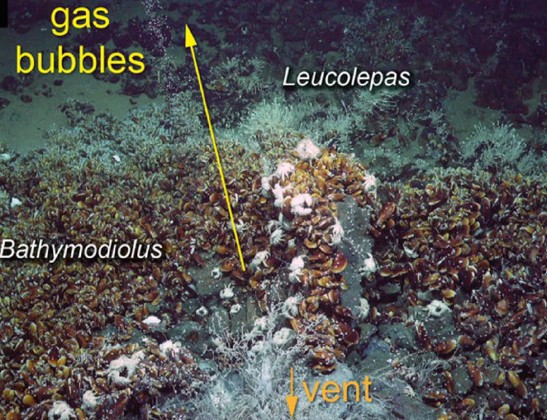
Figure 5: An active gas seep of methane, ethane, propane and butane from the seabed identified during the survey of the MV Sonne, off Lihir Island, New Ireland Britain, after Brandl, P.A., Sander, S.G., Beier, C. et al. Sci Rep 15, 32389 (2025).


The Value of Petroleum 

Oil and gas are not like gold. A barrel of crude oil, which is approximately 159 litres, currently (as of late February 2026) sells for about US$ 65, or PGK 278, or about US 40 cents per litre, or PGK 1.75 per litre.  A litre of crude oil is not going to make you rich, whereas a litre volume of gold would weigh a staggering 19.3 kgs (equivalent to 620 troy ounces) and be valued at an equally staggering amount of US$ 3.1 million or PGK 13.4 million at a gold price of US$ 5,000 per troy ounce. The petroleum business is a very different game to that of the gold business. A small surface seepage of natural gas or oil is scarcely of any value, and more a local curiosity. 

The discovery of an accumulation of oil and gas thus has to be large and extensive to make it worthy of future development and recovery. Accordingly, oilmen select their exploration prospects, for what we term wildcat drilling, most rigorously and carefully. Wildcat drilling is high-risk exploration for oil and gas in unproven, unmapped, or abandoned areas lacking, or far from, existing oil and gas production, often without any historic discovery or prior production. Oilmen screen the geology of an area for the necessary ingredients (described above) and particularly for large geological structures that may potentially contain significant volumes of oil and/or gas, if such have indeed accumulated in their target structure.
Figure 6: Oil and money, but at just US$ 65 per barrel, only large scale production can normally cover the costs of finding and extracting it.  


Oil production from a field, from which say, 100 million barrels of crude oil can be recovered, might at a crude oil price of US$ 65 per barrel have a sales value of US$ 6.5 billion, but not all of that can go into the oil man’s pocket. For example, it might have taken five wells to make the discovery and a further five wells to appraise the lateral extent of the field and another thirty wells from which the oil may be recovered. These forty wells might have cost an average of US$ 25 million each, making discovery and appraisal costs about US$ 1 billion. The development of the field will require field processing facilities to clean up the oil to acceptable standards and specifications to make it fit for transportation, and likely a pipeline or set of pipelines to convey the oil to a terminal at which ocean-going oil tankers can load the crude oil for export. This may cost another US$ 1.5 billion. And then there are operating costs.

To run an oil field and produce the crude oil safely, responsibly and prudently, there are daily operating expenses for manpower, machinery and materials. These may amount to US$ 100 million per year for twenty years. As you can see, the prize of finding the oil field is shrinking. And then the Government will want to ensure it is getting its agreed and defined share of its resource as the owner, typically at least 50% or more of the net value. One can see quite readily how the revenue arising from the 100 million barrels is whittled down. The oil companies might retain US$ 1 billion from this enterprise after recovering their costs, whilst the host government might make a similar amount. Naturally, each and every petroleum project has a different set of reserves, costs, and outcomes. Satisfying basic economics that the recovery of oil from the field is viable is the primary concern, and then having a firm and fair arrangement for the sharing of the net value of the produced petroleum is most desirable.

Exploration and Discovery Risk

The drilling of exploration wells only comes after extensive and expensive exploration surveys by geologists and geophysicists studying the rocks and their configuration at the surface and probing the subsurface with a variety of geophysical techniques. The most common geophysical technique deployed is the acquisition of seismic images of the subsurface, a bit like an ultrasound scan might be made of your stomach by a doctor, though on a vastly larger scale. Sound waves are sent into the ground, or the sea, if exploration is being conducted offshore, and the reflections from the layers of rocks are detected by a multitude of special microphones called geophones.

The jumble of signals is organised and processed by elaborate computer programmes so as to create a layer-cake image of the configuration or structure of the subsurface rock strata. Knowing the velocity of sound through the rocks, the geophysicists can interpret these images of the subsurface and make depth maps of potential trapping structures. It is a tedious and expensive process which is not at all easy in the jungle-wrapped, mountainous and often swampy terrains of much of Papua New Guinea. Combined with surface geological descriptions of the visible outcrops of rocks and their faulting and folding, the petroleum geologist will attempt to define leads and prospects which may be promoted for wildcat drilling. Already in this process, tens of millions of dollars will have been spent on physical surveys, data processing and geophysical and geological interpretation.
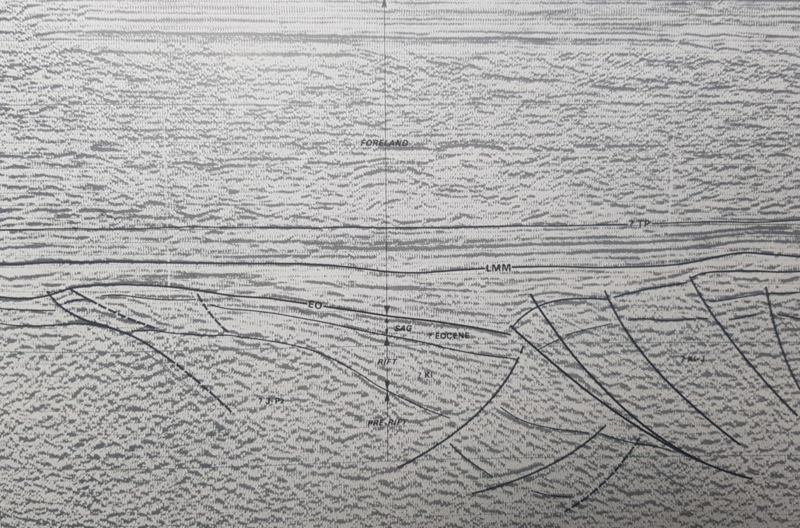
Figure 7:  A seismic reflection image of part of the Gulf of Papua called the Flinders Basin showing the underlying subtle faulting and folding of the strata, after PNG Chamber of Mines and Petroleum. 


The company then has to evaluate its portfolio of prospects, both within the country in which it is exploring and globally, and make a choice as to which prospects in which countries it will prioritise and commit to drilling. It does this on a risked basis and then applies the economics of the applicable national petroleum regimes to make an assessment as to whether it might be possible to make money. It is always a risky business, akin to making an expensive movie, which may be a success or a failure. Some liken it to gambling in a casino, because of the intrinsic uncertainty of the subsurface geological history. However, oil and gas companies shrewdly assess all the risks involved.

Drilling the Ultimate Gamble

There are fundamental geological risks as to whether an accumulation of petroleum may be present within a prospect. Alas, the only way to find out whether a prospect contains oil and/or gas is to drill the prospect. The chance of discovering oil and gas depends much on the type of well, with success rates for wildcat exploration wells typically ranging from 10–20% in new frontier areas to a global average of between 30–40%. Approximately 60–70% of initial exploration wells fail to find accumulations with quantities adequate for commercial development and production. In known petroliferous areas and where development drilling is taking place near to or on known accumulations, the success rate can be as high as 80% to 90%. Those petroleum provinces in well-established producing nations thus present much less risk than hitherto undrilled provinces where little or no drilling has previously taken place.
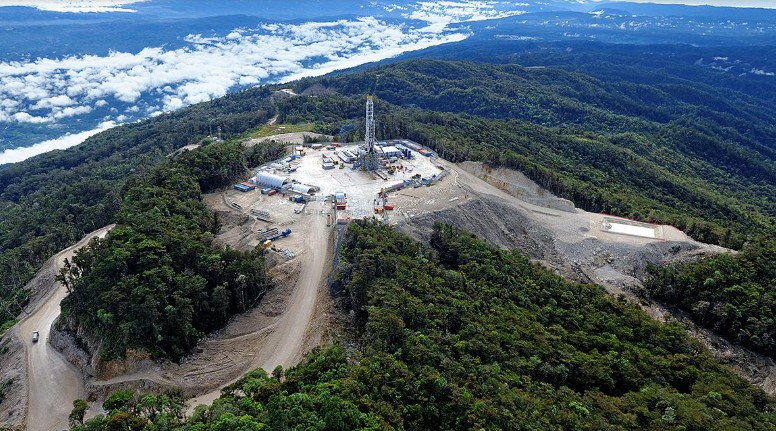
Figure 8: A drilling rig in the Highlands of Papua New Guinea, after PNG Business News.   

The risk of discovery is skewed by perceptions of the host nation’s petroleum endowment, and so the host Government necessarily has to adjust its terms and conditions of petroleum development up or down depending on the likelihood of discovery. Drilling a wildcat well in the Seychelles, where only four wells have previously been drilled without success**,** is a very different game from drilling a wildcat well in Libya**,** where more than 1,500 wells have been drilled over the last 70 years with more than 500 oil and gas discoveries. Hence, the Government of the Seychelles might have to offer the most attractive terms to encourage the international oil and gas companies to explore in its territory rather than in other perhaps more petroliferous places.

In Papua New Guinea, the total number of real wildcat wells is less than 275 spread out over the last hundred years. The Wohumul boreholes were drilled in the Oriomo River area of the Western Province, near Daru in 1925; these were shallow tests. The first deep well in Papua New Guinea was drilled at Kariava-1 in the Gulf Province. Interestingly, this well was spudded on 8th March 1941, suspended in 1942 due to World War II**,** and resumed drilling in 1946 before being abandoned in 1948. Exploration for oil in Papua New Guinea is not a new game; it has taken place for decades with tantalising results that have taunted many an oilman. It was only in 1986 that significant success was obtained at the Iagifu 2-X well when Niugini Gulf Oil, which became part of the Chevron Corporation as Chevron Niugini, found a significant accumulation of black oil near Lake Kutubu**,** which gave rise to the Kutubu Petroleum Development Project in 1990. Hitherto, nothing of commercial significance had been found and no development or production of oil and gas had been commercially undertaken. To date, Papua New Guinea has discovered oil and gas in dozens of prospects**,** at least half of which have been made the subject of development and production operations recovering both crude oil and natural gas in commercial quantities.
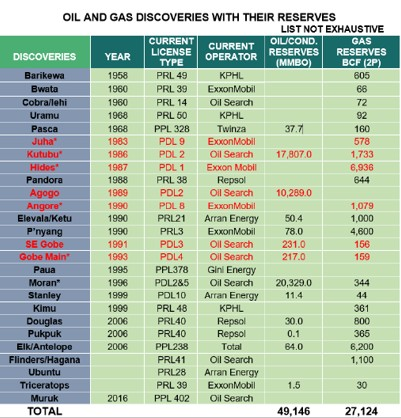
Figure 9: Oil and Gas Reserves of Papua New Guinea, after Manau, August 2021 modified.   
 

Factors Affecting Petroleum Development

Finding an accumulation of oil and/or gas is a great feeling for the oilman, but unless the volume of the accumulation is large enough to be commercially exploited by development and production operations, it cannot recompense the company for the considerable expense of finding it. The cost of drilling a well very much depends on its location and its distance from supply chains and support facilities. Papua New Guinea remains a remote place for petroleum development operations of all kinds, being far from major petroleum development hubs. Much of Papua New Guinea remains a frontier petroleum province, notwithstanding 34 years of crude oil production and 12 years of gas production and LNG export. Put quite simply, Papua New Guinea is not Texas, where over 1.5 million wells have been drilled and between 157,000 and 187,000 wells are active. The presence of abundant civil and petroleum infrastructure in Texas makes the cost of petroleum development vastly lower. While high-production wells currently dominate production, thousands of older, "stripper" wells across Texas produce less than 10–15 barrels per day – not an unreasonable income if privately owned and the crude oil is able to reach the market readily through a convenient nearby pipeline. It is a very different story in Papua New Guinea, in which civil infrastructure is scarce and petroleum infrastructure is project-specific and sparse.

A frontier province is an unexplored or underexplored geological region with suspected, but unproven, significant petroleum resource potential. Such is the case of the deep waters of the Coral Sea where TotalEnergies and Petronas plan to drill the Mailu-1 deepwater well soon, targeting Eocene carbonate reservoirs. Such a deepwater well is likely to cost about US$ 100 million for an estimated drilling period of less than two months. Such risks are not for the faint-hearted. It has been said that the drilling of absolutely rank wildcat wells in a petroleum basin where no prior exploratory drilling has taken place is indeed a bit like going into a casino for the first time, but bypassing the slot machines and going straight to the high-stakes tables!

Of course, whether a sedimentary basin holds petroleum accumulations or has even generated oil and gas is not always certain. Sometimes subsurface conditions are not correct, or in the right order. Sometimes, there is no sign of any oil or gas seeping to the surface. It can be very much a blind gamble. But once a discovery is made in a newly explored basin, most often the herd of oil and gas companies come charging in. Getting that critical breakthrough of the first discovery is very important, not only for the exploring company which is investing in that exploration effort, but also for the host government which wishes to elucidate its petroleum prospectivity fully.
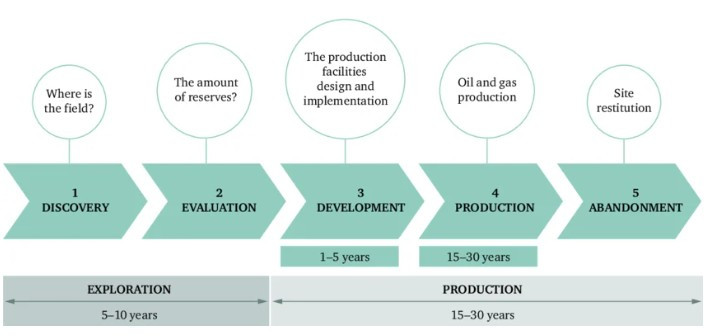
Figure 10: The steps of petroleum resource development, after Valerie Marcel. 

The Government Role

Many governments around the world shy away from all but the very basic pursuits of oil and gas exploration because of the considerable expense and enormous risks.  They may obtain some seismic reflection surveys, particularly in offshore areas, either though bilateral aid and/or by speculative surveys conducted by seismic survey contractors who will pay for the survey and then promote the resultant data and provide a royalty or profit share to the government.  This may initiate exploration interest from established oil and gas companies and, of course, scientific interest from academia which will now have new knowledge about the geological subsurface arising from those surveys.  

Governments typically offer their unexplored areas for exploration by competent oil and gas companies either by the grant of licenses or contracts.  That competency is not just technical, but includes corporate, environmental, financial, safety and social capacities; all are required at some stage during the cycle of petroleum development.  It is for these strengths that host governments tend to engage the international oil and gas companies; they know what they are doing.  But equally important, the host government needs to hold them strictly to account, most assiduously, and if deficiencies emerge, sanctions and penalties should be applied. A host government needs to rise to the challenge of the companies that it engages through licences or contract by having a highly competent petroleum regulatory organisation of its own, the staff of which should be very well rewarded for being guardians of the treasure of the nation’s oil and gas resources.

Government objectives are primarily monetary; to translate the value of its petroleum resources into revenue which can then be used for the national development agenda. But equally, governments do not like to be kept in the dark, so quite often they participate, not in exploration, but in development and production by taking a stake in the petroleum project. Papua New Guinea has a legal option to participate up to 22.5% all petroleum projects.  This brings valuable inside knowledge of the development to the host government, and further revenue. There are other aspects of a petroleum development though, which need to be fostered.  For many nations, a critical issue is the security of supply of oil and gas to the economy. For all nations, keeping as much of the business within the country is an important issue, making sure local people are employed and contracted, and local business are contracted for goods and services as far as is possible.  This should not just be a political wish, but a coordinated effort by company and government alike to do what is possible, and assess what may be feasible with incentives and capacity building. 
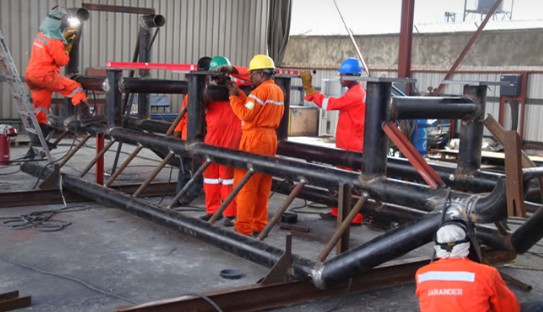
Figure 11:  Fabrication at a local engineering firm in Nigeria, after Jarander.  

The investing companies normally meet the costs of basic exploration and are required to culminate their exploration programmes by selecting prospects where petroleum accumulations may have been formed, and then drilling them to test whether there are indeed any.  These agreed exploration programmes are the work commitment of the companies to their host government. Failure to undertake and complete the work typically results in cancellation of the licence or contract.  Sometimes, the company simply quits for one reason or another. They may simply not be successful in finding structures eligible for the considerable expense of drilling. There may be inadequate evidence of the potential for an accumulation, or there may be better prospects in other areas which the company is exploring, either in the same country, or elsewhere.  The oil and gas company will maintain a portfolio of exploration areas around the world and seek to optimise overall exploration risk and invest in drilling its best prospects. 


If a company cannot fulfil its work programme, it normally has to depart and surrender the area back to the government, sometimes with penalties. This enables the host government to give the area to another company, which may have different ideas, theories, understanding and appetite for the petroleum geology of the area.  What governments hate is when companies sit on a prospective area without doing any work, hoping that the holders of adjacent areas will have success in discovering oil and gas and so elevate the value of their area. This is pure speculation and should be discouraged; it defies the intent of the government in granting the licence or contract in the first place for valid exploration work to be done. Of course, when a new petroleum province opens up after a discovery has been made, the herd mentality of the oil and gas industry is such that everyone rushes in to try to get a slice of the action.  This enthusiasm borne out of discovery needs to be captivated by the host government and it should be used to entice more exploration investment. Naturally, the best indication of the likelihood of the discovery of further oil and gas accumulations is an adjacent discovery; it certainly boosts the prospectivity of nearby areas. So governments need to be agile in their thinking and promotion of their petroleum resources for development. 


Petroleum Rights 


Apart from private lands in the USA, almost all petroleum rights around the world are held by the host sovereign government.  The USA is the odd one out; it has tied subsurface mineral rights to surface rights in private lands, though it retains control and ownership on Federal lands and offshore. Thus, across the world the government is normally the owner of the petroleum as it exists in the ground. In using the prowess and capabilities of the oil and gas companies to explore, the host government has to make sure it is rewarded as the guardian of the oil and gas resources that may lie in its territory. The oil and gas companies foot the bill for exploration, but if they are unsuccessful, they go home empty-handed. After the initial discovery of recoverable black oil at Kutubu in 1986, droves of oil and gas companies took up areas for exploration in Papua New Guinea, but only a few had success. Amongst those that came to Papua New Guinea, but left empty handed were: Conoco, Shell, Phillips, Pennzoil, Statoil, Mobil, Amoco, Marathon, Petrofina, Santos, Woodside, Union Texas Petroleum, and many a smaller company.   Some came and were successful in one area, but not in others. Some sold out their share of discoveries before development activities commenced, not having the commitment, will or ability to stay though development to production. Some departed, came back, departed and came back again; one could say that such companies were quite flexible and mobile in their thinking!   It is important to remember that the rights to conduct petroleum operations are typically exclusive over a defined area or tenement and finite in term after which they expire.   
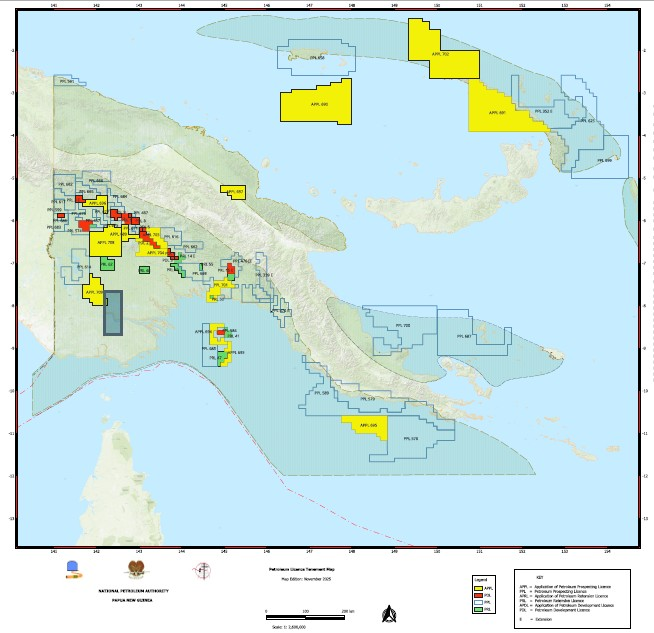
Figure 12:  A map of petroleum tenements in Papua New Guinea circa late 2025, after the National Petroleum Authority. 

The Petroleum Regime


Petroleum rights are licensed or contracted out to competent companies by a host government under defined term and conditions normally articulated in law, regulations, contracts and licences. Alas, the real substance of these terms and condition only comes into effect after discovery. If the companies are successful and find accumulations that are worthy of commercial extraction, they are subject to regimes in which they share a substantial proportion of that value with the host government. Petroleum regimes are a fundamental exercise of the sovereignty of a nation over its petroleum resources that may have value if they are recovered in quantity as recoverable reserves. Oil and gas in the ground have little value if they cannot be recovered to the surface and sold for value. It is upon this extracted value that petroleum regimes are assessed and implemented.  There are many different methods for the host government to extract value: by the charge of rents, royalties, levies, bonuses, duties, and fees; taxation on income; taxation of employees; withholding taxes on interest payments and dividends; the take-up of equity by the government in a project for the production of oil and gas; the sharing of petroleum production; domestic supply obligations at discounted prices; and local content provisions. These provisions are normally established by law, contract, agreements and/or licence conditions prior to the commencement of exploration activity and most certainly before production operations commence to provide certainty to both the investing oil and gas companies and the host government.  Such fiscal design should attempt to cover all likely scenarios, but often precedence and political emotions distort clear thinking.
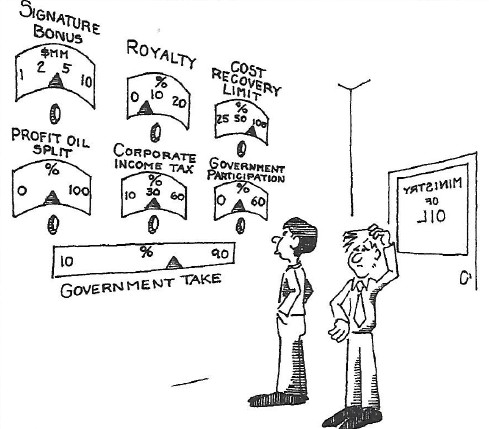
Figure 13:  Fiscal design can be quite daunting, after Dan Johnston.

The broad objectives of a petroleum regime are to reduce uncertainty; present a clear picture of the applicable commercial and tax terms, limit negotiations on tax issues, provide fair and equitable tax treatment for all investors, avoid double taxation and assure that the international oil and gas companies can obtain home country foreign tax credits for taxes paid overseas.  The general rule seems to be that the more attractive the resource base is, the tougher the fiscal and commercial terms of the host Government tend to be.  Of course, many other factors come into play, not the least of which is the remoteness of the place. 


Take for example the Falkland Islands where despite discovering oil in 2010, the companies only made a final investment decision for the Rockhopper oil field in late 2025 with first oil planned for 2028.  Its remoteness from supply chains of any kind, let alone oil field supply chains and concerns about the Falklands ability to remain unaffected by Argentinian claims prolonged the progress towards field development.  Papua New Guinea suffers from a similar remoteness, with Singapore and certain bases in Australia being the nearest supply depots for oil and gas operations. Also, there is inadequate petroleum exploration to keep drilling rigs and other oilfield exploration equipment permanently busy and stationed in Papua New Guinea, necessitating their importation repeatedly and sporadically for isolated exploration campaigns.  


Access to Land


Papua New Guinea also remains very much an under-tested frontier oil and gas province with comparatively low exploration density, but with reasonable success in locating oil and gas accumulations.  It is still attractive for exploration due to having significant and demonstrable oil and gas generation.  Other specific factors come into play as they do anywhere.  In Papua New Guinea, adherence to customary land tenure means that even though the State asserts its ownership rights of oil and gas in the subsurface, both the oil and gas companies and the State have to gain access to exploration areas, by dealing with the local landowners and entering onto their land. Their title to their land is undocumented, unalienable and enduring, and the companies and State have to treat with the landowners most carefully. 

Figure 14: Landowners look on outside a petroleum operations camp, after Celine Rouzet.

The hopes and expectations of landowners are heightened as and when oil and gas are found on their land, as might be expected anywhere. If the discovery is large enough to warrant development and subsequent production, quite clearly the customary landowners will be affected.  In Papua New Guinea unlike more despotic places, where landowners might be forcibly removed and shunned away, there are legally defined provisions by which the landowners may share in the process and benefits of petroleum development. Even at the exploration stage, the oil and gas companies are strictly required to pay compensation for their entry on or occupation of the land. Moreover, the companies have to undertake social mapping and landowner identification studies to ensure that they are dealing with the correct people.  By law, neither party is to interfere with the rights of the other. The companies have the right by law to enter and occupy land reasonably required, but without interfering with the existing use to any greater extent than necessary, and they may not interfere with fishing or navigation. Landowners for their part, may not enter on, occupy or interfere with any land being used for petroleum operations. These are as much responsibilities as rights for each party.          


When development commences, the companies are encouraged to use as much local labour and content as possible. The Government typically provides the local community with business development grants to help the landowners participate.  Whilst National Content has been rightly emblazoned in Papua New Guinea Government policy in recent years, there have been provisions in the Oil and Gas Act, 1998 for domestic procurement obligations upon the companies for almost three decades. These require the use and purchase of goods and services supplied, produced or manufactured in Papua New Guinea whenever the same can be obtained at equivalent terms; encouraging and assisting citizens who are desirous of establishing businesses providing goods and services; and making maximum use of Papua New Guinea contractors and subcontractors. Alas, little emphasis has been made on enforcing this, let alone making regulations to give effect to the provisions or even examining compliance by companies.   


Additionally, the Oil and Gas Act specifically defines benefits for the landowners and also for the affected Local Level Governments and the Provincial Governments when petroleum development proceeds to production of oil and gas.  These variously comprise: royalty benefit; equity benefit; development levy; other project benefits; and project grants. Whilst the Act generically specifies beneficiaries, these grants and benefits still need to be shared out and it is for this that the Act requires the Government to hold a development forum to which representatives are invited from all community stakeholders. This is an excellent, though exhaustive process, but one that far exceeds the treatment of people in petroleum areas in many other nations.  Papua New Guinea should be proud of this legally enshrined sharing and consultative process and it should be implemented with utmost care and concern.


Changes to the petroleum regime or simple uncertainty of its application may also bring added risk for exploration and development. Obviously, all governments wish to optimise the value that they can garner from petroleum resource development; after all it is their resource – to be used for the benefit of all in the Nation. Striking the best terms with the oil and gas companies, whilst enabling those same companies to make a reasonable return on their investments, is often a delicate balance. Sometimes, that balance cannot be achieved, and therefore exploration is thwarted or development of the discovered petroleum resources cannot be pursued. Proposed projects cannot proceed if there is imbalance between the company and government requirements; both parties need to win.  However, all decisions for development are predicated on awkward and uncertain assumptions about the future business of petroleum production.


Production Risks 


Production profiles may be defined based on rigorous assessment of the amount of oil and gas that may be recovered from an accumulation.  Well tests are performed to gauge how reservoirs will behave and how much oil and gas a given well can produce. Test results are aggregated and a field development plan with a production profile is prepared based on tapping the oil and gas accumulation with a specific number of development wells. If enough appraisal drilling and sound geological assessment has been made of the reservoir and the physical parameters of the accumulation, a prediction may be made of the extent of recovery of the oil and gas from the accumulation.  Alas, only a fraction of the oil and gas originally-in-place can be recovered. Recovery factors vary from field to field and the nature of the oil and gas and the manner of how the field will deplete over time.  Sometimes, fields perform better during production, and sometimes they fail to live up to expectations.  The potential outcomes have to be risk-managed. Whilst petroleum engineers and geologists may attempt to limit such risk, it always exists. One only knows exactly how much oil and gas one can get out of a given oil and gas field on the last day of economic production when the value of the oil and gas which that field produces fails to covers the ongoing costs of its extraction. However, these risks pale into insignificance if one cannot get oil and gas production to market as result of exogenous risk, such as the closure of vital shipping lanes, like the Strait of Molucca between Indonesia and Malaysia, or the Strait of Hormuz between Iran and the United Arab Emirates and Oman through which 20% of the world’s global oil supply moves. 
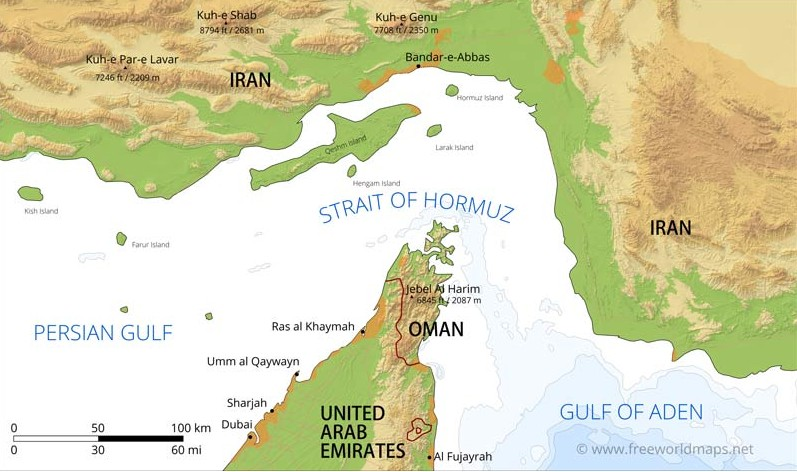
Figure 15: Whilst many production risks may be managed, exogenous risks such as the closure of major shipping routes may cut off petroleum producers from their markets, after freeworldmaps.net. 

Price Risks 


The economic outcome of production is determined by the volume of oil and gas produced by its sale price per unit of production. That depends on the quality of the oil and gas and the global market price for oil and gas of that quality. Gas is normally sold with reference to the crude oil price.  Importantly, that sales price for the oil and gas is only after it has been has been appropriately processed into saleable and transportable streams.  The oil has to be separated from water, sediment, and gaseous components, and likewise the gas has to be conditioned to specifications by the removal of water, noxious impurities like carbon, nitrogen and sulphur oxides, and natural gas liquids which can be sold separately. This all costs money to enable the produced oil and gas to be transported safely by pipelines and ships, and delivered to customers for downstream processing and supply. ,


The price of oil is, as we commonly know, subject to much fluctuation depending on global markets which are affected by many factors. Fundamentals such as global supply and demand predominate often highly influenced by politics and international relations, and nowadays, to a smaller degree, by energy transition policies. In so far as oil and gas revenues are thus variable, the projected income of any given oil and gas project is consequently variable. In embarking on an oil and gas development project, the investing oil and gas companies have to accommodate the risk of falling commodity prices and hence revenues, just as much as they have to consider the opposite with higher commodity prices. A development project has to weather the vagaries of the oil and gas prices as they occur.  Equally, as most oil and gas projects extend for decades, they have to countenance changing economic conditions, such as inflation and the cost of money as represented by the discount rate.
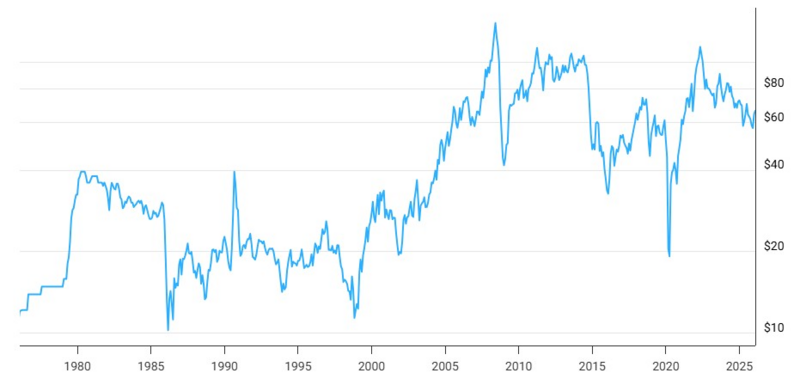
Figure 16: Crude oil prices 1976 to 2026 with volatility somewhat suppressed due to use of a logarithmic price scale, after CrudeFacts.

These extraneous matters often swamp the potential and forecast technical outcomes. Oil and gas price behaviour and the value of money throughout the life of a petroleum development project are key factors for both the investing company and the host Government alike.  No matter what petroleum arrangements and regime are used there needs to be an agreed understanding of the effect of swings in price and the value of money, lest either party is unduly penalised during the project life.  Most often the petroleum regime, one way or another, has a built-in ability to adjust the sharing of the net value of oil and gas production after the costs of exploration, development and production. For instance, income tax is only charged on net income or profit, so if oil and gas prices decline, profits decline and taxation accordingly also declines. In production sharing arrangements, the sharing of production comes only after the companies receive cost recovery payments, so a company’s share is reduced (as is the Government’s share) when prices are low. There can be elaborate fiscal adjustments made both for the upside and downside of production operations. Royalty and such direct levies can be made scalable. Capital depreciations for allowances against taxation income can also be adjusted, both up and down. Windfall taxes, additional production shares, or additional profits taxes can be triggered at times of elevated prices.  The key is for each party – both company and Government alike to respect the durability of the petroleum project and accommodate the volatility of prices by respecting the needs of the other party.


Other Development Criteria 


When preparing a petroleum project for the production of oil and gas from a field, many matters have to be considered. Not only do the fiscal and commercial arrangements with the host government have to be firmly agreed and be robust for all likely outcomes, but environmental protection and the welfare of the community in which the project may be developed are required. There are necessary social and environmental impacts of petroleum development, but they can be minimised and mitigated by good practice.  Whilst exploration and appraisal costs are normally funded out of the company’s own money – its equity, when it comes to development, the extreme costs most often necessitate recourse to the borrowing of funds from financial institutions. Not all banks are willing to finance oil and gas developments these days due to the degradation of the Earth’s atmosphere caused by the emission of carbon dioxide on combustion of oil and gas and the subsequent effect of global warming of the atmosphere by the greenhouse effect.  Alas, many of those banks that withhold their financing are resident in nations in which their industries have been the primary polluters of the atmosphere for decades. Having initiated global warming and developed their economies, they now seek less developed nations to curb their emissions. This seems to be quite unfair. Fortunately, there are financial institutions that are more pragmatic and realise that there is no single big switch in energy supply to curtail all oil and gas production and usage.  Oil and gas will be essential ingredients in the global energy mix for decades to come, unless we wish energy poverty to pervade the planet, and life as we know it to be halted. This is not to support a case against global warming which is a documented scientific fact. We all have to be considerate of the future of our planet and work carefully towards limiting emissions of carbon dioxide and so limiting the extent of global warming through appropriate policies and investment in non-polluting energy of which renewables are just part of the mix alongside improved nuclear technology.


The Final Investment Decision


Once all aspects of a specific petroleum development project have been organised and prepared, the project plans may be presented to the host government for approval. Naturally, being a predominantly interested party, the host government normally readily approves these plans. After all it will be looking forward to its share of the earnings and other benefits from the proposed project.   Once the development licence is granted or a production permit is approved pursuant to a production sharing contract, the company (most often a consortium) has to make its final investment decision which triggers development operations. Various measures are used to determine the acceptability of a project for investment, traditionally the internal rate of return was used. It measures the effective rate of return earned by an investment as though the money had been lent at that rate. Alternatively, and used much more these days, is the net present value of a project which measures the capital created over and above the company’s investment hurdle rate.   
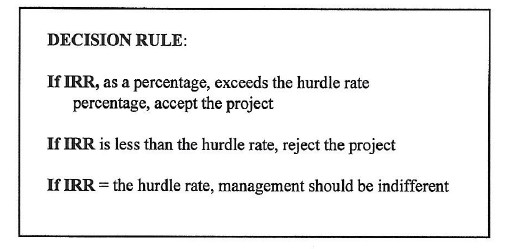
 

Figure 17:  The Decision Rule, after Allen and Seba.

This decision is not one made by the host government, but by the investing company, but failure to proceed with development may incur severe penalties once host government approval has been given. Most often the investing company is required to provide the host government with a corporate guarantee of value equivalent to the intended investment as part of its application for development approval.  That way the Government is not misled into approving a fake development where nothing happens, and allowing the company to slip away without repercussions.  When Chevron Niugini led the Kutubu Petroleum Development Project in 1990, Chevron Corporation, its parent company, provided an irrevocable letter of guarantee to the Independent State of Papua New Guinea to the value of its share of the expense in the project on its corporate letterhead signed by the President of Chevron Corporation; it was as good as gold! But they never hesitated in their development intent and resolutely developed the Kutubu fields as professionally as they could.


Michael McWalter is a former Director, Petroleum Division and Adviser to the Government of Papua New Guinea, and erstwhile petroleum adviser to the Governments of Ghana, Liberia, Cambodia, Sao Tome, and South Sudan. He is certified petroleum geologist and technical specialist in upstream petroleum industry regulation, administration, and institutional development.

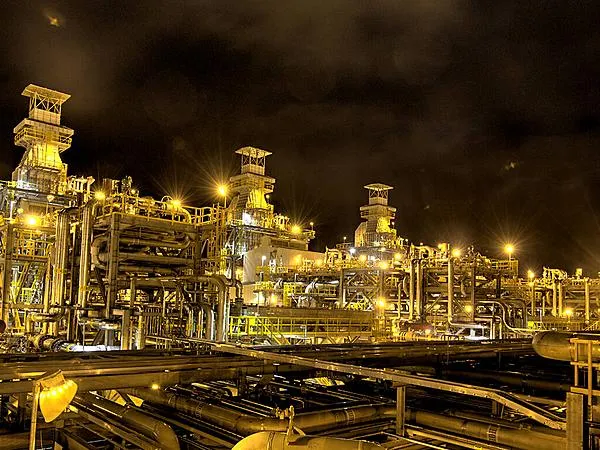
 

Caption


February 19, 2026

From First Oil and Gas to LNG

By Michael McWalter


EDITOR’S NOTE: Michael McWalter, former Director, Petroleum Division and Adviser to the Government of Papua New Guinea, and erstwhile petroleum adviser to the governments of Ghana, Liberia, Cambodia, São Tomé, and South Sudan, recalls the foundations of petroleum resource development in Papua New Guinea, and continues his story of oil and gas exploration and production in independent Papua New Guinea.

Michael McWalter is a certified petroleum geologist and technical specialist in upstream petroleum industry regulation, administration and institutional development.

Introduction

In my last article titled “Decades of Exploration to First Oil and Gas Production,” I told the story of the early days of petroleum exploration in the new nation of Papua New Guinea up to the days of first oil and gas production in the early 1990s. Gas was first produced and sold from the Hides gas field by BP and Oil Search in December 1991, and crude oil was first produced and sold from the Kutubu fields by Chevron and their joint venture partners in June 1992. The discovery of crude oil and natural gas at Iagifu and Hides respectively in 1986 and 1987 in significantly large accumulations worthy of commercial production sparked an exploration boom in subsequent years.

Papua New Guinea became a vogue place for oilmen to be. In the 20 years or so after these discoveries, Port Moresby was home to oil and gas companies large and small that needed to be in this opening frontier of exploration; such is the herd mentality of oilmen. Together they spent a staggering 3 billion kina, which amounted to some US$2 billion at the exchange rates of those days, or about US$4.1 billion in today’s money. That effort involved the drilling of some 150 wells and the conduct of some 108 seismic surveys that eventually led to the discovery of moveable hydrocarbons in 61 wells and the location of 20 new petroleum accumulation fields, though many of these contained natural gas rather than oil. I now continue the story. However, it is an immense tale, so I shall just delve into it here and there to show where the petroleum industry has taken us at the time of our 50th anniversary of independence. And I apologise if at times my tale is anecdotal or lacking.

Gobe and Moran Oil Fields

Along the frontal trend of anticlines in the Papua New Guinea fold and thrust belt, wells drilled on the Gobe and Moran structures found additional pools of oil, in lesser quantities than the accumulations of the Kutubu fields, but still enough to warrant development. Almost every anticline was drilled along the frontal trend, even to the point of one supposed anticline turning out upon drilling to be a syncline rather than an anticline, and thus unable to trap any fluids in the subsurface.

The Moran field north-west of Kutubu was estimated to hold about 113 million barrels of recoverable oil, whilst the Gobe field was estimated to contain about 83 million barrels of recoverable reserves. Both of these fields had structural complexities due to faults that compartmentalised the accumulation of oil within the reservoirs.

Figure 1: A geological section through the Moran anticline showing Moran 1X and 2 wells penetrating the tightly folded and faulted structure


This isolation of separate pools of oil also led to some considerable rivalry between adjacent petroleum licensees, who sought to exert their prowess one over the other by naming the parts of the fields in their licences differently. Hence, we had supposed field names like South East Gobe, Gobe Main, Moran Central and North West Moran. With these fields awkwardly extending across licence boundaries, both co-ordinated development and unitised development arrangements had to be negotiated between the different licence joint venture groups. This was not always easy due to often intense corporate rivalries and differing economic and commercial positions.

Figure 2: A tectonic map of New Guinea showing the Papuan Thrust and Fold Belt (PTFB) on the edge of the Australian tectonic plate. The blue star marks the location of the Hides gas field. After Cloos et al 2005.  


The development of these fields ensued with different production arrangements. The Moran field depended on the use of the Kutubu Central Production Facility, to which flowlines from Moran to Kutubu were installed. Meantime, the Gobe field had a separate production facility installed (the Gobe Production Facility) and a short project-specific spur pipeline. Both of these fields used the Kutubu Export trunk oil pipeline and its integral offshore Kumul Marine Terminal for transmission and dispatch of crude oil for export. This entailed the negotiation of tariffs for the use of the various Kutubu facilities, which added further complexity to the commercial arrangements for field development. However, such arrangements did serve to optimise the use of existing field processing facilities, storage and transportation systems, and obviated the unnecessary and redundant duplication of petroleum infrastructure.

In the case of the use of the Kutubu Export Pipeline by the producers of the Moran Joint Venture and Gobe Joint Venture, some companies were also parties to the Kutubu Joint Venture, whilst others were not. Beguiling arguments for high tariffs were made by those members of the Kutubu Joint Venture that were not involved in these new field developments, while conversely equally beguiling arguments were made for low tariffs by those members of the Moran and Gobe Joint Ventures that were not involved in the Kutubu Joint Venture. Those involved in the new field developments as well as the Kutubu project were quite mute in their tariff arguments. The threat of impending ministerial regulation, as was then permitted by the Petroleum Act, rapidly crystallised the thinking of the various licence ventures, and those commercially adamant arguments rapidly dissolved into a commercial and fair resolution of the tariffs!


Oil Field Production


Both Gobe and Moran oil fields commenced production in 1998, some six years after the Kutubu field. Gobe reached peak production in 1999 at an annualised rate of 34,278 barrels of oil per day (bopd) and declined thereafter, whilst Moran only reached peak production in 2007 at an annualised rate of 21,503 bopd. The two fields contributed to supporting Papua New Guinea’s aggregate oil production as that at the Kutubu fields inexorably declined as reservoir energy was depleted.

Figure 3:  Oil production history 1991 to 2022 after the Dept of Petroleum and Energy at 16th PNG Mining and Petroleum Investment Conference and Exhibition, Sydney, Australia, 2022


The development of the Kutubu field has, in retrospect, been a great success, with oil production continuing to this day, albeit much reduced in volume from its high production rate of its halcyon days when it almost reached 150,000 barrels of oil per day, plus production of the field’s associated gas.

The Kutubu development was launched on the basis of recoverable oil reserves of just 164.8 million barrels, but as of 31 December 2019, it had produced 319.8 million barrels of oil. Based on an estimated original-oil-in-place volume of 556.2 million barrels, this suggests that the original projection of just 29% recovery has eventuated in as much as 57.5% recovery by the end of 2019. With production still taking place at about 3,000 barrels of oil per day, the Kutubu field is clearly reaching its last days. It does this in considerable glory as it reaches 60% recovery of its original oil-in-place, quite an extraordinary recovery factor.

Admittedly, associated gas obtained from the field separators was originally re-injected into the field at the gas/water interface as a semi-miscible flood so as to enhance oil recovery, but even by the standards of such secondary recovery techniques, this level of oil recovery has been quite remarkable. Of course, a large uncertainty always remains in the petroleum geology, insofar as we do not have precisely mapped subterranean field limits on account of it not being possible to obtain clear seismic imaging of the reservoirs. We therefore cannot rule out the possibility that oil is being extracted from an original pool that may have a geometric volume and areal extent somewhat different from that originally conjectured, which was based solely on well penetrations and geological mapping.

Figure 4: The Kutubu Oil Fields structural configuration. Red is gas overlying oil in green. The grid lines are five minutes apart by latitude and longitude. After the Scheme Booklet: Merger of Oil Search and Santos 2021.


Whilst the Kutubu fields have been a great success, both Moran and Gobe fields have had a chequered development history with various problems of one kind or another. The development of the Gobe fields started with feuding over operatorship between the Chevron-led joint venture and the Barracuda-led venture. Barracuda, a subsidiary of Mount Isa Mines Ltd, had acquired the small independent company Command Petroleum, which had bravely drilled the South East Gobe-1 discovery well as operator of Petroleum Prospecting Licence No. 56. Chevron’s prowess won out, and they retained operatorship over the Gobe field development and subsequent production.

Intractable problems with customary landowner identification of the people of the Gobe area have persisted through development and production. The land of the Gobe Mountains was gazed upon by both people from the north and the south and only sparsely used for hunting and gathering and ancestral rights. The land was hotly contested, and ownership was very difficult to determine outright. The Government had to resort to using the Lands Title Commission to help determine landowner rights. With initial development delays, production never reached its planned output, only reaching 34,000 barrels of oil per day in September 1999. Additionally, reservoir problems were encountered which involved sanding problems due to the reservoir sandstone being extremely fragile and friable.

Extensive extended well testing (EWT) at Moran enabled early oil production and the gathering of some very useful field production data. However, it depleted the reservoir pressure to such an extent that the associated gas started to effervesce from the oil and create a gas cap above the oil. This required re-pressurisation of the Moran oil field using gas sourced from the adjacent Agogo field. The Moran oil field’s high compartmentalisation broke the field into many small fragments which were often difficult to resolve.

Gas Development Preparations


In the absence of any further significant oil discoveries, the future was considered to lie in the development of the gas fields, where exploration drilling was demonstrating them to be significantly more abundant than oil by a factor of about ten times.
The Government realised that its petroleum endowment was not so full of oil, but was comprised substantially of natural gas resources. It was recognised that it would be difficult to develop these in the absence of any domestic gas demand from households, commerce or industry, and all the more so because PNG is remote from the gas markets of other nations.

Figure 5: An index map of discovered oil and gas fields of Papua New Guinea as of 1993. Of these fields, only Iagifu-Hedinia, Agogo, SE Gobe, SE Hedinia and Usano contained oil; the rest were gas fields, some with large amounts of gas. 


Accordingly, in 1992, the PNG Government, through the newly established Petroleum Branch of the Geological Survey, commissioned a special study on all the discovered oil and gas fields of PNG. This work was conducted by the US firm Scientific Software Intercom in collaboration with the Government’s Petroleum Division and sought to assess the extent of the petroleum resources and reserves to proper and systematic standards of reserve reporting as were then published by the Society of Petroleum Engineers.

Based on aggregation of the recoverable reserves, an economic study was then undertaken applying the then prevailing PNG petroleum fiscal and commercial regime. The results were presented to the National Executive Council, showing that if the gas fields discovered to date were aggregated, there could conceivably be a large-scale commercially viable gas development based on the export of liquefied natural gas (LNG) to energy-hungry East Asian markets. However, more work would be needed to obtain better estimates of the recoverable gas reserves, the quantification of gas field development costs and the construction costs of a gas conditioning plant, gas pipelines, liquefaction facilities, and storage and export facilities.

The Government liked the idea of gas development and embarked on reviewing and examining suitable policies for such and began fostering the notion of gas development. Economic and policy studies were conducted and extensive discussions between gas field licensees, owners and promoters ensued. After extensive consultations between Government agencies and licensees, in 1995, the Government tabled a Natural Gas Policy before the Papua New Guinea Parliament. The policy laid down the regulatory, commercial and fiscal terms that the Government was willing to consider for the encouragement of investment in gas development. Key features were the introduction of Petroleum Retention Licences (PRLs) to allow the companies to keep their discoveries beyond the period of tenure provided by a normal Petroleum Prospecting Licence. These would be allowed in consideration of an acceptable programme of gas field appraisal and delineation, the conduct of commercial studies and development promotion by the licensees. So long as a field was currently not commercially viable, the PRLs would allow retention by the licensees for up to 15 years, and no longer. This was a significant encouragement to the holders of petroleum prospecting licences, which normally only gave a combined tenure of eleven years in which to explore, make a discovery and launch a field development. The introduction of PRLs recognised the very long lead time for large-scale gas development.

The gas policy also introduced a single ring-fence for project development, including gas pipeline infrastructure, liquefaction plant and marine facilities. Based on considerable economic modelling and debate, the policy landed on a concept of 50/50 sharing of the net value between the developer and the Government. The income tax rate for gas operations was set at 30% of net profits, without any dividend or interest withholding taxes, and the State decided it would keep its right to take up to 22.5% equity in the entirety of any development, including the LNG plant and associated facilities. Royalty rates and development levies were left at 2% of the wellhead value. Fiscal stability was to be offered, but only upon payment of a 2% income tax premium and the execution of a Fiscal Stability Agreement with the Government. This was effectively an elegant user-pays principle. Standard depreciation allowances on capital expenditure and exploration would remain at 10% per annum and 25% respectively under the existing fiscal regime. These still represented a quite harsh depreciation schedule by petroleum sector standards because it is not possible to fully recoup one’s field development costs until ten years after expenditure, unlike more accelerated cost recoveries allowed in Production Sharing Contracts.

With the foundations for commercial gas development defined by the new gas regulatory and fiscal regime, Exxon and BP pursued their LNG development plans based on the large Hides gas field with the idea of taking the gas to the north coast of Papua New Guinea. There in Madang, they planned to build a coastally located deep-water liquefaction plant sited next to deep-water fjords which would give direct access for LNG carriers to moor alongside these coastal facilities. However, these plans faltered due to the Asian financial crisis in 1997 and the consequent sudden reduction in East Asian LNG demand. The tragic and terrible tsunami that occurred in 1998 at Aitape on the north coast accentuated the seismic risk for an LNG plant on the north coast of Papua New Guinea. The tsunami demonstrated that, whilst placing any LNG facilities nearer to markets, any north-coast-located LNG facility would have to be built to much more exacting standards of construction and operation to cater for the additional seismic risk.

The Petroleum Division, mindful of the seismic hazards of the northern part of PNG, had earlier commissioned a PNG Seismic Hazard Study from Dr Horst Letz, formerly resident seismologist at the Port Moresby Geophysical Observatory (and later to be the chief scientist who set up the Earthquake and Tsunami Warning Centre in Jakarta, Indonesia). This report was published around the time of the tsunami. It clearly defined the risk and indicated that a southern coast location for an LNG plant and facilities would be preferable, even if it meant a slightly longer shipping route for LNG carriers to transport LNG to likely markets in East Asia.

Figure 6: Summary of earthquake return periods for terminals and pipeline corridors for magnitude M 6, M7 and M 8 earthquakes. The Hides-Yule Island route was the least seismically active. After Dr. H Letz

Additionally, gathering gas from gas fields aligned with the prevailing geological structure of the Papuan Basin running north-west to south-east would have a better chance of collecting gas from multiple fields to be found in the same orientation rather than orthogonally across the dividing range of mountains and across the swamps of the Sepik River basin, all of which were void of gas discoveries. Later, BP withdrew from Papua New Guinea and took their ideas about larger-scale gas development by way of an LNG project to West Papua in Indonesia, where they successfully launched the Tangguh LNG Project in a similar environment, peopled again by Melanesians.

When the amendments to the Petroleum Act were being prepared for gas development pursuant to the approved Gas Policy, the results of policy studies on landowner benefits (both royalty and equity sharing), strategic access to pipelines and petroleum processing facilities, and elementary domestic gas business provisions became available. An effort was made to incorporate them into the amendments to the Act. The Government was also intent on providing statutorily defined benefits to communities hosting any future oil and gas development, together with proper processes of consultation and liaison with communities, rather than having negotiated and often capricious benefit-sharing arrangements. For such benefits, the Government devised the idea of a separate Development Agreement between the community parties, sub-national Government parties and the State. The allocation of defined and additional benefits was to be agreed in a formally convened development forum. Proper professional research was also to be made as to land matters through the conduct of formal social mapping and landowner identification studies conducted by and at the expense of the petroleum licensees themselves, but with such studies being furnished to the Government for its use.

Significant and specific political lobbying arose from the Southern Highlands Province, home to many of the known major oil and gas fields. The Province, quite bizarrely, wanted a separate Gas Act just for gas operations. For a while, it seemed that the National Government was stymied in its plans for gas development due to these concerns, but extensive consultations took place. In the resulting compromise, the Government agreed at the political level to introduce some of the reforms suggested by the Province, but only if the Act would remain intact, though it was now agreed that the new Act would be rebranded as the Oil and Gas Act, whilst still generically referring to petroleum for the most part. Thus, the Oil and Gas Act, No. 49 of 1998, was born. It represented a major restatement and overhaul of the former Petroleum Act and has paved the way for improved and formalised participation by communities and their sharing in statutorily defined benefits arising from oil and gas production. It is only a shame that timely and efficient benefit processing and reconciliation with the correct beneficiaries have been difficult at times to achieve. Disputation of land ownership has not helped in this matter.

Figure 7: An early copy of the Oil and Gas Act No.49 of 1998 which was certified on 9th February 1999 and commenced on 18th February 1999. It replaced the Petroleum Act, No. 46 of 1977.  


Gas to Australia Schemes


Meantime, Chevron, realising that they were handling increasing volumes of associated gas in their operation of the Kutubu oil fields (as much as 400 million standard cubic feet of gas per day (MMSCFD)), bought out the commercial notions that the International Petroleum Corporation (IPC) (the early Lundin Oil Company) had about developing their offshore Pandora gas field. Pandora had been discovered by IPC in 1988 in the middle of the Gulf of Papua, and subsequently the company had plans of producing and piping gas to Townsville in Queensland, Australia, to supply a 200-megawatt power plant. Chevron had gas aplenty and was taking great pains to re-inject as much of it as possible into the reservoirs, but if that gas could be sold into a market, they considered that perhaps that could enhance their sales revenue and obviate the need to inject quite so much gas.

There then ensued a period when all manner of gas development notions were focused on transmitting gas to Australia from the associated gas of the producing oil fields plus gas from development of the as-yet-undeveloped gas fields, such as Hides, Angore, Juha and P’nyang. Over the course of the next several years, various schemes to send gas southwards to Australia waxed and waned and struggled to gain traction.

In the early 2000s, exploration reached an all-time low as corporate enthusiasm waned. There was little point in exploring for petroleum with the high likelihood of finding gas rather than oil, if even the substantial discovered gas fields could not be developed and produced. In 2003, Chevron departed the Kutubu Joint Venture as its material economic interest in the Kutubu Project diminished below its corporate threshold. It sold its Papua New Guinea assets and interests to Oil Search.

Figure 8: The PNG Gas Project as at the end of 2005 waxed and waned in scope for several years

The PNG Gas Project, also known as the PNG Gas to Queensland Project, or Gas to Australia Project, ended up at one time with over 4,300 kilometres of trunk gas pipelines and laterals hanging off the Papua New Guinea gas fields with nearly 250 PJ per annum (equivalent to about 600 million standard cubic feet of gas per day at 1,056 British Thermal Units per cubic foot) of potential gas sales. Alas, fundamental flaws in the concept led to most of those potential customers being quite quixotic.

Figure 9: The variable potential markets for gas from Papua New Guinea prior to the switch to LNG development in 2006. After S. Khwaja, World Bank, 2005 


Most of that infrastructure was in the north-eastern quadrant of Australia and its installation was to be expensed against the supply of gas to a wide and quixotic range of Australian gas customers. With low gas prices, high steel prices and the emergence of coal seam methane development notions in Australia, it was eventually realised that PNG might end up giving its gas away for nothing, and that the only value for Papua New Guinea might remain in the natural gas condensates extracted from the gas in Papua New Guinea. The PNG Gas Project for the supply of gas to Australia failed. Additionally, such a large-scale transnational activity needed considerable support from the Governments of both Australia and Papua New Guinea to protect sovereign interests. Fundamentally, Australia’s policy of gas-versus-gas competition and gas system regulation was at odds with such a trunk gas delivery pipeline, which would need special treatment within the Australian pipeline regime and due respect for its transnational delivery of gas.

Eventually, in 2008, an abrupt turn was made to change all the development notions towards supplying gas to an LNG plant to be located on the Papuan coast beside the Gulf of Papua. An effort was immediately made to market the gas as LNG to East Asian markets. Australia had specifically encouraged gas-versus-gas competition, but in doing so it spoiled the market price for gas imports from countries such as PNG and encouraged the furtherance of coal seam methane (CSM) schemes to extract gas from extensive coal deposits in Queensland. Indeed, this later gave birth to Australian LNG export projects supplied by gas from CSM sources, the supply of which has not turned out to be so plentiful, necessitating the purchase of make-up gas from domestic markets and thus creating a domestic gas supply shortage along Australia’s east coast. In abandoning gas supply to Australia by pipeline, Papua New Guinea now needed to consider capturing the premium values that gas exports into energy-deficient East Asian economies were able to achieve.

The dependence on external infrastructure and specific gas demands in Australia was not seen as either politically attractive or sustainable, nor was it commercially attractive due to low gas prices brought about by Australia’s gas competition policies. It was most fortunate that Papua New Guinea backed away from such schemes for the dispatch of gas to Australia. Thus was born the PNG LNG project.

PNG LNG had many factors in its favour as a distinct source for LNG for supply to East Asian markets. PNG is a non-aligned Christian nation; it is not an Islamic nation. PNG was desirous of investment and keen for development based on commercial fiscal terms. PNG, as a nation, has open-ocean access and does not rely on any strategic straits. It has a Westminster-style Government and observes the principles of law and contract. PNG is favourably positioned to supply the Australasian region, but can reach out to serve Asian, Pacific and American markets. With diminishing oil production and the absence of new oil finds, PNG’s explorers needed to capitalise on prior exploration investments that failed to find oil. Gas in the new 21st century was no longer a hindrance and could be profitably developed, even extending the life of the oil fields.

The PNG LNG project was projected to export LNG at a heating value of 1,135 BTU/SCF gas and the liquids were forecast to sell at US$60/barrel. Anticipated LNG prices were: US$8.07 per MSCF, equivalent to US$10.20 per MMBTU, or US$9.69/GJ. The original plant design was upgraded early on from 6.3 million tonnes LNG per annum to 6.9 million tonnes LNG per annum for production over a 30-year period. Gross income was estimated to be about US$74.3 billion. Even at US$50/barrel oil, the project was still forecast to yield US$61.9 billion in LNG sales. The gas is rich in natural gas liquids (NGLs), so at just 20 barrels of NGLs per million cubic feet of gas, some 210 million barrels of NGLs were forecast to yield an additional US$12 billion of sales revenue.

In May 2014, PNG became an LNG exporter and is now producing consistently more than 8 million tonnes per annum (mta) LNG to customers in China, Japan and Taiwan – well above the nameplate capacity of the original LNG plant design. It got there because of fine operatorship on the part of ExxonMobil of a coherent joint venture. ExxonMobil was able to market the gas to top-quality customers and obtain superior project financing. The only major disappointment has been the collapse in crude oil prices below projections on several occasions, and hence the LNG prices due to the indexing with crude oil. For the first year, some elevated prices were obtained, but clearly the fall of crude oil below US$30 per barrel in the early days of LNG production hurt the project economics and outcomes to all stakeholders, as it again did during COVID-19 when LNG prices plummeted below US$3 per million British Thermal Units.

Figure 10: The PNG LNG Logo was designed around Papua New Guinea’s distinctive cultural icons, a traditional mask, in Papua New Guinea’s national colours.  The two swishes represent has emerging from the ground. The nicks in the right swish suggest the plumage of Papua New Guinea stunning Birds of Paradise.


The PNG LNG Project produces gas from a variety of gas fields including the Hides and Angore gas fields, and the Kutubu, Moran, Agogo and Gobe oil fields. The more remote Juha gas field is set to produce gas later. Altogether, these fields have about 9 trillion standard cubic feet (TCF) of gas to contribute for liquefaction.

Other discovered gas fields will likely be developed later and, despite being cast as different projects, will likely seek to optimise gas infrastructure; these are the P’nyang gas field and the Muruk gas field which can add about 5.25 TCF of additional gas for liquefaction. Quite how much gas will eventually be recovered from each field still has considerable uncertainty, just as stated before for oil recovery. This is due to the considerable remaining uncertainty of definition of the subsurface reservoir volume due to a lack of seismic imaging and lateral resolution of field boundaries. The geology is already complicated on account of the extensively folded and faulted nature of the strata, so we might anticipate some surprises, both positive and negative.

Figure 11: The Hides Gas Conditioning Plant which conditions gas from Hides and Angore gas fields before transmission down the trunk gas pipeline to Caution Bay 
Figure 12: The PNG LNG Project LNG Plant Terminal in Caution Bay where an average of nine cargoes of LNG is loaded each month. It sits at the end of a 2.4-kilometre jetty build out into Caution Bay

Access to lands for the PNG LNG Project development came with resounding landowner consent after enormous development forums were held at project level in Kokopo in New Britain and at licence level in each licence area. During the forums, the sharing of the benefit streams of the 2% royalty, 2% free equity from the State, 2% development levy, and other project grants including business development and infrastructure grants were discussed. Oddly, whilst some grants were paid quite promptly, distribution of the royalties and equity benefits has been the subject of considerable delay, mainly due to some remaining uncertainties about landownership, often brought about by disputes over landownership. This is exceedingly difficult to accomplish where traditional customary title persists, often with multiple and overlapping ownership and usufructuary rights. But notwithstanding this situation, the landowners have been extremely patient, and in some cases, and for many years into LNG production and export, they have remained quite stoical.

Aside from the statutorily defined equity benefit of 2% of the project, the Government agreed to provide additional equity to the communities in the amount of 4.2%. This was promised to them in the main PNG LNG Project development forum in Kokopo. This was to have been a commercial deal, but successively its commercial cost to the beneficiaries has been whittled down to nothing. Provided that this additional equity benefit can be managed properly and in accordance with the Oil and Gas Act, it will be a most valuable asset once the project finance has been paid down by the State.

Elk/Antelope Gas Field

A bold and entrepreneurial company called InterOil, championed by a charismatic leader Phil Mulacek, had two Petroleum Prospecting Licences (PPLs) in the Eastern Papua Fold Belt: PPLs 237 and 238. They were granted in 2003 near to small historic gas discoveries of the 1950s, such as Kuru, Puri and Bwata, each in Miocene limestones.

In 2006, the Elk-1 well was drilled and declared to be a gas discovery in fractured Puri Limestone after testing at 21.7 MMSCFD. Two more wells, Elk-2 and Elk-4, were drilled to appraise the structure. Elk-2 penetrated the Puri Limestone below the gas-water contact. The Elk-4 well penetrated the Puri Limestone again, but at depth it intersected a gas-bearing reefal facies of shelfal limestone which was tested as a gas discovery. A thrust fault separates the Elk structure from a major feature to the south that was named Antelope. Seismic and regional analogy studies indicated that a significant reefal buildup occurs over the Antelope structure. Subsequently, wells Antelope-1 and -2 appraised the lateral extent of the field to the south with good reservoir quality to an approximate extent sufficient to realise that a substantial gas field had been discovered. InterOil applied for a Petroleum Retention Licence, which was designated PRL 15 on granting by the Minister on 10 November 2010.

After many bold attempts to devise a scheme of development consisting of mini-LNG trains, including floating offshore LNG trains and all manner of deals, InterOil decided to farm down its equity and introduce an experienced project champion from amongst world-class players. After much wrangling and corporate intrigue, including arbitration hearings between new equity participants, InterOil finally left the Elk-Antelope gas field and its future development to a joint venture comprised of Total (as operator) 61.3%, Oil Search 22.835%, ExxonMobil 36.45% and other parties 0.5%. Altogether, some 10 wells have penetrated the Elk-Antelope structure, and the area is covered by several generations of 2-D seismic data. Subsequently, Oil Search merged with Santos and, once the project licences are granted, the Government will most likely exercise its lawful option to take equity at cost, reducing each participant's equity proportionately to give the final project equity as: TotalEnergies 31.1%, ExxonMobil 28.7%, Santos 17.7% and the State 22.5%.

February 18, 2026

Papua LNG is a significant liquified natural gas (LNG) project for Papua New Guinea (PNG). Led by TotalEnergies, it will develop the Elk/Antelope gas fields in the Gulf of Papua, which hold large gas resources, the energy equivalent of more than one billion barrels of oil.

Intended to be the country's second LNG project, Papua LNG promises a lot, including significant tax revenue and dividends for the national government, Gulf provincial government and local communities, as well as the stimulus of construction.

But discussions of this large project have been dragging on for years. It always seems to be just around the corner. In early 2018, the Final Investment Decision or FID for Papua LNG was predicted (by the ever-bullish ANZ bank) to be less than twelve months away. Then in 2019, FID was predicted for 2020. Then it was 2022. 2023. 2024. 2025. The PNG petroleum minister recently predicted FID by April 2026. But the PM has already pushed this latest deadline out from April to September of this year. And the latest statement from the petroleum minister only says that "we continue to work towards a FID this year".

There appear to be several factors for the significant, repeated and ongoing delays of the project.

The current government has to take some of the blame. The Project Gas Agreement for Papua LNG was initially signed in April 2019, but when James Marape became prime minister a month later, he said he would renegotiate it. Perhaps he won some minor concessions, but his government conceded a few months later that the Gas Agreement would remain unchanged.

The PNG government also decided that another LNG project, P'nyang, that was originally intended to proceed in tandem with Papua LNG, would instead follow it. This required a reworking of the latter's technical design.

In 2020, the PNG government amended the Oil and Gas Act to authorise it to impose on large projects a minimum expected level of return for the state, and so that new project agreements could "no longer be used to regulate the application of laws to a project". However, in August 2021, parliament had to pass another amendment to the Oil and Gas Act specifically to exclude Papua LNG from the 2020 amendments.

It was 2023 by the time Total went out to get construction bids, and by then construction costs had skyrocketed. Whereas project costs had been estimated at US$10-12 billion, the bids came in at around US$18 billion. This made the project unviable. This increase in costs was partly because of the pandemic but also because Chinese firms had been excluded from the initial bid. One wonders why the PNG government allowed this restricted bid to take place given its stake as a shareholder and its interest in maximising profits from the project.

In late 2024, Total initiated a rebid process, with reduced specifications, and opening the bid to Chinese firms. PNG PM Marape said very recently that costs had come down to US$14 billion, but went on to indicate that "adjustments" and "concessions" would be needed and said that the State Negotiation Team was already "engaged in technical discussions overseas". This suggests a re-opening of the Project Agreement, which could add months if not years of further delay.

Meanwhile, other steps in project finalisation are still pending, including long-term sales contracts and the mandatory development forum at which negotiations take place with landowners and other domestic stakeholders for the division of subnational project benefits.

A broader threat to the LNG project is the risk of oversupply of LNG globally. Over the last decade, the US has not only entered the LNG export market but has become the world's largest exporter with cheap and plentifully available natural gas from shale fracking operations. The 2025 World Energy Outlook found that "the large upcoming wave of additional LNG export capacity" would meet the growing demand for LNG past 2030, and under some scenarios up to 2035. Even within Total's own portfolio, Papua LNG is said to be competing within a limited investment budget against several other projects in other parts of the world.

Just this year, the Australian Financial Review reported (paywalled) that: "[T]he biggest wave of new LNG supply yet is set to start hitting global gas markets this year, threatening to cut prices … fuelling doubts whether a new project planned in Papua New Guinea will go ahead on time … [O]nly the lowest-cost projects are likely to advance in the near term." The same article noted that a pipeline LNG project has just been deferred in the US by the project developer in light of the global LNG glut.

Financing may also be a risk. Growing campaigns against fossil fuel projects have resulted in almost 30 banks turning away from financing the Papua LNG project. The worst-case scenario for PNG would see an acceleration of the renewables revolution, and falling demand for gas. This could lead to Papua LNG not only being pushed to the back of the queue, but never being developed at all.

On the upside, demand for LNG is still growing, PNG is located near Asian markets, and China will be keen on non-US energy sources.

In summary, Papua LNG may well have a future, but is a long way from a done deal. In fact, according to one recent analysis (paywalled), "stalled Papua LNG may only move forward through partner realignment, a change of operator or a full concept rethink". Moreover, given the sequencing the PNG government has decided on, the more Papua LNG is delayed the more P'nyang will be, and that project is quite remotely located and costly.

Not one but several factors explain the delays Papua LNG has encountered and the uncertainty it is still facing. One lesson is that PNG may be paying the price from moving away from a rules-based fiscal regime for the resource sector towards a negotiated project-by-project regime. Fiscal conditions for resource projects are increasingly project specific, designed to add up to a target share of project profits for the PNG government and other national and local stakeholders. This approach adds to complexity, and risks generating a vicious cycle of one delay leading to another.

Disclosure: This research was undertaken with the support of the ANU-UPNG Partnership, an initiative of the PNG-Australia Partnership, funded by the Department of Foreign Affairs and Trade. The views are those of the authors only.

This article appeared first on Devpolicy Blog (devpolicy.org), from the Development Policy

Centre at The Australian National University.

Andrew Anton Mako is a visiting lecturer and project coordinator for the ANU-UPNG Partnership. He has worked as a research officer at the Development Policy Centre and as a research fellow at the PNG National Research Institute.

Stephen Howes is Director of the Development Policy Centre and Professor of Economics at the Crawford School of Public Policy at The Australian National University.

Caption: The PNG LNG Project Hides F2 well (Facebook/ExxonMobil PNG)

September 22, 2025

Papua New Guinea (PNG) marks half a century of independence this year, a journey defined by cultural resilience, political milestones, and the transformation of its resource-driven economy. 

From shedding colonial rule in 1975 to emerging as a strategic player in regional diplomacy and climate advocacy, PNG’s story is a tapestry of triumphs and challenges that continue to shape its future. Let’s look at these national milestones set in the last five decades: 

From Independence to Global Stage 

On 15 September 1975, PNG adopted a home-grown Constitution that enshrined democratic governance, human rights, and cultural preservation.  

A day later, on 16 September, the nation won full sovereignty from Australia under the leadership of Grand Chief Sir Michael Somare, its first Prime Minister and a unifying figure among more than 800 language groups. 

In 1977, PNG held its inaugural national elections, empowering citizens to shape their own Parliament despite the logistical hurdles of rugged terrain and dispersed communities.  

Mere weeks after independence, on 10 October 1975, PNG joined the United Nations (UN), launching its diplomatic presence and amplifying Pacific voices on development, peace, and environmental protection. 

Resource Revolution: Mining, Oil & Gas 

The late 1970s and 1980s heralded PNG’s first resource boom. The Bougainville mine, operational since 1972, became the country’s leading copper and gold producer, though landowner disputes and civil unrest led to its 1989 closure. In 1984, the Ok Tedi mine opened in Western Province, diversifying PNG’s mineral portfolio. 

The 1990s saw a pivot to petroleum with the Kutubu and Gobe oil fields, while the turn of the century brought financial sector reforms: the privatization of Papua New Guinea Banking Corporation and the rise of Bank South Pacific bolstered economic stability.  

The 2004 Napa Napa oil refinery near Port Moresby marked PNG’s entry into downstream processing, and initial moves to privatize PNG Power Limited aimed to modernize the national grid. 

The PNG LNG Project in 2014 was a watershed moment—ExxonMobil’s multi-billion-dollar investment turned the nation into a major gas exporter.  

More recently, the Porgera gold mine reopened in 2023 with majority local ownership, and the Wafi-Golpu copper-gold venture promises another long-term revenue stream. 

Governance, Peace, and Social Progress 

The late 1980s brought turbulence: the Bougainville Crisis erupted over demands for autonomy and fair resource sharing. Its resolution—the Bougainville Peace Agreement of 2001—granted greater self-rule and set the stage for a future referendum, showcasing PNG’s capacity for peaceful reconciliation. 

In the 2000s and 2010s, PNG strengthened its institutions. The Independent Commission Against Corruption (ICAC) was established to tackle graft, while Prime Minister James Marape’s decentralization efforts increased resource allocation to districts and provinces. 

Parallel investments in human development soared. Free education policies rolled out in the 2010s improved literacy rates, while expanded healthcare programs bolstered maternal and rural health. These initiatives underscored PNG’s commitment to lifting every citizen. 

Climate Leadership and Cultural Renaissance 

Facing the frontlines of climate change, PNG has championed regional sustainability. In the 2020s, it emerged as a vocal advocate for biodiversity and green development.  

A historic visit by UN Secretary-General António Guterres in 2025 will celebrate PNG’s environmental stewardship and highlight links between conservation and community well-being. 

Simultaneously, tourism and cultural identity have taken center stage. Under the Golden Jubilee theme, “Celebrating 50 Years of Tourism – Honouring Our Past, Transforming Our Future,” the Bird of Paradise and Southern Cross adorn the anniversary logo.  

Investments in eco-tourism and cultural festivals not only fuel local economies but also honor PNG’s ancestral heritage. 

 Business Evolution: Diversification Beyond Extractives 

While mining and energy have historically driven PNG’s growth, recent decades have spurred diversification: 

- Special Economic Zones (SEZ) policy to attract manufacturing, agriculture, fisheries, and tech investments   

- The Bank of Papua New Guinea’s Green Finance Centre, funding renewable energy and sustainable agriculture projects   

- Regional expansion of conglomerates like Steamships Trading Company and Remington Group into Lae and Mount Hagen   

These moves aim to reduce reliance on extractives, create jobs, and foster resilience against commodity price swings. 

Regional Diplomacy and Golden Jubilee Celebrations 

Earlier this year, New Zealand Prime Minister Christopher Luxon’s visit underscored PNG’s pivotal role in Pacific unity. Strategic partnerships with Australia, China, Japan, and India have deepened through trade agreements, infrastructure projects, and development programs. 

The Golden Jubilee itself—branded “Stronger Together, Growing the Future”—features cultural festivals, youth-led innovation challenges, a national prayer day, and global investment forums. Inspired by the biblical Jubilee (Leviticus 25:10), events emphasize renewal, justice, and collective prosperity. 

Charting the Next Fifty Years 

As PNG commemorates 50 years of independence, its journey offers both inspiration and a roadmap. Democratic institutions have matured, peace has healed old wounds, and economic progress has lifted communities—yet challenges remain. Environmental sustainability, equitable resource sharing, and diversified growth will define PNG’s path forward. 

Papua New Guinea at fifty stands as a testament to unity in diversity, a nation forging its destiny with cultural pride and entrepreneurial spirit. The coming decades beckon with promise: a resilient PNG, stronger together, ready to grow its future. 

We in PNG Business News congratulate the nation on this landmark anniversary. We are thankful to be a small part of chronicling the country’s strides since 2019, and we join all Papua New Guineans in declaring liberty throughout the land and moving forward with hope. We pray for wisdom, unity, and courage for all as we enter the next 50 years.  

Mekim yumi stap wantaim. Mekim yumi go het wantaim -- Let's be together. Let's move forward together. 

December 04, 2024

Michael McWalter picks up his prior discussions of petroleum sector reform (Issue No. 3 2024) and describes in more detail exactly what a Production Sharing Contract, or what a PSC, is all about.

In my commentary of PNG Business News, Issue 2, 2023 entitled: Petroleum Sector Reform for Papua New Guinea, I wrote about the need to apply better governance to the sector to achieve optimal outcomes for the State. In particular, I spoke of the need for the petroleum revenues arising from petroleum resource development to be deployed wisely for the benefit of the people of PNG on capital formation activities like: education, health, social welfare, infrastructure, etc. – all of which should promote the National economy to grow, and thus improve livelihoods.  This translation of the value of resources with appropriate management into sustainable development is often called the value chain, and each aspect of the chain needs most serious and competent management.  

There is little point in mobilising one’s natural resources to make an income for the State, if that money is not put to good purpose, but rather wasted one way or another by folly or malady.  Those resources may only be produced once, and not again; they are finite and have value now at such time as that kind of resource is sought after in global markets. We must remember that there may come a day when oil and gas are no longer consumed with such avid demand as today. This might eventuate as more investments are poured into the development of renewables sources of energy and advancements are made with cleaner nuclear fission and sustainable thermonuclear fusion. Oil and gas might become a quixotic, antiquated and outmoded source of energy, and thus attract considerably less value. 

So, if a government is going to foster investment in petroleum exploration and development, it needs to embrace such grave and important responsibility to ensure that the Nation’s petroleum business is conducted most professionally and with total accountability. Government must ensure that the resultant revenues from subsequent production are appropriate, reasonable and respected as being derived from the overall patrimony of the people of the Nation.  This requires investment by the State in professional excellence to manage, moderate, administrate and regulate the sector and its operations firmly and fairly.  The oft cited National Petroleum Authority (NPA), which was first defined in the Government’s 1976 White Paper on Petroleum Policy and Legislation by two of our greatest leaders, Sir Michael Somare and Sir Julius Chan, has been repeatedly conceived, only to be still born. Into that vacuum, Kumul Petroleum Holdings Ltd, PNG’s de facto National Oil Company (NOC) has steadily and bravely taken the lead and embraced National development in the oil and gas sector, and all that it entails. Meantime, the Department of Petroleum and Energy has valiantly tried to keep up with ever increasing core and essential petroleum sector functions, like licensing, operational approvals, and data collection, whilst otherwise becoming absorbed, and perhaps overwhelmed, in the peripheral though, absolutely essential tasks of dealing with project area landowners, their benefit claims and their many other concerns and worries.

Plans for a NPA have been formulated in great detail several times over in the last few decades, only to be forsaken, lost, sidestepped, and derailed time and time again. The whole notion of the NPA was to bring together a cadre of PNG excellence to lead the petroleum sector as the guardian of PNG’s petroleum resources. The members of that cadre were to have been well-paid for their experience and important responsibility, and as an Authority of the Government, the NPA might have been able to retain and attract some of PNG’s finest graduates in such exciting and challenging work.  

I also discussed the vital need for the commerciality of petroleum developments without which investment by the industry in field development would be withheld.  I discussed how the 2020 amendments to the Oil and Gas Act imposed a test on a proposed petroleum development project that the applicant’s proposals should reflect a minimum expected return to the State over the life of any recovery of petroleum. However, that minimum expected return to the State is not specified in law and is only examined and determined by the Petroleum Advisory Board (PAB), and then considered by the Minister at the time of application for a development licence.  This leaves investors with great uncertainty and unnecessary risk throughout the period of exploration, appraisal, development planning and the application phase of petroleum resource development. 

There is thus now no absolute certainty of development if a discovery of commercial extent is made. Either the PAB or the Minister may set a threshold minimum expected return to the State during the consideration of an application for development. This is at a very late stage in the cycle of petroleum resource development investment and comes just before the investing companies have to elect to develop their discovered petroleum accumulation, or not. If a field development is marginally economic, the setting of such a minimum expected return to the State might in some circumstances make corporate consideration of development uncommercial, and as a consequence the field might be left undeveloped.

In any normal distribution of petroleum accumulations, there are a few large fields, a fair number of medium size fields and many smaller fields. It would not be wise to disadvantage the development of smaller and often smaller marginally economic fields, which tend to be developed after the larger fields have been found and produced, and which can readily sustain a domestic petroleum industry populated by smaller, and likely, local companies with smaller investments.  Oddly, as I said in 2023, the potential introduction of Production Sharing Contracts (PSCs) would obviate such a risky situation because the terms of development are normally locked into a PSC when originally negotiated and agreed between the State and the investing companies as contractors to the State at the outset. Being a contract, any capricious demand by the State for unexpected returns on petroleum development pursuant to a PSC would end up with the contract being the substance of legal proceedings. 

I now want to pick up on my themes of a year ago and discuss optimal and necessary arrangements for petroleum development in the light of some creeping petroleum policy change in recent years, and a keen desire by the Government to change the PNG petroleum regime and to adopt the use of PSCs. I particularly wish to demystify PSCs.

Figure 2: Much has been written on PSCs. Celebrated analyst, Daniel Johnston, is prominent with his simplified mapping of fiscal and commercial regimes. King & Spalding, an American multinational corporate law firm, has also written a most comprehensive book on the topic, ex libris McWalter.


WHAT ARE PRODUCTION SHARING CONTRACTS?


The notion of a Government sharing the production of oil and gas arising from the development of a successful petroleum exploration campaign by companies as part of a commercial venture was first developed and employed in Bolivia in the 1950s. A Production Sharing Contract (PSC) is an arrangement between a host Government and an international oil and gas company (IOC) for the division and allocation of the oil and gas produced between those two parties under a contract which provides for the exploration for and the development and production of petroleum resources. The allocation of a share of the production to the IOC serves to recompense the IOC for its investment and to provide a reasonable reward for its success. The Government, as owner of the resources, also provides a mechanism called a cost recovery allowance to the contractor for its work, but keeps the rest of the petroleum produced. The PSC was introduced in Indonesia in 1966, and PSCs of this kind or variants of the same are used extensively to agree the arrangements for oil and gas exploration, development, and production with oil and gas companies. PSCs of one kind or another are used in over 40 countries, throughout the world.


The PSC is not the only manner by which a government may grant oil and gas exploration, development and production rights to commercial investors and gain a share in the value of successful petroleum production.  Prior to the development of the PSC, exploration and production of oil and gas was typically governed by way of a licence or a concession agreement, and such regimes still remain in effect in many different places around the world. In many developing nations, the PSC is now the most common means by which a government allows corporate investment in the oil and gas industry. It provides a company or consortium of companies the right to explore and produce oil and gas.  In many jurisdictions, there are political or nationalistic reasons for the adoption of PSCs as they perceptibly provide the Government with greater and more direct control over its resources and the ability to exert National sovereignty over the industry more readily.


After gaining independence in 1945, Indonesian’s concessions regime came under attack by certain nationalist groups leading to the nationalisation of Royal Dutch Shell’s assets. Indonesian Law 44/60 abolished the old concessionary system and specified that: “Oil and gas mining shall only be carried out by the State and implemented by State enterprises,” and further that, “the Minister may appoint other parties as contractors of the State enterprises.”

Alas, a decline in foreign investment in Indonesia’s oil and gas sector inevitably ensued. To mitigate this decline, the government eventually negotiated and agreed in 1962 with the Pan American Indonesia Oil Corporation, a subsidiary of Standard Oil of Indiana (later to become Amoco), a new contract based on legislation that was much more favourable to the Government.  The other large foreign petroleum investors, Caltex (a venture of Chevron and Texaco), Shell, and Stanvac (a venture of Socony [Standard Oil of New York] and Vacuum Oil and Standard Oil of New Jersey, later to become Exxon) followed by signing Contracts of Work in September 1963. These early PSCs were widely considered to be less controversial than the previous concessions system, as they enabled the government to maintain formal ownership of the resources until sold, while permitting the IOCs to exploit them for and on behalf of the Government. These contracts provided for the recovery of the costs of the contractor up to an agreed percentage of overall production plus an agreed, but often scaled, share of the produced oil and gas as a reward for its investment.

Although often cited as the example of the use of PSCs, in 2017, in a somewhat odd twist, the Indonesian Government established a new form of PSC called the Gross Split PSC. This completely abolished cost recovery systems pioneered in the classic PSCs of the 1960s. Instead, this new arrangement simply relies on an agreed split of the actual production between the Government and the IOCs, typically 43% to the contractor for oil and 48% to the contractor for gas production, with the balance of production going to the Government. Due to a loss of faith in Pertamina (Indonesia’s national oil company) in the late 1990s (an audit had shown that Pertamina had allegedly lost about US$6.1 billion from inefficiency and corruption in 1997 and 1998) the Indonesian Government took steps to rein in control of the industry at the Ministry level, but they had no financial ability to manage the proceeds of the sale of oil and gas which were remitted to the revenue account of the National government.  Without any retained funds, this then entailed the Ministry having to seek parliamentary appropriations to pay the cost recovery allowances to the IOCs, but then the Indonesian Parliament questioned these payments. This brings home the need to think through the implications of changes in regime and the management of any given regime, especially if one is contemplating changing from a licence or concessionary regime to a contractor-based one.

What is a PSC?

In a PSC, a government makes a contract with an IOC to provide the necessary and requisite financial, technical, management, environmental, social, planning and logistical skills in order to explore for, and hopefully, if successful in finding oil and gas accumulations, to produce the oil and gas. The host State (that throughout most of the world, normally owns the subterranean resources) will usually be represented by the Government or a Government Petroleum Ministry, Department, Authority or quite often some other type of agency of the State, such as its National Oil Company (NOC), which will take delivery of the State’s share of production and generally manage the commercial aspects of the PSC.

The IOC is typically granted an exclusive time-limited right to explore for petroleum accumulations, appraise any discovery, plan and execute development and produce oil and gas within a defined area, generally known as the contract area. Under the PSC arrangement, the IOC bears the entire risk of the project, both technical and financial. If a commercial discovery is declared, the IOC becomes entitled to a portion of any subsequent petroleum produced as an effective payment for its efforts, in addition to recouping all its costs from the production. Conversely, if no discoveries are made, the IOC receives nothing. The Government retains ownership of all the oil and gas produced, save for what oil and gas is allocated to the IOC as cost recovery petroleum, or is the subject of sharing between the IOC and the NOC as profit petroleum. This causes the Government to be involved in selling its share of the produced oil and gas.  In some jurisdictions, the IOC is allowed to keep the physical oil for itself, and the IOC makes just cash payments only to the NOC, based on the sale of the NOC’s petroleum entitlements; in others, physical oil and gas allocations are used to reward the IOC.

The extent to which the NOC is involved with the exploration, development and production process varies from country to country with some NOCs seeking to take a significant lead in the business other than a just managing the PSC, whilst other NOCs take only a small participating interest in the commercial venture, so as to be within the operating consortium and to learn from it. There are commonly four key financial aspects to a PSC: royalty, cost recovery petroleum, and profit petroleum, though many other relevant matters are agreed in the PSC.

Figure 3: Contents of a PSC: A sample from Equatorial Guinea, after the Republic of Equatorial Guinea, 2006 


Royalty

Most often and foremost, the IOC is typically expected to pay a prescribed or agreed royalty as a percentage of the gross value of oil and gas production to the State as valued at the point of export from the contract area. The royalty is often, at the State’s option, taken as a physical share of production, or alternatively by way of a payment by the IOC equivalent to the sale price of the State’s royalty share of production. Sometimes, the percentage rate of royalty may be the subject of bids for a contract area by competing oil and gas companies when bidding for the same or similar areas.  Royalty is a payment made in kind or related to produced volumes and price without regard to the profitability of the business. Therefore, in times of low petroleum commodity prices it has the effect of digging deep into profitability.  However, for a host Government, royalty is an assured payment regardless of profitability, but proportionate to the value of the produced oil and gas.

Cost Recovery Petroleum

Following payment of any royalty, the IOC is normally entitled to a pre-determined maximum percentage of gross production from which it may recover all its genuine costs, with any costs not recovered being carried forward to the next accounting year. Such production is known as cost oil and cost gas, and again may be taken in cash or kind. Obviously, the IOC attempts to maximise cost recovery early in the cycle of production up to the agreed maximum percentage limit, so as to recoup its expenses soonest, and likewise the Government will scrutinise the costs submitted to it for recovery as to their genuine eligibility. That scrutiny involves approval of all procurements and sub-contracts of the IOC, and represents an enormous accounting burden for the Government.  

Profit Oil

The oil and gas remaining after the payment of royalty to the Government and the cost recovery allowance to the IOC by the host Government is known as profit oil and profit gas, and it is generally divided between the IOC and the Government in accordance with the production sharing provisions agreed and defined in the PSC. Quite often the Government’s share of profit oil and profit gas increases as the production rates increase.

Income tax

Finally, the IOC is quite often required to pay income tax on its share of net benefits which should strictly amount only to profit oil, as cost oil and cost gas represent only a recoupment and recovery of costs. However, the application of income tax varies from jurisdiction to jurisdiction and in some cases the IOC’s notional income tax due is often paid by the NOC, or the State on behalf of the IOC, such that there is no financial impact on the IOC, there being just a journal entry between different parts of the Government. An income tax superposed on the PSC regime without appropriate tax deductions can rapidly make a fair PSC regime become a very hostile one.  In the calculation of the net take to the State under a PSC, one has to include the results of any Corporate Income Tax and all and any other taxes, levies or imposts that affect the outcome of the overall PSC.  In some PSCs, there is simply no tax, and the royalty, cost oil and gas, and production share are deemed to be final fiscal devices.

Figure 4: It must be noted that the production or profit oil split is not the same as the overall net take to each party, after Daniel Johnston in International Petroleum Fiscal Regimes and Production Sharing Contracts   


Government Involvement

The objectives of the parties when negotiating a PSC and its terms will generally be diametrically opposed.  An IOC will strive to negotiate for itself as much independence and control as possible over operations, and it will want any State intervention in the running of the project to be kept to a minimum. Naturally, it will be keen to keep its costs low, by negotiating the highest cost recovery allowance and the largest production share it can, and it will seek the full recovery of all its costs. The Government will wish to have an overall say in the development of its resources in an orderly and systematic manner that creates synergies for future development. The Government will also wish to make as much money as possible, reduce cost recovery allowances, and have access to an IOC’s resources and relevant expertise, without spending much time and money. The Government may also have economic priorities for domestic petroleum supply to its economy to mitigate energy import requirements and obviate foreign exchange requirements.

Throughout the contract from exploration to development to production, the Government will want to ensure that the IOC is undertaking a technically appropriate exploration work programme with appropriate levels of investment and that the exclusive right to access land or the offshore area is being used efficiently. In addition, the Government will typically be concerned to secure as many rights and benefits for the people and local businesses, including affected local communities, as possible.  This is generally accomplished by the optimisation of jobs and training for local workers through requirements to use local goods, services and contractor and subcontractor services as far is feasible and practical – this is what is typically called local content.

Figure 5: The main elements of a PSC, after Hassan Harraz, Tanta University, Egypt, 20106


Why the PSC Model?

The obvious advantage of the PSC model for a government is the minimal risk on its part throughout the value chain of the enterprise. It is thus able to reap the benefits of its natural resources without having to spend its own time and money even for development. This is not to say that the State does not pay. It inevitably pays for its share of all and any costs of exploration, development and production through the cost recovery process payable to the Contractor. In most cases, the Government will not have the technology needed to explore for and produce oil and gas, and so contracting the help of an IOC that has the appropriate skills, capacities and technology is usually necessary in order for the Government to exploit its natural resources optimally, especially in the offshore areas. The same is, however, also true for licence and concessionary arrangements where even if the host Government has an equity option to take up a participating interest in a petroleum development project it will still pay for at least its pro rata percentage share of sunk and past exploration, appraisal and development planning costs up to the point of the establishment of facilities for development and the commencement of the recovery of the petroleum.

As and when exploration proves to be successful, the Government can secure long-term supplies and/or exports of oil and gas in a PSC regime, which it can trade as it sees fit. The long-term nature of a PSC enables the Government to predict future levels of oil and gas for domestic use, export and to make provisions in the national budget accordingly. Alternatively, the PSC model can be most lucrative for the State, if it takes the option of taking its share of production as a cash payment, rather than in kind. It is also very common for PSCs to contain provisions that as the production rate increases, the proportion of the production attributable to the Government may also increase, meaning that a significant and increasing proportion of the value of profit oil is paid to the host Government and its representative entity defined in the PSC.

In all cases, at the initial stage of petroleum resource development, the IOC bears substantially all the financial risk. If, and only if, exploration proves successful and the discovered oil and/or gas accumulations are developed and produced, the IOC may be able to recover its costs through cost oil and/or cost gas and an agreed share in the profits of the remaining quantity of oil and gas.

As to whether the PSC model is more favourable to the State than to IOCs in contrast to the licence or concessionary system, ultimately depends on the rates used for the various fiscal and commercial parameters in each system. In a concessionary regime, costs are only recovered slowly as depreciation allowances against assessable income. The speed of the recovery of costs depends entirely on the terms set by law and those allowed to be negotiated in the framework of a PSC. It may or may not be possible for an IOC to negotiate the terms of a PSC with more, or less financially and commercially attractive terms for petroleum development than a licence or concession arrangement might otherwise have offered under a prior regime. It is all about the terms of the selected regime, whichever is applied.

Figure 6: Some terms of the petroleum regime may still be contained in legislation whilst others will be negotiable depending on the particular regime, after Daniel Johnston in International Petroleum Fiscal Regime and Production Sharing Contracts.  


One possible negative aspect of the PSC model is that it is an agreed and contractual arrangement, and not the product of binding and enforceable legislation. Thus, any breach of the PSC by either party will constitute a breach of contract for which civil relief may be obtained.  Pursuant to the PSC model, the State always remains the owner of the resources, with the contract establishing the applicable compensation arrangements and level of NOC or Government involvement in the asset. The negotiation of a PSC is up front before any investment is made in exploration by the IOC, so the terms are locked in.  PSCs tend to afford IOCs less freedom to run an asset, with Contractors being subject to restrictions and required approvals in addition to those contained in the applicable legislation and regulation.

Commonly Used Alternatives to the PSC

There are several substantial alternatives to the PSC model. The differences in these alternatives are mainly in relation to the level of control granted to the IOC, the level of involvement of the NOC, and the compensatory arrangements for the investment made.

Licences

Generally, under a licence arrangement, there is normally little scope for an IOC to negotiate specific fiscal or commercial terms in relation to its exploration and production rights. Licensing regimes and their terms and conditions are typically standardised and embedded in legislation, such that the terms of each licence are near identical. This regime is most common in developed countries, e.g. UK, Norway, the Netherlands, and Australia. The terms of licences may change from time to time as the Government seeks to restrain or encourage sector investment.  The IOC is typically granted complete control over the contract area and complete ownership over any oil and gas that it successfully produces. Unlike PSCs, where ownership of the resources always remains with the State, in licence regimes ownership generally passes to the IOC at the wellhead, with the IOC’s profits from the sale of the oil and gas produced being the subject to general tax legislation, or specific petroleum taxation legislation. Like in PSCs, if the IOC fails to find commercially producible oil and gas within the limited terms and periods of their licence, they go home empty handed.  In some jurisdictions, the Government has an entitlement to join in at the development stage when the risks of finding oil or gas have been mitigated and it may either chose to pay its proportionate share of costs of exploration and development and participate alongside the IOCs, or be carried in some form or another. This can be a very profitable feature for the Government, but it essentially takes a slice of the venture away from the IOC venture at the proportionate sunk costs only, without any regard or compensation for the commercial value of any oil and gas discovered by the IOC.

Concessions

A concession arrangement is generally subject to a greater level of negotiation than a licence. The IOC is typically granted proprietary rights over the contract area and complete ownership over any oil and gas that it successfully produces, subject to the payment of a royalty and income tax, each of which may vary in rate depending on the level of production as negotiated and agreed. There may be specific taxes like the Additional Profits Tax (APT) which progressively applies further amounts of tax, the greater the rate of return of the production project. In some jurisdictions, licences have become more concession-like as the terms and conditions of the licences have increasingly become the subject of Agreements with the Government defining those agreed terms which are supplementary to or adjust the current and applicable legislation as sought by and agreed by both the Government and/or the IOCs.

Service Contracts

Under a service contract, the IOC provides its technical services to the State to explore and develop oil and gas resources, and therefore in so many ways, it is similar to a PSC. However, remuneration to the IOC is usually by way of a service fee or payments based on the value of oil produced in US$ per barrel for oil and other hydrocarbon liquids, or per million British Thermal Units (BTU) of energy for natural gas. The term of a service contract is often very short, leaving an IOC with considerable risk and no guarantee of a long production period Services contracts are common in Iran, Iraq and Kuwait and have also been used from time to time in Indonesia and the Philippines.

The Overall Picture

By and large, about half the world’s petroleum prospective Nations use licence/concessional systems and about half use PSC arrangements, though many of each of these are strictly hybrids involving features of one regime and the other. No particular petroleum regime is superior to any other and much depends on the degree to which the host Nation wishes to promote or reduce exploration investment according to the terms applied. Sometimes, the IOC will tolerate a slightly tougher regime, if they know that it will be stable and well-implemented in a professional and organised manner. Good subsurface prospectivity and a consequent high chance of finding accumulations of oil and gas can often be spoilt by self-imposed surface risks. Factors that may induce surface risk are Governments that: successively make petroleum regime changes, politically drive or make unqualified determination of fiscal and commercial terms without regard to the ultimate take to each party in the case of success, and the poor governance of the sector in general leading to untimely and late decision making.

Indeed, a good regime whether it be a PSC-type or a licence/concessional one, will depend on the enforcement of its terms and conditions and the values agreed for those terms and conditions that determine economic outcomes.  The great difference between PSCs and other arrangements is that PSCs keep control over the produced oil and gas and its sale and disposal with the State, whereas licences and concessions leave such matters and the fate of the industry more to the will and imperatives of the corporates. 

The intrinsic control of a contractor by the NOC under a PSC means the Government has to be better equipped, more efficient and more knowledgeable to operate such a regime than under a licence or concessionary regime. The State or its representative (usually its NOC) needs to make the PSC work in its favour as it is the manager of the entire enterprise and needs to lead the way. Any failure to step up to such challenges will result in a poorly planned development of the industry with delays, unrealised synergies leading to lost production, and overall loss of value from the resources.

No matter what regime is applied to the development of petroleum resources, there is no doubt that resolute and appropriate petroleum policy formulation and firm and fair administration of the sector will pay dividends for any host Government willing to invest in such. The definition of a petroleum regime is not a new game; it has been done many times across the world by many Governments and there is very sound collective advice on the subject which is relatively inexpensive to access compared to the enormity of the task and the value of managing a Nation’s petroleum resources optimally.

Figure 7: The IMF has some excellent specialists in its Fiscal Affairs Department who advise Governments on resource regimes and it has often commissioned books and studies on such matters as in the excellent handbook on Administering Fiscal Regimes for Resource Industries by Jack Calder, formerly of the Oil Taxation Office of the UK, ex libris McWalter.  


September 24, 2024

By: Niki Alsford

Niki Alsford is Professor of Anthropology and Human Geography, and Director for the Institutes for the Study of the Asia Pacific (ISAP) at the University of Central Lancashire. He is Research Associate at SOAS, the University of London and Associate Member of the Faculty of Asian and Middle Eastern Studies at the University of Oxford.

In August 2024, I had the privilege of attending the Mount Hagen Cultural Show, one of Papua New Guinea’s most vibrant and significant cultural events. As I stood among the performers adorned in feathers, paint, and traditional attire, I couldn’t help but marvel at the richness of the island’s cultural heritage.

The festival, or Singsing in Tok Pisin (a creole language spoken throughout the country), is a testament to the country’s cultural diversity, where over 800 languages are spoken, and each community has its unique traditions and customs. This diversity, combined with the stunning biodiversity, offers a tourism potential that is both unique and underexplored.

Papua New Guinea (PNG) is a country that, by all accounts, should be a prime destination for global travellers. It boasts some of the world’s most diverse ecosystems, pristine beaches, and unparalleled diving opportunities, especially in regions like Milne Bay and Kimbe Bay. The rugged landscapes of the highlands are home to an array of bird species, including the rare and beautiful birds of paradise.

Yet, despite these attractions, PNG remains one of the least visited countries in the world, with tourism numbers lagging many of its Pacific neighbours.

The Potential and Perils of Tourism

The potential for tourism to bring economic benefits to PNG is undeniable. In many developing countries, tourism has acted as a catalyst for economic growth, creating jobs, fostering small businesses, and bringing in much-needed foreign exchange.

In PNG, where the economy largely depends on extractive industries like mining and oil, tourism could provide a more sustainable and diversified income stream. However, as with any developing nation, the influx of tourists comes with its own set of challenges.

PNG operates on a dual economic system: a formal monetary economy that the government and larger businesses operate within, and a subsistence economy where the majority of the population engages in farming and bartering to meet their daily needs.

The introduction of large-scale tourism could disrupt this delicate balance, particularly in the highlands, where traditional ways of life have been preserved to a greater extent than in the more urbanised coastal regions like Port Moresby and Lae.

In the highlands, the economy is not driven by cash but by subsistence farming and the exchange of goods and services within the community. This system has allowed highlanders to live sustainably for generations. Introducing a tourism-driven cash economy could lead to social stratification, with those benefiting from tourism becoming wealthier while others are left behind.

Moreover, the allure of easy money from tourists could lead to the erosion of traditional values and practices, which are integral to the social fabric of highland communities.

Cultural Sensitivity and Responsible Tourism

One of the most critical issues in developing tourism in PNG is ensuring that it does not lead to cultural exploitation or degradation. The highlands, in particular, do not need to be “developed” in the global sense of the word. Development here should not mean the imposition of foreign values or economic systems, but rather the empowerment of local communities to share their culture on their terms.

Tourism in PNG should be approached with a model of cultural sensitivity and responsibility. This means developing tourism initiatives that are community-led and that prioritise the preservation of cultural heritage over profit.

For instance, cultural festivals like the Hagen show should be supported in a way that ensures they remain authentic expressions of local traditions rather than becoming commercialised spectacles for foreign visitors.

One approach could be to focus on low-impact, high-value tourism. This model would limit the number of tourists but increase the revenue generated per visitor.

By targeting niche markets, such as eco-tourism, bird-watching, and cultural tourism, PNG can attract travellers who are genuinely interested in learning about and respecting local cultures and ecosystems. These tourists are more likely to spend money on local services and products, ensuring that the benefits of tourism are felt at the community level.

The Importance of Infrastructure and Safety

A significant barrier to increasing tourism in PNG is the lack of infrastructure. Many of the country’s most beautiful and culturally rich areas are difficult to access, with limited transportation and accommodation options. Investing in infrastructure is essential to make these areas more accessible to tourists. However, this must be done in a way that is sensitive to the environment and the needs of local communities.

Safety is another concern that has deterred many potential tourists from visiting PNG. The country has a reputation for lawlessness, particularly in urban areas. While this perception is not entirely accurate, it does highlight the need for improving security, particularly in tourist areas.

Collaborations between the government, local communities, and international partners could help address these issues, making PNG a more attractive destination for international visitors.

Balancing Development and Preservation

Ultimately, the challenge for PNG is to find a balance between leveraging tourism for economic development and preserving the country’s unique cultural and natural heritage. The highlands, in particular, represent a region where this balance is especially crucial.

Development should not come at the cost of cultural erosion or environmental degradation. Instead, it should focus on empowering local communities to manage tourism in a way that benefits them economically while preserving their cultural identity.

To achieve this, the government, NGOs, and the private sector must work together to develop tourism policies that prioritise sustainability and cultural sensitivity. This includes providing training for local communities in tourism management, developing infrastructure that benefits both tourists and locals, and ensuring that tourism revenues are reinvested into the community.

As such, Papua New Guinea stands at a crossroads. The potential for tourism to bring economic benefits to the country is significant, but it must be managed carefully to avoid the pitfalls that have befallen other developing nations.

By focusing on responsible, culturally sensitive tourism that prioritises the needs and desires of local communities, PNG can develop a tourism industry that not only brings economic benefits but also helps to preserve its rich cultural and natural heritage for future generations.

Tourism without tourists might seem like a paradox, but in the context of PNG, it represents a model of development that respects and preserves the very things that make the country unique.

By embracing this model, PNG can offer travellers an experience that is not just about visiting a new place, but about understanding and appreciating a way of life that has endured for centuries.

September 24, 2024

Commentary by: Michael McWalter

Michael McWalter explains the important responsibility to care for the vast amount of petroleum data submitted to the Government by operating petroleum companies and for the need for the establishment of a National Petroleum Data Centre in Papua New Guinea to cater for the vast amount of information arising from petroleum operations.

Early Gas Supply in the United Kingdom

When I was a child in the United Kingdom in the 1950s, my mother made delicious fruit cakes in our kitchen oven. It was fuelled by gas, but not natural gas, nor Liquefied Petroleum Gas (LPG) that we buy nowadays in a pressurised steel bottle. The gas was town gas made from the coking of coal in the local gasworks. Every house in our street had piped gas supply, as did the whole town and every town across the country; only rural homes and farms used LPG. The United Kingdom had no reservoired natural gas at that time. The United Kingdom despite being economically battered by the Second World War was still a highly-developed nation and sought to deliver energy to everyone by the supply of town gas.

The making of this gas involved the heating of coal in the absence of air to a temperature of about 1,000 degrees Celsius. This gave rise to coke, which is almost pure carbon, and various liquid and gaseous products. A typical coking operation produced by weight: 80% coke; 12% coke gas; 3% tar; and 1% light oils. Up until the 1960s, in the United Kingdom almost all gas for fuel and lighting was manufactured from coal. This town gas was primarily methane with other hydrocarbons, and carbon monoxide and hydrogen. It had a gross heating value of about 18 megajoules per cubic metre (MJ/CM) as compared to pure methane, which has a gross heating value of 39.8 MJ/CM.

Coal was our main fuel in the UK for many years, but it was ever so dangerous to mine and dirty to use. Its burning released abundant particulates, toxic acid gases and, of course, carbon dioxide. It provided our early gas supplies in the form of town gas primarily for lighting, cooking, and industrial fuel. Coal gas alongside coal was born out of the British industrial revolution.  Yes, indeed, even our street lights were fuelled by town gas, and they were lit every evening by the lamplighter; it was quaint, but decidedly Victorian. Town gas was supplied to households via municipally-owned piped distribution systems.

In the United Kingdom, the discovery of large reserves of natural gas led to the expensive conversion of the burners of most of Britain's gas cookers and gas heaters during the 1970s. This conversion was due to the leaner composition of North Sea gas, which had a greater proportion of methane and less inert gases within it than coal gas; it thus had a much higher heating value.

Figure 1: A few gas street lights remain in London for heritage purposes, after London X London


A feature of such an early gas industry was railway trains hauling coal around the country from the coal fields where it was mined to municipal gasworks.  Located adjacent to these gasworks there were massive and ugly containers called gasometers to provide for storage of the gas at ambient conditions.  The volume of the container followed the quantity of stored gas, moving up and down with pressure coming from the weight of a movable cap. They were clearly an eye-sore and potentially very dangerous.

Figure 2: Gasometers were an effective means of storing large amounts of gas at low pressure


The Switch to Natural Gas

With the advent of natural gas supply from the North Sea, the UK town gas plants were abandoned and users were all supplied with reticulated natural gas through a National Transmission System (NTS). This was developed incrementally over time between the 1960s and the 1980s. This discovery of large accumulations natural gas transformed our lives and society. The NTS is still being augmented with feeder pipelines and spur pipelines, and transmits natural gas around the United Kingdom in large diameter high-pressure pipelines. It now comprises over 7,600 kilometres of welded steel gas pipelines. This system not only brings natural gas ashore from the North Sea gas fields, but also receives imported Liquefied Natural Gas (LNG) at three terminals from various exporters around the world, generally from within the Atlantic area.

Figure 3: UK National Gas Grid after National Gas Transmission, UK, 2024


Natural gas is thus readily available in the UK for residential use for cooking and home heating, commercial applications, industrial heating and chemical use, and for power generation, and coal is no longer mined in the UK. Of the UK’s total annual energy need (2023) of 6.95 ExaJoules (equivalent to 1.93 trillion kilowatt hours), some 33% is supplied by natural gas. This gas usage equates to about 2.17 trillion standard cubic feet of gas (TCF) per annum. One may consider this amount versus the development of the gas fields in PNG for LNG export. The PNG LNG Project seeks to produce about 11 TCF over more than 20 years of project life which would be enough to supply the UK with natural gas for just five years.

Lessons for PNG

This story of UK’s use of town gas born from an intensive coal industry with plentiful supply of domestic coal for carbonisation in gasworks, and the UK’s progression to the use of natural gas using appropriate technologies may have lessons for PNG, though not exactly the same, but perhaps indicative. It is a story of necessity, improvisation, and technology applied with much planning to recoup, sustain and grow a developed economy. Whilst ingenious at times, it has always been one of pragmatism and economic utilisation of domestic resources.    

The finding of several large accumulations of natural gas in Papua New Guinea over twenty years ago came at a time when PNG’s energy demand was quite meagre due to a lack of commercial and industrial development and the preponderance of people living in the rural environment in a subsistence economy. This is somewhat different to the UK which endured an industrial revolution from the late 18th century well into the 19th century, which brought about innovative mechanisation and deep social change. This process saw the invention of steam-powered machines, which were used in factories in ever-growing urban centres, and the emergence of coal as the dominant energy source providing 95% of the UK energy needs in 1905, including its town gas supplies.

Figure 4: UK Coal production and imports in tonnes per annum, after Dept for Energy & Climate Change 

This begs the question: where is PNG’s industrial revolution, and how can PNG develop its economy based on its natural gas resources?  Unlike Europe, Papua New Guinea is not generously endowed with vast coal deposits, but we do have substantial gas accumulations.  Can we use that gas as energy to foster and fuel National development? PNG is not like the UK now, nor even the UK of the 1960s. PNG is almost twice as large in area as the UK, and currently has just about 20% of the UK’s population. The UK is a developed economy with high socio-economic living standards in a well-organised welfare State, with ample infrastructure. PNG is a struggling developing Nation emerging from isolation of thousands of years in a rural subsistence culture with extensive tribal connections, and with little infrastructure, but with enormous aspirations to embrace better living standards.  The task for the UK is powering and maintaining an established lifestyle of modern residential living, commerce and industry, whereas the task for PNG is primary development of its people through the provision of health and education services, governance, and agricultural, industrial and infrastructure development - transitioning from the former subsistence culture to modern living. 

The opportunity provided by the discovery of natural gas accumulations in PNG is to fuel that development and transition. Natural gas can be used in two ways. It can be exported and sold for cash which can underwrite national goals, and/or it can be used as a direct ingredient in national development to make fertilisers, make electricity, provide industrial heating, displace harmful biomass use, make chemicals, etc.  An impediment to such use is the need for substantial investment and the realisation of a price for that gas to the gas producers that will enable their exploration, development and production efforts to be rewarded. If the petroleum fiscal regime is focused on the collection of resource rents to fill the Treasury and a consistent desire to just make more and more money, it will be hard to encourage domestic utilisation of natural gas. It is, of course, for Papua New Guinea and its Government to lead the way in the choice of the use of its natural resources, such as natural gas, which, unlike gold, does not just represent monetary value, but does represents energy to develop a Nation.

The point that I wish to make here is that energy fuels development as was the case in the UK’s industrial revolution and its reconstruction after the Second World War. Coal replaced the water mills of the early industrial revolution, whilst natural gas from the North Sea replaced coal and eventually fuelled growth in the latter part of the 20th century. Both the coal and the natural gas supply were from local sources obviating the need to finance imported fuel.  The UK used its own energy, as dirty and foul as it may have been at times. Alas, the UK now faces the problem of depletion of its gas reserves upon which it has depended for the last 50 years, and increasingly, the UK is importing Liquefied Natural Gas (LNG) at great cost from exporting nations in the Atlantic basin.

Whilst LNG consuming nations provide the market for LNG exporters like PNG, one has to ponder what gas might be left for economic development in a nation such as PNG when LNG exports have consumed the bulk of the reserves. This is a salutary lesson for any nation that commits to any gas development.  We can produce and export LNG to make money, but then that money has to be dedicated to national development, and certainly not flittered away or wasted on servicing international borrowings. Then, as development progresses and energy demands grow, what will we use to energise our growing economy?

A measure of the durability of a nation’s natural gas production is the gas reserves to gas production ratio (R/P ratio) measured years. If we assume that overall gas production in PNG (currently dominated by the PNG LNG Project) is an average of 1,300 million standard cubic feet per day (MMSCFD) and that the proven and probable gas reserves are around 27 trillion standard cubic feet (TCF), the R/P ratio for PNG is about 58 years. When we add the production from the imminent Papua LNG Project, aggregate natural gas production will rise to around 2,200 MMSCFD, reducing the R/P ratio to just 34 years.  

Of course, the gas fields supplying the PNG LNG Project have been producing for ten years already, and the Papua LNG Project has yet to make a Final Investment Decision and commence construction. The P’nyang gas field development will likely take-up ullage in the PNG LNG Project infrastructure. However, it does seem the clock is already ticking, and that PNG’s gas resources are being rapidly depleted.  There is nothing intrinsically wrong with that, provided PNG receives it just and agreed return on the development of its gas resources and that the money earned wends its way into national development. If an active and prosperous gas industry is promoted, there will surely be more large gas accumulations that will be discovered; one might hope that such might prolong PNG’s age of gas, and hopefully fuel the Nation!

PNG Energy Use

PNG’s energy usage is very modest, to say the least.  We have all heard about various aid programmes seeking to address the chronic lack of penetration of electrical supply to the people of PNG, such as the USAID Papua New Guinea Electrification Partnership (PEP).  As of 2020, approximately 15% of the PNG people had access to electricity through the national grid, a modest improvement from just 2.6% in 1996, but access to electricity remains very low indeed by global standards. Grid connection varies significantly between urban and rural dwellers with an estimated 40% of urban households being grid-connected while only an estimated 11% of rural households are connected.

USAID’s January 2022 report:  Papua New Guinea Electrification Partnership:  Off-Grid Market Assessment cites that an estimated 60% of the population owns at least one off-grid solar product, such as a solar home system or solar lantern. Solar may be appropriate for disparate rural societies, but it is not likely going to fuel urban-based industry and its vast needs without extensive transmission and storage infrastructure, and the associated development costs.

Figure 5: Papua New Guinea energy production by source in TWh, after USAID


Little of PNG’s currently-produced natural gas is used for domestic purposes. PNG seems to have followed a path of large-scale commercial exploitation of its natural gas resources based on export of the gas as Liquefied Natural Gas to the energy-deficient developed economies of East Asia. This is essentially like cash-cropping: growing a crop for its commercial value, rather than for use by the grower. PNG has done little to develop its natural gas resources for its own use.  However, the very first gas production at the Hides gas field in 1991 was indeed a domestic utilisation project to provide gas to fuel the electrical power plant of the Porgera Gold mine, nowadays rated at 75 MW. 

The Hides Story

The Hides Gas Project was truly a domestic utilisation project that mitigated the import of fuel oil for the mine operations and the very expensive and difficult transport of such fuel up the Highlands Highway to the mine in Enga Province. 

The first licence granted in Papua New Guinea by the Government for the development of an oil or gas field was Petroleum Development Licence No. 1 to British Petroleum and Oil Search Ltd in what was then the Southern Highlands Province (now Hela Province) on 27th September 1990 for the small-scale development of the Hides gas field. The Hides gas field is a large gas field discovered by British Petroleum in 1987, that was subsequently shown to hold as much a 7 trillion standard cubic feet (TCF) of gas.

At that time, the large Porgera gold and silver mine in Enga Province was being developed by Placer Dome and its subsequent operations were forecast to have enormous energy requirements. The usual method of supply would have been by electricity generation using imported diesel fuel transported into the interior of the Highlands by road all the way from the port of Lae in Morobe Province, a distance of 654 kilometres. This was a formidable and costly journey making fuel very expensive by the time it reached Porgera.

A clever scheme was devised by BP and Placer Dome in collaboration with the Dept of Minerals and Energy to use local natural gas from the Hides gasfield to fuel gas turbine-powered generators located at Nogali next to the Hides gas processing plant, and to transmit the electricity along a 75-kilometre transmission line to the mine site. Since 1991, about an average of 14 million standard cubic feet per day (MMSCFD) have been produced to provide fuel for power generation of over 50 MegaWatts (MW). The elegance of this scheme was that it has used Papua New Guinea’s hydrocarbon resources for domestic and local use, and voided the import and costly transportation of liquid fuels from overseas. It has thus saved foreign exchange, reduced project operating costs, and advanced the profitability of the Porgera Project, and so enabled improved tax revenues to the State.

It thus made clear economic sense, but it was to support another extractive industry project, in this instance, the Porgera gold mine, rather than broader economic and human development.  Synergies were not developed to build upon this base load and commence other usage for residential, commercial and industrial usage. Perhaps, it was too easy to say that the gross lack of development of the people and their economy at that time did not warrant additional offtake of gas for electric power generation for non-mine community use.  However, were one to commit to such a project today, one would most likely negotiate a domestic offtake agreement for such non-mine community use. 

It is always difficult to foresee electrical power demand especially in a situation of primary development.  Which comes first, the demand, or the market?  One might say that economic growth and human development is inevitable when people are emergent from customary living that has endured for thousands of years into modern times, and that having a base load such as the Porgera mine power supply should have warranted more foresight for local electricity supply. Only now are people realising that there may indeed be a substantial and growing demand for electricity in the Highlands of PNG where development ensues at a pace. Such foundations of economic development are not necessarily about profit, but about making the best use of the endowment of natural resources that PNG has.

Gas-Fired Power Generation for Port Moresby

In 2001, the Dept of Petroleum and Energy commissioned a study from Gutteridge, Haskins and Davey Pty Ltd of Australia called the Port Moresby Pipeline Option Pre-Feasibility Study and Gas Report.  This study was predicated on what was then the curernt scheme of development for offshore processing of gas gathered from gas fields in the Highlands and its pipeline transmission to various and disparate markets, primarily in Queensland, Australia.  It perceived a potential gas market in Port Moresby for:

  • Conversion of existing thermal power stations
  • Replacement of aging and existing hydroelectric poerer generation with new gas-fired power generation
  • Substitution of LPG; and
  • Substitution of wood fuel usage.

An eight-inch diameter gas pipeline was envisaged, designed to carry about 24.6 million standard cubic feet of gas per day, equivalent to 10 PJ per annum of energy for a gas. Economic analysis showed that at an inlet price of just US$ 1.25 per Giga Joule (GJ), and a pipeline tariff of between US$ 1.23 to US$ 2.23 per GJ, natural gas supply to Port Moresby clearly beat electricity and LPG energy supply that were then priced at about US$ 16 per GJ. It seemed even to be highly competitive versus diesel and fuel oil then priced at US$ 6.1 per GJ. This was very encouraging, save for the fact that the anticipated prices for the gas were very low indeed. Necessarily, if one can buy cheap natural gas, of course, it is most likely to be highly competetive against other energy supply. 

This was the case for domestic natural gas offtake from a PNG scheme that sought to supply gas to Australia, variously called the Gas to Queensland Project, the Gas to Australia Project, and the PNG Gas Project. This scheme eventually died as the gas price that was available in Australia yielded little if any profit for such an endeavour; indeed, the only value for PNG remained in the export of the associated condensate liquids, whilst Australia would have secured an enduring very cheap supply of natural gas. Morover, so low were the gas prices in Australia that the netback price of gas at the welhead would have been almost zero. The scheme at one time had some 4,300 kilometres of pipeline hanging off PNG providing an effective gas grid in the north east quadrant of Australia at the expense of PNG gas! 

Alas, PNG gas development was re-conceived, and the licensees returned to the notion of liquefied natural gas (LNG) development as the Government had sought in the early 1990s, focusing instead on East Asian markets, where a premium price could be achieved for PNG gas. It would require the establishment of liquefaction facilities at great expense to cool the gas to liquid form, but much better prices could be achieved for gas delivered to the more dynamic markets of East Asia.

As a result of this better pricing for PNG gas, the net-back price for gas that was provided to an LNG plant was raised, and as a consequence this made PNG-produced gas more expensive for any domestic utilisation. No more could one envisage payment of just a few dollars per GJ. Gas prices of the order of US$ 10 per GJ might be required. Domestic gas use might now only be partially competetive.  Also, a gas producer that has invested a collosal amount in establishing a liquefaction plant would naturally  wish to keep that plant as full as is technically possible and would wish to restrict gas offtake for other purposes, unless buyers were willing to pay the netback price (or higher) of gas feedstock to that LNG plant. Thus, in deciding to support LNG development to optimise the value of selling PNG gas as LNG, one created a value for the gas feedstock that somewhat precluded consideration of domestic gas utilisation options. This is an intrinsic problem of large-scale export-oriented gas development.

We have nevertheless subsequently seen two domestic gas utilisation projects develop: the NiuPower Ltd’s Port Moresby power station, jointly owned by Kumul Petroleum Holdings Ltd and Santos Ltd, and the Dirio Gas and Power Port Moresby power plant, owned by parent company the Mineral Resources Development Co. (itself owned by landowners and provincial governments from the Southern Highlands, Hela, Gulf, Western and Central Provinces).

The NiuPower plant is rated at 58 MW and was PNG’s first dedicated grid-connected gas-fired power plant and is powered by two high efficiency Wärtsilä W20V34SG gas engine generators. It commenced development in 2017 at a cost of over U$ 100 million, and came online in 2019. The Dirio plant is rated at 45 MW and uses three 15 MW Titan Solar turbines.

Figure 7: NiuPower Port Moresby Power Station 2023, after NiuPower
Figure 8: Dirio Port Moresby Power Plant, after MRDC


Such is the precarious nature of electrical power supply to the National Capitial District that both of  these power plants have found a niche to replace old and expensive fuel-oil supplied generation facilities, and to preserve water, currently used in hydro-electric generation, for city water supply.

These power plants near Port Moresby are a great start, and plans to expand electricity generation at Hides to provide for local markets make much sense, but how can more be done to liberate the energy of natural gas to aid development.     

Potential Domestic Utilisation

There have been several schemes of development proposed over the years for so-called domestic utilisation of PNG natural gas by chemical conversion to products such as ammonia, methanol, urea, etc. Many gas development options have been evaluated over the years, either as a replacement for the former Gas to Australia projects, or in lieu of, or adjunct to LNG development.

In the early 2000s, Japanese companies:  Mitsubishi Gas Chemical Corp. and Itochu reviewed the feasibility of building a world scale methanol/di-methyl ether plant. It was envisaged that such a plant would produce 2.5 million tonnes per annum of products requiring a gas feedstock of about 220 million cubic feet per day of gas for 20 years, at a cost of cost around US$ 500 million (in 2004 US dollars). It was even suggested that this might be augmented with a further 100 MMSFD for the production of meth-ammonia (methyl amines).

Studies were undertaken with US-based Syntroleum Corporation to review the feasibility of a barge-mounted Gas-to-Liquids (GTL) facility, located near the Gulf of Papua. Syntroleum Corporation envisaged the conversion of natural gas into synthetic oil producing a nominal 20,000 barrels per day of liquids using up to 190 million cubic feet per day of gas feedstock.

The opportunity to export compressed natural gas (CNG) from PNG to New Zealand and other potential regional customers was examined, and gas for power generation for alumina smelting was also considered.

The manufacture of gas derivatives by chemical processing requires considerable amounts of energy. What would-be gas-to-liquids developers of methanol, ammonia and synthetic oil all forget to advise the Government is that they want very cheap gas feedstock and the synthesis process itself consumes about 40-45% of the gas feedstock, giving liquid yields of between 50-60% only, on an energy equivalence basis. By comparison, liquefaction in an efficient LNG plant may only consume about 7-8% of the feedstock to fuel cryogenic processes.

In the nexus of the first decade of this century when the notion of gas development by transportation of gas to Australia was waning, and was eventually abandoned in favour of LNG development, every mode of natural gas utilisation was examined. Not only did industry examine many options, but the Dept of Petroleum and Energy also commissioned comprehensive studies on gas utilisation from Worley Ltd, a reputable Australian energy consulting firm, including: studies on the Potential for Manufacture of Ammonia and its Derivatives; LNG Supply/Demand; Alternate Gas Development Options and Domestic Usage - Liquefied Petroleum Gas. LNG development was nevertheless seen to be superior in economic terms.  

Recent Policy Initiatives

Recent Domestic Market Obligations (DMOs) negotiated in some Gas Agreements between petroleum licensees and the State have provided for specific proportions of domestic gas offtake from future gas projects at discounted prices. These are classic DMOs of the type deployed in Indonesia.  They are not the Domestic Market Obligations of the Oil and Gas Act, Section 67. Those refer to the sale of gas being required of a licensee on equivalent export terms to a bona fide willing PNG purchaser at a parity purchase price. The new DMOs introduced as policy during negotiations may provide useful offtake of natural gas if these obligations can be matched up with willing investment in appropriate gas utilisation. These are genuine and brave efforts to encourage domestic utilisation, but may be geographically constrained in their implementation. 

Ideas for the Future

In so far as LNG development likely provides the best economic return amongst gas development options, one has to be worried that the resource revenue that emanates for the Nation from such endeavours will be carefully cherished and used wisely. As an alternative to monetary value which has the intrinsic potential to be wasted through lack of diligence and rectitude in the expenditure of the National budget, one might indeed prefer to forego some of such lavish National incomes and instead persevere with domestic gas utilisation schemes. This is a resource policy issue and the matter has to be very carefully evaluated by extensive planning, not only of gas development and the degree of domestic utilisation achievable, required and desirable, but also long term gas resource planning. 

PNG has shown itself to be highly petroliferous, but it is also a remote frontier area for petroleum exploration. If there is to be an enduring future for gas development and its domestic utilisation, then more gas accumulations need to be discovered, and that requires exploration now for future field development.   A comprehensive projection of gas production and likely gas field discovery and field development, including export and domestic utilisation options needs to be made for the next fifty years.

One of the problems that have bedevilled domestic gas utilisation in PNG, aside from potential gas markets being highly disparate and very small, is that the costs of exploration and development in PNG have been very high, necessitating relative high produced gas prices. This is exacerbated by the quest for a greater and greater take by the State from gas resource development.  This is a natural desire of any Government in respect of export-based projects that provide natural gas for use in other economies, but perhaps domestic gas utilisation needs alternative thinking.

When the natural gas is consumed in the domestic economy, it creates greater opportunities for residents, commerce and industry. Gas consumed in country, induces multiplier effects, which should in turn enhance State fiscal revenues. The stumbling block is the price that producers need to develop a gas field. If somehow this can be reduced, whilst they still make a reasonable return on their investment, domestic gas developments might be encouraged. The only way to do this is to reduce the fiscal and commercial burden on domestic gas production for instances where the gas is consumed in country.  One might propose that the current tax rate of 30% along with other commercial aspects in favour of the Government might be adjusted downward in proportion to the gas producer lowering the price of produced gas proportionately.  

The notion of consumption in PNG could be attested by any gas utilisation that breaks the chemical bonds of the natural gas in PNG.  The idea is that the breaking of the chemical bonds of the gas for its utilisation and consumption in PNG might receive a reduced tax rate or other concession as compared to exporting the gas where its chemical bonds will be broken overseas. This reduction would only be in some proportion to the agreed reduction of the gas price into the domestic market.  This may not work for high capital and operating expenditure projects like a complex methanol project, but it is likely to work well for a relatively constrained smaller-scale upstream gas production projects.

Basic analysis shows that for upstream gas development projects with low costs, significant reductions in gas price may be produced by foregoing some of the fiscal and commercial imposts of the State. Naturally, such incentives for domestic utilisation might come at the expense of revenue, but they may significantly spur national development.  

One is, nevertheless, equally mindful that whilst technically and economically feasible development of petroleum resources may be a goal, the resulting revenues can be readily squandered. This was the case in the United Kingdom when our then Prime Minister, Mr Thatcher used North Sea oil and gas revenues to reduce the tax burden for the wealthy and industry – essentially, her supporters. Perhaps, there are lessons to be learnt from the UK after all. The wise thing is to consider all gas development options and remember that it is never too late to plan!

August 26, 2024

As the pandemic recedes and gradually fades from people’s memories, travel in the Pacific is rebounding. However, the Pacific’s travel recovery is highly variable.

Comparing visitor arrivals in 2023 with those in 2019 (Figure 1 below), it looks like Vanuatu is the biggest winner, but this is misleading. Vanuatu has experienced a surge in cruise tourism, with the number of cruise arrivals nearly doubling from 2019 to 2023 and reaching more than three times the number of air arrivals in 2023. However, cruise tourism in Vanuatu has been “fickle and volatile”. It can strain limited labour resources and generates much less revenue than tourism by air. In 2019, though there were 40% more cruise tourists than air tourists, air tourists generated roughly nine times as much revenue. Meanwhile, Vanuatu’s air tourism arrivals have only recovered to 70% of their pre-COVID levels, with total air arrivals in 2023 at just 64% of 2019 levels.

Fiji has done well to achieve 4% growth from its already high pre-pandemic travel numbers. Holiday arrivals, which constituted over 70% of total arrivals in 2019, experienced a substantial increase of 12% over the same period. Other market segments are still lagging though, attracting only 82% of their pre-COVID visitor levels.

Samoa has also done well with 2023 arrivals only 3% below the 2019 level.

Solomon Islands and Tonga have visitor arrivals nearing but still significantly below pre-COVID levels, with recoveries of 90% and 87% respectively. Solomon Islands benefited from its hosting of the Pacific Games last year. If its November arrivals had been at the average level for the other months of the year, then its 2023 arrivals would have only been 70% of 2019 levels.

That leaves PNG and Palau. PNG is at only 68% of its pre-COVID air arrivals level, and Palau is struggling with just 44%.

To explain Palau’s poor performance, we need to look at the source countries. While visitor numbers from Australia and New Zealand to the region have fully rebounded to pre-COVID levels, visitors from Asian countries have been slow to return. Overall, the total number of visitors from Asia to the seven countries that we have data for has decreased by 44%, with Palau and Vanuatu experiencing particularly steep declines of 67% and 55% respectively. This downturn is particularly significant for Palau, where visitors from Asia accounted for 82% of total visitors in 2019. In contrast, other Pacific countries attract more visitors from Australia and New Zealand. In Fiji, there were 67,513 more Australian visitors in 2023 than 2019, which more than filled the gap left by a reduced number of tourists from Asia.

Papua New Guinea is a special case (see Figure 2). Its slow recovery is evident across all source countries and purposes of travel, with 2023 arrivals at 62% (business), 77% (employment), 64% (air tourism) and 61% (cruise tourism) of their 2019 levels. If we look at air arrivals only, 2023 volumes are back at 2007 or 2008 levels. 2007 was at the start of PNG’s air arrival boom, which ended in 2014. Air arrivals have been falling since, so this is not just about the pandemic. Flight disruptions due to fuel rationing, outbreaks of violence and riots,  delayed resource projects and a generally depressed business environment have all deterred travellers.

Businesses, governments and NGOs learned to get by without travel during the pandemic, so it is perhaps not surprising that total travel has not fully recovered. And from a climate point of view, the less air travel the better. But the fall-off in air travel is problematic for the Pacific region if it means less tourism and depressed business conditions. From that point of view, there are some very worrying signs from this travel data for a number of economies, especially Palau, PNG and Vanuatu.


Disclosure: This research was supported by the Pacific Research Program, with funding from the Department of Foreign Affairs and Trade. The views are those of the authors only.

This article appeared first on Devpolicy Blog (devpolicy.org), from the Development Policy Centre at The Australian National University.

Huiyuan (Sharon) Liu is a research officer at the Development Policy Centre, working in the area of economic development.

Stephen Howes is Director of the Development Policy Centre and Professor of Economics at the Crawford School of Public Policy at The Australian National University.

July 01, 2024

by Rishabh Mukerjee, Helmtrude Sikas Iha and Damaris Warambukia

Coffee is one of the most important smallholder cash crops in Papua New Guinea. It accounted for US$156 million of export earnings, 13% of agricultural export revenues, and 1.4% of total export revenues in PNG in 2021. According to the PNG Rural Household Survey 2023, approximately 55% of sampled households in the highlands produce coffee.

During March and April 2024, the International Food Policy Research Institute (IFPRI) collaborated with the University of Goroka (UoG) to conduct gender-differentiated focus group discussions with coffee producers in Simbu and Eastern Highlands provinces to better understand the challenges and opportunities associated with coffee production and marketing in PNG. We completed 24 focus groups, each with 10 community members, discussing production, input usage, sales volume, production shocks, pest control, labour needs and market access.

Sampled communities varied with respect to coffee-production scale, pest management, and marketing channels. On average, households reported owning two to three coffee gardens, with most trees aged 15 years or older. To calculate an approximate range of coffee yield per hectare, we asked producers to estimate the coffee yields of different-aged trees by drawing a line on the coffee-bean bags used to transport output to processors in town. Additionally, we asked focus groups to estimate the share of trees, by age, that are grown on an average household’s coffee block. Furthermore, we measured seven coffee blocks in seven different villages to count the number of trees by age category per one hectare area.

According to respondents, within a coffee block, a quarter of trees were aged between four and 15 years and equivalent shares were reported for trees aged between 15 and 30 years and above 30 years, respectively (Figure 1). Based on the dimensions and tree count of the selected blocks, we estimate that 3,000 to 4,000 coffee trees are grown per hectare of land. There are three harvest cycles for coffee within the focus group areas. For example, for trees aged from four to 15 years, the first harvest is the largest and constitutes about 50% of the overall yield, while the second and third harvests make up 30% and 20% respectively.

Given this, we measured the second-harvest yield of an average coffee tree (non-dwarf) in the Kofena community by picking and weighing the ripe cherries from three trees of different ages. For trees aged between 15 and 30 years, the second harvest yielded 0.63 kilograms of ripe red cherries. For the older trees (aged 30+ years) and younger trees (age four to 15 years) the weighed yield was 0.18 kilograms and 0.12 kilograms respectively. By considering the share estimates of first and third harvest for different-aged trees, along with the measured yield from the second harvest, we calculated the weight of red cherries harvested from each age category of coffee tree.

Using the conversion formula provided by World Bank 1986 and the PNG Coffee Industry Corporation (CIC) Handbook, approximately one kilogram of ripe red cherry yields 0.21 kgs of dry parchment (partially processed coffee beans). Based on the estimated red cherry yield, approximately 417 to 560 kilograms of dry parchment can be harvested per hectare in the focus group study area. Similar results were reported in the 2017 ACIAR report on coffee-based farming systems in the highlands of PNG, indicating that households in Bena and other Eastern Highlands Province districts produced an average of 522 kilograms and 386 kilograms of dry parchment per hectare per year respectively.

Compared to other countries such as Colombia and Indonesia (the second and eleventh largest producers of Arabica coffee, respectively), the estimated PNG parchment yield per hectare is substantially lower. For example, Colombia and Indonesia produce an average of 1,080 kgs (USDA 2023) and 937 kgs (USDA 2020) of dry parchment per hectare.

We identify low coffee yield as a significant challenge in the PNG highlands which is further exacerbated by pest infestations, particularly from Coffee Berry Borer (CBB), a small species of beetle that lives, feeds, and breeds inside coffee berries. Over three-quarters of the sample communities reported losing more than half of their harvest to berry borer infestations last season.

Lack of market access and price inconsistency pose another challenge for coffee producers. During the last harvest season (March to June 2023), dry coffee prices ranged between 3.5 and 7.0 PGK (US$0.90-1.81) per kilogram, with the highest price being paid at the onset and end of the season when coffee bean supply is relatively low. Most growers received a standard price per kilogram for their output irrespective of quality. However, communities associated with coffee associations or located near coffee processors benefited from extension services to improve output quality and negotiate quality premiums (an extra two or three PGK per kilogram) for their harvest. Furthermore, an overall low adoption of coffee certification in our sample suggests an important unrealised potential for achieving higher premium market values.

To overcome these production challenges, efforts should be directed towards improving yield and quality through improved farm practices and integrated pest management strategies. Having access to cost effective pest control solutions and guidance on the correct usage of fertilisers, soil management, and proper pruning practices are some crucial steps to boost production and control CBB attacks.

Establishing and providing financial support to coffee associations can strengthen market ties, enabling farmers to negotiate better prices. Encouraging direct contracts with international buyers could provide profitable market opportunities and financial incentives to ensure quality output, as seen in one village in our sample that directly supplied green beans to a US coffee roaster and received an average 11-13 PGK per kg.

While the Coffee Industry Corporation (CIC) and exporters like PNG Coffee Roasters and Monpi Coffee offer extension certification and provide support to coffee associations in accessing domestic and global markets, an additional opportunity to increase market value for PNG coffee is to identify areas where organic coffee certification can be ascertained. However, price premiums on organic coffee production must be built into a transparent production, grading, and marketing system that incentivises and rewards producers for high quality output.


The authors acknowledge Harry Gimiseve and Wendy Safi for assisting the team with focus groups; their contributions were essential for our improved understanding of coffee-farming communities.


This article appeared first on Devpolicy Blog (devpolicy.org), from the Development Policy Centre at The Australian National University.

Rishabh Mukerjee is a Research Analyst at the International Food Policy Research Institute.

Helmtrude Sikas Iha is a Consultant and Program Coordinator for the International Food Policy Research Institute in PNG, based in Port Moresby.

Damaris Warambukia is an Administrative Officer at the University of Goroka’s Center for Social and Creative Media Division (CSCM).


Disclosure

Funding for this work was provided by the Australian Department of Foreign Affairs and Trade and the Australian Centre for International Agricultural Research. This research has not yet been peer-reviewed and any views expressed in this post are not necessarily endorsed by IFPRI.

June 10, 2024

Commentary by: Michael McWalter

Michael McWalter explains the important responsibility to care for the vast amount of petroleum data submitted to the Government by operating petroleum companies and for the need for the establishment of a National Petroleum Data Centre in Papua New Guinea to cater for the vast amount of information arising from petroleum operations.

The upstream petroleum industry is a recognised leader in the use of modern technology and has been ever since its foundation, always seeking new and innovative ways to locate the sites of new wildcat exploration wells which may probe the subterranean depths for hitherto undiscovered petroleum accumulations. This is no easy task as most of the easy to recognise prospects have been drilled already, and if they did contain commercial volumes of petroleum that could be extracted, they are by now largely exhausted and depleted of those reserves. 

Modern day exploration does not simply seek to drill on dome-like hills to shallow targets next to surface oil seeps as was the modus operandi of Captain Drake at Spindletop in 1859 and his successors. Rather, the industry intelligently probes deep into the ground where the fundamentals of local geology are conducive to the generation of petroleum, its migration from a carbon-rich source and its accumulation in a porous reservoir within a confining geological structure out of which it cannot buoyantly spill to surface due to an impervious seal or cap rock. It is a high-tech data intensive business.

Seismic Data

This probing is most often done using the technique of reflection seismic surveys, much like the familiar echo-sounder used in a hospital image laboratory. Sound waves are directed into the subsurface in intensity and abundance and the many reflections of those sounds from changes in the properties of the rocks (typically, impedance, which is the product of the density of the rock and the velocity of sound in the rock) are equally recorded in abundance. These impedance contrasts often represent changes in rock strata – the beds of rock from sediments that have been thickly deposited in the Earth’s deep sedimentary basins.  The technique is employed both on land and at sea.  On land, a seismic line of sound sources and receivers are installed at regular intervals and shifted slowly forward after each shock; at sea, a boat trails a long streamer of receivers which are tugged behind it as a sound source is triggered at regular intervals in the voyage.   

Figure 1: From a firing point, an explosive source create seismic waves that travel down through the rock strata where they bounce of boundaries between different rock types and reflect back to surface to be detected by receivers called geophones. (After Mau and Edmundson in Exploring for Oil and Gas, 2014) 


With multiple sound sources bouncing off multiple layers of rock to multiple receivers – geophones (essentially strong microphones), a plethora of data is collected. When suitably corrected for varying elevation, geometry, signal-to-noise ratios, correlated, and compiled, a representation of the geometry of the subterranean strata and their structural configuration can be shown.  This is compiled in time-sections based on the two-way time for the sound waves to penetrate to and reflect from the depths. To gain more geological reality, these time-sections have to be converted into depth sections using the best estimates of the velocity of sound in each and every stratum penetrated. This is no mean feat and all manner of algorithms have been created to squeeze out the best seismic images that are the nearest to geological reality as possible. Added to this, seismic surveys may now be conducted not just with straight survey lines, but in 3-D arrays that provide a coherent tie of the data across the entire area of the survey; this necessarily multiplies the amount of data recorded and enables better seismic interpretation of the subsurface.  

The seismic data of modern exploration is recorded and endlessly re-processed with ever more finesse of the geophysicist.  Old data may be re-processed with modern techniques bringing out more features hitherto undiscerned from prior processing and interpretation. Old data is not simply obsolete, it is extremely valuable. It not only helps new surveys home in on geological leads and prospects, but provides the basic architecture and understanding of the petroleum basin in which one is exploring.  Reprocessed seismic data may be added to new seismic data to save significant exploration costs. It thus has to be cared for and maintained in a readable format to enable the petroleum exploration of the future.  Moreover, aside from being valuable to the petroleum industry, this vast volume of data about the subterranean geology has many other uses in modern society ranging from helping with earthquake awareness, building codes, land stability studies and more. If the data is lost, the only way to recoup it is to conduct the surveys afresh, which is unlikely without the commercial impetus to explore for oil and gas.

Other Surveys

Added, to seismic data is the data derived from other types of geophysical surveys.  Years ago, intrepid geologists and explorers took with them delicate geophysical equipment to measure the strength of gravity and the strength of the Earth’s magnetic field as they traversed the land in geological surveys.  

A major geological basin filled with less dense sedimentary rocks may reduce the local strength of gravity by about one ten thousandth of its normal value, whilst topographic effects may reduce the strength of gravity by a similar amount for every 400-500 metres of elevation (the gravity at the top of Mount Everest is about 0.2 % less than at sea level).  These were very difficult measurements to make, but as with everything, technology has taken over and airborne gravity and even satellite gravity data is now available. So sensitive are these measurements that geophysicists usually work in units of a milliGal (0.001 Gal) where 1 Gal is an acceleration of 1 cm/sec2 as compared to the average  force of gravity of 981 cm/sec2.

Figure 2: Variation of the relative surface variation of the Earth’s gravitational acceleration gravity over different geological features 


Magnetic surveys measure the variations in magnetic intensity.  Because igneous basement rocks usually contain more magnetically susceptible iron-bearing minerals, when uplifted or nearer to the surface, they give positive magnetic anomalies which may suggest that the basement of a basin lies nearer to the surface, or indeed that a basin does not actually exist! Again, technology has taken over and aeromagnetic data acquisition is commonly used not only to determine the architecture of a potential sedimentary basin, but to reveal other structural features within it.

Figure 3: Example of aeromagnetic anomaly over ferromagnetic igneous dyke. (After Fugro Airborne Survey) 


Both airborne gravity and magnetic data are nowadays routinely collected as they are cheaper than seismic data acquisition.  They have evolved to the point where such work is integral in the early stages of basin exploration, frequently preceding and guiding the acquisition of seismic data. The speed and uniformity of coverage, plus the relatively low cost of airborne surveys, have consolidated their role.

Petroleum Geology

Of course, basic geological surveys have fundamental importance, but by their nature, they are only carried out onshore on landmasses where rock outcrops are assessed. That assessment is for the nature of the rocks, their relationship to one another, the structural configuration of the rocks (generally, their dip and orientation), and features of the rock: like fossils; minerals, bedding, jointing, fractures, and veins.  This is basic geology which may or may not reveal the presence of a sedimentary basin and the important ingredients for the preservation of oil and gas accumulations.  A petroleum geologist is always keen to find geological evidence of source, migration, reservoir, trap and seal, and his first call will be for a geological map of the area of interest for exploration to provide evidence of such pre-requisites for the accumulation of oil and gas.

Pre-requisites for a petroleum accumulation

  • a source rock typically a dark shale with sufficient organic content that when buried and heated will generate petroleum
  • evidence of the movement and migration of generated petroleum from source rocks through rock strata, that may then be caught in a reservoir, rather than be leaked to the surface
  • reservoir rock that has not only sufficient porosity (space between its grains) to contain petroleum, but adequate connection between the pore spaces to permit that petroleum to flow
  • a closure or trap made by a configuration of rock strata that either through folding, faulting or pinch-out define a structure within which petroleum may accumulate
  • containment or seal of the structure by a barrier to the flow of petroleum, created by impermeable rocks and structures which prevent further upward buoyant movement of petroleum.
Figure 4: Petroleum accumulation fundamentals. (After Magoon and Dow in The Petroleum System – From Source to Trap, AAPG 1994)

This process of elucidating the subsurface to determine prospects where there is a chance of finding petroleum accumulations involves the gathering of enormous amounts of data about our Earth. Such knowledge is only gained at great expense and is therefore valuable data that needs to be preserved for future petroleum industry use and general public use.

Drilling

With the massive extent of offshore exploration worldwide, the preponderance of petroleum exploration data these days is seismic data, but this is only the start. The hypotheses of the geologist and the geophysicist have to be tested by that most famous “rotary lie-detector” more properly called the drilling bit. Wells have to be drilled to physically identify whether there is indeed an accumulation deep in subterranean depths and whether there is a reservoir in a trapping structure with an impervious seal and whether that reservoir contains an accumulation is just water, or perhaps oil and/or gas generated and migrated into it.

The process of drilling a wildcat petroleum exploration well is akin to making a movie.  It is capitally intensive and budgets can get rapidly out of control.  In reality, commercial wildcat exploration success rates worldwide range from 30% to 40%. This is achieved through very careful prospect definition based on screening the chance of all the necessary ingredients being present in a prospect in the right timing.  We must recognise that recoverable oil and gas represents just 6% of the total hydrocarbon fluids generated.  Some 65% remains un-expelled from the strata in which it was generated and is now the subject of intense exploitation in the continental USA – as shale gas and shale oil plays.  Of the 35% that does get expelled, 10% is retained in the carrier, 8% is leaked naturally (as gas and oil seeps), 7% is spilled and bypassed, and 4% is not recoverable. But like movie hits amongst a litany of ordinary movies, there are a few blockbusters that can change the fate of a company and even nations on occasions. It is an industry which employs all skills to do as best it can.

Figure 5: Petroleum generation and efficiency (After Nahum Schneidermann, Circum-Pacific Council 2006)


The drilling of a well can cost many millions of US dollars. Whilst it may costs just US$ 2 to 4 million for a simple well onshore in the USA, mid-size companies like ENI and Equinor quote figures of US$ 5 million to US$ 10 per well, but some wells in Papua New Guinea and other remote frontier areas of the world cost of the order of US$ 100 million each.

With such large stakes, it is certainly expedient to manage the exploration data that leads up to the decision to drill most carefully and then to gather as much information as possible during the drilling process to make sure that no hydrocarbons are missed or overlooked, to optimise production in the case of success and to optimise future efforts based on the new knowledge gained.

Logs

The process of drilling reveals the nature of the subterranean sediments sequentially as the drilling bit works its way through the strata. Geologists sample and examine the cuttings of rock brought to the surface by the thick viscous drilling mud describing the penetrated rock and looking for signs of oil stain on the cuttings.  The drilling mud as it emerges from the hole is whisked to release any entrained gases which are then analysed in a gas chromatograph to determine their type (typically, paraffins or alkanes ranging from methane to pentane). If any signs of oil or hydrocarbon gas are found they are called shows. Special gas detectors examine the drilling mud for noxious gases such as carbon dioxide and hydrogen sulphide, the latter of which is deadly poisonous. Aside from such step-by-step description of the rocks, potential hydrocarbons, and gaseous contaminants, other specific features of the rock may be examined such as density of any shales and the calcimetry of carbonates to distinguish limestone from dolomite.  Added to this, many drilling parameters are measured to help optimise the progress of drilling and to identify zone of over pressure in the rock. Masses of data are thus collected and collated in well logs that describe the geology that the well penetrates. 

Figure 6: Example of part of a mud log (after SLB - The Defining Series: Mud Logging, 2015)


After a section of hole has been drilled, it is logged with special electrical tools that are lowered into the well bore on a strong electrical cable called a wireline. A detailed analytical record of the geology penetrated by a borehole is made recording the petrophysical properties of the strata using a variety of sensors. These measure the natural gamma ray, electrical, acoustic, stimulated radioactive responses, electromagnetic, nuclear magnetic resonance, pressure and other properties of the rocks and their contained fluids. The data itself is recorded and then printed as a well log showing the measured parameters by depth in the well.

Figure 7: Simplified characteristic response of gamma Ray, resistivity and density logging tools over a sandstone reservoir filled with gas, oil and brine. (After Oil Field Review, Schlumberger, Spring 2011)  


The logs of the geology and hydrocarbon shows of the well are analysed together with the physical parameters of the rocks as determined from the wireline logs to deduce the likelihood of there being moveable hydrocarbons within any porosity at the different levels of the well. If there are coherent signs of there being any reservoirs containing hydrocarbon, then well testing may be undertaken to test if these fluid will actually flow to the surface naturally.  Again, as a well is tested vast amounts of data are recorded of the type of fluids produced, their quantity and quality, the surface and subsurface pressures during flow and whilst the well is closed, Such data will help in making estimates of the size, shape, and quality of the oil and/or gas reservoir, as well as optimise the future production and recovery strategies.

Figure 8: Complex plots of well testing data (here Elapsed Time of Test and Pressure Change and Derivative) enable petroleum engineers to gain valuable information about the reservoir and its accumulation of petroleum. (After US Dept. of Energy, Hydro, 2009)  


Whilst this sequence of exploration produces lots of interesting data for the exploration company contracted to or licensed by the host government State, it must be realised it is all collected with the aim of identifying as big an accumulation of oil and/or gas as possible from which commercial production may be undertaken.  Whilst a proper academic understanding of the subsurface geology is necessary to optimise the finding of hydrocarbons, it is only a precursor to production and subsequent sale of the produced oil and gas for value. The international oil companies will not be so interested in the samples and data collected from well once the accumulation has been satisfactorily produced, other than to possibly revisit the field and its wells at some later date if economic circumstances make any remaining oil and gas left in the reservoir commercially viable to produce again. The samples and data will have value for future nearby prospecting as they will help elaborate the local and regional geology. However, oil companies wax and wane in their interest over a given area depending on the range of international opportunities that they have for investment.  A large discovery in a faraway country may distract an emerging exploration programme that might be on the cusp of success at home. Priorities might be to produce what has been discovered rather than look for more accumulations.  The steadfast entities behind all of this are the host government petroleum industry regulators who are only involved with the petroleum potential and outcome of exploration and production in their own jurisdiction.

Figure 9: The commercial side of the petroleum business is an endless wrangle between host Government and the investing petroleum companies. (After Ashkay Jain in When Oil Companies Government Reach Agreement, 2021)


Role of the Government Petroleum Regulator in Respect of Data

It is a fundamental role of the host government petroleum industry regulator to take care of the data. In all jurisdictions, the exploring companies must lodge copies of all the data that they acquire in the course of their endeavours with the host government petroleum industry regulators. After all the resources are owned by the people of the Nation and the knowledge that the petroleum exploration data reveals has been obtained at vast expense which would not be made were it not for the lure of potential petroleum accumulations and the possibility of their production at scale making extraordinary revenues for the companies and their host Government alike. Aside from the many task of the government petroleum regulator the care of historic and legacy petroleum data is vital. If all else fails in the administration and regulation of the petroleum industry and its exploration activities, the data acquired from such work must be collated, protected and cared for. It has lasting value to ongoing investment in the petroleum industry and to all other uses of geological data ranging from mineral exploration to geo-hazard awareness to road and other infrastructure development to building codes.  The data is quite essentially part of the patrimony of the Nation.   

PNG Petroleum Data

The PNG Government’s petroleum data is stored by the Petroleum Division of the Department of Petroleum’s archives and dates back to the early 1920s. The archive contains the results of all exploration endeavours for the discovery of oil and gas to date. As said, this information is the product of immense investment over time and has to be looked after. The Petroleum Division has indeed attempted to care for this data and has from time to time launched initiatives to improve its data storage and management, but it remains a daunting task notwithstanding the overture of various seismic companies and data specialist companies to help. Considering the enormous value of the petroleum resources that have been and continue to be extracted and exported, far too little attention has been paid to this aspect of the overall business. Given the physical extent of the current Petroleum Division archive, not enough financial and human resources are devoted to its maintenance, and there is an urgent need to bring the management of the PNG petroleum archive held at the Petroleum Division up to current standards. Bilateral, multilateral or even corporate funding could be solicited to help in this process as often occurs around the world.

To date, it is estimated that only around 350 wells have been drilled in the course of exploration work by the oil and gas companies. These wells were based on hundreds of geological field surveys, magnetic and gravity surveys (potential field surveys) and equally hundreds of seismic surveys both onshore and offshore. In 2006, it was estimated that the Petroleum Division Archives held at last 65,000 records.  One would anticipate that this figure has now risen to around 75,000 records.

In recent years, digital submission in addition to hard copy submission has been encouraged by the Petroleum Division on CD ROMs and in the case of geophysical data on Exabyte or similar tapes. The immediate problem is straightforward and that is the housing of these records in a controlled environment safe from weather, pests and interference. The author’s own home library with some 4,000 books, papers, files and manuscripts occupies 68 metres of shelf space, so an archive consisting of 75,000 records implies a need of at least 1,275 shelf metres, just to accommodate the primary existing documentation and records. Tapes and other digital media also need constant attention to prevent data deterioration as much a printed paper media.

Figure 11: The Petroleum Division has recently relocated it archives to its new building in Waigani as a first step toward better data management.  Depicted above is Senior Archives Officer, Mr Kila Kila Navu, who has spent most of this life working at the Petroleum Division. (Source: Petroleum Division). 


The Data Challenge

The ultimate challenge would be to transcribe the entirety of the Petroleum Division archive to permanent memory either to high volume hard disks which can now hold as much as 20 Tera Byte (TB) or to Solid State Drives (SSDs) that can now hold as much as 100 TB. The capacity of data storage devices seems to increase year by year.  Fifteen year ago a disk drive that could hold 5TB seemed to be an impossible large. The new 100 TB SSDs are quoted at about US$ 40,000 each.  Just ten of them would represent 1Peta Byte (PB) perhaps enough to hold the complete PNG Petroleum Division archive including all seismic and other geological and geophysical data plus all drilling and production data.  The quantum of basic storage costs therefore seems to be about US$ 400,000. 

That is not the only cost though as there also have to be systems that can support and operate these data storage devices and enable data to be deposited and retrieved.  Back-up systems, data acquisition and preparation drives, scanners to prepare printed media documentation for digitalisation, network access, and maintenance and training all have to be considered. All of this has to be housed in a high integrity building free from ambient dangers with a highly-controlled environment secure from all threats, and its own systems of reliable power supply, and alas an uninterruptible energy source to maintain that reliable supply. A period of controlled transition during which training would take place would have to maintain the old tradition (paper, tape and CD-ROM) archive alongside the new electronic archive.  

One might conjecture the total costs to be of the order to US$ 10 million based on estimates made some fifteen years ago for the Ghana National Petroleum Commission of a West African State and allowing for inflation and some component reductions in price.  When LNG has been selling from the PNG LNG project at an average of US$ 12.82 per million British Thermal Units (MMBTU), and a LNG carrier tanker, such as the MV Papuan, which has a LNG capacity of 171,800 cubic metres, leaves the PNG LNG terminal every three to four days, it is estimated that each exported LNG cargo may be worth up to US$ 80 million, and there are approximately 100 such cargoes per year.  The cost of establishing a National Petroleum Data Centre is thus 0.125% of the gross revenue of LNG sales.

If we conjecture a notional price of US$ 30 million per well as the cost of re-drilling some 350 historic wells, we can readily reach a price tag of US$ 10 billion for this information. It is not trivial amount and, indeed the value of the accumulated archive is indeed a National treasure that needs to be looked after well. This then is a call for the establishment of a National Petroleum Data Centre where not only can the petroleum data be preserved, but it can be made available to the petroleum industry in its future endeavour and other users so that this data serves the people of PNG.


Michael McWalter is a former Director, Petroleum Division and a former Adviser to the Government of Papua New Guinea and has erstwhile been petroleum adviser to the Governments of Ghana, Liberia, Cambodia, Sao Tome, Seychelles and South Sudan.

April 18, 2024

In Part I, we read about the signs of oil and gas throughout Papua New Guinea that enticed many oilmen to look for large oil and gas fields over many decades, and we read about the first commercial oil discovery at the Iagifu 2-X well and how the Kutubu field was successfully developed.  We now pick up the story where subsequent exploration wells found mainly gas fields rather than oil fields. 


When Papua New Guinea realised that its petroleum endowment was not so full of oil, but was comprised substantially of natural gas resources, it was recognised that gas would be difficult to develop in the absence of any domestic gas demand from households, commerce, or industry, and all the more so being remote from the gas markets of other nations.

So, in 1992, the Government through the newly-established Petroleum Branch, commissioned a study on all the discovered oil and gas fields of Papua New Guinea.  This work was conducted by the US firm, Scientific Software Intercom in collaboration with the officers of the Petroleum Branch and sought to assess the extent of the petroleum resources and reserves to proper and systematic standards of reserve reporting then published by the Society of Petroleum Engineers.

Based on summations of the reserves, an economic study was undertaken applying the then prevailing Papua New Guinea petroleum fiscal regime. The results were presented to the National Executive Council (the Cabinet) showing that if the production from the gas fields discovered to date were aggregated, there could conceivably be a commercially viable gas development based on the export of Liquefied Natural Gas (LNG) to East Asian markets, but more work would be needed to obtain better quantification of the gas field development costs and the construction costs of a LNG plant and export facilities.

The Government liked the idea of gas development and embarked on examining its policies for such and began fostering the notion of gas development. Economic and policy studies were conducted and extensive discussions between gas field owners and promoters ensued.

In 1995, the Government tabled a White Paper on Natural Gas Policy before the Papua New Guinea Parliament. The policy laid down the regulatory and fiscal terms that the Government was willing to consider for the encouragement of investment in gas development.  Key features were the introduction of Petroleum Retention Licences (PRLs) to allow the companies to keep their discoveries beyond the period of tenure provided by a normal Petroleum Prospecting Licence.  This would be allowed in consideration of an acceptable programme of gas field appraisal and delineation, conduct of commercial studies and development promotion by the licensees. So long as a field was currently not commercially viable, the PRLs would allow retention for up to 15 years. 

The gas policy also introduced a single ring-fence for the field development, gas pipeline infrastructure, LNG Plant and marine facilities. And based on considerable economic modelling, the Government landed on a concept of 50/50 sharing of the net value between the developer and the Government. The income tax rate for gas operations was set to 30% of net profits and the State decided it would keep its right to take up to 22.5% equity in the entirety of any development, including the LNG plant and associated facilities. Royalty rates were left at 2% of the wellhead value. 

With the foundations for the gas development defined by the revised gas regulatory and fiscal regime, Exxon and BP pursued their LNG development plans based on the large Hides gas field with notions of taking the gas to the Papua New Guinea north-coast and a deep water plant site at Madang.  However, these plans faltered due to the Asian financial crisis in 1997 and the consequent sudden reduction in East Asian LNG demand and the terrible tsunami that occurred in 1998 at Aitape on the north coast.   An account of the tsunami was made by Prof. Hugh Davies of the University of Papua New Guinea in his book Aitape Story published in 2007. He attributed the devastating waves to movement on a sea floor fissure arising from a 7.0 magnitude earthquake. That movement caused a slump of seabed bottom sediment which would have generated the wave.  

The tsunami demonstrated that whilst placing any LNG facilities nearer to markets, any north coast-located LNG facility would have to be built to much more exacting standards to cater for the additional seismic risk, as compared to the south coast. The Petroleum Division, mindful of the seismic hazards of the New Guinea part of Papua New Guinea, had earlier commissioned a Papua New Guinea Seismic Hazard Study, prepared by Dr Horst Letz, a renowned seismologist, which was completed around the time of the tsunami. It clearly defined the risk and indicated that a southern coast location for a LNG plant and facilities would be preferable.

The story of the tragic Aitape tsunami and its aftermath are told by Prof Hugh Davies in his 2007 book: the Aitape Story.   

When the amendments to the Petroleum Act were being prepared for gas development pursuant to the 1995 Gas Policy, the results of policy studies on landowner benefits (both royalty and equity sharing), strategic access to pipelines and processing facilities and elementary domestic gas business provisions became available, and an effort was made to incorporate these matters into the amendments.

The Government was intent in providing statutorily defined benefits to communities hosting any future oil and gas development together with a proper process of consultation and liaison with communities. For such benefits, the Government devised the idea of a separate Development Agreement between the community parties and the State, which would be agreed in a formally convened Development Forum after proper research had been made as to land matters through the conduct of social mapping and landowner identification studies carried out by the licensees.

Significant and specific political lobbying arose from the Southern Highlands Province (home to the major oil and gas fields) for the Government to consider making a separate Gas Act for gas operations. In the resulting compromise, the Government agreed at the political level to introduce some of the reforms suggested by the Province, but only if the Act would remain intact, though it was now agreed that the new Act would be rebranded as the Oil and Gas Act, whilst still referring to petroleum for the most part.

Thus, the Oil and Gas Act, No 49 of 1998 was born. It represented a major restatement of the former Petroleum Act, covered much new ground and paved the way for improved participation by communities and their sharing in benefits.

The cover of the Oil and Gas Act, 1998 consolidated to 2007, though there have been many more amendments since. This copy is battered and torn due to extensive use by the writer! 

Later, BP withdrew from Papua New Guinea and took their ideas about Papua New Guinea LNG development to West Papua in Indonesia where they successfully launched the Tangguh LNG Project.  Then, Chevron, realising that they were handling increasing volumes of associated gas in their operation of the Kutubu oil fields, re-injecting as much as 400 million standard cubic feet of gas per day bought out the commercial notions that the International Petroleum Corporation (the early Lundin company) had about developing their offshore Pandora gas field in the Gulf of Papua, and sending that gas to Townsville in Queensland, Australia to supply a 200-megawatt power plant.

A period followed when all development notions were focused on transmitting gas to Australia from the producing oil fields, plus the undeveloped gas fields. With Kutubu oil production declining, Chevron departed the venture, selling its Papua New Guinea interests to Oil Search and over the course of several years, the schemes waxed and waned.

The Papua New Guinea Gas Project, alias Papua New Guinea Gas to Queensland Project or Gas to Australia Project ended up with over 4,300 kilometres of trunk gas pipelines and lateral pipelines hanging off the Papua New Guinea gas sources. Most of that infrastructure was in the north-eastern quadrant of Australia and was to be expensed against the supply of gas to a wide and quixotic range of Australian gas customers. 

With low gas prices, high steel prices and the emergence of coal seam methane development notions in Australia, finally it was realised that Papua New Guinea might end up giving its gas away for nothing and that the only value For Papua New Guinea might remain in the natural gas condensates extracted in Papua New Guinea. The Papua New Guinea Gas Project for the supply of gas to Australia thus failed.

An abrupt turn was made to change all the development ideas toward supplying a LNG plant to be located on the Papuan South coast and an effort made to market the gas as LNG to East Asian markets. The dependence on external infrastructure and specific gas demands in Australia was also not seen as either politically attractive or sustainable. Thus, was born the Papua New Guinea LNG Project, more familiarly known as the PNG LNG Project.

PNG LNG has many factors in its favour as a distinct source for LNG for supply to East Asian markets. Papua New Guinea is a non-aligned Christian nation; it is not an Islamic nation. Papua New Guinea is desirous of investment and keen for development based on commercial oriented fiscal terms. Papua New Guinea as a nation has open-ocean access from its shores to customers and does not rely on any strategic straits. It has a Westminster-style Government and observes the principles of law and contract.

Papua New Guinea is favourably positioned to supply the Australasian region, but can reach out to serve Asian, Pacific and American markets.  With diminishing oil production and the absence of new oil finds, Papua New Guinea’s explorers needed to capitalise on prior exploration investments that failed to find oil. Gas in the new century was no longer a hindrance and could be profitably developed even extending the life of the oil fields.

The PNG LNG project was projected to export LNG at a heating value of 1,135 BTU/SCF gas and the liquids were forecast to sell at US$ 60/barrel. Anticipated LNG prices were:  US$ 8.07 per MSCF: equivalent to US$ 10.20 per MMBTU, or US$ 9.69/GJ.

The original plant design was upgraded early on from.6.3 million tonnes per annum to 6.9 million tonnes per annum for production over a 30-year period.  Gross income was estimated to be ~ US$ 74.3 billion. Even at US$ 50/barrel oil, the project was still forecast to yield US$ 61.9 billion in LNG sales. The gas is rich in natural gas liquids, so at just 20 BO/MMSCF, some 210 million barrels of natural gas liquids were forecast to yield an additional US$ 12 billion of sales revenue.

The PNG LNG Project at Caution Bay about 20 kilometres north-west of Port Moresby

And so, in May 2014, Papua New Guinea became an LNG exporter, and is now producing about 8+ mta LNG per annum to customers in China, Japan and Taiwan - well above the original nameplate capacity of the LNG Plant. It got there because of fine operatorship on the part of ExxonMobil of a coherent joint venture. ExxonMobil was able to market the gas to top quality customers and obtain superior project financing.

The only major disappointment has been the collapse several times in the crude oil prices below projections, and hence the LNG prices due to the indexing with crude oil. For the first year, some elevated prices were obtained, but clearly the fall of crude oil below US$ 30 per barrel in 2015 hurt the project economics, as did the see-sawing of prices in the aftermath of the Covid pandemic when prices plummeted to less than US$ 3 per MMBTU only to soar to over US$ 60 per MMBTU later.  The markets have calmed down now. 

Access to lands for the project development came with resounding landowner consent after an enormous development forums were held at project level in Kokopo in New Britain and at licence level in each licence area. During the forums, the sharing of the benefit streams of the 2% royalty, 2% free equity from the State, 2% development levy, and other project grants including business development grants and infrastructure grants were discussed.

Oddly, whilst some grants have been paid, some of the royalties and equity benefits have yet to be distributed due to some remaining uncertainties about landownership, and/or challenges based on rivalry. But notwithstanding this situation, the landowners have been extremely patient and have remained stoical. Indeed, the landowners have negotiated with the Government for the vendor financing of additional equity in the PNG LNG Project of about 4.2% that was promised to them in the main development forum in Kokopo. These equity holdings will be most valuable once the project finance has been paid down. The fact that the landowners see that value, needs to be recognised.  

What is next? There are plans for additional LNG trains being added to the existing location for further LNG output.   

In 2008, a significant gas discovery was made at the Elk-4 well of InterOil Ltd drilled in the Gulf Province. This was appraised by further drilling and the reservoir intersected in this well shown to be part of a much larger and better-quality reservoir by the drilling of the nearby Antelope 1 well.  Gas reserves of this field are estimated to be about 6.2 TCF (equivalent to about 1.2 billion barrels of oil). InterOil was a small entrepreneurial company with little experience, and whilst they tried to consider developing what became known as the Elk-Antelope gas field, they eventually sold down their assets to major international companies – Total of France and ExxonMobil of the USA, and to Papua New Guinea’s local oil and gas company – Oil Search, which merged with Santos in December 2021 in a $22 billion deal.

The Antelope 2 appraisal well was tested by then licensee and operator, InterOil Ltd at a record, if not astonishingly, high gas flow rate of 705 million standard cubic feet of gas per day in 2009 (after PNG BN).

Total, now rebranded as TotalEnergies, is the operator of the Papua LNG Project which seeks to develop this gas field separately, but in synergy with the PNG LNG Project.  After considerable delays, finalising a Gas Agreement with the State, they agreed upon outstanding issues and are now very much resolved to proceed with the project. TotalEnergies, as operator, submitted their application for the licences required for the Papua LNG Project on 28th May 2023. 

The Papua LNG Project will develop the Elk-Antelope gas field and transmit the gas by a new pipeline to the Caution Bay site occupied by ExxonMobil. There Total will have four new electric driven LNG processing trains built, each of 1 million tonnes per year capacity next to the current trains of the PNG LNG Project. It is planned to place the remaining gas through ullage within the existing LNG plant of the PNG LNG Project, owned and operated by ExxonMobil and its partners. The condensate would be exported through the Caution Bay site at a separate loading facility, whilst some existing facilities of ExxonMobil will be utilised such as the site utilities, camps and the jetty, and some will be upgraded for consequent greater use. The Papua LNG Project aims to produce about 6 million tonnes LNG per annum (mta).

The Papua LNG Project will produced gas from the Elk and Antelope gas field and transport it to liquefaction plant adjacent to the PNG LNG Project liquefaction plant (after TotalEnergies).

The FEED (Front End Engineering and Design) work for the upstream field facilities started in July 2022 and was awarded to French firm Technip Energies NV. The FEED work for the downstream LNG plant started in March 2023 and was award together with the Engineering, Procurement and Construction (EPC) contract to JGC Corporation in partnership with Hyundai Engineering & Construction Co., Ltd.

TotalEnergies has publicly confirmed that the project remains on track for a Final Investment Decision (FID) in 2024 with the first LNG production anticipated in late 2028/early 2029. The project is estimated to cost about US$12 billion and it is expected to expand Papua New Guinea’s GDP by 50%, or so. At present, there has been no announcement of project financing or LNG sales and purchase agreements that might underpin the project, though TotalEnergies remains confident, and perhaps a little, but appropriately, tight-lipped on such matters! 

The shareholders in the project are TotalEnergies (operator) with a 40.1% stake; ExxonMobil (following the acquisition of InterOil in Feb. 2017) holding 37.1%; Santos Ltd. (following the acquisition of Oil Search Ltd in Dec. 2021) with 22.8%; while the Papua New Guinea government retains the option to exercise a back-in right for up to a 22.5% interest at the time of the grant of the project licences.

In an innovation of a kind, the development of the P’nyang LNG Project for which the Government has negotiated, agreed and signed a Gas Agreement with the companies is now planned to take place after the construction of the Papua LNG Project starting in 2028, and again lasting for about four years.

This project will not involve the building of any new liquefaction facilities, but will rather transmit its produced gas to the nearest trunk gas pipeline of the PNG LNG Project. The gas will then be transported by the PNG LNG Project for a commercially agreed tariff and delivered to the PNG LNG Project LNG plant where it will be tolled through the facilities and exported. 

The P’nyang gas will therefore be what is known as “back-fill” gas for the PNG LNG Project LNG plant when it has already depleted and processed the gas from its project dedicated gas fields. P’nyang gas will therefore optimise gas throughput of the PNG LNG Project pipeline and facilities extending their life and making further income both for the companies and the Government. This obviates the need for new facilities and represents a significant capital saving. 

The P’nyang LNG Project is estimated to cost about US$ 9 billion and seeks to develop about 4.4 TCF of gas reserves (about 860 million barrels of oil equivalent) and should extend the useful life of the PNG LNG Project facilities by about 10 years to around 2046.

Gas Agreement for the P’nyang gas field development is signed 23 February 2022

Gas development beyond what is described above depends on linking other discovered gas fields that are smaller and more remote to the infrastructure and the development of yet-to-be- discovered gas fields. Exploration density in Papua New Guinea is very low due to limited infrastructure and access to petroliferous areas, so one can reasonably anticipate that if exploration drilling is encouraged significantly more gas reserves might be identified.

With the combined processing capacity of the ExxonMobil-led PNG LNG Project (8.3 million tonnes per year) and the TotalEnergies-led Papua LNG Project (4 million tonnes per year), there will be an aggregate capacity to process 13.7 million tonnes of LNG per year (equivalent to about 300,000 barrels of oil per day).

Some have dared to talk that a LNG output of 20 million tonnes per annum is possible for Papua New Guinea in the foreseeable future. However, a few hurdles remain, primary amongst which is a lack of new wildcat drilling to find new gas fields, perhaps due to uncertain and undefined petroleum sector policy.

Papua New Guinea can still be successful in producing oil and gas well into the future, but it has to learn that it takes more than oil and gas reserves to create a viable and sustainable production industry.  A review of its past successes should indicate what it needs to do. It has the natural gas resources in volumes enough to keep the current and planned trains filled, and perhaps more trains, but it must continue to be proactive in all aspects of gas development planning, promotion and participation. Importantly, the promised benefits to landowner in particular and to the wider public need to be delivered by the Government.   

Any lapse into baseless self-indulgent or impractical schemes could readily spoil what is essential a very good framework for continued gas development investment, notwithstanding the plans to change the regime structure to one of production sharing.  The future of PNG’s gas industry is firmly in the hands of the Government with excellent operators to assist it.

December 13, 2023

by Henry Ivarature

On 7 December 2023, the prime ministers of Australia and Papua New Guinea signed an historic security agreement in Canberra. It has taken approximately three years to conclude since both countries signed the Comprehensive Strategic and Economic Partnership on 5 August 2020, which committed the parties to develop a bilateral security treaty. Titled “Agreement between the Government of Australia and the Government of Papua New Guinea on a Framework for Closer Security Relations”, it is described as a “framework”, so not quite what Australia had hoped for, which was a treaty. Nevertheless, I think, it is as reasonable and pragmatic as it could be in addressing PNG’s serious internal security challenges. Australia has certainly prevailed in working with PNG to get this security framework over the line.

The security framework is largely developmental in nature. It covers defence, police, law and justice, violence against women and children, national security, border, maritime and aviation security, cyber security, health security and biosecurity, as well as infrastructure, humanitarian assistance and disaster relief, and climate change and environment. Its implementation depends on PNG’s political and bureaucratic thought leaders, especially its security sector leadership, who will need to take real ownership of the above-listed “common security interests”, as set out in Article 3 of the agreement, in order to realise the security outcomes Prime Minister James Marape seeks for PNG. Otherwise, the agreement’s noble security and developmental intentions may not be fully realised.

Internal security appears to be the main focus of the agreement. Sadly, PNG is a country plagued by endemic law and order problems including tribal violence and horrible sorcery-related crimes against women. In recent years, tribal violence has increased in frequency, getting more violent and destructive, and is exerting enormous pressures on an already under-resourced police force. This state of lawlessness not only makes life unsafe for everyone, especially women and children, but also frightens away potential foreign investors. In this respect, Australia’s investment in policing and the law and justice sector more generally is a pragmatic and necessary step toward addressing a problem that is long overdue for fixing.

According to my own sources, the protection of PNG’s sovereignty, particularly in relation to Australia’s request for the granting of privileges and immunities for Australian police officers, was a contentious point in the negotiations. Immunity provisions are notably absent from the security framework. However, this could be dealt with under subsidiary agreements in the future. With respect to possible cross-border deployments to engage in security cooperation, Article 4 of the agreement states that the operating framework will be provided by the existing Agreement between Australia and Papua New Guinea regarding the Status of Forces of Each State in the Territory of the other State, signed in 1977. The security agreement has been kept broad and by sidestepping the contentious question of immunities has reduced any perceived impact on PNG’s sovereignty.

Although sovereignty issues might have slowed progress on the agreement, in hindsight it is probably better to have had these matters thoroughly addressed. It is also better to avoid adopting a security framework that skirts around unresolved issues which may later come back to haunt both countries, especially in the “land of the unexpected”. In this respect, credit is due to PNG’s negotiators for not allowing themselves to be rushed, and for waiting until all contentious issues they considered to have implications for national sovereignty were satisfactorily addressed.

Kudos, also, to the patient Australian negotiators working on “PNG time” since August 2020.

Prime Minister Marape’s next challenge will be to navigate the allegations of inadequate consultation from the Chair of the Foreign Affairs Committee, Belden Namah, and reactions from the general public over the coming days and weeks. Although Namah welcomes the security framework, he says Prime Minister Marape’s government is repeating the same mistake it made with the PNG-US defence cooperation agreement – that is, not adequately consulting parliament.

On a broader level, and in this period of intense geopolitical contestation in the Indo-Pacific region, the security framework marks another significant milestone in Australia’s efforts to thwart China’s security interests in the Blue Pacific. It comes less than a month after Australia and Tuvalu signed the Australia-Tuvalu Falepili Union Treaty at the Pacific Islands Forum Leaders Meeting in Cook Islands. Australia has extended its hand to other Pacific states after signing the Treaty with Tuvalu, the first of its kind.

Both developments, nonetheless, will further fuel geopolitical competition in the region. China will likely attempt corresponding measures to maintain its influence. I think that, for now, Australia should be relieved that it has signed a security framework agreement, if not a treaty, with PNG. The security framework at least establishes a broad foundation for building closer security relations with Australia’s closest neighbour.


This article appeared first on Devpolicy Blog (devpolicy.org), from the Development Policy Centre at The Australian National University. Henry Ivarature is the Deputy Director at the Australia Pacific Security College, Crawford School of Public Policy, The Australian National University.

November 27, 2023

Michael McWalter, former Director, Petroleum Division and Adviser to the Government of Papua New Guinea and erstwhile petroleum adviser to the Governments of Ghana, Liberia, Cambodia, Sao Tome,  and South Sudan comments on the evolution of Papua New Guinea’s oil and gas industry and how Papua New Guinea has fostered the industry into some of its largest investments in LNG production.

(First of two parts)

When we examine the ingredients required for the development of petroleum accumulations, Papua New Guinea has all that is required, though we do not necessarily know the links between all of them.  But the evidence of petroleum endowment is manifest, widespread, and substantial.

Oil abounds in Papua New Guinea. We know this from the oil seeps first identified by gold prospectors in 1911 along the Vailala River in the Gulf Province, to the seeps in the Nipa Valley in the Southern Highlands - used traditionally as body paint and as a kerosene substitute, and  sold in the local market,  and from the Matapau oil seeps in the Wewak Basin of the East Sepik, which hosted Papua New Guinea’s first oil production pre-World War Two, or the greenish-yellow oil that oozes out of the ground at Wonia, south of the Fly River in the vast Western Province.  There is nothing quite like the presence of oil to excite oilmen, and that is what Papua New Guinea has done for over a hundred years.


The commercial oil accumulations and seeps found in the Papuan Basin before 1992 have been attributed to Jurassic sources, with peak generation occurring in the Late Cretaceous prior to the formation of the existing structures. However, in 1992, an oil seep was discovered at Lufa in the Eastern Highlands after a series of earthquakes. This oil is geochemically very different to all the other oils found in the Papuan Basin. It was found to the north and east of the present oil discoveries that occur within the western Papuan Basin and it is indicative of an undiscovered Tertiary source rock, which is currently at or near peak generation. However, most of this likely source rock in the north may be covered by overthrusted allochthonous terrain, and this play remains to be properly explored.

There is no doubt that we have plenty of structure as evidenced by the surface topography and terrains, whale-back mountains and the overall formidable geography of the island of New Guinea.  The mainland of Papua New Guinea has been formed by interaction between the Australian Plate in the southwest, and the Pacific Plate in the northeast. Between these two major crustal elements: the platform, and the oceanic crust and island arcs, lays a highly-deformed mobile belt. It is arguably one of the most tectonically complex regions of the world and is host to an abundance of the known tectonic processes: including the opening and closing of ocean basins, terrane accretion, ophiolite obduction, subduction reversal, and ultrahigh-pressure rock exhumation.

Figure 2: Tectonic structure of Papua New Guinea

For the oil man, the evidence of extensional systems of late Triassic and Palaeocene age, an extensive Mesozoic passive margin, abundant Palaeogene shelf sedimentation, and Miocene carbonate deposition, all overwritten by late Miocene- Pliocene collision - which produced the present day Papuan Fold and Thrust Belt, and Papuan Foreland provide the essential structural ingredients and key sediments within which oil and gas may accumulate.

The late Jurassic/early Cretaceous sands form excellent reservoirs, such as the Toro Sandstone and Digimu Sandstone, as do the vuggy Miocene carbonate reefs. The Pliocene Orubadi and Upper Cretaceous Ieru Formations provide reasonable seals, though the faulting of these units due to the continued compression and reactivation of deep-seated faults means that their sealing integrity is not always assured.

Having all the ingredients of a petroleum system is a great starting point for our business, but that same geography that arises from the geological history has made onshore Papua New Guinea a formidable place in which to explore for oil and gas.

Papua New Guinea has been likened to the European Alps where the snow has been removed and the land covered with dense rain forest. The mountains of Papua New Guinea rise up to more than 4,500 metres above sea level and they are the subject of continued uplift. So, when continuous heavy rainfall amounting to as much as 10,000 millimetres per year in some places is dropped on the land, it is no small wonder that vast deltas and wetlands border much of the mainland.

Figure 3: The rugged spine of the island of New Guinea and the adjacent swamps and deltas make access for petroleum development most challenging.   

Into this mix, were placed a strange and wide variety of amphibians, distinct and beautiful Birds of Paradise, one of the world’s greatest variety of insects and the most exotic Australasian fauna. And in some latter-day development, modern man who produced the first polished-stone axes some 15,000 years ago became frozen in isolated, early Neolithic, rival communities throughout the mainland and it surrounding islands. With land bridges gone after the last glacial period, only limited seagoing migration occurred along the coastal areas and life for most communities remained isolated for millennia.

Papua New Guinea was never conquered, though many navigators came to its shores from both Western and Eastern ports. No settlements were established and many adventurers were repelled by the local people. It was not until 1973, that Captain John Moresby of the Her Majesty’s Ship Basilik, which was conducting hydrographic surveys along the Papuan coast, found a navigable gap in the reef in front of a beautiful nature harbour. He named that harbour after his father, Admiral Sir Fairfax Moresby, calling it Fairfax Harbour - upon the shores of which Port Moresby was established. In 1883, the Government of Queensland annexed the territory for the British Empire. Oddly, the United Kingdom Government refused to ratify the annexation, but in 1884, a Protectorate was proclaimed over the territory, then called British New Guinea and on 18th March 1902, the Territory was placed under the authority of the Commonwealth of Australia. Resolutions of acceptance were passed by the Commonwealth Parliament, who accepted the territory under the name of Papua.

Figure 4: HMS Basilik (on left)

Figure 5: Captain John Moresby

The new territory enticed adventurers and explorers and it was two gold prospectors, McGowan and Swanson, who in 1911 discovered the oil seeps along the lower reaches of the Vailala River. The Australian Government, aware of the success of the Anglo-Persian Oil Company (later called British Petroleum) in what we now call Iran, commissioned a report and engaged them to conduct exclusive oil exploration for the Government until 1929. This proactive approach perhaps endures to this day. Oil Search Ltd of Queensland joined the foray in 1929 becoming incorporated in Papua. Shell started exploring in 1936 and in 1938 Oil Search joined together with Anglo-Persian and Stanvac (Standard Oil of New York and Vacuum Oil which were later to become Mobil) to form the Australasian Petroleum Company which undertook epic and episodic exploration campaigns for decades searching for oil. Indeed, one well was spudded prior to World War Two, suspended for the duration of the War and only plugged and abandoned after the War.

For years, Oil Search raised money from gentlemen who wished to have a wager on finding oil in Papua by the sale of rights issues, but alas the discovery of commercially viable quantities of petroleum would remain elusive for decades more.

There were nevertheless enormous challenges to access those lands that were seen to be prospective for hydrocarbon accumulations, not the least of which was the formidable geography and the associated paucity of transportation infrastructure, but also the fiercely held manner of customary landownership of those lands. Customary or traditional land ownership was not of such concern (indeed, it was neglected) during the pre-Independence years when the territories of Papua and New Guinea were jointly administered by the Australian Government.

Figure 6: Flag of the Territory of New Guinea

Figure 7: Flag of the Territory of Papua 

In the pre-Independence days, perhaps subdued by the cadre of Australian sometimes philanthropic patrol officers (or kiaps) who were administrators, police, judges and jury - all in one, the traditional landowners provided little resistance to the oil companies in accessing lands for oil exploration operations. This was to change radically once the value of that access to privately-owned land under customary title was to be realised in the post-Independence years, and especially so, once oil production commenced.

Papua New Guinea had been the subject of enormous exploration investment in many episodes over many decades, but it was only in 1986 some eleven years after Independence that oil was discovered in commercially producible quantities near Lake Kutubu in the Southern Highlands. 

Figure 8: Flag of the Independent State of Papua New Guinea 

This discovery at the Iagifu 2-X well underpinned the Kutubu Oil Development Project, which started oil production in June 1992. It also

Figure 9: Oil rig workers look on as the Iagifu 2X well drilled by Niugini Gulf Oil is tested in 1986 

In the years after the Kutubu discovery, Papua New Guinea became the subject of great investment interest as many major oil and gas companies scrambled to get Petroleum Prospecting Licences and as many as two dozen new field wildcat wells were drilled per year.  However, in the subsequent search for more oil fields, mainly gas was found, which would require much more work to develop. Some additional oil discoveries were, however, made at Gobe and Moran, but alas most of the new discovery wells found natural gas, although that gas was for the most part reasonably rich in natural gas liquids. It rapidly became apparent that the gas endowment was about ten times that of the oil, and with that realisation, exploration waned through the 1990s.

The Kutubu project went ahead beginning production of crude oil in June 1992, and it reached a maximum daily production rate of just short of 150,000 barrels per day in 1993. In 1998, the Gobe oil fields and the Moran oil field commenced production. Gobe reached a peak production in 1998 at 34,000 barrels of oil per day, whilst Moran reached 23,000 barrels per day in 2006. These fields helped to keep overall Papua New Guinea production above 55,000 barrels per day up to 2000, but it declined steadily to 40,000 barrels per day by 2010. The peak production at the Kutubu field was achieved when crude oil prices were relative stable at around US$ 20 per barrel, but as the oil fields of Papua New Guinea went into decline during the first decade of the new millennium, the world realised extraordinary crude oil prices. Prices surged over an eight-year period from about US$ 25 per barrel to US$ 145 per barrel on 3rd July 2008, only to fall back to US$ 44 per barrel by 15 Dec 2018, and then surge again back to over US$ 100 per barrel by the end of 2008!  For a while, PAPUA NEW GUINEA  was making excellent revenues from its crude oil production notwithstanding that the production rate was only slightly more than a quarter of its peak production, because the price was for a while more than four times the price of the early years of oil production. This roller-coaster of crude oil prices has persisted into the 21st century.

Figure 10: The roller coaster of crude oil prices and natural gas prices became more erratic in the last couple of decades (after Ryder Scott)

This price volatility really tested the petroleum regime of the Papua New Guinea Government. Due to its prevalence of petroleum income taxes rather than regressive fiscal devices like royalty, it enabled the Government to capture a fair share of the windfalls of higher profits arising from the elevated crude oil price, and yet enable production to continue with reduced taxation when profits were diminished by low crude prices. Indeed, Papua New Guinea regime has always recognised the significant capital costs of exploration in Papua New Guinea and has shied away from regressive fiscal terms. The original regime was comprised of a petroleum income tax at 50%, with a 2% royalty paid on wellhead value plus a 22.5% State participating interest in any project paid for on the basis of pro rata sunk costs. The regime also had an Additional Profits Tax set to trigger at the rate of 26% - an impossible rate by today’s standards, but a realistic one for the high interest rates that prevailed in the 1980s.  Overall, the regime aimed to provide a net 66.6% take to the Government and 33.3% net take to the investors.

The regime was based on extensive consultations between the oil companies and the Government and an underlying White Paper on Petroleum Policy and Legislation formally presented to the Parliament of Papua New Guinea in 1976. It was a fair deal for a frontier area with enormous physical challenges and tantalising signs of oil and gas. Further, the licensing system was a transparent and well-managed system based on a comprehensive law – the Petroleum Act of 1977. Distinct and well-defined processes for applications for licences, grants of licences and the performance of licensees were established. Moreover, to supplement the Act, it was policy that before the drilling of the first well in each and every Petroleum Prospecting Licence, the licensees were required to negotiate and agree a Petroleum Agreement with the State which provided inter alia for the provision of a 22.5% equity interest in each development project ensuing from the licence, and for any other matters which needed to be agreed between the State and the licensee.

When the Kutubu project was launched in 1990 and an application for a Petroleum Development Licence was made, the fiscal terms were well-defined, procedures for development were in place and the petroleum agreement was pre-negotiated.  Not only was the regime ready, but the Government had been steadily building up its technical capacity to manage and regulate the petroleum industry. The Petroleum Resources Assessment Group had been established in 1982 with an initial staff of two officers within the Geological Survey, and in 1987 the Petroleum Branch was inaugurated with eleven officers.  Then, with Technical Assistance from the World Bank between 1995 and 2000, the integrated Petroleum Division was inaugurated in 1993 with some 29 officers and the Division grew to over 60 by 2004. Papua New Guinea was rising to the challenge of building the capacity of the Government. Far too many Governments neglect to invest in their side of the petroleum business and then through institutional weakness become prey to politically contrived notions, rather than technically and commercially driven sound plans and policies.


(TO BE CONTINUED)


Michael McWalter is a certified petroleum geologist and technical specialist in upstream petroleum industry regulation, administration, and institutional development.
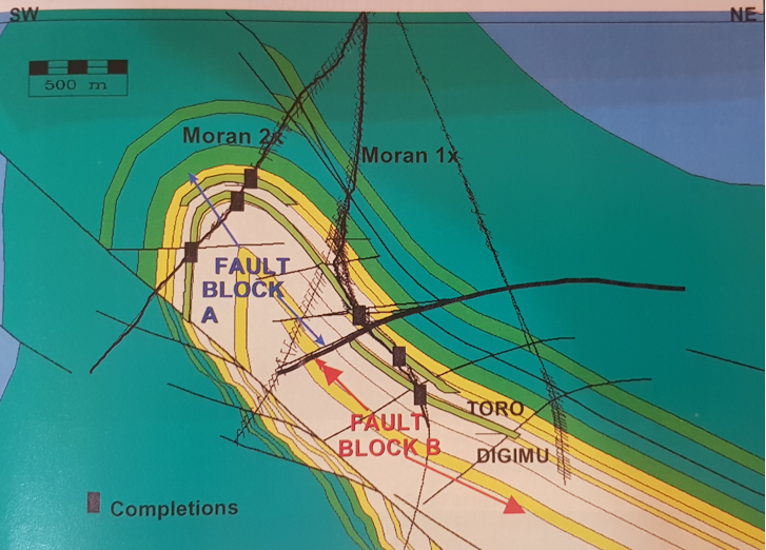
September 04, 2023

EDITOR’S NOTE: Michael McWalter, former Director, Petroleum Division and Adviser to the Government of Papua New Guinea, and erstwhile petroleum adviser to the Governments of Ghana, Liberia, Cambodia, Sao Tome, and South Sudan, comments on PNG’s oil and gas industry and changes to the petroleum regime made, muted, abandoned and planned.

Optimising Benefits for PNG - It is alleged that Papua New Guinea is not getting enough benefit from its petroleum resources and that the solution to such a problem might be for the Government to exact more demanding fiscal and commercial terms on sector investors.  However, the same could be said about almost any source of Papua New Guinea’s revenue that we are not getting enough impact and outcome from the revenues that find their way into the Consolidated Revenue Fund of the Government. 

One might deduce that either the quality of Government expenditure is poor and unfocused, or there is gross misuse and misspending of Government funds, but in reality it is likely to be a mixture of both. Efforts to address this problem have include the creation of a National Procurement Commission and support for transparency by the Prime Minister of what has often been called a systemic problem. 

But when it comes to petroleum resources, we must remember that it is after all the Government that sets the terms of investment when seeking to develop the Nation’s petroleum resources, and it is the Government that needs to police the regime thoroughly that it has established. 

Aside from the poor quality of Government expenditure, the oil and gas companies that invest in Papua New Guinea do indeed need more scrutiny. Transparency of the terms of business and audit by the Government of the corporate taxation returns of petroleum licensees are the normal means by which to ensure appropriate performance and compliance of the oil and gas companies. 

Need for Commerciality

In the petroleum sector, oil and gas production leads to substantial income streams from sales of produced oil and gas, but getting to the development stage is not automatic. Those revenue streams need to be large enough to recompense the investors, primarily for their exploration, appraisal, development and production costs, and yet be able to pay the various fiscal and commercial demands and requirements of the Government and other local stakeholders.  And more than that, they hope that there will be a return on their investment for their shareholders, whilst they have to reserve enough funds for abandonment of fields, pipelines and facilities at the end of production.

The Government needs to understand that its does not share directly in the sales revenues, but rather that it shares mainly in the profit when a particular production project is commercially viable through the taxation of profits and by taking a share of the profits when it holds equity. Fiscal devices like royalty and levies may be charged at rates proportionate to production and its value, but they are not the main devices in the current regime.

If the Government exacts too much and a project thus becomes marginally economic and lacks commerciality, then it is unlikely that the project will proceed, especially if its economic viability is too diluted.  This viability requirement extends to all manner of petroleum regimes and likely success has to be weighed carefully against the general and specific risks.  

Investment of Revenues

When petroleum sector development takes place in the context of poor governance and poor financial management with a very leaky financial system which allows the results of petroleum development -- its revenues to be capriciously handled, misspent, or misappropriated -- the result of that enterprise will obviously be unrecognised, obscured, and unfortunately, all too often diminished.

In almost all cases of oil and gas production around the world, the share of the net value stream accruing to the Government from the development of an oil and/or gas field is greater than the share of the net value that the companies get. Generally, a Government should be realising significant revenue windfalls from petroleum development activity, once all costs are paid for.

Such revenues should be most carefully invested on public expenditure that is capital in nature for the good of the people, and not squandered on self-gratifying recurrent expenses.  These resources are the treasures of the people, and their value should only be mobilised to enhance the capital-based welfare of the people.   

Need for Better Sector Management

If a Government has a general and systematic disregard for monitoring the actual returns and benefits to the State versus the system benefits as designed and devised by prior and current petroleum policy determination, and their corresponding laws, regulations, and agreements, how can the State reliably know what it should have earned as its share in the enterprise of petroleum resource development versus what it does actually earn and receive?

This seeming lack of care is often based on a lack of accountability, and a lack of an appropriate sector yardstick (based on good statistical data of the oil and gas industry) against which to measure the sector performance. Pilfering and lassitude, of one kind or another, compound the problem.  So a potent cocktail is created which prompts a demand for sector reform and change, when such is perhaps not fundamentally justified or needed.

Perhaps, more ardent and diligent work might rather be required along with firmer enforcement of the current petroleum regime, but this requires heightened professionalism prompted by better terms and conditions for all that are involved in Government administration of such National assets as the petroleum resources of the country.

These two problems: the lack of monitoring and accounting of the sector performance and disdain for proper sector management merge in the minds of political leaders to convince them that sector matters are not as good as they could be and therefore need intercession by way of reform. That reform may be beyond the proportions required, or even possible.

Making the current regime work effectively using the current provisions of laws, regulation and terms of agreement is paramount to achieving optimum resource sector outcomes. However, if full application of these provisions is neglected for more immediate needs, perhaps inevitably disorder with be propagated and sector performance will suffer in the eyes of the State.

Reform should only be embraced if it rationalises and simplifies the petroleum regime and makes it more transparent and accountable to all stakeholders. Any petroleum regime poorly applied and poorly managed will equally give suboptimal and questionable results.

The Current Petroleum Regime

Indeed, it would seem that no-one in Government today can articulate with much clarity the current Papua New Guinea petroleum policy that defines the applicable petroleum regime. 

Over the last eight years, there have been many changes to the petroleum regime through amendments to legislation such as the introduction of dividend and interest withholding taxes, an increase in the rate of foreign contractor taxes, change to deductibility of royalty, a consolidation of oil and gas operations tax rates to a single uniform rate, and the changes to the Oil and Gas Act concerning the treatment of applications for petroleum development licences and the removal of the right to arbitration.

Oddly, within the negotiations of recent Gas Agreements, basic application of many of these new provisions has been waived and new devices introduced such as a production levy and a domestic market obligation. If the changes devised in 2015 had been dutifully applied, perhaps these inventions might not have been necessary.

Certainly, it is time to rewrite the Petroleum Policy Handbook published by the Department of Petroleum and Energy in 2005, and to state the current petroleum regime unequivocally. It is difficult to invest in a country if the rules of the game are not clearly articulated.

Incidentally, if contract-based Production Sharing Arrangements are to be used in the future as has been suggested, all the terms of exploration, appraisal, development, production, and abandonment will have to be most carefully spelt out and agreed to. Companies will not contract their services to Government unless they can clearly see a pathway to profitability if they successfully find hydrocarbon accumulations.    

Some New Policy Initiatives

A few years ago, the PNG Government, led by its Gas Project Coordination Office, devised a new Natural Gas Policy of which there were several editions during the period of 2016 to 2017, none of which were duly and properly issued, and which sought to introduce changes to the fiscal and commercial terms of gas development. 

Some people in Government (and a few in the industry) have taken these to be official policy, despite there being no public record of their presentation to Parliament, formal Government approval, or public dissemination.

These variously included an increase in State equity from 22.5% to 30%; a production levy of 10%; royalty and development levy based on 2% of export value (instead of wellhead value); a 5% import duty on all goods and services; a 2% social levy; and 10% domestic market obligation to sell production into local markets at a discounted price; and a withdrawal of foreign exchange exemptions.

Such a clamour for more benefits, whilst admirable, was sadly not quantified in any of the gas policy drafts, and the manner in which the draft documents was handled smacked of stealth and the policy clearly lacked transparency in its formulation and enunciation. 

It has to be emphasised that petroleum resource development is big business, and its success or failure is enumerated in very large amounts of money underlying it, for all stakeholders.

It is the numbers arising from the interaction of a variety of fiscal and commercial devices at different times in the petroleum development cycle that give rise to the overall effective split of the net value between the Host Government and the investing companies.  This cannot be guess work and requires sensitive well-informed economic modelling.   

Oil and Gas Amendment Act 2020

In 2020, the Government introduced an amendment to the Oil and Gas Act that fundamentally changed the offering of the National petroleum prospectivity for exploration development and production to investors from that which was firmly established in the 1975 White Paper: Government Statement on Petroleum Policy and Legislation, an extract of which follows:  

“But, before we can gain the benefits of oil and gas production, we must first find oil and gas in commercial quantities.  At present, the best way to do this is by relying on foreign oil companies, who have both the technical expertise and the financial capability to mount a major exploration programme. And in order to attract these companies for exploration, while at the same time increasing our own knowledge of our resources and our ultimate ability to control the petroleum industry, we need to offer terms and conditions that are fair and reasonable.

“This does not mean that we need to be evenly generous to foreign oil companies.  There is enough potential profit in most oil discoveries so that a company can earn a generous return on its investment, while at the same time the government, as trustee for the people of the country as a whole, can secure significant revenue.  The terms proposed in this policy statement are fair and just.  They allow foreign companies to make reasonable and adequate profit, yet they ensure that the nation will benefit substantially from any oil or gas production, and that as the profitability of any oil venture increases Papua New Guinea will take an increasing share of these profits.” 

The above is from the Forward of the White Paper on Petroleum Policy and Legislation 1975 laid before the National Parliament by M. T. Somare, M.P., Minister for Natural Resources and Julius Chan, M.P., Minister for Finance – two of PNG’s most esteemed leaders.  It was a strong foundation.

Essentially, the 1975 policy sought experienced companies to invest in exploration at their own risk and to develop at their own risk any discovery to the extent that they were happy with the commerciality of the outcome of development and production, to which the regime would then be judiciously applied. If the commerciality was fragile, the State was not so concerned.

This has changed substantially with the Oil and Gas (Amendment) Act 2020 which has introduced new criteria in a new section - Section 56A.  An application under Section 56 (1) of the Oil and Gas Act for a Petroleum Development Licence has to now pass a test as to “the benefit or otherwise to be derived by the State”, notwithstanding matters of project commerciality.  This is reproduced below in full. 

Oil and Gas Act Section 56A. Minister’s Instrument of Notification to Applicant.

Where subject to Section 56(1), this section applies, the Minister must:

(a) by instrument served on the applicant, notify the applicant that this section applies; and

(b) seek the advice of the Board on whether the applicant’s proposals should reflect a minimum expected return to the State over the life of any recovery of petroleum from the blocks the subject of the application and, if so:

(i) what that minimum expected return should be (specifically or according to a conditional or sliding scale or calculation); and

(ii) the appropriate methodology for its assessment or calculation; and

(iii) the appropriate milestones for its achievement (and any compensation regime that should apply if those milestones are breached); and

(c) based on, but without being limited by that advice, the materials already furnished by the applicant in support of the application and any other information otherwise available to the Minister relevant to the application, form the Minister’s own view on the matters referred to in Paragraph (b) and, by further instrument served on the applicant, notify the applicant of that view; and

(d) where proposals already provided by the applicant:

(i) meet or exceed the minimum requirements contained in that farther instrument; and

(ii) contain binding undertakings to that effect enforceable on acceptance by the State as. an agreement pursuant to, or as an amendment to an existing agreement under, either of Sections 183 and 184, serve an instrument on the applicant under Section 56(l)(a), (b), or (c) as the Minister determines; and

(e) otherwise proceed under Section 56(l)(b) save that the Minister must as a minimum require proposals under Section 56(1 ){b) at least satisfying the minimum requirements referred to in Paragraph {d},

and the Minister may in any event, and notwithstanding any other provision of this Act to the contrary, impose conditions on the grant of any application to which this section applies that implement the Minister’s view referred to in Paragraph (c).

This is a paradigm shift in the petroleum regime, as investors who have risked their money in exploration, appraisal and development planning can now only pursue a recoupment of their investment by seeking a licence to develop the discovery, if it is not only necessarily commercially viable, but also meets “the minimum expected return to the State over the life of any recovery of petroleum” which criteria is only examined and assessed by the Petroleum Advisory Board and is subject to the Minister’s own view at the time of application.  This is certainly putting the State in the lead and advancing control of the sector, hopefully for the better.  

As brave as it attempts to be, such provisions dealing with the benefit arising from the development and production of oil and gas from a field, will likely be swamped by the key exogenous variable of the oil and gas industry, which is the crude oil price itself.

However, the fact that a planned petroleum development might be the subject of such scrutiny would in itself be a leap forward in sector management, and the minimum expected return to the State will need to be defined most careful and should consider the extremely volatile nature of the industry.

Moreover, such analysis will need to be professionally undertaken emphasising once again the need for better sector management institutions manned by skilled and experienced persons with appropriate technical and financial support.

Refusal of Development

Also, in the 2000 amendment, the hitherto unlikely outcome of a refusal of a willing application for a petroleum development licence has now become a defined option for the Minister who is now required to assess whether the proposals for development attached to an application will pass an approved threshold level of benefits for the State, and if they do not: to refuse the application.

On top of that, the right to take the Minister’s decision to refuse an application may no longer be referred to international arbitration by virtue of the Oil and Gas Act. That option is now closed.   

An Avalanche of Change

Our dilemma is to see through this avalanche of sought-after-changes and see what the PNG Government really wants.  As the Governors of three Provinces (Gulf, Hela, and Western) said in a joint letter dated 30th August 2020 to the Prime Minister: “What is the end game for the Government with these changes?" Do we want State control on (sic) Licences or increased State take?” One wonders whether, or not it is both, but one ponders how will such desires be fulfilled?   

How Industry Can Help

If the oil and gas industry is to remain in business in PNG with credibility, it has an implicit, if not necessary, duty of care to guide the Government out of the problems into which it has fallen, by enlightening them as to the commercial limitations of seeking more and more benefits without due regard to good revenue management, good governance and high fiduciary standards, whilst understanding and allowing for the Government aspirations of heightened benefit and control of the sector.

Clearly, the concessional terms which highly incentivised the PNG LNG Project should not be allowed to persist, and one might regard it as indecent for the large corporate to try to cling to such incentives.

PNG has shown that it can host world class LNG development and can be home to world class companies such as ExxonMobil. The green-field fear factor is diminished, and future projects will encounter fewer hurdles in seeking the support of shareholders and financial institutions. If the oil and gas industry of PNG wishes to be part of that future, it might be wise of it to provide the Government the benefit of its global knowledge, so it may share in that future.

PSCs Can and Do Work

The Government has expressed its intention to move to a Production Sharing Contract (PSC) system in 2025 and has already introduced enabling Constitutional and Organic Law legislation.  Whether such a move gives the Government what is wants, we shall see.  There is nothing intrinsically wrong with a PSC system.

The author has worked in many countries with such petroleum regimes: putting some together, pulling others apart, whilst repairing some. The one thing that a PSC gives the Government, if the industry is well-managed, is much better control of that industry for planning purposes and an ability to resolve intra-company wrangles, which often delay project development.   

One could say that some of the most infamous despots of the world and their oligarch associates in countries with substantial oil and gas reserves know that to milk the system handsomely, one needs to have a well-run petroleum industry, else there might be nothing to plunder! 

But it goes without question that that if we wish PNG to gain optimal benefits from our petroleum industry for the people at large for their development or indeed even for personal enrichment of a political elite, one needs to have efficiency in the business of conducting petroleum exploration, development, and production, and that means good governance and proper understanding and accountability.

Competent Petroleum Management Agency Required

Normally, good governance is achieved through the Nation having a strong and competent petroleum sector management entity: call it a Department of Petroleum, Ministry of Petroleum, National Petroleum Agency, Commission or Authority, or whatever.  It should have very well-educated staff, who are knowledgeable and experienced. 

Some 37 years after the first major oil discovery, there are plenty of experienced Papua New Guinean people within the petroleum industry either working in PNG or in the diaspora, whom if properly remunerated can become the core of the proposed new National Petroleum Authority.

Back in the 1970s and 1980s, there was little understanding about petroleum matters within PNG; that is not the case today, and many of PNG’s petroleum technocrats and businessmen are first class.  Indeed, some of the very best have and are leading lives as highly competent international oil and gas men and women around the globe. They need to be seduced to come home and build PNG’s petroleum industry to greater heights.

Good Record Keeping Required

One of the basic tasks of managing the sector is understanding the range of fiscal and commercial outcomes that may stem from the business. And like all business, whether a simple trade store or a multi-billion-dollar oil and gas company, we can only determine the condition and health of the enterprise if we maintain accurate records.

The same too applies to the Government’s management of the petroleum sector. It is not sufficient just to cry and shout without a basis, especially when the main determinant of the sector’s outcomes is the price of crude oil, and consequently due to referencing against crude oil prices, the price of natural gas and LNG. Volumes and prices need to be carefully monitored with respect to all of PNG’s petroleum operations both upstream and downstream, as well as global industry statistics and prices.

Economic Modelling Required

If one has good sector statistics, one can monitor actual performance against anticipated performance.  That anticipated performance will normally be presented by the licensee as an open-book economic model at the time of submission of their proposals for development accompanying the application for a petroleum development licence.

The model should be agreed between the State and the licensees to be as accurate as possible model encompassing all of the costs and benefits to the State and to the licensees. The model should show all scenarios and reflect the implications of crude oil prices and modes of project financing.

Even better, the State should have a model of its own, developed in-house using its own petroleum economists, so that they are totally familiar with the contained algorithms and able to vary and adjust the fiscal and commercial terms as needed to assess different policy scenarios and options for the Government.
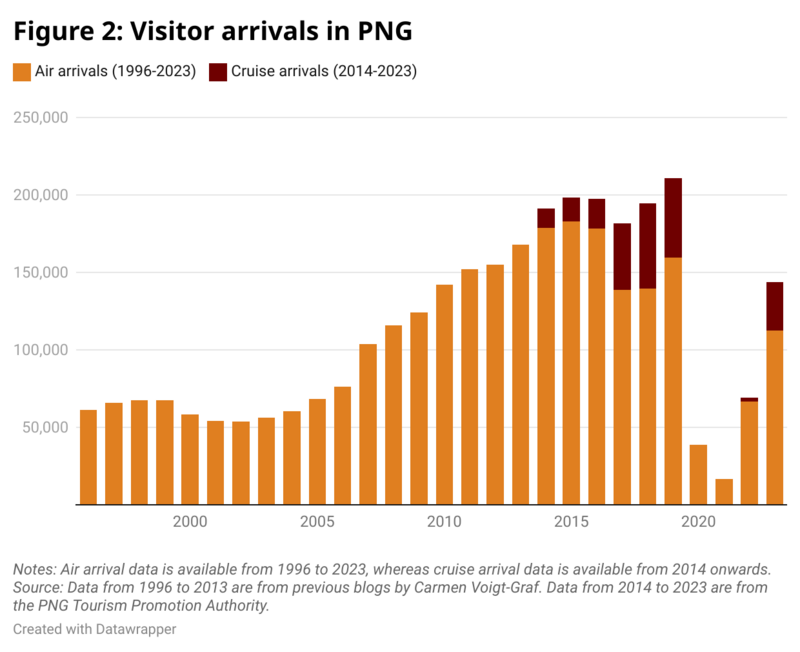
The results of the modelling combined with different projections of the crude oil price should guide decision making about all and any petroleum project.  The ongoing use of the model to reflect real costs and calculated real benefits based on produced actual volumes should be a tool for ensuring that the system benefits are being realised.  No number of National Oil Companies, Government Petroleum Authorities or other entities will be adequate unless this fundamental work is done.
We do not navigate the oceans or skies without charts and careful guidance; the same too, applies for a Government wrestling with the development of its petroleum resources: it should not expose such valuable patrimony to reckless unaccountable development, and it must take all necessary actions to ensure measurable account of petroleum operations. The time for the industry dictating development terms for their corporate satisfaction and to their own agenda and timetables has gone.

Reform therefore should encompass excellence in all aspects of the business whether it is overhaul and more ardent application of the current petroleum regime, or indeed a move to the use of PSCs.  No single regime brings about greater fiscal or commercial benefit than the other, and any regime has to recognise the fundamental requirement that the development of discoveries of petroleum accumulations, either oil and/or gas needs to be made commercially viable in order for them to be developed.

PSCs do indeed bring about more control by Government, but only marginally more than the current regime, were it to be fully enforced and complimented with more comprehensive regulations to give effect to some of the provision of the Oil and Gas Act. PSCs require considerable responsibility on the part of the Government petroleum management agency to lead the sector well for the benefit of the country and its people.

One has no doubt that there is enough adequate qualified and experienced PNG people in the sector to accomplish this, but they will need absolute rectitude, dedication, and professionalism to achieve it and gain the desired outcomes. Essential to success will be the support appropriate support from the Government to give it the necessary financial and human resources to take on a more advance role in managing and regulating the petroleum industry of PNG.  


Michael McWalter is a technical specialist in petroleum industry regulation, administration, and institutional development with over 42 years’ experience of the oil and gas industry, predominantly in the Ministries and Agencies of newly emerging oil and gas producing nations, particularly in PNG.