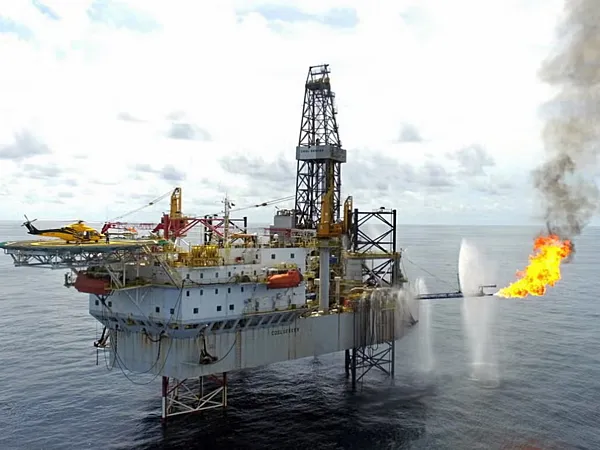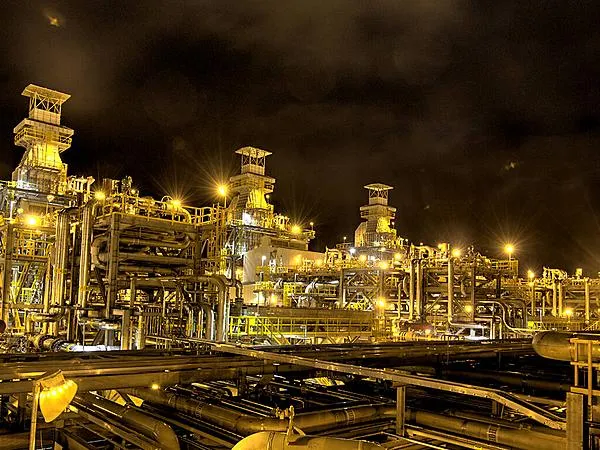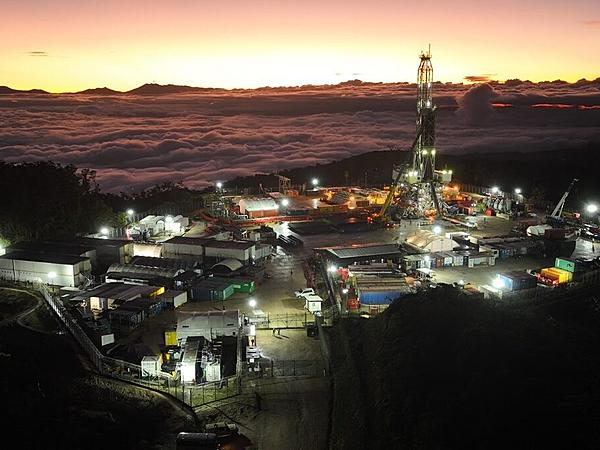
Papua LNG is a significant liquified natural gas (LNG) project for Papua New Guinea (PNG). Led by TotalEnergies, it will develop the Elk/Antelope gas fields in the Gulf of Papua, which hold large gas resources, the energy equivalent of more than one billion barrels of oil.
Intended to be the country's second LNG project, Papua LNG promises a lot, including significant tax revenue and dividends for the national government, Gulf provincial government and local communities, as well as the stimulus of construction.
But discussions of this large project have been dragging on for years. It always seems to be just around the corner. In early 2018, the Final Investment Decision or FID for Papua LNG was predicted (by the ever-bullish ANZ bank) to be less than twelve months away.
Then in 2019, FID was predicted for 2020. Then it was 2022. 2023. 2024. 2025. The PNG petroleum minister recently predicted FID by April 2026. But the PM has already pushed this latest deadline out from April to September of this year. And the latest statement from the petroleum minister only says that "we continue to work towards a FID this year".
There appear to be several factors for the significant, repeated and ongoing delays of the project.
The current government has to take some of the blame. The Project Gas Agreement for Papua LNG was initially signed in April 2019, but when James Marape became prime minister a month later, he said he would renegotiate it. Perhaps he won some minor concessions, but his government conceded a few months later that the Gas Agreement would remain unchanged.
The PNG government also decided that another LNG project, P'nyang, that was originally intended to proceed in tandem with Papua LNG, would instead follow it. This required a reworking of the latter's technical design.
In 2020, the PNG government amended the Oil and Gas Act to authorise it to impose on large projects a minimum expected level of return for the state, and so that new project agreements could "no longer be used to regulate the application of laws to a project". However, in August 2021, parliament had to pass another amendment to the Oil and Gas Act specifically to exclude Papua LNG from the 2020 amendments.
It was 2023 by the time Total went out to get construction bids, and by then construction costs had skyrocketed. Whereas project costs had been estimated at US$10-12 billion, the bids came in at around US$18 billion. This made the project unviable. This increase in costs was partly because of the pandemic but also because Chinese firms had been excluded from the initial bid. One wonders why the PNG government allowed this restricted bid to take place given its stake as a shareholder and its interest in maximising profits from the project.
In late 2024, Total initiated a rebid process, with reduced specifications, and opening the bid to Chinese firms. PNG PM Marape said very recently that costs had come down to US$14 billion, but went on to indicate that "adjustments" and "concessions" would be needed and said that the State Negotiation Team was already "engaged in technical discussions overseas". This suggests a re-opening of the Project Agreement, which could add months if not years of further delay.
Meanwhile, other steps in project finalisation are still pending, including long-term sales contracts and the mandatory development forum at which negotiations take place with landowners and other domestic stakeholders for the division of subnational project benefits.
A broader threat to the LNG project is the risk of oversupply of LNG globally. Over the last decade, the US has not only entered the LNG export market but has become the world's largest exporter with cheap and plentifully available natural gas from shale fracking operations. The 2025 World Energy Outlook found that "the large upcoming wave of additional LNG export capacity" would meet the growing demand for LNG past 2030, and under some scenarios up to 2035. Even within Total's own portfolio, Papua LNG is said to be competing within a limited investment budget against several other projects in other parts of the world.
Just this year, the Australian Financial Review reported (paywalled) that: "[T]he biggest wave of new LNG supply yet is set to start hitting global gas markets this year, threatening to cut prices … fuelling doubts whether a new project planned in Papua New Guinea will go ahead on time … [O]nly the lowest-cost projects are likely to advance in the near term." The same article noted that a pipeline LNG project has just been deferred in the US by the project developer in light of the global LNG glut.
Financing may also be a risk. Growing campaigns against fossil fuel projects have resulted in almost 30 banks turning away from financing the Papua LNG project. The worst-case scenario for PNG would see an acceleration of the renewables revolution, and falling demand for gas. This could lead to Papua LNG not only being pushed to the back of the queue, but never being developed at all.
On the upside, demand for LNG is still growing, PNG is located near Asian markets, and China will be keen on non-US energy sources.
In summary, Papua LNG may well have a future, but is a long way from a done deal. In fact, according to one recent analysis (paywalled), "stalled Papua LNG may only move forward through partner realignment, a change of operator or a full concept rethink". Moreover, given the sequencing the PNG government has decided on, the more Papua LNG is delayed the more P'nyang will be, and that project is quite remotely located and costly.
Not one but several factors explain the delays Papua LNG has encountered and the uncertainty it is still facing. One lesson is that PNG may be paying the price from moving away from a rules-based fiscal regime for the resource sector towards a negotiated project-by-project regime. Fiscal conditions for resource projects are increasingly project specific, designed to add up to a target share of project profits for the PNG government and other national and local stakeholders. This approach adds to complexity, and risks generating a vicious cycle of one delay leading to another.
Disclosure: This research was undertaken with the support of the ANU-UPNG Partnership, an initiative of the PNG-Australia Partnership, funded by the Department of Foreign Affairs and Trade. The views are those of the authors only.
This article appeared first on Devpolicy Blog (devpolicy.org), from the Development Policy Centre at The Australian National University.


Disclaimer: This article was written by the authors and reflects their own views, analysis and interpretations. The opinions expressed are solely those of the authors and do not necessarily represent the editorial position, policy or views of PNG Business, its management or its affiliates. PNG Business publishes this piece as part of its commitment to informed discussion and diverse perspectives on issues of national and economic importance.