Category:
Mining in PNG: blessings, curse and lessons from the Porgera goldmine
by Andrew Anton Mako
Blessings
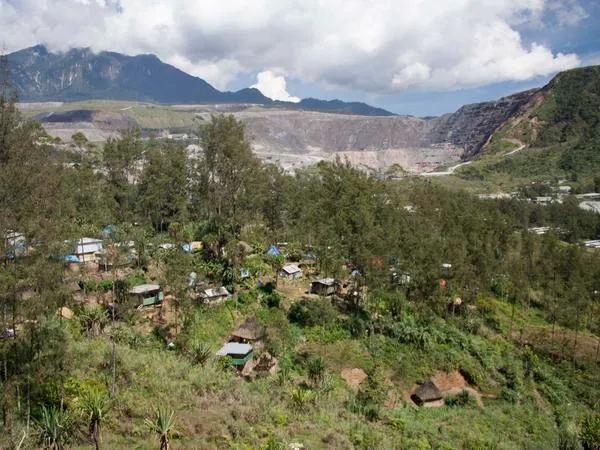
The Porgera goldmine in Enga Province offered so much promise when it began production in 1990 – a modern way of life and improved living standards for the landowners and surrounding communities, with access to modern health, education, and other social services. Before the closure of the mine in April 2020, it had produced 16 million ounces of gold and earned over K4 billion for the national government. Over its 30 years, it created employment and contracts, other spin-off businesses and infrastructure projects, and scholarships to landowners and other PNG students. (I was a recipient of such a scholarship from 2005 to 2007 at the University of Papua New Guinea.)
As a result of the mine, the lives of the people of Porgera changed dramatically within a generation, from traditional community to urban-based life. A new township was built with a modern hospital, a new high school (which I attended), and an international school for children of the Special Mining Lease (SML) area. Business thrived. The local landowners (people from the SML area) had access to large, new wealth in various forms of proceeds (cash and other spin-off benefits) from the goldmine.
The government set up a special purpose government authority, Porgera Development Authority, to finance the development needs of Porgera-Paiela district, with regular funding from Porgera mine royalties.
Over its lifetime, the mine also provided K335 million to the provincial government, which funded critical development projects as well as school fees for Enga children, enabling the province to emerge as a modern province from the development backwaters before the mine began.
The mine was a blessing, or so it seemed.
Curse
People from all over the country have settled in Porgera, resulting in a population increase in the district from 4,000 to over 70,000 now. This has created tensions, which have led to fierce fighting. This preceded but has been worsened by the mine closure, with the current ongoing fighting leading to many deaths, and destruction of much property. The once peaceful mining township is now dangerous and unsafe, even with the presence of reinforced military and police.
The three decades of mining have led to significant environmental degradation. Much of the land on the fringes of the mine is unfit for human settlement and farming due to landslips caused by dumping of waste rocks. The relocation of landowners who still live on the edges of the mine has been hindered, among other things, by population increase and complicated kinship ties.
Because of a lack of arable land for farming, and lack of proper financial literacy, the landowners became dependent on the regular royalty and compensation payments from the mine. The population increase over time also meant each landowner received less money. These payments have now ceased with the mine closure, as well as due to ongoing disputes between landowner factions. Thousands are facing financial hardship, and are being thrown into poverty, as the mine closure prolongs.
Only a handful of SML children have been able to make it to universities or colleges, even though a scholarship fund (SML Children Trust Fund) and a modern international school were established to benefit the children of the landowners.
Apart from a couple of landowner companies which are controlled by a handful of people (and could be better managed), not many SML people own businesses in Porgera, or have invested in other business ventures outside of Porgera, even though the mine set up a business development office to support local entrepreneurship. Most of the small businesses, such as trade stores and contractors to the mine, have all but ceased during the three years since the mine closure.
In-fighting among the landowners over many years for the control of mining benefits such as royalty payments has perpetuated the suffering of the poor majority, who bear the brunt of the evils of missed opportunities of mining in PNG.
The money paid to the Porgera Development Authority has all but disappeared, with no developmental trace in the Porgera-Paiela district, leaving Kolombi/Paiela in a shambles of rural decay.
Lessons
The new Porgera deal offers an important opportunity to right the wrongs of the past in the estimated 20-year life of the mine when it restarts. The government has secured a 51% equity stake in the mine for PNG stakeholders, which includes a 10% free-carry equity for Porgera landowners. At current gold prices, PNG stakeholders would receive US$7.3 billion (K25.2 billion), with an estimated K2.5 billion to landowners for 20 years.
However, the national government will not receive any dividends for ten years, as the money will be used for care and maintenance costs incurred during the closure period. Some lament that a similar or better deal could have been achieved without shutting down the mine.
The bigger problem though is that the negotiations have focused only on getting a bigger share for various stakeholders. Without better local governance, increased funds will just mean increased wastage.
The following are important lessons going forward for the new Porgera mine, and for the resource sector in PNG more generally.
- All stakeholders, especially the people and the government, must be made aware that the minerals will run out eventually, and plans must be drawn up accordingly.
- School education (for both SML and other surrounding communities) should be given prominence to ensure children continue with education past high school. An educated population will drive the development of the Porgera-Paiela district and its people after the eventual closure of the mine. The same goes for PNG more broadly.
- Landowners must be taught financial literacy skills, so that they can invest some of the mine proceeds in sustainable living ventures rather than consuming them all.
- Long-term funds should be considered for landowning communities to sustain important services such as health, education and infrastructure development after the closure of the mine. Such funds should be ring-fenced with stringent governance and legal mechanisms to prevent looting by unscrupulous actors.
- Issues of land ownership are complex in PNG, and require careful negotiation with all relevant stakeholders.
The 20-year life on the Porgera mine when it resumes will determine the future of the mine’s landowners and the Porgera-Paiela district as a whole. If the mine’s proceeds are once again squandered, it will be more of the same: environmental degradation, violence, population influx, corruption, disputes, and poverty. If, however, they are managed and invested carefully, a new day will dawn.
Disclosure: This research was undertaken with the support of the ANU-UPNG Partnership, an initiative of the PNG-Australia Partnership, funded by the Department of Foreign Affairs and Trade. The views are those of the author only. This article appeared first on Devpolicy Blog (devpolicy.org), from the Development Policy Centre at The Australian National University. Andrew Anton Mako is a visiting lecturer and project coordinator for the ANU-UPNG Partnership. He has worked as a research officer at the Development Policy Centre and as a research fellow at the PNG National Research Institute.

Connecting the Unbanked: How the Internet of Things can Expand Financial Services
Article by Lotte Schou-Zibell, Arndt Husar
The Internet of Things—a rapidly growing network of connected devices—can help bring financial services to those most in need.
The Internet-of-Things (IoT), defined as “software, sensors and network connectivity embedded in physical devices, buildings and other items that enable those objects to collect and exchange data and send, receive and execute commands,” expanded rapidly during the pandemic.
There are now 21.5 billion interconnected devices worldwide. And yet, 1.4 billion adults still have no access to banking, with the majority being women, according to the World Bank's Findex 2021 survey. And some 850 million people globally do not have an official ID, let alone a digital one.
This presents an opportunity for leapfrogging straight to a digital ID and leveraging the IoT for processing transactions—a move that would expand access to financial services and boost economic empowerment.
In Papua New Guinea, for example, a new digital bank ID has been piloted, which supports customer due diligence requirements for financial institutions using a unique biometric identity. The program has reached 2,548 people, 47% of whom were women in remote areas who previously could not open a bank account. This benefits 80% of the informal and rural population.
Not only does the new ID allow for biometric identification, which helps people access banking, but it also makes the process more secure and enables data collection on customer behavior. Spending patterns can help assess creditworthiness where there was previously no data, making risk assessments more accurate and enabling personalized financial services.
While internet penetration and mobile connections are increasing in Papua New Guinea, the uptake of users with IoT-enabled devices is also growing, and IoT-enabled point-of-sale terminals and smart card readers are being rolled out.
Payments can be processed securely and efficiently by using communication technologies such as Bluetooth, Near Field Communication, and Wi-Fi. These technologies help connect smartphones, contactless cards, or wearable devices with point-of-sale terminals.
The expansion of the Internet of Things can transform financial services, bringing new opportunities for financial inclusion and economic growth.
A credit history through micropayments can create a path to credit for those without a bank account or formal sector wages. One such example is the pay-as-you-go model pioneered by M-KOPA in Africa, and since adapted elsewhere, including by MiBank in Papua New Guinea.
M-KOPA, for example, enables customers to stagger their payments for household assets, such as solar panels, smartphones, fridges, and televisions. An initial deposit is made, followed by small installments at regular intervals until the total value of the system is paid.
Data on repayment rates can, in turn, be used for credit scoring, enabling customers to access cash loans from M-KOPA once the asset has been paid in full, with the asset resecured as collateral. MiBank takes a similar approach to resecuring the asset.
In the agriculture sector, IoT devices collect data on crop yields, soil conditions, and weather patterns, enabling financial institutions to provide tailored financial services to farmers and help them make informed financial decisions, including access to credit and insurance.
For example, in Bangladesh, crop insurance was provided based on a parametric weather index using climate information generated by the Bangladesh Meteorological Department. These indices determine trigger points for payouts. For instance, when precipitation rises above or dips below certain threshold levels.
Following a disaster triggered by natural hazards, the IoT-connected weather stations can instantly activate claims and settlements. Over 9,500 small farmers were insured and provided with mobile banking services, enabling an efficient and transparent collection of insurance premiums and payment of claims. This success was facilitated by the high degree of mobile connectivity and coverage in Bangladesh.
As technology evolves, we will likely see even more innovative ways to leverage the IoT to improve financial services and empower individuals and businesses worldwide. Still, it will require a holistic approach addressing infrastructure, capacity, standardization, and regulatory frameworks.
The expansion of the Internet of Things can transform financial services, bringing new opportunities for financial inclusion and economic growth.
Article courtesy of the Asian Development Bank
PNG as resource dependent as Saudi Arabia
Commentary by: Stephen Howes and Alyssa Leng
When we think of resource-dependent economies, we normally think of the Middle East, and economies like Saudi Arabia. Where does Papua New Guinea fit in?
Data available from the UN allows us to isolate value added in the resources sector from the rest of the economy (resource GDP). The ratio of resource to total GDP is a measure of resource dependency. This is available for 106 countries, and the top 15 are shown in the graph below by the blue bars (left hand side). The data is for the latest available year, which for most countries, including PNG, is 2021.
PNG comes in sixth place, just above Saudi Arabia.
We’ve told this story before using a different data set, based on World Bank data on resource rents. Writing in 2019, this indicator had PNG in tenth place, actually just below Saudi Arabia. But the resource rent measure is difficult to estimate as it requires estimates of the cost of production. Resource GDP is a more reliable measure as it comes straight from the national accounts. That said, some countries are missing from the UN data set: Democratic Republic of the Congo, Iraq and Angola for example.
Whatever its precise ranking, the overall message is clear: PNG is one of the most resource-dependent economies in the world.
How did this happen?
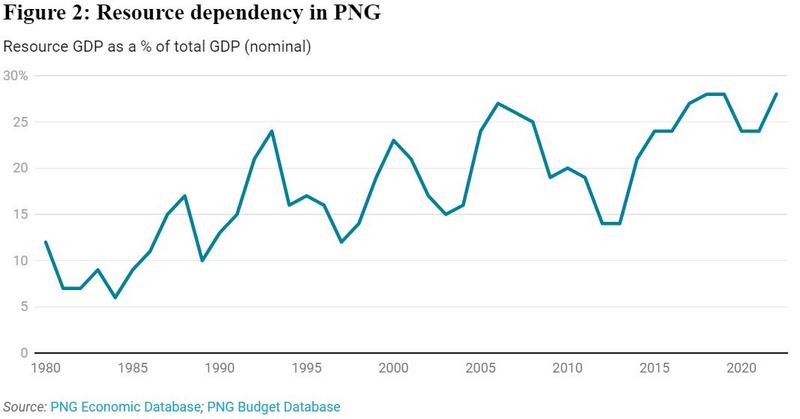
At independence, PNG’s resource sector was represented by a single mine, the now-closed Panguna copper mine in Bougainville. Looking at a graph of resource dependency over time traces out many of the key developments in PNG’s recent history (Figure 2). The ratio fell in the early 1980s as copper prices fell, but rose in the late 1980s as those prices recovered and as the second mine, Ok Tedi, opened. The resource-dependency ratio fell again sharply in 1989 when Panguna closed due to conflict in Bougainville, but soon hit a new high in the mini-boom of 1993 – of 24% – due to new oil projects and the new Porgera gold mine.
Resource dependency then fell as oil production declined, but increased again in the late 1990s with new oil fields and the Lihir gold mine. The 24% record of 1993 wasn’t broken though until the resource boom years of the 2000s when commodity prices skyrocketed. A new record of 27% was set in 2006. Then the ratio fell as commodity prices eased and as PNG LNG construction boosted the rest of the economy. (Construction of a resource project is not counted as part of resource output.)
The dependency ratio started on another upward cycle when liquified natural gas exports began in 2014 and reached a new record of 28% in 2019. COVID-19 caused commodity prices to fall, and Porgera was closed, so the ratio fell again, but now the Ukraine war has pushed oil prices up and the ratio is back up to 28%.
In summary, the resource sector is a bigger part of the PNG economy than ever, and a bigger part of it than nearly all other economies. PNG really is the Saudi Arabia of the Pacific. This important finding has several implications and raises some important questions.
First, GDP is an increasingly meaningless indicator for PNG, given the high foreign ownership of the increasingly important resource sector. We should focus on non-resource GDP as a better measure of national economic activity.
Second, it helps explain many other features of the PNG economy. For example, the ‘Dutch disease‘ associated with resource dependency helps explain why PNG is a high-cost economy. When this high level of resource dependency is also combined with PNG’s low level of urbanisation (the lowest in the world), it also becomes clear why income inequality in PNG is among the highest in the world. The benefits of resource dependency are not widely shared.
Third, one benefit of resource dependency should be government revenue generated from the resource sector. Figure 1 also shows resource revenue (the brown bars on the right hand side), using data from UNU-WIDER. It’s clear that the amount of resource revenue collected by resource-intensive economies varies significantly.
Yet PNG’s resource revenue is noticeably low considering the size of its resource sector. It appears to be getting less out of its resource sector compared to other countries. Why this is needs to be urgently understood.
While the resource sector is no doubt important to PNG’s future, the historical trend and international comparisons shown in this blog suggest that it is unlikely that the secret to economic success in PNG is more resource projects. If it was, the country’s economic success would be obvious for all to see.
Article courtesy of DevPolicy Blog. This research was undertaken with the support of the ANU-UPNG Partnership, an initiative of the PNG-Australia Partnership, funded by the Department of Foreign Affairs and Trade. The views are those of the authors only. Stephen Howes is Director of the Development Policy Centre and Professor of Economics at the Crawford School of Public Policy, at The Australian National University. Alyssa Leng is a research officer at the Development Policy Centre, working on the Papua New Guinea economy.
PNG’s minimum wage
Commentary by Stephen Howes, Kingtau Mambon and Kelly Samof
The urban minimum wage has been an important part of Papua New Guinea’s economic history. In the last few years before independence (in 1975), it was greatly increased. In the decade or so after independence, it was widely regarded as too high. In 1992, it was slashed, merged with the rural minimum, and hardly increased again for more than a decade.
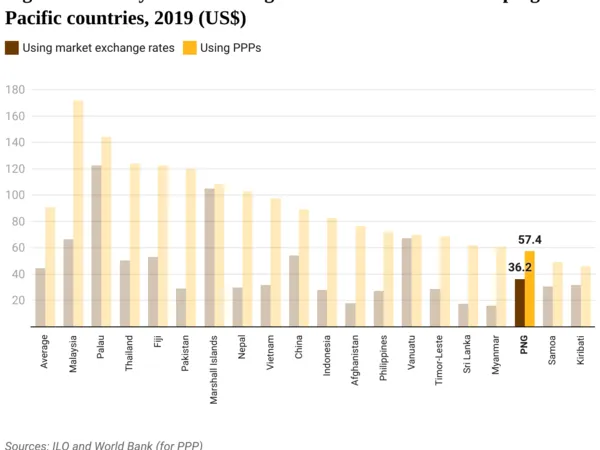
We can compare the minimum wage in PNG today with other Asia and Pacific developing countries using International Labour Organization (ILO) data. As Figure 1 shows, PNG’s minimum wage is 18% below the average of the 19 countries shown if the market exchange rate is used to compare minimum wages. It is 37% below the average if differences in cost of living are also taken into account (with conversions made on the basis not of market exchange rates but so-called purchasing power parities or PPPs). The greater difference in terms of PPPs reflects PNG’s relatively high cost of living. Of the countries shown, only Samoa and Kiribati have a lower minimum wage than PNG when a PPP comparison is made.
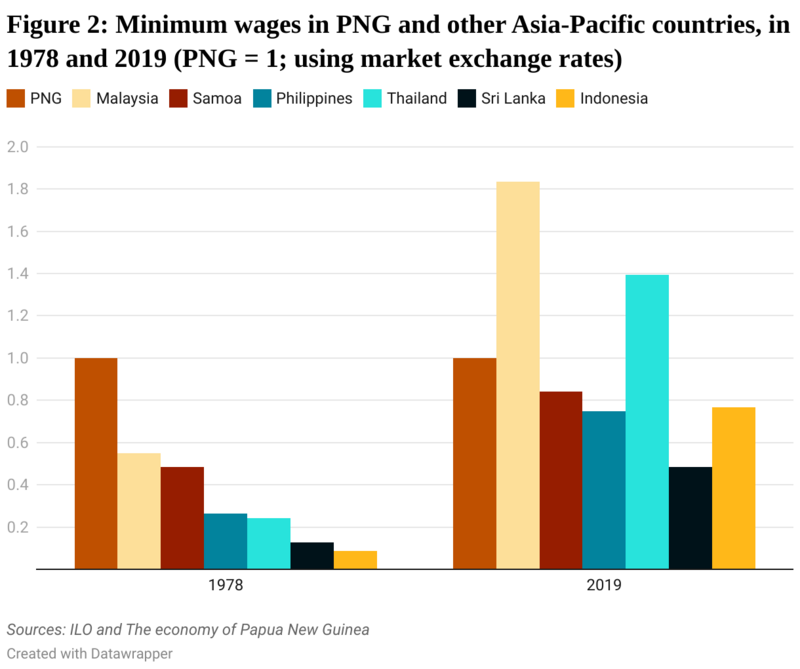
This is very different to the past. Raymond Goodman, Charles Lepani and David Morawetz in their 1985 report The economy of Papua New Guinea compared minimum wages in PNG with a subset of the countries above back in 1978. Then, the PNG minimum wage was about twice as big or more than the other comparators. Today (using market exchange rates, and the earlier authors do), PNG comes in the middle of the pack, as Figure 2 shows.
So far, we have shown that around the time of independence minimum wages were very high in PNG by international standards, and that they no longer are. Figure 3 shows how this change came about – also, for interest, comparing trends in PNG with those in Australia.
Both the PNG and Australian weekly minimum wages are shown in Figure 3 measured in Australian dollars. The PNG minimum wage is converted into Australian dollars using the current exchange rate. Both wages are then adjusted for inflation and expressed in 2021 prices.
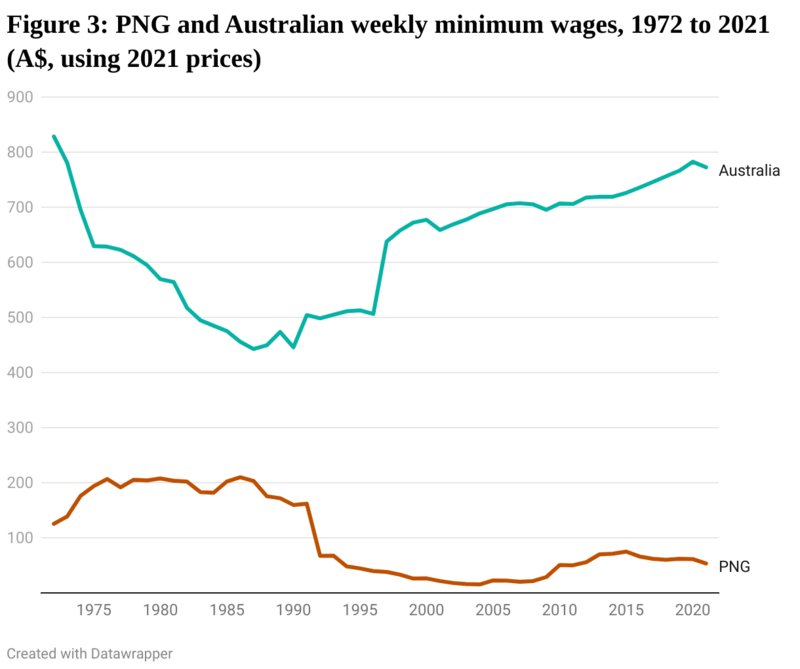
The two series follow diametrically opposed paths. The Australian minimum wage fell with the high inflation of the 1970s and industrial relations reforms of the 1980s, and by the early 1990s was little more than half its value in the 1970s. It then increased in the late 1990s and 2000s during the resource boom, and has continued to increase. Adjusting for inflation, it is now almost back to where it was in the early 1970s.
The PNG minimum wage does the opposite. It increased in the 1970s and was then held stable due to indexation, until the big bang reforms of 1992. Adjusted for inflation, PNG’s minimum wage continued to fall until 2004. There have since been some significant increases, but today PNG’s minimum wage is only about one-third of its value at independence, and below its value even in 1972, which is when the steep minimum wage increases began.
The Australian minimum wage has always been significantly higher than the PNG one, but the ratio has changed a lot over time. The lowest that ratio has ever been is 2.2 in 1986, the highest 45 in 2004.
The gap between the two wages is much higher now than at independence: the ratio of the Australian to the PNG minimum wage was 14.5 in 2021, compared to only 3.2 at independence (1975). This reflects PNG’s 1992 deregulation, and the faster growth in the Australian economy, which has enabled an increase in the Australian minimum wage.
The solution to low wages in PNG is not necessarily to increase the minimum. In some sectors, where there is a lot of international competition, a higher minimum wage might lead to job losses.
For example, in tuna processing, one of PNG’s main competitors is the Philippines. From Figure 1, we can see that PNG’s minimum wage is lower than the Philippines' on the basis of PPPs, but actually higher on the basis of market exchange rates. While the former is what matters for the welfare of workers, the latter is what matters for international competitiveness. Whether PNG’s minimum wage should be increased will require a lot more analysis.
The point of this blog is simply that PNG’s minimum wage does not look high any more by international comparisons, as it has fallen a lot since independence. PNG is often described as a high-cost economy, and this is a fair description. However, with regards to unskilled labour, it is no longer a high-wage economy.
Data note: The PNG Economic Database provides the weekly minimum wage of PNG going back to 1972, and the PGK-AUD exchange rate. Wikipedia provides the Australian weekly minimum wage data (hourly and weekly, on the assumption of a 38-hour week) starting from 1966. The Australian CPI is from the Australian aid tracker. There are some years where Australian minimum wage rates change more than once in a year. For such cases, we took the average as annual minimum wage rate. The data for Asia-Pacific comparisons are from the International Labour Organization and the World Bank. The different frequencies of minimum wages for each country in 2019 in the ILO’s report are adjusted to convert to weekly rates. World Bank data is used to obtain market exchange rates and PPP conversion factors. For the Goodman, et al., data go to Table 3.6 on p.61 in their report.\
Disclosure: This research was undertaken with the support of the ANU-UPNG Partnership, an initiative of the PNG-Australia Partnership, funded by the Department of Foreign Affairs and Trade. The views are those of the authors only.
This article appeared first on Devpolicy Blog (devpolicy.org), from the Development Policy Centre at The Australian National University. Stephen Howes is Director of the Development Policy Centre and Professor of Economics at the Crawford School of Public Policy, at The Australian National University. Kingtau Mambon is currently undertaking a Master of International and Development Economics at the ANU Crawford School of Public Policy, for which he was awarded a scholarship through the ANU-UPNG Partnership. Kelly Samof is a lecturer in economics at the School of Business and Public Policy, University of Papua New Guinea.
Connect PNG: the road to development?
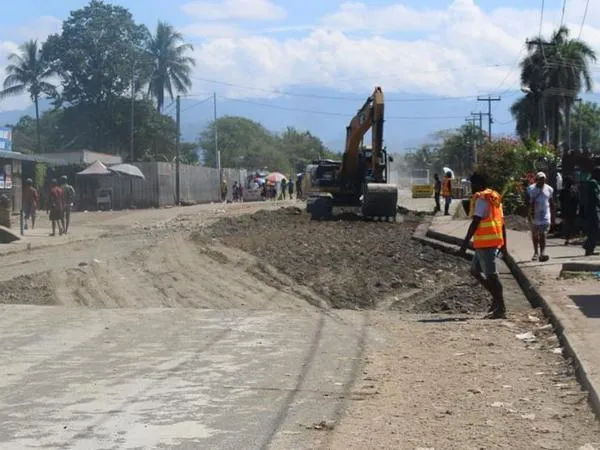
Photo: Roadworks on the Malahang-China Town Road in Lae, August 2022 (LAE OPEN Electorate - JOHN ROSSO Dps MP/Facebook)
Commentary by Alyssa Leng
Inadequate funding has meant roads are few, far between and in poor condition across Papua New Guinea. Port Moresby is not connected by road to either the industrial hub of Lae or the agricultural and population centre of the Highlands region, even though all three locations are on the same landmass. With 17% of PNG’s population having no access to roads at all – as noted in this year’s budget documents (Volume 1, page 13) – many people lack access to markets and services, including health and education, posing a serious impediment to development.
The Connect PNG Economic Road Transport Development Program (Connect PNG), announced in 2020, aims to address these issues. More than 16,000 km of road will be worked on over several phases under the 20-year program, at an estimated cost of K20 billion. Phase 1 aims to finish the Trans-Island Highway and consequently link Port Moresby and Lae, followed by Goroka, Madang, Mount Hagen and Mendi. It includes several road projects that began under the previous government. Phase 2 primarily seeks to link isolated provinces to the rest of the country, and Phase 3 focuses on completing north–south access along the border with Indonesia.
Connect PNG is a step in the right direction for PNG’s development, in that it pledges greater and more consistent funding for road construction and maintenance. But the program faces clear limits from the outset, with significantly less funding to be provided by the government than legislated.
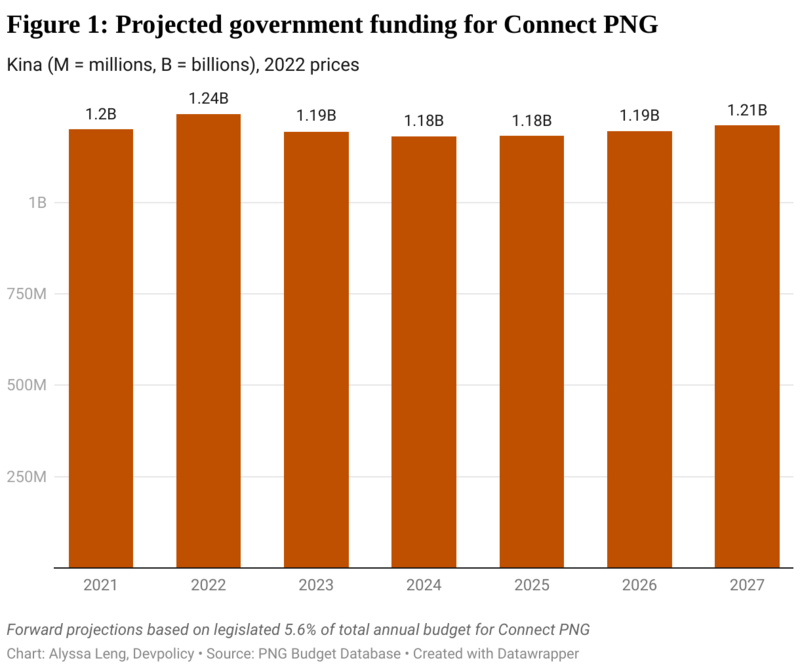
There is no doubt that Connect PNG is aiming high. The PNG government has committed a significant 5.6% of the annual national budget towards the program, as outlined in section 3(1) of the Connect PNG (Implementation and Funding Arrangements) Act 2021. Using forward projections for budget expenditure, this commitment would amount to over K1.1 billion in 2022 prices each year until 2027.
It is difficult to compare this level of spending to how much the PNG government has spent on roads historically, due to lack of data. But in 2022, the legislated budget allocation for Connect PNG comes close to both the budget allocation for the entire law and justice sector, as well as the 6.4% of this year’s budget given to the education sector (Volume 1, Table 19).
Should Connect PNG’s plans come to fruition, roads would receive a far more consistent flow of funds than has occurred previously. This is particularly promising for road maintenance, given its relatively low visibility and high economic returns relative to road construction.
Yet it seems unlikely that this ambition will be fully realised, even in the immediate future. Instead of the K1.24 billion implied by the 5.6% rate, budget documents suggest that the government has put aside just K522 million for Connect PNG in 2022 (Volume 1, page 83). The same documents also refer to a minimum of K500 million annual budget support (Volume 1, page 13) instead of the legislated 5.6% of the total budget.
Further over the horizon, Public Investment Program forward estimates suggest that spending on Connect PNG and related projects by the Department of Works & Implementation will not surpass K625 million in nominal terms annually between 2022 and 2026 (Volume 3A, pages 566-672). Importantly, this reduction in funding relative to the legislated amount comes before the persistent underspend and corruption allegations which have plagued efforts around road infrastructure in PNG.
This reduced level of funding will clearly make it substantially more difficult to achieve Connect PNG’s goals in full and on time. A smaller pool of available funds may see maintenance continue to be crowded out by construction, even though maintenance costs will only increase as PNG’s road network expands. Funding constraints will also make it crucial that the right roads are prioritised for work.
External financing, to make up for the shortfall in PNG government funding, will consequently be key to Connect PNG. Section 3(2) of the Connect PNG (Implementation and Funding Arrangements) Act 2021 expressly authorises borrowing for the program. But while program documents (page 17) suggest donors and partners have pledged an “additional USD6.9 billion” to “achieve 90% of the [Connect PNG] program in the next ten years”, it is unclear how much each partner will individually contribute or when such assistance would be disbursed.
For Australia in particular, there is room to go further in supplementing the PNG government’s efforts. The Australian Infrastructure Financing Facility for the Pacific has provided just AUD72.2 million of grants and loans, largely for road maintenance, despite broad support for the initiative. Australia’s traditional focus on maintenance may prove to be a good complement to Connect PNG’s focus on construction, but care will need to be taken to prevent moral hazard and the prospect of loan repayments crowding out maintenance spending in future.
Altogether, the Connect PNG program is a positive signal of intent from the PNG government in supporting long-term road construction and maintenance. It is encouraging that a minimum of K500 million seems to have been allocated to Connect PNG until at least 2026 – but this figure is much lower than the 5.6% of the annual national budget promised by the PNG government. How the program’s ambitions translate into reality and development in PNG therefore remains to be seen.
Disclosure: This research was undertaken with the support of the ANU-UPNG Partnership, an initiative of the PNG-Australia Partnership, funded by the Department of Foreign Affairs and Trade. The views are those of the authors only. This article appeared first on Devpolicy Blog (devpolicy.org), from the Development Policy Centre at The Australian National University. Alyssa Leng is a Research Officer at the Development Policy Centre, working on the Papua New Guinea economy.
Signs of fiscal recovery in Papua New Guinea?
by Kingtau Mambon and Stephen Howes
Papua New Guinea has been facing fiscal problems since the end of its economic boom almost a decade ago, with large deficits, increasing debt, falling revenue, and a rapidly growing salary bill. The COVID-19 pandemic has made things worse by depressing revenue. But the recently released 2021 Final Budget Outcome contains some promising signs.
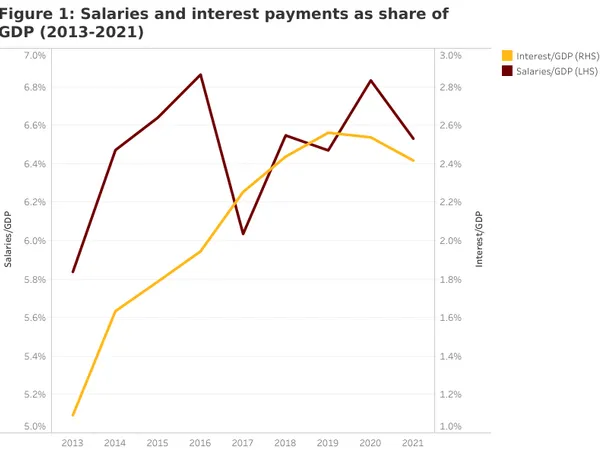
First, interest payments and the salary bill, both of which have increased rapidly since the boom ended in 2013, have been brought under control, at least for now. As the graph below shows, they have both started to fall relative to GDP.
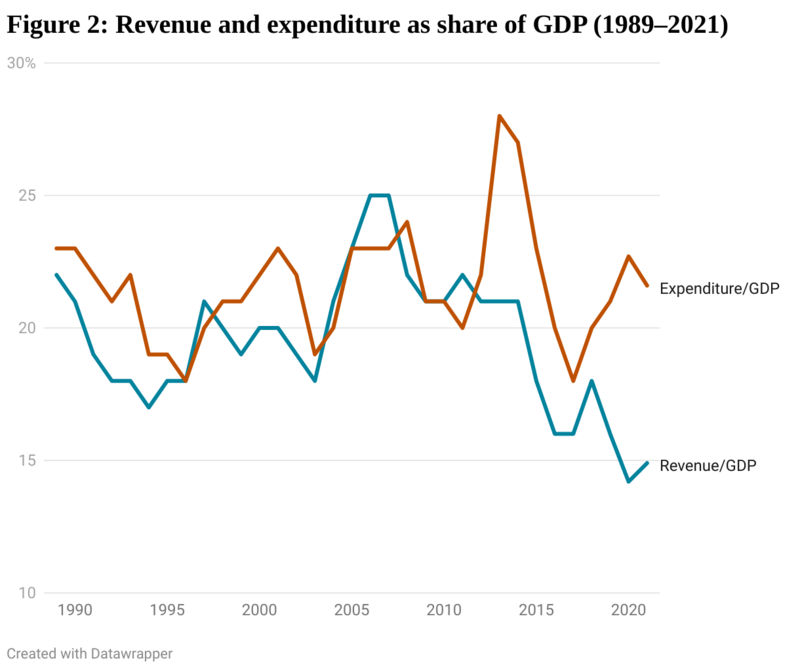
Second, after two years of negative growth, revenue grew strongly, by 9.7% after inflation, or from 14.2% of GDP in 2020 to 14.9% in 2021. This is more than the target in the government’s ambitious plan to achieve a balanced budget in 2027, which requires 7% annual revenue growth.
The revenue increase in 2021 was largely driven by mining and petroleum taxes, reflecting higher commodity prices. Grants (foreign aid) also increased by 47%, indicating strong support from foreign governments and multilaterals during COVID-19, including the first budget support grant after two decades from Australia.
Third, the fiscal deficit fell from 8.6% of GDP in 2020 to 6.7% in 2021. This reflects the revenue growth noted above, as well as expenditure restraint. Expenditure grew in 2021 by slightly less than the rate of inflation. As a share of GDP, expenditure fell from 22.7% in 2020 to 21.6% in 2021.
However, despite these promising indications, PNG is far from achieving a fiscal recovery. The basic budget problem that PNG faces is a structural gap between expenditure and revenue. As the next graph shows, expenditure now hovers above 20% of GDP, and revenue around 15% of GDP.
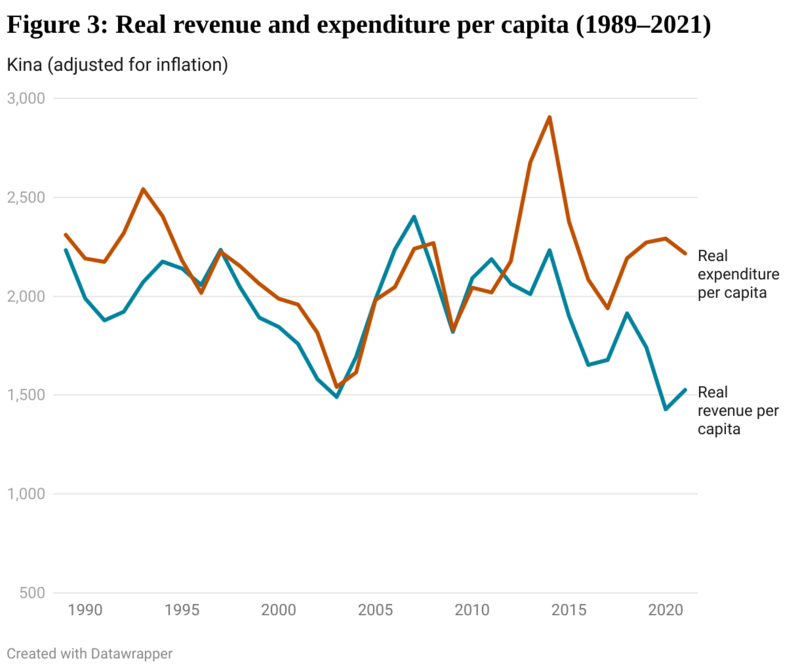
This is not only an issue for debt sustainability, but also for service delivery. PNG has a rapidly growing population. It is useful to divide revenue and expenditure by the population, as the next graph does. Adjusting for inflation, expenditure per capita in 2021 was around its long-term average of K2,200 (in 2021 prices). But revenue per capita was about K1,500, around its lowest level for three decades. With falling revenue per capita, it will not be possible to support expanded education, health and roads spending.
A lot more work needs to be done. Revenue is still below its pre-COVID level. Adjusting for inflation, revenue in 2019 was K14.9 billion (in 2021 prices); in 2021, it was only K13.9 billion.
While recovery from the COVID-19 downturn will take time, reforms are also needed. The worst revenue performer is dividends from state-owned enterprises (SOEs). Outside of mining and petroleum, the SOEs paid no dividends at all for the 2021 fiscal year. This is not a new issue. The 2019 and 2020 fiscal years also saw zero dividends coming from SOEs.
With their poor performance and estimated consolidated debt of 5.1 billion kina, it is perhaps unrealistic to expect much more from the non-resource SOEs. But Ok Tedi Mining Limited (OTML) only contributed K81 million to the budget, down from K370 million the previous year. A note in the budget indicates that most of OTML dividends went to Kumul Minerals Limited rather than the budget, another case of questionable diversion of funds.
The National Fishery Authority also paid nothing to the budget against a target of K146 million, despite being flush with funds from the auctioning of fishing licences.
On the expenditure side, while, as mentioned earlier, the salary bill was under control relative to earlier years, expenditure on salaries still went over budget by K180 million. The salary bill for MPs' salaries increased by K8 million from K71 million to K79 million. There was a spike in the unclassified or ‘other’ portion of the salary bill, which increased from K16 million in 2020 to K73 million in 2021, raising questions of transparency and accountability.
In conclusion, the final budget outcome for the 2021 fiscal year shows strong growth performance in revenue collection and constraint over spending with lower deficits compared to 2020 outcomes. Despite these promising signs, it’s too early to say PNG has turned the fiscal corner. The large structural gap between revenue and expenditure existed before COVID-19, and closing it will not be easy.
The PNG Budget Database has been updated to reflect the 2021 Final Budget Outcome figures. (see devpolicy.org for hyperlinks to these).
Disclosure: This research was undertaken with the support of the ANU-UPNG Partnership, an initiative of the PNG-Australia Partnership, funded by the Department of Foreign Affairs and Trade. The views are those of the authors only. This article appeared first on Devpolicy Blog (devpolicy.org), from the Development Policy Centre at The Australian National University. Kingtau Mambon is an economics tutor at the University of Papua New Guinea School of Business and Public Policy (SBPP). Stephen Howes is the Director of the Development Policy Centre and a Professor of Economics at the Crawford School.
Papua New Guinea in 2022
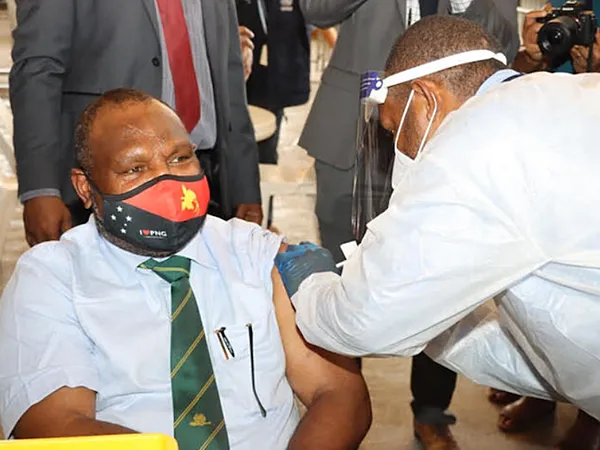
Prime Minister James Marape receiving a COVID-19 vaccine in April 2021 (PNG PM Media)
Article by Stephen Howes
National elections will be held in PNG in the middle of this year. Elections are held every five years, and are very popular events. Though voting is voluntary, voter turnout is just below that of Australia, where voting is compulsory. An extraordinary number of political candidates compete for office. The average number of candidates per seat has grown from eight in 1977 to 30 in 2017, surely a global record.
111 men but no women were elected in the 2017 elections. It is possible (though increasingly unlikely) that special measures will be put in place in the next few months so that that result is not repeated in 2022. If not, the only remaining hope is that at least a few of the growing number of women who stand at elections are successful at the hustings.
It is impossible to predict election results, as there are no opinion polls, and party structures are very fluid. But James Marape, Prime Minister since 2019 when he ousted Peter O’Neill in a mid-term vote of no confidence, is the favourite, simply because he is the incumbent.
In each of the last three elections, the incumbent Prime Minister has kept his job. This is because PNG law was amended at the turn of the century to require that the party with the most members of parliament (MPs) elected be given the first chance to form a coalition of government. MPs are normally attracted to the party of the prime minister. Currently, Marape’s party, PANGU, has 34 MPs, almost three times the size of the next party. There is a high turnover of MPs, but even if there is a swing against it, PANGU will likely emerge from the elections as the biggest party, giving Marape first go at the top job.
Whoever wins the elections will have to deal with two key issues. One is COVID-19.
Vaccination rates increased in PNG in October and November as COVID-19 took off, but with very high levels of vaccine hesitancy, by the latest estimate only 2.5% of the population is fully vaccinated. PNG will have to navigate 2022 without significant vaccine coverage. COVID-19 hit PNG hard in the second half of 2021, and it must be highly likely that there will be another large wave associated with the introduction of the Omicron variant and perhaps election campaigning.
The other issue facing the country is the desperate need to raise economic growth and create more jobs. COVID-19 is itself an economic problem, and the low level of vaccination in PNG is likely to hinder labour mobility, trade and investment. There might also be further internal lockdowns.
While COVID-19 has been bad for growth, it was already sluggish before the onset of the pandemic. In the absence of data on gross national income and given the enclave nature of the extractive (resource) sector, non-resource gross domestic product is the best measure of national economic activity. From 2014 to 2019, this grew in real terms by only 0.9 per cent a year on average. The budget projects this to accelerate to an annual average of 4.4 per cent from 2021 to 2027. How is unclear.
Perhaps one of the various resource projects currently being negotiated will be finalised within this period and its construction will give the economy some much-needed stimulus. But with all the uncertainty around the projects currently under discussion, the government wisely isn’t counting on this.
Growth in government expenditure this year, including much needed health expenditure increases, will help economic growth, but PNG is running record deficits to support expenditure in the face of COVID-19. Rapid expenditure growth cannot be sustained. While the latest budget allows for a 3.5 per cent increase in expenditure after inflation in 2022, it doesn’t allow for any subsequent expenditure growth after that until 2027.
The biggest drag on growth since 2014 has been foreign exchange shortages, which remain a problem to this day. In annual surveys, PNG’s business leaders have listed foreign exchange as one of their top four worries every year between 2014 and 2021, and often as their leading concern.
PNG’s central bank has been content to ration foreign exchange to protect the exchange rate and its foreign exchange reserves. The government recently amended the Central Banking Act to require the Bank of Papua New Guinea to take account of the growth as well as the inflationary consequences of its policies. Given the disastrous impact of foreign exchange rationing on growth in recent years, it is hoped that this encourages the Bank of Papua New Guinea to change tack and eliminate foreign exchange rationing.
Ultimately, whoever wins the 2022 election is going to find themselves in the invidious position of having to exercise fiscal restraint while trying to accelerate economic growth. It won’t be easy.
This is a revised version of an article that first appeared on East Asia Forum. Disclosure: Last year the author served on the PNG Independent Advisory Group (IAG) which made recommendations in relation to the Central Banking Act mentioned above. For details, see the IAG website. This article appeared first on Devpolicy Blog (devpolicy.org), from the Development Policy Centre at The Australian National University. Stephen Howes is the Director of the Development Policy Centre and a Professor of Economics at the Crawford School.
The politics of free education in PNG
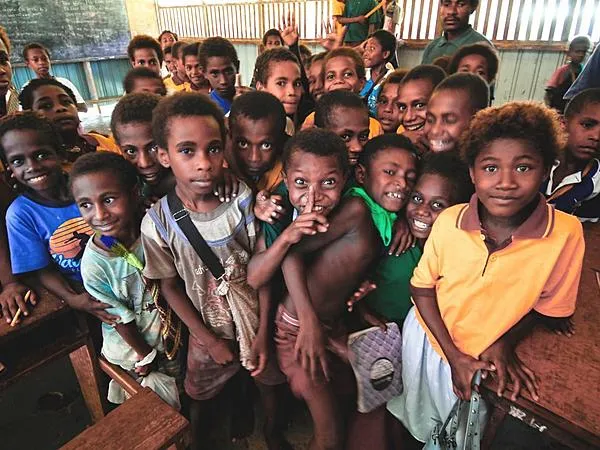
Photo:Students in Kimbe West Britain PNG
Article by Grant Walton and Husnia Hushang
It’s back! This year Papua New Guinea (PNG) will implement another fee-free education policy.
In June 2021, the government announced that, for the fifth time in PNG’s history, parents will no longer have to pay school fees to send their children to school. This new policy is a significant backflip for Prime Minister James Marape’s government; in 2019 Marape announced the abolition of the country’s long-running fee-free education policy, the Tuition Fee Free (TFF) policy.
The new policy is to be welcomed, particularly given that many Papua New Guineans have been hit hard by the economic fallout of COVID-19. However, any initial optimism must be tempered when considering previously unsuccessful attempts to sustain fee-free education policies in the country (three of the four previous attempts lasted no longer than one year). The question is, once implemented, how can the new policy maintain political and, by extension, financial support?
To help answer this question, it is worthwhile looking at why previous attempts to introduce fee-free education in PNG faltered. In a recent journal article, we examine the rise and fall of political support for the TFF policy (2012–2019), PNG’s longest running fee-free education reform.
Fee-free education was held up as one of the then Prime Minister Peter O’Neill’s flagship reforms. However, by examining publicly available documents, including over 10 years of budgetary and policy papers, we show that political support for the TFF policy started to decline soon after it was introduced. Between the 2012 and 2019 budgets, in real terms, allocated funding fell by almost 30%. As a proportion of the overall budget, the percentage of funds allocated for education subsidies fell from 5.9% in the 2012 budget to 3.8% in 2019.
We show that this decline in financial and political support for the TFF policy during O’Neill’s tenure was accompanied by a steady shifting of administrative powers and funding from national to subnational governments. This included passing the District Development Authority Act 2014 (which increased the autonomy of district governments), and transferring responsibility for the administration of the TFF policy to five select provinces (Milne Bay, Enga, Morobe, East New Britain and New Ireland), starting with Enga in 2014. The government also increased funding for provinces and district governments through, for example, constituent development funds (known as Services Improvement Program funds), transferring 30% of the TFF subsidy to districts, and increasing provincially-controlled educational function grants.
By the time Marape took the reins, the national government (as well as local schools) had lost control over much of the TFF subsidy and other funding designed to aid its implementation.
Both Marape and his treasurer Ian Ling-Stuckey said the government abolished the TFF policy because of the state of the economy they inherited from the O’Neill-led government, levels of corruption associated with the policy, and concerns about education quality, attrition, graduate opportunities and parental responsibility (some feared that not paying fees made parents less inclined to engage with schools). While there is a degree of truth to all of these concerns, it is also true that the new Marape government, initially at least, significantly cut the education subsidy while continuing to increase funding to subnational governments. The Marape government also promised to retain agreements made with the five provinces (Milne Bay, Enga, Morobe, East New Britain and New Ireland) that the O’Neill government had allowed to manage (previously national) government school fee grants/subsidies, along with an additional three (East Sepik, Northern and Eastern Highlands).
In other words, Marape ultimately prioritised subnational administrations over national fee-free education.
There are good arguments for shifting administrative, political and financial power to lower levels of government. Still, many scholars note that, to ensure equity and a coordinated approach, fee-free education policies work best when they are centrally administered and resourced. In PNG, many subnational governments, particularly districts, do not have the capacity to effectively manage education funds.
In our paper, we go into far more detail about how policy-makers and others can anticipate and respond to arguments that are often raised against fee-free education policy (including that they encourage laziness amongst parents). One key takeaway is that, if PNG is to introduce a more sustainable fee-free education policy, it will be crucial that politicians are able to resist calls to decentralise the management and funding of the policy to lower levels of government – particularly where subnational governments lack the capacity to manage devolved funds.
Subnational governments should play a role in delivering education policy, but not to the detriment of national fee-free education.
Recently, there have been some signs that the government’s new education policy might be trying to strike the right balance. The policy allocates 15% of the education subsidy for provinces and districts to procure teaching and learning materials. This is half of what was earmarked for districts under the TFF policy.
Still, politicians in PNG are incentivised to channel resources into subnational administrations because they are better able to distribute funding to their supporters and, in most cases, less likely to be held accountable. Given this, the national government will likely continue to face pressure to redirect funding and administrative power to subnational governments. Resisting this pressure, and striking the right balance between central and subnational funding and administration, is all the more important given that, in the 2022 budget, funding for the new policy – supported by $35 million of Australian aid – is 34% less than the O’Neill government allocated for the TFF policy in 2012.
This blog is based on an article in Asia & the Pacific Policy Studies journal, The politics of undermining national fee-free education policy: Insights from Papua New Guinea by Grant Walton and Husnia Hushang. All articles in the journal are free to read and download.
Disclosure: This research was supported by the Pacific Research Program, with funding from the Department of Foreign Affairs and Trade. The views are those of the authors only. This article appeared first on Devpolicy Blog (devpolicy.org), from the Development Policy Centre at The Australian National University.
Dr Grant Walton is a Fellow at the Development Policy Centre and Chair of the Transnational Research Institute on Corruption and the author of Anti-Corruption and its Discontents: Local, National and International Perspectives on Corruption in Papua New Guinea.
Husnia Hushang is a School Administrator at the Research School of Economics, and a casual Research Assistant at the Development Policy Centre at the Crawford School of Public Policy, Australian National University. She has a Masters of Public Policy and a Graduate Diploma of Public Administration from the ANU, and a Bachelor of Law and Political Science from Kabul University.
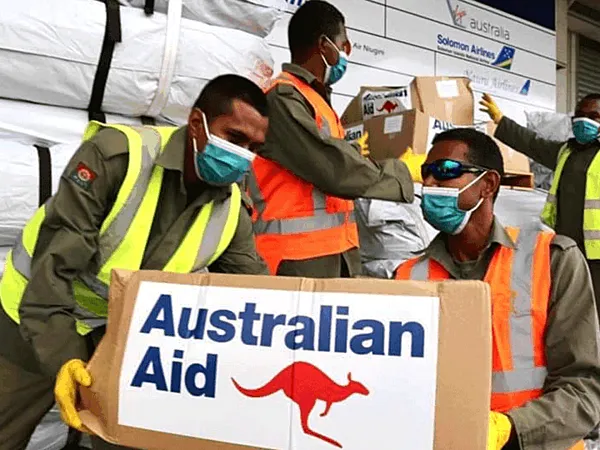
Foreign aid set to be cut next year to below pre-pandemic levels
Photo credit: Australian High Commission
by Stephen Howes
When the COVID-19 pandemic hit, the Australian government reversed its earlier policy of cutting aid, and started to increase it. Aid increased from 2019/20 (before the pandemic) from $4.29 billion to $4.56 billion in 2020/21 (the first year of the pandemic). (All amounts are adjusted for inflation, and expressed in 2021 prices.) But this year, the government started to cut aid again, not all the way back to its pre-pandemic level but close to it.
The budget for aid in 2021/22 is $4.34 billion, not much more than its 2019/20 level. According to the forward estimates, and assuming that the budget is brought down before the federal elections next year, 2022/23 aid will be at only $4.1 billion. This will not only be lower than aid was in the year immediately prior to the pandemic, but the lowest level of aid during any year since the Coalition took office in 2013.
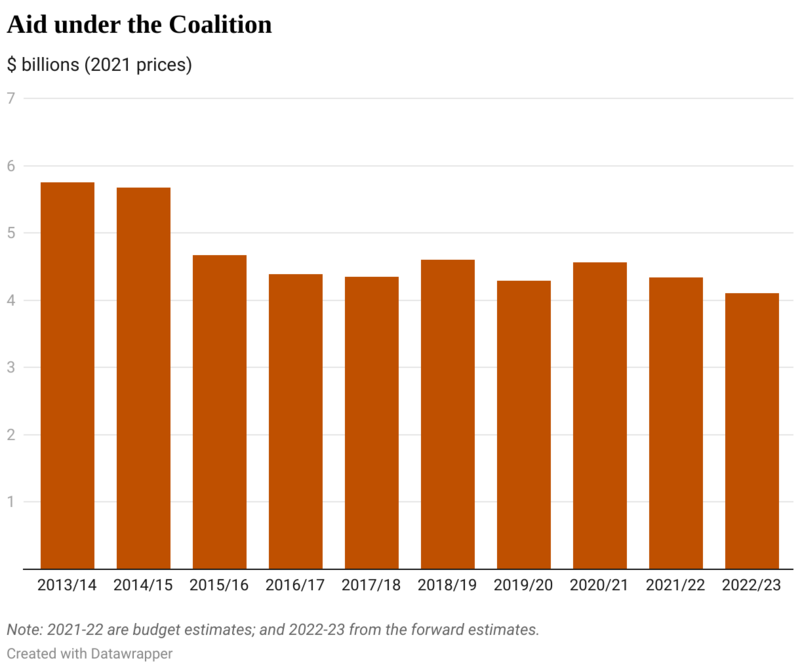
We are heading towards this outcome because the government’s COVID-19 aid response was designed on the basis that the pandemic would be short-lived. For example, the Pacific COVID-19 Response Package allocated an additional $200 million in 2020/21 and $100 million in 2021/22. With the additional pandemic-related funding petering out, and no real increase in the underlying or “core” aid budget, total aid is slated to fall.
This makes no sense at all. Clearly the pandemic is taking a lot longer to resolve than was hoped. One good measure of how far countries are from returning to normality is their vaccination rate. After all – as has been endlessly repeated in Australia – vaccination is the only way out.
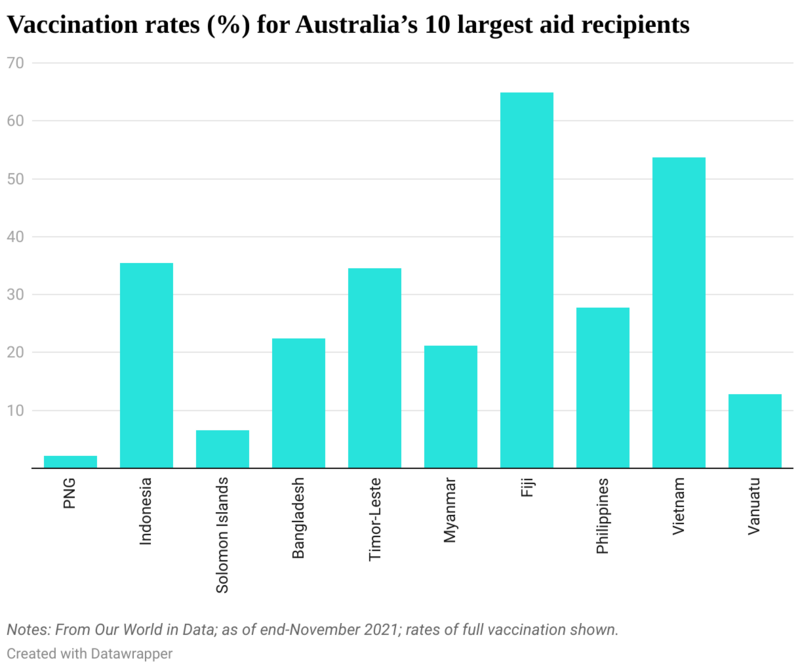
The weighted average vaccination rate for the top ten recipients of Australian aid is just 20% (weighted by their share of total top ten aid). That compares to 73% for Australia, so it is less than one-third.
For two of our top ten aid recipients, the vaccination rate is less than 10% (PNG and Solomon Islands), and there are only two where it is greater than 50% (Fiji and Vietnam).
There are any other number of reasons why it would make sense to increase aid. Countries need support not only for vaccination, but for economic recovery. There are numerous other global crises that Australia should be supporting and isn’t, such as the African famine/drought, and the plight of refugees whose food rations have been cut. Public opinion seems to have become more favourable to aid. We have just committed to spend more aid on climate change. And we have become one of the least generous rich country donors.
Above all though, there is the simple logic that more aid is needed during the pandemic (as the government itself acknowledged by providing extra aid), and that the pandemic is taking longer to resolve than expected. The unavoidable conclusion is that more aid will need to be provided than originally expected.
This logic is surely on its own compelling enough to prevent next year’s aid budget being brought below pre-pandemic levels and becoming this government's lowest foreign aid budget ever.
Disclosure: This research was undertaken with the support of The Bill & Melinda Gates Foundation. The views represent those of the author only.
Caption: Greeting the arrival of an Australian funded COVID-19 support package, Solomon Islands (DFAT/Flickr)
This article appeared first on Devpolicy Blog (devpolicy.org), from the Development Policy Centre at The Australian National University. Stephen Howes is the Director of the Development Policy Centre and a Professor of Economics at the Crawford School.
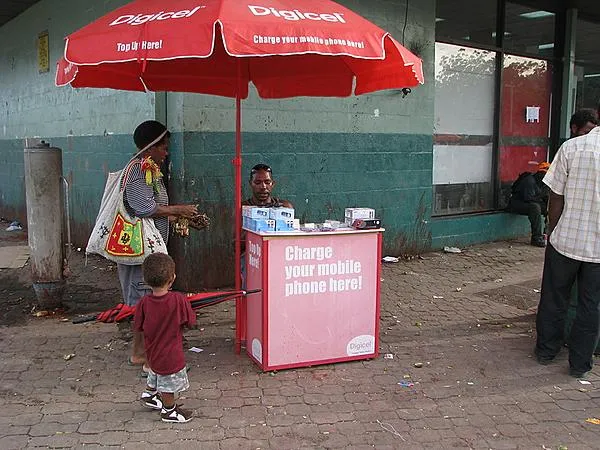
Australia buys Digicel, PNG’s mobile monopoly
Photo credit: Devpolicy
by Stephen Howes
Yesterday, Telstra announced that it was buying Digicel Pacific. Telstra itself is only paying $270 million, and the Australian government $1.33 billion. Yet, Telstra is obtaining 100% ownership. The deal is certainly an attractive one for Telstra. But does it make sense for Australia, and for the Pacific?
Digicel has had a transformational impact in the Pacific, but now has too much market power. As the Telstra release explains, it holds the dominant position in all the Pacific countries in which it operates, except for Fiji, where it is in second place.
In Papua New Guinea, which I know best, and which is by far Digicel's biggest market, the company has a 92% share of the mobile phone market. That makes Digicel effectively a monopoly in PNG. And that is why it is so profitable: like any monopolist, it exploits its market power.
Australian and PNG researchers have been tracking mobile internet prices in PNG since Australia gifted it a new underwater cable . Their conclusion is that since the completion of that cable in December 2019 to today there has been no decrease in mobile internet prices. The reason is simple: the lack of retail competition.
Michelle Nayahamui Rooney, Martin Davies and I last year exposed Digicel PNG’s predatory loan scheme. Digicel lends phone credit to its customers. They pay it back when they next top up. Our estimate is that Digicel made a 17% return from such loans every week, which is equivalent to an unbelievable 351200% a year.
Is this really the way in which Australia want to engages in the Pacific – owning an enterprise that keeps prices high for consumers, and rips them off when they are desperate to make a call?
Any monopolist is necessarily engaged in a battle between the consumer and their profits. At some point, Telstra will end up going toe-to-toe with the PNG telecom regulator, NICTA, as Digicel has done several times. It’s going to be awkward for both Telstra and the Australian government.
Many will welcome the investment as a sign of Australian commitment to the Pacific. However, if we want to invest in the telecom sector in the Pacific, we should be backing alternatives to Digicel, to push prices down and improve services, not buying out the dominant player. Amalgamated Telecom Holdings based in Fiji is the Pacific’s second biggest telecom provider. It is currently planning to enter the PNG mobile market with support from the Asian Development Bank. This is the sort of investment we should be financing.
That Australia has bought Digicel shows the extent to which the Pacific is now viewed through a China lens. That’s unfortunate. China is a massive economic power. Its companies will have increasing stakes in economies around the world. That is a fact we have to accept.
The Australian government also needs to decide if its only goal is to counter China or if it is still seeks to promote Pacific development. When I was AusAID's Chief Economist, Digicel was the new kid on the block in the Pacific, and it was successfully challenging state-owned telcos that until then had been dominant. In 2006, in Foreign Minister Alexander Downer's flagship Pacific 2020 report, we wrote glowingly about the competition that various Pacific countries had recently started allowing in the mobile phone sector. Our analysis was right then, and remains relevant today. Yet here we are, in 2021, doing the opposite: rather than supporting greater competition in the telecom sector, subsidising the purchase of the incumbent monopolist.
The decision to buy Digicel Pacific should be reversed. If it is too late for that, the Australian government should at least – in return for all its cheap and risk-reducing finance – oblige Telstra to operate Digicel for the benefit of the people of the Pacific rather than solely for its shareholders through an agreement that makes it clear that the Australian company is not only expected to return the cheap loan it has been given, but also reduce prices, and end rip-offs.
This article appeared first on Devpolicy Blog (devpolicy.org), from the Development Policy Centre at The Australian National University. Stephen Howes is the Director of the Development Policy Centre and a Professor of Economics at the Crawford School.
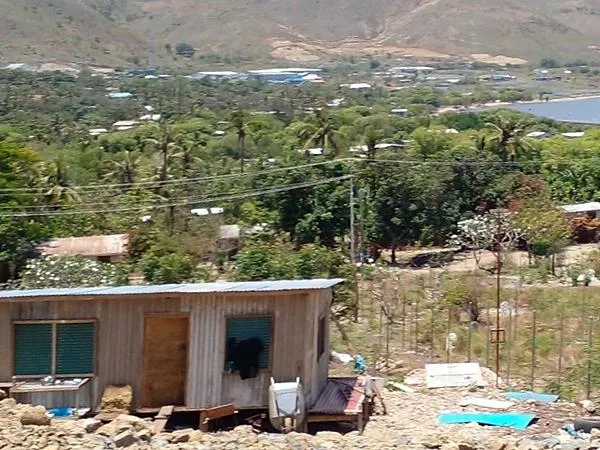
Transformation of a Port Moresby settlement
Photo: Joyce Bay settlement (Desmond Narongou)
by Desmond Narongou
Joyce Bay settlement, formerly known as Horse Camp, is a notorious settlement in Port Moresby, Papua New Guinea (PNG). It has been known for criminal activity, and as a place where many criminals live.
The settlement is located in the Port Moresby South Electorate of the National Capital District, and is one of the oldest settlements in the city. The community includes people from Gulf Province and at least 11 other ethnic groups from throughout PNG. The population was estimated at more than 10,000 in 2013, and is believed to be around 13,000 now. The rapid increase in the population (from about 7,000 in the year 2000) reflects an influx of migrants from rural to urban areas, seeking employment opportunities and access to improved health and education services.
Over the last few years, some major changes have taken place within the community, which have brought radical shifts to people’s mindset and behaviour. New infrastructure development, and projects providing opportunities for youths and business development, have contributed to a transformation for the Joyce Bay settlement.
According to a report by the Asian Development Bank, the Joyce Bay community had limited livelihood options in 2013. The most common jobs were security guard for males and shop assistant for females. Some women worked as market vendors, selling fresh food brought in by producers from the outskirts of Port Moresby. There were a handful of skilled people such as carpenters, plumbers and painters, who were engaged in ad hoc contracts. Wages were low, with no system to enforce minimum wages for casual or part-time workers. These workers also had limited access to credit.
Starting in 2013, the Ginigoada Foundation, with City Pharmacy Ltd and the National Capital District Commission (NCDC), has opened up opportunities for youths, and others, to attend financial literacy training and small business training. This has empowered them to venture into new business activities to improve their lifestyle and sustain themselves.
In that same year, Joyce Bay underwent major road works, providing much needed access to transport within the settlement after decades without. This was funded by Moresby South District Development Authority and the NCDC. This has paved the way for other infrastructural developments to take place, including a sewerage system and water supply.
In 2016, a local community hall was constructed. The community hall has a conference room, store room, kitchen and toilet. It also has a multipurpose sports court that can be used for community events.
In 2019, water company Eda Ranu (now merged with Water PNG) and Kumul Consolidated Holdings commissioned a multimillion kina Joyce Bay Sewage Treatment Facility, which was funded by the PNG government and the Japanese aid agency JICA.
A number of local churches were also established, during the early 2000s, including my church.
Taken together, this is a big impact project situated in the heart of the community. It has been championed by the local MP, Justin Tkatchenko, who is keen on rapidly transforming his electorate.
Alongside these positive developments, I’ve observed changes in people’s behaviour and attitudes. Youths have been kept busy with sports, which reduces thoughts of engaging in illegal activities. The church has also attracted a lot of youths to its programs and activities, which has contributed to the big improvement in the community.
When I came to Port Moresby in 2018, I met up with some of the boys from my church. Joe Alfred, Paul Kore and Sasae Ray are some of my best friends, and have been living in the area since the 1980s when their families migrated from Gulf Province. I asked them about the stories I heard about the community, and they said it was far worse before than it was now.
Joyce Bay was a no-go zone, and I was so afraid to go there myself for our church fellowship. After my first visit, I was more nervous and afraid and had to ask my friends to escort me to and from the bus stop and the church. Fast forward to today, and I’ve spent three years moving around the Joyce Bay community every weekend. I’ve witnessed the improvements as well as heard about them.
In Joyce Bay, there are a lot of challenges which are yet to be overcome, for example, in terms of good water supply and other sanitary solutions to improve the health and hygiene of the community, and improved drainage as the Joyce Bay area is subjected to flooding during the rainy season. Unemployment remains a challenge in the community. But the future looks much brighter for Joyce Bay inhabitants.
by Desmond Narongou
Joyce Bay settlement, formerly known as Horse Camp, is a notorious settlement in Port Moresby, Papua New Guinea (PNG). It has been known for criminal activity, and as a place where many criminals live.
The settlement is located in the Port Moresby South Electorate of the National Capital District, and is one of the oldest settlements in the city. The community includes people from Gulf Province and at least 11 other ethnic groups from throughout PNG. The population was estimated at more than 10,000 in 2013, and is believed to be around 13,000 now. The rapid increase in the population (from about 7,000 in the year 2000) reflects an influx of migrants from rural to urban areas, seeking employment opportunities and access to improved health and education services.
Over the last few years, some major changes have taken place within the community, which have brought radical shifts to people’s mindset and behaviour. New infrastructure development, and projects providing opportunities for youths and business development, have contributed to a transformation for the Joyce Bay settlement.
According to a report by the Asian Development Bank, the Joyce Bay community had limited livelihood options in 2013. The most common jobs were security guard for males and shop assistant for females. Some women worked as market vendors, selling fresh food brought in by producers from the outskirts of Port Moresby. There were a handful of skilled people such as carpenters, plumbers and painters, who were engaged in ad hoc contracts. Wages were low, with no system to enforce minimum wages for casual or part-time workers. These workers also had limited access to credit.
Starting in 2013, the Ginigoada Foundation, with City Pharmacy Ltd and the National Capital District Commission (NCDC), has opened up opportunities for youths, and others, to attend financial literacy training and small business training. This has empowered them to venture into new business activities to improve their lifestyle and sustain themselves.
In that same year, Joyce Bay underwent major road works, providing much needed access to transport within the settlement after decades without. This was funded by Moresby South District Development Authority and the NCDC. This has paved the way for other infrastructural developments to take place, including a sewerage system and water supply.
In 2016, a local community hall was constructed. The community hall has a conference room, store room, kitchen and toilet. It also has a multipurpose sports court that can be used for community events.
In 2019, water company Eda Ranu (now merged with Water PNG) and Kumul Consolidated Holdings commissioned a multimillion kina Joyce Bay Sewage Treatment Facility, which was funded by the PNG government and the Japanese aid agency JICA.
A number of local churches were also established, during the early 2000s, including my church.
Taken together, this is a big impact project situated in the heart of the community. It has been championed by the local MP, Justin Tkatchenko, who is keen on rapidly transforming his electorate.
Alongside these positive developments, I’ve observed changes in people’s behaviour and attitudes. Youths have been kept busy with sports, which reduces thoughts of engaging in illegal activities. The church has also attracted a lot of youths to its programs and activities, which has contributed to the big improvement in the community.
When I came to Port Moresby in 2018, I met up with some of the boys from my church. Joe Alfred, Paul Kore and Sasae Ray are some of my best friends, and have been living in the area since the 1980s when their families migrated from Gulf Province. I asked them about the stories I heard about the community, and they said it was far worse before than it was now.
Joyce Bay was a no-go zone, and I was so afraid to go there myself for our church fellowship. After my first visit, I was more nervous and afraid and had to ask my friends to escort me to and from the bus stop and the church. Fast forward to today, and I’ve spent three years moving around the Joyce Bay community every weekend. I’ve witnessed the improvements as well as heard about them.
In Joyce Bay, there are a lot of challenges which are yet to be overcome, for example, in terms of good water supply and other sanitary solutions to improve the health and hygiene of the community, and improved drainage as the Joyce Bay area is subjected to flooding during the rainy season. Unemployment remains a challenge in the community. But the future looks much brighter for Joyce Bay inhabitants.
This article appeared first on Devpolicy Blog (devpolicy.org), from the Development Policy Centre at The Australian National University. Desmond Narongou is a freelance researcher and writer. He graduated with a Bachelors Degree of Commerce in Information Technology from PNG University of Technology in 2017.
Human cost of the Pacific’s COVID-19 recession
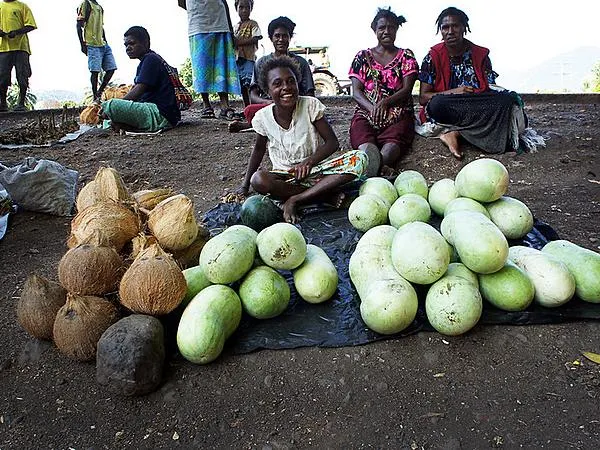
Women selling coconut and bottle gourd in Intoap, PNG (P. Mathur/Bioversity International/Flickr)
The socio-economic impacts of COVID-19 are devastating communities in the Pacific and Timor-Leste as much as the virus itself, and sometimes to an even greater extent.
World Vision surveyed 752 households (with an average of six people per household) in Papua New Guinea, Solomon Islands, Timor-Leste and Vanuatu in late 2020 to better understand the secondary impacts of the pandemic at the community level. The sample size was relatively small (because the survey was done in an emergency context under government restrictions), but still the results provide a valuable insight into the deep and sometimes unexpected knock-on effects of COVID-19 in the region.
Unsurprisingly, loss of livelihoods was the number one concern for the households surveyed. Almost 60% of respondents had either lost their job, lost income, or resorted to alternative sources of income due to the economic impacts of the pandemic. The top five reasons cited by households for this loss of income were reduced demand for goods/services (29%), closed markets (20%), lack of access to livelihood inputs such as seeds and materials (18%), movement restrictions (15%), and transport limitations (10%).
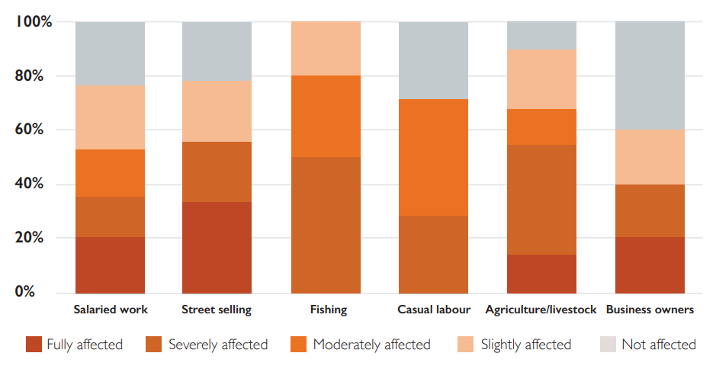
These disruptions are crippling the same industries that are the traditional drivers of Pacific economies – tourism, agriculture, small- and medium-sized business and money sent home by seasonal workers. Street vendors and farmers have been the hardest hit, with 56% of vendors and 55% of agriculture and livestock workers saying their work was fully or severely affected by the pandemic in the two weeks before the survey.
Extent of COVID-19 impacts on livelihoods in the past fortnight (2020)
This data is consistent with concerns raised by the Lowy Institute that the Pacific has been particularly battered by the economic fallout of COVID-19 and that it could face a potential ‘lost decade’ of economic progress as a result. On current projections, average income per person in the Pacific will not recover to 2019 levels until 2028 unless a multi-year recovery package is urgently adopted.
Loss of livelihoods isn’t just affecting consumer activity; it is having significant ripple effects across Pacific societies. The ‘Pacific Aftershocks’ survey revealed the cruel choices families are forced to make as their incomes collapse, with households resorting to selling assets and even skipping meals to cope:
- Only half of households surveyed were able to fully meet their food expenses, with one in four (24%) skipping meals or eating cheaper meals since COVID-19
- More than half (51.7%) of households have drawn down on savings to cope with loss of income
- 5% of households had sold productive assets such as livestock or equipment
- 14% of households have sent their children to work to help make up for lost income
- 14% have engaged family members in begging or high-risk jobs
With tourism expected to be one of the last sectors to recover from the pandemic, there is a real risk that the Pacific could face its own version of ‘long COVID’ – a protracted, slow climb back to economic normality over the next decade, during which the socio-economic impacts above could become a type of ‘new normal.’ But this doesn’t have to be the case.
In the short-term (during the next six months), work is needed to urgently scale up social protection measures (such as cash and voucher assistance and, where this is not possible, food assistance) to help poor families with disrupted incomes meet their immediate needs. In many contexts across the Pacific region, assistance in the form of cash and vouchers minimises the distortion to markets while ensuring families do not resort to negative coping mechanisms such as eating less or forcing their children to work.
To build back better in the medium and longer-term (the next one to five years), a suite of initiatives should be deployed to stimulate the Pacific economy and rebuild livelihoods. This could include improving access to finance for small businesses, strengthening market systems so they work better for the poor, investing in women’s economic empowerment, and restoring environments through low-cost regenerative agriculture. As a mechanism to coordinate and drive this work, it is recommended all national and donor governments in the Pacific region, including Australia, work together to develop an Economic Recovery Compact – a roadmap to rebuild the regional economy in a way that leaves no one behind. By rebuilding livelihoods, starting at the bottom of the economic pyramid, donor and national governments can increase productive capacity, broaden the consumer base, and build resilience across the market system, all while supporting those who need it most.
Just as regional governments worked together to establish the Pacific Humanitarian Pathway on COVID-19, the region should again coalesce around the longer-term recovery effort – because a regional crisis like this requires a regional response.
For more information, see World Vision’s report Pacific Aftershocks: Unmasking the impact of COVID-19 on lives and livelihoods in the Pacific and Timor-Leste.
This article appeared first on Devpolicy Blog (devpolicy.org), from the Development Policy Centre at The Australian National University. Jonathon Gurry is World Vision Australia’s senior policy advisor, leading policy development on livelihoods, food security and climate change. He is a former lawyer with many years of international experience in the aid and development sector. Dane Moores is the Policy Manager at World Vision Australia where he oversees policy analysis and influencing on child rights, livelihoods and food security, conflict and fragility, and First Nations policy.

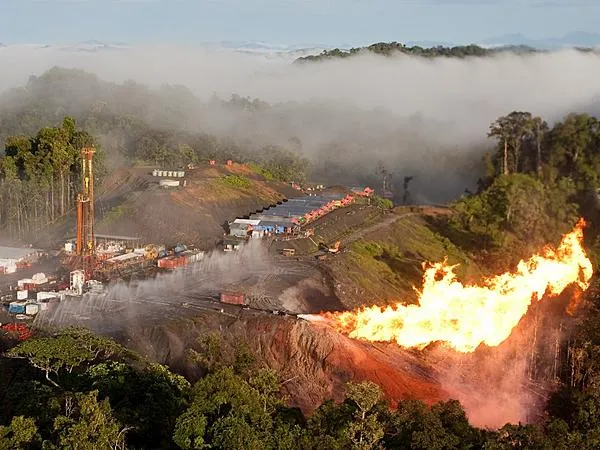
Evolving Papua (Elk / Antelope) LNG Project: From Prospecting to Gas Discoveries and to LNG Project Development
Background – Petroleum Industry in Papua New Guinea
The exploration for petroleum in Papua New Guinea has a long history which dates back to early 1900s. It began with a group of Australian geologists who first came in 1913 to PNG to investigate prospects of hydrocarbon on behalf of the Australian Government. Since then exploration activities went on without commercial discoveries until 1986 when Iagifu-Hedinia well was discovered. First commercial production commenced in 1992 with Kutubu coming on production followed by Gobe and Moran PNG reached a peak production of 150,000 barrels of oil per day in 1993 but since then it has been steadily declining as a result of natural depletion of the discovered oil resources.
While in search of oil large volumes of gas of commercial quantities have been discovered in the country. The gas reserves may be categorized based on three stages of maturity. Stage 1 gas include gas already in production, in particular, PNG LNG trains. State 2 of the gas include an estimated 15 tcf proposed for development. Papua LNG, P’nyang, Pasca and Stanley make up this component of gas. A further 7 tcf of mostly stranded gas fields retained under PRLs remain to be developed. This class of gas discoveries have no plan of development in the foreseeable future. In terms of proven, probable and possible (3P) gas reserves stand at 25.5 tcf while overall gas reserves potential is in order of 40 tcf. In relative terms PNG has more gas than oil.
Huge gas resources are the basis for building a gas industry in PNG and the Government has long-term perspective of building a gas industry in PNG. Having regard, a number of gas development proposals have been initiated and promoted by the developers for development.
PNG now hosts a world class LNG Project – the ExxonMobil led PNG LNG Project which commenced production in May 2014. The PNG LNG Project is the single largest investment that has ever occurred in the country. Not only that but it stands as the first gas project to be developed, and it serves as a catalyst for further gas development to take place in the country. PNG LNG has to date been the major source of revenue generation, infrastructure development, employment opportunities for many Papua New Guineans, training and skills transfer, community development, among others.
Among the proposals that have been looked at Papua LNG, P’nyang, Pasca, Stanley are among the proposed projects lined up for development. The country also has more than ten stranded gas fields under Petroleum Retention Licenses (PRLs). These discovered gas resources cannot be developed on standalone basis due to the nature of the volume content; insufficient for commercialisation and the gas fields are isolated meaning they sit away from any form of communication and infrastructure development. To develop them individually would be very costly and uneconomical.
Papua LNG Project
The Papua LNG Project has evolved from the prospecting stage, to the discovery of Elk/Antelope gas resources, to signing of the Papua LNG Gas Agreement and now to LNG development. The discovery of the Elk/Antelope gas resources which is located in the Gulf Province has given prominence to developing these gas resources in the country. The previous owner and operator InterOil proposed for a LNG project to be supported by the Elk/Antelope gas resources. Following the discovery of the gas resources several gas development schemes were announced by InterOil but none of the proposals advanced to development phase.
The country’s expectations for superior benefits from developing Papua LNG Project have been high. Why wouldn’t the country aspire to greater benefits from its premier resources – the gas resources? Such expectations have been on the back of “missed opportunities” from the first ever largest resource project – the PNG LNG Project that the country hosts. The general view among Papua New Guineans have been that any future gas resource development that followed the PNG LNG Project must generate superior benefits, higher and greater than those produced by the first LNG project. In order of the new gas projects proposed for development in the country Papua LNG has its nose in front of others. The recent signing of the Fiscal Stability Agreement re-affirms the parties’ commitment to progress the project to development stage.
Fiscal Stability Agreement
The companies expect the global economic environment to be right providing an economic environment conducive before they can commit to huge investments especially, investing in major resources projects. Economic conditions must be attractive enough for them to develop world class projects. The key factors such as oil price in which gas price is linked, gas markets and other conditions must be right as their movements can negatively or positively impact on return on investment. Unexpected global pandemics such as COVID 19 have devastative impacts on the petroleum industry. The petroleum industry is still trying to find its position from the impacts of the pandemic in 2020 and 2021.
At national level the role of the host Government is critical in the development of key resource projects such as Papua LNG Project. The companies’ desire is to see Governments providing fiscal, legislative, policy regimes and stability for investments to take place in the country. The Fiscal Stability Agreement signed on the 9th of January 2021 between the Independent State of PNG and the Papua LNG Project Participants re-affirm the Government’s commitment that it will not temper with the fiscal terms that were agreed between the parties in the Gas Agreement executed in April 2019. The Project Participants will make significant investments in developing the Elk/Antelope gas resources hence, they expect risk free environment. It is imperative on the part of the Government of PNG to ensure there are sufficient assurances and stability accorded to the companies during the development and operation phases of the Papua LNG Project.
In this respect, the assistance and co-operation of the project host government is critical for projects to be developed. The role of the Fiscal Stability Agreement is to provide sense of comfort and assurance on the part of the Government of PNG that it will commit to the terms agreed in the Gas Agreement and any future changes to the fiscal regime by the Government will not apply on the terms agreed for the Papua LNG Project. The Fiscal Stability Agreement is not a separate agreement from the Gas Agreement signed two years ago. It rather serves as an annexure to the Gas Agreement. The Fiscal Stability Agreement is part and parcel of the Gas Agreement. The Fiscal Stability Agreement is required to give confidence to the investors of the stability of the project. From the perspective of the Project Participants the Fiscal Stability Agreement should provide stability, sense of security and mitigate political and fiscal risks that may distort the delivery of the project.
The Elk/Antelope Gas Fields
The Elk/Antelope gas fields have their origins in one of the largest prospecting areas InterOil initially applied for in the late 1990s. The maximum number of blocks an applicant can apply for a prospecting license under the Oil and Gas Act 1998 is 200 blocks which equates to 16,000 square kilometres. A block is equivalent to nine kilometres by nine kilometres so 200 blocks would aggregate to 16,00km2. The original PPL that now hosts Petroleum Retention License (PRL 15) was top filled and PPL 238 issued to InterOil in March 2003 as a consequence of the Fiscal Incentives the Somare Government introduced at the time. The incentive package was introduced to encourage and reverse the dwindling exploration sector in the country. The incentives paid off resulting in reversing the fast declining exploration sector to one of active exploration sectors in the country.
InterOil’s primary focus in Papua New Guinea was to establish an oil refinery which it was successfully awarded the first Petroleum Processing Facility License (PPFL1) to develop and operate the Napa Napa Oil Refinery. While pursuing oil refinery project InterOil decided to enter upstream exploration sector. The areas InterOil applied for were “frontier” areas, not many companies were interested in. Many oil companies concentrated their efforts on the proven oil province; further west especially in the Southern Highlands, Hela and Western Provinces. Little did they know that this area was highly prospective with chance of major gas discoveries in the country. InterOil was convinced it would discover hydrocarbon and so it did after years of active exploration work.
The gas fields that underpin the Papua LNG Project sit in two gas fields namely Elk and Antelope. These gas fields were named after animals found especially in Canada since the original owners Phil Mulacek and Christian Vinson are Canadians. The Elk 1 well registered a gas discovery on 26th June 2006 in PPL 238 which later changed to PPL 476. On 01st May 2008, the Antelope 1 and Elk 4 wells registered gas discoveries in PPL 237/238 which later became PPLs 475 and 476 respectively. Subsequently, wells were drilled successfully in PPLs 237 and 238. These discoveries and further work that current Operator Total has undertaken since taking over the Elk/Antelope gas fields provide the foundation volume for the proposed Papua LNG Project.
In order to confirm the discovered gas InterOil engaged resource certification companies including GLJ and Knowledge Reservoir to provide assessment of the gas resources in the Elk/Antelope fields. In 2008 and 2009 GLJ concluded that the fields combined contained more than 8 tcf (trillion cubic feet) of gas and over 100 mmbbls of condensate contingent resources.
Upon receiving the reserve certification reports the Government of PNG needed second opinion so it engaged Gaffney Cline & Associates (GCA) to provide a 3rd party certification of the Elk/Antelope gas resources.
The GCA report produced total 2P recoverable sales gas resources in the Elk/Antelope fields of 6.5 tcf. However, GCA indicated that the above volumes did not take into account 5% CO2, fuel and flaring so the Department of Petroleum assessed that the saleable gas resources would be about 4.85 tcf when it took these qualifications into account. It was also recommended that further appraisal wells should be drilled to ascertain full extent of the reservoir and increase the level of confidence in the resource finds.
When Total took over operation of the project one of the key tasks was to work on improving the gas resources. The company undertook aggressive upstream work. The aggress efforts both the previous and the current operator have put into the upstream exploration including drilling and appraisal work programs further improved the discovered gas resources. The Gas Agreement clearly has more than the 8 tcf InterOil estimated at the time as the foundation gas underpinning the Papua LNG Project.
Petroleum Retention License (PRL 15) Award
The discovery of gas leading up to the declaration of location as per the requirements of the Oil and Gas Act 1998 enabled InterOil to successfully apply for a Petroleum Retention License over the blocks that contained the discovered gas resources. On 30th November 2010, InterOil was granted PRL 15 over the 9 blocks covering the Elk and Antelope gas fields. As required by the oil and gas law InterOil had submitted approved work program and expenditure proposals for implementation during the term of the PRL. InterOil, as the holder of PRL 15 committed to implementing work programs including additional wells, seismic and geoscience studies, social mapping, social mapping and marketing studies. The intent of a Petroleum Retention Licence is for the license holder to retain the discovered gas while further work is undertaken for commercialisation of the discovered resources.
In assessing an application for a PRL there must be an economics assessment justifying that the gas discovery is not commercial to develop thus it should be retained under a PRL requiring further commercialisation studies to be undertaken. It is to be noted that PRL 15 was granted having passed the commerciality test. The PRL provided the impetus to the license holder to retain the asset and further work continued.
Concepts for Developing of Elk/Antelope Gas Resources
The gas resources that InterOil discovered provide the resource base for development. InterOil since the discovery of the gas had started considering a number of development schemes to develop the Elk/Antelope gas. This led to the signing of the Project Agreement which was signed on 23rd December 2009 between the Independent State of Papua New Guinea and LNGL (Liquid Niugini Gas Limited). Under the agreement it was agreed that LNGL and InterOil would develop a 2 train 7.6 to 10.6 mtpa capacity LNG project.
The term of the Project Agreement was tied to the term of the Petroleum Development License (“PDL”), which is 25 years plus 20 years extension of the license. The Project Agreement, amongst other things, set out the fiscal terms to apply to the project. In summary, the key aspects of the project described in the Project Agreement constitute the following:
- To be a World Class Project (project size and scope of international scale and quality);
- To produce LNG using internationally recognised technology;
- To be operated by internationally recognised and reputable operator experienced in operating LNG liquefaction facilities and assets similar in size, scale and nature of the Project Assets
- To be located at, about or near the InterOil refinery, Napa Napa, Port Moresby or at such other location, provided that the State has approved such other location in writing; and
- To have a manufacturing capacity of between 7.6 million and 10.6 million tons of LNG per annum.
It was clear at the time that the intention was for this project to match the ExxonMobil-led PNG LNG Project in terms of scale, performance and quality and to be operated by a highly experienced, internationally reputable operator. On account of the similarity of the two LNG projects it was determined that the State would offer LNGL Project bag of fiscal terms similar to the ones offered to the PNG LNG Project.
However, for several years since the signing of the Gas Agreement InterOil did not secure a partner it was looking for. In fact, there were parties InterOil approached from mid-2009 with the objective of securing an operator but these efforts were not successful.
The delay was a cause for concern for the Government of Papua New Guinea. For example, the Minister for Petroleum and Energy and Secretary of the Department at the time sought clarification on the development of the project and the status on securing partner/operator of the project.
While search for a reputable partner to develop the project was going on announcements relating to the development of the project of different character in the Gulf Province were made. On 15th April 2010, InterOil announced that it would develop a condensate stripping project together with Mitsui & Co. Ltd of Japan using the Elk/Antelope gas. On the 28th of September 2010 it also announced that it would pursue small LNG projects with capacities of 2 to 3 mpta. Subsequently, InterOil announced smaller project concepts. InterOil further proposed a 50/50 gas development split with the State where it would acquire additional 27.5% interests on commercial terms, in addition to its legal right to a 22.5% participation interest in the project. As can be noted, the project had deviated from the original project concept outlined in the 2009 Gas Agreement largely owing to the fact that the project development concepts announced by InterOil were of small scale. None of the proposed development concepts were able to match the project concept described in the 2009 Gas Agreement.
InterOil and its partner LNGL had executed Heads of Agreement with Energy World Corporation Limited (“EWC”) and separately with FLEX LNG Limited and Samsung Heavy Industries for development of a floating LNG plant. The proposal comprised the following features:
- An initial land-based LNG plant of 2 mtpa comprising four trains of 0.5 mtpa;
- Additional trains of 2 mtpa to be added each year until a total capacity of 8 mtpa is achieved; A fixed floating LNG plant of 2 mtpa; and
- A condensate stripping plant.
However, none of these concepts were translated into gas projects. The same story remained throughout the period that InterOil had promoted the development of the Elk/Antelope gas resources since the signing of the Gas Agreement in 2009 until Total; the French oil giant appeared on the scene.
The Entry of Total SA as Operator of the Elk/Antelope (Papua LNG) Project
The efforts that InterOil had put in since the signing of the Gas Agreement finally paid off when a new partner Total was selected from among the oil majors known to many Papua New Guineans including ExxonMobil, Chevron, Shell, British Petroleum (BP) as well as other familiar names in PNG such as Oil Search, Talisman Energy, Horizon Oil and Santos. The new entrant Total was a new face in PNG. To be appointed a partner in the country’s Second LNG Project, especially to a company not familiar with PNG this French National Oil Company brought a new perspective to developing the country’s gas resources. Many of the people who followed InterOil’s final countdown of selecting a partner were most probably expecting some familiar names in PNG. Nevertheless, the key thing to note is that agreement between Total and InterOil followed an extensive international competitive bidding and evaluation process for development of InterOil’s interests in Papua New Guinea that InterOil had promoted since 2009. Under the agreement Total would lead the construction of the project and operate the proposed integrated LNG project. The parties further agreed that a final investment decision, reserves certification, basis of design and front-end engineering and design would follow.
Total in its own right is an undisputed oil major and LNG player but new to this part of the world as confirmed to Business Advantage PNG by Total’s Managing Director in PNG, Philippe Blanchard;
“When you are a French person like me, coming to work in PNG, it is like going to the other side of earth, working in an environment that has nothing in common with Europe. The Asia-Pacific region has a completely different mindset—challenges everywhere and, personally speaking, many things to discover. It’s a complete change to what I have been accustomed to in Europe or even Africa. It is really exciting”.
The company undoubtedly had set its plan to develop Elk/Antelope gas resources and so it successfully won the operatorship as well as acquisition of a major stake in the project. However, the transition was not as straight forward as it desired. Total had to overcome legal challenge from Oil Search Limited which claimed that the PNG based company had transacted a deal with InterOil and therefore had pre-emptive rights. The arbitration however found that this was not the case.
The commitment by Total to deliver the Papua LNG Project was demonstrated at the outset. A few months after its entry into PNG the Total’s Managing Director informed Business Advantage PNG this;
“We are experienced in LNG. We are present in the whole value-added chain of PNG projects from upstream assets, to building LNG trains and trading LNG products. We are the second actor after Shell in this business. We will take advantage of the experience and knowledge of all our partners to be able to deliver together a good project. So we want to put this arbitration period behind us and we want to fully restore the relationship with our co-venturers. We believe there is plenty to do to deliver the project and we need the energy of everybody”.
Mr. Philippe Blanchard further added that;
“We are committed to the project. We have already made a big investment before we entered the license. It is clear our interest is to deliver the project”.
It became apparent that the French oil major was destined to make an unprecedented impact on the country’s petroleum resources sector. The company was particularly focused on delivering the Papua LNG Project.
It was obvious from the outset of the takeover that the Elk/Antelope is a significant project in Total’s global portfolio and clearly this asset in Papua New Guinea provides an opportunity to grow and expand its business in the Asia-Pacific region. The acquisition of an interest in the Elk/Antelope project was a significant investment in large discovered resources which provides exciting opportunity for the French company to develop a new gas production and liquefaction hub in this part of the world. Clearly, the PNG asset added value to its long term player as a LNG player on the global stage.
Total’s acquisition of PNG asset did not stop at PRL 15. The company also had an option to take an interest in all of InterOil’s exploration leases in Papua New Guinea including PPLs 236, 237 and 238 which InterOil continued to operate at the time. The understanding between Total and InterOil was moreover to explore other business opportunities both in Papua New Guinea and elsewhere in the Asia Pacific region.
On project front Total quickly established a strong relationship with its joint venturers and strong support from the Papua New Guinea Government. This made Total settle in this part of the world where it hadn’t made much presence, and looked forward to developing the LNG project.
In the ensuing years that followed since its entry into the country’s oil and gas sector Total took over the operatorship of the Papua LNG Project. It also brokered formidable Joint Venture partnership with the existing players in PNG including ExxonMobil and Oil Search. Total has also worked with PNG’s National Oil Company – Kumul Petroleum in view of the State’s legal right to participate in the project. The State participation is formally exercised at the time of PDL award but it is important to establish some level of relationship with a key national partner Kumul Petroleum. The NOC, using its network and connection with the Government has played key role in progressing the Papua LNG Project to date. To successfully pull off major agreements such as the 2019 Gas Agreement and the Fiscal Stability Agreement Kumul Petroleum has played key role between the Project Participants and the Government in order for the parties to agree and execute such complex and important agreements.
The recently signed Fiscal Stability Agreement now paves way for a key milestone to be undertaken which is FEED (Front-End Engineering and Design Studies). FEED normally take up to 18 months but its completion will lead to developing Papua LNG Project. Further work included social mapping, landowner identification, environmental impact assessment, license and administration, among others. This will take the project to Project Sanction and reaching FID (Final Investment Decision).
Project Benefits
The recent execution of the Fiscal Stability Agreement signals that Papua New Guinea will host its second LNG project. This will be a world class LNG Project staged in the country and based on its magnitude the project is expected to generate multiple benefits, both direct and indirect. The direct benefits will be generated via the fiscal terms that have been negotiated in the Papua LNG Gas Agreement which was executed between the PNG State and the Total led Project Participants in April 2019. The Fiscal Stability Agreement signed in January 2021 between the parties confirms and provide the stability over the fiscal terms.
In Papua New Guinea the legislated fiscal regime for petroleum projects has been the basis for oil and gas investment in the country. The fiscal regime has also undergone numerous adjustments over the years. Nevertheless, the core elements remain to this point. The key features include production-based levies, the taxation of company profits and an additional profits tax that kicks in only when profits exceed a pre-determined level, particularly in the year in which the accumulated value of “net cash receipts” becomes positive and State participation. The new main features that have been introduced in the Papua LNG Gas Agreement include production levy and up to 5% DMO. The headline terms of the Standard regime are set out in the table below:
|
|
The main fiscal terms that make up the Standard terms comprises Corporate Tax, Royalty, Development Levy, Additional Profit Tax, Dividend Withholding Tax, Import Duty Tax, Export Duty and State Participation.
Despite the fact that Standard Fiscal Terms applicable to gas operations are legislated or defined in the Government policies each term is negotiated per project. The companies prefer exemptions and incentives awarded to them. The PNG LNG Project has an agreed set of fiscal terms which is applicable to the project. The Papua LNG Project will have the fiscal terms that were negotiated and agreed by the parties. Future gas projects will have specific fiscal terms negotiated and agreed between the State and the Project Participants.
Announcements made by the Government and the Project Participants following the signing of the Papua LNG Gas Agreement indicate that the parties have agreed on fiscal terms that may be best summarized as follows;
- Tax on integrated project basis, not segmented basis as the Papua LNG Project is envisaged to be development on the integrated basis
- The fiscal terms apply to all PRL 15 gas,
- Main fiscal terms including Corporate Tax, Royalty, Development Levy and APT to apply. But Import/Export taxes, Withholding taxes exempted as well as GST zero rated
- New fiscal devices introduced in the Papua LNG Project include Production Levy and DMO provision.
- State Participation at 22.5%
Direct project benefits to the State will be generated via the fiscal terms that have been agreed between the State and the Project Participants. However, as regards indirect benefits to the State there aren’t set formula based on which benefits from the project would be generated. Benefits such as schools, health facilities, roads, community projects, infrastructure projects and pin off business activities are counted as indirect benefits. The fact is that the indirect benefits do not have defined formula in which the benefits will be determined. Important Government policies in relation to indirect benefits are not defined. Recently, the Government has attempted to develop policies around Domestic Market Obligation (DMO), National Content Policy and Third Party Access but these policies are yet to be developed and approved by the Government. Given the obvious absence of fully defined policies it is impossible to quantify the indirect benefits to the State. This remains a grey area the Government must work harder.
One way the Government of PNG can benefit more from its resources development is to negotiate hard on the indirect benefits. This is where National Content policy becomes so critical; essentially this may ascertain how much of the benefits would benefit the country. It is to be noted that what is not known is the indirect benefits expected to be generated by the project. It is difficult and more challenging to predict indirect benefits especially, before the project has been developed.
Clearly defined Government policies in relation to the indirect benefits are needed to ensure the country benefits from its resource development. For example, the National Content Policy should define and state how much of the capital expenditure during construction should be spent in the country. There should be similar policy in relation to the ongoing operating expenses. The ad hoc handling of the indirect benefits to date has left the country missing on important benefits that emanates from resource project development.
Project Benefit Projections
On comparative basis the projected direct benefits from Papua LNG may be compared with two other petroleum projects in the country. These include Oil Projects and PNG LNG Project.
Oil production to end of 2019 from all PNG oil fields including Kutubu, Gobe and Moran was estimated at more than 531 million barrels (Mbbl) of oil. Assuming at an average oil price of $50 per barrel oil has generated an estimated US$20 billion plus on gross revenue basis. Kutubu attracted approximately US$1 billion in capital expenditure for development plus US$350 million in exploration cost. This was the major investment undertaken at the time to develop the major oil project in Papua New Guinea.
The PNG LNG Project cost US$19 billion in capital expenditure. PNG LNG had a foundation volume of 6.9 tcf. Assuming that LNG is sold at an average gas price of US$12/mmbtu this will generate around US$80 billion in gross revenues. However, the project has been subject of recent down turn in the global market due to global pandemic. It is now general knowledge that the gas price has been rock bottom in 2020. The operating cost and other factors do impact on the overall project revenues though this may be offset by increased production. PNG LNG Project connects several PDLs and covers approximately 700 kilometres of pipeline infrastructure from the upstream gas fields to the LNG plant site near Port Moresby. The project remains the country’s largest investment ever undertaken in the country. PNG LNG Project since coming on production in May 2014 has been the source of revenue generation, employment, infrastructure development, community development and host of other benefits to the country.
Relativity to PNG LNG the proposed Papua LNG is expected to cost less. Papua LNG project deviates from the first LNG project on many fronts. The ELK/Antelope gas will be extracted from a single PDL and the pipeline infrastructure will cover shorter distance from the upstream to the LNG processing plant site. Based on public information Papua LNG is anticipated to cost over US$12 billion and the foundation volume is estimated higher by about 3 tcf relativity to PNG LNG’s foundation volume. Assuming that gas price averages US$12/mmbtu the Papua LNG could generate over US$100 billion in gross revenue. Comparatively, Papua LNG will kick start as low cost and high volume project. Assuming that gas price averages above US$10/mmbtu Papua LNG is destined to be a high yielding project. However, Papua LNG Project is not immune to the unpredictable down turn in gas prices, high operating cost and other factors that may impact negatively on the revenue generation.
The indications are that revenue anticipated from Papua LNG will be higher. This means that more revenue is envisaged for the Government. Papua LNG is a key project in terms of revenue generation and so it must be supported by the Government. The Government’s undivided support for the project has already been demonstrated in delivering two pillar agreements: Papua LNG Gas Agreement and the Fiscal Stability Agreement. But that is not all. The Government will issue the licenses at an appropriate time. This will depend on Total delivering PDL requirements which include FEED, Landowner Identification and Social Mapping, Environmental Assessment, among others.
Among the oil producing countries PNG has been recognised as oil producer since 1992. In 2014, PNG entered the exclusive club of LNG producers in the world. The project serves as a catalyst for future gas development in the country. More gas development means more benefits to the country. However, the critical point to state here is this. As a country, how has PNG featured in managing huge benefits from oil projects and now PNG LNG? Have these benefits actually translated into improving the lives of the people, especially the rural population? Prior to Papua LNG commencing production in the next 5/6 years, P’nyang and others reach development stage the Government’s priorities and policies must be set differently from what has been the norm, ultimately targeted at improving the lives of the people and advancing the country forward.