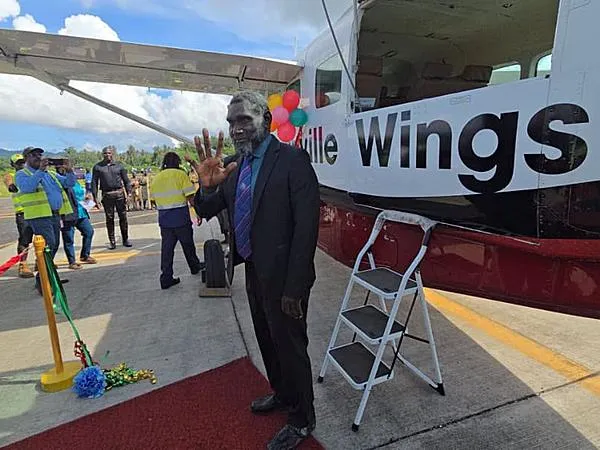
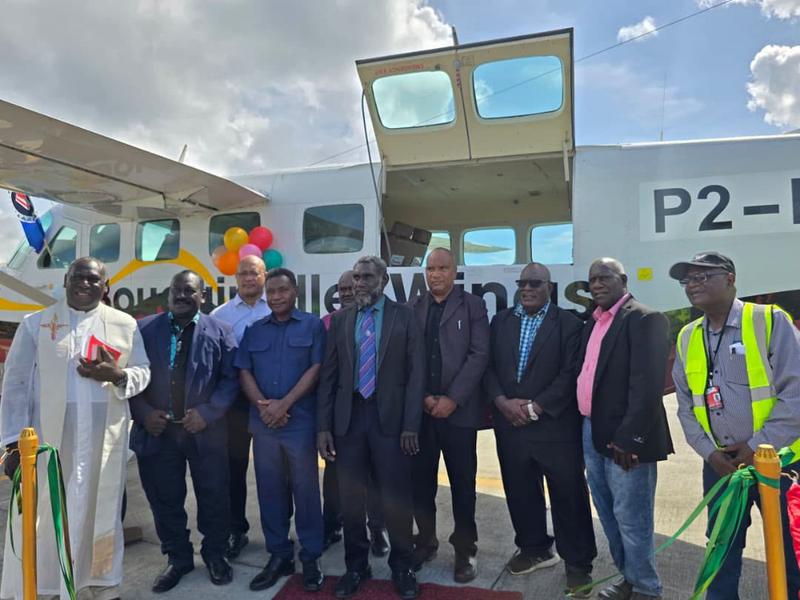
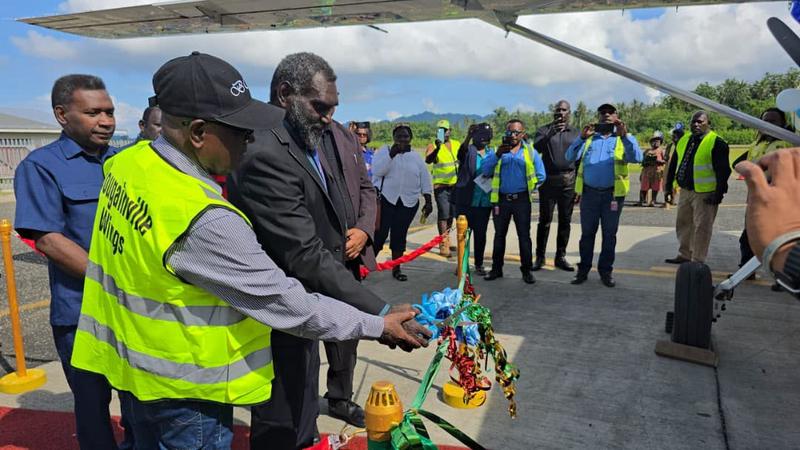
The Autonomous Bougainville Government has launched its flag carrier, Bougainville Wings Limited, marking a milestone in the region’s aviation sector and broader economic development efforts.
President Ishmael Toroama officiated the launch at Buka Airport, describing the initiative as a long-awaited step toward strengthening connectivity and supporting growth across the autonomous region.
Bougainville Wings is a joint venture between the ABG and Outback Aviation, with Bougainville holding a 70 per cent majority stake through Bougainville Public Investment Corporation Limited.
The launch ceremony was attended by senior government officials, including Commerce, Trade, Industry and Economic Development Minister Robin Wilson, as well as Bougainville Wings Chairman Sylvester Kenatsi and other stakeholders.
Toroama said the government remains committed to ensuring the airline’s success and positioning it as a revenue-generating asset for the region.
“The aviation industry in Bougainville has long awaited progress and we are looking forward to expand this significant beginning,” he said, adding that the government would ensure the airline is properly established and managed.
Bougainville Wings is expected to support the Bougainville 2052 Vision by improving transport links, particularly to remote and underserved areas such as Nissan, Buin, Torokina and the Atolls.
Wilson said the launch signalled a transition from planning to operations, noting that the airline secured its certificate of airworthiness from the Civil Aviation Safety Authority of Papua New Guinea on Dec. 20, 2025.
Under the joint venture structure, Bougainville retains a 70 per cent share, with the remaining 30 per cent held by private sector partners.
Officials said the establishment of Bougainville Wings represents an initial but significant step toward building a sustainable aviation industry, with plans focused on expansion, improved connectivity and long-term economic returns.
Papua New Guinea’s economic growth is forecast to moderate to 3.6% in 2026 and 3.4% in 2027, as external pressures and persistent structural constraints weigh on activity, the Asian Development Bank said.
In its Asian Development Outlook April 2026, the Manila-based lender said the outlook reflects spillovers from the Middle East conflict, including higher energy and commodity prices, disrupted shipping routes and tighter financial conditions across developing Asia and the Pacific.
Inflation in PNG is projected to edge up to 4.6% in 2026 from 4.4% in 2025, before easing to 4.0% in 2027.
Recent macro-fiscal reforms have improved underlying conditions, including a narrower fiscal deficit, greater exchange-rate flexibility and better foreign-exchange availability, which have supported import-dependent sectors and lifted private-sector confidence, the report said.
However, constraints including power shortages, security concerns, inefficiencies in public capital spending and limited skilled labour continue to dampen growth prospects, compounded by inflationary pressures.
“While mining is likely to remain a key growth driver in the short term, the Middle East conflict will adversely affect the non-resource sector, particularly as PNG remains dependent on imported diesel fuel for power generation,” ADB country director for PNG Takafumi Kadono said.
The bank said the hydrocarbon sector — accounting for about 70% of resource output — could see modest gains, depending on the duration of global supply disruptions. Oil output and liquefied natural gas production are both expected to increase slightly in 2026, with LNG operations already near capacity last year.
Further upside could come from a final investment decision on the Papua LNG project and progress on other large-scale resource developments, which the bank said would provide a significant boost to economic activity.
To strengthen resilience against external shocks, the ADB said continued tax and policy reforms would be critical to improving revenue mobilisation and supporting fiscal consolidation.
Bank South Pacific (BSP) said Papua New Guinea’s economy remains “reasonably resilient” but warned that rising global and domestic pressures could weigh on growth for the rest of 2026.
The bank released its March quarter 2026 Economic and Market Pulse, highlighting increasing uncertainties, including widening fiscal deficits, inflation risks, questions over the sustainability of the artificial intelligence-driven investment cycle, and the ongoing conflict in the Middle East.
BSP Group chief executive Mark Robinson said the country’s economic performance continues to be supported by commodity exports, government spending and infrastructure investment.
“At present, PNG’s economy remains reasonably resilient, supported by commodity exports, fiscal spending, and infrastructure investments,” Robinson said. “Looking ahead, the picture for the remainder of 2026 will be more complicated, with higher energy prices somewhat offsetting a moderately optimistic growth outlook.”
He said higher fuel costs are placing pressure on both the broader economy and household budgets, which could dampen growth momentum.
“The PNG economy and household budgets are facing pressure from higher fuel prices, weighing on the growth outlook,” he said, adding that government measures to ease the burden on consumers are “welcome”.
Robinson noted that elevated global energy prices could also present opportunities, particularly in the liquefied natural gas sector.
“PNG is already benefitting from elevated global LNG prices, and our distance from conflict zones is enhancing our appeal as a reliable alternative LNG supplier to Asian markets,” he said. “This is an opportune moment for the future of the Papua LNG Project.”
Across the South Pacific, BSP said the economic outlook has been supported by easing inflation, which provides some buffer against rising energy costs and supply constraints, particularly given the region’s dependence on imported fuel.
Robinson said businesses and governments should focus on resilience and adaptability amid heightened uncertainty.
“In times of uncertainty, investing to build resilience and preparing through active scenario planning, while maintaining flexibility to capture new opportunities, are important tools to weather energy shocks and other economic uncertainties,” he said.
The report also includes analysis of the foreign exchange market and the kina’s performance, alongside a broader economic review by BSP’s economists.
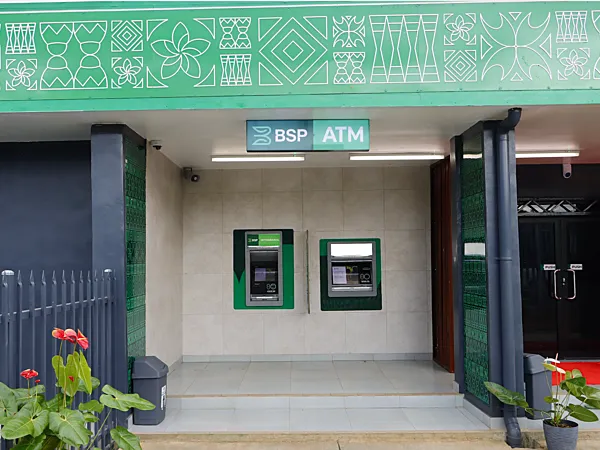
BSP Financial Group officially opened its newly upgraded full-service branch in Minj, marking a major step forward in expanding access to modern banking services in Papua New Guinea’s Highlands Region.
The Minj opening signals more than just a physical expansion — it represents new opportunities for individuals, families and businesses across Jiwaka Province.
BSP Chairman Robert Bradshaw said the milestone reflects the bank’s enduring commitment to nation-building and community development.
“Today, we are not simply opening a branch; we are opening doors to opportunity and a stronger future for this community,” he said. “For more than 100 years, BSP has been a partner in connecting communities, supporting local enterprise and championing prosperity across Papua New Guinea and the Pacific.”
The Minj branch forms part of BSP’s K1.2 billion multi-year investment programme to modernise its network and continue improving customer service. By bringing essential banking services closer to rural and growing populations, BSP continues to strengthen financial inclusion and accessibility.
General Manager Retail, Ronesh Dayal, said the upgrade from a sub-branch to a full-service branch demonstrates BSP’s commitment to meeting the evolving needs of the province.
“This new branch, completed just five months after construction began, comes 11 years after BSP first established its presence in Minj,” he said. “It reflects our focus on expanding services and improving convenience for our customers.”
The branch now offers a full suite of services, including teller and card services, account opening facilities, deposit and dispensing ATMs, and self-service digital banking registration. Notably, customers in Minj are among the first in the Highlands Region to access deposit ATM services, enabling secure and convenient banking even after hours.
Serving a population of more than 200,000 people, the branch will play a vital role in supporting the region’s strong agricultural base, as well as small businesses, public servants and families. It also reduces the need for customers to travel to Mount Hagen for basic banking services.
“Access to banking is not a luxury; it is a necessity,” Mr Bradshaw said. “It empowers families to save, farmers to invest and businesses to grow. By bringing modern banking closer to the people of Minj, we are investing directly in their future.”
BSP’s footprint across the Highlands Region includes 17 branches, 60 ATMs, over 2,400 EFTPoS terminals, 136 agents and 318 staff, all working to deliver secure, accessible and efficient banking services.
Beyond banking, BSP continues to invest in community development initiatives focused on education, health and social impact. This development represents the creation of new opportunities and a stronger future for the community.
About BSP
BSP Financial Group Limited (BSP), formerly the Bank of South Pacific Limited, is a leading retail and corporate banking group.
Headquartered in Papua New Guinea and founded in 1957, BSP operates in seven Pacific countries. It has the largest branch network in Papua New Guinea, Cook Islands, Fiji, Samoa, Solomon Islands, Tonga and Vanuatu, and employs more than 4,000 people across the Pacific.
BSP is committed to its corporate and social responsibility programmes and works with communities across the Pacific to improve lives. Its branch network is complemented by a sophisticated electronic banking system that meets the needs of customers wherever it operates.
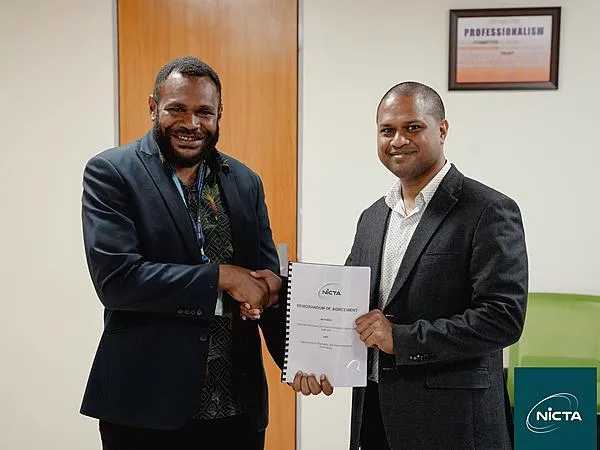
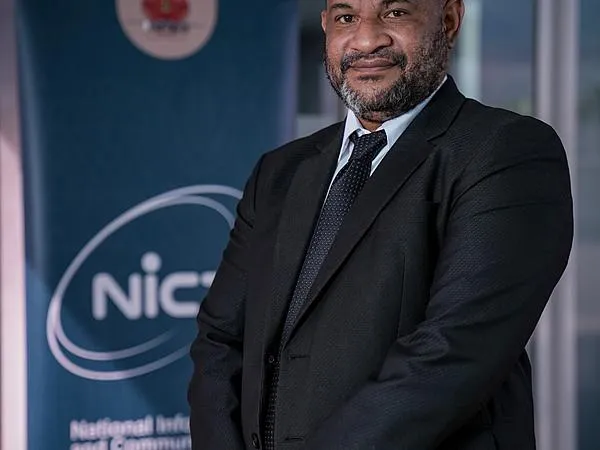
The National Information and Communications Technology Authority (NICTA) and the Department of Information and Communications Technology (DICT) have signed a memorandum of agreement to strengthen coordination on key digital transformation initiatives in Papua New Guinea.
The agreement sets out a formal framework for collaboration between the two agencies, aimed at improving governance, aligning priorities and ensuring consistent implementation of national ICT programmes.
Under the partnership, NICTA and DICT will jointly support major government platforms, including the Sevis Pass system and the Government Private Network, which are designed to enhance connectivity, improve service delivery and enable secure digital access across public institutions.
The MOA also seeks to strengthen planning and project prioritisation, ensuring initiatives are aligned with national ICT policies and broader development objectives.
Both agencies said the collaboration would play a key role in expanding access to digital services, particularly in underserved and rural areas, while supporting wider socio-economic development through increased technology adoption.
Areas of cooperation include improving access to secure and reliable ICT infrastructure, enhancing digital government services, strengthening coordination of national ICT initiatives, and promoting inclusive and sustainable digital development.
The agreement also provides a coordinated mechanism for implementing government priorities, with an emphasis on accountability and governance standards.
Officials said the partnership reflects the government’s continued push to build a more connected and digitally enabled Papua New Guinea.
The Mineral Resources Development Company (MRDC) has announced a series of executive leadership appointments, including the historic naming of its first female chief risk officer, as the state-backed entity strengthens governance and organisational capacity.
The appointments form part of a broader effort to reinforce the company’s leadership structure, with a focus on long-term value creation for landowners and provincial stakeholders.
Managing Director and Chief Executive Officer, Augustine Mano, said the changes reflect MRDC’s push to enhance organisational readiness, maintain disciplined investment practices and uphold strong governance standards as the company expands its portfolio.
“For five decades, MRDC has carried the responsibility of safeguarding and growing landowner and provincial equity on behalf of Papua New Guinea,” Mano said.
“These appointments demonstrate the depth of leadership within MRDC and our commitment to disciplined investment, strong governance, and sustained community benefit," he added.
MRDC is a government-owned entity that manages equity interests on behalf of landowners and provincial governments in Papua New Guinea’s key extractive projects, including oil, gas and mining operations. The company acts as a trustee of these resource-derived revenues, investing dividends into a diversified portfolio spanning property, infrastructure, energy and financial assets.
Over the years, MRDC has evolved into one of Papua New Guinea’s largest asset managers, with interests in major developments such as the PNG LNG project and various commercial real estate holdings. Its mandate centres on converting resource wealth into sustainable income streams, supporting community development, and delivering long-term financial returns to its beneficiaries.
The company said the strengthened executive team is expected to support continued growth while ensuring accountability, transparency and prudent stewardship of landowner wealth.
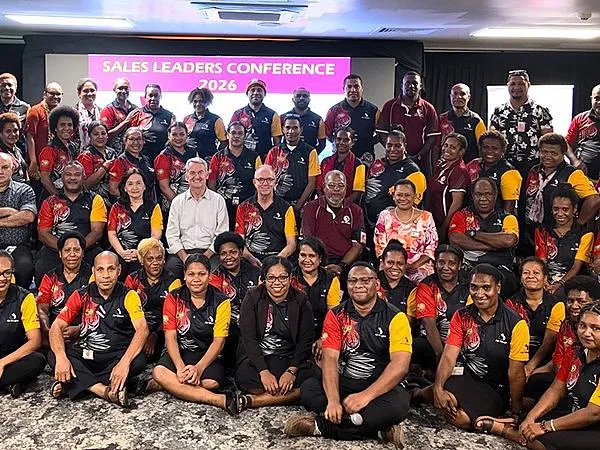
Air Niugini recently convened its 2026 National Sales Leaders Conference in Port Moresby, gathering regional sales managers, supervisors and key stakeholders to align strategies for expansion and customer engagement.
The two-day conference, held from March 19 to 20 at the Gateway Hotel, carried the theme “Transformation — Stepping Up,” and served as a platform for internal reflection, collaboration and planning across the airline’s domestic and international sales network.
Participants discussed market expansion, sales performance targets and customer engagement initiatives, alongside updates on technology, revenue management, cargo operations, loyalty programs and e-commerce.
Chief Executive Officer Alan Milne underscored the importance of teamwork and a unified vision in advancing the airline’s transformation agenda.
“Our sales team is the engine room of the airline,” Milne said, emphasizing the need for reliable, safe and on-time operations to meet customer expectations and support growth.
Chief Commercial Officer David Glover commended the sales team for sustaining passenger sales performance for a second consecutive year despite challenges in 2025.
During the conference, the Highlands Region was recognized as the top-performing sales team based on revenue targets, followed by Port Moresby, Momase, New Guinea and the Southern Region.
The airline said the event strengthened coordination across teams and reinforced its commitment to expanding connectivity and improving service as it seeks to grow its regional and international footprint.
Master planning has emerged as a central tool in addressing climate vulnerability and rapid urbanisation challenges across Pacific cities, according to discussions at the Seventh Pacific Urban Forum in Papua New Guinea.
Delegates at the forum highlighted how Pacific urban centres are increasingly exposed to overlapping risks, including cyclones, flooding and rising sea levels, compounded by accelerating population growth and strain on infrastructure and services.
A special session on resilient urban development, co-hosted by the Pacific Climate Change Centre of the Secretariat of the Pacific Regional Environment Programme and Tonga’s National Spatial Planning Authority Office under the Ministry of Lands and Surveying, underscored the importance of structured, long-term planning frameworks.
A key priority identified was the integration of customary land tenure systems with modern planning approaches to support inclusive and sustainable urban growth.
“By actively engaging local communities and local leaders, we gain valuable insights into cultural practices,” said Tupou Lauaki, senior urban planner at Tonga’s National Spatial Planning Authority Office.
Urban planners at the forum warned that coastal subsidence, environmental degradation and the expansion of informal settlements are intensifying risks across the region, placing additional pressure on housing, transport networks and essential utilities.
“We’ve seen these dynamics particularly pronounced in growing urban centres such as Suva and Honiara, where population growth is outpacing planning systems and resource capacity,” said Cindy Vunagi, director of physical planning at the Solomon Islands’ Ministry of Lands, Housing and Survey.
Participants said master planning provides governments and communities with a framework to anticipate and manage risks, integrate climate adaptation measures and ensure equitable access to land, infrastructure and economic opportunities.
“In the Pacific context, master planning must go beyond conventional urban design,” said Tuileva Tuileva, noting the need to balance customary land systems with formal planning frameworks to safeguard cultural identity while enabling development.
Discussions also focused on how to manage rapid urbanisation, limit the growth of informal settlements and incorporate indigenous knowledge into formal planning systems. Emerging solutions such as renewable energy, resilient infrastructure and appropriate smart technologies were also explored in light of resource constraints.
“Effective master plans in the region must be community-driven, ensuring local ownership and participation, climate-resilient, integrating adaptation and disaster risk reduction, and flexible and adaptive,” said Jeffrey Kaitip, director of the Department of Urban Affairs and Planning at Vanuatu’s Ministry of Internal Affairs.
Panellists from across the Pacific shared practical experiences and policy approaches, highlighting both ongoing challenges and innovations in national planning systems.
In closing, Alexei Trundle of the University of Melbourne said master planning must be carefully implemented to avoid alienating communities from customary lands, despite its potential to strengthen climate resilience.
The forum, held from March 24 to 26 and hosted by the Government of Papua New Guinea and the National Capital District Commission of Port Moresby, brought together representatives from governments, development partners, civil society, academia and the private sector to address the future of Pacific urban development.
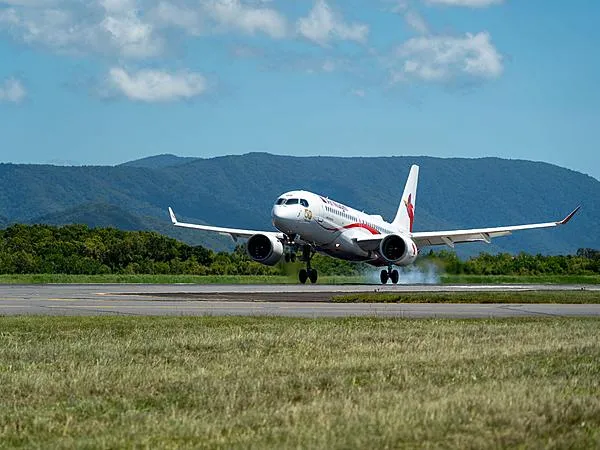
Air Niugini has launched its first scheduled international service using the Airbus A220-300, marking a key milestone in its fleet modernisation programme and strengthening air connectivity between Papua New Guinea and Australia.
The national carrier operated flight PX 90 from Port Moresby to Cairns on Friday, March 27, representing the aircraft type’s first international deployment following its introduction into the domestic network in September 2025.
Until now, the A220-300 has been used exclusively on domestic routes, serving key destinations including Lae, Kavieng, Manus, Gurney, Rabaul and Port Moresby. Its international debut signals the next phase of the airline’s fleet renewal and network expansion strategy.
The Cairns route—linking Port Moresby with Far North Queensland in approximately 90 minutes—has been identified as a strategic corridor, underpinned by strong trade, tourism and people-to-people ties.
Chief Executive Officer Alan Milne said deploying the A220-300 on international services enhances both operational capability and passenger experience.
“The Airbus A220-300 is a modern, fuel-efficient aircraft that offers greater comfort, reliability and operational efficiency. Deploying this aircraft on our international routes strengthens Air Niugini’s capability to connect Papua New Guinea with key regional destinations while delivering a world-class travel experience,” Milne said.
He added that Cairns was a natural choice for the aircraft’s first international service, given the long-standing economic and tourism links between Papua New Guinea and Australia.
Cairns Airport also holds historical significance for the airline. Air Niugini became the first international carrier to operate into Cairns in September 1975, establishing a connection that has expanded over the past five decades.
The airline currently operates nine weekly services between Port Moresby and Cairns, including three same-day return flights and six overnight services, making it one of its most important international routes.
The Airbus A220-300, configured with 138 seats in a two-class layout, features wider seats, larger windows, a quieter cabin and onboard Wi-Fi offered complimentary to passengers. The aircraft is also expected to deliver improved fuel efficiency and lower emissions compared with the Fokker and Boeing 737 aircraft it will replace on the route.
Cairns Airport Chief Executive Officer Richard Barker said the introduction of the new aircraft would further boost capacity and regional connectivity.
“The introduction of this modern aircraft will inject close to 65,000 seats into the Cairns market each year and further strengthen connectivity between our regions, supporting economic growth and creating new opportunities for trade, education and employment,” Barker said.
Beyond Cairns, Air Niugini offers onward connections across Papua New Guinea, as well as international services to Manila, Hong Kong, Singapore, Honiara, Port Vila and Nadi, with flights to Narita in Japan scheduled to commence in July.
The airline said additional A220 aircraft deliveries will play a central role in enhancing both domestic and regional operations, reinforcing its position as Papua New Guinea’s national carrier.
Following the Cairns launch, the A220-300 is scheduled to begin services to Sydney on March 29, followed by Honiara.
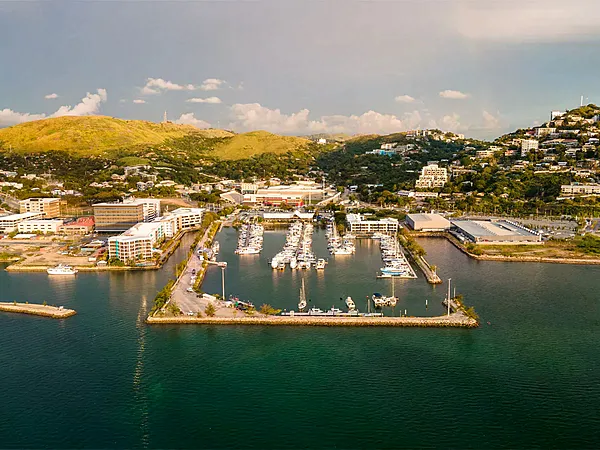
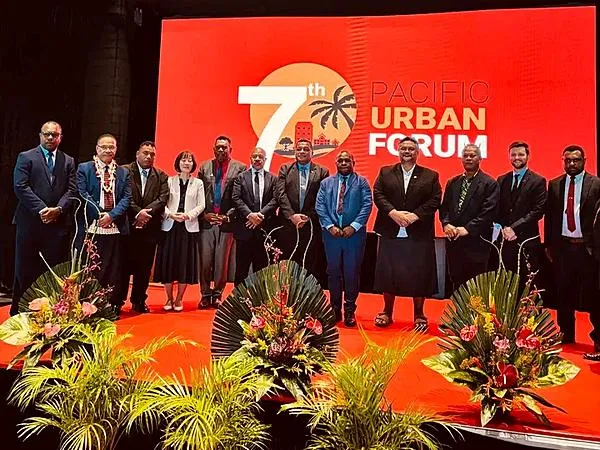
Papua New Guinea’s capital, Port Moresby, took centre stage in regional urban development in March, hosting the 7th Pacific Urban Forum (PUF7) from March 24–26, 2026—marking the first time the high-level gathering has been held in the country.
Convened by the National Capital District Commission (NCDC) in partnership with regional and international agencies, the three-day forum brought together more than 120 delegates from across the Blue Pacific, including government ministers, city leaders, development partners, urban planners and policy experts.
Held at APEC Haus under the banner “Amazing Port Moresby,” the event was widely described as a milestone moment for both the capital and the country.
NCD Governor Powes Parkop said hosting the forum marked a significant step for the city and the country.
“For the first time in history, Port Moresby will host the Pacific Urban Forum—a proud milestone for our capital and nation,” Parkop said.
He added that the event signalled the city’s readiness to take a leading role in regional discussions on urbanisation and sustainable development. “This is not just an event; it is a statement that Port Moresby is ready to lead regional dialogue on urbanisation and sustainable development,” he said.
The forum coincided with PNG’s 50th Independence celebrations and highlighted the capital’s transformation, future ambitions, and growing role as a regional hub for urban policy dialogue.
Urbanisation challenges and opportunities in focus
The forum opened at APEC Haus with keynote remarks from Prime Minister James Marape, alongside contributions from UN-Habitat Asia-Pacific Regional Director Kazuko Ishigaki and Housing Minister Kobby Bomareo.
Discussions on the first day centred on the “State of Urbanisation in the Blue Pacific,” with experts outlining the rapid expansion of Pacific towns and cities, as well as mounting pressure on housing, infrastructure and essential services.
Breakout sessions then focused on practical solutions, including transforming informal settlements into planned suburbs, strengthening the informal economy, improving food security, and building climate resilience. Port Moresby’s development initiatives were also showcased as examples of urban reform in action.
The forum also underscored the importance of inclusive development, with a focus on empowering communities and ensuring equitable access to urban opportunities.
Climate resilience and sustainable cities
Building on these discussions, the second day shifted focus to climate change, framing Pacific cities as the “engine room” of resilience in the face of environmental challenges.
Delegates examined nature-based solutions, climate financing, disaster preparedness and circular economy models as critical tools for sustainable urban development.
PNG National Housing and Urbanization Managing Director Abel Tol announced a K2 million government commitment to support the forum, highlighting national backing for urban development priorities. He said there was a need for innovative housing approaches that balance environmental sustainability with community needs.
“Nature-based, climate-effective housing solutions that honour the environment while meeting community needs,” Tol said, are critical to future development.
Tol added that the forum’s outcomes would help shape regional policy direction.
“These outcomes will contribute to a unified Pacific position for the Asia-Pacific Urban Forum in Yokohama, Japan, in 2027,” he said.
Strengthening regional partnerships
Throughout the forum, participants emphasised the importance of regional cooperation and partnerships.
Delegates from Fiji, Tuvalu, Vanuatu, Solomon Islands, Samoa, Tonga, Cook Islands, Nauru, Kiribati, Australia and New Zealand shared experiences and aligned priorities for sustainable urban growth.
The forum also created opportunities to strengthen sister-city relationships with Jayapura, Honiara and Port Vila, while encouraging deeper collaboration with the private sector to address urban challenges.
In addition to policy discussions, the programme incorporated cultural engagement, with delegates experiencing Port Moresby’s diversity through music, art, food and community activities—reinforcing the role of culture in shaping inclusive cities.
Future-focused outcomes
The forum concluded with a renewed focus on the future of urban growth in the Pacific, following three days of dialogue, collaboration and forward-looking discussions.
The closing ceremony reaffirmed a shared commitment to building cities that are inclusive, resilient and sustainable, while strengthening urban planning systems across the region. Participants developed key resolutions addressing priorities such as integrated urban planning, climate-resilient infrastructure, housing and livelihoods.
Parkop said the forum represented more than dialogue, describing it as a unified regional commitment.
“This forum is a collective commitment to ensure Pacific voices are heard on Asia-Pacific and global platforms,” he said.
As Pacific nations continue to urbanise, the 7th Pacific Urban Forum has set a clear direction for the region—positioning cities as engines of growth, culture and resilience, and reinforcing the importance of collaboration in shaping a sustainable urban future.
Westpac PNG has officially launched its Sister City Program, partnering 14 branches across Papua New Guinea with 14 branches from Westpac Group operations on the Gold Coast and Bayside to strengthen professional collaboration, knowledge sharing, and community support.
The Sister City Program is a formal partnership between branches designed to promote cultural and commercial ties while fostering stronger relationships between teams in both countries. Through mentoring, shared learning, and community initiatives, the program will enable employees to exchange knowledge and support charitable causes that positively impact local communities.
Activities under the program include mentoring between branch teams, partnerships on community projects and charities, and sharing best practices in key areas such as risk management, customer service, and sales performance.
Head of Retail Banking at Westpac PNG, Miriam Rothera, said the program reflects the bank’s commitment to building stronger connections between teams while creating meaningful outcomes for communities.
“The Sister City Program is about more than connecting branches — it’s about connecting people, ideas, and communities across borders,” Ms Rothera said.
“By partnering our teams in Papua New Guinea with colleagues on the Gold Coast and Bayside, we’re creating opportunities to share knowledge, strengthen professional capability, and learn from each other’s experiences. At the same time, we’re empowering our branches to work together on community initiatives that make a real difference locally.
“What makes this program particularly special is that it brings together mentoring, collaboration, and community support in one initiative. It allows our people to grow professionally while also giving back to the communities we serve.”
As part of the program’s first activities, donated goods from Gold Coast and Bayside branches recently arrived in Port Moresby and have begun reaching branches across the country. These supplies are being distributed so each location can support a local charity or community initiative.
Branches in Kavieng, Kimbe, Port Moresby, Gordons, Boroko, and Madang have already received their deliveries.
In Madang, Ms Rothera personally delivered bags filled with school supplies, books, and library materials to Kil Primary School. Together with branch colleagues, the team met Headmaster Mr Martin Kadamai during a school assembly attended by more than 880 students, parents, and members of the local community.
Witnessing how the donated resources will support students and their education was a powerful moment for the team.
Another impactful experience came from the Kavieng branch team, who visited female and juvenile inmates at the local correctional facility to share cake and distribute individual gift packs. Retail Assurance & Compliance Manager Mary Gima, who participated in the visit, described the experience as deeply moving.
“It was incredibly humbling to be part of something that brought smiles to people who often feel forgotten,” she said. “We’re very grateful to our Sister City colleagues in Queensland for helping make this possible.”
Ms Rothera said the early success of the program demonstrates the power of cooperation and shared purpose.
“This is just the beginning. Through our Sister City partnerships, we are already seeing how small actions can make a meaningful difference in people’s lives. We look forward to many more stories of impact as the program grows.”
The Sister City Program has created partnerships between teams in the following branches:
PNG Branch — Australian Branch Kokopo — Burleigh Alotau — St G Helensvale Kavieng — Elanora Airways — Pacific Fair Madang — Cleveland Kimbe — Capalaba Wewak — Coomera Vanimo — Robina Port Moresby — Southport Mount Hagen — Bundall Goroka — Runaway Bay Tabubil — Robina Gordons — Pacific Fair Boroko — Helensvale
Papua New Guinea’s acting ICT minister Peter Tsiamalili Jr. has ordered sweeping reforms at the National Information and Communications Technology Authority after audit findings revealed significant weaknesses in financial management and governance.
The minister said the Auditor-General issued a qualified opinion on NICTA’s 2019 financial statements, citing deficiencies in documentation, oversight and compliance with public finance standards.
Key issues identified include irregularities in land acquisitions, gaps in asset verification, weak receivables management, unresolved employee liabilities and ineffective internal controls.
KPMG review highlights systemic gaps
An independent review by KPMG pointed to broader structural weaknesses, including governance and policy gaps, limited regulatory transparency and financial sustainability risks.
The report also flagged shortcomings in oversight of the Universal Access and Service (UAS) Fund and capacity constraints within the organisation.
“These reports point to systemic issues that have constrained NICTA’s effectiveness as the national ICT regulator,” the minister said.
CEO tasked with driving institutional overhaul
Tsiamalili said the recently appointed chief executive officer will be responsible for implementing reforms, resolving outstanding audit issues and restoring financial discipline.
“The CEO will be held responsible for delivering measurable improvements in governance standards, regulatory performance and organisational integrity,” he said.
The ministry has also expanded oversight expectations across ICT agencies, including NBC and DICT, signalling a broader push for accountability across the sector.
Reform priorities set for 2026
The government outlined key priorities for NICTA, including:
The minister said the 2026 work programme will serve as the main vehicle for implementing reforms, with clear timelines and reporting requirements.
Governance push tied to digital agenda
Tsiamalili said strengthening NICTA is critical as Papua New Guinea advances its digital economy strategy, noting that the ICT sector is central to economic growth.
The government will continue to monitor progress closely and take further action if necessary to ensure the regulator meets its mandate.
Prime Minister James Marape said the government is pressing ahead with the Wafi-Golpu and Papua LNG projects while seeking to secure a larger share of economic benefits for Papua New Guinea, rejecting claims of delays.
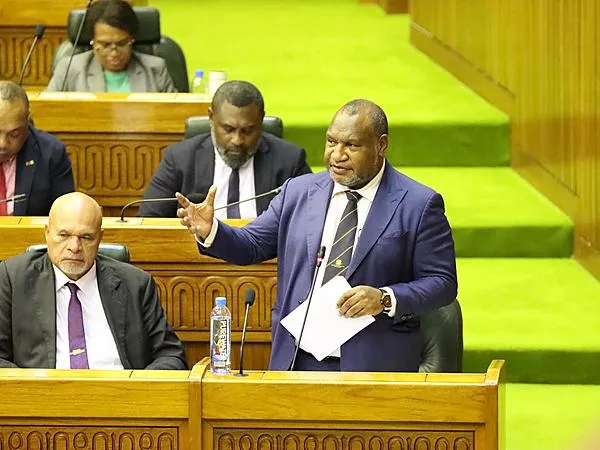
Responding in parliament to Bulolo MP Sam Basil Jr, Marape said ongoing negotiations are aimed at improving returns for the state and landowners, targeting a total government take of about 55% within existing legal frameworks.
“Our government is not delaying these projects. Our policy direction is very clear — we are working to secure a fair share of benefits,” he said.
Marape stressed that the government is not pursuing additional concessions beyond what is предусмотрed under the Mining Act and Oil and Gas Act, but is asserting PNG’s sovereign rights under current laws.
Papua LNG awaits investor-led FID
On Papua LNG, Marape said the gas agreement signed in April 2019 remains in force, with the state having fulfilled its obligations.
“It is now up to the investors to progress the project to final investment decision,” he said, attributing delays primarily to investor-side processes such as financing and tendering.
He added that any request for incentives would be assessed against national interest. “This government will not give away free incentives. Any concession must deliver fair value to our country.”
Wafi-Golpu stake under review
For Wafi-Golpu, Marape said earlier arrangements would have limited PNG’s stake to about 20%, below the 30% permitted under law.
“I am here to improve returns for our landowners and our country. I will not sell my country too cheaply,” he said, signalling a tougher negotiating stance.
He added that the government has already allocated infrastructure and business development funding to prepare affected communities, despite the project not yet reaching FID.
Growth continues without major projects
Marape said PNG’s economy has expanded despite delays in the two projects, citing government revenue growth from 14 billion kina in 2018 to around 25 billion kina in 2025, and GDP rising from 79 billion kina to more than 130 billion kina over the same period.
He pointed to gains in agriculture and construction, as well as the restructuring of the Porgera Mine, as evidence of the government’s economic strategy.
“When we took a stand on Porgera, many said the country would fail. Today, internal revenue has significantly increased,” he said.
Balancing speed and value
Marape said the government remains committed to advancing both projects but will not rush agreements that could undermine long-term national benefits.
“These projects take time to reach FID, but it is better to secure a fair deal than accept arrangements that do not benefit our people,” he said, urging investors to meet obligations within existing licence timelines.
He added that the government would continue negotiating in good faith while prioritising benefits for landowners and future generations.
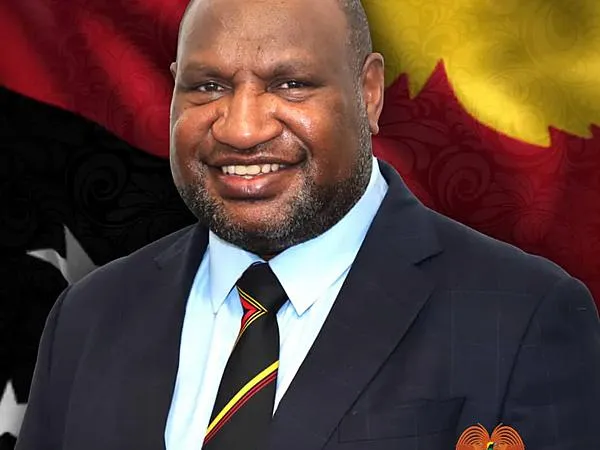
Prime Minister James Marape said Papua New Guinea’s economy is strengthening, citing a sharp increase in government revenue over the past seven years, and reiterated that the government will not enter into resource agreements that undervalue national assets.
Marape pointed to verified data showing that tax revenue has nearly doubled since 2018, the last full budget year before his administration took office.
“In 2018, Papua New Guinea collected total tax revenue of K9.7bn, of which mining and petroleum contributed only K775m,” he said, noting that major projects such as the Porgera Gold Mine and PNG LNG were fully operational at the time.
“By 2025, total tax revenue has increased to K17.064bn—almost double. Mining and petroleum tax alone has risen to K4.137bn,” he added, saying this reflects stronger economic activity and improved compliance.
“This shows the economy is growing, the revenue base is expanding, and improvements in compliance and governance are delivering results.”
Budget expansion signals growth
Marape said overall government revenue, including grants and other income, has also risen significantly.
“In 2018, total budget revenue stood at around K14bn. By 2025, this has grown to approximately K25bn,” he said, adding that this indicates the economy “is not in decline—it is strengthening”.
Growth without new mega-projects
Marape emphasised that the revenue gains have been achieved ahead of new large-scale resource developments.
“Even without Papua LNG and Wafi-Golpu, we have grown internal tax revenue from K9.7bn to over K17bn,” he said.
He attributed this to economic diversification, particularly in agriculture and construction, alongside tighter tax enforcement.
“We are tightening compliance and ensuring that everyone who should pay tax is paying tax. This is part of building a fair and responsible economy,” he said.
Firm stance on resource negotiations
Marape said the government remains committed to progressing Papua LNG and Wafi-Golpu but will not finalise agreements that compromise national interests.
“We want these projects to proceed, but not at the expense of our national interest,” he said, adding: “We are not asking for anything beyond the law—we are insisting on what Papua New Guinea is entitled to.”
He said the government is targeting agreements that would secure around 55% of total project benefits for the country over their lifespan, consistent with Pangu Pati policy.
“These agreements will bind future governments, so we must get them right,” he said.
Marape added that if investors are unwilling to proceed under these terms, the government is prepared to seek alternative partners or strengthen legislation to protect national interests.
Assurances to stakeholders
Marape also reassured landowners and provincial governments in Gulf and Morobe that obligations—including infrastructure and business development grants—will be honoured.
“We will continue to work closely with landowners and provincial governments as we conclude discussions with project developers,” he said, adding that “our people must benefit fairly from the resources on their land”.
Domestic resilience underpinning outlook
Beyond the resource sector, Marape pointed to strong performance in the domestic economy, including the financial sector, as evidence of broader resilience.
“Our banks, superannuation funds and local businesses are performing strongly. This growth is not dependent on new LNG or mining projects—it is being driven from within the economy,” he said.
He added that since 2019 the government has prioritised expanding agriculture, fisheries and other sectors to reduce reliance on extractive industries. "The country is growing," he said.
Marape sought to reassure the public on the country’s economic trajectory.
“Papua New Guinea is not in crisis. The country is not dying. The country is growing,” he said.
“We will continue to grow the economy, expand revenue, and invest in education, health, infrastructure and law and order.”
He added that future agreements would be structured to ensure long-term, equitable returns. “We will ensure that every agreement we sign delivers a fair and lasting return for our people.”
Prime Minister James Marape has called for carefully planned and inclusive urbanisation across Papua New Guinea and the Pacific, stressing that cities must be designed to improve quality of life rather than become centres of congestion and inequality.
Delivering the keynote address at the Pacific Urban Forum in Port Moresby, Marape said Papua New Guinea’s low level of urbanisation presents both a challenge and a rare opportunity to “get it right” as the country develops.
“Papua New Guinea remains one of the least urbanised nations on earth, with less than 20 per cent of our population living in towns and cities,” he said. “The global average is now above 50 per cent and rising. This means we still have time to plan properly.”
He said urbanisation should be embraced as a pathway to improved service delivery, economic opportunity and higher living standards—provided it is managed strategically.
“Urbanisation is not a bad concept,” he said. “If planned well, it allows governments to deliver water, electricity, health, education and other essential services more efficiently.”
At the same time, Marape warned against poorly managed urban growth, pointing to global examples where rapid expansion has led to overcrowding, informal settlements and strained infrastructure.
“We have seen the downside of unplanned urbanisation,” he said. “In some global cities, millions are packed into environments where services cannot keep up. That is not the future we want for Papua New Guinea or the Pacific.”
He noted that rural-to-urban migration is already underway and will continue to accelerate, making forward planning critical.
“The process of urban migration is growing. Our responsibility now is to ensure our cities are ready—liveable, inclusive and properly serviced.”
Marape called for stronger coordination between governments, municipal authorities, development partners and the private sector to design sustainable urban centres that reflect the region’s diversity and cultural identity.
“With proper planning and strong partnerships, we can build cities that are not only modern but also respectful of our traditions and social structures,” he said.
He added that well-planned urbanisation enables governments to organise populations more effectively and deliver services at scale, while also creating opportunities for employment, education and innovation.
“When people are settled in well-planned urban centres, we can provide quality education, health services, water and sanitation, and access to information more effectively,” he said.
Marape also underscored the importance of aligning urban growth with long-term national development goals, particularly as Papua New Guinea marks 50 years of independence.
“What you see in Port Moresby today reflects 50 years of progress,” he said. “But the next phase of our growth must be smarter, more organised and more inclusive.”
He expressed confidence that, with the right planning and investment, the country’s cities will undergo significant transformation in the coming decade.
“Come back in 2035—you will see a completely different Port Moresby,” he said. “A city that reflects the full potential of our nation.”
The Pacific Urban Forum brings together regional leaders and stakeholders to advance discussions on sustainable urban development, resilience and inclusive growth across the Blue Pacific.
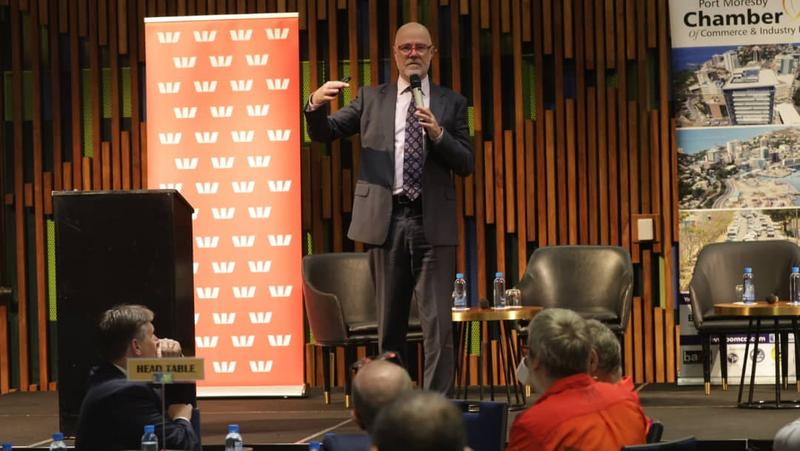
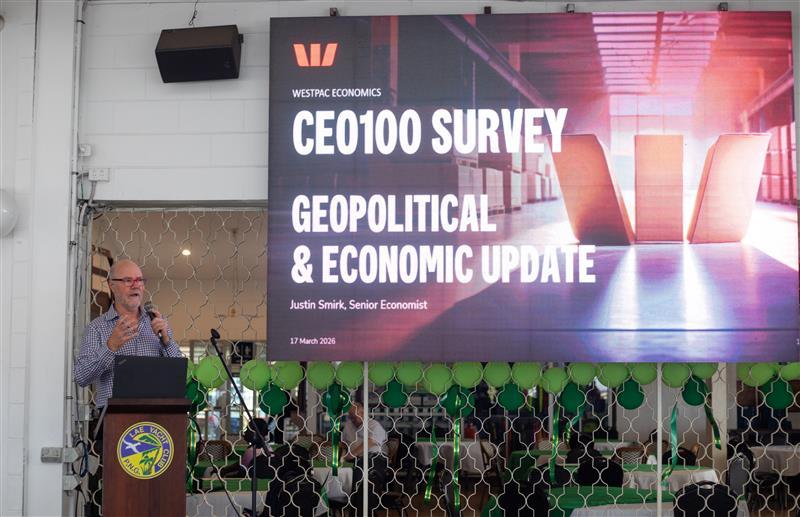
Westpac PNG recently hosted Westpac Group Senior Economist Justin Smirk in Papua New Guinea, where he shared insights on global and regional economic trends and their implications for PNG businesses and the broader economy.
During the visit, Smirk engaged with senior business leaders and customers, providing an analytical overview of global economic conditions, inflationary pressures, commodity markets, and growth prospects for Papua New Guinea. His discussions focused on helping businesses better understand the external forces shaping the operating environment and how PNG can position itself for sustainable growth.
Speaking during the 100 CEOs Forum and the Lae Chamber of Commerce and Industry breakfast, Smirk said Papua New Guinea remains well placed to benefit from long-term demand for its natural resources, while ongoing reforms and investment in key sectors will be critical to strengthening economic resilience.
“PNG’s economic outlook continues to be influenced by global developments, particularly commodity prices, inflation, and interest rate movements,” Smirk said. “Understanding these trends is important for businesses as they plan, invest, and manage risk in a changing environment.”
Smirk also highlighted that ongoing geopolitical tensions in the Middle East, including the conflict between Iran and the United States, continue to affect global oil markets and contribute to volatility in fuel prices. As a net importer of refined fuel, Papua New Guinea is particularly exposed to these global price movements, with higher fuel costs flowing through to transport, logistics, electricity generation, and the cost of goods across the economy.
As part of the visit, Smirk also travelled to Lae, where he addressed members of the Lae Chamber of Commerce and Industry and participated in media interviews, including a live discussion on FM100, offering perspectives on economic conditions relevant to regional businesses.
Westpac PNG Chief Executive Andrew Cairns said the visit reinforced the bank’s commitment to supporting informed decision-making across the PNG economy.
“At Westpac PNG, we are committed to connecting our customers and stakeholders with global expertise that helps them navigate economic change,” Cairns said. “Justin’s insights provide valuable context for businesses as they plan for the year ahead.”
Westpac PNG continues to play an active role in supporting economic dialogue, financial literacy, and informed public discussion, helping customers and communities build confidence in an evolving economic environment.
Follow on LinkedIn:
PNG Business News
Be the "First" to get our exclusive Digital Magazine & Weekly Newsletter.