Photo credit: NBC National Radio
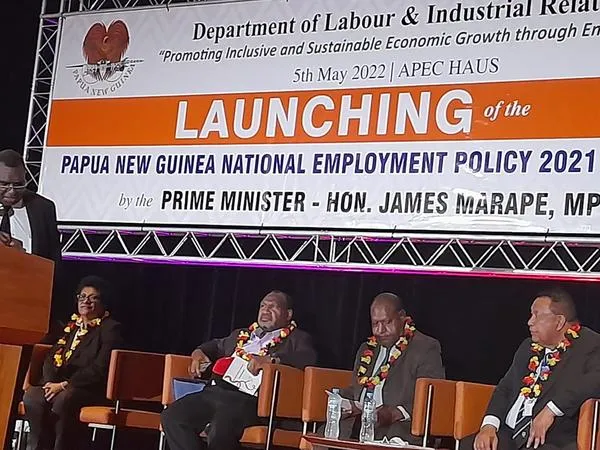
After 45 years, the PNG National Employment Policy 2021-2031 was launched, marking PNG's entry into the global economy.
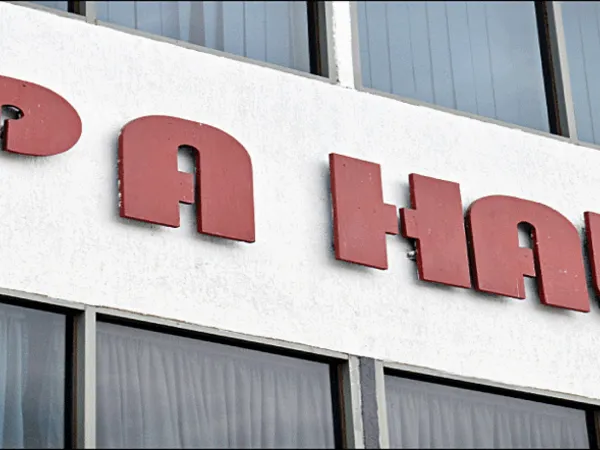
Prime Minister James Marape stated this during the policy's unveiling at APEC Haus in Port Moresby last week.
With a greater grasp of the numerous issues that a rapidly growing economy poses, he is glad that PNG's first-ever National Employment Policy 2021-2031 has been prepared to provide the framework for improving labor industry growth.
“I commend the Department for Labour and Industrial Relations with their acting secretary George Taunakekei and Minister Tomait Kapili for developing the PNG National Employment Policy to guide the development of the labour industry in the country for the next 10 years,” Mr Marape said.
He said the PNG National Employment Policy 2021-2031 reflects his government's policy objectives, which include growing an inclusive and sustainable economy that supports PNG's people now without jeopardizing future generations' advantages.
Mr. Marape stated that the government is dedicated to fully supporting the policies outlined in the policy in order to fulfill the policy's objectives.
“I also encourage and challenge all development partners and private sector to provide robust and desired support for the policy’s effective implementation,” he said.
Reference: Kamus, Maxine. Post-Courier (9 May 2022). “National Employment Policy Launched”.
Photo credit: Peoples Micro Bank
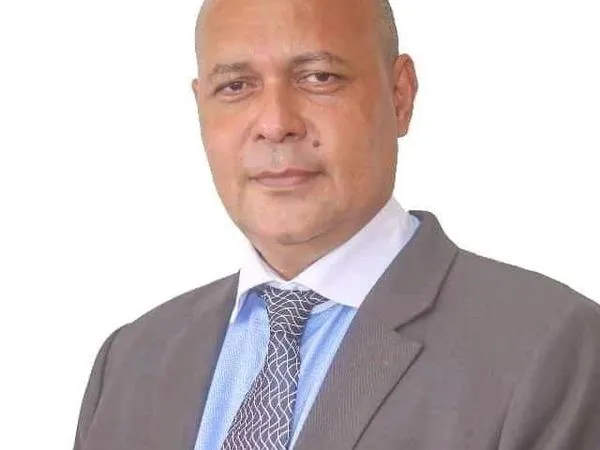
According to State Enterprises Minister William Duma, the Government has allowed the Peoples Micro Bank Limited to become a full-fledged commercial bank.
“This means the bank and Kumul Consolidated Holdings (KCH) can now implement venture into retail banking and commercialisation of its operations,” he said.
“The commercialisation will result in the creation of a new commercial bank, to be known as the National Banking Corporation of PNG Limited or NBC.
“There is a need for more commercial banks in Papua New Guinea (PNG) to raise competition in the retail banking sector and to service our people.
“This will encourage improved and affordable banking services since an estimated 80 per cent of the population still do not use any banking facility,” he added.
The commercialization process, according to Duma, might take up to two years, and a K96 million fund has been put aside to assist in the development of "something valuable for the nation."
The Treasury and National Planning Departments will cover the costs. He explained that the Bank of PNG's approval for the NBC license requires the completion of several due diligence and licensing criteria set out in the legislation governing commercial bank activities.
“To kick start the transformation, KCH and the National Development Bank (NDB) will provide commercial support through its advisory team to implement and execute the commercialisation and National Planning Department’s SOE reform programme.
“After a successful application for a banking licence, NDB will transfer its various branches to the bank to give NBC the reach to provide banking and financial services for rural Papua New Guineans.
“The Government recognises that due to the scaling down of operations by Westpac Bank and the ANZ Bank, the Papua New Guineans have not been able to receive efficient and competitive banking services.
“The proposed commercialization is planned to extend over two years to 2023 with phase one focused on the recruitment of key executives, critical upgrades to core banking system assets, property and buildings.
“Phase 2 will commence later this year.” Duma said the bank would provide 131 new jobs within the first five years, and more than 100 jobs over the following five years.
“The strategy is to negotiate with prospective joint venture partners within three to five years after obtaining a banking licence, to enable the bank to sell down a minimum 51 per cent of the bank to attract the right partners to develop and upskill the bank.
“In the longer term, we envisage new shares to be issued to allow citizens and institutional shareholders to invest and become shareholders in the new bank.”
Reference: The National (9 May 2022). “Government approves new bank”.
According to James Marape, the concept of special economic zones has been demonstrated to operate around the world.
He addressed this in Kerevat, East New Britain, during the launch of the Gazelle Agro-Industrial Special Economic Zone (SEZ), a brainchild of MP Hon. Jelta Wong, will concentrate on the country's abundant agriculture and tuna resources.
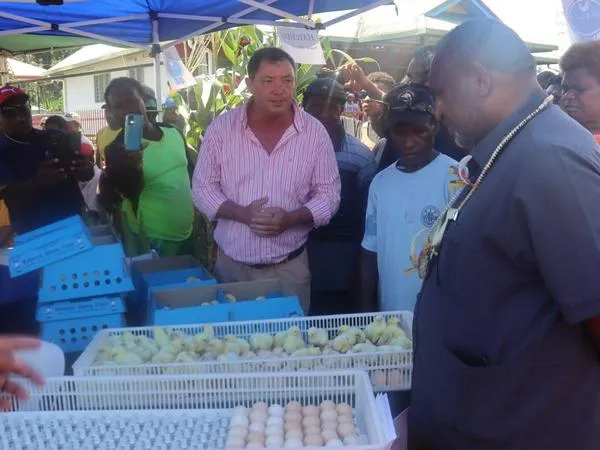
PM Marape also got a firsthand look at Gazelle's commercial agriculture products, including a chicken farm that produces fresh eggs for the inhabitants of East New Britain.
East New Britain Development Corporation, the provincial government's business arm, also supports the Gazelle SEZ.
PM Marape gave the Gazelle DDA K3 million to commence the project.
The Prime Minister also presented the remaining K2 million of the K5 million promised to Warangoi landowners in November for the use of the Warangoi River to supply energy to East New Britain.
He was accompanied by the Minister of State Enterprises, Hon. Hon. William Duma, Minister of Lands and Physical Planning Professor David Kavanamur, Managing Director of Kumul Consolidated Holdings (KCH), and John Rosso.
Governor of East New Britain, Hon. Nakikus Konga, as well as other significant local and economic figures, attended the ceremony.
“The concept of special economic zones is a proven concept worldwide,” PM Marape told hundreds of people at Kerevat.
“Countries like Vietnam and Thailand, even China, have grown because of the concept of special economic zones.
“The government in these countries has invested in special economic zones and allowed businesses in.
“You can get special concessions from the government, such as a tax-free zone, which will allow you to grow your business and create employment.
“The government will give special concessions to businesses who want to come to this special economic zone, such as the one we have already created in Manus, and ultimately all 21 provinces including the Autonomous Region of Bougainville.”
MP Marape stated that Gazelle had fertile soil for agriculture and qualified people to develop it.
He claimed that the tuna in East New Britain's waterways brought money into the province and country.
“This is why Gazelle is a very good place to advance the special economic zone concept and grow businesses for the local people,” he said.
Reference: PM James Marape News Page (9 May 2022). “PM Marape launches Gazelle Special Economic Zone”.
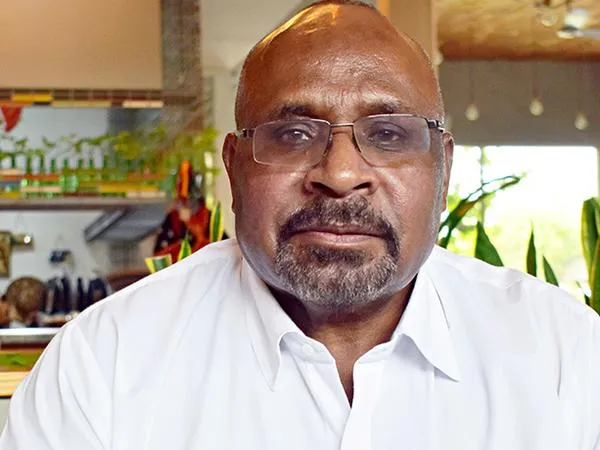
Photo: The late Deputy Prime Minister Hon. Sam Basil. Credit: PM James Marape News Page
Statement by Prime Minister James Marape on the passing of Deputy Prime Minister Sam Basil
Papua New Guinea is shocked and saddened at the tragic passing of Deputy Prime Minister, Transport Minister and Bulolo MP Hon. Sam Basil after a road accident along the Bulolo Highway on Wednesday night.
We pray for God’s Hand on the country at this sad time.
It is a big loss to his family, people of Bulolo, Morobe, United Labour Party and Papua New Guinea as we try to come to terms with his passing.
He was a strong member of our present generation of leaders in Government who had our country in our heart
What makes his untimely passing even sadder is the fact that it happened only hours before nominations open for the 2022 General Election.
This young and vibrant leader had been preparing his United Labour Party well for the elections only to have this tragic accident happen on the eve of nominations.
The ruling Pangu Pati I now lead is due to the hard work of Hon. Basil in 2014.
He single-handedly resurrected the ruling Pangu Pati I now lead in 2014.
The one-man party became two in 2015 when the late Goilala MP, Hon. William Samb, joined Hon. Basil to revive this great PNG institution.
Hon. Basil led Pangu into the 2017 General Election winning six seats in Morobe and others around the country, bringing it back to life for – something for which we the present Pangu are indebted to.
We will give him a State Funeral befitting of his status as Deputy Prime Minister.
We thank God for the life of Hon. Basil and his many contributions to Bulolo, Morobe and Papua New Guinea.
HON. JAMES MARAPE, MP PRIME MINISTER
Article courtesy of PM James Marape News Page
The Bank of PNG (BPNG) claims that rising global inflation has resulted in higher import costs and domestic inflation, which it attributes to increased activity and demand as a result of massive fiscal and monetary stimulus programs.
The ongoing Russia-Ukraine war, according to Acting Governor Benny Popoitai in BPNG's quarterly economic bulletin for the September quarter of 2021, has already put pressure on crude oil, and food prices (wheat/grains and vegetable oil), and fertilizer prices because both nations were key producers.
“The increases have affected international prices of these commodities, and subsequently the prices of our imported goods,” he said.
“The increase in prices in Papua New Guinea is due to higher imported prices from our trading partners.
“In recent months, we have seen high prices of imported items, especially fuel prices increase significantly.
“However, inflationary pressures from the domestic supply-side normalized attributed to the easing of restrictions of the Covid-19 (Coronavirus) pandemic.
“The annual inflation outcome in the December quarter of 2021 was 5.7 percent as released by the National Statistical Office following an increase of 4.3 percent in the September quarter.”
Popoitai cautioned that the increase in inflation reflected higher imported inflation driven by high energy prices including crude oil prices and pandemic induced supply disruptions.
“The December quarter inflation outcome reflected price increases in education; alcoholic beverages; tobacco and betel nuts; transportation; food and non-alcoholic beverages; health, miscellaneous; housing; and, clothing and footwear expenditure groups of 20 percent, 8.8 percent, 7.7 percent, 6.6 percent, 5.2 percent, 4.3 percent, 2.1 percent, and 1.1 percent, respectively,” he said.
“These more than offset declines of 3.5 percent and 2.5 percent in the restaurants and hotels and communication expenditure groups, respectively.”
Reference: The National (1 May 2022). “Global inflation affecting PNG”.
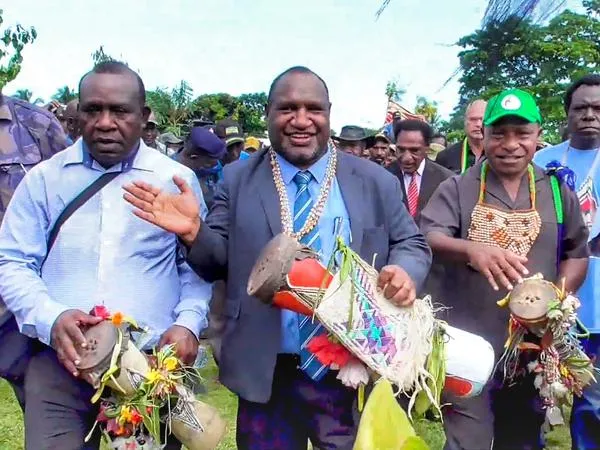
Remote sections of the nation, such as Morobe's Siassi islands, are no longer neglected, according to James Marape.
During his visit to Bunsil Station on central Umboi Island, he launched many impact projects for Pangu MP Hon. Tewai-Siassi District Development Authority (DDA). Kobby Bomareo, M.D.
He was joined by the Deputy Leader of Pangu, Hon. Ginson Saonu, Minister of Fisheries Hon. Lino Tom, Minister of Works and Highways Hon. Michael Nali, Minister of Justice Hon. Pila Niningi, Minister of Lands and Physical Planning John Rosso.
PM Marape also granted K5 million to the Tewai-Siassi DDA to create a community facility at Bunsil for women, youth, small business training, and Flexible Open Distance Education (FODE) told the people that his government would finish the Siassi Ring Road.
He advised the Siassi islanders to invest more in agriculture and fishing and develop their own timber resources rather than allowing foreign firms to exploit them.
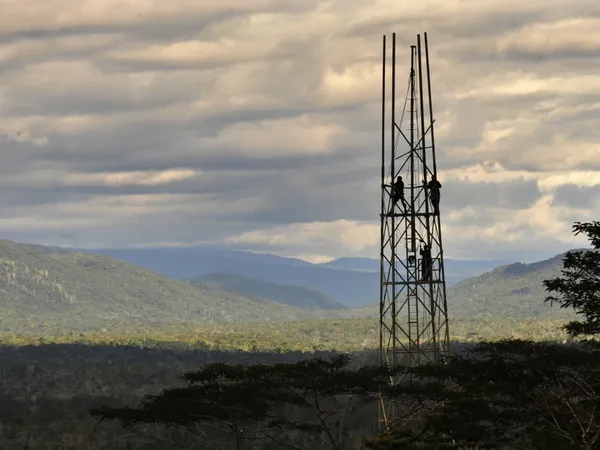
A Telikom tower, which provides islanders with Internet and mobile phone access for the first time, three police homes and a police lock-up, and Siassi sub-district administration were among the projects unveiled by the Prime Minister. The tower, in particular, is a significant milestone for Siassi, as there was previously just one location at Lablab from which islanders could make phone calls and access the Internet.
PM Marape stated Siassi was progressing due to Dr Bomareo's hard work and dedication since his election in 2017.
“Reflect back on how life was before 2017 and what has happened since 2017,” he said.
“Siassi, and the whole country, was travelling along the wrong road until 2019 when we changed government.
“Your MP, Dr Bomareo, was instrumental in this change of government which has led to the many developments you are seeing now.
“Today, after three years, we are steering the canoe in the right direction, which our founding fathers foresaw in 1975 for equal development all over the country.
“Resources must be equally distributed all over the country and not only to one area like Port Moresby.
“Remote areas of the country like Siassi have been forgotten for far too long.”
“I want the people of Siassi to have hope for a better tomorrow.”
PM Marape stated that he would return to Siassi with a group for a weekend in the near future.
Reference: PM James Marape News Page (30 April 2022). “Marape Government focuses more on rural PNG”.
Photo: PM Marape with Manus Governor Hon. Charlie Benjamin (left), Civil Aviation Minister Hon. Walter Schnaubelt and Speaker and Manus MP Hon. Job Pomat at the new Momote International Airport in Lorengau
According to James Marape, his government has boosted expenditures on vital infrastructure across the country, in contrast to the Peter O'Neill dictatorship, which developed only a few areas at the rest of Papua New Guinea.
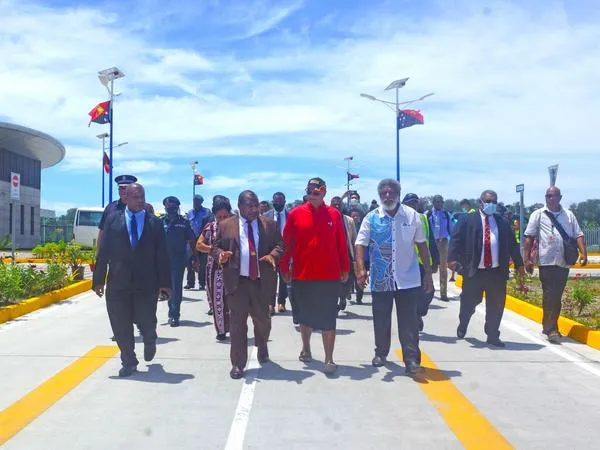
When the K101.9 million Momote International Airport and the Manus Special Economic Zone were opened in Lorengau, Manus, he remarked this (SEZ).
PM Marape also:
“In three hard and tough economic years, we have pushed our investments to key infrastructure in all provinces of our country, unlike the recent past government where only one or two places were getting lop-sided development at the expense of rest of Papua New Guinea,” PM Marape said.
“We have embarked on new seaports like N’Drauke, Vanimo and Manus, to name a few, and rehabilitation of existing economic ports like Kavieng, Lorengau, Oro, Kimbe, Rabaul, Madang, Lae and Port Moresby.
“We have embarked on K20 billion worth of road infrastructure over the next 20 years to connect PNG by reliable roads overlaid with electricity and Internet.
“Highways like Momote to West Coast Manus, Alotau to Port Moresby, Port Moresby to Kerema /Ihu, Lae to Port Moresby, Kimbe to Kokopo, Buka to Buin, Wewak to Vanimo, Madang to Wewak, Wabag to Sepik, Southern Highlands/Hela to Kikori Gulf, Lae to Finschafen/Kabwum, Kundiawa to Karamui, Tabubil to Telefomin, Hagen to Madang and Kundiawa -Bundi/Madang are being constructed.
“We also have over 100 small district and provincial roads we are funding for first-stage construction like Tari to Kopiago, Komo to Bosavi, Banz to Jimi, Namatanai to South New Ireland and Kokopo to Pomio.
“These are examples of connecting the forgotten people of our country into one nation, one people, one country.
“One country united by the economy, enabling infrastructure, and Papua New Guinea united – Pangu for short – where no one part of the country like Manus is left behind.”
PM Marape said he was in Manus to launch the new airport and guide Manus in the right way in the future for a prosperous and unified PNG based on Christian and Melanesian values.
“Now that we have taken PNG back from hands and minds of corruption, misuse of people’s resources and uneven distribution of wealth, we all must now work to construct a better Manus and PNG for our children to live in,” he said.
“For Manus, this airport terminal must not be a waste but an asset for the country; this investment must repay the K101.9 million the government invested in it and generate more commerce and economic activity going forward.
“Manus is a strategic province – you are connected to Asia and the Pacific by air and sea.”
Prime Minister Marape indicated that Parliament, led by Governor Hon. Hon. Charlie Benjamin and Open MP Job Pomat had completed the Manus SEZ.
“Manus will be a special region where there will be no tax for companies operating here,” he said.
“We want agriculture, fisheries, forestry, manufacturing, tourism, banking, education and health businesses to grow here.
“Lorengau International Airport will also receive international flights – a catalyst that will ensure that this special province grows into the place it rightfully deserves.”
Reference: PM James Marape News Page (29 April 2022). “Marape Government investing in infrastructure like never before”.
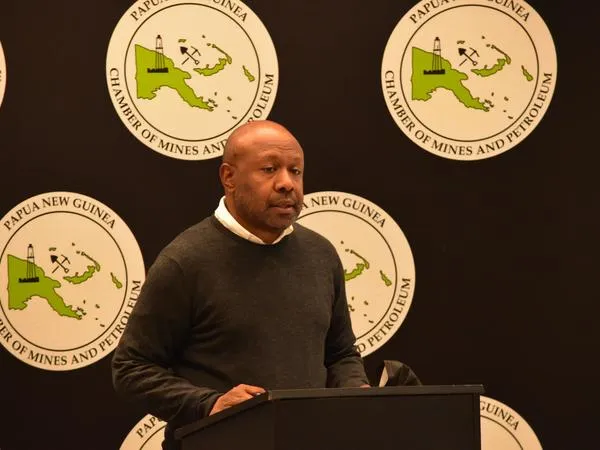
Photo: President Anthony Smaré addressing the attendees at the 34th Annual General Meeting
Incumbent president of the PNG Chamber of Mines and Petroleum Anthony Smaré retained his position as President at the Chamber’s Annual General Meeting.
Mr Smaré was re-elected unopposed in the Chambers 34th Annual General Meeting held on Thursday 28th of April at the Hilton Hotel Port Moresby.
Mr Smaré in 2021 had became the Mining, Oil and Gas industry’s first non-affiliated president, and independent of all the member companies that make up the Chamber’s membership.
Mr Richard Kassman of TotalEnergies EP PNG Limited retained his position as Senior Vice President, with Mr Philip Samar of K92 Mining Limited joins the Council as Vice President.
Council members for the year 2022 include; John Lewins (K92), Albert Kaupa Tobe (Ramu-Nico, MCC), Kepas Wali (Harmony Gold), Stanley Komunt (Newcrest Limited), Hitesh Lal (ExxonMobil PNG), Tim Richards (GeoPacific Resource), Mark McMonagle (Sun Engineering), Andrew Harris (Deloitte Touche Tohmatsu).
At the AGM, which was attended by representative of member companies in person and via videoconference from all of the world, Mr Smaré recounted the work that the chamber and industry had done over the past 12 months, highlighting in particular the significant work that the industry did in managing the covid pandemic so that it did not disrupt important resource operations that the economy required, but also in supporting covid responses in their remote communities and providing invaluable assistance to the national government’s covid management and resourcing activities.
Mr Smaré also acknowledged the work that the chamber and industry had done in continuing positive engagement with the National Government and stakeholders on policy reform and implementation.
Mr Smaré also thanked the outgoing councilors Mr John Chambers (Santos), Mr Johannes Van Heerdan (Harmony) and Mr Craig Jones (Newcrest) for their contributions as councilors. He also thanked outgoing Vice President Mr Leon Buskens for his stellar service and leadership, but reiterated that he hopes to see Mr Buskens, as a senior Papua New Guinean leader in the industry, take up another leadership position in the Council later this year.
Article courtesy of the PNG Chamber of Mines and Petroleum
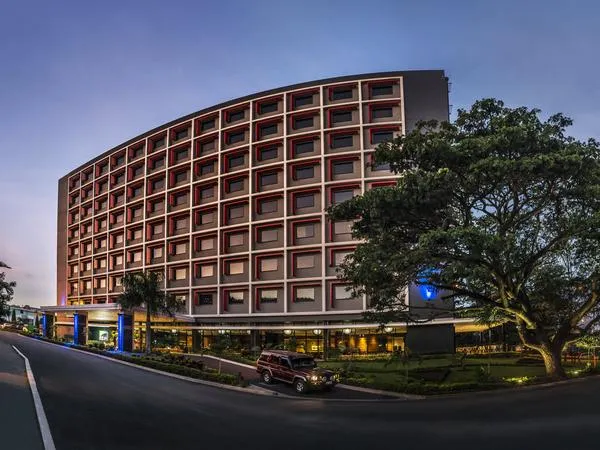
Holiday Inn Express Port Moresby reopened its doors to guests on the 1st of May, 2022. The perfect base to get business done while in Port Moresby or start a PNG adventure, the hotel closed operations on April 16, 2020 following the first travel border closures as a result of the COVID-19 pandemic.
Whilst the hotel remained closed for sale from 2020, a number of rooms were utilised as overflow from the Holiday Inn & Suites, in 2021. Two years on and this smart hotel choice for the business and leisure traveller reopens offering all the essentials of a great hotel at exceptional value.
“A Holiday Inn Express guest is a savvy traveller that expects value, we extend free breakfast and free Wi-Fi with our rates,” says Mauro Leone, Area General Manager, IHG PNG. ”Considering the high cost of connectivity in Papua New Guinea, this sets the brand apart from the competition,” he continues.
Holiday Inn Express Port Moresby offers a choice of modern queen and twin rooms and 2 wheelchair accessible rooms, as well as free on-site undercover parking and a complimentary shuttle bus to the city’s Jacksons International Airport only 6 minutes away.
Located within a secure green oasis in the heart of central Waigani, Holiday Inn Express shares vicinity with Holiday Inn & Suites. Between the two hotels within the precinct they offer a variety of modern facilities, including a fully equipped gym with two squash courts, external basketball court and a walking track for guests
n celebration of this reopening, the hotel offers an unbeatable room rate to the domestic tourism market, of K399 +GST inclusive of free Wi-Fi, breakfast for two adults in Kopi Haus Restaurant and accommodation in a standard room for the month of May. Experience Holiday Inn Express Port Moresby again and book now, on reservations.holidayinn&suites@ihg.com or +675 303-2000.
Photo: BSP Group General Manager for Corporate Banking, Peter Beswick
The global economy remains constrained by inflated commodity prices, lingering pandemic effects, and supply bottlenecks.
According to BSP Pacific Economic and Market Insight Q1 2022 Report, BSP Group General Manager for Corporate Banking, Peter Beswick said Russia’s invasion of Ukraine is significantly affecting global commodities.
“One of the major impacts has been crude oil, with prices having increased from USD35 to USD120 BBL in the last 18 months (240%).
“A recent media report by Puma Energy CEO, Mr. Hulala Tokome, confirmed that fuel prices will increase by 80 tea per litre and will continue to rise. The impact will be felt across the economy with consumers, vehicles owners, construction companies, businesses, and electricity suppliers bearing the brunt of the higher fuel costs,” said Mr. Beswick.
In relation to COVID, Mr. Beswick stated that although COVID impacts have dissipated in 2022, persistent supply chain issues most especially from China are resulting in significant delays in product shipments and uplift in shipping costs increasing over 300%.
“This is a significant impact for PNG as 85% of consumables, raw materials for production, and finished goods are imported,” Mr Beswick added.
For many businesses, the increased costs will need to be recouped from consumers via higher prices.
Article courtesy of BSP
Photo: IPA Haus
Since 2019, the Investment Promotion Authority has seen a significant increase in PNG businesses registered.
The increase in registration came when COVID-19 hit the country, according to IPA managing director Clarence Hoot.
“We are slowly seeing registration of businesses, especially from international investors and international businessmen and women, we are coming back from a low registration when COVID-19 hit to numbers rising,” Mr Hoot said.
“For example, for associations which are non-profit organisations, in 2019 we had 596, 2020 we have reported 830 associations registered, 2021 a slight drop with 810 reported and for the first three months of this year we have so far registered 241 associations which will increase.”
“For business groups, it was reported that 584 were registered, in 2020, there was a jump to 1055 business groups registered with IPA while it dropped to 877 registering in 2020, and for the first three months 541 have registered business groups.”
“For business names in 2019, 20,381 registered names, in 2020 there was increase to 25,398, in 2021 there was a huge jump to 28,180 business names registered across the country, and for the first three months for 2022 we already have 10,369 business names registered.”
“For IPA, more people are registering their businesses and companies with more foreign interest in the country.”
“For those registering business companies in 2019, there were 3,993 registered business companies, in 2020 there was a jump to 4,310 by 2021 the registered business companies had risen to 4,500 while for the first three months 1,667 have so far registered business companies.”
Mr Hoot added that 600 foreigners were granted foreign enterprise certificates in 2019 to conduct business in PNG.
“However, when COVID-19 hit the country in 2020, there was a big drop to only 456 foreign certificates obtained with a slight increase to 477 in 2021, however in the first three months of this year, there have been 160 foreign enterprise certificates obtained, which will increase in the months to come,” Mr Hoot said.
“To us, this means businesses are back and bringing more economy revenue to the country.”
Reference: Zarriga, Miriam. Post-Courier (28 April 2022). “IPA’s Busiess Registrtation Up”.
“As Bougainville continues to make great headway in its political development, we must also ensure that our socio-economic development is on par with our independence ready mission.”
President Toroama made this bold declaration in parliament, emphasising the importance of hastening internal economic development plans.
“We already have several high impact projects that this government is initiating, but we are yet to capture the low hanging fruits through the industries that Bougainvilleans are already involved in. We need a strong Bougainville Economic Development Strategy that will allow us to harness revenue from economic projects,” Toroama said.
“It is time we stopped procrastinating with plans that do not go beyond the paper they are written on. We must practicalise economic development and start earning revenue for Bougainville.”
President Toroama urged all Bougainville landowners to begin to trust the government and to engage with it to support economic projects that would help the government raise money.
“To enable tangible development and social progress, they (landowners) must work with the government by releasing their lands for development and respecting the progress of the economic projects initiated on their lands.”
“My government has always adopted rights before resources approach to development where we place the rights of the people above monetary and financial value. By respecting landowner rights, we expect the landowners themselves and the investor to comply with our economic laws and regulations to avoid problems.”
President Toroama, on the other hand, noted that a number of international enterprises had established themselves in Bougainville but had to abandon their investments and assets owing to landowner disputes and criminal activity.
“We may complain about the government not doing enough to support economic development, but our greatest impediment is ourselves when we refuse to support the government’s economic initiatives. If we continue along this path, there will be no real economic benefits to support our Independence agenda,” President Toroama said.
While Panguna is a significant economic driver for Bougainville, President Toroama stated that it would not be the exclusive source of money for the country, instead, Panguna must be viewed as a supplement to the country's overall prosperity.
“It (Panguna Mine) must not impede our desire to grow other investment opportunities for Bougainville that will provide revenue, it must be seen as complementary to our economic growth.”
President Toroama also stated that his administration is not planning any covert schemes to undermine the Panguna Landowners.
“I want to make it clear to the Panguna landowners and the people of Bougainville that my government has not made any commitment to any mining company. We are only dealing with Bougainville Copper Limited because the government is required to do so when it concerns the Panguna Mine. This government has no secret plot to undermine the landowners and give concessions to mining companies without the people’s consent,” Toroama stated.
Reference: Autonomous Bougainville Government (27 April 2021). “President Toroama on economic development”.
Pacific Trade Invest (PTI) Australia, an agency of the Pacific Islands Forum Secretariat, has launched its 2021 Annual Report.
Despite the harsh climate, the report highlighted more than A$27 million in export sales and 17 investment deals brokered in the area.
In the aftermath of COVID-19, PTI Australia continues to engage with businesses in Papua New Guinea, promoting trade, tourism, and investment prospects. PTI Australia assisted 187 enterprises and enabled A$4,111,240 in exports through its services.
Caleb Jarvis, PTI Australia's Trade and Investment Commissioner, spoke on the pandemic's ongoing impact on the Pacific and the organisation's efforts to help the private sector during and after the crisis.
“Across the Blue Pacific, many nations felt the devastating health impacts of the pandemic for the first time in 2021, demonstrating incredible resilience in their response to the crisis. Despite an arduous environment of severe trade and investment constraints, we supported 975 businesses across 16 Pacific nations during this period,” said Mr Jarvis.
“In PNG, we connected a number of PNG-based businesses to potential buyers and distributors in Australia, including a bilum exporter to an Australia-based buyer, a vanilla extract exporter to a Melbourne-based importer, and a coffee bean exporter to an Australian-based buyer.
“In addition to these services, we continued to support manufacturers, sponsor partners events, and run multiple high-value digital workshops.”
He credited his team's flexibility, ingenuity, and collaboration with PTI partners for achieving these accomplishments.
“I am proud of the flexibility and determination demonstrated by the PTI Australia team, who continued to approach the year dynamically, remaining immeasurably adaptable as many of our trade and investment. Tourism and labour mobility programs shifted between physical, virtual and hybrid formats as Australia and the Blue Pacific moved in and out of various lockdowns,” said Mr Javis.
These accomplishments could not have been accomplished without the help of the worldwide PTI Network and partners, and they highlight the critical role they play in expanding our reach and effectiveness throughout the Pacific.
“Collaborating with our global PTI network and 27 partners allowed us to deliver $27.14 million in exports and $14.66 million in investments.
Jarvis said that investing in and speeding regional digital development and capacity building has also played a key role in the agency's operations.
“2021 saw us continue to invest in regional digital development to support businesses across the Blue Pacific to navigate the new conditions brought about by the pandemic.
“Throughout the year, we delivered 38 online workshops to help Pacific businesses participate more in the digital economy, launched our PTI Australia x Canva Digital Design Program, a first in the region, and refined our e-Commerce connector series.”
“Understanding the realities for the Pacific’s private sector has also been essential during this period, and through the PTI Network’s regular PTI Pacific Business Monitor survey series, we have been able to ensure nations, agencies and partners were kept informed with data, while also utilising these same insights to inform the design of much of our work.”
Jarvis reaffirmed the agency's commitment to assisting Pacific enterprises and the communities that rely on them in the future.
“We remain committed to working with our partners to chart a path to economic recovery, creating tangible outcomes for the businesses and people of the Blue Pacific, as we continually pursue the Pacific Islands Forum’s vision of a bright and prosperous future for all Pacific peoples.”
Reference: Loop (26 April 2022). “PTI launches 2021 Annual Report”.
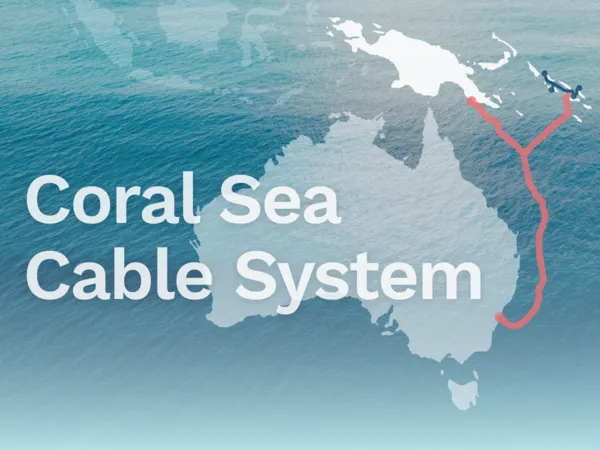
PNG DataCo Limited (DataCo) chief executive officer Paul Komboi says there will be a planned outage on the Coral Sea Cable System (CS2) between Port Moresby and Sydney from May 14 to 21.
However, according to Komboi, the date might be pushed back to October.
“DataCo management has considered this outage a critical precautionary measure to mitigate serious issues going into the future and the life of this asset,” he said.
“Since commissioning of the CS2 cable, a shunt fault was detected in early 2021, posing a risk to the ongoing smooth operation of the cable system.
“During the outage window from May 14 to 21, all international bound traffic for internet and private leased circuits on CS2 will be routed on alternate paths via PPC-1 submarine cable from Madang to Sydney and Madang to Guam and possibly O3B satellite system out of Port Moresby.
“This whole exercise will result in degradation of services because the alternate paths will not have enough bandwidth capacity to cater for the demands of the present traffic profile on CS2 and will also result in increased latency during the outage window,” he said.
“All service providers are at this moment notified to consider alternate redundancies to back up their services during the outage period.
“DataCo sincerely apologises for any inconvenience this outage may cause to businesses.
“We will provide further advice and update on the progress of this exercise until services are normalised.”
Reference: The National (25 April 2022). “DataCo plans outage to fix Coral Sea cable system”.
Photo: Digicel mobile towers in Papua New Guinea. Credit: Jason South
The possibility of Vodafone, Digicel, and Telikom PNG sharing towers is still being discussed.
Mr Lal stated that Vodafone had first discussed tower leasing and sharing with both Digicel and Telikom/BeMobile, but that no viable agreements had been reached, prompting the company to build additional towers.
“However, we remain open to further discussion if the incumbents in the market are amenable to tower sharing arrangements,” he said.
Vodafone PNG chairman Kalpana Lal said the company is aware that it is the third mobile telecommunications entrant. Still, it believes the market is large enough for three competitors, and it is committed to shaking up the sector for the sake of everybody.
“We operate in many other competitive markets across the Pacific and respect and embrace competition. While we fiercely compete on many fronts, we are also ready and open to collaborating with other industry players for the benefit of customers at large and the industry; especially on matters such as infrastructure sharing, number portability, building resiliency and achieving the goal of bridging the digital divide,” Ms Lal said.
One of the world's largest and most successful mobile telecommunications companies and one of the world's top ten most valuable brands.
Ms Lal explained that this means PNG clients would have access to industry best practices, a knowledge base spanning all aspects of the business, combined economies of scale, and operational know-how from a global brand.
“This means the PNG people will have access to the latest network technology, more affordable access to connectivity, the latest in smartphones and devices and much more value,” she said.
“Being part of this global ecosystem means strategic investment, latest technology, high service orientation and years of experience.
We will work tirelessly to bring mobile connectivity to each person in PNG, ensuring the mobile devices and the cost of the internet is affordable.”
Reference: Yafoi, Melisha. Post-courier (25 April 2022). “Vodafone Tower Share Talks”.
Photo:
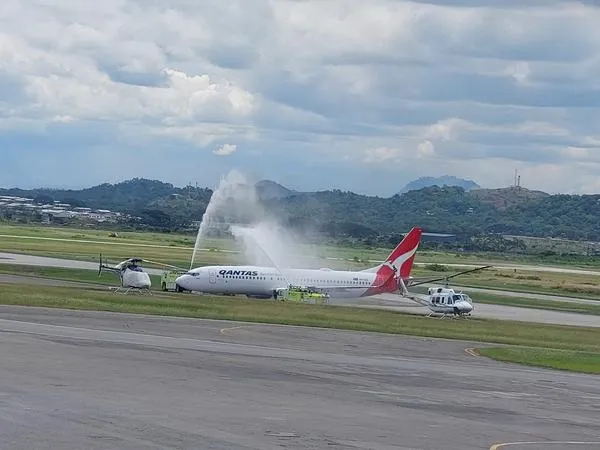
Qantas has resumed its operations after more than two years.
On Friday, April 22, 2022, services resumed with the arrival of flight QF057 and the departure of flight QF058.
Qantas flew to Papua New Guinea to bring supplies to the front lines during World War II. Qantas began flying from Australia to Port Moresby and Lae in 1945, where the airline built a base for local operations.
Every Monday, Friday, and Sunday, flights will be operated by a Boeing 737-800.
With flights between Brisbane and Port Moresby increasing to five per week from June 20, Qantas expects demand on this route to increase in the coming months, particularly from the business market.
The route, which will boost commerce and trade between Australia and Papua New Guinea, is the latest international service to be introduced to Qantas' network out of Brisbane.
Customers flying to Australia from Papua New Guinea will be able to connect seamlessly with the Qantas Group's domestic and international aircraft routes, according to Qantas.
Customers and Frequent Flyers of Qantas will be able to earn and utilize Qantas Points on the flights, as well as enjoy premium amenities such as complimentary food and beverages, checked luggage, and lounge access in Brisbane.
Reference: Loop (24 April 2022). “PNG back on Qantas route map”.
Follow on LinkedIn:
PNG Business News
Be the "First" to get our exclusive Digital Magazine & Weekly Newsletter.