The outlook for Papua New Guinea has been changed from negative to stable by Standard and Poor's Global Ratings.
The stable outlook is based on S&P's belief that fiscal consolidation efforts and measures contained in an International Monetary Fund programme would continue to decrease fiscal deficits and stabilise the country's debt burden over the next year.
According to the research, if consolidation initiatives do not appear to be taking place over the next 12 months, S&P could reduce the country's ratings, increasing worries about the country's fast-expanding debt levels and debt serviceability.
“We could raise our ratings if there were a strong track record of implementing fiscal reforms, thereby improving our view of PNG’s fiscal and debt metrics, as well as a strong improvement in GDP (gross domestic product) growth.
“This is unlikely to occur over the next 12 months,” the credit rating agency said.
“Despite an estimated decline of 3.5 per cent in real GDP in 2020, we expect a modest economic recovery of 1.7 per cent in 2021.
“Buoyant agricultural output and commodity prices drove growth in 2021, and the reopening of resource plants shuttered during the pandemic will support resource-related growth.
“The promise of new resource-related projects in the medium term should improve the country’s economic prospects.”
According to the study, the worldwide pandemic has compounded PNG's underlying budgetary issues.
“Our sovereign ratings on PNG reflect structural constraints inherent in a low-income economy dependent on the mining industry and served by weak institutions.
“The PNG government aims to promote investment and address macroeconomic imbalances and economic diversification.”
Reference: The National (26 May 2022). “PNG economy ‘stable’”
According to National Research Institute (NRI) interim director Osborne Sanida, the government must embrace digital transformation to promote commerce.
“the volume of trade has increased over the years with the reduction of tariffs,” he said.
“We need to ensure that digital transformation is used to our advantage to facilitate trade.
“But we must, at the same time, guard against many adverse impacts on information explosion in this ICT (information, communications technology) age.”
ICT, according to Sanida, provides all types of information on multiple platforms.
“So, how can we tell what is relevant and what is not?” he said.
“The producing of valid statistics and developing data is important for research, analysis and providing reliable policy recommendations.
“Digital transforms functions from labour-based to digital or electronic-based systems.”
PNG, Sanida said a Customs Business Consultative Forum, has an open economy that relies heavily on commerce.
Sanida said PNG Customs had gone from manual document processing to automation of customs processing and procedures, which included electronic document submission, adoption of electronic payment systems, inter-agency coordination, and interagency Government systems involving clearance, among other things.
Reference: The National (27 May 2022). “Embrace digital tech to facilitate trade, says institute”.
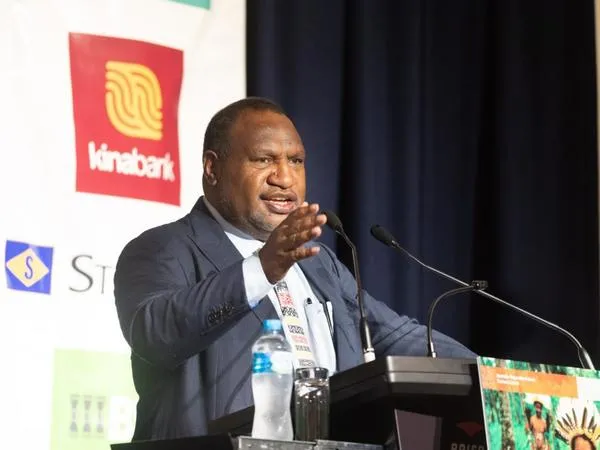
Photo credit: Rocky Roe - PM Marape addresses the forum
Prime Minister James Marape claims that Papua New Guinea is a good location to invest.
The Prime Minister recently spoke at the 37th Australia-Papua New Guinea Business Forum and Trade Expo in Brisbane.
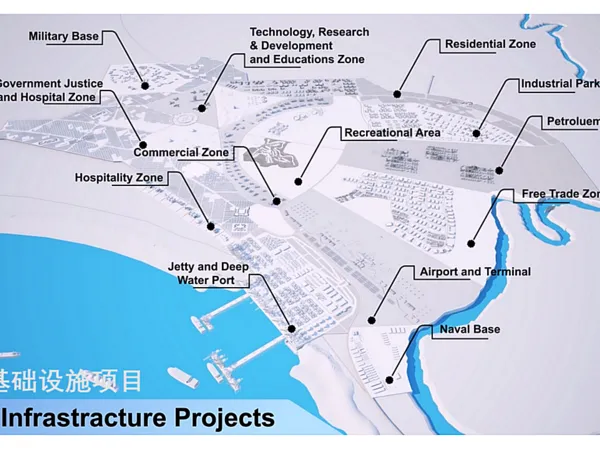
“To attract and lock in investments, we are opening up special economic zones that offer incentives like free trade, tax holidays and other concessional investments,” he said.
“My generation of leaders are aware of opportunities in trade for the benefit of our 10 million people in our Apec, Asean and Pacific neighbourhood.
“The world close to PNG in the Asia-Pacific needs food, energy and other finished products from our forests, land and seas.
“We want to value-add to our resources so we are looking for partners in agriculture, fisheries, forestry, oil, gas and mining.
“Downstream processing is the way to go.
“I call on this august business forum to keep on investing in PNG or come and pick up a business address in PNG.
“As a vote of confidence in PNG’s economy, we saw recently Australian companies invest big in PNG, like Telstra which acquired Digicel and Fortescue Future Industries.”
Marape said the merger of Santos and Oil Search was a pivotal moment in potentially forging closer ties between Australia and PNG.
“Although it was sad to see a PNG company such as Oil Search go, we have our very own Kumul Petroleum in the oil and gas industry in PNG and my hope is that Santos follows through on the ‘national interest expectations’,” he said.
“We look forward to Santos and Kumul Petroleum doing an equity sell down transaction and this will create a strong relationship between the two companies.
“Those of you who have been in PNG know that while we have issues of law and order, and systematic impediments such as infrastructure deficiencies, those who remain as businesses in PNG continue to make profits.”
Marape stated that the government will work to remove barriers to business and make it simpler to do business in PNG.
The government's commitment to the business environment, he stated, includes:
Reference: The National (25 May 2022). “Invest in PNG: Marape”.
The Ihu Special Economic Zone project in Gulf Province's Kikori District is presently in its second phase of development.
The second phase of the Ihu SEZ has been funded with a total of K10 million, according to Peter Kengemar, the project director.
He stated that for the first five years of phase two development, K20 million from the K100 million allocated by the National Executive Council was meant to be released each year, but owing to COVID-19, the funds have been scaled down to K10 million.
“Phase two basically involves land mobilisation, land investigations studies which involves the size of land we required to get the project in,” he said.
Mr Kengemar stated that they require two permissions to legally enter the project at the desired location: a land development permit and an environmental impact statement (EIS) for the environmental permit.
The site improvements program and SME training for Kikori residents are two more projects now in operation.
“Site improvements involves building infrastructures like roads, fixing airports, airstrips, building jetties, and other basic infrastructure development.
“We have registered almost three thousand people attending the SME training programs and workshops.
“We are working with the Department of Commerce and Industry to get them registered as a corporate societies which has been done,” Mr Kengemar said.
He explained that the goal is to train and upskill them in order to codify their business processes and prepare the team for the huge project.
The development of significant building infrastructure and the growth of industry are the two remaining phases (phases 3 and 4).
It will take 15 years to finish the project.
Reference: Wohi, Lorraine. Post-Courier (26 May 2022). “Iu Special Economic Zone Project Undergoes Phase Two Development”.
After the general election, getting significant resource projects off the ground must be a top priority for the administration, according to an official.
Rio Fiocco, head of the Port Moresby Chamber of Commerce and Industry, said these initiatives will bring in foreign cash and help to the country's overall economy.
He said that the projects' spinoffs will assist not just large corporations, but also small and medium-sized firms (MSME).
“The business community is waiting to see some of these major projects get moving, in particular, the Pasca project and of course, the Porgera project restarting and the Wafi-Golpu project to get underway,” Fiocco said.
“We would hope that those projects get moving quickly so that more jobs are created and the economy can grow.
“It will give a boost to all businesses, not just big businesses but small and micro-enterprises.
“You look at for example the case of Porgera, all road contractors have missed out, all workers of the mine have lost jobs, even farmers supplying fruits and vegetables to the mine have no customers.
“So yes, the spinoff benefits of getting any of these major projects underway is very strong. It also boosts the foreign exchange with the export of gold which will bring dollars into the country.”
Reference: The National (20 May 2022). “Govt should focus on resource projects: Fiocco”.
Photo credit: Department of PM&NEC
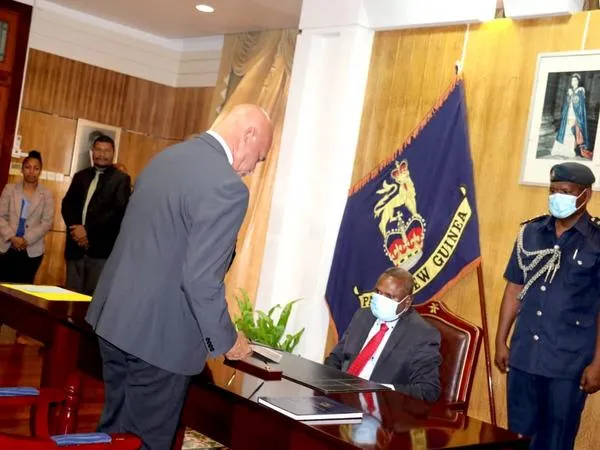
Prime Minister Hon. James Marape has today congratulated the Member for Lae and Minister for Lands and Physical Planning, Hon. John Rosso, on his appointment as the new Deputy Prime Minister of Papua New Guinea.
PM Marape said the appointment was made to honour and pay respects to the life and work of Deputy Prime Minister, Minister for Transport & Infrastructure, and Member for Bulolo, the late Hon. Sam Basil, who died on 12 May in a tragic motor vehicle accident in Morobe Province.
Prime Minister Marape said Honourable Rosso is a senior leader from Morobe Province and Member for Lae City, the most important “economic” city in the country.
“Importantly, Honourable Rosso has performed his duties as a minister of state very well and in respect to Deputy Prime Minister, late Honourable Basil, it is fitting to return the portfolio to Morobe Province.
“Honourable Rosso is a hardworking Member of Parliament and a senior Pangu leader, who has the political and personal attributes to replace Basil. In this context, we are making him the Deputy Prime Minister as he retains his Lands portfolio.
“Also, and just as importantly, because there must never exist a vacancy in the Deputy Prime Minister’s office in case something happens to the Prime Minister or in the absence of the Prime Minister,” said PM Marape.
The Prime Minister also took the opportunity to thank the family of the late Basil for their understanding in how it cooperated in the handling of the funeral arrangements including the replacement of Basil’s portfolio as immediately as possible soon after the burial.
Meanwhile, Prime Minister Marape also announced the appointment of Hon. Manasseh Makiba as the new Minister for Transport & Infrastructure.
“By the same token, we are bringing in Hon. Manasseh Makibah to Cabinet as soon as possible. He has been on the flanks in the last three years and has been an instrumental part of the change of government that took place in 2019.
“Hon. Makiba has always been a team player who has allowed others to take precedence before him. There is now a vacancy in the portfolio. While time is not there to do new things, there needs to be ministerial oversight and he steps into the Transport & Infrastructure portfolio to have that oversight as we go into elections,” said PM Marape. Both leaders of Parliament were sworn in today at Government House.
Article courtesy of the Department of PM&NEC
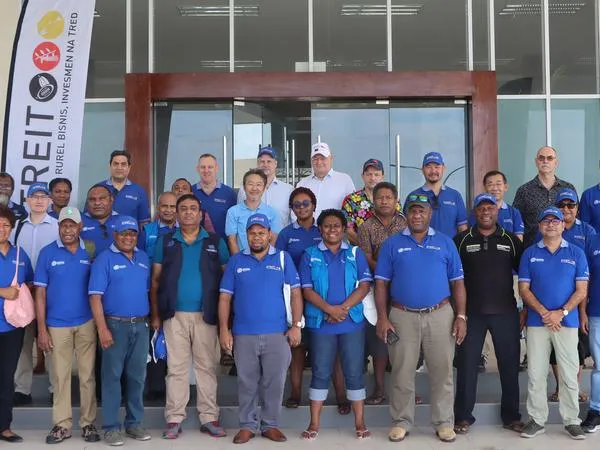
The EU Funded UN Joint STREIT Programme in Papua New Guinea has made progress in delivering technical assistance to the beneficiaries since the beginning of 2020. To address existing the challenges induced by COVID-19 Pandemic, there is a need to further scale up cooperation and partnership among stakeholders to speed up the pace of implementation of the envisioned support to improve agri-enterprise activities and livelihood of rural communities in the Sepik provinces. This was the highlight of the Programme Steering Committee's meeting held on Wednesday, 11 May 2022 in Vanimo, the capital of Sandaun Province.
"The EU-STREIT PNG Programme, funded by the European Union for the benefit of the people of the Sepik provinces, represents the largest opportunity ever to initiate, make and deliver a change for the better, in the daily lives of women, men and youth, from this region," said H.E. Jernej Videtič, the EU Ambassador and the Head of Delegation to Papua New Guinea. Adding "The Programme is part of EU-PNG’s long-lasting partnership in providing innovative solutions for sustainable development to the marginalised agri-rural communities."
"To build back better after experiencing the severe impact of COVID-19 Pandemic, the team, including the implementing agencies, public authorities and development partners, need to take new measures and scale-up coordination mechanisms at national, provincial and local levels to accelerate tackling protracted challenges and find solutions for emerging issues," underscored Roger Kara, Deputy Secretary of the Department of National Planning and Monitoring. Stressing "only by paying attention to local ownership and alignment will the long-term sustainability of the EU-STREIT PNG Programme be assured."
"The Programme has rolled out a good level of interventions, directly supporting a large number of beneficiaries,” highlighted the United Nations Resident Coordinator a.i, Dirk Wagener. He further stressed that "the Programme is a joint endeavour of, not only the UN family in Papua New Guinea, but also the National Government, Provincial Administrations, and local counterparts in Greater Sepik region, and we all need to put our best to deliver the support and empowerment the people deserve."
Appreciating the contributions made by all partners in delivering support to the target beneficiaries in the Sepik, Takayuki Hagiwara, the FAO Asia-Pacific Regional Programme Leader, called on all involved parties to take firm measures to roll out the planned activities on the ground for the benefit of the rural population in the region to help them have better production, better nutrition, a better environment and a better life. He also emphasized the increased coordination with the Government, EU and other UN agencies to bring back the project on the right track and recover from the delay, while affirming FAO’s strong commitment on the delivery of the workplan.
Since January 2020, the Programme has reached out and provided technical assistance and support to 55,000 households and 331,000 people in 40 Local Level Governments (LLGs) in Greater Sepik.
Regarding its work plan, this joint project has achieved the following results for community benefits:
The EU-STREIT PNG, as a UN Joint Programme (FAO as leading agency, and ILO, ITU, UNCDF and UNDP as partners), is the largest grant-funded Programme of the European Union in the country and the Pacific region. Being implemented in close cooperation with the National and provincial government institutions, research entities, civil society organisations, and private sector enterprises, the Programme aims to help improve the lives of the people from East Sepik and Sandaun provinces, by focusing on increasing sustainable and inclusive economic development of rural areas through improved economic returns and opportunities from cocoa, vanilla and fishery value chains while strengthening and improving the efficiency of value chain enablers, including the business environment, and supporting sustainable, climate-proof transport and energy infrastructure development.
On the strength of planned resource developments, the Australia New Zealand Bank (ANZ) anticipates good economic growth for the country.
Businesses' investment is projected to turn back in the second half of the year, according to the bank's Pacific forecast.
The next phase of gas projects will be the primary driver, with Papua LNG expected to enter Feed (Front End Engineering Design) by June this year, paving the way for a much-anticipated building boom from late 2023 to early 2024.
“We expect a very strong second half of the decade when Papua LNG and the gold/copper Wafi-Golpu mine come online,” according to the research by ANZ.
“Work on the upstream P’nyang fields commence and investments in electrification, telecommunications, and renewable energy projects ramp up,” it said.
“The PNG LNG debt will be repaid mid-decade, providing the state with increases in dividends and taxes to broaden the base of economic drivers late in the decade.
“In the interim, the economy will get a fillip from government expenditure and elevated national income, boosted by an uplift in commodity prices. Ongoing road works, up and down the country, will support activity; but overall we expect another soft year, with business investment unlikely to rev up until 2023.
“Gross domestic product (GDP) is forecast to increase by 2.1 per cent in 2022 before strengthening to 5.6 per cent next year and averaging about eight per cent per year through to the end of this decade.”
Reference: The National (18 May 2022). “ANZ forecasts positive economic growth for PNG”.
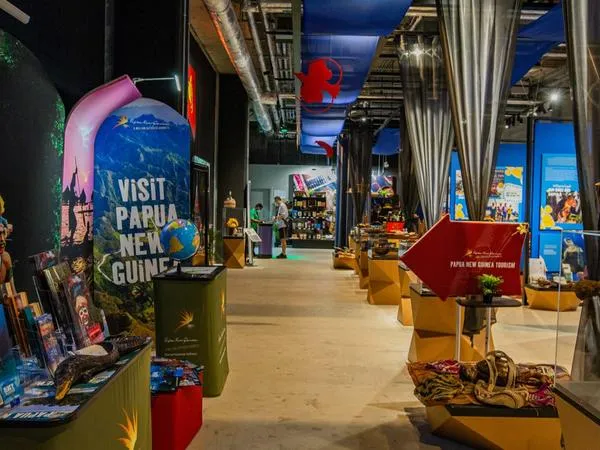
Photo credit: Expo2020 Dubai UAE: Papua New Guinea pavilion
The 6-month world Expo2020 in Dubai has ended on the 31st of March with great success giving different participating countries including the Papua New Guinea expo team great learning experiences and key take away tasks to implement to further develop the country’s economy.
The Papua New Guinea pavilion officially closed its doors on March 31st but remained open on April 1st to give opportunity to pavilion staff from other countries, expo volunteers and workers to come and visit given the lack of opportunity they had to visit other country pavilions during the course of the expo.
The closing now leads to the next phase of expo which is the decommissioning of the pavilion. The PNG expo team has been busy over the last few days dismantling and packing display banners in the pavilion. The items will be packed in a container which will then be shipped back to Papua New Guinea.
The first lot of pavilion staff left Dubai on the 10th of April while a skeleton team remained to organize a post expo networking dialogue with partners and interested investors in UAE.
The full expo team is expected to be in Port Moresby at the end of the month to prepare for an interagency post expo workshop where stakeholders will be called in for a briefing on PNG’s participation outcomes in Expo2020.
During the official closing dinner of the pavilion, PNG Expo Commissioner General and Ambassador to Belgium and the EU, His Excellency Joshua Kalinoe commended the staff saying that they had lived up to the expectation of their people and country as they worked very long hours, 24-seven, not only in pavilion duties but also planning and executing trade and investment events during the expo led thematic weeks.
“Papua New Guinea was one of the countries that actively participated in expo led programmes within the context of the pavilion’s strategic participation framework that was approved for implementation by the Marape Cabinet,“ Ambassador Kalinoe said.
The PNG pavilion delivered a number of forums and events as part of its participation strategy and maximized PNG’s visibility during the expo. The key events included;
PNG also participated in the thematic events organized by expo.
The PNG pavilion together with other smaller pavilions will be demolished and the expo site will be converted to District 2020, a suburb of Dubai city.
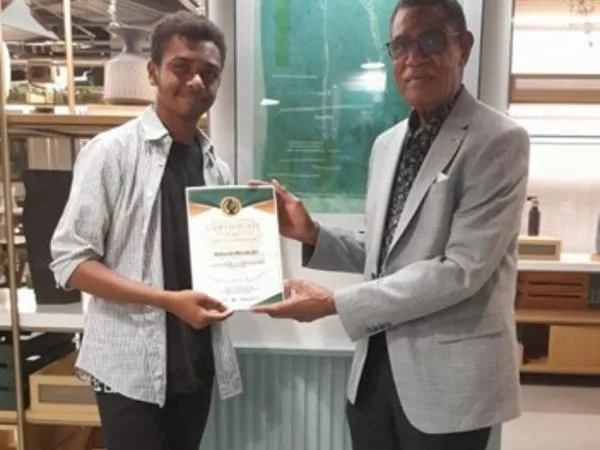
Photo: Antonio Narokobi receiving his Certificate of Recognition from the Commissioner General of Expo2020, His Excellency Mr. Joshua Kalinoe, Papua New Guinea’s Ambassador to Belgium and the EU
A young 13 year old Papua New Guinean living in Dubai has been recognized for representing his country at the UN organized Youth Manifesto Young Ambassadors event hosted during the recently completed World Expo2020 in Dubai, United Arab Emirates.
Mr. Antonio Narokobi, who attends the Emirates International School, Meadows, volunteered to represent PNG at the Young Ambassadors event that included representatives from other participating countries.
The PNG pavilion was not able to bring a young representative from PNG due to timing and cost constraints. Instead Antonio Narokobi, who was assisting with pavilion work in his spare time with his mother Mrs Hazel Narokobi, sister Michelle and brother Saul, was selected by the Pavilion team to participate in the event that was organized by the United Nations Pavilion.
Antonio and his family were among other PNG families in Dubai that assisted and supported the PNG Pavilion’s Expo journey. He was awarded the Commissioner General’s Certificate of Recognition for Participating as Papua New Guinea’s Young Ambassador during Expo2020, Dubai.
Antonio’s father, Samson is an aircraft engineer with Abu Dhabi Aviation and has been living and working in the UAE since 2009.
Samson’s father Mr. Camillus Narokobi was the Commissioner General for the PNG Expo Pavilion in Seville, Spain, in 1992.
In its ongoing mission to mainstream gender concerns and youth inclusion into the agri-food value chain, the EU Funded UN Joint STREIT PNG Programme in Papua New Guinea, in partnership with stakeholders, has conducted 12 sensitisation sessions and training workshops covering 5000 plus farmers, villagers, officials, extension service workers and students in East Sepik and Sandaun provinces during the first four months of this year.
These awareness and capacity building sessions, between January and April 2022, were conducted in 50 locations involving participants from 34 Wards in 22 Local Level Governments (LLGs). The sensitisation also covered three secondary schools, a primary school and a technical and vocational training centre.
Along with Gender and Youth sensitisation and capacity building activities, under the Cocoa, Vanilla and Fisheries value chain development initiatives led by the Food and Agriculture Organization of the United Nations (FAO), over 3000 girls of 16 years and above have been trained as lead farmers. These girls and women attended capacity-building trainings conducted in rural LLGs and Districts of East Sepik and Sandaun provinces. They have been enabled and mastered to pass on the acquired skills such as in Cocoa Propagation and Block Management and Vanilla Cultivation, Husbandry and Processing techniques to other fellows in their households or clusters. These trainees (ToT) would in turn maximising their reach to a larger number of beneficiaries in hard-to-reach rural communities, enabling more farmers to contribute towards increasing quantity/quality production for an increased income and cash flow among farming households and communities.
All capacity development trainings are facilitated in collaboration with extension service officers from the Cocoa Board, the Fisheries Authority, Divisions of Agriculture and Livestock and local NGO workers and it is envisaged to translate knowledge materials such as manuals in the local Tok Pisin language for better dissemination.
In terms of providing quality agriculture inputs, 2500 youths and women in 16 villages have received Cocoa Pod Borer (CPB) tolerant seedlings to replace old sterile trees.
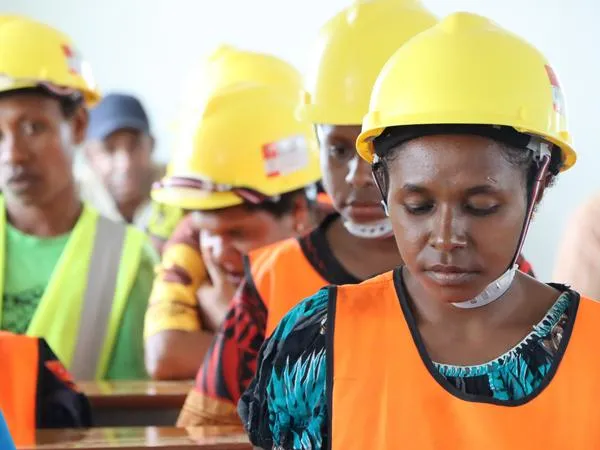
To strengthen local capacity on quality transport infrastructure works in the Sepik Region, the International Labour Organization (ILO) under EU-STREIT PNG, and in partnership with TVET Centre in Wewak, organised a skills training and capacity development course for 30 youths and women, pulled from different parts of East Sepik Province. This ongoing collaboration will develop the capacities of 150 more youths by the end of the year, thereby creating and promoting decent employment opportunities for rural youth and women who lack qualifications on in-demand practical skills.
Furthermore, to improve access to financial services to rural areas, the United Nations Capital Development Fund (UNCDF), under EU-STREIT PNG Programme and in partnership with three local financial institutions, has rolled out an “access to finance” and financial literacy initiative. Through this initiative, more than 13,000 women in the Greater Sepik region have been connected to the formal financial system in the first four months of 2022.
Commenting on this multi-UN agency efforts, the Programme’s International Gender and Youth Inclusion Specialist, Patu Shang, said: “Gender is cross-cutting, and when people are gender sensitised and aware, families and communities stay intact, and sustainable development becomes a norm.”
She added: “We can’t change the mindsets in one session, but under the EU-STREIT PNG Programme, continuous sensitisation awareness for youth and gender inclusion as well as technical support to train, enable and provide the requisite accesses for women and youth, is critical and this is where we know that change is possible, and change is what we must promote.”
The EU-STREIT PNG Programme, being implemented as a UN Joint Programme (FAO as the leading agency, and ILO, ITU, UNCDF and UNDP as partners), is the largest grant-funded Programme of the European Union in the country and the Pacific region. The Programme aims to help improve the lives of the people from East Sepik and Sandaun provinces, by focusing on increasing sustainable and inclusive economic development of rural areas through improved economic returns and opportunities from cocoa, vanilla and fishery value chains while strengthening and improving the efficiency of value chain enablers, including the business environment, and supporting sustainable, climate-proof transport and energy infrastructure development.
Photo credit: PNG Women Entrepreneurs Connect Facebook Page
Papua New Guinea Women Entrepreneurs Connect, whose objective is to empower and motivate women to be successful in business, today signed a Memorandum of Understanding (MOU) with PNGX Markets, the PNG Digital ICT Cluster, Emerging Venture Management (Unkapt) and Pacific Capital Markets Development - together the proponents of the DEFINE Initiative. The MOU outlines areas of cooperation to deliver several DEFINE objectives, including facilitating technical assistance for micro, small and medium women-led enterprises and enhancing the capabilities of human capital in the women-led entrepreneurial sector.
One key objective of the DEFINE Initiative is to expand access to banking and financial services for all, particularly women and the vulnerable, and their integration into value chains and markets. Another is to enhance the use of enabling technology, in particular information and communications technology, to promote the empowerment of women.
With over 5,000 members, PNGWEC is ideally placed to join with the DEFINE Initiative to deliver on these and other objectives.
“We are very pleased to be an integral partner with this DEFINE Initiative. This is a very strategic partnership as PNGWEC endeavor to promote, facilitate and progress the agenda of economic empowerment of Women in Papua New Guinea. This initiative gives PNGWEC members and all other Women Entrepreneurs an opportunity to expand and build their businesses. Most Women MSMEs have concentrated their operations locally, and this partnership opens the opportunity to accelerate and boost the Women MSMEs into trading and exporting Internationally. Assessment and capacity building will be accorded to the matured organizations who have a sizeable turnover, are profitable and have employees. We are excited and looking forward to working in collaboration with our partners to achieve our objectives.” said PNGWEC Chairwoman Ms Esther Igo.
“PNGWEC is an important partner for the development of the DEFINE Initiative and reach out to entrepreneurial women, especially in the MSME sector” said PNGX Chairman Mr David Lawrence. “It presents an ideal opportunity to provide business, financial and technology skills training to this important part of the PNG economy. We hope that many members of PNGWEC will be participants in a new business skills program for women which the DEFINE Initiative is developing with the assistance of the UNCDF as announced last week.”
“The relationship with PNGWEC also fits well with the MOU we have with Mama Bank. PNGWEC’s interest to explore artificial intelligence solutions to improve women’s access to finance ideally aligns with the interests of the DEFINE initiative and Mama Bank” said Mr Lawrence.
Article courtesy of PNGX
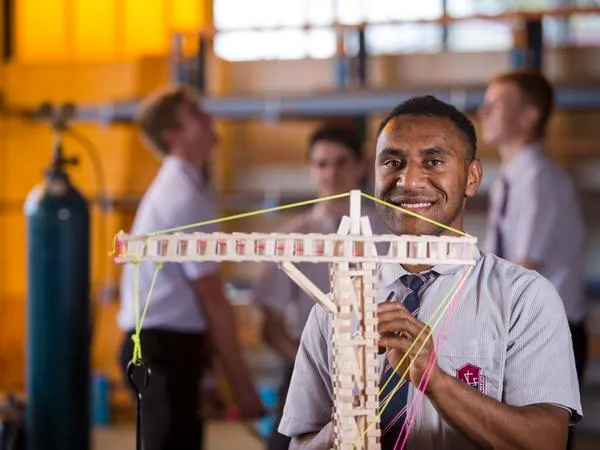
Photo credit: Education Queensland International
“International students are an important part of the Australian community, and we are excited to welcome them back to our classrooms, campuses and communities.”
This was the announcement posted on their website by the Australian Government last February to herald the reopening of international travel to students. “Australia’s borders are open to fully vaccinated international students and Temporary Graduate (subclass 485) visa holders.” [1]
“From 21 February 2022, all visa holders who are fully vaccinated for international travel purposes can travel to Australia without a travel exemption. Unvaccinated visa holders will still need to be in an exempt category or hold an individual travel exemption to enter Australia.” [2]
The Australian Government said that international students will be subject to Australian Government border restrictions and any State and Territory quarantine and testing requirements.
Quarantine and testing arrangements for State and Territories are frequently changing. Therefore, international students are advised to visit www.Australia.gov.au/states to be updated with the latest information and announcements of the Australian Government.
In relation to this, the Department of Education, Skills and Employment has developed a “factsheet on the reopening of international travel to students” which is available for downloading from the website. [3]
“All visa holders who are fully vaccinated in accordance with Australia’s international border entry requirements are able to arrive in Australia without needing an approved travel exemption. This includes fully vaccinated international students.” [1]
Here are more important reminders from the Australian Government:
People who do not meet Australia’s vaccination requirements for international travel must apply for a travel exemption to travel to Australia, unless they are in an exempt category.
Visa holders who arrive in Australia may have their visa cancelled and be detained and removed if they:
To be considered as “fully vaccinated for international travel purpose” to or from Australia, one should have completed a primary course of a vaccine approved or recognized by the Therapeutic Goods Administration (TGA). This includes mixed doses. The currently approved or recognised vaccines for travel are the following:
Two doses at least 14 days apart of AstraZeneca Vaxzevria, AstraZeneca Covishield, Pfizer/Biontech Comirnaty, Moderna Spikevax or Takeda, Sinovac Coronavac, Bharat Biotech Covaxin, Sinopharm BBIBP-CorV (for people under 60 years of age on arrival in Australia), Gamaleya Research Institute Sputnik V, Novavax/Biocelect Nuvaxovid.
Single-dose dose of Johnson & Johnson/ Janssen-Cilag COVID Vaccine are also in the list of approved and recognized vaccines.
“At least 7 days must have passed since the final dose of vaccine in a course of immunisation for you to be considered fully vaccinated for international travel purposes. Mixed doses count towards being fully vaccinated as long as all vaccines are approved or recognised by the TGA.”
How about exceptions for vaccination requirements and arrangement for children?
“People with acceptable proof they cannot be vaccinated for medical reasons, and children under 12, can access the same travel arrangement as people who are fully vaccinated for international travel purposes.”
Moreover, temporary visa holders who are younger than 18 years old at the time of departure for international travel to Australia do not require an approved travel exemption when the child is travelling with at least one adult who is fully vaccinated for international travel purposes.
“Unvaccinated or partially vaccinated children aged 12-17 years old entering Australia may be exempt from passenger caps and eligible for reduced quarantine requirements. Travellers should always check the quarantine requirements for the state or territory they plan to travel to, or transit through, prior to arranging their travel.”
“If the child is travelling with unvaccinated adult family members, then the entire family group will be subject to managed quarantine and passenger caps.”
For more information on vaccination travel requirements, quarantine rules, and other related matter, visit https://covid19.homeaffairs.gov.au/vaccinated-travellers.
Reference:
[1] https://www.dese.gov.au/reopening-international-travel-students
[2] https://covid19.homeaffairs.gov.au/vaccinated-travellers
[3] Factsheet on the reopening of international travel to students
https://www.dese.gov.au/reopening-international-travel-students/resources/factsheet-reopening-international-travel-students
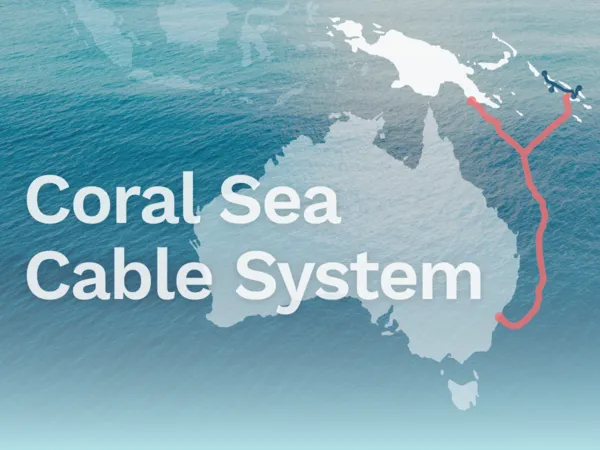
Photo credit: Coral Sea Cable System
The internet connectivity disruption last week was caused by problems with the Coral Sea Cable System, according to PNG DataCo Limited (DataCo) (CS2).
DataCo chief executive officer Paul Komboi said: “The issues are isolated to the end devices or nodes in Port Moresby and Sydney affecting internet traffic and private leased circuits traversing the CS2. DataCo would like to kindly advise the public of intermittent internet connectivity this week, starting 9th to 15th May.
“PNG DataCo engineers and our partners are doing everything they can to replace the identified equipment and to restore these services and have a permanent fix.
“Generally during this period as they work on the network, the internet services will be affected by intermittent dropouts and increased latencies,” he said.
“DataCo sincerely apologises for any inconveniences this outage may cause our customers and the general internet users and thank you all for your understanding.”
Meanwhile, Kina Bank CEO Greg Pawson stated that core banking services were operating normally, with little or no impact on the bank's services or clients at this time.
A Kina Bank public notice said: “Due to recent data issues that have been impacting PNG, we’re currently experiencing outages which are affecting our digital banking services and resulting in some platforms being unavailable.
“We are working to ensure there is minimal disruption to our network.” National Information and Communications Technology Authority chief executive officer Kila Gulo-Vui yesterday said: “We are reviewing this matter and will advise on the same shortly.”
Reference: The National (11 May 2022). “Cable issues affecting internet”.
National Information and Communications Technology (Nicta) chief executive officer Kila Gulo-Viu said Vodafone has inked agreements with Digicel and Telikom to secure connections with the two networks.
“Telikom and Vodafone concluded an interconnection agreement last Wednesday. This a very important development in the context of competition as both subscribers from these networks can talk to each other.
“Vodafone also has a separate interconnection agreement with Digicel. Vodafone customers can call and text all subscribers now, whether you are with Telikom/bmobile or Digicel,” he said.
Lorna McPherson, Digicel PNG's senior vice-president, confirmed that calls and messages between the two networks were now working properly.
Interconnection is a proclaimed service under the National ICT Act, according to Information and Communications Technology Secretary Steven Matainaho.
“This means it is regulated and all operators are required to comply by that to ensure that there is interconnection,” he added.
At its inauguration last month, Vodafone PNG regional chief executive officer Pradeep Lal claimed the company would have just over 500 base stations spanning Port Moresby, Lae, Madang, Mt Hagen, and Goroka.
Reference: The National (11 May 2022). “Nicta: Telcos connected”.
Hon. James Marape has encouraged Hela residents to start companies, particularly commercial agriculture, and to pursue education.
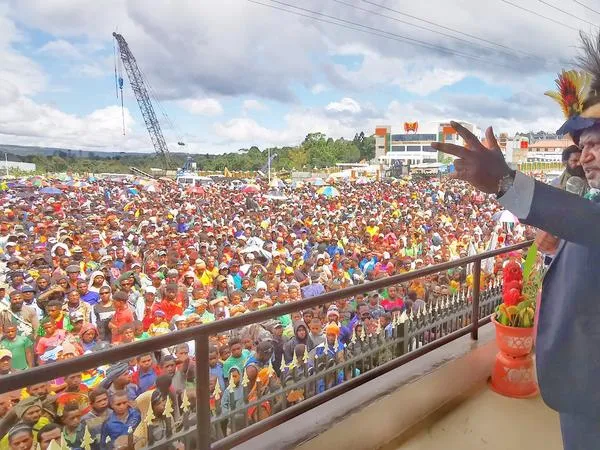
PM Marape made the announcement in front of thousands of people in Tari at the opening of the spectacular K8 million National National Bank (NDB) Building, dubbed Moses Liu Haus in honor of the late Moses Liu, former NDB managing director and Hela man.
The National Development Bank contributed K4 million, the Hela Provincial Government K3 million, and the Tari-Pori District Development Authority (DDA) K1 million to the project.
The PM revealed in front of the jubilant throng that the Tari-Pori DDA office, known as Pangale Haus, had been donated to Women's Micro Bank to serve the district's women, who had been completing SME training at Hope Institute with Mrs Rachael Marape.
The Prime Minister was accompanied by the Minister of State Enterprises, Hon. Hon. William Duma, Minister of Defense Hon. Win Daki, Minister of Public Service Hon. Joe Sungi, Governor of Hela Representatives from Kumul Consolidated Holdings (KCH), and other State-Owned Enterprises (SOEs), including NDB, were present.
He also revealed that Tari-Pori DDA had contributed K3 million to NDB and the Hela Provincial Government had contributed K5 million to the bank, which will begin lending to Hela residents on Monday, May 9, 2022.
PM Marape asked the people of Hela to be inspired by Shirley Komboli and Peter Honale, two Hela business success stories who became millionaires without the help of the PNG LNG Project or MPs.
“In the 1980s, when Shirley Komboli and Peter Honale started their small businesses, there was no Hides gas field or MP to help them get started,” he said.
“Shirley Komboli was a simple village woman and Peter Honale was a simple village man, but today, they have properties in Australia, Port Moresby, Lae, and other parts of the country.
“If they can do it, so can you.”
PM Marape mentioned the example of a young guy from Tewai-Siassi, Morobe, who went into the coffee industry after finishing university and made K800,000 in revenue last year.
“A bag of coffee can now earn you K600 per bag with the price support we are now offering,” he said.
“You can earn more money from coffee, SMEs, and agriculture than idling around waiting for LNG money.”
PM Marape said four of the 115 students who sat for Grade 12 exams at Hope Institute last year – which provides school leavers with a second shot in education – were currently studying at the University of PNG, six at Pacific Adventist University, and 16 at the University of Goroka.
“I urge those of you who are doing nothing to go to Hope Institute and have a second chance at furthering your education too, whilst the rest can go into MSME opportunities the Government is creating,” PM Marape said.
Reference: PM James Marape News Page (7 May 2022). “PM Marape urges Hela people to go into business and education”.
Follow on LinkedIn:
PNG Business News
Be the "First" to get our exclusive Digital Magazine & Weekly Newsletter.