August 19, 2022

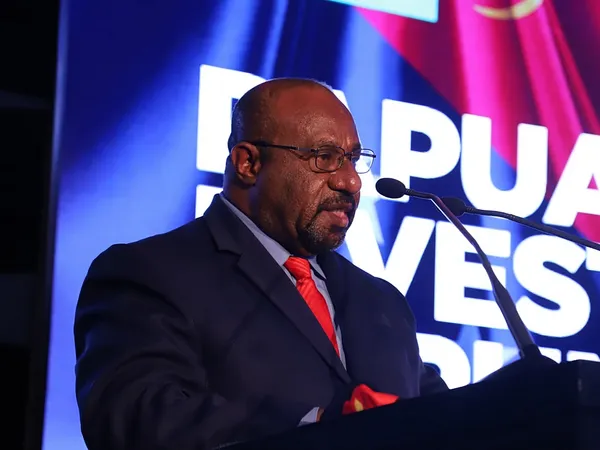
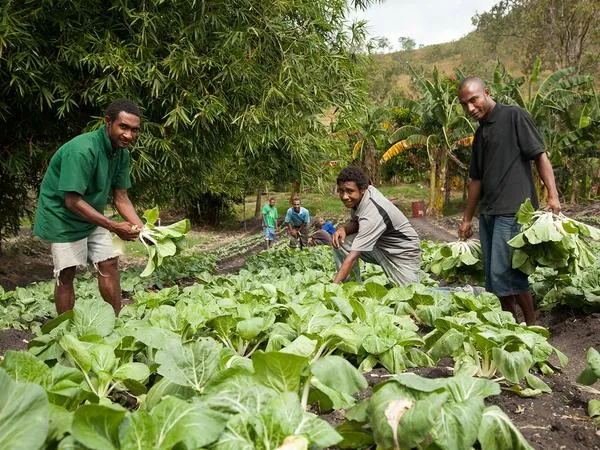
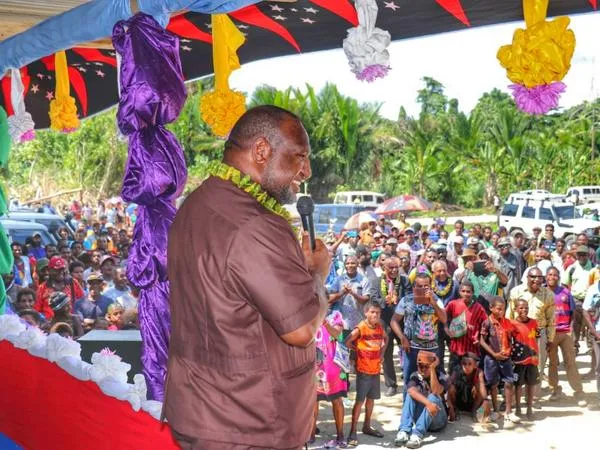
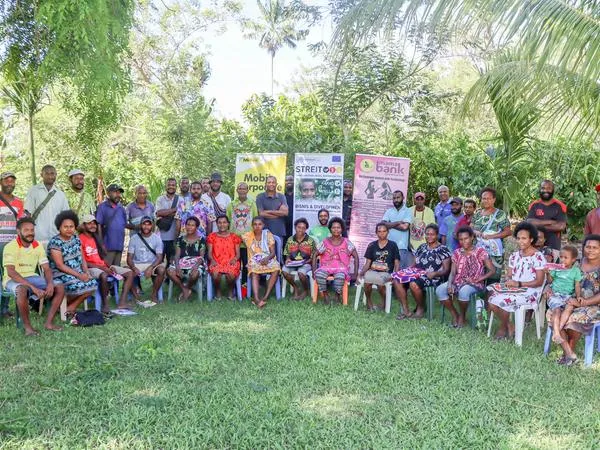
Photo: The EU Funded UN Joint STREIT PNG Programme established the “STREIT Innovation Fund” to support local MSMEs and entrepreneurs and stimulate investments in cocoa, vanilla and fisheries value chains

The Food and Agriculture Organization of the United Nations (FAO), under the EU-STREIT PNG Programme, has launched an Innovation Fund to stimulate investments in Cocoa, Vanilla and Fisheries businesses as well as to promote development of local companies and entrepreneurs in the Greater Sepik Region of Papua New Guinea.

The Fund supports PNG registered companies, licensed business people and cooperatives, associations and value chain actors in launching, expanding and introducing new agri-businesses and innovative solutions in East Sepik and Sandaun provinces.

Financed by the European Union, the STREIT Innovation Fund provides up to a maximum of PGK 1,000,000 of non-cash support to successful applicants, as follows:

  • SMEs and large enterprises: up to PGK 1,000,000
  • Micro Enterprises: up to PGK 350,000
  • Other Value Chain Actors: up to PGK 175,000
  • Other Beneficiaries: up to PGK 35,000

The support includes training, services, technologies, and technical equipment.

During recent information awareness sessions held in the two provinces, Dr Pavel Burian, Deputy Programme Coordinator of the EU-STREIT PNG Programme, explained that the support ranges between PGK 35,000 and PGK 1 million and “is in-kind in the form of service, training, equipment and technology, and not in the form of any financial contribution, such as loan or grant.”

He added: “This support will be limited to 70% of the intervention costs where the applicant must mobilise at least 30% of the total amount of the required inputs, in cash or in-kind.”

Focus on Empowering Women and Youths

Deputy Coordinator underscored: “For proposals targeting women and youth, a higher percentage of support like up to 80% will be given. This to ensure and foster their participation and benefit in line with the Programme’s approach.”

Burian also explained that the support to individual interventions would be discussed individually depending on the nature and number of challenges to be addressed, like the number of beneficiaries to be reached and the benefits and contributions that must be in line with the objectives, outcomes and outputs of the EU-STREIT PNG Programme. 

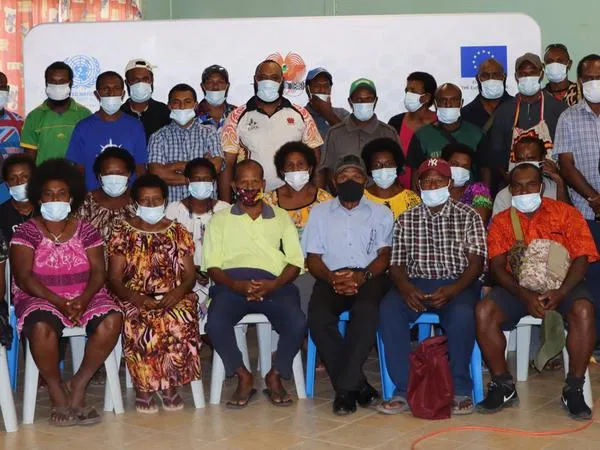
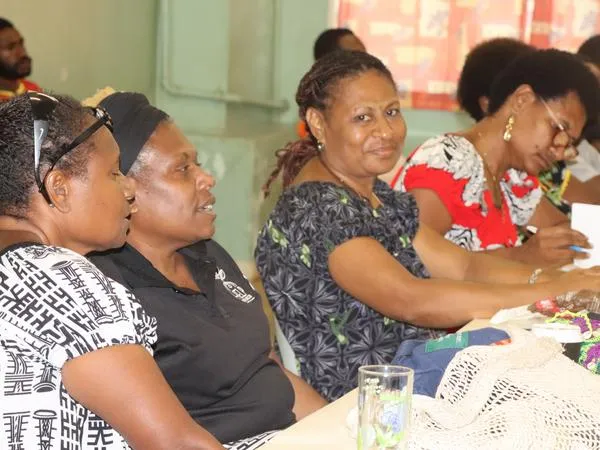
A total of 120 interested MSMEs and agripreneurs with high representation from women attended the two information awareness sessions.

Many entrepreneurs in the awareness meetings expressed their interest in this opportunity that is available to women and men agripreneurs and agri-food value chain actors in the Greater Sepik region.

“I’m excited about this initiative which is the first of its kind for the farmers and agribusinesses. At the community level, this support will add value in many ways; one is to transform our farming practice to operate like a business in terms of sustainability and long-term development,” said Pastor Wilfred Mombiam, who leads 500 plus cocoa farmers in Wewak District of East Sepik under Wilmo Agri Farming.

During the information sessions, the participants were informed that an Assessment and Review Committee (ARC) would be formed to review proposals from selected eligible stakeholders/beneficiaries. The Committee comprise representatives from the EU Delegation, Department of Agriculture and Livestock, provincial authorities, the EU-STREIT PNG Programme, and invited technical officers from relevant government agencies in the two provinces.

The EU-STREIT PNG Programme, being implemented as a UN Joint Programme (FAO as the leading agency, and ILO, ITU, UNCDF and UNDP as partners), is the largest grant-funded Programme of the European Union in the country and the Pacific region. The Programme aims to help improve the lives of the people from East Sepik and Sandaun provinces, by focusing on increasing sustainable and inclusive economic development of rural areas through improved economic returns and opportunities from cocoa, vanilla and fishery value chains while strengthening and improving the efficiency of value chain enablers, including the business environment, and supporting sustainable, climate-proof transport and energy infrastructure development.
August 05, 2022

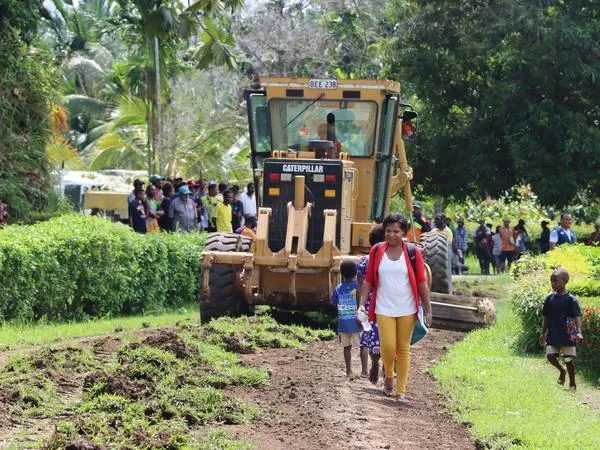
Progressing on improving the efficiency of value chain enablers, including sustainable, climate-proof transport infrastructure development in Papua New Guinea, the EU Funded UN Joint STREIT PNG Programme started with rehabilitation and specific maintenance of two farm-to-market access roads in the Sepik Region.

Led by the International Labour Organization (ILO), these two roads will support farming communities involved in cocoa, vanilla, and fisheries production to access further markets with more rewarding prices, and open up rural communities for agribusiness opportunities.

Two ground-breaking ceremonies were held to mark the start of work on two roads in East Sepik Province. The first ceremony was on 22 July for a 7.8 km Banak-Wautogik Road along the west coast of Wewak District that later followed with the start of a 12.8 km Balif-Araseli Road in the Ambunti-Drekikier District on 28 July.

These roads are part of 15 farm-to-market access roads totalling 264 km planned for rehabilitation and specific maintenance under the EU-STREIT Programme in rural Sepik, Papua New Guinea. 

Straight after the unveiling of the project information board and ribbon cutting for the Banak-Wautogik road, local firm Hiawani Ltd who has been awarded the contract started with grading and clearing of the initial roads section. This road connects two Local Level Governments (LLGs), namely Boikin LLG and Dagua LLG, and will serve over 2000 rural farmers of six villages of Banak, Bogumatai, Kwangen, Walanduom, Wautogik and Kotai (inland).

It was a long-awaited moment for the villagers, particularly women who live at the backend of the road. “This is a happy moment for us. We get up very early in the morning, carry out loads and walk for more than four hours to the main highway to catch a PMV [Public Motor Vehicle] to town. We also carry our sick children and walk this road because vehicles cannot go in. Some mothers deliver their babies on the road,” said Joan Wapiake who reflected on the struggle’s mothers in the area face.

Former Ward Member of Walanduom and village elder Mr David Mangani added: “The provincial authorities said to come and fix our road, but it didn’t happen. Thank you, ILO and STREIT Programme and financiers, the European Union.” 

Many farmers neglected their farming practices because the road was inaccessible for vehicles to receive services and transport their produce to market. On this note, Walanduom Ward Member Mr Tom Talis challenged his farmers to “use it to improve our cocoa, vanilla and fisheries activities to support our living.”

Speaking on behalf of the EU-STREIT PNG Programme, Mr Muhammad Atif Nasim, the International Monitoring and Evaluation Specialist, said: “I have a request for you, because this is your road, you have to take care of it. It is not just another road; it is the key to your future. It will help you to change in 5 to 10 years’ time.”

The road will raise embankment, subgrade with compact gravelling, 27 permanent crossing structures, including two reinforced concrete box culverts and one reinforced concrete causeway, and side drains with traffic signs and signages for year-round serviceable.

To encourage equal participation, a stakeholders meeting was also organised with the communities for better common understanding of the project and intervention. Also present and was very appreciative of this intervention was the Executive Manager of East Sepik Provincial Division of Works and Technical Services and Deputy Provincial Administrator, Mr James Baloiloi. “On behalf of the Governor and Provincial Administrator, I want to say thank you to the EU-STREIT PNG Programme and ILO as the implementer to recognise this road which will benefit many inland communities.”

The second project, the Balif-Araseli Road will provide access to market for more than 5000 farmers of 9 villages, 4 Wards and 1 LLG in Ambunti-Drekikier District. Midway Pacific Ltd is the contractor for this road rehabilitation and specific maintenance project that will also serve existing public facilities in the area like schools, aid posts and health centres as well as opening up agribusiness opportunities for the rural communities.

This 12-months project will also create decent job opportunities for the rural communities. 

Chief Technical Advisor of ILO EU-STREIT PNG, Mr Shailendra Kumar Jha, in his speech during the Balif-Araseli Road ground-breaking ceremony, assured the villagers that there will be ongoing monitoring by ILO engineers to ensure delivery of quality road on time. He also urged the community to take ownership and support road rehabilitation and specific maintenance projects.

Under the road transport infrastructure component of the EU-STREIT PNG Programme, the road rehabilitation/specific maintenance project will support market access for rural farming communities to boost agriculture production and agribusiness activities pertaining to the three targeted value chains of cocoa, vanilla and fisheries for an improved income and cash flow for the rural sector.

The EU-STREIT PNG, is implemented as a UN joint Programme (FAO as leading agency, and ILO, ITU, UNCDF and UNDP as partners). It is the largest grant-funded Programme of the European Union in the country and the Pacific region. The Programme aims to help improve the lives of the people from East Sepik and Sandaun provinces, by focusing on increasing sustainable and inclusive economic development of rural areas through improved economic returns and opportunities from cocoa, vanilla and fishery value chains while strengthening and improving the efficiency of value chain enablers, including the business environment, and supporting sustainable, climate-proof transport and energy infrastructure development.
 

Article courtesy of EU Streit 

July 18, 2022

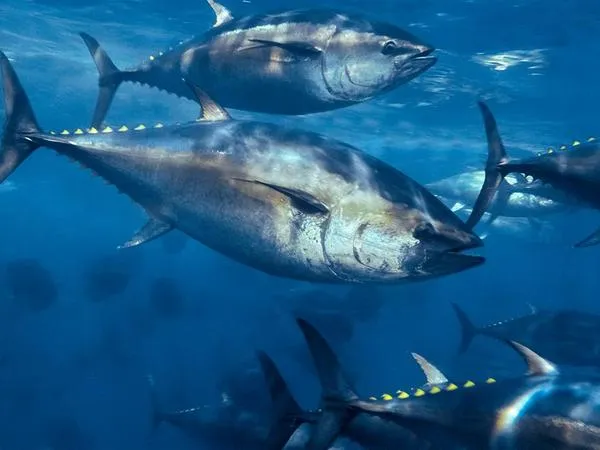
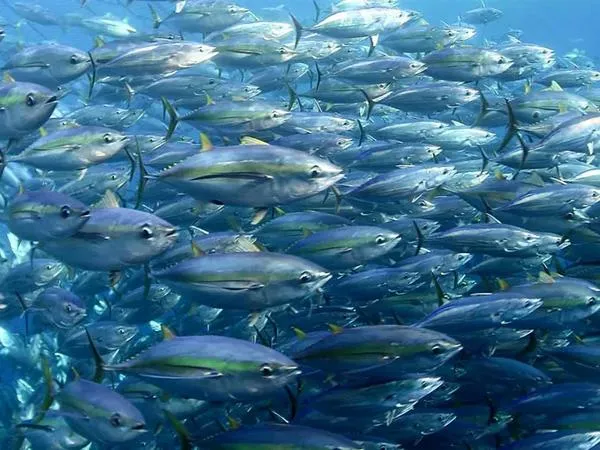
Photo credit: Fabien Forget, ISSF

Papua New Guinea has told the United States – the biggest importer of fresh Pacific tuna – that it wants to get away from the export of raw tuna and now move into downstream processing.

Prime Minister James Marape said he made this known to US vice -president Kamala Harris at the 51st Pacific Islands Forum (PIF) summit in Fiji, which was held from July 11-15 to discuss wide-ranging issues covering regional stability, development and climate change.

In line with the PIF communiqué points 50, 51 and 52 calling for PIF members to increase economic returns from fisheries, Marape highlighted the need to optimise the value of fisheries by working with the PIF family of nations, where the Pacific Ocean produced over 60 per cent of the world’s yellow fin tuna.

“At the PIF, US vice-president Kamala Harris addressed the forum, I respectfully told her and the world that PNG and Pacific will no longer be exporting raw marine catches only; we want to move into downstream processing of all our catches and resources in our (respective) countries,” he said.

No more raw resource export in primary stage but processed finish products.”

Marape added that PNG would all operators in its resource sector to change their licenses to not just harvest and exporting raw product but to make the finished product for export as well.

“Any new investors wanting to come in to work in all our resource sectors, including fisheries, must include downstream processing and manufacturing in your applications,” he said.

“Gone will be the days when we were just primary exporters.

“We want to add value to our economy by manufacturing our products in-country and in the Pacific and supplying our local and regional markets as well as the bigger overseas markets.”

Marape said that even if he did not return as prime minister, his fellow parliamentarians would be committed to the same cause of ensuring PNG’s fisheries resource was developed in-country. PNG must get back more from our resources.

“There are many ways to do it, one of which is to value add to our economy by shifting to downstream processing of resources,” Marape said.

“Just because past leaders were not pushing this space will not stop my generation and those coming after me to move into downstream processing of fish, timber, agriculture, mineral and petroleum products.

“If not now, then when?”


Article courtesy of the National

July 15, 2022

Appreciating farming as a sustainable and viable business practice is the message from PNG Agriculture Company’s PNG Agbook who are partners with the UNCDF in the EU Funded Joint STREIT PNG Programme. PNG Agbook working with the PNG Cocoa Board, organized two sets of trainings for rural farmers in the Sepik region of Papua New Guinea.

A total of 23 farmers who represented farmer groups and agribusinesses in the Sandaun and East Sepik provinces were eager participants in the trainings conducted recently over a two-week period at the PNG Cocoa Board nursery site in Hawain, Wewak District, East Sepik Province.

Facilitating the sessions was owner and Managing Director of PNG Agbook Company, Ms Nicole Isifu, a committed young woman inspired to challenge existing farming practices and to drive an increase in more active youth participation in agriculture – as entrepreneurs rather than as part-timers and labourers.

The first module was on ‘financial literacy’ while the second session focused on ‘farming as a business’. Two participants manual booklets with simple instructions on topics covered in the sessions were also given to participants to take home and read at their own time. Farming as a Business Manual contains topics like Basics of Money, Financial Fitness, Savings, Budgeting and Borrowing. While the Farm Business Plan booklet contains subjects like Farm Production Plan, Market Plan, Farm Business Profitability and Managing Risks.

“While farming provides a means for meeting household subsistence needs, the rationale is to add value out of this practice that must be business like and this is where financial literacy knowledge and farm management skills are crucial and necessary for rural communities in realizing the value  of agriculture  for an improved income and sustainable participation and living,” explained the EU Funded UN Joint STREIT Programme Coordinator Dr Xuebing Sun.

The participants also benefitted from the presence of three other UNCDF financial institution partners under the EU Funded STREIT Programme. MiBank, WMBL (Mama Bank) and Cellmoni (Digicel) were invited to make special presentations to the farmers on their savings requirements, loan eligibility and the different products and services that are available to the three value chains. 

The farmers attended as Trainers-of-Trainers and were expected to return to their clusters/groups to train other members including youths and women so this important knowledge to appreciate and practice farming as a business is passed on to others for a collective change in mindset by all in rural communities.

For the participants, contents of the training were excellent and relevant to their household and farming needs where they can easily implement in their local areas. “We didn’t know how to save money with the bank so in times of need we can apply for small loans. If this training had come earlier, I think PNG would have change a lot,” said Xavier Kapia, a single male farmer from Mupa Cocoa Farming Group of Angoram District, East Sepik. “When I have a family, my children should not face the challenges of not completing their education just because of school fee problems. I will start saving now,” added Kapia who is still enjoying a young life.

The training was beneficial to farmer groups as well to operate like a business. “With this financial literacy skills, we can now prepare proper documentations as one of the requirements of lending agencies to access small loans. My executives are village boys so I can go back and train them,” said Jimmy Makain, the Executive Officer of Wape Agriculture Marketing Group in the Lumi District of Sandaun Province. The group has a membership of 56 clusters comprising 1300 plus member farmers which includes youths and women from East and West Wape LLGs.  

UNCDF partner under the EU-STREIT PNG Programme, MiBank, opened 22 new accounts from this meeting, not only from the participants, but also from locals living within the vicinity of the training area.

The UNCDF under EU-STREIT PNG and in collaboration with local partners support implementation of activities related to access finance, rural banking and cashless banking systems. The Programme also support financial literacy of the beneficiaries and an improved business environment.

The EU-STREIT PNG, being implemented as a UN joint Programme (FAO as leading agency, and ILO, ITU, UNCDF and UNDP as implementing partners), is the largest grant-funded Programme of the European Union in the country and the Pacific region, which focuses on increasing sustainable and inclusive economic development of rural areas through Increasing the economic returns and opportunities from cocoa, vanilla and fishery value chains and strengthening and improving the efficiency of value chain enablers including the business environment and supporting sustainable, climate-proof transport and energy infrastructure development.

July 04, 2022

Photo credit: Department of Agriculture and Livestock

The PNG Agriculture Commercialisation and Diversification Project will get US$40 million (K120 million) in financing from the World Bank.

The money will help 12 provinces that have been identified establish competitive and varied agricultural value chains for specific commodities like coffee, cocoa, coconut, spices, and small livestock.

Autonomous Region of Bougainville, New Ireland, East New Britain, West New Britain, Morobe, Madang, Eastern Highlands, Chimbu, Jiwaka, Western Highlands, Enga, and Southern Highlands are among the 12 provinces.

According to Jane Sprouster, the World Bank Support Country Manager for PNG, the bank is pleased to be extending their cooperation with the Department of Agriculture and Livestock through project implementation.

By supporting sector intuitions, enhancing industry, and supporting the improvement of key rural roads, she said, the activities under this new project seek to address three of the major challenges facing the performance of the agriculture sector. This will allow products to reach the market in good quality and a good time to achieve their prices.

“The heart of this project is to help smallholders increase productivity and quality of products and to get a higher income for their efforts,” Ms Sprouster said.

The three primary commodity-focused areas in PNG are dominated by smallholder farmers, according to Acting Secretary for Agriculture and Livestock Dr. Nelson Simbiken. However, this has been impacted by numerous market and productivity constraints.

The limitations include high transaction costs brought on by diseconomies of scale, a lack of information and technology brought on by subpar extension services, poor rural infrastructure, a lack of access to rural finance, and unstable landownership and tenure.

With the assistance of the World Bank, the department will now be able to address some of those issues related to ageing, according to Dr. Simbiken.


Reference: Wohi, Lorraine. Post-Courier (29 June 2022). “K120 Million For Agirculture Projects”. 

July 04, 2022

Photo: Minister John Simon

According to Minister John Simon, the Department of Agriculture and Livestock has the capacity to give the country economic independence within the next five to ten years.

He claimed that around 90% of those who reside in rural areas are actively engaged in agriculture. The goal of the government is to increase output and open up markets.

“The DAL will give economic independence to the country in the next five to 10 years because the Government has been supporting the department with funding to improve the market and export,” he said.

Simon claimed that he has been working to develop initiatives and price support schemes for agricultural and cash crop items to boost value and output.

According to him, the price campaign and instructions issued to exporters not to manipulate prices will result in an increase in the overall export of agricultural products.

“We (Government) knew the market prices so we told the exporters to pay the right price to the farmers and producers to increase production,” he said.

“We are paying better prices for coffee and cocoa so you can see the production started to increase.”

According to Simon, the nation used to earn between K350 million and K400 million from only exporting coffee.

This year, it will rise to K800 million.

“We are now encouraging the people to grow cocoa and coffee to benefit from the Government support programme,” he said.


Reference: The National (28 June 2022). “Potential in agriculture to drive economy”.

June 29, 2022

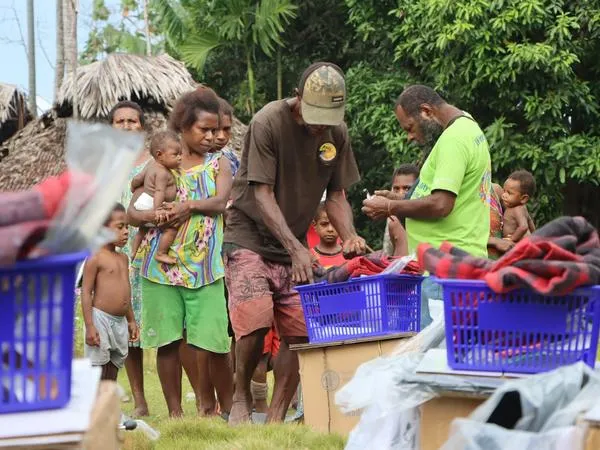
In a bid to enable farmers to put into practice skills acquired during capacity-building trainings, the EU Funded UN Joint STREIT PNG Programme has started distributing tools and materials that will enable rural communities to improve their husbandry practices in cocoa and vanilla blocks.

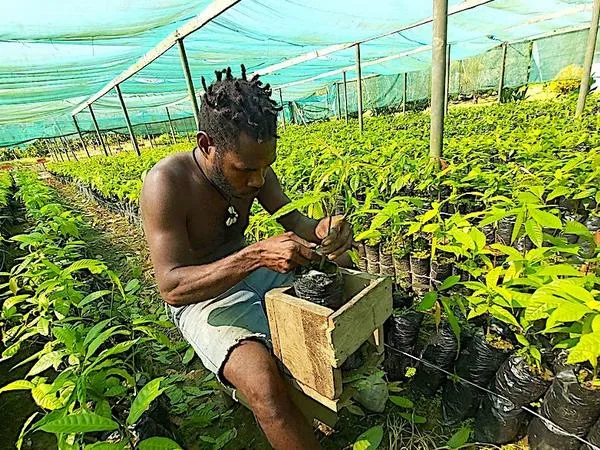
This intervention which started in May has so far distributed to 52 cocoa farmer groups in East Sepik Province and 38 cocoa farmer groups in Sandaun Province with 900,000 polybags, 90 shade cloths, 180 telescopic pole pruners, 90 measuring tape and 90 boxes of budding tape. These inputs will help the farmers to rehabilitate their blocks to improve the production of high-quality cocoa beans for an increased income to support their livelihood and families.

These groups all have already received tailored training on cocoa bud grafting and block management organised by the Programme in collaboration with PNG Cocoa Board and Department of Agriculture and Livestock officers in the districts and LLGs . The skills acquired during these trainings assist the farmers to enhance their cultivation, farm management and harvesting practices.

The 90 registered cocoa groups of over 45,000 farmers have started propagation of cocoa bod borer (CPB) tolerant seedlings in their respective nurseries.  The Programme will continue to support them, whereby each group will have their seedlings purchased and distributed to their respective members or farmers including youths and women for free.

“I want to say thank you to STREIT PNG and the financiers of this Programme the European Union. The trainings we attended, we will now put into practice using these tools and materials,” said Mrs Maureen Mombi, whom with her husband Ben are organizing and supporting three farmer groups of 1500 members from Mushu Island, Hambraure Village (Wewak District) and Hambini Village (Ambunti-Drekikier District).

For the vanilla value chain, the Programme has distributed 120 sets of vanilla cultivation, husbandry and processing tools including shovels/spade, gumboots, pruning baskets, harvesting knife, cooking pot, cooler box, strainer, thick clot, digital thermometer, kraft/wax paper, plastic canvas, and cardboard box to the farmers in 11 villages of Wewak District and 4 villages of Aitape/Lumi District. 6 Vanilla vines treatment shed with a 10,000 vines capacity has been established. The vanilla kits and sheds in total so far is supporting more than 4000 men, women and youths in rural Sepik.

“The transfer of knowledge and skills to farmers and their families is an important extension activity that must be supported with tools and materials. Under the Programme we distributing these items as well with new technology to improve their practice,” explained Programme Coordinator Dr Xuebing Sun. “Tools and materials are vital link in adoption of technologies for sustainable farming systems which is being encouraged under the Programme,” added Dr Sun.

Among the recipients were 1000 plus farmers from four remote communities of inland Turubu area in Wewak District, East Sepik Province. On behalf of youths and women in the village who will also benefit from this intervention, Brigitte Kamiresa, a mother at Mundangai Village, said: “I want to thank European Union. We mothers didn’t attend big schools so our youths or kids will help train us to use these tools and materials to improve our practices.”

The national technical officers of cocoa and vanilla value chain have also explained on the local radios the distribution of tools and materials for farmer groups/clusters that have already been formalised and are supported under the rural agriculture development programme. “If you have transport, please come to the office at Wharf Road. For those in hard-to-reach areas, we will come to you,” said Mr Michael Lames, National Cocoa Value Chain Officer.

The distribution of quality inputs by the Programme will continue to cover other farmer groups in the Programme’s implementation sites in East Sepik and Sandaun provinces. The EU-STREIT PNG, as a UN Joint Programme (FAO as leading agency, and ILO, ITU, UNCDF and UNDP as partners), is the largest grant-funded Programme of the European Union in the country and the Pacific region. Being implemented in close cooperation with the National and provincial government institutions, research entities, civil society organizations, and private sector enterprises, the Programme aims to help improve the lives of the people from East Sepik and Sandaun provinces, by focusing on increasing sustainable and inclusive economic development of rural areas through improved economic returns and opportunities from cocoa, vanilla and fishery value chains while strengthening and improving the efficiency of value chain enablers, including the business environment, and supporting sustainable, climate-proof transport and energy infrastructure development.
June 20, 2022

A group from the National Fisheries Authority is in General Santos, Philippines, led by board chairman Ango Wangatau, to exchange and gain fisheries expertise and experiences in this region.

General Santos is renowned as the Philippines' "Tuna" city capital, and visiting this region provides delegates with first-hand information and improved ideas for implementing the Fisheries Strategic Plan 2021-2030 and achieving its objectives.

It has the Philippines' most modern fish port and contributes significantly to the country's earnings.

The remarkable expansion of fisheries in General Santos was driven by collaboration between the government and important stakeholders, which the NFA delegates witnessed and will think about further when they return home.

“Seeing is believing and we needed to come and see the sizeable scale and strength of this Fisheries industry in the Philippines.

“From here we want to incorporate the existing knowledge and experience of our Philippine counterparts to model and expand our own infrastructure in PNG,” Mr. Wangatau said.

According to him, the goal of the Fisheries Strategic Plan is to change Papua New Guinea into the Pacific's "Tuna Capital," thus visits like these are important to gather additional expertise from a country that has already been transformed.

The delegates saw tuna landings, grading, weighing, and processing, as well as the fishing boat docking yard and the world's largest prawns and fish farm.

These first-hand experiences will help PNG Fisheries prepare for the establishment of a downstream processing facility for all tuna collected in the country, as well as greater employment development for the people.

“We are here and have seen what is done with fisheries in General Santos. If it can be done here, we can also do it in PNG,” he said.


Reference: Post-Courier (16 June 2022). “National Fisheries Team Visits Philippines Tuna Capital For Exposure”.

June 13, 2022

Photo credit: Islands Business

Although the economy has diversified, agriculture remains the backbone of Papua New Guinea's economy, providing a living for the majority of the people, according to Institute of National Affairs (INA) executive director Paul Barker.

Agriculture, according to Barker, will be critical in securing PNG's economic and employment future, as well as the country's status as a significant agricultural and food producer both locally and regionally.

However, he claimed that large portions of the nation were unproductive or too steep for commercial cultivation.

“The population is also growing fast, with growing land pressure in parts of the country, as well as the challenges of growing urbanisation and limited formal sector employment opportunities, weak governance, and a relatively short and rather unsatisfactory history of investment in infrastructure and human resource development.”

According to Barker, this is exacerbated by pervasive and escalating corruption, as well as inadequate utilisation and accountability of public monies.

“Clearly, this also applies to supposed renewable resources, such as forestry and some fisheries and other marine resources which have been widely treated as an infinite resource but extracted in an unsustainable and damaging manner, with repeated harvests well within the period for regrowth or population recovery, or using seriously destructive.”


Reference: The National (7 June 2022). “Agriculture ‘backbone of the economy”. 

June 02, 2022

Photo: 

EU-STREIT PNG Programme, in its ongoing efforts to build the capacity of rural entrepreneurs and business activities and to create linkages of value chain actors with the public and private sector in the Sepik Region, supports the formation of a Greater Sepik Secretariat Forum.

With the backing of the EU Funded UN Joint STREIT PNG Programme, the Greater Sepik Secretariat Forum (GSSF) has been formalised and is set to promote and strengthen agribusiness activities in the Greater Sepik region of Papua New Guinea.

Officiating the inaugural meeting, the FAO Gender and Youth Leading Expert, Ms Patu Shang, called for inclusive participation and genuine representation. Addressing the participants, including the five interim executives of the Greater Sepik Secretariat Forum, Ms Shang underscored: “you are key players in the sector and in a group like this, we can work together by bringing out the issues, and learn from each other. I am also happy to see 50/50 women participation, and this is how it should work.”

Five of the executives are officers of the East Sepik and Sandaun Provincial Administrations, while two are from the private sector.

The Secretariat Forum will act as a platform for all key stakeholders and value chain actors to exchange views and discuss real-time experiences on best practices, challenges and partnership opportunities for the targeted value chains of cocoa, vanilla and fisheries that are supported under the Programme in the Sepik Region, explained the FAO Value Chain & Small Medium Enterprise (SME) Officer, Mr Alwyn Badui.

“At the end of the EU Funded UN Joint EU STREIT PNG Programme, this forum will continue to facilitate the promotion of rural agribusiness through partnership to strengthen each other and also for sourcing outside support in terms of marketing,” explained Mr Badui.

The participants, who are key businessmen and women representing SMEs, cooperatives, women and youth groups, were very supportive of this initiative that will act as a platform to support their farming and business activities in the two Sepiks.

A female vanilla exporter, Nancy Fale said: “This is a good initiative that will help us to discuss and learn from each other on our failures, our strengths and weaknesses, so that after EU-STREIT, we can stand on our own with the support of this forum to take us to the next level.”

For James Dohmun, a cooperative representative from the hinterland of Drekikier in East Sepik, he described the meeting as a learning as well as a business opportunity and said: “If I didn’t attend, I would not learn something new about inland fish farming today.”

The gathering pulled together 46 participants, including youths and women from the public and private sectors who also shared best practices, key challenges and partnership opportunities available in cocoa, vanilla and fisheries value chains that can be utilised to support and promote their business activities, growth, income, cash flow and employment for the rural communities.

Highlighting the importance of the Geographical Indication (GI) initiative that the EU-STREIT PNG Programme is pursuing with the Investment Promotion Authority, the FAO SME Officer, Mr Badui, said that the use of GI will leverage market competitiveness which will contribute to meeting the aspirations of this forum in transforming the economy in the Sepik Region and PNG as a whole. GI is a globally recognised trademark on products and crafts that has a geographical origin and possesses qualities or recognition.

EU-STREIT PNG, being implemented as a United Nations Joint Programme (FAO as leading agency/administrative agent, and ILO, ITU, UNCDF, and UNDP as implementing partners), is the largest grant-funded Programme of the European Union in the country and the Pacific region. The Programme aims to help improve the lives of the people from East Sepik and Sandaun provinces, by focusing on increasing sustainable and inclusive economic development of rural areas through improved economic returns and opportunities from cocoa, vanilla and fishery value chains while strengthening and improving the efficiency of value chain enablers, including the business environment, and supporting sustainable, climate-proof transport and energy infrastructure development.
 

Article courtesy of EU-STREIT PNG

May 22, 2022

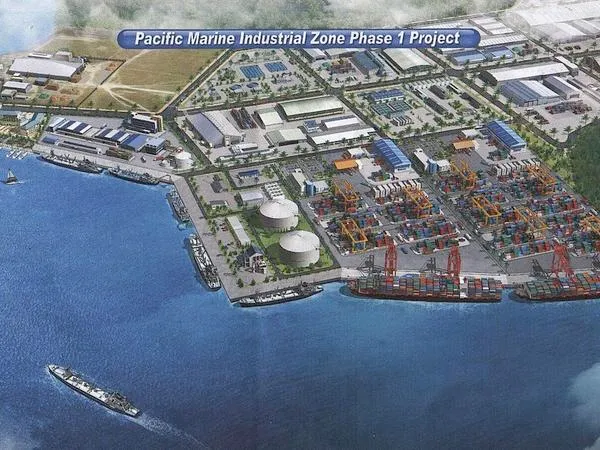
According to Madang Chamber of Commerce and Industry President Kevin Murray, the Pacific Marine Industrial Zone (PMIZ) project in Madang would increase the province's fisheries industry.

Despite the lack of certainty about the project, Murray claimed that residents in the Madang area support it because it will create employment.

“A number of canneries will be developed apart from RD Tuna which is the main one in the province today,” he said.

Acting managing director Justin Ilakini of the National Fisheries Authority (NFA) said the NFA was now going back to the drawing board to ensure that the project was completed appropriately, with the government authorising K100 million for it in this year's budget. He said plans were in the works to form a project steering committee made up of officers from several agencies, with the National Planning and Monitoring Department and the NFA co-chairing the project team.

“Government transferred the PMIZ project to the NFA,” Murray said.

“In the last budget, they approved K100 million for the project.

“We have, more or less, go back to the drawing board to make sure that everything is done properly.

“What we are doing now is to make sure that every study that needs to be done is done.”

Ilakini said the NFA would ensure that there were development partners on hand to help develop the project.

“It’s a really big project and the Government feels strongly that it’s a good project that will create more than 30,000 jobs.

“It will provide the opportunity for investors to come and set up may be more than 10 tuna processing plants and other spinoff benefits for the local people.”

According to Ilakini, the government has already purchased the property for the project.


Reference: The National (19 May 2022). “PMIZ project will boost fisheries in Madang, says official”.

April 25, 2022

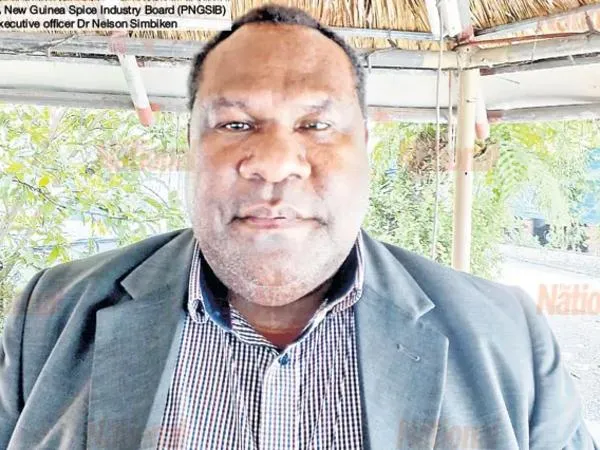
Dr Nelson Simbiken, the chief executive officer of the Papua New Guinea Spice Business Board (PNGSIB), believes there is an opportunity for corruption in the industry and calls for a revision of the PNG Spice Industry Act of 1989.

He added that the board's goal would be to examine the Act and establish authority over the following two years.

“The spice industry board currently has to become an authority, so it can generate money for the government. Instead of depending on the government, we can look after ourselves,” he said.

“We live or die by the review of the establishment of the Act itself, it must be reviewed.”

He made the remarks after two PNGSIB personnel and a Department of Agriculture and Livestock (DAL) staff were recently arrested in Port Moresby for alleged fraud.

The spice industry board had been in operation since 1989, but owing to a shortage of funds in the early 2000s, it was placed under DAL to secure its continued operation, according to Simbiken.

“Whatever little money DAL gets, it supports the spice industry board as a programme because we’re not getting sufficient support from the government in terms of goods and services, personnel emoluments and others.”

DAL has been supporting the initiative at the national level since 2003, according to Simbiken.

He stated that all funds received by the statutory body were transferred to the department and subsequently to the company operating account.

“Although we have an Act, it is an outdated one, and market trends have changed,” he said.

“Vanilla is now the country’s leading spice product.

“Since 2018, PNG has been exporting 400 metric tonnes of vanilla annually and it is bringing in over K300 million each year,” Simbiken said.

“It is comparable to cocoa, coffee and copra, so vanilla is a major industry in the country now.”

Except for Enga, Hela, and the Southern Highlands, he noted that all country provinces were cultivating vanilla.


Reference: Esila, Peter. The National (20 April 2022). “Board wants to review Act”.

April 21, 2022

According to James Marape, East Sepik should become the world's vanilla capital and a cocoa trading hub.

This isn't impossible, given that Papua New Guinea – mainly through East Sepik – is one of the world's top vanilla producers. The World Bank estimates that PNG will soon overtake Madagascar as the world's second-largest producer.

East Sepik is also PNG's leading cocoa grower, with the country's cocoa regarded among the best in the world.

The government intends to turn the vast Sepik Plains into the country's largest agricultural hub.

PM Marape stated that K2 million in vanilla cuttings and cocoa seedlings would be supplied to the people of Angoram in order for them to engage in large-scale commercial production of these products.

On Thursday, April 14th, 2022, he announced this in Angoram, when he opened the Angoram District Office and Angoram Market and the Angoram Sports Stadium and Bank South Pacific branch.

The Prime Minister also donated K5 million to Hon. Angoram, the Member of Parliament for Angoram. Salio Waipo has been tasked with completing several projects in the district.

“I want East Sepik – Angoram, Maprik, Wosera-Gawi, Yangora-Saussia, Ambunti-Dreikikier and Wewak – to become the capital of vanilla, not just for Papua New Guinea, but for the whole world,” PM Marape said.

“I also want East Sepik to become an international hub for cocoa.

“You have the land and organic soil to achieve this.

“I want your partnership and your commitment today, people of Yangoru.

“Young men: Drinking homebrew will not change your lives. Going back to the land will change your lives.

“It is Easter, but do not just carry the cross of Jesus if you are not going back to the land, do not go to church if you do not want to work the land.

“I point you toward agriculture.

“That’s the easiest and quickest way to put money in your pockets.”

PM Marape stated that the Governor had notified him of East Sepik. According to Allan Bird, families might earn K20,000 per hectare of vanilla and K15,000 per hectare of cocoa.

“The people here have more than one hectare of land,” he said.

“Every family has three to four hectares.

“If you put your efforts into commercial agriculture instead of subsistence agriculture, this is in line with the Government’s ‘Take Back PNG’ policy.

“It is about villagers making money on their own land.

“Your Government has put in place a policy on price support.

“If the price of cocoa, coffee or vanilla is down, the Government will hike this up through price support.

“We want people to make money and remain in their villages.”

PM Marape stated that the Sepik Plains would be developed into PNG's largest agricultural centre.

“We have the biggest plain in all of Papua New Guinea,” he said.

“This should be the focus to turn the people of East Sepik into becoming economically productive.

“We want to turn the entire Sepik Plains into an economic hub which will ensure that everyone has money in your pockets.”


Reference: PM James Marape News Page (18 April 2022). “PM Marape Wants East Sepik to become vanilla capital of world, international hub for cocoa”. 

April 21, 2022

Photo: PM Marape addressing the people of Mengar

James Marape has advised East Sepik residents to invest more in agriculture to strengthen the local and national economies.

He made the announcement at Mengar, Wewak, during the inauguration of the K500 million Wewak International Port, which Korea sponsored in collaboration with the Papua New Guinea government.

All of the people of East Sepik's agricultural efforts, according to PM Marape, would be for nought if there was no port to transport their goods to foreign markets.

He said the new port would help him establish official economic ties with Indonesia, which he visited last month.

Papua New Guinea, through East Sepik, is one of the world's major vanilla producers, with much of it crossing the Indonesian land boundary.

“All the work we are doing in East Sepik in vanilla, cocoa and other agriculture produce will be wasted if this port is not built,” PM Marape said.

“We already have a wharf in Wewak. However, we need something bigger and better to sustain tomorrow's economy – consistent with our view that everyone must have money in their pockets.

“I urge all the people of East Sepik to go into agriculture.”

According to PM Marape, East Sepik is already benefiting from the K340 million European Union-funded Support to Rural Entrepreneurship, Investment, and Trade (STREIT) initiative, which focuses heavily on agriculture and fisheries.

Aside from that, the government is pumping millions of kina into farm price assistance, freight subsidies, and other initiatives.

PM Marape expressed gratitude to Mengar landowners for permitting the new port to be built on their land and promised government aid to displaced residents, including improved road access and power.

He also promised government funding for Mengar's local school.

“The economy, and the people, must benefit from this port which will be built over the next two years,” he said.


Reference: PM James Marape News Page (16 April 2022). “PM Marape launches K500 million Wewak Port”.