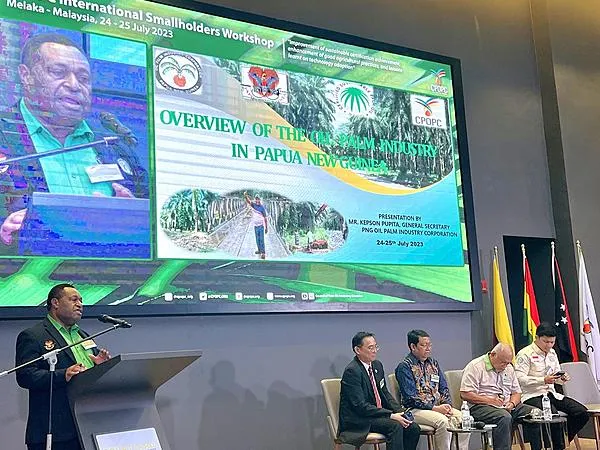
The Marape Government has ambitious plans to escalate palm oil production through enhanced collaboration and equity participation of all stakeholders in the palm oil industry, according to Oil Palm Industry Corporation (OPIC) General Secretary, Kepson Pupita. He made this announcement during his address at the Council of Palm Oil Producing Countries (CPOPC) International Smallholders Workshop held in Melaka, Malaysia.The Papua New Guinea Medium Term Development Plan (MTDP) IV 2023-2027 spearheads this initiative, aimed at fostering sustainable growth and development.
Founded in 2015 by Indonesia and Malaysia, the CPOPC is an intergovernmental organisation dedicated to promoting the responsible and global use of palm oil. As the world’s leading producers, contributing to 90 percent of global palm oil output, Indonesia and Malaysia initiated the establishment of independent palm oil sustainability standards. CPOPC’s mission includes harmonising these sustainability standards between the two countries.
Papua New Guinea received an invitation to participate in the CPOPC following a recent visit by Indonesian President, H.E. Joko Widodo. During his meeting with Prime Minister Hon. James Marape, President Widodo extended an invitation for PNG to increase its palm oil production and export to Indonesia.
By 2027, Papua New Guinea envisions achieving the following targets:
“Palm oil serves as a vital agricultural export for PNG, generating an average of US$510 million (K1.7 billion) in export revenue per year from 2018 to 2022,” stated Pupita.
“Over the last three decades, palm oil has contributed significantly to the nation’s economy, amounting to US$7.2 billion (K24 billion) in export revenue.
“To achieve the projected increase in production, Papua New Guinea aims to involve more smallholder growers in the industry. At present, companies account for 66.5 percent of the total planted area, covering 133,854 hectares, while landowners hold the remaining 33.5 percent on 67,610 hectares, summing up to a total of 201,464 hectares. Surprisingly, this constitutes only 4 percent of the total moderate-highly suitable areas for oil palm cultivation in PNG.”
Pupita emphasised, “Incorporating new development areas into the current project areas managed by OPIC and milling companies’ estates would lead to an increase in the total planted area, reaching up to 250,000 hectares.”
“The smallholder segment plays a significant role, with 21,126 smallholder blocks under three distinct schemes: Land Settlement Scheme (LSS), Village Oil Palm (VOP), and Customary Rights Purchase (CRP). Currently, smallholders have cultivated 67,610 hectares of oil palm under these schemes.
“The Marape Government’s commitment to promoting sustainable palm oil production, with the active engagement of all stakeholders, is poised to drive economic growth and prosperity for Papua New Guinea while ensuring environmental responsibility and social welfare.”
Papua New Guineans are paying 100% more for rice than they should be, according to a local commercial rice company, Rigo Rice. Rigo Rice has been growing and selling rice for the last five years in their small commercial farm at Rigo in Central Province. They sell their rice to wholesalers for K3 plus GST. Owner of Rigo Rice, Mr. Jeffery Kennedy said the company made good profit from selling their rice at a fair price.
An investigation completed by the Department of International Trade and Investment over the weekend found the price of rice in the shelves of shops in Port Moresby showing Rigo Rice to be the cheapest sold at K3.50 per kilo while the most expensive rice is HS Jasmine Red/Gold retailing at K7.48 per kilo as per the table enclosed.
Minister for International Trade and Investment, Hon. Richard Maru said he could not understand the rice pricing if rice was a price-controlled item.
“ICCC must explain why there is a big difference of up to 100% more from the cheapest rice to the most expensive one. This is totally unacceptable. Rice is a very basic food item of Papua New Guinea. The people of this country are being ripped of as far as I am concerned. ICCC needs to give a full explanation to our country and our 11 million rice consumers why the price of rice is not fixed at K3.50 per kilo across the board if Rigo Rice is saying that they are making a very good profit even at selling their rice at K3.00 per kilo to wholesalers. This is one of the reasons why our people have been complaining about the high cost of living which has reached the highest level since independence,” said Minister Maru.
As a result of the investigation into rice pricing, Minister Maru is now calling on ICCC to explain to the country why the price of rice is expensive as it is and why rice is not price controlled. We spend K900 million to import rice annually.
“We are now also referring the entire rice industry (those who import rice into PNG) to the IRC. We suspect that there is huge transfer pricing, and they are ripping off this country and its people and making profits through their middlemen in other countries. We want IRC to investigate all the rice companies, do a tax audit, and it will not surprise me that they will owe IRC millions of Kina in profits that are kept offshore by their foreign owners,” said Minister Maru.
Minister Maru said the Government now had two immediate options to take,
“One is to immediately go into a commercial joint venture with Rigo Rice to go into massive commercial rice farming in Central Province and also throughout the country so we can produce more cheaper local rice and create jobs and business opportunities for our people, our businesses, SMEs, and the landowners. The other option is for our Government, using the commercial joint venture with Rigo Rice maybe under Kumul Rice brand to immediately import rice from other countries and repackage the rice in Papua New Guinea and sell it at the local market and compete with these companies. Those are the immediate options available to the Government,” said Minister Maru.
Minister Maru thanked Rigo Rice for making available the data and information as part of their Rice Special Economic Zone application process.
“While importers can say Rigo Rice only produces a medium grain variety, other variety should not cost over 100% more to produce. Using the data and information that Rigo Rice has provided, we can now understand the real cost of producing rice in PNG and how it is profitable even to sell rice at K3.50 per kilo when imported rice is being sold up to 100% more in price, allowed for by ICCC,” said Minister Maru.
Live cattle import is not the best option to develop the cattle industry in Papua New Guinea; It is a risk rather than good, says the Minister for International Trade and Investment, Hon. Richard Maru.
Minister Maru was making a reference to a news article published by Post Courier (Tuesday, June 27, 2023) on the Livestock Development Corporation’s (LDC’s) proposal to import live cattle from a cattle farm in Queensland.
“This proposal should be outlawed,” said Minister Maru.
Minister Maru questioned whose interest it was that LDC was acting for.
“It is definitely not in the best interest of PNG. Importation of live cattle poses huge biosecurity risks. Disease outbreaks could cause major production losses and seriously affect PNG's potential international livestock trade and have drastic economic and social impact on the whole country,” said Minister Maru.
Minister Maru said that imports of live cattle brought pests and diseases in the past.
“First in the 1970s importation of cattle and buffaloes from Queensland and Northern Territory respectively to Urimo in the Sepik Plains also imported cattle tick and brucellosis that had devasted the 10,000 cattle herds and beef industry in the Sepik. Feral buffaloes, remnants of that importation are still carrying the brucellosis disease in the Sepik Plains. The wild buffaloes are difficult to control which is preventing any new initiative for cattle raising in the Sepik Plains as the disease has the potential of infecting cattle. Second example is the outbreak of cattle tick in Markham valley in 1996. Ticks were imported along with live cattle from Queensland for breeding by a major cattle company. Thanks to NAQIA and the Cattle Industry for quick action to contain and stump out the pests from spread. These are the facts we must consider carefully when contemplating to import live animals into our country,” said Minister Maru.
“Alternative to live cattle import for breeding is artificial insemination or artificial breeding using semen imported from cattle genetic companies. Bull semen produced from biosecurity secured cattle genetic breeding stations are tested and guaranteed disease free. Ramu Beef major cattle producer in PNG had been breeding cattle by AI technique for many years and PNG have experienced AI technicians available. AI breeding is the fastest method of breeding and increasing national herd than natural breeding,” said Minster Maru.
Minister Maru applauded the Minister for Agriculture and Livestock, Hon. Aiye Tambua for taking the hard yard to ban importation of fresh, chilled, and frozen chicken meat from Australia and Asian countries.
“This is the first and important step for our country to protect our local poultry industry, native wild birds, and jobs. This ban is a significant victory for PNG poultry industry and food safety and biosecurity protection from incursion of transboundary avian diseases. With the ban in place, I welcome the PNG Poultry Industry Association (PIA) and the Departments of Agriculture and Livestock to work with my Ministry to develop a masterplan for poultry sector investment,” said Minister Maru.
“The masterplan must have a marketing policy that is robust in creating a successful poultry export market for PNG chicken meat that would bring material value to the entire value chain, from local producers and their shareholders to medium and small-scale farmers, exporters, processors, and consumers,” said Minister Maru.
“One of the strategies to succeed in global markets is to create export-oriented job. A thriving export market increases production capacity and employment across the board, not only for large-scale producers, but also for medium and small-scale farmers, many of whom are rural based, and that is an opportunity that must not be overlooked,” added Minister Maru.
Minister Maru said the Marape-Rosso Government was keen to see PNG invest more in downstream processing and value adding of agricultural commodities and food including livestock products.
“We must take advantage of our organic soils, clean environment, and disease-free status to increase our export share of agricultural products to overseas markets. We cannot continue to remain as import dependent nation, depending on imported floor, rice and canned fish and meat. We have some of the best nutritious food in the world which we can share with consumers in other countries who have preference for organic food.
Minister Maru said LDC’s plan to import live cattle from Australia must be stopped.
“Import of live cattle has the potential to wipe out and destroy the cattle industry of Papua New Guinea instead of growing it based on solid experience of the past which we have all learnt from,” said Minister Maru.
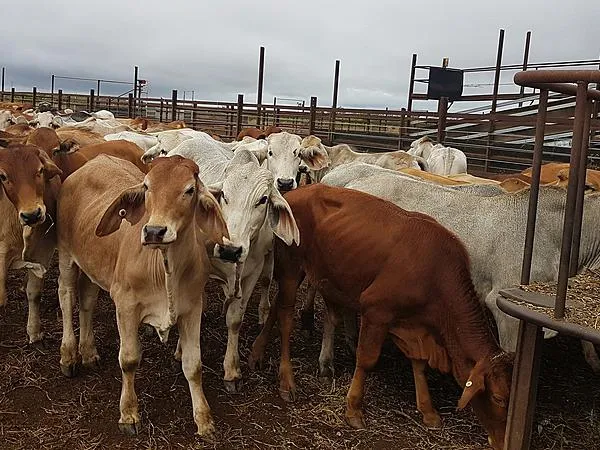
Papua New Guinea continues to work towards achieving the development sustainable goals of being self-reliant in meat production by 2025. As part of this vision, officials from the Livestock Development Corporation and the minister responsible for livestock, Segie Agiso, recently travelled to North Queensland in Australia to visit Sugarbag Cattle company, one of Australia's biggest cattle exporters.
The trip was to continue dialogue discussions that were already in place to have live cattle shipped from Australia to Papua New Guinea for breeding purposes.
In a Media Conference on Monday 26 June 2023, Terry Koim, managing director of Livestock Development Corporations (LDC) clarified there is currently an arrangement in place since 2020 with Sugarbag’s yards to export live cattle to PNG for slaughter as well as for breeding. However, due to the Covid-19 pandemic, the plan did not push through.
Mr Koim said the Australian firm is ready to export cattle to PNG, but the country has yet to meet international requirements before exports can start. He revealed that the livestock development corporation has plans to build four Post-Entry Quarantine (PEQ) facilities as an international requirement.
Mr Koim said one PEQ facility will cost about K5 million. The PEQ is a requirement for any live animal or livestock coming into the country to properly check and ensure that they do not have any diseases that may threaten food security in the country.
"We decided to go and continue the dialogue with the cattle farmer which is Sugarbag yard from where we left off in North Queensland and we have agreed to re-progress the initial plan of exporting cattle." Koim said.
Meantime, Agisa, the Minister for livestock and member for South Fly, called on the Government to support this program, as it is one of the government's key agenda in the agriculture and livestock aspects to make PNG be self-reliant in meat production by 2025.
He appealed to the Treasurer and the Department of National Planning and Monitoring to release funding that has been earmarked to build the PEQ facilities.
Agisa further stressed the importance of the program and said that funding should be released and allocated as soon as possible to get the PEQ facilities off the ground.
"(This is) to meet international requirements before we can start accessing the cattle exports we need funding, because the PEQ is a requirement for any live animals or livestock coming into the country to properly checked and quarantined."
He said the focus needed to be on rebuilding PNG's cattle industry for this to occur.
"There has been so much concentration on our petroleum and mining industries so in future we would like to focus on farming, going back to basics like agriculture" Minister Agiso said.
Last year, the government introduced a new agriculture strategy in Papua New Guinea that was aimed to broaden the country’s primary production base and cut import costs to maintain sustainability in the sector.
The Livestock Development Corporation (LDC) was established under the initial Pangu Government in 1983 to take over the responsibilities and operations of the various ranches, abattoirs, and piggeries in the country, to commercialise the successful livestock division of the old Department of Primary Industry.
In its early days, LDC was successful financially, but was grossly mismanaged and over time was left to deteriorate. Without sustainable programs in place and good leadership, LDC was forced to close most of its facilities, in turn forcing Papua New Guineans to turn to overseas markets, especially Australia and New Zealand to buy their livestock supply in quantities.
With the return of attention on livestock in this major way, PNG can now produce and supply its own livestock, and look at exporting this to nearby markets soon.
The livestock sector can be seen as an important factor to the economic and cultural life of the Papua New Guineans, as the sector can provides food and income to the country’s rural population if the government plays its role in enhancing sustainable pathways for investments in the sector.
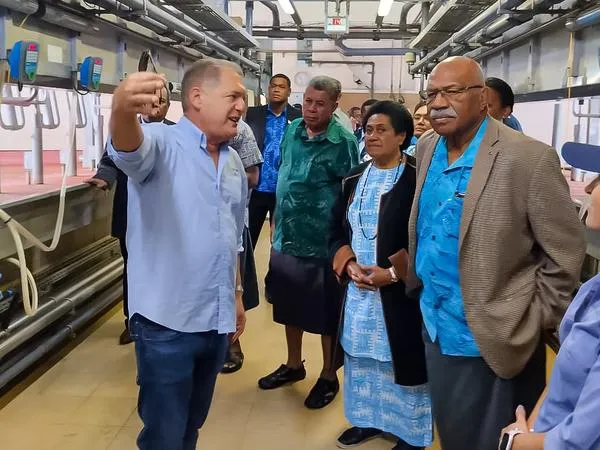
Photo: Recent Visit by Fijian PM and Delegation to Ilimo Farm
Papua New Guinea has a warm and rainy climate, rich soil, and abundant water resources, and is blessed with naturally adaptable conditions for farming a wide variety of crops.
Despite these favourable factors, the country still relies on imports to feed its population. Among the top imported products are vehicles, fuel and heavy machinery, rice, flour, and meat, which are basic dietary staples which consumers pay inflated prices for due to a lack of domestic commercial production.
Ilimo Farm – PNG's largest vegetable greenhouse and dairy facility
In its commitment to making PNG a self-sustaining agricultural producer, Innovative Agro Industries (IAIs) Ltd has been visible in the country's agriculture sector since 2011, with projects involving farming, greenhouse, poultry, and dairy.
Since its inception IAI have introduced and have been applying Israeli technologies and expertise to PNG to help contribute to the country’s food security and agricultural productivity.
In an interview, President of Innovative Agro Industries, Ilan Weiss said: "By introducing advanced technology and best practices, productivity and quality are set to increase, resulting in better income and welfare for local residents".
In 2014, IAI established the Ilimo farm, which has been producing over 100,000 kilograms of high-quality vegetables and dairy products all year round. This compromises an entire value chain that includes seedlings production, vegetable cultivation, sorting, packaging, and even marketing.
Weiss has been leading IAI in PNG since 2011, and its goal is to address the challenges that will enable PNG to upscale its agricultural output. These include a lack of infrastructure and logistics outside of Port Moresby, financing, governance, and a commercial mindset among farmers.
“To be successful in PNG, one needs to ensure service and control of the full supply and value chain. There are no service providers or opportunities to outsource, and this is the reason that we have developed fully integrated agricultural projects.” Weiss said.
Indeed, Ilimo is one of many projects in action that are helping to transform the lives of local people. Combined, IAI’s developments have provided job opportunities to more than 1,000 Papua New Guineans from all walks of life, the empowerment spreading to hundreds of small-scale farmers and suppliers who can now rely on a steady, commercial income stream.
Such farmers include vegetable producers, in which Weiss highlighted the example of a frozen vegetable enterprise in the Highlands region that is helping to remove the reliance on imported goods.
Recent Visit by Fijian PM and Delegation to Ilimo Farm
On Saturday, 20th May 2023, Innovative Agro Industry was proud to host the Prime Minister of Fiji, Honorable Sitiveni Rabuka, his wife Madam Sulueti Rabuka, and the Fijian delegation at their state-of-the-art Ilimo dairy farm and 9-Mile vegetable farm.
The Honorable Prime Minister and delegation had an enriching experience as they explored the farms, witnessed the entire Grass-to-Glass and Field-to-Fork processes, gaining valuable insights into the farm's agricultural practices, and even had a taste of all 'PNG Made' produce from fresh milk and ice cream, fresh vegetables and fruits, as well as a variety of juices.
IAI were grateful to the Fijian PM and expressed their gratitude towards the delegation and thanked the Prime Minister for recognizing their commitment to food security, sustainability, and their aim in building strong partnerships across the Pacific.
Fijian PM Rabuka and his delegation said the Ilimo farm is one of Papua New Guinea and the Pacific Region's most advanced farms. His delegation will take home methods used at the dairy and fresh produce farms back to Fiji and have it utilised and incorporated into the agricultural space, he added.
Rabuka said: "It was so sad that we have not seen this, the possibility of opportunity in PNG over the last 50 years or so. This morning (Saturday) has been very useful, I’m sure the officials in the delegation will take a lot back with them and try and incorporate them into the agro industries at home (Fiji)."
As host to the visit, IAI’s Weiss said it was a chance “for them to showcase what we were doing in PNG, the progress and advancement we have done in the field of agriculture and food production.”
“We take a lot of pride in what we are doing, put in a lot of passion, agriculture is long-term investment,” he said, noting the Fijian delegation was impressed with what they saw.
Innovative Agro Industry is the only producer of milk, yoghurt, and ice cream in the country, and invests in vegetable production and the frozen potato chip brand Kuk, named after a heritage site in Western Highlands.
IAI Ltd Scope and Social Impacts in PNG
IAI Ltd is an affiliate of the LR Group, a leading global project development company which has been active since the 1980s.
All IAI projects integrate and implement Israeli knowledge and expertise which in turn leads to enhanced production capabilities and profitability.
The company initially set up its first fresh produce farm at Nine-Mile before expanding its footprint throughout the country. The Nine-Mile farm includes six hectares of modern greenhouses, as well as a central packaging and logistics centre.
Currently IAIs projects have generated over 1,000 new direct job opportunities employing Papua New Guineans of all walks of life, from university graduates, professionals to general staff.
The company's projects further engage hundreds of small-scale farmers that supply their Agro Industrial Centres (AICs) throughout the country, turning subsistence farmers into cash cropping farmers.
Each of the company's AICs is tailored for its location and the market demand to create a value and supply chain that will provide food security, import replacement and local capacity building. For example, in Hela Province, near the Southern Highlands, the organisation is formalising plans for a coffee industry rejuvenation development.
A memorandum of understanding was signed between IAI and partners ExxonMobil, Mineral Resources Development Company (MRDC) and local governing authorities in a public private partnership that will impact up to 5,000 people over the next five years through coffee production and marketing.
"This is key to revitalising the industry in PNG. We are looking to plant up to 15 million new coffee trees in the province, and our team has been working with partners including the Coffee Industry Corporation to develop a model that will empower the people of Hela", Weiss said.
"The project will diversify the economic base and further encourage the development of additional small enterprise. Running parallel to the coffee project will be other agriculture initiatives – as coffee takes a long time to grow, we have developed a maize programme to provide feed to our chicken farm in Hela", he added
It is this continued creation of employment and earning opportunities for staff and farmers that forms the central motivation for all of IAI’s future planning and delivery of projects.
Meanwhile, Weiss highlighted the aspect of local content when commenting on the success of building IAI’s training programmes which have resulted in PNG nationals holding key positions in all of its projects.
“The goal is to have a close to 100 percent Papua New Guinean workforce at all levels of our operations,” he says.
"A company is only as good as its workers. We are commercially oriented, obviously, and we are definitely not shy in employing innovation, but what I believe sets us apart is our staff at all levels and the passion they bring to their work notwithstanding the challenges".
References:
1) innovative-agro.com, https://www.innovative-agro.com. Innovative Agriculture (Agro) Industry Limited
2) Oxford Business Group https://oxfordbusinessgroup.com › t... Ilan Weiss, Chairman, Innovative Agro Industry: Interview
3) Loop PNG| Rabuka visits Ilimo Farm https://www.google.com/url?sa=t&source=web&rct=j&url=https://www.looppng.com/png-news/rabuka-visits-ilimo-farm-
4) LR Group https://lr-group.com › project › ilim... Ilimo Dairy Farm, PNG - LR Group - Making Vision Reality
The Marape-Rosso government will very soon announce “special incentives” to support loyal players in the manufacturing, agriculture, forestry and fisheries sectors focused on serious downstream processing in the country, Prime Minister Hon. James Marape has said.
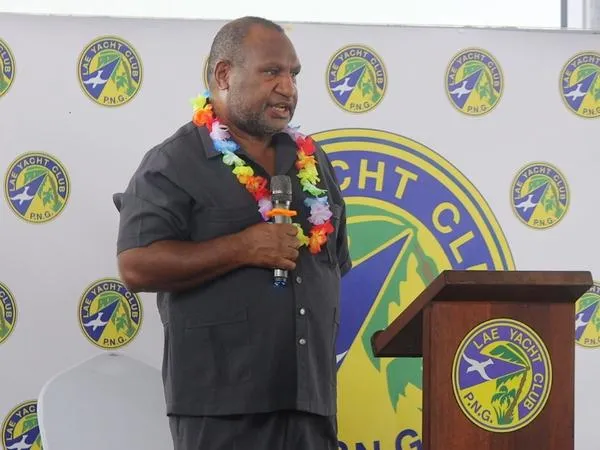
PM Marape announced this to members of Lae Chamber of Commerce & Industry on Thursday, May 25, 2023, when he was addressing a breakfast meeting in Lae.
Pointing out Goodman Fielders latest K800 million processing facility in Morobe Province as an example, the Prime Minister encouraged Lae’s manufacturers and those with businesses in agriculture, forestry and fisheries to get into this downstream processing space.
“I want to pay special mention to Goodman Fielder who have come in and brought in a K800 million worth of investments in the country,” said PM Marape.
“For those of you already doing business, we want to put up incentives so you can produce here and export from here, and bring back the money into the country.
“Those of you in this space, our Ministry of International Trade has announced the policy initiative on giving you tax holidays on the investments you are putting into the downstream of agriculture, fisheries and forestry. So keep a look out and keep working.
“These incentives will be announced very soon. In fact, within the six months before the 2024 Budget is brought in.
“Agriculture remains the great focus for us – agriculture exports, downstream forestry exports, downstream fisheries exports. We will not make a subtle turn.”
He said Lae and Port Moresby would be the starting points, to act as “agriculture enclaves” from where the Government would like to expand to other areas that already have enabling infrastructure such as a developed port, sustaining power, good road and other supporting infrastructure.
For the Fisheries sector, the Prime Minister said the recently-signed Shipriders Agreement with the United States opened up the opportunity for the US Navy to help the country in monitoring and surveillance of Papua New Guinea waters.
“For the first time ever, we have a very real chance of properly monitoring and containing illegal fishing, and knowing exactly what we are capable of making in fisheries. We are developing the Madang Maritime Industrial to add to what we are doing in the Fisheries sector.
“We also have set aside money for the development of Special Economic Zones to achieve a sustainable economy in agriculture, forestry and fisheries. We want to move toward the downstream processing space at the earliest,” PM Marape said.
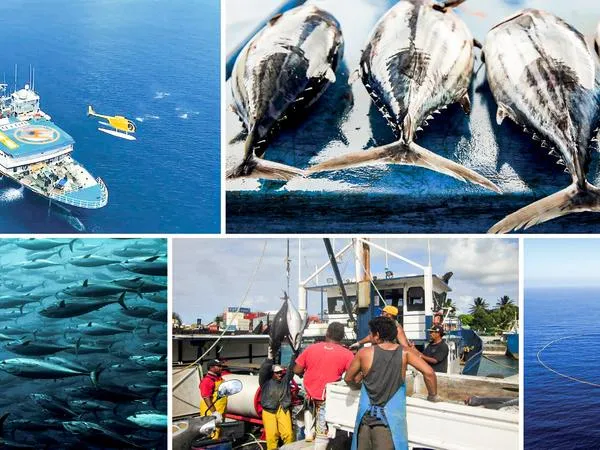
Fishing Industry Association of PNG's Tuna Purse Seine Fishery rated the largest global tuna source of MSC-certified tuna
The Fishing Industry Association of Papua New Guinea (FIA PNG) has once more gone beyond its expected boundaries to achieve another milestone for the fishing industry relating to the association’s purse seine fishing method.
Purse seines are used in the open ocean to target dense schools of single-species pelagic (midwater) fish like tuna and mackerel. Some of the main species fished with purse seine gear are southern bluefin tuna, Australian sardine, blue mackerel, and jack mackerel.
FIA has recently undergone a strict, exhaustive, and robust scope extension assessment by Scientific Certification System (SCS) Global Services for their Geographical Scope extension into the waters of the Parties to the Nauru Agreement (PNA) and the Western Central Pacific Ocean waters.
They are proud to announce that they have collectively become the "largest tuna supply source with 750,000 MT of raw material that includes Yellowfin tuna, Skipjack tuna and Bigeye tuna” under their FIA PNG Marine Stewardship Council (MSC) tuna fishery certification.
The waters of the PNA member-countries consist of Kiribati, Tokelau, Tuvalu, Solomon Islands, Nauru, Marshall Islands, Federated States of Micronesia, and Palau, and are the most productive waters that supply more than 50% of the global tuna raw material.
The President and Chairman of FIA PNG, Sylvester Pokajam stated: “Our current tuna fleet of fifty-five (55) tuna purse seiners is fishing inside the PNG Exclusive Economic Zone and Archipelagic Waters and are having good catches. However, we applied for the geographical scope extension only because we do not know how climate change will influence the tuna stocks' behaviour and migration patterns”.
"We safely guarantee our stakeholders, clients, and retailer partners that we will maintain the same rigor with the 100% observer onboard coverage, iFIMS real-time data collection and Global Fishing Watch (GFW) in accessing our Vessel Monitoring System".
"FIA will also like to ensure our clients that we will maintain best practices in Global Dialogue on Seafood Traceability Key Data Elements, data collection & share, and most importantly, the FIA PNG accountability and management control system under our Responsible Sourcing Policy", Mr Pokajam said.
The announcement of becoming the largest tuna supply source “is a result of great teamwork by our FIA PNG tuna fleet members and our FIA PNG office team to provide enough verifiable evidence to show how we are managing our fishery in a responsible and transparent manner to SCS Global services, the MSC conformity assessment body,” he said.
Mr Pokajam also expressed his gratitude to the country's flagship in the fisheries sector, and expressed that FIA greatly appreciates the support of the National Fisheries Authority (NFA) as “the guard and regulator of our fisheries and tuna fleets.”
Pokajam urged all of FIA's retailers and global tuna markets to ensure a stable and sustainable tuna supply, aligning with the United Nations Sustainable Development Goals (SDGs) of food security.
The Global Dialogue on Seafood Traceability (GDST) announced on the 18th of April 2023 that the Fishing Industry Association of Papua New Guinea's (FIA PNG) version of Fisheries Information Management System (iFIMS) software has successfully passed the GDST Capability Test. [1]
The GDST Capability Test is an online platform that allows businesses involved in the fisheries and seafood industries to verify whether software solutions can deliver on their promises of compatibility with the GDST interoperable traceability standard. Software products that pass this test are eligible to carry the “GDST Capable” logo. [2]
PNG FIA’s Sustainability & CSR Director Marcelo Hidalgo stated it is a great achievement for GDST to recognize the organization as a competent association to provide transparency in the fisheries industry in the Pacific. [1]
“We, the Fishing Industry Association of Papua and New Guinea (FIA PNG), are thrilled that our version of the iFIMS (Fisheries Information Management System) has passed the GDST Capability Test. As a vertically integrated tuna harvesting operation in the Western Central Pacific Ocean; it is important that this complex fishery be recognized as GDST-capable.”
In relation to the announcement, GDST Executive Director Greg Brown also expressed positive sentiments to the PNG group.
"The ‘GDST-Capable’ logo is awarded to software that is capable of fully implementing the GDST Standard. It’s exciting to see another key player in the Tuna sector, FIA PNG, make this important step towards enhanced transparency and assurance against illegal, unreported, and unregulated fishing," Brown said. [1]
The GDST is an international, business-to-business platform established in 2017 to create the first-ever global industry standards for seafood traceability.
More than 60 companies and associations participated in the GDST’s consensus-based drafting process, with strong participation from around the world, across the supply chain, and at all enterprise sizes. [2]
GDST focuses on partnership and participation with organizations that are dedicated to advancing the standardization and adoption of Interoperable Traceability throughout fishery and aquaculture supply chains around the world through GDST 1.1 governing information content and data formats for seafood traceability systems.
Interoperable traceability provides operational efficiency, manages and mitigates risk, provides easy and certain access to Food Safety recall and certification information, communicates product provenance, and facilitates global market access.
The Global Dialogue has laid the foundation for systems to build on setting the stage for fully transparent seafood supply chains. [2]
1) Fishing Industry Association (Brief Interview) https://www.fia-png.com
2) traceability-dialougue.com/www.thegdst.org.
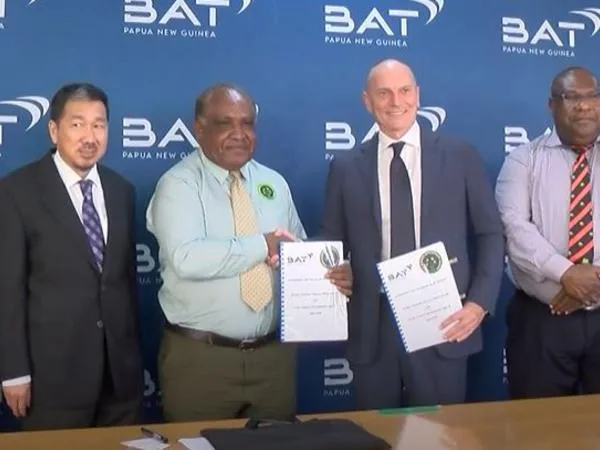
British American Tobacco PNG (BAT PNG) and Fresh Produce Development Agency (FPDA) have joined hands to aid rural bulb onion farmers in Papua New Guinea (PNG). The partnership aims to provide financial assistance to the farmers and increase the quality and quantity of their produce. As a part of this initiative, BAT PNG will contribute K1 million for the construction of 50 solar dryers for bulb onions in different locations in PNG, with each dryer costing around K20,000, totaling over K1 million for two years.
This partnership marks BAT PNG's first investment in the agriculture sector. "The government’s goal of reclaiming PNG through agriculture highlights the crucial role that agriculture plays in the country’s food security and economic stability. We are pleased to partner with FPDA who are experienced and credible partners in this space," said BAT PNG General Manager, Vamid Maksimenko.
The FPDA will manage the funds and oversee the construction and placement of the solar dryers in the bulb onion farming cooperatives across PNG. The project will benefit about 3000 to 5000 onion farming households, helping them reduce post-harvest losses related to drying and storage issues.
FPDA CEO Mark Worinu emphasized the importance of improving the quality of local bulb onions and the challenges involved in the curing process. He added that the solar dryer partnership with the University of Technology has already improved the curing and post-harvest management of bulb onions. The partnership with BAT PNG will provide additional support to the program, and FPDA is ready to implement the project in the next two years.
This initiative is a significant step towards promoting sustainable agriculture and improving the livelihoods of the farmers in PNG. As the renowned author and environmentalist, Wendell Berry said, "The soil is the great connector of lives, the source and destination of all. It is the healer and restorer and resurrector, by which disease passes into health, age into youth, death into life."
Photo Credit: USCG Press CC BY 2.0
International Trade and Investment Minister Richard Maru is urging for more fish caught in Papua New Guinea's waters to be processed in the country, with a target of processing all of it. At present, only about 10 to 15 per cent of the fish caught in PNG is processed domestically, while over 80% is sent abroad for processing.
Maru voiced his concerns after the National Fisheries Authority (NFA) handed over K100,000 for the International Special Economic Zone (SEZ) summit. He stressed the importance of a domestication policy from the NFA, which he plans to present to Cabinet.
“We cannot have an SEZ without security of the catch. I am ready to back the NFA because we need jobs," Maru said. "We are going to go all the way to legislation, policy and whatever needs to be done to ensure that we unleash the fisheries industry and maximise the benefits.”
Maru believes that the Pacific Maritime Industrial Zone (PMIZ) in Madang can create over 50,000 new jobs and is an exciting opportunity. He is committed to taking the necessary steps to ensure that the fisheries industry is fully utilized to its potential.
Justin Ilakini, the Managing Director of NFA, said that they were working with the Ministry to implement the PMIZ in Madang. Ilakini stated that the NFA had been waiting for a clear policy direction, and that the SEZ was a positive concept.
"We are collaborating with the Ministry to make the PMIZ a reality, and we are excited about the SEZ concept. We are ready to move forward," Ilakini said.
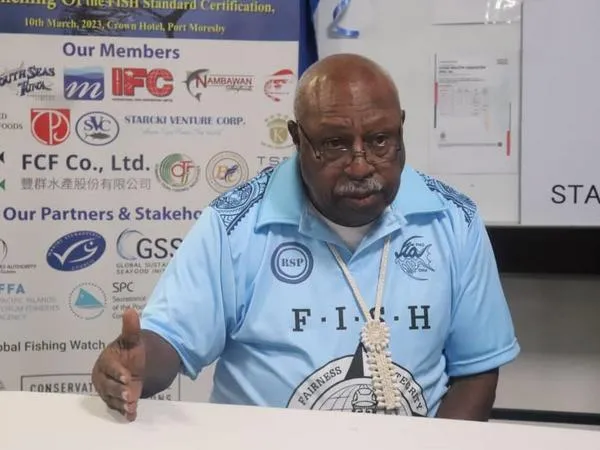
Photo: Mr. Sylvester Pokajam, President & Chairman of Fishing Industry Association (PNG) Inc.
In response to a recent media publication regarding the scaling down of operations of one of the country's major fish processing operators, the Fishing Industry Association (PNG) Inc. has clarified and maintained that the country's tuna stock is still in abundance.
Cutbacks to business operations within the fisheries sector are mostly due to high imposed taxes and business expenses, the group added.
FIA stated this considering a recent media publication (not PNG Business News) which reported that one of its associated members, RD Tuna Canners, was scaling down due to its fishing fleet’s inability to supply its tuna processing plant with reports of the lack of tuna fish in PNG waters.
In an Interview with PNG Business News, the Chairman and President of Fishing Industry Association (PNG) Inc., Sylvester Pokajam, clarified and pointed out that the outset of the stated reports published on lack of tuna stock in that certain media publication is false and totally untrue.
"The status of the tuna stock (skipjack, yellowfin, bigeye and albacore) based on recent stock assessment indicates that they are all in healthy state and good shape,” he said.
"This is one of the well managed and highly sustainable fishery stock in the Western and Central Pacific convention area,” Pokajam clarified.
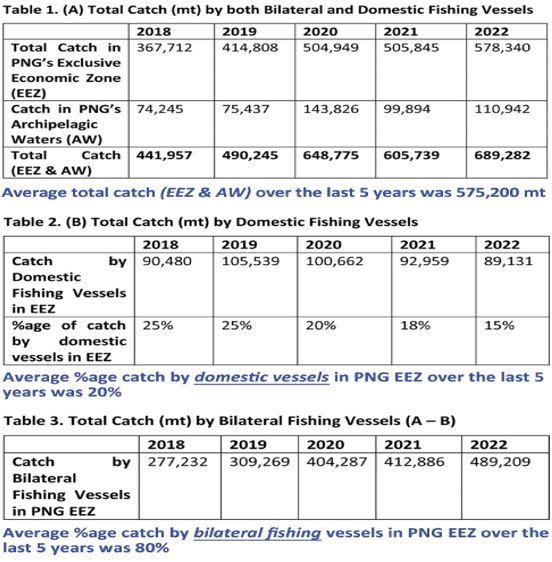
As shown in Table 1. Total average catch over the last five years (2018 to 2022) was 575,200 mt. (Refer to table)
Catch and Effort Summary
Pokajam specified that the issue reported in local media concerning one of FIA's associated members is inconsistent with data already provided and lacks basis.
"The problem associated with RD Fishing company is that RD fishing vessels stopped fishing as of October 2022. The main reason being that under the previous Government’s policy back in 2017, they (government) imposed a fee of US$10,500.00 (K37,0000) per fishing day for our domestic vessels (both PNG flag and locally based foreign flag vessels) that are vertically integrated with the processing plants".
"In the same way, RD fishing vessels are vertically integrated with its processing plant. The fish they catch are brought back in for processing locally in Madang. These vessels are being charged US$10,500 per day as do the other bilateral fishing vessels who do not even offload their catch to our local canneries for processing,” he said.
Table 2 shows the catch by domestic vessels over the last 5 years which represent around 20% as compared to 80% by bilateral fishing vessels as shown in Table 3. (Refer to table)
Mr Pokajam explained that the ramifications of the fisheries policy that has been in place for the last 5 years have seen RD fishing vessels having to stop fishing simply because they could not sustain their operational fishing cost.
Many domestic fishing vessels are also facing the same problem which has seen more than 30 PNG flagged vessels reflagging to other PNA (pacific island) countries who were charging much less than what PNG has been imposing as fees daily.
During the last five-year period, the Fishing Industry Association has been calling on the Government through the National Fisheries Authority to review this policy. RD fishing has been finding it difficult to source their raw material for processing because their vessels had simply stopped fishing.
Mr Pokajam explained further that no vessels can supply RD as they also must fulfil their supply contracts and obligations, and the price of fish is quite high. However, fish caught by bilateral fishing vessels that pay the same fee as the domestic vessels of US$10,500.00 per day do not offload their catch for processing in PNG.
Average total catch by bilateral vessels over the last 5 years as shown in Table 3 make up 80% of the total fish catch in PNG EEZ. (Refer to table)
"These fish do not even make it to our local canneries for processing but are taken back to their own countries for processing. These are serious issues that need to be addressed collectively to avoid any future negative impacts on our tuna fishing industry" Mr Pokajam explained.
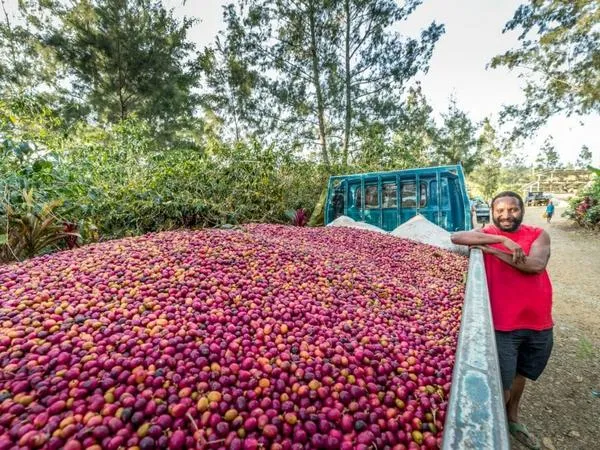
Photo courtesy of New Guinea Highlands Coffee
The agriculture sector in the country has been experiencing an upswing in production activities, as noted by the Minister for Agriculture, Aiye Tambua. Notably, coffee, coconut, and oil palm have been the major commodities that have seen a significant increase in their production.
According to the Coffee Industry Corporation (CIC), the country has exported 840,000 bags of coffee, which is an improvement from the previous year's slightly passed 750,000 bags. Moreover, foreign exchange earnings have exceeded K800 million.
The Kokonas Indastri Koporesen (KIK) has reported that there is a growing trend in the export of white copra and copra mill. Although the annual coconut production is estimated at 85,000 metric tonnes, the processed copra stands at 26,000 metric tonnes, white copra at 30,000 metric tonnes, and copra meal is compensated by an increase of 10,000 metric tonnes in white copra. Furthermore, the total export revenue has increased to K206 million in 2022 from K171 million in 2021.
The Oil Palm Industry Corporation (OPIC) has reported a steady increase in the production and export of crude palm oil since the enactment of the Oil Palm Industry Corporation Act (1992). The fresh fruit bunch produced by smallholders has increased from 769,831 metric tonnes in 2019-2021 to 819,356 metric tonnes in 2022. The income for farmers grew from K405 million in 2020 to K760 million in 2021, and almost a billion (K964 million) in 2022.
While the production of the three main commodities has increased, there are still some issues that need to be addressed to meet the target production. Mr Tambua noted that the coffee berry borer is still affecting coffee production in the country, and the government is working to address this issue. Additionally, Kokonas Indastri Koporesen has been challenged to produce seeds and seedlings as the demand for local farmers is increasing. The expansion of oil palm into new provinces has been commended, but the industry needs to assist smallholders in selling their fresh fruit bunches since there are no mills available.
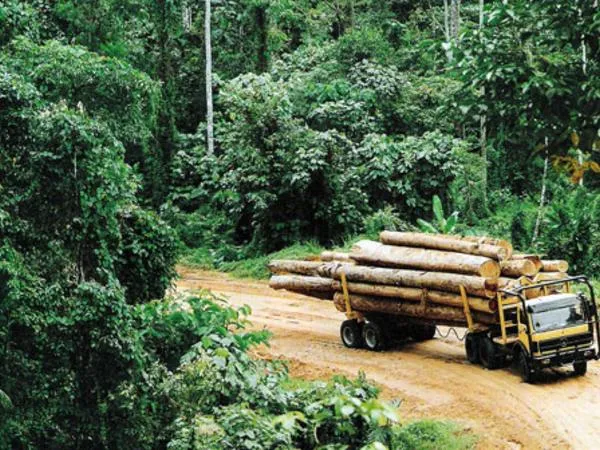
Photo credit: PNG Forest Industries Association
Prime Minister Hon. James Marape has called on logging companies, landowners and the National Forest Authority (NFA) to be involved in reforestation of areas that have been logged.
He made the call on Friday, March 10, 2023, at remote Kurindal in Lasul-Baining Local Level Government (LLG), Gazelle, East New Britain, when launching the brand-new KKC Veneer Mill. This is a project fully supported by Gazelle District, East New Britain Provincial Government and landowners.
PM Marape said the Government – through NFA - would give K3 million for reforestation of the area being logged in Lasul-Baining LLG, and gave K1 million to Gazelle MP and Fisheries Minister, Hon. Jelta Wong, as the first installment.
“I want to ask the investor, landowners and the NFA to be involved in reforestation. When you chop down trees, you have a plant a new one, so that forestry can continue in a sustainable manner going forward,” he said.
“I want NFA to get K3 million from Log Export Development Levy (LEDL) funds and work with the company and landowners in forest regrowth, plantation forest, and bring in balsa to be grown here.
“You can grow 1000 balsa trees on one hectare of land, with one cubic metre of balsa earning K400, which means a family can make up to K20,000 per year from one hectare. This K20,000 is more than the pay of people working in towns and cities. There is money on the land.
“I want to see forestry being a sustainable business in the Lasul-Baining area now and into the future
PM Marape commended the East New Britain leadership at all levels for being proactive in sustainable development through logging, agriculture, fisheries and tourism and said this must continue.
Statistics in 2022 have proven that the return of the Government’s investment in subsidizing price and freight for local coffee farmers is working.
Coffee Industry Corporation (CIC) Acting Chief Executive Officer Charles Dambui said the K1 million price and subsidy funding generated K7 million last year, and the Government’s intervention of K30 million for the price and freight subsidy in the 2023 National Budget is commendable.
“In terms of coffee, we always prioritize farmers that are reached by third-level airlines which are followed by Marine transportation and then of course by road. As we speak, the freight cost of getting a kilogram of coffee from a remote area across to the buying point is equivalent to the coffee price so sometimes you will realize that it is not economical,” Dambui said.
Mr Dambui stated that the continuation of the Marape Government’s subsidy program will increase coffee production statistics and put more money into rural farmer’s pockets.
He predicts there will be a likely increase in coffee production in 2023 on the back of the National Government’s financial support in the price and freight subsidy program.
“The government gave us K1 million for the freight subsidy and the return on investment was K7 million, in actual fact we freighted the coffee out from remote areas using that K1 million and when the cost of export was calculated it generated almost K7 million, so the freight subsidy program is the way forward,” he said.
The Minister for Agriculture, Aye Tambua, recently presented cheques to CIC with other agriculture commodity boards that received their first share of funding from the K30 million price and freight subsidy program -- this means the price of parchment coffee will now be tied at K7 per kilogram.
A portion of K1.5 million was given to the Coffee Industry Corporation (CIC) to carry out the price and freight subsidy support program this year.
Under its 2023 budget, the government has allocated a total of K30 million for the agriculture price support program and K20 million for the freight subsidy. The price support is specifically designed to support all commodities across the country to boost production in those sectors.
"The government has taken the right steps by setting the price at K7 and the CICs job is to make sure that the K7 price is realized by the farmers on the ground. We are taking that onboard and we will be working with selected buying points to ensure that we drive the government policy,” Dambui said.
Meanwhile, the CIC will continue to invest time and money to contain coffee berry borer pests throughout the country.
Dambui said the National Government’s drive to increase production level for this agricultural cash crop will fail if the disease wipes out the multimillion-kina coffee industry of the country.
“Without the coffee beans, all our initiatives will come to a stop so that's why our focus now is to control and contain the spread of the coffee berry borer. It's an economic pest that has a high chance of reducing the production in PNG as well as the country's coffee export,” he said.
"The coffee berry borer is currently spreading but the government is seriously looking into it to support the coffee industry so that we can control and minimize the spread of coffee berry borer,” Dambui said.
Photo credit: Paga Hill Estate
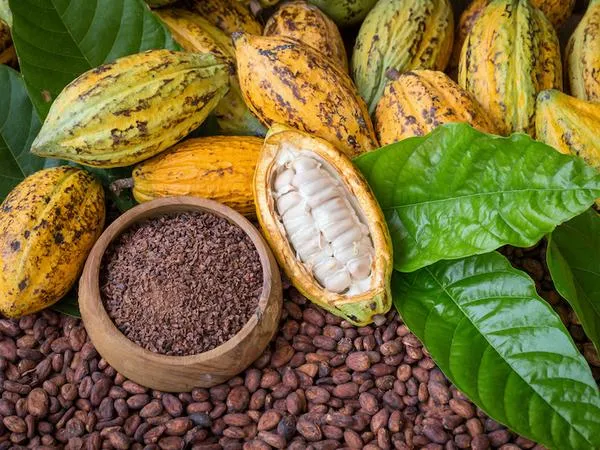
The Yangoru-Saussia District in the East Sepik Province is undergoing a phase of significant and progressive transformation as local farmers will benefit from a direct cash injection that will see a new revolution in cocoa production.
Currently, the Cocoa Board has reported that the district produced 9,000 metric tons of cocoa in 2022, the highest in the country. East Sepik produces 15,000 metric tons of cocoa in total, counting its the other six districts.
Given these overwhelming statistics, farmers have become victims of middlemen who facilitate the exports of dry cocoa beans. Just recently, a landmark board decision by the Yangoru Saussia District Development Authority (DDA) was made in a meeting in which they agreed to part ways with all the middlemen.
Yangoru Saussia DDA Chairman and local MP and Minister for International Trade and Investment Richard Maru said foreign middlemen who have been buying and exporting cocoa in the district are the ones who benefit the most financially from the hard labour of local farmers.
“So now we are working to create and implement solutions to cut off any interference from foreigners in the buying process from these foreign parties for local farmers to enjoy the benefits of their labour,” he said.
MP Maru added that the landmark decision regarding cocoa and vanilla was made also during the DDA meeting, based entirely on the survey carried out and fully funded in all 96 council wards of the district.
"Our District is the first in the province and possibly the country to undertake a first-ever detailed agriculture survey with particular focus on cocoa and vanilla production,” Mr. Maru said.
“Yangoru Saussia is currently producing 60 percent of East Sepik cocoa, as per the cocoa board’s statistics. East Yangoru alone produces over 50 percent of the district's cocoa and 30 percent of the province’s cocoa,” he added.
“Under the current business arrangement, foreign middleman export companies are still the winners from the toil and sweat of our farmers. Our decisions regarding cocoa have been to cut off the foreign middleman and to transfer the saved margin to our farmers through value-added increase prices," Maru reiterated.
According to the resolutions passed, YSDDA will invest K500,000 into Ninire Agro Investment Ltd (NAIL), a business arm and a subsidiary company of the district.
The company will then be in partnership with Innovative Agro Industries (IAI) and possibly with Kumul Consolidated Holdings (KCH) and will start buying cocoa from local farmers.
The people of Yangoru Saussia will also be eligible to buy shares in the company in which the board has already nominated the founding directors and will be managed by Innovative Agro Industries.
“YSDDA will also invest K500,000 to replace all wood fire cocoa fermenters so that solar dry quality cocoa beans can be introduced which will be able to fetch premium prices,” Mr. Maru said.
“To start, we will control and focus more on quality, which is to remove wood-fired fermenters and maintain the 100 percent organic stallholder farmers' production status. The next stage will be to process our own high-quality Sepik fresh chocolates and other by-products from our own cocoa,” the minister stated.
“In 2020, the national government had given each district K2 million in Covid-19 funding with guidelines that 50 percent of this funding will be spent on agricultural activities, 25 percent on Water Sanitation and Hygiene (WASH), and the other 25 percent on SMEs,” he added.
“The YSSDDA board had resolved that the agricultural component of K1 million will all be invested in cocoa to increase production, improve quality, cut off foreign middlemen, and improve prices and full ownership by our people.”
“We are expecting our increase in cocoa production to 18,000 metric tons per year, which will increase earnings from the current K55 million to over K100 million per year going directly to local farmers," Mr. Maru said.
According to data collected from one of PNGs biggest food manufacturing companies, Paradise Foods has been using only 2000 metric tons of cocoa per year to produce the Queen Emma Chocolate brand.
This gives way for a potential shift to downstream processing for the Yangoru Saussia District with their proposed production target of 18,000 metric tons of the best quality soar dried cocoa annually.
Meanwhile, the agricultural survey that was carried out in the district also revealed statistics on its vanilla production.
The findings showed that vanilla has about 6,918 farmers who produce 83 metric tons of sun-dried and cured vanilla beans, which produce a revenue of K25 million per year.
“For cocoa and vanilla alone, Yangoru Saussia generates over K80 million per year. We aim to double that production and increase earnings to over K100 million for cocoa and K50 million for vanilla per year. As mentioned, this is the first ever cocoa and vanilla research and survey undertaken by a provincial district,” the minister said.
The reports and recommendations highlighted in the survey will be used for planning in partnership with UNFAO (United Nations Food and Agriculture Organization), private sector investors, and other stakeholders to improve the cocoa industry in Yangoru Saussia and East Sepik Province,” Maru said.
The YSDDA has also agreed to make key interventions – a district cocoa and vanilla policy, farmer mobilization, memoranda with key stakeholders, central processing and marketing center with capacity building of farmers and extension officers, and an agriculture resource and service hub to support and coordinate the systems to be implemented.
“Apart from investment in helping to build more nurseries in the district to produce cocoa seedlings, we will be embarking on a new program to improve the production of yields per hectare for individual farmers working through the cocoa co-operative society network in our district. We want to focus on increasing the yield per hectare," the minister.
“East Sepik Province once had K5 million internal revenue, but it had increased to K15 million and is still climbing. How are we climbing when we have no mine? We are climbing on the back of cocoa and other agricultural produce,” Maru said.
The people of Yangoru Saussia district now must increase cocoa production by replacing old senile trees and planting new cocoa plots to see the investment in its business arm Ninire Agro's progress, he said.
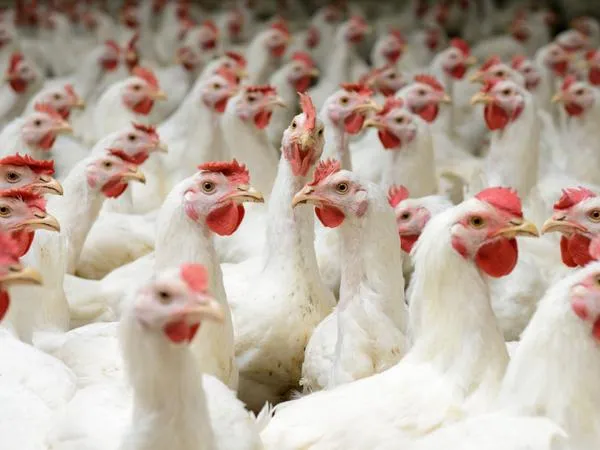
Papua New Guinea has ceased issuing import permits for Australian and Asian raw poultry in a trade move some viewed as political maneuvering.
A blanket ban was imposed on the importation of frozen chickens into the country to protect the billion-kina local poultry industry.
PNG's Agriculture Minister Aiye Tambua announced that the ban will take effect at the end of January. He said that protecting the poultry industry from imported diseases is the main reason for the decision.
While authorities have made no official announcement, multiple industry sources said PNG customers had been told permits would not be issued for Asian and Australian chicken from January 6. It will not affect orders placed before the ban date, the government said.
A letter from PNG’s National Agriculture Quarantine and Inspection Authority (NAQIA) obtained by the media mainly stated that importers should “refrain from importation” of chicken products.
“The general public including importers and exporters are thereby informed that effective of 6 January 2023, NAQIA will cease issuance of import permit [sic] to import fresh, frozen and chilled chicken products,” the letter stated.
On the downside, PNG imports nearly K200 million worth of frozen chickens annually. To meet the demand for this favorite protein, the Agriculture Minister has admitted that the importation ban will make consumers pay more at the counter, but he’s confident the two major producers of frozen chickens in the country will fill the demand gap.
He also stated that protecting the billion-kina local poultry industry is important.
Minister Tambua says Niugini Tablebirds and Zenag had given guarantees to increase production, which will create more than 2,000 job opportunities for Papua New Guineans.
He further said that the ban will influence thousands of Papua New Guineans to venture into this poultry business to meet the demand, creating more income in the small to medium business space.
In relation, a lot of confusion has raised from the imposed ban as some importers have pointed out that the unofficial trade ban came after a push by The Poultry Industry Association (PIA) of PNG before Christmas, which claimed that uncooked chicken from Australia and Asia contained “exotic poultry diseases” and was “illegal”.
The said claims were made in a full-page advert in one of the country’s major daily newspapers, The National.
The letter by NAQIA to importers also repeated the accusations, saying: “The Poultry Industry Association (PIA) has raised concerns to the government through the Minister of Agriculture on biosecurity risks.”
Meanwhile, in a historic address to PNG’s parliament recently, Australian Prime Minister Mr. Anthony Albanese said he wanted the two nations to work closely to unlock prosperity.
He also mentioned the Australian Government’s intent to improve and to assist with PNG’s biosecurity measures.
“Our government also stands ready to assist PNG to improve your biosecurity regime to enable your farmers and producers to access international markets,” Albanese said.
Australia is PNG’s biggest trade partner with bilateral trade of over $6 billion in 2020, according to Australia’s Department of Foreign Affairs and Trade. The value of chicken exports to PNG was about $23 million in 2021.
Follow on LinkedIn:
PNG Business News
Be the "First" to get our exclusive Digital Magazine & Weekly Newsletter.