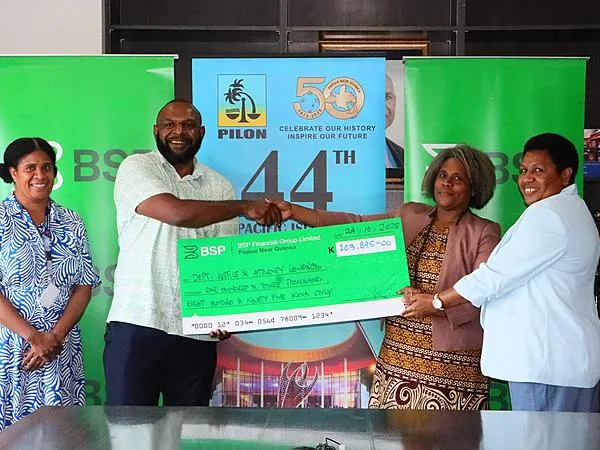
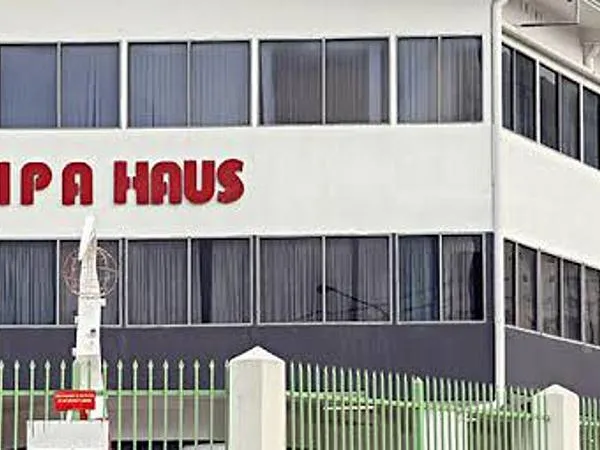
In a show of commitment to regional legal excellence, BSP Financial Group Limited (BSP) proudly sponsored the closing dinner of the 44th Pacific Islands Law Officers’ Network (PILON) Annual Meeting, to be held from 27 to 31 October at APEC Haus in Port Moresby.
In partnership with the Department of Justice and Attorney General (DJAG), BSP contributed over K100,000 to support the hosting of this prestigious regional event.
The PILON Annual Meeting is a cornerstone of legal collaboration across the Pacific, bringing together senior law officers — including Attorneys-General, Solicitors-General, and Crown Counsels — from 19 member countries and territories. The forum promotes dialogue, strengthens partnerships, and advances shared legal priorities such as combating corruption, cybercrime, and sexual and gender-based violence.
BSP Head of Retail Branch Network, Mr. Peter Komon, said the bank’s sponsorship reflects its belief in the importance of a strong and independent legal system to the region’s development.
“At BSP, we understand that a strong legal framework is essential for sustainable development, economic growth, and social justice. That’s why we are proud to support PILON’s mission and the dedicated professionals who work tirelessly to uphold the rule of law across our region,” Mr. Komon said.
The closing dinner, hosted at the conclusion of the week-long meeting, will serve as a time of celebration, reflection, and renewed commitment to justice and good governance. BSP’s support underscores its role not only as a financial leader but also as a partner in nation-building and regional development.
Secretary for the Department of Justice and Attorney General, Dr. Eric Kwa, PhD, expressed appreciation to BSP for its generous sponsorship and ongoing support.
“This will be the third time Papua New Guinea hosts the PILON Annual Meeting. We are proud to bring PILON to PNG this year as we celebrate our nation’s 50th Golden Jubilee,” Dr. Kwa said. “We are expecting around 90 participants — the highest number of delegates ever to attend a PILON meeting. Your support and partnership give us assurance that we are well prepared to host this significant regional event.”
The PILON Annual Meeting also provides opportunities for strategic planning, capacity building, and information sharing among member states, which include American Samoa, Australia, Cook Islands, Federated States of Micronesia, Fiji, Kiribati, Nauru, New Zealand, Niue, Palau, Papua New Guinea, Pitcairn Islands, Republic of the Marshall Islands, Samoa, Solomon Islands, Tonga, Tokelau, Tuvalu, and Vanuatu. Observers from international organisations such as the Commonwealth Secretariat and the South Pacific Police Commissioners’ Conference also participate.
BSP Financial Group Limited — formerly the Bank of South Pacific Limited — is a leading retail and corporate banking group headquartered in Port Moresby, Papua New Guinea. Founded in 1957, BSP now operates in seven Pacific countries, including the Cook Islands, Fiji, Samoa, Solomon Islands, Tonga, and Vanuatu, and employs more than 4,000 people across the region.
With over 120 branches, 300 agents, 550 ATMs, and more than 11,000 EFTPoS machines, BSP has the largest branch network in the Pacific. The bank’s sophisticated electronic banking systems and extensive service coverage ensure accessibility and reliability for its customers wherever it operates.
Beyond banking, BSP remains deeply committed to corporate social responsibility, working with communities across the Pacific to promote education, health, and economic empowerment. Its continued support for events such as PILON reflects this broader mission to strengthen governance and improve lives.
BSP serves its corporate and retail clients with leading cash management, treasury, lending, and corporate finance capabilities, backed by deep regional expertise and commitment. The Pacific is, and will always be, our home.
BSP Financial Group Limited is listed on both the Port Moresby Stock Exchange (PNGX: BSP) and the Australian Securities Exchange (ASX: BFL).
BSP extends its best wishes to all attendees for a successful and productive 44th PILON Annual Meeting.
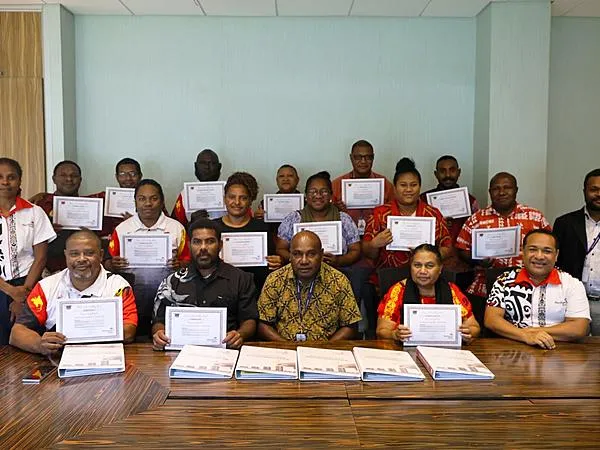
Nambawan Super Limited (NSL) continues to deliver on its commitment to improving the financial well-being of its Members through its ongoing Financial Literacy Training (FLT) Program, which has reached over 24,500 Members since its inception in 2021.
Through this program, Nambawan Super has conducted Financial Literacy sessions for both public and private sector employers across the country. The sessions are designed to equip Members with practical financial management skills to help them make informed decisions about their money today—while still employed—and to prepare them for life after employment.
The FLT Program focuses on helping Members better understand personal finance, budgeting, debt management, saving, superannuation products and services, retirement planning, home ownership, and financial management for micro, small, and medium enterprises. These sessions are delivered free of charge by Nambawan Super’s Member Education Team as part of the Fund’s broader Member education and empowerment initiatives.
NSL Chief Executive Officer Paul Sayer said the Financial Literacy Program demonstrates Nambawan Super’s continued commitment to supporting Members beyond superannuation contributions and investment returns.
“Our Financial Literacy Program is an important part of helping our Members build confidence in managing their personal finances today while still formally employed, and to start planning for their future in retirement. By equipping Members with the right knowledge and tools, we are contributing not only to their personal financial well-being but also to the broader economic empowerment of Papua New Guineans,” he said.
Since the start of the year, the Fund has delivered over 270 sessions to more than 6,000 Members from NSL employers in both the public and private sectors, including the Department of Education, PNG Ports Corporation, Correctional Services, Civil Fire Services, Milne Bay Administration, Public Health Authority, and Oil Palm Smallholders, among others.
The most recent sessions were conducted with the Office of Censorship and the National Airports Corporation, with strong participation and positive feedback received.
The Financial Literacy Training is offered free of charge to NSL employers and Members, underscoring Nambawan Super’s commitment to nation-building through education and empowerment beyond superannuation savings.
Employers interested in organising a Financial Literacy Training session for their staff are encouraged to contact Nambawan Super’s Member Education Team via the registration form on the NSL website, by calling the toll-free number 180 1599, emailing CallCentre@nambawansuper.com.pg, or visiting their nearest NSL Branch.
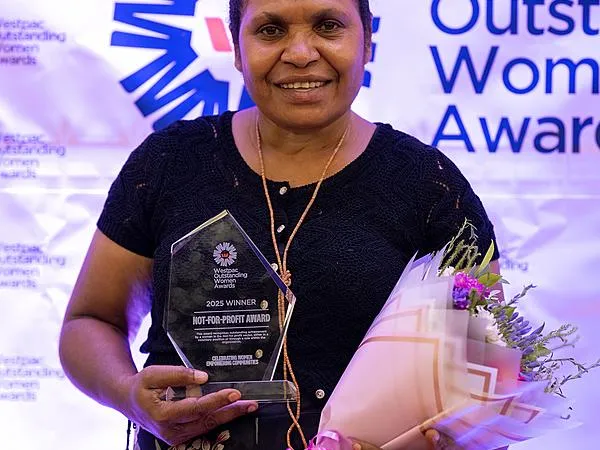
Enga Province’s Delsie Casper Nick, a tireless advocate for women, girls and persons with disabilities, has been named the winner of the Not-for-Profit Award at the 2025 Westpac Outstanding Women (WOW) Awards, recognising her transformative work empowering marginalised communities through education, inclusion and care.
Founder of the Kun Women Association Inc. and Sirunki Disability and Marginalised Community Inc., Delsie has dedicated nearly two decades to improving lives across Enga Province. Inspired by her mother’s generosity and her own experiences growing up in a family affected by disability, she has worked since 2005 to dismantle barriers facing women and people living with disabilities, providing vital support ranging from sanitary products and school materials to mobility aids and counselling.
Through her organisations, Delsie has mentored young women affected by violence to complete their education and return to work. The Sirunki Disability Care Centre, meanwhile, has transformed lives by distributing wheelchairs, crutches, and other mobility equipment that enable people with special needs to attend school and participate more fully in society. Her programmes address pressing social issues such as gender-based violence, access to education, and the systemic exclusion of persons with special needs.
“Delsie’s work exemplifies the spirit of the WOW Awards as a woman who sees needs in her community and creates lasting solutions,” said Westpac PNG Board Chairwoman Tamzin Wardley.
“Her dedication to building programmes that empower women and persons with disabilities, often using her own resources, demonstrates extraordinary leadership and compassion that is creating real change in Enga Province.”
Westpac Pacific Managing Director Emma Low also congratulated Delsie, saying that Westpac is committed to advancing gender equality and inclusive growth across the Pacific.
"We recognise the importance of local leadership in driving sustainable change. Delsie’s work is a testament to the impact of community-led initiatives in creating meaningful opportunities for women and their communities," Low said.
For his part, Westpac PNG Chief Executive Andrew Cairns highlighted the awards’ significance. The WOW Awards celebrate and amplify the voices of Papua New Guinean women who are building stronger, more inclusive communities.
"Delsie’s vision to establish a Community Hall and Disability Care Centre represents the kind of sustainable, community-led solution that helps any nation to grow. These awards shine a spotlight on changemakers like Delsie, inspiring others and demonstrating what’s possible when determination meets purpose," Cairns said.
Delsie’s vision extends well beyond her current achievements. She plans to build a Community Hall in Sirunki to serve as a training facility and safe house for women affected by sorcery accusations and violence. She also hopes to establish Papua New Guinea’s largest Disability Care Centre, offering comprehensive healthcare and education for persons with disabilities across the country.
“Every woman, girl and person with special needs deserves the opportunity to pursue their goals and live with dignity,” said Delsie Casper Nick.
“My paralytic brother plays guitar and inspires others despite his challenges. My cousin sister sews despite her disability. They show me every day that with the right support, everyone can contribute meaningfully to our communities. This award isn’t just mine. It belongs to every vulnerable person who continues to fight for their place in society.”
Delsie’s inspiring journey stands as a testament to the power of compassion and perseverance. Her leadership has brought tangible improvements to countless lives across Enga Province and continues to set a powerful example for inclusive development and community-driven progress in Papua New Guinea.
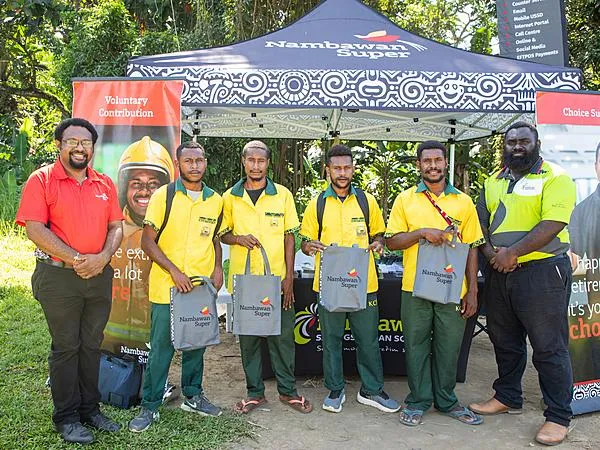
Nambawan Super Limited (NSL) proudly participated in the Young Minds Savings Campaign held recently in Kerema, Gulf Province—an initiative led by the Centre for Excellence in Financial Inclusion (CEFI) under the National Financial Inclusion Strategy (NFIS) 2023–2027.
The campaign was conducted from Wednesday, 8 October, to Friday, 10 October 2025, with the goal of instilling financial literacy and a savings culture among primary and secondary school students across Papua New Guinea. It aims to empower young people to develop lifelong habits of saving, investing, and financial responsibility.
Chief Executive Officer Mr Paul Sayer said, “Nambawan Super appreciates the opportunity to be a part of the Young Minds Savings Campaign, which aligns with our purpose to help Papua New Guineans secure their financial future. By engaging with students at an early stage, we can encourage positive saving habits and introduce the concept of long-term investment for a better future.”
He added, “Financial literacy is not just for adults; it starts with our young people. By helping students understand the value of saving and long-term planning, we are investing in a more financially resilient Papua New Guinea.”
“Many students are hearing about superannuation and investment for the first time, so we take the opportunity to show them how saving early, even in small amounts, can create a strong financial foundation for their future,” Mr Sayer said.
Throughout the campaign, NSL representatives conducted interactive financial literacy sessions to help students understand the importance of saving consistently, the benefits of superannuation, and how small contributions today can grow into long-term financial security.
The campaign brought together key financial institutions, including the Nambawan Savings and Loans Society (NSLS) and others. Each organisation hosted booths and awareness sessions tailored to students, teachers, and community members.
In Kerema, students from Sikalu, Ilakaraeta, Karea, and Epo Uriri Primary Schools, as well as Malalaua and Kerema Coronation Secondary Schools, actively participated in awareness sessions, discussions, and account-opening activities. Many took their first step toward financial independence by opening savings accounts during the campaign.
Nambawan Super also extended its awareness efforts to teachers and staff, highlighting the importance of retirement planning, voluntary contributions, updating Member details, and the benefits of being an NSL Member.
The Young Minds Savings Campaign represents an important milestone in advancing the NFIS 2023–2027 goals, with plans to expand similar initiatives to other provinces.
Nambawan Super Limited remains committed to supporting financial inclusion, education, and empowerment across communities, ensuring more Papua New Guineans can build brighter financial futures for themselves and their families.
Preparations for the highly anticipated Papua LNG Development Forum are now underway as the Government of Papua New Guinea (PNG) moves decisively to advance the project towards its Final Investment Decision (FID).
Minister for Petroleum Jimmy Maladina confirmed on 22 October that the State Team has commenced coordination with project operator TotalEnergies following his directive to begin logistical and planning arrangements for the forum.
Minister Maladina explained that the Development Forum is a mandatory process under the Oil and Gas Act 1988 and must be completed before the issuance of a Petroleum Development Licence (PDL). The forum serves as an important platform for the State, project developers, and affected landowners to discuss and agree on benefit-sharing and development commitments related to the Papua LNG Project.
“The Development Forum is an important step for the Papua LNG Project. It is required under the law and provides the platform for the State, project developers, and affected landowners to agree on benefit-sharing and development commitments,” Maladina said.
He confirmed that initial meetings between the State Team and TotalEnergies have already taken place, focusing on budgeting, logistics, and scheduling arrangements to ensure the forum is held at the earliest opportunity.
“Work on the Development Forum has kicked off with a meeting between the State Team and TotalEnergies. The focus is now on finalising the budget and logistical details to ensure the forum is held soon,” he said.
Minister Maladina reiterated the Government’s commitment to pushing the project forward, emphasising that all necessary requirements are being expedited to support an early FID. He highlighted that the recent signing of the Papua LNG Joint Equity Marketing Agreement between Kumul Petroleum Holdings Limited (KPHL) and TotalEnergies marks a major milestone in that direction.
Maladina Congratulates New KPHL Board
In a related announcement, Maladina also congratulated the new Board of Kumul Petroleum Holdings Limited, led by Chairman Gerea Aopi, on the successful signing of the Joint Equity Marketing Agreement. The Minister described the agreement as a “critical milestone” that demonstrates strong cooperation between the State and its development partners.
“This signing represents a major breakthrough for the Papua LNG Project. It demonstrates renewed commitment by both KPHL and TotalEnergies to advance the project towards the Final Investment Decision,” Minister Maladina said.
The agreement, which had been pending for over a year, now removes a key hurdle in the project’s transition to its development phase. Minister Maladina commended the leadership of the new KPHL Board for its decisive action and acknowledged TotalEnergies for its professionalism and continued partnership with the State.
“I acknowledge the tireless efforts of TotalEnergies’ management teams in Singapore and Port Moresby. Their professionalism and cooperation have been instrumental in bringing the project to this stage,” he said.
According to the Minister, the signing of the Joint Equity Marketing Agreement reinforces investor confidence and signals that the Papua LNG Project is entering a critical stage of progress.
“This achievement gives confidence that the Papua LNG Project is entering its development phase. The Government welcomes this progress as it will pave the way for greater investment, employment, and long-term benefits for Papua New Guinea,” he concluded.
Minister Maladina further assured that the Ministry and the Department of Petroleum are working closely with all relevant government agencies, TotalEnergies, and landowner representatives to ensure that the Development Forum is conducted efficiently, transparently, and in full compliance with legislative requirements.
As preparations gather pace, the Government’s strong stance underlines its determination to deliver the Papua LNG Project, one of the country’s most significant resource developments, taking it into its next phase and bringing tangible economic and social benefits to Papua New Guinea.
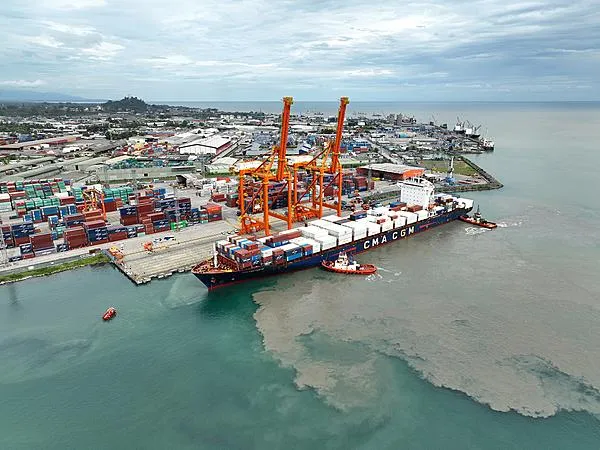
Prime Minister James Marape has congratulated PNG Ports Corporation Ltd (PNG Ports) for its remarkable performance in the 2025 World Bank Container Port Performance Index (CPPI), describing the achievement as a proud moment for Papua New Guinea and a strong indicator of the country’s growing efficiency, resilience, and competitiveness in international trade.
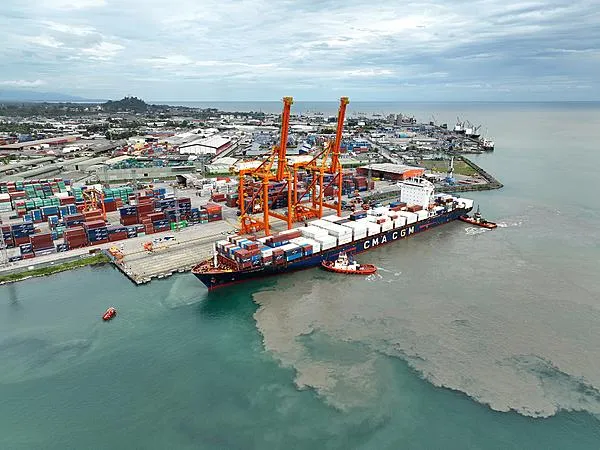
According to the World Bank’s CPPI report, the Port of Lae rose from 311th position in 2023 to 264th in 2025, while the Port of Port Moresby climbed from 280th to 248th. Both ports outperformed several major facilities across developed economies, including Melbourne, Brisbane, Port Botany (Sydney), Auckland, Napier, and Otago.
“These outstanding results are not just statistics; they reflect the steady progress of our nation in managing critical infrastructure, enhancing operational capacity, and building a modern, competitive economy,” Marape said.
He commended PNG Ports’ management, employees, and partners for their leadership and innovation in positioning the country’s ports among the best-performing in the Asia-Pacific region.
The Prime Minister said the improved rankings were the result of strategic investments and partnerships made in recent years, including the introduction of new equipment, advanced port management systems, and digital technologies designed to increase efficiency and reduce turnaround times.
“Through prudent investment and management, PNG is demonstrating that we can compete regionally and globally,” he said. “The operational success of our ports is central to our national vision under the Take Back PNG agenda — to build an economy that is efficient, transparent, and globally connected, creating opportunities for our people and businesses.”
Transforming PNG into a Trade-Driven Economy
Marape said Papua New Guinea’s 50th Independence Anniversary, celebrated last month, marked not only a national milestone but also a strategic reset toward the next 50 years of growth and prosperity.
“As we step into our next 50 years, our focus is clear — we are transforming from a resource-dependent economy into a diversified, trade-driven nation,” he said. “Our ports are the gateways to this transformation, enabling trade, supporting investors, and connecting Papua New Guinea with regional and global markets.”
He added that the Government would continue to support State-Owned Enterprises (SOEs) such as PNG Ports in their efforts to modernise infrastructure, strengthen governance, and expand regional connectivity through smart investments and strong public–private partnerships.
“The success of PNG Ports demonstrates what good governance, commercial discipline, and patriotic leadership can achieve when aligned with national goals,” Prime Minister Marape said. “We will continue working with our development and investment partners across the Asia-Pacific to expand trade, grow exports, and position PNG as a regional hub for shipping and logistics.”
Inclusive Development and National Connectivity
The Prime Minister also praised PNG Ports’ ongoing commitment to maintaining operations across all 15 declared ports, including support for 12 Community Service Obligation (CSO) Ports that connect rural and maritime communities.
“This inclusive approach ensures that the benefits of development reach all corners of our country,” he said. “Even as we pursue efficiency and profitability, we must never lose sight of our responsibility to serve every Papua New Guinean — from our remote islands to our industrial cities.”
Positioning PNG as a Regional Trade Hub
Marape reaffirmed his Government’s commitment to maintaining Papua New Guinea as a stable and attractive destination for investment, particularly within the Asia-Pacific region. He emphasised that sustained economic growth depends on reliable infrastructure, consistent performance, and strategic focus across key sectors.
“Papua New Guinea’s improved global ranking in port performance is a reflection of our broader national progress,” Prime Minister Marape concluded. “We are open for business, ready for investment, and determined to ensure that every sector of our economy — from shipping to agriculture to digital trade — contributes to our shared prosperity.”
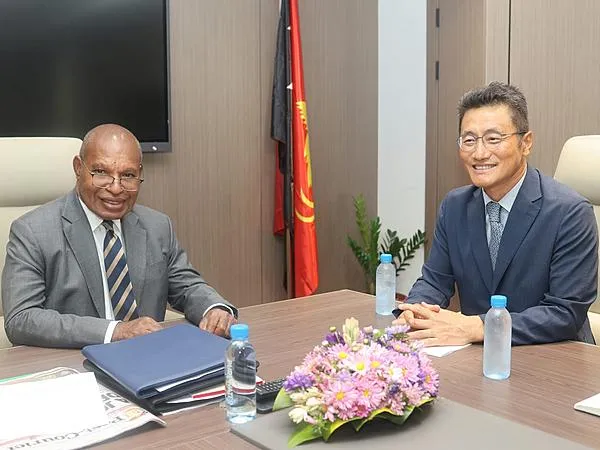
Jongho Choi, the Ambassador of the Republic of Korea to Papua New Guinea (PNG), announced that the Korea International Cooperation Agency (KOICA) will establish its office in PNG following his meeting with the Minister for International Trade and Investment Richard Maru on 22 October.
“This is a welcoming news. KOICA is South Korea's government agency for providing official development assistance to developing countries through grant aid and technical cooperation," Maru said.
The minister said that the PNG government want to see more aid flows between PNG and Korea, noting that they also want Korea Eximbank to be more active in the domestic market as they offer one of the lowest interest rates.
"We have a good record with Korea Eximbank as we repaid our first loan for the Wewak storm drainage project on time, and we want more concessional aid. We look forward to the establishment of KOICA office in PNG and to working with them on grant projects and also development finance,” Maru said.
Both officials also discussed Maru’s possible visit to South Korea to attend the APEC Ministerial Meeting (AMM).
“I will also be meeting a number of potential investors in the two days that I am making available to meet with the private sector in Korea on the margins of the AMM. We are very keen on bringing some Korean investors to PNG,” said Minister Maru.
“I am very happy that the Government of Korea is keen to deepen the relationship with PNG. I welcome that and look forward to working with the Korean Government and a number of Korean investors to invest in PNG, specifically in Special Economic Zones and in the non-resource sectors. Korean companies are also keen to be Engineering, Procurement, and Construction (EPC) contractors in the mining and petroleum sector. We are keen to see more win-win partnerships in line with our new foreign policy of securing partnerships for security and economic prosperity,” he added.
As one of Papua New Guinea's most vital industries, the mining sector relies on infrastructure that minimises downtime and maximises productivity. Water management—often overlooked in mining discussions—is critical to both safety and profitability.
Truflo Pumps, an Australian-owned and operated company, has maintained a longstanding relationship with PNG, providing dewatering solutions to open-cut and underground mines for over 15 years. Its deep understanding of the region’s unique challenges has made it a trusted partner for some of the country’s largest mining operations.
The PNG Challenge
Water management at mine sites in PNG poses a number of challenges.
“Many of the mine sites are quite inaccessible, the terrain is difficult, and there’s a lot of water—especially in the highlands where it rains most days,” says Paul Power, Truflo Pumps’ International Business Development Manager. “And the water that needs to be moved is often quite dirty and harsh.”
These are not conditions where off-the-shelf solutions suffice. Equipment must be robust, reliable, and specifically engineered for the job at hand.
Purpose-Built Solutions
“That’s where Truflo Pumps excel,” Paul explains. “Our range of wet ends and pump sets are designed to handle the toughest conditions in the world. We have off-the-shelf models available, but we specialise in the design and manufacture of purpose-built pumps. Our in-house design engineers look at all of the variables and design a solution that will do all that you want it to—and more.”
A prime example is the underground dewatering system Truflo designed for Ok Tedi. The pumps needed to move 800 litres per second, with a capability of up to 1,200 litres per second. This provided safe access for vehicles and ensured a secure working environment for underground crews.
Truflo Pumps didn’t just design and supply the system—they also commissioned it and trained operators on-site.
“We often fly team members from Australia to sites in PNG to provide support and training,” Paul says. “It’s part of our commitment to providing the best service and solutions possible.”
Smart Technology, Real Results
Beyond hardware, Truflo Pumps’ technological innovations have transformed dewatering efficiencies across the world’s mining sectors. The AquaBoss Asset Protection Controller, developed over three years in collaboration with pump crews, hydraulic engineers, maintenance teams, and Truflo’s R&D department, has set new benchmarks for dewatering management in the industry.
AquaBoss features a user-friendly interface that allows operators—without needing years of experience—to run pumps safely within recommended parameters. Using a simple traffic light system, real-time monitoring, and automated curve optimisation, the controller protects both the pump’s wet end and engine, reducing wear, tear, and downtime. The controller can also be easily retrofitted to existing Truflo pump sets.
For mining operations, this translates directly to the bottom line—longer equipment life, less downtime, and substantial cost savings.
A Partnership Built on Understanding
What sets Truflo Pumps apart isn’t just engineering expertise—it’s understanding. With more than 35 years of experience in mine dewatering and a long history of supplying solutions to PNG, Truflo knows the terrain, climate, logistics, and pressures that mining operators face.
The company has invested heavily in relationships, training, and ongoing support, recognising that even the most advanced equipment is only as effective as the team operating it.
In a sector where downtime is measured in lost millions, that commitment to partnership and performance makes all the difference.
The board of Kumul Petroleum Holdings Limited (KPHL) welcomed the decision of the National Court in relation to the cases submitted earlier in the month by suspended KPHL Managing Director, Mr Wapu Sonk.
The National Court’s decision effectively confirms the legal standing of the KPHL Board led by Chairman Gerea Aopi, who was appointed by Prime Minister James Marape as sole trustee on behalf of the State; the Board’s suspension of Managing Director Wapu Sonk; and its appointment of Mr Luke Liria as Acting Managing Director.
“The Board is pleased with the ruling, and the judgement’s comprehensive analysis and consideration of all the actions taken by various interested parties over the last few months subsequent to the issue of the appointment instrument. This demonstrates the integrity of our civil democratic processes," Chairman Gerea Aopi said.
The court judgement related to a request for a judicial review of the instrument appointing a chairman and directors of KPHL, made by Prime Minister James Marape as the trustee of the company on 10 June 2025, and subsequent court actions since that time.
The ruling noted: “The application for leave for judicial review is dismissed as an abuse of court process.”
Aopi said that tthe board of KPHL is now free to pursue its role in overseeing the activities of this important industry entity, and in doing so "will hopefully restore public trust in its operations and its vision" to create value and opportunity from the nation’s petroleum resources for Papua New Guinea and its people.
"Whatever public perceptions or opinions may be, the KPHL Board has always abided by the rule of law — a practice we intend to continue in the coming years of our tenure — to always act in the best interests of KPHL,” said Chairman Aopi.
“Going forward, the Board intends to follow normal good governance practices and ensure accountability for all KPHL’s actions and activities, including any changes that may be necessary in company management. This is particularly important at this present time in the lead-up to the long-awaited announcement of the Final Investment Decision for the Papua LNG Project by TotalEnergies,” Aopi said..
Adyton Resources Corporation (TSX Venture: ADY) has confirmed the large scale of its Feni Gold-Copper Project in Papua New Guinea, following final assays from drill hole FDD005. The results also point to new high-priority targets that could further expand the project’s mineral potential.
Drill hole FDD005 returned 158 metres at 0.72 grams per tonne gold equivalent (0.54g/t gold and 0.14 per cent copper), including 32 metres at 1.09g/t gold equivalent (0.99g/t gold and 0.11 per cent copper). It also ended with 383 parts per million molybdenum, indicating a possible connection to a deeper-seated intrusive system.
The company said the hole is the fifth consecutive one with assays greater than 100 gram-metres gold equivalent, confirming broad and continuous mineralisation between two existing resource areas at the Kabang prospect.
Chief Executive Officer Tim Crossley said the drilling of FDD005 was aimed at unlocking the untapped area between known deposits.
“The drilling of hole FDD005 was a bold move in the middle of the ‘gap’ area in our block model. It is the deepest hole ever drilled at Feni with a gold bearing vertical footprint of greater than 700 metres,” Crossley said. “Our next focus is to integrate the new data from our current drill program into our historical data set and recent close-spaced drone magnetic survey to vector in on and identify the higher-grade zones within this extensive mineral system.”
Chief Operating Officer and Chief Geologist Dr Chris Bowden said that despite lower grades compared with previous drill holes, the latest results demonstrate the extensive scale of the mineral system.
“While the highlight intersection in FDD005 was lower-grade than previous drillholes, it still reported over 100 gram-metres and the two very broad zones of gold-copper mineralisation — 382 metres at 0.43g/t AuEq (from 69 metres) and 332 metres at 0.13g/t AuEq (from 508 metres to end of hole) — clearly indicate the footprint and scale of the system at Feni is extensive,” Dr Bowden said.
He added that ongoing analysis is strengthening their understanding of the area’s geological structure.
“We have re-interrogated the assay results with the outcomes from geophysics data (including high-resolution drone survey). We now have higher confidence that FDD005 likely sits in a structural offset, explaining the significantly wide and highly anomalous grades,” he said. “Furthermore, the re-review of the geophysics and assay results has resulted in a revised understanding of the potential structural controls to mineralisation (more akin to the structural setting at Lihir).”
Adyton said it is continuing to refine its geological model with the new data, which has already highlighted additional targets now considered more prospective. The company is prioritising these in its current phase of drilling in the fourth quarter of 2025.
The Feni Island Gold-Copper Project lies within the 250-kilometre-long Tabar-Lihir-Tanga-Feni Island chain in Papua New Guinea’s Bismarck Archipelago, which also hosts the Simberi and Lihir gold mines. The project currently has a foundational resource of 1.45 million ounces of gold, with exploration aimed at defining higher-grade zones within the larger mineral system.
South Pacific Metals Corp. has announced the discovery of new gold-copper mineralized zones at Golkona South, part of its Anga Project in Papua New Guinea.
The Anga Project lies immediately northeast of, and contiguous with, K92 Mining’s tenements in the Kainantu District — a region widely recognised as one of PNG’s most prospective gold-copper belts.
Highlights – Golkona South
Next steps
SPMC Chief Executive Officer Timo Jauristo said the latest findings reinforce the potential of the Anga tenements. “We are very pleased with these latest soil geochemical results at Golkona South.
“The potential of Golkona South and the Anga tenements is highlighted by these results and their location along the northeasterly trend from K92’s large and growing Arakompa project. We look forward to continuing to advance this project, although our immediate priority is the imminent start of drilling to test the exciting epithermal vein targets at Ontenu NE," Jauristo said.
South Pacific Metals Corp. is an emerging gold-copper exploration company operating within Papua New Guinea’s proven mineral belts. With an expansive 3,100 km² land package and four key projects — Anga, Osena, Kili Teke, and May River — the Company is advancing systematic exploration across assets located alongside major producers K92 Mining, PanAust, and Barrick/Zijin.
The Anga and Osena Projects, which flank K92’s high-grade Kainantu operations, show potential for lode-gold and porphyry copper-gold mineralization similar to that of K92’s deposits. Kili Teke, 40 km from the Porgera Gold Mine, hosts an Inferred Mineral Resource with room for expansion, while May River sits adjacent to the world-class Frieda River copper-gold project, with historical drilling suggesting significant untapped potential.
K92 Mining Inc. has announced the first production of commercial-grade gold-copper-silver concentrate from its new 1.2 million tonnes per annum (tpa) Stage 3 Expansion Process Plant at the Kainantu Gold Mine in Papua New Guinea, marking a major operational milestone for the Company.
During the Official Inauguration Ceremony held on site on 16 October, the Prime Minister of Papua New Guinea James Marape witnessed a gold pour at the new plant, which produced 458 ounces of doré.
Also in attendance were Minister for Mining Rainbo Paita, other distinguished members of Parliament, officials from the Eastern Highlands Provincial Government, heads of government departments and agencies, landowner association leaders including Bilimoia Landowner Association Chairman Busa Sio and Associated Landowners Association Chairman Noka Tinko, as well as representatives from the diplomatic corps, the business community, and project partners.
The new Stage 3 Expansion Process Plant — delivered under budget — represents the largest capital investment under K92’s Stage 3 Expansion program, with 90% of total costs spent or committed as of September 30, 2025. Commissioning remains on track for completion in the first half of Q4.
K92 Chief Executive Officer and Director John Lewins said the achievement marks a pivotal moment for the Company and its stakeholders.
“I am very pleased to announce that the Stage 3 Expansion Process Plant has achieved its inaugural production, a major milestone for our Company, our stakeholders, and the country of Papua New Guinea,” Lewins said.
“This achievement is the result of the tireless efforts and collaboration of our workforce, contractors, and partners. I commend our team for successfully bringing this major project online safely, efficiently, and under budget," he added.
Lewins noted that the presence of the Prime Minister, Minister for Mining, and other key officials underscores the strong partnership between K92 and the PNG Government.
“We were deeply honoured to have the Prime Minister of Papua New Guinea, the Hon. James Marape, along with the Minister for Mining, Hon. Rainbo Paita, and other senior government and community representatives attend the Official Inauguration Ceremony. Their continued partnership and support have been instrumental to the success of the Kainantu Gold Mine," he said.
Lewins concluded by emphasising that this milestone positions K92 for future growth.
“This marks an exciting chapter in K92’s history as the Company advances towards Tier-1, mid-tier producer status. Beyond celebrating this milestone, we are excited for the significant long-term benefits that the Stage 3 Expansion will deliver for our employees, communities, and all stakeholders," the executive said.
K92 Mining Inc. announced strong production results for the third quarter of 2025 from its Kainantu Gold Mine in Papua New Guinea, as the company continues to make progress on its major Stage 3 expansion.
The company produced 44,323 ounces of gold equivalent (AuEq) during the quarter, including 42,244 ounces of gold, 1.3 million pounds of copper and 34,831 ounces of silver. Sales reached 45,006 ounces of gold, 1.48 million pounds of copper and 43,271 ounces of silver.
With more than 80 percent of the lower end of its yearly target already achieved and an additional 4,893 ounces of gold equivalent in its commissioning stockpile, K92 said it remains on track to meet its 2025 production guidance of 160,000 to 185,000 ounces AuEq.
The company processed 137,172 tonnes of ore in the quarter, a 31 percent increase from the same period last year, with an average gold grade above budget. Metallurgical recoveries were also strong, reaching 95 percent for gold and 94.6 percent for copper.
K92 reported record mine output of 353,770 tonnes of material, with several daily production records set in late September. The company credited this to efficiency improvements such as the completion of its first “material pass,” which allows ore and waste to be moved more efficiently from underground to surface.
Stage 3 Expansion on Schedule
Construction of the new Stage 3 Process Plant, capable of handling 1.2 million tonnes of ore per year, has been completed ahead of budget. The plant is now in the commissioning phase, with the first gold pour and concentrate production expected in the first half of the fourth quarter of 2025.
As of the end of September, 90 percent of Stage 3 expansion capital had been spent or committed, and the project remains within budget. Work also continues on the pastefill and tailings plants, ventilation systems and new underground connections aimed at boosting productivity and safety.
K92 said commissioning of the pastefill circuit is scheduled to begin in mid-2026, while other upgrades such as new power generation systems and tele-remote loaders have already been completed.
Chief Executive Officer John Lewins said the results reflect the company’s steady progress toward becoming a mid-tier gold producer.
“The third quarter marked another strong period of progress for K92 both in terms of production and continued execution of the Stage 3 Expansion,” he said.
Lewins added that the completion of the new plant marks “an exciting period in the company’s history as K92 transitions into a Tier-1, mid-tier producer.”
“Ore has already been introduced into the crushing, grinding, and flotation circuits of the new process plant, keeping us firmly on track for practical completion of commissioning and the first gold pour and concentrate production in the first half of Q4 2025,” he said. “Importantly, the team has built the process plant under budget, representing a significant achievement.”
He also highlighted the company’s progress on multiple projects that support future growth.
“We are also very pleased with the significant advancement we have made across a multitude of projects, de-risking the delivery of the Stage 3 Expansion and positioning the underground mine for Stage 4 and beyond,” Lewins said.
He added that with most of the capital already spent and strong quarterly output achieved, K92 is confident of meeting its full-year goals.
“Having already delivered 80% of the lower end of our annual guidance within the first three quarters plus a commissioning stockpile of 4,893 oz AuEq at the end of Q3, we are well-positioned to achieve our 2025 production guidance,” he said.
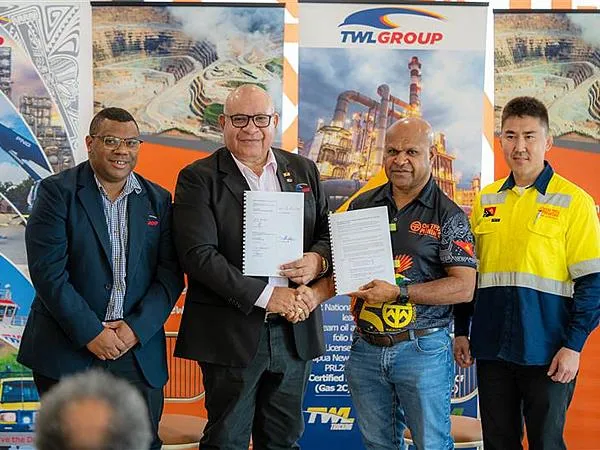
Ok Tedi Mining Limited (Ok Tedi) is pleased to announce the signing of a non-binding gas supply term sheet with ArranEnergy, a subsidiary of Trans Wonderland Limited (TWL), to purchase gas from its Stanley Gas Fields in Western Province.
This marks a major step toward the company’s plans to achieve its Growth 2050 Energy Transition Strategy and decarbonise its operations.
Speaking at the signing ceremony, Ok Tedi Manager for Energy Transition Anton Safronov said that the signing is a significant milestone for Ok Tedi and the first of many steps to be taken as the company work towards decarbonising our operations under its Growth 2050 Strategy.
“This event signifies more than just our decarbonisation targets—it also reflects our commitment to using local products and creating more employment opportunities for our people," Safronov said.
Ok Tedi Managing Director and Chief Executive Officer Kedi Ilimbit said “PNG has not really developed the liquefied natural gas (LNG) supply for its domestic market. So Ok Tedi, being 100% PNG-owned, is happy to be the first to enter this segment with Trans Wonderland and ArranEnergy. We will now generate power and drive trucks using gas from the Stanley LNG Project.”
Ilimbit reiterated Safronov’s sentiments on reducing Ok Tedi’s carbon footprint, while highlighting the need to de-risk the business for the future.
He said Ok Tedi’s supply of imported fuel—especially diesel for its operations and electricity generation—has always depended on river levels along the Fly River. The Stanley LNG Project now provides an alternative energy source, allowing Ok Tedi to transition to cleaner, locally produced gas with a reduced carbon footprint and lower costs.
Ok Tedi’s current thermal generation produces 60 megawatts (MW) of power for daily operational consumption.
Ilimbit also noted that plans are in place to further enhance hydro generation facilities and to expand the use of gas across the company’s mobile fleet.
The Stanley LNG Project will be instrumental in decarbonising Ok Tedi’s operations and supporting a more resilient, sustainable future for the company and its stakeholders.
Key benefits of the Stanley LNG initiative include:
TWL Managing Director Larry Andagali expressed excitement about the prospect of selling processed gas within PNG, as opposed to focusing solely on exports.
“The next 50 years are looking brighter, and this partnership signifies better things to come. We have a vast natural gas resource, but the question is: how can we best add value to it for our people after processing? Our answer lies in supplying the domestic gas users’ market," Andagali said.
“We thank Ok Tedi for this partnership and hope that more businesses in the country will follow suit to ensure the sustainable use of our natural resources for an improved quality of life for all our people in PNG," he added.
Ok Tedi, being 100% PNG-owned, remains committed to responsible mining and to operating with excellence to deliver sustainable legacies for its stakeholders.
Earlier, OTML and the National Energy Authority (NEA) have signed a Memorandum of Agreement (MoA) to advance the Lighting Up the West (LTW) initiative—a transformative program aimed at expanding access to reliable, affordable, and clean energy across Western, West Sepik, and East Sepik Provinces.
The MoA, signed by Ok Tedi Managing Director and Chief Executive Officer Kedi Ilimbit and NEA Managing Director Ronald Meketa, establishes a framework for regulatory cooperation, licensing, and stakeholder engagement to deliver rural electrification through decentralised renewable energy (DRE) solutions in the short to medium term, and hydropower in the long term.
The initiative aligns with Papua New Guinea’s national goal to achieve 70 percent electricity access by 2030 and 100 percent by 2050, prioritising renewable energy sources such as solar and hydro.
Ok Tedi, through its subsidiary Ok Tedi Power, will lead the deployment of DRE solutions to anchor communities, with feasibility studies currently underway in Western, West Sepik, and East Sepik Provinces. The program is designed to deliver social, economic, and environmental benefits, including improved quality of life, local enterprise development, reduced emissions, and enhanced energy independence.
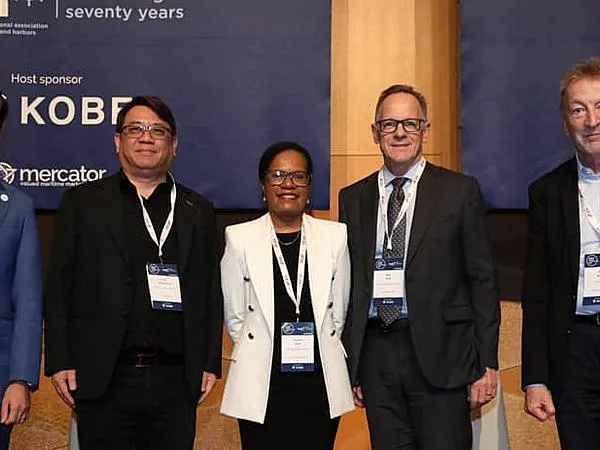
PNG Ports Corporation Limited (PNGPCL) proudly announces the participation of its Chief Commercial Officer Deborah Michelle Onga as a panellist at the 2025 International Association of Ports and Harbors (IAPH) World Ports Conference, held from 7–9 October in Kobe, Japan.
The conference, celebrating the IAPH’s 70th anniversary, gathered more than 200 global port authorities and 170 port-related businesses under the theme “Reinvention and Prosperity in Turbulent Times.” The event brought together international leaders from the IMO, World Bank, UNCTAD, and major global maritime organisations to explore how ports can achieve sustainable growth in an era marked by geopolitical uncertainty, conflict, and climate change.
Maximising the Value of Port Land through Smarter Concessions
Onga was invited as a panellist for the session “Maximising the Value of Port Land through Smarter Concessions,” joining distinguished speakers from Thailand, Chile, and Canada. The discussion focused on how port authorities can structure smarter concession agreements to ensure land is used for its highest economic, operational, and strategic value.
She explained how smarter concessions can transform PNG Ports from a traditional landlord into a strategic asset manager and development catalyst, maximising long-term economic, social, and environmental value for the nation.
Drawing on her leadership of PNG Ports’ commercialisation strategy and its flagship Lae Industrial Park development, Ms. Onga highlighted the company’s ambition to unlock the commercial potential of all 15 of its ports — not only the major gateways of Lae and Port Moresby but also its vital regional ports, including its loss-making CSO ports.
She outlined how improved land utilisation, coupled with a transparent and standardised concession framework, can strengthen investor confidence, ensure governance and integrity, and align with government policy and Kumul Consolidated Holdings (KCH) oversight standards.
Her insights positioned Papua New Guinea as a model for how small developing nations can approach port land management strategically — using concession frameworks that strengthen trade competitiveness, sustainability, and community benefit.
Representing the Pacific at a Global Forum
Onga’s inclusion on the IAPH panel marked a historic milestone — positioning Papua New Guinea at the forefront of Pacific representation on the world stage. While delegates from Fiji, Solomon Islands, and other Pacific nations were in attendance, Onga was the only Pacific voice featured on the official speaker program.
Her participation symbolised a turning point for the Pacific region, which has long been under-represented in global port and maritime discussions. She spearheaded conversations not only for PNG but also for the broader Pacific Islands on how developing economies can transform their ports into engines of national and regional prosperity.
“It was a profound honour to speak for Papua New Guinea and the wider Pacific at such an influential global forum,” said Onga. “For too long, our region’s expertise and perspectives have been overlooked. This opportunity demonstrates that the Pacific has strong, capable voices with real experience to contribute to the global maritime sector.”
She also expressed her appreciation for the collaboration and advocacy of Mike Gallagher, CEO of Ports Australia, whose support helped secure her inclusion on the panel.
“I am sincerely grateful to Mike Gallagher for recognising the importance of Pacific representation and for championing the inclusion of Papua New Guinea. His support ensured our region had a seat at the table — and a voice in shaping the future of global ports,” she said.
Bringing Global Insights Home
Accompanied by PNG Ports Director Ms. Belinda Manning, Onga also gained valuable insights from broader conference discussions centred on how ports can achieve real growth when supply chain resilience is tested by conflict and climate change.
Through networking and dialogue with international peers, Onga and Manning return with key learnings on resilient infrastructure investment, sustainable port innovation, and effective governance frameworks — insights they plan to incorporate into PNG Ports’ future operations, along with a strategy to drive greater Pacific representation and active engagement with the IAPH.
“The knowledge and global connections gained from this conference will help PNG Ports advance its commercialisation strategy and position Papua New Guinea’s ports as regional leaders in sustainability and trade facilitation,” Onga added.
Founded in 1955, the IAPH is a global alliance representing over 200 port authorities and 173 businesses across more than 90 nations. The Association serves as a key platform for collaboration, policy exchange, and innovation among the world’s leading maritime and logistics organisations. The 2025 conference marked its 70th anniversary, reaffirming its commitment to connecting ports and people worldwide.
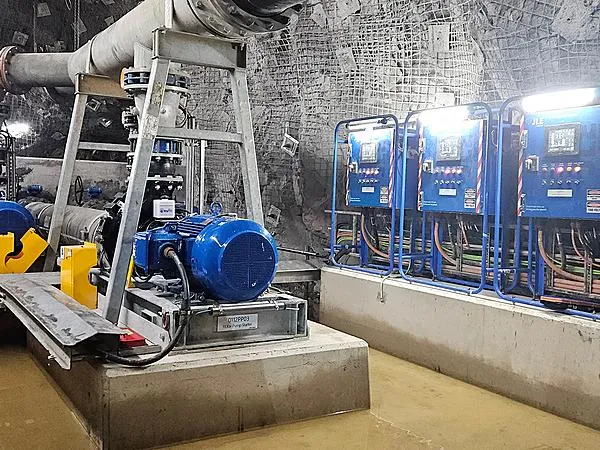
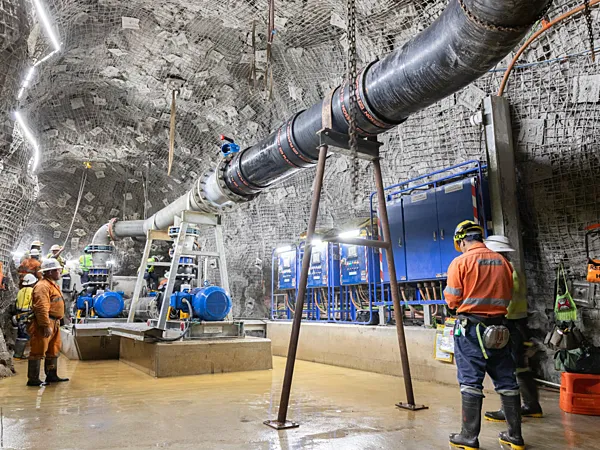
Ok Tedi Mining Limited (Ok Tedi) has successfully completed the construction of a critical underground pump station project that improves mine water management, enhances safety and delivers significant cost savings.
The project, which commenced in August 2024 and was completed in June 2025, was delivered incident-free and under budget, achieving a cost saving of US$1.2 million. The achievement underscores Ok Tedi’s commitment to safety and operational excellence.
With annual rainfall of around 10,000 millimetres experienced at the Mt Fubilan operation, the pump station is designed to manage the large volumes of rainwater discharged into the mine pit through shafts and depressurisation holes. The new system channels this water through 800-millimetre polypipes stretching 3.2 kilometres from the underground tunnel to the surface entrance, where it is safely discharged into the river system.
This engineering solution provides a safer, drier working environment for underground crews, enabling continuous productivity and improved working conditions.
The successful delivery of this complex project was a collaborative effort involving three contractors — Tabubil Engineering (TE), the Major Projects Electrical Team and Milum Services Limited (Milum) — who worked closely with more than 40 Ok Tedi underground mining crew members, including Wokman Teleoks Limited (WTL) embedded contract miners.
The project, led by James Waisime, Manager Mine Support Service and Underground, brought together mining engineers, geotechnical engineers, structural engineers, surveyors, boilermakers, pump fitters, electricians and underground miners from the Mine Operations business unit and Major Projects Engineering Team.
“This was a true team effort,” said Waisime. “The safe and timely completion of this project demonstrates the strength of collaboration across departments and our contractors. I’m proud of the commitment and professionalism shown by everyone involved.”
Managing Director and Chief Executive Officer Kedi Ilimbit congratulated the team for the successful completion of the project.
“As a world-class mine, it is imperative that we adopt global best practices. The underground pump station is among a number of projects undertaken by Ok Tedi to improve operational efficiency within our mine operation to ensure we continue to deliver results for the benefit of our shareholders – the people of Western Province and Papua New Guinea,” said Ilimbit.
Ahead of the 9th Pacific Tuna Forum (PTF 2025) in Fiji, Papua New Guinea’s National Fisheries Authority (NFA) and Special Economic Zones Authority (SEZA) are positioning the country as a regional leader in value-added processing, sustainable trade, and blue economy development.
The forum, scheduled for October 14–15 in Nadi, Fiji, will bring together policymakers, industry leaders, and development partners under the theme “Pacific Tuna 2050: Resilience, Innovation, Equity, and Sustainable Trade for a Prosperous Future.”
Papua New Guinea is expacted to play a prominent role at the event, with the NFA co-hosting the forum alongside Fiji’s Ministry of Fisheries. This year’s edition is expected to highlight opportunities for downstream processing, regional cooperation, and sustainable management of tuna resources, key priorities for PNG’s fisheries sector.
NFA and SEZA Partnership Signals Strong State Collaboration
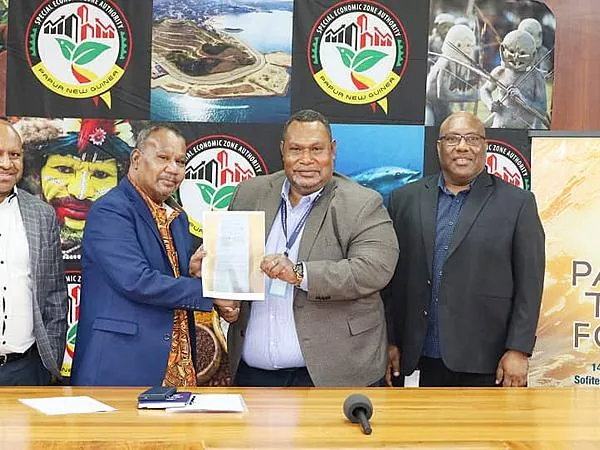
The forum follows a significant partnership forged earlier in October, when SEZA came on board as a Platinum Sponsor for PTF 2025 with a K100,000 sponsorship, signaling stronger collaboration between key state agencies to support investment and industry growth.
NFA Acting Managing Director Leban Gisawa said the partnership reflects the government’s broader push toward a whole-of-government approach to maximize the value of PNG’s tuna resources.
“The National Fisheries Authority welcomes the support of the Special Economic Zones Authority as a Platinum Sponsor of the upcoming 9th Pacific Tuna Forum,” Gisawa said. “This signifies the importance of key agencies of State working together to achieve the Government’s objectives and contributing to the economic development of this great country.”
Gisawa said the NFA has been implementing major structural and legislative reforms to strengthen the management of fisheries and promote value-adding within PNG.
He emphasized that partnerships like the one with SEZA are critical for transforming PNG’s abundant marine resources into downstream processing opportunities that create jobs and revenue.
“For PNG, it is clear that a whole-of-government approach is required to increase the retention of the value of our tuna catches,” he said. “The NFA looks forward to SEZA’s leadership in developing Special Economic Zones for the fisheries sector.”
Expectations for the Pacific Tuna Forum
The 9th Pacific Tuna Forum is expected to serve as a platform for regional collaboration and innovation in the tuna industry, with PNG aiming to position itself as the Pacific’s preferred tuna processing hub.
Gisawa noted that the Pacific region, which supplies around 50 percent of the world’s tuna, continues to push for greater value retention within local economies. He said discussions at the forum would be vital in advancing this shared vision.
He also pointed to the importance of international trade partnerships, particularly with the European Union (EU), which gives PNG’s tuna products quota-free and duty-free access under the Economic Partnership Agreement (EPA).
“In practice, our tuna processors compete with those in China, Ecuador, the Philippines, and Thailand,” he said. “We look forward to SEZA’s leadership in driving the tuna industry to achieve economies of scale and competitiveness in the global tuna market.”
SEZA Eyes Onshore Processing and Job Creation
From SEZA’s perspective, the forum offers a critical opportunity to advance discussions on onshore processing and industrial development in PNG’s fisheries sector.
SEZA Board Chairman Dr. Lawrence Sause said the country has enormous potential that remains underutilized, noting that PNG accounts for about 18 percent of the world’s tuna catch and controls around 15 percent of the global tuna trade, valued between US$4 billion and US$5 billion.
"Although PNG catches between 600,000–700,000 metric tons of fish every year, 80 percent leaves the country to be processed offshore,” Dr. Sause said. “It is ridiculous that we export 35,000 tons of canned tuna and import 40,000 tons. We are losing up to 100,000 jobs and over K4 billion in revenue by not processing all our fish in PNG.”
He said SEZA will work closely with the NFA to reverse this trend by supporting the Domestication Policy and developing fisheries-focused Special Economic Zones.
“We look forward to the NFA bringing forward and implementing the Domestication Policy so we can process 100 percent of our catch in PNG,” Dr. Sause said.
For his part, SEZA Acting CEO Mr. Kikila Yawase reaffirmed the Authority’s commitment to downstream processing and local value addition.
“SEZA is proud to support the 9th Pacific Tuna Forum because of its focus on onshore processing and value-added strategies,” he said. “We look forward to partnering with the NFA to unlock the immense potential we have in the fisheries sector for downstream processing.”
MGisawa said the NFA is optimistic that SEZA’s participation in the upcoming forum will help strengthen PNG’s leadership role in the Pacific’s fisheries sector.
"The NFA values its partnership with SEZA and looks forward to SEZA’s participation at the 9th Pacific Tuna Forum, which will strengthen PNG’s position as the region’s preferred tuna processing hub,” he said.
The Papua New Guinea Investment Promotion Authority (IPA) is preparing to lead a high-level investment mission to Japan in November, in collaboration with the Pacific Islands Centre (PIC) in Tokyo and the PNG Embassy in Tokyo.
Scheduled for 4 November 2025, the mission will feature an investment conference at the ANA International Hotel in Tokyo under the theme “50 Years of Partnership: Forging the Next Chapter in Trade, Investment and Shared Prosperity.”
The IPA has extended an open invitation to PNG businesses, exporters, Japanese investors, trade representatives, development agencies and business chambers to participate in the mission.
Among the key highlights of the Tokyo mission are:
The event marks five decades of strong bilateral relations between Papua New Guinea and Japan, bringing together senior government officials, industry leaders, exporters, development partners and Japanese investors to explore new opportunities for deepening economic collaboration.
According to the IPA, the one-day programme aims to chart the way forward for both nations in expanding trade and investment partnerships over the next 50 years. Discussions will focus on strengthening linkages in key growth sectors, enhancing investor confidence and identifying new avenues for mutual prosperity.
The mission follows the momentum built from Prime Minister James Marape’s official visit to Japan in July 2025, where he engaged in high-level business dialogues with Japanese government and private sector leaders. It also builds on the reciprocal visit of a Japanese business delegation to Port Moresby in February 2024, led by the Pacific Islands Centre.
Through this engagement, the IPA aims to position Papua New Guinea as a reliable investment destination and strategic trade partner in the Asia-Pacific region, while reinforcing its long-standing economic ties with Japan.
The 2025 Papua New Guinea Petroleum and Energy Conference (PEC), held from 8–9 October at The Stanley Hotel, marked the nation’s 50th Independence Anniversary under the theme “The Next 50,” a call to shape and reset the next chapter of PNG’s energy future for the coming decades.
The two-day event brought together more than 100 organisations and participants from over 15 countries, creating a strong platform for dialogue, collaboration and investment across the petroleum and energy value chain. The conference featured more than 30 national and international speakers, including industry leaders, policymakers and technical experts who explored emerging policies, upcoming projects and investment opportunities critical to PNG’s evolving energy landscape.
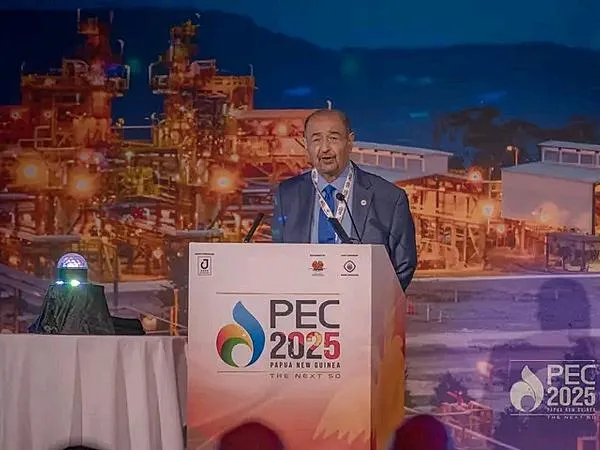
Day One of the conference opened with a keynote address by Dr Fereidun Fesharaki, chairman of FGE and a renowned global energy economist. With a longstanding association with PNG, Dr Fesharaki delivered a comprehensive analysis of global and regional energy trends, highlighting PNG’s strategic role in the Asia-Pacific energy market.
He presented several insights relevant to PNG, noting that:
Dr Fesharaki said the conference’s structure fostered meaningful interaction, particularly through moderated panel discussions that encouraged audience participation during Q&A sessions.
“The PEC has added tremendous value – the quality of dialogue and engagement reflects the importance of these discussions for PNG’s future,” he said.
Duma Reaffirms Power Sector Transformation
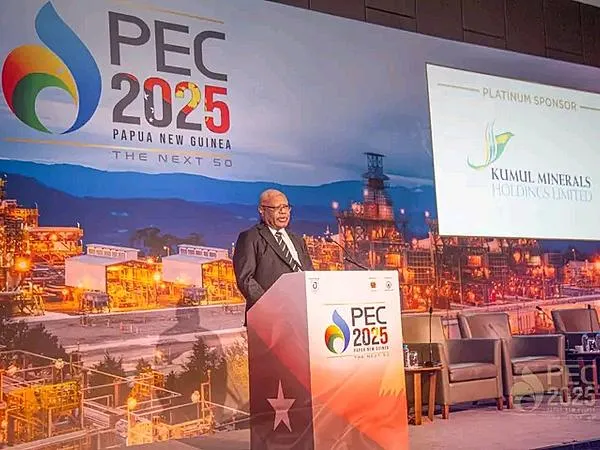
The ministerial keynote address on Day Two was delivered by Energy Minister Peter Isoaimo, who set a clear vision to “use today’s oil and gas wealth as a bridge to a renewable future.”
Key points of his address highlighted the country’s preparation for a greener, technology-driven energy landscape, including:
The second ministerial keynote was delivered by Minister for State-Owned Enterprises William Duma, MP, who reaffirmed the Marape-Rosso Government’s commitment to transforming PNG’s power sector through the partial privatisation of PNG Power Limited (PPL). He said the initiative aims to improve efficiency, attract private investment and ensure reliable, affordable electricity for all Papua New Guineans.
Minister Duma said this transition marks “a new era for PNG’s energy future,” balancing investment returns with improved service delivery for citizens. He outlined the government’s targets of 70 percent national electrification by 2030 and universal access by 2050, supported by renewable energy development and major infrastructure upgrades.
During his visit to the PNG Business News exhibition booth, Minister Duma told PNG BN that the 2025 PEC is “one of the biggest and most successful conferences to date,” describing it as a vital platform for high-level networking, engagement and discussions on national energy agendas.
Building on the momentum of PEC 2024, this year’s conference expanded both its reach and depth. It offered delegates the opportunity to engage directly with key stakeholders, regulators, investors and project developers, all focused on shaping PNG’s next 50 years in energy and petroleum development.
The 2025 conference also served as an exhibition hub, where sponsors and delegates showcased innovations, products and services driving energy transition, sustainability and infrastructure growth across the country.
PEC 2025 Sponsors and Support
The success of the event was made possible through the support of its sponsors. Kumul Minerals Holdings Limited led as Platinum Sponsor, joined by ExxonMobil PNG, PNG LNG, China Petroleum Pipeline Engineering Co. Ltd, and Winston Engineering Ltd as Gold Sponsors. The National Energy Authority supported as Silver Sponsor, while Kumul Consolidated Holdings, TWL Group, TotalEnergies, Papua PNG, Motor Vehicles Insurance Ltd, Asia Pacific Communication Specialist, High Arctic, Robinson Energy, and Houpu Clean Energy Group Co. Ltd served as Bronze Sponsors.
Through collaboration, policy reform and investment, the discussions held over the two days have laid a strong foundation for the next 50 years — ushering in a new era of growth and transformation for PNG’s petroleum and energy sectors.
Papua New Guinea’s petroleum sector remains ripe with opportunity despite recent slowdowns in exploration activity, according to David Manau, Secretary for the Department of Petroleum, who delivered a compelling presentation on 8 October at the 2025 Papua New Guinea Petroleum & Energy Conference (PEC) under the theme “Exploration Operations – Is There a Future?”
In his address, Secretary Manau affirmed that exploration indeed has a future, stressing that the challenge lies not in questioning its existence but in shaping its direction through strategic policies, partnerships and investment frameworks.
“Exploration is not just a technical process, it is a strategic choice. It’s about how we position our country, attract investment, and unlock long-term value for our people and stakeholders,” he said.
Secretary Manau highlighted PNG’s strong energy fundamentals, stating that the country holds an estimated 25 trillion cubic feet of gas — among the largest reserves in the Asia-Pacific region. While oil production has declined over the past three decades, PNG’s pivot to liquefied natural gas (LNG) has strengthened its role as a rising energy exporter.
He said Kumul Petroleum Holdings Limited (KPHL) continues to play a traditional key role as the State’s equity holder, while the newly established National Petroleum Authority (NPA) now serves as a dedicated institution to promote exploration and de-risk investment in partnership with industry players.
Untapped petroleum basins
PNG currently has five petroleum basins: Papuan, North New Guinea, Cape Vogel, Bougainville and New Ireland. However, only the Papuan Basin is producing, contributing about 17 percent of PNG’s GDP.
“The other four basins are underexplored, not because they lack potential, but because they lack data and targeted policy support,” Secretary Manau said.
He emphasised that unlocking these basins could diversify national revenue, transform PNG’s energy landscape and deliver tangible benefits for all stakeholders.
Exploration trends and fiscal incentives
Between 2020 and 2025, the country saw a sharp decline in exploration activity, with prospecting licences dropping from 104 to just 40. No high-impact wildcat wells were drilled during that period, except for Mailu-1, which has now been rescheduled for drilling in the first quarter of 2026.
Despite the downturn, exploration spending continued, supported by fiscal incentives under Section 155N of the Income Tax Act, which allowed the amortisation of exploration costs between 2019 and 2023.
“This resulted in over K10 billion in forgone revenue, which is not a loss, but a signal of sustained investor interest,” Secretary Manau explained.
Emerging offshore hotspots
Secretary Manau said PNG’s offshore potential is gaining momentum, with multi-client seismic surveys such as Painimaut 2D and Nanamarope 3D conducted in the Gulf of Papua. These vendor-funded surveys, he said, have attracted growing industry attention.
“These multi-client seismic campaigns are not just technical exercises, they are market signals,” he said. “The Gulf of Papua is rapidly emerging as PNG’s next exploration hotspot. These surveys lay the groundwork for future licensing bid rounds and offshore investment.”
The National Petroleum Authority will continue to support such initiatives as key tools for unlocking frontier potential.
New and proprietary exploration projects
PNG’s upstream sector is showing renewed confidence through new and ongoing exploration efforts. Kumul Petroleum Holdings Limited has completed seismic campaigns in Kimu and Barikewa, while AIE has conducted infill work near P’nyang using advanced Vibroseis technology.
Frontier projects are also progressing, including TotalEnergies’ deepwater Mailu-1 well — a high-impact wildcat estimated to cost between USD 50 million and USD 80 million — and ExxonMobil’s Wildebeest prospect in Gulf Province.
“Mailu-1 could open a new offshore hydrocarbon province,” Secretary Manau said, adding that Petronas’ farm-in to PL 576 validated the project’s significant potential.
He also noted new exploration initiatives across multiple basins: Heritage Oil’s Malisa Prospect near P’nyang (estimated 2 Tcf of wet gas), Peak Oil’s Exotica Prospect in New Ireland and Larus Energy’s Nanamapore Prospect in Central Province.
“These initiatives demonstrate that PNG’s exploration and upstream sector is reactivating,” he added.
Leveraging existing infrastructure
Secretary Manau outlined a brownfield exploration strategy that prioritises near-field prospects close to existing LNG and pipeline infrastructure.
“This approach reduces costs, accelerates development and enhances investor confidence,” he explained.
He cited the Angore Pipeline Tie-in Project and the Agogogo Tie-in as examples of efficient integration, adding that these connections also support domestic gas supply and national energy access.
Secretary Manau said PNG is preparing for a transition to a Production Sharing Regime (PSA) by 2026 — a move expected to balance risk and reward more effectively and attract investors to frontier areas.
“The NPA is preparing bid rounds, facilitating multi-client seismic permits, and advancing data-driven governance to improve transparency and investor engagement,” he said.
He called for strategic government intervention, particularly in frontier regions such as Western Province, where several marginal gas fields exist.
According to Secretary Manau, PNG’s energy future depends on aligning fiscal and regulatory frameworks, leveraging existing infrastructure and positioning the nation as a regional gas hub anchored by major projects like Papua LNG, P’nyang and Pasca A.
“The foundation is in place. The partnerships are forming. The data is improving. Let us move forward with clarity, confidence and commitment,” he concluded.
Papua New Guinea’s Petroleum Minister Jimmy Maladina has reaffirmed the Marape-Rosso Government’s commitment to reshape the country’s petroleum industry through a new fiscal and regulatory framework aimed at delivering fairer, more transparent and sustainable outcomes for the State and its people.
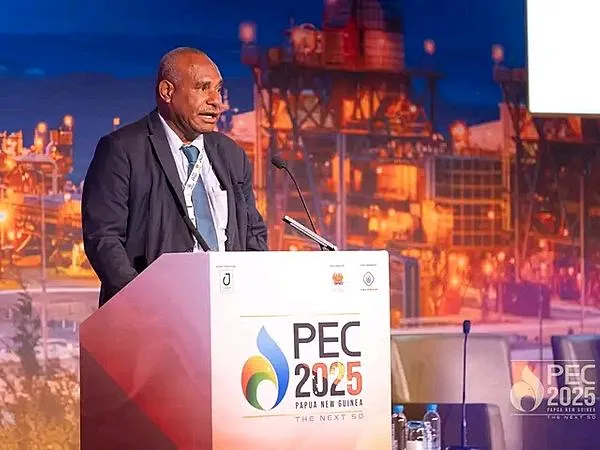
Delivering the ministerial keynote address at the opening of the 2025 Papua New Guinea Petroleum and Energy Conference (PEC) on 8 October 2025 at the Stanley Hotel, Port Moresby, Minister Maladina said the Government’s reform agenda would redefine the sector’s contribution to national development over the next 50 years.
“As Papua New Guinea celebrates 50 years of independence, we must look ahead with clarity and purpose,” he told delegates. “The decisions we take today will define the petroleum sector’s contribution to our nation in the next half century.”
Reflecting on 50 years of petroleum development
Minister Maladina acknowledged the petroleum sector’s vital role in the economy since the first oil from Kutubu flowed in 1992 and PNG LNG exports commenced in 2014, noting that hydrocarbons have powered the nation’s growth and connected it to global markets.
However, he said the existing oil and gas fiscal regime had fallen short of expectations, with government revenues often delayed or diluted by deductions extending throughout project life cycles.
“The State’s share of revenues from projects were well below 50 percent and are diluted through deductions that prolong during project life,” Maladina said. “State equity participation in petroleum projects has caused the State to commit to sovereign debt and risk. This must not continue.”
Reforms to reshape the industry
The minister announced a comprehensive reform programme based on three key pillars: institutional reform, fiscal and regulatory reform, and transparency with local participation.
Central to these reforms is the introduction of a Production Sharing Contract (PSC) framework, which will replace the current tax and royalty system for future projects. Minister Maladina described this shift as “the most significant fiscal and regulatory change since independence.”
“The PSC model provides early revenue for the State and landowners, ensures transparency in cost recovery, and maintains investor competitiveness,” he said. “It strikes a balance between national interest and investor confidence.”
He confirmed that the Government had approved the PSC Policy White Paper, which will now guide industry consultations leading to the drafting of new PSC legislation. The National Executive Council (NEC) has directed a State Working Team, led by the newly established National Petroleum Authority (NPA), to spearhead this process.
Key features of the PSC framework
Minister Maladina outlined several key features of the new framework:
“This framework ensures early and reliable revenue for the State, guaranteed participation for landowners, and transparent, competitive conditions for investors,” Minister Maladina emphasised.
Sector updates and emerging projects
Minister Maladina also provided updates on ongoing and upcoming projects that will shape the future of PNG’s petroleum landscape.
He noted that while mature oilfields such as Kutubu, Moran and Gobe are in decline, a new generation of gas projects — including Papua LNG, P’nyang Gas Project, Pasca A and Stanley Gas Project — are progressing well, alongside emerging prospects such as Wildebeest and Mailu.
“These projects represent billions of kina in potential investment. They will redefine PNG’s production capacity and create a strong foundation for the next 50 years,” he said.
According to Maladina, the PSC framework aligns PNG’s petroleum regime with international models used in Indonesia, Malaysia and Brunei, positioning the country as a credible and modern jurisdiction.
He said, “As global LNG competition intensifies and the energy transition accelerates, investors seek predictable and transparent environments. This reform signals to the market that PNG is open, reliable and reform-driven.”
The minister said the petroleum sector would remain a cornerstone of PNG’s economy while supporting diversification and sustainable development.
“Over the next five decades, we will channel petroleum revenues into national wealth creation, expand downstream processing, promote cleaner energy, and build strong institutions that outlast political cycles,” Maladina said.
He concluded his address by reaffirming the Government’s determination to secure fair and lasting benefits for future generations.
“When PNG celebrates 100 years of independence in 2075, let future generations look back and say: this policy was the catalyst that anchored our growth and prosperity, built on fairness, transparency and enduring partnerships,” the minister declared.
Papua New Guinea’s (PNG) coconut industry is set for a major transformation through a new partnership between the Marape-Rosso Government and Sri Lanka’s Jaindi Exports Pvt Limited, one of the world’s leading manufacturers of coconut-based food and beverage products.
The partnership, announced during a two-day visit by Minister for International Trade and Investment Richard Maru and his delegation to Sri Lanka, will lead to the establishment of a large-scale coconut processing plant in Madang Province under a joint venture (JV) arrangement between the PNG Government and Jaindi Exports.
The project, to be built on 20 hectares of land owned by the Madang Provincial Government at Siar along the North Coast Road, aims to shift PNG’s traditional copra-based coconut industry toward a modern, value-added sector producing high-end coconut products for both domestic and export markets.
“This project will transform the entire coconut industry in PNG,” said Minister Maru. “Labouring to make copra and selling to copra mills to produce crude coconut oil will be a thing of the past. Our farmers will harvest and sell coconuts directly to the processing plant, where every part of the coconut—from the husk to the shell and the water—will be processed into finished products for export.”
Under the joint venture, the State will hold 51 percent of shares, while Jaindi Exports will hold 49 percent. The project is expected to cost K100 million, with the government committing K50 million in equity funding from the 2025 Public Investment Program (PIP) Budget.
“The State’s equity contribution is ready, and we are ready to start this project,” Minister Maru confirmed.
Once operational, the proposed processing plant is expected to create about 1,000 new jobs in Madang Province and stimulate increased coconut production across the region.
According to Managing Director of the Kokonas Indastri Koporesen (KIK), Mr Alan Aku, Madang was chosen based on KIK’s census data showing the province has three million coconut trees capable of producing 206 million nuts per year.
“That is the primary reason why we will be setting up the proposed processing plant in Madang. If this project is successful, we will look to build more processing plants in East New Britain and Bougainville,” Mr Aku said.
Building on this, Minister Maru revealed that the government will seek National Executive Council (NEC) approval for the joint venture, along with the creation of a new Special Economic Zone (SEZ) to be known as the Siar SEZ. The coconut processing plant will be located within this SEZ, which will serve as an industrial park distinct from the Madang Integrated SEZ that focuses on the fishing industry.
During their visit, the PNG delegation—which included Madang Governor Hon. Ramsey Pariwa, Secretary for International Trade and Investment Mrs Jacinta Warakai-Manua, and KIK Managing Director Mr Aku—toured Jaindi Exports’ world-class processing facilities and observed the company’s diverse product lines.
Minister Maru described Jaindi’s operations as impressive, noting their range of products such as coconut cream, milk, oil, sugar, butter, whipping cream, ice cream, vinegar, virgin oil, coconut water, flour, chips, and milk drinks. He said these products are in high demand globally as consumers increasingly seek healthy and natural alternatives.
He added that global demand for coconut products had risen sharply from US$15 billion in 2015 to US$40 billion in 2025 and is projected to reach US$60 billion by 2030.
“Jaindi Exports is struggling to meet increasing global demand and is expanding to PNG to take advantage of our proximity to key markets like Australia, Asia, and Oceania. With our EPA access to the European Union, we can also start exporting organic coconut by-products to Europe,” Minister Maru said.
To commemorate the partnership, Jaindi Exports hosted a customary event that featured a Sri Lankan cultural performance, the lighting of an oil lamp, and the planting of two coconut trees at Navik Mills to symbolise the new relationship.
Minister Maru extended an invitation to Jaindi Exports Founder and Managing Director Mr K.M. Sampath Anuruddha and his executives to visit PNG later this month to finalise partnership arrangements and inspect the project site in Madang.
Governor Ramsey Pariwa welcomed the development, saying he looked forward to hosting the Jaindi delegation and seeing the project get underway soon.
PNG Ports Corporation Ltd (PNG Ports) is proud to announce that both the Port of Lae and the Port of Port Moresby have improved their global rankings in the 2025 World Bank Container Port Performance Index (CPPI), outperforming several major ports in nearby developed economies (e.g., Melbourne, Brisbane, Port Botany (Sydney), Auckland, Napier, and Otago). According to the report, Lae Port has advanced from 311th position in 2023 to 264th in 2025, while Port Moresby has improved from 280th to 248th. These gains reflect a continued upward trajectory in operational performance and port efficiency. “This improvement demonstrates the impact of strategic investment in equipment, systems, and operational efficiency,” said George Gware, COO of ICTSI South Pacific – port operator of Papua New Guinea’s two international container terminals (Motukea International Terminal in Port Moresby and South Pacific International Container Terminal in Lae).
“Our recent investments in new gantry cranes, yard equipment, and advanced port management systems have contributed to faster vessel turnaround times and improved cargo handling efficiency," Gware said. The Container Port Performance Index (CPPI), jointly compiled by the World Bank and S&P Global Market Intelligence, evaluates over 400 ports worldwide based on key operational indicators such as vessel time in port and container throughput. The CPPI has become a widely referenced benchmark for measuring global container port performance since its introduction in 2020. The CPPI measures how efficiently container ports move vessels through their terminals, with shorter turnaround times translating into cost savings, improved reliability, and reduced carbon emissions. The 2025 report emphasizes that high-performing ports contribute significantly to global supply chain resilience and economic competitiveness. “This recognition by the World Bank is not just about rankings—it’s about the hard work of our people and partners who ensure PNG’s ports remain vital arteries for trade, growth, and national development,” added Neil Papenfus, CEO PNG Ports. PNG Ports operates 15 ports across Papua New Guinea, with Lae, Port Moresby, and Kimbe generating profits that support 12 Community Service Obligation (CSO) ports — essential gateways that connect remote communities and sustain regional economies. Despite increasing competition from private ports that do not contribute to the national network’s upkeep, PNG Ports continues to invest in its entire port network to serve both commercial and community interests. PNG Ports is a State-Owned Enterprise responsible for managing, operating, and maintaining Papua New Guinea’s network of 15 declared ports. The company is committed to ensuring safe, efficient, and sustainable maritime operations that support the nation’s economic growth and connectivity.
Ok Tedi Mining Limited (OTML) marked a significant milestone with the successful signing of the 4th Community Mine Continuation Agreement (CMCA), featuring new and improved terms that reinforce the company’s enduring commitment to the communities of Western Province and Papua New Guinea.
The 4th CMCA delivers the largest increase in benefits in the agreement’s history – with up to an 80 percent rise across the board, and some regions receiving more than 100 percent increases in their current CMCA compensation packages. These benefits are not only larger in scale but broader in scope.
The new CMCA introduces three key components: • Youth Development Programs to empower future generations • Short-Term Investment Opportunities to promote economic sustainability • Impact Projects Agreement to address social development gaps
“These additions reflect our belief that the future of our communities lies not only in mining, but in education, entrepreneurship and resilience,” said Ok Tedi Managing Director and Chief Executive Officer Kedi Ilimbit during the signing ceremony on 7 October.
Ilimbit acknowledged the presence of Prime Minister James Marape, State-Owned Enterprise Minister William Duma, Mining Minister Rainbo Paita, Minister for Livestock and Member for South Fly Seki Agisa, Deputy Opposition Leader and Member for North Fly James Donald, Western Provincial Governor Taboi Awi Yoto, Member for Delta Fly Agena Gamai, and members of the Fly River Provincial Government.
Also in attendance were landowner leaders, community representatives, statutory agencies and government departments, all of whom joined in celebrating this milestone achievement built on more than a year of inclusive dialogue and negotiation.
The ceremony was witnessed by the Board and Management of Kumul Minerals Holdings, Mineral Resources Development Company (MRDC) management, Mineral Resources Authority Managing Director Jerry Garry, PNG Sustainable Development Program Limited management, Department of Mineral Policy and Geohazards Secretary Harry Kore and his team, and National Energy Authority Managing Director Ronald Maketa.
“This agreement is the result of a rigorous dialogue process grounded in Free, Prior and Informed Consent,” said Ilimbit. “Every village had the opportunity to engage, ask questions and make informed decisions with the support of independent legal advisors. It has been a long journey, lasting 19 months but one that reflects our shared values of transparency and respect.”
Mine village and CMCA leaders, women and youth representatives also commended Ok Tedi for the improvements to the CMCA benefits package and for its willingness to work collaboratively to achieve an outcome favourable to all parties.
Since the inception of the CMCA in 2001, the agreement has ensured that 152 CMCA villages and six mine villages have a direct voice and stake in the mine’s operations. Today, these communities are not only beneficiaries but shareholders, owning 21 percent of shares in Ok Tedi through Mineral Resources CMCA Holdings and Mineral Resources Star Mountain.
The remaining 12 percent of the 33 percent total shareholding by Western Province is held by the Fly River Provincial Government.
“As we honour PNG’s 50th Independence Anniversary, Ok Tedi remains proud as a pillar of nation-building. We are not just a mining company – we are a company owned by Papua New Guineans, serving Papua New Guineans and building Papua New Guinea,” said Mr Ilimbit. “Our legacy is measured not just in ounces of gold or tonnes of copper, but in the schools, health posts, infrastructure and sustainable livelihoods that will remain long after the mine closes.”
Ilimbit said, "To our landowners: thank you for your trust, patience and partnership. Ok Tedi belongs to all of us, and together, we will continue to make it a source of pride for Papua New Guinea.”
Follow on LinkedIn:
PNG Business News
Be the "First" to get our exclusive Digital Magazine & Weekly Newsletter.