


November 05, 2025

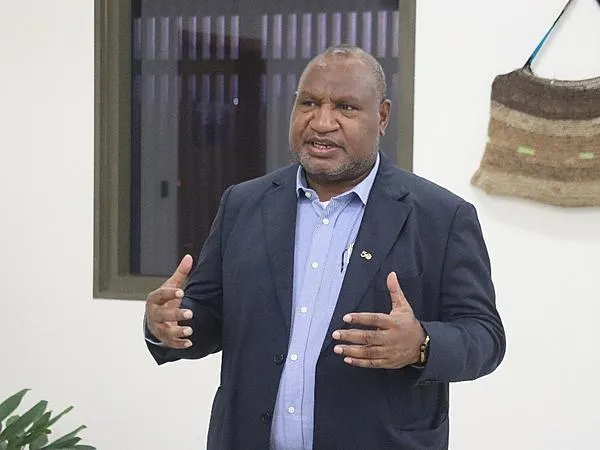
Prime Minister James Marape has announced that Papua New Guinea’s bid to once again host the Asia-Pacific Economic Cooperation (APEC) Leaders’ Summit has been accepted by APEC members for the year 2033.

Prime Minister Marape made the revelation while commending his envoy to APEC 2025, Deputy Prime Minister John Rosso, for leading the PNG delegation and expressing the nation’s interest to host the summit.

“It was a good meeting for us. Our presence was evident. I want to announce to our country that the APEC secretariat has accepted our bid to host APEC 2033,” he said.

The announcement was made during a press conference before the Prime Minister’s departure for Sydney en route to Brazil, where he will attend the United Nations Climate Summit, COP30.

APEC meetings are hosted by different member economies each year on a voluntary, rotational basis. The selection process is determined through consensus among the 21 member economies, rather than a competitive public bidding system. The process typically involves internal coordination, voluntary offers and long-term planning.

The consensus for PNG to host in 2033 will mark the second time the country hosts the APEC Leaders’ Summit, following its successful hosting in 2018.

Prime Minister Marape also revealed that Papua New Guinea is poised to host the United Nations Oceans Conference – widely known as the Global Oceans Conference – in 2030. This follows the country’s preparation to deposit its ratification at the United Nations next year to reserve up to 30 per cent of its ocean spaces for conservation.

“We are hosting a oceans economic ministers’ forum next year. This is a precursor to 2030, where there is a high possibility that PNG will host the global oceans conference, similar to the one we attended in Nice, France last year. We have put our hands up for it and France and many of our partner nations have offered us support,” said Marape.

“Hosting the global oceans conference is confirmation by the global community of the role PNG plays in the world in biodiversity, ocean resource management, and forest management," he added.

The Prime Minister also announced that Papua New Guinea will support Australia in its bid to host COP31 next year, reaffirming PNG’s commitment as part of the Pacific family of nations and as Australia’s closest bilateral partner.

“The 2030 Global Oceans Conference, the APEC 2033, and our NRL team entering competition in 2028 are part of the new things shaping up PNG in the life after 50th anniversary. PNG is firmly placed in the global family of nations. Our nation is entrenched as a major forest, ocean and biodiversity country, and fighting for an equal place as an economy ready to do business with all economies. The world now clearly knows who we are,” he said.

November 05, 2025

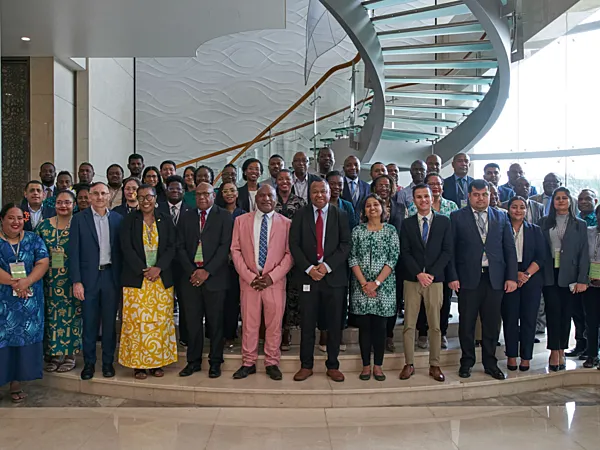
The Bank of Papua New Guinea (BPNG) and the Alliance for Financial Inclusion (AFI) have co-hosted a four-day Joint Learning Programme on Inclusive Green Finance (IGF) Policy Implementation, bringing together policymakers and central bankers from across the globe to strengthen climate-resilient and inclusive financial systems.

Held in Port Moresby from 28 to 31 October, the programme united key financial and development stakeholders to discuss ways to integrate inclusive green finance into national and institutional frameworks.

Discussions focused on Papua New Guinea’s climate priorities, the development of the Inclusive Green Finance Policy (IGFP), and the establishment of the Green Finance Centre, which will serve as a hub for coordination, research, and innovation in sustainable finance.

Participants explored gender-responsive data, Digital Financial Services (DFS), and emerging financing options such as green bonds and blended finance to design inclusive and adaptive policies. The sessions also emphasised biodiversity conservation, stakeholder collaboration, and action planning to strengthen IGF policy implementation and promote sustainable financial inclusion.

Expert insights were shared by AFI member institutions, including the Nepal Rastra Bank, National Bank of Rwanda, Bangladesh Bank, State Bank of Pakistan, and the Central Bank of Seychelles. Contributions also came from international and local partners such as AFD, UNDP, UNCDF, IFC, the Green Climate Fund, CCDA, and various financial institutions in PNG.

BPNG Deputy Governor Jeffery Yabom opened the event by stressing that climate change was “not a distant risk but a lived reality for everyone in the Pacific.” He said that women and vulnerable groups were often the most affected, facing barriers in accessing finance when they needed it most.

The lessons from this programme will extend beyond Papua New Guinea, benefiting regulators across the Pacific and other developing economies facing similar challenges, he said.

AFI’s Director of Strategy, Member Engagement and Evaluation, Aban Haq, commended BPNG for its strong partnership and leadership in advancing inclusive green finance across the AFI network. She noted that the Joint Learning Programme addressed the urgent need for financial inclusion responses to climate change, particularly for women, smallholder farmers, and rural communities.

She said that digital financial services play a transformative role in promoting resilience and ensuring that climate adaptation efforts reach those most affected.

Assistant Governor for Financial System Development and Innovation, George Awap, lauded participants for their dedication throughout the four-day programme. He described the event as “a convergence of shared purpose aimed at exploring how inclusive green finance can act both as a shield against the escalating threats of climate change and as a catalyst for sustainable, inclusive economic growth.”

Awap highlighted PNG’s achievements, including the launch of the Green Finance Policy in 2023, the establishment of the Green Finance Centre in 2024, and new international partnerships aligning financial policy with climate goals. He noted that these initiatives had already mobilised over two billion kina in climate-related finance.

He further underscored the importance of collaboration, innovation, and capacity building to ensure that financial inclusion benefits those most in need. “BPNG remains committed to building a resilient, low-carbon, and inclusive financial ecosystem,” he said.

AFI Regional Manager for the Pacific, Mereseni Tuivunivai, commended BPNG for successfully hosting the four-day programme. She said the training was timely and strengthened participants’ understanding of how to integrate environmental and climate considerations into financial inclusion frameworks.

Mrs Tuivunivai also emphasised the need to develop locally relevant green taxonomies, leverage technology and data for resilient systems, and promote gender-responsive financial policies.
Collaboration among regulators, government, the private sector, and development partners is key to building inclusive and climate-resilient financial ecosystems, she said, urging participants to apply their learnings and translate policy commitments into action.

The BPNG–AFI partnership reflects a growing recognition that financial systems must adapt to climate risks while promoting equitable access to finance, ensuring that no community is left behind in the transition to a sustainable economy.

November 05, 2025

Prime Minister James Marape on 2 November commended Parliament for passing the Coffee Industry Bill 2025 by an overwhelming majority of 72–0 votes, describing it as a historic step towards revitalising Papua New Guinea’s agricultural base and empowering millions of rural households.

The Bill, introduced by Minister for Coffee William Bando, establishes the National Coffee Authority, creates a licensing and regulatory framework, and provides mechanisms to enhance market access, quality control, export management and research and extension support. It also repeals the existing Coffee Industry Corporation Act (1991), modernising the governance of the industry for the first time in more than three decades.

Prime Minister Marape praised Minister Bando for his leadership, stating: “Congratulations, Minister. You took on a greenfield ministry, built it from scratch and worked tirelessly to deliver this reform. No ministry is more important than another — we all have a duty to serve our people, and you have delivered in your space.”

He emphasised that the new structure is designed to support, not hinder, the growth of the coffee sector.

“This Bill replaces an outdated framework with one that embraces our national interest while allowing the industry to grow bigger and better. We are laying the foundation to engage a million Papua New Guineans in productive agriculture,” he said.

Highlighting his Government’s broader vision, Prime Minister Marape reaffirmed that job creation through agriculture remains central to PNG’s medium-term development goals.

“Our definition of jobs is not limited to the 8-to-4 office type. Real jobs in Papua New Guinea are created when our people work their land. If one million families earn K10,000 each from coffee, cocoa or oil palm, that’s K10 billion flowing into our economy every year — wealth created by our people themselves,” he said.

The Prime Minister also drew attention to vast global opportunities in the coffee market, which is currently valued at an estimated US$3 trillion.

“Coffee is grown only within the equatorial belt, and PNG has one of the best climates for it. When I met with President Xi Jinping and Premier Li Qiang in Beijing recently, we agreed to open China’s markets to our agricultural products. China alone now has over 330 million regular coffee drinkers. If we focus on quality and production, we can supply China, Japan and South Korea — massive markets right at our doorstep,” he said.

Prime Minister Marape noted that the reform aligns with the Government’s commitment to link rural communities to the formal economy, improve access to finance and increase productivity.

“Next year, once customary land is properly registered, landowners can borrow from our national bank to finance agricultural ventures. This will enable families to expand coffee, cocoa, copra, oil palm and livestock production. Agriculture is the true path to sustainable wealth creation,” he said.

He further underscored the importance of integrity and transparency within the sector, warning against exploitation by unlicensed or non-producing exporters.

“Those who hold export licences but don’t grow coffee and keep their earnings overseas — this must stop. The money must come back to our country to benefit our people. This Bill gives us the framework to police and protect genuine growers and investors,” Prime Minister Marape stressed.

In closing, the Prime Minister urged all sides of Parliament to continue working together to strengthen the agricultural sector.

“This Bill is not to suppress anyone but to uplift everyone — farmers, investors and workers alike. And if any law we pass is not working, we can always revisit and improve it. The only laws that don’t change are the Ten Commandments. Everything else can evolve to serve our people better,” he said.

Once enacted, the Coffee Industry Bill 2025 will mark a major milestone in the Marape-Rosso Government’s economic empowerment agenda, setting the stage for renewed growth in PNG’s most widely cultivated cash crop and strengthening the nation’s position in the global coffee market.

November 05, 2025

Great Pacific Gold Corp. (GPAC) has announced plans to file an updated technical report for its Kesar Gold Project in Papua New Guinea, outlining the results of its first exploration phase and setting the stage for a follow-up drilling campaign next year.

The report, prepared under National Instrument 43-101 (NI 43-101) standards, summarises the findings of the Phase 1 program completed in May 2025 and provides recommendations for the 2026 field season.

Located in the Eastern Highlands Province, the Kesar Project sits immediately west of K92 Mining’s Kainantu Mine, a globally recognised high-grade gold-copper operation. The 130-square-kilometre licence area is considered highly prospective, with geological similarities to the nearby Kora and Judd deposits.

The company said multiple high-grade gold intercepts were recorded during the 3,700-metre diamond drilling program across 13 holes. Highlights include:

  • At the Anteruno target, 3.13 metres at 3.67 grams per tonne (g/t) gold, including 0.71 metres at 13.5 g/t Au (hole KDH003);
  • At the Hampore target, 0.94 metres at 3.17 g/t Au, including 0.29 metres at 9.08 g/t Au (hole KDH011).

In addition to the drilling results, the company conducted an airborne MobileMT geophysics survey, which identified several high-potential targets for both porphyry-style mineralisation and intermediate-sulfidation epithermal deposits.

A Phase 2 exploration program has been recommended for 2026, including surface mapping, trenching, and a 3,000-metre follow-up diamond drilling campaign to further test the mineralised zones.

“While Wild Dog remains our top priority target, Kesar has tremendous potential and is strategically located alongside K92 Mining’s Kainantu Mine,” said Greg McCunn, CEO of Great Pacific Gold.

“We are expecting the bulk of our exploration expenditures in the coming year to be spent at Wild Dog, but we are planning a focused follow-up program at Kesar with the objective of unlocking value that we believe is currently not recognized in our share price,” McCunn added.

The executive said that the company has invested over 16.7 million PNG Kina (C$5.8 million) in Kesar over the initial two-year licence period, making Great Pacific Gold one of the most active exploration firms in the country.

“We look forward to working with the Mineral Resource Authority in PNG and our local stakeholder and landowner groups to renew the exploration licence for a further two years to allow the Company to continue to invest in the region and make Kesar a long-term success,” he said.

The updated technical report, being finalised by H&S Consultants Pty Ltd in Sydney, Australia, will provide a comprehensive summary of the project’s geological characteristics and exploration potential. It is expected to be filed on SEDAR+ with an effective date of September 9, 2025.

The Kesar project area lies within the New Guinea Thrust Belt, a geologically complex region known for hosting significant gold and copper deposits. Mineralisation occurs in quartz-sulphide veins and breccia zones within tonalite and meta-sedimentary rocks — features consistent with the high-grade systems that have made the Kainantu district one of Papua New Guinea’s most productive mining corridors.

With its Phase 2 campaign planned for 2026, Great Pacific Gold aims to continue advancing the Kesar Project while deepening its exploration footprint across Papua New Guinea.

November 05, 2025

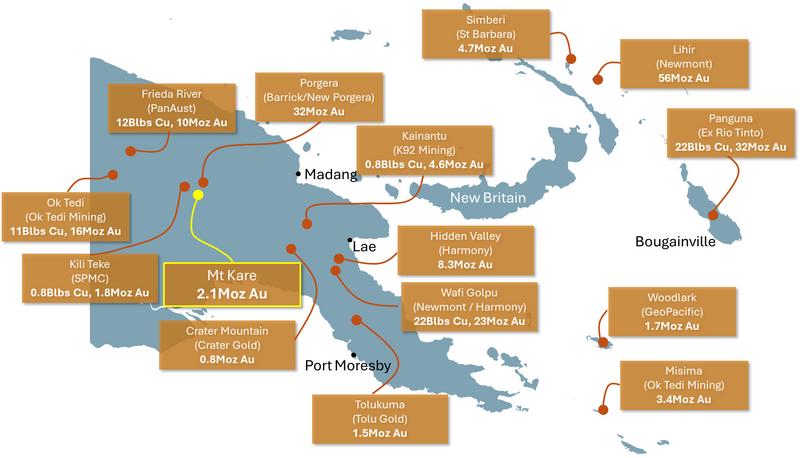
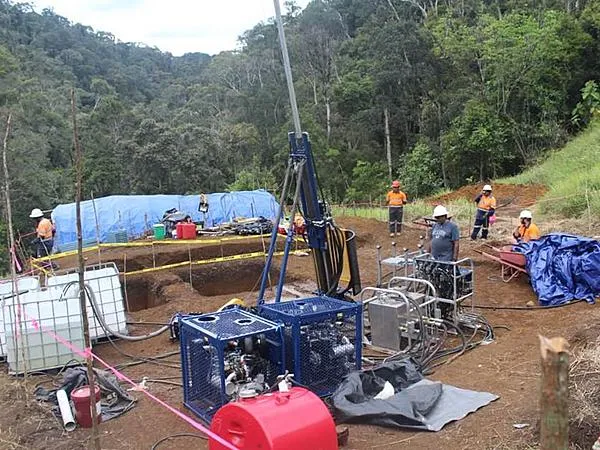
South Pacific Metals Corp. (SPMC) has launched its maiden drilling program at the Ontenu Northeast prospect in Papua New Guinea, marking a significant step forward in the company’s exploration activities within the mineral-rich Kainantu region.

Located within the Osena project area, Ontenu Northeast lies along the Kainantu Transfer Zone, a northeast-southwest corridor that also hosts the Kainantu Gold-Copper Mine, currently operated by K92 Mining Ltd. This area is known for its promising gold-copper deposits and remains a focal point for ongoing mineral exploration in the country.

The company said the drilling will test whether the northwest-trending mineralised structures identified earlier this year are surface indicators of deeper epithermal gold-copper (Au-Cu) veins, similar to those currently mined at K92’s Kora and Judd deposits.

Surface sampling has already returned encouraging results, with assays of up to 3.95 grams per tonne (g/t) gold, 645 g/t silver, and 1.56 percent copper across a six-metre-wide outcrop. Five other mineralised structures in the area, with rock chip samples recording as high as 13.9 g/t gold and 388 g/t silver, will also be part of the program’s targets.

SPMC plans to complete four to six drill holes, totalling around 1,500 metres, before the end of the 2025 field season.

Chief Executive Officer Timo Jauristo described the launch as an important step in the company’s growth.

“The drill program marks a major milestone for South Pacific. Ontenu Northeast has not been drilled before,” Jauristo said. “The whole team is excited to start drilling these holes, aimed at testing the deeper parts of these mineralised structures for high-grade epithermal Au-Cu veins. The first drill hole is planned to intersect several of these structures at depths between 100m to 250m. The remainder of the program will further test this structure as well as some of the other mineralised structures.”

The drilling results from Ontenu Northeast are expected to provide vital geological insights into the potential of the Osena project and could set the stage for a new phase of gold and copper exploration in Papua New Guinea.

SPMC, which is listed on the TSX Venture Exchange (TSX-V: SPMC), OTCQB (SPMEF), and Frankfurt Stock Exchange (6J00), continues to strengthen its exploration portfolio across the Pacific region as part of its broader strategy to identify and develop high-potential mineral assets.

November 04, 2025

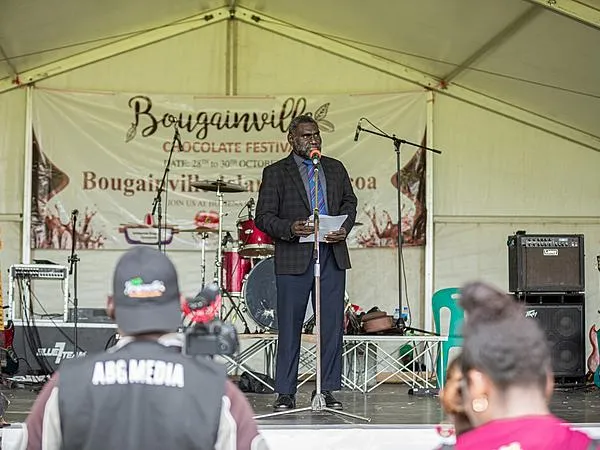
Autonomous Region of Bougainville President Ishmael Toroama has commended the region’s cocoa farmers for their hard work and resilience, which have reinforced Bougainville’s position as Papua New Guinea’s top cocoa producer.

Toroama made this statement during the Bougainville Chocolate Festival held this week in Buka.

“Today, Bougainville stands proud as the largest cocoa producer in Papua New Guinea – a title we held strongly before the conflict, and one our farmers have now reclaimed. This demonstrates our commitment to productivity and quality in this industry,” Toroama said.

Highlighting the sector’s significant economic contribution, he noted: “In 2024 alone, Bougainville cocoa farmers earned more than K500 million — a record injection into our local economy. It is the result of the resilience and hard work of our people, supported by the vision of successive governments that recognized the potential of cocoa to transform our economy.”

President Toroama stressed that Bougainville’s pursuit of political independence must go hand in hand with achieving economic independence. He outlined two key priorities under his government’s 100-Day Plan:

“First, the reclaiming and redevelopment of plantations, so that our land once again becomes productive under Bougainvillean ownership; and second, the establishment of a Bougainville Export Company to take charge of exporting our own commodities, including cocoa, directly to international markets.”

He also acknowledged the Bougainville Cocoa and Chocolate Regulatory Authority (BACRA) for its progress in expanding market access.

“Notable progress is being made in terms of market access with the successful completion of barcoding of our first products — including the Bougainville chocolate brand, cocoa powder, and cocoa butter. These products are gradually entering domestic markets and reaching Australia, New Zealand, England, and other Pacific Island countries,” he said.

“These are not small achievements — they represent our ability to add value, create jobs, and build wealth from our own resources. We will no longer remain just producers of raw materials. We will become manufacturers, exporters, and brand owners of Bougainville’s products,” he added, reaffirming the government’s commitment to value addition in the cocoa industry.

Toroama further praised local entrepreneurs, cooperatives, and private companies, describing them as “the pioneers of a new Bougainville economy — one based on creativity, discipline, and enterprise.”

Encouraging farmers to maintain high standards, he said: “We must not only produce more, but we must produce better — our cocoa must meet the highest global standards of quality and sustainability.”

He also expressed appreciation to the ABG Department of Primary Industry, as well as the governments of Australia and New Zealand, for their continued support of the Festival and the cocoa sector. He urged development partners to expand their assistance to help strengthen Bougainville’s agricultural infrastructure.

“As Bougainville’s cocoa continues to gain international recognition as a quality-producing region, I call on your support for this industry by helping us build the economic enablers that sustain it — roads, wharves, power, and market access,” President Toroama said.

“My Government will continue to invest in innovation and knowledge sharing to empower our people — especially our youth — to see agriculture as a path to success and prosperity,” he concluded.

November 04, 2025

Papua New Guinea’s foreign exchange (FX) market remained active in the third quarter of 2025, with total market turnover reaching K16.2 billion (approximately USD 3.86 billion).

According to BSP Financial Group Limited's (BSP) September Quarter Economic and Market Update, this represented a 9% increase compared with the same period last year, supported by sustained FX inflows from the mining and agricultural sectors.

BSP Group General Manager – Treasury & Markets Rohan George said market activity remained firm throughout the quarter.

“Foreign exchange inflows moderated from July highs, which led to longer processing times in August and September as new FX orders outpaced available liquidity,” he explained.

The Bank of Papua New Guinea (BPNG) intervened in the FX market during August and September, after remaining inactive in July, to help ease liquidity pressures. During the quarter, the Kina depreciated by 1.6% against the US dollar to 0.2388, and by 2.3% against the Australian dollar to 0.3621.

George noted that while inflows from the agricultural sector are expected to ease, stronger performance in the mining sector—particularly gold—could partly offset this decline.

“Looking ahead, FX inflows from the agricultural sector are expected to soften, reflecting the delayed impact of recent commodity price declines — for instance, cocoa prices have fallen by 46%. However, this is likely to be partly offset by stronger, though uneven, inflows from the mining sector, particularly gold,” Mr George said.

He added: “While the FX market continues to navigate a challenging environment, BSP encourages customers to submit FX orders early to avoid delays. We remain committed to supporting our clients through proactive liquidity management and market insights.”

Global risks remain elevated, with the potential re-emergence of US–China trade tensions and subdued global economic conditions posing headwinds for PNG’s export performance and FX inflows.

The BPNG is expected to maintain a measured, wait-and-see approach to market interventions, stepping in only if pressures intensify.

BSP, formerly the Bank of South Pacific Limited, is a leading retail and corporate banking group headquartered in Papua New Guinea. Established in 1957, BSP operates in seven Pacific countries.

It has the largest branch network across Papua New Guinea, Cook Islands, Fiji, Samoa, Solomon Islands, Tonga, and Vanuatu, employing more than 4,000 people throughout the region.

BSP remains committed to its corporate and social responsibility initiatives, proudly partnering with communities across the Pacific to create positive change. Its extensive branch network is supported by a sophisticated electronic banking system, ensuring customer access wherever the bank operates.

BSP operates across the Pacific as follows:

  • Over 120 branches
  • More than 300 agents
  • 550 ATMs (and growing)
  • Upwards of 11,000 EFTPoS machines

BSP serves the corporate sector with leading cash management, treasury, lending, and corporate finance solutions. The bank combines local expertise with deep regional experience to deliver financial services that support businesses and communities across the Pacific.

November 04, 2025

The Moresby Arts Theatre, one of Papua New Guinea’s most cherished cultural landmarks, has undergone a major transformation following the completion of a comprehensive electrical and fire services upgrade carried out by Port Moresby Electrical.

The project, aimed at improving safety, reliability, and sustainability, marks a significant investment in preserving the historic theatre while modernising its infrastructure to meet current standards.

Port Moresby Electrical was engaged to design, supply, and install new electrical systems, standby power solutions, and fire protection facilities, alongside energy-efficient lighting and renewable energy systems.

Among the key deliverables was the installation of a 200 KVA diesel generator with a 405-litre base fuel tank and a 1,000-litre day tank complete with a lockable fuel dispenser and level gauge. A new 400A main switchboard was also fitted, featuring an Automatic Transfer Switch (ATS), Essential Services and Community Area Switchboards, and upgraded distribution breakers. Outdated switchboards were removed and replaced with new distribution boards equipped with RCBO 30mA safety switches for enhanced electrical protection.

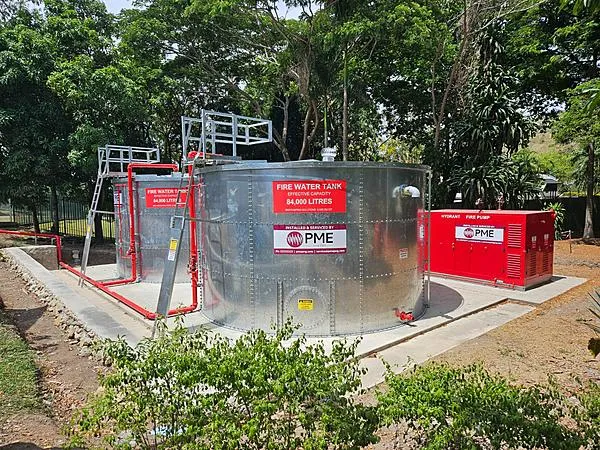
Fire safety saw a major overhaul with the addition of a Fire Indication Panel (FIP), complete with strobe lights, bells, horns, and a modern detection system. Two 84,000-litre fire water tanks and diesel fire pumps were installed, along with extensive underground piping for hydrants and hose reels.

To support the theatre’s sustainability goals, Port Moresby Electrical installed solar street lights, bollard lighting, and a 12KW three-phase hybrid solar inverter system with a 32KW lithium-iron battery backup, ensuring a steady and environmentally friendly power supply. The fit-out also included split-system air conditioners, exhaust fans, DC silenced fans, and upgraded general lighting and outlets across the facility.

The project not only modernised the theatre’s technical backbone but also improved its resilience and operational efficiency through renewable energy integration and upgraded safety systems.

Through this upgrade, the Moresby Arts Theatre is now better equipped to continue its role as a vital hub for arts, culture, and community gatherings — with safety, sustainability, and innovation at its core.

November 03, 2025

The final quarter of 2025 looks broadly positive, says BSP Group General Manager for Corporate Bank, Daniel Faunt, as he highlighted key insights from the September Quarter Economic Market Update.

BSP Financial Group Limited (BSP) reported that business activity remained steady through the third quarter of 2025, supported by strong economic fundamentals in Papua New Guinea (PNG) and across the Pacific region.

Faunt said that despite ongoing global policy shifts and geopolitical uncertainties, the Group remains confident in the resilience of PNG’s economy and the strength of its customers and communities.

“While we saw a slight softening in overall business sentiment compared to the previous quarter, the resilience of PNG’s economy continues to stand out. Key drivers of this performance included elevated commodity prices — particularly for coffee, cocoa, and gold — as well as stable domestic consumption and continued strength in the South Pacific tourism sector,” Faunt said.

Looking ahead, BSP maintains a broadly positive outlook for the final quarter of 2025, even amid mixed global signals.

“While sentiment surveys suggest some caution, real indicators such as household spending and business investment continue to point to underlying strength,” Faunt explained.

He noted that healthy household and corporate balance sheets, along with stable performance in mining and agriculture, continue to underpin business confidence. BSP also highlighted PNG’s strong track record of outperforming expectations, citing 2022 as an example when economic fundamentals exceeded sentiment.

“Announcements on major resource projects are expected to further boost business confidence heading into 2026 and beyond,” Faunt added.

Across the Pacific, tourism-led economies are projected to maintain solid growth through the end of the year, supporting broader regional momentum.

As PNG continues to navigate a challenging global environment, BSP reaffirmed its commitment to supporting sustainable growth, financial inclusion, and community development across the region.

“Our role as Papua New Guinea’s home-grown bank is to stand beside our people, our businesses, and our nation’s progress. We remain confident in PNG’s long-term potential and in the resilience of its economy,” Faunt noted.


About BSP

Founded in 1957 and headquartered in Port Moresby, BSP Financial Group Limited (BSP) — formerly the Bank of South Pacific Limited — is the Pacific’s leading retail and corporate banking group. Listed on both the Port Moresby Exchange (PNGX: BSP) and the Australian Securities Exchange (ASX: BFL), BSP operates in seven Pacific countries: Papua New Guinea, Cook Islands, Fiji, Samoa, Solomon Islands, Tonga, and Vanuatu.

With over 120 branches, 300 agents, 550 ATMs, and more than 11,000 EFTPoS machines across the region, BSP employs over 4,000 people and maintains the largest branch network in the Pacific.

BSP serves its corporate clients through leading cash management, treasury, lending, and corporate finance capabilities, while offering retail and commercial customers convenient access through a sophisticated electronic banking system that meets their needs wherever the bank operates.

Beyond banking, BSP is deeply committed to corporate social responsibility, working with communities across the Pacific to create opportunities, foster inclusion, and change lives for the better. As Mr. Faunt reaffirmed, the Pacific is not just BSP’s market — it is our home.

For more information, visit www.bsp.com.pg/About-Us/Welcome-to-BSP.
November 03, 2025

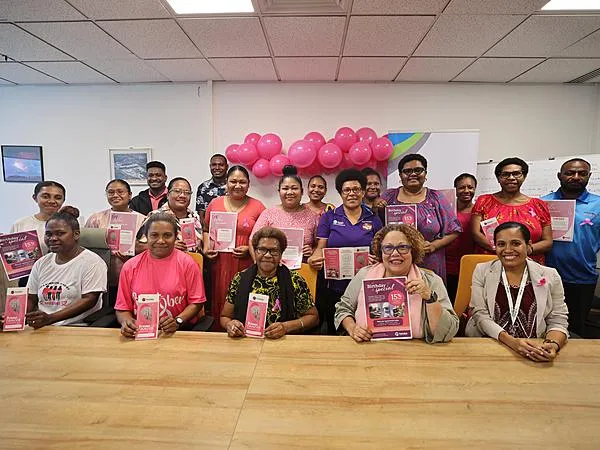
As part of its Safety Talk of the Month (STOM) initiative, the Papua New Guinea Chamber of Resources & Energy (PNG CORE) recently hosted an educational session in collaboration with Paradise Private Hospital to spotlight the critical issue of breast cancer and its impact on women’s health in Papua New Guinea.

This timely session, organised by PNG CORE’s Strategic Planning & Projects Unit, coincided with the global Pinktober campaign—an international movement dedicated to raising awareness about breast cancer.

The event aimed to empower staff with vital knowledge on breast cancer risks, early detection methods, and available treatment options. Attendees gained practical insights into self-examination techniques and the importance of mammogram screenings, highlighting that not all lumps can be detected through physical examination alone.

Staff had the privilege of hearing from three esteemed healthcare professionals from Paradise Private Hospital: Dr. Grace Raire, Obstetrics & Gynaecology Specialist; Sr. Fabiana Menem, Labour Ward Unit Manager; and Radiologist Rayhab Kiha. Their presentations covered essential topics such as self-breast examinations, clinical screenings, and the life-saving role of mammograms in early detection.

Dr. Raire emphasised the urgency of addressing breast cancer, noting, “Breast cancer remains a critical health challenge, being the leading cause of cancer-related deaths among women globally. In 2023 alone, there were approximately 2.3 million new diagnoses worldwide, resulting in over 670,000 fatalities.”

She also highlighted the concerning statistics in Papua New Guinea, where breast cancer accounts for an estimated 4,000 new cases and over 1,600 deaths annually. “This initiative seeks to shed light on these unsettling statistics and emphasise the importance of early detection and timely interventions,” she added.

PNG CORE staff expressed appreciation to the specialists and encouraged everyone within the community to prioritise health screenings and educate their loved ones on the importance of early detection.

“We believe that through awareness, education, and community involvement, we can make a significant impact on the breast cancer landscape in PNG.”

Beyond supporting and promoting the minerals and energy sectors, PNG CORE remains committed to fostering progress and sustainability through initiatives that create a proactive environment within communities—focusing on health, education, and sports.

November 03, 2025

Loyalty, commitment, and dedication are the traits that have kept Malakati Anguai working with Ok Tedi Mining Limited (Ok Tedi) for the past 40 years.

Mr. Anguai, the Superintendent for Processing Support, is one of three employees who have served Ok Tedi for four decades. They are among the 386 employees who were honoured with long service awards, recognising service ranging from 5 to 40 years.

The 15- to 40-year awardees were recognised at a special dinner event last month, while the 5- to 10-year awardees were acknowledged through various presentation ceremonies held within their respective departments.

Ok Tedi Managing Director and Chief Executive Officer Kedi Ilimbit expressed gratitude to all 386 employees for their significant contributions and steadfast commitment over the years.

Every year, Ok Tedi hosts a special event to recognise employees who have achieved long service milestones.

“We recognise, we celebrate, and we truly appreciate our long serving employees. Your loyalty, commitment and dedication are commendable. You are all an inspiration to all of us." he said. “Your significant period of employment is a testament to your commitment, passion, dedication, [and] loyalty in service to our organisation and to all our stakeholders.”

Ok Tedi takes pride in its efforts to nurture and develop Papua New Guineans — 98 percent of the company’s workforce are nationals. The company fosters a culture that aligns with its core values and supports the ‘One Team, Wan Pasin’ approach, which emphasises collective effort and teamwork to achieve shared goals.

Of the 386 employees recognised: 19 received awards for 20 years of service, 21 for 25 years, eight for 30 years, five for 35 years, and three for 40 years.

Alongside Mr. Anguai, Mr. Ilbin Mike and Mr. Jeffery Dihin also received their 40-year service awards. Mr. Dihin is a Processing Plant Trainer, while Mr. Mike serves as a Dozer/Grader Operator with the Mine Operations team.

Mr. Anguai expressed his gratitude to Ok Tedi for being the employer of choice for him and his family over the past four decades.

Ok Tedi recognises that its greatest assets are its people. The company remains committed to recruiting and retaining talented employees, while supporting their professional and personal growth so that they can positively impact their families and communities through various spin-off socio-economic ventures.

“At Ok Tedi, we not only mine metals but we also mine the workforce of Papua New Guinea, ensuring our people improve professionally and perform to their maximum best, either at Ok Tedi or in other companies and industries when they do depart Ok Tedi,” said Mr. Ilimbit.

October 30, 2025

Four Westpac employees recently represented Westpac PNG at the Westpac Group Youth Network (TYN) Summit in Sydney, Australia, reinforcing the bank's commitment to fostering youth leadership and driving positive change in communities across Papua New Guinea.

Corporate Affairs and Marketing Officer, Melanie Yumbrick; Staff Lending Manager, Fabian Aime; Business Analyst, Marsha Isaac; and Operations Officer, Florian Whemby, attended the summit, which brought together over six hundred young professionals from across Fiji, Australia, and New Zealand under the theme "Agents of Change" to explore how they can make meaningful impacts in their workplaces and communities.

The Youth Network is one of Westpac's Employee Advocacy Groups (EAGs), bringing together younger employees under the age of 35 to connect, learn, and give back to their communities.

"Attending the TYN Summit was an amazing opportunity to meet other young people who want to make a real difference," said Fabian Aime, one of the Westpac PNG attendees.

"The 'Agents of Change' theme really hit home for me. It showed us that no matter what job we do, we can all help create positive change at work and in our communities," he said.

The summit included guest speakers, a hands-on shadowing program, and chances to meet others who share a passion for creating change.

The Shadowing Program allows TYN members to buddy with other EAG members, offering firsthand exposure to workplace culture and leadership. It’s a powerful way to build confidence, gain insights, and grow professionally through real-time learning.

Beyond the summit, the Westpac PNG Youth Network has been active in the community this year, with members taking part in community day and beach clean-up activities, demonstrating their commitment to environmental care and local action.

Westpac PNG Chief Executive Andrew Cairns praised the initiative, saying: "Our people are what make Westpac strong, and employee advocacy groups like the Youth Network show our commitment to supporting the next generation of leaders. We want our employees to be themselves at work, to learn, grow, and make a real difference. These young people show what it means to be an agent of change, and I'm proud to see them taking part in this summit."

During the summit, the four Westpac employees spent time networking with other young people from across the region, building connections and sharing ideas. A memorable highlight of their experience was learning about the Westpac Lifesaver Rescue Helicopter Service, a life-saving program that Westpac has proudly supported since 1973.

Westpac is about creating a workplace where people can succeed both professionally and personally, with opportunities to grow, do meaningful work, and make a difference in the lives of customers and communities.

The Westpac PNG Youth Network continues to play an important role in connecting Westpac's younger employees, encouraging new ideas, and making sure different voices contribute to shaping the bank's future.

October 29, 2025

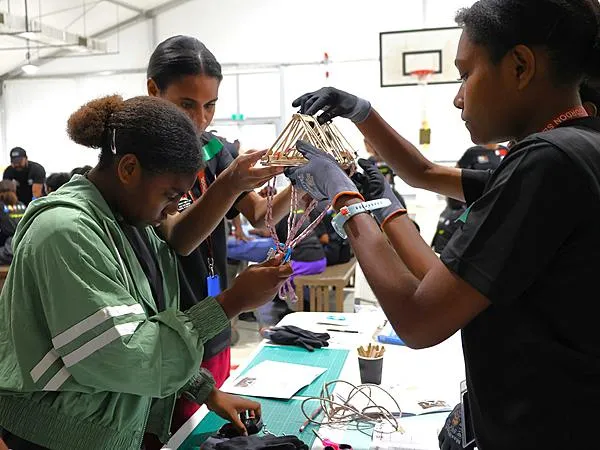
The operator of the PNG LNG Project, ExxonMobil PNG Limited, recently welcomed 75 outstanding ninth-grade girls from five Port Moresby schools for a day of hands-on science experiments, mentorship, and exciting activities designed to spark their curiosity and build their confidence in engineering.

Now in its second year in Papua New Guinea, ExxonMobil’s Introduce a Girl to Engineering Day — held at its LNG Plant at Caution Bay — was a resounding success.

This year’s theme, “Design Your Future,” encouraged students to imagine the possibilities of a STEM career (Science, Technology, Engineering, and Math). Supported by 42 passionate employee volunteers from ExxonMobil’s Women in Energy Network, the students explored key engineering concepts and learned directly from Papua New Guinean engineering professionals.

ExxonMobil PNG Chairman and Managing Director Dinesh Sivasamboo visited the students during their practical sessions and was impressed by both their enthusiasm and teamwork.

“It’s great to see that even though you’ve come from different schools, you have quickly made new friends and learned to work together effectively as a team to solve real-world problems. These are important skills and experiences that will help you excel in your lives and your careers,” Sivasamboo said.

“Papua New Guinea’s energy future looks quite bright, so there will be opportunities for students like you throughout our industry. I hope you will continue to apply yourselves to your studies so that you might join us as engineers one day,” he concluded.

Students expressed their gratitude and excitement about the experience, saying it opened their eyes to new possibilities in engineering.

“I didn’t think much about taking on engineering, but after today, I might have a change of mind,” said Zillar Naku Pa’aka from Gordon Secondary School. “Once we started the practical activities, I really enjoyed it.”

“I really enjoyed the electrical engineering activity with the circuit boards,” added Sylvia Mero from Jubilee Catholic Secondary School. “When the lights lit up, it felt like it lit something in me. I think after today, I’d like to become an engineer.”

The students represented Gordon Secondary School, Charles Lwanga Secondary School, Jubilee Secondary School, Bavaroko Junior High School, and Ororo Junior High School. The day concluded with lunch at the Plant site mess and a small gift pack for each participant to take home.

ExxonMobil PNG is proud to help inspire the next generation of innovators by empowering more girls to dream big and engineer boldly.

October 29, 2025

Marine salvage is a discipline defined by urgency, complexity, and risk. Every operation is different, and every operation is high-stakes – multi-million-dollar assets, lives, and marine ecosystems are often at risk. In Melanesia, Pacific Towing (PacTow) has consistently demonstrated the expertise and resolve to tackle these challenges head-on. A homegrown Papua New Guinean business headquartered in Port Moresby, PacTow has earned its reputation as the region’s leading marine services provider. At the core of nearly every salvage operation PacTow undertakes is its commercial diving team – the only permanently based unit of its kind in Melanesia.


Salvage Leadership with Global Recognition

Over the past two decades, PacTow has completed close to 100 successful salvage and wreck removal operations, involving a diversity of vessels ranging from bulk carriers to general cargo ships, and from fishing vessels to yachts. These projects have taken PacTow not only across PNG but also further afield – throughout Melanesia, into Micronesia, across to Indonesia, and even into northern Australia. This extensive track record underscores both the demand for and the trust in PacTow’s capability.

That capability is further evidenced by PacTow’s standing in the global salvage community. It remains Melanesia’s only full member of the International Salvage Union (ISU), the body that represents the world’s leading professional salvors. It is also the region’s only member of the International Spill Control Organization (ISCO), reflecting its role in protecting marine environments. These affiliations are not merely symbolic; they attest to PacTow’s adherence to international standards of salvage practice, safety, and environmental stewardship.


Commercial Diving: The Essential Ingredient

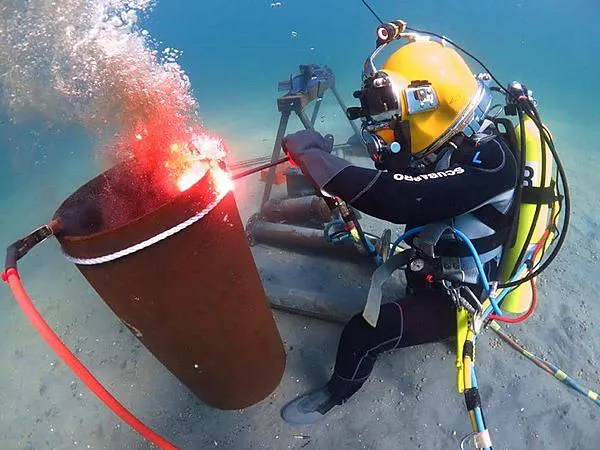
What distinguishes PacTow from many other salvage operators is the central role of its commercial diving team. Salvage operations – whether patching hull breaches, sealing fuel tanks, or rigging heavy lifts – are almost always dependent on skilled divers working in hazardous conditions. PacTow’s diving team brings a combination of local knowledge, international training, and experience that is unmatched in the region.

There are 18 divers – all Papua New Guinean – in PacTow’s commercial diving team. Diving Manager Ricky Leka has been diving for PacTow for 20 years and leading his team for 13. Another seven divers have been with the company for more than 10 years.

Uniquely, the PacTow diving team is the only permanently based commercial diving operation in Melanesia. This ensures that PNG and neighbouring nations have 24/7 access to a highly qualified dive team without the costs and delays of flying in specialists from more developed countries further afield. The team holds both PNG and Australian diving certifications – a rare dual qualification that guarantees compliance with regulatory frameworks.

PacTow’s divers also regularly travel for international training, honing skills in subsea engineering, salvage techniques, and safety systems. The company also supports PNG’s diver recompression facility in Port Moresby, and several of its divers are certified hyperbaric chamber technicians.


Beyond Salvage: Serving PNG’s Oil and Gas Sector

While salvage remains the most high-profile demonstration of PacTow’s diving expertise, the team’s contribution extends well beyond emergency response. As PNG’s oil and gas industry continues to expand, demand for reliable and locally available subsea services is growing. PacTow’s divers are increasingly engaged in underwater inspections, maintenance of subsea infrastructure, and pipeline support. Their capacity to provide a cost-effective and certified local solution is vital for a sector that values safety, efficiency, and the minimisation of downtime.


A Regional Asset with Local Commitment

PacTow’s investment in its commercial diving team is not just about building technical capability; it is also about developing local capacity. This is evident in the five young commercial diving trainees currently in PacTow’s team. By developing homegrown divers and technicians, the company contributes to skills transfer and workforce development in PNG. This ensures that the nation has its own cadre of diving professionals who can respond to crises and support its economic growth.


Conclusion

Marine salvage will always be a demanding field, and in Melanesia, it is PacTow that consistently answers the call. Central to that capability is its commercial diving team – the region’s only permanent professional diving operation, staffed by divers with international qualifications and unparalleled local knowledge.


Pacific Towing is Melanesia’s largest marine services business. It employs more than 250 staff and has a fleet of 20 vessels. It provides a broad spectrum of marine services including towage, emergency response, commercial diving, life raft services, and salvage. PacTow is part of the larger maritime and land Logistics Division of the Steamships Group.

To learn more about PacTow, visit: www.pacifictowingmarineservices.com
October 29, 2025

PacSuper, Papua New Guinea’s oldest private-sector superannuation fund, is pleased to announce it has extended its partnership with Perpetual Investment Management Limited to support the ongoing evolution of the Fund’s investment strategy, effective 1 October 2025.

The decision follows a comprehensive review of PacSuper’s Strategic Asset Allocation (SAA), with a focus on ensuring members' best interests remain at the heart of the Fund’s long-term investment approach. As part of this review, the Board has endorsed the extension of Perpetual’s existing mandate, previously limited to the management of the Australian Dollar (AUD) sub-fund, to now include a broader range of managers and enhanced exposure to growth assets.

“This outcome reflects the Board’s commitment to undertaking a rigorous review process to strengthen the Fund’s long-term investment positioning,” said Jason McIlvena, Chairman of PacSuper. “We are very satisfied with the outcomes of the review, which we believe further enhances our ability to deliver strong, sustainable returns for our members."

Perpetual was originally appointed to manage PacSuper’s Australian Dollar Sub Fund in 2020 and has demonstrated strong performance and alignment with PacSuper’s investment philosophy. Building on this successful relationship, Perpetual was selected to take on an expanded multi asset mandate, to be managed by Perpetual’s Multi Asset team, recognising their deep investment expertise, disciplined risk management frameworks, breadth and depth of global management capability, and strong cultural alignment with PacSuper’s member-first values.

Importantly, BSP Capital continues as the Fund’s Listed Investment Manager (LIM), reflecting the Fund’s diversified, multi-manager approach.

“This is about strengthening PacSuper’s investment platform for the future,” McIlvena added. “We are raising the bar for governance, transparency, and member advocacy within the local superannuation sector, ensuring every decision made is firmly anchored in delivering the best outcomes for our members.”

Perpetual Investment Management Limited, part of the ASX-listed Perpetual Group (ASX: PPT), manages AUD$22.5 billion[1] across equities, fixed income, multi-asset, and ESG-aligned strategies.

“We are excited to continue supporting PacSuper in this next chapter,” said Peter Lambos, Head of Institutional Business at Perpetual Asset Management Australia. “This bespoke multi asset solution managed by Michael O’Dea, Head of Multi Asset at Perpetual, and the award winning Multi Asset team, underscores our commitment to delivering investment excellence that aligns with international best practice and creates lasting value for their members.”

The expanded arrangements have been implemented seamlessly. There will be no changes to Members’ contributions, benefits, or account features.


[1] As at 30 September 2025
October 28, 2025

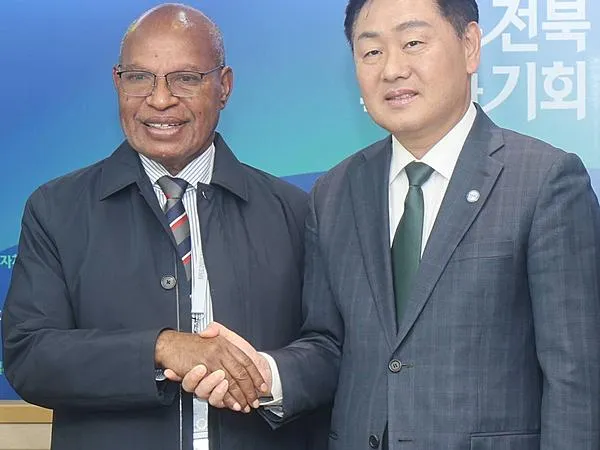
Papua New Guinea's Minister for International Trade and Investment Richard Maru, together with his small trade delegation, visited Jeonbuk State yesterday as part of his mission to meet potential Korean investors on the margins of the APEC Ministerial Meeting (AMM).

During the visit, Minister Maru met with the Governor, Hon. Kim Kwan-young, to discuss opportunities for cooperation between Jeonbuk State and Papua New Guinea (PNG), particularly in the agriculture sector.

Jeonbuk State is widely recognised as the “agriculture state” of South Korea due to its role as a major agricultural producer, its fertile plains, and its position as a centre for agricultural research and development. The state is a leading producer of crops such as rice and barley, and is home to key national research institutions and major agri-food companies.

Minister Maru told the Governor that PNG and Korea needed to deepen their relationship, which had not been fully developed over the past 49 years.

“We celebrate 50 years of bilateral relationship between our two countries next year, and it would make sense for us to celebrate some major announcements or projects as we go into new 50 years. We want to see Korea investing in PNG and providing technical assistance and development aid to increase its visibility in PNG,” Maru said.

Governor Kim Kwan-young, in response, said Jeonbuk State was keen to contribute to the sustainable agricultural development of PNG, specifically in infrastructure and technological capabilities. He also expressed hope to expand cooperation into various fields such as education, culture and sports.

Minister Maru and his delegation later visited a soybean farm and met with the President of the Korean Soybean Self-help Corporation, Su Yong Jang. They also toured the state-of-the-art chicken processing facility of Harim Holdings Co. Ltd, a dominant force in Korea’s poultry industry and the nation’s largest producer of chicken.

“The Soybean Self-help Corporation is keen on training Papua New Guineans in commercial soybean farming and Harim Holdings Co. Ltd indicated their keen interest in exploring the opportunity of investing in PNG,” said Maru. “Both companies said that in order for them to invest in PNG, they will need the support of the Korean Government through the Korea International Cooperation Agency (KOICA).

“This is timely with the recent announcement of KOICA opening an office in PNG which will encourage Korean companies to invest in PNG across various sectors and the Korean Government providing development assistance in aid and technical cooperation through KOICA. I am grateful that Korea is now stepping up to deepen the relationship as we look forward to celebrating 50 years of bilateral relationship between PNG and Korea next year," he said.

October 28, 2025

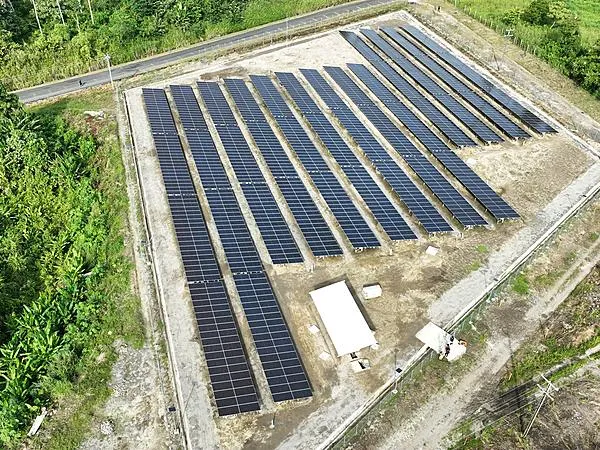
A 1-megawatt Buin Solar Farm was officially launched last Friday in Buin Town, marking a major milestone in Bougainville’s renewable energy journey.

The project, funded by the Government of Japan and implemented through the United Nations Development Programme (UNDP) in partnership with the Autonomous Bougainville Government (ABG), will deliver clean and reliable electricity to homes, schools, hospitals and businesses across Buin and its surrounding communities — reaching nearly 80 percent of the population.

In his welcoming remarks, Chief Albert Nukuitu reflected on the community’s determination to keep Buin powered through difficult years.

“In 2018, we formed Buin Power — a community-driven effort that ran 22 hours a day without government funding,” he said. “These young people gave their lives to serve the community and deserve recognition as Bougainville Power moves forward.”

The solar farm now transforms that legacy into a regionwide power solution, integrating solar panels, battery storage and backup generators to ensure a constant energy supply while cutting fossil fuel dependency.

President Ishmael Toroama, in his keynote address, commended the people of Bougainville for their resilience and unity, describing the solar project as a milestone in the region’s journey towards self-reliance.

“What we have achieved today is not by chance,” he said. “It is through our own hands, our pride and our unity as Bougainvilleans. Peace is here to stay.”

The President expressed gratitude to development partners for their continued collaboration and encouraged communities to take ownership of projects that contribute to Bougainville’s growth.

“We must take ownership of our land, our power and our future,” he said. “When we work together, we strengthen our journey towards independence.”

Japanese Ambassador Hisanobu Mochizuki reaffirmed Japan’s support for Bougainville, describing the project as a reflection of long-standing friendship and cooperation.

“This solar farm will help stimulate the local economy by improving access to clean energy,” the Ambassador said.

He also highlighted Japan’s ongoing assistance to Bougainville, including the construction of 15 coastal bridges, support for the 2019 Bougainville Referendum and the building of new school facilities.

UNDP Resident Representative Nicholas Booth noted that the event coincided with United Nations Day, marking 80 years since the UN Charter came into force and 50 years since Papua New Guinea joined the UN.

“Bougainville once knew the scars of war, but today it stands for peace,” Booth said. “This solar farm represents renewal — linking peace, equality and sustainable development.”

He added that the project will reduce energy costs by up to 50 percent, deliver steady power to essential services and directly benefit more than 200 households.

Chief Secretary Kearnneth Nanei also acknowledged the continued partnership with Japan and UNDP, describing the initiative as a vital step towards Bougainville’s energy independence.

“Bougainville Power will manage generation and distribution across Buin, Arawa and Buka,” he said, adding that upcoming government initiatives — including plans for a new hospital, teachers’ college, market facilities and major road improvements — will also be supported by this project.

The Buin Solar Farm will expand its network to nearby villages and missions, including Piano, Tokaino, Tabago and Kangu, covering a 48-kilometre radius.

October 27, 2025

From humble beginnings as an office attendant to becoming a senior manager, Kini Renagi’s remarkable 28-year journey with the Mineral Resources Development Company (MRDC) is one of loyalty, perseverance, and purpose — a story that mirrors the company’s own transformation into one of Papua New Guinea’s leading landowner investment firms.

Kini began his career with MRDC in 1996 and is now one of its longest-serving employees. Nearly three decades on, he serves as Manager for Client Services, overseeing the vital MRDC Ok Tedi office in Western Province. In this capacity, he acts as the key link between MRDC and project beneficiaries of the Ok Tedi Mining Project, including the provincial government — a role that has placed him at the centre of one of PNG’s most enduring resource partnerships.

Among his most recent achievements is his contribution to the Community Mine Continuation Agreement (CMCA) review process, which culminated in the signing of the 12th agreement between CMCA beneficiaries and Ok Tedi Mining Limited (OTML) — a milestone that reinforces MRDC’s long-standing commitment to equitable resource development.

From the Mailroom to Management

Kini’s professional journey is rooted in humble beginnings. “As an office attendant, I was responsible for administration of the office, day to banking tasks, dropping, and collecting mails and filling,” he recalled with pride.

He joined MRDC at a defining moment — the transition period following the formation of Orogen Minerals. “I started work during the transition period after the formation of Orogen Minerals. I can recall staff strength was below 15, a small but effective team adapting to MRDC’s new challenging role managing landowners and provincial governments' equity,” he said.

From those early days, Kini’s curiosity and dedication opened doors to greater responsibilities. Early in his career, he became part of the pioneering team that conducted the first directors’ elections for Gas Resource Plant in 2017 and MRSM in 2018 — establishing a governance framework that has since guided all future MRDC elections.

A Career Built on Passion and Purpose

Kini attributes his long service to his passion for the work, his commitment to growth, and MRDC’s empowering workplace culture.

“MRDC is unique and a success story and the envy of many. My journey was stable because I didn't stay in one position for 28 years of service,” he said.
“The motivating factors that continue to drive me are passion for the work I do, career growth, strong relationships, stability, company loyalty, work and life balance, recognition and appreciation. The organization culture are the key factors that contribute to a long and fulfilling career fostering personal and professional growth.”

Over nearly three decades, Kini has witnessed MRDC’s extraordinary evolution — from a small, post-privatisation entity to a billion-kina enterprise managing landowner and provincial government wealth.

“Many thought MRDC would not survive after the privatization. It was like MRDC coming out of a surgical theatre after a transplant,” he said, recalling the uncertainty of those early years.
“The landowners' subsidiaries under MRDC management were PRK (Kutubu), MRSM, Ok Tedi and MRP (Porgera) MRM (Misima).”

Today, MRDC’s success tells a very different story. “Today, MRDC group is now worth billions. MRDC manages over 22 corporate trustees and that is a testament of confidence in the past and current government places on MRDC leadership and staff. I am proud to be part of that transformation.”

Leadership, Legacy, and the Road Ahead

Kini credits much of MRDC’s progress to the steady leadership of Managing Director Augustine Mano, whose vision has guided the company through a period of unprecedented growth and diversification.

“The notable and significant growth MRDC has experienced from its humble beginnings in Western Province in the last 50 years was under the leadership of Mr Augustine Mano, Managing Director,” he said.

Looking ahead, Kini remains deeply optimistic about MRDC’s future and the legacy it continues to build for Papua New Guineans.

“MRDC is unique and therefore it must be always protected for the benefit of future generations and the little people back home in their hamlets. MRDC is here to stay and will continue to grow.”

Kini’s journey — from a young office attendant running errands to a senior manager shaping the company’s connection with communities — stands as a testament to the power of dedication, growth, and shared purpose. In many ways, his personal evolution reflects MRDC’s own: grounded in humble beginnings, strengthened through challenges, and driven by a vision that continues to serve the people of Papua New Guinea.

October 27, 2025

South Bougainville is entering a new era of progress and energy transformation as the Autonomous Bougainville Government (ABG) moves forward with a series of high-impact infrastructure projects and the launch of the Buin Solar Farm and Innovation Hub. These landmark developments reflect Bougainville’s vision of a self-reliant, resilient, and inclusive economy driven by sustainable energy and local empowerment.

Transforming South Bougainville through Infrastructure

The ABG has prioritised South Bougainville as a critical growth corridor, recognising its strategic potential as a hub for trade, connectivity, and renewable energy. A suite of infrastructure projects is now underway across Buin, Siwai, and Bana districts, aimed at improving access, supporting economic activity, and strengthening community resilience.

Among these initiatives are key road upgrades, bridge construction, and the rehabilitation of essential community facilities. These efforts are designed not only to enhance mobility and service delivery but also to catalyse private sector investment and local entrepreneurship.

Local contractors have been engaged under the Government’s localisation and employment strategy, ensuring that the benefits of development remain within the region. Communities across South Bougainville have responded with optimism, viewing these projects as tangible signs of progress toward the ABG’s long-term development aspirations and its overarching goal of achieving economic independence.

The infrastructure drive also supports the ABG’s focus on decentralisation and rural empowerment. By investing in reliable access roads, electricity, and communications, the Government is creating a stronger foundation for sectors such as agriculture, fisheries, and tourism—industries with high potential for export and sustainable income generation.

Buin Solar Farm and Innovation Hub: Powering a Sustainable Future

Complementing these infrastructure efforts is the newly launched Buin Solar Farm and Innovation Hub—a pioneering project that signals Bougainville’s commitment to renewable energy and innovation-led growth. The solar farm, located in the heart of Buin District, is designed to provide reliable, clean electricity to households, schools, and businesses that have long relied on costly and inconsistent power sources.

The project was unveiled in a ceremony attended by ABG officials, technical partners, and community leaders, who hailed the initiative as a milestone in the region’s transition to sustainable energy. The Buin Solar Farm not only demonstrates the Government’s commitment to reducing carbon emissions but also strengthens energy security for rural communities.

At the core of the project is the Innovation Hub, an educational and research facility that will serve as a platform for technology transfer, renewable energy training, and youth entrepreneurship. The hub is expected to host workshops, training sessions, and pilot projects focused on solar maintenance, sustainable agriculture, and digital innovation.

By linking renewable energy with skills development, the ABG aims to foster a new generation of Bougainvillean innovators equipped to drive local industries and create green jobs. The initiative aligns with Bougainville’s broader development framework, which prioritises clean energy, human capital investment, and community-led growth.

Public–Private Collaboration and Long-Term Vision

The implementation of both the high-impact infrastructure programme and the Buin Solar Farm underscores the importance of collaboration between the ABG, local landowners, private investors, and international partners. These partnerships have been essential in mobilising resources, sharing technical expertise, and ensuring that projects are designed and delivered to meet community needs.

Government officials have emphasised that such projects form part of a long-term strategy to achieve energy sovereignty and reduce dependence on external financing. The ABG’s Department of Technical Services and the Department of Mineral and Energy Resources have jointly overseen the coordination of renewable energy planning, supported by technical input from regional experts.

High Commissioner William McDonald Soaki of the Solomon Islands, who recently attended the 2025 PNG Petroleum and Energy Conference in Port Moresby, commended Bougainville’s leadership in renewable energy development. He highlighted that the island’s initiatives could serve as a model for neighbouring Pacific nations seeking to diversify their energy mix and advance sustainable growth.

A Brighter, Greener Bougainville

Together, these initiatives are reshaping South Bougainville’s landscape—literally and figuratively. Roads and bridges are opening up access to once-remote areas, solar panels are lighting up schools and markets, and the Innovation Hub is inspiring young minds to think differently about the future.

The synergy between infrastructure and clean energy investment is a testament to the ABG’s pragmatic approach to development: one that balances progress with sustainability, modernisation with local ownership, and ambition with community partnership.

As Bougainville continues its path toward greater autonomy and economic self-sufficiency, projects like these stand as milestones in its journey—a clear demonstration that sustainable development is not only possible but already taking root across the region.

October 27, 2025

The Mineral Resources Development Company (MRDC) has announced four landmark projects set to transform the economic landscape of Papua New Guinea’s gas-rich Hela Province.

Formalised through key agreements signed in Tari on 17 October, the projects mark a new phase of investment aimed at accelerating development and improving local livelihoods.

The initiatives include a 5MW power supply project from Hides to Tari, the signing and groundbreaking for the Hela Heritage Hotel, the opening of MRDC’s new Tari office, and an annual K1 million funding support from Petroleum Resources Kutubu (PRK) to the Hela Provincial Health Authority.

MRDC Managing Director Augustine Mano said the projects represent a long-awaited milestone in fulfilling the vision of Hela’s leaders and ensuring resource benefits reach the people.

“With ExxonMobil agreeing to provide gas for up to 5MW of power, landowners from the licence area in Hides, Tari town, its surrounds, and other districts of Hela will benefit from the cheapest power in PNG,” Mano said.

“This has been the dream of our leaders like the late Anderson Agiru and Prime Minister James Marape, who was then finance minister when they signed the PNG LNG Gas Agreement in 2009. It has taken a while to deliver because we had to negotiate, but it is finally a reality. I want to thank the leaders involved, and the landowners and Hela people for being patient.”

He said the introduction of reliable and affordable electricity would be a catalyst for further development in Hela.

“Through power, places change. Development happens through investments. Hela will get the cheapest power in all of PNG, and it’s reliable. There will be no blackouts,” he said.

Prime Minister James Marape, who is an MRDC trustee and the local MP for Tari, officiated the groundbreaking for the Hela Heritage Hotel, one of the province’s most significant upcoming investments.

Mano said the hotel, expected to be completed by early 2027, will serve both visitors and locals while promoting and preserving Hela’s distinctive culture.

“The hotel is to be the cultural center of Hela. Hela is beautiful with its unique culture — how do we show it? This hotel will provide the hub so that the culture of Hela must be appreciated, enjoyed, and preserved,” he said.

He added that the Heritage Hotel would create employment, stimulate business opportunities during construction, and complement existing accommodation facilities once operational.

As part of MRDC’s broader social investment, PRK has committed K1 million annually to the Hela Provincial Health Authority to help attract and retain medical professionals.

“We have many good doctors, but they don’t come to the provinces to work because of many challenges, so they must have incentives. This K1 million is their incentive. We have also done the same for Southern Highlands and Gulf provinces,” Mano said.

MRDC also strengthened its presence in Hela with the opening of a new office at the Hela 2 building complex in Tari. The office will handle landowner-related issues locally, reducing the need for travel to Port Moresby.

“The days of landowners flying to Port Moresby to have their issues addressed are over. We now have an office in Tari to deal with all that. I want to encourage landowners to stay in the province, deal with issues here, receive your royalty and equity benefits here, and spend it here so the Hela economy can prosper,” Mano said.

He also commended Hela Governor Philip Undialu for providing strong leadership, improving law and order, and building critical infrastructure to encourage investment.

Through these new initiatives, MRDC aims to position Hela as a province on the rise—one where resource wealth is being converted into tangible economic growth and lasting prosperity.

October 27, 2025

The Mineral Resources Development Company (MRDC) has confirmed that the Bank of Papua New Guinea (BPNG) has released accrued royalty payments for landowners in the PNG LNG Project area into their respective trusts managed by MRDC.

The announcement was made on 22 October 2025, with MRDC stating that the release of funds marks a major milestone in ensuring project landowners receive their rightful benefits.

Mandated under the Oil and Gas Act, MRDC manages benefits for landowners in petroleum project areas across the country.

Under the benefit-sharing arrangements established during the Umbrella Benefits Sharing Agreement (UBBSA) in Kokopo before the start of the PNG LNG Project, royalty payments are first paid to the government into a trust account held at BPNG. These funds are then released to the main beneficiaries—landowners (70 percent), and the Hela, Southern Highlands, Gulf, Western and Central provincial governments, along with impacted local-level governments (30 percent).

In line with the Oil and Gas Act and the 2009 benefit-sharing agreement, royalty and equity benefits for landowners are distributed using the 40:30:30 formula: 40 percent as direct cash benefits to clans, 30 percent invested in a Future Generation Fund, and 30 percent allocated to a Community Infrastructure Trust Fund to support local development projects.

MRDC Managing Director and CEO Augustine Mano welcomed the release of the royalty payments.

“The release of the royalty payments is great news for landowners. The early release of these benefits to a number of these groups has been delayed by clan disputes and court cases,” said Mano.

He said the release was timely for the Hides PDL1 landowners, as MRDC will now proceed to complete the clan bank account opening and director election exercises so that payments can be made before the end of the year.

“This exercise commenced in April 2024 but was suspended due to a restraining order from the court obtained by a party. This case has now been resolved and the restraining order lifted, clearing the way for us to resume,” he said.

For Hides PDL7 landowners, royalty benefits for 2014–2021 and equity benefits for 2014–2017 have already been paid. Their royalty benefits from 2022 to the present, and equity benefits from 2018 onward, will now be disbursed following the release of their royalty entitlement. This payment also includes the pipeline and plant site landowners.

However, royalty and equity benefits for PDL2 (Kutubu) and PDL3 and 4 (Gobe) will remain withheld until ongoing disputes are resolved.

Following the opening of MRDC’s new office in Tari, Hela Province, last week, Mano confirmed that all royalty and equity benefit processing for Hela landowners will now be managed locally.

“With the opening of the new MRDC office in Tari, all royalty and equity benefits processing for Hela landowners will now be handled in Tari, not in Port Moresby. I want to encourage all landowners and their clan leaders who are in Port Moresby to return home. We have an office in Tari now. Cooperate and work with us on the ground in Tari for the benefit of everyone,” said Mano.

He also confirmed that the account opening and directors election process for Angore (PDL8) landowners will begin once the PDL1 exercise is completed, while a ministerial determination is pending for the landowners of Juha (PDL9).

October 27, 2025

Papua New Guinea continues to grapple with energy gaps, but hydro power is increasingly being recognised as a key solution to meet the country’s growing electricity demand. Managing Director of PNG Hydro Development Ltd Allan Guo says hydro energy is the way forward and holds the key to unlocking PNG’s green industrial future.

He called for more unified action between government, the private sector and international partners to realise this potential.

“This is our moment. Hydro is renewable, it's reliable and it is ours. We must develop it not just to light homes, but to power a whole new economy,” he said.

Harnessing PNG’s vast hydro potential

Speaking at the 2025 Petroleum and Energy Conference (2025 PEC) on 9 October, Guo highlighted that PNG possesses substantial renewable energy potential—an estimated 14,000 megawatts of hydro capacity, more than 98 percent of which remains untapped.

He said the country’s vision is clear: to power green industries and achieve 70 percent household electrification by 2030. With landowners ready and investors showing genuine interest, the next step, he explained, is proactive and coordinated action to resolve land access issues.

Guo emphasised that tailored policies and strong on-the-ground leadership are essential to turn PNG’s promising renewable resources into viable, bankable projects.

A personal and professional journey

In an exclusive interview with PNG Business News, Guo shared his personal and professional journey—a story that began with humble beginnings and evolved into a lifelong mission to build a greener, more self-reliant PNG economy.

Reflecting on his early years, Guo spoke about the values that continue to guide his company and his belief that energy is the cornerstone of national progress.

“When I came to PNG over 20 years ago,” he recalled, “my first exposure was through a Chinese company. From there, I worked in Africa, and eventually returned to PNG because I saw a future here.”

“Energy is not just part of development. Without it, you can’t build roads, schools, factories—nothing,” he added.

Over the years, PNG Hydro Development Ltd has completed eight hydroelectric schemes and one transmission line, including several Asian Development Bank (ADB)-backed projects, developments for King Forest Products, and independently funded hydro and energy infrastructure initiatives.

The Edevu Hydropower Project: powering Port Moresby and beyond

Among the company’s landmark achievements is the Edevu Hydropower Project, located on the Brown River in the Hiri-Koiari District of Central Province. AG Investment, a subsidiary of PNG Hydro Development Ltd, began work in late 2022 on the Edevu–Moitaka 132 kV transmission line.

Led by PNG Hydro Development Ltd, the project represents a total investment exceeding K700 million and aims to strengthen energy supply to Port Moresby and the Southern region, both of which have long struggled with unstable power and frequent blackouts.

With an installed capacity of 54 megawatts and four turbine units located in the powerhouse, the Edevu Hydropower Plant is expected to supply up to 40 percent of electricity needs for homes in the National Capital District. The project is designed to improve energy reliability and affordability, helping Port Moresby meet growing industrial and residential demand.

The plant has received strong endorsements from national and provincial leaders, serving as a model for public-private partnerships that advance PNG’s target of 70 percent national energy access by 2030.

Development of the Edevu Hydropower Plant spanned nearly 15 years. Initially launched in February 2017 by PNG Power Ltd, it is seen as a milestone toward achieving the government’s Vision 2050 goal of a decarbonised, green energy future, with hydropower positioned as the cornerstone of PNG’s renewable transition.

Guo credited long-term cooperation and dialogue with Edevu’s landowners as a key factor in the project’s success. The project also represents one of Central Province’s largest infrastructure investments, creating significant employment opportunities during construction and continuing into its operational phase.

The project’s 104 transmission towers connect the Edevu plant to the Port Moresby grid and are designed to accommodate future supply from the upcoming Naoro-Brown Hydropower Project—part of a broader effort to strengthen grid stability across the region.

Building a green foundation for national growth

Guo believes many national development plans falter because they overlook energy as the foundation for sustainable growth.

“You build roads without energy, and they collapse into disuse. Fix energy first and the rest will follow,” he said.

For him, hydropower is not just a tool for electrification—it is a catalyst for transformation.

Hydropower: PNG’s green goldmine

According to Guo, hydroelectricity represents far more than a power source. It is a pathway to national transformation and economic independence.

“Hydro is green. It’s sustainable. It can power our industries and help PNG export green fuels like methanol, which the world is now demanding,” he said.

With the global shift toward low-carbon shipping and aviation, Guo sees PNG’s rivers and mountains as strategic assets that can drive both domestic and international growth.

“We have only tapped 2 percent of PNG’s hydro potential. The remaining 98 percent is untouched. That’s our opportunity.”

He believes that one day, PNG could export green energy and decarbonised fuel to global markets, achieving energy security while building an entire green economy at home.

Empowering Papua New Guineans through local expertise

Today, PNG Hydro Development Ltd has a presence in nearly every province. Central to its mission, Guo said, is empowering locals in project sites through hands-on technical training and leadership development.

“When you mention the word hydro, people think it has to be done by expatriates. We have proven otherwise—a PNG-based company can deliver hydro projects.”

To reinforce this vision, PNG Hydro Development Ltd has established a dedicated arm for energy investments, engineering and technical services—including installation and testing—that were once outsourced overseas.

Through this approach, the company not only builds power plants but also local capability, ensuring that PNG’s renewable future is truly powered by Papua New Guineans.

October 27, 2025

Papua New Guinea’s Minister for Mining Rainbo Paita has commended the Pacific Lime and Cement Limited (PLC) joint venture initiative, describing it as a model that challenges existing industry norms and sets a higher standard for future resource projects in the country.

“This challenges the status quo of all projects,” said Minister Paita. “Companies now must match this or do even better.”

He made the remarks during the Joint Venture Spin-Off Inauguration and Equipment Handover ceremony held on 14 October at the Central Cement and Lime Project site in Kido, Central Province. The event marked the official launch of a groundbreaking partnership between Synergy Alliance Limited (SAL), Kido Holdings Limited (KHL), and Rearea Minerals Limited (RML).

The initiative represents a significant shift, transforming local landowners from project stakeholders into active equity partners in PNG’s emerging lime and cement industry.

Distinguished guests at the event included Hon. Keith Iduhu, MP, Member for Hiri-Koiari; Central Province Deputy Administrator Augustine Tipale; Ambassador to PNG Isaac Lupari; and Australian Deputy High Commissioner to Papua New Guinea Adrian Lochrin. Representatives from the Kido and Rearea landowner communities, PLC, and SAL also attended.

PLC Managing Director Paul Mulder said the joint venture is focused on delivering tangible benefits to landowners and creating a foundation for long-term prosperity.

“This joint venture delivers more than promises; it provides tangible benefits and real ownership for the people of Kido and Rearea,” said Mr. Mulder. “We are building a sustainable future, together.”

Caption

The partnership introduces an innovative model of landowner participation through:
• Free-carried equity – granting landowners immediate equity partnership without initial capital investment;
• Capacity building – training, skills development, and mentorship led by SAL; and
• Community-driven growth – establishing a clear path toward 90% landowner ownership of service businesses and asset-heavy equipment contracts.

The PLC partnership demonstrates how commercial success can align with community empowerment and local ownership, reinforcing the company’s commitment to responsible resource development and inclusive economic growth.

Hon. Keith Iduhu, MP, also commended the initiative, acknowledging the strong collaboration between the company and landowners.

“I commend the leadership of the landowners who have been working closely with PLC to see the initiative that we witnessed at the launch become a reality,” said Hon. Iduhu.

October 24, 2025

Australian-listed explorer Augustus Minerals Ltd. (ASX: AUG) is positioning itself for a potential foothold in one of Papua New Guinea’s most storied mineral prospects, after executing a binding share-purchase agreement to acquire ACM Contract Mining PNG Ltd (ACMPNG), holder of a third-in-line exploration-licence application for the Mt Kare Gold Project in Enga Province.

Under the agreement, Augustus will purchase ACMPNG for A$ 250,000 (US$ 163,000), funded from existing working capital. The PNG company’s application covers a site long considered among the most prospective gold-and-silver deposits in the Pacific, hosting a historical mineral resource of 43 million tonnes at 1.5 grams per tonne (g/t) gold for an estimated 2.1 million ounces of gold and 18 million ounces of silver.

Executive Chairman Brian Rodan described the acquisition as a “strategic and risk-weighted opportunity” that could unlock one of the region’s premier gold development assets. “Mt Kare’s proximity to the world-class Porgera Mine and its robust geological similarities make this a compelling long-term play for Augustus,” Rodan said.

The project lies roughly 15 kilometres southwest of Barrick (Niugini) Ltd’s Porgera Gold Mine, which has historically produced more than 500,000 ounces of gold annually.

Contested application process

While the licence application remains subject to approval by Papua New Guinea’s Mineral Resources Authority (MRA), Augustus is optimistic about its prospects. ACMPNG’s submission, lodged on 22 February 2016, follows earlier applications by Global Mining Group Ltd and Tribune Mt Kare Gold Ltd.

Under the Mining Act 1992, applications are reviewed in order of lodgement but are not automatically granted to the first-in-time applicant. Each application proceeds through landowner hearings, MAC (Mining Advisory Council) review, and a final ministerial recommendation, a process Augustus anticipates could take up to six months or longer.

In June 2025, the company confirmed that the first-in-line applicant, Global Mining Group, was removed from the register, making ACMPNG now the second-in-line applicant for the Mt Kare exploration licence (ELA 2446) [Augustus Minerals ASX Update, 25 June 2025].

Augustus also disclosed plans to object to prior applications or explore joint-venture negotiations with Tribune.

Legacy and potential

Discovered in 1987 by Conzinc Riotinto of Australia, the Mt Kare Project has undergone more than A$ 75 million (US$ 48.8 million) in historical exploration expenditure. The site’s data — based on 454 diamond drill holes totalling 73,639 metres — indicates a geological system comparable to Porgera, with the same host rocks, structural controls and mineralisation style.

Between 2011 and 2014, Indochine Mining Ltd undertook confirmatory drilling, metallurgical testwork, and a pre-feasibility study reported under JORC (2004). Augustus has stated that these historical findings have not been independently verified and will be reviewed under JORC (2012) once tenure is secured.

Low-cost entry, high-upside play

Augustus views the acquisition as a low-cost, high-leverage entry into a Tier-1 exploration corridor. The company believes ACMPNG and its affiliates have already spent more than A$ 2 million (US$ 1.3 million) pursuing the licence process since 2016.

“The balance between acquisition cost and exploration upside makes this a unique opportunity,” said Rodan, adding that the purchase provides a corporate vehicle to expand into other PNG mineral corridors.

If successful in obtaining tenure, Augustus plans to re-validate Mt Kare’s resource under JORC (2012), restart drilling within 90 days, and commence feasibility studies within 15 months.

In September 2025, the company also completed a A$ 1.675 million (US$ 1.09 million) capital raising to fund exploration at its Western Australian assets and support its Mt Kare strategy (Discovery Alert, Sept. 2025).

Background

Augustus Minerals currently holds 100 percent interests in two Western Australian projects — the Ti-Tree Project in the Gascoyne region and the Music Well Project north of Leonora — both prospective for gold, copper, lithium and rare earths.

With Mt Kare now on its radar, Augustus seeks to extend its exploration footprint beyond Australia, pursuing opportunities in one of the Pacific’s richest and most competitive gold belts.