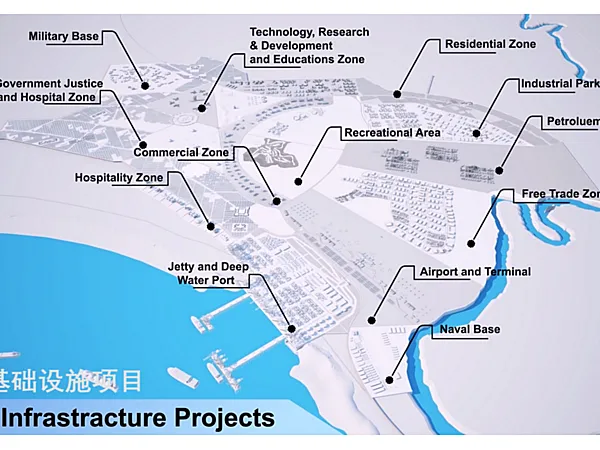
Prime Minister James Marape unveiled the Ihu special economic zone (Isez) in Kikori, Gulf, as part of the district's other impact projects.
Soroi Eoe, Kikori MP and Foreign Affairs and Trade Minister, Michael Nali, Works Minister Michael Nali with his department secretary David Wereh, William Samb, Central Governor Robert Agarobe, and Gulf Governor Chris Haiveta, and other lhu officials, accompanied him.
The K5 million, which was part of the K10 million budgeted for the next five years, had already been transferred to the Kikori Development Authority, according to Marape (DDA).
He mentioned that the K5 million will be used to carry out the land registry and the Ihu special papers authority.
“I will live it to the team for the land registration, mobilisation and continual work until we get a desired outcome of Isez working.”
Eoe previously stated that after the completion of stage one, the Isez will produce between K10 billion and K12 billion annually for the first 15 years of its service.
He said that there will be a lot more to come after that.
“Apart from the major business activities, the Isez project is expected to create small-to-medium enterprises with cottage service industries surrounding it,” he said.
“It is expected to create up to 12,000 jobs directly and another 25,000 jobs indirectly.”
The Isez project was financed by Kikori DDA from 2018 to 2020 under the chairmanship of Eoe, according to Isez project director Peter KenGemar.
Last year, the National Executive Council approved the project for K100 million, or K20 million a year – K5 million for administrative purposes and K15 million for the project's various programs, according to KenGemar.
The Isez project has advanced from idea formation to step two, which entails main foundational programs that will set the tone for other critical development initiatives to follow.
The Kikori-Ihu-Kerema road project, the Ihu airstrip restoration project, and an SME training and funding program were also initiated.
Marape stated that they had activated K5 million of the K20 million they were expected to supply this year for the road project.
The Internal Revenue Commission's (IRC) Commissioner General, Sam Koim, said that the IRC will advise the government on lowering the Salaries and Wages Tax (SWT) if they raise enough revenue through the successful collection, especially through the Goods and Services Tax (GST).
Koim said that they would make the recommendation until the National Government has adequate fiscal room.
This was mentioned by Koim at the start of the GST Act's Section 65A Merger with the Integrated Financial Management System.
He said that there is currently a large tax gap, particularly in GST collection, and that by concentrating on GST, they feel they can generate enough revenue for the government.
Unlike SWT, which is only charged by a limited portion of the population, GST, according to Koim, is paid by all.
“GST is a tax that is broad-based and everybody in this country participates in contributing one way or the other. And if we set up effective collection mechanisms and we collect all the GST areas that we collected, I believe we can create enough fiscal space, we can generate enough money,” said Koim.
He claimed that by effectively collecting GST, the government would be able to build fiscal space and consider tax reductions in other areas, such as SWT.
“We can offer suggestions to the Government that now we’ve taken ownership of the existing size of the pie, you can now explore reducing the salaries and wages taxes. At the moment we can’t offer that because, at this time, the Government is also facing financial stresses. And so it would be suicidal for us to offer that,” said Koim.
SWT continued to be the leading source of tax revenue.
The IRC wanted GST to be the highest-earning levy.
According to the Bank of PNG's (BPNG) jobs index, structured private sector employment fell by 5.5 per cent in the September quarter of 2020, relative to a 1.3 per cent growth in the June quarter of 2020.
This was recently illustrated in BPNG's quarterly economic bulletin for the September quarter.
BPNG Governor Loi Bakani said that jobs dropped by 1.4 per cent except for the mineral industry.
“By sector, the level of employment dropped in all the sectors except the financial/business and other services, and the wholesale sectors,” he said. “By region, the level of employment fell in the Highlands, Mamose (excluding Morobe) and Southern, excluding National Capital District, while it increased in Morobe. The level of employment remained unchanged in the New Guinea Islands. Over the year to September 2020, the total level of employment fell by 7.0 per cent, compared to an increase of 2.1 per cent in the corresponding period of 2019. Excluding the mineral sector, the level of employment fell by 2.7 per cent over the year to September 2020, compared to a decline of 0.4 per cent in the corresponding period of 2019.”
Domestic economic activity contracted and stayed weak throughout the year to the last September quarter, according to economic measures available to BPNG, owing primarily to the negative effects of the global Covid-19 pandemic.
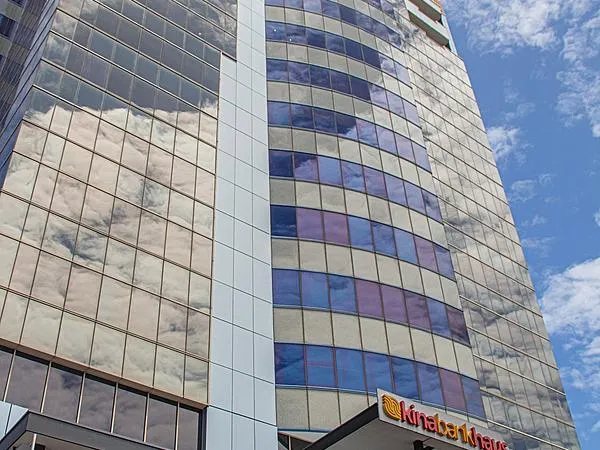
If the planned takeover of Westpac's Pacific company is authorised, Kina Bank said the new bank would have a new name and would be independent of Kina to increase banking sector competitiveness and consumer preference.
Kina's plan, according to Chief Executive Officer Greg Pawson, is to establish a new-branded bank for the nation that is independent and different from Kina Bank, disrupting the banking sector in a positive way.
“Our intention is to maintain the independent commercial banking licence of Westpac PNG,” Pawson said in a statement. “The newly-branded bank will have a new name and be separate from Kina Bank – and it will be governed by an independent PNG-based board of directors.”
Pawson said the new bank would compete directly and vigorously with Bank South Pacific, ANZ and Kina Bank. It will be a great outcome for customers from a service and product perspective. Creating a new brand means there would be no lessening of competition and no prospect of a duopoly or market dominance.”
Through Kina Securities, everyone in PNG will be able to invest and share in the ownership of the company, according to Pawson.
“The proposed acquisition of Westpac’s Pacific businesses will also pave the way for local investors to participate in the ownership of it through an equity raising,” he said. “Anyone can buy shares in the newly-branded bank through Kina Securities Limited. It’s a great opportunity for anyone in Papua New Guinea who wants to be part of Kina’s growth and success.”
Kina completed an equity raise in November to increase the bank's capital base and allow it to undertake the acquisition of Westpac's Pacific businesses.
Kina's proposed acquisitions of Westpac PNG and Westpac Fiji must be approved by regulators in both jurisdictions.
If COVID-19 cases continue to rise, the government is considering a lockdown from the new Isolation Strategy.
People are not listening or complying with the Niupla Pasin policies, according to Rainbo Paita, the Leader of Government Business. As a result, Cabinet has had to take drastic measures to save lives.
“Another main factor is because people aren’t listening, they’re not complying with the new measures and already there is community transmission everywhere,” Paita said. “But the National Executive Council will meet this afternoon (yesterday) and the Health Minister Jelta Wong will update Cabinet on the current statistics, the trend and transmission rate but there has been a lot of concerns raised by ministers in the Cabinet and I can say that the government is considering a lockdown to help curb the surge.”
Paita said that the virus is real and people need to start taking it seriously.
“Numbers are increasing every day, people are dying, and soon the government will have to take drastic measures to safeguard Papua New Guineans lives,” he said. “Doctors and nurses are trying their best but it seems that the general public is not taking it seriously.”
Paita has announced that K2 million has been set aside for masks and sanitisers to all regional health authorities.
“We understand that not everyone can afford to purchase a K2 or K5 mask daily so the government allocated this K2 million to help support PHAs to procure masks and sensitizers for people in their provinces,” he said. “And PHAs should be distributing these masks and hand sanitisers free of charge to the public.”
Treasurer Ian Ling-Stuckey has started talks with the Asian Development Bank (ADB) on the goals for the ADB's $US2.2 billion in funding over the next four years.
After a virtual meeting with ADB country director David Hill, the treasurer said the Marape Government needed to continue its emphasis on the war on coronavirus while also developing the foundation for a more sustainable economy through initiatives like PNG Connect.
“At stake, this year is $US691 million, with a further $US1.5 billion through to 2024, consisting of direct budget support and project financing,” he said. “The financing is all on extremely concessional terms with most of it at interest costs of less than 2 per cent, eight years before having to repay back any of the loans, and 30 years to repay the loan. The ADB goes through internal assessment processes which aim for a rate of return on projects of at least 12 per cent. The loan costs PNG 2 per cent and the economic rates of return are 12 per cent or more – this is the basis for future growth.”
Follow-up talks, according to Ling-Stuckey, have already begun and will proceed in the coming weeks.
The focus will be on a variety of topics, including:
With the outstanding amount of government debt owed to the sector, pending landowner fees, and rising law and order woes, businesses are concerned about 2022.
According to Chey Scovell, chief executive officer of the PNG Manufacturers Board, conversations within the business community revealed that the government owed companies more than K2 billion.
“I don’t have an updated list, but from general conversations with business and what is being raised with the various chambers, it would exceed K2 billion,” he said. “We hear that contractors for the Department of Works have claims for this amount alone, so the number could be as high as K3 billion. No doubt they may have paid some, technically a K1 payment would be paying at least some. The Budget hasn’t been able to be implemented properly at all. Recurrent expenditure, monthly bills for things like water, power, security, rent, are not being paid in full or in many cases at all. We’ve suggested that the Government put up an online portal/list, for all creditors to register for the Government to show full or progressive payments.”
Scovell compared what the government was doing to the private community to what would happen if everybody started paying taxes for one to five years but continued to use government programs.
“They wouldn’t be able to survive, so how is it that they expect businesses to carry on?” he said. “It is also a bit of a cop-out that Treasury is taking a long time and in many instances taking extensive reviews of claims to see if they will pay them and by how much.”
Scovell argued that the government was required to behave in good faith and to set a precedent, but that forcing or intimidating companies to make substantial reductions in compensation due for goods and services rendered was bad form.
“We note there are many dodgy claims, but there seems to be little evidence that hires car firms, public works contractors and catering firms (reported as problematic areas) are having the same scrutiny,” he said. “BOC Gas waited years to be paid for medical gases such as oxygen supplied to PMGH (Port Moresby General Hospital), it was reviewed twice that I know of and not paid. The other item of note is that debt carried is a growing debt. The older it gets the more it has cost the businesses.”
He added, “Also, our currency has been depreciating, many businesses based their fees on the foreign exchange rates at that time, some even had loans Just like our tax penalties, the longer they are overdue, the higher they should become. This Government isn’t doing to others as it does for itself. We still have micro, small and medium enterprises that have suffered duress due to non-payment of bills going all the way back to our 40th Independence, same goes for the 2015 Pacific Games, we hear from the regional chambers that there are many outstanding claims for the past two elections. Again, if we had a publicly available list, the Government wouldn’t be able to hide behind confusion and people could whistleblow on dubious claims.”
The Papua New Guinea Securities Commission has placed a new levy for all trades on the PNG Stock Exchange, the country's stock market (PNGX).
The Securities Commission adopted the new levy on February 8 and it went into effect on March 8, according to PNGX chairman David Lawrence. Each buyer and seller are expected to pay an extra 0.75 per cent of the sale value to their stockbroker.
He said that the stockbroker was required to pay the money to PNGX on a monthly basis and that PNGX was then required to pay the money to the Securities Commission on a monthly basis.
PNGX was worried that the levies would disincentivize business competition at a time when it was attempting to build it up from a low base, according to Lawrence.
Buyers and sellers, he added, were immune to paying the levies for on-market purchases.
“We have also heard that some buyers and sellers are giving consideration to off-market transfers of listed securities rather than executing orders through the market, as off-market transfers will not be subject to the levies,” he said.
PNGX has urged the Securities Commission to notify the public of its plans to reclaim any outstanding levies from investors and sellers, as well as its views on off-market transfer activities, according to Lawrence.
“PNGX is concerned that the imposition of the levy at this time is counterproductive to the development of the capital markets in PNG and not aligned with the Government’s financial sector development strategy (FSDS) to create an environment that is equal in its competitiveness to the ASX,” he said.
He expressed concern about the possible impediments generated by the levy, which he defined as follows:
According to Lawrence, the outcomes could decrease competition in an already illiquid sector, eliminate incentives for market development, and raise the cost of financing for PNG companies and the government.
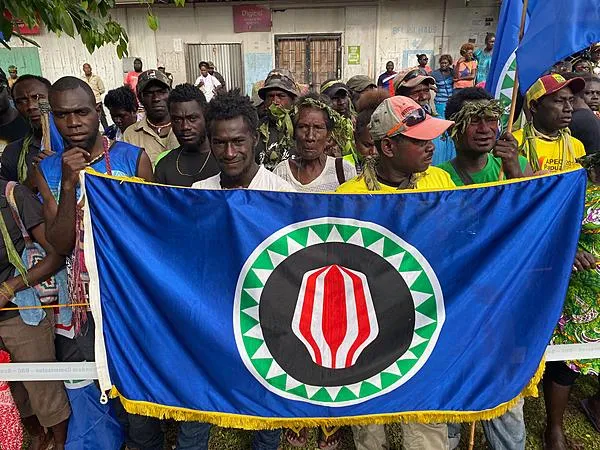
The United Kingdom is the main contributor to the United Nations Peacebuilding Fund, which funds programs in Bougainville and the Highlands region of Papua New Guinea.
Last week, British High Commissioner to Papua New Guinea Keith Scott said that the United Kingdom, as a Permanent Member of the United Nations Security Council, regularly engages in negotiations on Bougainville and offers support and other assistance through UN and other international development agencies.
“We provided K425,000 for the UN Post-Referendum Support Project, with potentially up to another K1 million available, including for Bougainville’s economic development,” High Commissioner Scott said.
Since 2018, the government has contributed more than K160 million to Papua New Guinea by key donations to multilateral such as the World Bank (International Development Association), the EU, UN organizations, and the Global Fund (OECD figures). And there's their separate assistance to Bougainville, which they've provided over the years.
“The UK, as Permanent Member of the UN Security Council, participates actively in discussions on Bougainville,” he said. “We have sent observers for the independence referendum and contributed K450,000 to the UN Referendum Support Project. We have also sponsored two study tours to the UK in 2016 for leading representatives from PNG and Bougainville governments to learn about the post-conflict political settlement in Northern Ireland and the autonomy arrangements in Scotland.”
He added, “We have also arranged two visits to Bougainville by former Minister for Presidential Affairs for South Sudan and former member of the Irish Republican Army to discuss their experiences of engaging with peace processes. We sponsored a peacebuilding forum in Arawa in March 2019 for 60 participants and we have assisted with K45,000 to fund Women’s Safe House in Haku, Bougainville.”
According to the Japanese Embassy, Japan is allocating more than K32 million to support Papua New Guinea (PNG) in fighting the transmission of the coronavirus (Covid-19).
The embassy said in a statement last week that its government will give international organizations in PNG K32,484,368 to introduce projects to combat Covid-19 infections.
The World Health Organization (WHO), the United Nations International Children's Emergency Fund (UNICEF), the Food and Agriculture Organization (FAO), and the United Nations-Women carried out the programs (United Nation entity for gender equality and empowerment of women).
“The Japanese government has to date approved a budget of 9.2 billion yen (K293,068,395), including the funds for PNG, to support Asia and Oceania in measures to prevent the spread of the virus,” the statement said.
The projects aim to:
The Investment Promotion Authority (IPA) is committed to ensuring that the Investment Promotion Act is properly reviewed in order to carry out its mandated duties and obligations.
This is to ensure that all international and domestic investments are encouraged and facilitated.
In its second issue of the Opportunity Newsletter for 2021, the IPA said the suggested changes to the Investment Promotion Act would keep PNG open to foreign investment while improving mechanisms for updating the Cottage Business Activities List (CBAL), also known as the Reserved Activities List (RAL), and introducing a Restricted Activities List.
The proposed amendments and subsequent legislation would define these practices.
The changes also provide better review procedures for determining the practices are covered by these lists.
Governance changes are being integrated into the amendments to strengthen IPA's ability to handle the international certification scheme as the first point of touch for foreign investors in PNG.
The reforms will provide a host of regulations aimed at improving enforcement and oversight of individual certificate holders as well as the foreign investment scheme as a whole.
This data is essential for promoting prudent foreign investment in PNG, as well as providing evidence for framework upgrades over time.
The inclusion of the Registrar of Foreign Investment, a dedicated position responsible for the management of the foreign investment scheme in order to enhance overall compliance and oversight, is a major improvement.
The reforms would modify the existing certification system by introducing a system close to that of corporation registration, with a simplified and faster international certification process.
Obtaining an international credential after applying will currently take more than a month.
The Registrar will accept registrations unless specified disqualifying requirements are met.
This would give foreign investors more clarity about the forms of foreign investment that are permitted in the region.
That would also allow for quicker international entity certification since the Registrar will be able to accept applications on a rolling basis.
The review started in 2019 as part of the National Government's plan to help Micro, Small, and Medium-Sized Enterprises (MSMEs) develop and become the economy's backbone.
By the end of the year, the much-anticipated national demographic estimates and common roll update will be available.
The National Statistics Office (NSO) gave this assurance when confirming that 95% of institutional listing has been achieved.
Despite the COVID-19 pandemic, Acting National Statistician John Igitoi stated that the NSO was committed to finishing the census and updating the popular roll by the end of the year.
“We (NSO) have completed 95 per cent of the structural listing,” he said. “The remaining five per cent are the urban centres, including National Capital District. NCD will be hard because we have settlements and development all over the place.”
He confirmed that structural listing for other cities would begin until the National Pandemic Controller has issued his approval.
Igitoi reported that NSO field officers at the local government and district levels in the provinces have covered 95 per cent of PNG's rural areas.
He stated that there was a recruiting campaign for enumerators in the provinces and that once that was completed, preparation for those field officers for the actual enumeration at the LLG level would begin.
“The recruitment drive will be completed this month (April) and by next month, we will conduct training for master trainers, who will go to the provinces and conduct training-of-trainers,” Igitoi said. “These trainers will go down to their respective LLGs and train field officers, who are going to carry out the actual enumeration.”
Despite COVID-19 interventions and financial constraints, he stated that the NSO would ensure that national population numbers are issued by the end of the year.
The effect of the COVID-19 pandemic on the prices of seasonal produce and medical services pushed annual inflation higher in the second half of 2020.
Loi Bakani, the Governor of the Bank of PNG, said annual headline inflation was 5.1% in the December quarter of 2020.
The annual key indexes of inflation, he said, had also risen.
According to Bakani, the bank predicts annual headline inflation to be about 4.5 per cent in 2021, based on slowing inflation feed-through and relative exchange rate stability.
The underlying inflation indexes, he said, are expected to be mild.
Upside threats to these estimates, according to Bakani, include the effects of disturbances in domestic and global supply chains.
He predicted that headline inflation will be about 4% in the medium term, indicating the relaxation of containment policies.
According to Bakani, the board money supply rose by 7.0 per cent in 2020, owing to rises of 19.5 per cent in net foreign assets (NFA) and 4.5 per cent in net domestic assets (NDA), respectively.
“The increases in NFA reflected external borrowings for the National Budget,” he said. “The increase in deposits at commercial banks was from liquidity injected by the government expenditure and monetary policy measures in response to the COVID-19 pandemic. The additional liquidity did not translate into increased private sector credit, which was instead reinvested in COVID-19 treasury bonds and through secondary markets trading with the Central Bank.”
Due to the sluggish economy, Bakani said the private sector's demand for credit remained poor.
“Therefore, the exchange settlement account levels of commercial banks and liquidity in the banking system remain high,” he said. “To minimise the potential threat to price stability in the meantime, the Central Bank is managing liquidity through secondary market reading and the TAP facility for government securities, which was set up to encourage a savings culture. For 2021, the Ban forecasted an increase of 6.2 per cent in the broad money supply. This is mainly due to an increase of 8.6 per cent in NDA, which more than offset a decline NFA of 4.5 per cent. The increase in NDA is due to an increase in net claims on the central government of 16.0 per cent, which reflects government debt issuance and an increase in private sector credit (PSC) of 6.0 per cent. This increase in PSC is driven by the expected economic recovery.
He added, “In line with these developments, the monetary base is projected to increase by 3.9 per cent.”
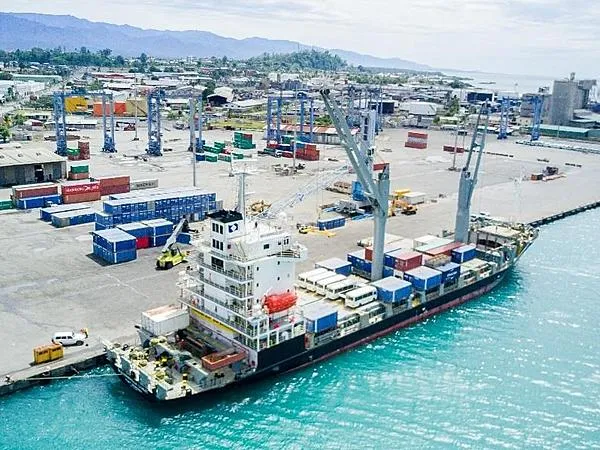
COVID-19 had a major impact on Papua New Guinea's exports and port movement, but the PNG Ports Corporation had taken political decisions to handle the situation.
In recent months, the world has seen and continues to see a significant shift in everyday lives, which has had significant implications for industry, commerce, and transportation.
The pandemic's emergence altered both economic and trade forecasts for 2020. New predictions have reduced forecasts to negative 4.9 per cent, down from an estimate of 3.6 per cent increase in container trade worldwide in the fourth quarter of 2019 to 2.5 per cent in January 2020.
PNG Ports chairman Kepas Wali clarified that the company's earnings were the result of tight cost-cutting steps and prudent decisions taken by management.
Last year, he said, the closing of borders and prohibitions surrounding the COVID-19 pandemic struck PNG Ports hard, which is dependent on trade.
Despite COVID-19, PNG Ports has continued to operate all of its ports.
“When COVID-19 hit the country and the world, the management of PNG Ports worked quickly and instituted certain protocols and prevention measures just so we can maintain our ports operations,” he said. “The management’s quick response to the situation has made it possible for all ports to operate during the hit by the pandemic through until now.”
He said the pandemic's consequences on the company were expensive, but PNG Ports is happy with the positive results obtained by their management's swift reaction and aims to continue this going forward.
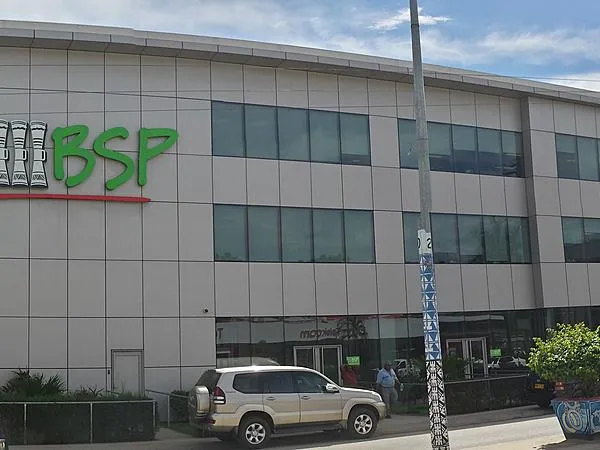
BSP Financial Group has replaced Bank South Pacific Limited as the company's name.
Sir Kostas Constantinou, Chairman of the BSP, revealed this last week.
The shareholders approved the name change, as well as other legislative amendments, according to Sir Kostas.
BSP will now proceed with the filing of its application for listing on the Australian Securities Exchange (ASX).
“The notice of the meeting is currently subject to advise and approvals, which are expected to be finalised during March 2021,” Sir Kostas said.
According to BSP Group CEO Robin Fleming, the proposed ASX listing would provide access to new pools of capital on Australia's largest market.
“While BSP has been listed since 2003 on the PNGX, there are a number of constraints that BSP faces in sourcing new forms of equity capital,” he said. “Accordingly, BSP is pursuing the proposed listing as a means of mitigating some of these constraints. Access to new sources of capital will allow BSP to explore future growth opportunities. Another benefit of joining the ASX is that it will facilitate increased liquidity for BSP’s shareholders (trading of BSP shares). The ASX is a much deeper (larger pool of investors) and (more) active market than the PNGX. Accordingly, shareholders will find it easier to trade BSP shares on the ASX.”
The visibility of BSP would increase if it joined the ASX, according to Fleming.
“It will provide the opportunity to better educate the international marketplace in relation to BSP and PNG,” he said.
BSP's shares would be exchanged on both the PNGX and the ASX if authorised.
When asked about the name change, CEO Robin Fleming confirmed that the iconic trade name of BSP would continue to be used throughout the Pacific.
Information and Communications Technology (ICT) Minister Timothy Masiu said a third network service run by Digitec Communications Ltd will begin before the end of the year.
Masiu made the remarks during a recent visit to Digitec's headquarters in Waigani, Port Moresby.
The building of over 1,100 towers is expected to be completed, according to Digitec's chief executive officer Pradeep Lal and chief technical officer Justine Prakash, and once fully operational, up to 1,000 new jobs will be available, ranging from sales and marketing to engineering and ICT-specific jobs.
Masiu said the site visit had given the ICT ministry renewed faith that Digitec's operator license would be fully capitalised by the end of the year when the Vodafone PNG brand is introduced.
The minister was also pleased with the effect that a third operator would have on the public.
“I am delighted to inform the public that the introduction of a third mobile network operator will bring in much-needed competition to the market to drive retail prices down for the benefit of our people,” he said. “We’ve also done our independent assessments and we believe mobile coverage could easily jump from 42 per cent to 85 per cent within one year after the launch of the third operator. This means that more of our people will have access to communication services at a cheaper rate. In addition, this should finally trigger regulated tower sharing pricing and mobile number portability in early 2022 and so it is truly exciting times ahead for all of us.”
Follow on LinkedIn:
PNG Business News
Be the "First" to get our exclusive Digital Magazine & Weekly Newsletter.