Category:




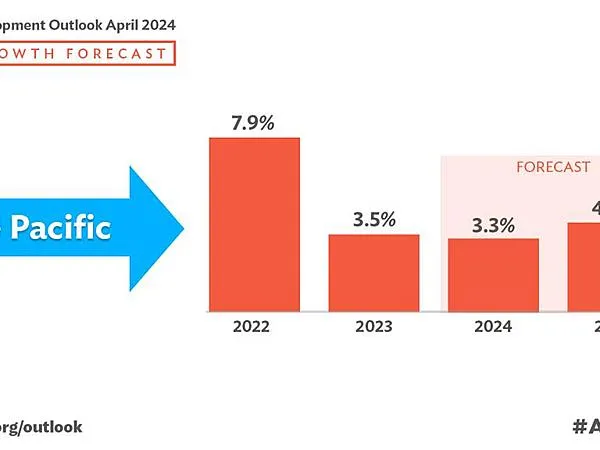
3.3% Growth Expected in the Pacific Region in 2024, 4% in 2025 — ADB
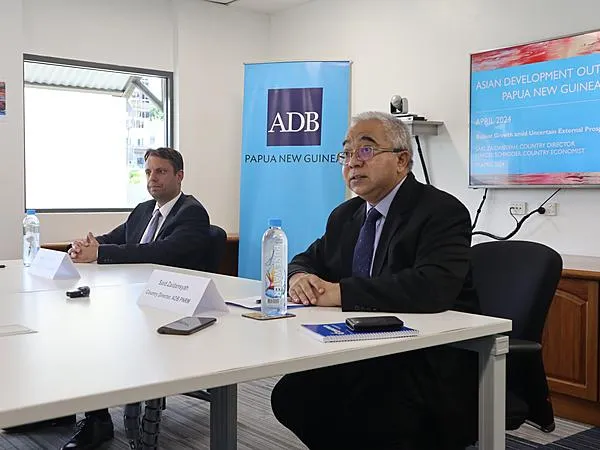
Economic growth in the Pacific is projected to moderate in 2024 before picking up in 2025, according to the Asian Development Outlook (ADO) April 2024, ADB’s flagship economic publication, released today.
The Pacific economies expanded by an average of 3.5% in 2023 as business activity resumed in earnest after the COVID-19 pandemic. Growth of 3.3% is projected in 2024 and 4.0% in 2025. The outlook is driven by improved prospects for the mining sector in Papua New Guinea (PNG), the subregion’s largest economy.
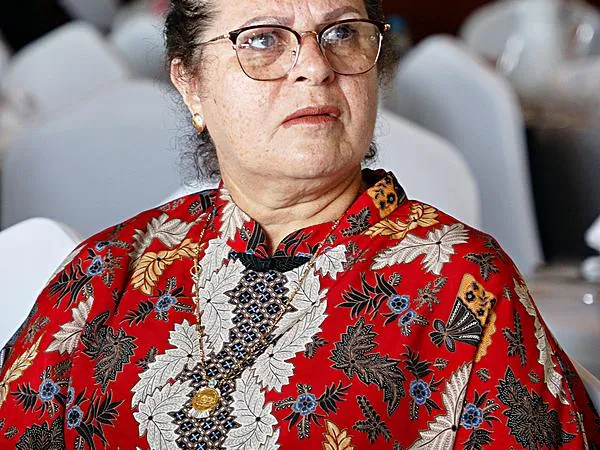
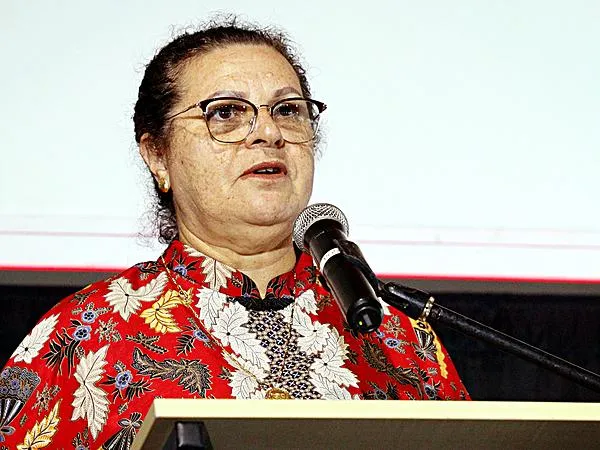
“While large construction projects and tourism continue to drive growth in many Pacific economies, risks to the outlook remain,” said ADB Director General for the Pacific Leah Gutierrez. “To achieve and maintain growth, targeted policies are urgently needed to address labor gaps while sustaining remittance flows and balance fiscal sustainability with long-term investment. Governments must also find ways to improve resilience to shocks, especially with the increasing threat of disasters and the impacts of climate change.”
After moderating to 3.0% in 2023, inflation in the Pacific will rise by 4.3% in 2024 and 4.1% in 2025. Although global commodity prices are seen to be less volatile, domestic factors exert price pressures in many economies.
In PNG, growth slowed to 2.0% in 2023 due to decreased production in the resource sector. Foreign exchange restrictions and frequent power disruptions also dampened activity in the rest of the economy. The resumption of production at the Porgera gold mine will accelerate growth in 2024 to 3.3% and 4.6% in 2025. However, the fallout from civil unrest in January this year and a poor business environment continue to cloud the outlook. Reforms to improve the power sector's financial sustainability and generation infrastructure, including increased use of renewable energy and private sector investment, are needed to help address power supply constraints on growth.
For Fiji, the subregion’s second-largest economy, tourism and increased remittances will continue as the main drivers of growth in 2024. Growth is projected to slow to 3.0% in 2024 and further to 2,7% in 2025, largely due to the projected slowdown in travel demand and significant capacity limits in tourism. Sustaining tourism growth will require boosting investment, promoting tourism activity in other areas, particularly in the outer islands, and attracting other segments of tourism markets.
The ADO April 2024 expects growth in Solomon Islands to moderate slightly to 2.2% in both 2024 and 2025 as activities related to the 2023 Pacific Games wind down. The report says public debt is projected to increase—but remain within government limits—to finance infrastructure and budget deficits, while inflation would decelerate in line with global trends. Balancing fiscal sustainability with long-term investment needs is an ongoing challenge.
Economic growth in Vanuatu is projected at 3.1% in 2024, rising further to 3.6% in 2025. It is expected to depend on tourism growth and reconstruction in the aftermath of three cyclones that damaged infrastructure and agriculture in 2023. The report says that with the rising intensity and frequency of climate-induced disasters, alternative ways to finance disaster preparedness and response must be found.
Tourism, as well as construction—mainly public infrastructure projects—will sustain growth in the South Pacific economies over the near term. Growth in the Cook Islands will reach 9.1% in 2024, moderating to 5.2% in 2025, while expansion in the tourism and construction sectors in Samoa is projected to put growth there at 4.2% in 2024 and 4.0% in 2025. Ongoing construction activities and investments in climate resilience will continue to support growth in Tonga, which is projected at 2.6% in 2024 and 2.3% in 2025. Niue’s economy improved in 2024 due to a pick-up in tourism. However, visitor arrivals remained well below pre-pandemic levels. The ADB report says policies must balance the need to address local labor gaps with sustaining remittance flows to maintain growth.
The North Pacific economies improved as visitor arrivals to Palau increased, and business activity picked up in the Federated States of Micronesia (FSM) and the Marshall Islands during their first full year without pandemic-related mobility restrictions. Growth in the FSM economy is projected at 3.1% in 2024, moderating slightly to 2.8% in 2025. The Marshall Islands economy is projected to expand by 2.7% in 2024 and 1.7% in 2025. Growth is expected to resume in Palau, driven by tourism and construction, reaching 6.5% in 2024 then increasing to 8.0% in 2025. Stronger public sector management remains key to using the financial assistance anticipated under the North Pacific economies’ renewed Compacts of Free Association with the United States to upscale productive investments, improve the quality of public services, and build resilience.
Implementation of infrastructure projects is seen to drive economic expansion in the Central Pacific economies. Growth in Kiribati is projected at 5.3% in 2024 and 3.5% in 2025, while the forecast for Tuvalu is 3.5% in 2024 and 2.4% in 2025. After the winding down of the Australia-funded Regional Processing Centre, construction, as well as services exports, are seen to fuel the Nauru economy. Growth is projected at 1.8% in 2024, edging up to 2.0% in 2025. As rising sea levels threaten the livelihoods and the very existence of the Central Pacific economies, the report says immediate and concerted efforts to mitigate this threat are needed.
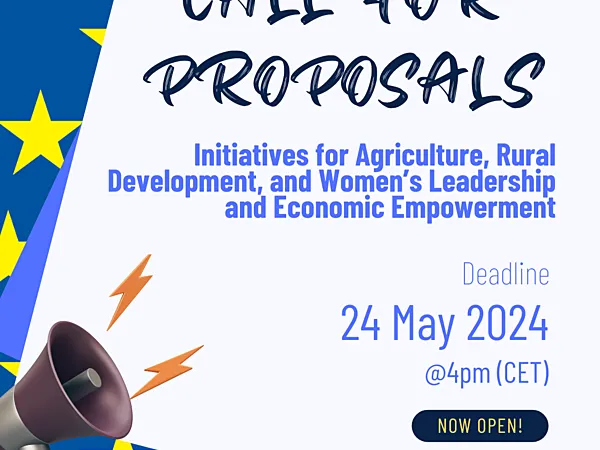
EU Initiative Targets Agriculture Development and Women's Economic Empowerment in PNG
The European Union has taken a significant step towards fostering sustainable development in Papua New Guinea (PNG) with the launch of the 2024 (Neighborhood, Development, and International Cooperation Instrument) NDICI Civil Society Organizations and NDICI Human Rights program.
This initiative invites both civil society organizations and international entities to participate in a Call for Proposals aimed at addressing crucial areas of concern: Agriculture Rural Development and Women’s Leadership and Economic Empowerment.
A press release shared on Tuesday 02 April by the European Union stated information on the Call for Proposals including the guidelines and concept note, application form and relevant annexes on accessible websites.
Rural agriculture in PNG forms the backbone of the nation's economy through subsistence and small-scale farming. PNG – Country Strategy Note 2021 (CSN; Asia and the Pacific) reports a large majority of the population (87 percent) are rural and dependent on semi-subsistence agriculture.
Agriculture accounts for a third of GDP and employs 80 per cent of the working population. Smallholder farming systems dominate the sector. However, modernizing this sector faces substantial difficulty, including limited access to technology, essential skills, and knowledge. Additionally, meeting increasingly strict international standards presents a challenge.
Moreover, women, make up a sizable portion of the agricultural workforce, often find themselves marginalized, lacking in leadership and entrepreneurial skills necessary for active participation in economic endeavors.
According to Food and Agriculture Organization (FAO) Gender - Key to Sustainability food and security plan of action 2003, through research, estimations show that women represent a substantial share of the total agriculture workforce, as individual food producers or as agricultural workers, and that around two-thirds of the female labor force in developing economies are engaged in agricultural work.
Recognizing these challenges, the European Union emphasizes the crucial role civil society organizations and international bodies play in tackling these issues and fostering inclusive growth.
The overall objective of this call for proposals is to contribute to an inclusive, participatory, empowered, and independent civil society, creating a conducive democratic space in partner countries.
This Call for Proposals comprises two main lots:
- Agriculture Rural Development Programme: Aimed at enhancing the efficiency and effectiveness of the smallholder-dominated agricultural sector to meet international regulatory standards, such as agri-food safety norms and the EU Deforestation Regulation.
- Women’s Leadership and Economic Empowerment: Designed to increase women’s access to skills development, entrepreneurial training, financial services, products, and leadership opportunities.
The total funding available for this initiative amounts to EUR 4.32 million (PGK 17.56 million). The deadline for submitting a Concept Note is Friday, May 24, 2024, at 4:00 pm Central European Time (UTC+01:00). Interested parties can refer to EuropeAid/180704/DD/ACT/PG for further details.
An information session on the Call was set Friday, April 12, 2024, at 10:00 am at the EU Delegation, offering an opportunity for potential applicants to gain insights and clarify any queries they may have regarding the application process and project objectives.
Through collective efforts and strategic investments, the European Union aims to activate positive transformation in PNG's agricultural sector and support women’s economic participation, paving the way for sustainable development and prosperity.
The Guidelines and concept note application form and relevant annexes are accessible in the following websites:
https://ec.europa.eu/info/funding-tenders/opportunities/portal/screen/home or