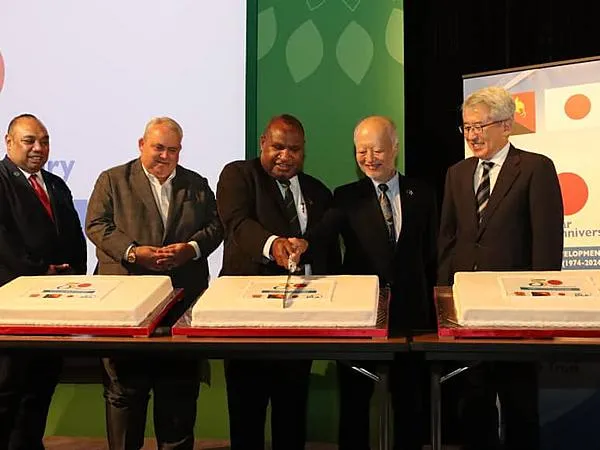
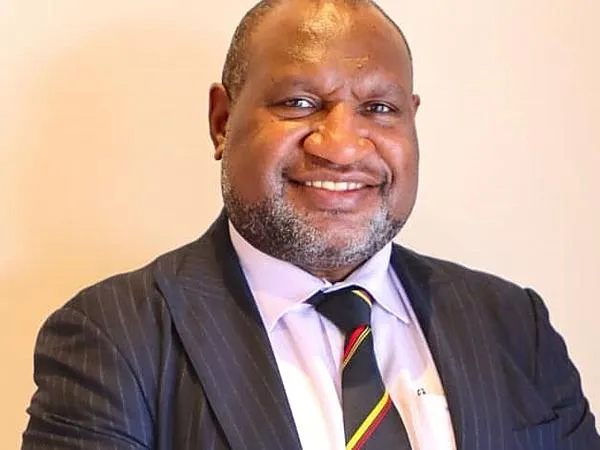
Prime Minister Hon. James Marape has acknowledged the special bond Papua New Guinea has with Japan, as he congratulated Japan International Cooperation Agency (JICA) on 50 years of delivering Japan’s development assistance to PNG.
JICA, the Japanese government agency that delivers the bulk of the Official Development Assistance (ODA) to developing countries worldwide, opened its office in PNG in 1974, one year before PNG gained its Independence and one year before Japan and PNG began their diplomatic ties.
This year 2024 sees 50 years of JICA’s operation in PNG, which has resulted in many successful initiatives in fisheries, agriculture, health, education, environ- mental protection, rural electrification, and projects such as a fisheries pro- gram with National Fisheries College in New Ireland Province, upgrading of the Port Moresby General Hospital, Port Moresby sewerage project, and the recently opened Nadzab Tomodachi International Airport in Morobe Province.
Prime Minister Marape, on Thursday (17.10.24) evening during a dinner event hosted to mark the occasion, thanked Japan and JICA on behalf of the government and people of Papua New Guinea in a moving speech, describing Japan as a “sincere and genuine friend”.
He said Japan has continually given assistance and support to PNG without asking for special favours, choosing to be with PNG in its infancy with an economy worth less than US$1 billion to now producing resources such as liquefied natural gas, supplying tuna to Japan, and maintaining a robust democracy.
“Your friendship is sincere. You come to the table without asking us to return the favour. You give fully and I want to say PNG subscribes to the principle of those who give freely, with heart.
“It is intrinsically Melanesian and Christian values that those who come to us with no obligation are those we hold as sincere and genuine friends,” said the Prime Minister.
The Prime Minister said because of Japan’s steadfastness in honouring the PNG-Japan partnership, Papua New Guinea would also honour its side of the bond in trade, commerce and investment with Japan; and further invited Japanese businesses to invest in PNG.
He said, “PNG looks forward to our continued journey for modernization as we make progress from a raw-resource-rich export economy to the manufacturing economy in the next 20 years.
“We too look forward to continue the trade and partnership with you, and in our own small way, contribute to peace and tolerance amidst various stresses we have in our shared Pacific Ocean.
“We look forward to standing in every forum to give Japan the needed support as the true friend of PNG because of a friendship that you forged when we were not yet a nation.
“Today is a remarkable celebration. In 1974, you stepped out in faith and established a first partnership agreement (with PNG) even before we became independent. You were among the fore-runners, working the frontier, preparing our country for Independence. Thank you very much,’’ said Prime Minister Marape.
He noted that Japan, in 1974, was still rebuilding its economy having come out of the great destruction of the World War II yet was still willing to give a hand to Papua New Guinea.
“In 1974, you were only about 30 years out of the great destruction of World War 2. But you taught the world the gains of tolerance, humility, forgiveness and kindness. You submitted to your adversary right after the war and you pursued economic progress for yourself.’’
The celebration of the 50th anniversary of Japan’s ODA to PNG was held at Hilton Hotel, attended by diplomats, government department representatives and various partners of the JICA.
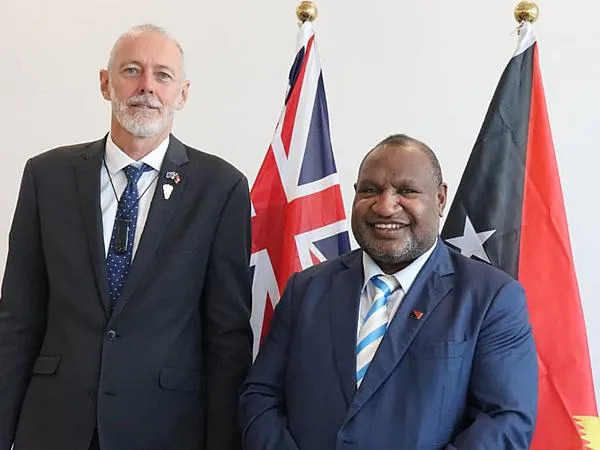
Prime Minister Hon. James Marape has described New Zealand as “steady and reliable” in its partnership with Papua New Guinea during his meeting with New Zealand High Commissioner, H.E Peter Zwart recently.
The bilateral meeting saw the two leaders discuss common issues of mutual interest between the two countries, New Zealand’s involvement in community-development projects throughout the country, ongoing technical support to the revitalization of the Papua New Guinea public service, and Bougainville.
In the next three years, New Zealand expects to invest some K350 million into projects and programs in PNG, including the rehabilitation of Lae market which has started.
Prime Minister Marape thanked High Commissioner Zwart and the New Zealand Government for the assistance, and continued his call for technical assistance in the area of expertise to support the public service further.
He acknowledged the similarity of indigenous cultures between Papua New Guinea and the Maori, and appealed for New Zealand’s assistance in supporting the growth of agriculture in the country, while inviting New Zealand companies to extend their investments in PNG.
The Prime Minister highlighted to Mr Zwart the country’s upcoming 50th Independence anniversary next year 2025, revealing that the Government was planning a special reconciliatory event for Bougainville “to bring closure”, which, he said, New Zealand would have a special role to play in because of its continued involvement in the Bougainville peace process.
Prime Minister Hon. James Marape has emphasised that the new casino operations in Port Moresby will be strictly regulated to benefit Papua New Guinea’s economy while safeguarding the welfare of its citizens.
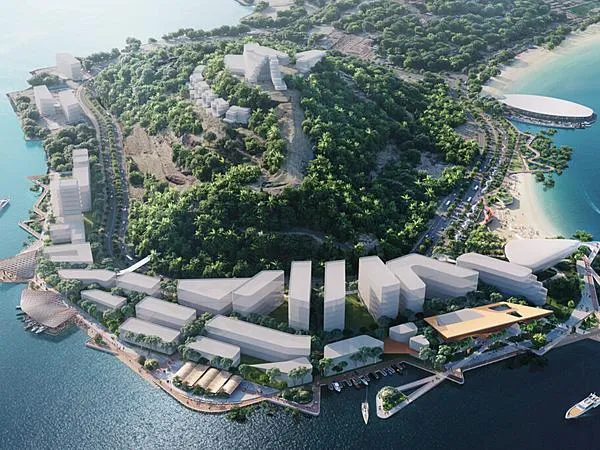
Addressing concerns over the recently launched Paga Hill Special Economic Zone (SEZ) Satellite Casino, Prime Minister Marape clarified that this casino will cater exclusively to “high rollers,” including expatriates, tourists, and high-earning Papua New Guineans.
“Similar to Singapore’s casino model, where locals are protected by specific regulations, we will ensure that only Papua New Guineans with an annual disposable income above K200,000 will be eligible to participate. Entry will require identification and membership,” said Prime Minister Marape.
He further explained that these measures align with recent adjustments to the minimum bet on pokies, increased to K100, to discourage participation by lower-income earners. He stressed that these changes are designed to curb overseas gambling expenditures by affluent Papua New Guineans, who currently travel to destinations such as Cairns, Brisbane, Singapore, and Manila for casino experiences.
“Our primary focus is on attracting international visitors and residents. We’re observing a growing number of Asian visitors for whom gambling is a popular recreational activity. This project is tailored to accommodate these gambling tourists and other international patrons. While there are concerns about unregulated casino-like gambling occurring in some private settings, this licensed casino can serve as a legitimate venue,” he added.
Highlighting the broader economic benefits, Prime Minister Marape underscored the contributions of gaming operations to community funds through the National Gaming Control Board. He stated that the licensed casino will follow this model, channeling a portion of revenue into programmes that benefit the community.
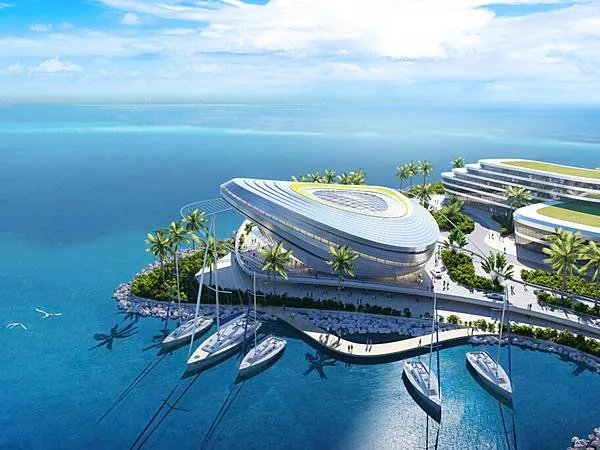
The Paga Hill SEZ project, which features hotels, residences, and commercial centers, is a transitional development poised for long-term expansion pending compliance with regulatory standards. The Prime Minister also announced a priority hiring initiative for local Motu-Koitabuans within the SEZ development.
“While I personally do not advocate for gambling, it’s undeniable that we have expatriates and others among us who participate in such activities. Licensed and regulated casinos offer an avenue for the State to collect taxes, retain spending in-country, create employment opportunities, and contribute to our economy,” said Prime Minister Marape.
“We will trial run this Satellite Casino, and another on a floating ship, which will both be reviewed over time.”
Reflecting on the history of gaming in Papua New Guinea, Prime Minister Marape noted that similar concerns were voiced when pokies were first introduced, yet they have become a regulated part of the country’s landscape for over 30 years. He assured citizens that these casino projects would be introduced as trial initiatives, subject to rigorous oversight to prevent adverse impacts on everyday Papua New Guineans.
Prime Minister Marape concluded, “This SEZ project has been many years in the making. We are committed to ensuring its development aligns with our standards and delivers economic benefits for Papua New Guinea.”
Port Moresby is set to become the heart of Papua New Guinea’s next wave of development and modernisation, with an eye on the booming Asian market, as declared by Prime Minister Hon. James Marape on Friday, October 11, 2024. Speaking at the groundbreaking ceremony for the Paga Hill Special Economic Zone (SEZ) Satellite Casino, Prime Minister Marape emphasised the capital’s role in leading the country’s economic transformation. This ambitious project, which includes development of hotel hotel rooms, is backed by an international developer and is slated for completion within six months, marking another milestone in PNG’s progress.
Prime Minister Marape stressed that the casino is strictly only for overseas guests, tourists and high earning Papua New Guineans and is not open to all citizens.
Paga Hill Development Company (PHDC) Chairman, Mr. Peter Barge, underscored the project’s focus on attracting tourists and expatriates, assuring that stringent entry requirements will align the casino with similar establishments in Singapore.
“In modern PNG, you need facilities, you need entertainment, all manner of amenities for both citizens and visitors to enjoy living in our country,” Prime Minister Marape said.
“There can be no better place to start the next wave of our growth than in Port Moresby, which has been the hub of government and commerce over the last 100 years when we were first visited by government, missionaries, and traders.”
Reflecting on the city’s legacy, Marape highlighted Port Moresby’s deep historical connection with the Motu-Koita people, particularly the Hanuabada villagers, acknowledging the area as the birthplace of modern-day PNG.
He continued by sharing his aspirations for Papua New Guinea’s future, recounting his recent speech at the United Nations General Assembly in New York City, where he declared the nation’s commitment to becoming a producer of finished goods instead of simply exporting raw materials.
The Prime Minister proudly reported on the nation’s economic growth, noting an increase from K79 billion in 2019 to a projected K122 billion by the end of this year, with forecasts of K130 billion by next year and K150 billion by 2027. “I assure those who choose to invest in PNG that you are coming into a growing economy, not one that is stagnant,” he said, emphasising the quicker return on investment achievable in PNG compared to larger economies.
Prime Minister Marape further emphasised the government’s commitment to tackling law-and-order challenges, improving education, and enhancing healthcare as part of a comprehensive strategy for a modernised PNG. He expressed his optimism about attracting tourists from major regions, such as China, Australia, and Southeast Asia, who are projected to enjoy the offerings at the Paga Hill Precinct. Additionally, he urged investors to prioritise local employment, particularly for the Motu-Koita people.
“Our vision for Port Moresby includes transforming the area from Koki to Konebada into a modern center for business and commerce, and establishing the Waigani Precinct as the governmental heart of the city,” Prime Minister Marape said.
“These two hubs will become symbols of PNG’s ambition to rise and progress on the global stage, developed at the very earliest.”
Looking forward, Prime Minister Marape acknowledged the success of Vision City Mega Mall as a prime example of what Port Moresby can achieve, serving as an inspirational model for future developments.
“I offer my congratulations and commendations and look forward to every step forward. May PNG prosper in this development,” he said, concluding with a vision of unity and optimism for the nation’s future.
A joint understanding has been reached between the Governments of Bougainville and Papua New Guinea to broaden the role of the recently appointed independent moderator, Sir Jerry Mateparae.
In a ministerial statement delivered in the Bougainville House of Representatives last week, ABG Attorney General and Minister for Bougainville Independence Mission, Hon. Ezekiel Masatt, provided this update highlighting the importance of the moderator’s role in advancing key elements of the post-referendum process.
Minister Masatt outlined that the engagement of the moderator was necessitated following ongoing disagreements between the two governments on outstanding issues relating to the sessional order and related matters to bring the results of the 2019 Bougainville Referendum to the National Parliament.
“There were a number of consultations held between the President and the Prime Minister and Minister Makiba and myself whence we worked together through potential candidates for the moderator. In the end both Minister Makiba and myself finally settled on Sir Jerry Mateparae to be the moderator,” Masatt explained.
This joint recommendation was then provided to the Prime Minister and President after which, both leaders released a joint statement announcing the appointment of Sir Jerry Mateparae.
According to Minister Masatt, the original scope of the moderator's role was expanded through joint discussions between the two government leaders. These discussions recognized the need for a “working moderator” who could offer not only oversight but active facilitation in preparing the next stages of the referendum ratification process.
Sir Jerry Mataparae, a distinguished former Governor-General of New Zealand, was selected following a comprehensive review of candidates provided by both governments and the United Nations. His role is now set to include broader responsibilities, aimed at bridging gaps between the ABG and the National Government as they navigate the final steps of Bougainville's political aspirations.
A formal JSB meeting is expected to help to formalize the expanded terms of reference of the moderator and his responsibilities in the ongoing political dialogue for Bougainville’s independence.
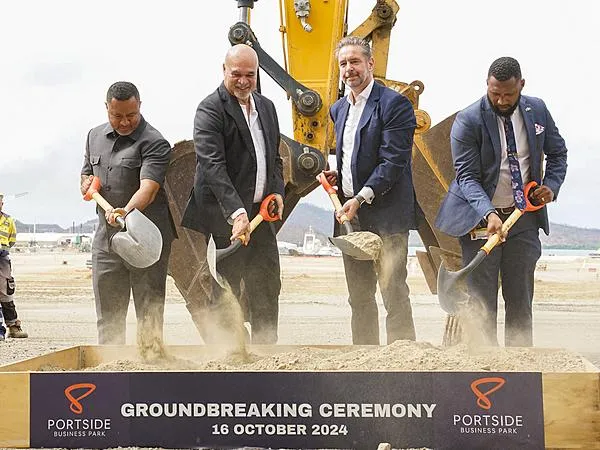
Steamships was proud to break ground on Portside Business Park, its new large scale mixed-use development which is managed by its property division, Pacific Palms Property. The ceremony was attended by the Deputy Prime Minister and Minster for Lands Hon. John Rosso MP and Hon. Dadi Toka Jnr, NCD Deputy Governor and Chairman of the Motu Koita Assembly along with key managers from Steamships and Pacific Palms Properties.
Spanning a site area of approximately 38 hectares, Portside Business Park is strategically located adjacent to the Motukea International Terminal and on the energy corridor to the LNG Plant. This mixed-use business park development offers an end-to-end logistics solution with warehouses, hardstand yards, offices, retail outlets and a residential compound. In due course, additional facilities will be added, including a hotel.
Mr. Chris Daniells, Steamships Managing Director, added that “Portside Business Park represents Steamships ongoing commitment to developing Papua New Guinea, and when fully developed, Portside will represent an investment of circa. PGK1bn and help create over 1,000 new jobs. Today’s groundbreaking supports the National Government MTPD4 agenda to drive growth and to broaden the economy in the non-extractive sector and Portside provides the perfect location next to the port for any company looking to enter downstream processing or manufacturing. Steamships has a number of other projects in the pipeline, and I look forward to groundbreaking ceremonies on those soon. At Steamships, we take a long-term view, PNG is our home.
General Manager of Corporate Affairs Mr. Vele Rupa comments “Steamships is delighted to be bringing another Grade A development to Port Moresby. It has taken considerable time to navigate the bureaucracy to get this project off the ground, but customers can be confident that they are coming to a development with bona fide title that will be developed to best in class international standards,” he further added, “Economic growth can only work when the National Government allows private sector to make investment decisions by having a right policy and investment landscape.”
Pacific Palms Property will develop Portside in phases, with today’s groundbreaking kicking off the major infrastructure works. The residential compound is already complete, as are the perimeter works.
In his keynote speech, Depuy Prime Minister and Minister for Lands, Hon. John Rosso commended the Company’s investment “The Marape-Rosso Government welcomes and commends Steamships Trading Company for their continued confidence in our nation through their latest significant investment in the new Portside Business Park. This development will not only enhance the commercial landscape of Port Moresby but also create much-needed jobs, stimulate local industries, and drive economic growth. Strategic investments like these are essential as we strive to build a more resilient and diversified economy. We look forward to seeing the positive impact this partnership will bring to our people and the future of Papua New Guinea.”
The Head of the Japan International Cooperation Agency (JICA) in Papua New Guinea (PNG), Matsuoka Hideaki, has urged the PNG government and its implementing agencies to maintain strong leadership, foster continued cooperation, and ensure that arrangements with donor agencies like JICA are upheld. This is essential to maximise the benefits derived from the various projects currently underway. Mr Hideaki made these remarks during the inaugural Joint Coordinating Committee (JCC) meeting for Phase 2 of the Improving Resource-Related Revenue Management Project, held in Port Moresby on 30 September 2024.
As JICA celebrates 50 years of development assistance to PNG, Mr Hideaki emphasised the importance of sustaining and strengthening the project’s implementation structure to ensure long-term impact. “To maximise and sustain the outcomes and impact of the project, it is vital to continue improving and reinforcing the implementation framework,” he noted, highlighting the project's significance in resource revenue management.
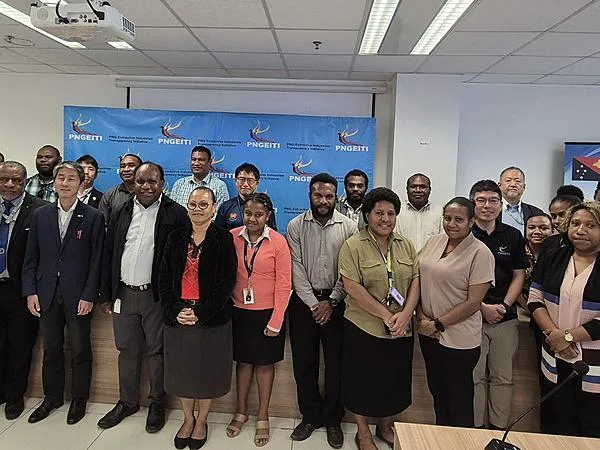
The JCC meeting, chaired by John Uware, Deputy Secretary of Economic Policy at the Department of Treasury, brought together key stakeholders, including consultants, to discuss the project’s progress at the Auditor General’s Office and the Department of Petroleum, while also outlining recommendations for future initiatives. Attendees included representatives from the Department of Treasury, the Auditor General’s Office, the Department of Petroleum, the Department of National Planning and Monitoring, the Internal Revenue Commission, and PNG Customs.
The Project for Improving Resource-Related Revenue Management was launched in 2018 following a request from the PNG government, through the Department of Treasury, to address recommendations from the first PNG Extractive Industries Transparency Initiative (PNGEITI) report. The report identified areas for improvement, such as the need to enhance the license registry at the Department of Petroleum and build the capacity of government agencies in data collection and reporting in line with EITI priorities.
Phase 1 of the JICA project, which concluded in 2022, successfully achieved its objectives and outputs. Phase 2 builds on this foundation, with a focus on two key areas:
Capacity Strengthening at the Auditor General’s Office (AGO): Supporting the establishment of an assurance mechanism to test resource-related government revenues, enhancing the reliability of financial data for EITI reporting and ensuring compliance with EITI best practice standards.
Data Management at the Department of Petroleum (DPE): Continuing to improve the management of license information, as well as production, export, and revenue data, to establish a timely and systematic disclosure mechanism at the DPE that meets EITI requirements.
This collaborative project aims to bolster the transparency and effectiveness of resource-related revenue management in PNG, laying the groundwork for improved governance and long-term economic development.
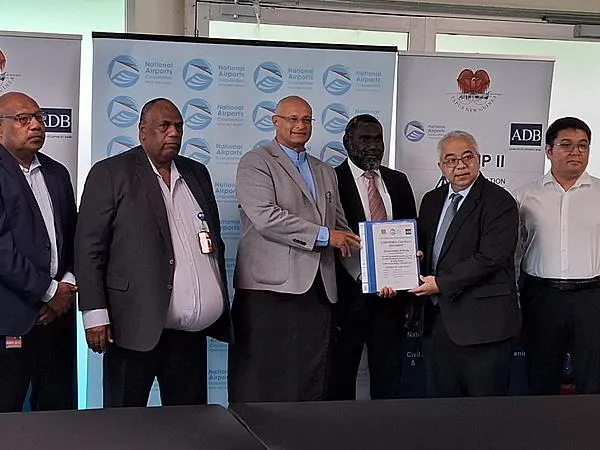
The Aropa Airport upgrade project is set to move forward following the recent contract signing between the National Airports Corporation (NAC) and China Railway Construction Group Ltd (CRCG Ltd).
The signing was witnessed by Autonomous Bougainville Government (ABG) President, His Excellency Ishmael Toroama, and the National Minister for Civil Aviation, Hon. Walter David Schnaubelt. This event marks a significant milestone in the airport’s development since it was re-opened a decade ago.
Valued at K58,201,511.08, the contract forms part of NAC's Civil Aviation Development Investment Project II (CADIP II). The project is slated to commence in the first quarter of 2025 and will take approximately 28 months to complete.
The scope of works for the Aropa Airport upgrade includes:
The Aropa Airport upgrade is a key infrastructure project that aims to enhance Bougainville’s regional connectivity and support the region’s economic growth.
The Asian Development Bank (ADB) and the Government of Papua New Guinea (PNG) have agreed on a timebound action plan to accelerate the implementation and enhance the performance of ADB-financed projects, following discussions at the 2024 Country Portfolio Review Mission Roundtable Meeting.
The hybrid meeting, co-chaired by ADB Country Director for PNG, Said Zaidansyah, and Department of National Planning and Monitoring Acting First Assistant Secretary, Reichert Thanda, was attended by various government officials, including Department of Works and Highways Acting Secretary, Gibson Holemba, and Department of Treasury Deputy Secretary, John Uware, as well as project directors and ADB staff. Participants reviewed the overall performance of the project portfolio and discussed delegation of responsibilities with executing and implementing agencies.
“As the largest multilateral development partner of PNG, ADB will continue to support diversified, sustained, and inclusive growth in the country,” said Mr Zaidansyah. “The development impact and effectiveness of ADB’s support rely on the quality of portfolio performance, and we will keep collaborating with the government to enhance this performance and build the capacity of the relevant government agencies.”
ADB’s active portfolio in PNG comprises 15 loans and six grants across 10 projects, totalling $1.38 billion. The largest sectors supported by ADB are transport (roads and civil aviation), which account for 60% of the active portfolio, and energy (20%), addressing the country’s substantial infrastructure needs. Human and social development, climate resilience, and gender equity are also key areas of ADB’s engagement in PNG. Additionally, ADB is involved in public sector management, including reforming state-owned enterprises.
The action plan, designed to boost portfolio performance, focuses on contract and project management, procurement, financial management, social and environmental safeguards, and promoting gender equality. ADB and the government will closely track progress on the agreed actions.
Abau District Member of Parliament, Sir Puka Temu, has urged the Papua New Guinea (PNG) government to adopt e-health solutions to overcome the healthcare challenges posed by the country's remote geography.
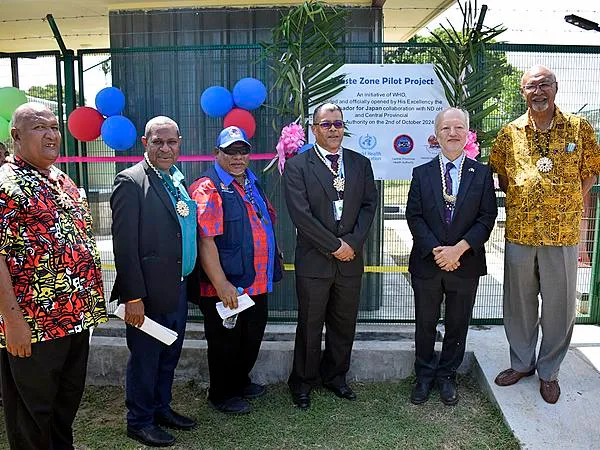
Speaking at the launch of the pilot Waste-Zone Project at Kupiano Health Centre, Central Province, Sir Temu emphasized the need for digital infrastructure to improve healthcare access.
"As a national leader, I strongly recommend that the Marape-Rosso government embrace e-health. Our country's remoteness and limited road access require us to scale up efforts and invest in necessary infrastructure," Sir Temu said.
He also highlighted the need for the National Information and Communications Technology Authority (NICTA) to expedite approval for Starlink, a rural IT service initiative, to improve connectivity. "Why is NICTA delaying this? We need technology to advance healthcare," he asked.
Sir Temu's remarks were part of a broader call for digital transformation in healthcare. He noted that the Communication Minister Hon. Timothy Masiu was hosting a digital transformation conference in Port Moresby and urged him to prioritize telemedicine.
Additionally, Sir Temu advocated for the use of drone technology to deliver vaccines, comparing its use in healthcare to its military applications in conflict zones.
"While drones are often used in warfare, I believe we can use them to deliver vaccines and improve public health," Sir Temu said.
He thanked international partners, including the Japanese government and the World Health Organization (WHO), for their contributions to improving healthcare facilities.
"Every hospital must have proper waste disposal systems, especially for bio-waste," he added, calling for essential infrastructure like oxygen concentrators in hospitals.
Support for E-Health and the Waste-Zone Project
Dr. Edward Warmin, Public Health Manager at the National Department of Health (NDOH), supported Sir Temu’s call for e-health, noting the latter’s efforts in advancing healthcare and highlighted critical health issues such as tuberculosis, cervical and breast cancer, and immunization, which require immediate attention.
"Your request has been noted, and we will ensure it reaches the Health Secretary," Dr. Warmin assured.
Representing Dr. Osborne Liko, the Health Secretary, Dr. Warmin officiated the Waste-Zone Project launch in Kupiano, which aims to improve medical waste management.
Dr. Warmin expressed gratitude to key stakeholders, including the Japanese Government, WHO, the World Bank, UNICEF, and UNOPS, for supporting the project.
"The health sector alone cannot solve all problems. Together, we can improve healthcare services across the country," he said.
The Waste-Zone Project addresses critical issues in medical waste management. Dr. Warmin pointed out that while 90% of healthcare waste is non-hazardous, the remaining 10% poses significant risks, especially in advanced medical facilities.
"Improper healthcare waste management can harm human health and the environment," Dr. Warmin warned.
A 2022 situation analysis revealed that PNG's waste management practices were below acceptable standards. The Waste-Zone Project aims to fix this by providing a comprehensive waste management system, including waste collection, segregation, storage, treatment, and disposal.
Impact on Healthcare Facilities
Dr. Warmin said that Kupiano District Hospital has already met initial waste management standards but stressed the need for further infrastructure improvements.
"Improving waste management practices helps prevent hospital infections and protects the environment from pollution," he explained.
The project models a new healthcare waste management system, the first of its kind in PNG. Dr. Warmin expressed hope that the Kupiano Clinic could serve as a model for other healthcare facilities nationwide.
"I am convinced the Waste-Zone is a sustainable, economical solution that can be replicated throughout the country," he said.
Reflecting on the importance of accessible healthcare, Dr. Warmin shared a personal story from 2017 when a newborn's life was saved due to proper medical care.
"Without that facility and the medicines available, we could have lost that baby," he recalled.
International Collaboration and Investment
Japanese Ambassador Nobuyuki Watanabe, a distinguished guest at the project launch, reaffirmed Japan’s commitment to strengthening PNG’s healthcare system.
In 2021, Japan provided over US$2.7 million (approximately K10 million) to WHO for building a more resilient health system in PNG, particularly in response to COVID-19.
"The Kupiano Waste-Zone Pilot Project aims to improve waste management practices at health facilities to prevent the spread of infections and protect healthcare workers and patients," Watanabe said.
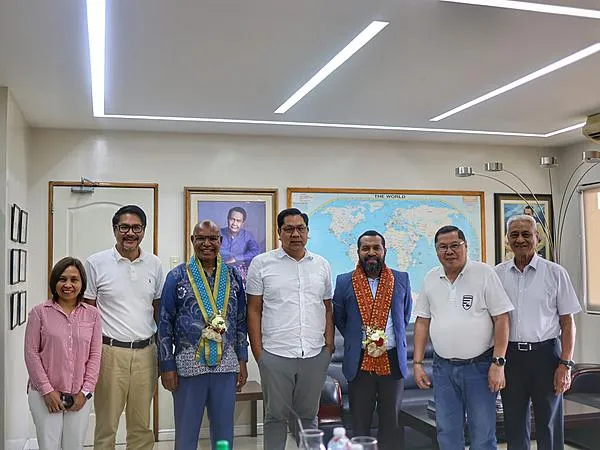
The National Government, through the Ministry of International Trade and Investment, the Madang Provincial Government, and RD Corporation, have reached an agreement to initiate immediate feasibility studies for the proposed Madang Integrated Special Economic Zone (SEZ) in Vidar, Madang.
In discussions recently concluded at the RD Corporation Headquarters in General Santos City, Philippines, the three parties committed to developing a fully integrated SEZ on 650 hectares of land owned by RD Corporation. The SEZ will be modelled after the Java Integrated Industrial Port Estate (JIIPE) in Indonesia.
Minister for International Trade and Investment, Hon. Richard Maru, stated, “This proposed integrated SEZ will include fish canneries, a fuel depot for all purse-seiners, cold storage, a slipway, a shipyard, and various associated businesses such as tin can manufacturing, a packaging factory, and aquatic feed production for aquaculture, including shrimp and inland fish farms. The SEZ will also feature a residential estate, shopping malls, schools, its own bank, and an international wharf. This wharf will serve as an alternative to Lae Port for the Highlands via the Baiyer-Madang Road, reducing freight costs by half due to the proximity of the new wharf compared to Lae Port.”
Minister Maru emphasised, “This SEZ is the highest priority for the National Government and the Madang Provincial Government. It marks the beginning of Madang Town’s transformation into an industrial hub.”
During their two-day visit to General Santos City, Minister Maru and the Governor of Madang, Hon. Ramsey Pariwa, toured RD Corporation's facilities, including their cannery, cold storage, packaging factory, aquaculture farm, and a state-of-the-art shipyard complex equipped with floating dry docks and slipways. The shipyard provides a full range of services, including ship repair and maintenance, and caters to both local and international clients, including the Philippine Navy. The delegation also visited RD Corporation’s bank and hardware operations.
RD Corporation first built its vessel under the RD Fishing Group in 1984 and later expanded its fishing operations by acquiring other fishing companies. Today, it operates the largest and most modern fishing fleet in General Santos City, which is recognised as the Tuna Capital of the Philippines.
Minister Maru highlighted the significance of RD Corporation’s operations in Madang, stating, “What RD Corporation has established in Madang is just a fraction of what they have in General Santos City. The Marape-Rosso Government has made a sound commercial decision by partnering with RD Corporation, a well-established fishing company with extensive facilities, management expertise, and global industry networks. RD Corporation brings years of experience and an in-depth understanding of the global market.”
Minister Maru further stated, “Papua New Guinea (PNG) has missed significant opportunities over the past 49 years by being merely a rent collector in the fisheries sector. We should have fully domesticated our fisheries industry, but we have not. As a result, 80% of our catch is taken overseas, and we have missed out on building additional canneries, losing 50,000 jobs. Our current net revenue is only K300 million a year, but we could be generating K5 billion in revenue. We also lose out on landing fees, shipping licences, jobs, wages, income taxes, corporate taxes, GST, and local commercial opportunities linked to the fishing industry.”
He added, “PNG accounts for approximately 18% of the world’s tuna catch and controls around 15% of the global tuna trade, with an estimated value between USD$4 billion and USD$5 billion (K13.3 billion – K16.9 billion). However, the majority of this catch is rerouted at high seas and processed overseas, depriving PNG of significant benefits. The overall production output of PNG’s fisheries exports has remained steady at over K1 billion since 2016, but most of the revenue comes from resource rents.”
“The Government’s decision to partner with RD Corporation in the fisheries business is a bold step in transitioning PNG from a rent collector to a true Fishing State,” concluded Minister Maru.
Prime Minister Hon. James Marape recently delivered a stirring call to action, urging all Papua New Guineans to work relentlessly over the next 20 years, starting in 2025, to transform the nation into a high-income economy and shift from being an exporter of raw resources to a manufacturer.
Speaking upon his return from the 79th United Nations General Assembly (UNGA) in New York City, where he addressed world leaders, Prime Minister Marape emphasised the ambitious vision he presented at the global stage: Papua New Guinea will rise as a higher- income nation by 2045, driven by a robust manufacturing economy.
“To make this leap from exporting raw resources to building a manufacturing-based economy, we must secure critical enablers like affordable and reliable electricity, accessible internet, and vital infrastructure such as ports and jetties. We need to reorganise our towns and cities, revamp our education system to prepare our people for industry-specific roles, and ensure our health facilities are prepared for this transformation,” Prime Minister Marape said.
“This will not happen overnight, but the foundation must be laid now. In the next 20 years, divided into four critical phases of five years each, we must chart a course towards achieving this vision. By the time PNG turns 70 in 2045, we must break free from the constraints of being a low-income nation and fully embrace our future as a high-income, thriving economy. I made this commitment to the world at the UNGA, and it is a commitment we must all work towards.”
Prime Minister Marape called upon all citizens—public servants, ministers, community leaders, and the people—to join hands in realising this national vision.
“As Prime Minister, my role is to set the vision, but it is the collective efforts of our people that will make it a reality. We must work together, harder than ever before, to build a better, more prosperous Papua New Guinea,” he said.
Prime Minister Marape paid tribute to the legacy of late Sir Michael Somare, whose Vision 2050 laid the groundwork for PNG’s path toward joining the ranks of the world’s top 50 nations.
“If we work diligently over the next 20 years, we will inch closer to this dream that Sir Michael had when he first articulated the Eight-Point Plan in 1975 and later Vision 2025 in 2010, which I have upheld since assuming office in 2019,” Prime Minister Marape said.
Looking ahead, the Prime Minister highlighted the nation’s potential to manufacture its own wealth from resources such as timber, fish, agriculture, minerals, oil, gas, and energy. He expressed confidence that the next generation of Papua New Guineans will not only be consumers of global goods but creators of industries that propel the nation forward.
“Together, we will redefine Papua New Guinea’s future, from the mountains to the seas. Our journey into this path must begin now,” he said.
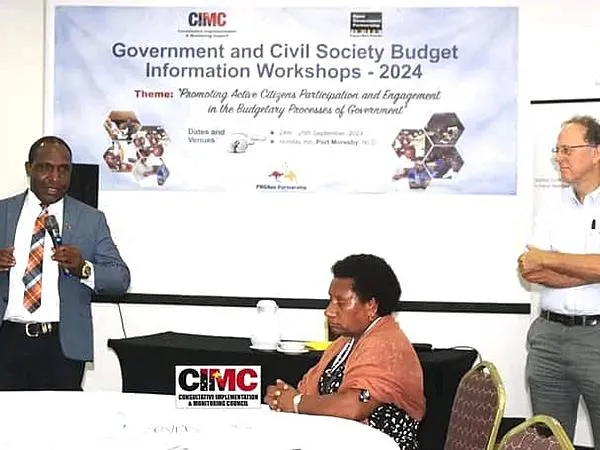
Papua New Guinea's latest score on the Corruption Perception Index (CPI) is 29 out of 100, showing a slight improvement of one percent from 28 out of 100 in 2021. Despite this progress, PNG remains among many countries with little to no improvement in tackling corruption.
This data was highlighted by PNG National Planning Minister Sir Ano Pala during the Government and Civil Society Joint Budget Information Workshop 2024.
He emphasized the importance of organizations and platforms such as the Open Government Partnership, stating that it “paves the way to address some of these challenges we have faced as a country.”
“Having access to information, participation of civil society organizations in both the budget formulation and implementation and dissemination of fiscal information is still a challenge. Having a consultative approach to decision making and a transparent industry provides the basis for democracy and importantly good governance,” he added.
The Consultative Implementation & Monitoring Council (CIMC), the OGP Secretariat, and the Australian Government through the Australian-PNG Partnership, which aims to build community engagement in PNG, supported the workshop.
The OGP is a multilateral initiative that seeks to secure concrete commitments from national governments to promote open government, empower citizens, fight corruption, and leverage new technologies to strengthen governance.
A key topic during the second day of the workshop was the Extractive Industries Transparency Initiative (EITI), which serves as the global standard for promoting transparency and accountability in countries rich in oil, gas, and mineral resources. It is implemented through the participation of government, civil society, and industry.
CIMC houses the civil society umbrella body, the PNG Resources Governance Coalition, which aims to:
The two-day workshop from September 24th to 25th at the Holiday Inn in Port Moresby had the theme “Citizens Participation in the Government’s Budget Formulation, Implementation & Reporting Process: Opportunities, Learning & Challenges.”
Day one included presentations from civil societies covering:
Day two featured sessions on:
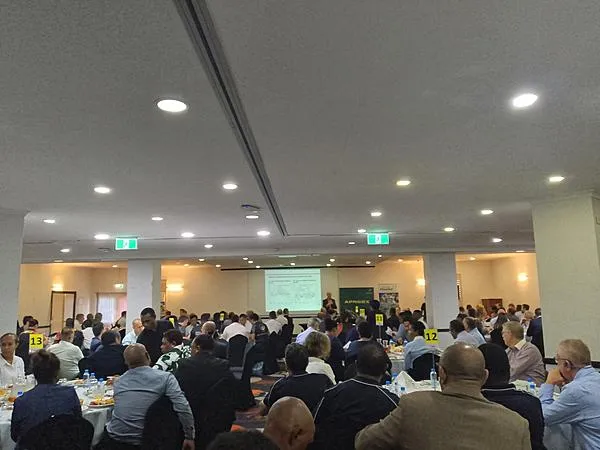
The Australia-Papua New Guinea Business Exchange (APNGBX) recently highlighted opportunities for collaboration and investment in PNG's growing economy. Key discussions focused on infrastructure development, renewable energy, and the broader economic landscape. Key Takeaways included:
Global Economic Trends: Senior Economist Justin Smirk from Westpac Bank analyzed the global economic outlook, emphasizing the need for ongoing investment and adaptation to changing conditions.
Smirk said this in the APNGBX Breakfast meeting, recently co-hosted by the Port Moresby Chamber of Commerce and Industry (POMCCI), which informed the private sector on Australian Government investments in PNG.
In his presentation, Smirk emphasized the significance of geopolitical risks and the ongoing fragmentation of the global economy.
"We are moving to a world where we have been accustomed to low inflation and low interest rates for the past 20 years. This stable environment is shifting; we will see higher inflation and more volatility in energy prices, which means interest rates will rise and become more expensive," he said.
Smirk also noted the trend of aggressive rate cuts in major economies, including the US as a response to global inflationary pressures.
"We are loosening rates to manage inflation while allowing growth to continue," he explained, indicating a shift away from recession concerns in these regions.
Discussing China, Smirk remarked on its transition from housing investment to a focus on infrastructure development. While China continues to play a critical role in global commodity demand, its approach to energy consumption is evolving.
"They want to export electric cars and are investing in wind and solar panels, indicating a significant shift in their economic strategy," he said.
Turning to PNG, Smirk reflected on the nation's economic recovery since earlier this year, despite facing challenges such as security issues and utility constraints.
"While there were concerns about growth, we observed solid employment growth in the early part of the year. However, since then, we've seen a flattening trend."
Smirk also provided insights into currency forecasts, noting that the Australian dollar is expected to rise against other currencies, despite a weaker position against the US and UK dollars.
"On current trends, I am comfortable with how things are unfolding. We expect the Australian dollar to strengthen further," he added.
Australia's Infrastructure Investment: The Australian High Commission highlighted Australia's significant investments in PNG's infrastructure, including power, telecommunications, and transport as presented by Ms Diane Barclay, Minister-Counsellor.
Barclay, whose portfolio includes key sectors such as electrification, telecommunications, and transport, said: "I have both the privilege and challenge of looking after economic infrastructure and health engagement at the Australian High Commission here in Port Moresby."
"The Government of PNG has requested that 50% of our aid funding be directed towards infrastructure investment," she explained, reflecting PNG's urgent need for enhanced planning and development in this area.
Australia invests approximately $200 million annually in infrastructure across various sectors in PNG, alongside an additional $800 million in the pipeline through the Australian Infrastructure Financing Facility.
"Infrastructure investment is a key enabler for economic activity," Barclay said as she elaborated on current projects, particularly in the power sector, aimed at improving the reliability of on-grid power.
"We have been repairing the Rauna hydropower station, which is expected to restore around 15 megawatts of power," adding that another upgrade would bring the total to approximately 25 megawatts.
She also referenced efforts to enhance provincial grids by integrating solar and diesel power to reduce costs and improve reliability.
"In July 2023, the energy power reported less than 50 hours of power outages in our café, down from 500 hours in the same month the previous year." This achievement underscores the positive impact of Australia's infrastructure projects in local communities, she said.
Barclay noted the role of the Coral Sea Cable in improving internet connectivity. "While the Coral Sea Cable has made a significant difference, it remains underutilized," she remarked.
Reducing wholesale internet prices is essential for increasing internet penetration, currently around 25%, she said. "With a three-fold improvement in affordability, internet penetration could rise to 70%, potentially contributing around $18 billion a month to the PNG economy."
Barclay also touched on maritime investments, which are vital for enhancing transportation and trade capabilities within PNG.
Partnerships: The APNGBX24 breakfast meeting is part of a five-day event hosted by Austrade, in collaboration with the Department of Foreign Affairs and Trade (DFAT), to enhance economic ties between Australia and PNG by offering Australian businesses direct access to key players and decision-makers in PNG’s growing economy.
Key collaborators of the event include ANZ, Westpac, and the Chambers of Commerce in Lae and Port Moresby. The event gathered industry leaders, government officials, and business representatives in PNG, focused on expanding business opportunities in renewable energy, infrastructure, and construction.
Delegates attending APNGBX24 had the opportunity to participate in roundtable discussions, networking events, and business-to-business meetings, focusing on PNG’s evolving infrastructure and clean energy sectors.
The country’s development plans and vision 2050, including the Highlands Highway Investment Program and the PNG government’s Connect PNG by roads initiative, present significant opportunities for Australian companies in construction, logistics, and technology.
The delegation also focused on renewable energy projects in regards to PNG’s development-plan to electrify 70 per cent of the population by 2030.
This gave an opportunity for Australian companies specializing in solar, hydro, and other renewable energy solutions to find significant potential in partnering with local stakeholders on these long-term, sustainable projects.
The POMCCI Breakfast meeting was held in September 26th at Holiday Inn in Port Moresby. Follow and check both the PNG Business News Website and POMCCI website for the Next POMCCI Breakfast Meeting.
Prime Minister Hon. James Marape recently delivered Papua New Guinea’s Country Statement at the 79th session of the United Nations General Assembly high-level debate.
Speaking along the session theme of ‘Leaving no one behind: Acting together for the advancement of peace, sustainable development, and human dignity for present and future generations’, the Prime Minister highlighted in the statement three main threats facing humanity – religious intolerance, poverty induced by climate change, and geo-political differences and sovereignty con- tests over territories.
Using Papua New Guinea’s environment and biodiversity, cultures and languages, and work of Christian missionaries in the country as backdrop, the Prime Minister highlighted the protection of individual right to freedom of choice of religion stipulated under the Constitution of PNG, which reflects Article 18 of the United Nations Declaration of Human Rights on Freedom of Thought, Conscience and Religion.
He said, “Papua New Guinea is the world’s most culturally and linguistically diverse nation, with a myriad of sub-ethnicities and sub-cultures that are still authentically indigenous.
“In terms of environment, my country hosts up to seven percent of the world’s biodiversity most housed within a tropical rainforest that is the third largest in the world, including a vast marine ecosystem. We sustainable manage our forest, land and sea because our livelihood depends on them. In our own way, PNG teaches the world on living in balance with nature, tolerating cultural diversities, and practicing environmental stewardship.”
On poverty, PM Marape highlighted the general global trend of accelerated overharvesting of Earth’s resources which has led to environmental degradation, deforestation, burning of cheap fossil fuel and pollution, leading to cli- mate-induced problems that, in turn, have contributed to poverty increase.
“Ocean nations like mine continue to live with climate change-induced sea- level rise and weather pattern changes which have now become an existential threat.
“PNG’s vast rainforests, rich biodiversity, marine life, and indigenous peoples and cultures are now at the crossroads of great change – either of preservation, or loss and extinction.
“Last month, the Pacific Island Leaders Forum in Tonga, officially recognized these climate change manifestations as existential threats to our Pacific people,” said Prime Minister Marape.
He continued by highlighting the difficulty PNG and island nations of the Pacific face in accessing climate finance and urged that the United Nations look into this matter with urgency, or Papua New Guinea, as a forest nation, would look at “liquidating our forest and marine resources to achieve our development aspirations, including alleviating poverty.”
“It is for this reason, I speak in solidarity with all forest nations, especially those in Congo Basin and Amazon Basin, for adequate compensation if we are to preserve our forests which, in fact, are the lungs of Earth.”
Prime Minister Marape then made an example of French President Emmanuel Macron’s mobilization of European Union funding for the Managalas conservation project, which he pointed out, was the kind of partnership that is needed to save PNG’s forests.
“Again, I remind the world. The forest of PNG is a global asset, and it must be preserved at a price transferable to improve the lives of my forests people. The conservation on climate change mitigation cannot be had without a conversation on forest preservation; they are the two sides to the same coin.
“I call on others out there, especially those with big carbon footprints, to offset these with preservation of our forests,” said PM Marape
On geo-political differences and sovereignty contests, the Prime Minister emphasized the need for better approaches to de-escalate tensions between people and countries.
“Increasing geo-political conflicts and tensions are fueling fragmentation and protectionism around the world. The restrictions on trade, disruptions in supply chains and growing completion are crippling our local economies.
“Violence begets violence, and is evil no matter what the justification might be. Peace must be achieved by peaceful means, no matter how long or unjust it may seem. We live in a time, where, at a press of a button, an atomic or nuclear bomb, will cause irreversible damage to countries and our planet.
“The United Nations role in this must be respected by all nations, for it was for these very reasons that the United Nations was born – so that the world does not face another world war again,” he said, while calling on the UN to make reforms to its Security Council in the removal of its veto power so members could all contribute to decision-making.
“We must do all we can to restore stability to the far reaches of Earth. Globa conflicts cause domino effects, and the subsequent impacts are felt through- out the world with intergenerational wounds,” stated the Prime Minister.
He said PNG had a similar issue in the matter of Bougainville, but had always used negotiations and peaceful means to settle this matter under supervision of United Nations, and called on governments and leaders to view this as a good example.
Prime Minister Marape also highlighted PNG’s efforts at meeting the 17 Sustain- able Goals of the United Nations, guided by early plans such as the Eight Point Plan of the Independence era, and PNG Vision 2050 of 2010 which compels government to develop PNG to the Top 50 nation by 2050 in terms of Human Development Index.
He said PNG had moved from the least developing nation cluster of nations to a lower middle-income category and aiming to enter into a fast development phase within the next two decades, adding that PNG was looking forward to submitting its full progressive report to the United Nations very soon.
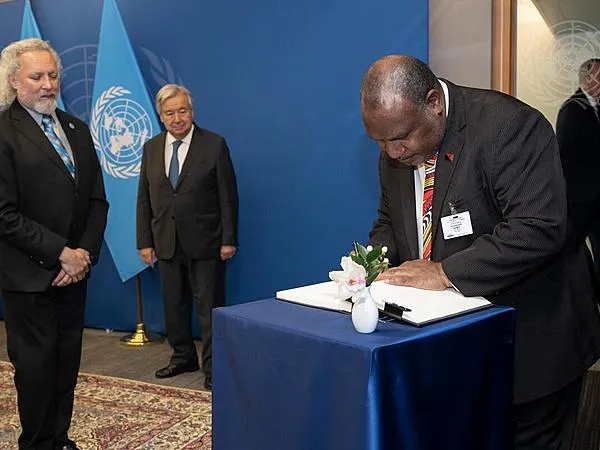
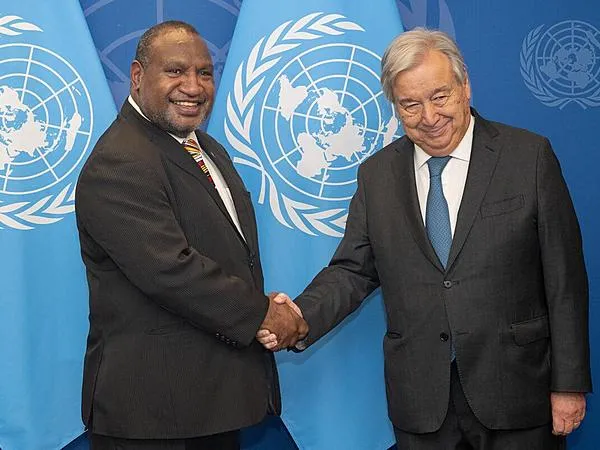
Prime Minister Hon. James Marape has requested the United Nations secretariat to assist forest nations like Papua New Guinea advocate stronger on forest preservation and climate financing to assist these nations in their development aspirations.
The Prime Minister put the special request to United Nations Secretary-General Antoinio Guterres in a bilateral meeting on the margins of the UN General Assembly, soon after PM Marape participated in the high-level assembly debate where he delivered PNG country statement.
Prime Minister Marape brought up the matter of Papua New Guinea’s forest, which as part of the island of New Guinea, is the third largest in the world after Amazon and Congo.
He highlighted the need for the assistance of the United Nations to mobilise support for the preservation of these forests through financing as compensation so people could be assisted with these financing to meet their development needs and aspirations.
Just prior to the meeting, the Prime Minister highlighted the same thing in his address to the general assembly where described these forests as “lungs of earth, needing preservation and called for collective action in this area.
“I remind the world. The forest of PNG is a global asset, and it must be preserved at a price transferable to improve the lives of my forests people. The conservation on climate change mitigation cannot be had without a conversation on forest preservation; they are the two sides to the same coin,” PM Marape had said in his address to the assembly.
In the meeting with Guterres, the Prime Minister touched on his reasons for with- drawing PNG from this year’s UN conference on climate change, COP29, which will be held in November in Azerbaijan.
“We are thinking of abstaining from COP29 because I feel there is silence in these conferences on forest conservation,” he said.
However, Mr Guterres encouraged that if PNG is going to give COP29 a miss, it must consider attending COP30 in Brazil because of the presentation of the alliance of the rainforest nations – Brazil, Congo, Indonesia and Papua New Guinea – which would have a stronger voice in pushing for a more effective global commitment in these matters.
Prime Minister Marape also informed the Secretary-General of PNG’s intention to present to the United Nations its scorecard, a progressive report on its development status in line with the UN’s Sustainable Development Goals.
The Prime Minister ended the meeting with Mr Guterres by thanking him on UN’s continued efforts in the peace process on Bougainville and also generally in the country on national and subnational levels.
A piece of land is being mobilized in Port Moresby for the construction of the UN mission in PNG so the United Nations could have a visible presence in PNG, PM Marape assured.
Follow on LinkedIn:
PNG Business News
Be the "First" to get our exclusive Digital Magazine & Weekly Newsletter.