Papua New Guinea and Solomon Islands are seeking to deepen economic cooperation, increase cross-border investment and develop stronger business-to-business partnerships as the two Melanesian neighbours work to translate longstanding political ties into economic gains.
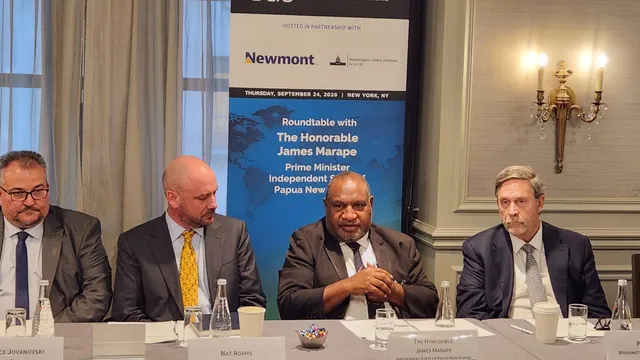
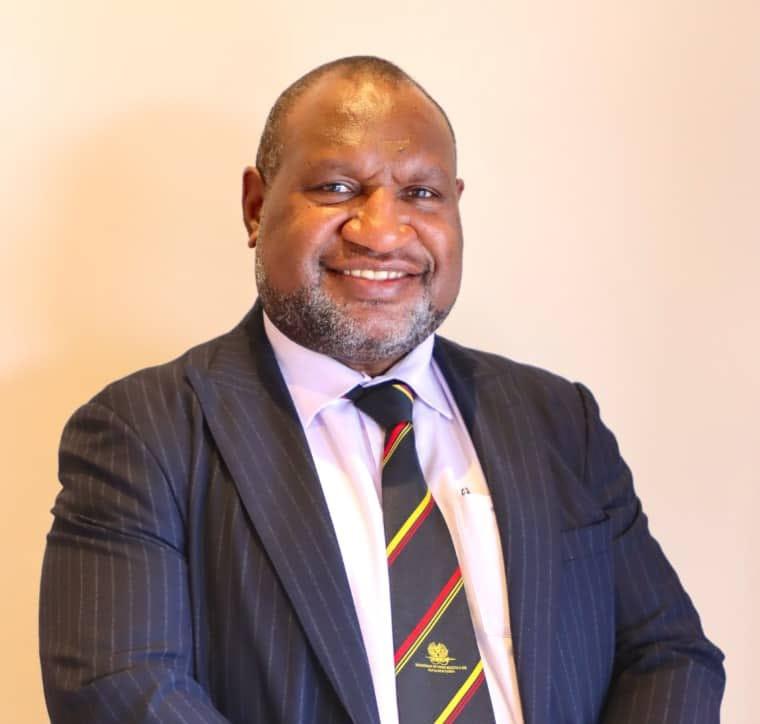
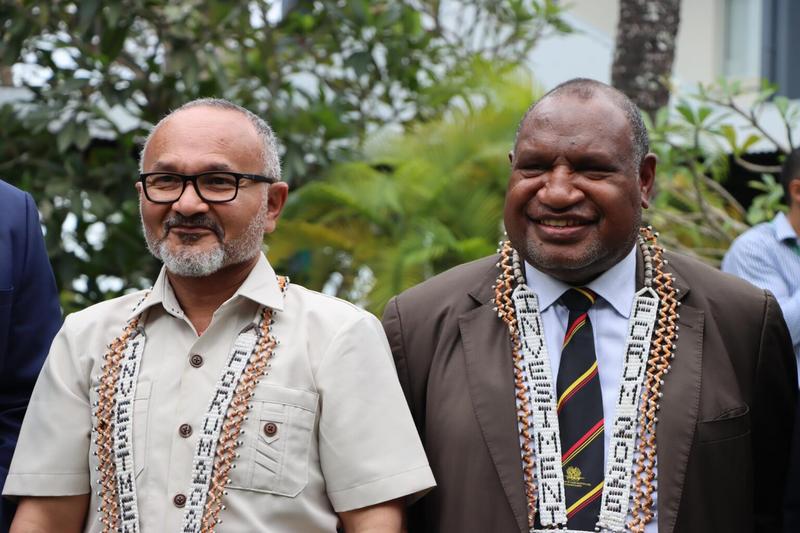
PNG Prime Minister James Marape made the call during the inaugural Papua New Guinea-Solomon Islands Business Investment Forum in Honiara, held under the theme “From Opportunity to Investment: Building the PNG-Solomon Islands Growth Corridor.”
The forum brought together government leaders, investors, business executives, financial institutions and private-sector representatives from both countries.
Marape said the forum should mark the beginning of sustained economic engagement between the two countries, with a focus on investment, trade, employment, downstream processing and greater economic independence.
“What good is political independence without economic independence?” Marape said, calling for both countries to build economies strong enough to stand on their own feet.
He said PNG and Solomon Islands were permanent neighbours whose economic interests were closely linked by geography, culture and history.
“We must construct a future that is fair and balanced, respects our people and our businesses, and allows us to walk step by step, side by side, into the future,” he said.
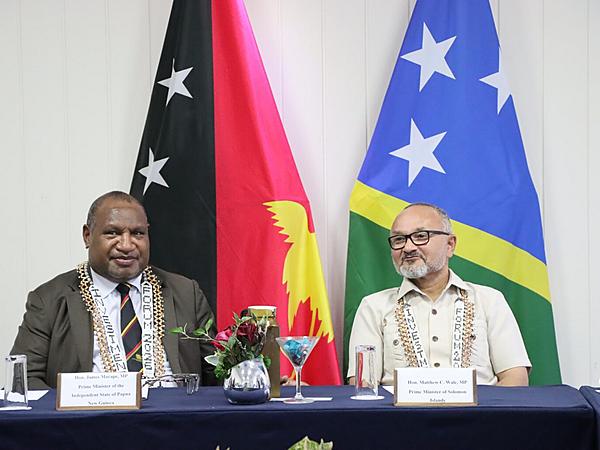
The forum followed Solomon Islands Prime Minister Matthew Wale’s official visit to Port Moresby in June, during which the two countries signed the Framework Agreement on Development and Economic Cooperation 2026-2030.
The agreement provides a framework for cooperation in trade and investment, mining, fisheries, agriculture, infrastructure and other areas of mutual economic interest.
Marape said the Honiara forum was intended to translate that government-level commitment into private-sector projects and partnerships.
“When Prime Minister Wale visited Port Moresby, we agreed that our relationship must produce tangible outcomes for our countries,” he said. “We have established the government framework. Now we want our private sectors to identify projects, establish partnerships and turn those opportunities into investment.”
PNG investment presence
PNG already has a significant commercial presence in Solomon Islands.
A 30-year review records 126 PNG-origin registered investments across 18 sectors, including agriculture, communications and information technology, construction, financial services, fisheries, mining, insurance, professional services, retail and wholesale, tourism and transportation.
The investments have proposed employment for more than 7,500 Solomon Islands citizens, with agriculture, professional services and fisheries among the largest employment-generating sectors.
Marape said PNG businesses had demonstrated that they could invest successfully beyond the country’s borders while creating jobs and contributing to a neighbouring economy.
“Papua New Guinean businesses have demonstrated that they can successfully invest beyond our borders while creating employment and contributing to the economy of a neighbouring Pacific country,” he said.
He encouraged Solomon Islands businesses to similarly explore opportunities in PNG.
Joint investment opportunities
Marape said the two countries had opportunities to cooperate in mining, fisheries, agriculture, energy, tourism, infrastructure, financial services, telecommunications, transport and downstream processing.
He particularly highlighted opportunities for joint ventures and partnerships between businesses in both countries.
“If we can source capacity from each other, let us source it. If we can have joint ventures amongst each other, let us have those joint ventures,” he said.
PNG businesses already operating in Solomon Islands include companies in property, finance, retail, fisheries, professional services, construction and other sectors.
Marape encouraged PNG businesses operating in Solomon Islands to develop local partnerships and support the growth of Solomon Islands-owned small and medium-sized enterprises.
“PNG businesses, as you work here, incubate a local business to be your value partner,” he said. “A good relationship, a good business venture and a good reputation is premium capital.”
Mining, fisheries opportunities
The two countries’ marine resources represent another potential area for cooperation, Marape said, particularly in fisheries.
PNG and Solomon Islands have large exclusive economic zones with significant tuna resources. Marape called for greater domestic processing and manufacturing rather than simply harvesting and exporting fish.
“We have been open for business for so long. We now want to go into partnership,” he said. “We want to step up processing of our catches in our respective countries.”
He said stronger cooperation could help the two countries build regional value chains for tuna and other marine products while creating employment and retaining more economic value domestically.
Marape also encouraged responsible investment in mining and energy, saying investors should receive reasonable returns while host countries, landowners and local businesses benefit through taxation, royalties, equity and local content.
In a separate bilateral meeting with Wale at the Heritage Park Hotel, Marape said Solomon Islands had again invited PNG investors to participate in its economy.
He said more than K1 billion of PNG investment was already present in Solomon Islands, with more than 59 PNG companies of various sizes operating there.
“We already have over K1 billion worth of Papua New Guinea investments in Solomon Islands, with more than 59 PNG companies of different sizes operating here,” Marape said.
He said the two countries could also explore joint participation in major mining projects, including arrangements that would ensure Solomon Islanders remained the principal beneficiaries of their natural resources.
Marape said PNG was prepared to consider equity structures in which Solomon Islands government entities, companies, provincial governments and landowners retained majority interests, while PNG companies contributed capital, expertise and experience.
“We are not coming here simply to take resources out. We want genuine partnerships in which Solomon Islanders remain beneficiaries of their own resources while our companies contribute capital, expertise and experience,” he said.
Economic relationship
The leaders also discussed trade and investment, border arrangements, mining, fisheries, agriculture, education, policing and security, air connectivity and other areas of bilateral cooperation.
Marape said the direct air connection between Honiara and Port Moresby would help facilitate the movement of businesses, investors and people between the two countries.
He said both governments needed to ensure that bilateral agreements translated into practical economic outcomes.
“Our political relationship is strong, our cultural and historical relationship is permanent, and now we must build the economic relationship to the same level,” Marape said.
“A stronger PNG-Solomon Islands economic corridor will strengthen both countries and contribute to a more economically resilient Melanesia and Pacific,” he said.
Marape said PNG’s economic diplomacy should also encourage domestic companies to expand internationally, rather than focusing solely on attracting foreign investment into the country.
“Papua New Guinea must also become an investor in the Pacific and, increasingly, beyond our region,” he said.
He identified banks, telecommunications companies, resource businesses, superannuation funds, agricultural companies, professional firms and SMEs as potential regional investors.
The prime minister said stronger economic integration between PNG and Solomon Islands could serve as a model for wider Melanesian and Pacific economic cooperation.
“A healthy Solomon Islands is a healthy PNG. A healthy PNG is a healthy Solomon Islands,” Marape said.
“Our strength is in economic prosperity.”
He urged businesses attending the forum to focus on practical opportunities, identify projects and establish joint ventures as the two countries seek to build a stronger economic relationship over the coming years.