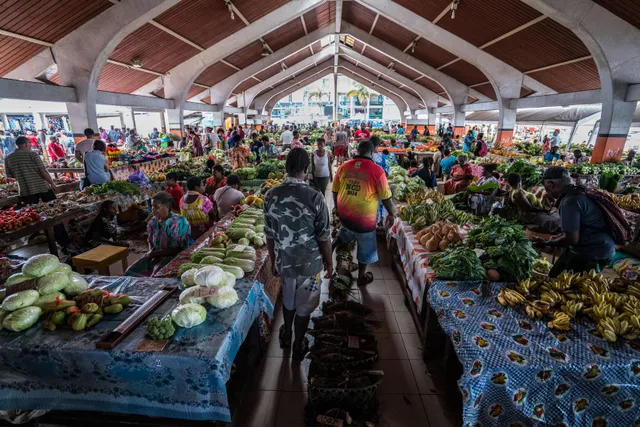
Papua New Guinea’s agriculture sector is being positioned at the centre of trade, investment and business development discussions, with government agencies and industry organisations coming together for the PNG Agriculture and Trade Festival 2026 in Goroka.
The festival, being held at the Goroka Showground from 28 to 30 August, is bringing together farmers, processors, government agencies, businesses and industry stakeholders as part of celebrations marking 70 years of the Highlands Farmers and Settlers Association (HFSA).
The event combines the Goroka Show, coffee and agriculture activities with business and trade opportunities, providing a platform for stakeholders to promote locally produced commodities while discussing the policy and infrastructure needed to expand market access.
The Department of International Trade and Investment is among the government agencies supporting the festival, with its sponsorship complementing its participation in important consultations on trade and business being held alongside the event.
The National Institute of Standards and Industrial Technology (NISIT) is conducting consultations on standards and quality requirements for the agriculture sector, while the National Trade Office is holding consultations on the Economic Partnership Agreement and trade opportunities with the United Arab Emirates (UAE) on 28 August.
The Investment Promotion Authority (IPA) and the Small and Medium Enterprise Corporation (SMEC) are also undertaking surveys focused on businesses and small and medium enterprises (SMEs).
The government’s involvement reflects a broader push to connect agricultural production with standards, investment, trade agreements and private-sector development.
Spice Board supports festival
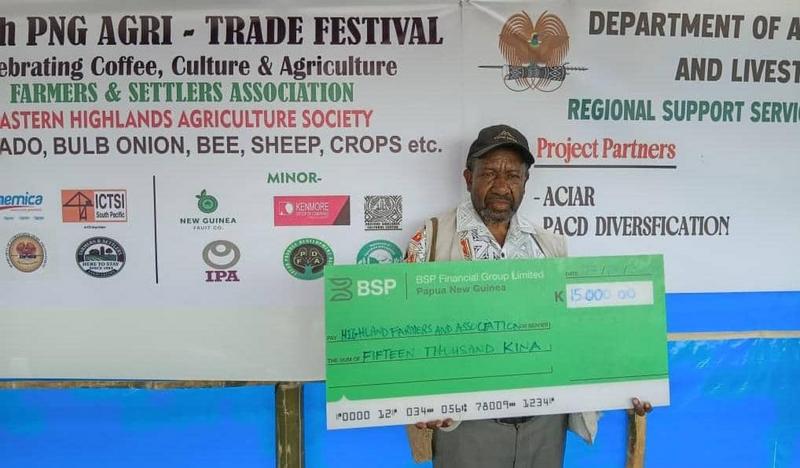
The PNG Spice Board has also backed the event with a K15,000 sponsorship, strengthening the participation of the spice industry and supporting efforts to connect farmers and processors with potential markets.
The Farmers and Settlers Association commended the Board and its management for supporting the Agriculture and Trade Festival and for establishing an exhibition at the event.
The Spice Board has brought spice processors and farmers to its stalls, giving participants an opportunity to showcase products and engage with industry stakeholders.
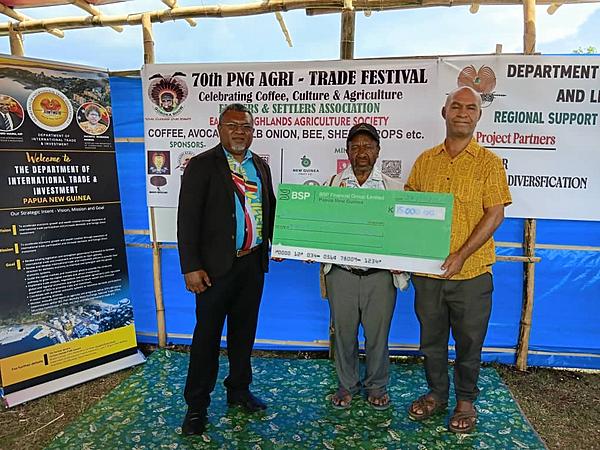
PNG Spice Board board member Sakarias Iko and Programme Director Baksy Poka represented the organisation and presented the K15,000 contribution to Festival Committee representative Kawage Teka.
Farmers and Settlers Association representative Jemmima Colbran thanked the Spice Board for its financial support, participation and assistance to spice exhibitors.
She also acknowledged the support of the PNG Biosecurity Authority and the Fresh Produce Development Agency, as well as the Kokonas Indastri Koporesen (KIK) and the Department of Agriculture and Livestock Highlands Regional Office for their roles in organising and facilitating the event.
Colbran said the cooperation demonstrates the importance of long-term partnerships in strengthening PNG’s agricultural sector and supporting the economy.
The partnership was highlighted as part of a relationship spanning 70 years, with stakeholders using the milestone to reinforce the need for continued cooperation between government, industry and farmers.
Nadzab international gateway proposed
The discussions around agriculture and trade have also renewed calls for improved transport connectivity, particularly for the country’s major commercial and agricultural centres outside Port Moresby.
Stakeholders have called on the Government to consider opening Nadzab Airport in Morobe Province to direct international flights, including potential services connecting Lae with international destinations and markets.
The proposal is aimed at improving the movement of people, goods and trade while reducing reliance on Jacksons International Airport in Port Moresby, which stakeholders say is already experiencing congestion.
Lae is strategically positioned as a major industrial and commercial centre and serves as a gateway to the Highlands and Momase regions, including some of PNG’s most important agricultural production areas.
Direct international connectivity through Nadzab could therefore provide economic benefits beyond passenger travel by improving access for exporters, investors, businesses and international buyers.
For agricultural producers, faster and more efficient transport links are particularly important for commodities that require reliable supply chains, quality control and access to overseas markets.
The push for Nadzab also aligns with the broader objectives of the Agriculture and Trade Festival, which is seeking to connect farmers and producers with processing, investment and trade opportunities.
Standards and quality critical to exports
The NISIT consultation on standards and quality is another important component of the festival’s business and economic focus.
As PNG seeks to increase agricultural exports and participate more strongly in international markets, producers and processors must meet the standards and quality requirements of overseas buyers.
Strengthening awareness of standards at the farmer and business level can help improve product quality, reduce barriers to trade and create greater opportunities for value-added agricultural products.
Similarly, the National Trade Office’s consultation on trade with the UAE provides an opportunity for PNG businesses to understand potential market access and the opportunities available through closer trade relationships.
The involvement of IPA and SMEC further broadens the festival’s economic focus by gathering information on businesses and SMEs and identifying the challenges facing smaller enterprises.
The festival demonstrates the interconnected nature of PNG’s economic development priorities.
Agriculture provides the production base, but farmers require infrastructure, finance, standards, processing capacity, market access and reliable transport to turn production into sustainable commercial businesses.
Government agencies, industry organisations and private businesses therefore have an important role to play in creating an environment where farmers can move into higher-value production and connect with domestic and international markets.
The presence of the Department of International Trade and Investment, NISIT, National Trade Office, IPA, SMEC, PNG Spice Board, Biosecurity Authority, FPDA, KIK and DAL at the event provides a direct link between agricultural production and the broader business and trade agenda.
The PNG Agriculture and Trade Festival 2026 will continue at the Goroka Showground on 28, 29 and 30 August, bringing together agriculture, coffee, business, trade and cultural activities as stakeholders look to strengthen the sector’s contribution to PNG’s economy.
With the country seeking to diversify its economy and increase non-resource exports, stakeholders say stronger partnerships, infrastructure and market connections will be essential to ensuring PNG’s farmers and businesses can compete both domestically and internationally.