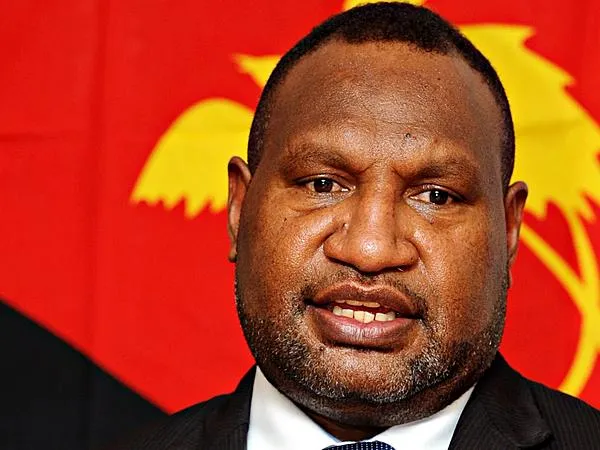
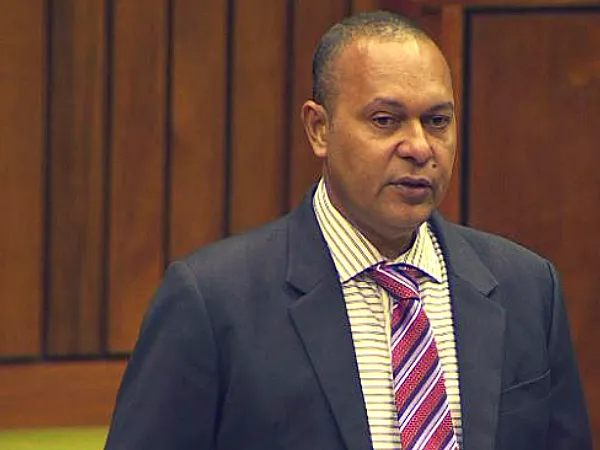
To help with the upcoming 2022 national elections, Prime Minister James Marape said that the government intends to use the biometric voting system. According to him, This same system had been used in different recent elections such as the Goroka Open by-election, the Kupiano ward by-election, Abau, Central, the local level government by-election for the Poreporena ward in the Motu Koitabu Assembly.
He said in a statement, “We have seen that it (biometric voting system) was very successful. We will trial it out again and get it on a larger scale in the 2022 national elections.”
Marape added that trialling this system in the elections was his way of guaranteeing fairer and efficient voting. He said that there have been other features such as separate voting booths for men and women and cameras at polling stations have already been trials and these features would be applied during the upcoming elections.
“The general environment in Goroka was very fair to everyone,” he said. “We trailed for two polling booths for males and females. This is our effort for fairer voting for everyone to make their own choice.”
Marape said that through adequate funding in the budget next year, the Electoral Commission Is well-prepared for the elections. In addition, he said that the government is considering unifying all national election cards and common roll updates to help with the electoral process.
“It is 18 months away but we will allocate some money in the 2021 national budget to tidy up preparations for the 2022 national elections,” he said. “We want to have cameras at polling booths just like the Goroka by-election and so in 2022 we want to improve on what happened in 2017.”
Papua New Guinea’s corporate sector is increasingly embracing gender equality and understanding the importance of women leaders to organisational success and profitability. Never before have so many talented PNG business women been sent on so many leadership courses. However, the extent to which businesses are providing the right environment for their talented and ‘trained up’ female staff to thrive and thus make significant contributions to the businesses employing them varies greatly.
“PNG has some exceptional training programs to develop the business leadership and management skills of its high potential female staff” says Evonne Kennedy, Executive Director of the PNG Business Coalition for Women (‘The Coalition’). “However, what we often don’t have in the businesses that send their female employees on these training programs are environments that are conducive to female leadership development and excellence.”
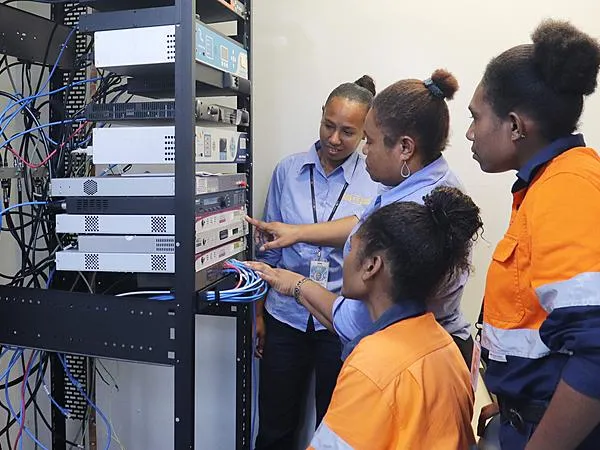
The Coalition has multiple resources – including policies and a range of trainings – to enable businesses to have the right culture, structure, policies and practices to support their female staff at all levels including their leaders. Coalition Chair and CEO of Origin Energy, Lesieli Taviri, describes these resources as “essential tools that help businesses create the ‘fertile ground’ not just necessary for women to flourish in leadership positions but for organisations to reap the numerous business benefits of a gender diverse workforce.”
To date 64 different PNG businesses have utilised the Coalition’s resources. Many of these, including Steamships, BSP, Digicel, Oil Search and TE PNG have utilised multiple services. The high level of repeat purchase behaviour among Coalition client businesses attests to the value of its resources.
PNG FM is another business that has utilised several Coalition services. The first Coalition resource utilised by PNG FM was an Anti-Sexual Harassment staff education workshop in 2018. Soon afterwards in early 2019, PNG FM formally implemented an Anti-Sexual Harassment policy. The policy helped cement staff understanding of what behaviour was expected of them. Significantly, it also ensured that staff fully comprehended what type of behaviour was considered inappropriate and would not be tolerated at PNG FM. The Coalition worked with management to develop reporting processes and foster a safe and respectful workplace culture to ensure that irrespective of gender, opportunities were provided equally without fear or favour.
2019 also saw PNG FM staff undertake the Coalition’s three different leadership programs. Early in 2020, Sales Director, Rosemarie Botong, a graduate of the Coalition’s Senior Executive Program will soon take over PNG FM’s most senior leadership role from retiring General Manager, Charles Taylor. Botong agrees that through utilising the Coalition’s resources, PNG FM has made considerable headway in developing safe, respectful and supportive ‘fertile ground’ to drive gender equality and grow its female leaders, including herself.
Assisting organisations to develop and implement policies that provide safe and respectful workplaces for women is part of the Coalition’s core business. Examples of these policies include those on Non-Discrimination, Gender Equality, Equal Pay, Flexible Work Arrangements, Sexual Harassment, and Family and Sexual Violence. Kennedy emphasises that “good policies provide the foundations upon which structural and cultural changes can be made.”
Training is also core business for the Coalition. Three of its most popular training programs centre on leadership, with each program being specifically tailored to the PNG business context:
Certificate IV in Leadership & Management: With 190 participants from 33 different companies since its first delivery in 2015, this program gives women the building blocks to become great team leaders, supervisors and managers. The course is formally accredited by the Australian education system.
Senior Executive Women Program: Launched in 2019, this program prepares senior businesswomen for career progression to senior executive positions including CFO and CEO. Twenty-two participants from 13 businesses have benefited from the program which is run in partnership with the Asia Development Bank (ADB).
PNG Directorship Course: Also launched in 2019, this internationally recognised program (open to both women and men) is run in partnership with the Australian Institute of Company Directors (AICD). Covering the topics Governance, Finance, Strategy and Risk, the course enhances an individual’s growth and potential as a company director.
“The PNG Business Coalition for Women is the corporate sector’s ‘go to’ resource for gender equality” says Kennedy. “Whether it’s helping businesses get their policies right, holding staff education workshops, or running our various leadership training programs, everything we do is geared towards helping PNG businesses achieve genuine gender equality and therefore helping them derive the business benefits associated with having done so.”
To learn more about how the Coalition can help your business grow the leadership potential of its female staff go to: www.pngbcfw.org. The Business Coalition for Women has numerous services available to help your business recruit, train, develop and promote PNG women. The Coalition is supported by the Australian Government in partnership with the Government of Papua New Guinea as part of the Pacific Women Shaping Pacific Development program.
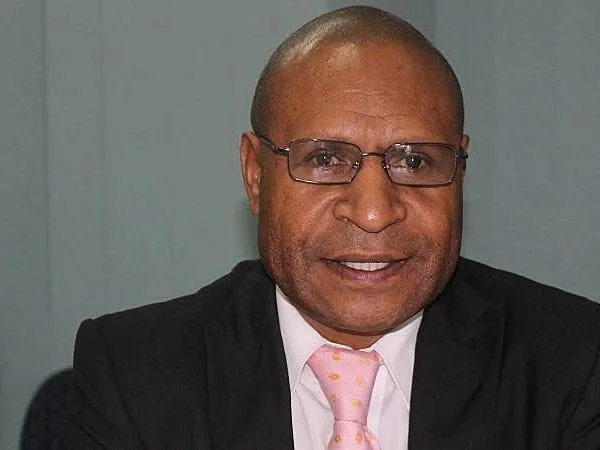
The ICCC Appointments Committee has recently re-appointed Paulus Ain as the Commissioner and Chief Executive Officer of the Independent Consumer and Competition Commission for the next five years. This was made official by the National Gazette No. G669 of 6th October 2020.
Commissioner Ain expressed his gratitude to the government for its decision. He said, “On behalf of my family and the people of Jiwaka, I would like to thank the Marape Basil Government for having confidence in me by my reappointment as Commissioner to serve our consumers and the business community for the next five years. I am willing to carry on from where I stopped and will continue to support the Government to take back PNG by ensuring our markets are competitive, that consumers are well protected and that there is regulatory compliance by the regulated industries and entities.”
He added that he would zero in on the legislation relating to consumer protection. “Different government agencies and departments seem to have their own consumer protection functions and I think this is not serving our consumers well,” he said. “We need to realign and centralise it; for example, the Food Sanitations Act which deals with all food-related issues rests with the Department of Health while the consumer issues relating to finance is with the Bank of PNG, and ICT consumer-related issues are with NICTA. The ICCC has been struggling with this and related issues so will be working with these agencies and departments that I’ve mentioned so we have consumer protection centralised.”
PNGX, Papua New Guinea’s national stock exchange, has recognised JMP Securities Limited (JMP) - which began trading last October 6, 2020 - as a new participating organisation.
In a statement, PNGX Chairman David Lawrence, said, “PNGX is very pleased to have JMP Securities joining the market as a new stockbroker. It reflects confidence in the growth opportunities presented by PNG and the investment opportunities available to PNG investors. We look forward to JMP stimulating the growth of the current equities market and supporting the development of proposed government and corporate debt and managed funds markets. Access to capital for PNG companies is going to be important for the emergence of PNG from the economic circumstances caused by Covid-19 and PNGX and its stockbrokers will be central to that process.”
Meanwhile, JMP’s Managing Director, Lars Mortensen, added, “We are very excited to join PNGX as a participating organisation and grateful for the confidence that PNGX has shown in us. Our team is deeply committed to playing an active role in the ongoing growth and development of capital markets in Papua New Guinea and we recognise the solid foundations laid by PNGX and the other market participants to date. Providing companies with access to capital and investors with efficient and secure investment opportunities is an important catalyst for ongoing economic growth, improved development outcomes and enhanced financial security and wellbeing for Papua New Guineans.”
He added that PNGX has a very vital role with these goals in the next years to come. He said, “We look forward to working with the exchange, investors and issuers of securities and to being a participant in what will be a tremendously exciting period for capital markets in Papua New Guinea.”
With the support of PNG-Australia Partnership, the Department of Treasury and Asian Development’s Bank (ADB), Private Sector Development Initiative (PSDI), and the Investment Promotion of Authority (IPA) signed a Memorandum of Understanding (MOU) to make doing business together in Papua New Guinea easier and more convenient.
Under the MOU, PSDI supports the IPA to develop a new online business registry to make it easier for businesses to formalise and start in line with the global impacts of the coronavirus pandemic.
“The IPA values collaborative efforts with its stakeholders. The partnership between IPA and ADB, through its PSDI program, is one of such efforts and we are keen on renewing this MOU because we value the outcomes of this partnership,” IPA Managing Director Mr. Clarence Hoot said. “The first MOU was signed in 2017 and has delivered some essential successes, hence we are pleased to extend it to 2024,” he said in a statement. “We completed more than 60 per cent of the initiatives covered in the ambitious initial agreement and we look forward to similar success over the next five years as we work together to promote entrepreneurship and appropriate foreign investment in PNG.”
PSDI helps in the enhancement of business activities, removing the obstacles to increased economic activity, and the access finance for business.
“The IPA is an important driver of business activity in PNG,” said Minister Counsellor Tim Huggins of the Australian High Commission. “The work supported through this agreement will help grow investment, support small and medium-sized enterprises, and help businesses enter the formal economy. It will also be an important contributor to PNG’s recovery from the economic impacts of COVID-19.”
“The MOU is an important commitment by IPA and ADB to continue working to make it easier for businesses to operate and invest in PNG,” said ADB’s Papua New Guinea Country Director, Mr David Hill. “The partnership has already resulted in significant achievements, including the transition of its existing online business registries to a stable, online environment, and the implementation of the Personal Property Securities Register, which makes it easier for businesses to access finance.”
The IPA works to facilitate, promote, and grow business investment in PNG through its support for a competitive and enabling regulatory framework. This also involves the Intellectual Property Office of the PNG and the Companies Office of PNG.
While ADB commits to achieving an inclusive, prosperous and sustainable Asia and the Pacific, PSDI improves the enabling environment for businesses and leads economic growth, co-financed by the New Zealand and Australian governments.
Survival is the first primary focus of businesses following prolonged lockdowns and ‘new normal’ brought on by the global Covid-19 pandemic that has impacted everybody worldwide. This was the crux of the message from acting CEO of PNG Air, Mr Anthony Pereira during a recent interview with PNG Business News at their 7 Mile head office, in Port Moresby.
While optimistic a vaccine for Covid-19 will soon be found and business will get back on track overtime, Pereira however predicted a ‘slow pick-up of business in reaching pre covid-19 levels’ adding that ‘many companies will also go bankrupt along the way’. “This is already happening and will continue to be so which is a sad and a desperate reality” Pereira said.
“We at PNG Air are very fortunate to have a great bunch of staff and senior managers who are working very hard to keep the airline going,” he said. “We must have confidence as air travel will always be needed now and into the future. Confidence will grow, but it will be a struggle” Pereira said.
“Following the Covid-19 pandemic, global airlines have been the hardest hit, along with tourism and the hotel industries and many other similar businesses, as nations implement strict measures to contain the spread of the Coronavirus, which has affected traditional models of doing business” Pereira said.
PNG Air, like many other businesses in PNG has been hard hit as well while support to businesses has not yet really been felt. Staff have been stood down while many others including pilots and engineers are on rotating shifts. “It’s all about survival for us for 2020 like many other airlines and other businesses,” said Pereira.
“We are currently operating at 50 per cent and as mentioned have staff on rotating shifts so at least they get some hours and earn some income,” Pereira said. “This is a world pandemic affecting everyone, but at the end of the day we must have that confidence that it will get better,” he added. “When things are back to normal eventually, we will see benefits returning to our staff, but it will be a struggle for a few years” he predicted.
PNG Air services 29 destinations across PNG, many of them rural airstrips where we transport customers to and from and where fresh produce are moved from farms to markets in Port Moresby.
According to Google search, globally, more than 17,000 planes have been grounded, 400 million jobs affected and an estimated 100,000 plus pilots laid off due to the impacts of Covid-19. Billions of dollars have been lost in revenue and profits which is a very sad situation, “Pereira informed.
“Unlike international airlines, we have been lucky because our business is servicing domestic routes for pax, moving of cargo and adhoc charter especially for our mine customers,” Pereira said. The 55 pilots at PNG Air are mostly local staff with a few expats. To cope with the situation, PNG Air has stopped engaging ‘touring pilots’ and stood down those overseas currently utilizing the 55 on ground at Port Moresby for its operations until operations get back to normalcy” he said.
Measures the airline has taken to address the challenges brought on by the pandemic include;
Reduction in travel and accommodation costs
Stand down of pilot numbers
Rotating staff and placing a freeze on new employment
Minimising capital expenditure, though spending on safety remaining a priority and untouched
Review of schedules and improving load factors
Re-negotiation of loans and contracts which are still ongoing
On hold are other Capex projects like the planned purchase of two fuel trucks at an estimated cost of K2 million for ground services division. “We are also renegotiating supplier deals and finding ways to limit other general expenses”.
“It is really tough and therefore we need to tailor our costs to ease cash flow burdens,” Pereira said.
Plans for 2020 have been deferred for another year or two. PNG Air currently has 13 planes in operation and has suspended its Dash 8 replacement program with ATR aircraft until January 2022. The new ATR fleet on order is a 48 seat, turbo propelled aircraft suitable for short take-offs and landings unlike jet planes.
“The team at PNG Air, is fully devoted to making things work and constantly looking at ways and means to improve and add value during these trying times”. Pereira said.
“We have completed our three year Strategic Plan to commence from January 2021. Every department and every single staff member is behind this plan to make sure we achieve the targets for all of our stakeholders and shareholders in the future” said Pereira.
PNG is just ripe for new developments. With six multi-million projects valued at K133 billion in the pipeline, the country is just waiting for approval from the government.
According to Prime Minister James Marape, the government has been in careful consideration with project developers so that the State and the landowners can have their “fair share''.”
“For far too long, we have been denied a fair and equitable share of the benefits from the development of our natural resources,” he said. “We continue to get such a raw deal because of the manner in which project agreements are negotiated and entered into. We welcome all investors to our country. They are entitled to a good return on their investment. But likewise, we too deserve our fair share.”
Among the projects in the pipeline include Papua LNG valued at US$13 billion (K45 billion), P’nyang at US$11.2 billion (K39.2 billion), Frieda River US$7 billion (K24.5 billion) Wafi Golpu- US$5.2 billion (K18.2 billion), Pasca US$1.6 billion (K5.6 billion) and Woodlark US$120 million (K420 million).
Meanwhile, Mineral Resources Authority managing director Jerry Garry said that in the mineral sector, three projects are still being considered. These are Wafi Golpu in Morobe, Frieda in Sepik and Woodlark in Milne Bay.
For Wafi Golpu, Garry said that the team was still waiting for the government to show how much equity, royalty, and tax concessions they would take. Garry said that the project would provide jobs as in the mines in Ok Tedi, Lihir or Porgera.
He said, “It will be a low-cost operation, fewer people, no blasts and no trucks. The block caving method meant everything will be processed underground.”
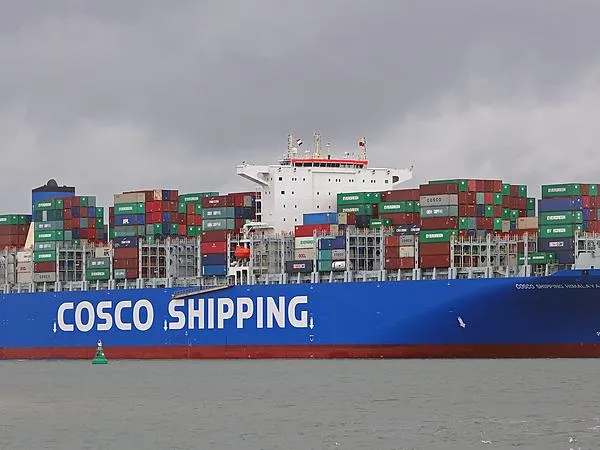
The world’s largest shipping group, China Ocean Shipping Company (COSCO) has partnered with the PNG Ports Corporation Limited to expand its services across PNG with bi-monthly vessel calls through Inchcape Shipping Services as its local PNG agents.
Its maiden voyage was the container ship. Hansa Cloppenburg, soon to be followed by Tokyo Trader on October 25 under the arrangement of twice-a-month between COSCO Shipping and Inchcape Shipping.
PNG Ports Managing Director Fego Kiniafa said that the partnership between these two shipping lines is a welcome embrace. “As the premier port services provider and owner of the international port facilities in the country, PNG Ports welcomes COSCO and thanks Inchcape,” he said in a statement. “PNG Ports remains committed to working with COSCO and Inchcape, as we all work together to maintain the flow of goods in and out of the country. We acknowledge the reputation and standing COSCO has within the (shipping) industry and look forward to providing efficient service that is on par with standard global practices, including fast turnaround times.”
He added, “Our country also has a strong relationship with China in terms of trade and as such partnerships enhance these connections.”
The partnership is included in the South Pacific/China service which offers fortnightly connections between the South Pacific Islands and China. COSCO operates 403 container vessels while Inchcape is one of the world’s leading maritime services with a total of 300 offices.
In spite of the pandemic, the assets of the Petroleum Resources Kutubu has grown from K400 million in 2008 to K2.3 billion. This was revealed by Mineral Resources Development Company (MDRC) Managing Director Augustine Mano at Aiyo Primary School, Kutubu, Southern Highlands Province who said that this growth was part of his commitment to the Fasu landowner leaders in 2008.
In a statement, he said, “Today, PRK assets after 12 years are K2.3 billion and PRK also the largest shareholder in many investments in the country.”
He added that included in the shares are the MDRC Haus, Pacific MMI, Star Mountain Plaza, owns 50 per cent in the Pearl Resort in Fiji and is the third largest shareholder of Bank South Pacific. He said that while PRK has also paid its 50 per cent share in tax to the government as its contribution to the province, he added that he would employ the same commitment to the rest of the services needed by the people of Kutubu.
He said, “In the next four years, with the little time the government has given me, the same commitment MRDC has made in investments we will do that to change Kutubu.”
Meanwhile, PRK chairman John Kapi Natto added that they will now look into the services they can offer to the [people of Kutubu. He said that this is his way of giving back to the community. We must come back to the village. Education infrastructure is very important and we need to leave a legacy behind for the future generation,” he said.
In a market survey participated by business leaders, more than 60 per cent have shown that they are not going to lay off employees during this time, according to the PNG Business Council. Executive Director Douveri Henao said that this is a good sign and that companies are now employing measures such as using a skeletal workforce and reduction of work hours to stay afloat.
In a statement, he said, “It’s an increase from 12 per cent from our Q1, 2020 (first quarter) numbers where this confidence in the market on staff reduction would not occur in the next six months.”
Henao added that among the strategies that companies use include employee headcount or redundancy in which 19 per cent was already applied, an increase of 12 per cent since the first quarter; and the skeletal workforce which has 18 per cent, reducing work hours was at 17 per cent.
“During this period, we saw an increase in redundancy programmes but this increase has actually plateaued,” he said in a statement. “There was anxiety in the market that there will be mass redundancy programmes and they will be queued up in as fund and elsewhere to collect their entitlements after the mandatory three month grace periods are over.
He added, “We haven’t seen that come out into the market place largely because there is confidence in the market to retain jobs. So those that have been laid off were not to the extent where there has been a complete increase or a sharp rise in redundancy. And that’s also reflected in our conversations with the superfunds as well. They haven’t seen the large numbers prevailing throughout the year. There’s been a period in Q1 and the beginning of Q2 but that levelled off because most of these MDs (managing directors) and CEOs (chief executive officers) are quite confident that they could retain their staff. Although people have been laid off, there has not been large redundancy across the market.”
Aside from the tourism industry, Henao said that the other sectors that had employed this kind of programme included the real estate and property, manufacturing and professional services, and retail and consumer. He added that businesses have already employed such measures and are ready to continue their operations.
“The demand for gold almost always rises as the economy worsens. And that is just what is happening today,” New Ireland Governor Sir Julius Chan said in a statement during a meeting with Kumul Petroleum Holdings Limited (KPHL) board in the province.
He added, “In less than two years, gold has gone from US$1,200 (K4,197) per ounce to nearly US$2,000 (K6,995) per ounce – an increase of nearly 70 per cent in two years. The outlook is that the price will continue to rise at a moderate but steady rate. That means the returns from gold – unlike returns from oil, LNG or copper – will be much higher over the next year than in the past year. Returns from gold in PNG will increase by about 40 per cent over the next year. The revenues from gold will likely go from about K10.5 billion last year to around K15 billion next year – an increase of K4.5bil in one year, I believe these windfall profits should benefit the people, not just the companies.”
With the meeting held at the newly-opened New Ireland legislative building, the KPHL paid a courtesy visit to Sir Julius and other executives of the New Ireland administration. Among those who visited and took part in the meeting included KPHL board chairman Dr Benedict Yaru, managing director Wapu Sonk and directors Dr Ila Temu and Peterson Pipi.
Aside from the price of gold, Some of the things discussed were the proposed amendment to the Oil and Gas ACt slated to have a reading in the next Parliament sitting, the power issues faced due to PNG Power’s lack of capacity to supply to the town of Kavieng (some suggested solutions where the use of LNG and the preferred energy solar power of the government of New Ireland), and the welfare of the mining sector.
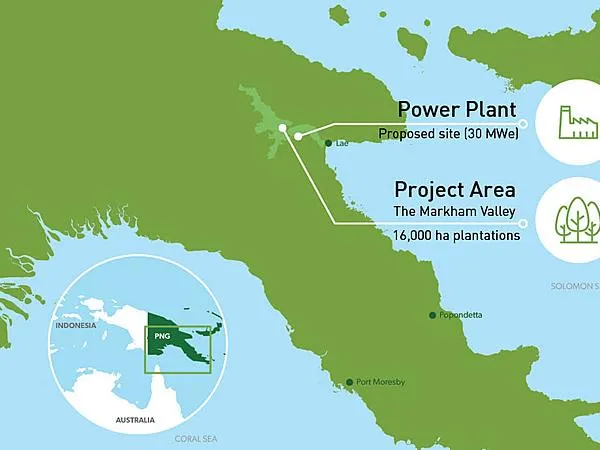
For the development of their renewable energy park, landowners from Markham Valley, Morobo have signed lease agreements and development with PNG Biomass, saying that the lease enables construction, site clearing, and operation of the park.
The agreement between these two sanctions is sure to benefit landowners.
Operated by the Mark Markham Valley Biomass Ltd, a wholly-owned subsidiary of Oil Search Ltd, PNG Biomass envisions the park to feature 30MW biomass power plant, funded by Oil Search, and a 17MW solar farm with battery storage that the Australian government and European Union have funded.
PNG Biomass stakeholder engagement manager Jessie Mitir said, “You all are paving the way for sustainable green energy development not only for your own family and community but also for the province and nation for the next 45 years.”
The signing of the agreement happened in Lae followed by a ceremony on the Ganef land in Zifansing Wampar local level government, Huon Gulf.. Witnesses for the event included Orogwangin clansman Luke Kifas.
As part of the agenda of the government, New Deputy Prime Minister Sam Basil who is also the Minister for National Planning has vowed to link PNG beginning from Morobe to Port Moresby - which ultimately costs between K400 and K500 million.
According to Mr Basil, the road runs from Kasengare, Kaitaipi, Rupila, Omu, Guari, Tapini and Aropokina to link to the Hiritano Highway.
“We will be opening up all the new agriculture areas of the country by road,” Mr Basil said. “Do not give up hope. Start planting coffee and other agriculture produce.”
For the funding, Mr Basil said that an initial K5 million has already been put down, and another K5 million was given to the public investment program this year for the Tapini road. Under this program, he said that the government has budgeted K5 million for all districts in the country to link up with main highways. Another K5 million is given to the investment in the Dabuy road that connects Woitape district to Vanapa River to open up Goilala, the first engagement to visit Ononge in Goilala by invitation of Transport Minister William Samb.
Other projects that the Prime Minister has launched include:
The groundbreaking of the Dubuy road project - Gollala DDA has bought earth-moving equipment to start work
The water supply project of the Ononge station
The launch of the green bean coffee hulling machine
Distribution to coffee farmers the coffee pulping machine
Launch of the Digicel tower for Udaba valley which is installed in Ononge
The launch of the cooperative society
In addition, the Deputy Minister also gave K500,000 cheques for the water supply project for more villages, both K500,000 for Rupila Primary School and Ononge Primary School.
In a move that slowly opens the economy and boosts the tourism industry, Papua New Guinea has opened its borders for four more countries - Singapore, Hong Kong, Solomon Islands, and Japan. This comes after PNG has already opened its doors to Australia.
According to pandemic response controller David Manning, passengers are still required to obtain approval from his office and must be able to show that they are free of COVID-19 before boarding their flight.
In addition to opening for these countries, Manning said that the curfew of 12pm to 5am in the national capital district has now been lifted. All the rest of the restrictions in relation to the pandemic remains the same.
At present, PNG has seven COVID-19 deaths and 500 cases of the coronavirus.
To expand the small and medium enterprises (SMEs) and fund additional strategic projects that enhance digital leadership in the country, Kina Bank is planning to raise around A$91 million (K224mil). According to Kina Bank chief executive officer Greg Pawson, they want to be more competitive in lending particularly for large SMEs, commercial and corporate type customers, and this equity raising will just give them a more robust and solid capital base to be able to do that.
“It also means that we will be well in advance with our prudential or regulatory requirements such as capital adequacy and leverage,” he said. It just makes us a much stronger bank, it’s not that we are weak at the moment, we are well-positioned but we wanted to push a bit harder particularly into those commercial and corporate sectors of the market.”
As part of its programme to become the leading digital bank, Pawson said that the main two or three that they are focused on at the moment is their newest internet payment gateway in partnership with a local firm called NiuPay and that’s currently in pilot with the Lands Department.
“We’re planning to roll that out to our SMEs and commercial customers in the coming weeks once we see that the pilot has been successful so that gives merchants the ability to accept payments online for goods and services,” he said. “That’s something we do in a relatively short space of time. We’re doing a lot of work with our point-of-sale (POS) network at the moment. So we arguably have the best performing POS terminals in the market in terms of reliability and speed and the next phase of that is called integrated POS. We want to continue to be at the forefront of the new technologies that are coming to support POS and the next phase of that will be starting to integrate the POS terminals with the merchant software.”
Kina Bank is also looking at a number of other things largely at payments to help facilitate e-commerce, more electronic payments for both personal and business customers in PNG and they are working very closely with some of the government departments around moving some of their services to e-commerce platforms as well and being able to accept some of the payments online.
“So a lot of the programmes are geared around e-commerce and electronic payments, and the game falls back to digital banking,” he added. “Not just for customers but also with the new organisation, a lot of our internal systems and processes are digitalised or electronic which just makes us a more efficient and productive organisation at the end of the day and it enables us to free up people to focus on more value added activities.”
In its first half of the year, Kina is in a good position. Their net profit after tax was about 24 per cent up on the same period last year and they didn’t lose any ANZ customers.
“That was deliberate on our part,” said Pawson. “We wanted to make the acquisition as seamless as possible. It was such a complex programme that took 18 months to complete but it worked. We did have some hiccups along the way but about 90 per cent of our customers were happy with the transition. We’re still building some of our business and corporate online capability. It has gone better and even off the back of that, we have on-boarded about 6,000 new customers this year alone in addition to that. So, hopefully, it’s a reflection of how well we did with the ANZ acquisition and also our brand campaign which we launched in May with our three brand ambassadors which we’re proud of.”
For the second half of the year, Pawson said it is about finding the right balance between what’s right for the resource companies versus what’s right for the sovereign. He says that the government has learned some lessons from past experience and said that it doesn’t look good offshore when these projects are delayed.
In spite of this health crisis, Kina Bank has kept its focus. According to Pawson, they are focused particularly around service sync with their desire to be the leading digital bank in PNG.
“We also want to be the leading service organisation, not necessarily a bank but as a brand, known for providing good services,” he said. “Lending is our big focus so we are very liquid following the ANZ acquisition and we want to be actively lending out to SMEs and commercial customers where we can, and bolster some economic growth. Another area that aligns with our digital capability is technology and infrastructure and just making sure we’ve got the right network and the right infrastructure to support our growth aspirations. PNG is in a reasonably good position at the moment and, yes, it’s tough like other markets but it’s still presenting us with some good opportunity for growth which we are after.”
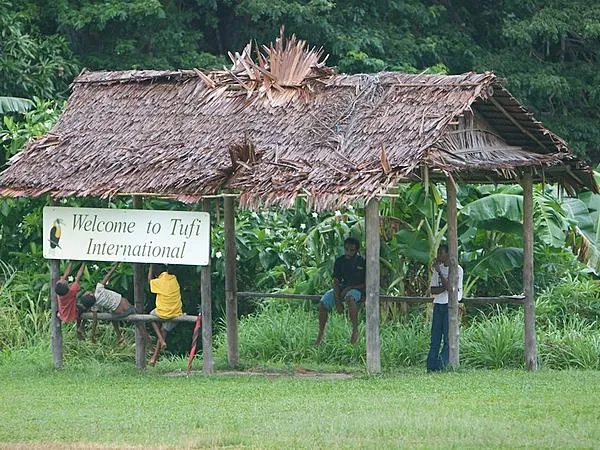
Tufi will soon undergo some changes following the inaugural Link PNG flight to Tufi. According to Transport and Infrastructure Minister William Samb, Tufi is soon to be made into Northern’s second airport. He said that Tufi will be part of the civil aviation development programme phase two (Cadip 2).
He added that the government had an overall Connect PNG programme. “The three modes of transportation are currently in our medium-term transport development plan,” he said. “For air transport, we have partnered with rural airstrips authority to progress the partnership with mission aviation fellowship and civil aviation (department) and regional airports to support the main airports. Asian Development Bank, based on their study, included Tufi as one of the regional airports to be featured in the Cadip2 programme.”
Samb also disclosed that the commitment of the government of K2 million will go directly to Ijivitari and the Civil Aviation Authority to partner with the district development authority to start with the transformation of the airport - which includes the lighting system, the sealing and the fencing.
In addition, the development of jetties will also be part of the major changes - where Tufi is included to upgrade its existing jetty. “We will send our technical team together with the Ijivitari DDA team to assess the jetty on how we can improve that facility to support the Tufi airport,” he said.
Part of the flight included Minister for Health and HIV-AIDS Sir Puka Temu, Minister for Labour and Industrial Relations Lekwa Gure, and Minister for Land and Physical Planning John Rosso MPs included National Capital District Governor Powes Parkop, Western Governor Toboi Awi Yoto, Alotau MP Charles Abel and North Fly MP James Donald.
Also included are Secretary for Transport Roy Mumu, and executives from the National Airport Corporation, Civil Aviation Safety.
Follow on LinkedIn:
PNG Business News
Be the "First" to get our exclusive Digital Magazine & Weekly Newsletter.