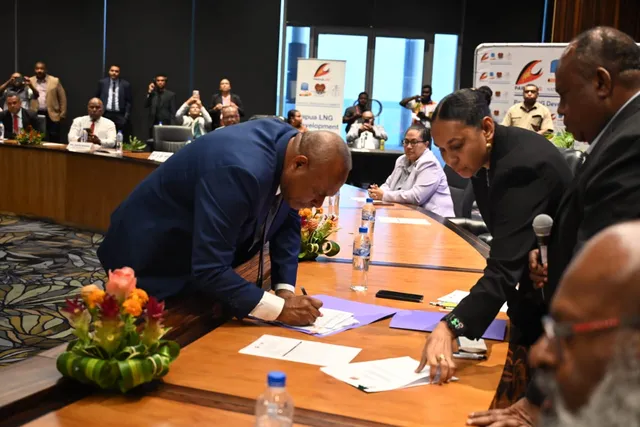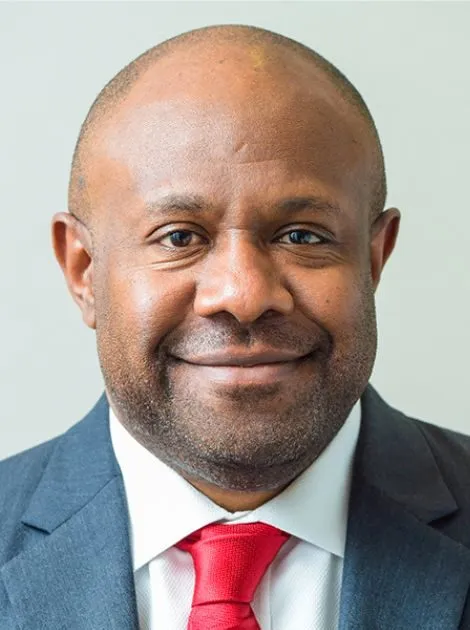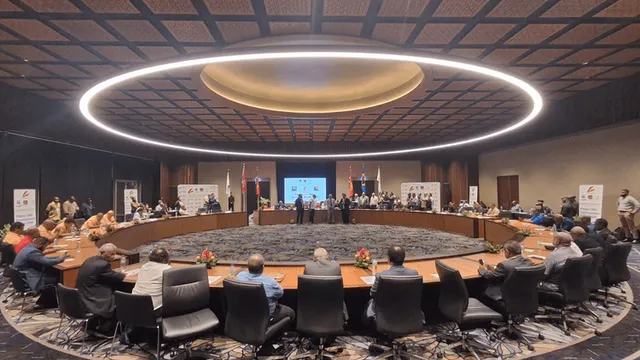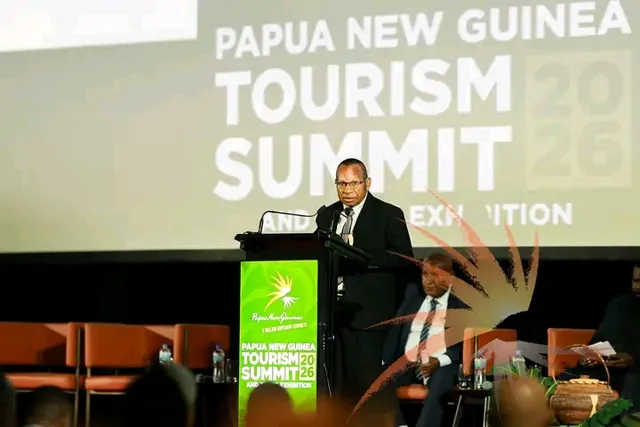
Prime Minister James Marape says Papua New Guinea is poised for a prolonged period of economic growth and investment, underpinned by a pipeline of major resource projects led by Papua LNG, Wafi-Golpu and P'nyang.
Marape said the country's energy sector would remain a central driver of economic activity over the next decade, generating employment, business opportunities, government revenue and broader economic benefits.
Speaking on the outlook for the country's resource sector, the prime minister described Papua LNG as one of Papua New Guinea's most important development priorities, saying the project's eventual Final Investment Decision would pave the way for a series of large-scale energy developments.
"These projects will provide long-term construction activity, production opportunities, employment and revenue for Papua New Guinea," Marape said.
"We're looking at the next 10 to 15 years as a period of sustained energy sector activity, not only in construction but also in long-term production and economic growth."
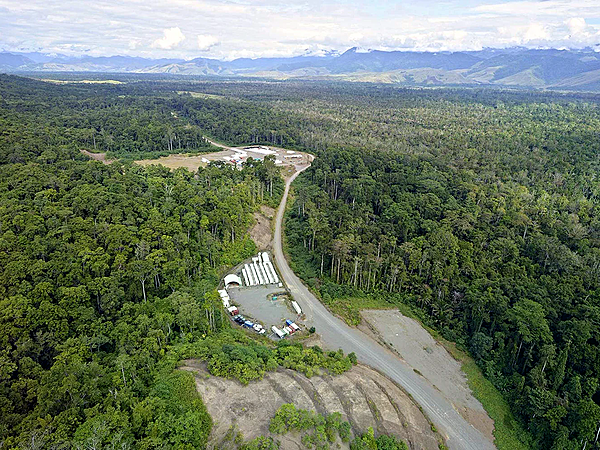
In addition to Papua LNG, Marape cited the Wafi-Golpu copper-gold project in Morobe Province, the P'nyang gas project, Pasca A and other future petroleum developments as key investments expected to support economic expansion.
He said Papua New Guinea's economy continues to be supported by major resource developments, particularly in the oil and gas sector, while agriculture and other non-resource industries remain important contributors to growth.
According to Marape, the non-mining and petroleum sector has been growing at approximately 4 percent, driven largely by agriculture, which remains the primary source of livelihood for most Papua New Guineans.
The prime minister reiterated his government's commitment to securing a greater share of benefits from resource projects for the state, landowners and local communities.
"Our government is predominantly known for the principle that we are fighting to take back more benefits for our country," he said.
"This Pangu Administration has made it absolutely clear that we will not compromise on ensuring the State secures around or above 55 percent of the total benefit from our major resource projects."
Marape pointed to the New Porgera Limited agreement as an example of the government's approach to resource negotiations, saying the administration remains focused on increasing national participation while maintaining constructive relationships with investors.
"The resource sector industry knows very well our vision and where we want to take the country. We want to secure above 55 percent as the total stake for the State," he said.
"I want to thank all resource developers, investors and partners for understanding our position. This is being achieved within our existing laws and through good, amicable negotiations that benefit all stakeholders."
Marape acknowledged that significant socio-economic challenges remain but said his government has stayed focused on growing the economy, increasing local participation in resource developments and ensuring Papua New Guinea receives a larger share of returns from its natural resources.
He said the successful development of Papua LNG in Gulf Province and Wafi-Golpu in Morobe Province would strengthen government revenues, improve foreign exchange reserves and create long-term economic opportunities.
"We get Papua LNG and Wafi-Golpu online and get more revenue into the country and ensure our foreign reserves improve for the Government, landowners and developers," Marape said.