April 24, 2023

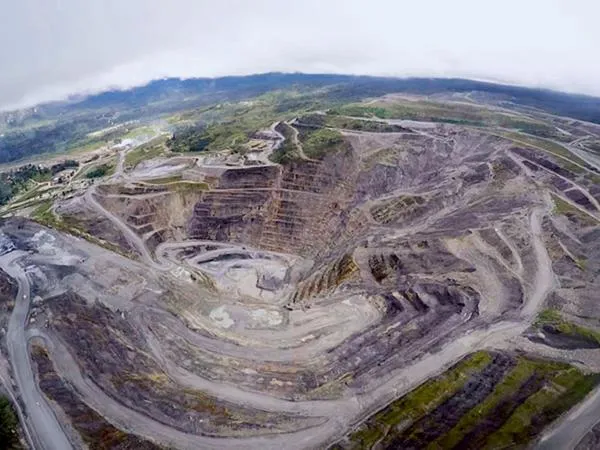
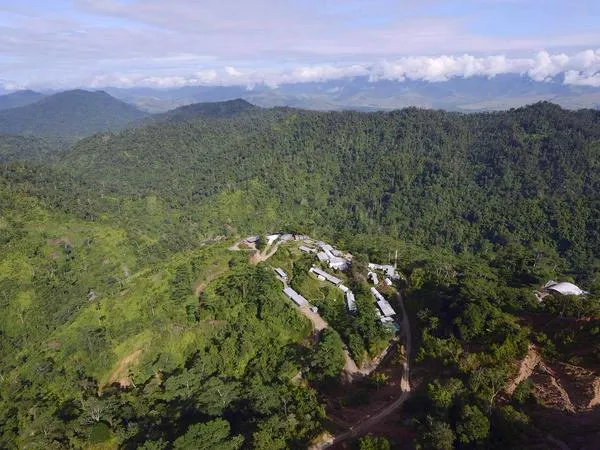
Photo: Porgera Mine

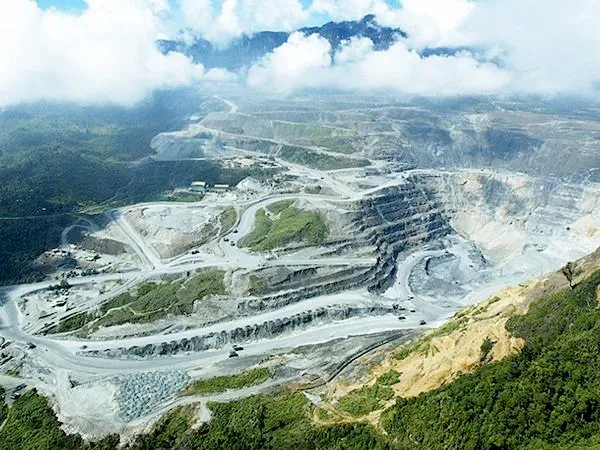
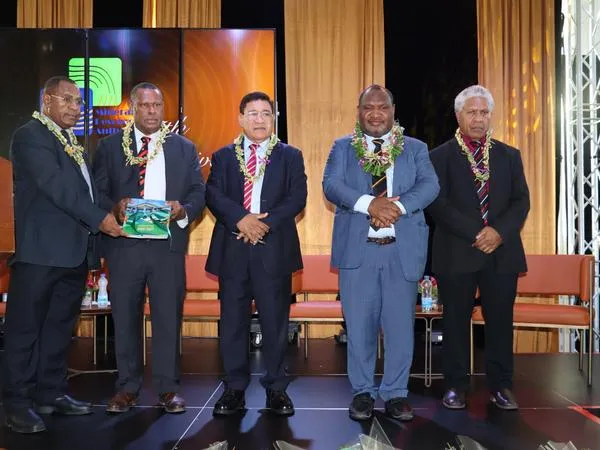
Kumul Mineral Holdings Limited (KMHL), Barrick Niugini Limited (BNL), and the New Porgera Limited (NPL) signing two crucial documents on Friday marks a significant step towards reopening the Porgera mine. The Porgera mine, located in Enga Province of Papua New Guinea, was closed down in April 2020 after the government refused to extend Barrick’s lease for another 20 years. Since then, the parties have been negotiating the terms of reopening the mine.

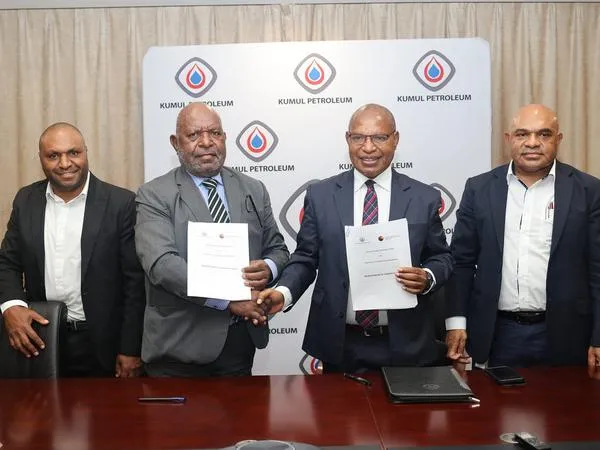
The documents signed by the parties include the DEED of transfer for the Exploration license (EL) 454 and the DEED of transfer for the Special Mining Lease (SML) 11 and ancillary tenements. The signing ceremony took place in Port Moresby and was attended by KMHL board of directors and BNL Country Manager and Adviser.

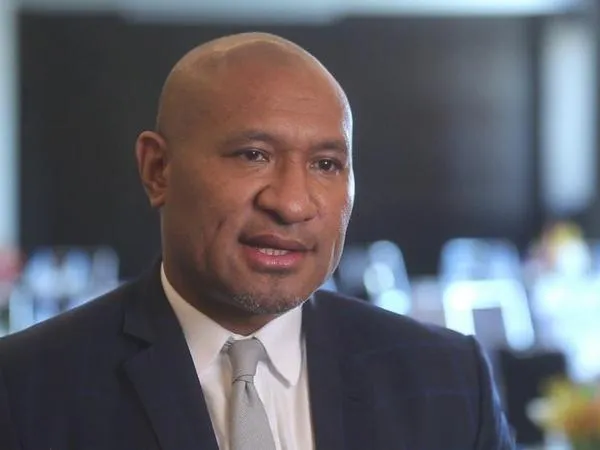
Dr Ila Temu, the KMHL Chairman, explained that the SML 11 license that Kumul Mineral holds needed to be surrendered, hence the signing of the transfer to the New Porgera Limited. Dr Temu stated, "The parties have agreed that SML 11 has to be surrendered, and a new SML applied for."

He further explained that the exploration license 454, which had the Porgera license issued on it, belongs to Barrick Niugini Limited, and they have decided to transfer it to New Porgera Limited as part of the consolidation. Once New Porgera Limited receives the exploration license, it will apply for a new SML after surrendering SML 11.

The Mineral Resource Authority (MRA) is now processing the two transfers, and Dr Temu said they have given urgency for the application to be processed within the next two months, hoping that the new SML will be issued within this period.

"The rest of the agreements like the Mining Development contract need to be signed off after the SML is issued and the environment transferred. This is because the environment permit was issued to all SML so it had to be transferred from the old SML to the new SML that will be issued. That should complete the process, and I think it is going to take us a balance of this first part of the year, including quarter 1, 2, and maybe quarter 3," he added.

The reopening of the Porgera mine is significant for Papua New Guinea as it is the second-largest mine in the country, producing around 600,000 ounces of gold and 600,000 ounces of silver per annum. The mine's reopening will generate employment opportunities and contribute to the country's economic growth. It will also bring relief to the local community, which has been severely affected by the mine's closure.

BNL Country Manager and Adviser, Tony Esplin, expressed his satisfaction with the progress made towards reopening the mine. He said, "We are very pleased to have reached this important milestone in the process of reopening the Porgera mine. We look forward to continuing our work with our partners to bring the mine back into operation."

April 24, 2023

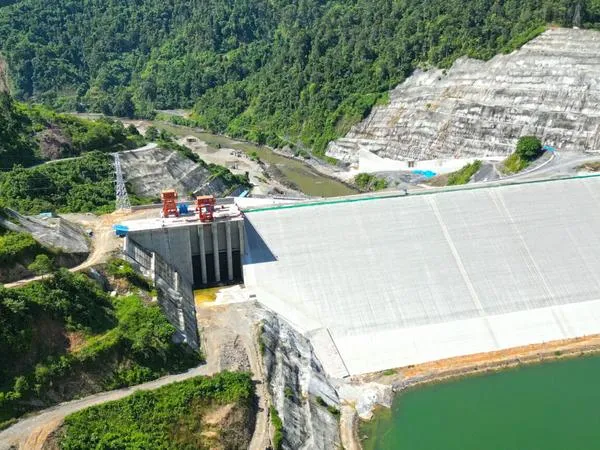
Photo: A bird’s eye view of the Edevu Hydropower Project - PM’s Office Media

Prime Minister Hon. James Marape has thanked Koiari landowners of Central and Chinese investor PNG Hydro Development Ltd for making the massive K770 million Edevu Hydropower Project along the Brown River possible.

He also announced that the Government was partnering the project by way of K120 million for a 132KV transmission line from Edevu to Port Moresby which is already under construction, on top of the K650 million spent by the company.

The Prime Minister said this at Edevu Village on Friday, April 21, 2023, when launching the Edevu Hydropower Reservoir Impoundment. This is a major step towards commencement of the project – which started in 2009 with a first visit to the area by the investor.

He was accompanied by State Enterprises Minister Hon. William Duma, Petroleum and Energy Minister Hon. Kerenga Kua, Central Governor Hon. Rufina Peter, Hiri-Koiari MP Hon. Keith Iduhu, Kairuku MP Hon. Peter Isoaimo, other Ministers and MPs.

“We are a nation in pursuit of development. In the power sector, we want 70 per cent of our country – by 2030 – to have accessibility to cheap, reliable, and green energy to our country,” PM Marape said.

He said what the Edevu landowners had done, by going into partnership with a foreign investor, was a good example for traditional landowners in the rest of the country.

“You have shown a wonderful example to other landowners right across our country. You (landowners) own 97 per cent of land rights. My Government, as governments of past, and any government into the future, will not break that right you have. It is your inherent, God-given right to your land.

“But land sitting idle is of no use to us, or more importantly, our children and their children that will come into the future.”

PM Marape also thanked PNG Hydro Development Ltd, and particularly Managing-Director, Allan Guo and the Chinese financier, for their perseverance in the project since 2009.

“Thank you, investors, for having faith and confidence in my country. When the whole world was shut down, due to COVID-19, Mr Guo and his team of over 500 Papua New Guineans were still hard at work here in the Edevu mountains,” he said.

“It’s a wonderful reflection of an investor, who saw this opportunity thousands of miles away, and had faith in Papua New Guinea.

“For investors out there, who are wanting government gurantee and security, here is an example of a junior Papua New Guinea resident investor putting in money and making it happen.

“I want this to be an example to all you investors out there – Chinese, Japanese, Australia, US, European, Indonesian – that we want foreign investment in this country.

“I call on all those who have capacity in our country, including our super funds and Mineral Resources Development Company, who have billions of Kina in assets: ‘Be adventurous, step up like Allan Guo who had no strong balance sheet’.

“There is potential to move into the clean energy space because country’s energy needs will grow, with clean energy to take precedence.”

April 20, 2023

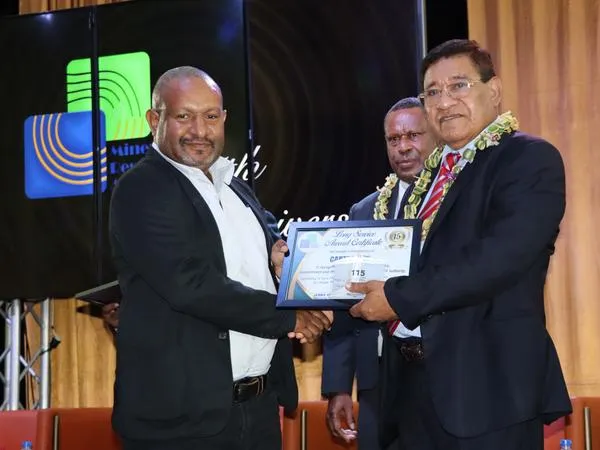
Photo: Minister for Mining Hon Ano Pala (right) awarding the certificate of long service to Mr. Carter Oiee (left) while acting MD Mr. Jerry Garry looks on (back)The Mineral Resources Authority (MRA) on Friday April 14th, celebrated its 15 years of operations in Port Moresby. 

The occasion was graced by the presence of the Prime Minister Honourable James Marape, and the Minister for Mining Honourable Sir Ano Pala. Main highlights of the occasion were the launching of the Mineral Production Data Center, and the MRA Corporate Plan 2022-2027 by Prime Minister Marape.

Other important guests at the event were the MRA Board Chairman Benny Kimisive and the Secretary of the Department of Mineral Policy & Geohazards Management (DMPGM), Harry Kore. The PNG Mining Industry was also represented by the PNG Chamber of Mines & Petroleum executives. Staff based in the mining host provinces were flown into Port Moresby, to join the rest of the MRA staff members at the event.

Staff who have served the organization for 15 years were awarded certificate of Long Service.

Hon Marape congratulated the staff of the MRA saying that the MRA was an important organization in the government set up, as it regulates the very sector that had been driving the country’s economy since independence. He said without MRA, there would be no regulation, supervision and oversight of the mining industry.

Minister Hon Sir Pala told the staff members that they were a special group of people, tasked with an important responsibility to ensure that all systems required to regulate the mining industry, work effectively.

Mr Kimisive said the board had provided strategic guidance to the MRA management to achieve its milestones. These milestones include the completion of the annual financial audits, Public Investments Program (PIP) audits, the setup of the Mineral Production Data Center and the Corporate Plan 2022-2027.

Acting Managing Director Jerry Garry acknowledged and thanked former Prime Ministers, Ministers of Mining, former Managing Directors of the MRA, and former and current staff, who served the State and the MRA since the establishment of the authority.

He said the MRA was what it is today because they all contributed towards building the organization. The AMD said the organization had achieved a lot since its establishment 15 years ago.

He highlighted milestones achieved over the years. These include the transition to online tenements management system, compilation of geology mineral occurrence structures which are available online, establishment of PNG drill-hole data base, improvement in mine safety records, increase in the total export revenue from minerals, increase in mineral exploration activities and expenditure.

Staff representative Vele Gavu thanked past and present political leaders and management of the MRA, for having the foresight in the creation of the MRA, and ensuring that staff well-fare is well taken care of.

April 20, 2023

Photo credit: MRA

Mineral Resources Authority (MRA) managing director, Jerry Garry, has emphasized the importance of exploration in ensuring the future of Papua New Guinea's mining industry. Speaking at the agency's 15th-anniversary celebration in Port Moresby, Garry highlighted the vital role that exploration plays in the development of mines.

"If you do not have exploration, you do not have a mine," said Garry. "Before MRA's establishment, the total exploration Kina spent on grassroots and advanced projects in the country were well below K100 million per annum. After the establishment of the MRA, the exploration expenditure increased and peaked at around K370 million per annum, that in itself is a testimony in MRA's achievement."

Current advanced exploration projects progressing into mine development stage include Wafi-Golpu, Frieda River, Woodlark gold mine project, Central cement lime project, Oro nickel and cobalt project, and Misima mines. Garry also highlighted the importance of alluvial mining in the sector, which has grown from earning less than K100 million to K640 million per annum under the MRA's supervision.

"Looking at the small-scale mining training center (in Wau, Morobe), they have trained and certified more than 6,000 artisanal miners since its establishment in 2008," said Garry. "That is why we have a K640 million export revenue in this sector, it is the effort of the training center."

While Papua New Guinea's mining industry has seen significant growth in recent years, Garry cautioned that all major mineral reserves in the country will be depleted by 2063. "By 2063, all the major reserves we have in the country will be depleted," said Garry. "That includes Wafi-Golpu and Frieda River projects."

Garry stressed the need to invest in the next layer of deposits to sustain the mining business in the country, stating that the only way to achieve this is to explore deeper. "We need to invest in the next layer of deposits to sustain the mining business in the country," said Garry. "And the only way to do that is to go deep because those deposits or assets in the surface have already been tested."

Despite this challenge, Garry was optimistic about the future of Papua New Guinea's mining industry. "We need to look at the future and the next big thing, and we need to invest in exploration," he said. "The future of the mining industry is very bright, and we can only make it happen if we all work together and invest in the right areas."

Garry's remarks were met with support from industry stakeholders. Peter Graham, managing director of Wafi-Golpu Joint Venture, stressed the importance of exploration to the industry's future. "Exploration is the lifeblood of our industry," said Graham. "We are exploring at depths never before contemplated, and our joint venture has the potential to provide significant long-term benefits to the people of Papua New Guinea."

Similarly, Richard Robbins, managing director of Highlands Pacific, emphasized the need for collaboration between the government and industry to ensure the sustainability of the mining sector. "It is essential to maintain a healthy and collaborative relationship between industry and government to maximize the benefits of mining to the people of Papua New Guinea," said Robbins.

As Papua New Guinea's mining industry continues to grow, the focus on exploration and sustainable mining practices will be crucial to ensuring its long-term success.

April 20, 2023

Photo credit: Post Courier

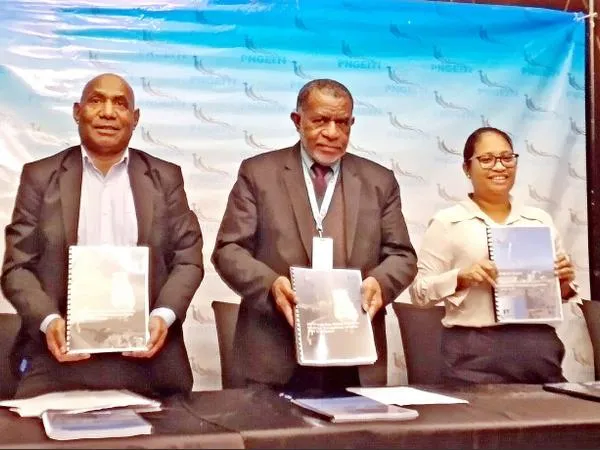
The demand for greater contract transparency in the resources sector is growing as Papua New Guinea prepares to release its 8th and 9th PNG Extractive Industries Transparency Initiative (PNGEITI) reports. These reports cover the fiscal years 2020 and 2021, and they offer valuable insights into the operations of the PNG extractive sector, its contributions to the domestic economy, and, most importantly, the accountability of revenues received by the government.

Lucas Alkan, head of the PNGEITI National Secretariat, explained that COVID-19-related disruptions delayed the publication of the reports. However, their eventual release will be critical in ensuring transparency and accountability in the country's extractive sector.

Paul Barker, executive director of the Institute of National Affairs and a member of the Multi-Stakeholder Group (MSG) committee, emphasized the need for more openness and transparency in the negotiation of projects. According to him, "The whole process of negotiating projects should be much more open and transparent to the citizens of the country and the landowners who are stakeholders in the whole process. We got a long way to go on contract transparency and sub-national transfers, this is another area we got more work to do."

Arianne Kassman, CEO of Transparency International Papua New Guinea (TIPNG), also raised concerns about the lack of technical capacity required to evaluate the content of the report from the PNGEITI process, including the annual reports. She called on the government to engage meaningfully with the EITI process through the implementation of recommendations contained within the report.

"Beyond the publication of the report, meaningful actions still need to be taken to progress recommendations in the report, notably to contract transparency and recruiting by State-owned enterprises," Ms. Kassman said. "Citizens have the right to know what is being done to resources on our land by our government and licensed commercial operators."

April 19, 2023

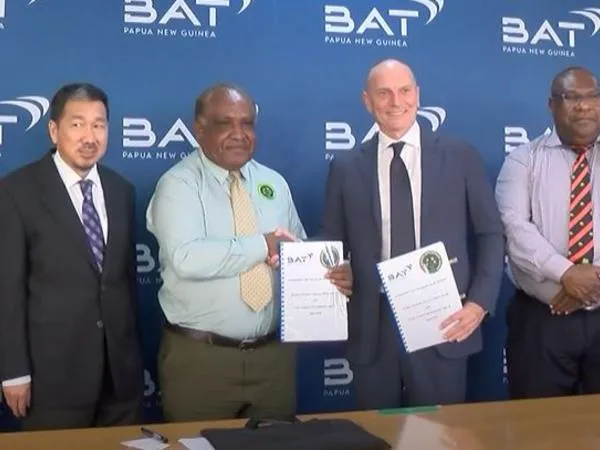
British American Tobacco PNG (BAT PNG) and Fresh Produce Development Agency (FPDA) have joined hands to aid rural bulb onion farmers in Papua New Guinea (PNG). The partnership aims to provide financial assistance to the farmers and increase the quality and quantity of their produce. As a part of this initiative, BAT PNG will contribute K1 million for the construction of 50 solar dryers for bulb onions in different locations in PNG, with each dryer costing around K20,000, totaling over K1 million for two years.

This partnership marks BAT PNG's first investment in the agriculture sector. "The government’s goal of reclaiming PNG through agriculture highlights the crucial role that agriculture plays in the country’s food security and economic stability. We are pleased to partner with FPDA who are experienced and credible partners in this space," said BAT PNG General Manager, Vamid Maksimenko.

The FPDA will manage the funds and oversee the construction and placement of the solar dryers in the bulb onion farming cooperatives across PNG. The project will benefit about 3000 to 5000 onion farming households, helping them reduce post-harvest losses related to drying and storage issues.

FPDA CEO Mark Worinu emphasized the importance of improving the quality of local bulb onions and the challenges involved in the curing process. He added that the solar dryer partnership with the University of Technology has already improved the curing and post-harvest management of bulb onions. The partnership with BAT PNG will provide additional support to the program, and FPDA is ready to implement the project in the next two years.

This initiative is a significant step towards promoting sustainable agriculture and improving the livelihoods of the farmers in PNG. As the renowned author and environmentalist, Wendell Berry said, "The soil is the great connector of lives, the source and destination of all. It is the healer and restorer and resurrector, by which disease passes into health, age into youth, death into life."

April 19, 2023

The Bank of Papua New Guinea (BPNG) has announced its monetary policy considerations for the next six months until September of this year. The central bank indicated that it will maintain a neutral stance in line with the country's economic developments and medium-term prospects.

As required by the country's central banking law, BPNG issued two monthly monetary policy statements, including the March 2023 statement presented to the Lae business community. The bank's decision to pursue a neutral stance was based on the projected fall in global growth and inflation this year.

BPNG explained that further tightening could lead to an increase in lending rates, which would negatively impact private sector services and economic activity since lending rates are already high. Therefore, the bank deemed it appropriate to aim for price stability while promoting economic growth.

"We will continue to monitor the ongoing concerns of high inflation and other macroeconomic indicators, and their impact on domestic prices, and growth and employment," BPNG said. "The bank may adjust its stance of policy if required to achieve its objectives and ensure macroeconomic stability."

The global economy is projected to slow down in 2023, with the ongoing Russia-Ukraine war and tighter financial conditions contributing to the decline. Additionally, international commodity prices are expected to fall due to the global slowdown in activity and growth. However, while global inflation is expected to slow, BPNG expects domestic price pressures to remain elevated in 2023 but moderate in the medium term.

April 19, 2023

The Investment Promotion Authority of PNG through the Office of the Registrar of Companies has announced a successful completion of its data migration process at the end of March.

This now means that entity records from the old registry are outdated and not relevant. Clients who need to access historical information about their entities must search the new registry to get updated information.

The information presented will reflect what was there before the new system went live on the 1st of December 2022. For instance, if they search for a registered company, they will be presented with information on who were the last directors, shareholders, or the last registered office. 

The Acting Registrar has also advised key users of the IPA’s online registration, especially those that use the registry for their business services such as banks and regulatory agencies, to be flexible and accept a Certificate of Good Standing (COGS) as evidence of an existing entity when clients present them to use their services.

“We urge banks and financial institutions to clear any misunderstandings on extracts and COGS,” she said. “As long as COGS are generated by the IPA’s new registry system, they confirm the information maintained by the Registrar of Companies. A fee of K20 is payable for a COGS in short form (shows current information only) or K50 for COGS in long form (shows both current and historical information). The Registrar can certify COGS at a fee of K100 per COG. This fee is in addition to the COGs fees. The onus is now on business entities to make sure they have reregistered or have filed their transitional update so that COGS are generated.”

The following are immediate impacts of the exercise on extracts and entity searches;  

April 17, 2023

The PNG Chamber of Mines and Petroleum has announced the appointment of Ms. Gretel Orake as its new Policy Manager.

President for the Chamber of Mines and Petroleum, Mr. Anthony Smaré, said the Chamber is delighted to welcome Ms Orake onto the leadership team at the Chamber. “All corporate players in the mining and petroleum industry know and respect Ms Orake given her past history in the government environment and mining regulatory agencies, particularly in assessing new mining projects, and the more recent work that she has been doing with renewable energy policy previously with the UNDP. She is another home-grown leading Papua New Guinean in her field. We are delighted that she is coming on board to lead how the Chamber engages with Government and stakeholders in the development of policy - particularly the research and collation of data to inform constructive dialogue and support policy formulation - that influences the role that the industry can play in the future of the country and all stakeholders.”

“Ms Orake joins the Chamber team currently led by our COO Mrs. Pansy Taueni-Sialis. It’s all part of a restructuring and reorganization of the Chamber by the industry, and the Chamber expects to announce other leadership additions over the next two months”

Ms Orake joins the Chamber from United Nations Development Program where she was project manager overseeing various environmental and energy projects and working to develop renewable energy policies and regulations working closely with industry stakeholders, government, and communities.

Ms Orake holds a Master of Science and Environmental Law from the University of Sydney and a Bachelor of Science with Honours from the University of Papua New Guinea and has twenty-three (23) years of experience in mining and environmental sustainability, where she has played instrumental roles mainly in regulatory and planning of mining and environmental matters in Papua New Guinea.

Ms Orake’s career started with Ok Tedi Mining Limited as a graduate biologist working on monitoring the environmental impacts of mining activities. She then joined the Office of Environment and Conservation and gained first-hand experience in government processes involved with environmental impact assessment, permitting and enforcement including mine closure planning and compensation.

In 2008, Ms Orake joined Mineral Resources Authority as a mining regulator. Her role involved technical assessments of exploration and mining licenses providing advice to the Mining Advisory Council and contributing to the State review teams to inform the Mining Act Review. She was instrumental in the installation of the mining cadaster system for Papua New Guinea with funding support from the World Bank. During her time with MRA, Ms Orake was also involved in working with state lawyers providing technical guidance to assist the courts in relation to mining and environment in Papua New Guinea.

Ms Orake is passionate about sustainable development and believes there is opportunity to maximize benefits from limited resources for all Papua New Guineans. She believes in empowering women in entrepreneurship and leadership. In her spare time, she works on community development projects.

April 17, 2023

James Marape has urged government regulatory agencies in the agriculture, fisheries, forestry and commodity sectors to embrace accountability and monitor the resources being harvested in the country. This call comes after the Mineral Resources Authority (MRA) launched its data repository recently, which will provide real-time data on minerals produced in the country's operating mines.

"I appeal to other sectors, National Fisheries Authority, National Forestry Authority and all the agriculture and commodity boards to step up your game to ensure that you are equally responsive to the desire for accountability of all our resources that are harvested in our country and harvested," said Mr Marape.

The MRA's data repository will receive live data from the country's three operating mines, which include Lihir Gold Mine, Ok Tedi, and Simberi. According to MRA's acting managing director, Jerry Garry, the live data is "the heart of the processing system in any mine." He added that "the application of this artificial intelligence is the first of its kind in any regulators have deployed across the globe."

In addition to the data repository, the MRA has also launched its 2022 to 2026 corporate plan. The plan includes initiatives to boost the mining industry, such as implementing a mining cadastre system, developing a mining engineering institute, and building an online portal for stakeholder engagement.

The launch of the MRA's data repository and corporate plan is a positive step towards greater transparency and accountability in Papua New Guinea's mining industry. As Mr Marape has emphasized, it is crucial for other regulatory agencies in the agriculture, fisheries, forestry, and commodity sectors to follow suit and take stock of the country's resources being harvested.

April 17, 2023

Photo Credit: USCG Press CC BY 2.0

International Trade and Investment Minister Richard Maru is urging for more fish caught in Papua New Guinea's waters to be processed in the country, with a target of processing all of it. At present, only about 10 to 15 per cent of the fish caught in PNG is processed domestically, while over 80% is sent abroad for processing.

Maru voiced his concerns after the National Fisheries Authority (NFA) handed over K100,000 for the International Special Economic Zone (SEZ) summit. He stressed the importance of a domestication policy from the NFA, which he plans to present to Cabinet.

“We cannot have an SEZ without security of the catch. I am ready to back the NFA because we need jobs," Maru said. "We are going to go all the way to legislation, policy and whatever needs to be done to ensure that we unleash the fisheries industry and maximise the benefits.”

Maru believes that the Pacific Maritime Industrial Zone (PMIZ) in Madang can create over 50,000 new jobs and is an exciting opportunity. He is committed to taking the necessary steps to ensure that the fisheries industry is fully utilized to its potential.

Justin Ilakini, the Managing Director of NFA, said that they were working with the Ministry to implement the PMIZ in Madang. Ilakini stated that the NFA had been waiting for a clear policy direction, and that the SEZ was a positive concept.

"We are collaborating with the Ministry to make the PMIZ a reality, and we are excited about the SEZ concept. We are ready to move forward," Ilakini said.

April 17, 2023

Article by Lotte Schou-Zibell, Arndt Husar

The Internet of Things—a rapidly growing network of connected devices—can help bring financial services to those most in need.

The Internet-of-Things (IoT), defined as “software, sensors and network connectivity embedded in physical devices, buildings and other items that enable those objects to collect and exchange data and send, receive and execute commands,” expanded rapidly during the pandemic.  

There are now 21.5 billion interconnected devices worldwide. And yet, 1.4 billion adults still have no access to banking, with the majority being women, according to the World Bank's Findex 2021 survey. And some 850 million people globally do not have an official ID, let alone a digital one. 

This presents an opportunity for leapfrogging straight to a digital ID and leveraging the IoT for processing transactions—a move that would expand access to financial services and boost economic empowerment.

In Papua New Guinea, for example, a new digital bank ID has been piloted, which supports customer due diligence requirements for financial institutions using a unique biometric identity. The program has reached 2,548 people, 47% of whom were women in remote areas who previously could not open a bank account. This benefits 80% of the informal and rural population. 

Not only does the new ID allow for biometric identification, which helps people access banking, but it also makes the process more secure and enables data collection on customer behavior. Spending patterns can help assess creditworthiness where there was previously no data, making risk assessments more accurate and enabling personalized financial services. 

While internet penetration and mobile connections are increasing in Papua New Guinea, the uptake of users with IoT-enabled devices is also growing, and IoT-enabled point-of-sale terminals and smart card readers are being rolled out. 

Payments can be processed securely and efficiently by using communication technologies such as Bluetooth, Near Field Communication, and Wi-Fi. These technologies help connect smartphones, contactless cards, or wearable devices with point-of-sale terminals.

The expansion of the Internet of Things can transform financial services, bringing new opportunities for financial inclusion and economic growth.

A credit history through micropayments can create a path to credit for those without a bank account or formal sector wages. One such example is the pay-as-you-go model pioneered by M-KOPA in Africa, and since adapted elsewhere, including by MiBank in Papua New Guinea. 

M-KOPA, for example, enables customers to stagger their payments for household assets, such as solar panels, smartphones, fridges, and televisions. An initial deposit is made, followed by small installments at regular intervals until the total value of the system is paid. 

Data on repayment rates can, in turn, be used for credit scoring, enabling customers to access cash loans from M-KOPA once the asset has been paid in full, with the asset resecured as collateral. MiBank takes a similar approach to resecuring the asset.

In the agriculture sector, IoT devices collect data on crop yields, soil conditions, and weather patterns, enabling financial institutions to provide tailored financial services to farmers and help them make informed financial decisions, including access to credit and insurance.

For example, in Bangladesh, crop insurance was provided based on a parametric weather index using climate information generated by the Bangladesh Meteorological Department. These indices determine trigger points for payouts. For instance, when precipitation rises above or dips below certain threshold levels. 

Following a disaster triggered by natural hazards, the IoT-connected weather stations can instantly activate claims and settlements. Over 9,500 small farmers were insured and provided with mobile banking services, enabling an efficient and transparent collection of insurance premiums and payment of claims. This success was facilitated by the high degree of mobile connectivity and coverage in Bangladesh.

As technology evolves, we will likely see even more innovative ways to leverage the IoT to improve financial services and empower individuals and businesses worldwide. Still, it will require a holistic approach addressing infrastructure, capacity, standardization, and regulatory frameworks.

The expansion of the Internet of Things can transform financial services, bringing new opportunities for financial inclusion and economic growth.


Article courtesy of the Asian Development Bank
April 13, 2023

Minister for International Trade and Investment, Hon. Richard Maru whilst thanking Kumul Petroleum Holdings Limited (KPHL) for its sponsorship of K100, 000 towards the very first Papua New Guinea (PNG) International Special Economic Zone (SEZ) Summit said KPHL will go beyond being a sponsor to becoming a very important partner in the SEZ journey.

“One of the biggest problems faced by most companies in Papua New Guinea is unreliable power and very expensive rates of power in this country. We can no longer accept continuous power blackouts; Papua New Guinea must say no to this,” said Minister Maru.

“As the Minister for International Trade and Investment I want to see the private sector grow and we will only do that on the back of cheap and reliable power. We can have all the plans about having SEZs in the country but without cheap and reliable energy, we are not going to do it,” added Minister Maru.

The Ministry of International Trade and Investment recently signed a Memorandum of Agreement (MOA) with KPHL for them to be the energy solutions provider in all the SEZs in the country, starting with the PMIZ in Madang.

“We will not have an SEZ (PMIZ) in Madang if we do not sort out the power problem in the province,” said Minister Maru.

Minister Maru encouraged KPHL and NFA to get the work at PMIZ started by sending a team there to undertake a feasibility study.

“Start talking and working together and let us start on the design of a new power station so we can show that we are not just talking but we are starting now,” said Minister Maru.

“Apart from supplying the PMIZ, all the excess energy will be sold into Madang because the province has continuous power blackouts, so we have to start the work in Madang to not just support the PMIZ but also to support the province,” added Minister Maru.

Meanwhile, KPHL will be given a slot to speak at the PNG International Summit which will be hosted in Port Moresby from May 8-9, 2023.

“KPHL will talk about their vision to connect cheap and reliable energy to all the SEZs in the country,” said Minister Maru.

April 13, 2023

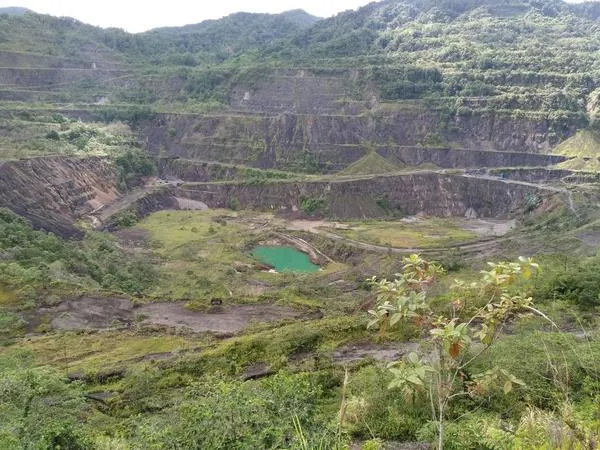
Photo: Aerial view of the Porgera gold mine. Credit: Zijin Mining

In recent years Papua New Guinea has been ranked as one of the most natural resource-dependent economies in the world and has been seen as an example of the cruel ironies that often go simultaneously with big extractive industries which are supposed to lead to the development and lead people out of poverty but yet, on the contrary, the situation only seems to worsen.

PNG is undoubtedly an incredibly beautiful country with pristine beaches along the coastal shoreline and stunning mountain landscapes, valleys, and rainforests up in the highlands, which are sparsely populated in most parts. Natural resources form the backbone of the country's economy, especially mining, timber (logging), and oil with the inclusion of the enormous LNG projects that are in the pipeline which are mostly headed by Exxon Mobil and Total Energies.

Barrick's Inception

Porgera is one of Papua New Guinea’s longest-running goldmines. Operating for over 30 years in the highlands province of Enga, this large mine was expected to produce around 250,000 ounces of gold in 2019. It employed more than 5,000 people and the 5% landowner and provincial equity stake had helped to fast-track the efforts to bring services and education to one of the country’s most remote provinces.

The Porgera Joint Venture (PJV) was created in 1988 with the shareholding split between Placer Pacific (30%), Highlands Pacific (30%), Renison Goldfields Consolidated (30%) and the PNG government had a small 10% equity. [1]

Barrick Gold, a Canadian company that is also the World's largest producer of Gold acquired its interest in the Porgera Joint Venture in 2006 and through its subsidiaries in the country, the company held a 95% stake in the operation with the remaining 5% being held in equal partnership with the Enga Provincial Government and the traditional Ipili landowners. Barrick had agreed to continue production until 2023 before the closure of the mine in 2020. [1]

Since the Porgera Gold mine opened in the 1990s it has likely produced around 16 million ounces of gold and at today's price that would be worth more than K40 billion.

The mine is the vocal point and lifeline of everything that happens in Porgera, 12% of PNG's export earnings had come from the Porgera Gold mine but despite all the wealth it had gained the recent outcry by the people of Porgera the mine reopened has stated otherwise. [2]

Reports since the closure of the mine in the local media still show that the mining township and its surrounding areas still suffer from grinding poverty and a lack of basic government services. [2]

Mine's Closure - Porgera and Politics

Late in April 2020, in the middle of a global pandemic and brewing domestic economic crisis, the PNG government made the surprising announcement not to extend the mining lease on a goldmine that contributes roughly 10% of the country’s total exports. The mine had been closed following the government’s decision not to renew BNL’s special mining lease. A subsequent legal battle and an April 2021 agreement ceded majority ownership of the mine to ‘PNG stakeholders’ while securing BNL’s status as the mine’s operator. [3]

Before the mine's closure, Porgera was a joint venture between Barrick Gold (47.5 per cent), Zijin Mining (47.5 per cent), the Enga government (2.5 per cent), and the Porgera landowners (2.5 per cent) while the Government had no stake or equity in the gold mine. It only earned from what came out of corporate tax.[1]

The announcement not to renew the special mining lease for the Porgera mine was a shock, in particular to the mine’s operator, Barrick Gold, and their joint venture partner Zijin Mining.[3]

The decision on the closure of Porgera was reported widely as being mainly an attempt from the PNG government to harvest more bene benefits from existing projects and issue a stern warning to projects still in negotiation that they mean business.

When Prime Minister Marape was sworn into office in May 2019, he quickly set a narrative to “take back PNG”, arguing that the people of PNG were not getting their fair share of the benefits of the formal economy and major natural resource projects. During that period PNG’s slowly increasing and ongoing economic crisis was set to deepen in the fallout of Covid-19 and it was no surprise that the natural resources sector found itself in the crossfire, in this instance, the Porgera Gold mine was the one to take the fall.

At that time Prime Minister Marape had hoped Barrick would keep the mine operating while negotiating its exit. But the company’s firm refusal of that option and its immediate shutdown of the mine had demonstrated its bargaining power. Since then, Barrick and all stakeholders have been in negotiations with the government to have the mine reopened.[4]

While the government had seemed within its rights not to renew the lease, the unexpected announcement had led Barrick to hit out, by stating the move was the same as nationalization without prior notice and due process. [4]

According to PNG Report, the Porgera closure had cost 4,000 jobs and about K110 million in losses for small and medium enterprises servicing the Barrick-owned mine in Enga Province. Porgera Chamber of Commerce and Industry president Nickson Pakea said those affected included around 700 SMEs and 176 contractors.

Negotiation Process

During the past three years, ongoing negotiations between Barrick Gold and the government to reopen the mine have not yet come to fruition but are eventually taking a favourable course. The issues surrounding one of PNG's longest-serving mines and a significant contributor to the country's GDP have been closely scrutinized by both domestic and foreign interests who have links and have been benefactors of the mine.

Porgera has been on care and maintenance since April 2020 when the government declined to renew its special mining lease to which Barrick Niugini Limited (BNL) has spent more than a billion kina on care and maintenance since the mine was closed in 2019.[5]

Early this year, Deputy Opposition Leader Douglas Tomuriesa had suggested that the government re-negotiate and seek a 25 per cent shareholding in the Porgera gold mine, not 51 per cent.[6]

Tomuriesa pointed out that the Government also needed to be making money.

“Just admit that you were wrong or the advice you were given was wrong and go back and fix this so that the mine can operate again, and the country can make money,” he said.

“Realistically, how can we demand 51 per cent ownership, when we have contributed nothing?

At this rate we are going, we are starting to chase investors out of the country. “Who will want to do business in the country or invest here when our demands are unrealistic?”

Tomuriesa urged the Government to renegotiate a 25 per cent ownership, a 25 per cent share for economic benefits, to allow the mine to start operating.

“They can come up with an agreement where the 25 per cent has to be within the year and leave the other 25 or 26 per cent open for negotiations, which can be something they can go back and forth with but allow the mine to start operating,” he said. [6]

In light of this, Prime Minister Marape issued a statement stating that Barrick is committed to reopening the mine and the Government through Kumul Mining Holdings Ltd as a partner is also committed to reopening the mine. PM Marape is adamant that the re-opening of the mine should occur sometime this year.

In relation, The Lease for Mining Purposes chairman Timothy Andambo said re-opening the multi-million Kina Porgera gold mine would ease the country’s foreign exchange shortage issue. He stated that Porgera was a national asset and can generate the foreign currency ($US Dollars) that this country desperately needs.

Likely Recommencement

After a lengthy negotiation process at the back end of last year (2022) towards the first quarter of this year (2023), The Porgera gold mine has been looking steadily to get on track to resume operations later this year after the government and Barrick Niugini Limited agreed on a partnership for its future ownership and operation. [7]

The early recommencement of the mine, preferably within the first half of this year was critical for the country, as the lead time required for mobilizing resources and the significant start-up capital needed to get the mine back into its full operating capacity would be a challenge.[7]

Under the terms of a binding framework agreement signed by Governor General Sir Bob Dadae and Barrick Gold Corporation President and Chief Executive Mark Bristow, ownership of Porgera will be held in a new joint venture owned 51% by PNG stakeholders and 49% by BNL in which BNL will remain the operator of the mine.[8]

The framework agreement also provides, among other things, for

  • PNG stakeholders and BNL to share the economic benefits generated over the life of mine on a 53/47% basis,
  • BNL to finance the capital required to restart the mine,
  • An increase in the equity allocated to a broad group of landowners who are the customary owners of the land where Porgera is located,
  • And the state retains the right to acquire the remaining 49% of the mine from BNL at fair market value after 10 years.

The parties will now work towards the signing of definitive agreements at which time full mine recommencement work will begin.

Prime Minister James Marape said the framework agreement, reached after months of negotiation, was a historic development, which would benefit PNG for many years to come, and set the precedent for future projects.

“I thank Mr Bristow and his team for recognizing our nation’s aspirations and their willingness to partner with us in realizing this vision at Porgera,” he said.

President and CEO of Barrick Gold Mark Bristow said, on behalf of BNL’s joint venture partners Barrick and Zijin Mining, was delivering on its promise of reaching a fair agreement on the future of Porgera for the benefit of all its stakeholders, notably the local community, Enga province and the PNG government.

“We intend to partner with all key stakeholders to make Porgera a world-class, long-life gold mine,” he said. [8]

Final Outstanding Issue - Taxation

About the news of reopening, it was revealed that there was a clause inserted in the New Porgera framework agreement in which the resolution of Barrick’s old tax liabilities was a condition for reopening the mine. Since then, the taxation matter surrounding Barrick's past operations at Porgera Mine was put under the spotlight.

Internal Revenue Commission (IRC) Commissioner-General Sam Koim when responding to a statement by PM James Marape said the “old Porgera” tax issues relating to Barrick (Niugini) Limited should not be used as an excuse to delay the reopening of the Porgera mine.[9]

These remarks were made by Mr Koim following Prime Minister James Marape’s statement which blamed the delay in the reopening of the mine on a “tax issue”.

“We are almost there. There is just a tax issue standing in the way of Porgera being reopened,” Marape said.

Furthermore, Barrick's chief executive officer Mark Bristow gave an ultimatum to the State parties to resolve all outstanding issues by March 31.

Regarding Bristow's ultimatum, Koim stated that Bristow did not mention what “outstanding issues” were holding up the reopening of the mine.

Barrick has insisted that the IRC accepts its position, even if it goes against the grain of the law but Koim stated “It seems Barrick is seeking a political solution to its legacy tax problems, some of which are very technical matters even for non-experts like me to understand.”

Koim thanked PM Marape and the Government for being “forthright in informing Barrick that the IRC independently administers tax matters, and the Government is not in the business of breaking its laws”.

“Barrick should not use the pressure of reopening the mine to force the Government to address its tax problems. The mine should reopen immediately while Barrick addresses its ‘old Porgera’ tax liability following the due process of law.

in response, Barrick (Niugini) Limited (BNL) said it was “deeply disappointed that the Commissioner-General of the Internal Revenue Commission has chosen to speak publicly about a confidential tax matter.

“The Income Tax Act requires that officers of the Internal Revenue Commission, including the Commissioner-General, treat as confidential the information and tax affairs of all taxpayers.

“BNL has always administered its financial affairs by the laws of PNG and believes the matter should be dealt with by the law and obligations of fairness and confidentiality.” [9]

Whilst the future of Porgera Gold Mine is awaited the outcome of its taxation issue, Marape's justification in simple is to gain better shares for the landowners and the Enga Provincial Government.

Mine Reopening underway

In the first quarter of 2023, during the month of March, Barrick Gold Corporation, the government of Papua New Guinea, and New Porgera Limited signed an agreement on Friday 31st March to resume operations at the Porgera gold mine.

The New Porgera Progress Agreement (NPPA), which was signed, confirmed that all parties are committed to reopening the mine at the earliest opportunity, in line with the terms of the Porgera Project Commencement Agreement and the New Porgera Limited Shareholders Agreement, both of which were concluded in 2022.

The New Porgera project team will now proceed with the filings for a special mining lease and progress the other conditions set out in the Commencement Agreement for the reopening of the mine.

New Porgera's equity at 51% is shared by Papua New Guinea (PNG) stakeholders, including local landowners and the Enga provincial government. Economic benefits will be shared 53% by the PNG stakeholders and 47% by Barrick Niugini Limited, which will operate the mine. [10]


References:

1. http://www.porgerajv.com/Company/Our-Story

2. https://www.pngbusinessnews.com/articles/2023/1/women-groups-in-porgera-call-for-immediate-restoration-of-government-services-in-district-mine-closure-is-not-making-peoples-lives-better

3. http://www.porgerajv.com/Company/Media/Press-Release/Porgera Mine Temporarily Suspends Operations/Saturday, April 25, 2020

4. http://www.porgerajv.com/Company/Media/Press-Release/Update on Porgera Negotiations/Saturday, October 17, 2020

5. https://www.pngbusinessnews.com/articles/2023/1/barrick-niugini-limited-clarifies-its-stance-on-porgera-s-current-progress

6. https://www.thenational.com.pg/renegotiate-porgera-shares-to-25-per-cent-says-tomuriesa/February 13th, 2023

7. Luma.D  https://postcourier.com.pg/porgera-reopening-process-almost-complete-says-vele/February 15th, 2023

8. https://www.barrick.com/English/news/news-details/2021/Porgera-Mine-Set-to-Restart-as-PNG-and-Barrick-Niugini-Limited-Agree-New-Partnership/default.aspx

9. https://www.thenational.com.pg/porgera-mine-tax-debate/ January 27,2023

10. http://www.porgerajv.com/Company/Media/Press-Release/Barrick Steers PORGERA GOLD MINE Back towards world-class production -March 31, 2023

April 12, 2023

Photo credit: Wafi Golpu JV

The State Negotiation Team (SNT) chairman, Dairi Vele, has expressed optimism about the future of Papua New Guinea, stating that the country is currently in a "golden era" of resource projects. Speaking after the signing of the Wafi-Golpu Framework Memorandum of Understanding (MoU), Vele noted that the country has the potential to benefit from significant revenues from a range of projects.

"It’s a golden era of resource projects. I did my first deal in 2008 for the PNG LNG and at that time we were looking at US$30 billion (K105 billion) in revenue over a short period of time," said Vele. "We now have Papua LNG which is just under another US$30 billion in revenue over a period of time. We have P’nyang which overall will get almost US$7 to US$9 billion (K24-K31 billion) and there’s another US$14 billion (K48 billion) in the project."

Vele went on to highlight the potential revenues from the Porgera and Wafi-Golpu projects, stating that Porgera is set to generate US$10 billion (K34 billion) over a 20-year period, while Wafi-Golpu is expected to generate US$23 billion (K80 billion) over a similar period. He also noted that the Golpu deposit, which is part of the Wafi-Golpu project, is still being explored and may yield even greater returns.

Despite the positive outlook, Vele acknowledged that Papua New Guinea must be mindful of the finite nature of its resources. "The only problem with it is that at some stage the resources will run out," he said. However, he emphasized that the country has a unique opportunity to develop and transform its economy in the coming decades.

"So Papua New Guinea, we have no excuse now. We should be developed like Singapore in the next 30 years, I really believe this," Vele said.

April 12, 2023

Photo: Dairi Vele

According to Dairi Vele, the Chairman of the State Negotiation Team (SNT), the structure of the Wafi Golpu gold and copper mine in Morobe Province will be different as the Special Mining Lease will be given early. This means that the developers will be given 30 months to make a final investment decision (FID). Mr. Vele stated, “We will give them 30 months to get the project (going), which is final investment decision. If they don’t do that within 30 months, then the state will take back the licence.” This is a departure from the previous arrangement where the state gave a license but had little recourse if the project did not materialize.

Mr. Vele also explained that the new deal is different from the previous one where Papua New Guinea was only going to get 20% equity instead of the legally mandated 30%. However, the new deal negotiated by the SNT includes the additional 10% equity being given free to the provincial government. To fund the additional 10%, Kumul will pay for the landowners and the provincial government. Mr. Vele added, “Because we have to borrow the money to pay for it and pay our share in the project, Kumul are going to pay for the landowners and the provincial government.”

In summarizing the significance of the new deal, Mr. Vele said, “If you are given a license and you don’t develop a project, then the state will take it off, so that’s what is different now. Now we have to do all those agreements which allow you to get your lease.” This is a unique arrangement as it is not known to have been done before in a mining project.

April 12, 2023

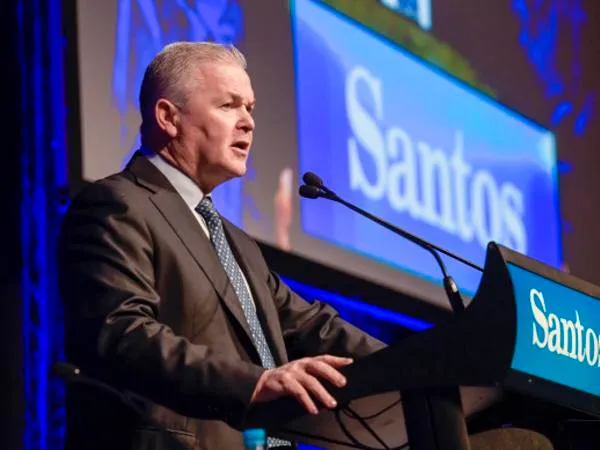
Santos achieved a new production, revenue, and underlying profit record in the last financial year. According to Kevin Gallagher, Managing Director, and CEO, these results were driven by strong customer demand and higher commodity prices. During the recent annual general meeting, Gallagher emphasized that 2022 was the first full-year period after the merger of Santos and Oil Search. He added that production increased by 12% to 103.2 million barrels of oil equivalent (BOE), and sales revenue increased by 65% to US$7.8 billion (about K17.8 billion). Additionally, a record US$3.6 billion (about K8.23 billion) of free cash flow, up by 142%, was generated due to the strong operational performance and higher prices.

Chairman Keith Spence stated that the company would continue to focus on value accretion and delivering sustainable returns to shareholders over the long term. Despite the company's strong performance and new strategy, the share price has yet to reflect it. Spence highlighted that the balance sheet is stronger, with gearing reduced to 18.9% in 2022. As a result, the company declared the return of US$1.5 billion (about K3.4 billion) to shareholders. This includes a 78% increase in the final dividend to 15.1 cents per share unfranked, bringing the total dividends declared for the year to 22.7 cents per share (up 62%). Moreover, an on-market share buyback of US$700 million (K1.6 billion) will also be implemented.

"The board has responded to shareholder feedback and is targeting shareholder returns of at least a 40% payout of free cash flow generated from operations each year," said Spence. This announcement reflects Santos' commitment to creating long-term value for its shareholders while maintaining its sustainable growth strategy.

In Gallagher's words, "Santos' record performance last year was a testament to the company's operational excellence and the strategic value of the merger with Oil Search."

April 12, 2023

Photo: Panguna Mine. Credit: Stefan Armbruster

Bougainville President Ishmael Toroama has warned against people seeking to destabilise the Panguna Legacy Impact Assessment that is ongoing within areas affected by the now defunct Panguna Mine.

President Toroama issued the statement following the move by several parties who are trying to raise a class action suit against Rio Tinto for their role in developing the Panguna Mine and the effects it has had on the environment and the communities around the mine.

The Panguna Legacy Impact Assessment is being funded by Rio Tinto through Tetra Tech Coffey who are conducting the assessment.

It is also the first time Rio Tinto has made any commitment to Bougainville since the cessation of mining operations in Panguna, Central Bougainville.

President Toroama said that the assessment took a lot of hard work and time to get Rio Tinto to at least take responsibility for its actions in developing the Panguna Mine and the effects of it that continues to the present.

“These people are opportunists who saw no reason for a class action suit until the impact assessment was being conducted and the revelation of probable data being collected by Tetra Tech Coffey,” President Toroama said.

“Our Late Revolutionary leader, Francis Ona sought a K10 Billion class action suit against Rio Tinto because his intention was for the company to take responsibility for its actions and for the extent of damage caused by the mine including the civil war that caused the loss of thousands of lives,” President Toroama said.

“Since the untimely passing of Francis Ona no one has sought to revive the class action suit nor conduct a proper study on the extent of damage done by the mine,” Toroama said.

“I will not let people with vested interests tarnish Francis Ona’s legacy and undermine the legitimate government of the people of Bougainville,” President Toroama said.

“These are so called players who only appear on the scene only when it is convenient for them but never present during the heavy lifting,” President Toroama added.

“I urge our leaders, the landowners, our people and all stakeholders to refrain from disrupting the assessment and to let it be completed,” President Toroama said.

“Let me be clear, my government is not protecting any other interest but the Panguna landowners and the people of Bougainville who suffered as a result of the mine,” President Toroama said. 

President Toroama said that the work into getting Rio Tinto onto the scene must not be in vain. There has to be results that can guide the government and the company to resolving the problems from the mine.

April 12, 2023

Photo: Mr. Sylvester Pokajam, President & Chairman of Fishing Industry Association (PNG) Inc.

In response to a recent media publication regarding the scaling down of operations of one of the country's major fish processing operators, the Fishing Industry Association (PNG) Inc. has clarified and maintained that the country's tuna stock is still in abundance.

Cutbacks to business operations within the fisheries sector are mostly due to high imposed taxes and business expenses, the group added.

FIA stated this considering a recent media publication (not PNG Business News) which reported that one of its associated members, RD Tuna Canners, was scaling down due to its fishing fleet’s inability to supply its tuna processing plant with reports of the lack of tuna fish in PNG waters.

In an Interview with PNG Business News, the Chairman and President of Fishing Industry Association (PNG) Inc., Sylvester Pokajam, clarified and pointed out that the outset of the stated reports published on lack of tuna stock in that certain media publication is false and totally untrue.

"The status of the tuna stock (skipjack, yellowfin, bigeye and albacore) based on recent stock assessment indicates that they are all in healthy state and good shape,” he said.

"This is one of the well managed and highly sustainable fishery stock in the Western and Central Pacific convention area,” Pokajam clarified.

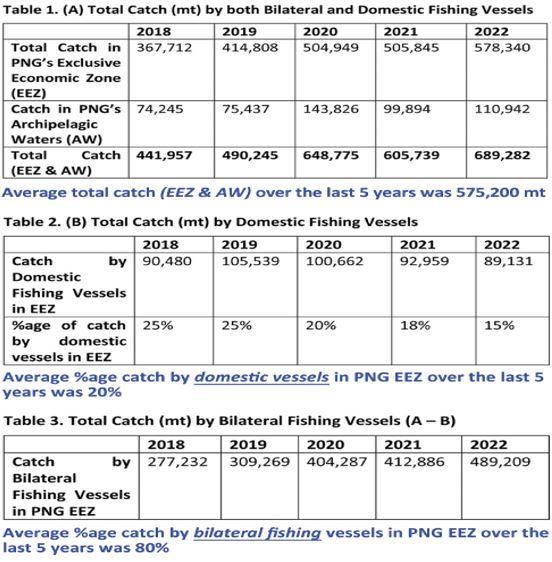
As shown in Table 1. Total average catch over the last five years (2018 to 2022) was 575,200 mt. (Refer to table)

Catch and Effort Summary

Pokajam specified that the issue reported in local media concerning one of FIA's associated members is inconsistent with data already provided and lacks basis.

"The problem associated with RD Fishing company is that RD fishing vessels stopped fishing as of October 2022. The main reason being that under the previous Government’s policy back in 2017, they (government) imposed a fee of US$10,500.00 (K37,0000) per fishing day for our domestic vessels (both PNG flag and locally based foreign flag vessels) that are vertically integrated with the processing plants".

"In the same way, RD fishing vessels are vertically integrated with its processing plant. The fish they catch are brought back in for processing locally in Madang. These vessels are being charged US$10,500 per day as do the other bilateral fishing vessels who do not even offload their catch to our local canneries for processing,” he said.

Table 2 shows the catch by domestic vessels over the last 5 years which represent around 20% as compared to 80% by bilateral fishing vessels as shown in Table 3. (Refer to table)

Mr Pokajam explained that the ramifications of the fisheries policy that has been in place for the last 5 years have seen RD fishing vessels having to stop fishing simply because they could not sustain their operational fishing cost.

Many domestic fishing vessels are also facing the same problem which has seen more than 30 PNG flagged vessels reflagging to other PNA (pacific island) countries who were charging much less than what PNG has been imposing as fees daily.

During the last five-year period, the Fishing Industry Association has been calling on the Government through the National Fisheries Authority to review this policy. RD fishing has been finding it difficult to source their raw material for processing because their vessels had simply stopped fishing.

Mr Pokajam explained further that no vessels can supply RD as they also must fulfil their supply contracts and obligations, and the price of fish is quite high. However, fish caught by bilateral fishing vessels that pay the same fee as the domestic vessels of US$10,500.00 per day do not offload their catch for processing in PNG.

Average total catch by bilateral vessels over the last 5 years as shown in Table 3 make up 80% of the total fish catch in PNG EEZ. (Refer to table)

"These fish do not even make it to our local canneries for processing but are taken back to their own countries for processing. These are serious issues that need to be addressed collectively to avoid any future negative impacts on our tuna fishing industry" Mr Pokajam explained.


References:

  1. Interview with PNGFIA President & Chairman, Mr Sylvester Pokajam
  2. Catch and Effort summary supplied by PNGFIA.

April 09, 2023

Photo courtesy of New Guinea Highlands Coffee

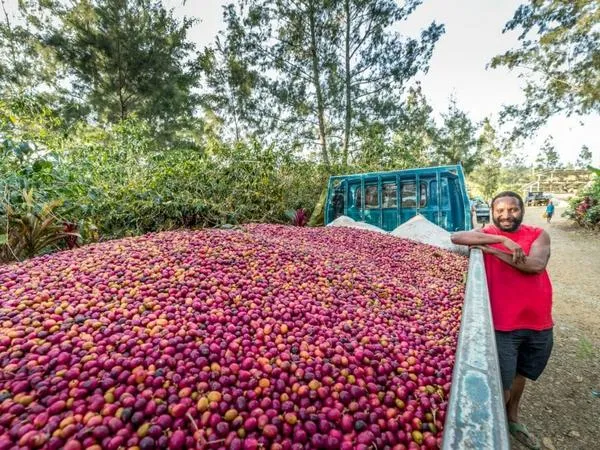
The agriculture sector in the country has been experiencing an upswing in production activities, as noted by the Minister for Agriculture, Aiye Tambua. Notably, coffee, coconut, and oil palm have been the major commodities that have seen a significant increase in their production.

According to the Coffee Industry Corporation (CIC), the country has exported 840,000 bags of coffee, which is an improvement from the previous year's slightly passed 750,000 bags. Moreover, foreign exchange earnings have exceeded K800 million.

The Kokonas Indastri Koporesen (KIK) has reported that there is a growing trend in the export of white copra and copra mill. Although the annual coconut production is estimated at 85,000 metric tonnes, the processed copra stands at 26,000 metric tonnes, white copra at 30,000 metric tonnes, and copra meal is compensated by an increase of 10,000 metric tonnes in white copra. Furthermore, the total export revenue has increased to K206 million in 2022 from K171 million in 2021.

The Oil Palm Industry Corporation (OPIC) has reported a steady increase in the production and export of crude palm oil since the enactment of the Oil Palm Industry Corporation Act (1992). The fresh fruit bunch produced by smallholders has increased from 769,831 metric tonnes in 2019-2021 to 819,356 metric tonnes in 2022. The income for farmers grew from K405 million in 2020 to K760 million in 2021, and almost a billion (K964 million) in 2022.

While the production of the three main commodities has increased, there are still some issues that need to be addressed to meet the target production. Mr Tambua noted that the coffee berry borer is still affecting coffee production in the country, and the government is working to address this issue. Additionally, Kokonas Indastri Koporesen has been challenged to produce seeds and seedlings as the demand for local farmers is increasing. The expansion of oil palm into new provinces has been commended, but the industry needs to assist smallholders in selling their fresh fruit bunches since there are no mills available.

April 09, 2023

Prime Minister Hon. James Marape says the State and Papua New Guinea will be the biggest winners in the giant Wafi-Golpu Mine in Morobe with a 55 per cent take in the economic benefits of the project.

PM Marape said this after the landmark signing of the Framework Memorandum of Understanding between the Independent State of Papua New Guinea and Wafi-Golpu Joint Venture (WGJV) participants Newcrest and Harmony Gold (through their respective PNG subsidiaries).

This momentous occasion was attended by Governor-General Sir Bob Dadae, PM Marape, Deputy Prime Minister Hon. John Rosso and senior Ministers, as well as Morobe Governor Hon. Luther Wenge and members of his Provincial Executive Council.

PM Marape said PNG would win by way of:

  • State and PNG gain 55 per cent of the project economics; 
  • State equity is at 30 per cent with 10 per cent carried;
  • The ten (10) per cent carried equity will be for Morobe and landowners;
  • Two (2) per cent tax for fiscal stability is premium on top of the full 30 per cent tax to be paid;
  • Royalty at three (3) per cent with no deductions;
  • Additional US$394m for social community infrastructure that Newcrest and Harmony are putting on top of Government’s K1.2 billion Infrastructure and Business Development (IBD) grant;
  • A local content forum will be held with developers, Morobe Provincial Government and landowners, where Government will be pushing for local content above 80 per cent in construction period all the way to operations;
  • Additional profits tax was secured but dividends withholding tax was given away;
  • Personal income tax was not treated as company’s contributions, unlike Lihir; and
  • Special Mining Lease (SML) will be issued for only 30 months until investors do Front End Engineering Design (FEED) and Final Investment Decision (FID) to qualify them for extension. After FID, then cash call will be required from Kumul Minerals Holdings Ltd (KMHL)equity contributions.

“Today is a joyous occasion for the people of Papua New Guinea and especially Morobe, as we prepare to celebrate Easter,” PM Marape said.

“A framework has been established whereby Newcrest and Harmony, and the State – on behalf of the Morobe Provincial Government and landowners – will progress Wafi-Golpu Mine development so that it can start at the very earliest.

“This is a major resource, with substantial gold and copper, which will anchor our country for the next 40 years and beyond.

“It took us a while to reach this stage, however good things take time. Sometimes, you have to wait for a while to get the best results, such as today’s agreement.”

PM Marape thanked Vice-Minister for State Negotiations, Hon. Jimmy Maladina, who worked tirelessly with State Negotiations Team (SNT) Chairman Dairi Vele and his team – under Mining Minister Hon. Sir Ano Pala – to make today possible.

“What we have signed today is far better that what my predecessor Peter O’Neill signed in 2018,” he said.

“In Kina terms, this deal is K6 billion better then O’Neill’s 2018 agreement – that I tore apart – in which we had lost 10 per cent equity to the companies. This agreement is also K3 billion better than our own government’s position in April 2022.

“I also appreciate the tireless efforts of Deputy Prime Minister Hon. John Rosso, and the strong Morobe leadership led by Governor Hon. Luther Wenge and Bulolo MP Hon. Sam Basil Jr.

“In our efforts to get back more for our people, we have pushed the bar higher in a green field project, and I want to thank all in Cabinet and Government for your understanding.

“We negotiated fair and hard, and I give it to people like Dairi Vele – who under instructions – fired all cylinders for us to get better results.”

PM Marape thanked joint venture partner investors Newcrest and Harmony for their positive responses to State positions.

“We look forward to all parties working together to complete all statutory requirements to complete Mine Development Contract and SML,” he said.

“I want to also assure all our landowners and the LLGs, Districts and Morobe Provincial Government that we will complete the full requirements of law in respect to your consultations and meetings.”

April 09, 2023

Photo credit: ADB

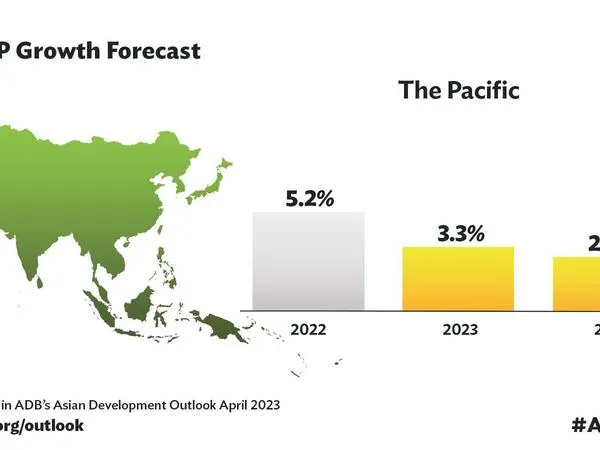
The Pacific is expected to sustain its economic recovery, with growth across all of Asian Development Bank’s (ADB) Pacific developing member countries this year, according to the Asian Development Outlook (ADO) April 2023, ADB’s flagship economic publication, released today.

Pacific economies expanded by an average of 5.2% in 2022 as borders reopened and business activity resumed following the COVID-19 pandemic. Growth in the Pacific is expected to continue albeit moderating to an average of 3.3% in 2023 and 2.8% in 2024 with all 14 Pacific economies projected to expand over the period.

“A broad-based recovery across the Pacific is now on the horizon as the impact of the pandemic recedes and economies reopen,” said ADB Director General for the Pacific Leah Gutierrez. “But this recovery faces several headwinds, including structural risks from disaster impacts and climate change. To help manage these challenges, growth-enhancing reforms such as improving human capital and financial resources should be embraced to help rebuild resilient and sustainable economies.” 

Among external risks, high global fuel prices due to the Russian invasion of Ukraine are compounding inflationary pressures in the Pacific through higher transportation costs and costs of imports. On average, inflation in the Pacific is projected to reach 5.0% in 2023, before slightly easing to 4.4% in 2024. Elevated inflation and the prospect of higher interest rates will weigh on the world economy over the forecast period. 

In 2022, growth in Papua New Guinea (PNG), the biggest economy in the Pacific, rebounded on normalization of economic activity and increased production in the resource sector. Increased mining activities and liquefied natural gas production, supported by elevated commodity prices, should contribute to growth of 2.4% in 2023 and 2.6% in 2024.

Tourism will continue as the main driver of growth for Fiji in 2023. The subregion’s second-largest economy is projected to record 6.3% growth in 2023, which will moderate to 3.0% in 2024. The ADB report says as travel normalizes further, Fiji will increasingly face intense competition from other tourist destinations, such as Indonesia and Thailand. Increasing emigration of skilled workers, due to enhanced access to labor mobility schemes in Australia and New Zealand, will also pose a significant challenge for Fiji’s tourism sector and wider economy.

COVID-19 restrictions in Solomon Islands caused the worst economic contraction in 20 years in 2022. ADO April 2023 expects the Solomon Islands economy to grow by 3.0% in 2023, spurred by the country’s hosting of the Pacific Games. To be held for 2 weeks in mid-November,  the games are expected to bring more than 5,000 athletes and staff from 24 nations. The report says growth will remain relatively robust at 2.5% in 2024 on higher government spending in the lead-up to national elections. 

Growth in Vanuatu is forecast to slow to 1.0% this year following two category 4 cyclones and earthquakes in March 2023. Economic recovery will partly depend on the revival of tourism, but frequent disasters threaten the outlook and divert resources towards reconstruction. According to the ADO April 2023, growth is forecast to accelerate to 4.2% in 2024 driven by reconstruction and recoveries in agriculture, and trade and tourism services. 

The South Pacific economies of the Cook Islands, Niue, Samoa, and Tonga have struggled to recover from 3 years of economic disruption. Growth in the Cook Islands is projected to be 11.2% in 2023 and 9.1% in 2024 due to a steady recovery in tourist arrivals and public investment. Economic recovery in Niue will likewise depend on tourism, with travel having been frequently interrupted by new COVID-19 cases. Meanwhile, mobilization of public investment projects and the initial return of tourists will likely support growth in Samoa—4.8% in 2023 and 2.5% in 2024. Eased mobility and a revival in public investment in Tonga will likely increase gross domestic product by 2.5% in 2023 with growth expanding further to 3.2% in 2024.  

Following the full reopening of international borders, a pick-up in public construction and a nascent recovery in tourism is expected to boost recovery in the North Pacific economies. Economic expansion of 4.1% is expected in the Federated States of Micronesia in 2023 before slowing to 0.5% in 2024, while the Marshall Islands economy is projected to return to growth of 1.5% in 2023 before picking up to 2.0% in 2024. Growth in the tourism-driven economy of Palau is expected to reach 3.8% in 2023 then accelerating to 6.5% in 2024 as demand from its main tourist markets improve. The report says the anticipated renewal of compacts with the United States brightens economic and fiscal prospects but requires strengthened implementation capacity and public financial management. 

Three years into the pandemic, the Central Pacific economies have started on the road to recovery, with growth expected in all three economies. Economic expansion of 2.3% is expected in Kiribati in 2023, picking up to 2.8% in 2024. Nauru’s economic growth will edge up to 1.8% in 2023 and to 2.2% in 2024 while Tuvalu will see 2.5% growth in 2023 before slowing to 2.0% in 2024. The growth outlook in all three economies is driven by the rollout of public infrastructure projects, supported by the reopening of international borders. 

ADB is committed to achieving a prosperous, inclusive, resilient, and sustainable Asia and the Pacific, while sustaining its efforts to eradicate extreme poverty. Established in 1966, it is owned by 68 members—49 from the region.


Article courtesy of the ADB
April 09, 2023

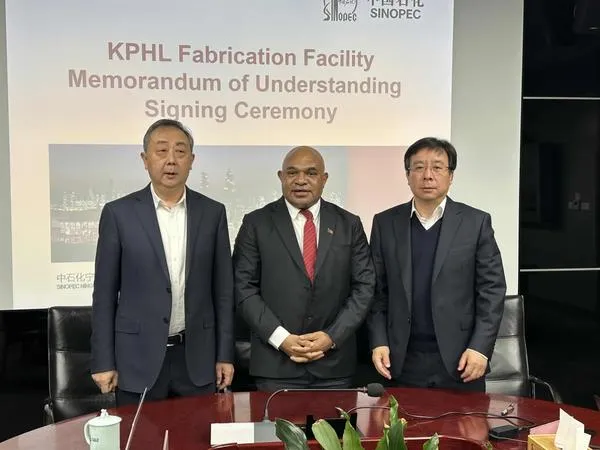
Photo: KPHL managing director Mr Wapu Sonk (centre) with Mr Zheng Lijun, President SNEC and Mr Chen Lie, Vice President CSCEC, at the MOU signing ceremony

The Kumul Petroleum Holdings Limited fabrication facility is now one step closer, after the signing of an MOU with two international companies to oversee the engineering, procurement and construction phase of the project.

Managing director Mr Wapu Sonk said, “We have now secured an MOU with  Sinopec (Ningbo) Engineering and Construction (SNEC) and China State Construction and Engineering Company (CSCEC) to work with us on the EPC phase of this fabrication facility. This complements the agreements we already have in place with two Dubai based companies – A2Z LLC to design the heavy fabrication engineering plant and Fabtech International to manage the facility for us.”

“The Facility will have a capacity of 20,000 tonnes per year, producing steel, mechanical, piping and electrical modular packages, such as those that will be necessary in the construction phase of the Papua LNG Project and subsequent LNG and mining projects.”

Mr Sonk outlined that the fabrication facility would provide direct employment for 1000 skilled Papua New Guineans and indirect jobs for up to 3000 more local people when operating at full capacity. He noted that if the facility was run 24hrs per day, the number of jobs could even double.

Managing director Sonk added, “Kumul Petroleum is expecting to work with the Papua LNG Project’s EPC contractors to start using the Facility when the project achieves FID and enters the construction phase later this year or early next year.”

Mr Sonk reinforced that the Facility was designed to meet national content requirements for petroleum, energy, mining and major infrastructure construction in the country, for provision of professional technical services, in addition to the likely high number of employment and training opportunities that such projects would generate.

Mr Sonk added,” Site works for the construction of the Facility and associated construction training academy have already started, close to the existing ExxonMobil managed LNG plant at Caution Bay outside Port Moresby. Kumul Petroleum is advertising for recruitment of trainees for the Facility, through the KPHL job search and advertisement software portal (www.wanpng.com) and other agencies.”

“We intend that the Papua LNG Project will have a greater national content than the previous PNG LNG Project, and this Facility will contribute greatly towards this goal.”