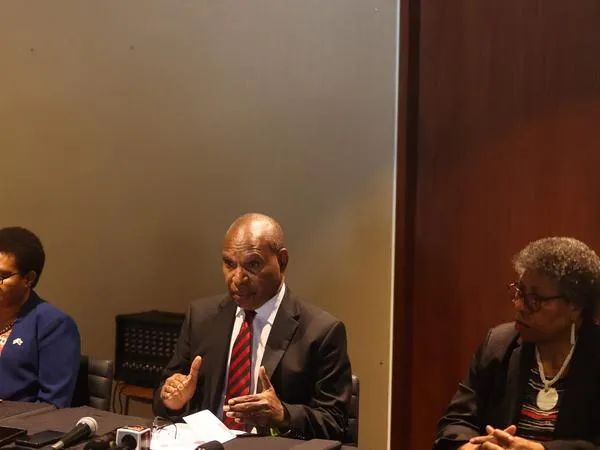
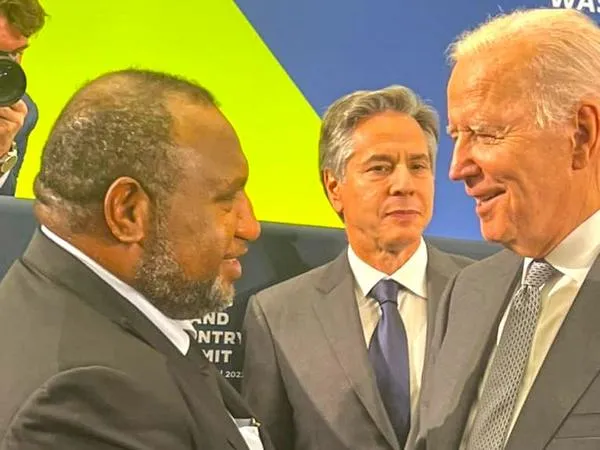
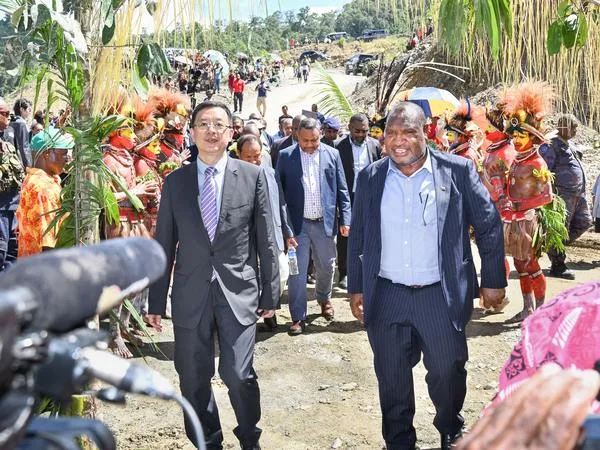
Photo: PM Marape with International Trade and Investment Minister Hon. Richard Maru and Vice-Minister Hon. Kessy Sawang at the launch of the SEZ Summit on Sunday night.-PM’s Office Media
Prime Minister Hon. James Marape says “a sustainable economy is a diversified economy”.
He said this on Sunday (May 7, 2023) night when opening the three-day Papua New Guinea Special Economic Zone (SEZ) Summit in Port Moresby.
“The effective anchor of a sustainable economy is a diversified economy with all parts of our country and citizens participating,” PM Marape told a fullhouse crowd of international speakers, Government departments and agencies, private sector and representatives from all provinces.
“That is why SEZ development has been a focus of my Government since 2019.
PM Marape said Papua New Guineans had been “hynotised” into thinking that oil, gas and mining were everything.
“We have been hypnotised into thinking that oil, gas and mining can give us the boost in our economy and create economic growth,” he said.
“This is a steroid-type economy with boom and bust cycles.
“We must anchor our economy on areas that are sustainable where everyone – not just one or two landowner groups – are producing with markets at our fingertips.
“I want us now to work our forestry, coffee, copra, cocoa, vanilla, fisheries, livestock, tourism, all service sectors.”
PM Marape said bilateral relationships between PNG and some of the largest economies in the world ensured a readily-available market for the country’s produce.
“Yet, we have not been working to our fullest potential,” he said.
“It is really ourselves in getting our act together.
“SEZs will be and must be the focal point in our drive to ensure our economy diversification strategy – including our push towards downstream processing of our resources – is arrived at, at the very earliest.”
PM Marape told the summit that his Government would give its fullest support to Minister Maru and his department to progress SEZs in PNG.
PM Marape commended Minister Maru and Vice-Minister Hon. Kessy Sawang for organising the summit and creating a “one-stop shop” for SEZs and international trade and investments.
“This department will be a one-stop department to facilitate ease of application, as well as doing business in our country,” he said.
“I ask all of us in Papua New Guinea to be optimistic, to support the course as set by this department in the SEZ conversation, so that we unbundle the fullest potential of our economic strengths in all parts of our country.”
The Global Dialogue on Seafood Traceability (GDST) announced on the 18th of April 2023 that the Fishing Industry Association of Papua New Guinea's (FIA PNG) version of Fisheries Information Management System (iFIMS) software has successfully passed the GDST Capability Test. [1]
The GDST Capability Test is an online platform that allows businesses involved in the fisheries and seafood industries to verify whether software solutions can deliver on their promises of compatibility with the GDST interoperable traceability standard. Software products that pass this test are eligible to carry the “GDST Capable” logo. [2]
PNG FIA’s Sustainability & CSR Director Marcelo Hidalgo stated it is a great achievement for GDST to recognize the organization as a competent association to provide transparency in the fisheries industry in the Pacific. [1]
“We, the Fishing Industry Association of Papua and New Guinea (FIA PNG), are thrilled that our version of the iFIMS (Fisheries Information Management System) has passed the GDST Capability Test. As a vertically integrated tuna harvesting operation in the Western Central Pacific Ocean; it is important that this complex fishery be recognized as GDST-capable.”
In relation to the announcement, GDST Executive Director Greg Brown also expressed positive sentiments to the PNG group.
"The ‘GDST-Capable’ logo is awarded to software that is capable of fully implementing the GDST Standard. It’s exciting to see another key player in the Tuna sector, FIA PNG, make this important step towards enhanced transparency and assurance against illegal, unreported, and unregulated fishing," Brown said. [1]
The GDST is an international, business-to-business platform established in 2017 to create the first-ever global industry standards for seafood traceability.
More than 60 companies and associations participated in the GDST’s consensus-based drafting process, with strong participation from around the world, across the supply chain, and at all enterprise sizes. [2]
GDST focuses on partnership and participation with organizations that are dedicated to advancing the standardization and adoption of Interoperable Traceability throughout fishery and aquaculture supply chains around the world through GDST 1.1 governing information content and data formats for seafood traceability systems.
Interoperable traceability provides operational efficiency, manages and mitigates risk, provides easy and certain access to Food Safety recall and certification information, communicates product provenance, and facilitates global market access.
The Global Dialogue has laid the foundation for systems to build on setting the stage for fully transparent seafood supply chains. [2]
References:
1) Fishing Industry Association (Brief Interview) https://www.fia-png.com
2) traceability-dialougue.com/www.thegdst.org.
The Honorable Minister for International Trade and Investment, Richard Maru, MP, announced recently that the Marape Government has made a historic decision to establish for the first time, the National Trade Commission Service, starting with establishing eight new Trade Missions around the world this year with the first Trade Mission to be established in Shanghai, China.
Papua New Guinea’s Trade Missions will be equivalent to Austrade of Australia, New Zealand Trade Enterprise (NZTE), Canadian Trade Commission Service and Malaysia External Trade Development Corporation where our trade representatives will have their own establishments either in foreign missions or stand-alone offices or through the appointment of both Papua New Guinea Trade Commissioners or Honorary Trade Commissioners throughout the world starting with eight (8)countries. The primary responsibility of the Trade Commissioner is to look for export markets for Papua New Guinea goods and to promote trade investment opportunities in Papua New Guinea especially to attract foreign direct investments. One of the major priorities is to attract investors to invest in our Special Economic Zones (SEZ) and also in Free Trade Negotiations with various countries starting with China and Indonesia.
Minister Maru said, “This move is very grateful for the support we have received from the Prime Minister and Cabinet and is very timely as we prepare for the historic SEZ Summit which will be opened by the Prime Minister this Sunday”. “For too long Papua New Guinea has been an exporter of raw materials to the world, this will no longer be the case. The Marape Government is serious about processing all our raw materials in the country including all our fish, logs, cocoa, coffee, and other agriculture commodities and even our gas and mining resources. To do that we need to bring in capital, technology, and this will require very significant investment into the billions and billions of kina. The Governments other priority is on green and clean energy, we need to find alternative sources of energy which are clean so that we can do away with expensive fossil fuels that we have been using pre-independence and post-independence. The country needs cheap and reliable electricity to reduce our cost of production across all industries so that Papua New Guinea can become a competitive major manufacturing and industrialised country in the future. Without investors from across the world, it will be difficult to realise our vision to build a bigger and most sustainable and robust economy as we work towards achieving economic independence by 2032,” Minister Maru said.
The first 8 Trade Commissions to be established are: Shanghai - China, Brisbane - Australia, Bangkok - Thailand, Jakarta – Indonesia, Brussels – European Union, Dubai – United Arab Emirates, Manila - Philippines and Singapore. Those offices will either be manned by Papua New Guinean Trade Commissioners or Honorary Trade Commissioners from those respective countries with the challenge of funding this Trade Mission, we will evaluate and deploy the most cost effective strategies to set up all this missions this year.
“The Ministry is extremely grateful that the number of SOEs have express interest to fund a number of the Trade Commissions. In terms of priority, the first Trade Commission we want to establish is Shanghai in China. It ranks as our highest priority as China is now offering through the President to buy all our LNG gas and our other mining and petroleum products, our fish, logs and all the other goods. China has the capacity to buy all our goods and that has been expressed in numerous meetings we have had and the Prime Minister has had with the Chinese President,” Minster Maru added.
Minister Maru also announced that he will be sending his Department Acting Secretary to Shanghai on the 13 May, 2023 to look around for office space and they will be working very closely with the Government of China and the Papua New Guinea Embassy in Beijing to assist identify a suitable office space that can be obtained in a right location to establish the Trade Mission which Minister Maru wants the Prime Minister Hon. James Marape, MP, to officially open when he visits China later this year. This is a very significant move to show the country and the world that Papua New Guinea will no longer continue to do trading with only its traditional trading partners who are not buying large volumes of Papua New Guinea products.
“We are diversifying our trading partners starting this year with the view to securing Papua New Guinea’s economic future. Under our “Walk across Asia” Trade and Investment focus, we are keen and focused on developing Trade and Investment ties with China, Indonesia, Thailand, Singapore, Philippines, United Arab Emirates, European Union, Australia, Indonesia, Japan, Malaysia etc. This is only the start; we are going to look at opening up our Trade Missions after this initial eight. “Economic Security, Food Security, Energy Security and Climate Change Security is our most important priorities, and we will be working to forge new trade and economic partnerships with various countries starting with the first eight that we feel, that we know provide the best opportunities for more investment into PNG and good investors to secure more export opportunities for our products to be sold to the world at large. We thank the Marape Government for recognising that International Trade and Investment is key to securing our economic future. The decision to establish the Ministry of International Trade and Investment is long overdue and we are determined to deliver many large-scale investment projects that will create thousands of jobs, bring in foreign currency and really help to develop our economy now and well into the future. We hope to announce up to five new Special Economic Zones (SEZ) that we will prioritise to develop this year at the summit. The summit will not be another talk feast but will be action oriented and work has already started with the Paga Hill development as our first large scale privately owned SEZ,” Minister Maru alluded.
The Minister for International Trade and Investment said “I finally want to commend the Prime Minister for his bold decision as a government to introduce for the first time the Trade Commission Service as a key strategy to find new markets for Papua New Guinea products and to bring in more foreign direct investment into Papua New Guinea which is so critical to building a more robust, inclusive and sustainable economy that will help to create jobs, create wealth for our citizens and build a bigger and stronger and more prosperous Papua New Guinea”.
The Department for International Trade and Investment will be advertising very shortly for applicants to fill the positions of Trade Commissioners in the first eight Trade Missions. The Department is looking for very highly qualified Papua New Guineans who have a very strong commercial background minimum of Masters Degree qualifications with a strong academic background and work experience who can deal with the corporate world in driving PNG's trade agenda in terms of securing export markets and bring in foreign direct investments.
PNGX, Papua New Guinea’s national stock exchange, will adopt new Listing Rules from 3 July 2023.
The new Listing Rules are a key step towards the development of a more effective secondary market in Papua New Guinea. They contribute to ensuring that PNG has a world class capital market that is internationally respected and recognized.
PNGX’s Listing Rules govern the listing of issuers and the quotation of securities, continuous disclosure obligations and some aspects of a listed entity’s conduct. All companies listed on PNGX are required to comply with the Listing Rules.
The existing PNGX Listing Rules were introduced in April 1999 and were closely based upon the Listing Rules of the Australian Stock Exchange. They were last amended in November 2012. The new Listing Rules provide a modern framework and market structure meeting the highest world standards.
The proposed Listing Rules were released for consultation in October 2022. The new Listing Rules are largely unchanged from the consultation version.
The new criteria for a company to qualify for listing are set out in the Rules. In brief, they are:
Full details are set out in the Rules available on the PNGX website.
Ms Elizabeth Wamsa, PNGX General Manager said “We welcome discussions with companies thinking of listing now or in the future. With the new extractive industries coming on line shortly and growing demand for new opportunities from investors, the market sentiment will be ideal for listing.”
“We would like to thank the market for their feedback during the process of developing the new Listing Rules” said PNGX Chairman, Mr David Lawrence. We also thank the Securities Commission of Papua New Guinea for their support and approval of the new Rules.”
PNGX and investors in the PNGX markets have an interest in high standards of corporate governance practices by the Boards of companies in which they invest. The proposed rules refer to reporting corporate governance matters as set out in the PNGX Corporate Governance Standards. These standards are presently released for consultation until 5 May 2023. Subject to the responses received, it is expected that they will also take effect on 3 July 2023.
PNGX, Papua New Guinea’s national stock exchange, will move to faster settlement of trading from 3 July 2023.
PNGX’s Business Rules, which govern the trading and settlement of all trades on the market by stockbrokers, will be amended to require settlement on the second day after a trade (T+2), which is faster than the current 3 days (T+3).
The proposal was released for consultation in October 2022 with the new Listing Rules.
The change from T+3 to T+2 brings the PNG market in line with markets around the world.
T+2 means quicker payment for investors when they sell shares. It also reduces the risks to investors, stockbrokers and PNGX.
Ms Elizabeth Wamsa, PNGX General Manager said “We would like to thank the current stockbrokers and the Securities Commission of Papua New Guinea for their support for this change. Making the market more efficient is one way we can try to attract more stockbrokers, more investors and more listed companies.”
The amendments to the current Business Rules are the precursor to a comprehensive rewrite of the Business Rules to be completed in the second half of 2023.
“This change improves the efficiency of the PNGX market. It is another step in ensuring that PNG has a world class capital market that is internationally respected and recognized” said PNGX Chairman, Mr. David Lawrence. “It is part of a larger, long-term PNGX program to further develop the market. But to be able to fund those future changes, PNGX needs to have confidence there will be structural change and increased activity in the market by way of initiatives such as privatisation of SOEs, greater on-market activity by superannuation funds, tax reform and incentives for listing, wholesale corporate debt market and more trading activity by retail investors. We can’t justify spending millions of kina based on current levels of activity without stakeholder commitment to growth” he said.
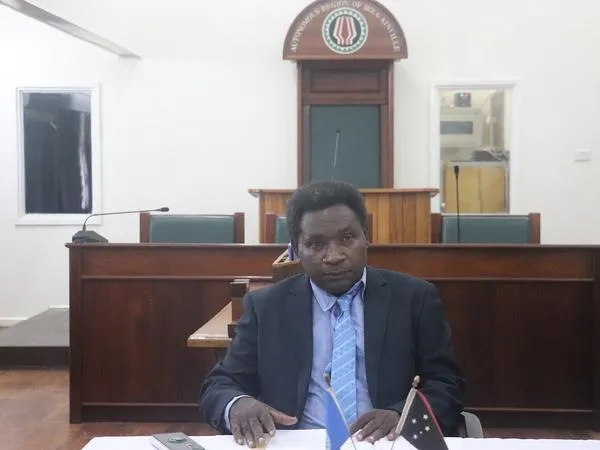
The Autonomous Bougainville Government has called on the Papua New Guinea Government to consider a special economic zone from Bougainville as it prepares to host its international summit on Special Economic Zones next week.
ABG Acting President Hon. Patrick Nisira made the call in a media conference yesterday where he also announced an open invitation to Trade Missions to set up their offices on Bougainville.
Hon. Nisira, who is also Minister responsible for Commerce, Trade and Economic Development, said these efforts including the development of special economic zones in Bougainville, are part of the Government’s plans to create economic growth and drive responsible business partnerships with international and national partners.
“Special Economic Zone (SEZ) is one of the potential industrial development concepts that will encourage duty-free and tax-free zones for goods and services in selected sites in Bougainville, including the development of financial hubs to make Bougainville attractive for investment,” Nisira said.
“We ask the Papua New Guinea Government to support us in this endeavor, and for the international development partners to form strategic alliances to make the SEZs concept work for the region.”
“This is a timely call as I have noted the PNG Government will be hosting an international Special Economic Zone Summit in Port Moresby this month. We are hoping for the national government to recognize and include one of the SEZs from Bougainville in its national SEZ list,” he added.
The Bana Special Economic Zone project is an economic development initiative of the people and leaders of Bana District in its three constituencies in South Bougainville. It aims to stimulate economic activity through the generation of increased trade balance, employment creation, increased investments and will allow Bougainville to trade at a globally competitive level.
Photo: Chairman David Burbidge
According to the Independent Power Producers of Papua New Guinea, the debts of PNG Power Limited (PPL) to independent power producers (IPPs) have exceeded K500 million. IPPs are the primary source of electricity for PPL, and the accumulation of arrears has reached a critical level where it cannot continue without severe consequences, including the potential collapse of the power sector in the country.
Chairman David Burbidge expressed concern about the mounting debt, saying, "It remains of concern that PNG Power still has significant arrears in payments to independent power producers (IPPs) who provide the majority of electricity to PNG Power and its customers. This amount exceeds half a billion kina, and this situation cannot continue without significant consequences, which may include a total collapse of the power sector as PNG Power’s creditors see no option but to pursue legal remedies for non-payment of their mounting debts."
Mr Burbidge emphasized that the situation is unsustainable and could have dire consequences if not addressed promptly.
Mr Rio Fiocco, the President of the Port Moresby Chamber of Commerce and Industry, also commented on the issue, saying, "In Moresby, we have been experiencing power blackouts fairly regularly lately. But compared to other centres, we are actually doing well, very well, because in other towns such as Wewak, Vanimo, Kavieng and others, they have blackouts that sometimes last the whole day. That's because for whatever reasons PPL is not supplying diesel for the generators."
Mr Fiocco noted that many businesses have resorted to using backup generators to cope with the unreliable power supply. However, this is not a sustainable solution, and the situation calls for urgent action from all stakeholders to address the mounting debts and ensure a reliable and consistent supply of electricity in the country.
BSP Financial Group Limited (BSP) has appointed Nuni Kulu as the new Group Chief Operating Officer (GCOO) on Wednesday 26th April, 2023, making Ms. Kulu the first Papua New Guinean woman to have this leadership role in its history.
With a career that spans over 25 years in the banking industry, Ms. Kulu entered as a graduate trainee in 1998, before moving into Retail Banking in 2019. Ms. Kulu worked across various roles at BSP and was later appointed to General Manager where she led the first Digital Strategy Business Unit for BSP.
After the recent resignation of Frank van der Poll, Ms. Kulu was appointed as the internal successor to the GCOO role and will now be responsible for the Bank’s operations functions across PNG and the six Pacific Island countries in which BSP operates.
BSP Group CEO Mark Robinson said, “The strategic role of GCOO is critically important for BSP. It requires a leader who fosters relationships based on integrity, is focused on the operational efficiency of the bank and builds internal team capability through process improvement.”
Mr. Robinson added, “Ms. Kulu understands the nuances of working in complex and challenging environments. Her deep knowledge of banking, digital, and her connection to customer and community will support BSP to continue to transform our banking services”.
After her appointment Ms. Kulu announced, “I am privileged to be in a position to help shape the operations of the largest bank across the Pacific and I am committed to making banking easier for our customers. I am honoured to assume the Chief Operating Officer position within the Group and I hope to inspire and mentor others to take on similar leadership roles.”
BSP Board Chairman, Robert Bradshaw remarked; “the BSP Board is delighted to see the investment BSP has made to promote the next generation of Papua New Guinean women as executive leaders, reflected in Ms. Kulu’s appointment to this senior role”.
Ms. Kulu hails from Manus and holds a Bachelor of Commerce from the Australian National University.
BSP is proud to support women in leadership through meritocracy and BSP invests in the development of both male and female leaders and encourages Papua New Guineans to excel in their areas of expertise.
Photo: BSP Group General Manager for Corporate Banking Peter Beswick
“Business sentiment is robust following the announcement of the Papua LNG project reaching the front-end engineering and design (FEED) phase and Porgera’s resumption progress announced by Barrick CEO in early April,” according to the BSP Quarter 1 2023 Economic Insight report.
BSP’s Group General Manager for Corporate, Peter Beswick said, “Papua LNG’s final investment decision (FID) is expected to be reached in late 2023 or Q1 2024. This will deliver substantial opportunities through local content for landowner and PNG companies … either directly, or through Joint Ventures, with global engineering, procurement and construction contractors.”
Mr Beswick said, “On the downside, delay of Porgera’s resumption will prolong distress with FX supply over the short-term” further adding that “total foreign currency reserves fell from US$4.1b in 31st December 2022 to US$3.9b, as at 29th March 2023, due to government debt repayments and increases in BPNG FX intervention.”
“BPNG states that IMF funding of US$918.2m over the next three years for budget support, will have minimal effect on BPNG’s international reserves, due to increases in intervention and Government debt repayments,” adding that medium-term outlook remains optimistic and will be dependent on timely commencement of the resource projects (Porgera, Wafi-Golpu, P’nyang, Twinza),” said Beswick.
Beswick noted that, “inflation still remains a primary concern for BPNG, businesses and consumers”. However he added, “Inflation is expected to recede in 2023 compared to last year, as lower global output, improvements with supply chain and lower commodity prices, especially on fuel, are to contribute to lower price pressures”.
Photo: BSP Group General Manager Treasury Rohan George
“Lower commodity prices and the delay in Porgera’s resumption is expected to prolong distress in PNG’s foreign exchange market,” according to the BSP Quarter 1 2023 Economic Insight report.
BSP’s Group General Manager for Treasury, Mr. Rohan George said “FX market turnover in the March Quarter fell 2.4%, from the December Quarter 2022”. He noted, “a pullback in commodity prices, in particular oil, copper and palm oil, and the January holiday season reduced FX market turnover volumes”.
According to Mr. George, “FX turnover for 2023 increased by 8.9%, compared to prior year”. However, he also advised that outstanding FX orders with BSP increased seven fold (700%) in the past quarter, with post-Christmas import orders increasing rapidly, whilst FX inflows fell.
The kina mid-rate was stable against the U.S. dollar at 0.2840. The Australian dollar fell 1.5%, reflecting weaker commodity prices, concerns of an economic slowdown and a pause in interest rate increases.
Mr. George noted that BPNG FX intervention in the March Quarter remains unchanged, but rose 59% from one year ago. He further added, “despite increased BPNG intervention, the PNG FX market continues to miss the foreign currency contribution from Porgera.”
“After subdued FX inflows in the March quarter, we do not expect a pickup in FX inflows in the June quarter. BPNG will continue to support the market, however subdued commodity prices and the uncertain global environment will see outstanding FX orders remain at high levels and subsequent FX order execution times lengthy,” Mr. George concluded.
To manage volatility in foreign currency flows, businesses should place FX orders (with correct documentation), as soon as possible, ensure orders are cash backed whilst awaiting execution, tax clearance certificates are current and reflect the expected FX order execution time.
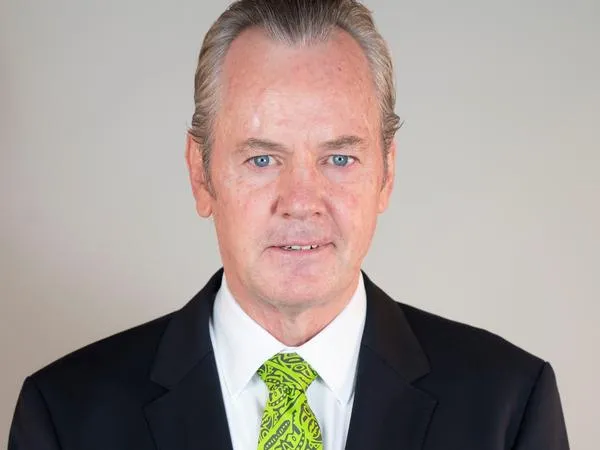
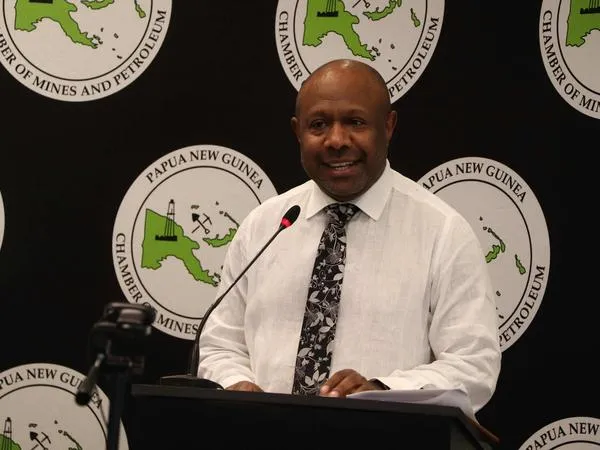
The PNG Chamber of Mines and Petroleum (“The Chamber”) has confirmed its council and executives for its next term at its 35th Annual General Meeting held at the Hilton Hotel in Port Moresby last week. President for the Chamber Mr. Anthony Smaré and Senior Vice President- Mr. Richard Kassman (Total Energies) were re-elected unopposed. Vice President Philip Samar (K92 Mining) was elected as Vice President, and Mr. Harold Duigu (Ok Tedi Mining Limited), Hitesh Lal (Exxon Mobil), Stanley Komunt (Newcrest Mining Limited (Lihir) were elected as Councillors. Also returning to the Chamber unopposed is Associated Council Member Mr. Mark McMonagle, CEO of Sun Engineering.
In his address, President of the Chamber, Mr. Anthony Smaré welcomed the new councilors saying another busy year lies ahead for the Chamber with key events including the 2023 PNG Community Affairs & National Content Conference and Exhibition in August in Lae, the Asia PNG Investment Conference planned for Hong Kong in October followed by the PNG Energy and Resources Investment Conference in December, amongst other policy matters the Chamber is working on with all its members and stakeholders. Mr Smaré also flagged the special resolutions which will be put to the membership for approval in the next few months for the change of the Chamber’s name to PNG Chamber of Resources and Energy (PNGCORE) and changes to the constitution to update the Chamber’s governance, structure and operations to better serve its members and achieve it objectives.
The Chambers’ Chief Operating Officer, Mrs. Pansy Taueni-Sialis in her presentation on Repositioning the Chamber also emphasized that national events like the upcoming Community Affairs & National Content Conference expands robust dialogue between all stakeholders and just like its Investment Conferences, it aims to build the platform between government and other stakeholders to identify investment ability and restore financial stability in the PNG Economy.“ Such engagements between government and stakeholders only become fruitful when policies are friendly and conducive for our stakeholders and investors. “
The Chambers’ Policy Manager Ms. Gretel Orake in making clear the Chambers’ stance on policy matters, stressed the importance of Member input as being critical for the industry in terms of the narrative surrounding policy matters. “Member input is critical as it yields mutual benefits for all involved. And since the Chamber is uniquely positioned within the industry, the Chamber and its members have a role to play by sharpening the language it uses when it comes to policy matters. The narrative we use must harness, represent, advocate, and enhance the interests of the industry.”
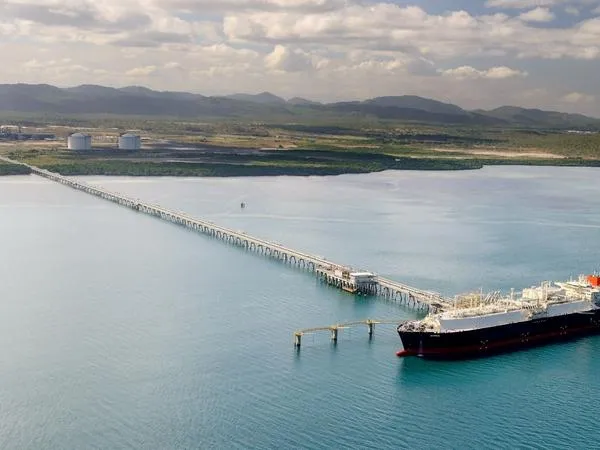
Santos refers to its announcement of 27 September 2022 regarding the binding conditional offer from Kumul Petroleum Holdings Limited (Kumul) to acquire a five per cent interest in PNG LNG for asset value of US$1.4 billion, including a proportionate share of PNG LNG project finance debt of approximately US$0.3 billion (the Offer). On 23 December 2022, Kumul extended the Offer period until 30 April 2023.
Kumul has advised Santos it has now extended the period in which the Offer will remain open until 31 August 2023. Santos has agreed to deal exclusively with Kumul during this period regarding the sale of equity in PNG LNG.
Kumul has agreed it will work closely with Santos during this extension period in order to assist it in arranging the finalisation of its acquisition financing with third parties. There is also strong support from both the government and the Joint Venture partners for the transaction proceeding.
Santos Managing Director and CEO Kevin Gallagher said PNG LNG continues to represent compelling value for shareholders.
“With the significant changes in the global energy landscape over the last 12 months, PNG LNG remains a world-class asset that is low-cost, low emissions intensity and delivers reliable LNG supply to our customers in Asia,” Mr Gallagher said.
“The project is positioned in a supportive regulatory environment, with fiscal stability arrangements in place ensuring that it contributes strong cash flows to project participants and delivers significant economic and social benefits to the nation. While the PNG project is a very valuable asset and Santos’ balance sheet is strong, Santos remains committed to selling five per cent equity in the project to support the PNG government to achieve the nation’s equity objectives.”
Prime Minister James Marape said, “I am fully supportive of continuing the transaction to purchase five per cent of PNG LNG in pursuing PNG national interest and its nation building programmes. Given the volatility in the financial markets and high interest rate environment, I support Kumul’s request for a time extension to complete the transaction. With credible private sector lenders significantly advanced, I am confident that Kumul will secure an appropriate financing package.”
Photo credit: AG Energy Limited
Project to Provide Resilience to Port Moresby's Energy Grid
Power is considered as the major backbone for all nations throughout the world including PNG on the basis of which the development of the country depends. Within this context, Energy has become an essential element in man's efforts to meet basic human needs, as energy generates power.
Due to Papua New Guinea's mountainous terrain and high rainfall in many parts of the country, Papua New Guinea has abundant, although largely untapped, hydropower resources but despite many years of economic growth, less than 20 per cent of the country’s population is connected to the power grid, which is owned and operated by state own entity, PNG Power Ltd. Over the years the government has been working closely with the private sector and international partners to scale up household access, having set a goal of 70 per cent by 2030.
Generally, if a country has the resources to generate power at a competitive price the people of the country get the benefits in terms of improvement in their social and economic life. Given the relatively small population size, low access to electricity, commercial and technical challenges of hydropower, Papua New Guinea today has an installed capacity of less than 250 Mega Watts (MW). However, this is likely to increase over the coming decade with several projects under development.
With solar and renewable energy lacking clear strategic development plans, hydropower is expected to drive future renewable energy generation, as evidenced by the launch of several new hydro projects in recent years such as the Ramu 2 Hydro project and the recently completed Edevu Hydro Power plant.
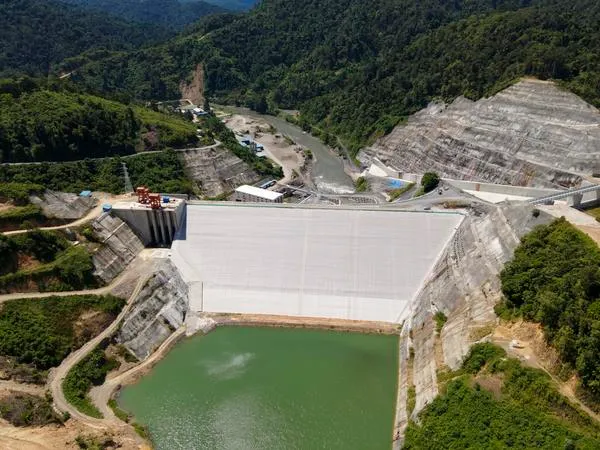
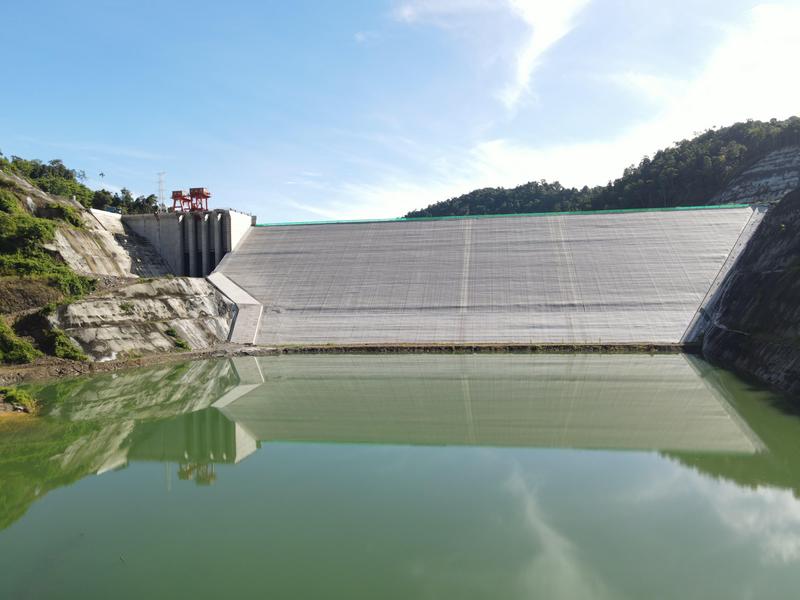
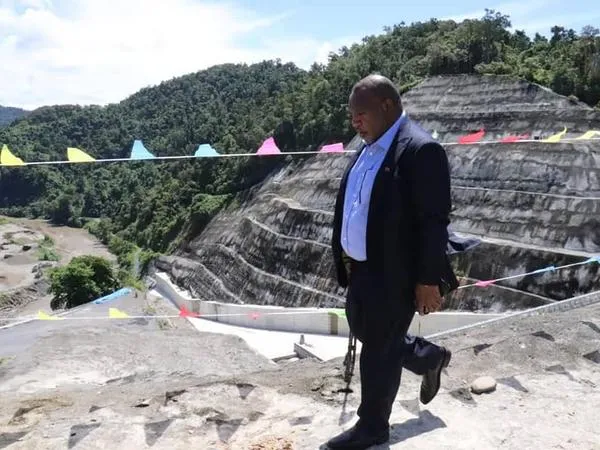
The recent Edevu Dam impounding Ceremony Launched by Chinese investment firm PNG Hydro Power Ltd kicked off the opening of the Hydroelectric Power plant in Edevu on Friday 21 April, with a view to delivering accessible energy and power supply to local communities to the country's Capital and surrounding areas. [1]
Photo: The newly constructed K650 million Edevu hydro project is seated below the Brown River in the new Hiri Koiari District of Central Province.
Representing a total investment of over K700 million, the hydro power project will have an installed power generation capacity of 54 Mega Watts (MW) which is set to bring a reliable supply of electricity to the Southern region of the country. Within its 15-year development process the Edevu hydro power plant project has lived up to its expectations despite the social and economic challenges it has faced. In terms of its local content component, the construction of the hydropower project created a lot of jobs and is still expected to provide an abundance of opportunities in the coming years.
The company PNG Hydro Development Limited has invested K650 million in the project which is one of Central Province’s biggest assets that will supply electricity not only to Port Moresby but the whole Southern region in the near future. [1]
At the launching ceremony of the project, Prime Minister Hon. James Marape thanked the Koiari landowners of Central province and Chinese investor PNG Hydro Development Ltd for making the massive K750 million Edevu Hydropower Project along the Brown River possible.
“We are a nation in pursuit of development. In the power sector, we want 70 per cent of our country – by 2030 – to have accessibility to cheap, reliable, and green energy to our country,” PM Marape said.
He said what the Edevu landowners had done, by going into partnership with a foreign investor, was a good example for traditional landowners in the rest of the country.
“You have shown a wonderful example to other landowners right across our country. You (landowners) own 97 per cent of land rights. My government, like governments of the past, and any government in the future, will not break that right you have. It is your inherent, God-given right to your land.
“But land sitting idle is of no use to us, or more importantly, our children and their children that will come into the future.”
While hydropower remains economically attractive in many regions of the country, the development of the Edevu Hydro project highlights a number of major game changing factors to improve the energy grid of the country's capital which has been subjected to constant blackouts over the years.
As most studies portray, new hydropower projects often face long lead times, lengthy permitting processes, high costs and risks from environmental assessments, and opposition from local communities. These pressures mostly result in higher investment risks and financing costs compared with other power generation and storage technologies, thereby discouraging investors.
PNG Hydro Development Ltd managing director Allan Guo said it took them almost 15 years to reach the launch of the project and this was possible through the good relationship and discussions they had with the landowners of Edevu.
“We worked hard on this project. Port Moresby, Central and NCD will benefit from it,” PNG Hydro Development Ltd managing director Allan Guo said.
The Edevu Hydropower Plant is an impressive medium-scale plant built on the mainstream of the Brown River in the Hiri Koiari district of the Central Province. The powerhouse has four turbines with a total installed capacity of 50 MW. Once fully operative, the plant will provide electricity to about 40 per cent of homes and help PNG's Nation's Capital, Port Moresby, to meet its growing energy demands. [1]
Power consumption in PNG has been steadily growing by about 15 percent annually for the last several years, and hydropower is now part of a comprehensive plan the PNG government has developed to increase electricity access for its population.
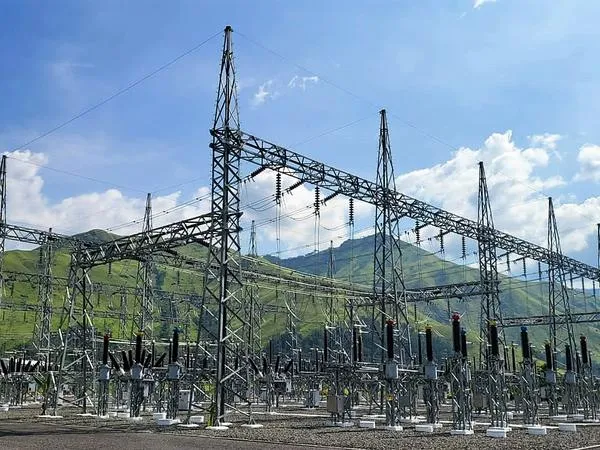
Currently PNG Hydro Development Ltd will also construct the Edevu-Moitaka 132 kV transmission line under their subsidiary AG Investment to transport electricity from the Edevu plant, and eventually from the Naoro-Brown plant to the Central Province. AG Investment started working on the Edevu-Moitaka 132kV Transmission Line Project at the end of 2022. This ambitious undertaking involves building 104 towers to connect the grid and bring clean and reliable energy to the country's capital. This project will connect the Edevu Hydropower Station to the Port Moresby grid. [1]
In relation to the Nation's Capital's stance on this Energy development Governor Parkop, accompanied by City Manager Ravu Frank, inspected the project and was very impressed. He applauded the project initiative, a substantial foreign direct investment that will provide a reliable and cost-effective energy supply to NCD and Central Province. [2]
One of the major challenges of NCD has been reliable energy. The Edevu Hydropower Project will cater for an efficient energy supply.
"Port Moresby needs reliable, cheap and constant power supply for domestic needs and, more importantly, to industrialize our city. [2]
The Edevu project was launched in February 2017 by PNG Power and has been constructed by the Chinese company PNG Hydro Development Ltd, with operations expected to be carried out in the coming month. [1]
Hydro power is considered a renewable, environmentally friendly and a nonpolluting source of energy. Hydropower development will be critical to not only improving household electricity access, affordability, and grid reliability but also in achieving the government’s 2050 vision of a decarbonised power supply.
1) Project insight from Margaret Tambagle/ Manager & Communications / PNG Hydro Power Ltd/AG Energy Limited https://www.google.com/url?sa=t&source=web&rct=j&url=https://www.aginvestmentpng.com/&ved=2ahUKEwitg-bmw8P-AhUka2wGHe80AWcQFnoECAkQAQ&usg=AOvVaw1S58Qvl__3PiYDZ9UVNlqd
2) City Sivarai April 16th, 2023 (NCDC Media) Sivarai/https://ncdc.gov.pg/media/city_sivarai/governor-parkop-visits-edevu-dam.html
Photo: PM Marape in a previous meeting with President Biden last year.
Prime Minister Hon. James Marape says Papua New Guinea is ready to receive both US President Joe Biden and Indian Prime Minister Hon. Narendra Modi next month (May).
PM Marape said this recently (Saturday, April 29, 2023) after the White House officially confirmed today that President Biden would make a historic visit to the country on Monday, May 22, 2023.
President Biden will have a bilateral meeting with PM Marape as well as have a meeting with 18 Pacific Island leaders of the Pacific Island Forum, who will be in Port Moresby at the same time for the Forum for India-Pacific Islands Cooperation (FIPIC).
“Papua New Guinea is ready to receive both President Biden and Prime Minister Modi. This is a historic first, and at the same time a ‘going forward‘ futuristic meeting of global superpowers, in the biggest country in the Pacific” PM Marape said.
“In the Indo-Pacific conversation, PNG and the Pacific cannot be ignored. With our combined forest and sea areas, we have the world’s greatest carbon sink, and the biggest sea and air space on earth. We also face the greatest threat to our existence as climate change affects our lifestyles and our economies.
“I am happy that at our scheduled time of meeting with Indian Prime Minister Modi, we have US President Biden coming to pay his respects to the Pacific leaders.
“I have had the privilege of one-on-one meetings with President Biden in New York and Washington, and on both occasions, I invited him to visit PNG at the earliest. I am very honored that he has fulfilled his promise to me to visit our country.”
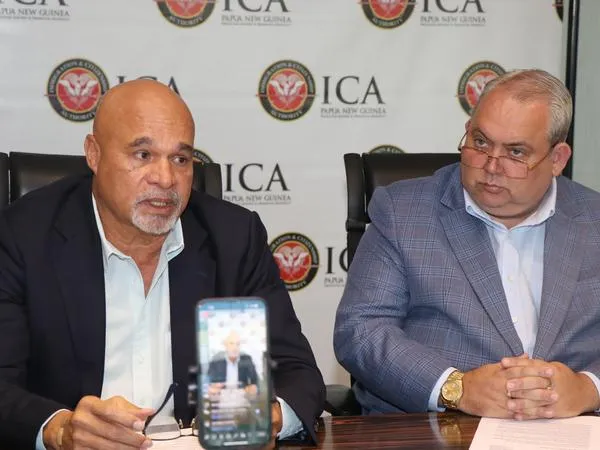
John Rosso, Deputy Prime Minister of Papua New Guinea and Minister for Labour and Immigration, on Friday 21st April announced the reactivation of the multiple-entry component for the short-term business visa for holders of eligible passports.
Mr Rosso said the duration of the multiple business visa is 12 months with a 60-day maximum duration for each visit.
"Activation of this visa product for holders of eligible passports means that people who intend to visit PNG for eligible short term business activities will be allowed to travel to PNG on multiple occasions within a period of 12 months," he said.
"Meaning, they can apply within the 12 months, have a Visa and come and do business here within a space or short term of three to four weeks or up to 60 days at the most," Rosso said.
Mr Rosso said this move supports trade and investment in Papua New Guinea while helping to restore international travel arrangements to pre-pandemic settings.
This also signifies a commitment and agreement reached between PNG and the Australian government during the ministerial forum in Canberra recently and compliments the existing 30-day duration single entry visa.
"With PNG experiencing strong economic performance and growth through investment, reactivating the Short-Term Multiple Entry Business Visa demonstrates ICA's (Immigration and Citizenship Authority) commitment to support the government's objectives through the facilitation of genuine business travel, giving increased confidence to those seeking to invest in our country," said Minister Rosso.
The reactivation of the multiple business entry visa is indeed a welcoming news for the business community. Australians, New Zealanders, and other Pacific Island countries wanting to do business in PNG can now do so under this visa arrangement.
Speaking in his capacity as Minister for Labour and Immigration, Rosso stated that this supports and demonstrates the ICA's commitment and the government’s objective through facilitation of genuine business travel giving increased confidence of those seeking to invest in the country.
"It is critical that we have a multiple entry visa due to the fact that there are a lot of businesses not only from Australia but from countries like New Zealand and a few other countries that do business in PNG and for the ease and convenience of business it would be good for them to come to PNG and do business here instead of the current single entry Visa which also has a backlog of work and creates a lot of work on our part from the Immigration office," Minister Rossi said.
“This announcement signifies ease of business and will also be helping us in our development and making it easier for other countries to visit PNG especially businessmen and people who have work to do here."
He further reiterated that the announcement also fulfilled one of the aspects of the commitment that PNG and Australia had during the ministerial forum in Canberra.
PNG's Foreign Affairs Minister Justin Tkatchenko also shared similar sentiments while adding that this is welcoming news for both Australia and PNG.
"The initiative by the deputy Prime Minister, minister for immigration and the immigration department will allow businesses especially from Australia to have short term Visas for up to twelve months in PNG. That’s a welcome relief in a period when we have all these major projects coming into operation in PNG," Minister Tkatchenko said.
"This visa agreement will make it so much easier for more Australians to do more business and be able to do more investment in our country," Tkatchenko added.
Passport holders from eligible counties who intend to visit PNG multiple times within a 12-month period for business purposes can now apply for visa under this category. The maximum duration of stay for each visit is 60 days and the permit holder is not allowed to engage in work or formal employment.
The requirements state that to be eligible for business or short-term employment visa, individuals must show they are a genuine businessperson or are engaging in approved employment, with the intention of leaving Papua New Guinea at the end of their stay.
Photo: BSP Group CEO Mark T. Robinson
According to the Pacific Economic & Market Insight report, the US$10 billion (K35.2 billion) Papua LNG project is expected to complete the FEED phase in Q4-2023 or Q1-2024, by when the final investment decision (FID) is expected.
BSP Group Chief Executive Officer Mr. Mark Robinson said, “The project represents a significant investment in PNG and will serve as a catalyst for further economic growth.”
“FID triggers a construction phase that is expected to last four (4) years,” Mr. Robinson added, “during this time we will see resource-adjacent sectors benefiting, as local service providers are contracted to support the construction phase.” BSP stands ready to support the next economic growth phase in PNG.
Despite the positive outlook domestically, global risks remain skewed heavily towards the downside, as evidenced by geopolitical instability and the collapse of a small number of overseas financial institutions in early 2023. “BSP has a strong balance sheet and prudent liquidity management to protect our customers,” said Mr. Robinson, “and our capital adequacy and leverage ratios stand at 24.6% and 9.9% respectively, which are well above domestic and international regulatory standards.”
“We continue to monitor external financial contagions and the domestic economy to ensure customers’ deposits are safe,” Mr. Robinson added.
BSP remains confident that it will be an integral part of PNG’s economic growth story with its prudent risk management, strong financial metrics, and unrivalled reach across the PNG market.
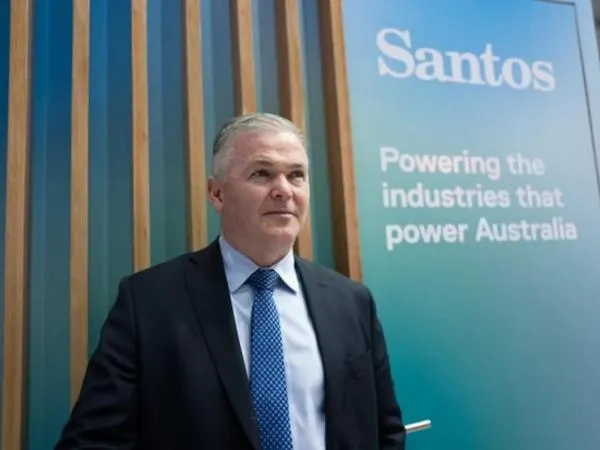
Photo: Santos Managing Director and Chief Executive Officer Kevin Gallagher. Photo credit: Attila Csaszar
Santos Managing Director and Chief Executive Officer Kevin Gallagher said Santos delivered another solid quarter of production and cash flow generation with our diversified portfolio demonstrating the strength of our disciplined operating model.
Free cash flow of around US$720 million positions the company well to maintain a strong balance sheet, deliver higher shareholder returns and invest in cash-generative critical fuels projects and decarbonisation.
“Our Santos Energy Solutions business continues to work on building new revenue sources through decarbonisation projects. The Moomba CCS project, which will be one of the biggest in the world, is 60 percent complete and on track for first injection of CO2 next year. We have also established a partnership with Osaka Gas to investigate the feasibility of carbon neutral synthetic e-methane from green hydrogen in the Cooper Basin,” Mr Gallagher said.
“Despite the uncertain external environment Santos continues to perform strongly against the backdrop of regulatory and economic uncertainty. The disciplined operating model we have in place positions us to deliver on our strategy to backfill and sustain our infrastructure, decarbonise and develop future clean fuels.”
Photo credit: NIT
Field research and investigations will begin next week as part of the work being done under the Panguna Mine Legacy Impact Assessment.
The field research will be carried out across mine-impacted areas and will involve identifying and assessing any environmental impacts of the Panguna Mine since mining was stopped in 1989, and the social and human rights that are directly connected to these environmental impacts.
ABG Member for Ioro Constituency Hon Theonila Matbob says these field investigations are a critical activity to be undertaken under the Assessment.
“We are in full support of the field work team as they begin Phase One of the Panguna Mine Legacy Impact Assessment. The data they will be collecting will play a crucial role in this whole process. It is important that we work together to support this team in doing their work by providing a safe and cooperative environment for them to complete their research. This will help ensure the best data collection possible, helping this process to understand the impacts the mine has had on the surrounding areas and people.”
The field investigations will be completed across the Panguna Mine affected area in selected high-risk areas including: the Loloho port, in and around the Panguna Mine; the river system including the Kawerong River, Jaba River, Kuneka Creek and areas impacted by tailings deposition, and the delta area where the rivers system enters the Empress Augusta Bay.
The field investigations will be carried out by experienced scientists made up of Bougainvilleans, Papua New Guineans and international experts under Tetra Tech Coffey.
They will be collecting data from water, soil and air samples, as well as conducting interviews with local people from the impacted areas. Additional data collection will also include aerial surveys (from a plane) known as Light Detection and Ranging (LiDAR) surveys, as well as gathering information from weather stations setup for the study.
The data and findings from the completed Phase One of the Panguna Mine Legacy Impact Assessment will be presented in mid-2024 to the Oversight Committee and will be translated and shared back with the impacted communities.
Earlier this month, ABG President Hon. Ishmael Toroama called on all leaders, landowners and people to allow the assessment to be completed, saying that there has to be results that can guide the government and the company to resolving the problems from the mine.
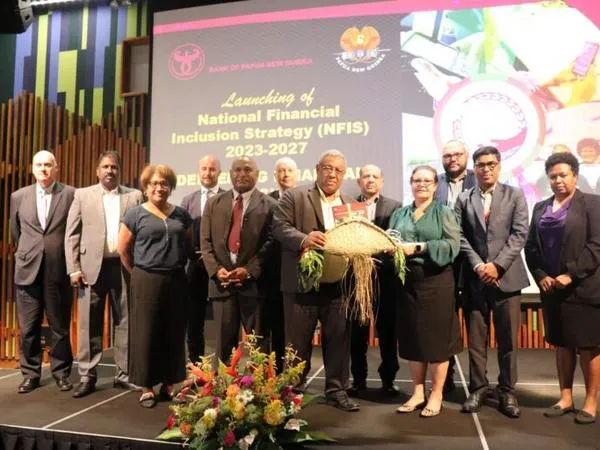
Photo: Bank of Papua New Guinea Acting Governor Mrs. Elizabeth Genia and Chief Secretary Ivan Pomaleu with CEO’s from nine financial institutions during the launching of the NFIS 2023-2027.
The third National Financial Inclusion Strategy 2023-2027 was launched at the Hilton Hotel on 25th April, 2023 by the Chief Secretary Ivan Pomaleu, OBE.
The Chief Secretary was honoured to launch the 3rd National Financial Inclusion Strategy 2023-2027 at this great event, stating the importance of Financial Inclusion in the country.
“We (the government) believe that financial inclusion is key to integrating the unbanked into the formal economy, which helps to alleviate poverty, make the poor less vulnerable to financial shocks, reduces economic inequality and raises living standards for all,” said the Chief Secretary.
The Chief Secretary emphasized specifically on how the NFIS is receptive to global trends, emerging issues, digital financial services and gender.
Mr. Pomaleu also highlighted the importance of the financial inclusion strategy in embracing the green finance policy and contribution of financial inclusion in financial stability for the unbanked and underbanked individuals and small businesses.
He said financial inclusion is the development priority for the government due to increase in income inequality between the lower and higher class societies. “Financial inclusion is one of the key enablers of many of the Sustainable Development Goals by the United Nations and serves as a powerful element for progress in education, health and other basic public needs, as well as contributing even to climate change and sustainable development,” he said.
Bank of Papua New Guinea Acting Governor Mrs. Elizabeth Genia in presenting the NFIS stated that the Bank recognises that expanding financial services can encourage the participation of more Papua New Guineans, especially those in rural areas and urban settlements, in development activities in both the formal and informal sectors of the economy, and that the benefits of growth and technology need to be widely shared.
“Many Papua New Guineans find themselves on the fringes of the monetary economy with little understanding of, or access to financial services. Improvement in the proportion of the banked population and the financial literacy of this population will empower them to improve outcomes in savings, investment and sharing of the benefits of economic growth,” said the Acting Governor.
The Acting Governor stated that the the overall objective of Third National Financial Inclusion Strategy (NFIS3) is to reach 2 million unbanked population by 2027 and 50% of whom will be women.
“It’s also important that the strategy focus on reaching our women and youth. Access to financial services for women and youth will remain a challenge. As indicated in the strategy use of new technology and innovative business models will overcome barriers to access and improve inclusion for women and Youth,” said the acting governor.
Assistant Governor, Financial System Stability Group – Bank of PNG, Mr. George Awap thanked and commended the stakeholders for recognizing financial inclusion as an essential component of Papua New Guineans development plan.
“The Central Bank embedded various initiatives in PNG to fight financial exclusion can be traced back to the development of National Financial Inclusion and Financial Literacy Strategy 2014-2015 followed by the Second National Financial Inclusion Strategy 2016-2020,” said Mr. Awap.
“Building on the success of the first and second national strategy implementations and lessons learnt in the process, CEFI and BPNG developed the third NFIS 2023-2027,” he added.
CEFI Financial Inclusion Advisor, Mr. Saliya Ranasinghe, was grateful to the institutions that participated in the studies of the third NFIS strategy.
“The NFIS basically outlines building capacities, establishing partnership with public and private sector creating space for innovation and using technology to reach the unreached,” said Mr. Ranasinghe during his NFIS presentation.
Mr. Ranasignhe in his presentation of the NFIS’s, highlighted the main strategic objectives which were, build financial competency through financial literacy and education, create an enabling policy and regulatory environment, develop effective public and private sector engagement, develop an enabling environment for inclusive green finance and deepened financial services.
Chief Executive Officer’s from nine financial institutions, including BSP, Kina, Westpac, Digicel, Savings and Loans Federation, Nationwide Micro Bank, Womens Miro Bank, People’s Micro Bank, Kada Poroman Microfinance, participated in a signing of contract ‘I-Commit’, with the Acting Governor of the Bank of PNG, Mrs. Elizabeth Genia.
I-Commit (Institutional Commitment of Measurable Inclusion Targets) is a set of measurable commitments by the financial service providers to achieve the financial inclusion targets and there by contribute to sustainable and inclusive economic growth in PNG.
The launching ended on a high note with the announcement of the Financial Inclusion Excellence awards (FIEA) by the Assistant Governor, FSSG Mr. George Awap.
The awards will be given in the following categories including Financial Inclusion and Deepening Award, Financial Innovation Award, Inclusive Green Finance Award, Financial Inclusion Media Contribution Award, Financial Inclusion Advocate Award and the Financial Inclusion New Player Award which will be awarded in November 2024.
At the recent launch of the Edevu Hydropower Development, Chinese Ambassador to PNG, Zeng Fanhua, expressed that Prime Minister James Marape has expressed his hope to attract more Chinese enterprises to invest in PNG, which China actively supports to contribute to PNG’s economic development. The ambassador also stated that China is willing to cooperate with local partners to develop processing industries vigorously, improve the added value of agricultural and fisheries products, accelerate the local industrialization process, and increase employment and tax revenue.
Mr. Zeng highlighted that China is willing to share its big market and development opportunities with PNG, importing more high-quality products from PNG. Despite the COVID-19 pandemic's impact, the trade between China and PNG has shown rapid growth. Bilateral trade reached US$4 billion (K14 billion) in 2021, a year-on-year increase of around 26%, and reached US$5.28 billion in 2022, an increase of over 30%.
He further stated that "the latest data shows that China’s economy grew by 4.5% in the first quarter of this year, indicating a clear stabilization and rebound. The annual economic growth is expected to exceed 5%. We are confident that with the COVID-19 pandemic under control and the recovery of growth momentum of China’s economy, the economic and trade cooperation of China and PNG will continue to move forward to a new level."
Mr. Zeng emphasized that the good development momentum of economic and trade cooperation between China and Papua New Guinea cannot be achieved without the political guidance and support of the two governments, especially the leaders of the two countries.
Photo: Bryan Slusarchuk. Credit: Bryan Slusarchuk LinkedIn Page
Fosterville South Exploration Ltd (FSX) has recently announced its agreement to acquire a significant 2166 sq. km mineral exploration land package in Papua New Guinea (PNG) from Wild Dog Resources Inc (WDR), a privately held company. This package includes multiple exploration licenses (EL) and exploration license applications (ELAs) containing both early stage and advanced stage exploration targets with high-grade epithermal vein and porphyry style mineralization.
FSX CEO Bryan Slusarchuk is confident that the acquisition will put the company in a strong position to advance the projects on the ground, following up on the substantial amount of fieldwork and development of drill targets already completed by WDR over the past two years. The FSX team members have significant experience operating within Southeast Asian Island arc epithermal and porphyry mineralization environments, and specifically in PNG.
“Papua New Guinea is home to multiple world-class mining, development, and exploration projects and the country hosts some of the most incredible geology on earth," said Slusarchuk. "Through the rapid growth of K92 Mining in PNG, the recent announcement regarding Wafi-Golpu moving forward, and the ongoing corporate discussions between Newmont and Newcrest, the amazing mineral potential of PNG is becoming more widely known. Many shareholders of FSX have invested in the PNG mining sector and we are confident they will share management’s enthusiasm for this acquisition.”
WDR CEO Alan Martin also expressed his excitement for the deal, stating that the company has assembled a commanding land position within the heart of one of the world’s best regions for gold and copper exploration. "Putting together these projects, developing excellent community relations, and then advancing targets through fieldwork has put WDR in a position to now take the next step in PNG. Through this transaction with FSX, we are emerging as a company with a very strong cash position to deploy on the ground and a team with a track record of success in PNG within a superb share structure."
The acquisition will give FSX a strong foothold in PNG, a region with a rich history of mining, development, and exploration projects. The total land package to be acquired by FSX includes both early stage and advanced stage exploration targets with high-grade epithermal vein and porphyry style mineralization present. This provides FSX with a significant opportunity to expand its operations and potentially make significant discoveries.
Moreover, the deal will make WDR shareholders large shareholders of the combined entity, and they will work together with FSX within this well-funded entity to explore for Tier 1 Copper-Gold deposits in PNG. The merger is expected to unlock the potential of the assets, and both companies are optimistic about the outcome.
Prime Minister Hon. James Marape has called on all his Ministers, Government Departments and Agencies “not to waste time” when it comes to delivering key impact projects.
The Prime Minister sounded this message in no uncertain terms when launching the Edevu Hydropower Reservoir Impoundment at Edevu in Koiari, Central, on Friday, April 21, 2023.
The reservoir impoundment is a major step towards commencement of the massive K770 million Edevu Hydropower Project along the Brown River.
Chinese investor PNG Hydro Development Ltd has invested K650 million while the Government is partnering by way of K120 million for a 132KV transmission line from Edevu to Port Moresby which is already under construction.
“Many times, our system of government is so cumbersome that we sit in the way of this sort of project being moved,” PM Marape said, alluding to the fact that it had been on the drawing board since 2009 and was only now becoming reality.
“How come this project is only now being delivered 15 years after being first sanctioned? How come this powerline is only being put today in 2023 after the project was first mooted in 2009?
“Time lost is money lost. To all my ministers, agencies, secretaries, MDs: ‘Don’t waste time, for goodness’ sake.
“Don’t sit back and expect that something must happen first before it is moved.
“These are key economic enablers and transformational projects that must take haste without compromising our country’s laws. Hurry up and deliver such projects. What needs to be done must be done with haste.
“Let’s make things happen because mothers are dying, children are dying, people are dying and we are not moving because we are stuck in the status quo of mediocrity.”
Photo credit: Japanese International Cooperation Agency
The Ramu System Transmission Reinforcement Project (RSTRP) in Morobe Province, which is being funded by the Japanese International Cooperation Agency, is nearing completion with 85 to 90 per cent of the project already finished. Ramu grid project manager, Hitler Alseth, revealed that this includes land acquisition, construction of towers, a new Singsing Creek substation, as well as rehabilitation and replacement of existing substations and transmission lines.
During a visit to the province on Wednesday, the Lae PPL Ramu grid project team provided project progress and updates to JICA President Professor Akihiko Tanaka and his delegates at the PNG Power substation at Erap. Alseth explained that under the funding provided, PNG Power Limited was able to re-service PPL substations at Erap, Yonki, Ramu, and Gusap, and also construct a new substation at Singsing Creek.
Alseth added that 90 per cent of the transmission line is complete, and while there is a double circuit line from Singsing Creek substation down to Erap substation and from Erap to Taraka substation, a single circuit will be used. He also stated that "Taraka substation will be serviced this year and the project is ongoing, with 15 months left to fully complete it." The electricity from this grid is supplied to Bayune in Bulolo, including Lae and Singsing Creek to Madang.
JICA’s support in improving electricity, particularly for the Ramu grid, is much appreciated, said PPL board member Leo Meninga. He hopes that when this project is completed, it will address the daily unreliability of power currently experienced. It is worth noting that the Japanese government provided K300 million to PNG Power Limited for the project, which was funded through a loan agreement by JICA and the government of Papua New Guinea.
The project agreement was signed in 2016, with works on the grid beginning in 2017. Out of the K300 million, K30 million is for the construction of a new substation at Singsing Creek while the rest is allocated for transmission and upgrading of Erap and Taraka substations. In a feasibility study conducted by a Japanese company on the existing 132 kV between Ramu Power Station in Madang and Taraka substation in Lae, it was identified to have low electricity supply. Therefore, the project is based on the suggestion to PPL to rehabilitate the existing 132kV to increase transmission capacity.
In Alseth's words, "the project is ongoing, with 15 months left to fully complete it."
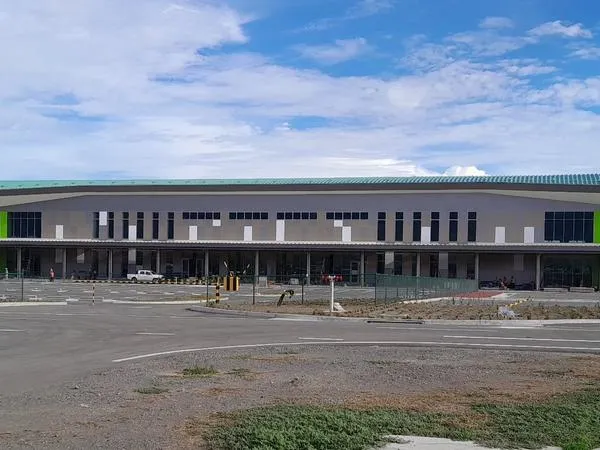
The Nadzab airport redevelopment project, which is valued at K750 million, is nearing completion, with an official launching ceremony scheduled for September 16, Papua New Guinea's 48th Independence anniversary. The project is currently between 80 and 90 percent complete and will cater to a variety of aircraft, including Fokker 100, Boeing B737, and B777 200.
During a recent inspection of the new Nadzab Tomodachi International Airport, Lae MP and Deputy Prime Minister John Rosso praised the project's high standard, crediting the use of Japanese technologies and workmanship. He noted that the visit of Japanese International Cooperation Agency President Professor Akihiko Tanaka and his delegation to inspect various infrastructure projects they funded was historic as Japan was the first development partner since PNG's independence in 1975.
Rosso highlighted the significance of the project for the people of Morobe, stating that building a new international airport in the province was long overdue. He said, "It will now ease traveling domestically and internationally, as well as boosting business opportunities in the province and injecting funds into the local economy."
Namatanai MP and Minister for Transport and Civil Aviation, Walter Schnaubelt, revealed that the Nadzab Tomodachi International Airport's redevelopment is jointly funded by the Japanese Overseas Development concessional loan and the PNG government's budgetary allocation. He emphasized the airport's importance in connecting people from three regions in the country, stating that it will significantly enhance the roles of Nadzab and Lae as economic hubs, promoting social and economic development in the region and the nation.
Schnaubelt credited the low-cost financing provided by JICA for the development of a world-class airport that would serve as a catalyst for economic
Follow on LinkedIn:
PNG Business News
Be the "First" to get our exclusive Digital Magazine & Weekly Newsletter.