September 11, 2023

Ok Tedi Mining Limited (OTML) has successfully engaged the eight Community Mine Continuation Agreement (CMCA) regions women and children’s associations, and the Mine Villages women and children’s association, to enter into an investment partnership with two other local landowning groups.

This investment opportunity involves a 50 percent stake valued at K5.3 million in OTML’s 150-men accommodation project at its Bige Operations.

The other 50 percent ownership is equally split between the Alice River Trust (15 Beneficiary Villages) and LMP79 (7 Beneficiary Landholding Clans) at 25 percent shares respectively.

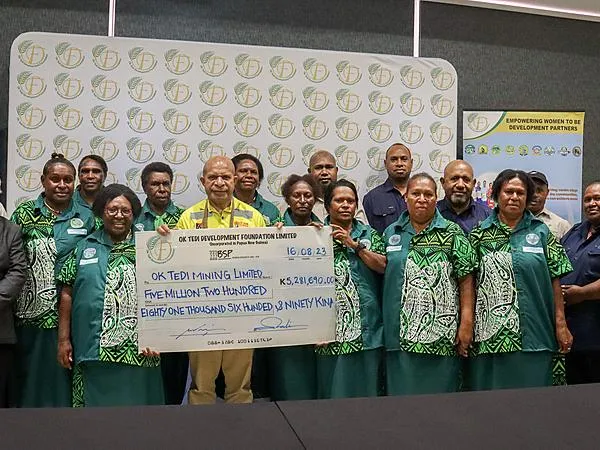
A mock cheque of K5.3 million was presented to OTML on August 16 by the leaders of the Women and Children Associations to mark this significant agreement.

The total purchasing price of the prefabricated 150-men Donga units alone is US$3million and OTML has given 100% shareholding to its project impact communities, while paying for the construction, logistics (freight/customs), and manpower in support of the investment.

Upon successful completion of payments in the coming weeks, the Women and Children’s Association and the other two shareholders will own the property through the Property Lease Arrangement that will guarantee fixed returns or income over a fixed period.

Manager Economic Programs, Steve Hoap received the cheque on behalf of OTML and thanked the nine Women & Children’s Association Presidents for making such a bold decision on behalf of their associations and communities.

“You women leaders have made a great investment, ensuring sustainable livelihoods after the closure of the Mine, which is a priority focus area for OTML,” Mr Hoap said.

Mr Hoap further added that this was the first time the women and children’s group participated in a direct investment project of such magnitude with OTML and this will pave way for bigger and better things to come.

Ok Tedi Development Foundation (OTDF) CEO Havini Vira said, “This is a very good investment because it is an investment within the province and has guaranteed returns from OTML that will generate greater profits to support your communities in the future,” Mr Vira said.

Former OTDF CEO and current Chairman WestAgro Holdings Limited Ian Middleton congratulated the women saying they are playing a crucial role in driving sustainability and economic growth in the region.

“OTML is providing an opportunity, you are providing the heart, and OTDF is providing the guidance, and all this is coming together as a really good development story,” Mr Middleton said.

“Through what you women are doing, there will be self-sustainability after this great Mine’s closure so take advantage of this partnership,” Mr Middleton said.

This collaboration demonstrates not only OTML’s commitment to delivering economic and social benefits but also the potential for partnerships between OTML and local communities in efforts towards sustainability and community well-being.

September 06, 2023

Papua New Guinea’s varied ecosystem, abundant biodiversity and native cultures necessitate a strategy that prioritizes environmental preservation at the forefront.

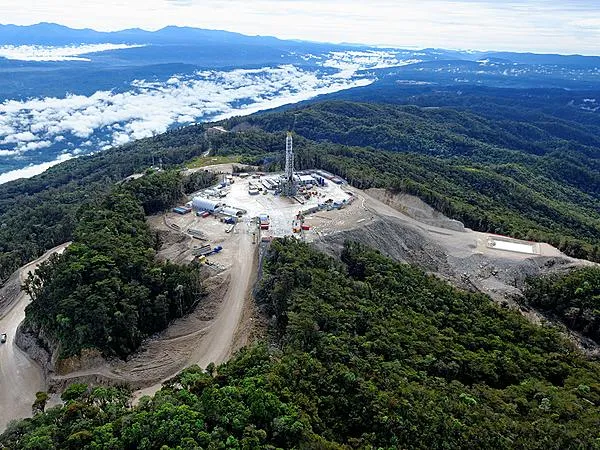
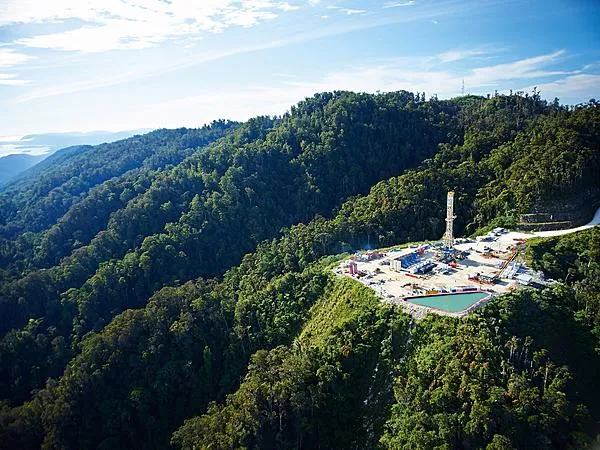
Nabors’ MAAC (Minimum Area AC) rig is designed specifically to meet the logistical, environmental, geographical conditionals of Papua New Guinea and to drill safely and efficiently. Designed to deliver maximum drilling performance, the MAAC rig further enhances drilling efficiencies and reduces flat time.

Engineered to operate in a rainforest in an environmentally sensitive region of Papua New Guinea, the rig’s mud tanks are enclosed to prevent any rainwater contamination. This MAAC rig is designed to protect the area and catch any run-off.

This Nabors rig is developed and crafted specifically to meet customer requirements and is modular for moving across different terrains and completely self-contained to protect a sensitive environment. It emulates the benefits of offshore technology in an onshore environment by utilizing integrated substructure systems for primary mud processing and well control systems, as well as the capability of a built-in rig moving system.

Equipped for Managed Pressure Drilling, this rig can maintain constant bottomhole pressure via continuous mud circulation while making connections. The MAAC rig features numerous automated features, including performance tools ROCKit® and REVit®, Canrig’s wireless TesTORK® system , PC 4000, TM-120 and  Casing Drive System™ which combined together enables to make drilling operations safer, reliable and cost-effective.

Nabors Industries is a leading provider of advanced technology for the energy industry. With operations in 15 countries, Nabors has established a global network of people, technology, and equipment to deploy solutions that deliver safe, efficient, and responsible energy production. By leveraging its core competencies, particularly in drilling, engineering, automation, data science and manufacturing, Nabors aims to innovate the future of energy and enable the transition to a lower-carbon world. 
September 04, 2023

EDITOR’S NOTE: Michael McWalter, former Director, Petroleum Division and Adviser to the Government of Papua New Guinea, and erstwhile petroleum adviser to the Governments of Ghana, Liberia, Cambodia, Sao Tome, and South Sudan, comments on PNG’s oil and gas industry and changes to the petroleum regime made, muted, abandoned and planned.

Optimising Benefits for PNG - It is alleged that Papua New Guinea is not getting enough benefit from its petroleum resources and that the solution to such a problem might be for the Government to exact more demanding fiscal and commercial terms on sector investors.  However, the same could be said about almost any source of Papua New Guinea’s revenue that we are not getting enough impact and outcome from the revenues that find their way into the Consolidated Revenue Fund of the Government. 

One might deduce that either the quality of Government expenditure is poor and unfocused, or there is gross misuse and misspending of Government funds, but in reality it is likely to be a mixture of both. Efforts to address this problem have include the creation of a National Procurement Commission and support for transparency by the Prime Minister of what has often been called a systemic problem. 

But when it comes to petroleum resources, we must remember that it is after all the Government that sets the terms of investment when seeking to develop the Nation’s petroleum resources, and it is the Government that needs to police the regime thoroughly that it has established. 

Aside from the poor quality of Government expenditure, the oil and gas companies that invest in Papua New Guinea do indeed need more scrutiny. Transparency of the terms of business and audit by the Government of the corporate taxation returns of petroleum licensees are the normal means by which to ensure appropriate performance and compliance of the oil and gas companies. 

Need for Commerciality

In the petroleum sector, oil and gas production leads to substantial income streams from sales of produced oil and gas, but getting to the development stage is not automatic. Those revenue streams need to be large enough to recompense the investors, primarily for their exploration, appraisal, development and production costs, and yet be able to pay the various fiscal and commercial demands and requirements of the Government and other local stakeholders.  And more than that, they hope that there will be a return on their investment for their shareholders, whilst they have to reserve enough funds for abandonment of fields, pipelines and facilities at the end of production.

The Government needs to understand that its does not share directly in the sales revenues, but rather that it shares mainly in the profit when a particular production project is commercially viable through the taxation of profits and by taking a share of the profits when it holds equity. Fiscal devices like royalty and levies may be charged at rates proportionate to production and its value, but they are not the main devices in the current regime.

If the Government exacts too much and a project thus becomes marginally economic and lacks commerciality, then it is unlikely that the project will proceed, especially if its economic viability is too diluted.  This viability requirement extends to all manner of petroleum regimes and likely success has to be weighed carefully against the general and specific risks.  

Investment of Revenues

When petroleum sector development takes place in the context of poor governance and poor financial management with a very leaky financial system which allows the results of petroleum development -- its revenues to be capriciously handled, misspent, or misappropriated -- the result of that enterprise will obviously be unrecognised, obscured, and unfortunately, all too often diminished.

In almost all cases of oil and gas production around the world, the share of the net value stream accruing to the Government from the development of an oil and/or gas field is greater than the share of the net value that the companies get. Generally, a Government should be realising significant revenue windfalls from petroleum development activity, once all costs are paid for.

Such revenues should be most carefully invested on public expenditure that is capital in nature for the good of the people, and not squandered on self-gratifying recurrent expenses.  These resources are the treasures of the people, and their value should only be mobilised to enhance the capital-based welfare of the people.   

Need for Better Sector Management

If a Government has a general and systematic disregard for monitoring the actual returns and benefits to the State versus the system benefits as designed and devised by prior and current petroleum policy determination, and their corresponding laws, regulations, and agreements, how can the State reliably know what it should have earned as its share in the enterprise of petroleum resource development versus what it does actually earn and receive?

This seeming lack of care is often based on a lack of accountability, and a lack of an appropriate sector yardstick (based on good statistical data of the oil and gas industry) against which to measure the sector performance. Pilfering and lassitude, of one kind or another, compound the problem.  So a potent cocktail is created which prompts a demand for sector reform and change, when such is perhaps not fundamentally justified or needed.

Perhaps, more ardent and diligent work might rather be required along with firmer enforcement of the current petroleum regime, but this requires heightened professionalism prompted by better terms and conditions for all that are involved in Government administration of such National assets as the petroleum resources of the country.

These two problems: the lack of monitoring and accounting of the sector performance and disdain for proper sector management merge in the minds of political leaders to convince them that sector matters are not as good as they could be and therefore need intercession by way of reform. That reform may be beyond the proportions required, or even possible.

Making the current regime work effectively using the current provisions of laws, regulation and terms of agreement is paramount to achieving optimum resource sector outcomes. However, if full application of these provisions is neglected for more immediate needs, perhaps inevitably disorder with be propagated and sector performance will suffer in the eyes of the State.

Reform should only be embraced if it rationalises and simplifies the petroleum regime and makes it more transparent and accountable to all stakeholders. Any petroleum regime poorly applied and poorly managed will equally give suboptimal and questionable results.

The Current Petroleum Regime

Indeed, it would seem that no-one in Government today can articulate with much clarity the current Papua New Guinea petroleum policy that defines the applicable petroleum regime. 

Over the last eight years, there have been many changes to the petroleum regime through amendments to legislation such as the introduction of dividend and interest withholding taxes, an increase in the rate of foreign contractor taxes, change to deductibility of royalty, a consolidation of oil and gas operations tax rates to a single uniform rate, and the changes to the Oil and Gas Act concerning the treatment of applications for petroleum development licences and the removal of the right to arbitration.

Oddly, within the negotiations of recent Gas Agreements, basic application of many of these new provisions has been waived and new devices introduced such as a production levy and a domestic market obligation. If the changes devised in 2015 had been dutifully applied, perhaps these inventions might not have been necessary.

Certainly, it is time to rewrite the Petroleum Policy Handbook published by the Department of Petroleum and Energy in 2005, and to state the current petroleum regime unequivocally. It is difficult to invest in a country if the rules of the game are not clearly articulated.

Incidentally, if contract-based Production Sharing Arrangements are to be used in the future as has been suggested, all the terms of exploration, appraisal, development, production, and abandonment will have to be most carefully spelt out and agreed to. Companies will not contract their services to Government unless they can clearly see a pathway to profitability if they successfully find hydrocarbon accumulations.    

Some New Policy Initiatives

A few years ago, the PNG Government, led by its Gas Project Coordination Office, devised a new Natural Gas Policy of which there were several editions during the period of 2016 to 2017, none of which were duly and properly issued, and which sought to introduce changes to the fiscal and commercial terms of gas development. 

Some people in Government (and a few in the industry) have taken these to be official policy, despite there being no public record of their presentation to Parliament, formal Government approval, or public dissemination.

These variously included an increase in State equity from 22.5% to 30%; a production levy of 10%; royalty and development levy based on 2% of export value (instead of wellhead value); a 5% import duty on all goods and services; a 2% social levy; and 10% domestic market obligation to sell production into local markets at a discounted price; and a withdrawal of foreign exchange exemptions.

Such a clamour for more benefits, whilst admirable, was sadly not quantified in any of the gas policy drafts, and the manner in which the draft documents was handled smacked of stealth and the policy clearly lacked transparency in its formulation and enunciation. 

It has to be emphasised that petroleum resource development is big business, and its success or failure is enumerated in very large amounts of money underlying it, for all stakeholders.

It is the numbers arising from the interaction of a variety of fiscal and commercial devices at different times in the petroleum development cycle that give rise to the overall effective split of the net value between the Host Government and the investing companies.  This cannot be guess work and requires sensitive well-informed economic modelling.   

Oil and Gas Amendment Act 2020

In 2020, the Government introduced an amendment to the Oil and Gas Act that fundamentally changed the offering of the National petroleum prospectivity for exploration development and production to investors from that which was firmly established in the 1975 White Paper: Government Statement on Petroleum Policy and Legislation, an extract of which follows:  

“But, before we can gain the benefits of oil and gas production, we must first find oil and gas in commercial quantities.  At present, the best way to do this is by relying on foreign oil companies, who have both the technical expertise and the financial capability to mount a major exploration programme. And in order to attract these companies for exploration, while at the same time increasing our own knowledge of our resources and our ultimate ability to control the petroleum industry, we need to offer terms and conditions that are fair and reasonable.

“This does not mean that we need to be evenly generous to foreign oil companies.  There is enough potential profit in most oil discoveries so that a company can earn a generous return on its investment, while at the same time the government, as trustee for the people of the country as a whole, can secure significant revenue.  The terms proposed in this policy statement are fair and just.  They allow foreign companies to make reasonable and adequate profit, yet they ensure that the nation will benefit substantially from any oil or gas production, and that as the profitability of any oil venture increases Papua New Guinea will take an increasing share of these profits.” 

The above is from the Forward of the White Paper on Petroleum Policy and Legislation 1975 laid before the National Parliament by M. T. Somare, M.P., Minister for Natural Resources and Julius Chan, M.P., Minister for Finance – two of PNG’s most esteemed leaders.  It was a strong foundation.

Essentially, the 1975 policy sought experienced companies to invest in exploration at their own risk and to develop at their own risk any discovery to the extent that they were happy with the commerciality of the outcome of development and production, to which the regime would then be judiciously applied. If the commerciality was fragile, the State was not so concerned.

This has changed substantially with the Oil and Gas (Amendment) Act 2020 which has introduced new criteria in a new section - Section 56A.  An application under Section 56 (1) of the Oil and Gas Act for a Petroleum Development Licence has to now pass a test as to “the benefit or otherwise to be derived by the State”, notwithstanding matters of project commerciality.  This is reproduced below in full. 

Oil and Gas Act Section 56A. Minister’s Instrument of Notification to Applicant.

Where subject to Section 56(1), this section applies, the Minister must:

(a) by instrument served on the applicant, notify the applicant that this section applies; and

(b) seek the advice of the Board on whether the applicant’s proposals should reflect a minimum expected return to the State over the life of any recovery of petroleum from the blocks the subject of the application and, if so:

(i) what that minimum expected return should be (specifically or according to a conditional or sliding scale or calculation); and

(ii) the appropriate methodology for its assessment or calculation; and

(iii) the appropriate milestones for its achievement (and any compensation regime that should apply if those milestones are breached); and

(c) based on, but without being limited by that advice, the materials already furnished by the applicant in support of the application and any other information otherwise available to the Minister relevant to the application, form the Minister’s own view on the matters referred to in Paragraph (b) and, by further instrument served on the applicant, notify the applicant of that view; and

(d) where proposals already provided by the applicant:

(i) meet or exceed the minimum requirements contained in that farther instrument; and

(ii) contain binding undertakings to that effect enforceable on acceptance by the State as. an agreement pursuant to, or as an amendment to an existing agreement under, either of Sections 183 and 184, serve an instrument on the applicant under Section 56(l)(a), (b), or (c) as the Minister determines; and

(e) otherwise proceed under Section 56(l)(b) save that the Minister must as a minimum require proposals under Section 56(1 ){b) at least satisfying the minimum requirements referred to in Paragraph {d},

and the Minister may in any event, and notwithstanding any other provision of this Act to the contrary, impose conditions on the grant of any application to which this section applies that implement the Minister’s view referred to in Paragraph (c).

This is a paradigm shift in the petroleum regime, as investors who have risked their money in exploration, appraisal and development planning can now only pursue a recoupment of their investment by seeking a licence to develop the discovery, if it is not only necessarily commercially viable, but also meets “the minimum expected return to the State over the life of any recovery of petroleum” which criteria is only examined and assessed by the Petroleum Advisory Board and is subject to the Minister’s own view at the time of application.  This is certainly putting the State in the lead and advancing control of the sector, hopefully for the better.  

As brave as it attempts to be, such provisions dealing with the benefit arising from the development and production of oil and gas from a field, will likely be swamped by the key exogenous variable of the oil and gas industry, which is the crude oil price itself.

However, the fact that a planned petroleum development might be the subject of such scrutiny would in itself be a leap forward in sector management, and the minimum expected return to the State will need to be defined most careful and should consider the extremely volatile nature of the industry.

Moreover, such analysis will need to be professionally undertaken emphasising once again the need for better sector management institutions manned by skilled and experienced persons with appropriate technical and financial support.

Refusal of Development

Also, in the 2000 amendment, the hitherto unlikely outcome of a refusal of a willing application for a petroleum development licence has now become a defined option for the Minister who is now required to assess whether the proposals for development attached to an application will pass an approved threshold level of benefits for the State, and if they do not: to refuse the application.

On top of that, the right to take the Minister’s decision to refuse an application may no longer be referred to international arbitration by virtue of the Oil and Gas Act. That option is now closed.   

An Avalanche of Change

Our dilemma is to see through this avalanche of sought-after-changes and see what the PNG Government really wants.  As the Governors of three Provinces (Gulf, Hela, and Western) said in a joint letter dated 30th August 2020 to the Prime Minister: “What is the end game for the Government with these changes?" Do we want State control on (sic) Licences or increased State take?” One wonders whether, or not it is both, but one ponders how will such desires be fulfilled?   

How Industry Can Help

If the oil and gas industry is to remain in business in PNG with credibility, it has an implicit, if not necessary, duty of care to guide the Government out of the problems into which it has fallen, by enlightening them as to the commercial limitations of seeking more and more benefits without due regard to good revenue management, good governance and high fiduciary standards, whilst understanding and allowing for the Government aspirations of heightened benefit and control of the sector.

Clearly, the concessional terms which highly incentivised the PNG LNG Project should not be allowed to persist, and one might regard it as indecent for the large corporate to try to cling to such incentives.

PNG has shown that it can host world class LNG development and can be home to world class companies such as ExxonMobil. The green-field fear factor is diminished, and future projects will encounter fewer hurdles in seeking the support of shareholders and financial institutions. If the oil and gas industry of PNG wishes to be part of that future, it might be wise of it to provide the Government the benefit of its global knowledge, so it may share in that future.

PSCs Can and Do Work

The Government has expressed its intention to move to a Production Sharing Contract (PSC) system in 2025 and has already introduced enabling Constitutional and Organic Law legislation.  Whether such a move gives the Government what is wants, we shall see.  There is nothing intrinsically wrong with a PSC system.

The author has worked in many countries with such petroleum regimes: putting some together, pulling others apart, whilst repairing some. The one thing that a PSC gives the Government, if the industry is well-managed, is much better control of that industry for planning purposes and an ability to resolve intra-company wrangles, which often delay project development.   

One could say that some of the most infamous despots of the world and their oligarch associates in countries with substantial oil and gas reserves know that to milk the system handsomely, one needs to have a well-run petroleum industry, else there might be nothing to plunder! 

But it goes without question that that if we wish PNG to gain optimal benefits from our petroleum industry for the people at large for their development or indeed even for personal enrichment of a political elite, one needs to have efficiency in the business of conducting petroleum exploration, development, and production, and that means good governance and proper understanding and accountability.

Competent Petroleum Management Agency Required

Normally, good governance is achieved through the Nation having a strong and competent petroleum sector management entity: call it a Department of Petroleum, Ministry of Petroleum, National Petroleum Agency, Commission or Authority, or whatever.  It should have very well-educated staff, who are knowledgeable and experienced. 

Some 37 years after the first major oil discovery, there are plenty of experienced Papua New Guinean people within the petroleum industry either working in PNG or in the diaspora, whom if properly remunerated can become the core of the proposed new National Petroleum Authority.

Back in the 1970s and 1980s, there was little understanding about petroleum matters within PNG; that is not the case today, and many of PNG’s petroleum technocrats and businessmen are first class.  Indeed, some of the very best have and are leading lives as highly competent international oil and gas men and women around the globe. They need to be seduced to come home and build PNG’s petroleum industry to greater heights.

Good Record Keeping Required

One of the basic tasks of managing the sector is understanding the range of fiscal and commercial outcomes that may stem from the business. And like all business, whether a simple trade store or a multi-billion-dollar oil and gas company, we can only determine the condition and health of the enterprise if we maintain accurate records.

The same too applies to the Government’s management of the petroleum sector. It is not sufficient just to cry and shout without a basis, especially when the main determinant of the sector’s outcomes is the price of crude oil, and consequently due to referencing against crude oil prices, the price of natural gas and LNG. Volumes and prices need to be carefully monitored with respect to all of PNG’s petroleum operations both upstream and downstream, as well as global industry statistics and prices.

Economic Modelling Required

If one has good sector statistics, one can monitor actual performance against anticipated performance.  That anticipated performance will normally be presented by the licensee as an open-book economic model at the time of submission of their proposals for development accompanying the application for a petroleum development licence.

The model should be agreed between the State and the licensees to be as accurate as possible model encompassing all of the costs and benefits to the State and to the licensees. The model should show all scenarios and reflect the implications of crude oil prices and modes of project financing.

Even better, the State should have a model of its own, developed in-house using its own petroleum economists, so that they are totally familiar with the contained algorithms and able to vary and adjust the fiscal and commercial terms as needed to assess different policy scenarios and options for the Government.

The results of the modelling combined with different projections of the crude oil price should guide decision making about all and any petroleum project.  The ongoing use of the model to reflect real costs and calculated real benefits based on produced actual volumes should be a tool for ensuring that the system benefits are being realised.  No number of National Oil Companies, Government Petroleum Authorities or other entities will be adequate unless this fundamental work is done.

We do not navigate the oceans or skies without charts and careful guidance; the same too, applies for a Government wrestling with the development of its petroleum resources: it should not expose such valuable patrimony to reckless unaccountable development, and it must take all necessary actions to ensure measurable account of petroleum operations. The time for the industry dictating development terms for their corporate satisfaction and to their own agenda and timetables has gone.

Reform therefore should encompass excellence in all aspects of the business whether it is overhaul and more ardent application of the current petroleum regime, or indeed a move to the use of PSCs.  No single regime brings about greater fiscal or commercial benefit than the other, and any regime has to recognise the fundamental requirement that the development of discoveries of petroleum accumulations, either oil and/or gas needs to be made commercially viable in order for them to be developed.

PSCs do indeed bring about more control by Government, but only marginally more than the current regime, were it to be fully enforced and complimented with more comprehensive regulations to give effect to some of the provision of the Oil and Gas Act. PSCs require considerable responsibility on the part of the Government petroleum management agency to lead the sector well for the benefit of the country and its people.

One has no doubt that there is enough adequate qualified and experienced PNG people in the sector to accomplish this, but they will need absolute rectitude, dedication, and professionalism to achieve it and gain the desired outcomes. Essential to success will be the support appropriate support from the Government to give it the necessary financial and human resources to take on a more advance role in managing and regulating the petroleum industry of PNG.  


Michael McWalter is a technical specialist in petroleum industry regulation, administration, and institutional development with over 42 years’ experience of the oil and gas industry, predominantly in the Ministries and Agencies of newly emerging oil and gas producing nations, particularly in PNG.

September 04, 2023

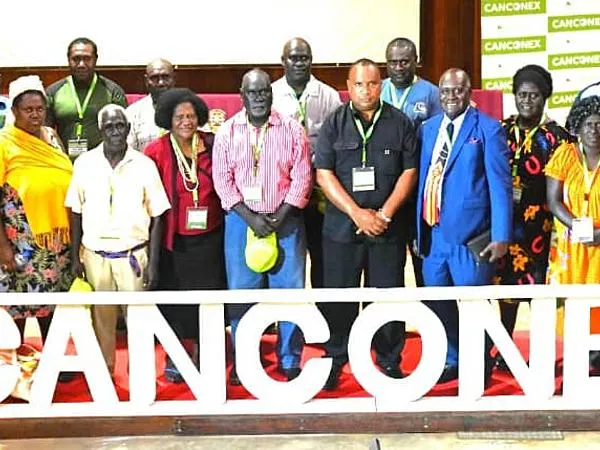
The ABG Department of Mineral & Energy Resources facilitated a group of ten landowner leaders from Panguna to participate in the inaugural PNG Community Affairs and National Content Conference and Expo (CANCONEX) at the PNG University of Technology in Lae this week.

The group comprised of male and female family representatives from the five major landowning clans identified through the Panguna Mine Dialogue process.  

The group was led by the ABG Minister for Mineral and Energy Resources Hon. Robin Wilson and accompanied by Minister for Community Government and Member for Ioro Constituency Hon. Theonila Roka Matbob, Central Parliamentary Committee Chairman and Member for South Nasioi Hon. Justin Borgia, and Central Regional Member for Ex-Combatants, Hon. Linus Dakei Jnr.

Presenting on “Lessons learnt from Panguna closure” were Paul Nerau, former CEO for Bougainville Development Corporation, former President PNG Council of Women Mrs Theresa Jaintong, and Hon. Matbob.

Minister Wilson also shared on policy responses to the lessons learnt, focusing on how community affairs, local content and Environment, Social, Governance (ESG) principles are enshrined in the Bougainville Constitution and reflected in the Bougainville policy and legislative framework with further policy developments being undertaken towards improving existing frameworks.

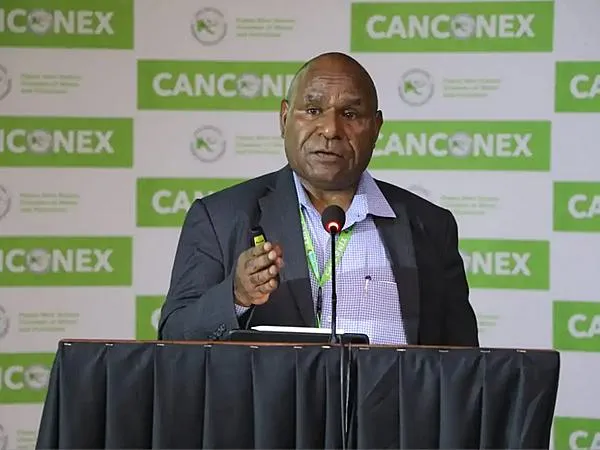
Hosted by the PNG Chamber of Mines and Petroleum, CANCONEX was focused on promoting awareness and engagement on national participation and community affairs. Participant’s included industry, investors, government, and landowners and landowner company representatives.

Various speakers, including Prime Minister Hon. James Marape, and Chamber President Mr. Anthony Smare, said that what happened in Bougainville must never happen again and acknowledged that there was minimal focus on community affairs and local content when Panguna was operation.

Speakers also acknowledged that Bougainville’s unfortunate mining history has contributed significantly to resource sector policy and legislative improvements in the community affairs and local content front not just in Papua New Guinea but also globally. An emotional standing ovation was accorded the Bougainville delegation.

This event provided an opportunity to see how the mining and petroleum sector today is more focused on community affairs and local participation to ensure benefits are captured locally. Participants also had opportunities to make new connections and learning opportunities from the shared experiences of stakeholders in the sector across the country and globally.

Landowners from various project sites including Lihir, Ok Tedi, Porgera, and others also participated and presented on their lessons learnt and success stories including successful benefits sharing structures and initiatives to promote local content.

Consistent with free-prior-informed principles, Bougainville political leaders and Panguna landowners will continue to be involved in such events to ensure informed decision-making on the future of Panguna.

September 04, 2023

The construction of the fabrication and training facility by Kumul Petroleum Holdings Limited will create direct employment for up to 1000 Papua New Guineans and create business for local companies in the country.

Construction of lay down and necessary associated site work, including services rights of way and site access roads has now started after the construction contract was signed in July.

Kumul Petroleum Holdings Limited’s Corporate Affairs Executive General Manager, Luke Liria, in his presentation at the PNG Chamber of Mines and Petroleum CANCONEX conference in Lae said, “as the country’s national petroleum and energy company, we have a responsibility to drive development in this sector of the economy, and to provide direct financial benefits for the National Government and other stakeholders.”

“Our objective is to capture a market share in the fabrication of large, high-value electrical and mechanical, electrical and piping modules for future petroleum and mining developments, renewable energy and general heavy industry projects, which up until now have all been imported from overseas.”

“We recognise that the petroleum industry requires specialist trade skills not necessarily used by other industries in the country, skills that will increasingly be needed as petroleum projects come online,” he said.

A training facility will be established adjacent to the fabrication facility to train and upskill Papua New Guineans who will be required in large numbers in forthcoming LNG and other major developments in the country.

Mr. Liria said with Papua LNG projected to gain FID in 2024, followed by P’nyang LNG, it is necessary to train a cadre of Papua New Guineans with skills to participate in petroleum industry construction activities between now and 2032.

Construction academy graduates will have trade skills that will enable their employment in many of the forthcoming planned major resource and other projects in the country.

Kumul Petroleum Holdings Limited continues to support the national government’s effort to create employment and upskill the workforce of the country through its rural electrification programs and other projects around the country.

September 04, 2023

Kumul Petroleum Holdings has announced that it has finalised agreement with Santos to purchase a 2.6% equity interest in the PNG LNG Project for US$576 million, plus US$160 million share of project debt.

Kumul Petroleum’s managing director, Mr Wapu Sonk said, “This transaction is the culmination of many months of discussions that have taken place with national and international financiers since the NEC gave its initial approval for KPHL to acquire additional equity in the PNG LNG Project in September 2022.”

“The PNG LNG Project is a mature, profitable and de-risked petroleum project that has consistently operated above its nameplate capacity and which has many more years of commercial life left as additional gas fields are brought on line.”

Mr Sonk explained that on completion of the sale of the 2.6% equity in the PNG LNG Project to Kumul Petroleum, Santos had agreed to grant KPHL a Call Option to acquire a further 2.4% interest in the project, and that this Call Option must be exercised on or before 30 June 2024.

“The total purchase price for Kumul Petroleum to exercise the Call Option will be US$524 million, plus US$145 million share of project finance debt. At the end of this process Kumul Petroleum will have acquired an additional 5% equity in the PNG LNG Project.”

” Kumul Petroleum has ensured that entering into financing arrangements to acquire additional equity in the PNG LNG Project will not affect its financial capability to take up the State’s full 22.5% equity entitlement in the forthcoming Papua LNG Project and also continue to pay annual dividends to the State, in line with our annual operating plans,” said Mr Sonk.

“Kumul Petroleum has thanked the Prime Minister, Minister for State Enterprises, Hon. William Duma and all the members of the NEC for their support during the process to close this transaction.”

Mr Sonk concluded, ”Kumul Petroleum, as the national petroleum and energy company, is fulfilling its vision statement, which is to build the nation through its energy resources. We must balance long-term commercial investments and consequent sustainable income streams with our ability to support the National Government to achieve its development priorities as outlined in the Medium Term Development Strategy and Vision 2050 plans.”

September 04, 2023

The Papua New Guinea Government under the leadership of Prime Minister Hon James Marape is committed to supporting secretariat to facilitate the works of the Pacific ICT Ministers for the next two years until the Ministers meet again to deliberate.

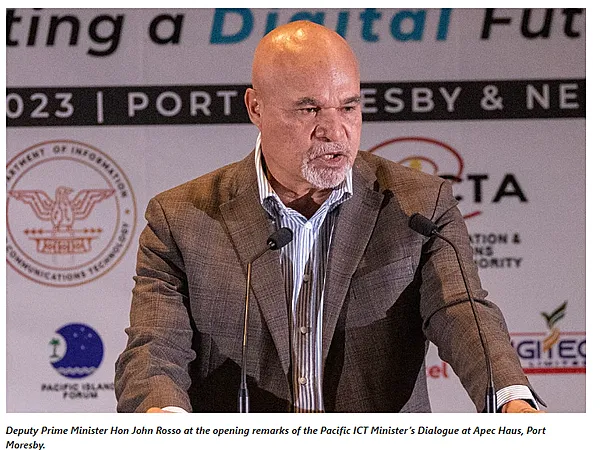
PNG’s Deputy Prime Minister Hon John Rosso gave this assurance when representing the PNG Government during the opening remarks of the Pacific ICT Minister’s Dialogue recently at Apec Haus, Port Moresby.

DPM Rosso said with the theme “Smart Pacific – one voice: creating a digital future together for the pacific,” we acknowledge connectivity stretches beyond physical accessibility.

“The ongoing digital revolution has the potential to stimulate economic growth, expand the reach of public services, and empower communities,” DPM Rosso said.

He said it upholds the values of excellence, accessibility, and inclusiveness, guaranteeing that every resident of the Pacific Islands benefits from the advancements in technology.

DPM Rosso shared sentiments expressed by Prime Minister James Marape to support ICT realm in the Pacific.

He said the digital transformation we embark upon is genuinely all encompassing, enriching the lives of each and every citizen and community.

He also praises Hon. Timothy Masiu, Minister of Information and Communications Technology, for facilitating this discussion with the Marape-Rosso Administration’s full backing.

He further said this conversation serves as a symbol of the region’s goals, where the nations of the Pacific unite in harmony and use technology to create a better, more just future.

September 04, 2023

Prime Minister Hon. James Marape convened a significant meeting recently at his office in Port Moresby with Telstra Group Chief Executive Officer, Vicki Brady, and Telstra International Chief Executive Officer, Roary Stacko. The meeting was also attended by the Senior Vice President of Digicel PNG Limited, Lorna Macpherson.

During the meeting, Ms. Brady expressed her satisfaction with the current Telstra services in Papua New Guinea, highlighting the successful integration of Digicel PNG Limited into the Telstra Agreement. She proudly shared that Telstra has erected 115 towers nationwide and is on track to provide improved services to rural areas by March 2024.

Furthermore, Ms. Brady announced Telstra’s successful rollout of 4G services and projected an increase in coverage from the initial 20 per cent to 72 percent within the next 18 months.

In response, Prime Minister Marape commended Telstra’s commitment to investing in the Telecommunication Sector in PNG, emphasising Telstra’s confidence in the country’s telecommunications market. He also highlighted the substantial growth in online businesses, trade, government activities, and social transactions in PNG since Telstra’s entry into the market in 2007.

Ms. Brady expressed Telstra’s dedication to bridging the digital divide by providing connectivity to both regional and rural communities, emphasising the positive economic and social impacts of enhanced connectivity.

Prime Minister Marape praised Digicel PNG for its significant contributions to PNG communities since its establishment in 2007. He underscored the importance of the Telstra Agreement in PNG’s transition towards a digitalised economy, enhancing government services and the overall economy.

Additionally, Prime Minister Marape acknowledged that PNG represents Telstra’s most substantial market in the Pacific and expressed eagerness for Telstra’s continued presence in the country.

In conclusion, Prime Minister Marape recognised Telstra’s sponsorship of the National Rugby League (NRL) Competition in Australia and sought Telstra’s support for PNG’s bid to field the 18th team in the Australian NRL.

September 04, 2023

Papua New Guinea will gain over 55 percent economic value in benefits, from the Wafi Golpu project, said Prime Minister (PM) Hon James Marape yesterday in Lae.

The PM said this in his address to landowners and stakeholders of the Wafi Golpu project, who gathered at the Sir Ignatius Kilage Indoor stadium, for the project’s stakeholders consultative meeting.

He said the value would come in the form of equity, tax, royalties, development levies and spin off businesses .

“This simply means that for every K1.00 worth of resource, harvested in the mine, PNG will get K0.55t, and company will get K0.45t.”

Hon Marape said the value would increase further when local content, Business Development Grant (BDG) and Infrastructure Development Grant (IDG) are paid out.

He said the government had committed K1b towards IDG for Morobe Province, K150m of which had already been paid to the provincial government. The balance of K850m is still with the National Government and would be paid over the next 9 years.

The PM told the people that Morobe Province would have 13 percent stake in the project, which would comprise of the 10 percent equity, and 3 percent royalties from the project.

He said environmental sensitivity had also been built into the negotiated outcome package, where the company would be putting aside about K1b for Social Obligations. Social obligations cover things such as potential environmental incidences.

He said this was the first time in the history of mining investment in PNG, that a developer would be spending that much money to cater for potential environmental incidences.

The PM thanked the project joint ventures Newcrest and Harmony for their foresight.

September 04, 2023

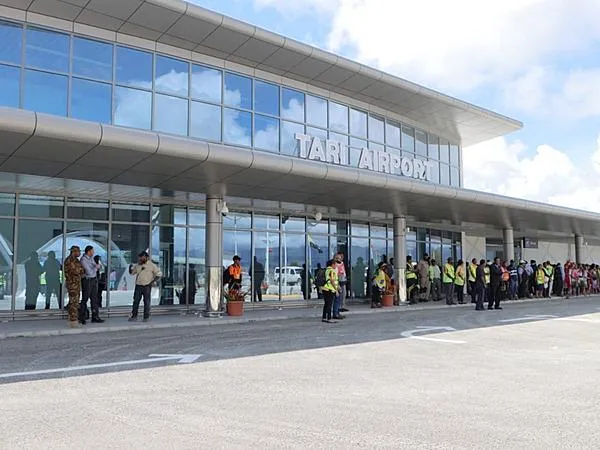
Prime Minister and Member for Tari-Pori, Hon. James Marape, has thanked stakeholders involved in the construction of the newly-opened Tari Airport terminal in Hela Province.

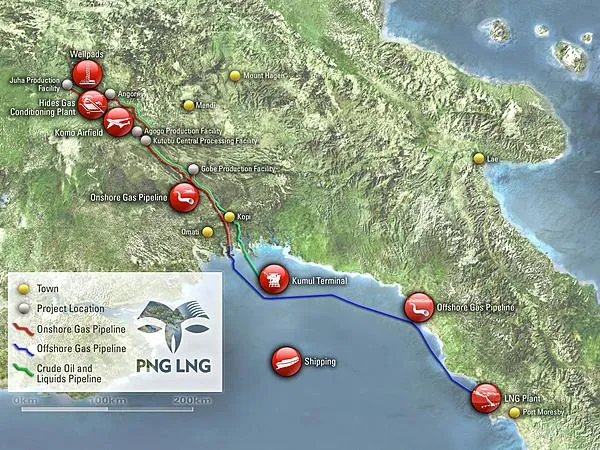
Hela is an important province for the country as it hosts significant national projects in Hides Gas and PNG LNG, but has been needing restoration in its airport facilities since the airport started operating from an airstrip. Having an upgraded terminal and facilities means a much better connection and movement for people and cargo into and out of the province.

Prime Minister Marape took the opportunity to thank all those who had contributed toward the project, starting with his Minister for Transport & Civil Aviation, the department he leads, the Hela Provincial Government, the contractor, as well as the former governments of Somare and O’Neill for initiating and carrying through the Civil Aviation Development Investment Program (Tranche 1) under which the terminal was funded.

“It is now possible for our people of Hela to travel to Port Moresby, Australia or elsewhere for work, study or to visit families,” said PM Marape.

“I sincerely appreciate Minister Schnaubelt for finally giving an entirely new airport terminal for Hela Province, after what has been a long wait.

“I thank the two hardworking departmental heads – Secretary for Transport, Mr Roy Mumu, and Managing-Director of National Airports Corporation Mr Joseph Kintau for progressing this project.

“I am also grateful of Hela Governor Philip Undialu’s leadership. He stood firm to support the National Government’s work in his province by getting his provincial government to continue funding where there was a shortfall in funding.

“I also acknowledge and thank contractors, China Civil Engineering Construction Corporation and Ganzu Mechanised Construction Engineering Co. Ltd, for all their efforts.”

Tari Airport facilities were first brought up for attention when, after being elected as Member for Tari-Pori in 2007 and becoming appointed as the Vice Minister for Transport & Civil Aviation in the Somare Government, PM Marape directed National Airports Corporation and the department to include Tari Airport under the CADIP Program.

September 04, 2023

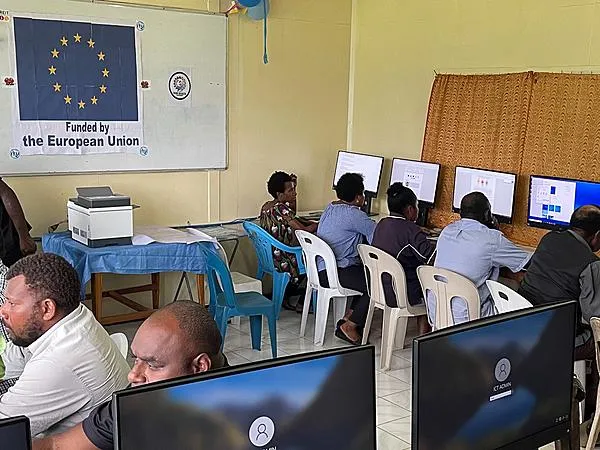
In a significant stride towards boosting rural development and agri-enterprise in the Sepik region of Papua New Guinea, the International Telecommunication Union (ITU), as part of the EU-STREIT PNG Programme, established four resource centres in areas that are grappling with serious challenges in access to ICT services, including digital skills, digital tools, and access to information. 

Nestled within the picturesque landscapes of Sepik provinces, these resource centres are located at Brandi Secondary School (Wewak) and Wosera Secondary School (Wosera) in East Sepik, and Don Bosco Technical Secondary School (Vanimo) and St. Ignatius Secondary School (Aitape) in West Sepik. 

The resource centres provide farmers with a variety of services, including access to digital technologies, such as computers and the internet; training on how to use digital technologies for enterprise development; market information on prices, demand, and trends; access to e-marketplaces and e-commerce platforms; support to the formation of new and strengthen of existing farmers' groups and cooperatives; and advice on production, marketing, and financial management. The resource centres also connect farmers with buyers, exporters, processors, and other stakeholders in the agricultural value chains. 

"These resource centres provide farmers with the tools and knowledge they need to succeed in the market and help them to contribute to the economic development of their country” said Mr Kanagat Alyshbaev, the Project Officer for ITU-STREIT. "The resource centres signify a dynamic shift towards a more connected and empowered agribusiness landscape. By harnessing the potential of digital tools, we are not only enhancing the capacities of local producers and MSMEs but also supporting rural communities."

The EU-STREIT PNG Programme adopts a forward-looking Public-Private Partnership (PPP) approach for the establishment of the resource centres to ensure their sustainability. By collaborating with public schools as host institutions, the initiative ensures accessibility, community integration, and long-term viability. This strategic alliance not only fosters technological growth but also nurtures a sense of ownership within the local community. 

"The establishment of these resource centres is a major milestone in our efforts to support the Government of Papua New Guinea in its efforts to improve the livelihoods of the rural population," said Mr Ali Said Yesuf, the EU-STREIT PNG Programme Coordinator. 

“These resource centres aren't just about technology; they are enablers of economic growth and agricultural transformation. By equipping farmers with digital skills, digital tools, and access to information, they contribute significantly to the achievement of the Mid-Term Development Plan IV of Papua New Guinea. Through these centres, farmers gain access to resources that enhance productivity, improve product quality, link to profitable markets, and elevate their role in the wider economy.” 

The EU-STREIT PNG Programme, being implemented as a UN Joint Programme (FAO as the leading agency, and ILO, ITU, UNCDF and UNDP as partners), is the largest grant-funded Programme of the European Union in the country and the Pacific region. The Programme aims to help improve the lives of the people from East and West Sepik provinces, by focusing on increasing sustainable and inclusive economic development of rural areas through improved economic returns and opportunities from cocoa, vanilla and fishery value chains while strengthening and improving the efficiency of value chain enablers, including the business environment, improved access to ICT services and supporting sustainable, climate-resilient transport and energy infrastructure.

August 31, 2023

Hundreds of Ark Pacific modular buildings have been assembled for PNG’s resource sector by footprint community workforces.  Since 2010, unskilled local workers in the Southern Highlands, Morobe, and New Ireland have benefited from employment and training opportunities afforded by Ark’s modular building systems.  Likewise, developers have benefited from the rapid and cost-effective delivery of fit for purpose, sustainable buildings.

Ark’s modular building systems were first introduced to PNG during the PNG LNG construction phase.   A 1,000-person, multi-storey accommodation complex and support buildings for the construction of Komo Airfield were delivered by a 99 percent local workforce in less than one year.

Local workers, typically employed through footprint landowner companies, only require introductory level construction industry training to assemble Ark buildings.  This means that Ark buildings – irrespective of their type and configuration (e.g., camp complex, office block, laboratory) can be assembled quickly – even in the most remote location.

In New Ireland, a local landowner construction company has been assembling a range of Ark buildings for a major developer since 2017.  Half of the original local workforce who worked on the initial 800 room camp is still employed.  Significantly, these workers have enjoyed additional training, and many have been promoted (e.g., leading hand, project supervisor).  Just as significantly, the landco has been able to reduce its expatriate workforce.

Resource companies that choose Ark buildings not only benefit from the improved community relations associated with local workforce training and employment, but a reduced freight footprint and building repurposeability.

Ark’s freight footprint is up to 70 percent less than its competitors.  Six of its flat pack units are equivalent to a single standard 20 foot shipping container when stacked together ready for transport.  This means less ships, trucks, barges, etcetera when building with Ark, which in turn equates to (1) lower carbon emissions, (2) lower costs, (3) reduced degradation of local road networks, and (4) in the case of river transport systems, less water traffic and hence vessel wake erosion.

The ‘Lego-like’ ease with which Ark buildings can be both assembled and unassembled, means that they are also repurposeable.  This is a distinct advantage for short term pioneer camps in particular, as they can literally be ‘unbolted’ and transported elsewhere to be reused, often for the benefit of footprint communities (e.g., schools, libraries, and health clinics).

To learn more about Ark Pacific and the advantages of its unique building systems: www.arkpacific.net

August 27, 2023

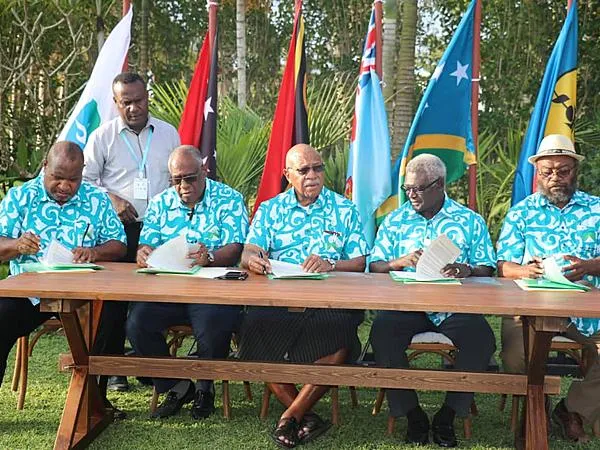
Five Melanesian leaders, including Prime Minister Hon. James Marape, concluded the 22nd Melanesian Spearhead Group Leaders Summit in Port Vila recently (24.08.23) after a fruitful round of talks that covered environment and climate change mitigation, security, and nuclear waste disposal management.

Vanuatu’s Prime Minister and MSG Chair, Hon. Alatoi Ishmael Kalsakau; Fiji’s  Prime Minister, Hon. Sitiveni Rabuka; Solomon Island’s Prime Minister, Hon. Manasseh Sogavare; New Caledonia (FLNKS) Spokesperson, Victor Tutugoro  Solomon; and Prime Minister Marape ended the Leaders Summit with a retreat at the Havannah Boathouse, 30 minutes out of Port Vila, where Wednesday’s formal discussions turned into a more informal Melanesian-type “toktok” over food, and the eventual signing of the Summit Communique.

Prime Minister Marape commended the meeting, and the initiative and time taken by the leaders to be present at the summit, adding that PNG’s presence at the summit was “certainly appreciated”.

He said: “Melanesia holds about 15 million people from our nations put together.

“As the biggest nation in Melanesia, Papua New Guinea’s presence was certainly appreciated together with our contribution within the context of Melanesian consensus.

“Today was important for the five of us to be able to sit as Melanesian elders, share food, and chart the way forward for our children who will come after us. Discussions went very well.

“The leadership was mature, and the conversation was fair and frank, while respecting the charter of MSG which includes the sovereignty of nations in our region.”

August 27, 2023

A visionary collaboration unfolds at the heart of Buang LLG, Bulolo District, Morobe Province – the 9MW Bapa Hydropower Project, a partnership between contractors AG Energy Ltd, local landowners, and the district. The impact of this venture reached a crescendo on August 18th, as we celebrated the monumental breakthrough of our Phase One achievement: a striking 1200-meter tunnel with a width and height of 3.8meters. Apart from AG Energy’s Managing Director Allan Guo and staff, the event was attended by esteemed guests, with the District Member, Honorable. Sam Basil (Jnr), PPL Chairman Mr. McRonald Nale, Mr. David Wissink, General Manager of Environment and Community Affairs at Wafi Golpu, Mr.Sujan Ghimire, Senior Hydropower and Dam Engineer from SMEC and the notable inclusion of Mr. Justin Parker, a local entrepreneur, gracing the occasion.

Over the past two years, the project team, with a majority of local workers, has been diligently working on the tunnel. Local labor was trained by an international team to handle explosives, lay foundations, and move rock debris. The 1200-meter tunnel is a crucial element for the Dam penstock, The 1200-meter tunnel stands as a beacon of progress, poised to become the conduit for the Dam’s penstock pipes, and the project now looks to move ahead to its next stages.

Spanning across the ancestral lands of the Dando, Baiyun, and Kwasang clans, the project's significance is underscored by Mr. Nalai Iru, the clans' representative, he highlighted the increasing number of projects in Morobe Province and the need for enhanced energy sources. This sentiment resonated with Mr. David Wissink from Wafi Golpu, who spotlighted the imminent demand for 100MW during the mine's construction phase. It is with this backdrop that initiatives like the Bapa Hydropower Project shine as pivotal answers to Morobe's energy needs.

The resounding endorsement from Mr. McRonald Nale, Chairman of PNG Power Limited, underscores the project's worthiness. AG Energy garners praise as an unwavering partner to PNG Power Limited, and is looking forward to continued collaboration in the future.

Bulolo District Member, Hon. Sam Basil (Junior), accentuates the essence of renewable energy, noting the district's contribution of nearly 26MW to bolster the PPL grid. In this light, the Bapa Hydropower Project stands as a testament to progress, enriching the lives of Buang LLG's residents. The district's support becomes a cornerstone for a brighter future.

As the celebration reached its zenith, a mesmerizing demonstration by the drilling and blasting team was staged, a reflection of remarkable expertise. AGE's Managing Director, Mr. Allan Guo, extended gratitude with thoughtful tokens to the three clans and the District. In a heartwarming turn, the District and the clans reciprocated, mirroring the unity that propels this transformative project.

The 1200-meter tunnel stood not just as a marvel but as a testament to unity, witnessed by an assembly of over 200 attendees. With each milestone, the Bapa Hydropower Project surges forward, a beacon of promise that charts a course towards a future of sustainable energy abundance.

August 27, 2023

The Department of Personnel Management through the Office of the Secretary officially approved the proposed organizational structure for the Department of International Trade and Investment (DITI) on Thursday, August 24, 2023. Acting Secretary for DITI, Mrs. Jacinta Warakai Manua said with this approval, the department that was established under NEC Decision No. NG48/2022 was now an entity that would function like any other normal Government department. This NEC Decision directed the Departmern of Personnel Management to create the Department structure of 25 positions.

“The thing about DITI is it is not an existing department; we are adding a new entity to the Government system. This approval now gives me the power to now advertise my positions. Our department structure is small but will be effective,” said Mrs. Manua.

Secretary Taies Sansan said the submission’s alignment to the PNG Vision 2050 and the Strategic Development Plan (SDP) 2010- 2030 was clearly articulated to secure approval for the new department structure.

“After careful consideration I am confident that the proposed structure aligns with the department’s objectives and will enhance the efficiency and the effectiveness of DITI. The importance of this organization cannot be overlooked at a time where exponential growth in the international trade and investment sub-economic sector has been recognized and where there is a need to properly manage and the utilize its potential to help grow PNG’s economy,” said Secretary Sansan.

“This approval paves way for more prominence to be accorded to international trade and investment space through the DITI to drive economic growth,” she added.

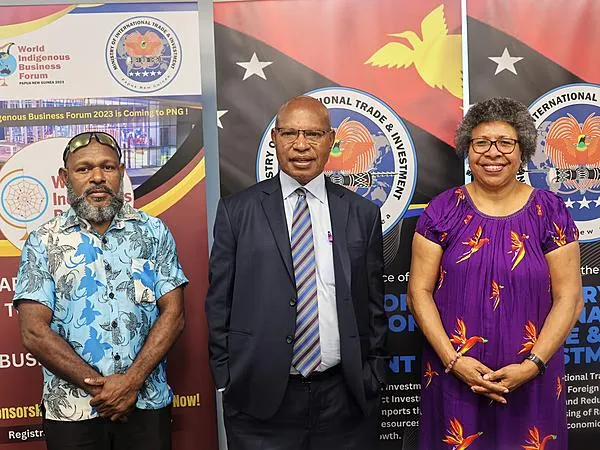
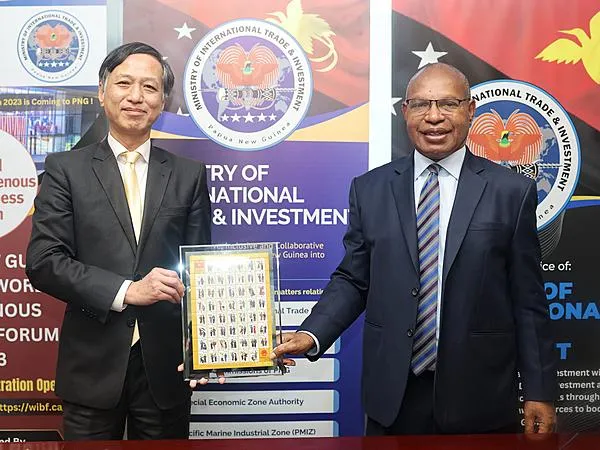
Minister for International Trade and Investment, Hon. Richard Maru said this approval ticked off one of the key deliverables of the Ministry for this year.

“With DITI structure approval being ticked off, we will now focus on delivering the World Indigenous Business Forum and the inaugural PNG-Asia Investment Conference in October, and establishing our first Trade Mission in Shenzhen, China this year,” said Minister Maru.

Meanwhile, the positions for DITI will be advertised in January next year after the budget is being allocated for the DITI in the 2024 Recurrent and Development Budget.

August 27, 2023

Ambassador of Vietnam to Papua New Guinea (PNG), His Excellency Nguyen Tat Thah in his meeting with the Minister for International Trade and Investment, Hon. Richard Maru said Vietnam was keen on Trade and Investment with PNG. His Excellency Thanh said the Government of Vietnam was keen to invite Minister Maru to lead a small trade delegation to Vietnam next month.

Vietnam currently has a population of over 98 million with an economy size of about USD449 billion with the service sector accounting for 41.3 per cent of the GDP. Vietnam’s economy is based on large state-owned industries such as textiles, furniture, plastics, paper, tourism, telecommunications, and food where it is the largest producer of cashew nuts and black pepper, and the second largest rice and coffee exporter. Vietnam also has four economic regions, and each play a pivotal role in Vietnam’s economic growth and development. These economic regions contribute over US$27 billion in foreign direct investments and over US$700 billion in imports and exports.

Minister Maru said Vietnam had a lot to offer in terms of their development experience.

“Vietnam’s economy is going to get bigger than the Philippines and will be one of the biggest economies in Asia. We can learn from their development experience to help to us to achieve our vision of doubling the size of our economy by 2032,” said Minister Maru.

“I have also asked the Vietnam Government to help us identify a Honorary Trade Commissioner in Vietnam to represent us,” added Minister Maru.

August 27, 2023

Mining Minister Honourable Sir Ano Pala, officially opened the Porgera Mining Project Development Forum, recently at the Enga Teachers’ College in Wabag town.

He was accompanied by the Prime Minister Honourable James Marape, Enga Governor Honourable Sir Peter Ipatas, Vice Minister for Mining Honourable James Donald, Hela Governor Honourable Philip Undialu, Member for Bogia Honourable Robert Naguri, Member for Aitape/Lumi Honourable Anderson Mise, Member for Esa’ala Honourable Jimmy Maladina and Member for Chuave Honourable James Nomane.

Heads of Departments and special guests included the Mineral Resources Authority’s Acting Managing Director Jerry Garry, the Secretary for the Department of Mineral Policy & Geohazards Management (DMPGM), Harry Kore, Chairman of the State Negotiation Team (SNT), Dairi Vele and the Managing Director of Kumul Mineral Holdings Limited (KMHL), Sarimu Kanu.

Barrick PNG Limited was represented by Country Manager Karo Lelai and other executives.

About 300 landowners from the Special Mining Lease (SML), Lease for Mining Purpose (LMP), Mining Leases (ML), Mining Easements (ME) and riverine communities attended the event. The Porgera Churches, Youths and Women in Business were present under observer status.

“Indeed, today marks a proud historical moment, where Marape-Rosso Government can showcase its achievements under new Porgera mine,” said Minister Pala. He said this achievements include greater, fairer and more equitable benefits sharing arrangements, for landowners and the country, without upsetting the delicate balance of profitability for the mining companies.

“I am very proud to open the Consultation process of the Development Forum today and formally invite the Stakeholders to the Forum,” said Hon Pala.

The Minister appealed to all stakeholders to embrace mutual respect, empathy, transparency, clarity, honesty and wisdom in collaborative discussions.

He said the Marape-Rosso Government’s objective was to secure greater benefits for PNG stakeholders which had been achieved. He said the government had achieved these objectives through the negotiations.

The Minister said it was the government’s desire to see tangible transformation in the livelihood of landowners, in areas such as relocation and resettlement exercise under the New Porgera Agreement.

The Minister urged all stakeholders to cooperate and work within the true spirit of respect, honesty and fairness in negotiating Memorandum of Agreements (MoA).

Yesterday’s forum will be followed by a series of MoA benefits negotiations between the parties and stakeholders. The parties are New Porgera Limited (NPL), the Porgera Landowners Association (PLOA), the Enga Provincial Government, and the riverine/impacted communities, who live along the Strickland and Fly Rivers, and Telefomin District.

August 27, 2023

The government has set aside K700m for infrastructure development and re-settlement programs for the Progeria Mine Special Mining Lease (SML) landowners.

This money will be drawn down over a seven-year period.

Prime Minister Honourable James Marape announced this recently during the project’s Development Forum at the Enga Teachers’ College in Wabag, Enga Province.

The PM said the money would be used for projects such as schools, police stations and establish educational institutions within the SML area.

In addition, the government has given K100m to Mineral Resources Enga (MRE), which will be used to pay for the 5 percent outstanding SML 1 asset. The government has also secured a 3 percent royalty rate for the landowners without deductions for operational costs, capital works and sunk-costs amongst other deductions.

The PM told landowners that the government had negotiated a better deal for them and the country, where the project has a 51:49 shareholding arrangement for the next 10 years.

After 10 years, PNG government has an opportunity to buy out barrick’s interests and fully own the project.

The PNG shareholders have 51 percent share while Barrick and its partners have 49 percent.

PNG shareholders are the government through Kumul Mineral Holdings Limited (KMHL) (36 percent), SML landowners (10 percent) and MRE (5 percent).

Hon Marape assured landowners and impacted communities, that his government would ensure benefits negotiations and distributions are done transparently.

He said the development forum was a platform where all benefits would be negotiated transparently and openly, between the parties. He said landowners have an opportunity to decide how they would like to distribute benefits and what infrastructure development projects they want

PM Marape thanked Barrick for its sincerity in negotiating with the government and its people. He said for the first time in Barrick’s history, the company had become a minority shareholder in a project.

August 27, 2023

Prime Minister Hon. James Marape has emphasised the need for all parties involved in the New Porgera Mine to avoid any further delays in reopening the mine. The call comes in the wake of a ruling recently by the Supreme Court against a court order issued last Friday, which had sought to halt the proceedings of the New Porgera Development Forum scheduled to take place in Wabag .

Following the Supreme Court's decision, the development forum is proceeding as planned in Wabag. The forum aims to pave the way for the earliest possible reopening of the mine and is expected to last for a minimum of two weeks in order to address all pertinent concerns among stakeholders.

Prime Minister Marape welcomed the Supreme Court's ruling, stating, "The New Porgera Development Forum's process is a required step to reopen the mine. Reopening the Porgera Mine is a matter of great national significance, and unnecessary delays must be avoided."

The Prime Minister urged all stakeholders, including landowners and all provincial governments, to heed the call made by Mining Minister Hon. Sir Ano Pala for Section 3 consultations to be started.He acknowledged the existence of various outstanding issues among landowners such as SML, LMP, Riverine, Power plant and Power Pylon, which should be thoroughly discussed during the development forum.

“Under my administration, the government is committed to ensuring a more favorable arrangement in the New Porgera, building upon the insights gained from the past three decades," Prime Minister Marape affirmed.

Stressing the significance of the forum, Prime Minister Marape stated, "Tomorrow is the first step in a process that will span at least two weeks, allowing for a comprehensive resolution of all pertinent matters."

The Prime Minister underscored his commitment to addressing both his Tari-Pori seat and national leadership responsibilities in order to resolve all pending matters in Porgera. As a result, he called upon all stakeholders to engage in the development forum proceedings.

“I assure all landowners that the New Porgera Development Forum will serve as a platform to effectively address all concerns," Prime Minister Marape assured.

August 22, 2023

An English Channel fundraising swim has helped Cheshire Disability Services (CDS), PNG’s main service provider for people living with disabilities, attract over K300,000 in support, more than three times the original fundraising target.  

The funds raised will allow CDS to expand their services into Gulf Province, as well as purchase a new vehicle, allowing CDS physiotherapists and teachers to visit homes of over 1,000 People Living With Disability (PLWD) in Port Moresby, settlements outside of the city, and throughout Central Province. This will enable better access to essential healthcare and education for marginalised communities who either cannot access a hospital/school or where none exists. Building upgrades to an outdoor meeting space and guardhouse will also provide a safe, secure space for students, teachers, and caregivers to meet.

CDS GM Benson Hahambu says that he was thrilled when Neil Papenfus (GM of marine services company, Pacific Towing) first told him last year of his plans to swim the English Channel as a fundraiser.  “I remember wondering if Neil’s goal of K100,000 was even possible so you can imagine how surprised and absolutely delighted we were at the response.”

The fundraising target was surpassed thanks in part to a significant contribution from Swire Shipping, a leading provider of sustainable and innovative shipping and logistics solutions. Swire Shipping had already pledged USD 10,000 (K36,000) early in 2023 in support of Neil’s swim.  However, after learning more about CDS, they were inspired to provide additional support to help fund the vehicle purchase and building upgrades.

“Swire Shipping has a longstanding commitment to supporting the people and communities of Papua New Guinea,” said Randy Selvaratnam, Swire Shipping’s General Manager (Pacific). “We were inspired by the efforts of Cheshire Disability Services and hope that our donation will go some way towards improving the lives of people living with disabilities.”

“It’s not just the K300,000 of cash, goods, and services resulting from the English Channel fundraiser that is very important to Cheshire Disability Services and the people we help” emphasises Hahambu “but the media coverage and therefore greater awareness people have of the work we do.”

“Also, significant” says Hahambu “is the public’s increased awareness of the challenges people living with disabilities, as well as the families that support them, have here in PNG.  Life is extra hard anywhere in the world when you have a disability but in developing countries, especially in one where disabilities are so stigmatised, it is even harder.  We want everyone in PNG to know that our brothers and sisters living with disabilities have a lot to contribute to our country’s development and that we just need to provide them with the support and opportunities to do so.”

Education, transport, and accommodation are just some of the services CDS provides.  The K300,000+ worth of cash, vehicle, and building upgrades pledged so far to the English Channel fundraiser will enable CDS to continue to provide these much-needed services, including expanding service provision into remoter parts of PNG.

Neil Papenfus is registered to swim the English Channel in October.  To donate to CDS’ English Channel Fundraiser please use the following BSP bank account details:

Account Name:  Cheshire Disability Services English Channel Fund Raiser

Branch Name & Number:  BSP Haus 088950

Account Number: 7030658046

Swift Code:  BOSPPGPM

To learn more about the English Channel Swim fundraiser please contact Neil Papenfus at npapenfus@pacifictowingmarineservices.com.

Cheshire Disability Services is a well-known, credible, and registered charitable organisation for persons with disabilities.  Founded in 1965, Cheshire provides a range of important services that help people with disabilities enjoy their human rights and become full and active members of society.

August 22, 2023

Article by: Aaron Ross & Nick Easingwood Global Head of Project and Export Finance & Head of New Energy, ANZ

Hydrogen is getting hotter. The shift to net-zero carbon is driving rising interest in a range of innovative energy industries, and the hydrogen sector is at the forefront of activity.

The Australian economy is uniquely placed to play a key role in the rise of hydrogen, creating a big opportunity for local businesses. The opportunity lies not just on the direct export side - although that could be large as overseas demand grows - but also in utilising existing natural resources to produce green hydrogen and steel, for both domestic and export purposes.

What’s clear is Australia can’t afford to be complacent. Other economies are already moving to position themselves as hydrogen leaders, including in the US, where recent policy announcements have signalled an intention to grow their own hydrogen capability. In Saudi Arabia, NEOM Green Hydrogen Company has secured $US8.4 billion in funding for a green hydrogen production facility.

But Australia has a few tricks up its sleeve as well – including an existing $A127 billion pipeline of announced hydrogen investment, according to the DCCEEW. There’s little wonder why – some estimates put the size of the hydrogen export opportunity in Australia at $A10 billion by 2030.

In South Australia, the state government has been open about plans to construct what could be the world’s largest green electrolyser and hydrogen power plant. In Western Australia the Yuri Renewable Hydrogen to Ammonia Project is another large-scale investment.

The latter project highlights hydrogen’s versatility as a fuel, and why many see the commodity as a ‘Swiss army knife’ solution. In many ways the best application for hydrogen in the shift to net-zero has yet to be settled. That’s part of why the opportunity is so vast.

Opportunity

Banks and export credit agencies are really going to be key providers of capital in this opportunity. In 2022, ANZ put together the ANZ Hydrogen Handbook to help our customers better grasp the scale of what is happening in the space.

In another sign of ANZ’s commitment to the shift to net zero, the bank has added a fourth ‘arm’ to its project and export finance team, which previously consisted of infrastructure, renewable energy, and resources pillars. The new ‘new energy’ vertical will better support our customers in developing markets like hydrogen.

The bank is already having a lot of very detailed discussions with many clients, and these are expected to increase over time, particularly in Australia, where policy support is growing.

Various state governments have announced strategic approaches, while at a federal level, the Hydrogen Head Start program will provide revenue support for selected large-scale projects through production credits. The $A2 billion program is a fantastic proposal that will drive investment in projects, support bankability and galvanise support for hydrogen in Australia.

Globally, export credit agencies are focused on providing support to both buyer and supplier arrangements that benefit their country. Recent reforms to OECD guidelines increased the tenor for climate-friendly investments to 22 years in a bid to better support the transition to net zero.  There will be considerable support provided by export credit agencies to develop the hydrogen industry.

Further competition will come from the US, after the implementation of the recent Inflation Reduction Act, which included a hydrogen production tax credit aimed at encouraging domestic production.

While the move may be a small step back for Australia in the hydrogen space, in the long term these are the type of policies new energy needs to move ahead, and the world needs to achieve long-term sustainability targets.

Some investment will move to the US through 2023, but technological innovation will increase as a result - a rising tide likely to lift all boats. A similar dynamic played out in solar energy in Germany, which has led to recent advancements for the whole sector.

Ultimately the US move will be positive for the transition and firm up the hydrogen industry globally.

Involved

ANZ is committed to helping finance the shift to net zero. In April, the bank launched a new target to fund and facilitate at least $A100 billion by the end of 2030 towards improving social and environmental outcomes for our customers, which includes  initiatives that help lower carbon such as hydrogen projects.

While it is yet to fund any hydrogen projects directly, ANZ is already engaging with customers in the hydrogen space. Many clients have told the bank they want to take advantage of what they see as a large opportunity. As they develop these plans, the key questions they ask are around bankability and what issues lenders consider.

ANZ has already completed detailed analysis around green hydrogen project key risks and has begun developing potential measures for managing them. From a financing perspective, it’s clear the space will involve projects with long value chains and many component parts. The complexity of these chains is something banks will analyse closely.

It’s important for those seeking financing to explain the entire project value chain clearly and demonstrate to lenders that all material risks have been considered and will be managed appropriately. Technology risk, particularly in relation to electrolysers, will be a key focus of lenders. Project value chain optimisation is also a focus.

The environmental and social sustainability of the project is another key element, and something banks like ANZ are eager to understand early on.

The final component is the end buyer of the hydrogen, and the length of the revenue stream. Long-term offtake agreements with creditworthy buyers are ultimately what will unlock the availability of debt financing. The levelised cost of green hydrogen is currently significantly higher than grey hydrogen. Lenders will only leverage contracted revenues streams as a result.

Elements

There are a whole range of elements coming together in Australia which leave the economy well-placed to take advantage of the hydrogen opportunity.

It’s a country with strong existing renewable credentials and world-class wind and solar resources. It has an unrivalled history of delivering large natural resources projects, along with a broad skill base which can quickly transfer to new energy.

It has strong export relationships across the energy sector with a number of advanced economies in the region, including Japan and Korea. Australia will need to compete hard, but if all the pieces can come together, it has more than enough potential to come out on top.

Aaron Ross is Global Head of Project & Export Finance & Nick Easingwood is Head of New Energy at ANZ
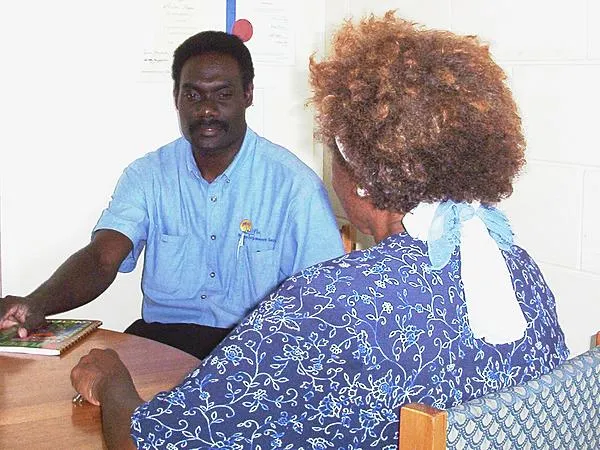
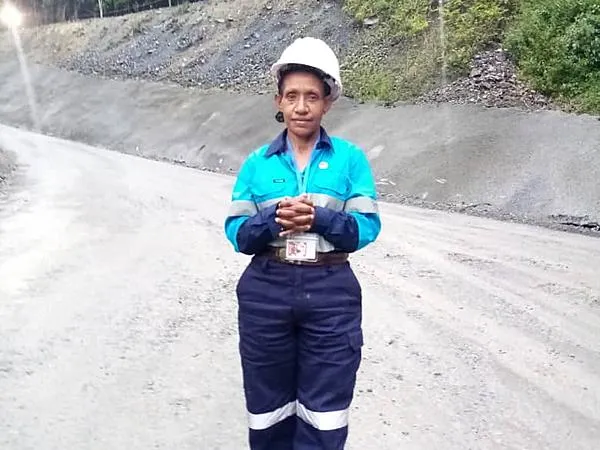
August 21, 2023

Workplace counselling support helps to safeguard workers’ mental health and keep everybody at the top of their game according to workplace psychologist Aaron Hayes.

“Employees often have personal and domestic problems that can worry them, distract them and impact on their attendance and work performance” says Aaron.

“Having a visiting counsellor come on site regularly gives workers an opportunity to unburden themselves and get support for complex personal issues without having to take days off work to seek outside help.”

An Australian-registered psychologist, Aaron has been operating a counselling practice in Papua New Guinea for the past 20 years, specialising in employee assistance programs.

PNG Counselling and Care now has more than ten tertiary-qualified PNG national counsellors who provide on-site and telephone counselling support for the workforces of various corporates including Air Niugini, PNG Ports Authority, K92 Mining and Barrick Niugini.

“The most common stressors PNG workers experience, especially those working away from home, are problems arising from fractured relationships, polygamy, extended family pressures and personal debt. While counsellors don’t have all the answers, they can help workers find a way through without allowing personal issues to impact on their work and potentially losing their job,” Aaron says.

Employee Assistance Programs are particularly effective for supporting women to cope with work/home life balance and stay in the workforce, says Aaron.

“A survey conducted by the PNG Business Coalition for Women some years ago found that almost 40% of PNG businesses reported having problems retaining their female staff. Some of the key challenges for female workers that were identified by the survey included outside pressures disrupting focus at work, absenteeism, husbands wanting wives to stay at home, taking unpaid leave to look after sick children and elderly parents, and even resigning for personal and family reasons. Workplace counselling support can help working women cope with such problems so they can stay at work and make the most of the years invested in their education, training and job experience.”

August 21, 2023

Papua New Guinea workers cope better with the psychological impact of workplace accidents and incidents because they have been more widely exposed to aggression and trauma in the community since a young age, says a workplace psychologist.

PNG Counselling and Care director Aaron Hayes says that the incidence of Post-Traumatic Stress Disorder in PNG employees after exposure to traumatic experiences in the work environment seems remarkably low compared to other societies.

“In 20 years of providing counselling support to employees all over Papua New Guinea we have diagnosed only a few cases of full-blown PTSD. Most PNG workers impacted by accidents and incidents bounce back well in mental health terms after receiving psychological first aid, critical incident debriefing and a short course of trauma counselling support. After this, long term psychotherapy for traumatic stress symptoms is rarely needed,” Mr Hayes says.

While in some cases exposure to multiple traumatic experiences over the years does cause accumulated stress, Mr Hayes says the opposite appears to be widely true in PNG – people seem to become hardened or desensitised to violence and trauma in the community over the years and workers are less impacted psychologically by an accident or incident in the workplace especially if provided with basic psychological support at the time.

“A little support immediately after a harrowing experience seems to avert long term effects,” said Mr Hayes.

Over the years, his counsellors have provided critical incident support following employee deaths, motor vehicle and machinery accidents, plane crashes, workplace hold-ups, carjackings, kidnappings and home invasions.