
Category:





ADB-Supported PPP Framework to Improve Infrastructure Service Delivery in PNG
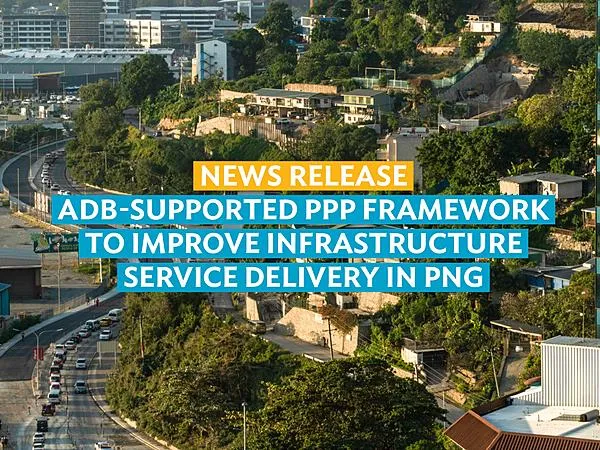
The Asian Development Bank (ADB) welcomes a new framework for public–private partnerships (PPPs) in Papua New Guinea (PNG) aimed at unlocking private investment and know-how, and allowing PNG to expand and improve infrastructure service delivery.
The new framework was developed with the support of ADB’s Pacific Private Sector Development Initiative (PSDI) and creates a transparent and robust process for identifying, developing, procuring, and implementing infrastructure PPPs in PNG. It establishes a governance structure to oversee this process. It also establishes a center of expertise—the PPP Centre—which will work alongside sponsoring agencies to develop PPP projects.
Through the framework, new infrastructure investments are required to be assessed for their potential to be procured as PPPs, and transactions must be developed transparently and predictably. Project risk assessments and competitive tendering processes are now also legal requirements for all PPPs.
“PPPs create opportunities for private sector involvement in service provision, which can lead to better service delivery, reduced costs for businesses, and improvements to government balance sheets,” said ADB Country Director for PNG Said Zaidansyah. “That’s why ADB actively supports PPP implementation in the Pacific and why we are so pleased to see the final pieces of this framework operational.”
The framework was activated by the recent publication of the Public Private Partnership Regulation 2023 and the Public Private Partnership (Amendment) Act in the National Gazette. PNG’s broader state-owned enterprise reform program is supported in part by an ADB policy-based loan, and implemented with the support of PSDI, an ADB technical assistance program delivered in partnership with the governments of Australia and New Zealand.
“I congratulate the PNG government for achieving another important milestone in its ambitious reform agenda,” Australian Acting High Commissioner to PNG Joanne Loundes said. “PNG has the potential to benefit from further private sector investment in infrastructure development. Through our support for PSDI, Australia is proud to assist improvements to the delivery of essential services for the people of Papua New Guinea.”
Established in 2006, PSDI works with ADB's 14 Pacific developing member countries to improve the enabling environment for business and support inclusive, private sector-led economic growth.




Steamships launches 2024 Community Grants Programme
For over 100 years Steamships Trading Company has invested and partnered with the people of Papua New Guinea.
Despite the destruction experienced heavily in Port Moresby in the past week, Steamships is proud to launch the 2024 Community Grants Programme, opening the application submissions to Papua New Guinean registered (IPA) charities and Non-Government Organisations that provide development and community advancement in health, education, social welfare, and environment.
“Our Community Grants Programme is one of the many ways Steamships gives back to, and supports our communities around Papua New Guinea,” says Managing Director, Rupert Bray. “Through thick and thin, the private sector, as responsible corporate citizens actively contribute to the well-being of the communities it serves, supporting programs which make meaningful and positive impacts.”
Recognising the vital role that the private sector plays in contributing to social progress, the programme seeks to empower local initiatives that make a sustainable and lasting impact on the lives of community members. By investing in local initiatives, Steamships is strategically contributing to the long-term development and prosperity of Papua New Guinean lives.
Steamships community investment and partnership dates as far back as 1941 when the company constructed a two-storey building school for the Sisters of Our Lady of the Sacred Heart in Port Moresby. The cost at that time was £1,624.
Today, the grants program supports projects which fall into four pillars of the Steamships Sustainable Development: Our People, Our Community and Our Environment.
Steamships encourages local organisations to apply for the Community Grants Programme and become partners in this collaborative effort to create a better future for all. The application process details and eligibility criteria can be found on the official Steamships website, www.steamships.com.pg/sustainability/community-grants-programme



Starlink licence to revolutionise Papua New Guinea’s internet landscape
SpaceX’s Starlink has been granted a five-year operator licence by Papua New Guinea’s National Information and Communication Technology Authority (NICTA). This is a significant stride towards bridging the digital gap in the country. This groundbreaking announcement was made by Hon. Timothy Masiu, the Minister of Information and Communications Technology, marking it as a positive turning point for the nation.
The Starlink licence allows the company to establish, maintain, and operate its satellite network within the country. This development holds promising prospects for nationwide internet connectivity, with a specific focus on reaching the remote and underserved areas of PNG, as reported by local news outlets.
Consulting the public before awarding the license, NICTA aims to address the longstanding challenges and infrastructure limitations hindering internet access in PNG. NICTA Chairman Noel Mobia highlighted the transformative potential of Starlink’s technology, emphasizing the significant reduction in costs compared to traditional fixed orbit satellites. This, he noted, would enable the government to connect remote schools effectively.
John Cholai, a Director on the NICTA Board, expressed optimism that Starlink’s services could play a pivotal role in bridging the Digital Divide in PNG. With a current digital landscape boasting 1.66 million internet users, of which 1.03 million are active on social media, PNG faces a notable urban-rural divide. Over 85% of the population resides in rural areas, while social media users are predominantly concentrated in urban centers, with Port Moresby accounting for 56% of users.
This move by Starlink comes at a crucial juncture, as the technology is set to revolutionise internet accessibility after nearly a decade of development. Minister Masiu echoed the sentiment, declaring the license as a New Year’s gift to Papua New Guinea, emphasizing the positive impact it would have on the nation’s ICT sector.
As the Starlink satellite network takes flight in PNG, the anticipation is high for a more connected and inclusive digital landscape, promising a brighter future for education, communication, and economic growth in the country.
Article courtesy of the Australia Papua New Guinea Business Council
