Category:
Transforming Flowsheets with Innovative Technologies
Weir’s Chief Strategy and Sustainability Officer Paula Cousins recently spoke at COP28 in the United Arab Emirates about the importance of harnessing innovative technologies to make mining more sustainable.
In a panel discussion hosted by the Ministry of Economy, Trade and Industry of Japan and moderated by the World Business Council for Sustainable Development (WBCSD), Cousins talked about a recent study that highlights a significant opportunity to reduce energy use and emissions in comminution.
The study is the first to utilise the WBCSD’s Avoided Emissions Guidance to examine mining processes and the results have been independently assured by SLR Consulting Limited.
Three of Weir’s technology combinations were evaluated against a conventional comminution circuit design for an archetypal mine processing 15 million tonnes of copper ore per year in Chile.
Each circuit was based on a ‘rock to recovery’ system boundary – that’s to say, reducing rock direct from the mine to a size that enables the mineral to be recovered.
The four configurations were:
- Conventional comminution circuit based on a Semi-Autogenous Grinding (SAG) mill and ball mill.
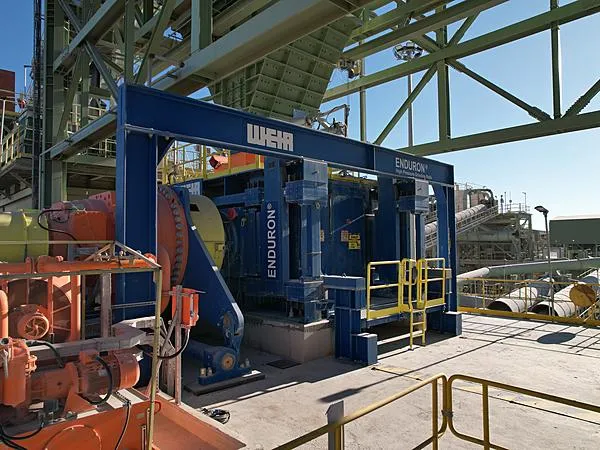
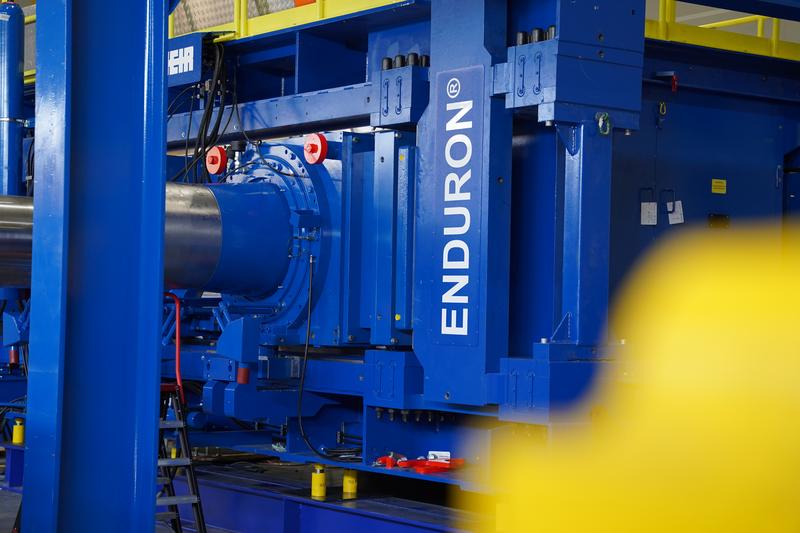
- Weir’s Enduron® High Pressure Grinding Rolls (HPGR) replacing the SAG mill at the initial grinding stage.
- Enduron® HPGR, plus Swiss Tower Mills’ (STM) vertical stirred mill replacing the ball mill.
- Addition of a Eriez’s HydroFloat® coarse particle flotation (CPF) unit.
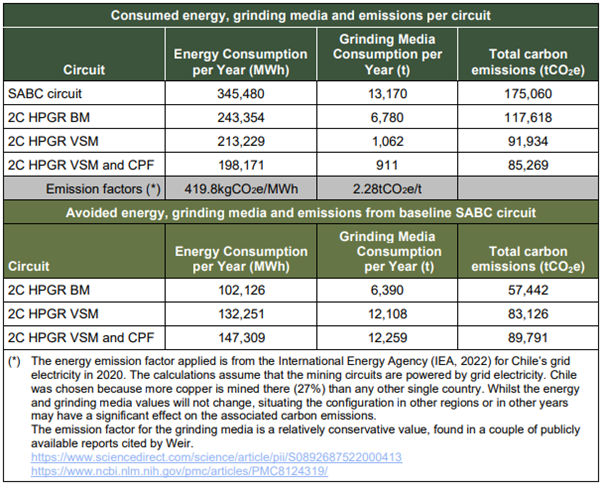
The study shows that replacing conventional technology with innovative new solutions can cut energy use by 40%, while also avoiding 50% of CO2e emissions.
The world needs more transition metals to achieve net zero, but the mining industry needs to extract these using significantly less energy and water, Cousins explained.
‘Our new, externally assured study highlights the potential for energy savings of 40% and for 50% of CO2e emissions to be avoided in comminution, the most energy intensive stage of mining processes,’ she said.
‘By adopting a systems-based approach to technology collaborations, we can help the mining industry scale up and clean up at the same time.’
The full results are published here:
Transformational Technologies
Comminution equipment doesn’t operate in a vacuum – it’s part of a wider and deeply interlinked mineral processing plant where the comminution circuit’s overall performance significantly influences mineral recovery.
Therefore, a holistic review of the overall circuit – from rock to recovery – is required.
These circuits are prone to increased feed variability, which requires the right combination of size reduction and classification equipment to minimise the fluctuation in product quality, as this enables greater efficiencies in the recovery circuit, explains Bjorn Dierx, Weir Minerals Global Product Manager Enduron® HPGR and Vertical Stirred Mills.
‘Enduron HPGRs can adapt to changing feeding conditions instantly because the roll speed and grinding force can be changed while in operation; as a result, the most effective, minimal stress-intensity force is applied to the particles to ensure they break at the given throughput rate,’ he said.
The STM mill has a vertical mill chamber, with grinding rotors (discs with castellations) installed on the central mill shaft. The mill feed is a slurry, pumped through the bottom of the mill and discharging from top. The mill chamber is filled with ceramic grinding media to approximately 60% of its volume.
The grinding media bed moves only in the horizontal plane, which ensures energy isn’t wasted. The vertical mill arrangement, combined with bottom feed entry and top discharge, ensures coarse particles don’t short-circuit the mill.
‘The grinding circuit that delivers the highest recovery and the lowest possible energy consumption is achieved by combining these two proven technologies. The Enduron HPGR prepares the feed for the two-stage STM vertical stirred mill grinding concept,’ Dierx said.
‘This grinding circuit is followed by Eriez’s HydroFloat CPF technology, which allows the use of a coarser, rougher grind size, delivering the operator additional reductions in grinding energy-requirements.’
The recovery or efficiency of conventional flotation is strongly related to the particle size of the ore.
‘Eriez’s HydroFloat CPF represents a major step forward in terms of recovery, by extending flotation efficiency over a size range that is two to three times greater than conventional flotation machines’ limit,’ Dierx said.
AIFFP pledges US$150m for energy infrastructure in PNG
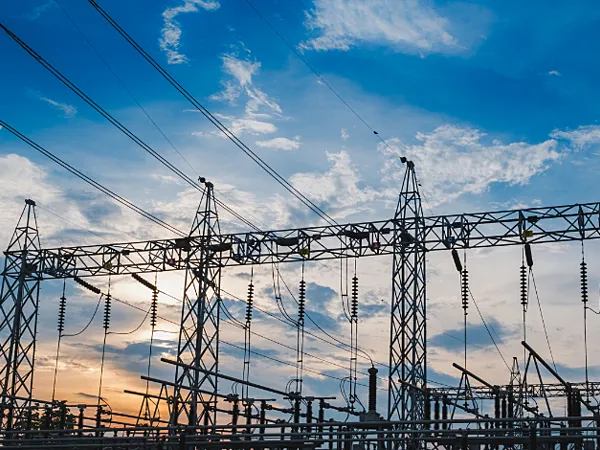
The Australian Infrastructure Financing Facility for the Pacific has pledged a grant and concessional loan package totaling USD150 million to Papua New Guinea for the purpose of enhancing and repairing crucial energy infrastructure. This commitment was affirmed during Prime Minister Marape’s visit to Canberra on February 8, 2024.
The funding will be allocated towards various projects including the refurbishment of the Ramu 1 hydropower plant, the construction of the Gerehu transmission substation, and the installation of smart meters in both commercial establishments and residential areas throughout Papua New Guinea.
Additionally, Australia, through its Pacific Climate Infrastructure Financing Partnership, is also participating in a new initiative focused on solar entrepreneurship. This partnership aims to provide renewable energy solutions to approximately 4,000 households in the Milne Bay and West New Britain Provinces.
These upgrades and investments are anticipated to enhance access to reliable and sustainable electricity for communities residing in urban centres, towns, and remote villages. This improved access is expected to foster economic growth and provide better opportunities for accessing essential services such as healthcare and education.
Fifth Annual Leaders Dialogue
During Prime Minister James Marape’s visit to Canberra, Australian Prime Minister Anthony Albanese and Mr Marape convened the fifth Papua New Guinea-Australia Annual Leaders’ Dialogue on February 8 in Canberra.
Discussions centred on bilateral security cooperation, highlighted by the signing of the Bilateral Security Agreement in December 2023. Both leaders welcomed Australia’s AUD100 million law and justice investment over 2024-2027 and prioritized planning for a Police Recruit and Investigations Training Facility in Bomana, among other initiatives.
The leaders reiterated their commitment to regional peace, prosperity, and resilience, underscoring contributions to collective Pacific security responses and humanitarian efforts. They also discussed enhanced cyber security cooperation and Papua New Guinea’s fiscal sustainability plans.
Acknowledging the importance of people-to-people ties, both leaders unveiled plans for streamlined visa processes and expanded labour mobility arrangements. They pledged to boost economic growth, critical infrastructure development, and support for agriculture, emphasising inclusive growth and sustainability.
Climate change, health and education highlighted
Efforts to address climate change were a focal point, with Australia pledging support under the PNG Climate FIRST initiative to access climate finance. Both leaders emphasized the importance of Papua New Guinea’s rainforests as a global carbon sink.
Health and education partnerships were highlighted, including initiatives like the Partnerships for Improving Education Program and support for health services targeting tuberculosis, malaria, and maternal and child health.
Recognising their shared love for sports, especially rugby league, the leaders looked forward to boosting high-performance rugby league capability through renewed partnerships and participation in sports series.
Both leaders reaffirmed their commitment to strengthening regional unity through Pacific-led and owned regional architecture, guided by the Pacific Islands Forum’s 2050 Strategy for the Blue Pacific Continent.
In anticipation of Papua New Guinea’s 50th Independence anniversary in 2025, both nations pledged to commemorate the occasion by establishing a memorial to honour the role of Australian Kiaps in Papua New Guinea’s nation-building.
Article courtesy of the Australia - Papua New Guinea Business Council
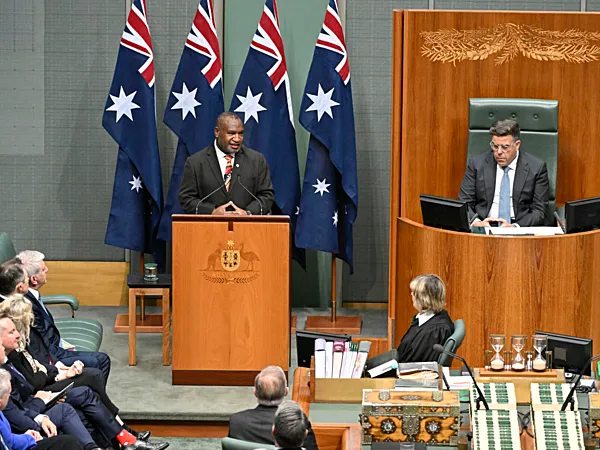
PM Marape emphasises ‘family’ ties with Australia in historic speech
Papua New Guinea’s Prime Minister, James Marape, made history by addressing Australia’s parliament in Canberra on 8 February, marking the first occasion a leader from a Pacific Island nation has done so. Marape’s speech underscored the deep-rooted ties between Papua New Guinea and Australia, characterising the latter as PNG’s “big brother” and emphasising the familial nature of their relationship.
The visit comes at a critical juncture as Papua New Guinea grapples with internal unrest sparked by incidents of violence and looting in Port Moresby in early January that claimed at least 16 lives.
Amidst these challenges, Marape’s address served as an opportunity to reaffirm Papua New Guinea’s longstanding partnership with Australia. He expressed gratitude for Australia’s support, particularly in times of crisis, and called for continued collaboration in addressing shared challenges and promoting regional stability.
Peter Dutton, Australia’s Opposition Leader, echoed sentiments of cooperation and mutual respect in his welcoming remarks for Marape. He underscored the importance of sovereignty and autonomy for Pacific Island nations, implicitly cautioning against external interference.
Central to discussions between the two leaders was Australia’s role as Papua New Guinea’s largest donor of foreign aid. Australia has provided crucial financial assistance to Papua New Guinea, including a notable $650 million loan granted in 2021 to alleviate a budget shortfall exacerbated by the COVID-19 pandemic. Mr. Albanese, in his speech welcoming Mr. Marape, emphasized Australia’s commitment to supporting Papua New Guinea’s future, highlighting a recent $200 million security agreement signed in December aimed at bolstering Papua New Guinea’s security infrastructure.
Beyond financial aid, both nations expressed a shared commitment to cooperation in various sectors, including security, development, and regional diplomacy. The signing of the $200 million security agreement represents a tangible manifestation of this commitment, signalling a deeper partnership between Australia and PNG in addressing common challenges and fostering mutual prosperity.
Marape’s historic address to Australia’s parliament underscored the enduring partnership between the two nations, rooted in shared history, mutual respect, and common interests. Despite the complexities and challenges facing the region, both Australia and PNG remain steadfast in their commitment to cooperation and collaboration, underscoring the importance of diplomatic engagement in promoting peace, stability, and prosperity in the Pacific.
Article courtesy of the Australia - Papua New Guinea Business Council
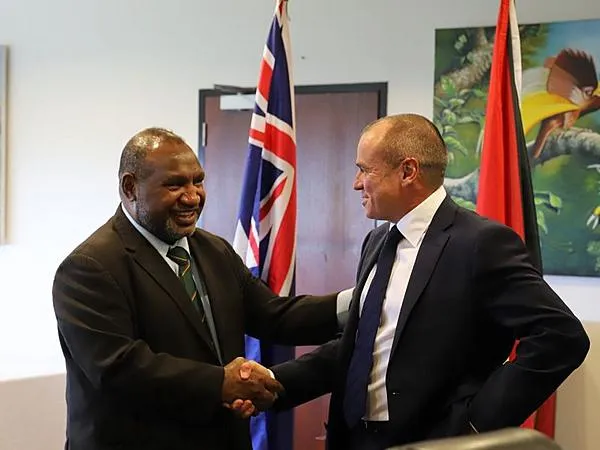
New High Commissioner John Feakes presents credentials
Australia’s new High Commissioner to Papua New Guinea, His Excellency John Feakes has officially presented his letter of introduction to Papua New Guinea Prime Minister James Marape.
Australian Foreign Minister Penny Wong announced Mr. John Feakes’ appointment as Australia’s next High Commissioner to the Independent State of Papua New Guinea in September last year, reaffirming the deep-rooted and enduring relationship between the two nations.
Australia values our unique, strong and enduring relationship with Papua New Guinea, reflected in our Comprehensive Strategic and Economic Partnership.
At the time of his appointment, Minister Wong’s media release said, “Our partnership is founded on shared values, deep historical and cultural connections, and common economic and security interests.
“Australia and Papua New Guinea share a unique and robust partnership, characterised by a Comprehensive Strategic and Economic Partnership that underlines their common values, profound historical and cultural ties, and mutual economic and security interests. Both nations are united in their commitment to fostering a peaceful, prosperous, and resilient region.”
Mr. Feakes is a distinguished career officer with the Department of Foreign Affairs and Trade. Prior to his appointment as High Commissioner to Papua New Guinea, Mr. Feakes served as Australia’s High Commissioner to Fiji.
Throughout his career, Mr. Feakes has garnered a wealth of international experience, including previous roles as Australia’s High Commissioner to Kenya and Deputy High Commissioner and Counsellor in PNG. His diplomatic service has also taken him to the United States of America and the Philippines, where he contributed to advancing Australia’s diplomatic objectives.
Article courtesy of the Australia - Papua New Guinea Business Council